FreshRSS

🔒
❌ About FreshRSS
There are new articles available, click to refresh the page.
Yesterday — 6 September 2026Compounding Quality

Selling One, Buying Another

6 September 2026 at 14:45

Hi Partner 👋

This is Part III of our extensive Portfolio Update:

We will sell a company that is struggling right now.

And we will buy a company with an expected return of 22% (!) per year.

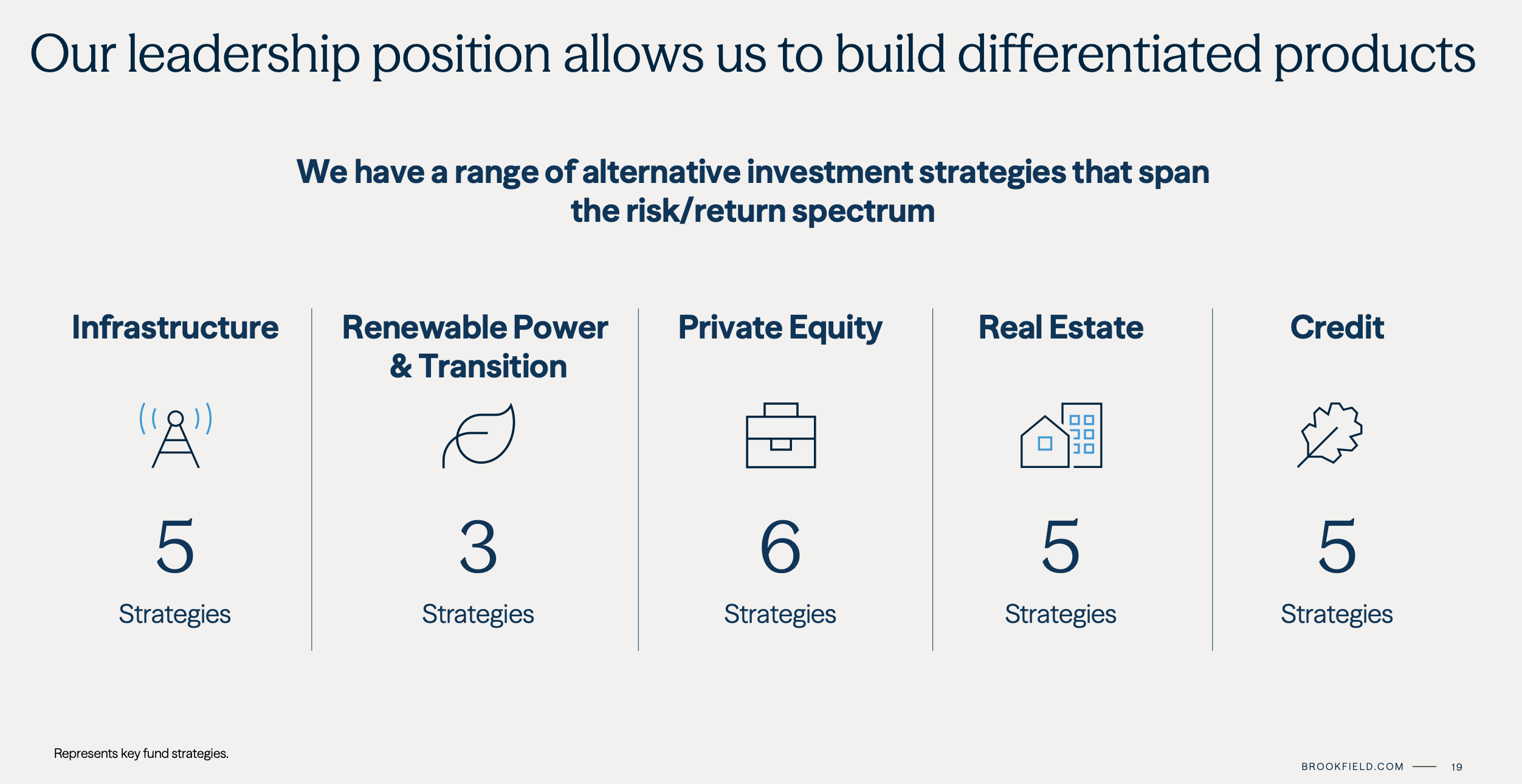
Real Estate Giant Brookfield Reportedly Defaults On Second Major Office  Portfolio This Year—Here's Why It Matters

Position Switch

Today, it’s time to make a position switch.

A few more will probably follow going forward.

You are looking for the reasoning about why we are making some changes? Please read this article.

We will sell one company and use the proceeds to buy more of an amazing company we already own.

I’m sorry... I f*cked up

When I am making a Portfolio change, the first thing I should do is apologize to you.

Why?

There is one major reason why we are selling a stock: the investment case is no longer intact.

Because when the stock would still do well, there would be no reason to make a change.

The only valid reason to sell a quality stock?
One of the most wonderful companies in the world?

When you notice you were wrong.

The investment thesis is no longer intact and the company is losing (some of) its moat.

Today it’s time to sell a stock in Our Portfolio as I think there are better opportunities elsewhere.

And that’s why I want to apologize to you.

I made a mistake and I’m taking full responsibility for it.

Unfortunately, making mistakes is part of the game.

We should always keep the rule of three from François Rochon in mind:

  • One year out of three, the stock market will go down at least 10%

  • One stock out of three that we buy will be a disappointment

  • One year out of three, we will underperform the index

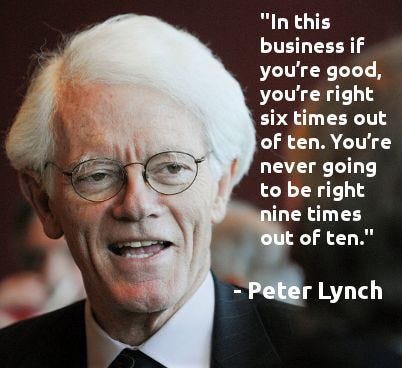
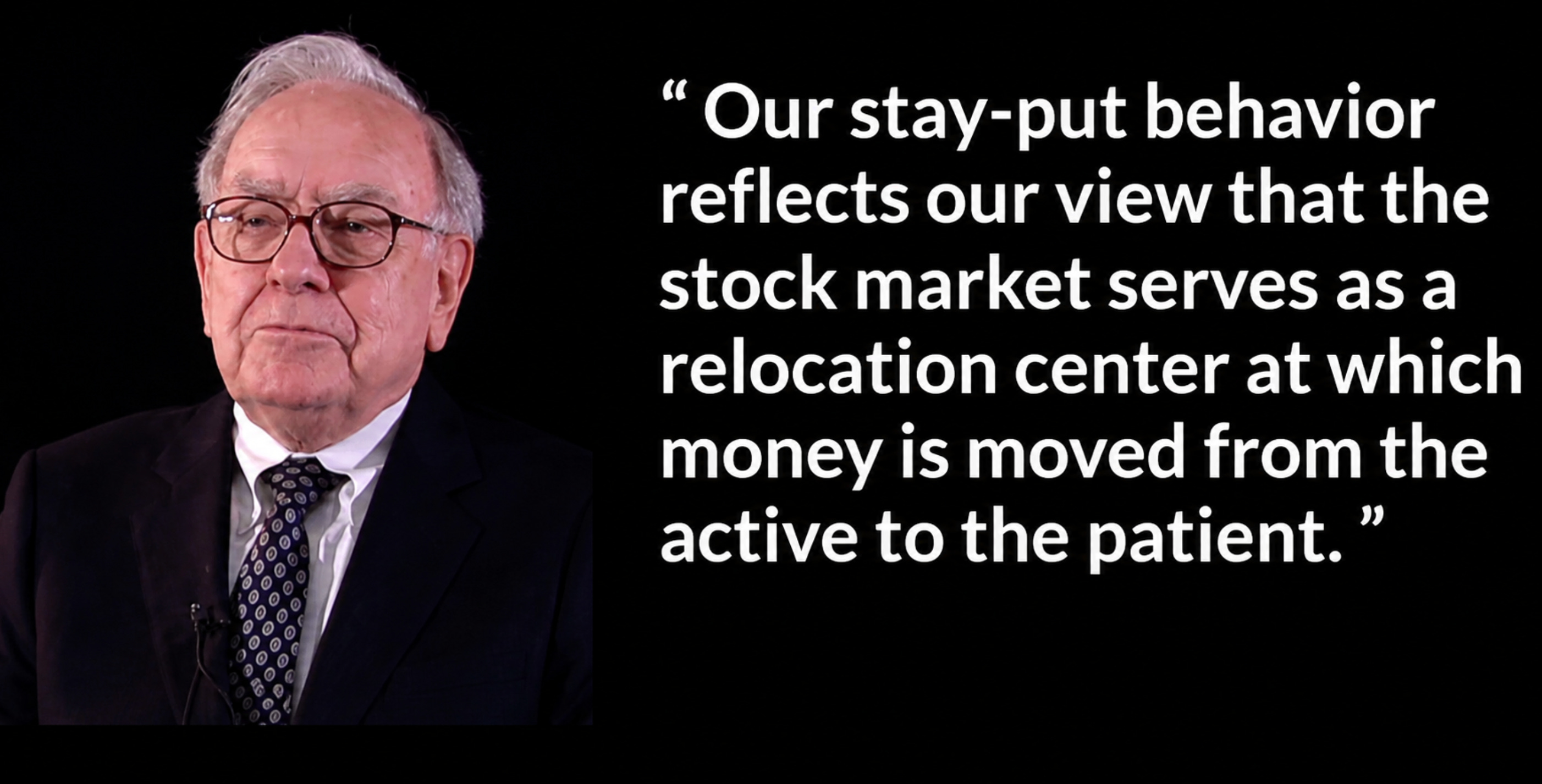
As Peter Lynch said:

Châm ngôn đầu tư: Bạn chỉ cần đúng 6 trên 10 lần thôi – Peter Lynch – The  Golden Newsletter Vietnam

However, this doesn’t mean I don’t feel bad about this.

I feel personally responsible.

That’s why I will try to share the key leanings with you.

Here’s what we’ll do:

  • We are selling one company

  • We are using the proceeds to add to another company with more upside potential

Let’s dive into the company names.

Read more

Before yesterdayCompounding Quality

Our Portfolio Needs Surgery

3 September 2026 at 14:44

Hi Partner 👋

On Tuesday, we went over the Portfolio.

You learned the following:

  • The expected return for Our Portfolio is 17-18% per year depending on your calculation method

  • We want to make some Portfolio Changes going forward

Today we will run over every single position in Our Portfolio.

We will also outline which changes we would like to make.

Portfolio Investment vs Individual Investment

Every position

Let’s now take a deeper look at every position in the Portfolio.

I’ll try to go over every single company in one sentence to make it easy for you.

Let’s work with colors:

  • Green: High conviction

  • Yellow: Medium conviction - Should we consider trimming?

  • Red: Low conviction - Should we consider selling this company?

Let’s dive in.

Strong convictions

  • Medpace: Medpace is one of the highest quality names in Our Portfolio.

  • Ameriprise Financial: Spin-off from AMEX. A great business.

  • Visa: One of the best ‘tollroad businesses’ in the world.

Read more

Time to Raise the Bar

1 September 2026 at 14:44

Hi Partner 👋

I hope you are doing well.

This week, we’ll take a skeptical look at our portfolio.

What is going well?
What is not going well?
Should we make adjustments?

The goal? Have a Portfolio you can be proud of.

We might need to make a few adjustments to achieve this.

This will be a very open and honest article.

It will help you to know what to expect from Compounding Quality going forward.

Our Portfolio

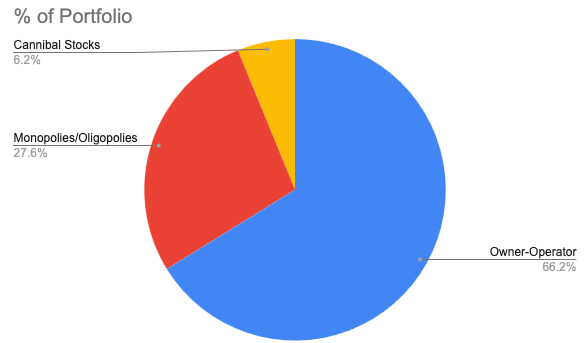
Currently, we are invested in 21 companies.

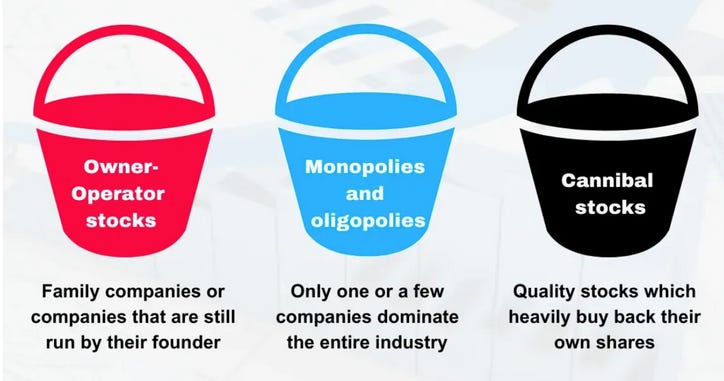
We invest in three buckets:

  • Owner-Operators (65.7% of the Portfolio):

    • What? Companies still run by their founder or their family

    • Why? Founder-led companies outperform by 3.9% per year on average

  • Monopolies & Oligopolies (27.8%):

    • What? Only one or a few companies dominate the entire industry

    • Why? The best compounders in the world are monopolies & oligopolies

  • Cannibal stocks (6.5%):

    • What? Quality stocks which heavily buy back their own shares

    • Why? Cheap cannibal stocks can create a lot of shareholder value.

If you want to find out more, I would highly recommend you reading our Owner’s Manual.

The Owner’s Manual was already written in 2023 and is still highly relevant today.

The goal is to outperform the S&P 500 by 3% per year in the long term.

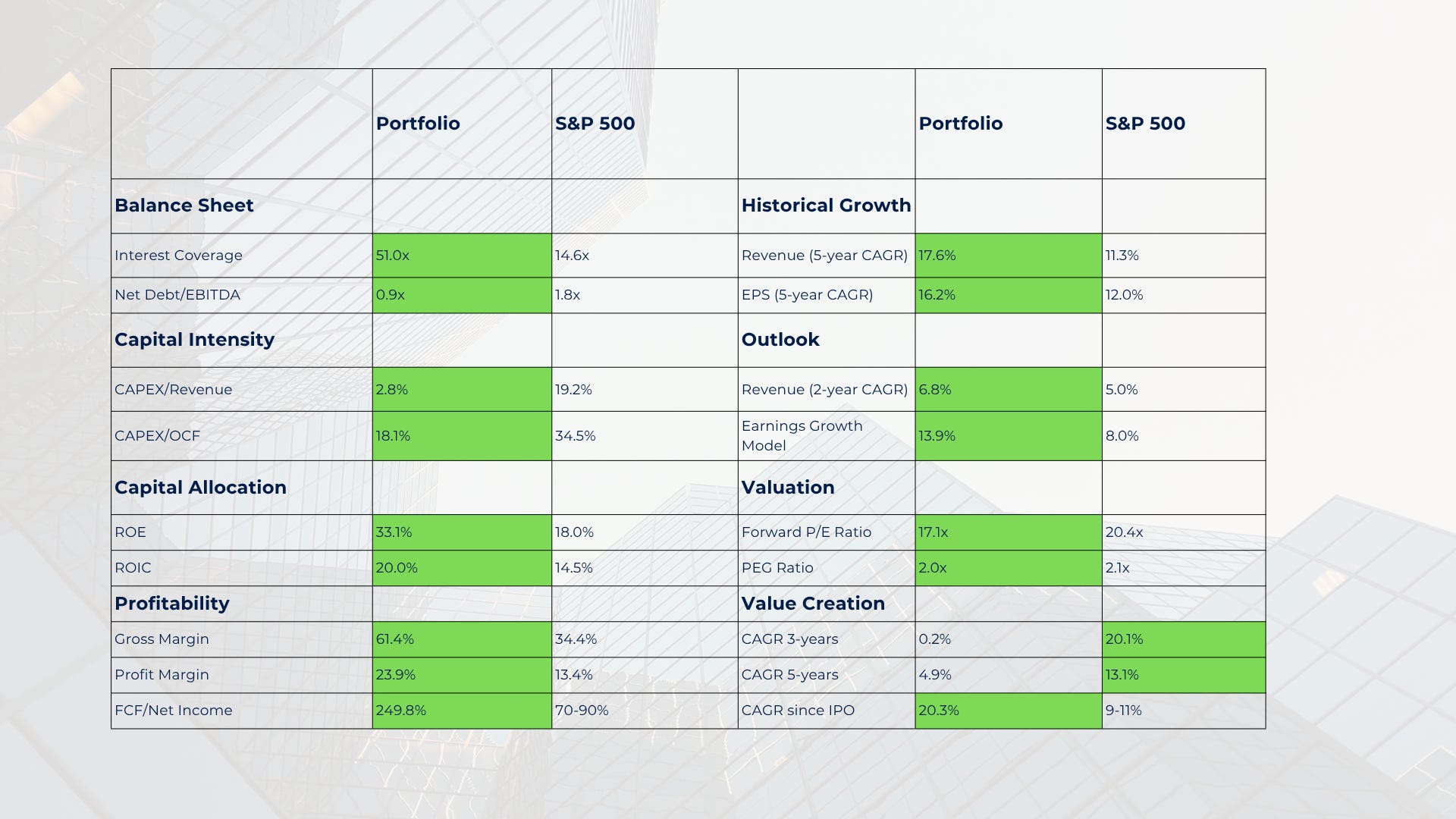
I believe we can achieve this:

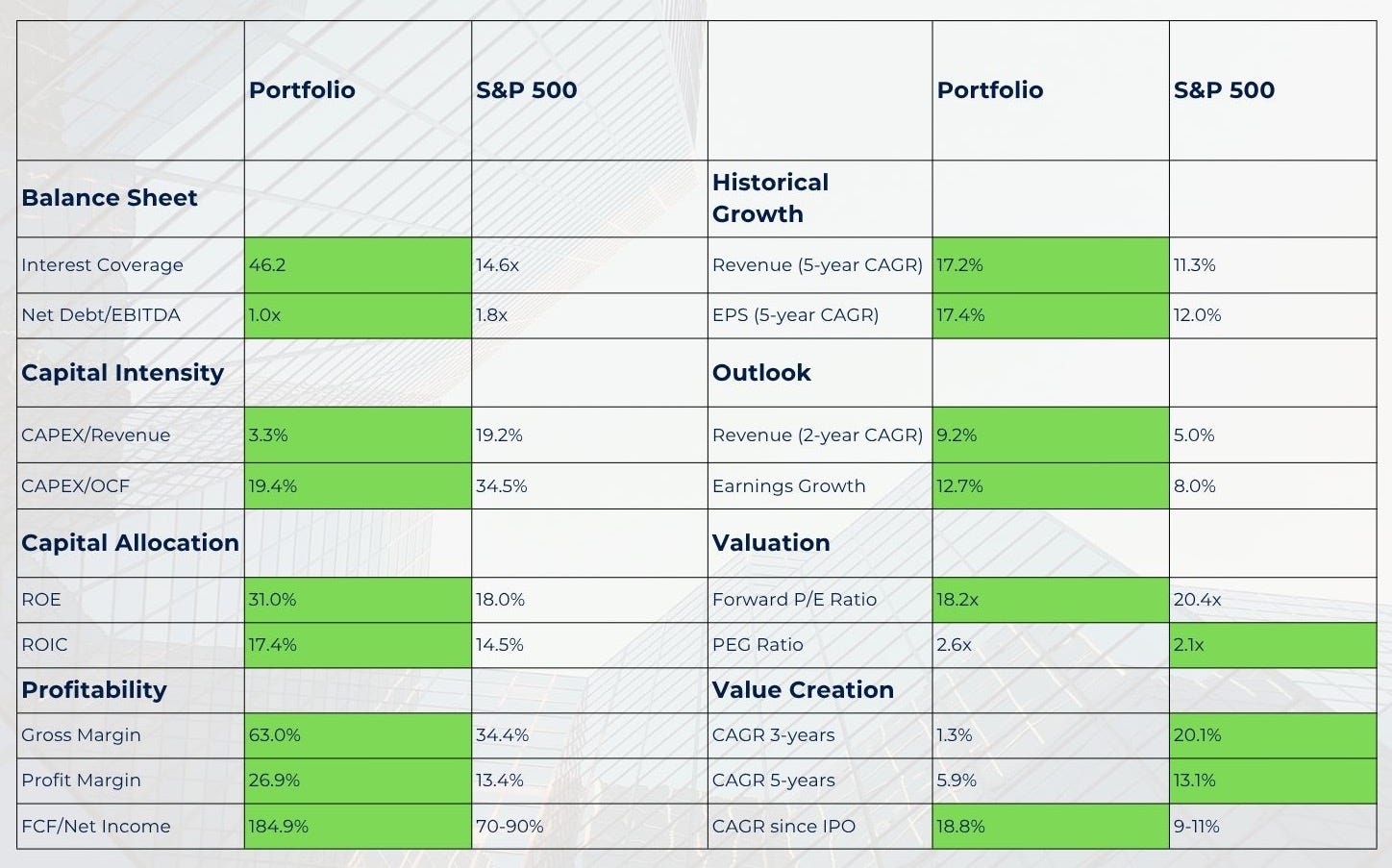
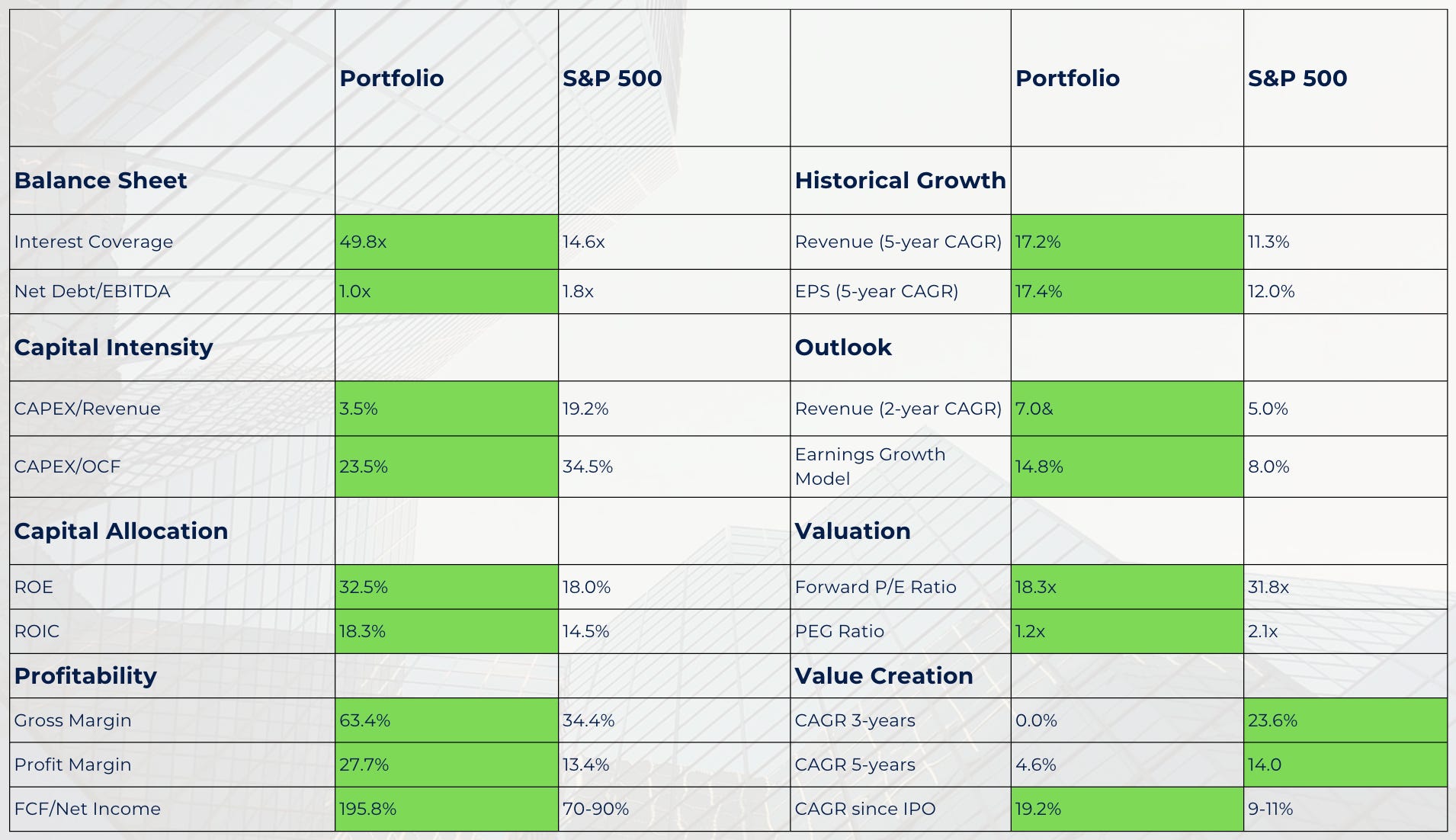
  1. We are invested in better companies than the index

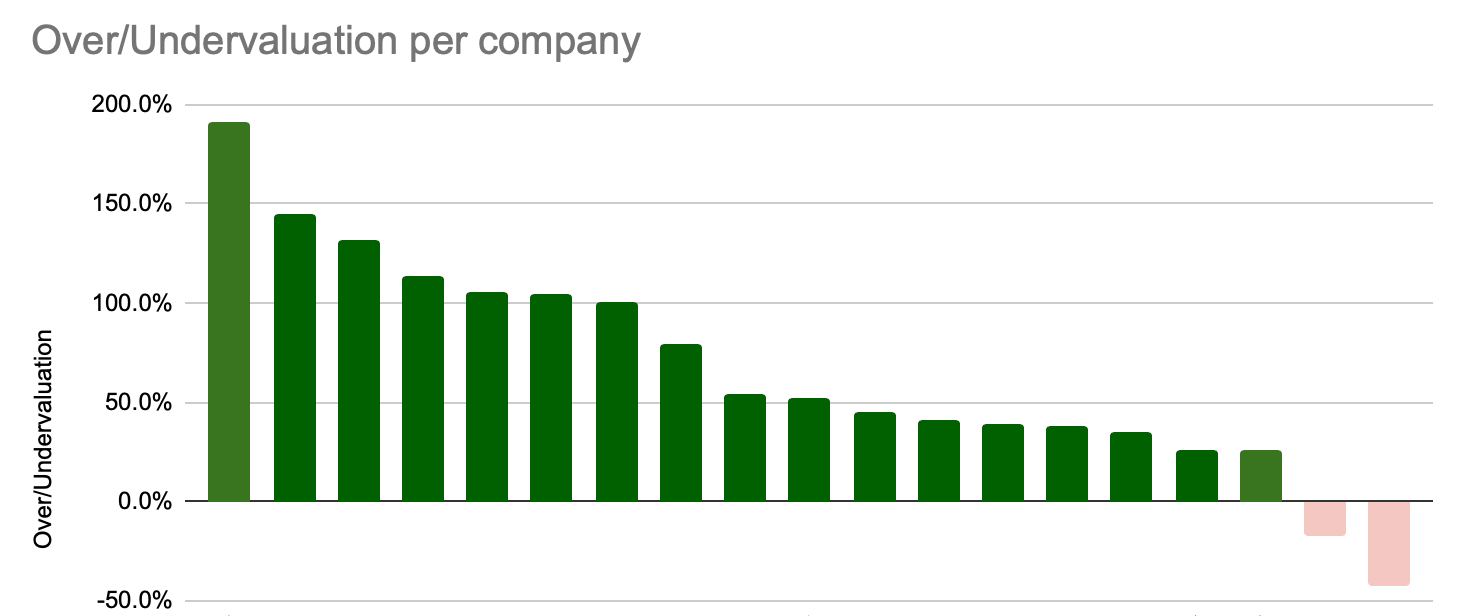
  2. Our companies are cheaper than the index

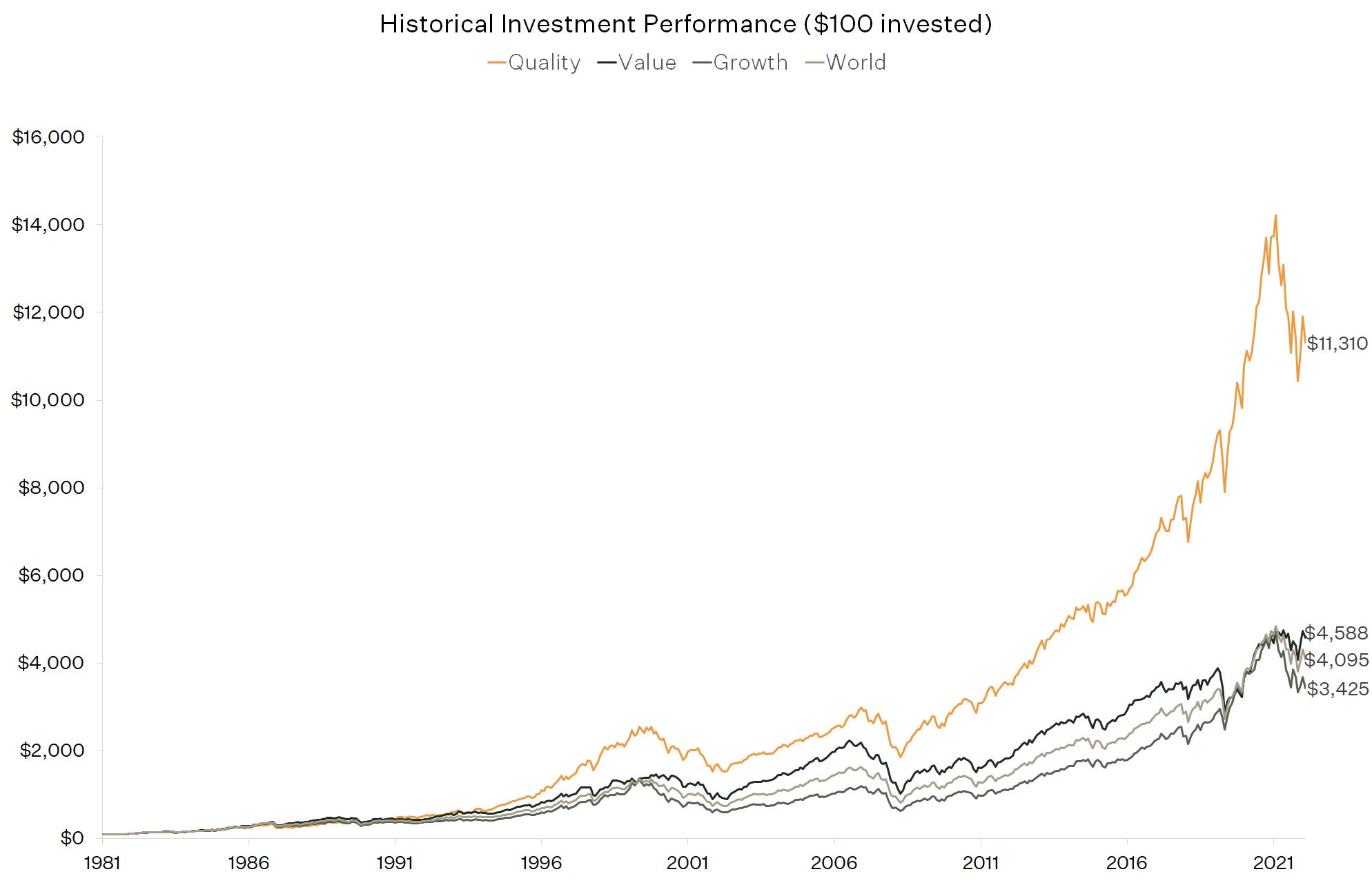
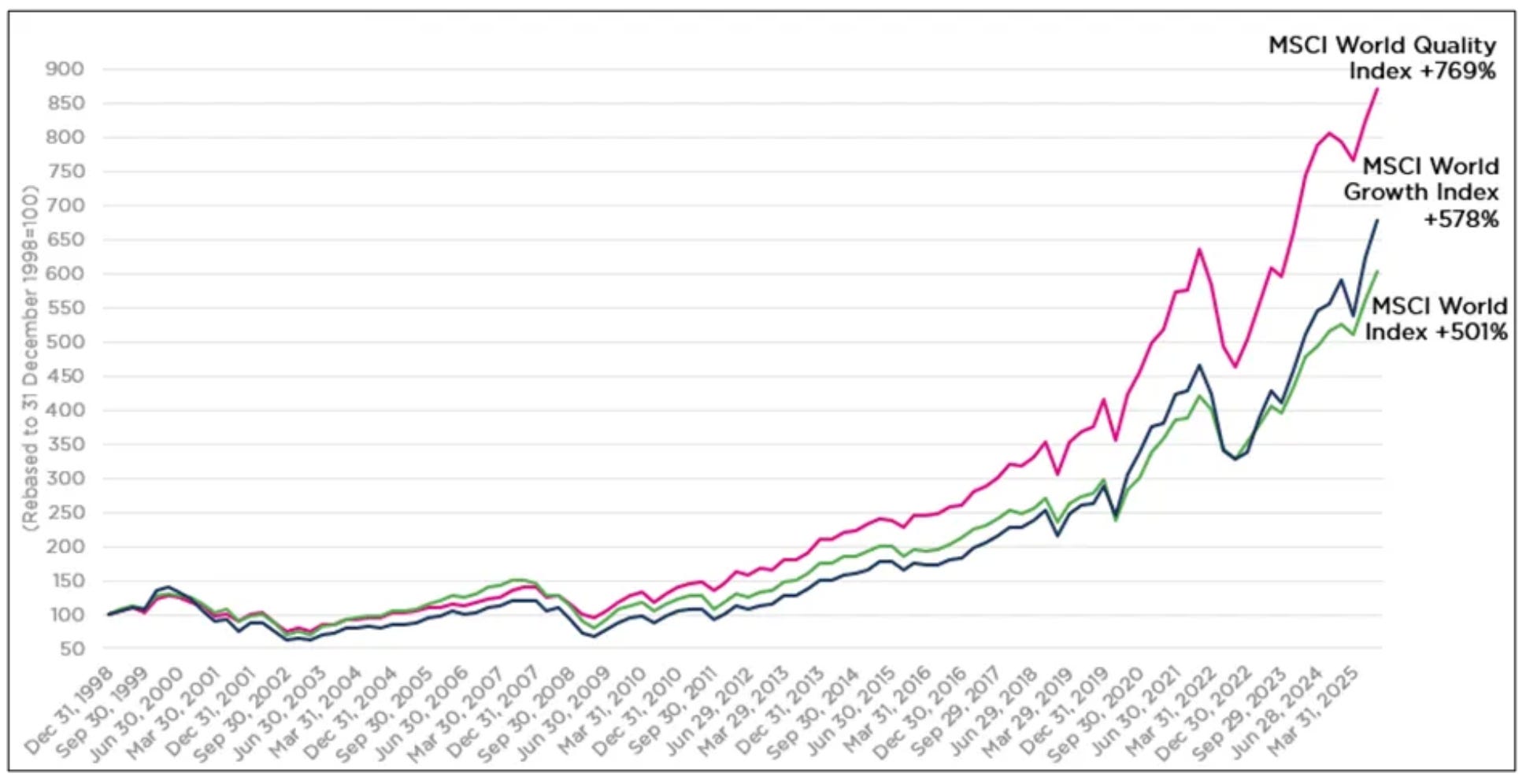
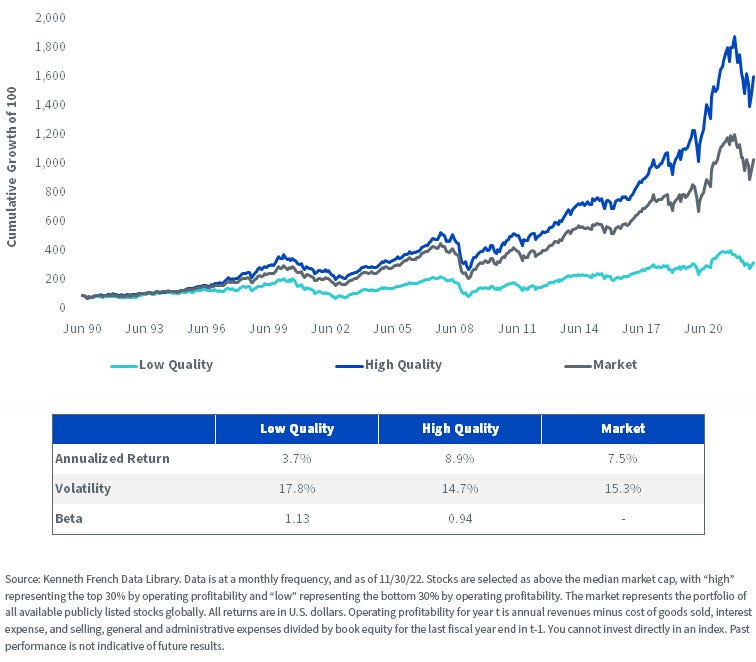
Quality investing is a strategy that has proven to work in the past. And it will continue to do so in the future.

As Mark Twain said: History doesn’t repeat itself, but it often rhymes.

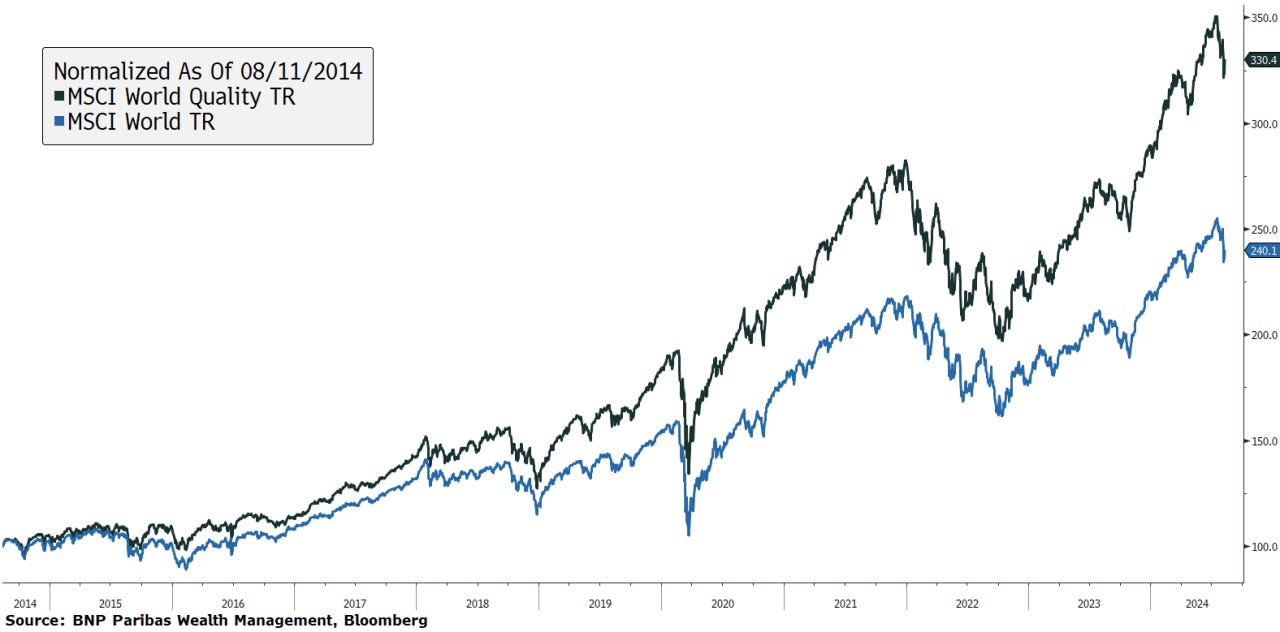
40 years of Quality outperformance - Will Dowd, CFA | Livewire

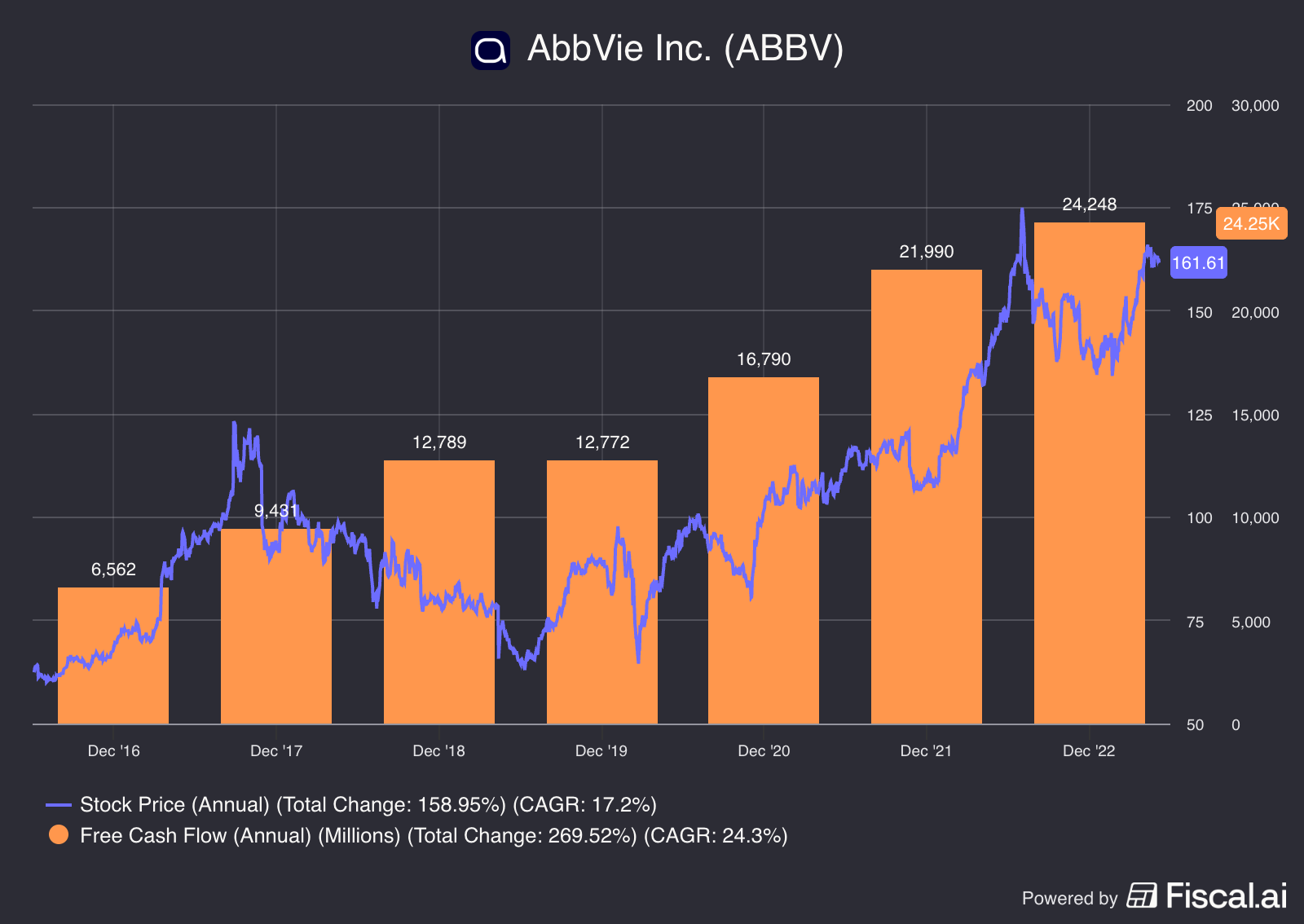
Free Cash Flow

Our goal?

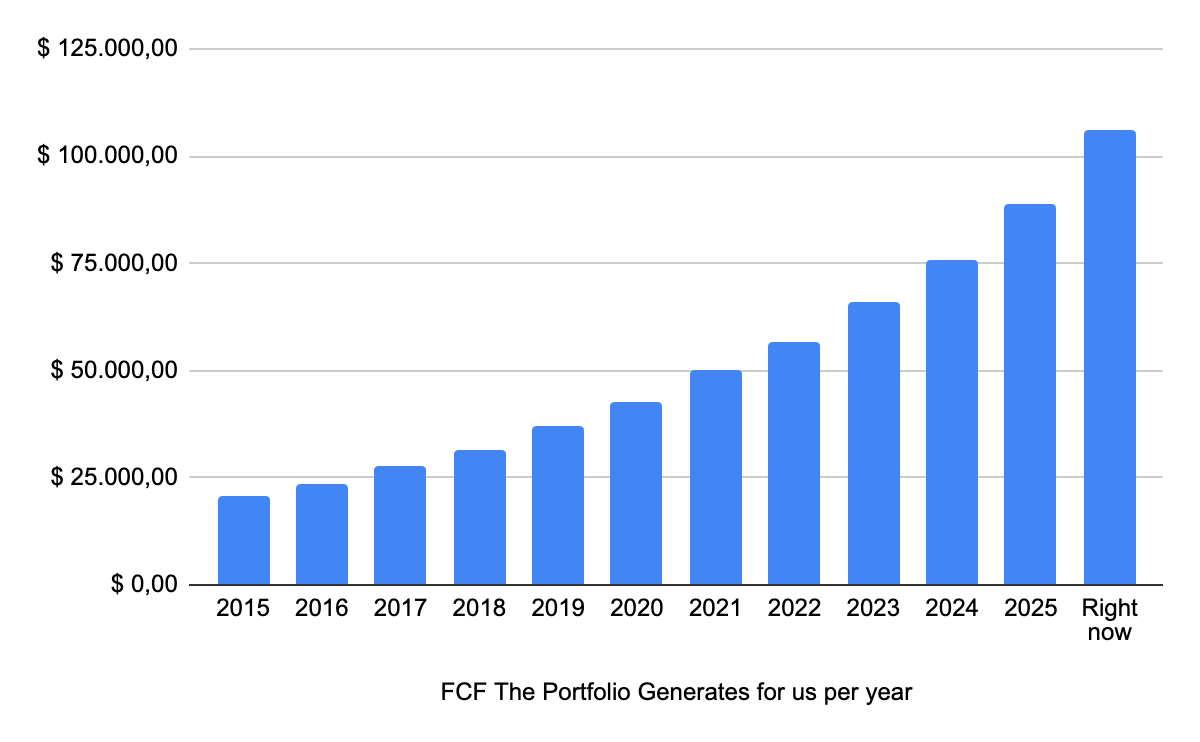
Let our portfolio generate more and more free cash flow for us over the years.

The goal? Generate $1 in Free Cash Flow for us per minute.

That would be true passive income!

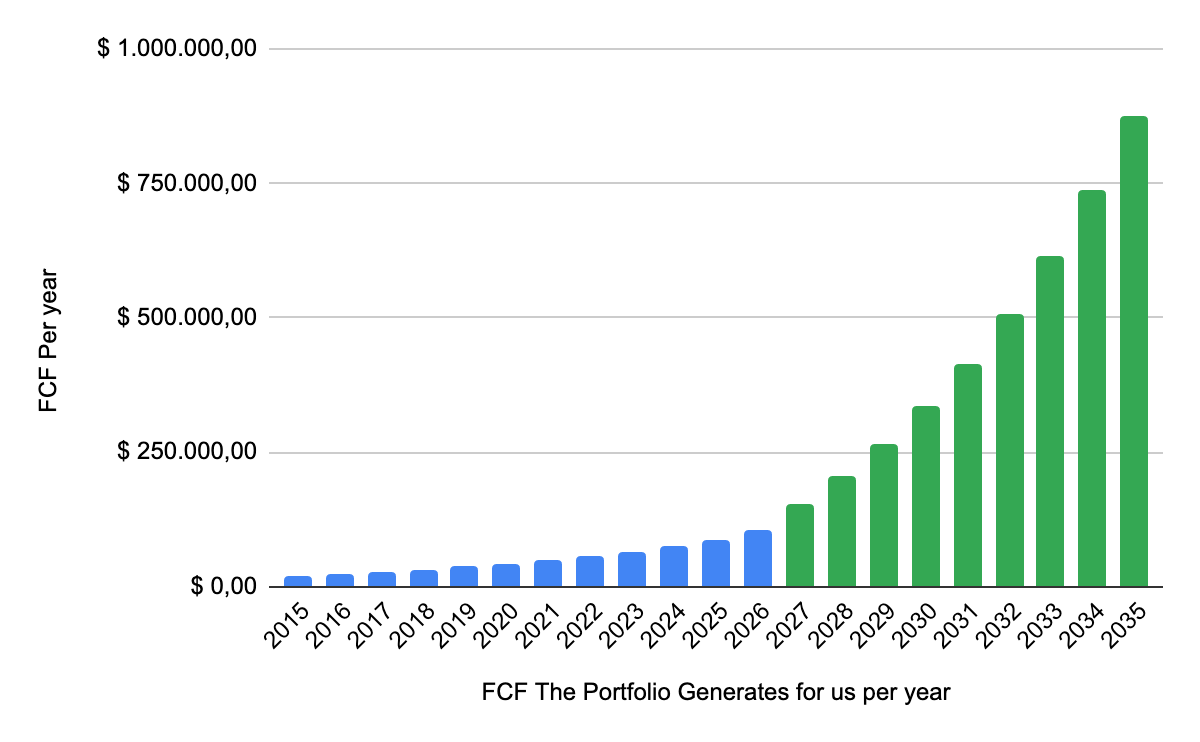
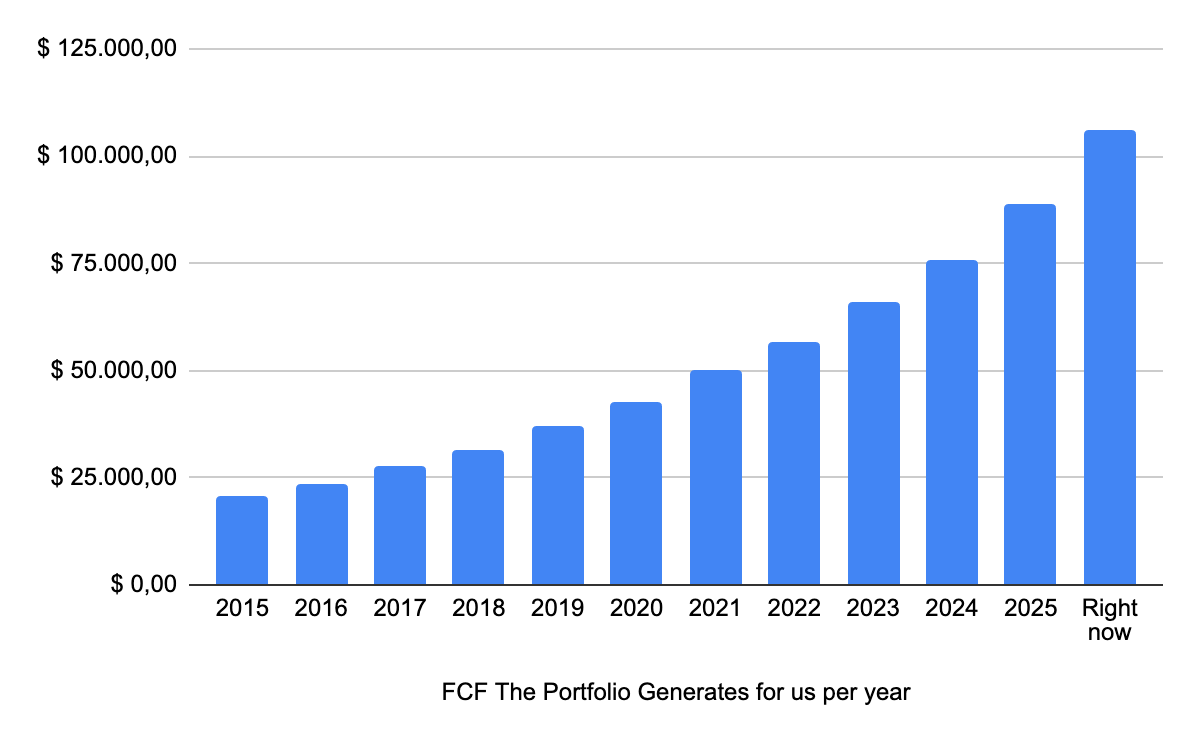
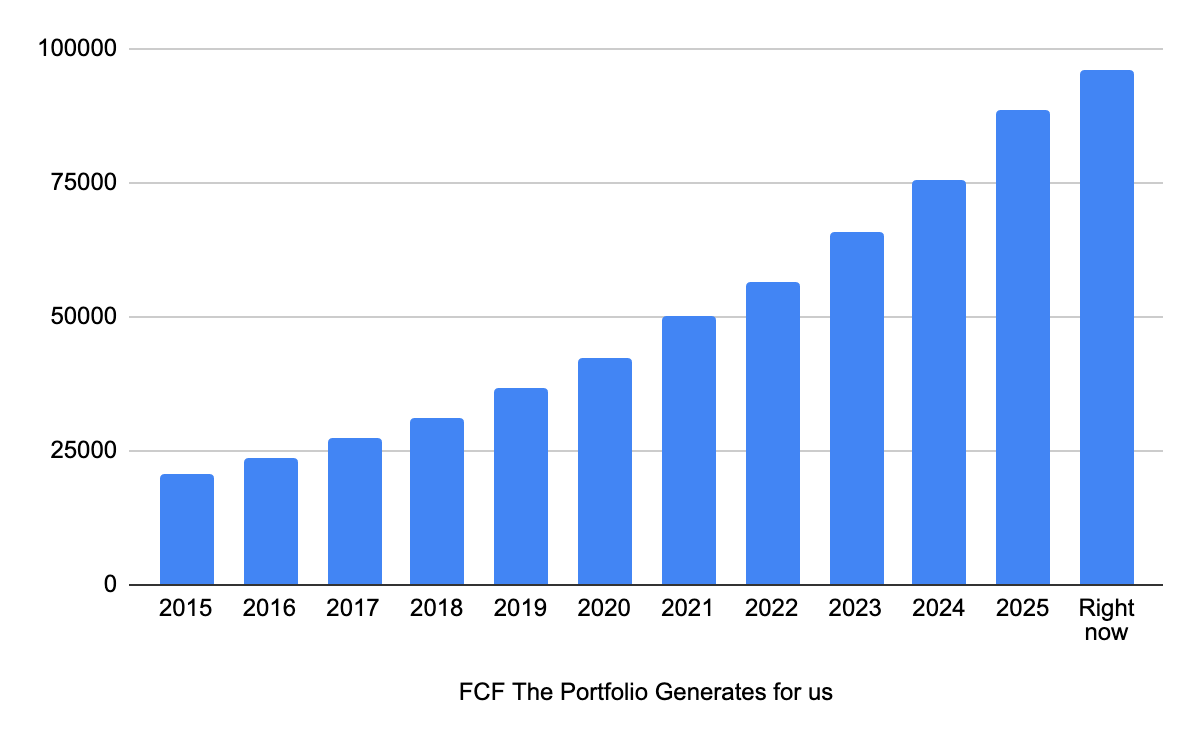
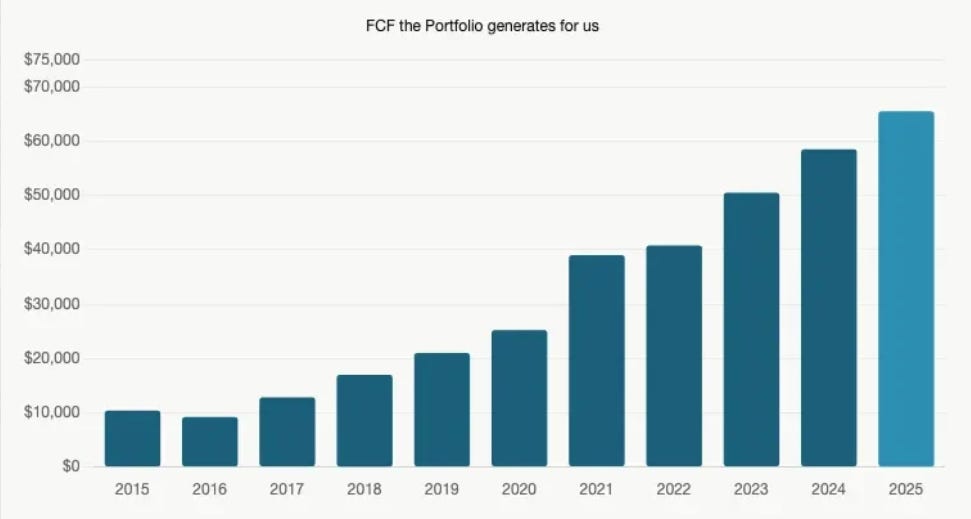
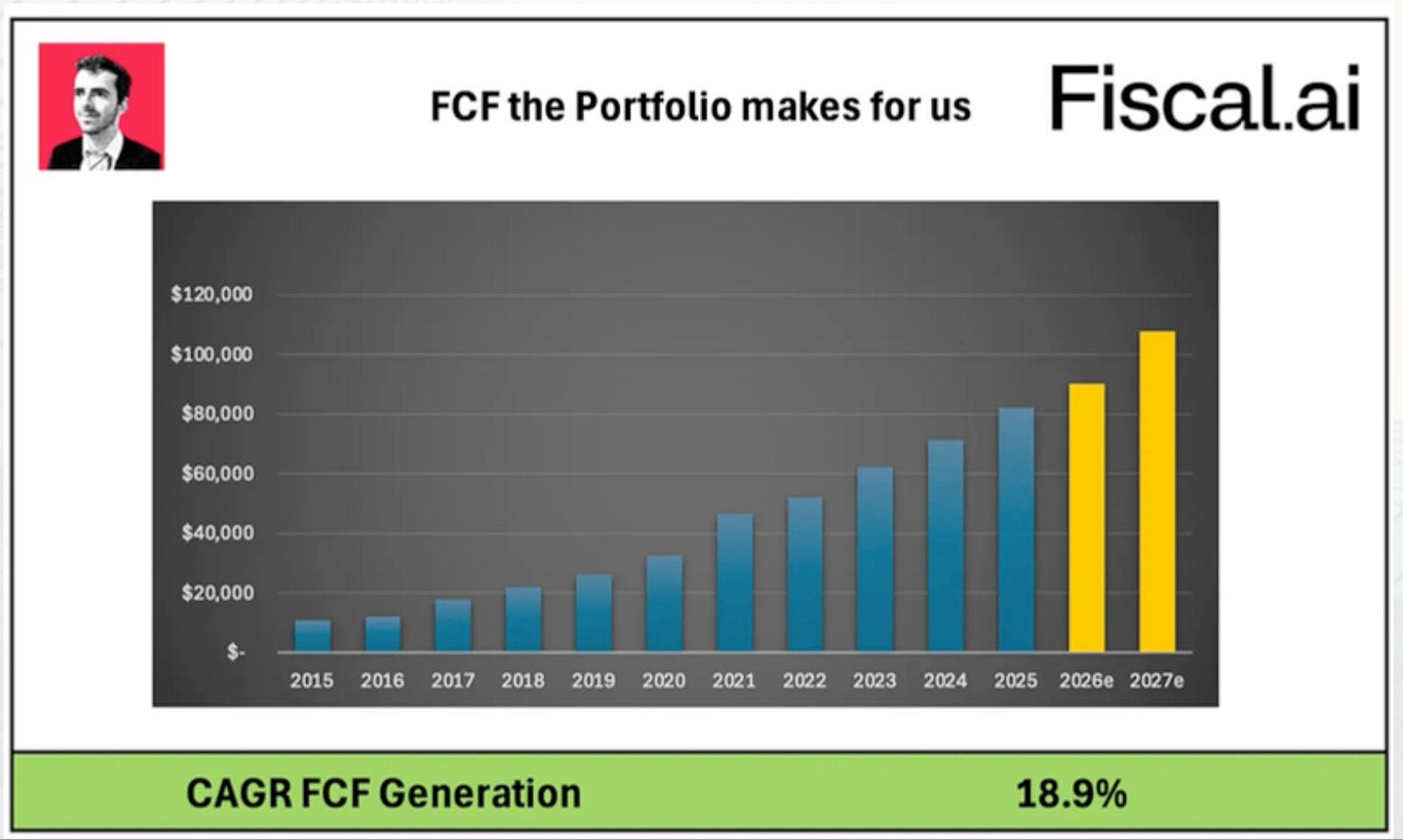
Here’s what the evolution over the past few years looks like:

I’m very happy with this trend.

Under the assumption that we keep adding $50.000 per month and that the intrinsic value of our companies compounds by 12% per year…

… Here’s what the future trajectory looks like:

This would mean our goal of generating $1 in Free Cash Flow per minute would be reached in 2032.

In our last Portfolio Update (July 2026), we mentioned Our Portfolio was making $96,156 in Free Cash Flow for us.

Today Our Portfolio generates $106,000 in Free Cash Flow.

The trend is clear: up.
(Please note that adding to Our Portfolio every single month definitely helps).

Here’s what Our Portfolio makes for us today:

  • Per year: $106.119

  • Per month: $8.843

  • Per week: $2.035

  • Per day: $290.7

  • Per hour: $12.1

  • Per minute: $0.20

Now let’s look at every single position in Our Portfolio.

The breakdown per position looks as follows:

Read more

Best Buys: August 2026

30 August 2026 at 14:44

Hi Partner 👋

It’s time for the Best Best Buys of the month today.

These are our favorite stocks that aren’t in Our Portfolio yet.

In other words: these stocks are the most likely to be added to the Portfolio.

Subscribe now

10 August Blessings Quotes

Past month

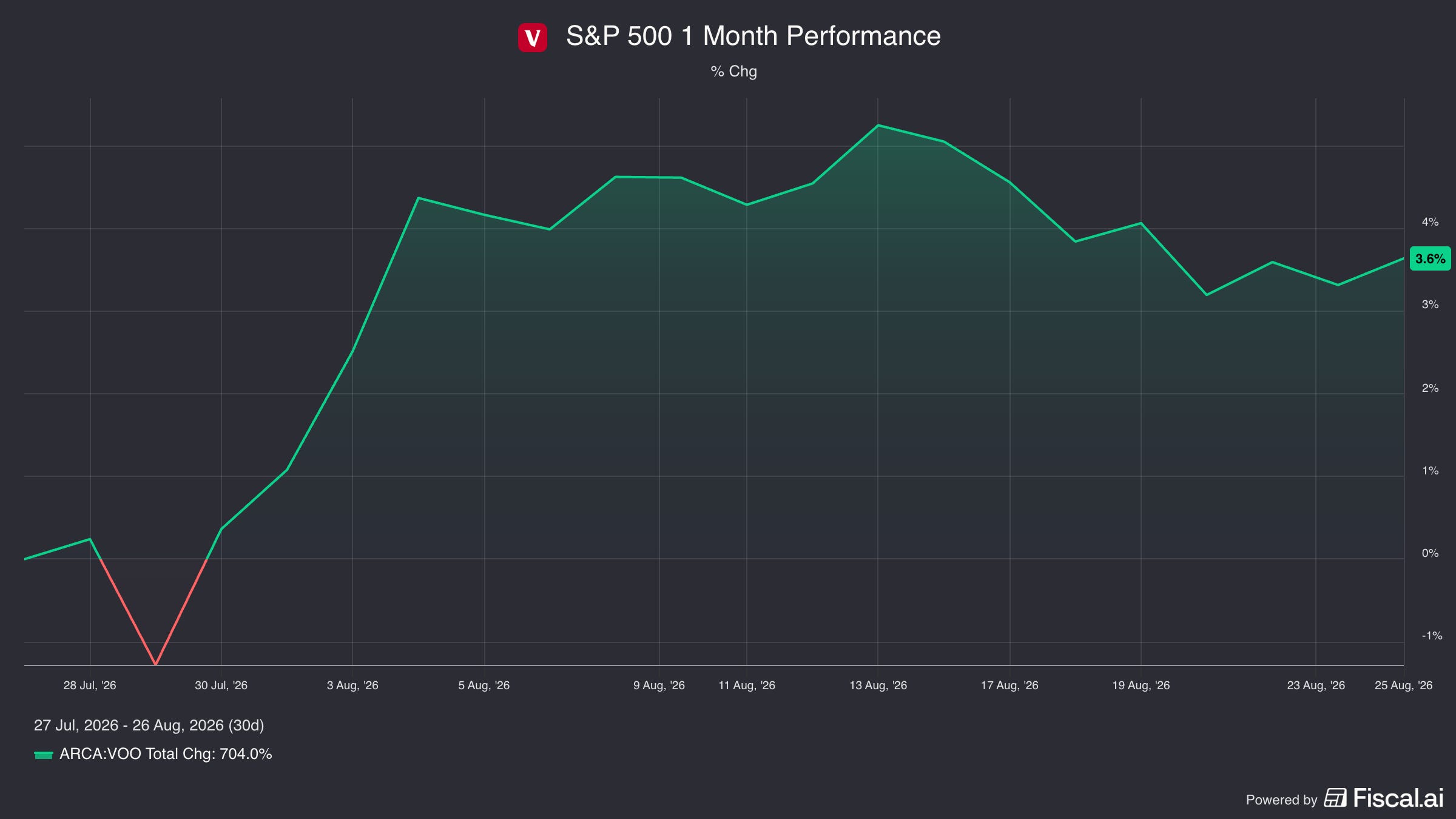
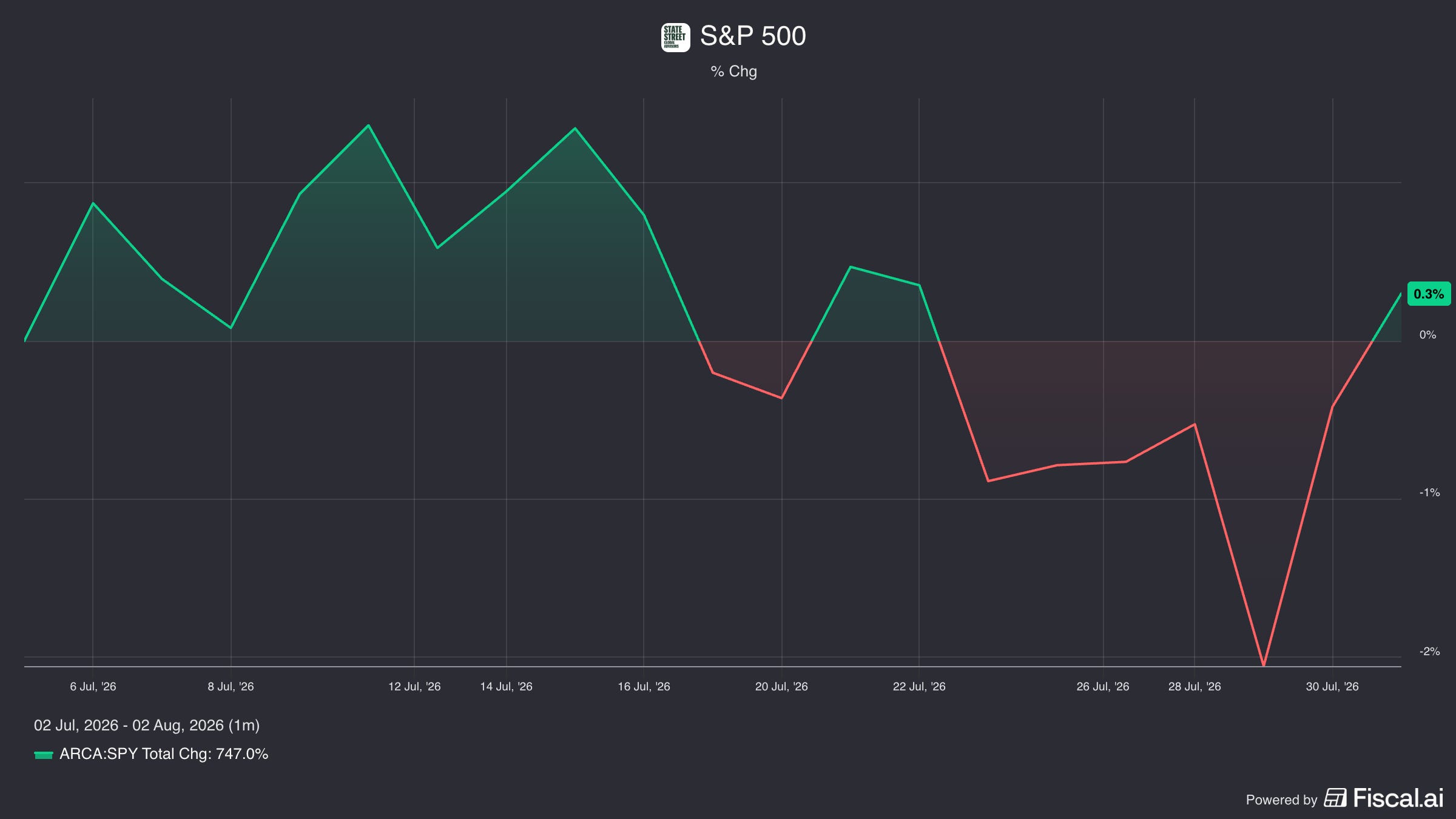
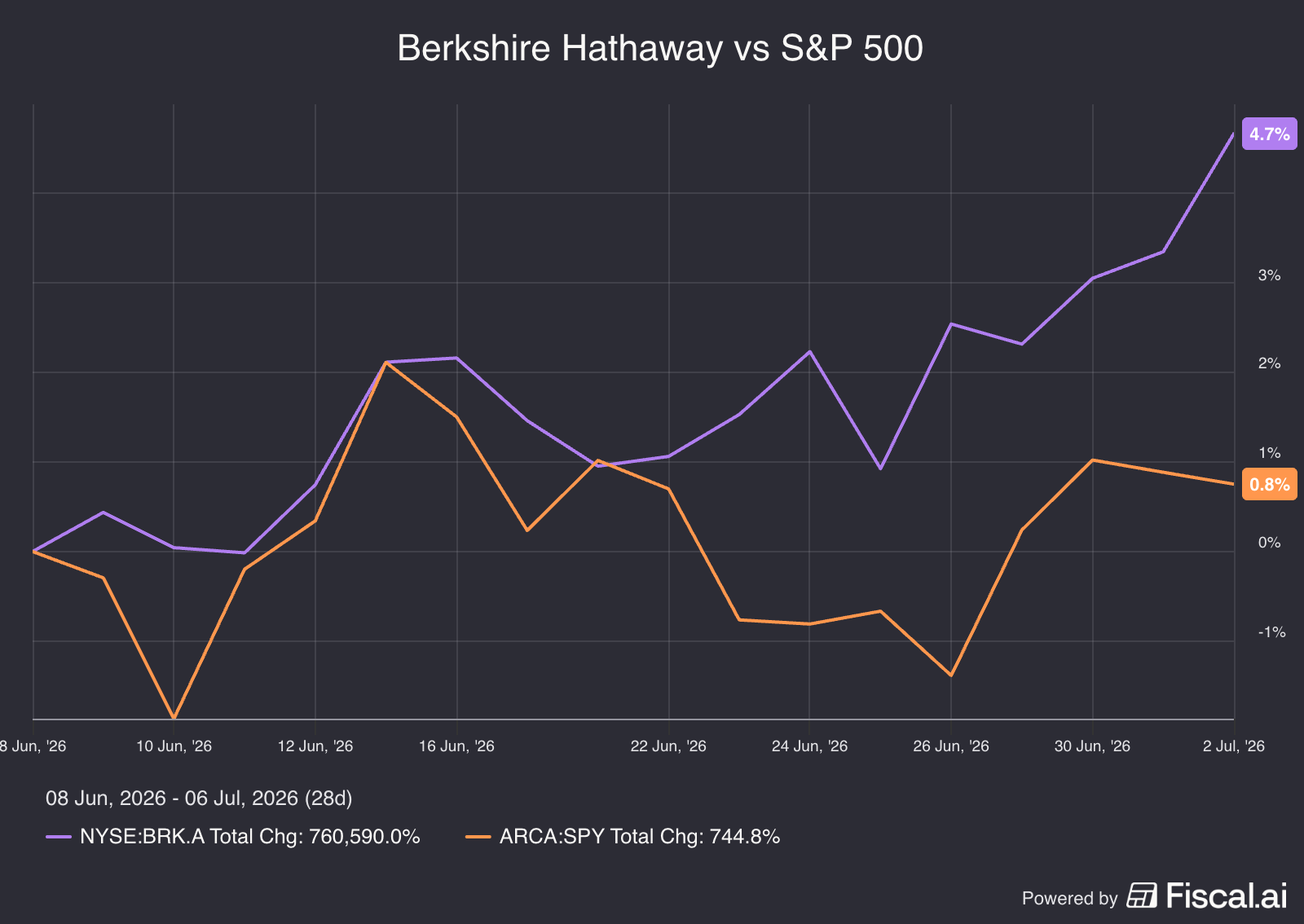
In the past month, the S&P 500 rose by +3.6%:

Source: Fiscal.ai

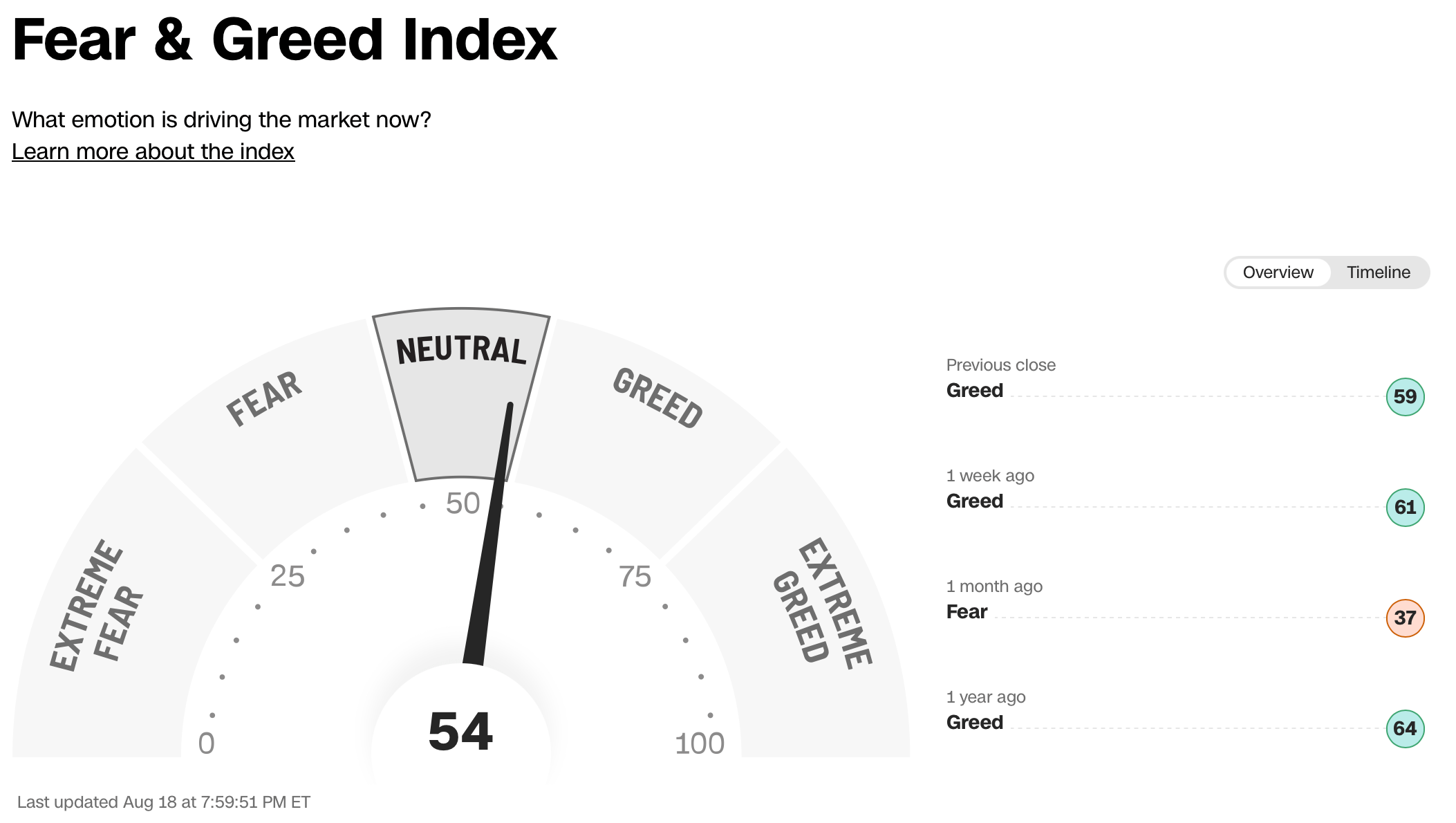
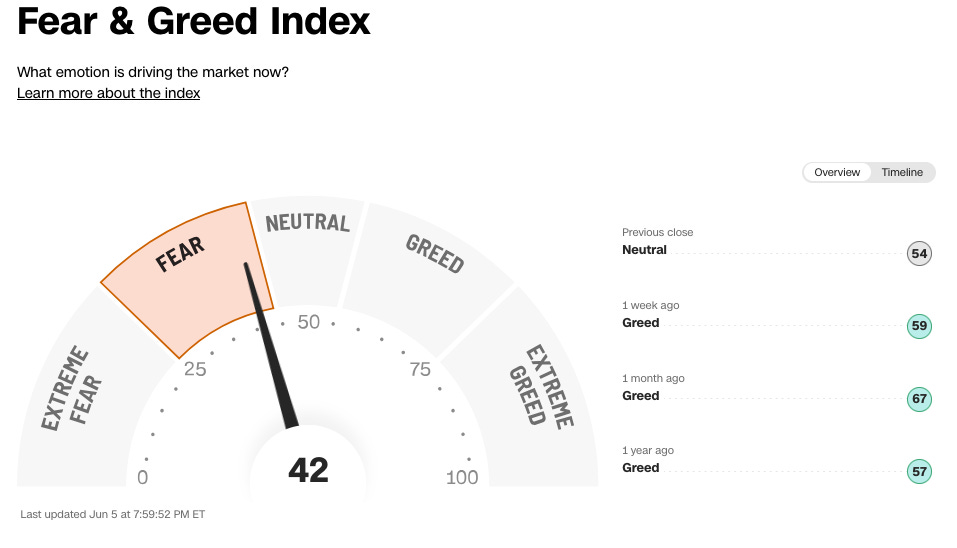
Investors are ‘Neutral’ today according to the Fear & Greed Index:

Best & Worst Performers

This overview shows you the best and worst performers in our investable universe.

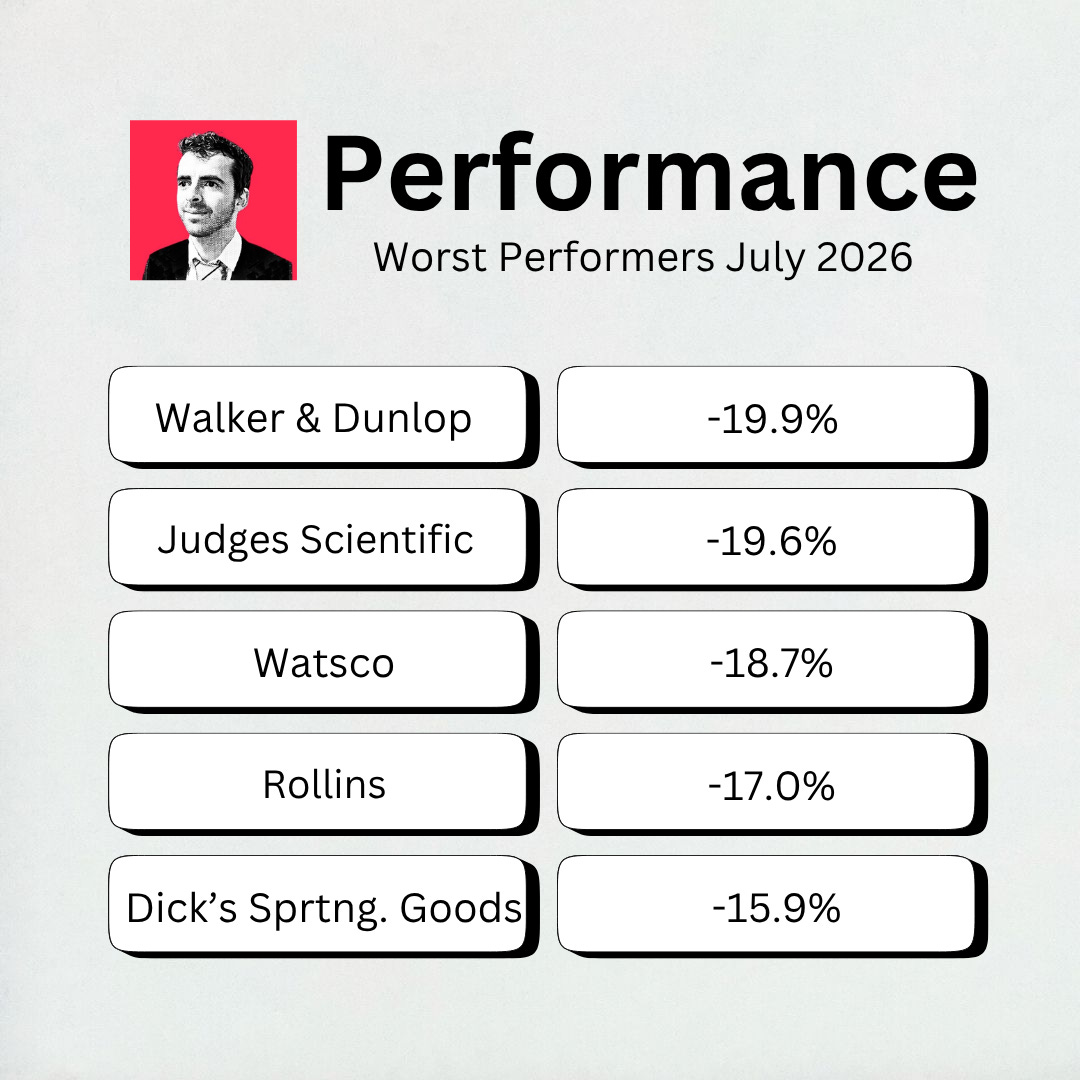
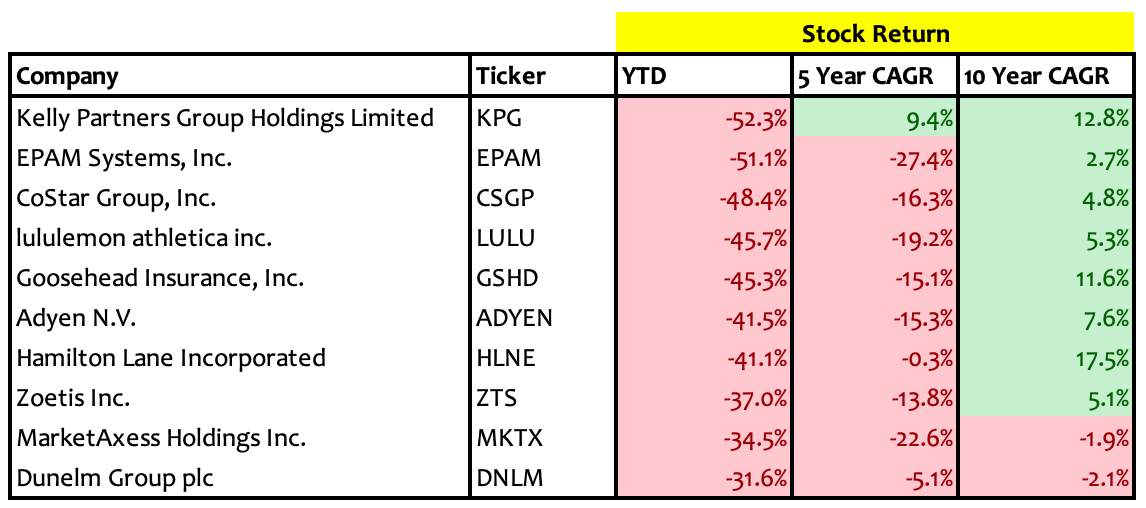
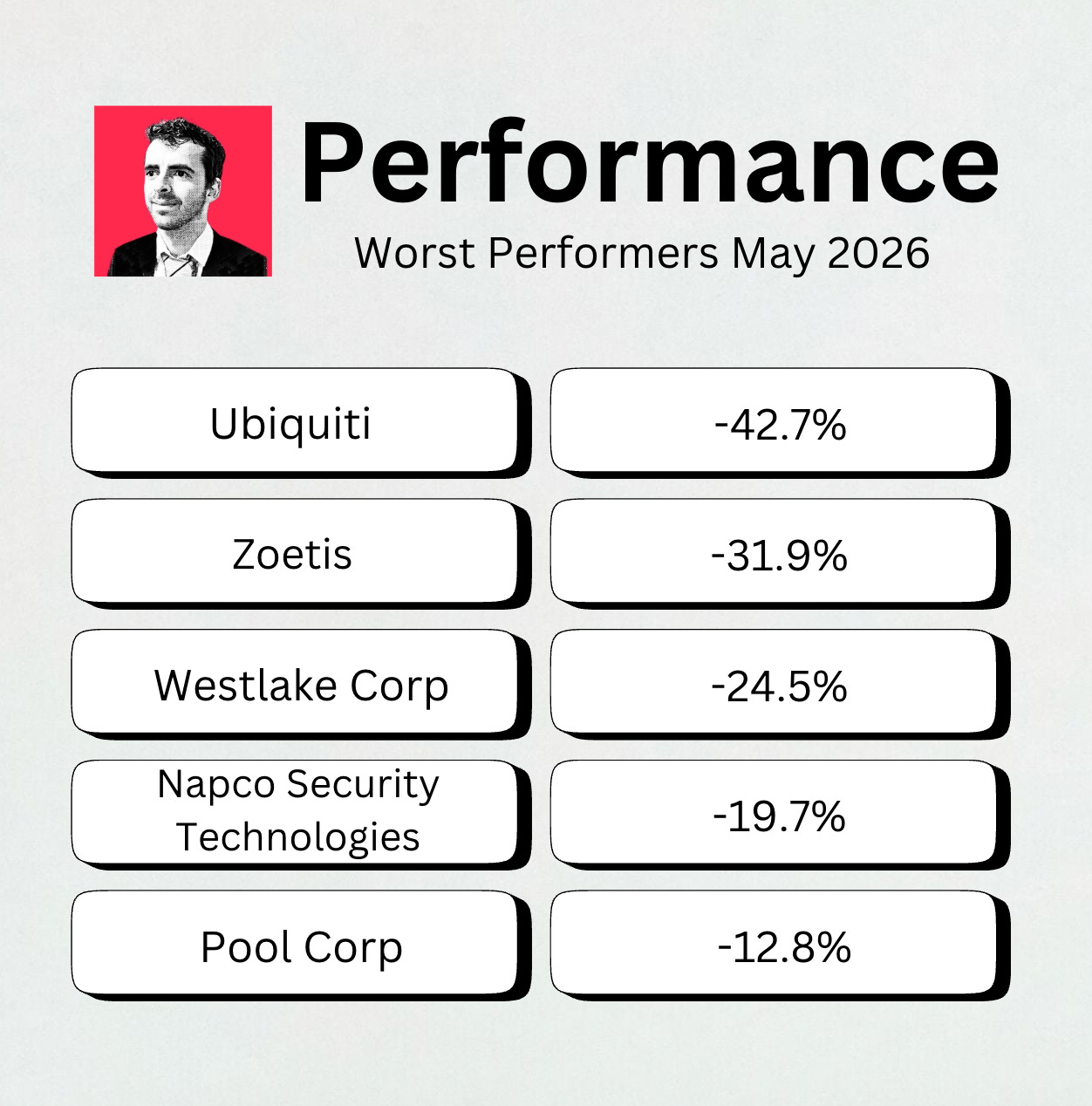
Worst performers

The cheaper we can buy great companies, the better.

Here are the worst performers of the past month:

Best performers

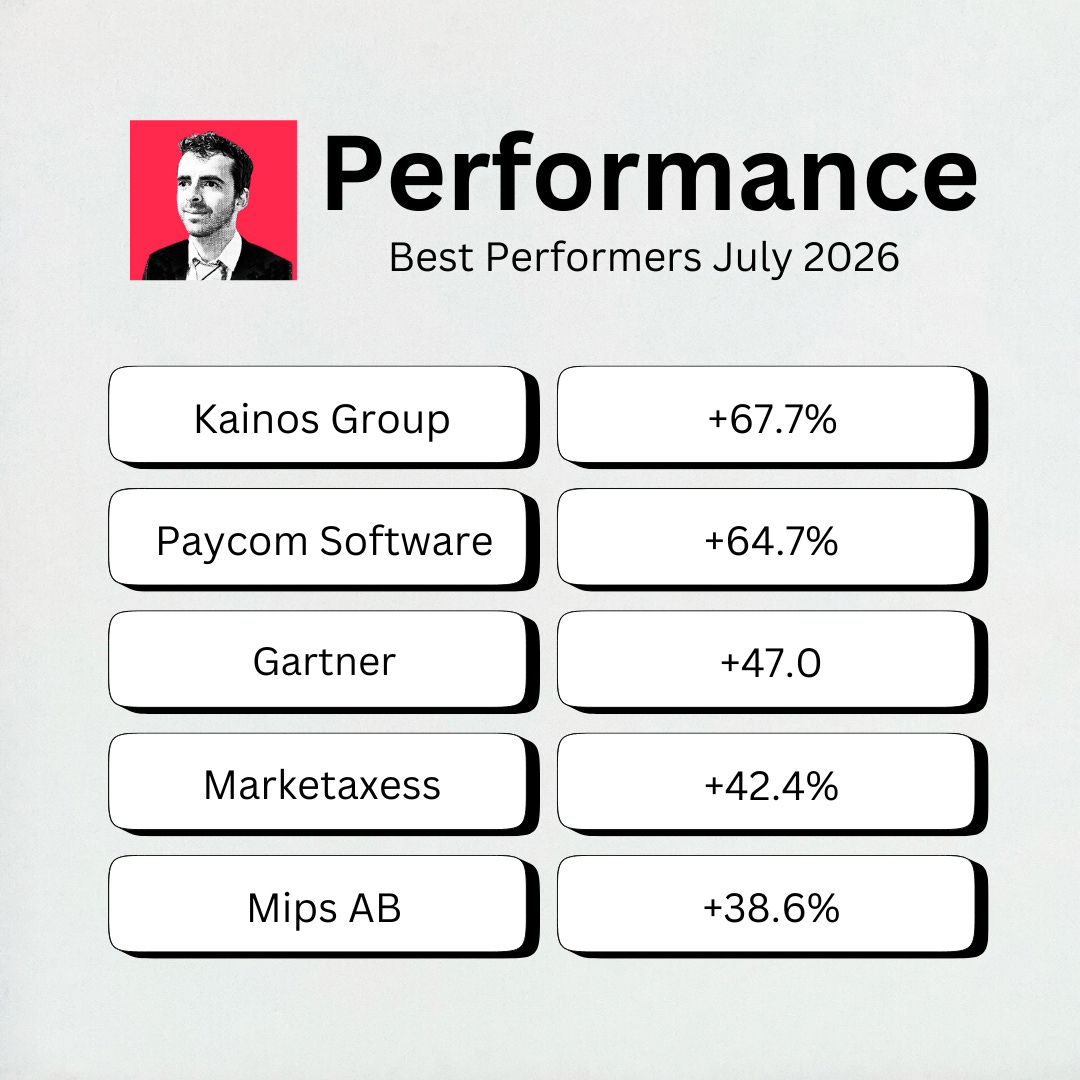
These stocks did well over the past month:

❄️ Spotlight: Watsco ($WSO)

How does the company make money?

Watsco is the largest distributor of HVAC/R (heating, ventilation, air conditioning, and refrigeration) equipment, parts, and supplies in North America.

It’s the distribution link between major equipment manufacturers (OEMs) and over 120,000 independent contractors and technicians.

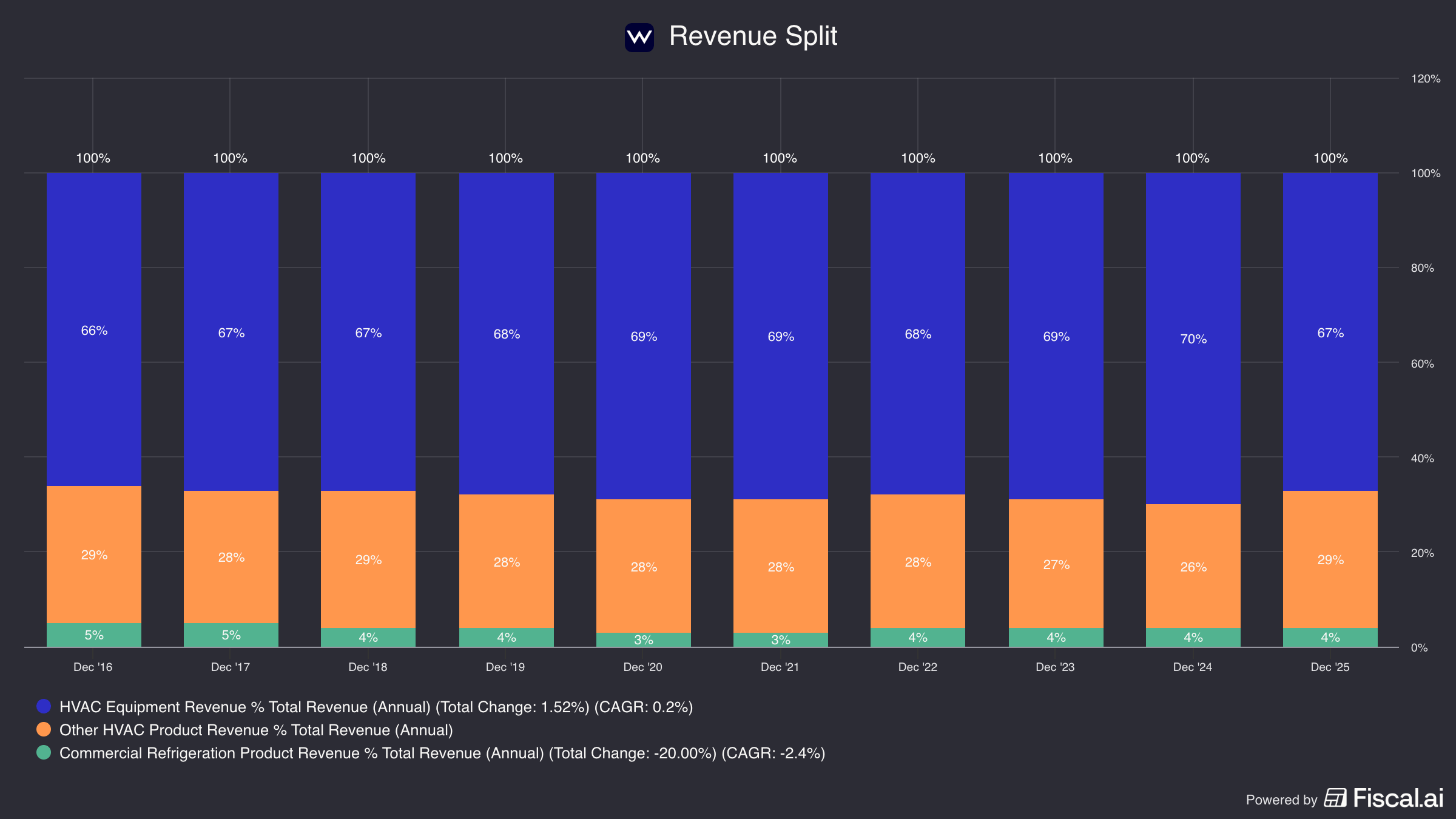
Watsco is active in three segments:

  • HVAC Equipment: Residential central air conditioners, heat pumps, furnaces, and commercial heating and cooling systems.

  • Other HVAC Products: Everything a contractor needs to install, maintain, or repair a system. It covers replacement parts (like motors, coils, and compressors), thermostats, ductwork, copper tubing, refrigerants, insulation, tape, and tools.

  • Commercial Refrigeration: Walk-in coolers, freezers, ice machines, and supermarket refrigeration systems used primarily by restaurants, grocery stores, and the food/beverage industry.

The revenue split looks as follows:

Source: Fiscal.ai

What’s interesting?

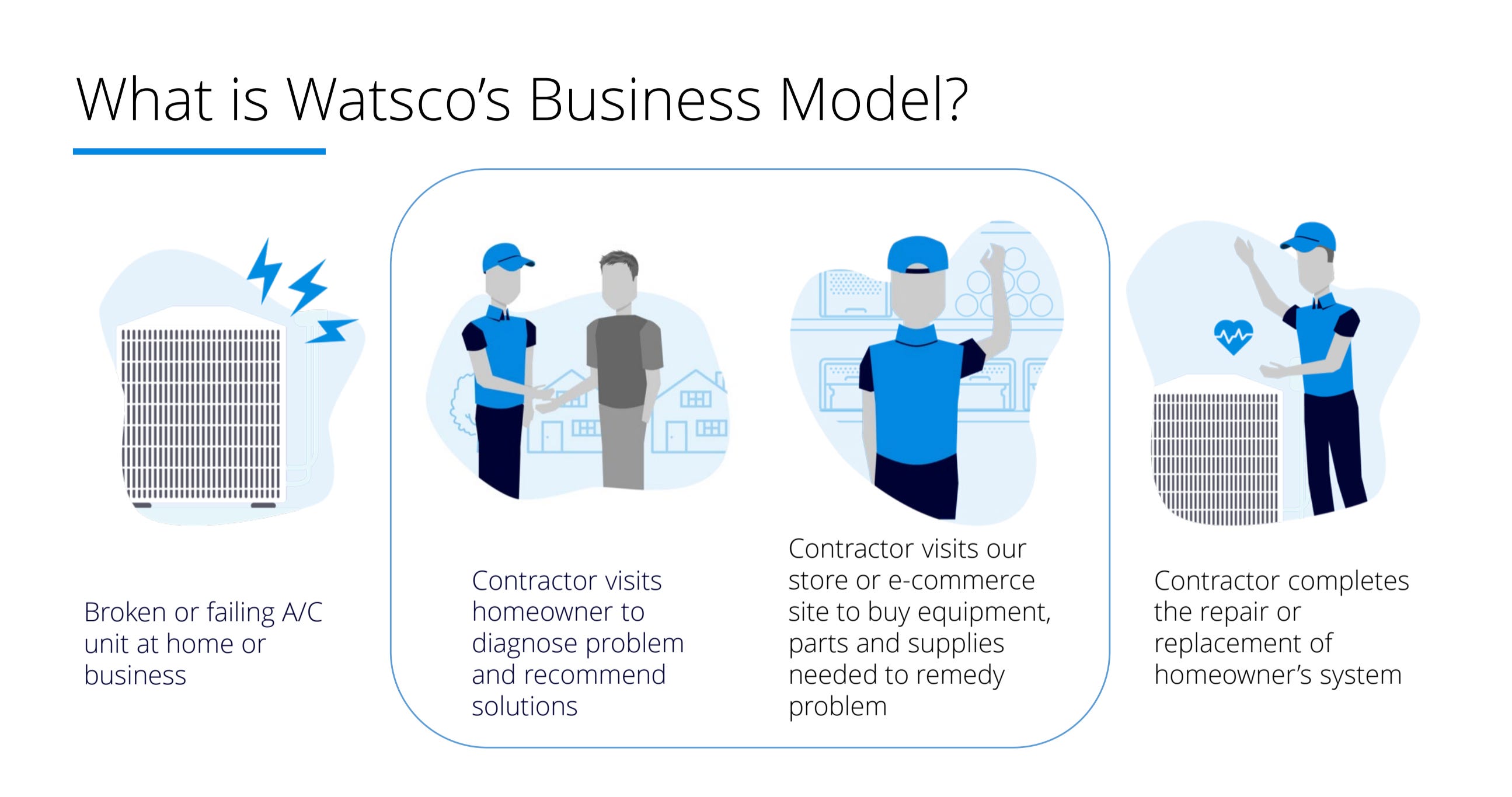
70%-80% of sales are emergency replacements & repairs.

This means these sales are at least somewhat recurring.

When something breaks down, the most important thing for contractors is how easily and quickly they can get the parts, not what they cost.

Source: Watsco Investor Relations

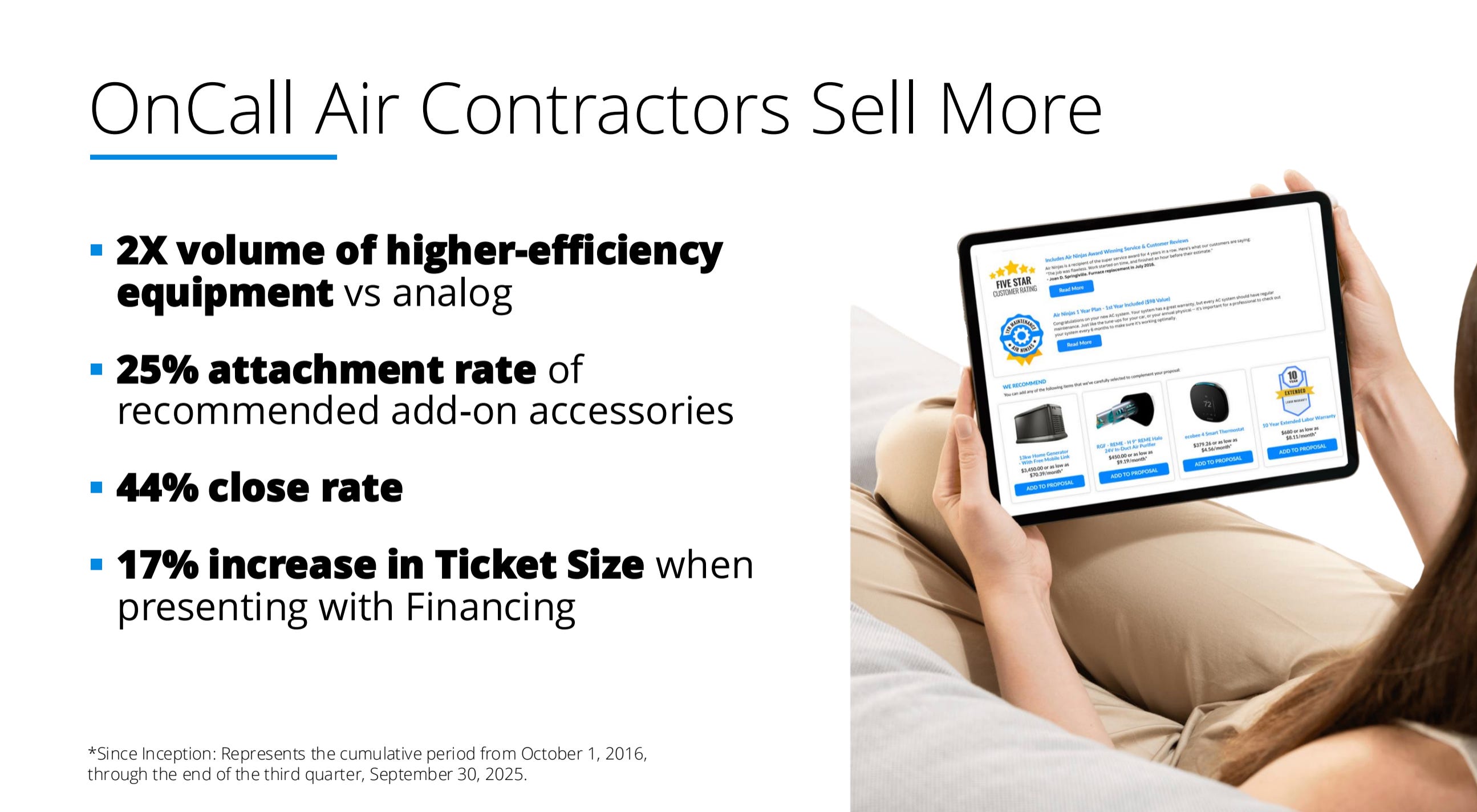
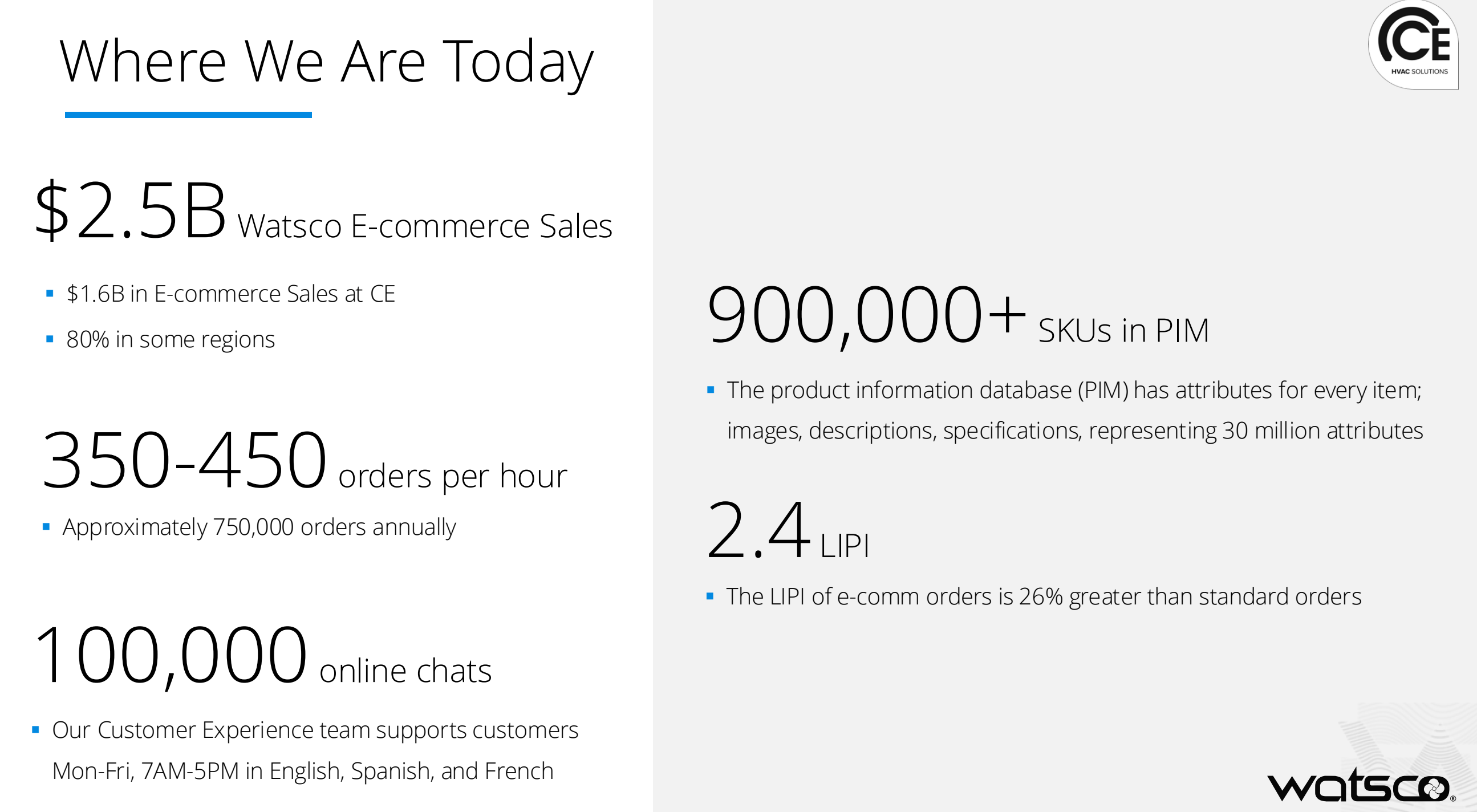
One of Watsco’s biggest advantages is its digital platforms.

They help contractors:

  1. Find and order the right parts

  2. Create quotes for customers

  3. Complete more jobs

This helps contractors increase their profits.

Source: Watsco Investor Relations

Today, e-commerce sales generate one third of their total revenue:

Source: Watsco Investor Relations

More Room to Grow

Beyond its e-commerce platforms, Watsco has several other advantages.

Watsco is a large serial acquirer active in a highly fragmented industry:

  • They sell about 1 in 5 residential systems.

  • There are 2,000+ regional distributors in North America.

  • Watsco isn’t even active in all 50 states yet

Management sees Watsco as a business that’s still being built.

I think they’re right.

Fundamentals

The fundamentals of Watsco look very strong:

Asset-Light: Watsco requires almost no capital to operate
Balance Sheet: They have very little debt
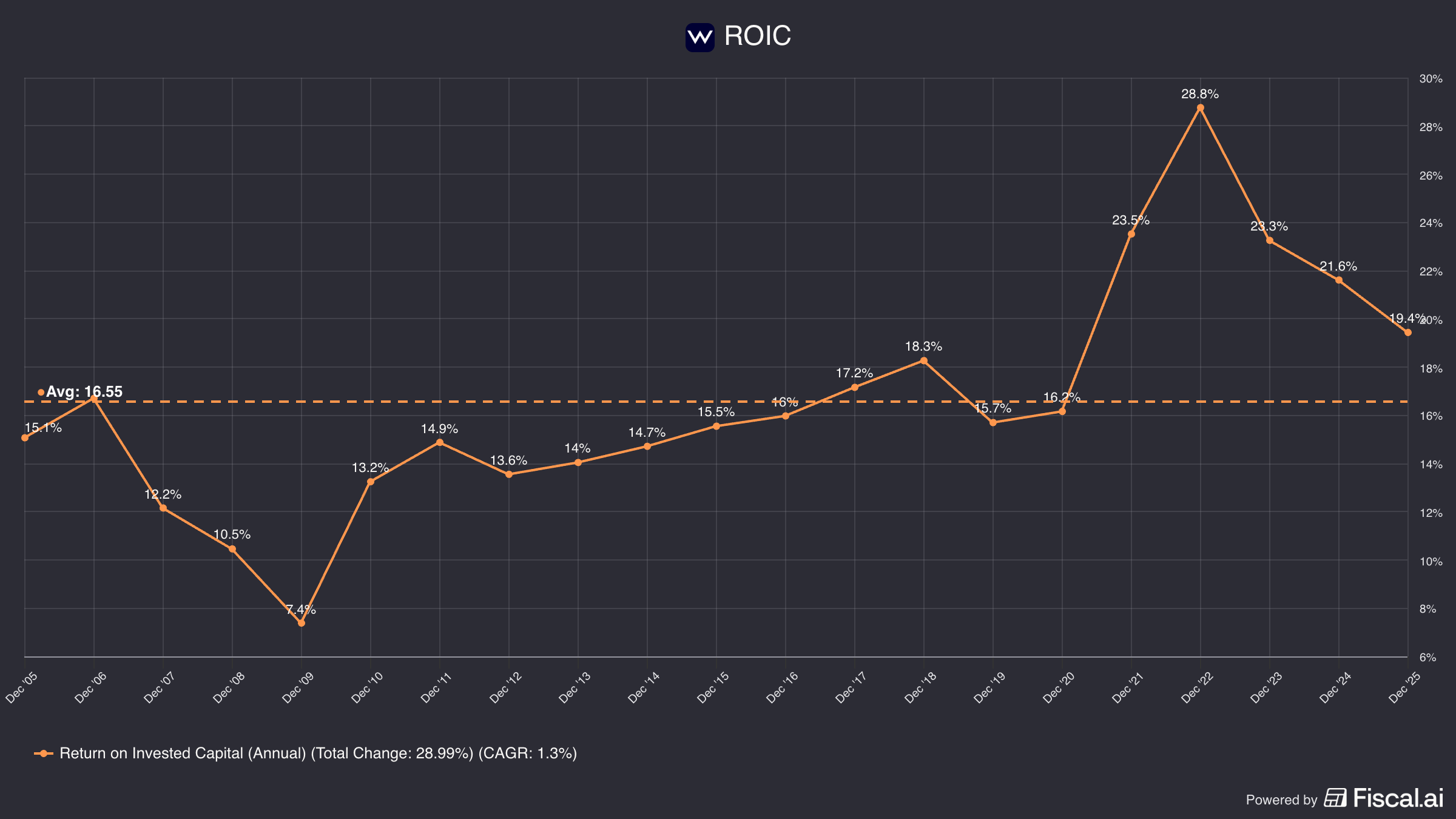
ROIC: Consistently generates 15%+ Return on Invested Capital
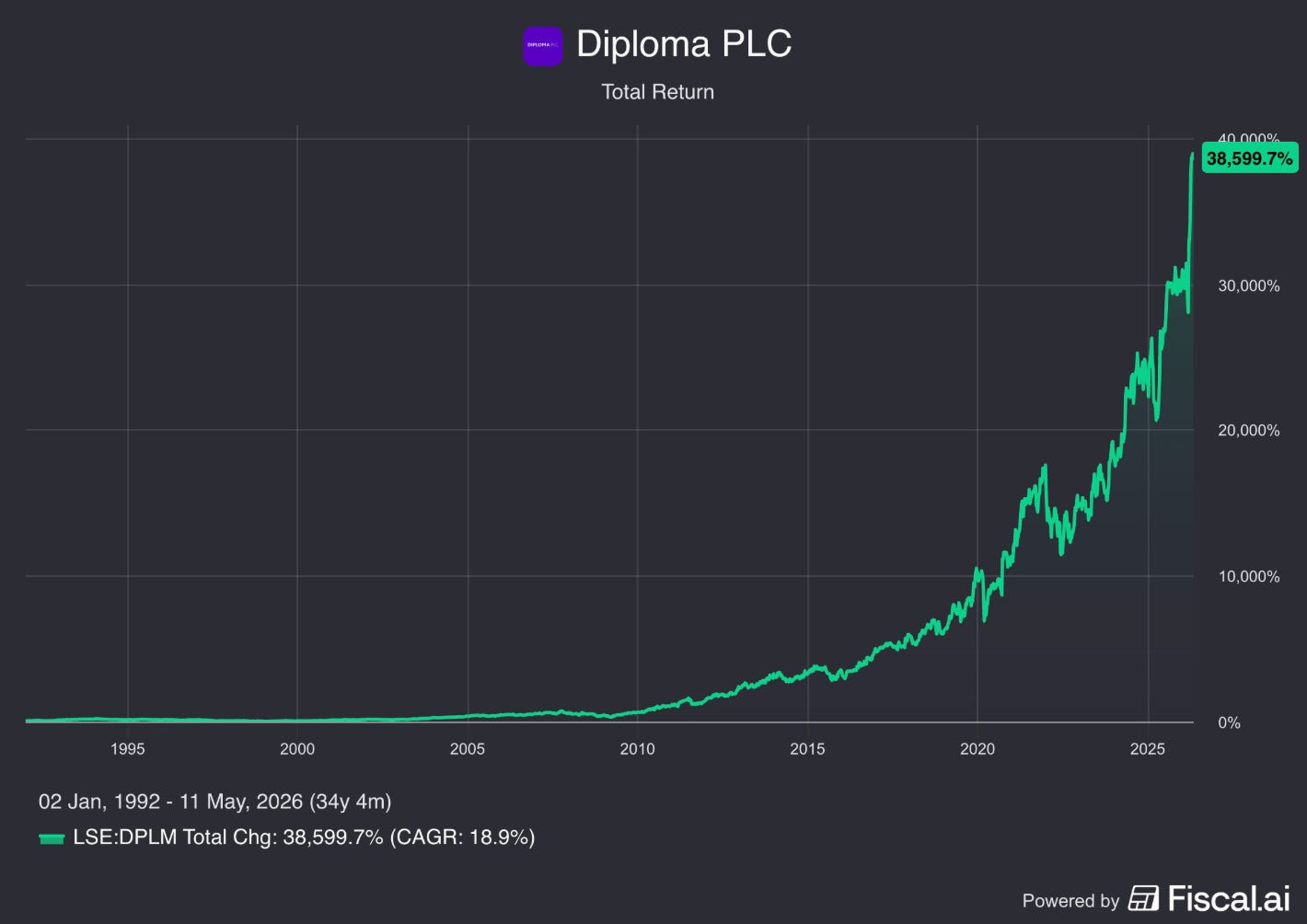
Value creation: The stock is up nearly 12,000% since 1990.

Source; Fiscal.ai

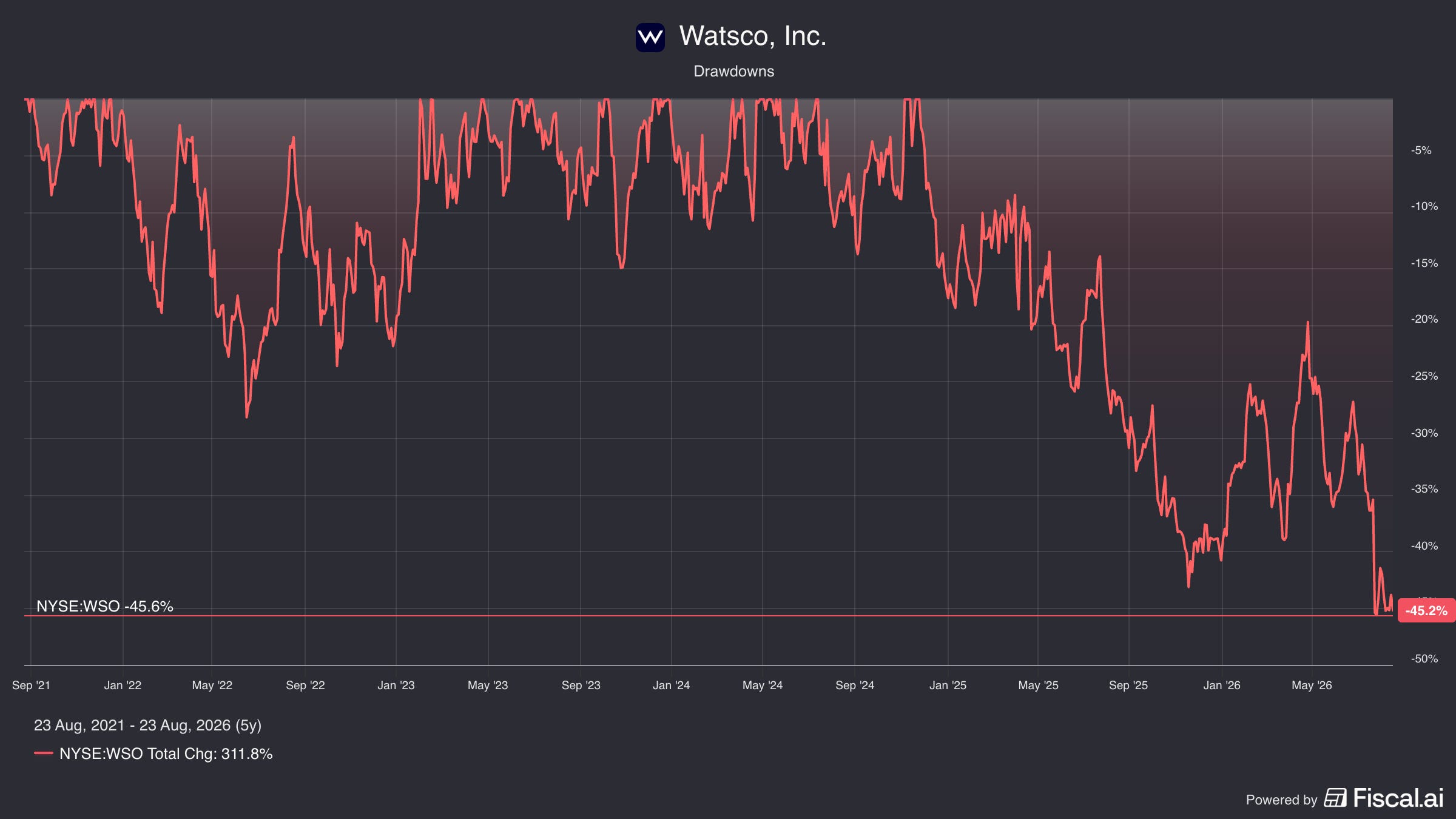
At the same time, Watsco is down over 45% from its peak:

Source; Fiscal.ai

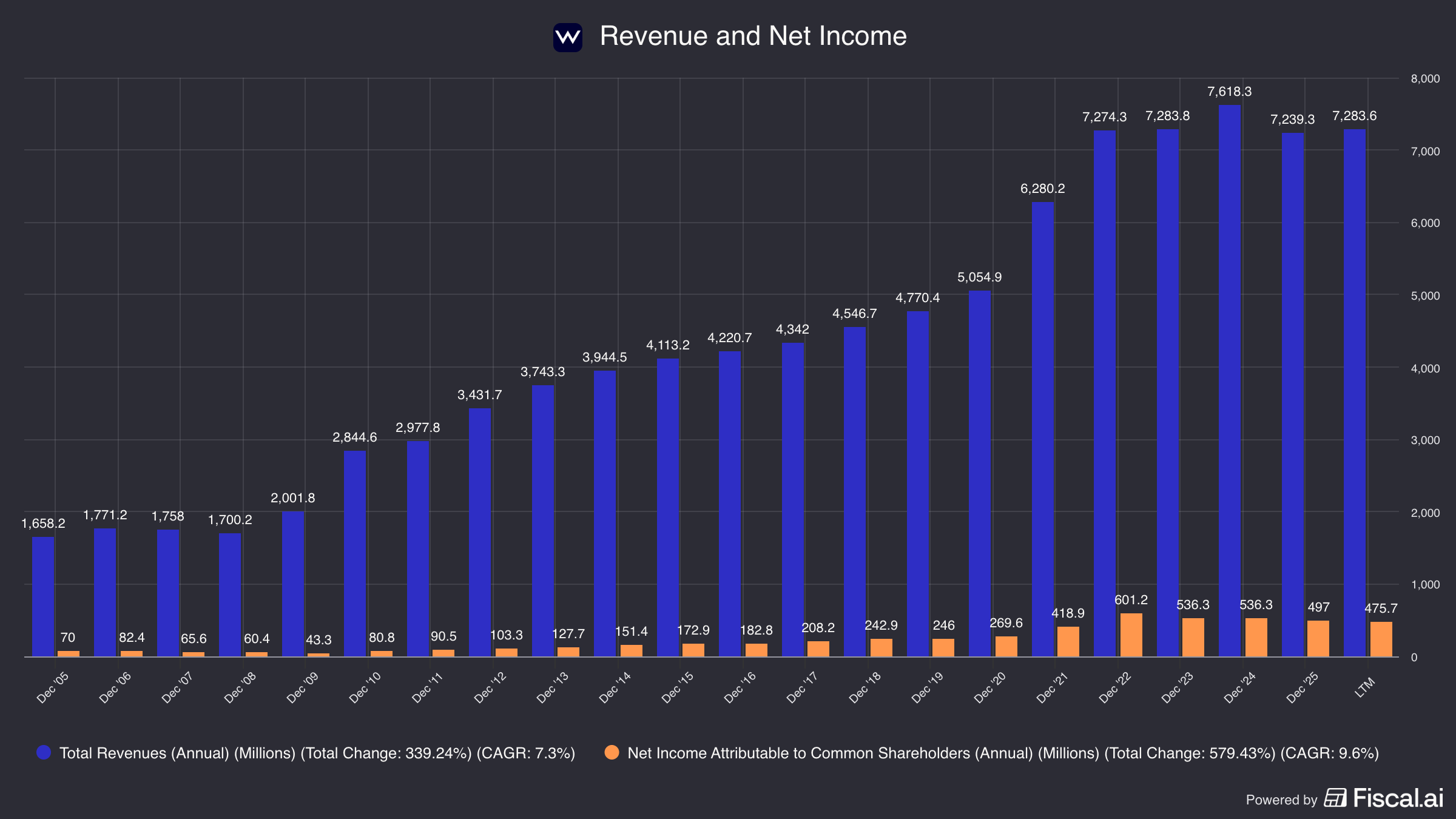
The market doesn’t like that revenue and net income have fallen over the past few years:

Source: Fiscal.ai

However, this isn’t a problem with the underlying business.

Instead, three temporary headwinds hit at the same time:

  • COVID Pull-Forward: High demand during the pandemic made sales unusually strong. Dealers also ordered too much inventory and had to work through it when demand returned to normal.

  • A2L Refrigerant Transition: The switch to new refrigerants disrupted supply chains and temporarily boosted demand.

  • OEM Pricing Normalization: Manufacturers raised prices sharply after the pandemic. This temporarily boosted Watsco’s sales and profit margins.

Management has long-term targets of $10 billion in revenue and 30% gross margins.

If we assume a 8% Net Profit Margin is realistic, this would translate into $800 million in Net Income.

At a FWD PE of 25x, this means the company should be worth $20 billion ($800 million x 25) by then.

That’s an upside potential of 56% compared to the current stock price.

Best Buys August 2026

Let’s now dive into our five favorite buys for the month.

These are our favorite stocks that aren’t in Our Portfolio today.

In other words: these stocks are the most likely to be added to the Portfolio right now.

As a reminder, you have access to Our Portfolio here.

5. Hermès International ($RMS.PA)

How does the company make money?

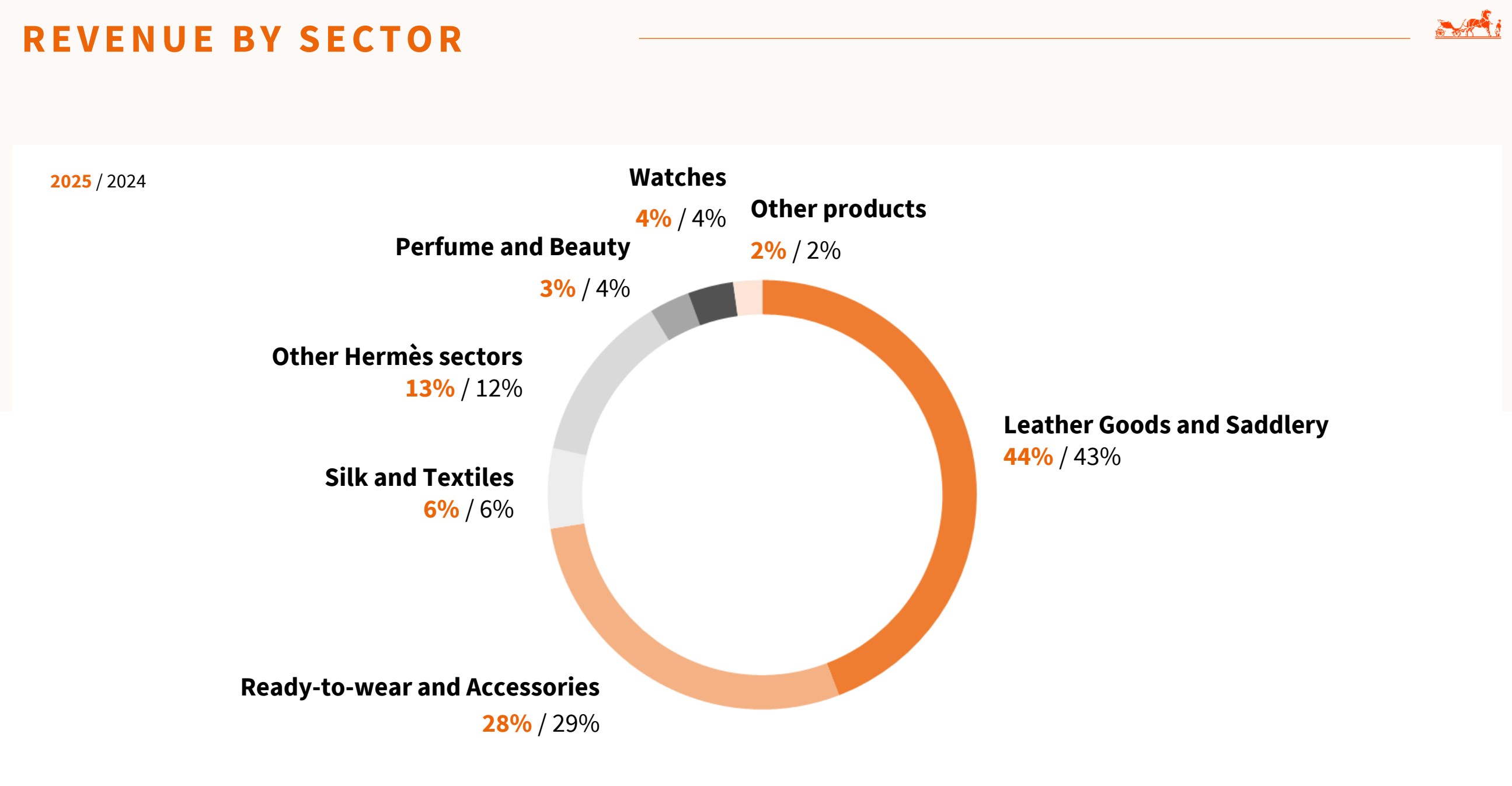
Hermès designs, manufactures, and sells ultra-luxury goods across 16 product métiers.

Think about handcrafted leather goods (such as the Birkin and Kelly bags), silk scarves, ready-to-wear fashion, perfumes, and watches.

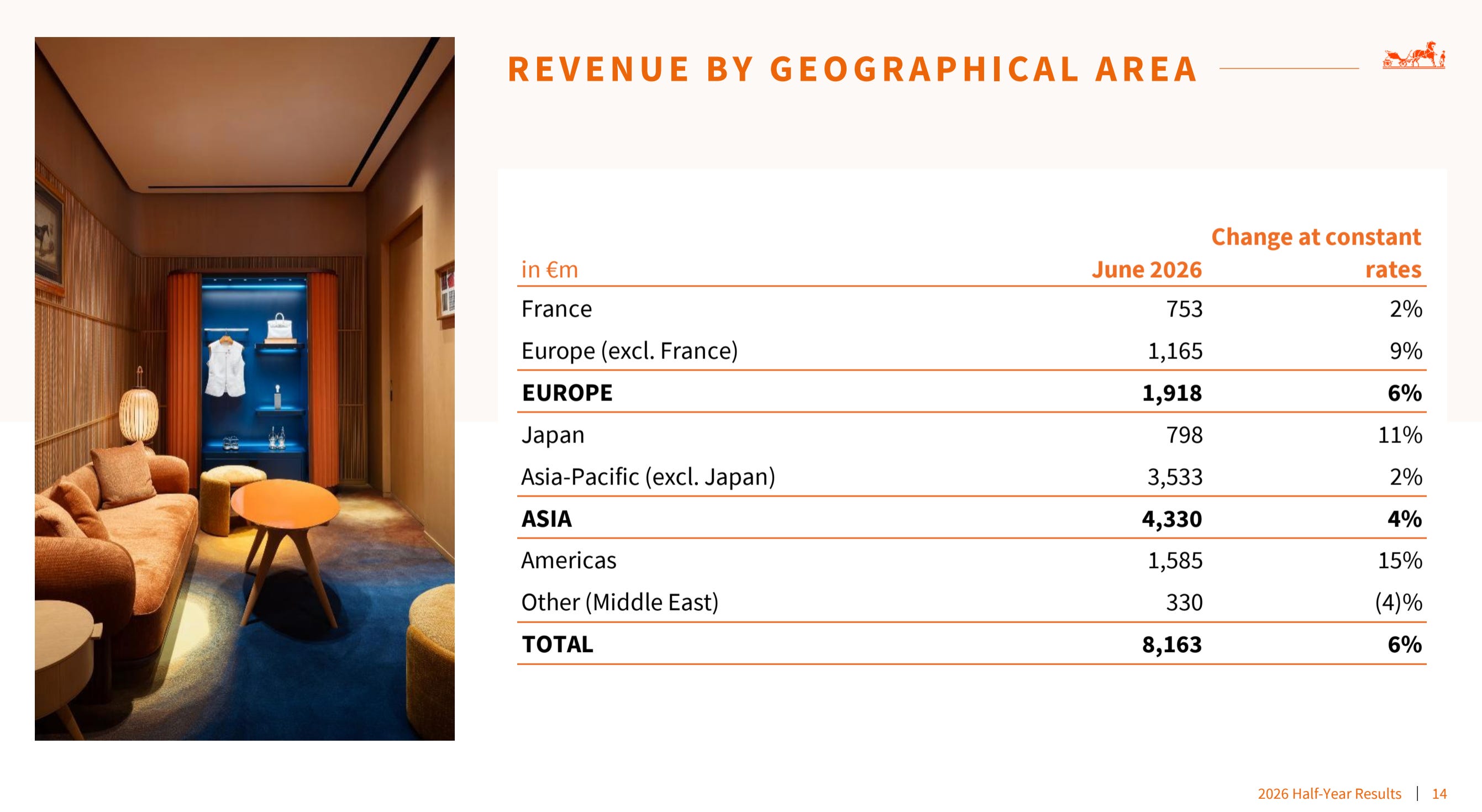
Source: Hermes Investor Relations

Hermès runs on exclusivity.

They intentionally make fewer products than customers want.

This means they don’t need to offer discounts, sell through outlets, or hold excess inventory.

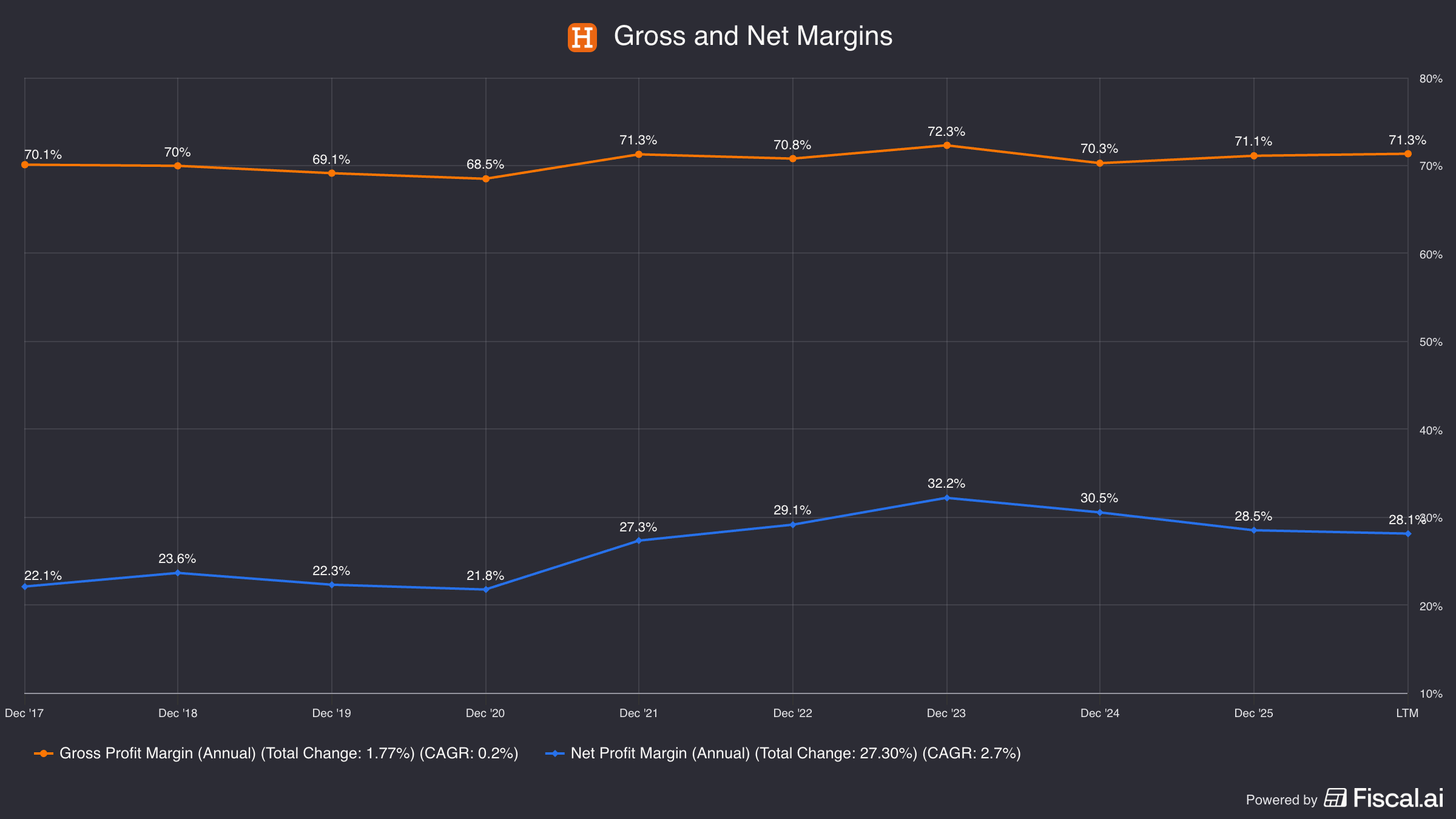
As a result the company operates at very high margins.

Source: Fiscal.ai

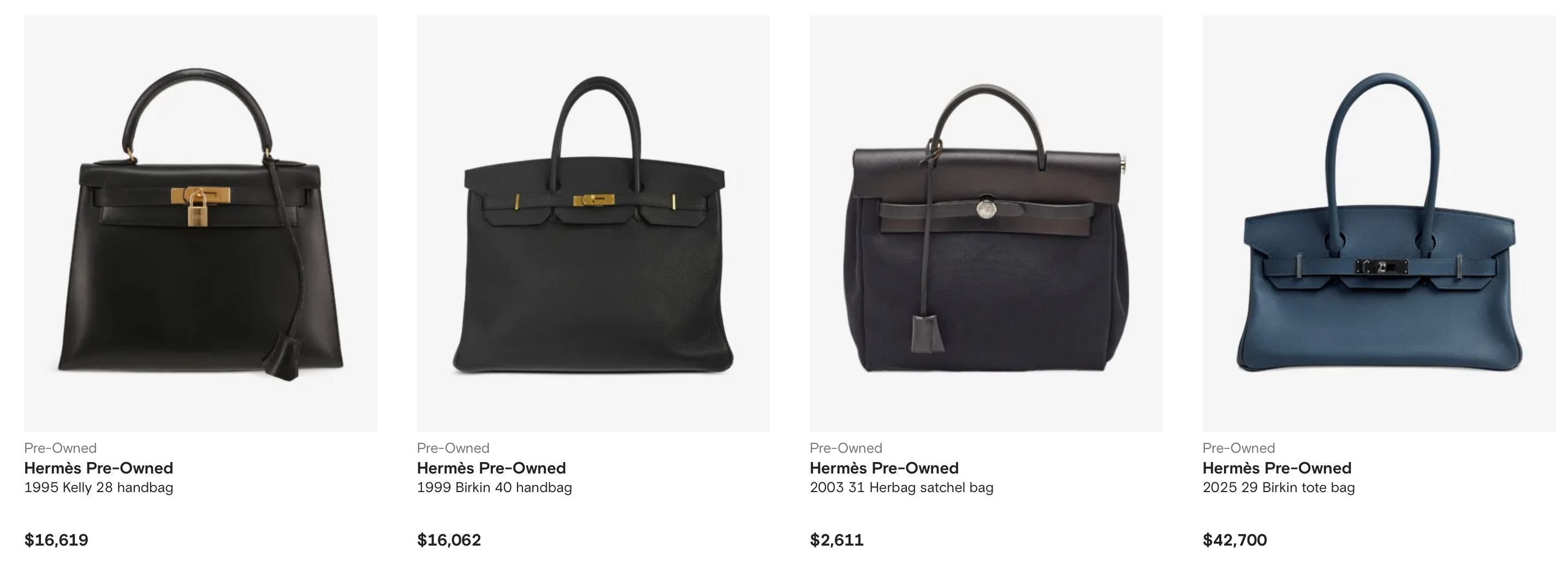
Demand for Hermès bags is so high that pre-owned bags often sell for more than new ones.

Would you pay $42.700 for a handbag?!

Source: Farfetch

Another thing we love?

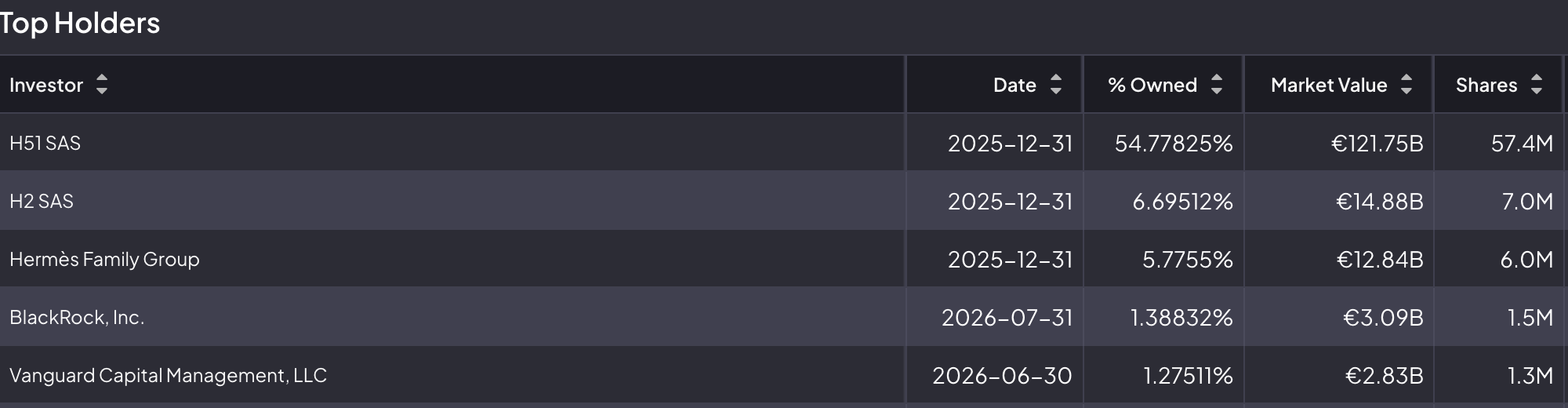
The founding family controls more than 65% of the equity.

This gives them serious skin-in-the game.

It’s a strong incentive to protect the brand equity that has been built over generations.

Source: Fiscal.ai

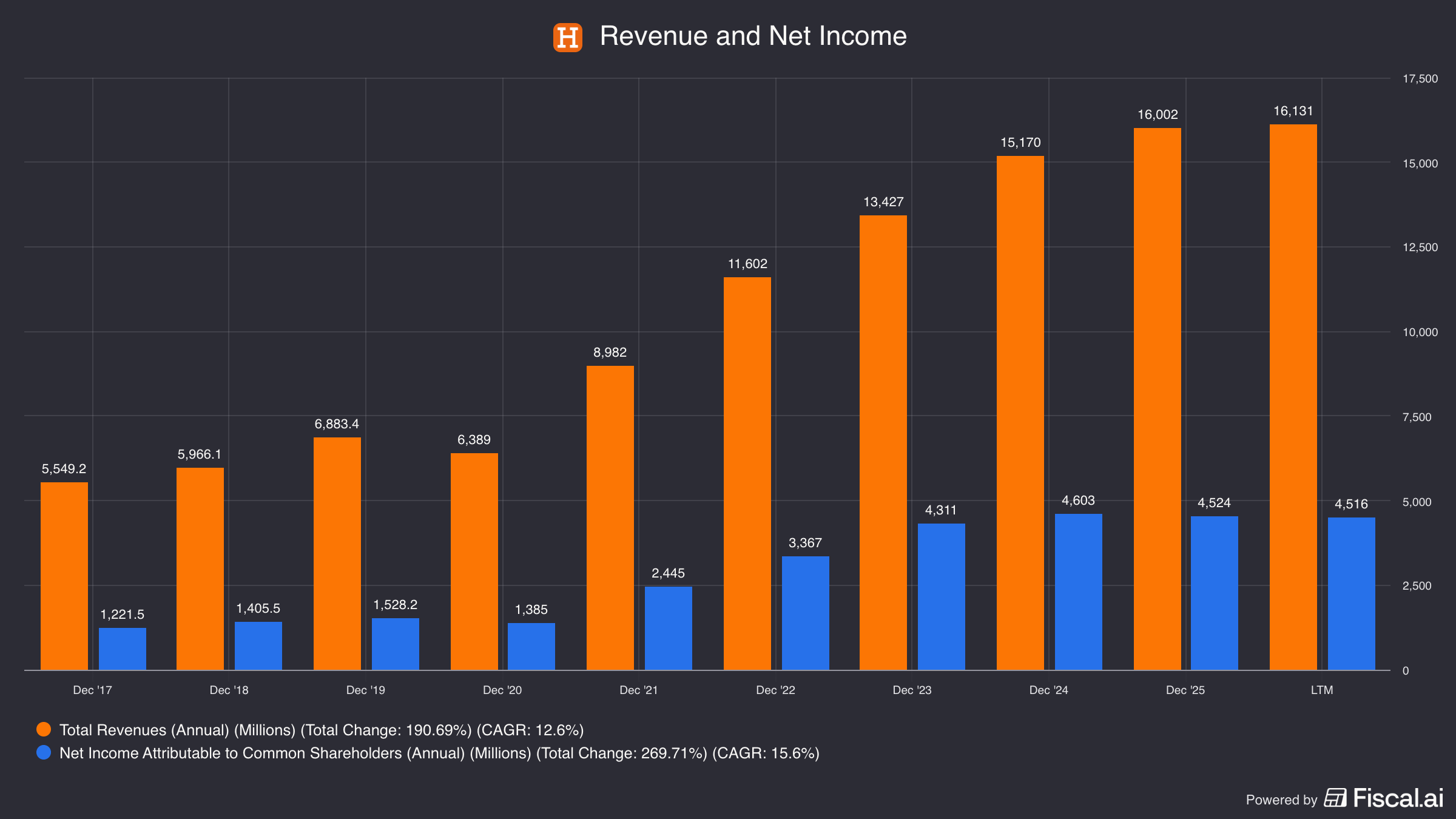
In 2026, Revenue and Net Income has slowed a little bit:

Source: Fiscal.ai

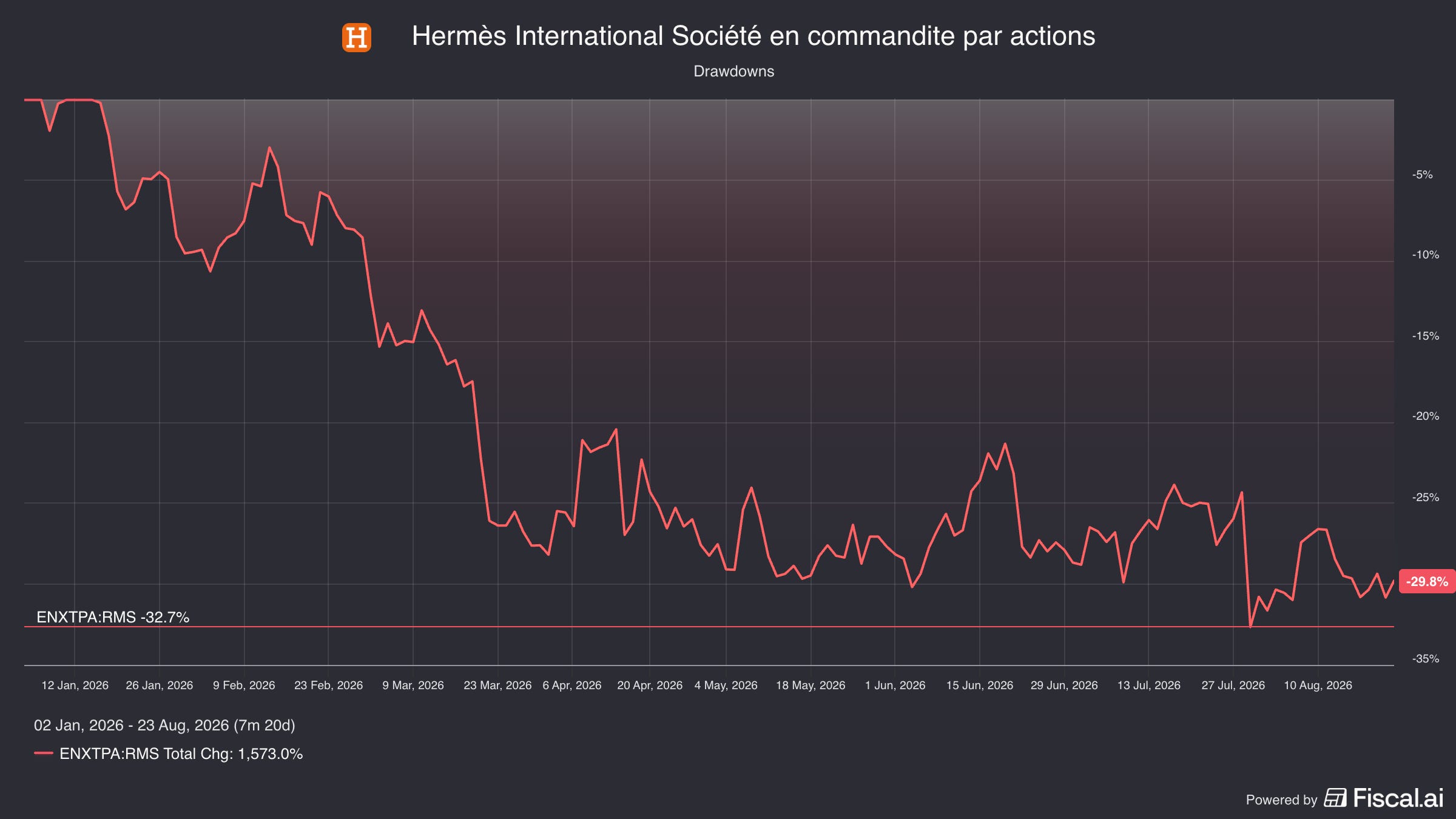
As a result, the stock is down nearly 30%:

Source: Fiscal.ai

But much of the slower growth comes from currency headwinds.

On a constant-currency basis, the underlying business is still growing.

Source: Hermes Investor Relations

To summarize:

  • Hermès is one of the strongest brands in the world

  • It’s family-run

  • Incredibly profitable

  • After years of being very expensive, the valuation e is finally coming down to more reasonable levels

4. Canadian National Railway ($CNI / $CNR.TO)

How does the company make money?

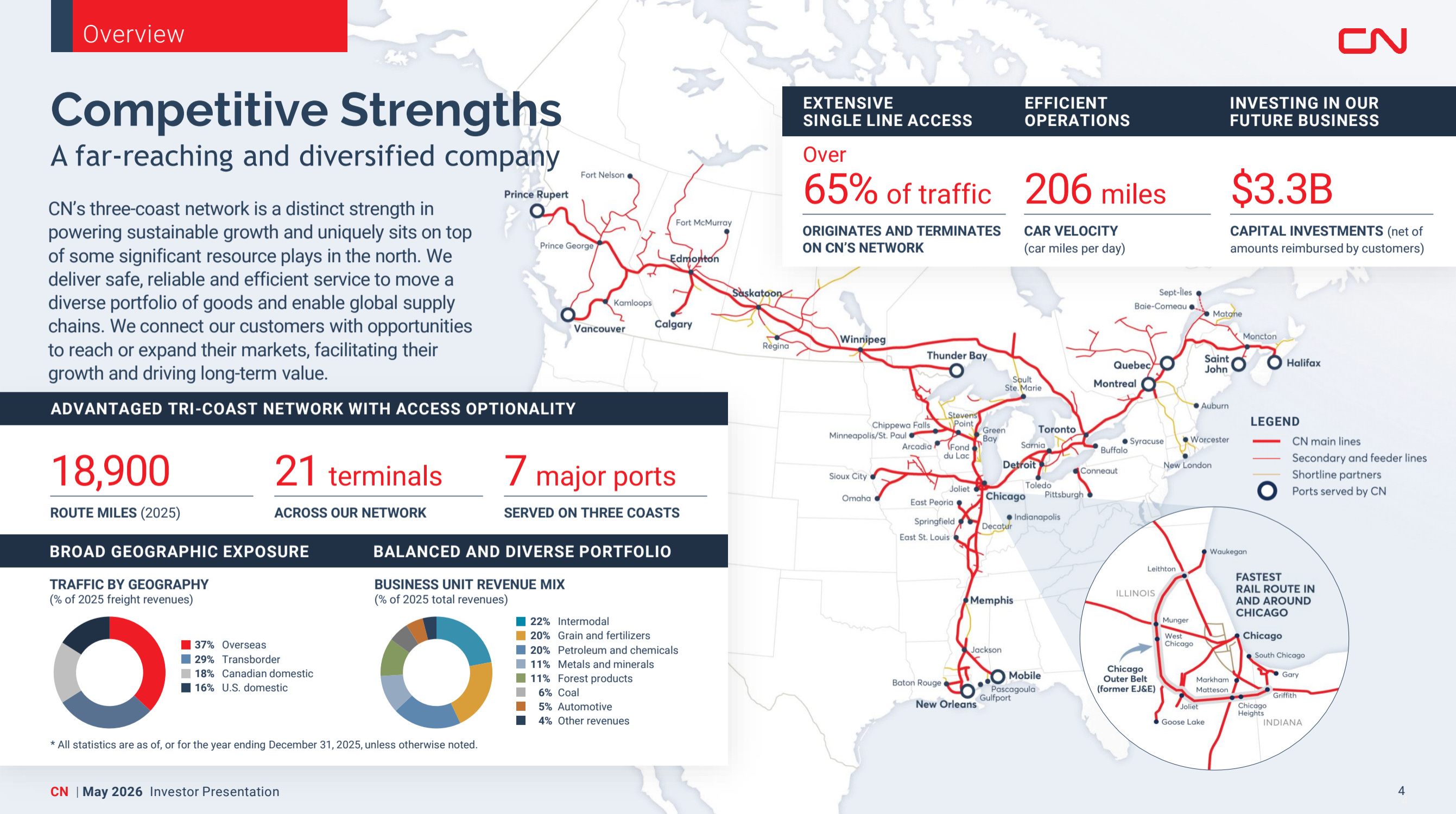
Canadian National Railway operates a 19,500-mile transcontinental rail network. It is the only railroad in North America connecting the Atlantic, Pacific, and Gulf coasts.

Source: CNR Investor Relations

The most interesting thing? Railways are natural monopolies.

Because of the cost of land, zoning restrictions, and environmental permits, no new competitor will ever be built.

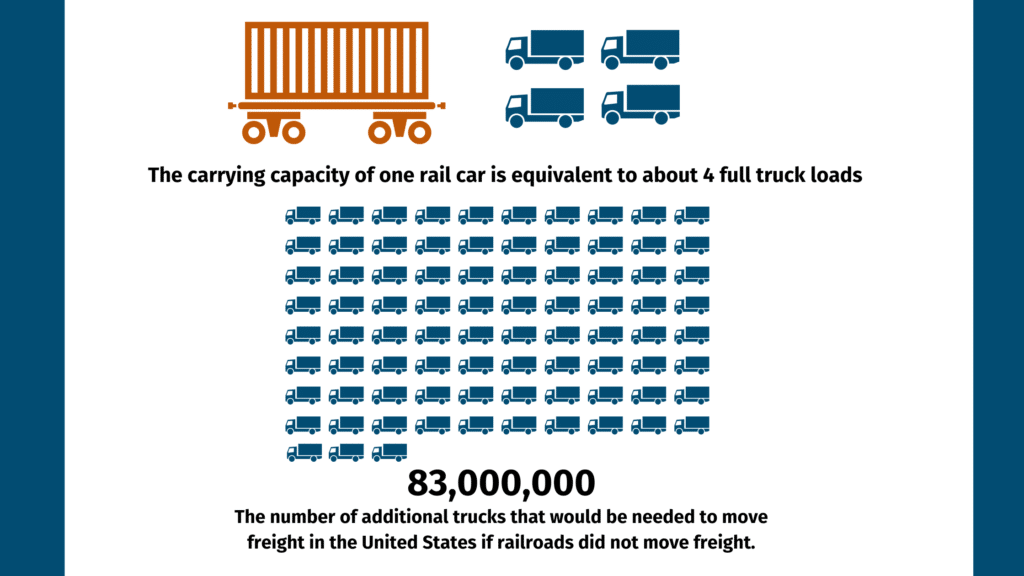
Trains are also the cheapest way to move heavy freight.

They use 4x less fuel than shipping by truck, which gives them a huge cost advantage.

The Advantages of Rail vs Truck Shipping - RSI Logistics
Source: Rail Logistics

If you need to move heavy goods long distances by land, you’ll use trains whenever possible.

That’s why Canadian National Railway has been able to raise freight rates at or above inflation through different economic cycles.

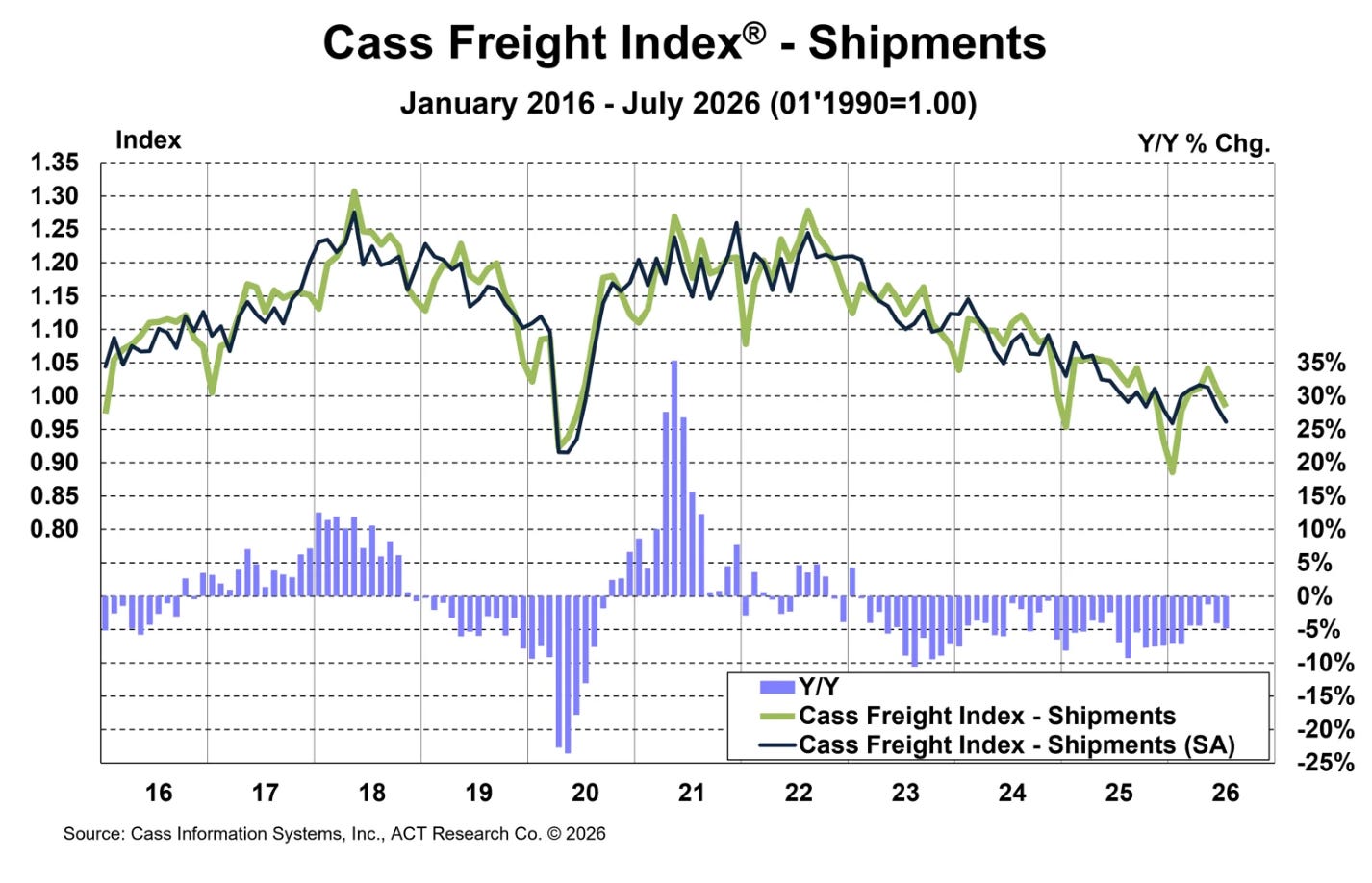
However, freight volumes have been falling for the past few years.

Source: Cass Information Systems

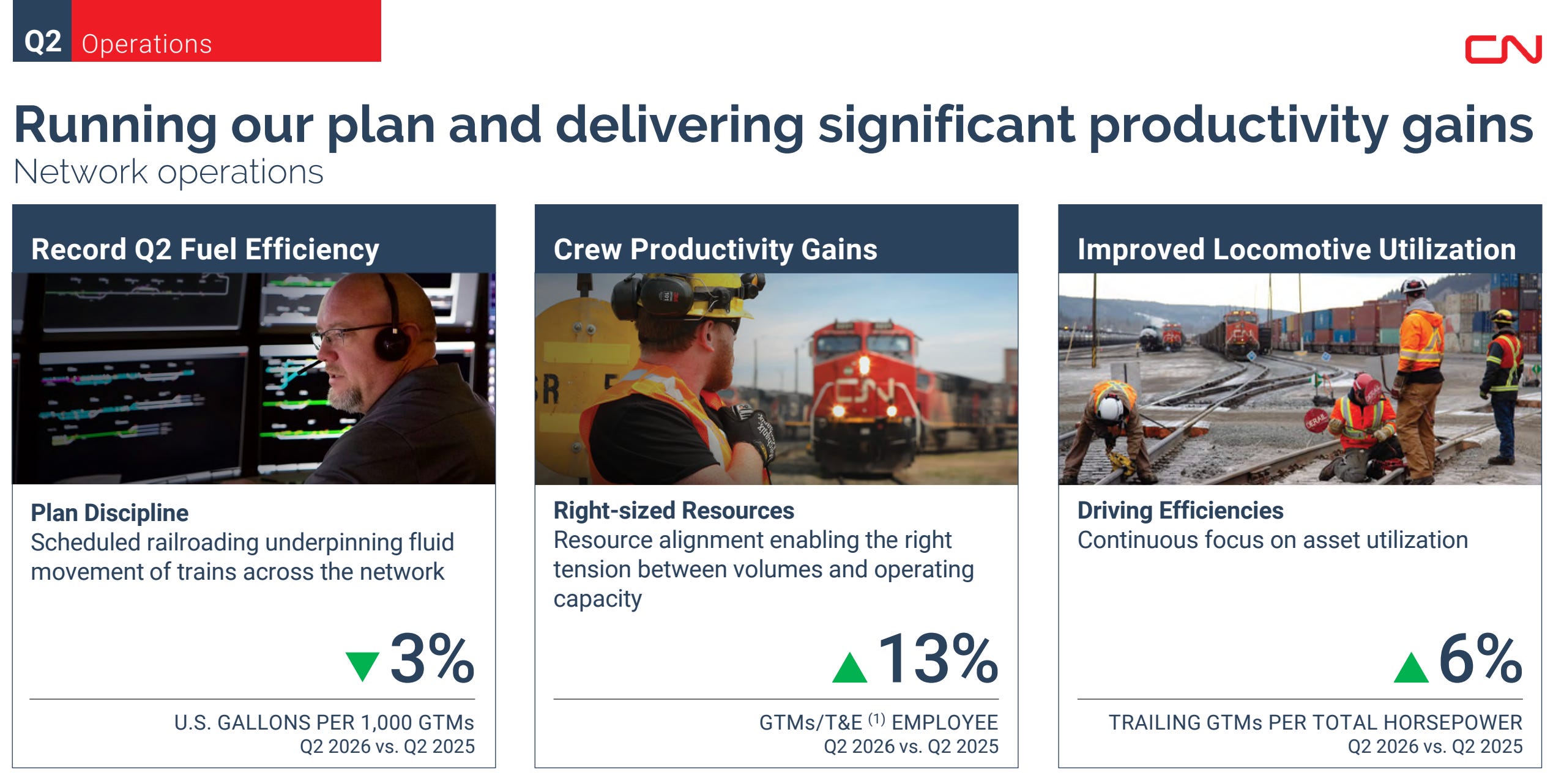
Luckily, CNR has been able to keep making their railroad more efficient.

Source: CNR Investor Relations

That’s why management just raised guidance on their Q2 earnings call.

For long-term investors, this might be an interesting time to look at CNR.

The company will seriously benefit from any improvement in North American freight volumes.

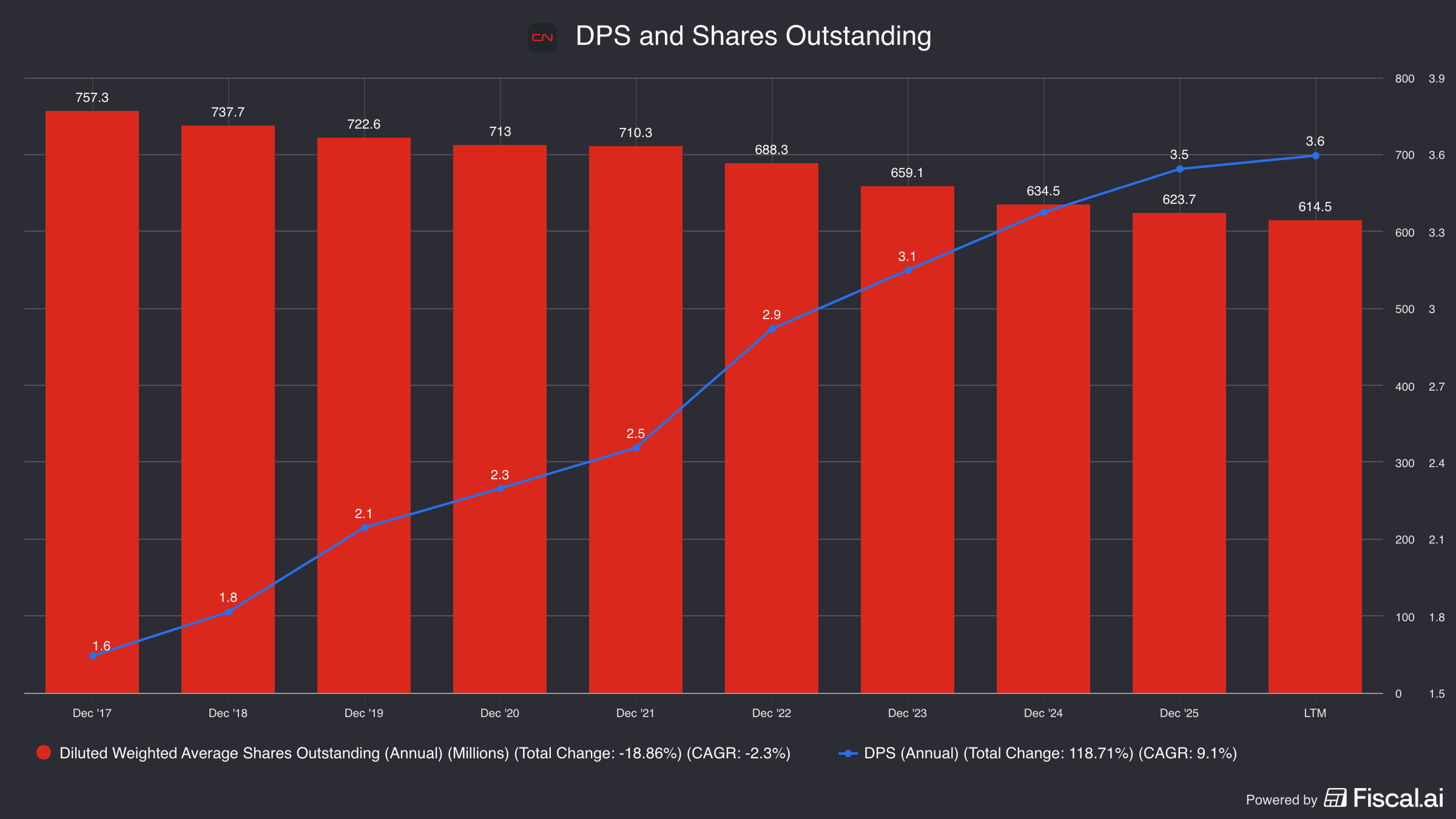
Management has historically returned a lot of cash to shareholders.

This through both dividends and buybacks.

Source: Fiscal.ai

Now let’s dive into the top 3.

Read more

Fairfax India: discount on discount?

27 August 2026 at 14:44

Hi Partner 👋

As you might know, we recently added Fairfax Financial ($FFH) to Our Portfolio.

One of the biggest reasons we bought it?

It’s an easy way to invest in one of the world’s most attractive growth markets: India.

Fairfax’s investment portfolio is worth roughly $75 billion, with $4.3 billion already invested in India.

In other words, about 5.7% of …

Read more

Taking a break

25 August 2026 at 14:44

Hi Partner 👋

I hope you are doing well.

Recently, I did something I had never ever done in my adult life.

I took a holiday of two (!) weeks.

I spent a few days with my girlfriend in the Netherlands and Belgium, before going to Greece (Crete) for a week.

Besides having fun, this trip provided some great investment and life lessons.

Let’s share them with you today.


Not a Partner yet? Join us this Thursday in a Free Masterclass:

Register for the webinar


The Greece Trip

During this two week period, I barely worked (maybe 1-2 hours per day).

We visited the city of Heraklion, went to Santorini and had a few lazy days at the pool.

Before taking this holiday, I was a little bit afraid:

  1. What would happen with Compounding Quality? Would Partners become upset for me taking a holiday?

  2. What will happen to Our Portfolio? As we were in the midst of results season?

In hindsight, I had nothing to worry about.

  1. Partners were very understanding. Some even encouraged me to take a holiday

  2. During the period that I was away, the Portfolio performed really well

It resulted in me making this statement in the Community:

I truly feel we are very well positioned with Our Portfolio today.

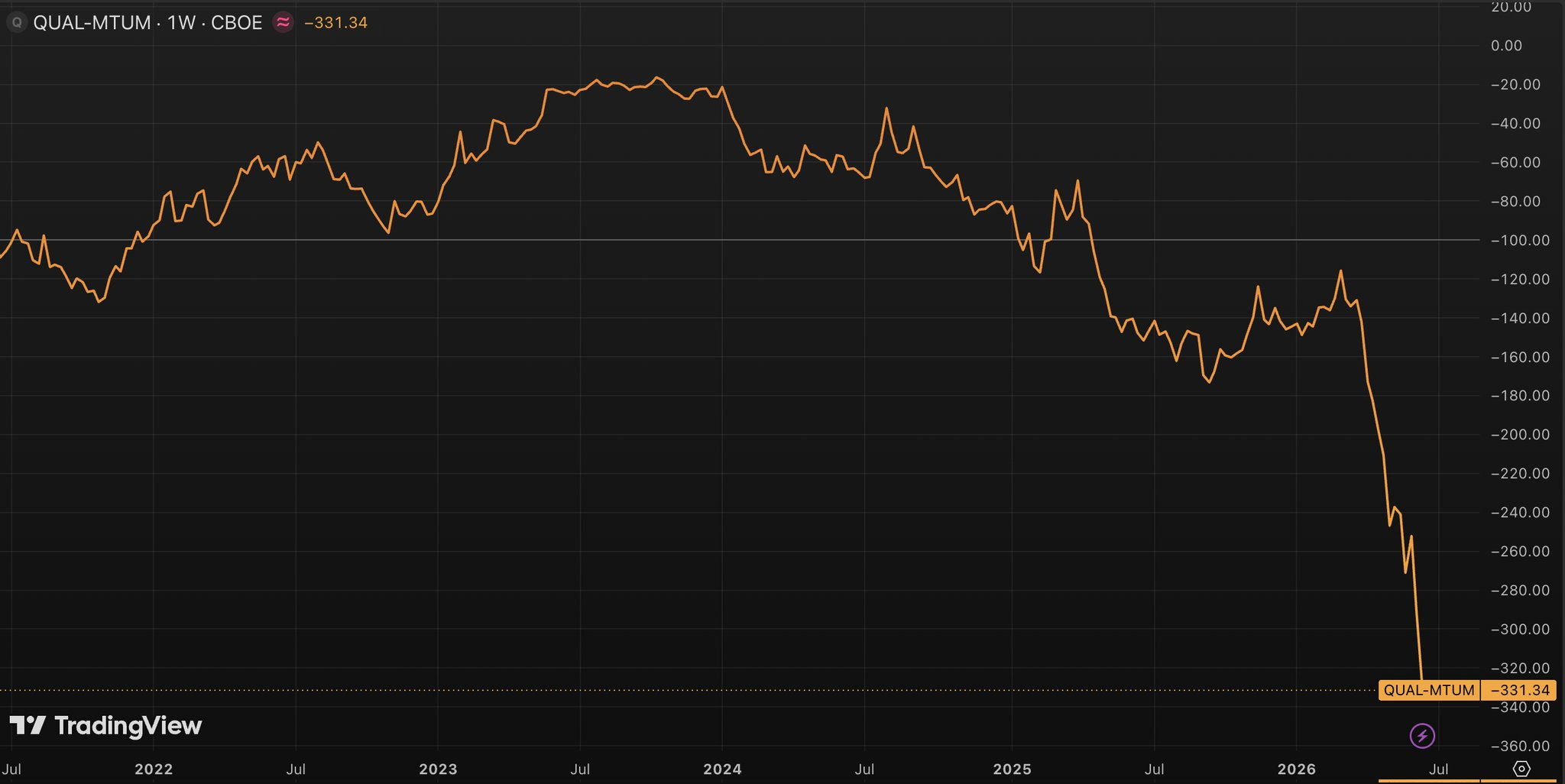
You see a clear trend nowadays:

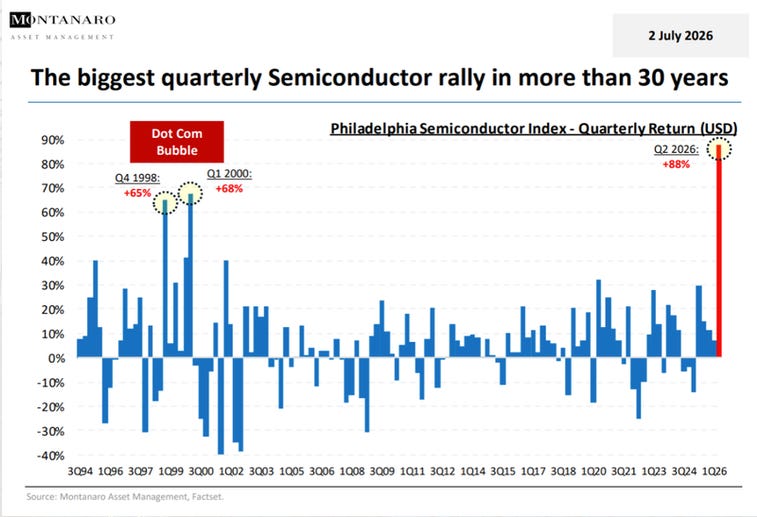
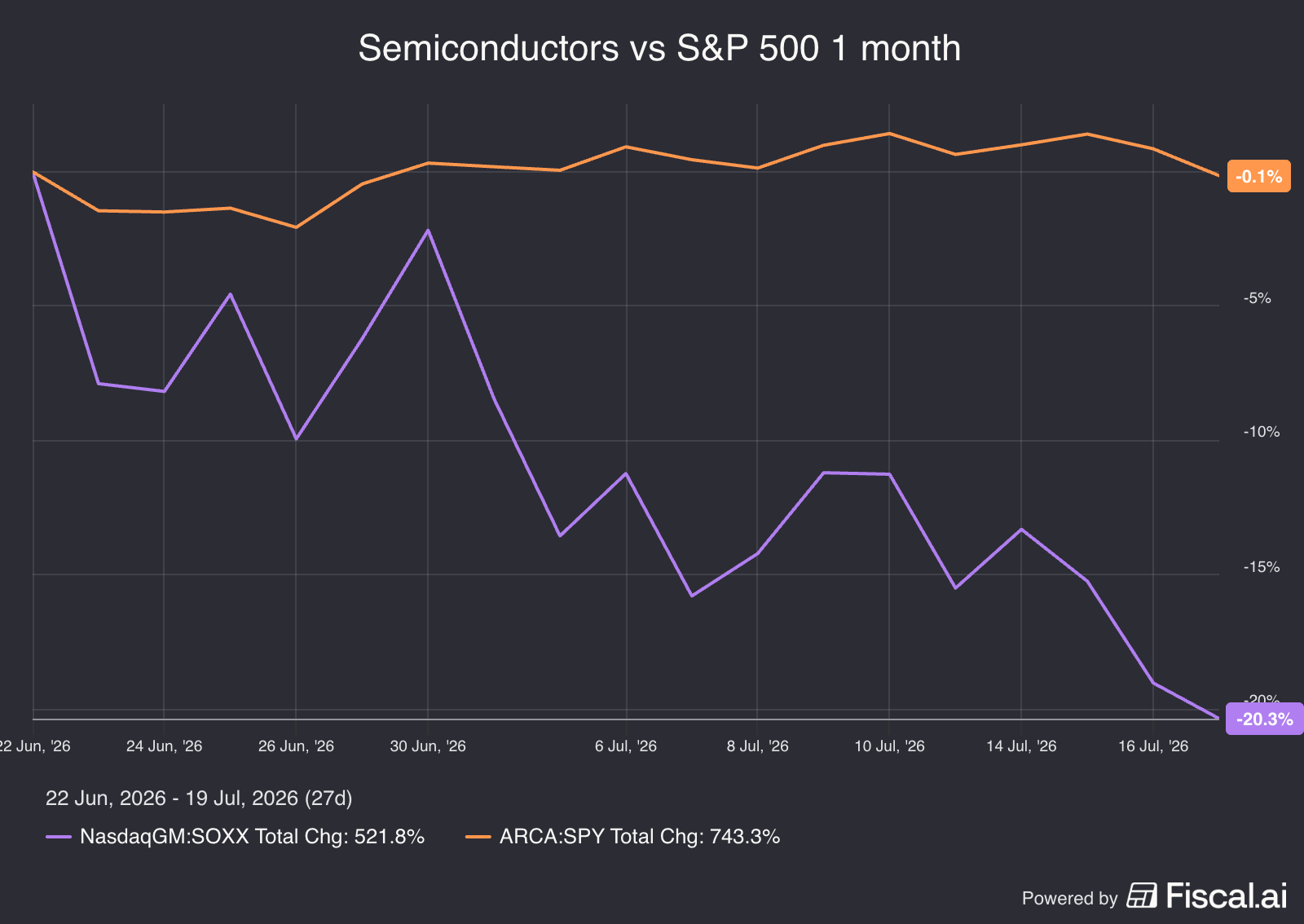
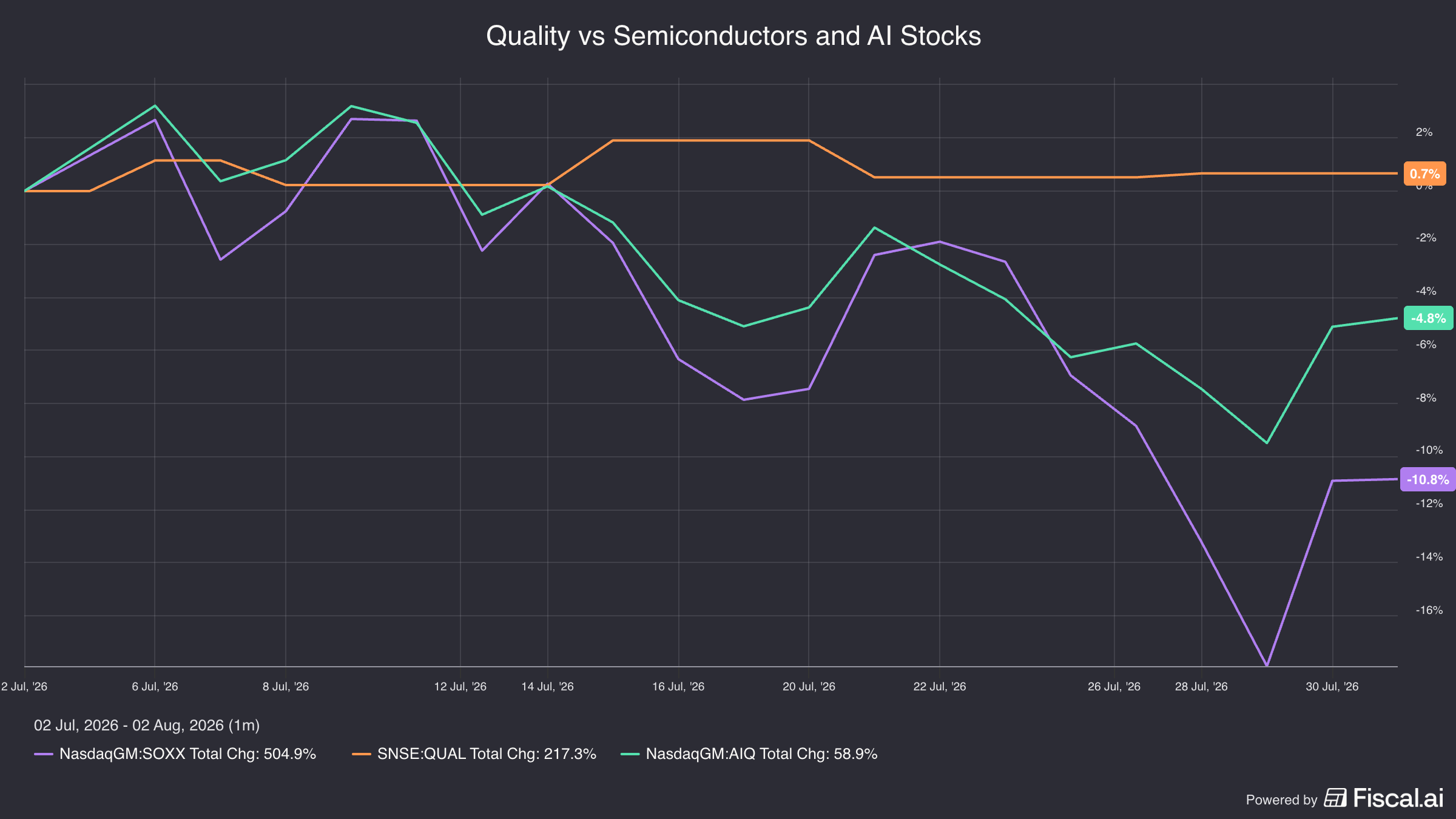
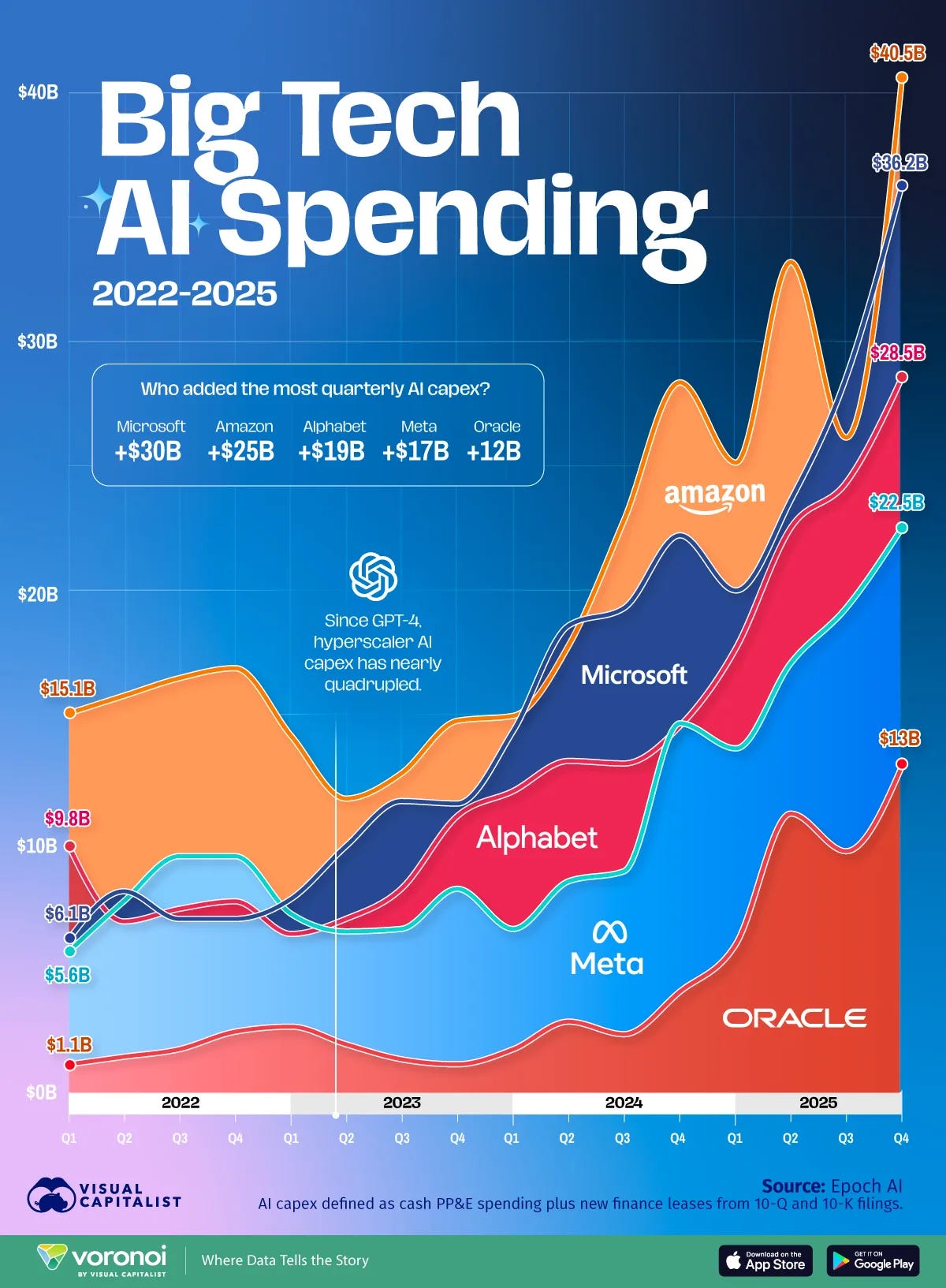
  • When AI and semiconductors outperform, Our Portfolio underperforms

  • When AI and semiconductors underperform, Our Portfolio outperforms

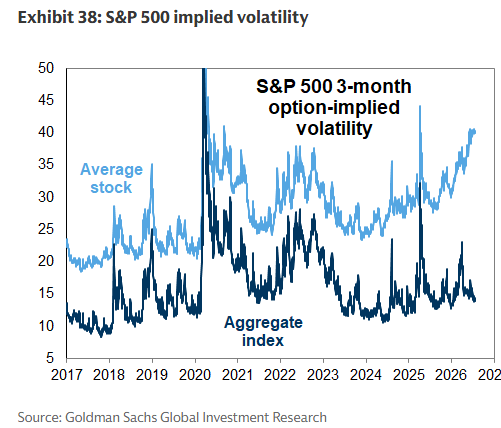
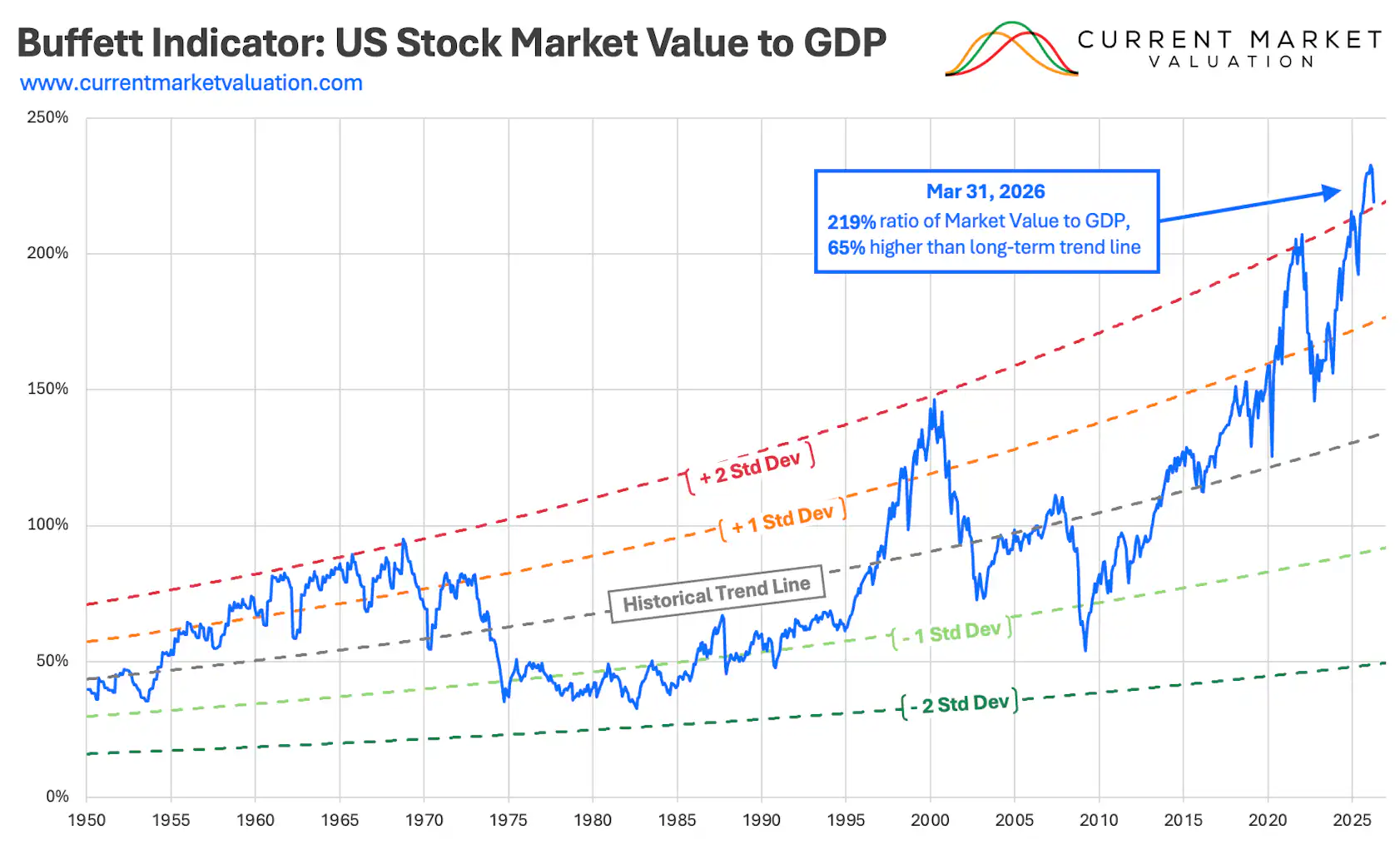
I believe the market is overvaluing AI and semiconductors.

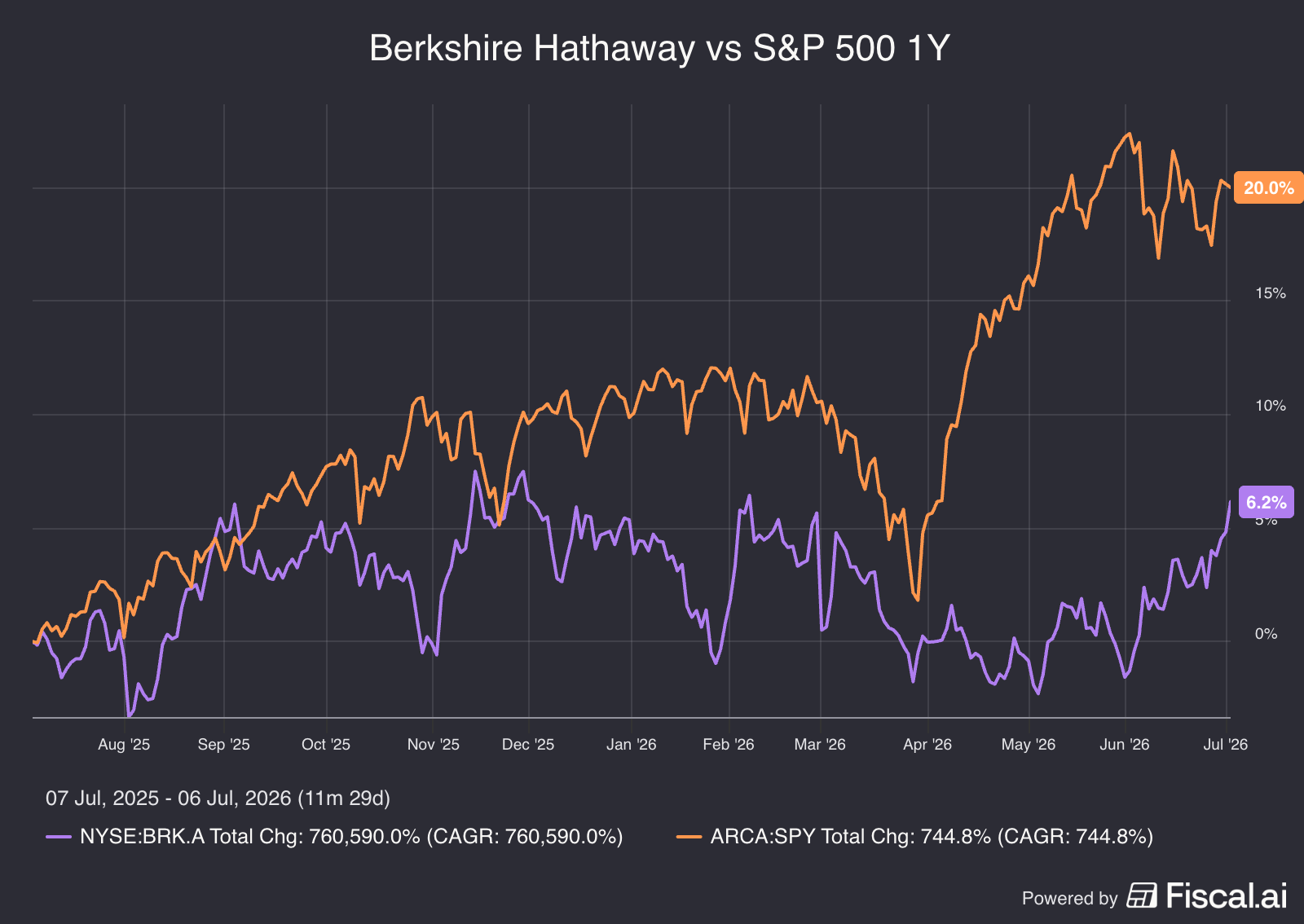
Just look at this chart:

Over the past few weeks, Our Portfolio started outperforming the market.

I think this trend will continue over the next 1-2 years.

However, please note that we make no attempt (at all) to try and time the market.

I don’t care much about market sentiment.

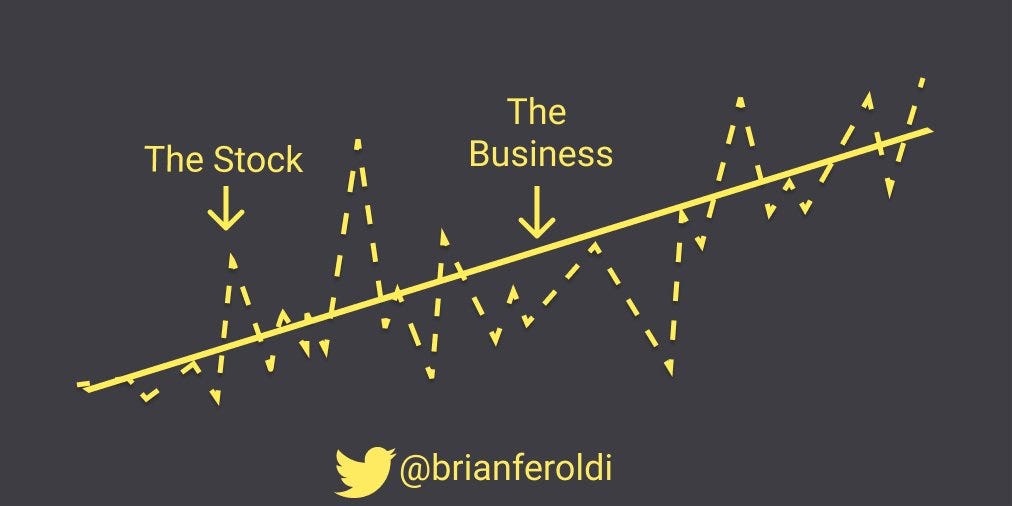
Why? Because I know that stock prices will follow the evolution of the intrinsic value eventually.

What you should care about?

The Free Cash Flow your portfolio is generating for you.

Here’s what the evolution looks like:

As you can see, our companies are generating more and more Free Cash Flow for us.

My personal goal? Generate $1 in Free Cash Flow per minute with Our Portfolio.

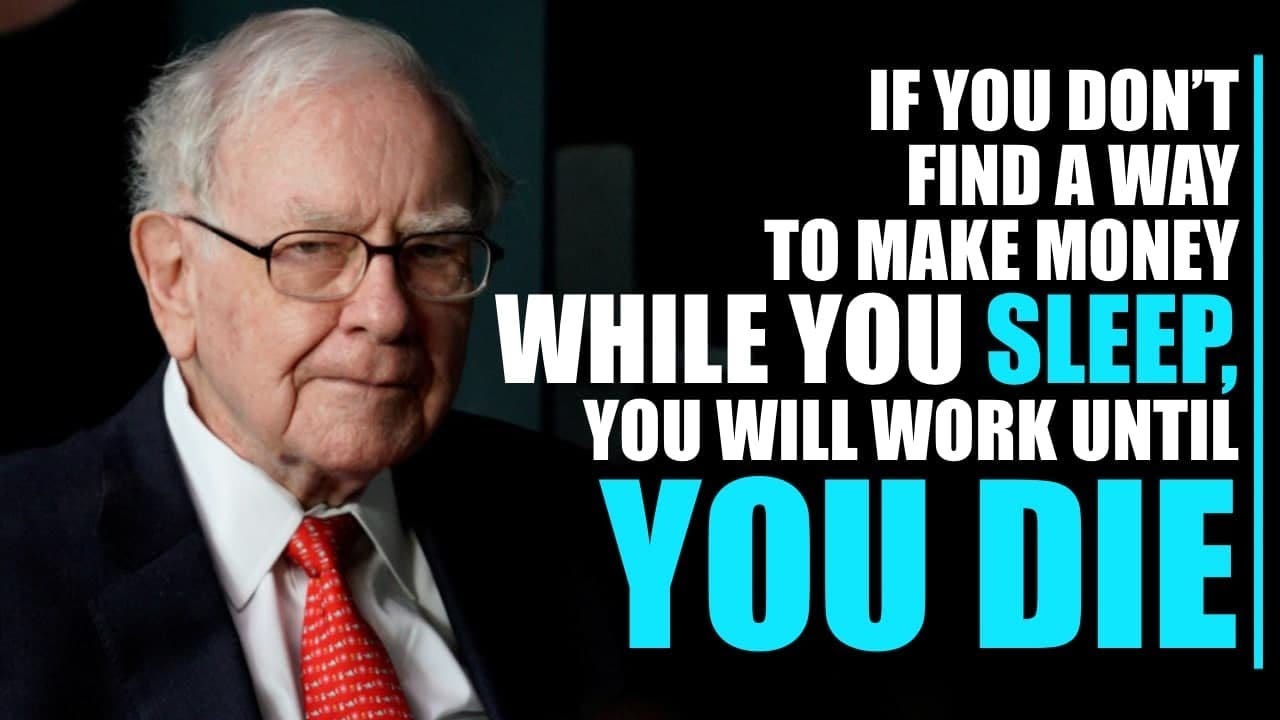
Why? You should try to find a way to make money while you sleep.

Because if you don’t, you’ll work until you die.

If we can make $1 in FCF per minute, this would mean we make the following:

  • $1 per minute

  • $60 per hour

  • $1.440 per day

  • $43.200 per month

  • $518.400 per year

If the companies you own generate $43,200 in Free Cash Flow every month, I think it’s fair to say you’ve achieved true financial independence.

Financial independence means being able to do what you want, whenever you want, with whoever you want.

Reaching this goal will take a while, but we will get there eventually.

Personally, I don’t share the real dollar amounts I invest in the Portfolio.

But I use exactly the same percentage weights as shown in the Portfolio Spreadsheet.

The Compounding Quality Portfolio is currently worth $1.9 million.

  • If my personal portfolio would be worth $950.000, I buy half the quantity of every stock shown in the spreadsheet.

  • If my personal portfolio would be worth $3.8 million, I buy twice the quantity of every stock shown in the spreadsheet.

The goal is to outperform the S&P 500 by 3% per year in the long term.

To achieve this, we would probably need a return of 12% per year.

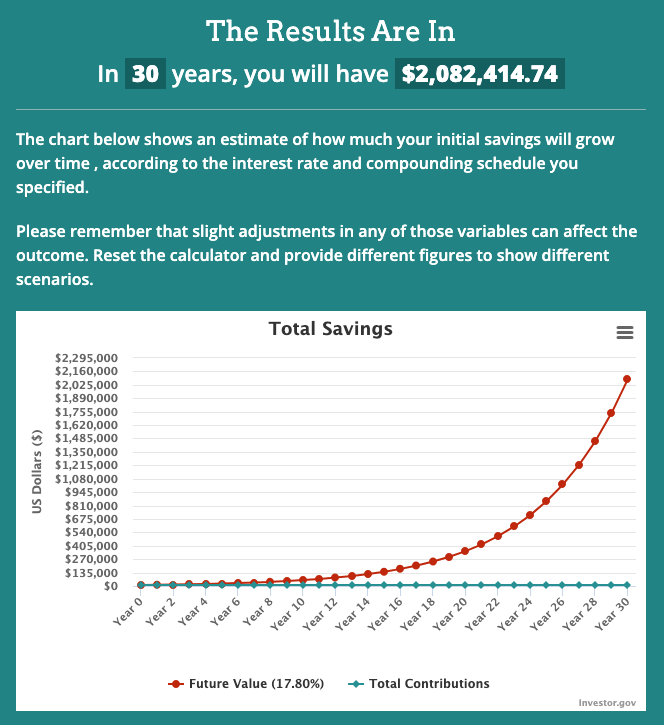
The power of compounding is something beautiful.

He/she who understands it, earns it.
He/she who doesn’t, pays it.

I am about to turn 30 years old in November this year.

Let’s just say my portfolio is actually worth $1.8 million…

… This is how much we would have going forward at a 12% per year return:

  • In 10 years: $5.6 million

  • In 20 years: $17.4 million

  • In 30 years: $53.9 million

  • In 40 years: $167.5 million

  • In 50 years: $520.2 million

  • In 60 years: $1.6 billion

  • In 66 years (at same age as Warren Buffett’s): $5.0 billion

That’s the true power of compounding.
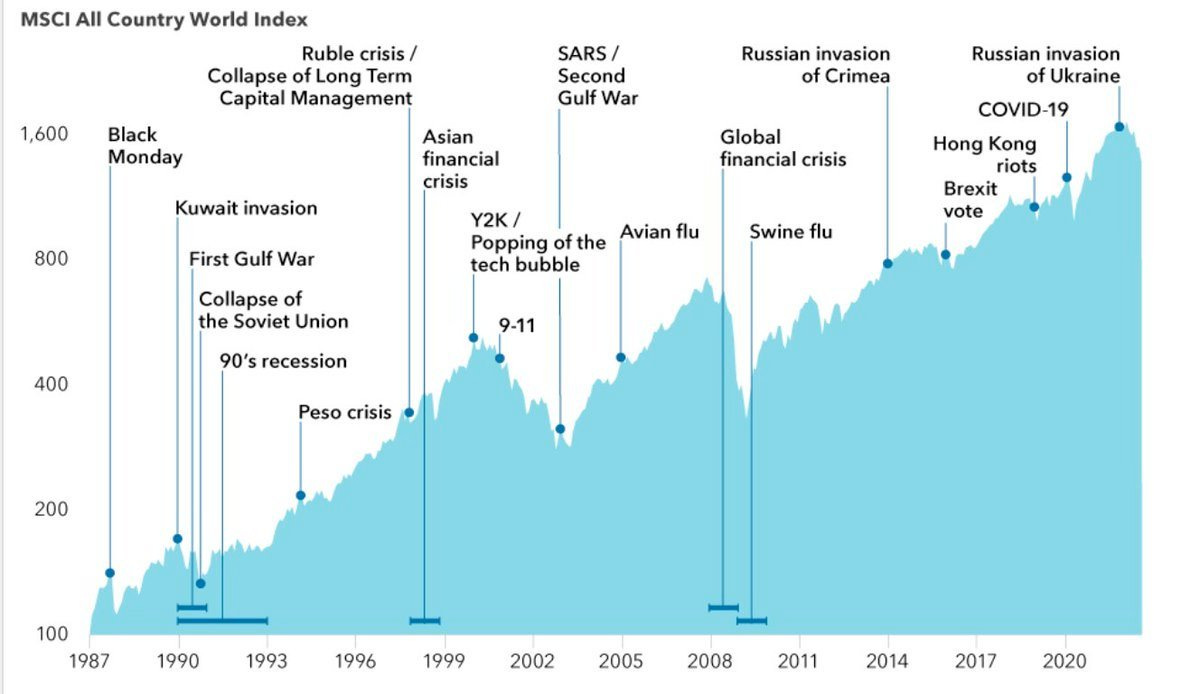
It’s very hard for humans to understand the power of exponential growth.

The key takeaway?

If you compound well and you live a long & healthy live you could actually become a billionaire.

And things get even better.

What if we would periodically add $50.000 per month to Our Portfolio?

In that case the situation looks as follows:

  • In 10 years: $17.0 million

  • In 20 years: $66.8 million

  • In 30 years: $228.7 million

  • In 40 years: $755.7 million

  • In 50 years: $2.4 billion

  • In 60 years: $8.1 billion

  • In 66 years: $26.3 billion

You could draw two key lessons from this:

  1. Be patient and let the power of compounding do its work for you

  2. Don’t make huge mistakes and stay in the game

You can do the calculations for your own portfolio via this spreadsheet*:

Compound interst calculator

*Please note that you need to download the spreadsheet first to Excel in order for it to work.

So now you know Our Portfolio is generating a lot of Free Cash Flow for us.

What makes it even better?

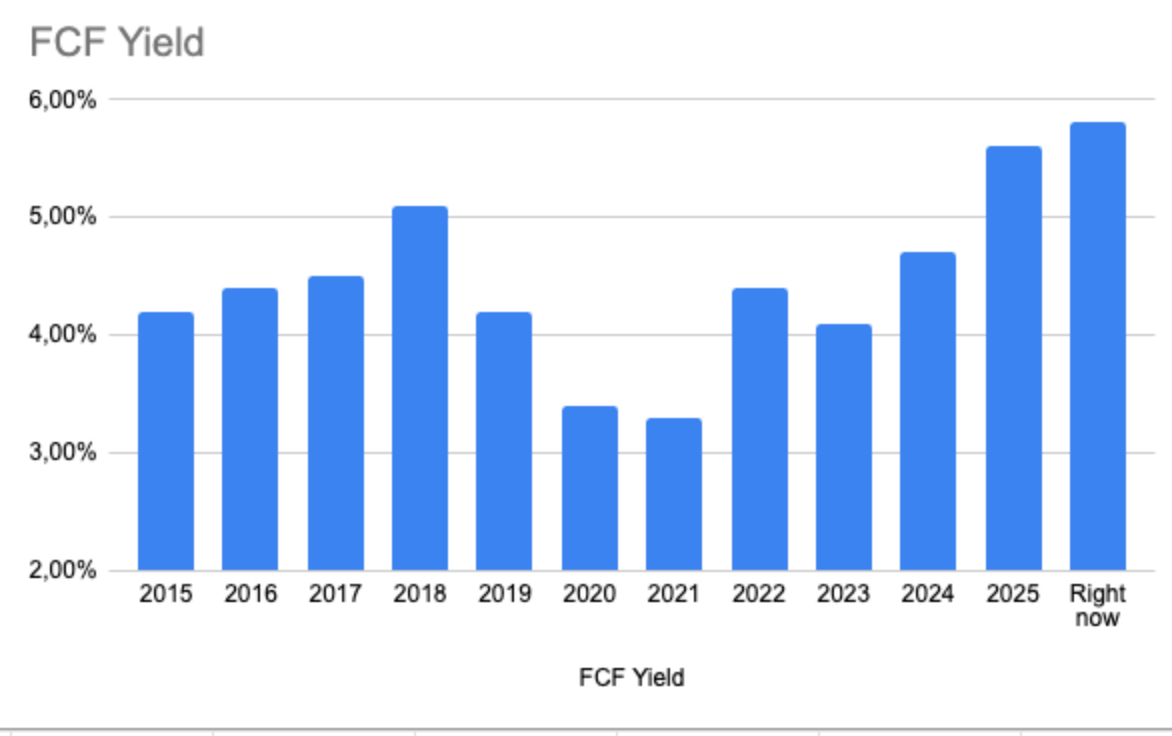
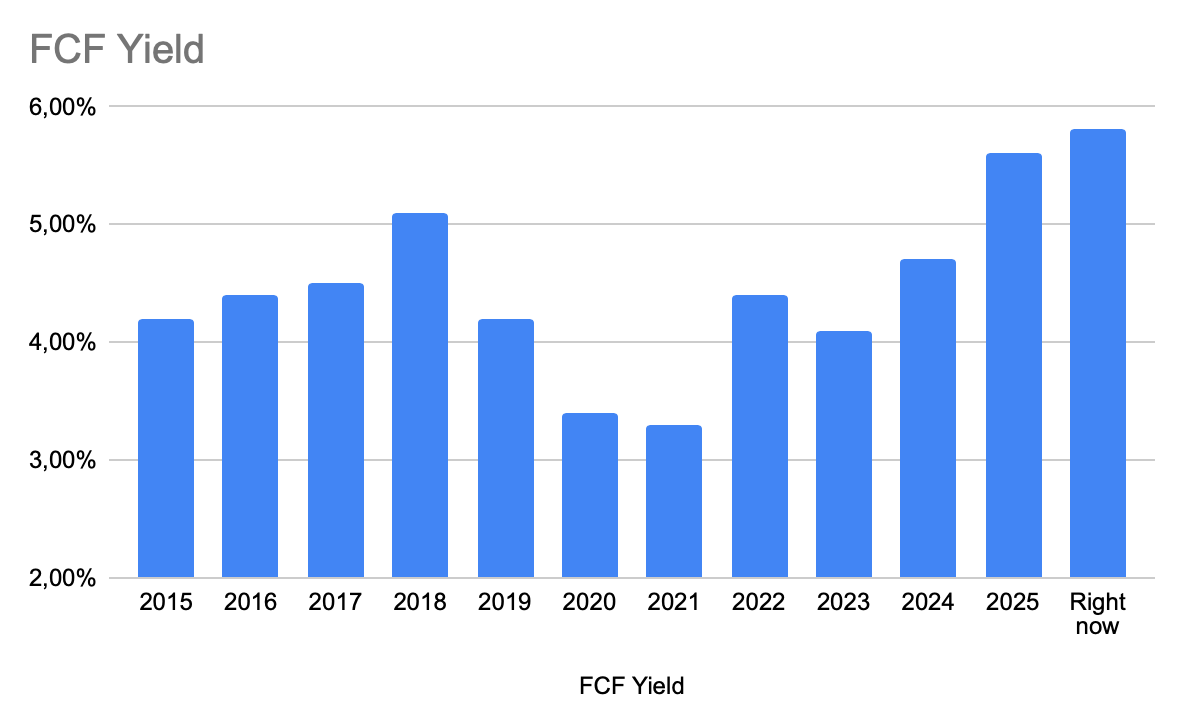
At the same time Our Portfolio is trading at its cheapest valuation level ever:

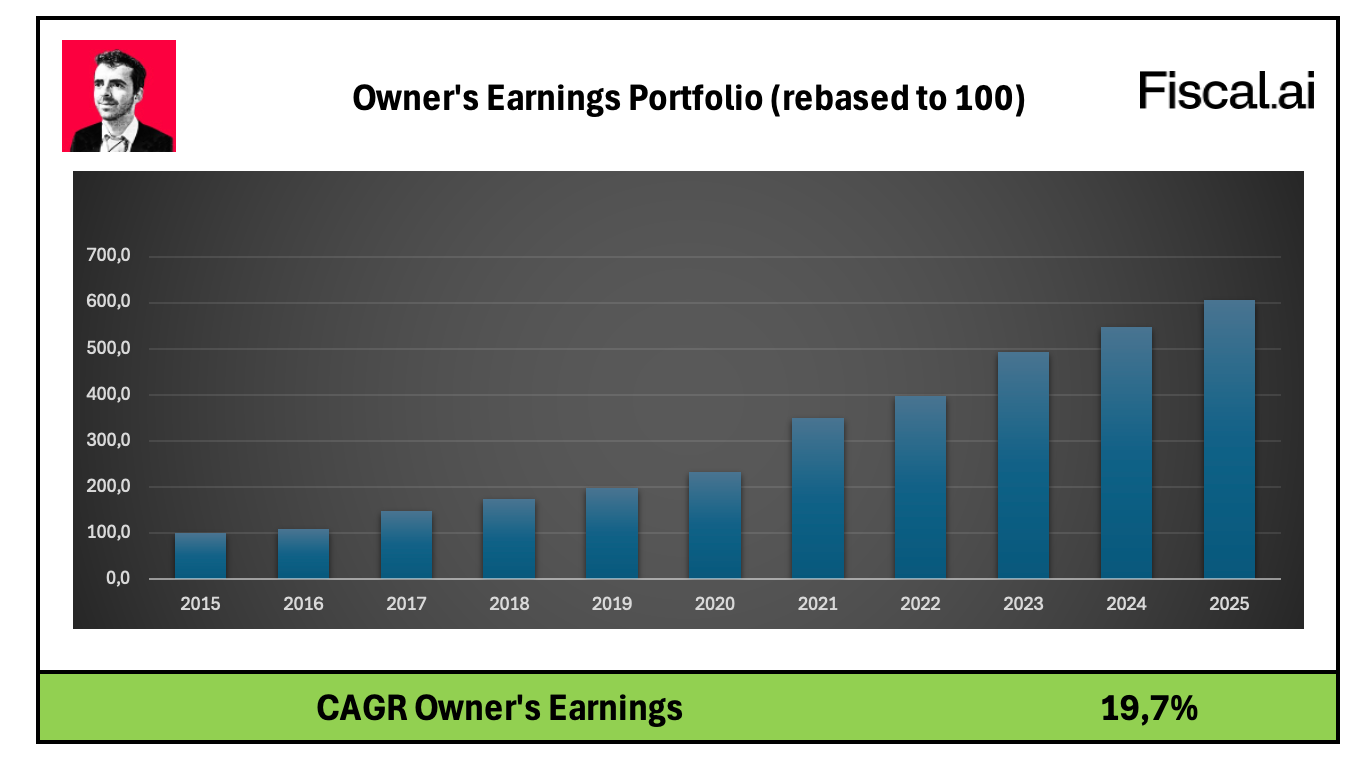
The expected growth in Owners Earnings for Our Portfolio over the next 3 years equals 13.1%.

And because Our Portfolio is trading at its lowest valuation ever, your actual return could be even higher.

I don’t think a 15% annual return over the next 3 years is unrealistic.

Two extra lessons

Two extra lessons I took away from the Greece trip?

  1. When in doubt, zoom out

  2. It’s all about love

When in doubt, zoom out

Barely working for 2 weeks truly helped me to become a better investor.

I came back from this trip feeling refreshed, full of new ideas for the Portfolio.

They will be implemented going forward.

When you’re in the midst of something, sometimes it’s hard to see the bigger picture.

My best ideas always come to me when I’m not working (in the shower, while working out, …).

Stepping away from your daily routine can help you tremendously to be a better human being and investor.

I truly feel this Greece trip made me Richer, Wiser & Happier.

Compounding Quality on X: "🏆🧵 15 Visuals that will make you a better  investor. 1. 120 years of stock market history in one chart:  https://t.co/1KOOxAB5iv" / X

It’s all about love

Investing is all about delayed gratification.

Why are you working so hard?
What are you saving for?
Who are you doing this for in the end?

Investing is a beautiful way to get incredibly wealthy. But don’t forget to live a little bit along the way.

In the end there are only two things that matter:

  • How much love you gave

  • How much love you received

Here are the top 5 regrets of people on their deathbed:

The ultimate measure of success in life?

It’s not how much wealth you have.

It’s how many of the people you’d want to love you, actually do.

Conclusion

Here are the key takeaways from today:

  • Take a break. Stepping away can make you a better investor (and human being).

  • Trust compounding. Time and patience can turn thousands into millions.

  • Focus on cash flow. Ignore short-term market noise.

  • Avoid big mistakes. Stay invested and let compounding work for you.

  • Don’t forget to live. Wealth matters, but love matters more.

Talk to you on Thursday!

Everything In Life Compounds
Pieter
PS You are not a Partner yet? Join us this Thursday on a free live masterclass. You can register here.

Disclaimer

As a reader of Compounding Quality, you agree with our disclaimer. You can read the full disclaimer here.


Buy-Hold-Sell List: August 2026

23 August 2026 at 14:44

It’s time to update our watchlist.

The Buy-Hold-Sell List helps you track Our Investable Universe and find great businesses at attractive prices.

Let’s take a look at some amazing investment opportunities.

Subscribe now

From tech to rocks

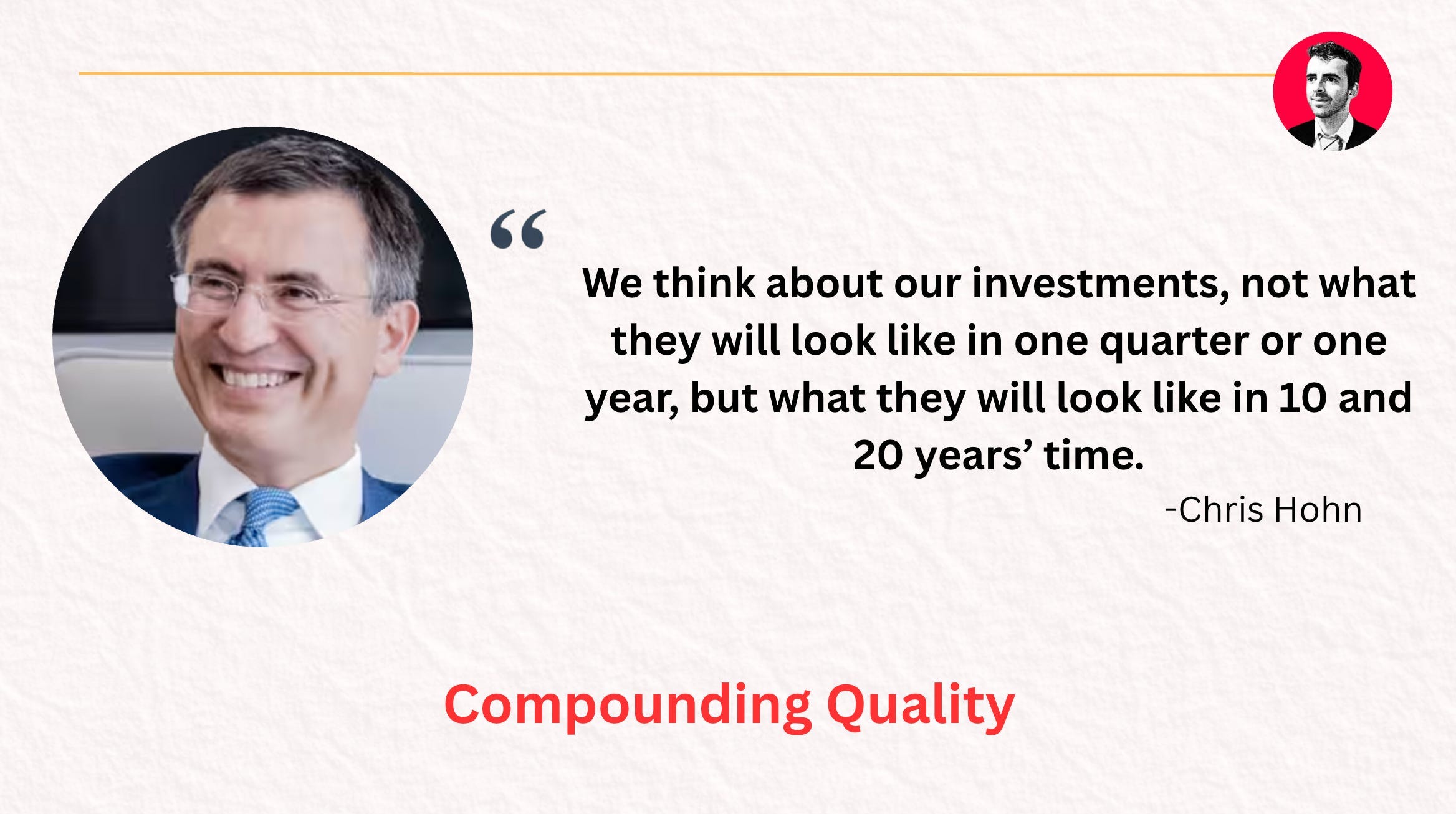
Chris Hohn is one of the best investors in the world.

His hedge fund, TCI made almost $20 billion (!) last year.

He only invests in businesses that control essential pieces of the economy (tollroad companies).

You can learn everything about him here.

Chris Hohn at speaking engagement

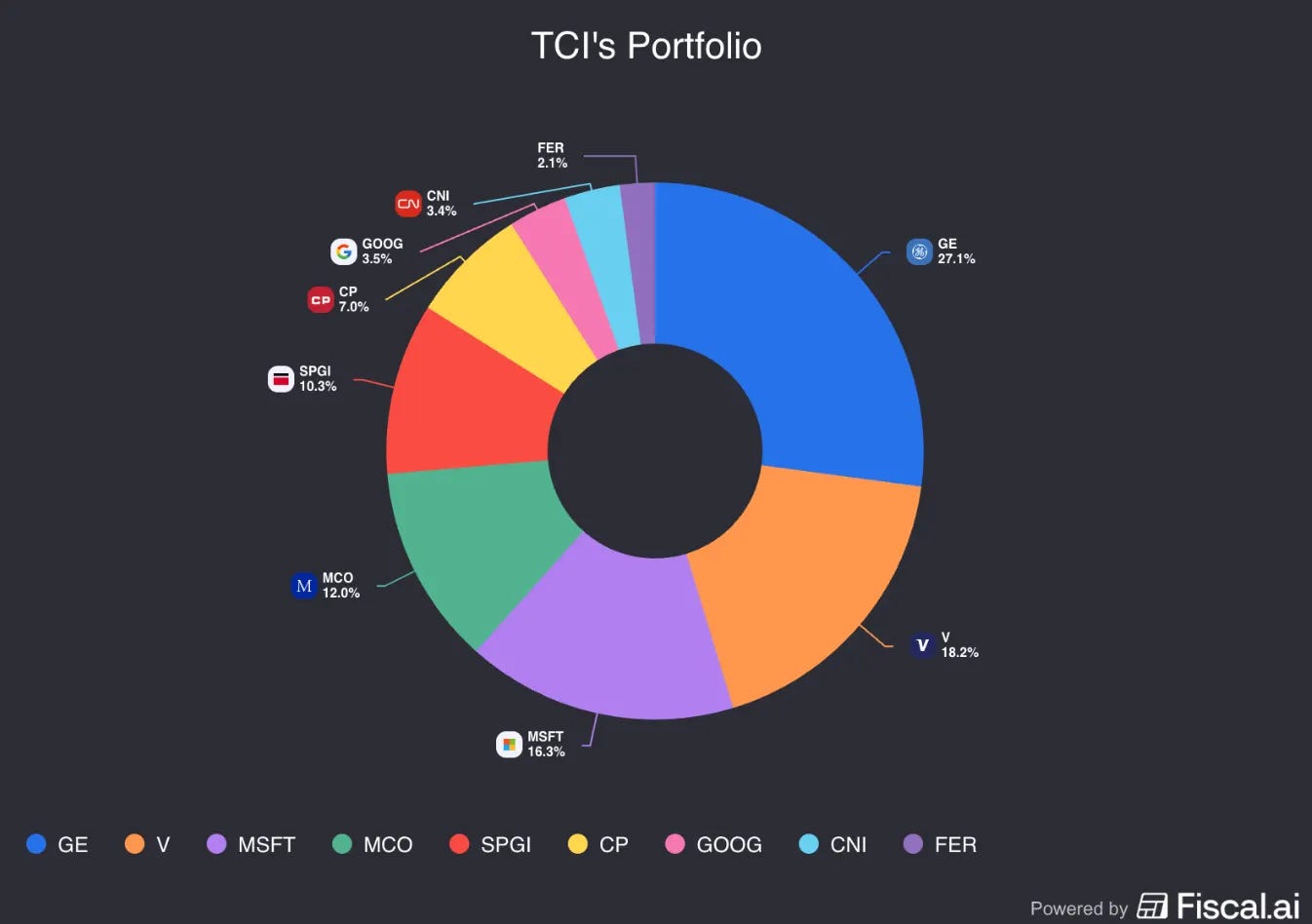
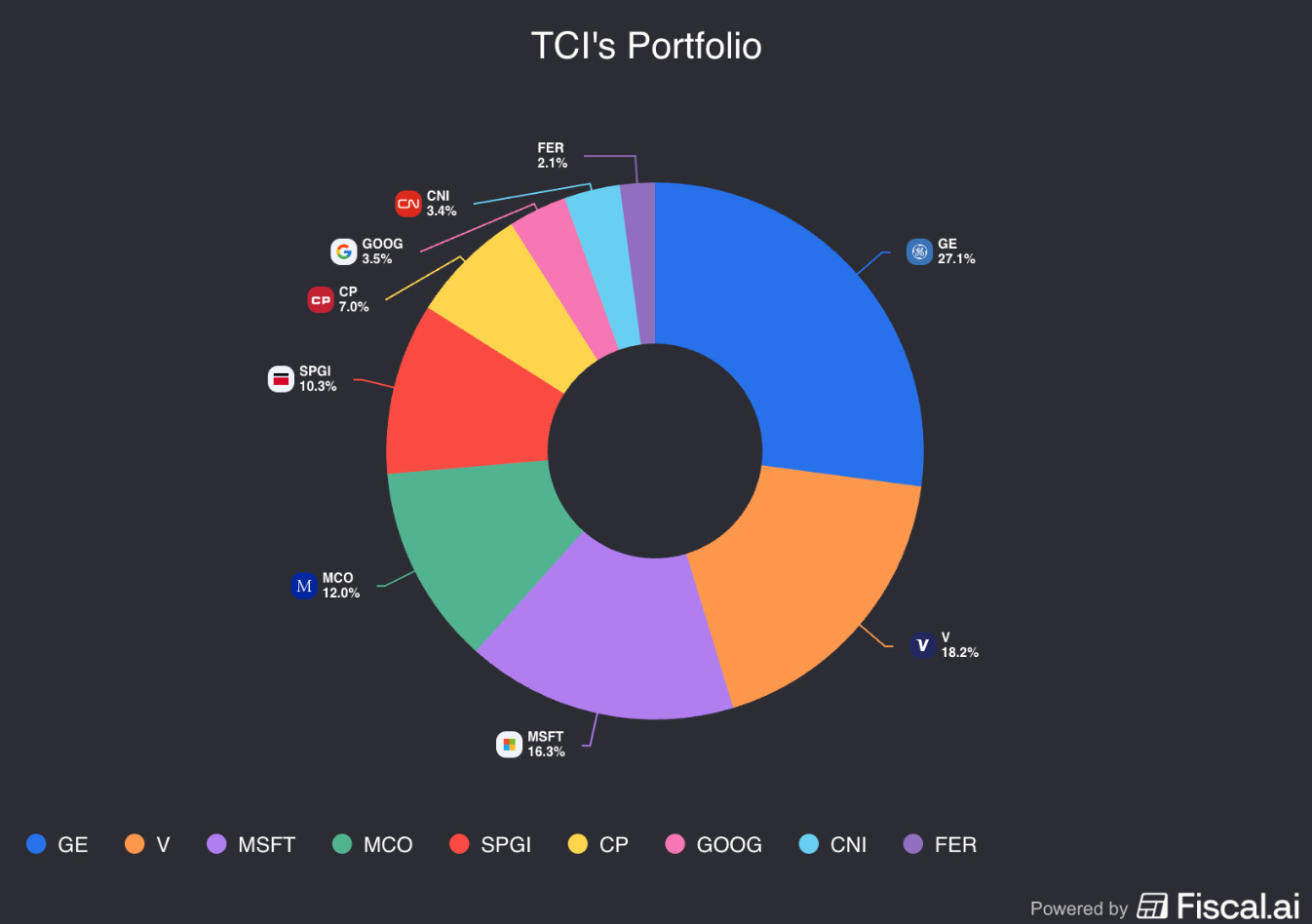
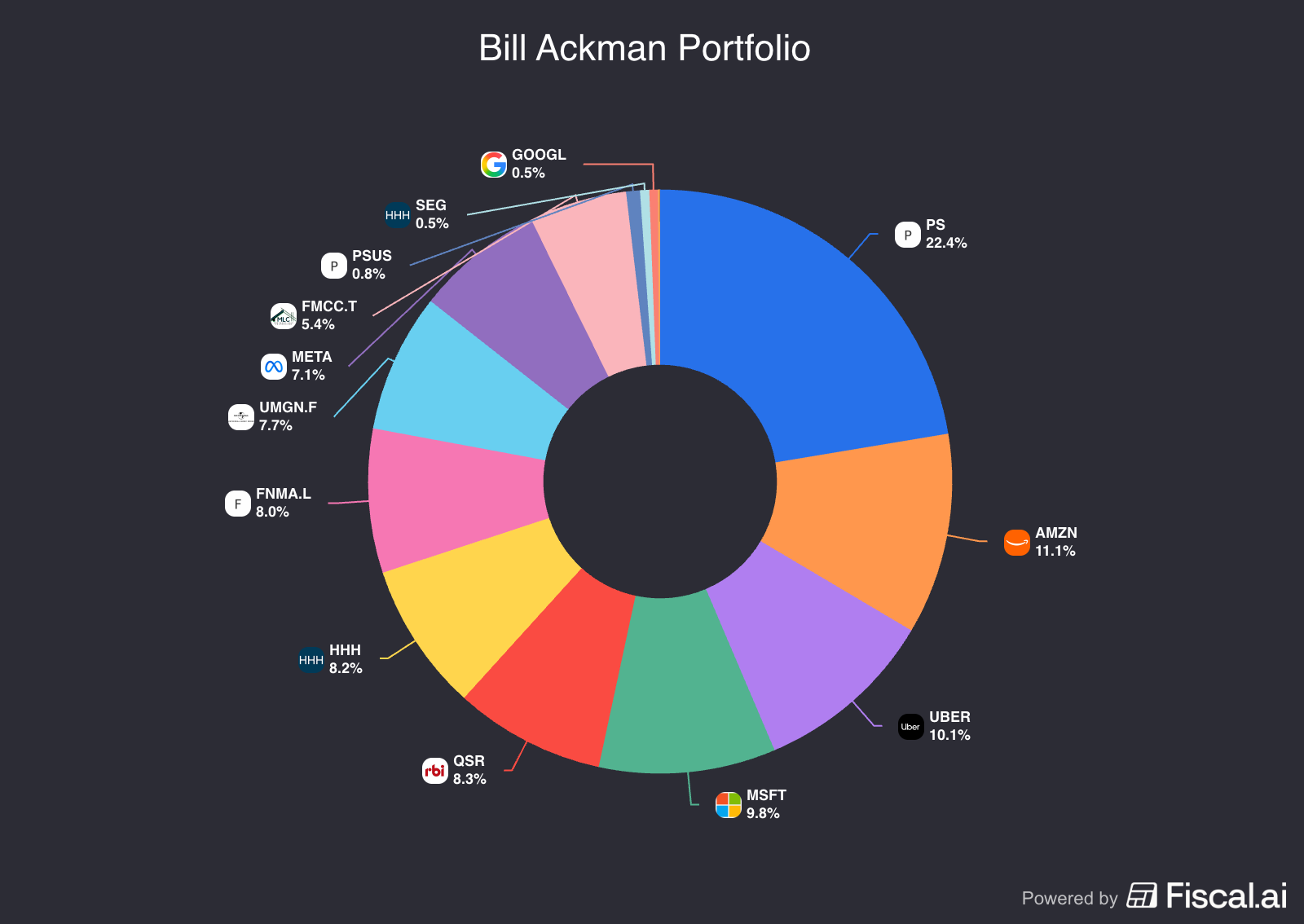
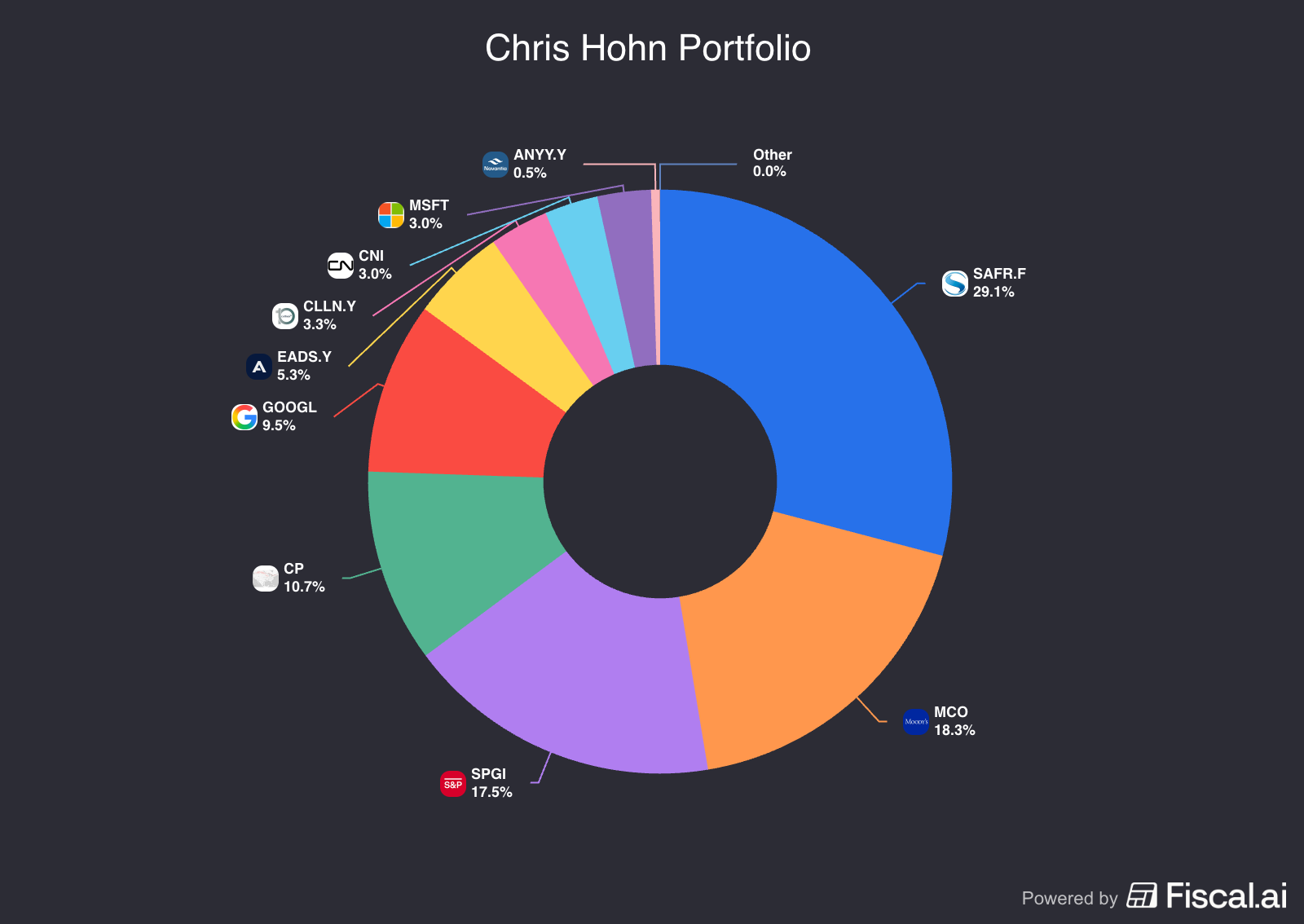
TCI just updated its holdings for the second quarter.

Sir Chris Hohn made a big move:

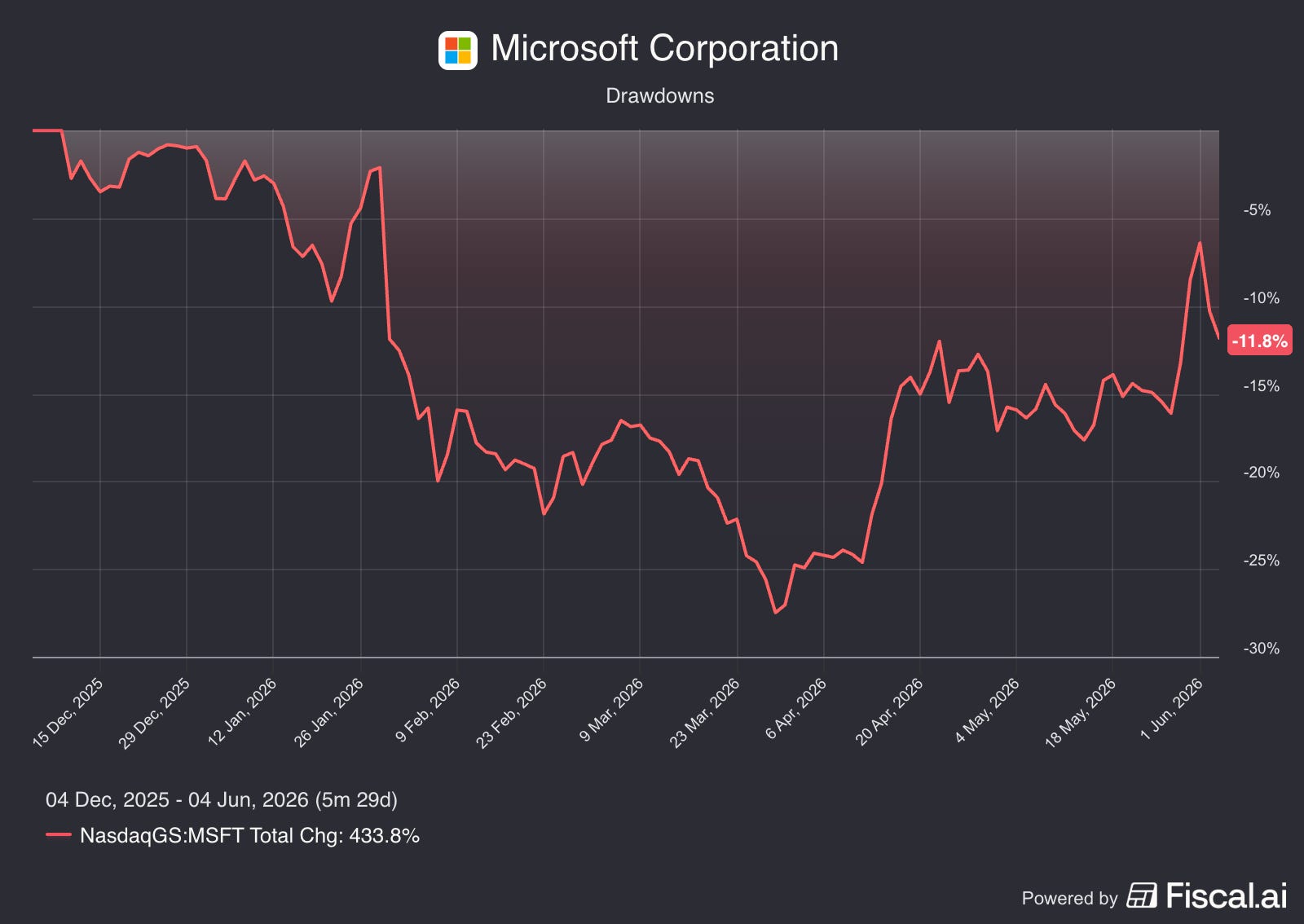
  • TCI fully exited its position in Microsoft

  • It built large positions in Martin Marietta ($MLM) and Vulcan Materials ($VMC).

At the end of 2025, Microsoft was the third largest holding of TCI.

Source: Fiscal.ai

If you’ve never heard of Martin Marietta and Vulcan Materials, I wouldn't be surprised.

They are the two largest produces of aggregates (things like gravel, crushed stone, and sand) in the U.S.

2024 Best of Grand: Flintstone Gravel Pit is a family-run operation ...

Why is one of the world’s top investors dumping one of the biggest tech companies in the world to buy rocks and gravel?

It’s actually very simple: the moat.

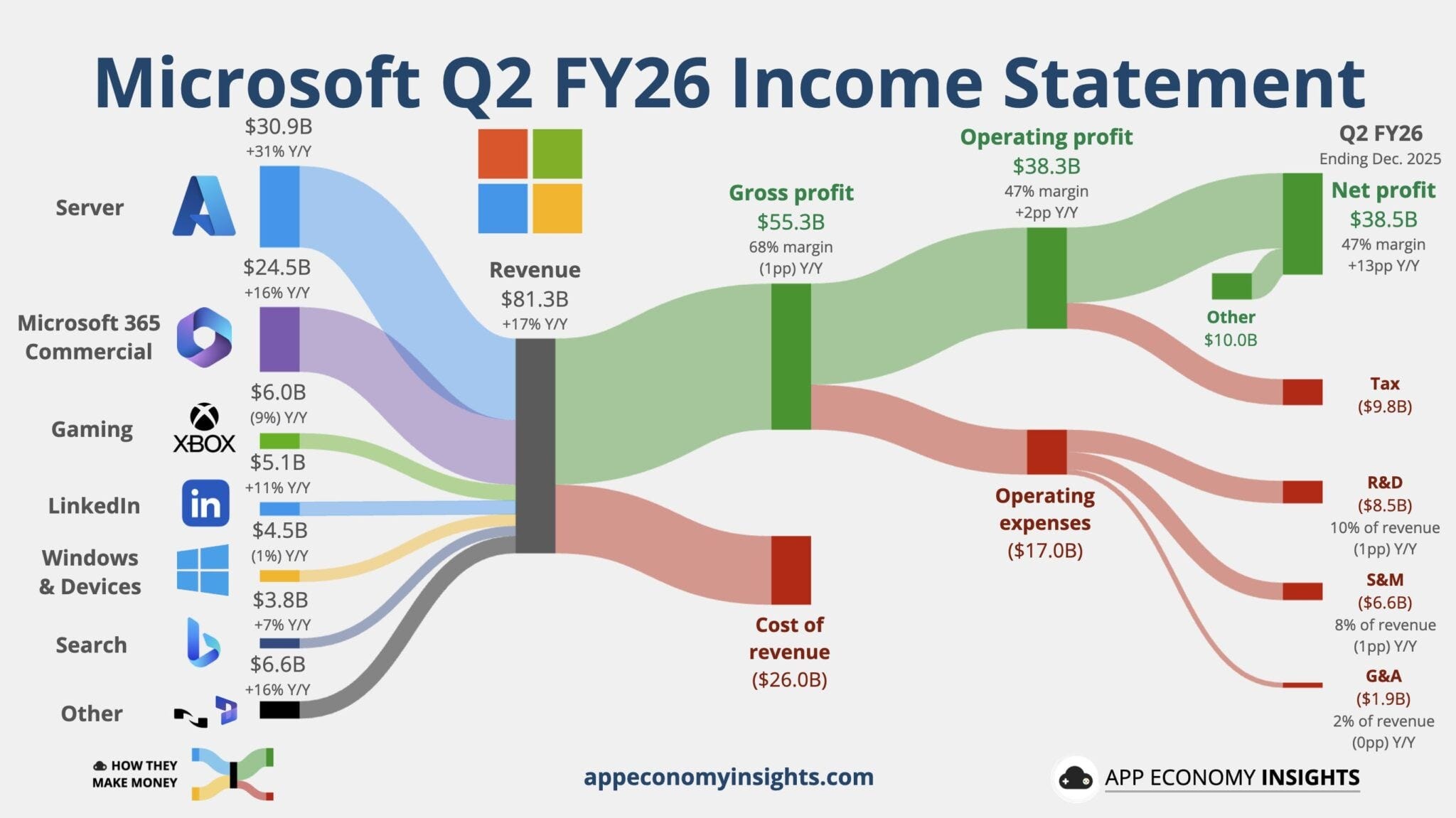
Hohn said that he thinks AI could disrupt Office and Azure faster than the market thinks.

AI will have a very hard time disrupting a gravel pit.

The more boring the better?

Have you ever read One Up On Wall Street?

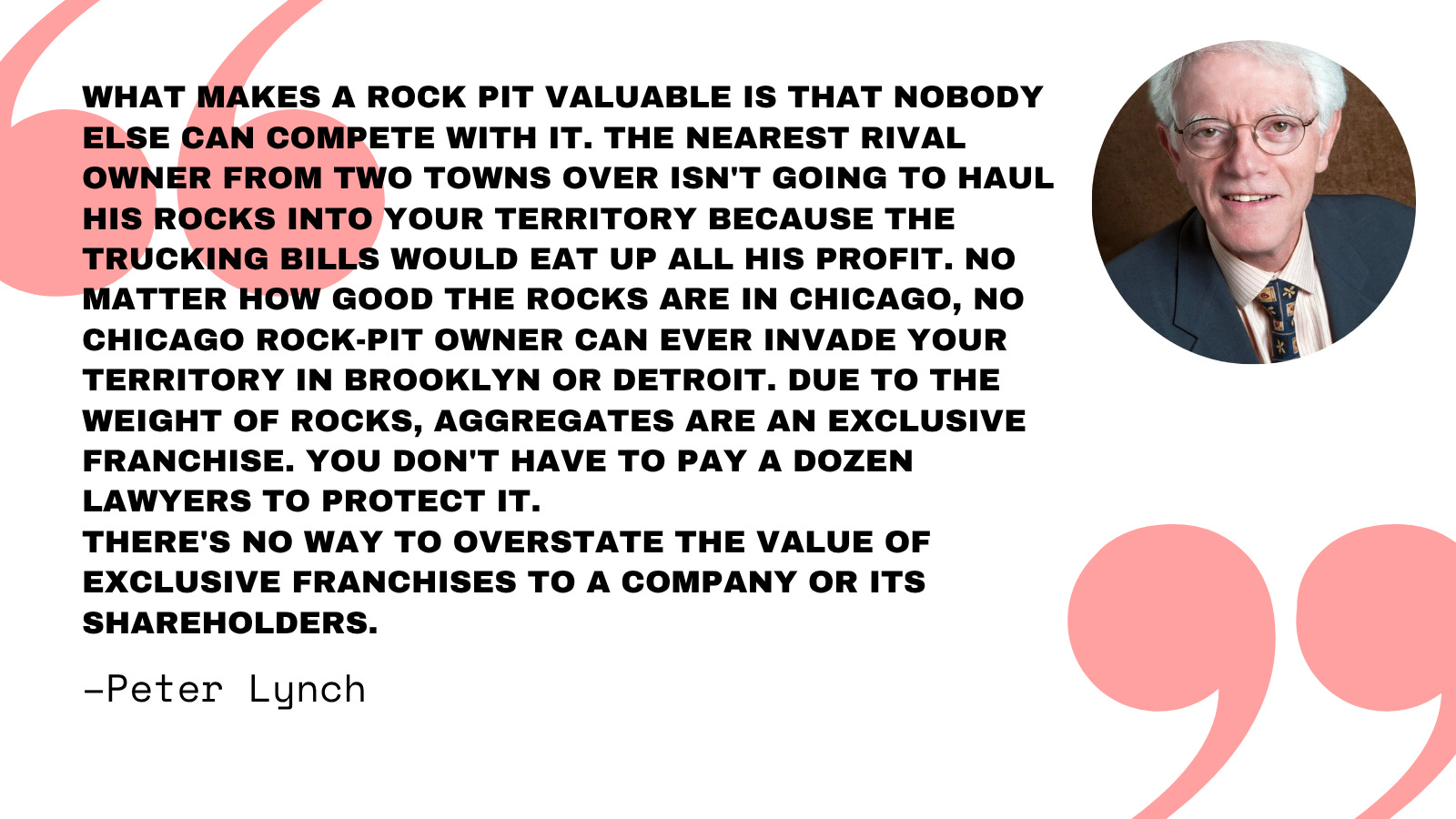
Peter Lynch told us exactly why gravel pits have a strong moat:

Rocks, sand, and gravel are cheap commodities on their own.
They can sell for just a few dollars per ton.

The real moat for an aggregates business is its location.

These companies are essentially local tollbooths. And that’s a business model Chris Hohn loves.

Here’s one more example of how boring businesses can deliver exciting returns.

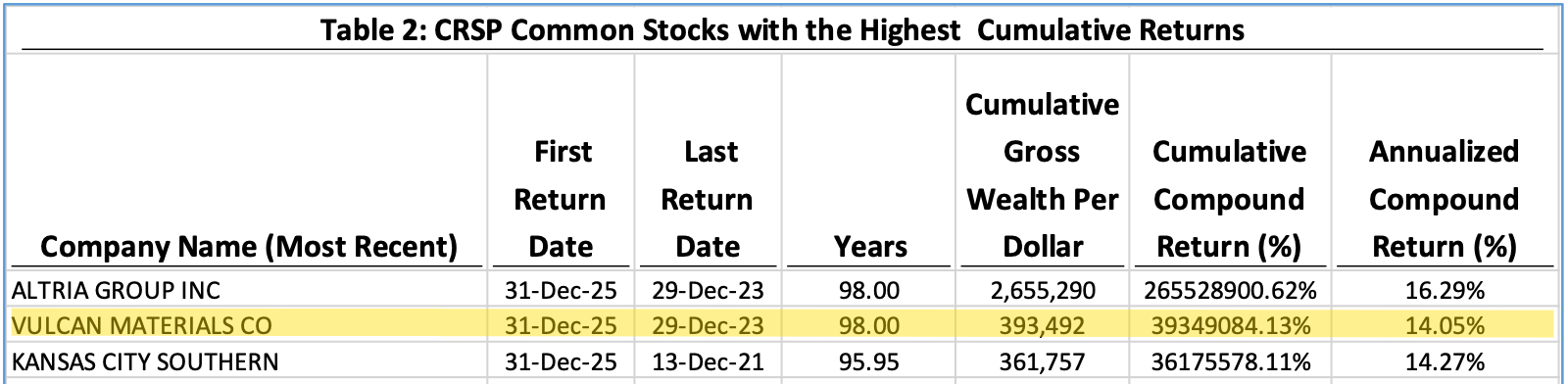
Can you guess which stock delivered the highest return between 1925 and 2023?

If you guessed Martin Marietta or Vulcan Materials, I’m sorry to say you’re wrong.

It was Altria, the company behind Marlboro cigarettes, with a return of more than 16% per year.

If you bought Altria 98 years ago, $1 would have turned into $2.7 million. It’s time in the market that matters. Not timing the market.

And number 2? Just after Altria?

It’s Vulcan.

If you bought Vulcan Materials 98 years ago, $1 would have turned into almost $400,000.

Compounding is the most powerful force in the world. But it takes time to work.

That means the businesses you invest in need to survive and grow for decades.

For Quality investors like us, the moat is extremely important.

Update Buy-Hold-Sell List: July 2026

Our Buy-Hold-Sell List is packed with durable, high-quality businesses.

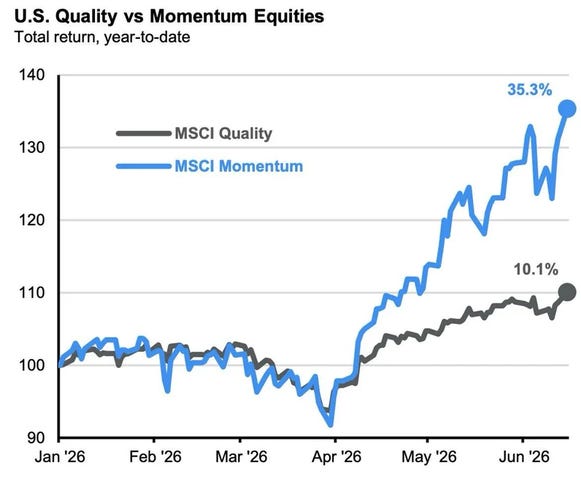
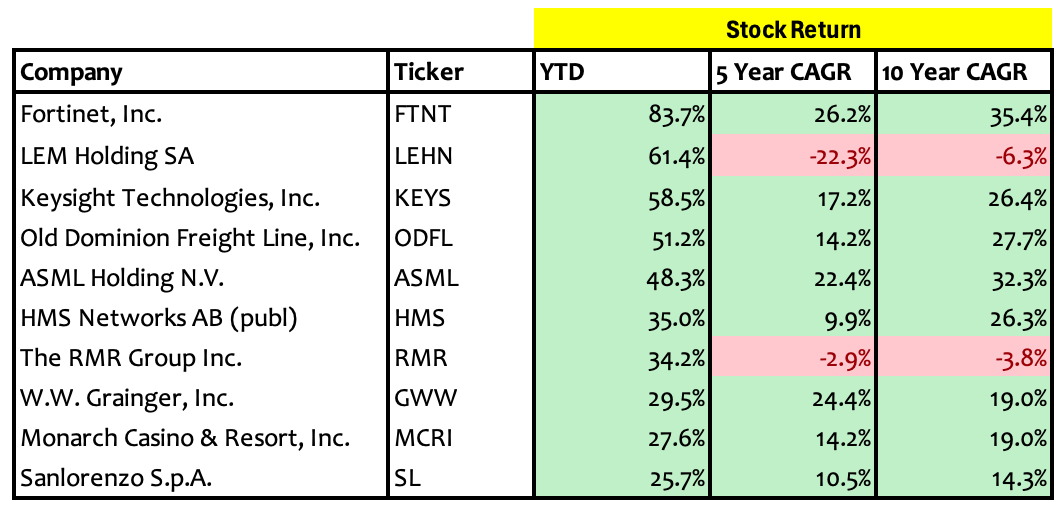
While Mr. Market is distracted by AI and momentum stocks, some of these businesses are trading at very attractive prices.

Let’s review the list and see what opportunities Mr. Market is offering us today.

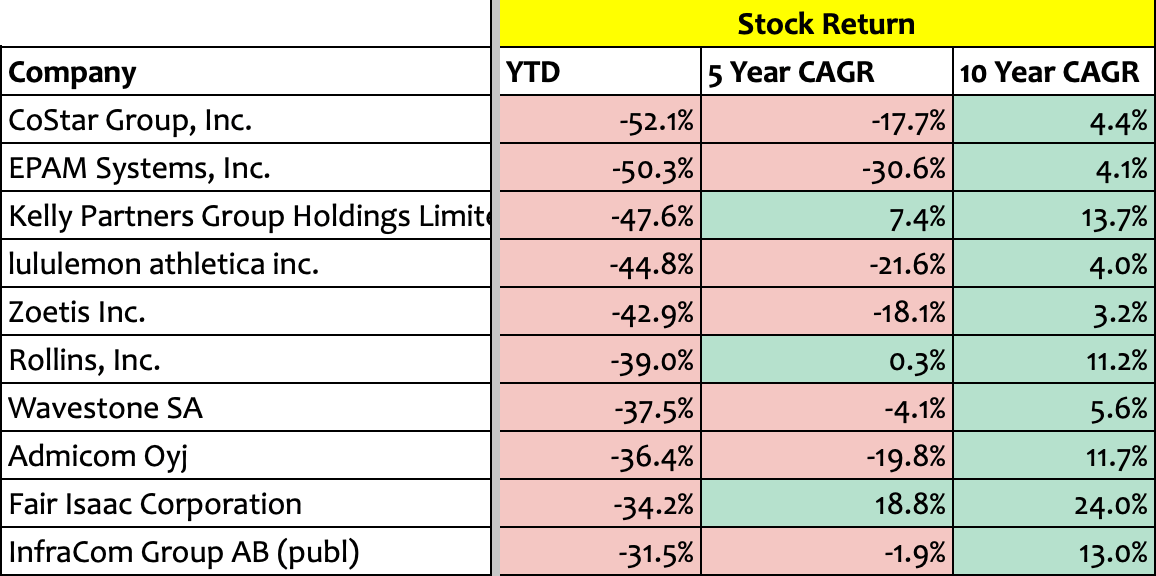
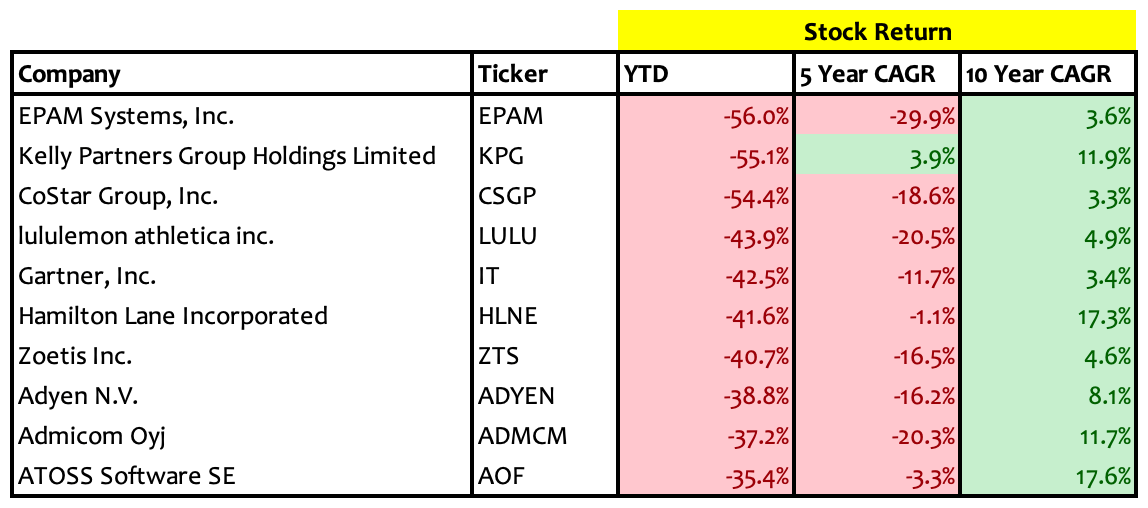
Worst performers

Here are the 10 worst performers on our watchlist so far this year:

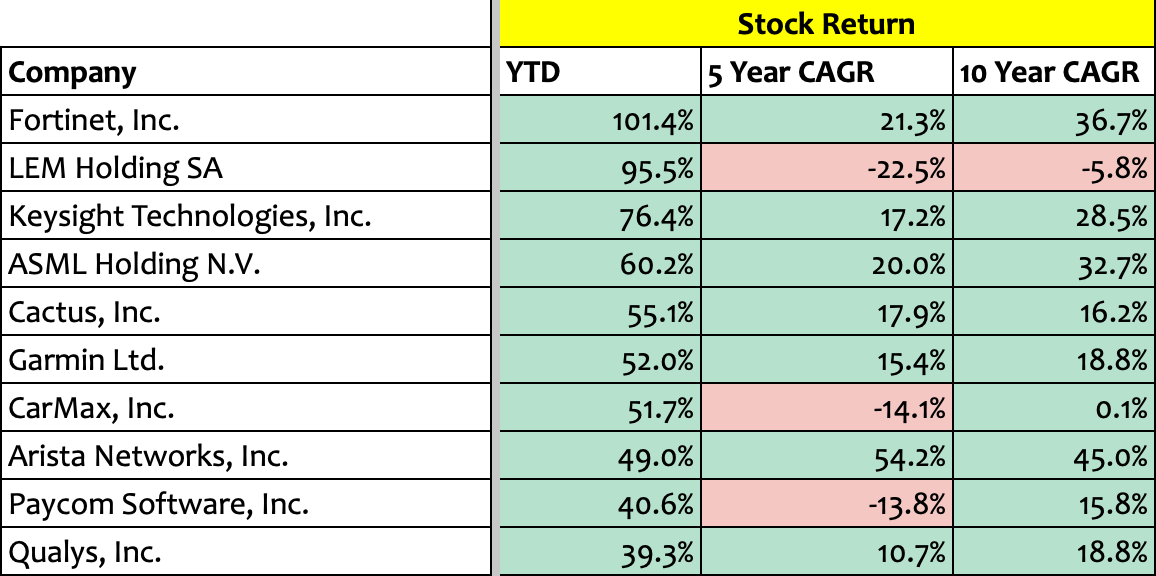
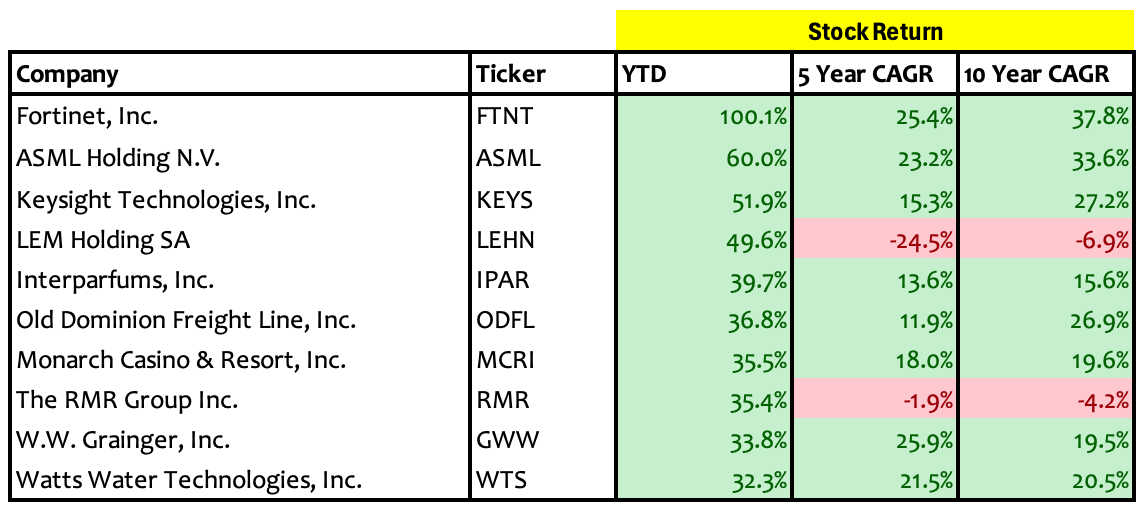
Best performers

The 10 best performers look as follows:

Changes to the Buy-Hold-Sell list

This week, we made some changes to our Buy-Hold-Sell List.

We moved 3 companies from HOLD to BUY:

  • Alphabet ($GOOGL): Google's parent company focused on internet search, AI, and digital advertising

  • Hermès ($RMS): French luxury goods manufacturer

  • Teqnion ($TEQ): Swedish industrial conglomerate

2 companies went from BUY to HOLD due to increasing competition:

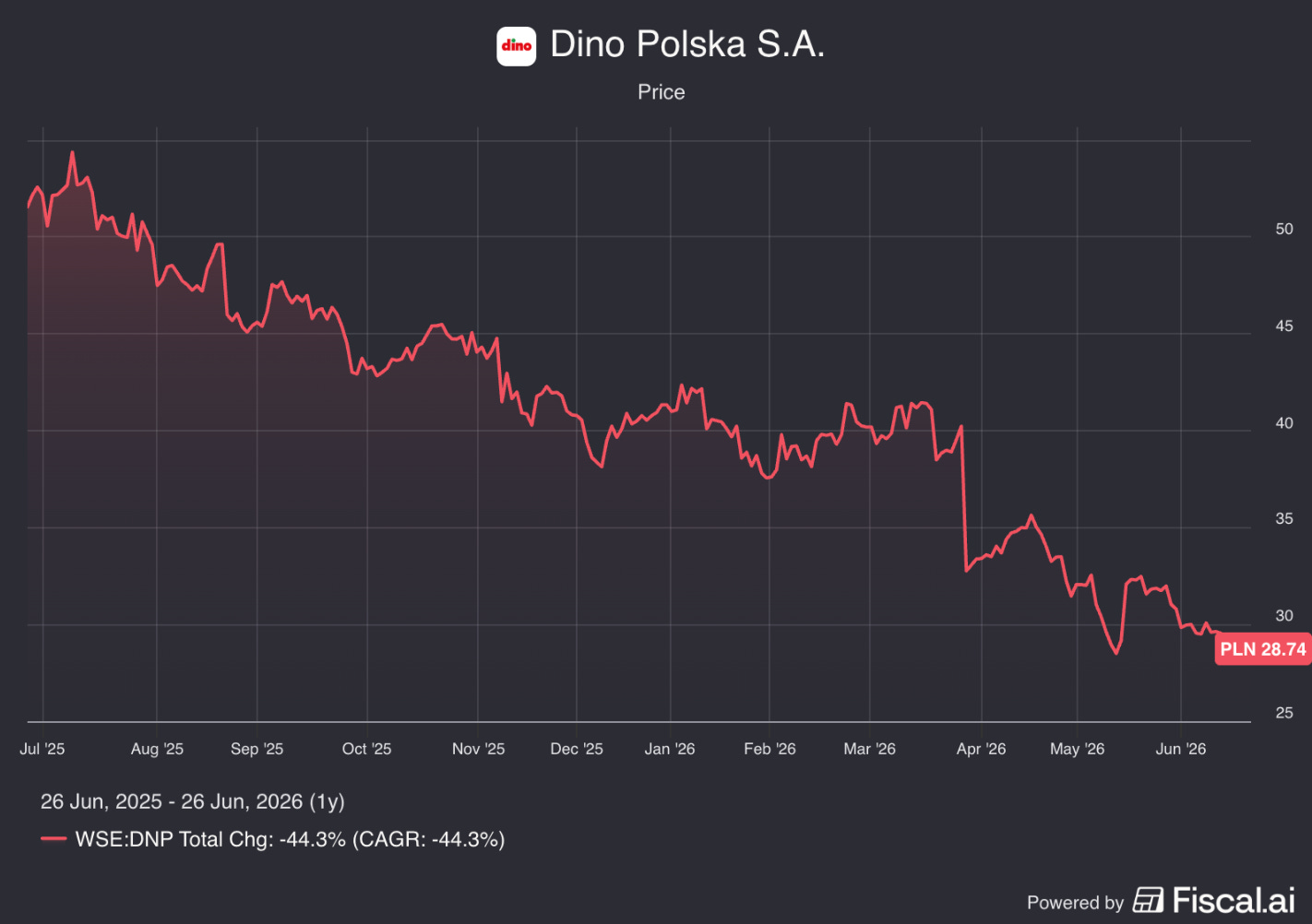
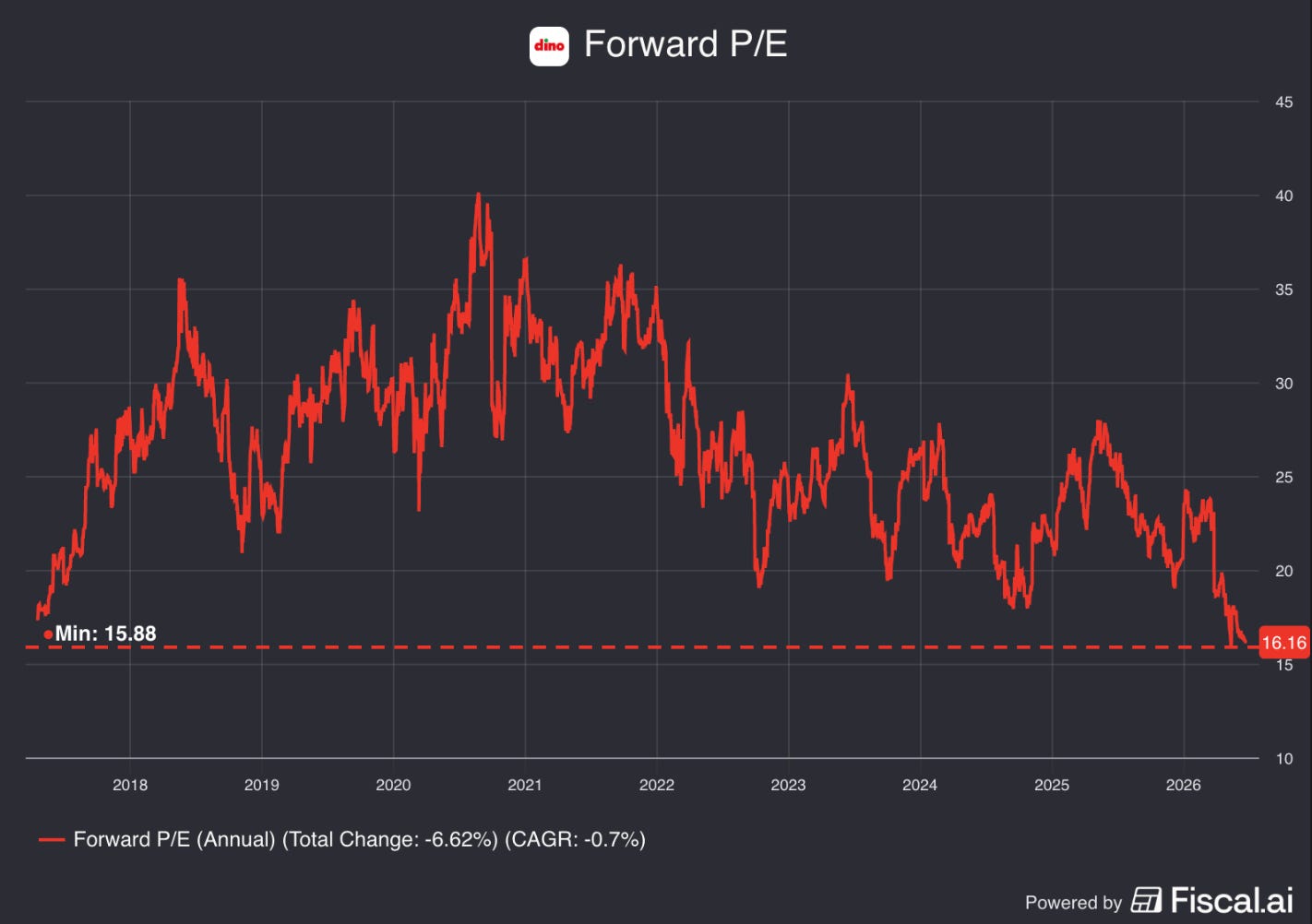
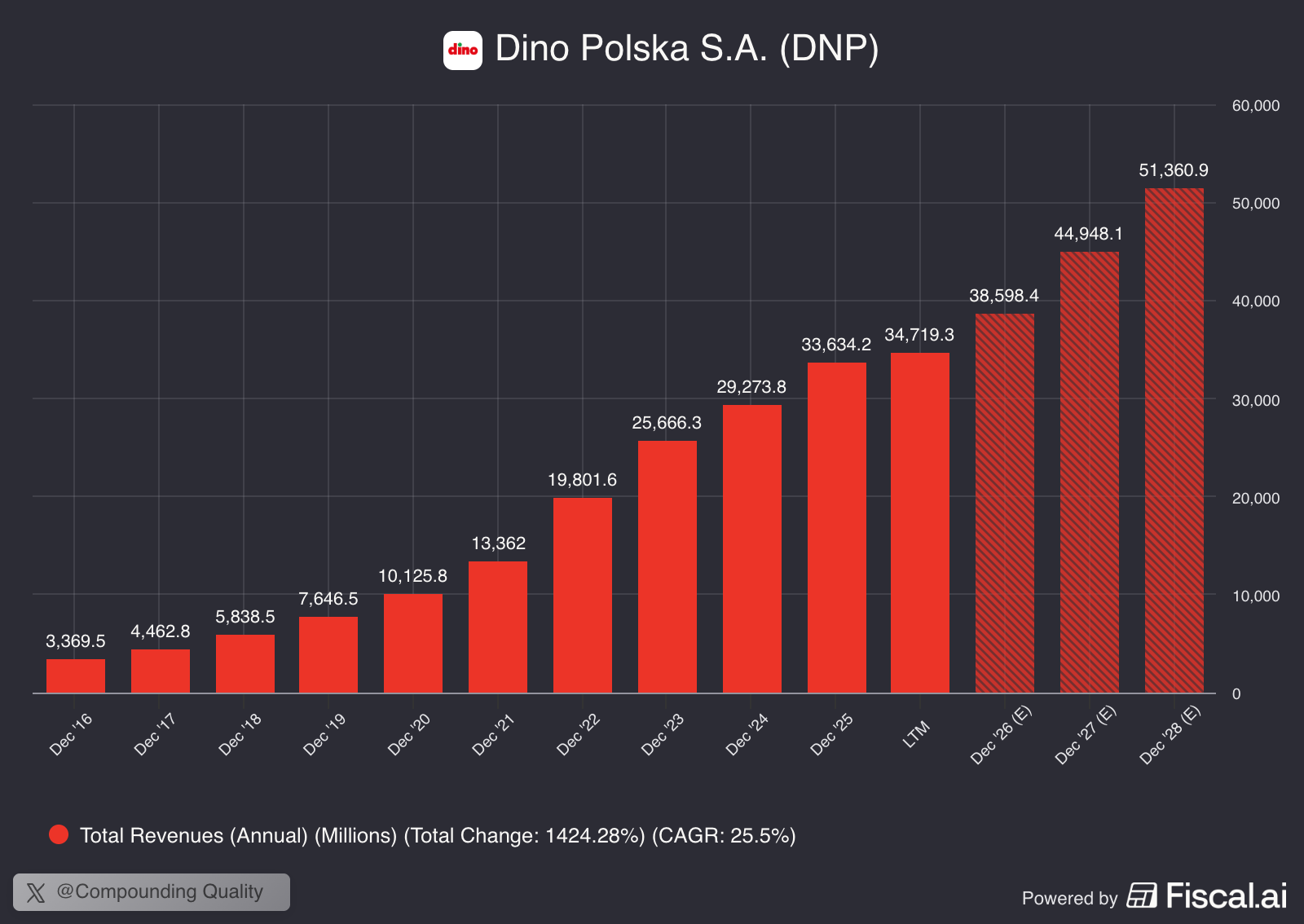
  • Dino Polska ($DNP): Polish grocery retail chain

  • Novo Nordisk ($NVO): Pharmaceutical company focused on insulin and GLP-1 drugs

1 company moved from HOLD to SELL due to valuation concerns:

  • Williams-Sonoma ($WSM): Home furnishings and kitchenwares retailer

Currently there are 55 stocks on ‘Buy’.

You can download the entire Buy-Hold-Sell List here:

Read more

ETF Portfolio Update August 2026

20 August 2026 at 14:46

The recommendation of Warren Buffett?

Most investors are better off buying the S&P 500.

But not every company in the S&P 500 is a good investment.

Let’s teach you how you can share the good from the bad.

Subscribe now

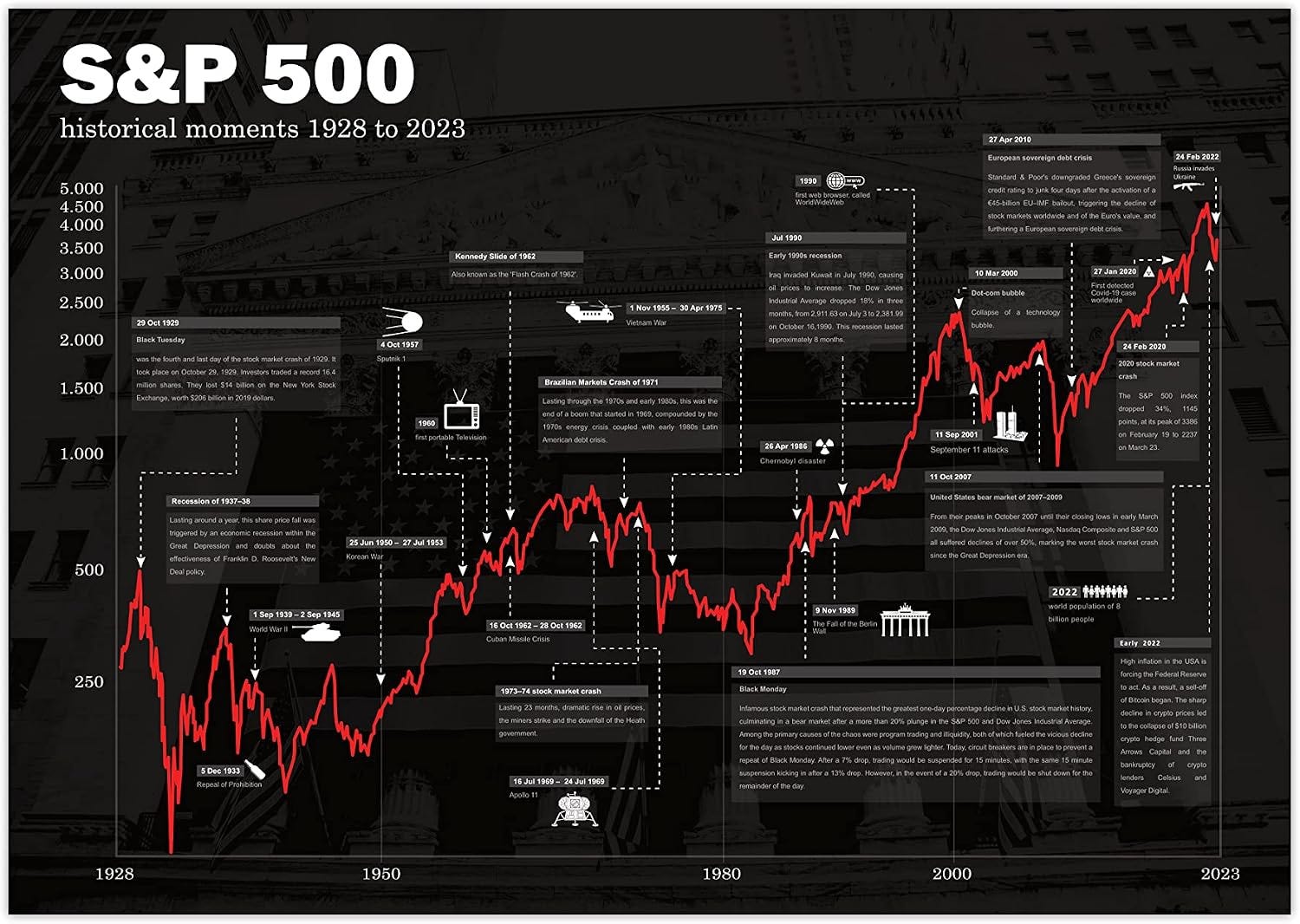
S And P 50 _ S&P 500 Index , S&P 500: Performances & Cotations, Cours ...
Only a few stocks matter

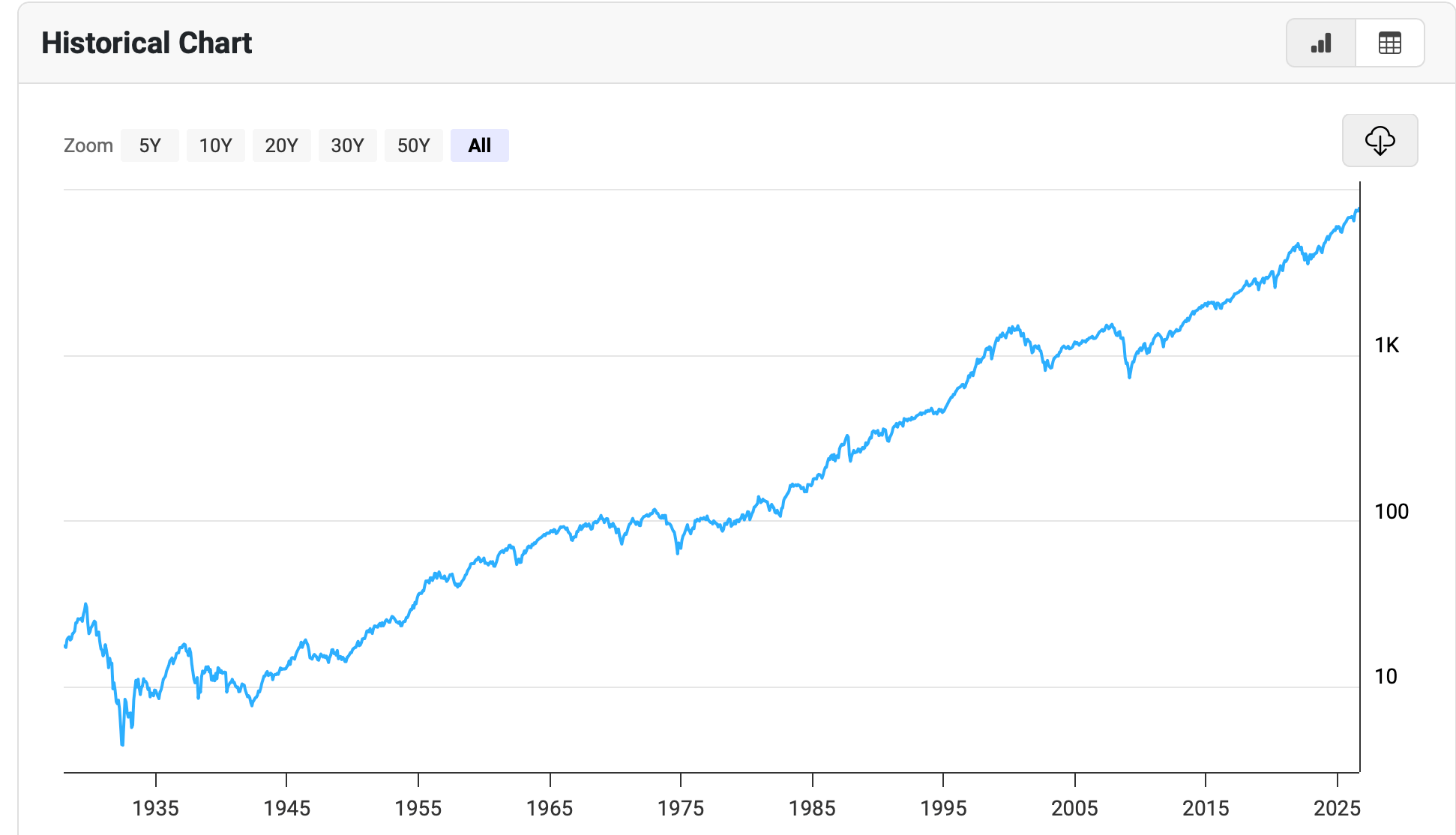
The S&P 500 has delivered an average annual return of 10% over the long term:

Source: Macrotrends

But you know what’s interesting?

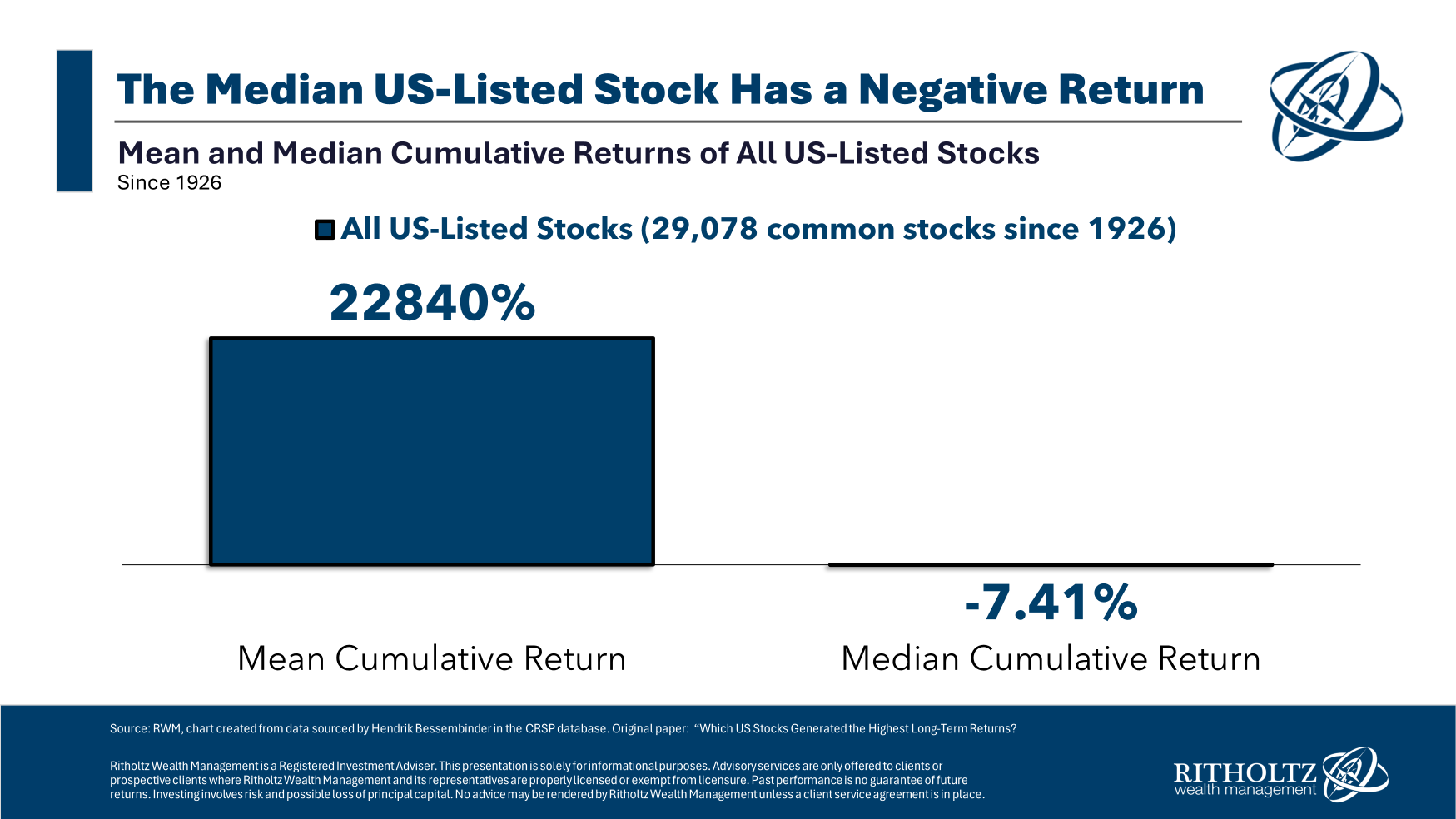
Hendrick Bessembinder looked at nearly 100 years of stock returns.

Here’s what he found:

  • The average cumulative return was +22,840%

  • The median cumulative return was -7.41%

The Biggest Winners in the Stock Market - Stock Market Journalist
Source: Ritholtz Wealth Management

How can this be?

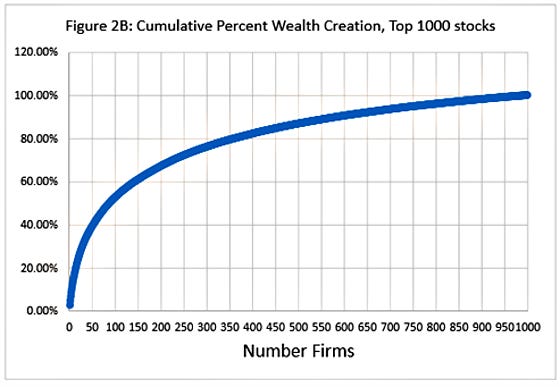
Because a very small number of stocks generate almost all market returns:

Bessembinder: A Fascinating But Skewed Study
Source: Gary Carmell

Buying a standard market-cap weighted index like the S&P 500 means you buy everything.

You get the highly profitable compounders, but you’re also buying the companies destroying capital.

As Quality Investors, we only want the best of the best.

What is quality?

You can define quality in several ways.

But there are a few general ideas that most of them have in common.

High reinvestment

In the long run, a stock is a slave to its business.

Not to sentiment. Not to macro. Not to the news cycle.

Eventually, a stock will always follow the fundamentals of the business.

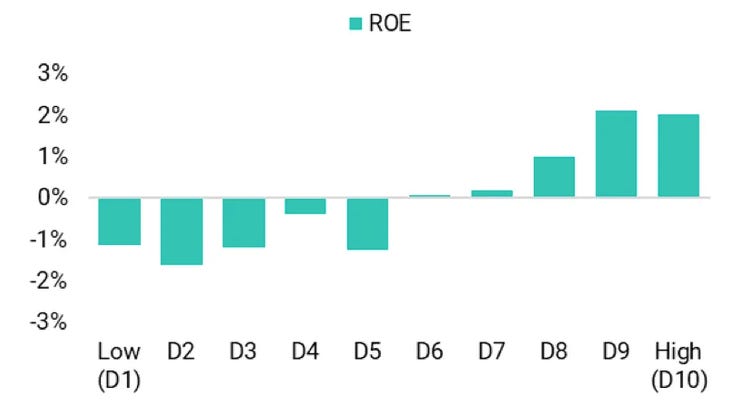
That’s why you want to buy companies that can reinvest their own capital at high rates of return.

Here’s what Charlie Munger has to say about this topic:

"Over the long term, it's hard for a stock to earn a much better return than the business which underlies it earns. If the business earns 6% on capital over 40 years and you hold it for that 40 years, you're not going to make much different than a 6% return—even if you originally buy it at a huge discount. Conversely, if a business earns 18% on capital over 20 or 30 years, even if you pay an expensive looking price, you'll end up with a fine result."

As you can see in this chart, the companies with the highest Return On Equity (ROE) generate the highest returns:

Source: MSCI

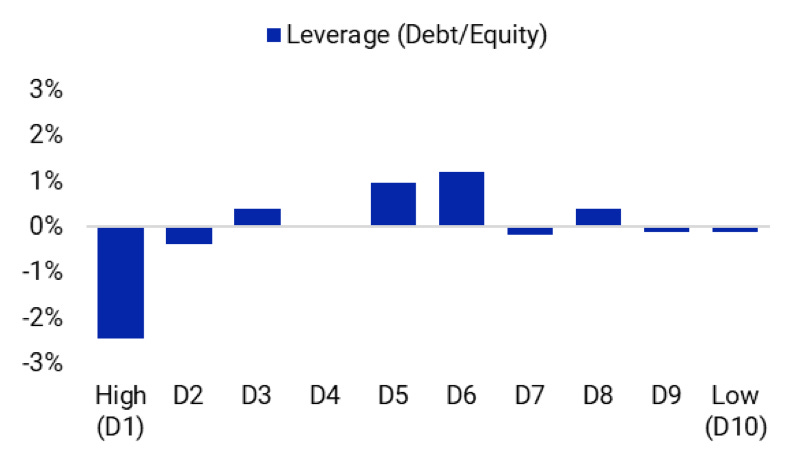
Low leverage

You want to own companies for a long time.
Let compounding do the heavy lifting for you.

As a result, you want to invest in companies that can survive for a very long time.

One thing that can hurt a business faster than almost anything else?

Too much debt.

Let’s turn to Charlie Munger for some more wisdom:

“There are only three ways a smart person can go broke: ladies, liquor, and leverage.”

When times are good, too much debt eats into your profits because you have to pay a lot of interest.

But when there’s a recession, rates go up, or credit tightens, too much debt can bankrupt a company (and wipe out equity investors like us).

As you can see in this chart, having little debt doesn’t necessarily boost your returns. But having too much debt can seriously hurt them.

Source: MSCI

Real earnings

Accounting rules leave room for judgment, adjustments, and assumptions.

Sometimes, management teams use this to make a struggling business look much more profitable than it really is.

But you can’t fake cash in the bank.

Always remember:

Quality companies make real profits and generate real cash.

Over the long run, a stock’s price follows the performance of the business.

But when it comes to cash generation, this can happen in the short term too.

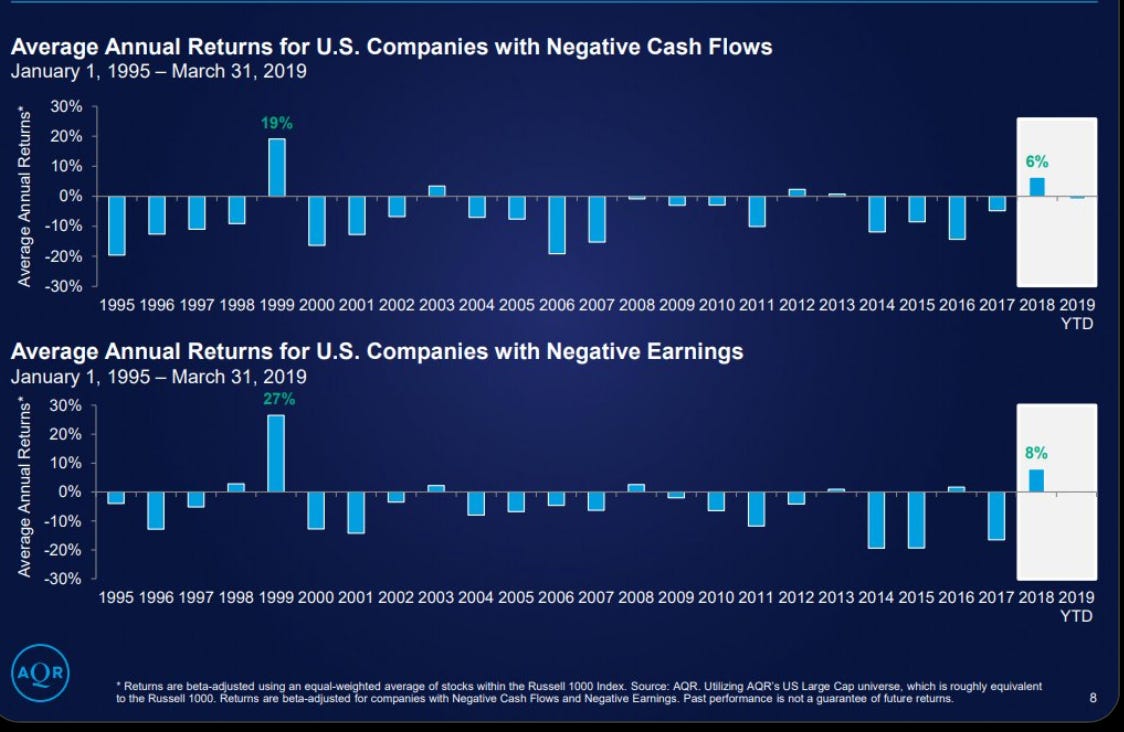
Here’s the average annual return of companies with negative cash flow and accounting earnings:

Source: AQR

The conclusion?

Companies with negative cash flow and earnings usually deliver negative stock returns too.

As an investor, you want to make sure the cash flowing in and out of a business matches its reported earnings.

When the two are close, you know you’re buying a business that makes real money.

So wouldn’t it be interesting to start with the S&P 500 and filter it down to the 100 highest-quality companies?

Companies that translate all their net income into pure cash?

That’s exactly what this month’s ETF does.

⭐ ETF of the Month (Spotlight)

Invesco S&P 500 Quality ETF (SPHQ)

Key Information

  • Name: Invesco S&P 500 Quality ETF

  • Ticker: SPHQ

  • Total Expense Ratio: 0.21%

  • Physical/Synthetic ETF: Physical

  • ISIN: US46137V2410

European Version

  • Ticker: SPQA

  • ISIN: IE000E6TPCH9

What?

The ETF starts with the S&P 500 Index.

It then looks at three things:

  1. Return on Equity (ROE): Shows how well a company turns shareholders’ money into profit.

  2. Financial Leverage: Shows how much a company relies on debt.

  3. Accruals Ratio: Shows how much of a company’s earnings are backed by real cash flow rather than accounting adjustments.

It uses these three metrics to give each of the 500 companies a quality score.

It then keeps only the 100 companies with the highest scores.

Finally, it weights each company based on its quality score and market capitalization.

Why?

When you find companies that can reinvest at attractive rates, grow without taking on too much debt, and turn most of their earnings into cash, you’ve found Quality Companies.

And when you invest in Quality Companies, you can expect to outperform over the long run.

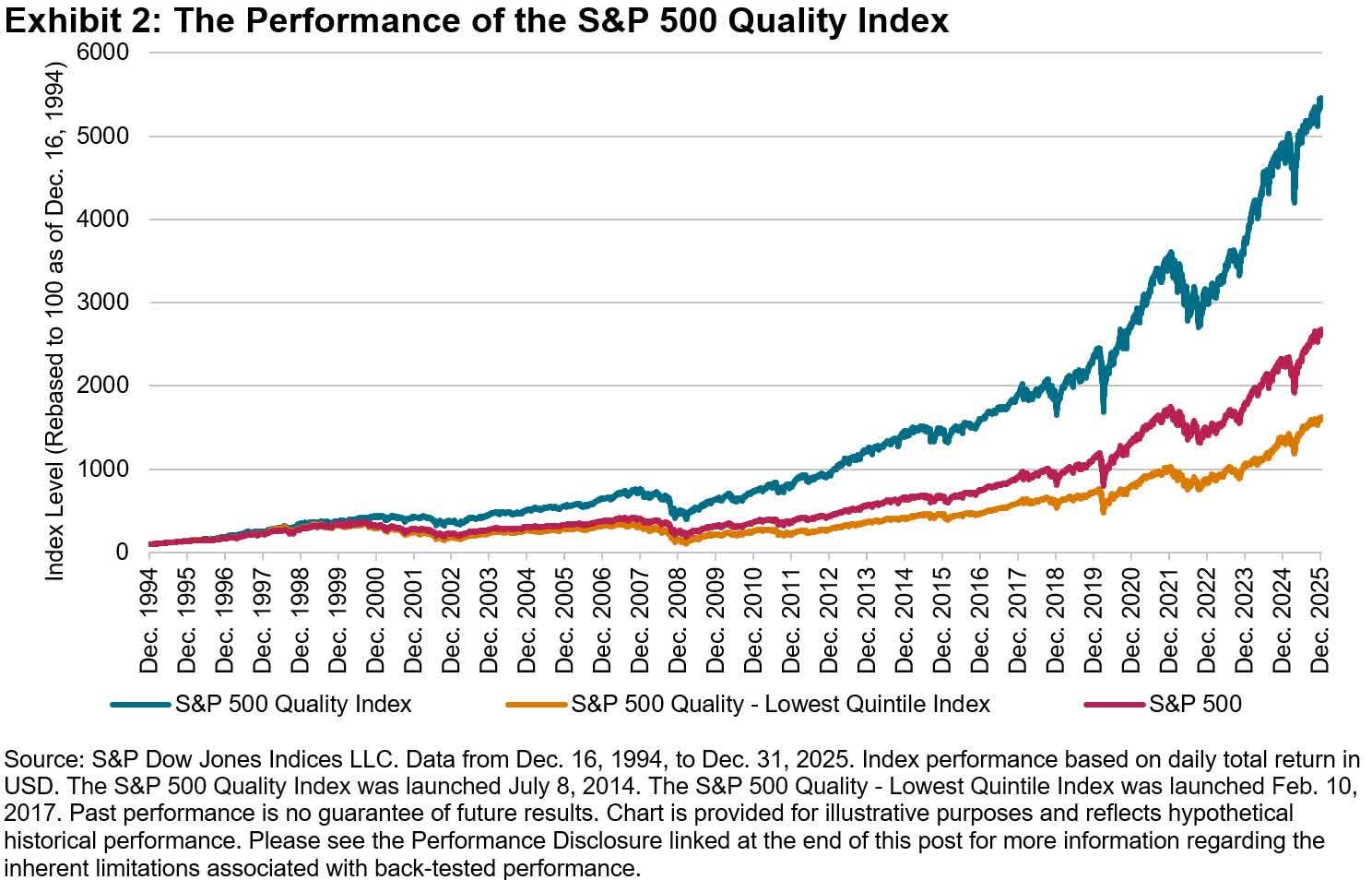
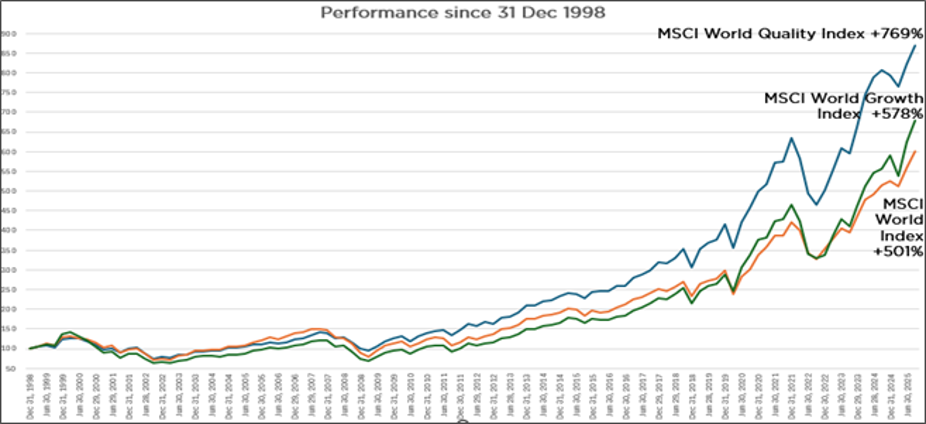
Here’s what the historical performance looks like:

Quality Over Quantity: Features Of The S&P 500 Quality Index | Seeking Alpha

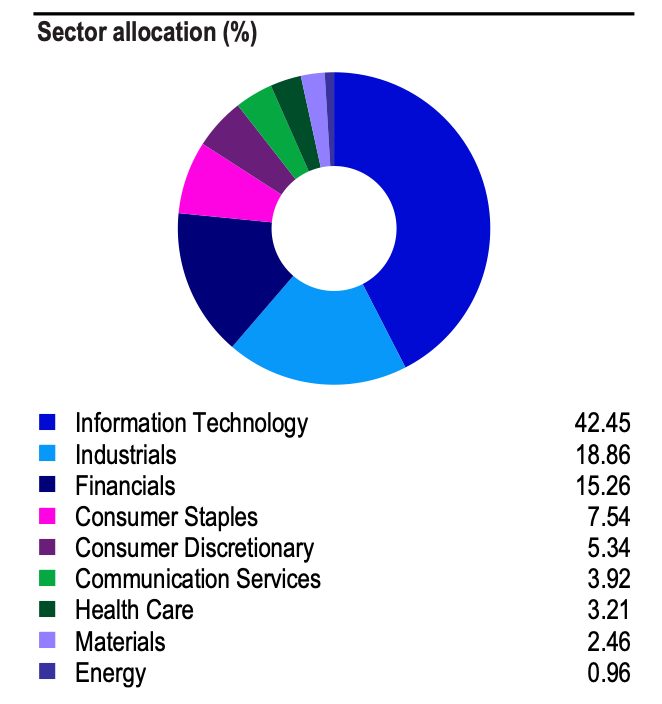
Sector Split

The sector breakdown looks like this.

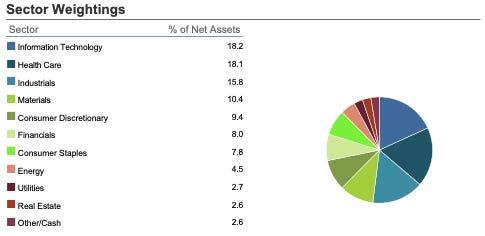
The three largest sectors are Information Technology (42.5%), Industrials (18.9%), and Financials (15.3%).

Source: iShares

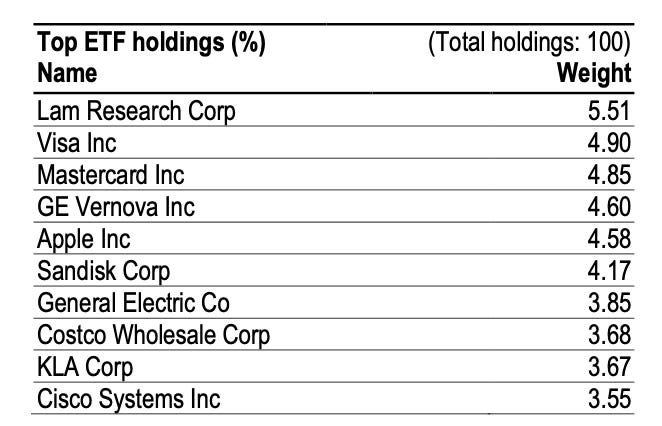
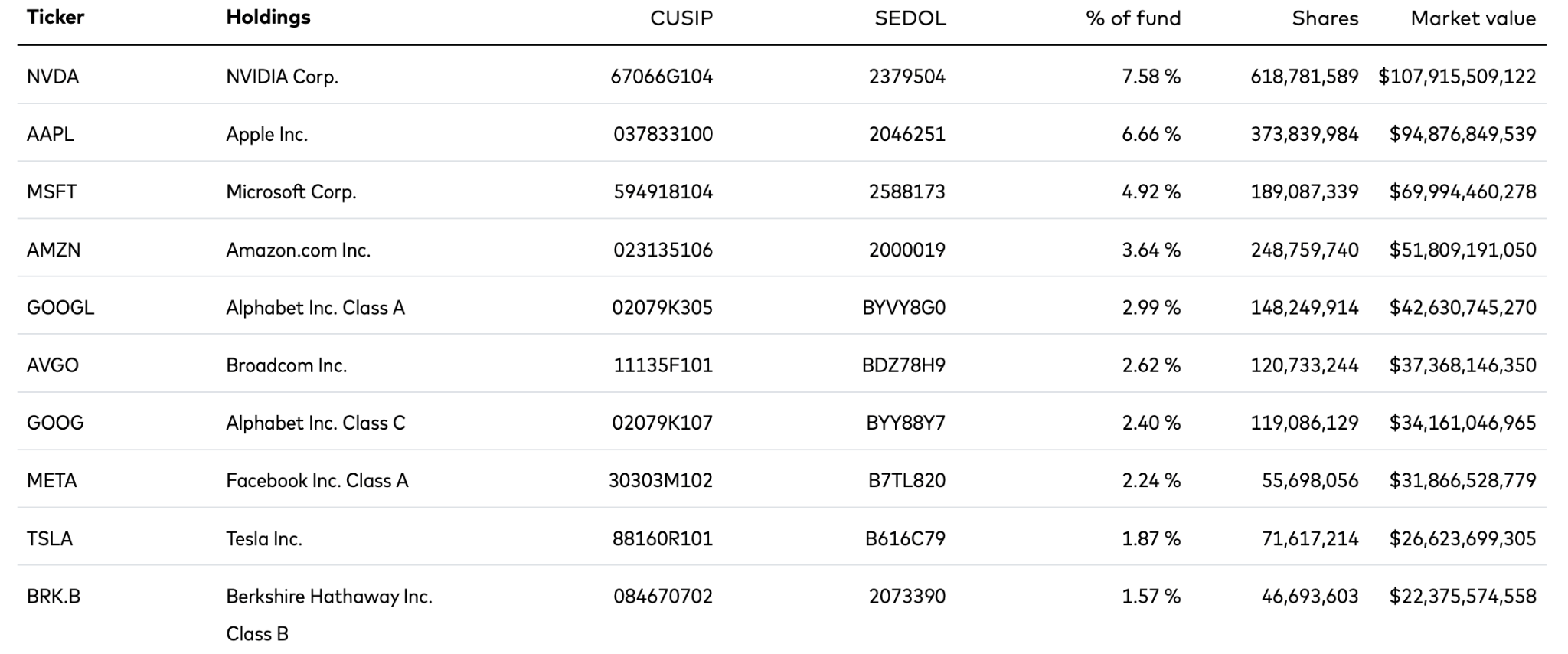
Top Holdings

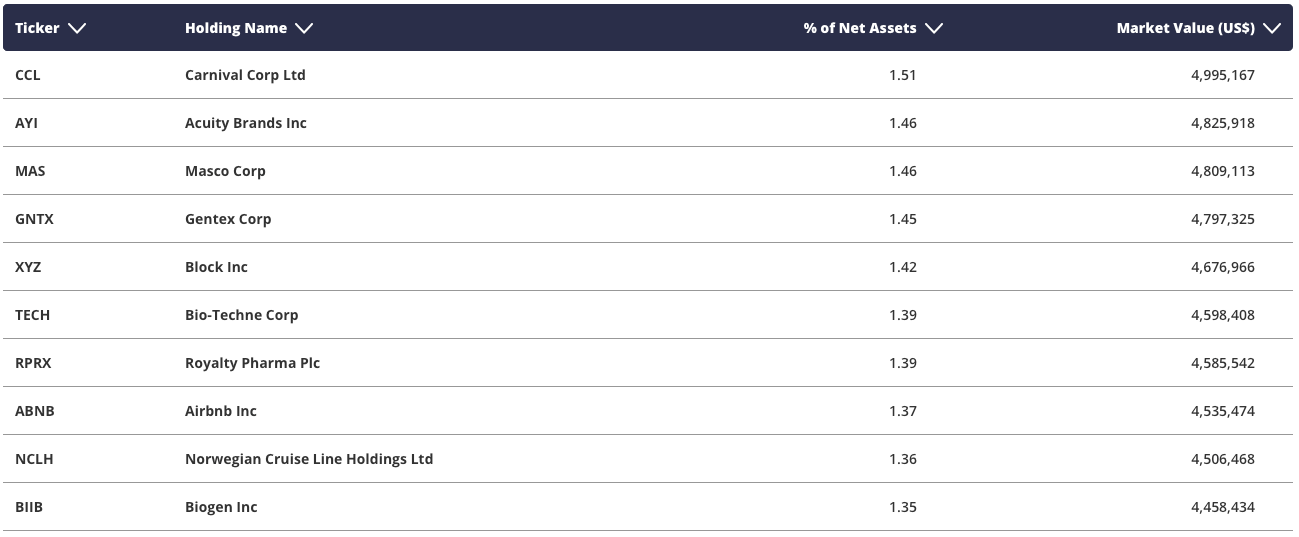
The top 10 positions right now:

Source: iShares

ETF Portfolio Update: August 2026

Now, let’s dive into our ETF Portfolio Update.

Our Portfolio is a great mix of ETFs that we believe can outperform over the long run.

We use several factors that have historically performed well:

👑 Quality: Only invest in companies that have already won
📏 Size: The smaller the better
🚀 Multifactor: Quality, size, value & momentum
🌏 Emerging Markets: Small exposure to Emerging Markets

Let’s now dive into the ETF Portfolio itself.

You have 24/7 access to the ETF Portfolio here:

Read more

🎙️ Growth Investing Done Right

18 August 2026 at 14:44

Hi Partner,

Last week you were able to read Part I of our interview with Kris.

Kris is the best growth investor I know.

He even made a bet with me that Nvidia was undervalued… 3 years ago.

Everybody was already convinced that Nvidia was overvalued. Kris wasn’t.

Nvidia is up almost +400% since then.

Let’s dive into Part II of this interview right away!

Cycling together in Malta

Kris just announced his 5 favorite stocks right now.

Curious? Download them for free:

Download the top 5


What are the most important metrics or ratios to take into account for growth investors?

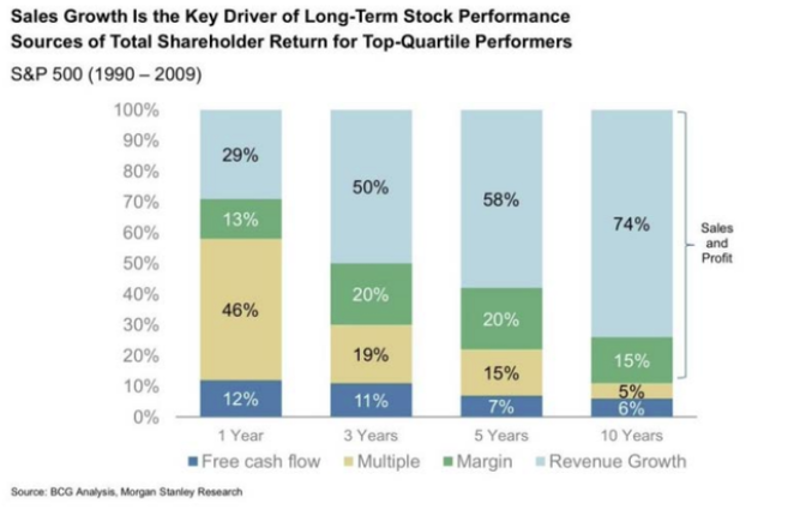
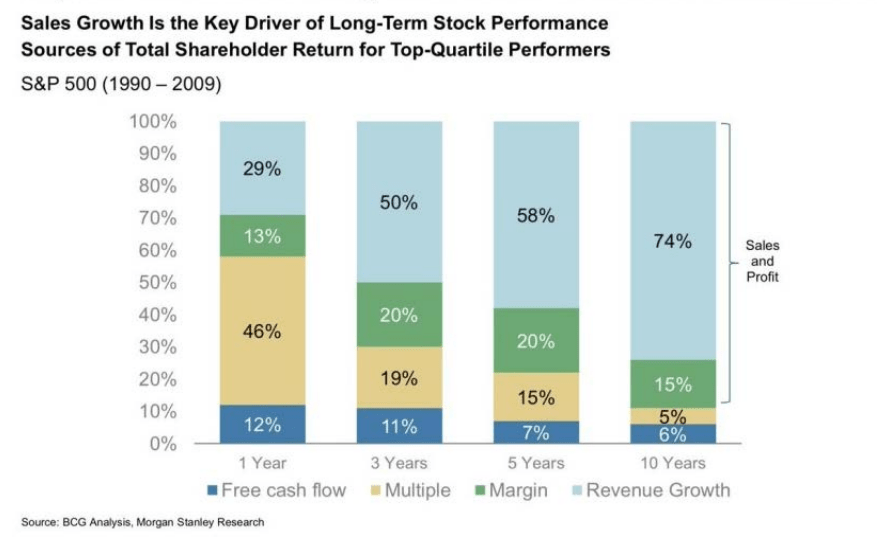
Kris: It’s pretty simple: revenue growth. Look at the long-term statistics and you will see that revenue growth is by far the most important driver of stock returns over the long term. Over a year, it’s valuation. But that only counts for 5% over a decade.

Of course, growth alone is not enough. It’s easy to grow revenue fast if you sell $1 for 90 cents. So you want profitability moving in the right direction. But that doesn’t mean I shy away from unprofitable companies. There are tests to see if an unprofitable company is a good company or not.

My favorite is the rule of 40, which comes from the venture capital world: revenue growth plus free cash flow margin should be above 40. Suppose a company grows revenue by 60% with a free cash flow margin of minus 10%. That’s a rule of 50 and that’s really strong. I would definitely be interested in that company, even if it still loses money.

What would be a reason to sell a position?

Kris: The most important reason is simple: the company doesn’t execute as I want it to execute. That doesn’t mean I sell for every mistake. Every company makes them. You have to be a bit tolerant. But blind tolerance is just hoping, and hope is not a strategy, as we all know.

That’s why I have my self-developed Selling Rules that are very company-specific. I determine beforehand when I will trim or sell. Of course, I don’t follow them blindly, as there are always situations in which you should divert from the rules. Suppose a selling rule is at least 15% revenue growth and the company only grows its revenue by 8% but guides for 25% revenue growth in the next quarter, selling would be stupid.

Next to the Selling Rules, I have also developed a Quality Score. Every quarter, I go through the earnings in an earnings deep dive, and then I score the company on 17 criteria, from quality of management and revenue growth to metrics I’ve developed myself, like sales efficiency scores. This catches slow deterioration in companies, which you don’t always see if you don’t score. If the Quality Score is dropping and too low, or the Selling Rules are broken, I consider selling. But I try to hold companies for a long time, not selling too early. It can cost you much more to sell a Multibagger to early then to hold a loser too long.

Who is the investor you admire the most?

Kris: Potential Multibaggers is highly influenced by three investors.

The first, and the biggest influence, is Phil Fisher. You may know him from Common Stocks and Uncommon Profits, a fantastic book that heavily influenced my views on investing.

The second is David Gardner, one of the co-founders of The Motley Fool and almost as important as Phil Fisher in the development of Potential Multibaggers. He has picked at least seven 100-baggers: Amazon, Nvidia, Tesla, Intuitive Surgical, Netflix, and others. And he does what I also emphasize: hold your stocks for the long term.

Every single one of those fantastic stocks had crushing drops along the way, 80%, 85%, 90%, Amazon almost 95% but David Gardner held the stocks all the way through. If you ever needed proof that holding longer beats selling too early, this is it.

The third influence is Peter Lynch. His level-headedness, his contrarian eye, and in general, he’s simply a very wise man. His influence is more about his mindset than his investing method.

How do you size positions, and does conviction level change the size over time?

Kris: I add when I see a company doing well, and I mean fundamentally, not the stock price. Take MercadoLibre ($MELI). The stock hasn’t done much recently, but the business keeps executing, so I’ve kept adding, even though it’s already my biggest position.

I always rank my portfolio by original allocation, not current value because I refuse to punish my winners and reward the losers. If I ranked by current value, every stock that did great looks like a position that’s too big and every loser like a position that’s too small. That’s not what you want. Based on original allocation, I usually don’t put more than 8% of my portfolio in one stock. Every now and then I stretch to 10%, and with MercadoLibre I’m even above that, which is very exceptional for me.

If a stock does so well that it becomes a 20% position at the current value of the portfolio, I’m fine with that. But that’s very personal. Can you sleep well at night with a 20% position? I can, but it doesn’t mean you can. That’s OK as well. Position sizing is very personal.

Do you have a formal checklist or set of criteria a stock must pass before it makes the portfolio?

Kris: There are 15 Potential Multibaggers criteria, but I wouldn’t call them a formal checklist in the classic sense. The Quality Score and the Selling Rules are more formal, but they come later, once I already have a position.

There are quite a few subjective criteria when I pick a stock. For example, the company must have a great mission statement. This may sound trivial, but companies with a clear purpose simply perform much better. I also look for optionality, smart backing, financial strength, and many more criteria.

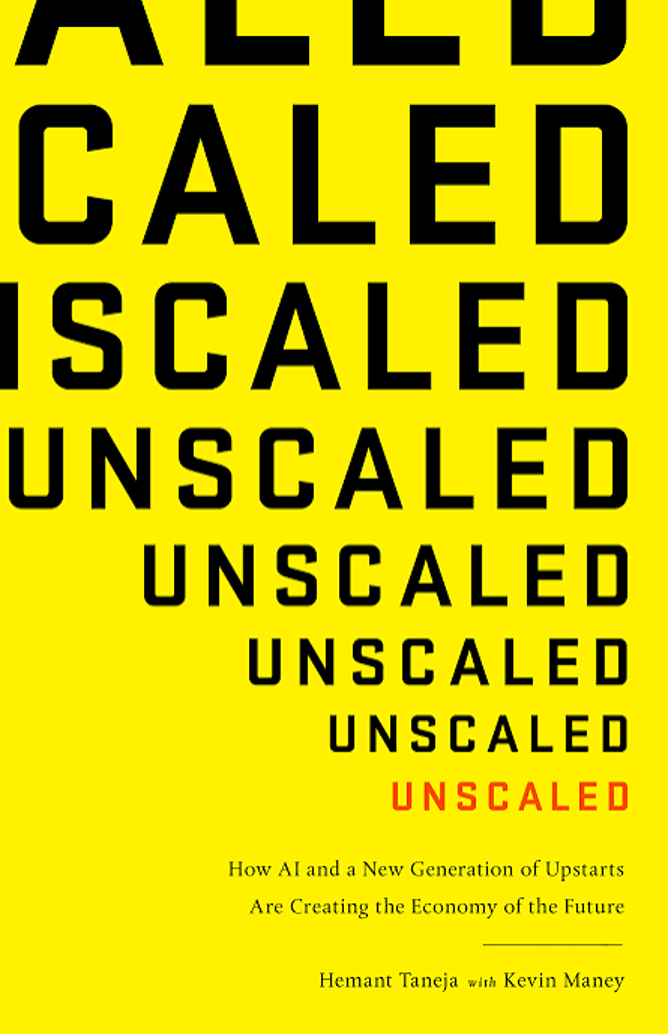
I want to mention one in particular: Unscaled scalability. It’s based on Hemant Taneja’s book Unscaled.

In his book, Taneja argues that scale has become a disadvantage unless you allow consumers to finetune the products to their own needs. That’s unscaled. You could use personalized as a synonym.

Too much differentiation leads to higher costs and less profits. So, that unscaled product should still be spread at large scale. Think of Netflix ($NFLX), for example. Everyone has their own recommendations (unscaled) but Netflix can easily do this for all customers without much extra costs (scaled).

A lot of people talk about growth investing, but few actually stick with it through the drawdowns and still come out ahead. What do you think separates you from most individual growth investors?

Kris: People get scared, and I understand that. As I said, David Gardner held Amazon when it was down 95%. Most people are not able to do that. I’ve had multiple stocks that crashed hard, but I held them as well. Shopify was down 85% in 2022, Cloudflare 83%. Of course, I have my doubts as well during those periods. But I have my Quality Score and my Selling Rules to help me. As long as those are intact, I often add to my position. When it hurts the most, it’s often the best time to buy. Of course, initially, it feels like you are throwing good money after bad, but over the longer term, these buys are the best. Every month, I have a Best Buys Now article and the June 2022 Best Buys Now are up 367% on average, for example. You can download the most recent list here.

Beforehand, most people think they can hold through deep drops. But it’s not only the price drop that makes you sell, it’s the stories surrounding the stock. When a stock is down 50% or more, everything you hear and read about it is extremely negative, and those stories influence your thinking. My edge is that I can put my feelings aside because of the Quality Score and the Selling Rules. Of course, I also know the history of growth stocks, and volatility is just part of this game.

If you read 100 Baggers by Chris Mayer, a fantastic book, you know this. He studied 365 stocks that went up 100x or more. Not one of them avoided a 50% drop. The overwhelming majority was down 75% or more, and not once, but multiple times. That is the price of a 100-bagger, and most people cannot pay it. No pain, no gain, they say, but it’s hard to just suffer without any guidance. That’s what I do for my subscribers.

Conclusion

That’s it for today.

Kris just announced his new top 5 stocks.

Curious? Download them for free:

Download the top 5

Everything In Life Compounds
Pieter

Book

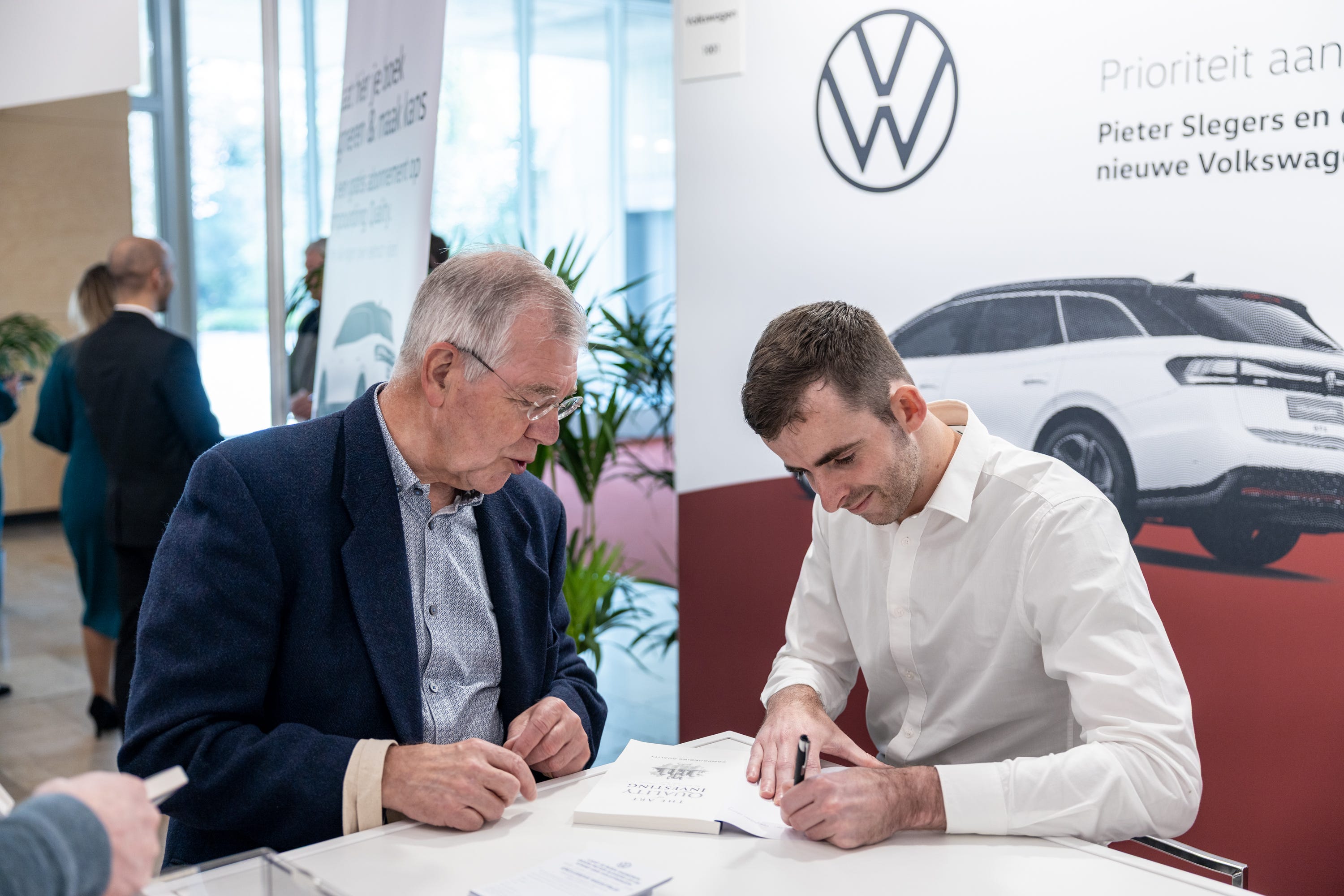
  • Order your copy of The Art of Quality Investing here

Used sources

Disclaimer

As a reader of Compounding Quality, you agree with our disclaimer. You can read the full disclaimer here.

Buying The Next Berkshire Hathaway

16 August 2026 at 14:44

Hi friend 👋

Today we are buying a new stock for Our Portfolio.

This company:

🏛️ Outperformed Berkshire Hathaway by a wide margin since 1985
🧠 Is led by ‘The Canadian Warren Buffett’
🇮🇳 You get immediate exposure to the growing Indian market
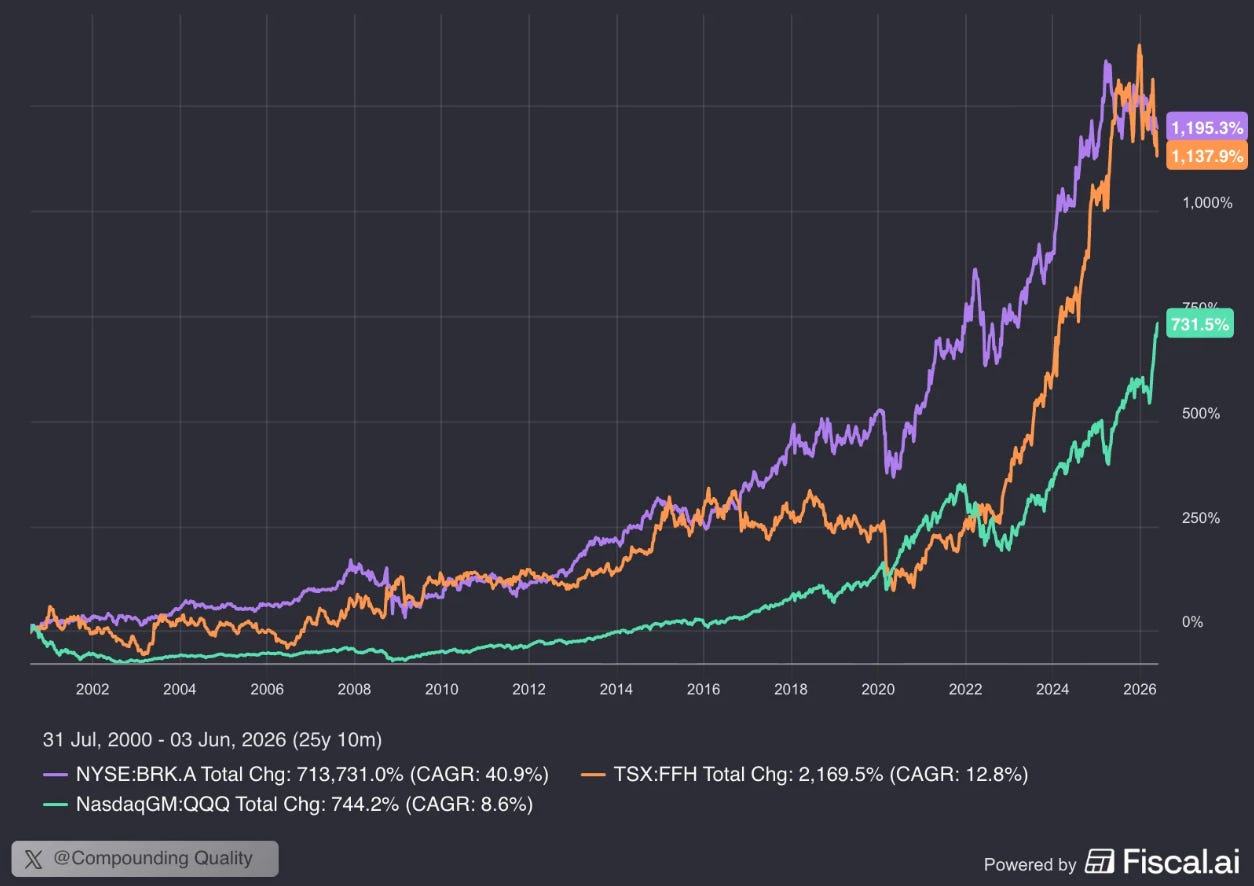
🔄 Just like Berkshire Hathaway they use their float to invest in stocks
💰 Management thinks they can grow by 15% per year (doubling every 5 years)

Fairfax Financial Holdings: A Hidden Gem of Long-Term Value Creation

Read more

10 Stocks for the next 20 years

13 August 2026 at 14:44

Hi Partner 👋

Welcome to the third edition of our 10 Stocks for the next 20 Years series.

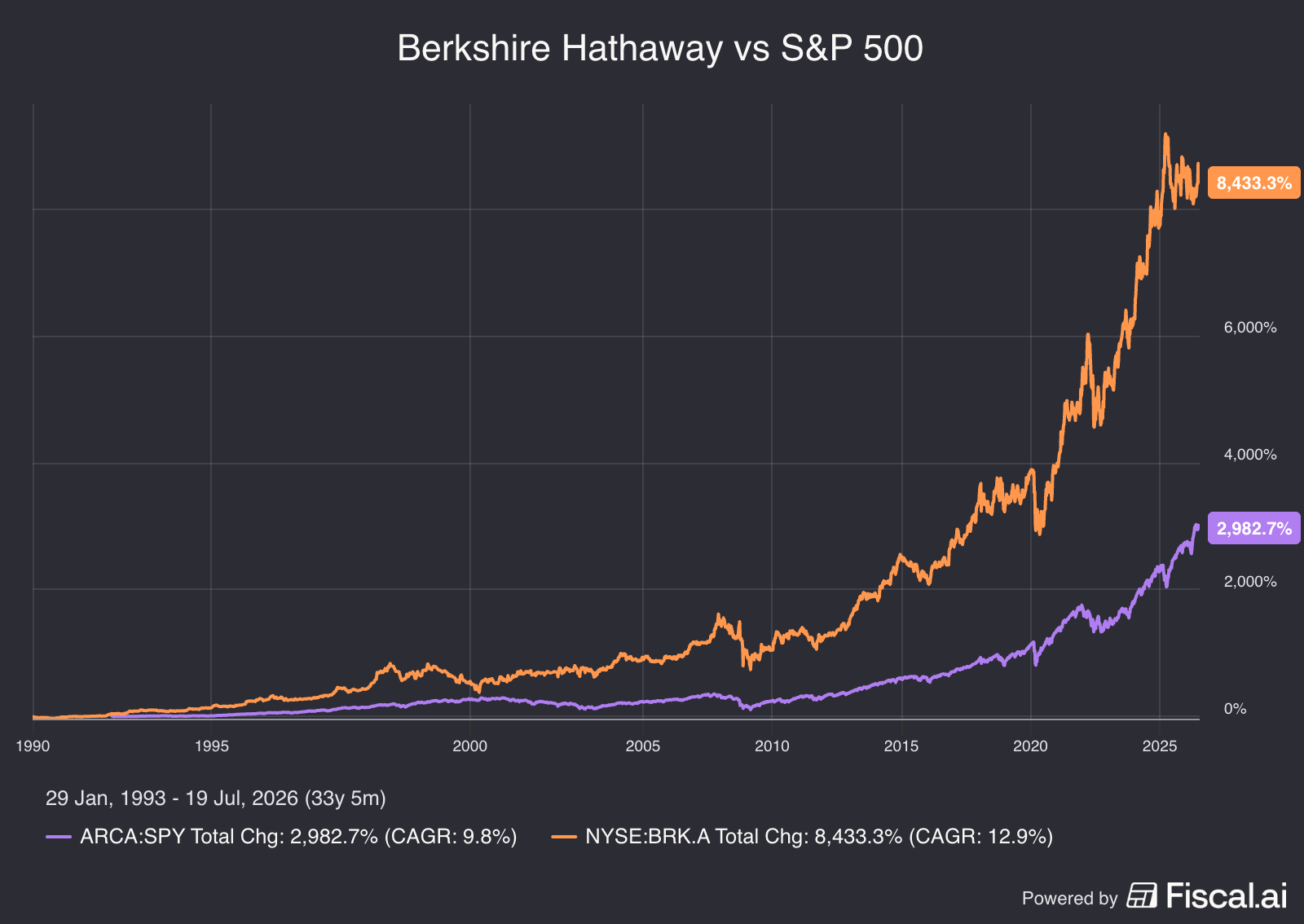
You already received two parts:

Today it’s time for Arka’s selection.

Let’s dive in right away!

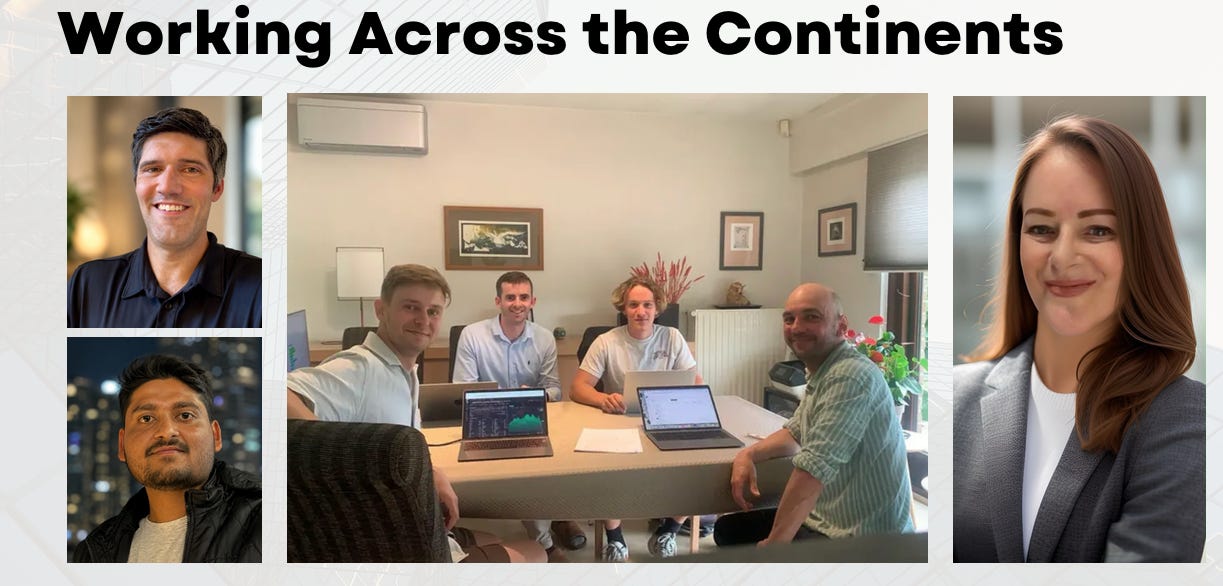
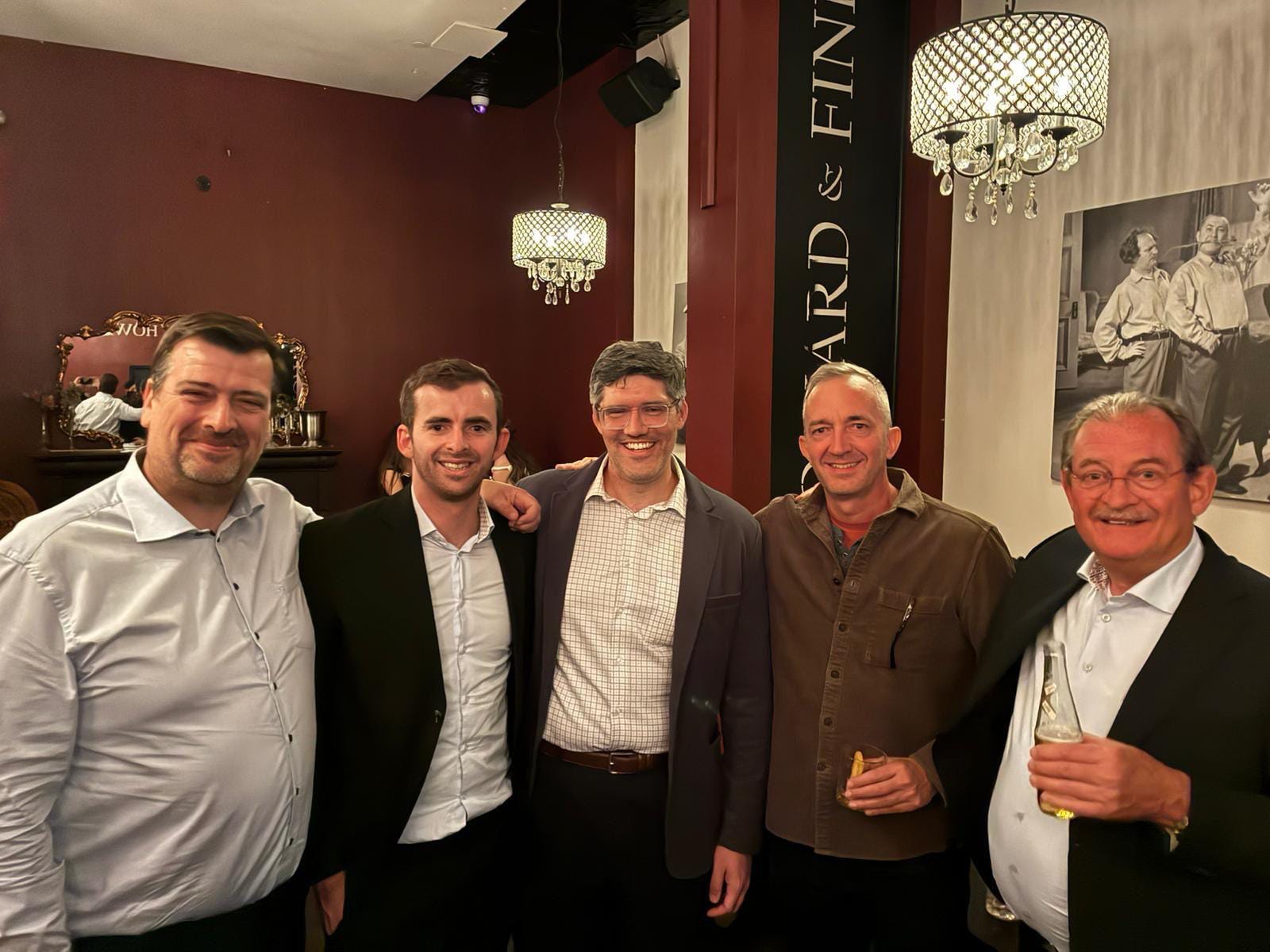
Compounding Quality Team: TJ (top left), Arka (bottom left), Willem (bottom center), Jochen (bottom right), Pieter (top center), Milan (top right), and Liesbeth (right).

Built to last

At first glance, this challenge sounds very simple.

Just find 10 great companies and hold them for the next 20 years.

But history tells something different.

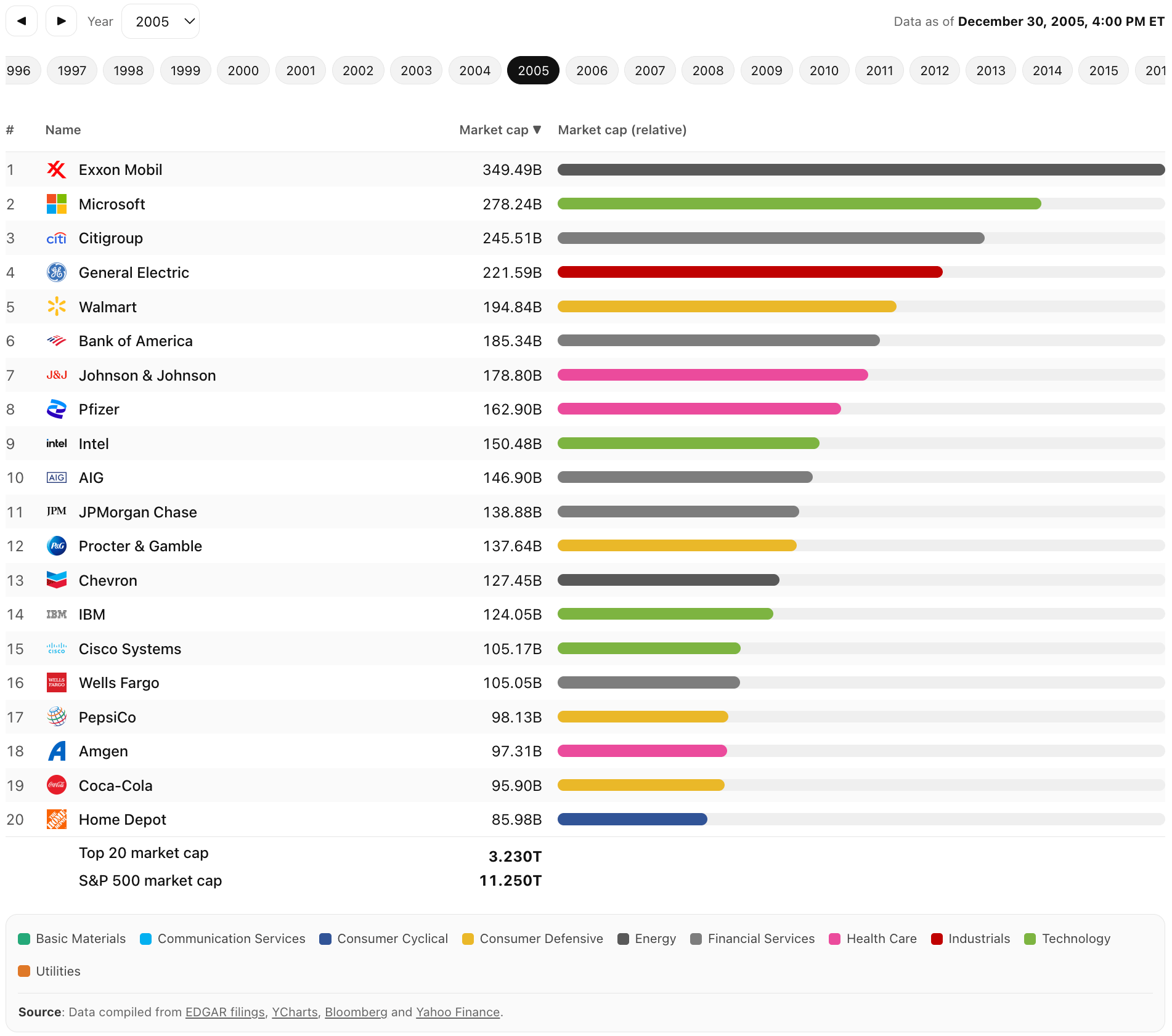
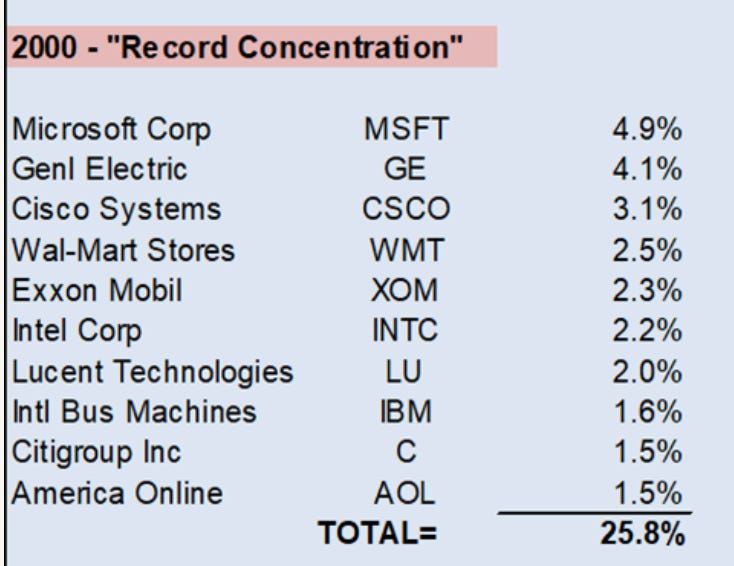
Do you remember the 20 biggest companies 20 years ago?

Here they are:

A lot of these are probably very familiar names.

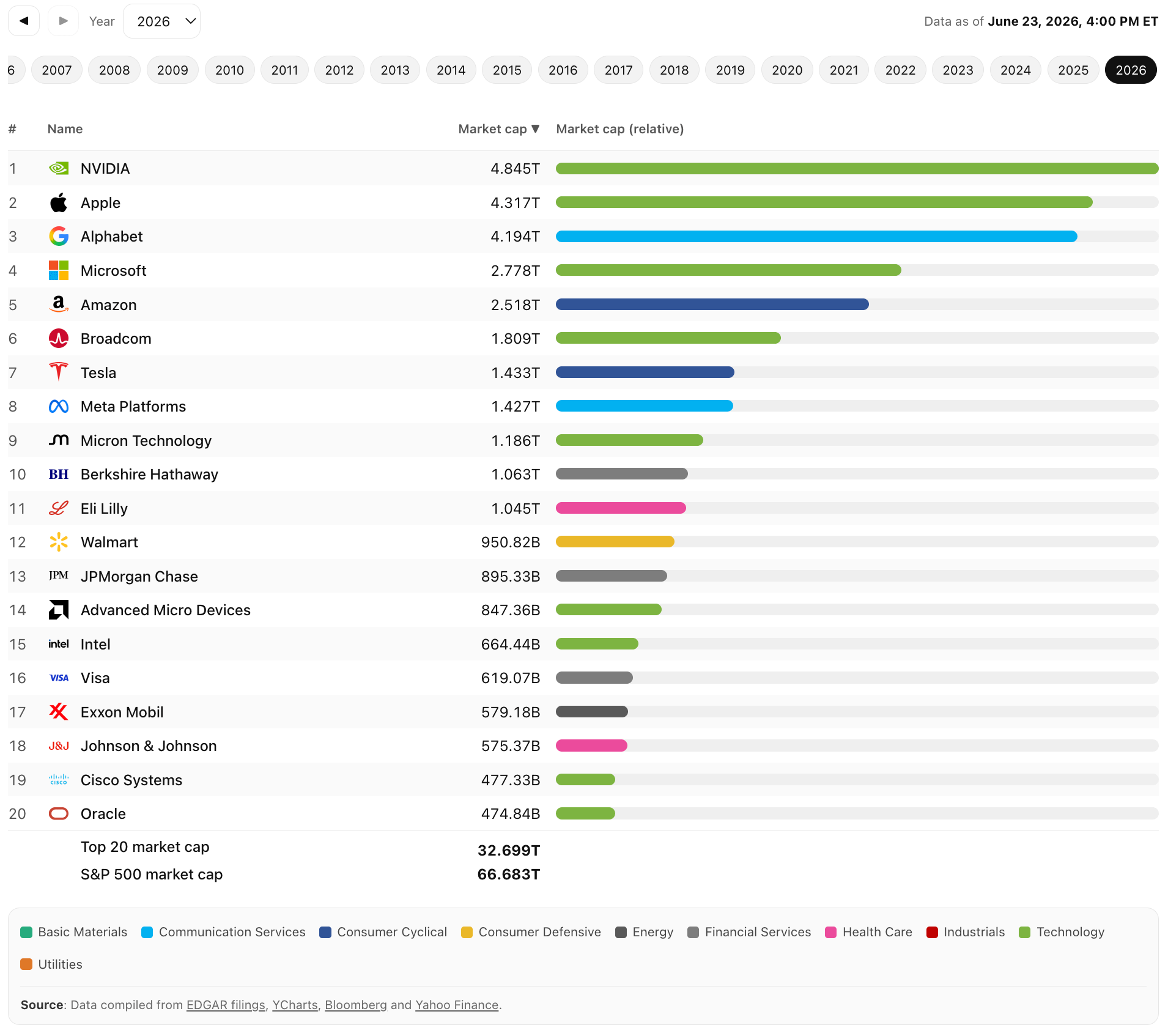
But how many do you think are still in the top 20 today?

Here’s the list as of today:

The number of companies that made both lists?

Only 6 (!):

  • Microsoft

  • Walmart

  • Intel

  • Exxon Mobil

  • Johnson & Johnson

  • Cisco Systems

Companies like Coca-Cola and Home Depot are still exceptional businesses today.

However, they no longer make the list.

Something sets these six companies apart.

They have shown the resilience to weather the challenges of the past two decades.

So what do these companies have in common?

It’s not a single factor, it’s a combination of:

  • A strong moat

  • Strong management

  • Healthy balance sheet

  • Excellent capital allocation

  • Continuous adoption to changing environments

It goes back to the basic foundation of our stock selection.

You should remember that finding a stock for the next 20 years is not about buying a good company.

It is about finding a business that can keep adapting and winning for decades.

Our job is to find those few great businesses, buy them and forget about it for the next 10 years.

Now let’s jump into my top picks.

10. Ferrari ($RACE)

How does Ferrari make money?

Ferrari builds fancy sports cars and sells fewer than people want to buy. It also makes money from racing, clothing, and spare parts.

Source: Company Presentation

Why will it still be relevant in 20 years?

  • Ferrari is not a car company. It’s a luxury company.

  • Rich people keep getting richer. They want things nobody else can have.

  • Ferrari makes fewer cars than current demand (supply < demand)

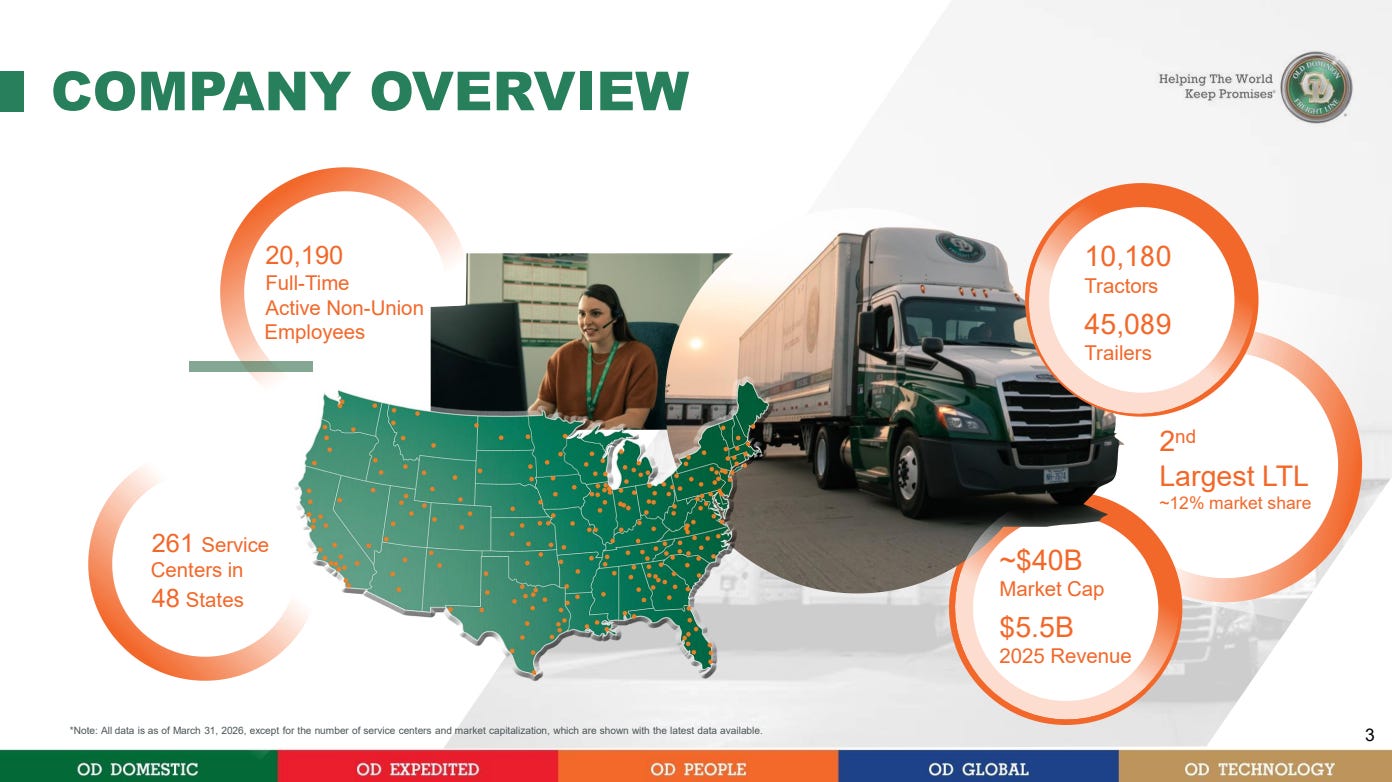
9. Old Dominion Freight Line ($ODFL)

How does ODFL make money?

Old Dominion is a top American trucking company that specializes in less-than-truckload (LTL) shipping.

This means they combine freight from different customers onto a single truck.

They run over 260 service centers across North America.

Source: Company Presentation

Why will it still be relevant in 20 years?

  • Moving physical items will always be necessary

  • It is nearly impossible for new competitors to copy their billion dollar network

  • They are the best at what they do

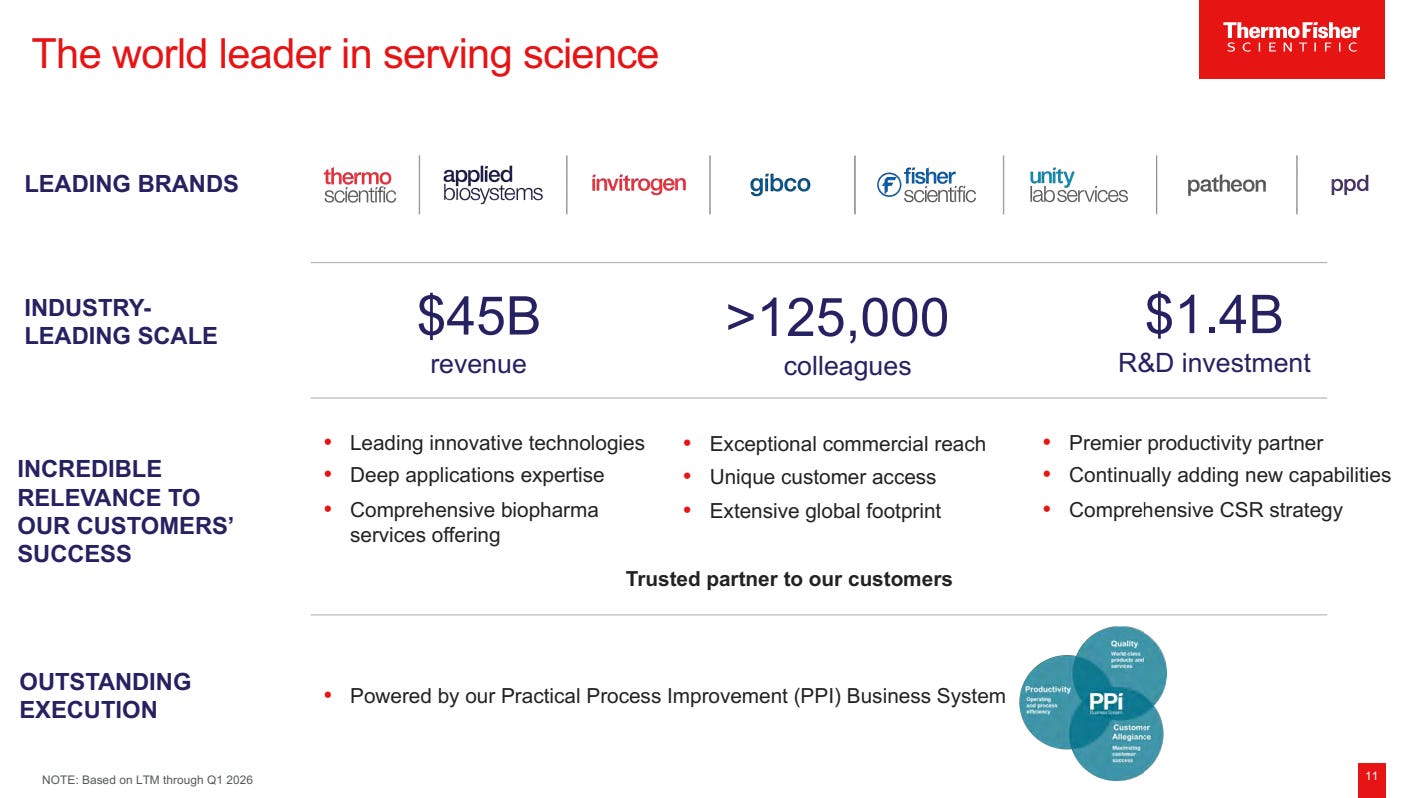
8. Thermo Fisher Scientific ($TMO)

How does Thermo Fisher make money?

Thermo Fisher Scientific is the world leader in serving science and healthcare.

The American company provides analytical instruments, laboratory equipment, clinical diagnostics, and drug manufacturing services.

They sell necessary equipment to the entire global biotechnology and research industry.

Source: Company Presentation

Why will it still be relevant in 20 years?

  • Scientific research and the fight against diseases never stop

  • They sell the picks and shovels for all biotech breakthroughs

  • Massive regulatory switching costs protect their business

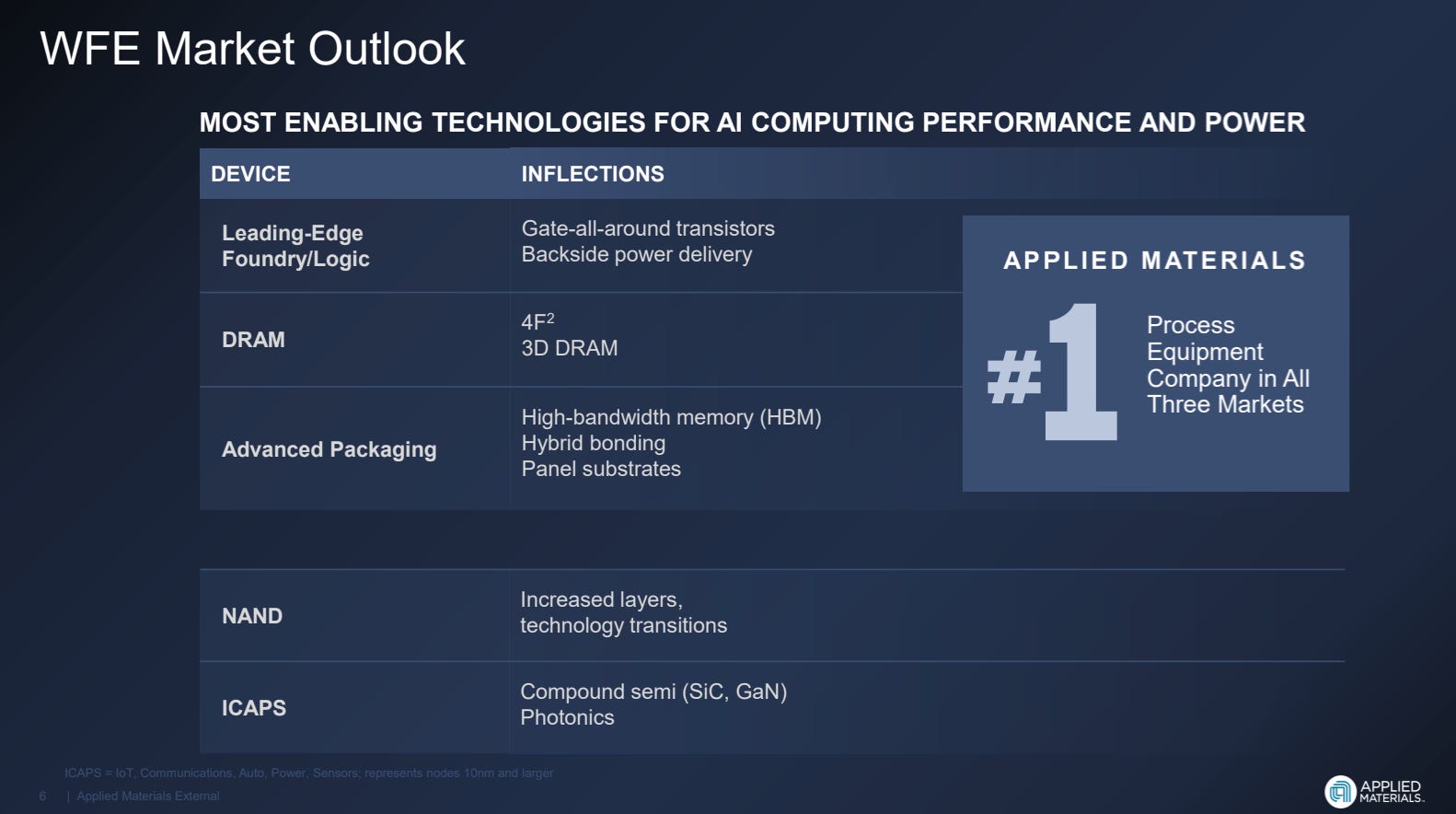
7. Applied Materials ($AMAT)

How does Applied Materials make money?

Applied Materials is the global leader in semiconductor equipment and engineering software.

They provide the highly specialized manufacturing systems, machines, and materials used to produce nearly every new computer chip and advanced display in the world.

This American company operates at the absolute ground floor of global technology.

Source: Company Presentation

Why will it still be relevant in 20 years?

  • Microchips are the foundation of the future

  • They supply the machinery to all chipmakers

  • Atomic-scale engineering cannot be easily copied

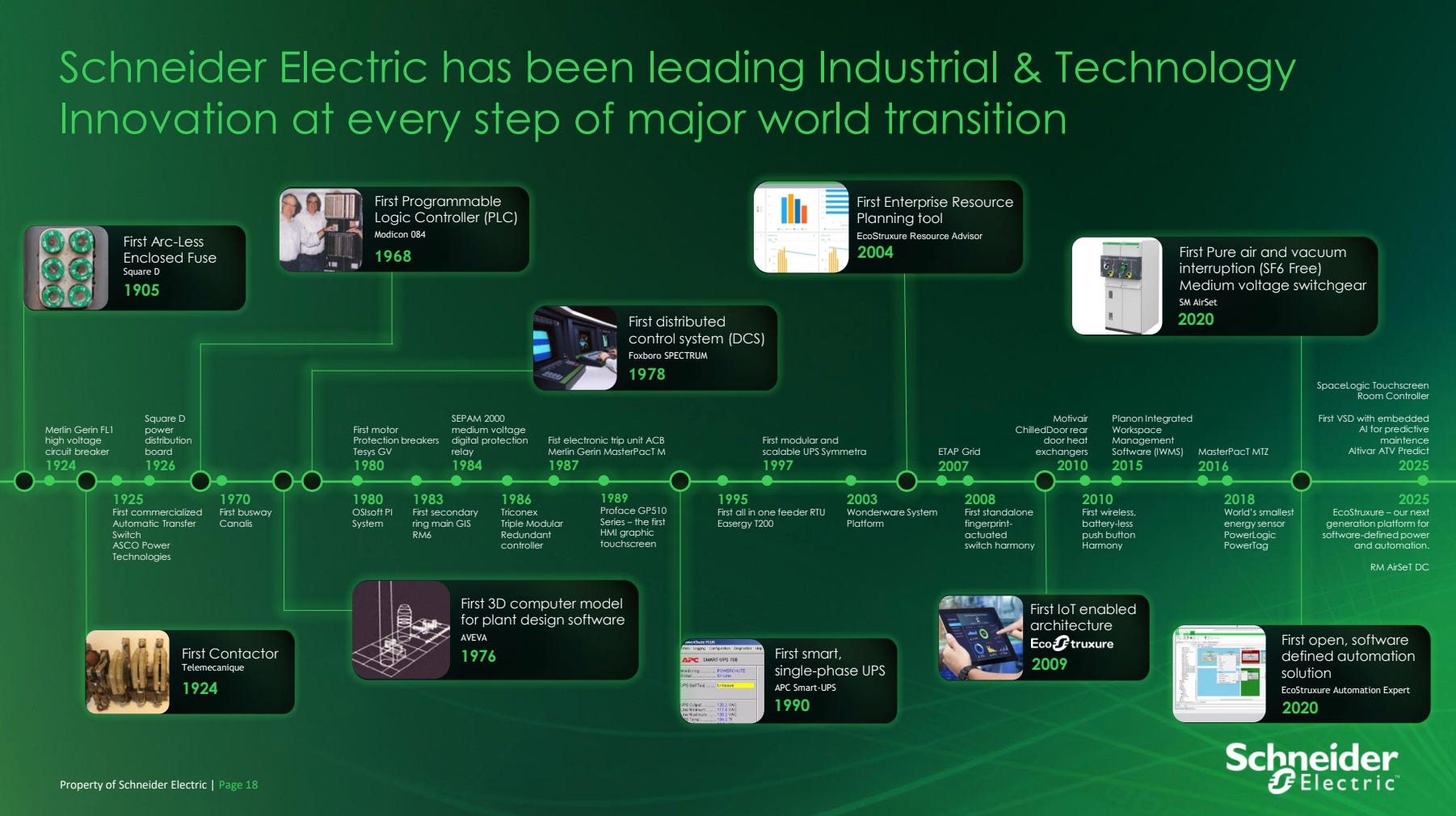
6. Schneider Electric ($SU)

How does Schneider Electric make money?

Schneider Electric is a French multinational company that is a global leader in energy management and industrial automation.

They provide the electrical infrastructure, hardware, software, and services required to run homes, factories, and cities efficiently.

They have a massive network operating in over 100 countries

Source: Company Presentation

Why will it still be relevant in 20 years?

  • The massive shift toward electrification is permanent

  • AI and data centers have a bottomless thirst for electricity

  • Buildings and factories must become highly energy-efficient

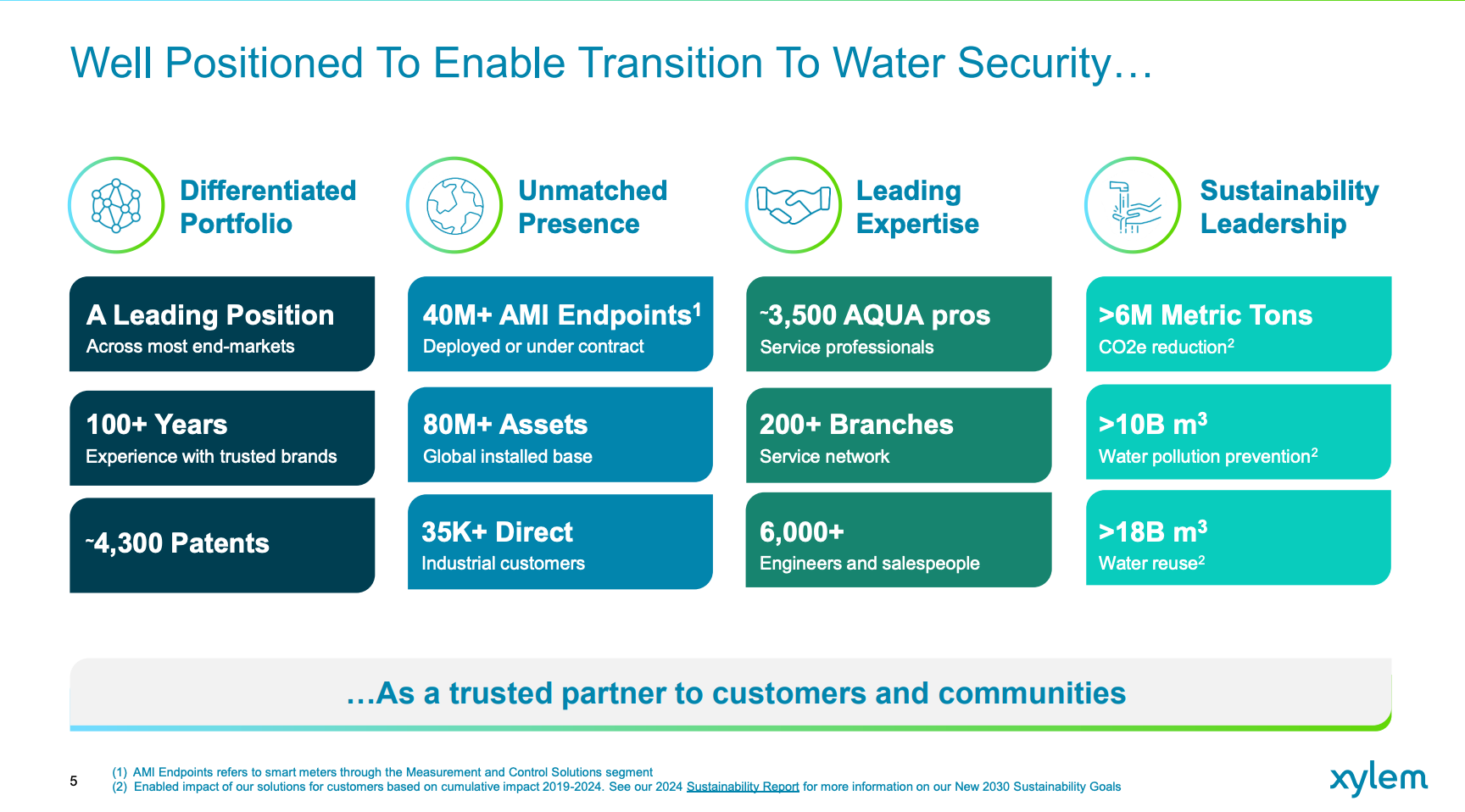
5. Xylem ($XYL)

How does Xylem make money?

Xylem is a leading global water technology provider.

They designs and manufacture specialized equipment for transporting, treating, testing, and efficiently managing water across municipal, industrial, and residential markets.

This American company has a network spread across the globe.

Source: Company Presentation

Why will it still be relevant in 20 years?

  • Clean water is a permanent global necessity

  • Aging infrastructure requires massive ongoing upgrades

  • The rise of smart water networks protects their position

4. ASML ($ASML)

How does ASML make money?

ASML is a Dutch company that makes some of the world’s most important machines for the semiconductor industry.

They are the only company in the world that can build Extreme Ultraviolet (EUV) lithography machines.

This technology is critical to produce the most advanced chips found in smartphones, AI systems, and high-performance computers.

Source: Company Website

Why will it still be relevant in 20 years?

  • They hold an absolute global monopoly on advanced chipmaking

  • The complexity of their machinery is nearly impossible to copy

  • They sit at the center of the permanent global tech expansion

Now let’s dive in the top 3.

Read more

🎙️ How to Find 100-Baggers

11 August 2026 at 14:50

Hi Partner 👋

I hope you are doing well.

Today it’s time to talk about growth investing.

In today’s interview you’ll learn how Kris was able to generate a +8,720% (!) return on Nvidia and a +2,668% return on Shopify.

Kris (left) and I on our way to a conference in Switzerland

Do you want to know what the best growth stocks are now?

Discover Kris’ favorite growth stocks right now here:

Download the list


Who is Kris Heyndrikx?

Kris Heyndrikx is one of my best friends.

We talk about business, life and investing every single day.

Kris is best known for his Twitter Account From Growth To Value (120.000 followers) and his investment newsletter Potential Multibaggers.

His newsletter is focused on growth investing.

Kris bought:

  • Shopify ($SHOP) for $5.6 (current stock price: $155)

  • Cloudflare ($NET) for $39 (current stock price: $310)

  • Crowdstrike ($CWRD) for $24.53 (current stock price: $225)

  • On top of that he also identified Nvidia ($NVDA) early.

Kris, TJ, and I hosting our reader meetup in Omaha just after the Berkshire AGM of Warren Buffett

Let’s now dive into this two-part interview!

How would you define your investment strategy?

Kris: I look for high-quality disruptive businesses that have the potential to go 10x or more over the next 10 years. Of course, these are not so easy to find. But when I find them, I do the hardest thing in investing: I hold them as long as they execute.

By the way, I’m pretty happy with a 5x return too. A 5x means you generate an average return of 17% per year for 10 years. A 10x means you generate a return of 26% per year for 10 years. This math shows you don’t have to gamble or trade to get fantastic results. You need to find a truly great company early and then give it the time to keep growing. Sometimes, you are surprised to the upside. I wouldn’t have expected Shopify to go more than 20x in the 9 years since I bought it.

Your Twitter handle is ‘From Growth To Value’. Could you elaborate on this?

Kris: My Twitter/X name is basically my entire philosophy in four words. I try to buy growth stocks and hold them so long that they become value stocks. When I started writing about stocks, in February 2016, Amazon ($AMZN) and Netflix ($NFLX) were still seen as high-growth stocks and way too expensive. Today, they are considered growth at a reasonable price. The next step is a value stock, like Google ($GOOG) was when everyone thought AI would kill it. Because I follow AI closely, I bought a position in Google at that point in time.

That journey, from growth to value, is where you can find life-changing returns. If you can hold a great stock for 30 years, the returns can become almost absurd. I know someone who invested about $1,500 in Netflix when he got out of college. He was thrilled when he could sell at a 40% profit the next year. That’s what most investors are happy with. But had he simply held his Netflix shares, that small position would be worth around $1.5 million today, and that’s with Netflix down almost 50% from its top right now. That’s the difference between OK returns and life-changing returns. That’s why I want to buy growth stocks and hold them as long as the fundamentals stay intact.

What do most investors simply get wrong about growth investing?

Kris: They think it’s all about adrenaline, jumping in and out of positions, chasing meme stocks, catching the next hype, ... But that’s not growth investing, that’s trading, and it’s a completely different game with much worse outcomes.

Finding a great growth stock is just 10% of the work, and it’s the easiest part. Holding it is where the real money is made, and holding is much, much harder than it sounds. When your stock is down 50% or 70% and all the headlines are negative, doing nothing takes more strength than acting.

Most people want to get rich fast. But time is your best friend in investing, and that is even more important for growth investing. Most people don’t have the patience, and that’s why they sell a future 100-bagger for a 40% profit. Charlie Munger said the most important rule of compounding is to never interrupt it unnecessarily. For growth stocks, with their higher returns, interrupting the compounding can even be more expensive than for quality stocks.

Take us through how an idea becomes a position. From discovering the company to pulling the trigger. Feel free to use a concrete example.

Kris: The process from idea to position is pretty slow for me, unlike what you may expect if you think growth investing resembles trading. My ideas come from everywhere: a post on X, one of my subscribers, a conference, a podcast, reading, ...

The first filter is extremely simple: what does the company do? I have to be really interested in what the company does. Why? Because boredom is an enemy in growth investing. I’m very curious about our future, and if I don’t get excited about what a company does, it’s often a sign that its future may not be that great. For a growth stock, that’s a huge red flag. On top of that, I follow up the companies in my portfolio very closely and write deep dives on all my Potential Multibagger stocks very quarter. If I’m not interested enough in what the company does, it’s impossible to do that. When I am interested, following up makes me feel like a kid in a candy shop, when I’m not interested enough, it feels like having to clean your toilet with a toothbrush.

That’s why there are industries I stay away from. Energy, for example, unless something is truly disruptive. Financials too, normally. But one of my picks is a disruptive bank: Nubank ($NU), already more than a three-bagger in three years. So, as you can see, this is not an absolute criterion.

I also have to see real growth potential in the market the company is operating in. If the overall pie is shrinking, even a great company is swimming against the current, and finding winners becomes much harder.

When a company has passed the first filter, 90% is already gone and they never make it to the second step, in which I look at revenue growth. I want at least 20%+ consistent revenue growth.

When that is the case, I apply the third filter: Management quality.

Only when a stock survives those three filters, the real research start. I read everything I can find: Conference calls, analyst days, the 10-Ks, the S-1s, interviews with the CEO, podcasts about the company and so on. And only if all of that is positive, I make it a pick and start writing my articles (I usually write 5 articles for a new pick). Then, my subscribers can buy to start a position and a day later or so, I also start a position.

You bought Shopify and Nvidia early. Looking back, what did you see that most of the market missed?

Kris: The story is maybe not that glorious as you may think. I picked Shopify ($SHOP) in February 2017 for my personal portfolio, at a split-adjusted price of $5.58. I had just listened to Tobi Lütke, the founder and CEO on a podcast, and I thought he was brilliant. So, in an impulse, I bought some Shopify shares.

After the initial good feeling, the regret came. I hadn’t followed my process, had not used my ratio but bought based on what I considered superficial emotions, like an amateur. I had not checked the valuation and I really thought I had acted stupidly. But I started analyzing why I bought the shares anyway. The more I thought about it, the more I saw that while the process was bad, the stock could be great.

That research period was the start of Potential Multibaggers. If I was this intrigued enough by this man from just a podcast to buy shares of his company, wouldn’t other people be attracted to him in real life? Probably his customers, his employees, his financial backers also thought he was fantastic and wasn’t that a very strong asset to have that you can’t see on any balance sheet?

That’s when I got an idea that changed my investing forever. There is very valuable knowledge in finance that almost nobody uses, because it is not seen as “real” knowledge: emotional intelligence. We all see things we can’t fully rationalize: you meet someone and you know this guy is brilliant, and if I ask you how you know, you can come up with rationalizations of your feeling, but the real answer will still be that you just knew.

Can you elaborate a little bit on this ‘emotional intelligence’?

Kris: Only about 10% of our knowledge is conscious, while the rest is subconscious. That unconscious knowledge is the collection of every lesson we’ve learned from the day we were born until now. And that knowledge is surprisingly accurate when it comes to certain subjects, better than the praised ratio. While there are some individual differences, most people are good at judging other people. And that’s great, because companies are made by people. You can have two identical companies and one will fail and one will become the best in the world. The difference is in the people that make the company.

Rational knowledge is often treated as the only reliable source of knowledge in investing. I think that’s a mistake. For months, I went into research mode and I looked back at the greatest investments ever. They were all connected to people. Apple with Steve Jobs. Amazon with Jeff Bezos, Tesla with Elon Musk, Walmart with Sam Walton, Berkshire Hathaway with Warren Buffett and Charlie Munger, and so on. The pattern was clear: a visionary founder CEO bringing an outsider’s view to an industry that hadn’t changed in ages often succeeds. So I made that one of my criteria.

After Shopify, which other stocks did you buy?

Kris: Three months after that impulse buy, on May 2, 2017, I started Potential Multibaggers, with Shopify as the very first pick and now with a much better process and patterns to look for.

I bought Nvidia in 2017 as well. I bought it for my own portfolio at a split-adjusted $2.50 or so, but I never made it an official pick. I thought it was already too big at around $60 billion, while Shopify only had a market cap of $4.5 billion at the time.

It’s pretty crazy that Nvidia became so big. The reasons why I bought Nvidia shares were, in that order, its founder and CEO Jensen Huang and the fact that they started talking about AI. In 2016 already, the company opened its press releases with “NVIDIA is the AI computing company.” That really convinced me already back then. Usually, there are signs like that, but you have to follow a company closely to see them.

I think what I saw that the market didn’t see was that these men had a vision for the future of their sector and the ability to execute that vision.

What’s a call you made that, in hindsight, you’re most proud of, not just because it worked, but because of how contrarian or hard it was to make at the time?

Kris: Shopify again, and this time because of what happened right after I picked it. A few weeks after I made it the first Potential Multibaggers pick, Citron Research came out with a short report about Shopify. Citron doesn’t have a great reputation anymore, but at the time it did, and I was pretty scared when I read the full report.

You know how it goes with short reports: if you are still relatively new to investing, you’re blown away by all the negativity and the strong words. So after reading it, I was even more worried. But then I started checking if what was written was actually true. And I thought it wasn’t. There was a lot of insinuation, but no substance. So I decided to buy more. Then Citron came with a second short report, and I think a third as well, and I bought more each time. I wasn’t that experienced with short reports yet, so I’m pretty proud of that one.

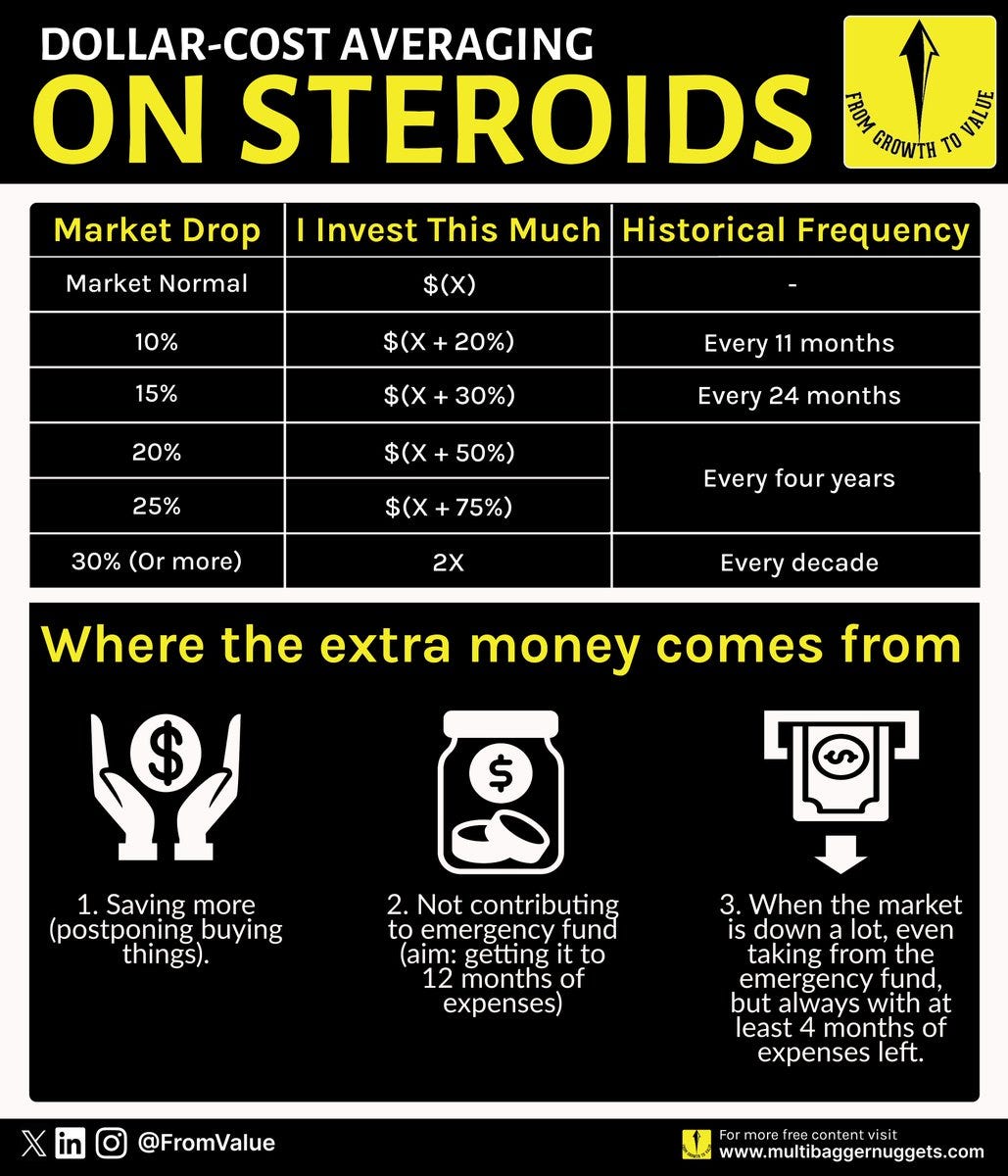
You’re a big fan of dollar-cost averaging. Could you elaborate on why you buy stocks every two weeks, plus ‘DCA on steroids’?

Kris: Dollar-cost averaging means investing the same amount every two weeks, every month, every quarter, whatever you choose. I do it every two weeks.

I allocate my money to the companies that perform well, but you cannot always judge that at a certain moment. You need time to see if an ambitious management plan works out, to see if revenue growth stays high, if margins develop in the right direction, if there’s enough innovation and so on and so on. That’s why I love DCA. For some companies, Shopify, Cloudflare, CrowdStrike, I have probably bought more than 50 times over all those years.

I also developed dollar-cost averaging on steroids: if the market drops, I invest more. And to be clear, I’m talking about the S&P 500 here, not my own portfolio. If the S&P 500 is down 10%, I try to invest 20% more, if it drops 20%, I invest 50% more and if it’s down 30%, I try to double the money I invest. That’s possible because I’m still in my earning phase. If you have a closed portfolio, without money coming in, this works differently.

DCA ON STEROIDS! Dollar-cost averaging or DCA is very powerful, but I make  it even more powerful by using it 'on steroids.' This is how I do this ↓ I  invest money

I also use dollar-cost averaging for big lump sums. If you get an inheritance or a big bonus, I would divide it and invest it in 52 times, so over 2 years, every two weeks, unless the market drops substantially, of course, as the DCA on steroids then kicks in.

Yes, if you look at the research, lump-sum investing has the highest return on average. But it’s not the average that counts, it’s your portfolio that matters to you. If you dollar-cost average, your returns will be almost as high as lump-sum investing, but they will be much higher than trying to time the market. Waiting for 52-week lows to invest usually gives you lower returns than just investing every two weeks. Why? Because the market goes up on average.

Conclusion

That’s it for today.

As this interview is quite extensive, you’ll receive Part II next Tuesday.

Did you like this?

Discover Kris’ favorite stocks here:

Download the list

Everything In Life Compounds
Pieter

Book

  • Order your copy of The Art of Quality Investing here

Used sources

Disclaimer

As a reader of Compounding Quality, you agree with our disclaimer. You can read the full disclaimer here.

10 Stocks for Life

9 August 2026 at 14:45

Hi Partner 👋

Last Thursday, we talked about The Lindy Effect.

You can find the article here.

Today, we’ll dive into ‘10 Stocks for life’.

The oldest stock in this list has been around for over 200 (!) years.

The Lindy Effect: A Tool to Predict Longevity and Value - Sketchy Ideas

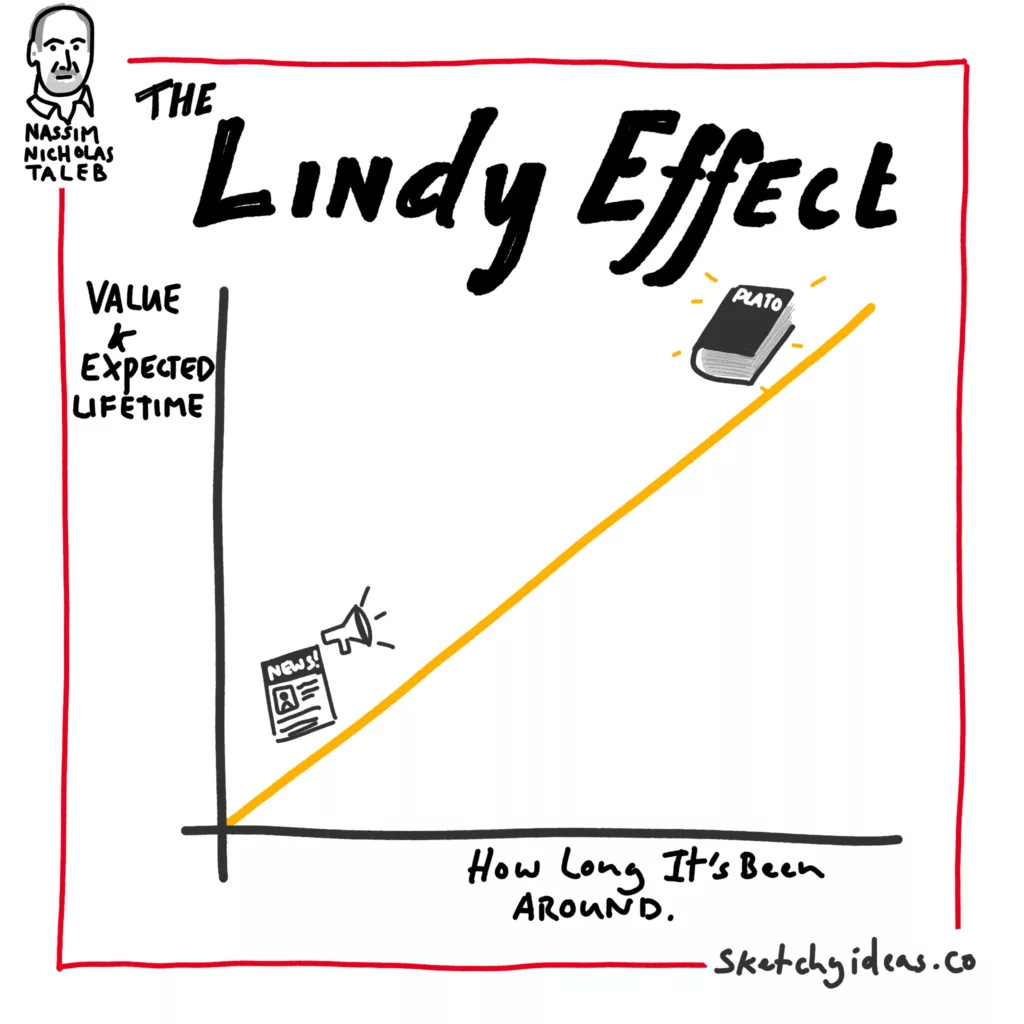
Before we begin, here’s a quick reminder of The Lindy Effect:

  • The longer something has survived, the longer it’s likely to survive.

  • Companies that have adapted for decades have already proven their durability.

  • Nothing is guaranteed, but longevity is often a sign of a great business.

Let’s look at the ten oldest companies on our list.

10. Coca-Cola ($KO)

Coca-Cola is the best known soft-drink brand in the world.

They sell concentrates and syrups to restaurants and independent bottling companies.

  • Founded: 1886

  • IPO: 1919

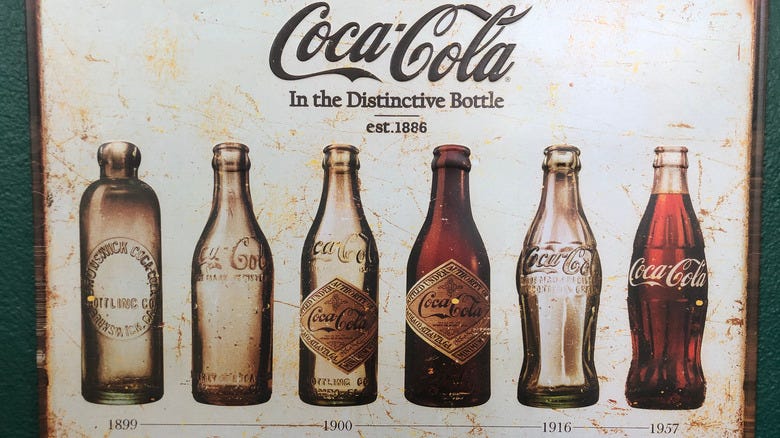
  • History: Pharmacist John Pemberton created the syrup in Atlanta. It originally contained small amounts of cocaine (!) and was marketed as a pain reliever.

The Little Known History Behind Coca-Cola Bottles

The Lindy Effect

  • People will always want sweet drinks.

  • Coca-Cola is one of the world’s strongest brands.

  • Its global distribution network is nearly impossible to copy.

How Has Coca-Cola Performed?

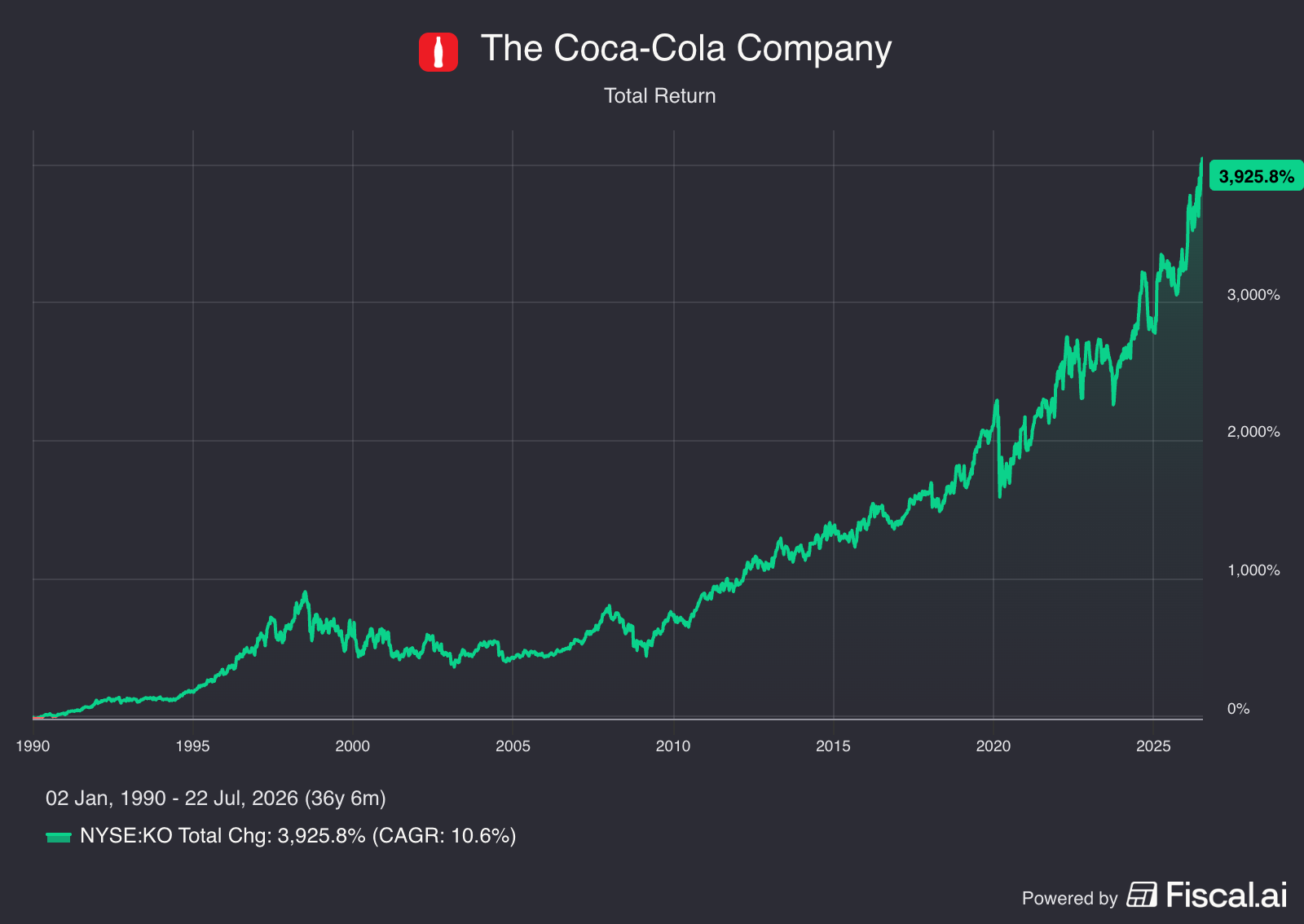
Coca-Cola has compounded at more than 10% per year since 1990.

They returned nearly 4,000% to shareholders over this period.

Source: Fiscal.ai

9. Eli Lilly ($LLY)

Eli Lilly researches and manufactures medicines.

They’re a major producer of insulin and now GLP-1 drugs.

  • Founded: 1876

  • IPO: 1952

  • History: Civil War veteran and pharmacist Col. Eli Lilly opened a pharmaceutical lab in Indianapolis.

Eli Lilly and Company - indyencyclopedia.org

The Lindy Effect

  • People will always get sick, and they’ll always want medication to help them.

  • Lilly has decades of experience developing new medicines.

  • Strong patents protect its best products.

How Has Eli Lilly Performed?

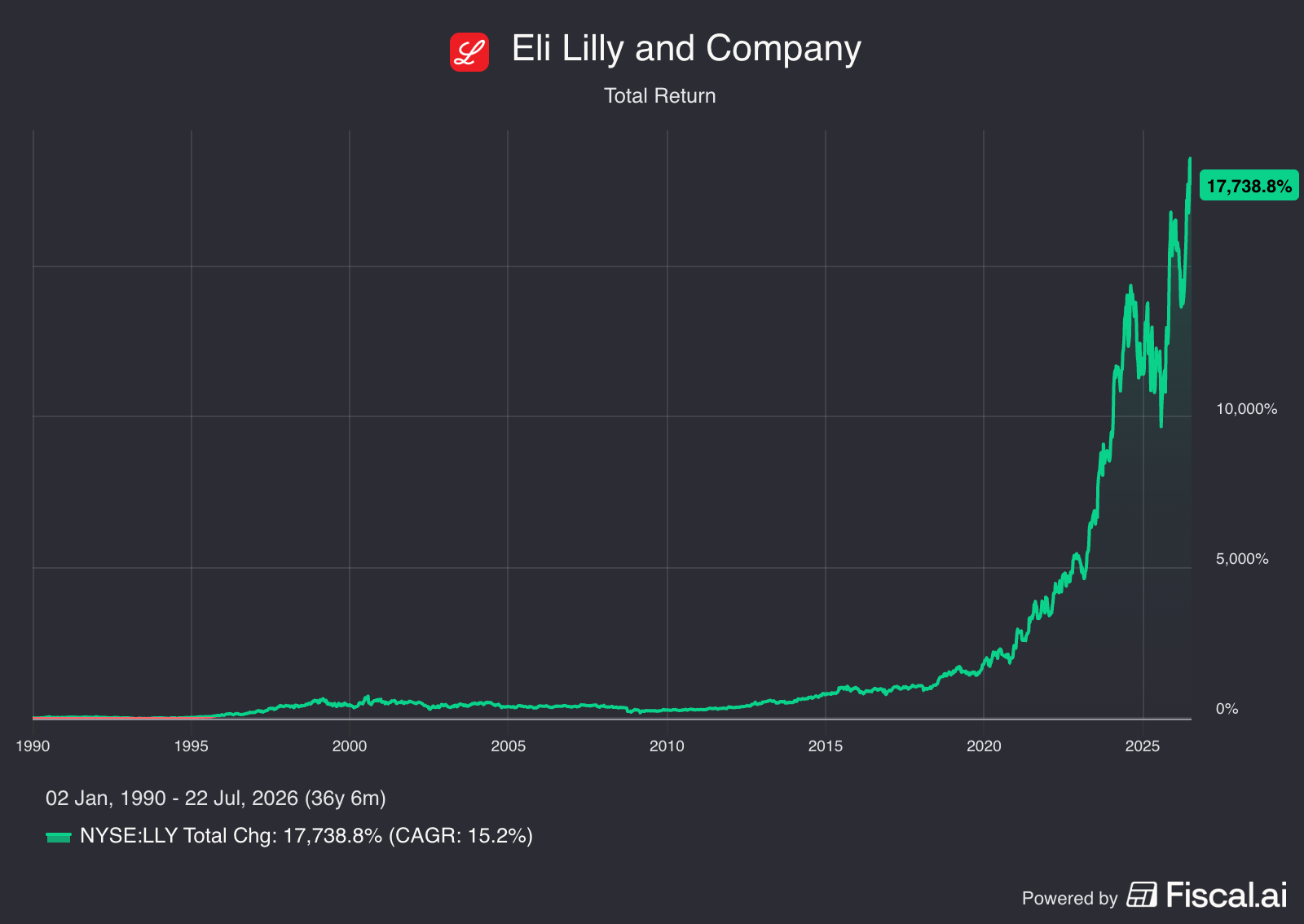
Lilly has returned more than 17,000% since 1990.

Source: Fiscal.ai

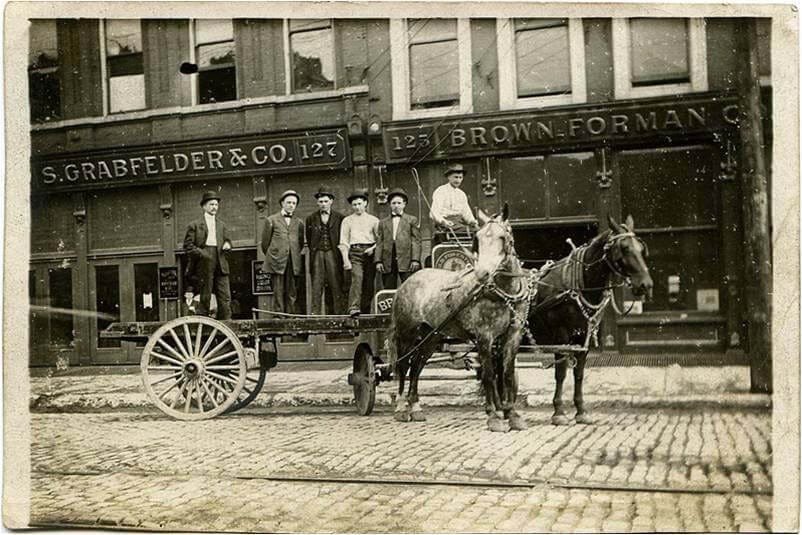
8. Brown-Forman ($BF.B)

Brown-Forman distills and produces premium alcohol and spirits.

They own brands like Jack Daniels, Old Forester, and Chambord.

  • Founded: 1870

  • IPO: 1929

  • History: George Garvin Brown began selling bottled whiskey (Old Forester) in Louisville.

100 Years Later — What You Might Not Know About Prohibition ...

The Lindy Effect

  • People have been drinking alcohol for centuries.

  • Brands like Jack Daniel’s have loyal customers around the world.

  • Strong brands give the company pricing power.

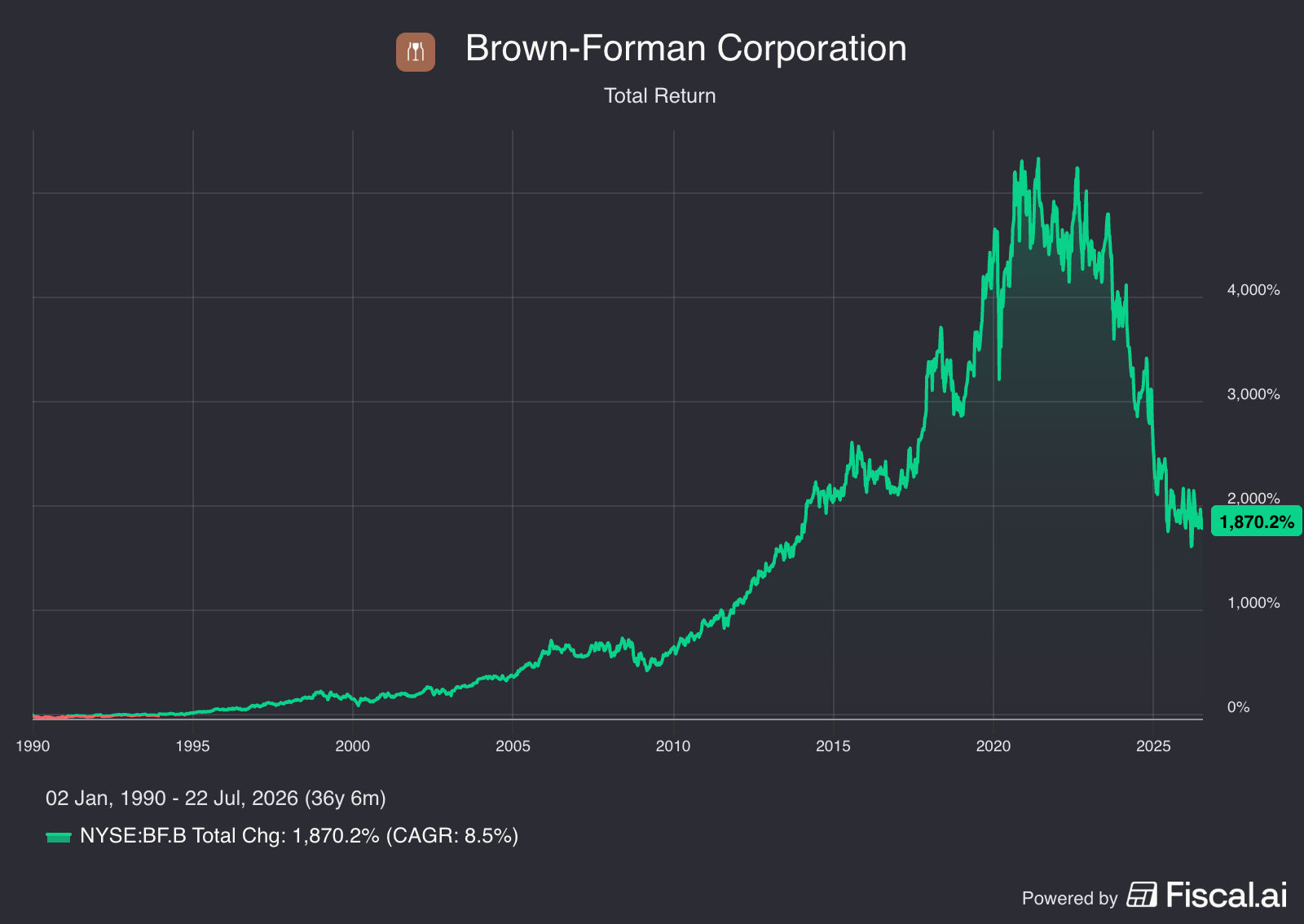
How Has Brown-Forman Performed?

Since 1990, Brown-Forman has returned around 1,800%, compounding at 8.5% annually.

Source: Fiscal.ai

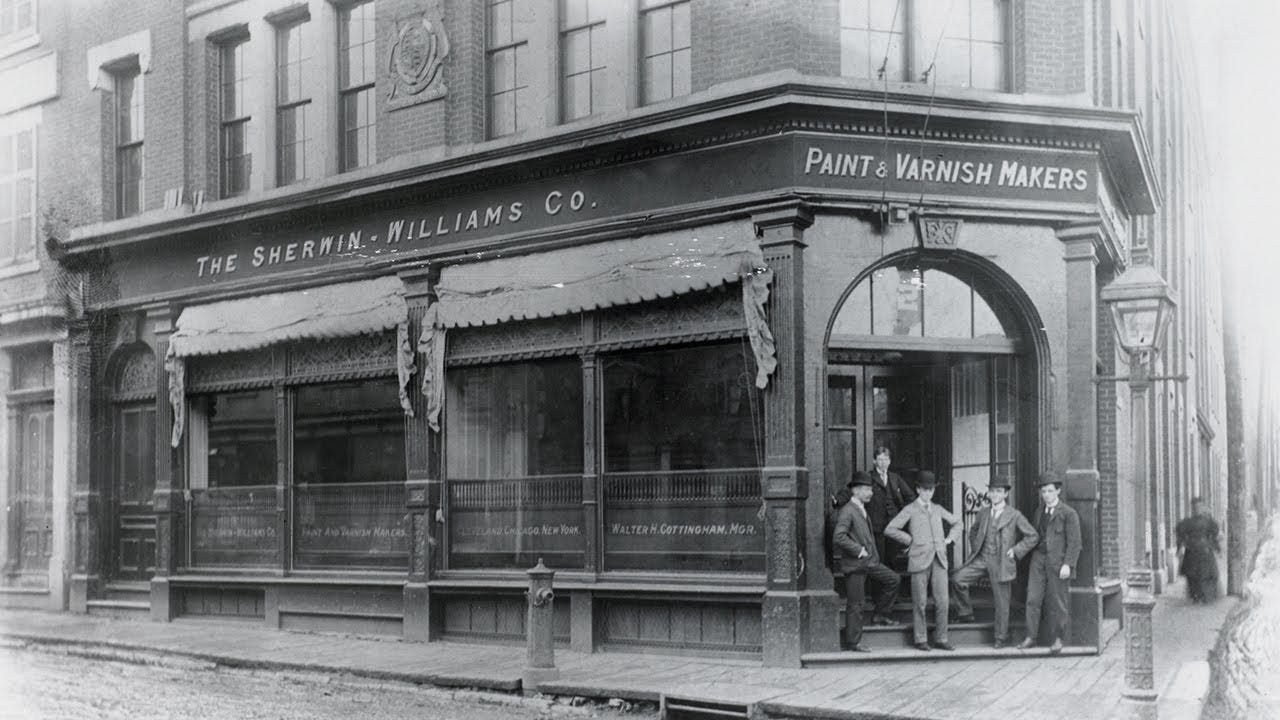
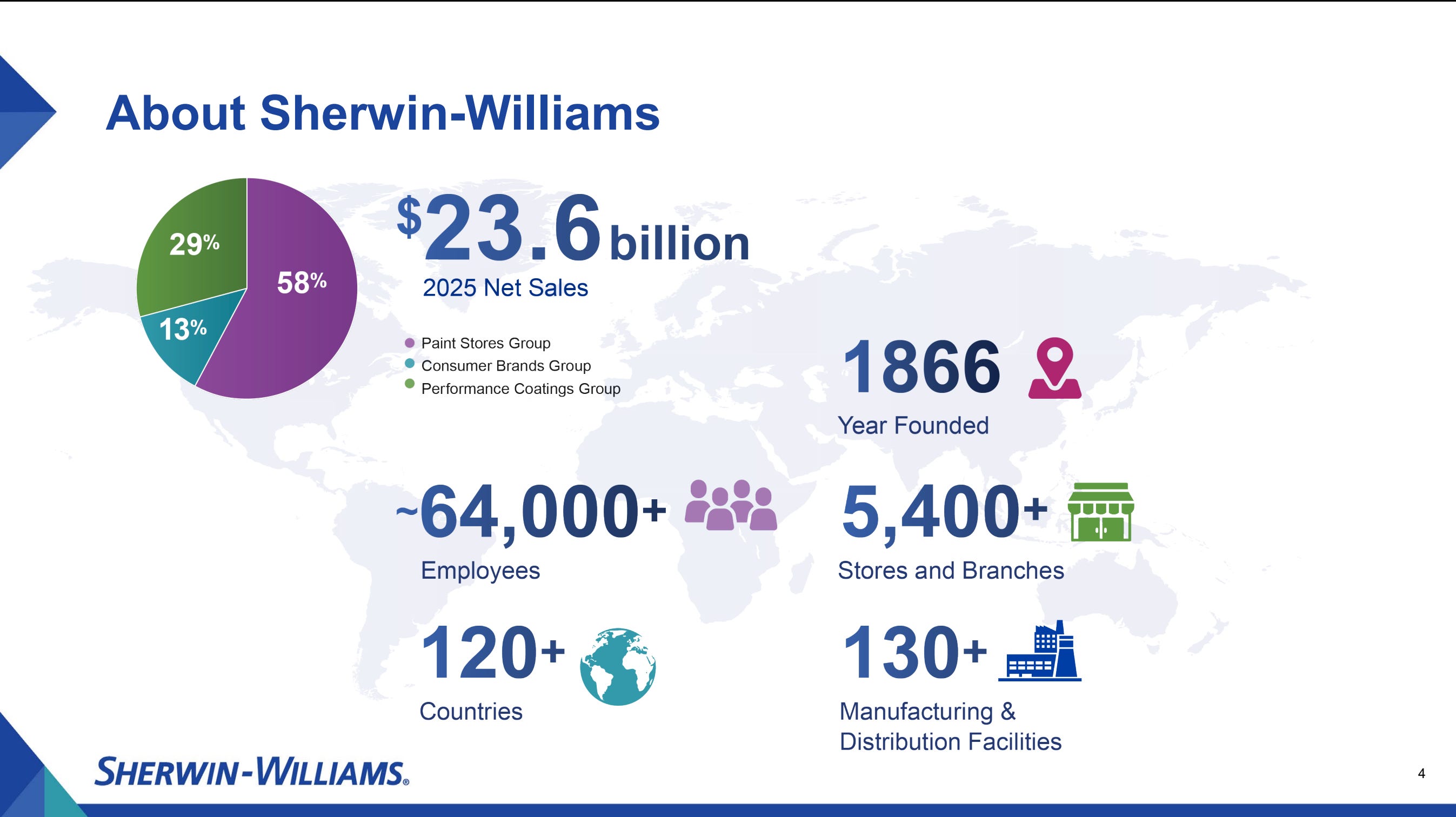
7. Sherwin-Williams ($SHW)

Sherwin-Williams makes and sells architectural paint.

They also own the vast majority of Sherwin-Williams stores throughout the U.S.

  • Founded: 1866

  • IPO: 1964

  • History: Henry Sherwin and Edward Williams founded a paint company in Cleveland.

The History of Sherwin-Williams - YouTube

The Lindy Effect

  • Homes and buildings will always need paint.

  • Sherwin-Williams has one of the biggest paint distribution networks in the U.S.

  • Its large store network makes contractors choose Sherwin-Williams because there’s always a store nearby for supplies.

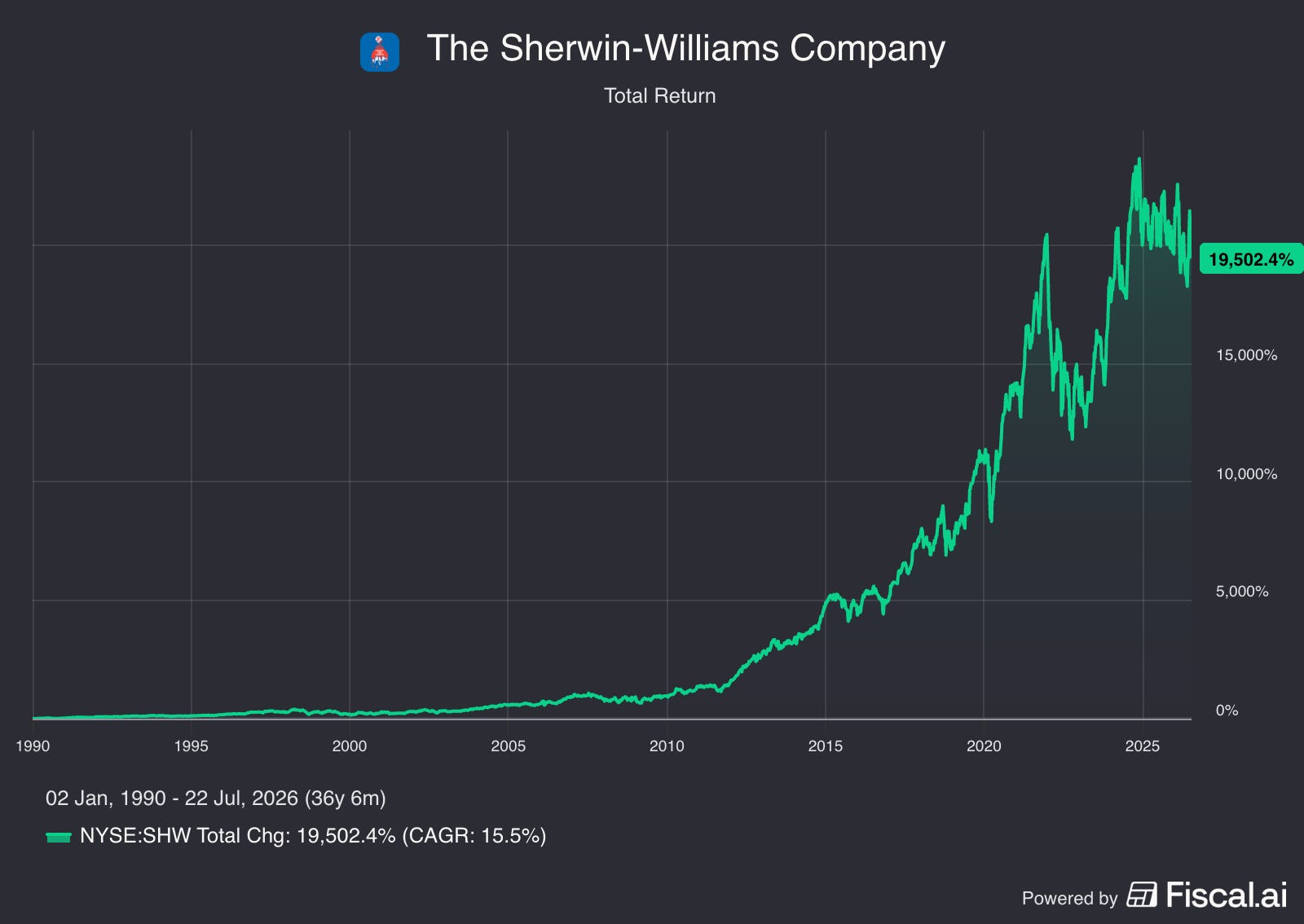
How Has Sherwin-Williams Performed?

The stock returned 15.5% (!) per year since 1990:

Source: Fiscal.ai

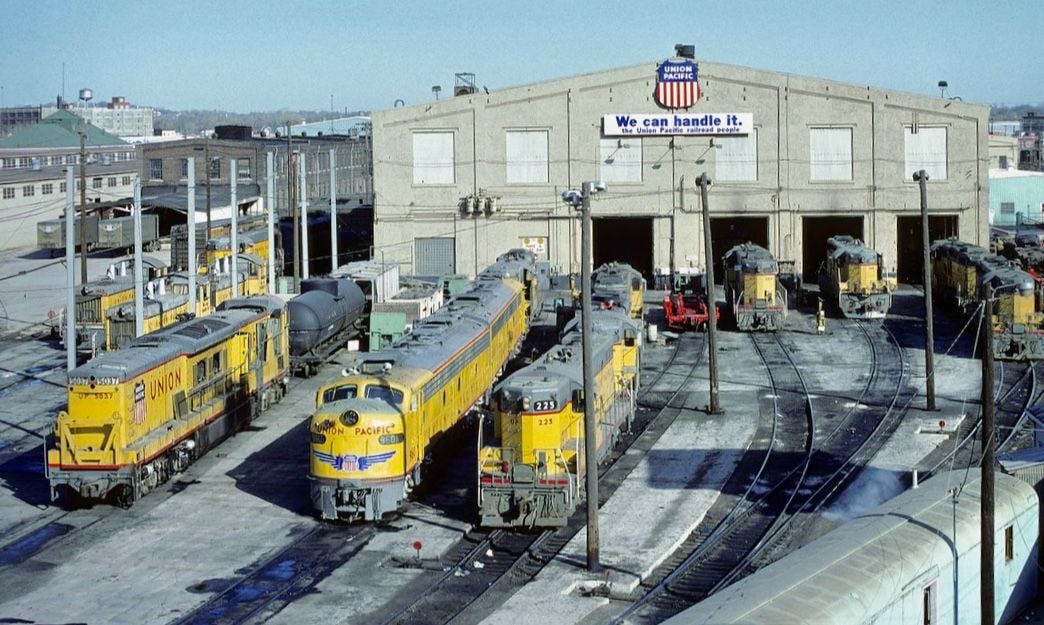
6. Union Pacific ($UNP)

Union Pacific runs freight trains across North America.

They transport raw materials and finished goods over thousands of miles.

  • Founded: 1862

  • IPO: 1897

  • History: Chartered under the Pacific Railway Act to build the eastern half of the first transcontinental railroad.

Pin by Eduardo Azevedo E Silva on Locomotivas A Diesel Americanas ...

The Lindy Effect

  • The economy depends on moving heavy goods.

  • Rail is one of the cheapest ways to transport freight.

  • Union Pacific’s rail network would be almost impossible to build today.

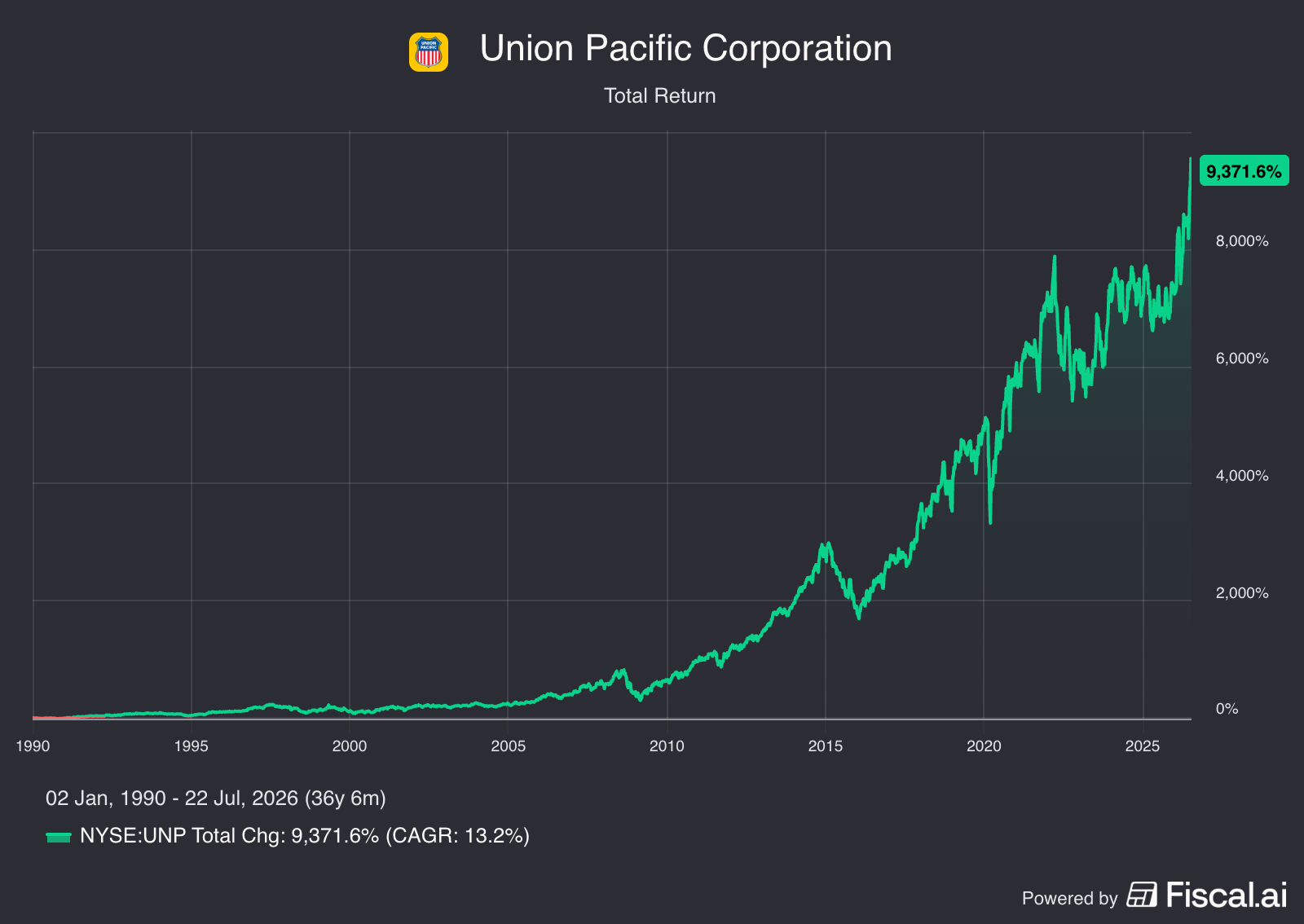
How Has Union Pacific Performed?

Union Pacific has returned more than 9.000% since 1990.

Source: Fiscal.ai

5. American Express ($AXP)

American Express issues credit cards and processes payments globally.

They control the entire transaction from the merchant to the consumer.

  • Founded: 1850

  • IPO: 1977

  • History: Started as an express-delivery (freight) company in Buffalo, NY, before moving into financial services.

American Express / Musée national de la Poste | Société historique

The Lindy Effect

  • People will always need a way to pay for things.

  • More cardholders attract more merchants, and vice versa.

  • American Express already has a strong network, and it becomes even stronger as it grows.

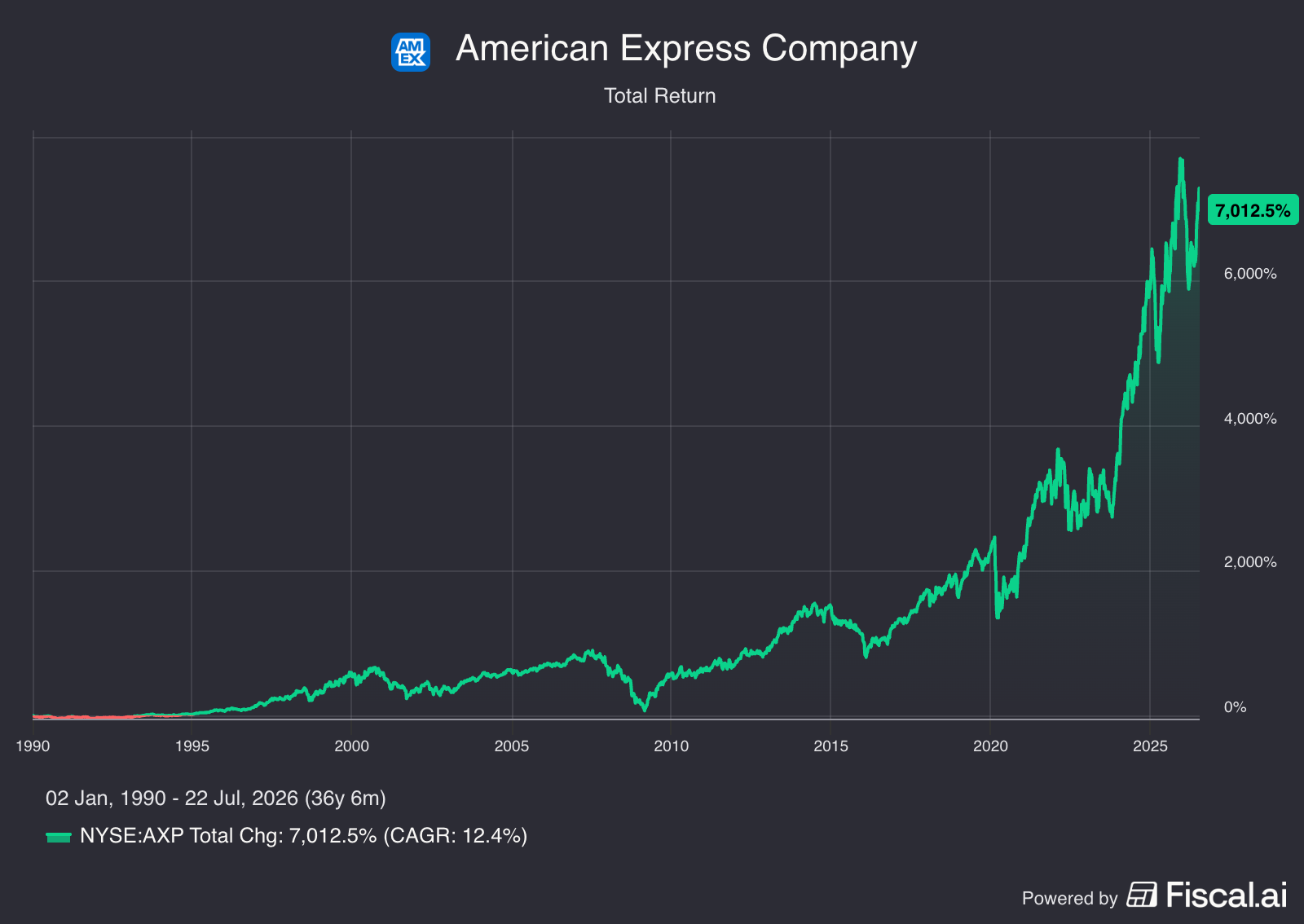
How Has American Express Performed?

American Express has returned more than 7,000% to shareholders since 1990.

Source: Fiscal.ai

4. Pfizer ($PFE)

Pfizer invents and manufactures prescription drugs and vaccines.

The medical system throughout the world relies on its products.

  • Founded: 1849

  • IPO: 1942

  • History: Cousins Charles Pfizer and Charles Erhart opened a fine-chemicals business in Brooklyn.

Pfizer Logo and symbol, meaning, history, sign.

The Lindy Effect

  • Medicines will always be needed.

  • Decades of research give Pfizer a competitive advantage.

  • Its large portfolio keeps cash flowing even as patents expire.

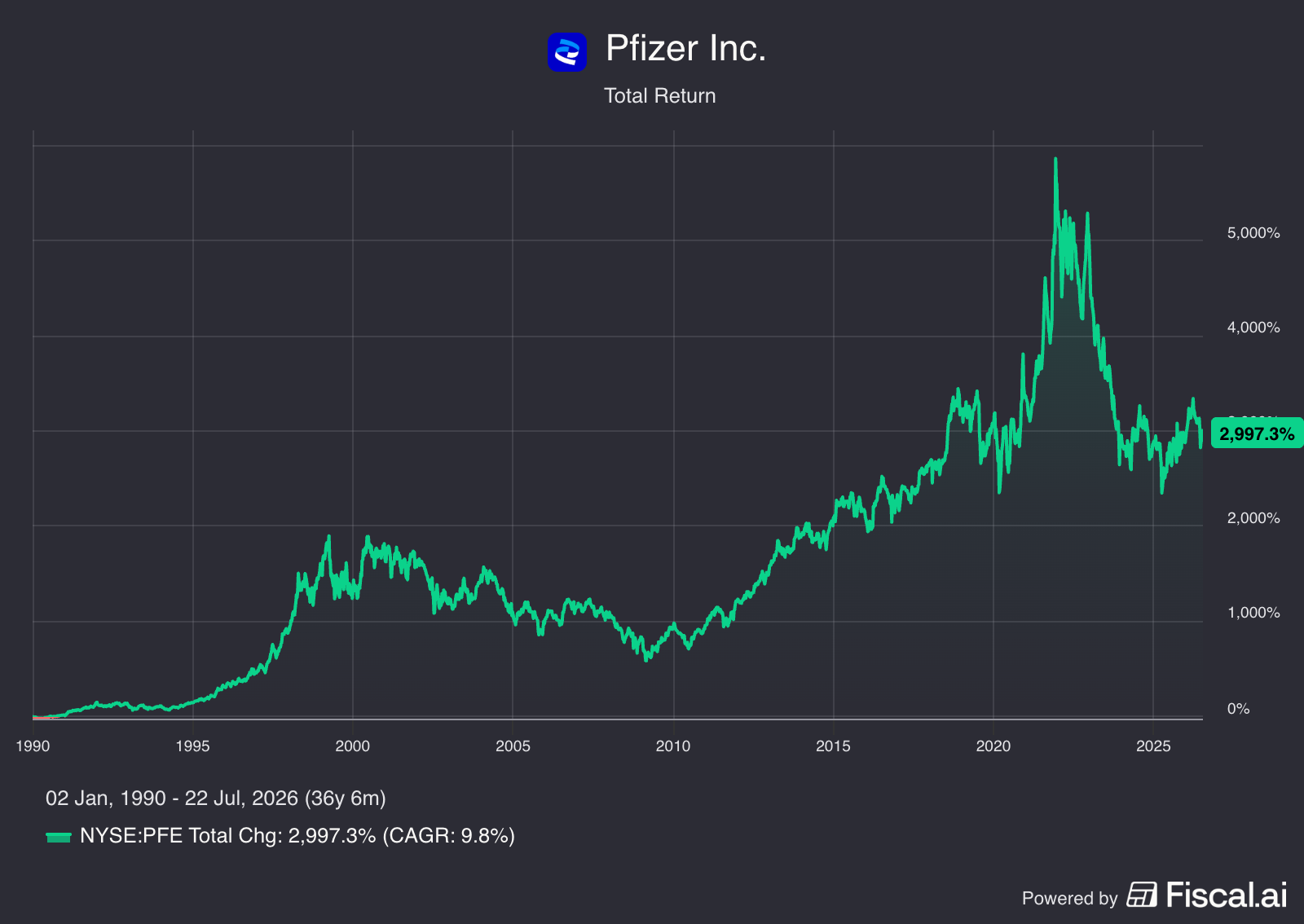
How Has Pfizer Performed?

Pfizer has returned 9.8% per year on average since 1990.

Source: Fiscal.ai

Now let’s dive into the top 3 and the conclusion.

Read more

20 Timeless Stocks to Own

6 August 2026 at 14:44

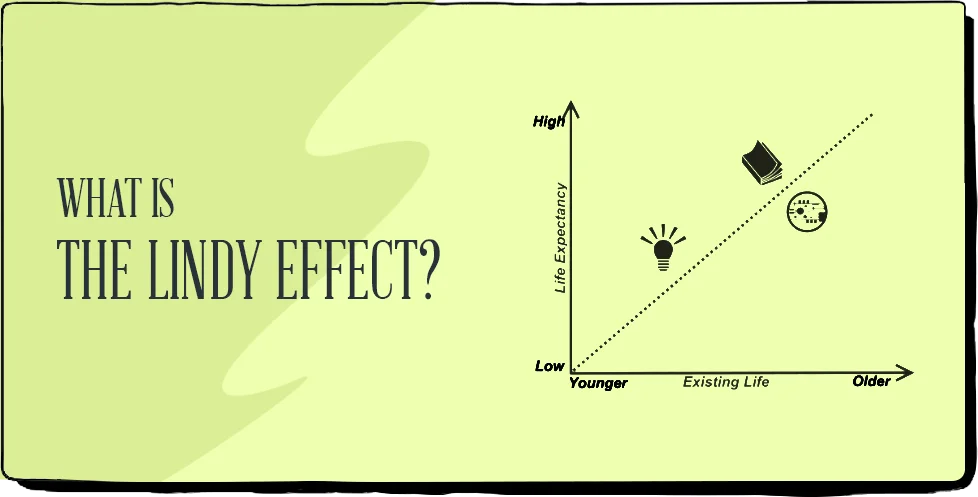
Do you know about the Lindy effect?

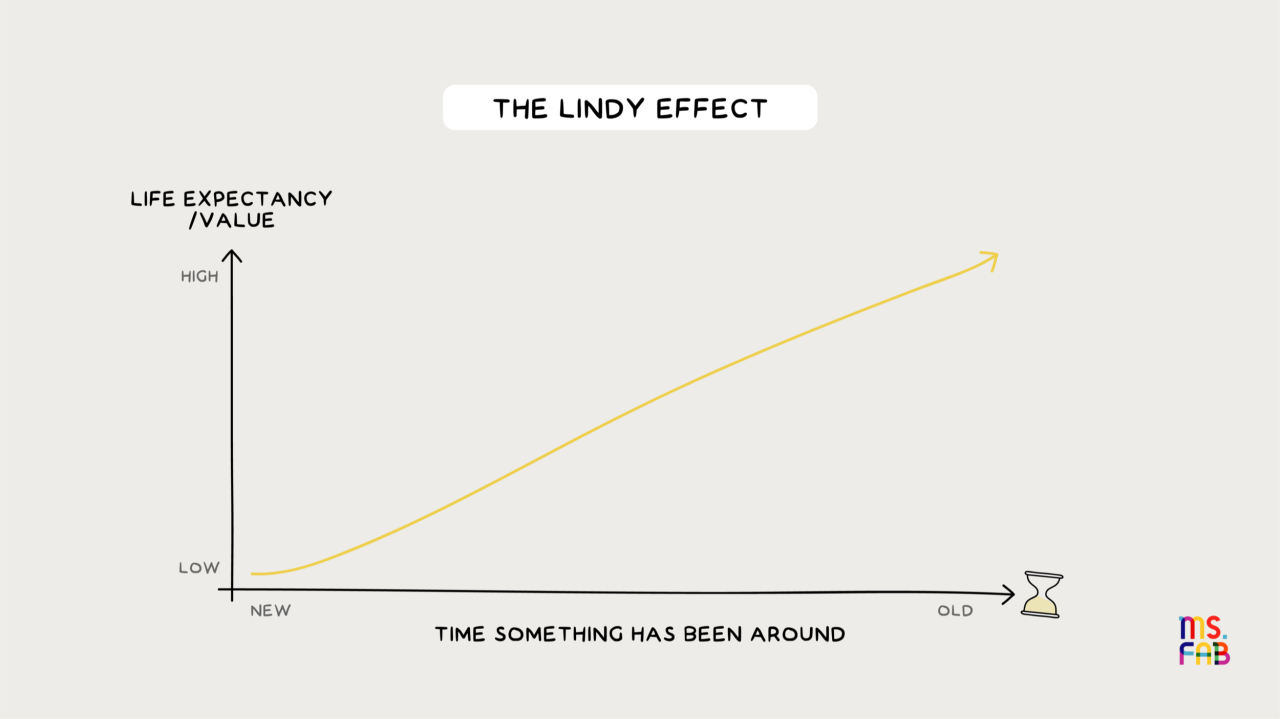
The longer something has been around, the longer you can expect it to stay around.

Let’s see why this is so powerful and how we can use it to become better investors.

Lindy Effect and The Design Process - wordpress

The Lindy Effect

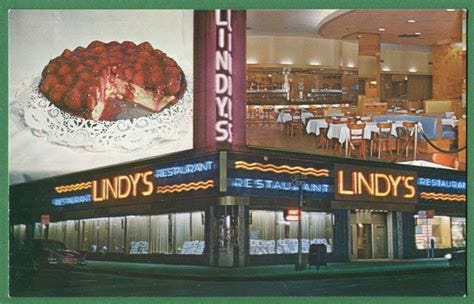
Do you know Lindy’s Delicatessen in New York City?

It was a restaurant on Broadway that performers would often eat at.

File:Lindys Restaurant Broadway and 51st Street New York City.JPG ...

The story goes that comedians used to joke that if a Broadway show had been running for two weeks, it would probably last another two weeks.

If it had been running for two years, it would probably last another two years.

Well… It turned out that they were right.

How the Lindy Effect works

If you're 80 years old, the Lindy Effect doesn't mean you'll live to 160.

The Lindy effect only applies to things that are lasting long:

  • Ideas

  • Technologies

  • Art

These things don’t age like human beings.

Every day something survives, it proves it is useful and resilient.

That makes it more likely to survive another day.

Think about these examples:

  • Books: Marcus Aurelius’s Meditations is much more likely to still be read in 100 years than the latest business strategy book to hit the New York Times bestseller list last week

  • Technology: The bicycle has stayed almost unchanged since the 1800s. Meanwhile, trends like Segways, hoverboards, and electric scooters have come and gone.

  • Food: Every few years, a new diet or supplement becomes popular. But people have eaten olive oil, bread, and fish for thousands of years. They’ll probably still be eating them 100 years from now. The latest diet products may not be around anymore.

You can use this concept in your daily life too.

You’ll probably still wear a quality pair of classic leather shoes in 10 years .
But the newest trendiest pair? Unlikely.

But did you know that The Lindy Effect an also help you in investing?

The Lindy Effect In Investing

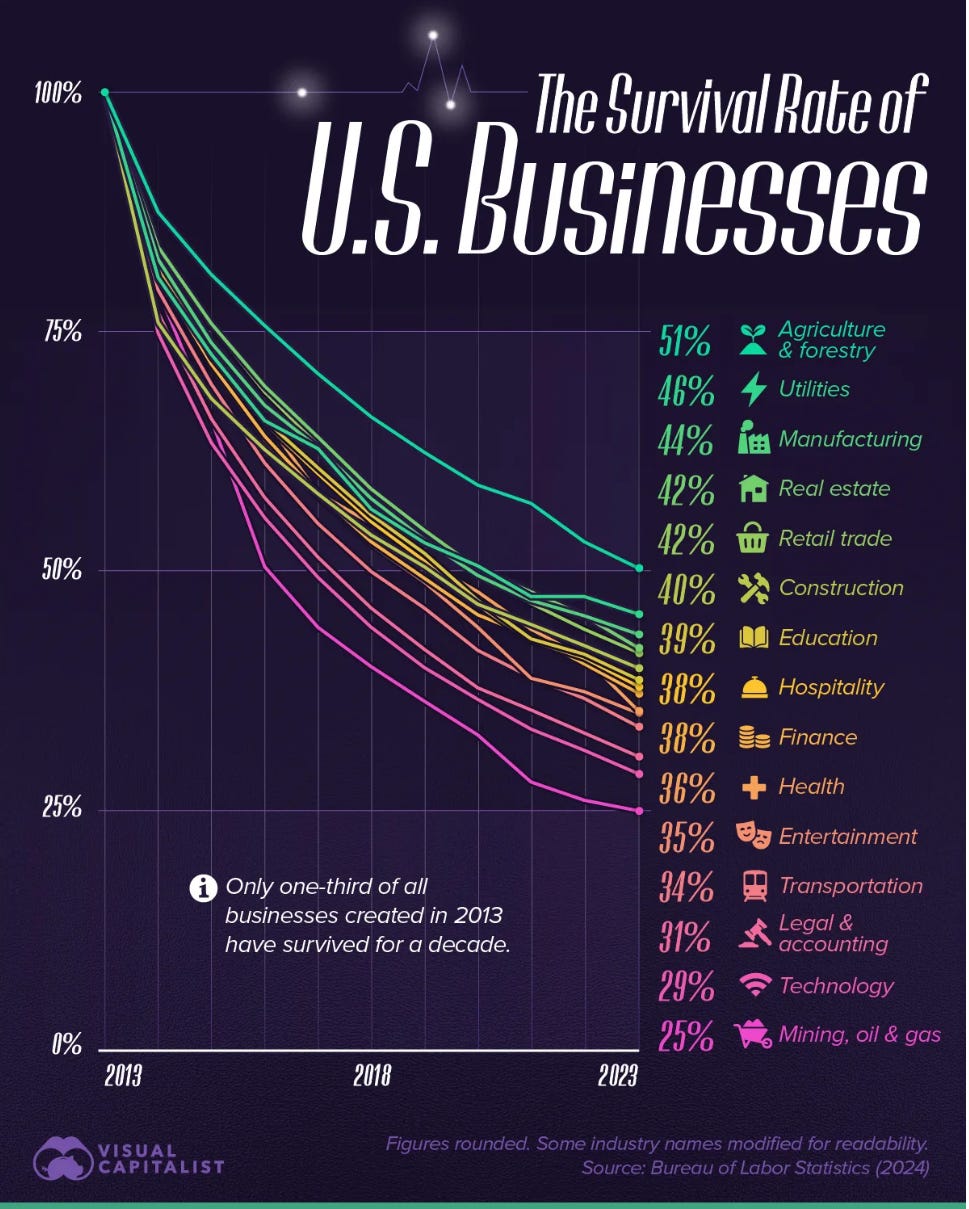
Capitalism is brutal.

  • 50% of all businesses fail within 5 years

  • 80% of all businesses are gone within 10 years

Source: Visual Capitalist

But a small number of exceptional businesses have survived for more than 100 years.

Some companies in Japan have even been around for over 1,000 years.

Lindy Businesses

These very old businesses could be considered Lindy businesses.

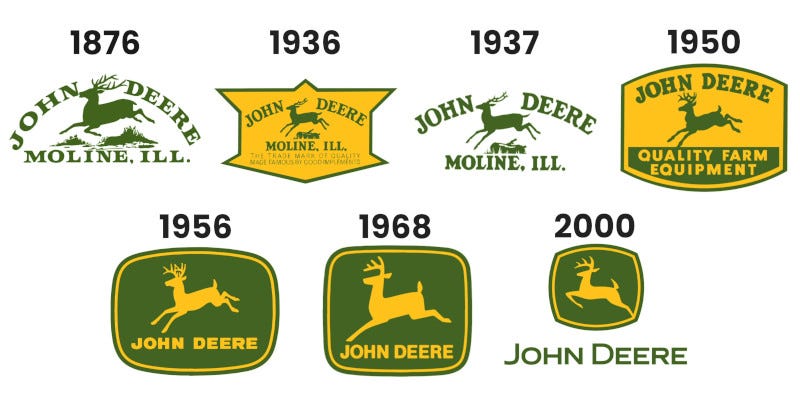
You probably know Deere & Company as John Deere.

It’s a Lindy business that has been around since 1837 (!).

Complete John Deere History Timeline - 1837 to Today | Equipment Radar ...

It began when a blacksmith named John Deere made a polished steel plow from a broken sawblade.

The basics of farming haven’t changed in thousands of years.

That means Deere’s expertise, brand, and reputation have been growing for nearly 200 years.

Now, they are a global giant making GPS-guided, autonomous tractors.

And they still make plows.

Steel Plow By John Deere | The Tube

If a business has survived 189 years of wars, recessions, and technological change…

The Lindy Effect suggests it is likely to survive another 189 years.

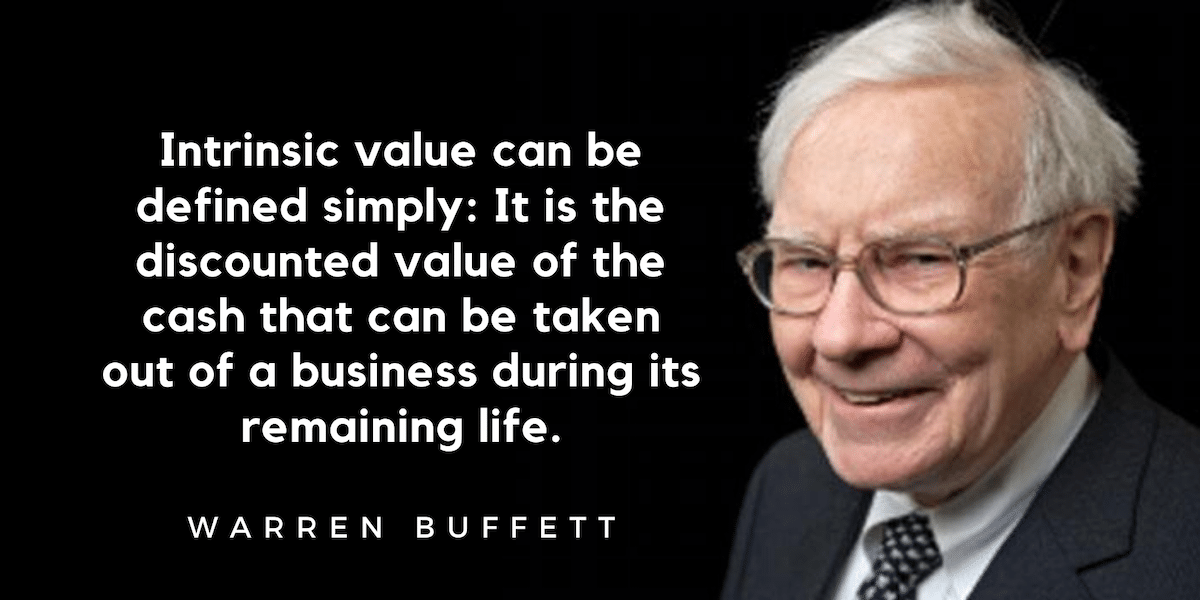
That’s important because the value of a business depends on all the cash it will generate in the future (discounted to today).

Intrinsic Value of Stock - Warren Buffett's Formula - Shabbir Bhimani

The Lindy effect states that the older a business is, the longer it will survive.

For investors, a longer life means more future cash flow.

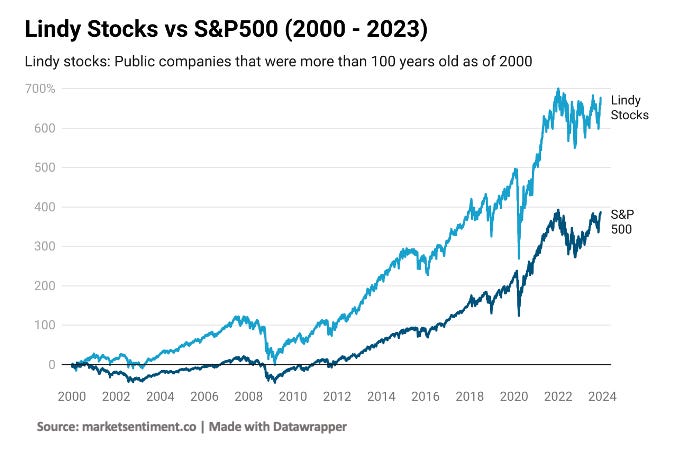
The data proves this works.

Here is the performance of a portfolio of 100-year-old companies compared to the S&P 500 since 2000.

20 Lindy Companies

Buying Lindy companies is a great way to build wealth in a very boring way.

That’s why today and on Sunday, we will cover 20 Lindy stocks you should know.

Let’s dive in right away.

The Lindy effect

20. McDonald’s ($MCD)

McDonald's runs one of the world’s best known fast-food businesses.

The corporation owns the underlying real estate and collects rent and franchise fees from operators.

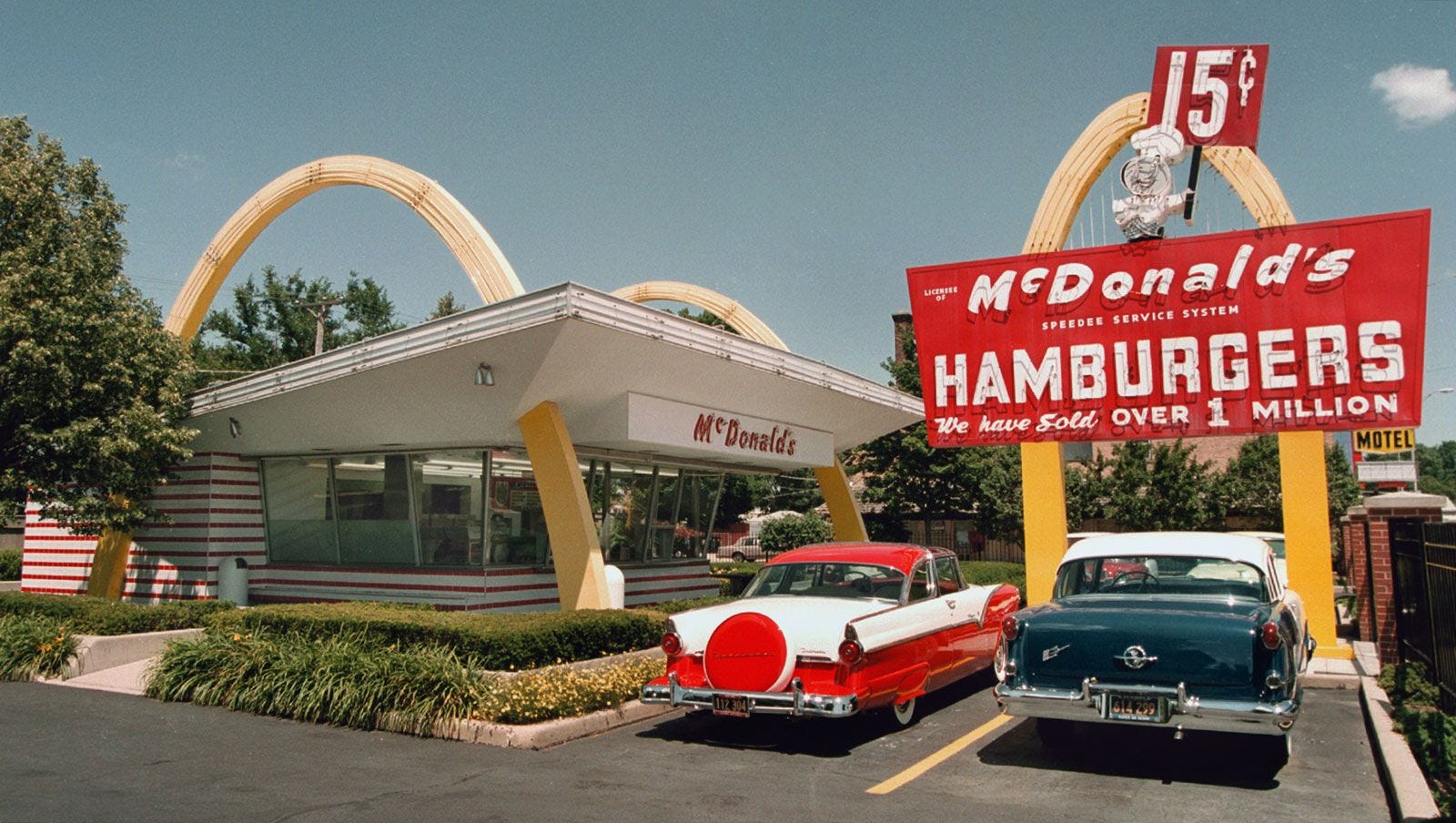
  • Founded: 1955

  • IPO: 1965

  • History: Ray Kroc founded the company in 1955, expanding on the original restaurant opened by the McDonald brothers in 1940.

McDonald's | History, Ray Kroc, & Facts | Britannica

The Lindy Effect

  • Food is a fundamental human need that isn’t going anywhere.

  • The restaurant business can be tough, but McDonald’s is essentially a real estate company that collects rent and royalties.

  • McDonald’s global brand and scale make it hard to compete with.

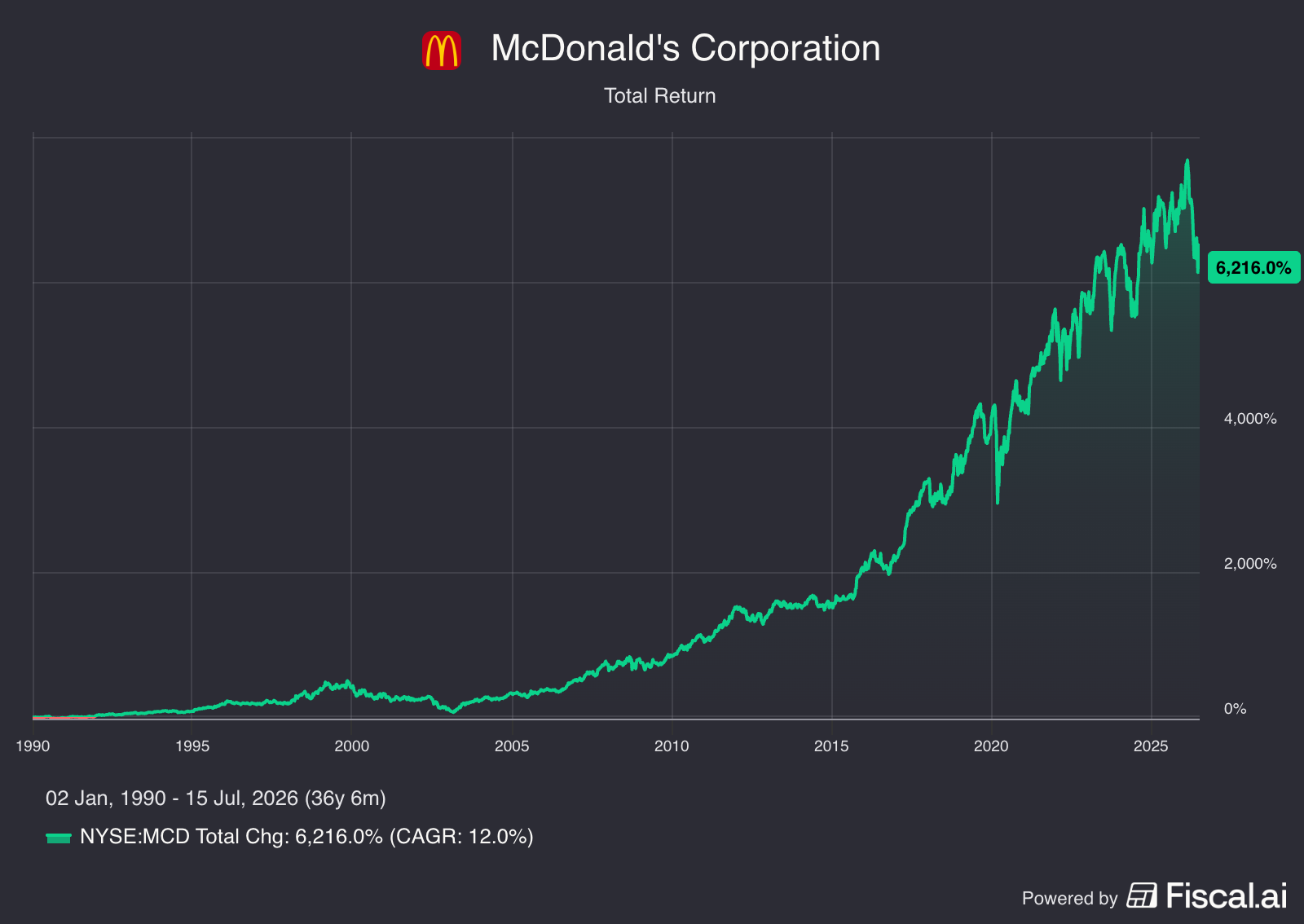
How Has McDonald’s Performed?

McDonald’s has a total return of more than 6,000% since 1990.

Source; Fiscal.ai

19. Marriott International ($MAR)

Marriott manages a global portfolio of hotel brands like Ritz-Carlton, JW Marriott, and Bonvoy.

Independent operators own the physical buildings while Marriott provides the operating systems.

  • Founded: 1927

  • IPO: 1993

  • History: J. Willard Marriott opened an root beer stand in Washington, D.C., which gradually expanded into a global hotel empire.

Marriott International: la storia del gruppo | Elle Decor

The Lindy Effect

  • Hotels have been around for thousands of years (travelers will always need a place to stay).

  • Marriott earns fees without owning most of its hotels.

  • Its brands and loyalty program keep customers coming back.

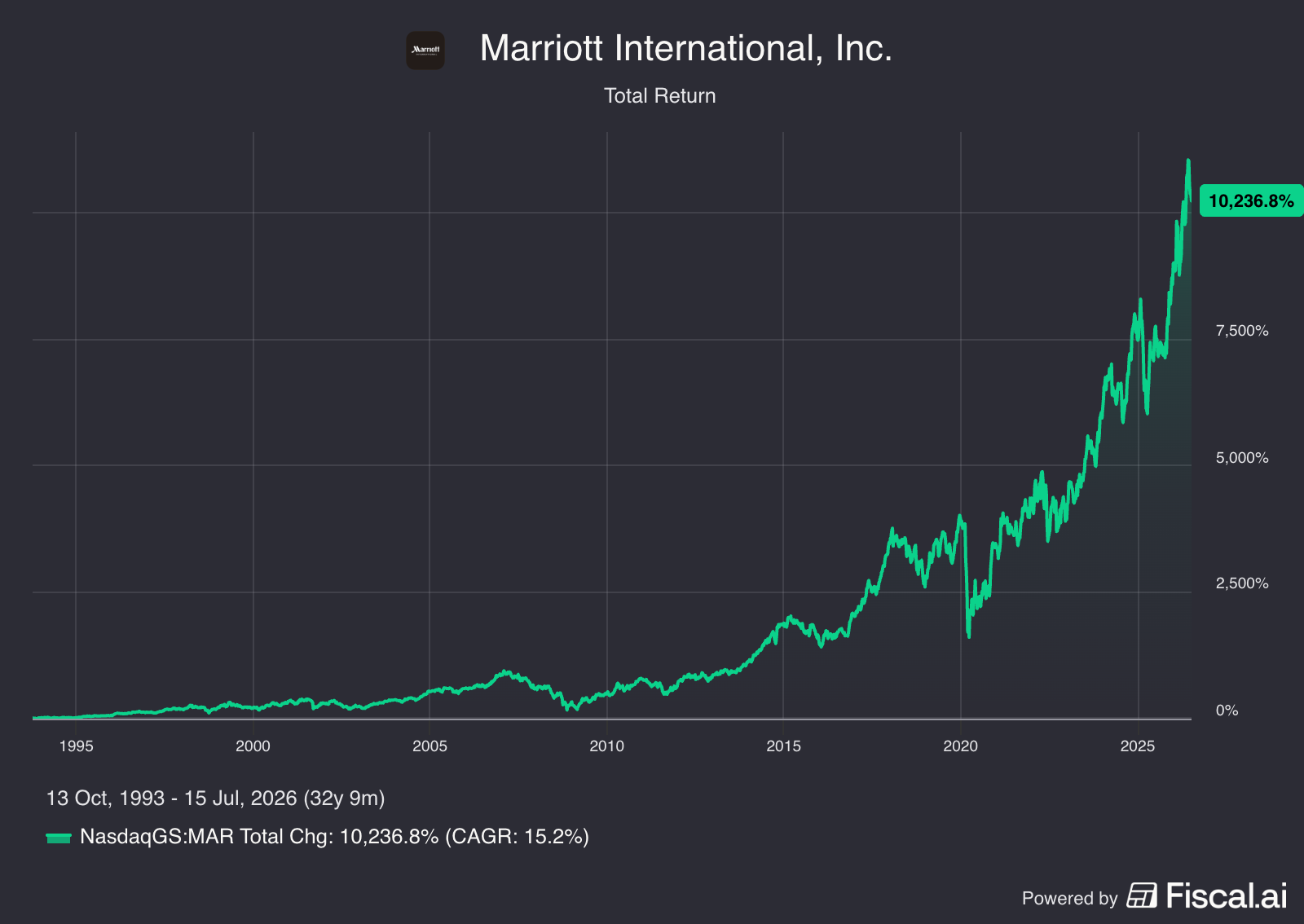
How Has Marriott Performed?

Marriott generated over +10,000% for shareholders since its IPO in 1993.

Source: Fiscal.ai

18. Walt Disney ($DIS)

Disney creates media like movies, and TV shows, and operates global theme parks.

It owns the IP rights to iconic characters and stories like Mickey Mouse, Cinderella, and Star Wars.

  • Founded: 1923

  • IPO: 1957

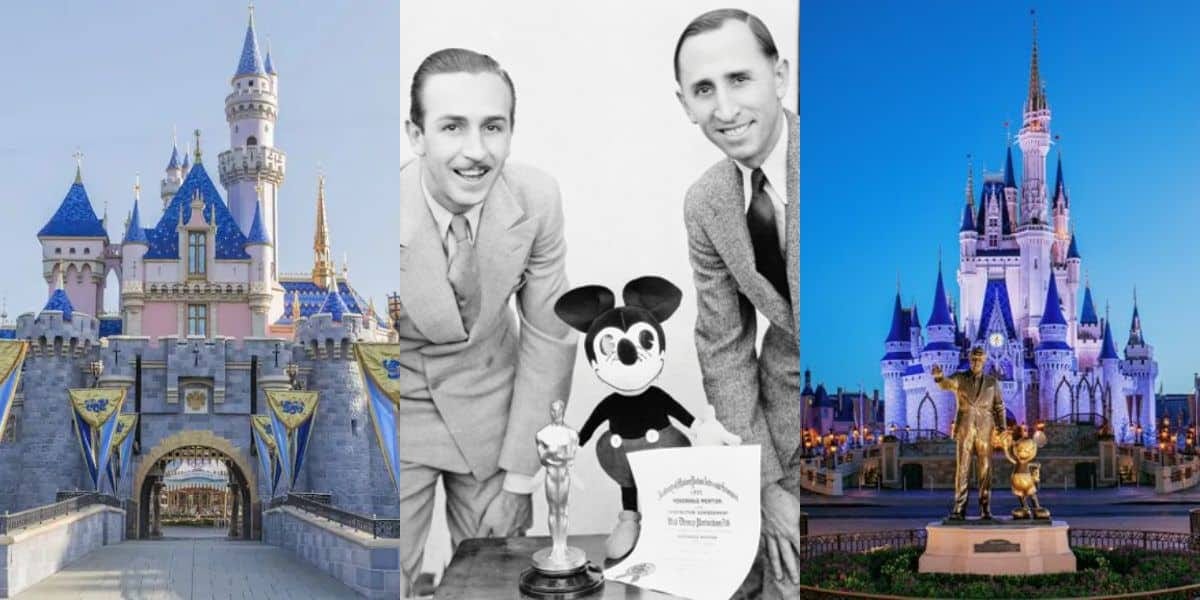
  • History: Walt and Roy Disney started an animation studio in Hollywood known as the Disney Brothers Cartoon Studio.

Timeline of Disney's Most Historical Events

The Lindy Effect

  • The human desire for great stories will never go away.

  • Disney’s characters have been loved for generations.

  • Its brand and cultural importance gives Disney pricing power across its businesses.

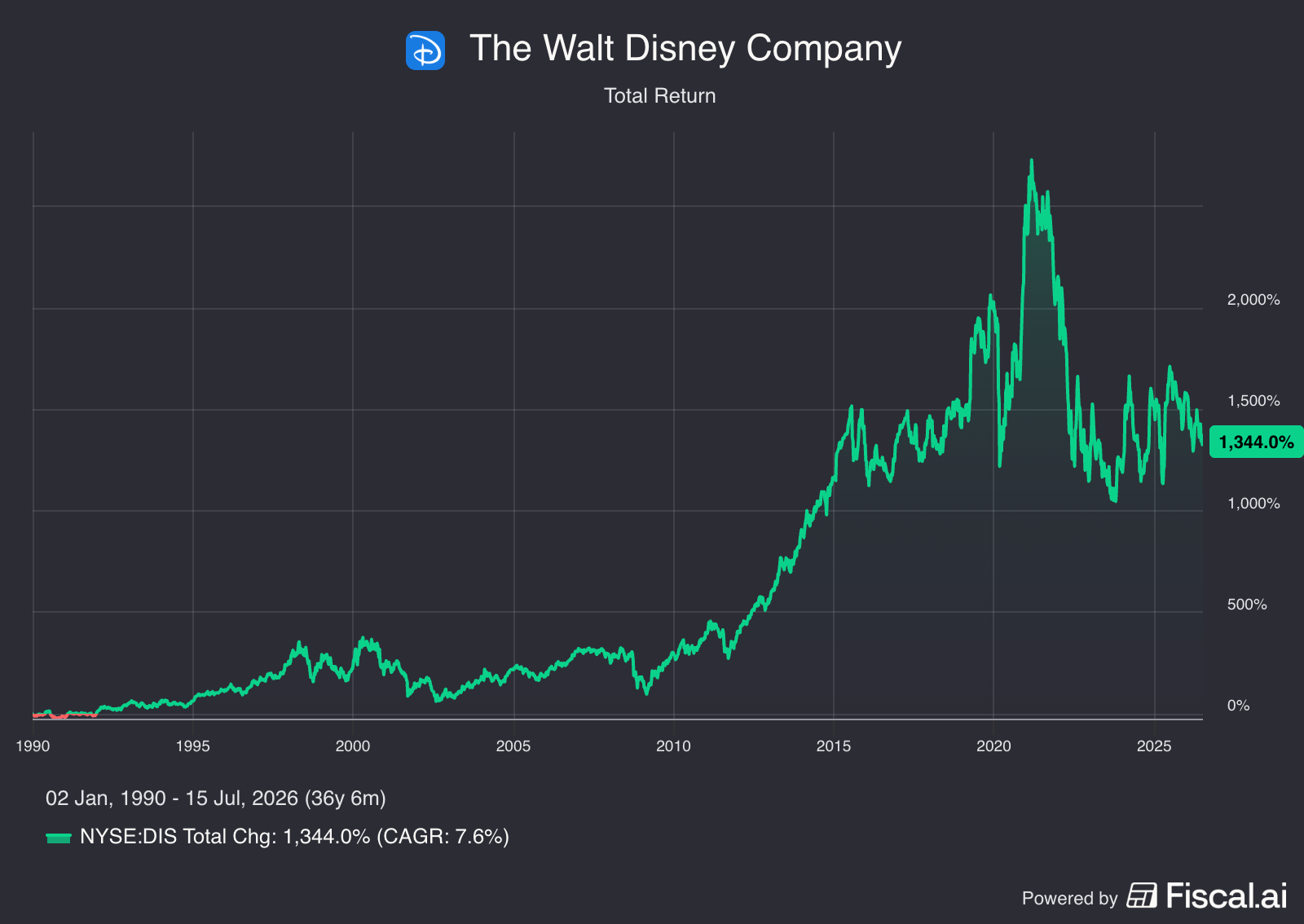
How Has Disney Performed?

Disney’s stock has been relatively flat over the past decade.

But since 1990, it’s up more than 1,300%.

Source: Fiscal.ai

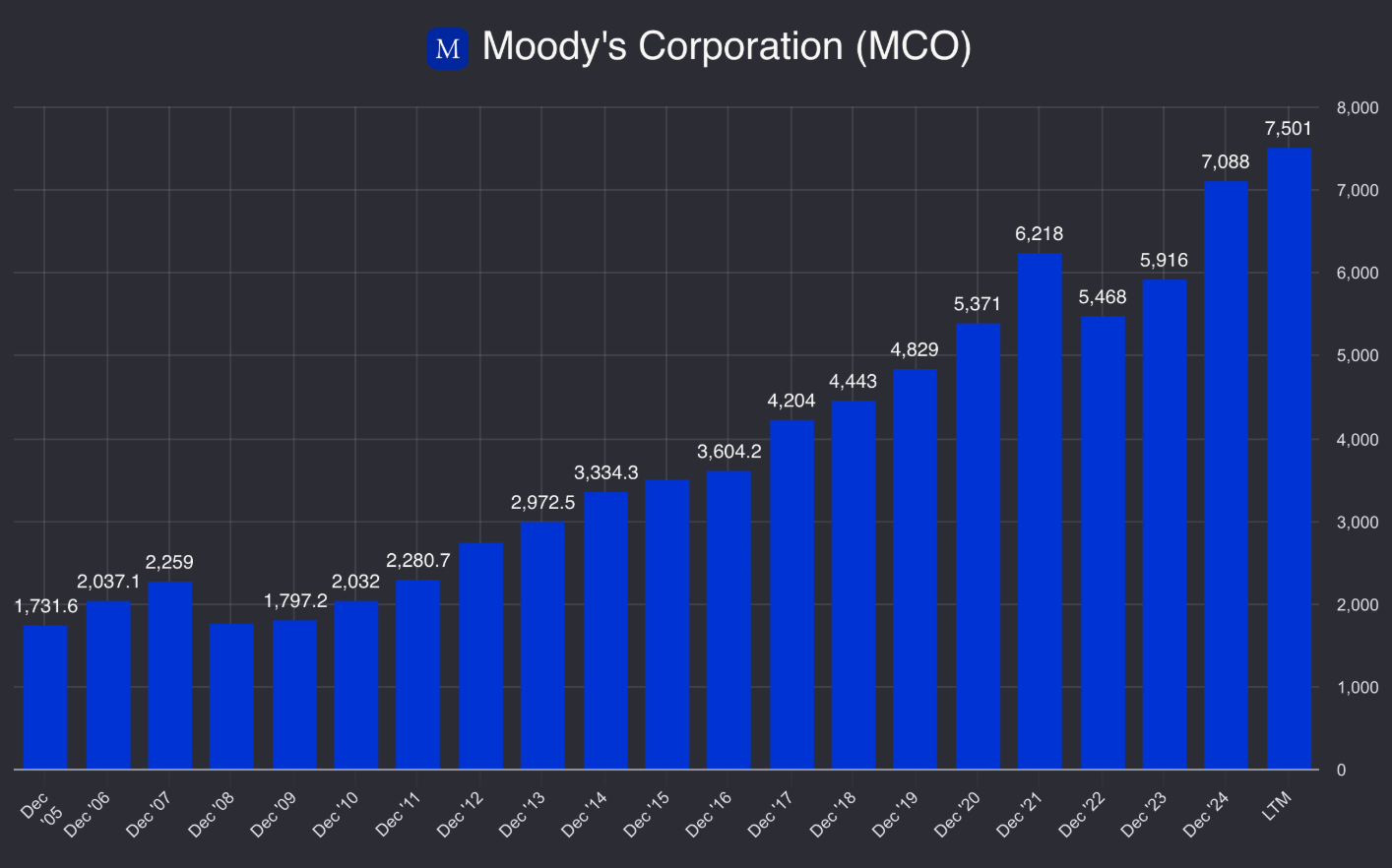
17. Moody’s ($MCO)

Moody's provides credit ratings and financial research for the global financial system.

Investors use Moody’s ratings to assess corporate debt.

  • Founded: 1909

  • IPO: Spun off as we know it today in 2000

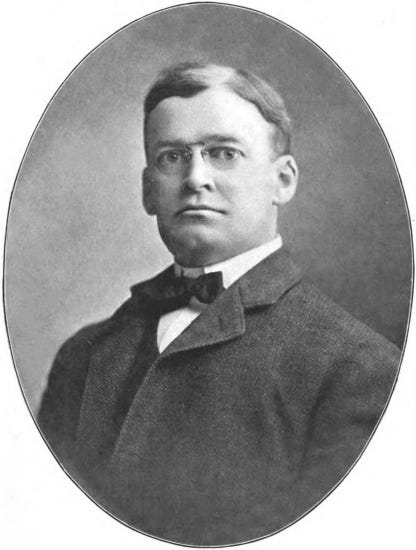
  • History: John Moody published his first bond-rating manual in 1900, and Moody’s Investors Service officially began rating securities in 1909.

The Lindy Effect

  • The financial system depends on credit ratings.

  • Only a few companies dominate this market.

  • It would be very hard for a competitor to gain the trust Moody’s has.

How Has Moody’s Performed?

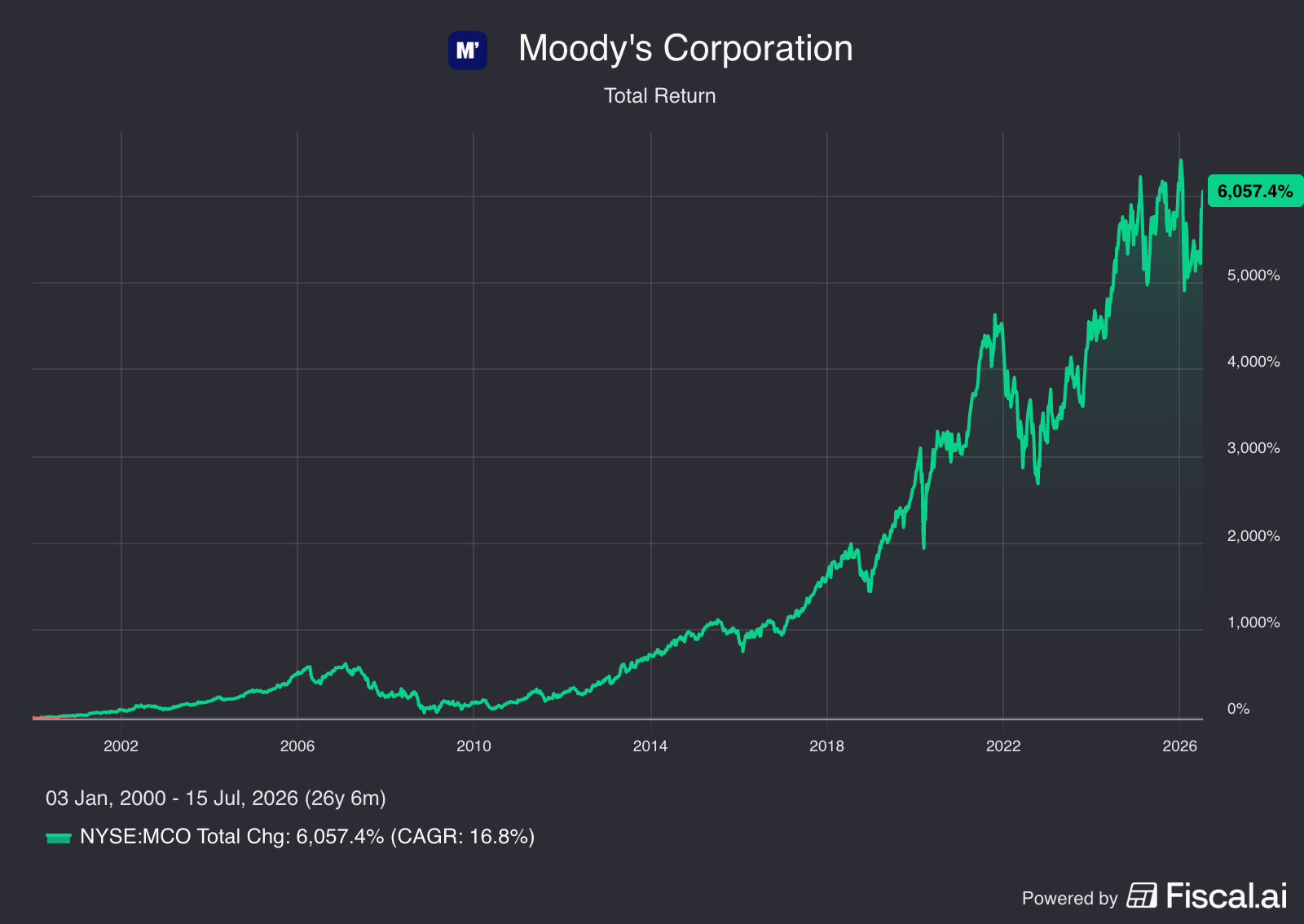
Moody’s is up more than 6,000% since its spin-off in 2000.

Source: Fiscal.ai

16. Bank of America ($BAC)

Bank of America holds deposits and provides lending to consumers and corporations.

Millions of customers use their accounts daily for basic financial needs.

  • Founded: 1904

  • IPO: 1979

  • History: A.P. Giannini founded the Bank of Italy in San Francisco to serve working-class immigrants; it was later renamed Bank of America in 1930.

The Lindy Effect:

  • People will always need a safe place to keep their money.

  • Bank of America’s scale gives them a huge low-cost deposit base.

  • Changing banks is a pain, creating switching costs, and strict regulations protect BoA from competition.

How Has Bank of America Performed?

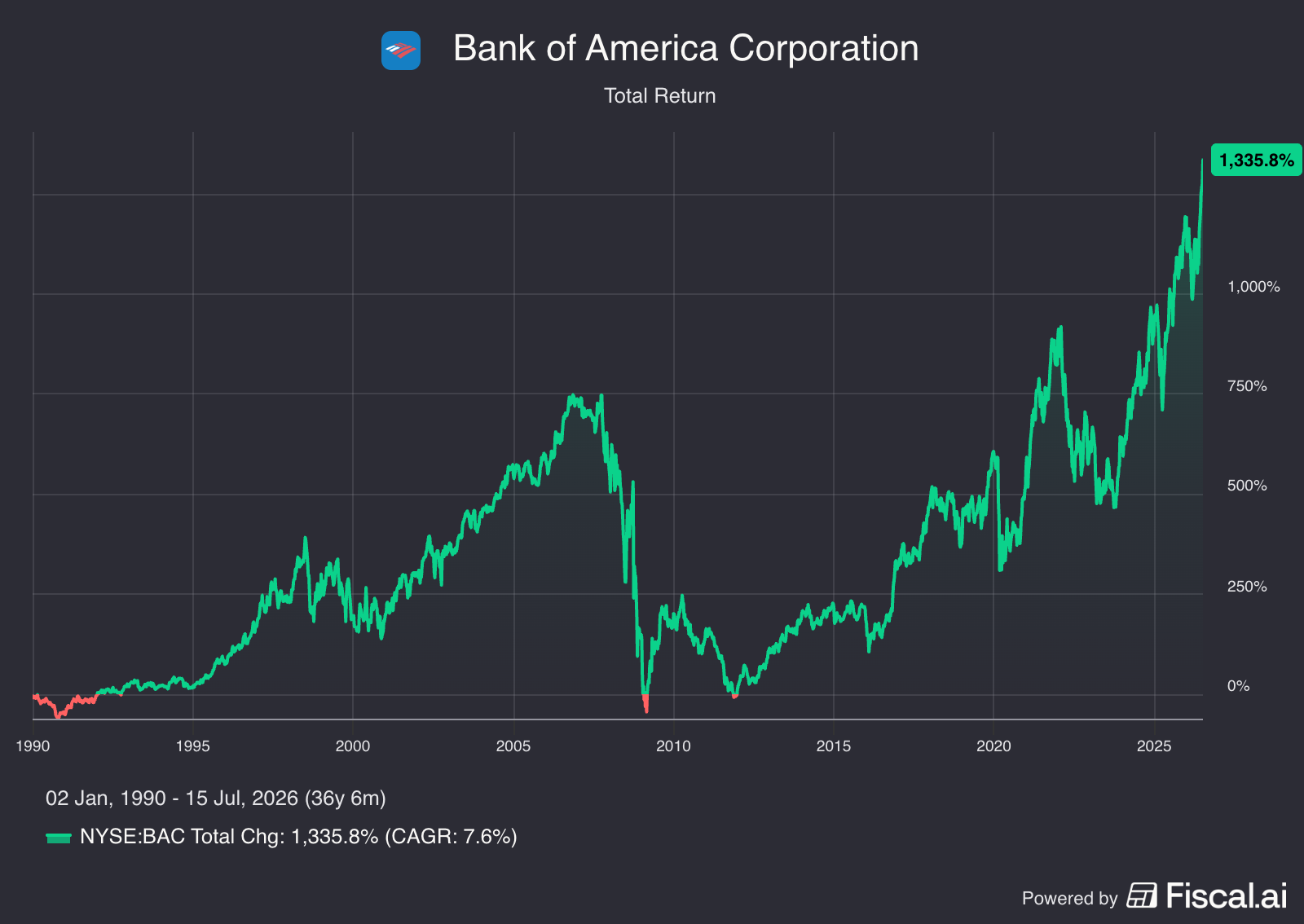
Bank of America has delivered a total return of more than 1,300% since 1990.

Source: Fiscal.ai

15. 3M ($MMM)

3M makes thousands of specialized industrial and consumer materials and adhesives.

Factories around the world rely on their adhesives and abrasives.

  • Founded: 1902

  • IPO: 1970

  • History: Founded as Minnesota Mining and Manufacturing to mine corundum, it quickly pivoted to inventing and producing abrasives, adhesives, and consumer goods.

Marketing mix of 3M - 3M Marketing mix and 4 P's of 3M

The Lindy Effect

  • Many industries rely on 3M’s products every day.

  • Its products are built into thousands of supply chains.

  • Years of innovation and research make 3M difficult to replace.

How Has 3M Performed?

Since 1990, 3M has generated a total return of over 2,600%.

Source: Fiscal.ai

14. PepsiCo ($PEP)

PepsiCo owns a portfolio of popular snack and beverage brands like Doritos, Frito-Lay, Pepsi, and Lipton.

Their products fill grocery shelves and convenience stores worldwide.

  • Founded: 1898

  • IPO: 1978

  • History: Pharmacist Caleb Bradham created Pepsi-Cola. The modern corporation was formed after a 1965 merger with Frito-Lay.

The Beginnings of Pepsi-Cola | Pepsi History

The Lindy Effect

  • People will always buy drinks and snacks.

  • Its brands are known and trusted around the world.

  • Its distribution network is almost impossible to match.

How Has PepsiCo Performed?

PepsiCo has returned nearly 3,100% to shareholders since 1990.

Source: Fiscal.ai

Now let’s dive into the top 3.

Read more

🏰 How to Identify Great Compounders

4 August 2026 at 14:44

It’s #QualityTuesday!

In this series, I’ll teach you 5 things about the stock market in less than 5 minutes.

https://substackcdn.com/image/fetch/$s_!vNmy!,w_1456,c_limit,f_webp,q_auto:good,fl_progressive:steep/https%3A%2F%2Fsubstack-post-media.s3.amazonaws.com%2Fpublic%2Fimages%2Fe7aeb3d4-9320-4cf6-945f-b9cb0c6b2e17_723x242.png

1️⃣ How to find great stocks

Do you know the secret to great stocks?

They are very profitable and reinvest most of their profit in organic growth.

Growth Rate = High ROIC × High Reinvestment

A Compounding Machine grows its value at rapid rates by reinvesting its profits at high returns.

Two metrics are important:

  • ROIC: tells you how efficiently a company turns capital into profits

  • Reinvestment rate: tells you how much of those profits can be reinvested back into growth

Just image a company with a ROIC of 25% reinvests 40% in itself:

Growth Rate = ROIC × High Reinvestment
Growth rate = 25% x 40% = 10%

Now compare that to a company earning 10% ROIC while reinvesting 65% of its earnings:

Growth Rate = ROIC × High Reinvestment

Growth rate = 10% x 65% = 6.5%

Despite reinvesting much more capital, it compounds at only 6.5%.

This is the key difference between average businesses and truly exceptional ones.

You want companies with a high ROIC (> 15%) that reinvest a lot in organic growth.

2️⃣ Book Tip: Principles (Ray Dalio)

Principles by Ray Dalio is an amazing book.

It will teach you three things:

  • How to think independently

  • Learn from mistakes

  • Creating systems for better decisions

I created a full book summary. You can read it here:

Summary: Principles by Ray Dalio

3️⃣ One simple investment quote

You know how to get rich? But really rich?

It’s not about a Magic Formula or big secrets.

It’s all about being patient.

Charlie Munger said it best:

4️⃣ Interview Lawrence Cunningham

Do you know Lawrence Cunningham?

He’s a professor and wrote some amazing books about Warren Buffett.

On top of that, he serves in the board of directors of Markel and Constellation Software.

Curious to learn more? Read our interview here.

Professor Cunningham Writes About Buffett's Berkshire Business Model in New  Book | GW Law | The George Washington University

5️⃣ Stock Pitch: Diploma PLC ($DPLM)

How does the company make money?

Diploma makes money by selling essential, high-margin components for industries like aerospace, medical, and industrial machinery.

They grow profits through organic sales and by acquiring small specialist businesses with recurring revenue.

Diploma acts as the middleman nobody talks about.

When a Boeing engineer needs a specific bolt for a 787, or a hospital needs a sterile valve for an MRI machine, they call a specialist distributor.

Diploma owns hundreds of these niche distributors.

Each one is tiny, local, and deeply embedded in its supply chain.

The best thing?

They buy family-run businesses at 6–8x earnings, leave the founders in charge, and give them full autonomy.

Over time, they cross-sell products, consolidate purchasing, and raise prices by 3-5% every year.

Customers barely notice because these products account for just 0.2% of their total costs.

The result? An incredible 18.9% annual return over the past 34 years.

Source: Fiscal.ai

That’s it for today.

In case you missed it:

Everything in life compounds
Team Compounding Quality

Book

  • Order your copy of The Art of Quality Investing here

Used sources

Disclaimer

As a reader of Compounding Quality, you agree with our disclaimer. You can read the full disclaimer here.

$100,000 Annual Cash Flow (Portfolio Update)

2 August 2026 at 14:44

Investing is the easiest way to build wealth.

Our Portfolio is making almost $100.000 (!) in Free Cash Flow per year for us.

And this while we don’t have to work for it.

As Warren Buffett said:

If You Don't Find A Way To Make Money While Sleep You Will Work Until You  Die | Warren Buffett

Here’s what Our Portfolio makes for us:

  • $96.156 per year

  • $8,018 per month

  • $1,841 per week

  • $263.63 per day

  • $10.98 per hour

  • $0.18 per minute

Let’s dive into Our Portfolio Update today.

Berkshire Hathaway

Berkshire Hathaway is the best investment holding in the world.

Here’s their track record compared to the S&P 500:

Source: Fiscal.ai

If you do the same thing as everyone else you’ll get the same results as everyone else.

What this means?

Every active investment strategy faces periods of out- and underperformance.

Just look at how Berkshire performed in 1999:

  • Berkshire Hathaway: -18.9%

  • S&P 500: +23.0%

Source: Fiscal.ai

Something similar can be seen over the past year:

  • Berkshire Hathaway: +3.5%

  • S&P 500: +19.5%

Source: Fiscal.ai

The good news?

Periods of underperformance are always followed by periods of outperformance.

Especially for amazing investors like Warren Buffett.

Like it did from 2000 to 2003:

  • Berkshire Hathaway: +53.7%

  • S&P 500: -19.2%

Source: Fiscal.ai

I think we could see something similar in the years to come.

There is more and more evidence that the reversal is starting.

Over the past few months, the S&P 500 has been relatively flat:

Source: Fiscal.ai

But some of the sectors that have done very well are starting to suffer.

While the S&P 500 was flat, the iShares Semiconductor ETF declined by 20% in mid July:

Source: Fiscal.ai

The next chart shows the expected market volatility in two different ways:

  • VIX (dark blue): Measures the expected volatility of the overall S&P 500 index.

  • VIXEQ (light blue): Measures the average expected volatility of the individual companies in the S&P 500. In other words, it shows the expected price swings of the average stock in the index.

Image
Source: Mike Zaccardi on X

Right now, the gap between the two is much wider than usual.

Why?

  • Individual stocks are making large moves based on company-specific news, such as earnings reports and AI developments.

  • But many of these stocks are moving in opposite directions, so their gains and losses largely offset each other at the index level.

This could be a sign that the AI and semiconductor trade is cooling off.

In the meantime, investors rotate into other parts of the market.

Quality stocks have held up particularly well over the past month (orange line):

Source: Fiscal.ai

Our Portfolio

As you could already see in the chart with the Free Cash Flow, Our Companies are becoming stronger and stronger.

Year after year.

Another way to look at this?

Owners Earnings.

Owners earnings = Growth in Earnings Per Share + Dividend Yield

The evolution looks as follows:

The fundamentals of Our Portfolio also looks way healthier than the S&P 500:

Our Portfolio is also cheaper than ever.

Sometimes, it takes Mr. Market time to recognize a company's true value.

Just look at this table from François Rochon:

Source: Giverny Capital

Between 2005 and 2011:

  • Owner’s earnings: +10% per year

  • Stock prices: +6% per year.

Between 2012 and 2014:

  • Owner’s earnings: +16% per year

  • Stock prices: +28% per year

But over the long run (2005–2014), Owner Earnings and stock prices both compounded at 12% per year.

The lesson?

In the short term, stock prices are driven by valuation changes.

In the long term, they follow owner earnings.

You can think about this like a rubber band.

The further away the stock price stretches from the underlying business fundamentals, the harder it usually snaps back.

My friend Brian Feroldi has a great graphic to reminds us that what matters in the long run is the business.

Source: Brian Feroldi on X

Let’s now dive into Our Portfolio and give an update.

Read more

ETF Portfolio Update July 2026

30 July 2026 at 14:51

You want to invest in companies that generate a lot of cash.

But you know what’s even better?

Companies that:u

  1. Generate a lot of cash

  2. Are growing attractively

  3. Trade at cheap valuation levels

The good news is you can easily achieve this via some well-chosen ETFs.

Subscribe now

4,200+ Etf Stock Photos, Pictures & Royalty-Free Images - iStock

The Buffett Mindset

When you look at a ticker on a screen, it’s easy to forget what you’re actually buying.

Warren Buffett has called The Intelligent Investor by Ben Graham the best investing book ever written.

Here are the three most important takeaways:

The most important thing?

When you buy a stock, you become the owner of that company.

It’s like buying a part of your local butcher across the street.

And it also means: if you buy 1 share of a company, you should be willing to buy the entire business if you had the money.

So just imagine you buy 1 share of Apple today.

In that case, you would be willing to buy the entire company for $4.6 trillion and you think it’s worth more than that.

PS If you have $4.6 trillion available, please send me a DM.
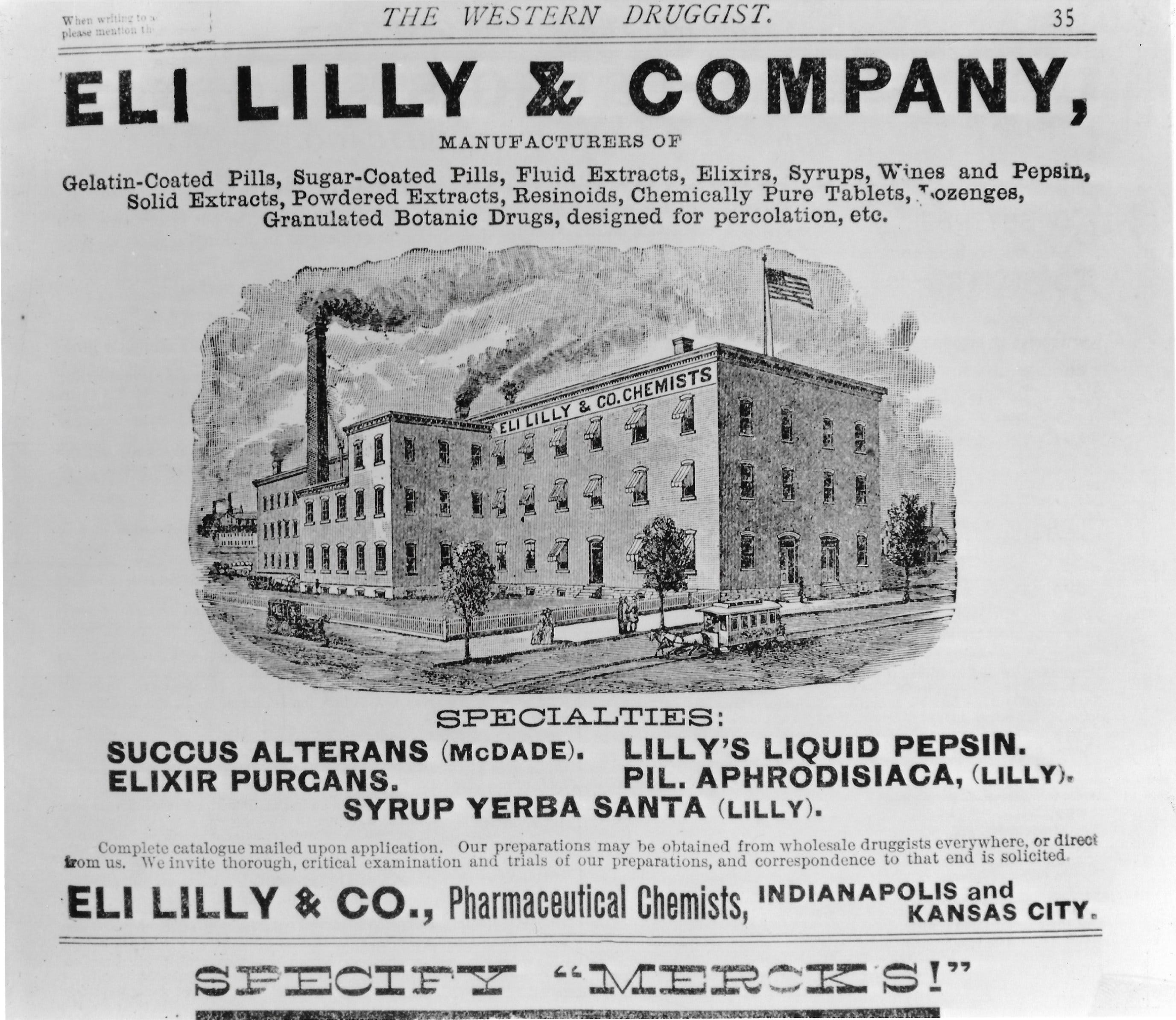
I’m just kidding of course… Or not? 😉

What’s the Purpose of a Business?

If owning a stock makes you a business owner, it’s worth asking what the purpose of a business is.

I think the easiest way to answer this is to think about a small, local business.

You probably have a gas station or convenience store in your town.

Let's use this as an example.

Download Gas Station Pictures | Wallpapers.com

The owner runs the business to make sure your car is fueled with gas, and that you’re fueled with coffee or snacks.

But the real purpose?

To sell you those things so that the owner earns an income.

Which, of course, means cash.

A business can look profitable on paper…

But if it has to reinvest every dollar into inventory or repairing gas pumps, it's not a great business.

Why would you want to own it?

As an investor, you want businesses that produce a lot of Free Cash Flow (FCF).

Free Cash Flow is the real cash a company generates after deducting all expenses.

It’s basically all cash that comes in minus all cash that goes out.

Two ways to win

The beauty of being an investor?

You have more than one way to win.

A business owner makes more money when the business becomes more profitable.

But as an investor, you can win in two ways:

  • More profit: The business grows its earnings.

  • Higher valuation: The market decides to pay more for those earnings (e.g., the P/E ratio goes up).

More profit

Nvidia's stock surged nearly 900% between 2023 and 2025.

That's despite its P/FCF multiple falling from over 100x to 58x.

The reason? Free cash flow grew by almost 25x (+2,500%).

Source: Fiscal.ai

Multiple Expansion

But a stock can also go up without profits growing.

Just take Apple from 2022 to 2025.

The stock went up more than 60% during that period:

Source: Fiscal.ai

But Free Cash Flow went down during the same period.

What happened?

The answer is multiple expansion.

The market decided that instead of being worth 20x cash flow, Apple was worth 40x.

In other words: the valuation of Apple doubled.

Source: Fiscal.ai

The Twin-Engines of Returns

But what if both engines fire together? That’s where magic happens.

In his book 100 Baggers, Chris Mayer calls this the ‘twin-engines’ of wealth creation.

  • Engine 1: High earnings growth (like Nvidia).

  • Engine 2: Multiple expansion (like Apple).

When you buy a cheap, growing company, you benefit from both rising cash flows and an expanding valuation multiple.

That’s what happened to Caterpillar ($CAT) from 2019 to today.
  • Free Cash Flow: +86%

  • Multiple: +186%

  • Stock Price: +536%

High earnings growth + multiple expansion is the golden goose for you as an investor.

Source: Fiscal.ai

To summarize

  • Stocks are pieces of businesses.

  • Businesses exist to generate cash.

  • Investors make money in two ways:

    • When the business generates more cash

    • When the market is willing to pay a higher multiple for that cash.

  • Combining growth with an attractive valuation gives you two powerful engines for compounding.

MicroCapClub on X: "You make the most by finding growth in value right  before it shows up in the fundamentals. EPS Growth + Multiple Expansion =  💥 https://t.co/6au0Ivgl73" / X

Wouldn’t it be interesting to buy an ETF that captures exactly these characteristics?

The good news is that you can.

⭐ ETF of the Month

VictoryShares Free Cash Flow ETF (VFLO)

Key Information

  • Name: VictoryShares Free Cash Flow ETF

  • Ticker: VFLO

  • Total Expense Ratio: 0.39%

  • Physical/Synthetic ETF: Physical

What?

The ETF invests in large companies in the United States with a specific set of characteristics:

  1. High Free Cash Flow Yield

  2. Strong forward growth

You might be wondering how this works in practice.

The ETF starts with the VettaFi US Large Cap Free Cash Flow Index.

Afterwards, it applies a two-step filter:

  1. Value: It finds companies generating the most free cash flow relative to their enterprise value

  2. Growth: It screens out companies with the lowest expected growth

Source: Victory Capital

Why?

Buying the cheapest companies with the highest expected growth gives us the best chance to let our two favorite return engines work together:

  • Attractive growth

  • Room for multiple expansion

Historically, this strategy has worked very well.

Companies with the highest expected FCF/EV had a return of 17.3% (!) per year:

Source: Victory Capital

Sector Split

Here’s the sector breakdown of the ETF.

The three largest sectors are Information Technology (38.6%), Health Care (17.9%) and Consumer Discretionary (15.9%).

Source: Victory Capital

Top Holdings

Here are the top 10 holdings of VFLO:

Source: Victory Capital

ETF Portfolio Update: July 2026

Now let’s dive in Our ETF Portfolio Update.

Our Portfolio is a great mix of ETFs that should be able to outperform in the long term.

We use multiple factors that tend to do well:

👑 Quality: Only invest in companies that have already won
📏 Size: The smaller the better
🚀 Multifactor: Quality, size, value & momentum
🌏 Emerging Markets: Small exposure to Emerging Markets

Let’s now dive into the ETF Portfolio itself.

You have 24/7 access to the ETF Portfolio here:

Read more

Who is Chuck Akre?

28 July 2026 at 14:44

Chuck Akre loves Compounding Machines.

He returned 12.6% per year to shareholders since 2009.

Let’s dive into the lessons and philosophy of this legendary investor.

Subscribe now

Who is Chuck Akre?

Chuck Akre is a highly respected investor.

He is known for his disciplined approach and long-term mindset.

Akre is seen as one of the best quality investors in the world.

Chuck A…

Read more

Buying A Forever Winner

26 July 2026 at 14:45

Hi Partner 👋

Today we will buy a very boring company.

This company:

  • Was the clear market leader 20 years ago

  • Is still the market leader today

  • Will (probably) still be the market leader in 20 years from now

The average yearly return since 1990? +14.4% per year.

An investment of $10.000 turned into $1.4 million.

Those are exactly the companies we’re looking for.

Read more

📈 Eli Lilly: From Insulin to Obesity King

23 July 2026 at 14:44

One of the world’s most valuable pharmaceutical companies? Eli Lilly.

They dominate the entire market for diabetic and obesity care together with Novo Nordisk.

Here’s what a $10,000 would be worth since 1992:

  • S&P 500: $0.3 million

  • Eli Lilly: $1.8 million

Eli Lilly Stock Photos - Free & Royalty-Free Stock Photos from Dreamstime

Eli Lilly – General Information

👔 Company name: Eli Lilly and Company
✍️ ISIN: US5324571083
🔎 Ticker: LLY

Read more

Has Terry Smith lost his mind?!

21 July 2026 at 14:44

Has Terry Smith lost his mind?!

Typically, he doesn’t trade much.

But in the first six months of 2026, he turned over more than 50% of his portfolio.

He even announced a major shift in his investment strategy.

Let’s see what’s happening.

Fundsmith Money Manager Terry Smith Sees Worst Payday in Seven Years -  Bloomberg

Who is Terry Smith?

Terry Smith is often called “The English Warren Buffett”.

He’s considered as one of the best quality investors in the world.

Terry typically is very straightforward and an independent investor.

His background looks like this:

  • Grew up in East London, was at the top his class in history at Cardiff, and entered banking at Barclays in the 1970s.

  • In 1992, he wrote Accounting for Growth, a book that exposed corporate accounting tricks and was so controversial that it got him fired.

  • Launched Fundsmith in 2010. Today, it manages £12 billion and has achieved an impressive 13.1% CAGR after fees since inception.

Pieter even had the opportunity to have dinner with Team Fundsmith in Omaha at Gorat’s last year (Warren Buffett’s favorite steakhouse).

Louis Gorat's Steak House

Investment Style

Terry Smith’s philosophy is simple.

It comes down to three steps:

1. Buy Good Companies

Terry Smith looks to buy high-quality businesses that dominate their markets.

  • High ROCE: Look for a Return on Capital Employed of more than 15–20%

  • Wide Moats: Focus on companies with pricing power and high gross margins

  • Cash is King: Prioritize strong organic growth and businesses that convert a lot of their net earnings into free cash flow.

“I am constantly amazed at the number of people who talk about investment and spend most or all of their time talking about asset allocation, sector weightings, economic forecasts... and never mention any need to invest in something good.” — Terry Smith

2. Don’t Overpay

While quality comes first, valuation still matters.

He is willing to pay a fair premium for an exceptional business but tries to avoid overpaying.

3. Do Nothing

Minimizing trading keeps fees low and lets compounding do the work over time.

Patience has been one of Terry’s main advantages.

The Fundamentals

Fundsmith does hold a portfolio of companies with great fundamentals:

Performance

Over the long term it has allowed the fund to outperform.

Fundsmith generated a CAGR of 13.1% after fees since 2010.

But guess what?

Terry Smith has underperformed every single year over the past 5 years:

Which brings us to the letter Terry Smith recently wrote to his investors.

You can read it here:

Shareholder letter Terry Smith

Shareholder Letter Terry Smith

There are two things I want to focus on today:

  1. Why he thinks he has underperformed

  2. How he is shifting his strategy

Why he has underperformed

The letter says the fund underperformed because investors cared more about momentum than business fundamentals.

I think that’s true, and we’ll explain Terry’s argument in a moment.

How he is shifting his strategy

Because of that, Smith says that the fund will be changing strategy and taking momentum into account.

That means the fund will be buying and selling more than it has in the past.

In other words, Buy Good Companies and Don’t Overpay are still the core principles.

But there will be a little less Doing Nothing going forward.

The interesting part is why Terry is making this change.

It’s not because he thinks it’s the best investment decision.

It’s because if he didn’t adapt, the fund would eventually go out of business.

“We run open-ended funds, and you can and increasingly have been taking money out, we suspect mostly to join the exodus from active to passive, or possibly to invest in managers who profess that they understand quality better than we do. They may be right, or they may just be closet momentum investors, which will be fine until it isn’t. However, there will be little point being proved right about the dangers of passive or momentum investment after our Fund has closed… In a market in which share price moves of 33% per day for even large stocks are not uncommon a buy and hold strategy can only work if you are not subject to flows, and we are. Sticking to our current approach may well fall foul of the adage that the market can remain illogical longer than we can remain in business. You should therefore expect that we will be more active in the future.”

Passive Investing and Momentum

Terry has been talking about the markets becoming increasingly more momentum driven for quite some time.

And there’s no argument that he’s wrong,.

Just look at how momentum has been outperforming everything else lately:

He starts his letter with a simple point.

More people are investing in ETFs.
At the same time, excitement around AI is growing.

As a result, the market cares less about the underlying businesses.

“A market which is dominated by so-called passive or index funds (of which the majority are ETFs) and the boom surrounding AI which have combined to produce a market dominated by momentum rather than any fundamental factors like profitability, returns on capital and growth — in other words the factors we focus on.”

What’s the point of passive investing?

Passive investing was popularized by John Bogle, who founded Vanguard.

Bogle’s argument was pretty simple:

  • Most active funds fail to beat the market. On top of that, they charge fees that reduce your returns.

  • Index funds remove those high fees and simply match the market’s average return.

As a result, investors often end up with more money.

Makes sense.

But if that argument holds true, then shouldn’t the index and the average manager perform similarly?

They used to, but that’s started to change:

“In the UK, for example, Vanguard’s UK All Share tracker has made 66% over five years, trouncing the average UK equity fund’s return of just 32%.”

Some people argue that this is evidence that the average fund manager is terrible.

According to them, it’s why everyone should just switch to passive.

Passive investing is now driving the market

That could be true.

But Terry offers another explanation.

A momentum driven feedback loop:

There’s pretty good evidence this is correct.

Here’s the performance of the S&P 500 vs Hedge Funds from 2007 to 2016.

I’d say that’s a pretty good representation of passive vs active performance.

Source: DailyFX

They run close together until somewhere in 2012 or 2013.

Afterwards the S&P 500 starts to outperform.

You can see the flows of capital of active versus passive here:

Money flowing into active funds peaked around 2012 or 2013.

Since then, those flows have declined.

Meanwhile, money has kept pouring into passive funds.

This creates two powerful feedback loops:

  • Passive funds: More money comes in → they buy more stocks → prices rise → performance improves → even more money comes in.

  • Active funds: Money flows out → they sell stocks → prices fall → performance gets worse → even more money flows out.

As a result, the stocks passive funds own become more expensive, while the stocks active funds own become cheaper.

That makes passive funds look even better and active funds look even worse, simply because of where the money is flowing.

Today, passive funds manage more than 60% of all assets under management.

This has never happened before.

Trades set prices

The stock market is like a big auction.

Stock prices change every time someone buys or sells.

Every Trade Needs Two Sides

You can only buy a stock if someone else is willing to sell it.

And you can only sell a stock if someone else is willing to buy it.

It sounds obvious, but it’s an important concept.

Two businessmen shake hands to seal a negotiation deal at work 1103229 ...

How the auction works

To make trades happen, the stock market uses an ongoing list of offers called the Bid and the Ask.

  • The Bid: is the highest price a buyer is currently willing to pay for the stock

  • The Ask: is the lowest price a seller is currently willing to accept

The difference between these two numbers is called the spread.

It’s all tracked in the order book, which looks like this:

An Order Book | Forex Order Book | IFCM
Source: IFC Markets

In the image, there are a lot of people willing to buy at $37.37.

But the lowest price anyone is willing to sell is $37.38.

As a result, no transaction will take place.

How the Price Actually Moves

For a stock price to move, either the buyer or the seller has to give in.

  • If buyers are eager: They stop waiting and agree to pay the seller’s asking price. The trade happens, and the stock price moves up. If more buyers keep doing this, the price keeps rising.

  • If sellers are eager: They accept the buyer’s lower price. The trade happens, and the stock price moves down. If more sellers keep doing this, the price keeps falling.

Who’s making the trades?

If trades set prices, then we need to understand who’s making the trades.

Terry Smith tells us:

“Moreover, whilst AUM in index funds is now more than 60%, in terms of volume of trades, active fund managers are an even smaller minority than this implies. According to Cboe Global Markets, having been 80% of trades in the 1990s, active funds share of trades is now down to just 10%.”

When Jack Bogle introduced index funds, the idea was simple.

Index funds would stay small and benefit from the research done by professional stock pickers.

At the time, active investors made up almost the entire market.

But that’s no longer true.

Today, a large part of the market is driven by index funds, ETFs, quant funds, and momentum traders.

Only a small share of trading comes from investors who actually read annual reports and research individual companies.

Index funds and ETFs follow a very simple strategy:

  • Money comes in → Buy

  • Money goes out → Sell

Index funds and ETFs don’t care about price.

They simply buy or sell based on money flowing in or out.

Think back to the auction example.

If a lot of money flows into a fund and there aren’t many sellers, the price has to rise until someone is willing to sell.

The opposite is also true.

If a lot of money flows out and there aren’t enough buyers, the price has to fall until someone is willing to buy.

What happens next?

When index funds buy and sell without looking at price, they change how the stock market works.

But what happens if that buying and selling hits a market with fewer buyers and sellers than people expect?

In Part 2, we’ll show how this is already creating bigger swings in stock prices.

We’ll also explain why it could become a serious problem for the U.S. retirement system.

Stay tuned.

Conclusion

That’s it for today.

I think the move Fundsmith made is strange.

They are switching from quality to momentum right now.

They might be making the switch at exactly the wrong time.

Did you like this?

This was an article TJ wrote for Compounding Dividends.

You can discover more here:

Discover more

Everything In Life Compounds
Pieter

Book

  • Order your copy of The Art of Quality Investing here

Used sources

Disclaimer

As a reader of Compounding Quality, you agree with our disclaimer. You can read the full disclaimer here.

Best Buys: July 2026

19 July 2026 at 14:44

By monthly tradition, you’ll get an update on our Best Buys of the month.

What’s going on in the markets? And what are our favorite stocks?

Let’s get a little bit wiser today.

Subscribe now

25 Interesting Facts about the Month of July - Fact Bud

June 2026

Last month, the S&P 500 fell by 1.5%:

Read more

📦 Deep Dive: MercadoLibre

16 July 2026 at 14:44

Hi Partner 👋

Recently, many people asked me about MercadoLibre ($MELI).

This company:

🌎 Is often called the Amazon of Latin America
🚀 A remarkable growth story: revenue grew 30%+ for 28 straight quarters
💰 Trading at its cheapest valuation in 10 years

That’s why I teamed up with my friend Kris.

He’s an expert in growth investing.

I don’t know anyone who understands growth companies better than he does.

By the way, MercadoLibre is his largest position!

In this 40-minute webinar, you’ll learn everything you need to know:

Download the Deep Dive

Everything In Life Compounds
Pieter
PS You want to learn about MercadoLibre? Download the Deep Dive here (you can also watch it later).

Disclaimer

As a reader of Compounding Quality, you agree with our disclaimer. You can read the full disclaimer here.

Quality always wins

14 July 2026 at 14:45

Hi Partner 👋

Someone recently called us ‘stupid’ for investing in quality stocks.

They said we’re missing a bull market that’s creating intergenerational wealth.

Let me be crystal clear…

I feel 100% comfortable with our portfolio and current positioning.

Let’s tell you exactly why.

What's happening right now

Mr. Market has entered into an exaggeration phase.

Read more

Portfolio Update: July 2026

12 July 2026 at 14:45

Hi Partner 👋

I hope you are having an amazing summer.

Let’s dive into Our Portfolio Update today.

What’s going on in the markets today? And how are our stocks doing?

Subscribe now

Chasing Momentum

Investors seem to continue to be focused on the short term and chasing momentum.

Remember when the Magnificent 7 were the most exciting stocks in the market?

Should you buy or sell shares in the Magnificent 7? Experts give their ...
Source: This is Money

Investors have already moved on.

Bill Ackman says the market is distracted by momentum and hype.

He sees companies like Microsoft and Meta as old-fashioned.

Billionaire Bill Ackman endorses Trump in US presidential race | Reuters

The market is distracted by big IPOs.

Here are just a few examples:

  • SpaceX

  • OpenAI

  • Anthropic

  • Stripe

2026 IPO Wave and Market Surge | MYCPE ONE News & INSIGHTS
Source: CPE One

Besides IPOs, the market focuses on memory stocks (manufacturers of semiconductor memory chips):

  • Micron

  • Western Digital

  • Sandisk

They are all up +200 to +700% this year.

Source: Fiscal.ai

Just take a look at this chart shared by my good friend Sebastian:

A different kind of problem

Companies like SpaceX and OpenAI are having a different problem compared to memory companies right now:

  • Companies like OpenAI, SpaceX, and Anthropic lose money every single month.

  • Memory companies like Micron and SanDisk are currently making too much money.

I know it sounds strange to say a company can make too much profit.

Why might that actually be a problem?

Historically, memory has been a very cyclical business.

Just look at Micron’s revenue and net income:

Source: Fiscal.ai

Periods of high revenue and profits are almost always followed by periods of low revenue and profits.

Why?

Because memory is a commodity business.

These companies don’t have any pricing power.

Their profits are completely driven by supply and demand.

Can you imagine a company like Coca-Cola or Moody’s losing money because their customers demanded lower prices?

I can’t.

But that’s exactly what happened to Micron in 2023 and 2024.

Sumit Sadana, CEO of Micron, said that a couple of customers were aggressively pushing for lower prices.

“We told a couple of the customers who were being very aggressive with pricing at that time that this is not constructive. A lot of the industry investments got shut down in 2023 because of really poor pricing and really poor margins.”

AI is multi-year opportunity: Micron's Sumit Sadana - The Economic Times

The losses (and low demand for memory) stopped Micron from building new factories.

Now that AI is pushing memory demand up and supply is low, prices are sky high.

In the past, this caused competition and lower prices.

Look at the Gross Margins for Micron in 2018, they were much higher than normal.

But they came back down.

Source: Fiscal.ai

And Micron’s stock went down the year thereafter:

Source: Fiscal.ai

Today their margins are even higher than in 2018.

Source: Fiscal.ai

Micron’s elevated profits will probably last for a while, but here’s what Jeremy Grantham says:

“Mean reversion is kind of shorthand for history matters… If you make abnormal profits, you will receive competition. If you make obscene profits, you’ll get ferocious competition.”

Here’s the chart of Micron’s Revenue and Net Income from 2006 to 2028:

Source; Fiscal.ai

The market is clearly not expecting any mean reversion or increased competition.

Maybe this time really is different.

But that’s not a bet that I want to make.

And I don’t think you should do either.

Let’s now dive in and see how our businesses are performing.

Our Portfolio

Fundamentally, our businesses are doing great.

Our companies are healthier than the ones in the S&P 500.

And our companies are 15% (!) cheaper than the S&P 500.

The S&P 500 continues to look very expensive.

The intrinsic value of our companies has grown by nearly 20% (!) per year.

Almost every company we own remains undervalued right now.

That means it’s a great time to buy a lot of the companies in Our Portfolio.

I feel very confident that Our Companies will be fine.

Why?

Because we own companies with durable competitive advantages.

In the short run, the prices can diverge a lot from the businesses fundamentals.

But in the long run, the business fundamentals will determine Our Results.

Just look at AbbVie (for clarity, we don’t own this company).

The price declined all through 2018 because of fear over some of its drugs losing patent protection.

In the meantime the Free Cash Flow kept increasing.

And over the next few years, the stock caught up and more than doubled.

Source: Fiscal.ai

Our Fundamentals

Here’s the situation for our companies right now:

  • Expected Revenue Growth Rate (next 2 years): +6.8%

  • Forward P/E Ratio: 17.1x

Do you know what it would take to give us a 10% return per year going forward?

  • Grow Owner’s Earnings at the same rate at Revenue (6.8%, very conservative)

  • And re-rate to just 20x Earnings

In other words, the expectations for our businesses are very low right now.

I think Mr. Market is underestimating Our Companies.

But he may be starting to catch on…

During speculative market runs like this one, boring, high-quality companies like Berkshire Hathaway often outperform in the years that follow.

Here’s how Berkshire has performed compared to the S&P 500 over the past year:

Source; Fiscal.ai

But if we look at the past month, it looks like we might be starting to see a rotation back into quality.

Source: Fiscal.ai

Let’s look at a few of our businesses and see what makes them so special.

Read more

Buy-Hold-Sell List: July 2026

9 July 2026 at 14:44

How do you think wealth is created?

Wealth is created when Mr. Market offers you wonderful companies at a fair price.

This is definitely the case for some stocks in our Buy-Hold-Sell list today.

World War II

In September 1939, the world was falling apart.

World War II was starting.

Newspapers predicted an economic collapse and stock markets were falling.

Most investors were paralyzed with fear.

But John Templeton picked up the phone and placed one of the boldest trades in investing history.

He borrowed $10,000 and bought 100 shares of every single stock trading below $1 on the New York Stock Exchange.

In total, he bought 104 companies. 34 of them were in the process of going through a bankruptcy.

His friends thought he’d lost his mind.

John Templeton Foundation Portrait for Visual Identity
Sir John Templeton

Four years later, Templeton had turned that $10,000 into $40,000.

He quadrupled his money while the world was literally at war.

He didn’t invest in hot stocks. He didn’t chase the headlines.

He bought boring, beaten-down businesses when everyone else was selling.

That’s the thing about looking dull in a bull market.

It feels embarrassing. It feels like you’re missing out.

The investors who look the most boring today are often the ones who make history tomorrow.

As the famous Warren Buffett quote goes:

Go the Opposite Way with Market - moomoo Community

Quality stocks are selling cheap

The most volatile, speculative stocks are hitting all-time highs.

The most fundamentally sound companies are sitting near multi-year valuation lows.

Sound familiar right?

Mr Market is rewarding momentum while it is punishing patience.

History tells a clear story: every period of quality underperformance has eventually been followed by a sharp reversal.

When the rotation comes, it comes fast.

We have already seen this over the past few weeks.

In the past month:

  • Interparfums: +35.1%

  • Brown & Brown: +26.9%

  • Medpace: +23.7%

Source: CCLA, Bloomberg

Templeton once said: The time of maximum pessimism is the best time to buy.

We’re not at maximum pessimism.

But we are at a maximum discrepancy (the difference between quality and momentum).

That’s almost as good.

Let’s look at Dino Polska

Dino Polska can be seen as ‘the Costco of Poland’.

It runs a network of medium-sized grocery stores in Poland, located close to where people live.

It runs in a simple model that is hard to disrupt.

Over the past year, the stock is down over 40%:

Source: Fiscal.ai

And here’s what the business has done over the same period:

  • Revenue: +15%

  • New stores opened: 345

In the past 10 years, EPS has grown by 19.3% per year and the ROIC is well-above 15%.

The company now trades at its lowest valuation level ever:

Source: Fiscal.ai

Mr. Market is punishing Dino Polska.

Nobody wants to own a boring Polish grocery stores when you can buy SpaceX at 90x revenue.

In the meantime, Dino Polska will silently keep growing:

Source: Fiscal.ai

So what can we expect from Dino Polska?

I expect an EPS of 2.4 PLN in 2028.

If we assume a FWD PE of 20x, this would imply a stock price of 48 PLN (current stock price: 28.7 PLN).

This means the upside potential equals 70%, implying a yearly return of over 20%.

Update Buy-Hold-Sell List: June 2026

Let’s now update our Buy-Hold-Sell List.

Worst performers

Here are the 10 worst performers on our watchlist so far this year:

Best performers

The 10 best performers look as follows:

Changes to the Buy-Hold-Sell list

Now let’s look into the changes on our watchlist.

We added three more amazing companies to our watchlist:

  • Xylem ($XYL): US-based water technology company

  • Ferrari ($RACE): Luxury sports car manufacturer

  • Schneider Electric ($SU): Industrial automation company

Currently there are 54 stocks on ‘Buy’.

This number has never been higher.

You can download the entire Buy-Hold-Sell List here:

Read more

My Summer Reads

7 July 2026 at 14:45

Hi friend 👋

Summer is just around the corner.

An ideal time to relax with friends & family, and read a great book.

Let’s get inspired.

Here are 10 books I recently read and truly enjoyed.

3 Brilliant Books Recommended By The Greatest Investor Of All Time | by Tom  Addison | Books Are Our Superpower

The importance of reading

Think about it for a second…

… Have you ever met a very smart person who didn’t read a lot?

The goal is to go bed a little bit smarter than when yo…

Read more

✈️ HEICO: A 186-page Deep Dive

5 July 2026 at 14:44

Hi Partner 👋

Today, you will receive a full investment case of 186 (!) pages about HEICO

If you invested $10.000 in 1990, you would have $13.9 (!) million today.

This wonderful company definitely deserves your attention.

📈 Is Heico a good stock to buy? - Compounding Quality

Slow Compounding

This investment case was made by my friend Alexander from Slow Compounding.

He was very kind to share it with us.

You can check out his work here:

Slow Compounding

HEICO - General Information

👔 Company name: HEICO Corporation
✍️ ISIN: US4228061093
🔎 Ticker: HEI
📚 Type: Serial Acquirer
📈 Stock Price: $ 361.7
💵 Market cap: $ 50.6 billion
📊 Average daily volume: $ 244.8 million

How does HEICO make money?
HEICO makes money by selling replacement aircraft parts, electronic components, and other specialized products for the aerospace, defense, medical, and industrial industries.

It also grows by acquiring high-quality niche businesses that strengthen its product portfolio.

The full investment case is very extensive (196 pages).

In case you don’t have time to read it all right now, let’s give you the highlights first.

Three main takeaways

Here are the 3 most important takeaways:

1. Market Leader

HEICO builds parts for planes. Not just any parts, but parts approved by the FAA. This is the U.S. authority that decides what's safe to fly.

2. Mega Serial Acquirer

HEICO has successfully completed more than 112 acquisitions since 1990.

3. Strong Compounder

HEICO has consistently compounded shareholder value over the long term.

Source: Fiscal.ai

Conclusion investment case

Let’s now summarize the full investment case for you.

HEICO is one of the best compounding businesses in the aerospace industry.

The company designs and manufactures replacement aircraft parts and specialized electronic components.

It operates a capital-light business with predictable recurring demand.

Every time an aircraft flies, parts wear out and eventually need to be replaced.

This makes HEICO a tollbooth on the global aviation industry.

The business benefits from:

  • FAA-approved products that are difficult to replicate

  • A decades-long reputation for quality and reliability

  • High switching costs and long customer relationships

HEICO also has an excellent acquisition strategy.

They have successfully completed over 112 acquisitions while allowing each business to operate independently.

Today, their product portfolio has grown to over 20,000 approved replacement parts.

While the opportunities are attractive, there are also risks.

  • Airlines may be restricted from using PMA parts under certain contracts

  • Existing players continue to defend their aftermarket business

  • Aviation demand can weaken during recessions or global disruptions

Despite these challenges, management continues to invest for the long term by expanding its product portfolio and acquiring high-quality businesses.

Onepager

Here are the basics of HEICO (click on the picture to expand):

Quality Score

Every company gets a Quality Score based on 15 metrics.

Finally, the company gets a ‘Total Quality Score’ which is calculated by taking the sum of the score of all 15 metrics and dividing it by 15.

As you can see in the table below HEICO gets a Total Quality Score of 7.8/10.

Full Investment Case

You can download the full investment case here:

Investment case HEICO

Are we buying?

So, are we buying HEICO? Is it worth a spot in Our Portfolio?

Read more

10 Stocks for the next 20 years

2 July 2026 at 18:13

Hi Partner 👋

I have a question for you…

… What if you had to buy 10 stocks, but you couldn’t sell any of them over the next 10 years?

It’s such a great thought exercise everyone should do once in a while.

In the past, Pieter already made a list with 10 stocks to own forever. You can find it here.

Today, TJ is doing the same.

Let’s dive in right away.

Pieter (left) and TJ (right) at the Berkshire AGM

The Community

The Compounding Quality community is an amazing place.

Thousands of investors gather every single day to discuss stock and investment ideas.

Recently, Alan asked this question:

Just imagine you receive a large lump sum of money.

It comes with one rule: you must invest it in 10 individual companies (no ETFs).

The portfolio then goes into a trust that you can’t touch or change for 20 years.

Dividends are reinvested automatically.

And if a company gets acquired, you automatically receive an equal value of shares in the company that buys it.

It’s a very interesting exercise.

Because with this structure in place…

You won’t be focused on making the most money.
You will be focused on avoiding big mistakes.

It’s all about following Warren Buffett’s most famous rule:

Warren Buffett once said: "The first rule of an investment is don't ...

Now let me show you the 10 companies I would buy and ignore for 20 years!

10. W.W. Grainger ($GWW)

How does the company make money?

Grainger sells maintenance, repair, and operating (MRO) supplies. They sell everything from safety goggles to industrial motors.

Their products are offered to millions of businesses and institutions globally.

Source: Grainger Investor Relations

Why will it still be relevant 20 years from now?

  • Their huge size and wide distribution network keep costs low. They also carry the largest selection of products, making them a one-stop shop for complex operations.

  • Grainger is built deeply into B2B supply chains and corporate facility maintenance.

  • Physical businesses will always need tools, spare parts, and safety equipment to keep their facilities running.

9. Sherwin-Williams ($SHW)

How does the company make money?

Sherwin-Williams manufactures and distributes paint, coatings, and related supplies.

They do this largely through their massive, localized network of company-owned stores tailored directly to professional contractors.

Source: Sherwin-Williams Investor Relations

Why will it still be relevant 20 years from now?

  • Paint and protective coatings will always be needed to maintain the world’s infrastructure and housing.

  • Like Grainger, their distribution network is nearly impossible for new competitors to copy.

  • Time is money for professional painters and contractors, and one of Sherwin-Williams’ 5,400 stores is always nearby. This keeps pros very loyal to the company’s products.

8. Cintas ($CTS)

How does the company make money?

Cintas makes money by renting and cleaning corporate uniforms and floor mats.

Furthermore, they are restocking restroom and first-aid supplies for businesses.

Source: Cintas Investor Relations

Why will it still be relevant 20 years from now?

  • This is another business with huge local scale. Cintas runs more than 12,000 routes.

  • Once a company becomes a customer, it rarely leaves. Cintas makes life easy for facility managers, and its size keeps costs low.

  • As long as workplaces exist, they’ll need clean uniforms, safety gear, and restroom and cleaning supplies.

7. Rollins ($ROL)

How does the company make money?

Rollins (the parent company of Orkin) provides pest control services to residential and commercial customers.

They do this through a recurring subscription model.

Source: Rollins Investor Relations

Why will it still be relevant 20 years from now?

  • Pests like termites, rodents, and insects aren’t going away. They need treatment again and again.

  • This business holds up in a recession. Homeowners and companies cut almost everything else before they cancel pest control.

  • The industry is still split among many small players. Rollins keeps buying them up, and has decades of growth ahead.

6. S&P Global ($SPGI)

How does the company make money?

S&P Global provides credit ratings, financial benchmarks (such as the S&P 500 index), and data analytics to the global capital markets.

Source: S&P Global

Why will it still be relevant 20 years from now?

  • The company is one of just a few big players that dominate the world market.

  • Companies that borrow money need credit ratings. The global financial system can’t work without them.

  • As long as capital markets exist, S&P Global will take a cut of financial data and transactions.

5. Mastercard ($MA)

How does the company make money?

Mastercard operates the world’s largest digital payment networks.

They earn a tiny fraction of a cent (and a percentage of the transaction) every time a card is swiped, inserted, or tapped globally.

Source: Fiscal.ai

Why will it still be relevant in 20 years from now?

  • Mastercard’s network feeds itself. Merchants accept it because shoppers use it, and shoppers use it because merchants accept it.

  • Mastercard takes no credit risk. It just runs the toll road that global payments flow through.

  • The world keeps moving away from cash, and that pushes more and more payments onto Mastercard’s network.

4. Brookfield Corporation ($BN)

How does the company make money?

Brookfield is an alternative asset manager that owns and operates massive, cash-generating real assets across the globe.

This includes toll roads, hydroelectric dams, and premier real estate.

Source: Brookfield Corporation

Why will it still be relevant 20 years from now?

  • They own physical assets the global economy depends on, and these can’t be replaced.

  • Their revenue often comes from contracts that last 20 to 50 years and rise with inflation.

  • The management team is excellent at putting money to work. They buy troubled assets, fix them up, and reinvest the proceeds.

Now let’s dive in the top 3.

Read more

Who is Chris Hohn?

30 June 2026 at 14:45

Chris Hohn is one of the best investors in the world.

His hedge fund TCI made almost $20 billion (!) last year.

Let’s teach you some key lessons from this amazing investor.

Subscribe now

Chris Hohn at speaking engagement
Chris Hohn

Who is Chris Hohn?

People call Chris Hohn ‘The Tollkeeper Investor’.

Why?

He only invests in businesses that control essential pieces of the economy.

Think about crucial infrastructure , airports, railroads, …

Chris Hohn was born in 1966 in England to a working-class family. His mother was a secretary and his father was a car mechanic.

He studied accounting at the University of Southampton, then earned an MBA from Harvard Business School.

Harvard Business School on the Harvard University campus in Cambridge, Massachusetts, US, on Tuesday, Dec. 12, 2023. The presidents of Harvard...
Harvard Business School

An interesting story?

In his third year at a New York hedge fund, Chris was awarded a bonus check of $10 million.

Most people would think they are set for life.

But Chris didn’t.

He immediately set up a foundation and put the money into it.

He said “I didn’t want it… This isn’t really something I should have.”

In 2003, Chris founded The Children’s Investment Fund.
It’s better known under the name TCI.

As the name suggests, the fund donates a portion of its profits to charities for children.

To date, the Children’s Investment Fund Foundation (CIFF) has donated over $2 billion to children’s causes, primarily in developing countries.

In 2025 alone, the hedge fund TCI gave $797 million to charity.

This kind of purpose-driven approach is rare in the hedge fund world.

In 2014, Hohn received a knighthood in recognition of his charitable work.

Order of the British Empire - Wikipedia
Knight Commander of the Order of St Michael and St George (KCMG)

Investment Philosophy

The Chris Hohn approach can be summarized as follows:

  1. Manage risks first, returns second: Don’t lose money

  2. Invest in tollkeeper businesses: Companies that control essential infrastructure

  3. Buy companies with high barriers to entry: Look for stocks with multiple moats

  4. Make concentrated bets: Only invest in your best ideas

  5. Hold for the long term: Chris Hohn keeps every stock for 8 years on average

1. Manage risks first, returns second

Most investors ask: “How much money can I make?”

Chris Hohn asks: How much can I lose?”

“Investing is all about risk and return. The vast majority of investors focus on return. But I focused my career on managing risks.”

That’s why Hohn avoids complicated businesses he cannot understand.

He once told the CEO of Credit Suisse that he didn’t understand the bank’s multi-trillion dollar balance sheet.

When he asked the CEO to explain it, the CEO allegedly replied: “I don’t either.”

Chris sold all bank stocks shortly after.

That’s why he famously calls TCI a stay rich fund, not a get rich fund.

2. Invest in tollkeeper businesses

Chris only invests in tollkeeper businesses.

What are tollkeeper businesses?

Tollkeeper businesses are companies that earn steady profits by controlling essential infrastructure or platforms and charge users a small “toll” each time they pass through or transact.

These companies have powerful characteristics:

  • High barriers to entry

  • Structural pricing power

  • Predictable cash flows

Think of it this way:

  • Whether people drive electric cars or gas cars, they still need roads

  • Similarly, whether they use Visa or Mastercard, the payment network takes a cut

Another example? Moody’s.

This company has grown revenue by over 8% per year for over 100 years.

Source: Fiscal.ai

3. Buy companies with high barriers to entry

One competitive advantage isn’t enough for Chris.

For every company he owns, he wants five or six overlapping barriers.

  1. Intellectual property

  2. Strong brands

  3. Hard assets

  4. Long-term contracts

  5. Network effects

  6. Regulatory switching costs

A good example is GE Aerospace

This company makes jet engines with massive Intellectual Property.

They enjoy 30-year service contracts, regulatory approvals, and an installed base that is nearly impossible to replace.

“Often you would like not just one barrier to entry but maybe five... Big jet engines have many of those.” - Chris Hohn

Source: Fiscal.ai

4. Make concentrated bets

While most fund managers hold 50-100 stocks, Chris Hohn holds only 10-15 stocks.

His logic is simple:

“By concentrating our capital in a handful of very good ideas... We should be able to outperform.” - Chris Hohn

His top 5 positions usually make up over 80% of his portfolio.

5. Hold for the long term

The average investor holds a stock for less than one year.

Chris Hohn holds stocks for 8 years on average.
Some companies are in his portfolio for over 13 years.

He believes “good companies stay good and bad companies stay bad.”

Once he finds a great business, he rarely sells.

Performance

Chris Hohn is doing something at TCI that almost no one can replicate.

Here are the numbers:

  • 2025: $18.9 billion in profit. The largest single-year gain in the entire history of hedge funds.

  • Since 2003: $70 billion earned for his investors.

  • Long term: 18%+ CAGR since 2003. The S&P 500 returned 10% per year.

Chris Hohn’s Portfolio

Now let’s take a look at Chris Hohn’s portfolio.

Please note that only the US positions are included here.

Chris Hohn also has significant positions in Safran and Airbus. Both companies are active in the aerospace and defense sector.

5. S&P Global ($SPGI) - Weight of 10.3%

How does the company make money?

S&P Global provides credit ratings, benchmarks, and market intelligence to financial markets.

Why Chris Hohn likes S&P Global?

S&P Global is part of a oligopoly with Moody’s and Fitch in credit ratings.

When companies issue bonds, they must get a rating from at least 2 of these companies:

  • S&P Global

  • Moody’s

  • Fitch

This is a classic tollkeeper business with incredible pricing power.

The ratings business requires minimal capital, generates massive free cash flow, and has high renewal rates.

Chris says:

“If you can price 1% above inflation and you have a 20% profit margin, your profits will grow 5% faster than revenue.”

Source: Fiscal.ai

4. Moody’s Corporation ($MCO) - Weight of 12.0%

How does the company make money?

Moody’s provides credit ratings, research, and risk analysis to financial markets worldwide.

Why Chris Hohn likes Moody’s?

Warren Buffett called Moody’s one of his best investments.

Chris Hohn agrees.

Moody’s has grown its revenue at roughly 10% annually for over 100 years.

Why? Because the business model is nearly impossible to disrupt.

The regulatory system requires credit ratings.

Chris has held Moody’s for over a decade, letting the magic of compounding do the work for him.

Source: Fiscal.ai

3. Microsoft Corporation ($MSFT) - Weight of 16.3%

How does the company make money?

Microsoft generates revenue from cloud computing (Azure), productivity software (Office 365), Windows operating systems, and gaming (Xbox).

Why Chris Hohn likes Microsoft?

Microsoft is the tollkeeper of the digital age.

The business has multiple overlapping moats:

  • Network effects: Office 365 becomes more valuable as more people use it

  • Switching costs: Companies cannot easily migrate away from Microsoft ecosystems

  • Scale advantages: Azure competes effectively with Amazon AWS due to massive infrastructure

  • Recurring revenue: Subscription models create predictable, growing cash flows

Whether businesses use cloud services, productivity software, or operating systems, Microsoft is often the unavoidable choice.

Source: Fiscal.ai

2. Visa Inc ($V) - Weight of 18.2%

How does the company make money?

Visa operates as the largest electronic payment network in the world, taking a small fee from every transaction.

Why Chris Hohn likes Visa?

Every time you swipe a card, Visa takes a cut. They don’t take credit risk, they just own the network.

The business has:

  • Massive network effects: Merchants need Visa because consumers have Visa cards. Consumers use Visa because all merchants accept it.

  • Zero marginal costs: Adding one more transaction costs almost nothing.

  • Pricing power: They can raise their fees above inflation)

Chris believes payment networks are essential infrastructure for the modern economy.

You can read a Not So Deep Dive here.

1. GE Aerospace ($GE): Weight of 27.1%

How does the company make money?

GE Aerospace manufactures jet engines for commercial and military aircraft. They also provide long-term service contracts.

Why Chris Hohn likes GE Aerospace?

GE Aerospace is Hohn’s largest position. It accounts for over 25% of his entire portfolio.

In 2025 alone, this investment made around $10 billion.

Why is he so confident?

  • Multiple moats: Intellectual Property, regulatory approvals, 30-year service contracts, a large installed base, …

  • Oligopolistic market: Only GE, Pratt & Whitney, and Rolls-Royce make large jet engines

  • Recurring revenue: Engines need maintenance for decades

  • Pricing power: Airplane manufacturers cannot switch engine suppliers easily

Chris Hohn met with GE’s CEO and CFO personally.

He believes the company is taking market share because their engines are more reliable.

The stock rose 85% in 2025, making it the biggest driver of Hohn’s record-breaking year.

Source: Fiscal.ai

Conclusion

Chris Hohn is a master at finding tollkeeper businesses with multiple moats.

Think about companies like

  • Visa

  • Moody’s

  • GE Aerospace

These companies control essential infrastructure with a lot of pricing power.

At Compounding Quality, we try to do the same thing.

We look for companies with:

  • High barriers to entry

  • Predictable cash flows

  • Long runways for growth

Everything in life compounds
Pieter (Compounding Quality)
PS You are not a Partner of Compounding Quality yet? Discover everything you need to know here.

Book

  • Order your copy of The Art of Quality Investing here

Used sources

Disclaimer

As a reader of Compounding Quality, you agree with our disclaimer. You can read the full disclaimer here.

Buying 3 stocks

28 June 2026 at 15:10

Hi Partner 👋

It’s time for another Portfolio Update today.

What’s going on with our companies?
And which companies are the most attractive right now?

Let’s dive in right away.

Warren Buffett Paints a Picture With a Sky-High Stack of $100 Bills

Mr. Market is in full speculative mode

We’re in very strange times right now.

No matter how you measure it, the market is very expensive.

Source: Global Markets Investor on X

Momentum is incredibly strong right now.

The gap between momentum stocks and low-volatility stocks has never been wider.

Source: Alpine Macro

There’s also a lot of speculation in the market. Expectations are very high.

Analysts expect that the earnings of S&P500 will compound 24% annually for five years.

That’s double the historical norm and completely unrealistic.

Source: Tobias Carlaisle on X

At the same time, Mr. Market is completely ignoring quality stocks.

Here’s the spread between quality and momentum:

Source: Hunter on X

There are a lot of Quality Companies trading at decade low valuation levels today.

Think about companies like Mastercard, S&P Global, Novo Nordisk, …

Source: Fiscal.ai

Three types of businesses

This is a good moment to think about what kinds of businesses we want to own.

Back in 2007, Warren Buffett described three types of businesses in his annual letter:

  • The good

  • The great

  • The gruesome

1. The good

Here’s what good companies do:

  • Provide a lot of value to their customers

  • Have a competitive advantage

Why they are not great businesses?

They need to reinvest a lot of their earnings just to grow.

Buffett uses FlightSafety (flight simulator training) as an example.

The business had a clear moat, but to grow, it had to constantly spend millions on new simulators.

These businesses work on a ‘pay more to earn more’ model.

Flight Safety Training Center - Flight Safety Training Locations - VRIMCA

2. The great

Great companies have the following characteristics:

  • A strong moat

  • Excellent returns on capital

  • The ability to grow earnings without needing a lot of capital

An example? See’s Candies.

When Berkshire bought See's in 1972, the business needed just $8 million in capital to earn around $5 million.

Decades later, it was earning $82 million while needing only $40 million to run.

Because growth didn't require big spending on equipment or inventory, nearly all the cash could flow back to Berkshire to buy other great businesses.

A great business is like a savings account paying an extraordinarily high interest rate. One that climbs higher every year.

Buffett announces Berkshire Hathaway exit with See's fudge beside him

3. The gruesome

These businesses:

  • Grow quickly

  • Need a lot of capital

  • Earn little to no money

Airlines are the textbook example.

They don’t have moats.

They require huge amounts of capital.

And there’s constant competition, usually on price.

Spirit Airlines filing for bankruptcy as it faces looming debt payments

Only the best is good enough

Here’s what’s happening in today’s market:

  • The market is expensive

  • Has unsustainable earnings growth expectations

  • Is full of good and even gruesome businesses that are priced for perfection

That’s a dangerous recipe if you ask me.

Which is why we’re going to take the opportunity to focus even more on buying the very best businesses in the world.

Only the truly great businesses are good enough.

And today, it’s time to add to 3 companies.

Let’s dive into them right away.

Read more

ETF Portfolio Update: June 2026

25 June 2026 at 15:09

You want to invest in companies with a wide moat.

But you know what’s even better? Finding a small company with a wide moat.

Let’s look at how you can do this via ETF investing.

Subscribe now

The Canadian Wide Moat Portfolio Continues To Shine | Seeking Alpha

Moats Matter

Capitalism is brutal.

When a company starts making a lot of money, it usually attracts competition.

In most cases, it means margins and profits go down for everyone.

That’s called reversion to the mean.

But sometimes… This is not the case.

Reversion to the mean doesn’t take place when a company has a durable competitive advantage (moat).

Build Monopolies & Create Moats. Zero to One is like a manifesto for… | by  Polygyan | Medium

A moat puts a company in a superior business position.

This allows the business to maintain and increase its profit margin and market share.

It’s the most important thing if you’re going to be a long-term investor.

Morningstar rates companies based on their economic moat.

There are 3 categories:

  • Wide moat: A durable competitive advantage expected to last 20 years or more

  • Narrow moat: A competitive advantage expected to last 10–20 years

  • No moat: Either no advantage or one that will be gone quickly

The wider the moat, the better.

Moat Sources

In general, there are 5 different moat sources:

  1. Switching costs

    • What? It’s hard for a customer to switch to a competitor

    • Example? FICO scores. Banks have built their automated loan approval systems around them, and switching to a competitor means massive operational risk for no real advantage

  2. Intangible assets

    • What? Brands, patents, or regulatory licenses that allow the company to charge more than competitors

    • Example? Hermès. A competitor can make a similar bag, but they’ll never have the prestige that allows Hermès to consistently raise prices without losing demand.

  3. Network effects

    • What? As the business gets more customers, it becomes more valuable to everyone involved.

    • Example? Visa is a classic example. Consumers use Visa because every merchant accepts it. Merchants accept Visa because every consumer carries it.

  4. Cost advantages

    • What? Allow a business to produce goods or deliver services at a lower cost than everyone else.

    • Example? Costco buys in bulk, and passes the cost savings to customers, which makes the customers more loyal, and drives higher volumes, which allows Costco to lower prices even more.

  5. Efficient scale

    • What? Happens when a market is too small for it to make sense for competitors to enter.

    • Example? Railroads like Union Pacific have this kind of moat. Building a new coast-to-coast rail network would require hundreds of billions of dollars in land rights and infrastructure, only to split an already mature market.

Source: Morningstar

Moats Outperform

I hope you are convinced by now that companies with a wide moat outperform.

But does a moat really matter for an investor like you?

The answer is very clearly yes.

Since 2008, the Morningstar Wide Moat Index has beaten the US Market by 4% a year.

Source: Morningstar

Size Matters

Another thing that makes a difference in investing?

Size.

Over time, smaller companies tend to outperform large ones.

Enhance your portfolio with small caps. Strong performers over the long  term.

The Size Problem

At Compounding Quality we have a serious size problem.

But don’t get me wrong… It’s not what you think it is.

The larger a company gets, the harder it is to grow.

Let’s look at a hypothetical example.

  • Company A:

    • Generates $50 million in revenue.

    • To grow 20%, it needs to find $10 million in new sales.

    • That could be just a few new enterprise contracts or expanding into one new state.

  • Company B:

    • Generates $400 billion in revenue (similar to Apple).

    • To grow 20%, it needs to find $80 billion in new sales.

    • That’s a huge challenge. iPads and Macs combined generated $62 billion in revenue last year. Apple would have to invent an entirely new category bigger than both to grow by 20%.

Warren Buffett has talked about size being a disadvantage for decades.

In 1995 he said:

“The giant disadvantage we face is size: In the early years, we needed only good ideas, but now we need good big ideas,”

Berkshire has nearly quadrupled its revenue in the past 20 years.

But the revenue growth rate is slowing down:

Source: Fiscal.ai

To summarize:

  • Companies with a wide moat outperform on average by 4% per year

  • Small companies outperform the market by 3% per year

Wouldn’t it be interesting to buy an ETF that has both characteristics?

The good news is that you can!

⭐ ETF of the Month (Spotlight)

VanEck Morningstar SMID Moat ETF (SMOT)

Key Information

  • Name: VanEck Morningstar SMID Moat ETF

  • Ticker: SMOT

  • ISIN: US92189H7301

  • Total Expense Ratio: 0.49%

  • Physical/Synthetic ETF: Physical

What?

The ETF invests in companies with 3 characteristics:

  1. Strong small and medium-sized businesses

  2. Wide competitive advantage

  3. Selling at a discount

But how does this work in practice?

The ETF starts from the Morningstar US Small-Mid Cap Index.

Within this index, it only keeps companies with a “Wide” or “Narrow” economic moat.

Then it checks two things:

  1. Is the stock performing well (drop the ones with bad momentum)?

  2. How cheap is the company?

Finally, the ETF buys the best-priced companies (115 in total).

Why?

We already know that both smaller companies and companies with a moat tend to outperform over time.

But this strategy could be particularly interesting right now.

Today, smaller companies look very attractively valued compared to large caps:

Source: VanEck

On top of that, small companies are way less covered than large ones.

This offers opportunities for rational investors.

Source: VanEck

Sector Split

Here’s the sector breakdown of the ETF.

The three largest sectors are Information Technology (18.2%), Health Care (18.1%) and Industrials (15.8%).

Source: VanEck

Top Holdings

Here are the top 10 holdings of SMOT:

Source: VanEck

ETF Portfolio Update: June 2026

Now let’s dive in Our ETF Portfolio Update.

Our Portfolio is a great mix of ETFs that should be able to outperform in the long term.

We use multiple factors that tend to do well:

👑 Quality: Only invest in companies that have already won
📏 Size: The smaller the better
🚀 Multifactor: Quality, size, value & momentum
🌏 Emerging Markets: Small exposure to Emerging Markets

Let’s now dive into the ETF Portfolio itself.

You have 24/7 access to the ETF Portfolio here:

Read more

🏰 5 Investing Talks

23 June 2026 at 14:44

Hi Partner 👋

It’s #QualityTuesday!

In this series, I’ll teach you 5 things about the stock market in less than 5 minutes.

Let’s talk about 5 interesting podcast episodes today.

https://substackcdn.com/image/fetch/$s_!vNmy!,w_1456,c_limit,f_webp,q_auto:good,fl_progressive:steep/https%3A%2F%2Fsubstack-post-media.s3.amazonaws.com%2Fpublic%2Fimages%2Fe7aeb3d4-9320-4cf6-945f-b9cb0c6b2e17_723x242.png

1️⃣ The cheapest since 1999

I recently joined Garrett Baldwin on his podcast The Money Printer.

We discuss why some amazing companies are trading at very cheap valuation levels today.

Here’s what you’ll learn:

  • Why today is an amazing opportunity to buy quality stocks

  • Why Free Cash Flow is the most important thing in the world

  • The most important metrics to look at as an investor

  • The AI-risk

  • The best opportunities in the market right now

You can watch the full podcast here:

2️⃣ What is Quality Investing?

You want to learn more about the philosophy of Compounding Quality?

This webinar is exactly what you need:

The essence of quality investing

3️⃣ The Compounding Quality Story

One of the best things about the Berkshire Hathaway meeting in Omaha?

The opportunity to meet amazing people.

That’s exactly how this podcast came to life.

For the first time, I shared the full story behind Compounding Quality.

This topic is very special to me and I would highly recommend you to listen to it.

You can watch the full conversation here.

4️⃣ Investing in Uncertain Markets

You want to find a simple framework to invest successfully?

Watch this conversation I had with Adam Taggart.

We covered five key ideas:

  • Why controlling your emotions is critical to long-term success

  • How to identify high-quality businesses worth owning for years

  • Why great capital allocation is the CEO’s most valuable skill

  • Why similar companies trade at very different valuations across markets

  • How to approach dollar-cost averaging more effectively

You can watch our full conversation here.

5️⃣ Stocks to own forever

I sat down with Emmett Savage on the Stock Club podcast to talk about what I look for in a business.

A few things we got into:

  • Why a strong competitive moat builds lasting value

  • How real pricing power sets great companies apart

  • Why reverse DCFs are useful for seeing what the market expects

  • Why you should let your winners run

  • How focused, specialized businesses can beat the big players

If you like finding companies you can hold for years, this one’s worth a listen.

Watch it here.

Everything in life compounds
Team Compounding Quality
PS You are not a Partner of Compounding Quality yet? Discover everything you need to know here.

Book

  • Order your copy of The Art of Quality Investing here

Used sources

Disclaimer

As a reader of Compounding Quality, you agree with our disclaimer. You can read the full disclaimer here.

🏦 Are we buying KKR?

21 June 2026 at 14:44

Hi Partner 👋

Today, you will receive a full investment case of 50 (!) pages about KKR

This is a wonderful company that definitely deserves your attention.

Happy reading!

KKR & Co. - Laaken Asset Management

KKR & Co - General Information

  • 👔 Company name: KKR & Co. Inc.

  • ✍️ ISIN: US48251W1045

  • 🔎 Ticker: KKR

  • 📚 Type: Owner-Operator Stock

  • 📈 Stock Price: $97

  • 💵 Market cap: $87.0 billion

  • 📊 Average daily volume: $595.0 million

Onepager

Here are the basics of KKR (click on the picture to expand)

Three main takeaways

Here are the 3 important takeaways:

🏦 KKR is one of the largest asset managers in the world
♾️ Thanks to its insurance activities, KKR enjoys “permanent capital”
🏆 Excellent track record

🏦 One of the largest asset managers in the world

KKR is one of the world's largest alternative asset managers:

Source: Investors Presentation

♾️ Permanent Capital Advantage

KKR has $219 billion in permanent capital through Global Atlantic.

Permanent capital is the money from insurance premiums that KKR can invest for decades before it needs to be paid out as claims.

This gives them flexibility to pursue opportunities whenever they arise.

Source: Investors Presentation

🏆 Excellent Track record

KKR has an excellent track record.

The stock is up +870% (!) since 2010.

Source: Investors Presentation

Quality Score

Every company gets a Quality Score based on 15 metrics.

Finally, the company gets a ‘Total Quality Score’ which is calculated by taking the sum of the score of all 15 metrics and dividing it by 15.

As you can see in the table below KKR gets a Total Quality Score of 8.3/10.

Full Investment Case

We wrote a 50-page deep dive about KKR.

You can download it here:

Investment case KKR

Dealmaker | KKR & Co.

Conclusion investment case

You don’t want to read the entire investment case?

You can just read the conclusion instead.

KKR started as a private equity firm in the 1970s.

Today it manages $744 billion across three businesses:

  1. Asset Management: Earns fee income from managing money

  2. Insurance (through Global Atlantic): Takes in premiums and invests them

  3. Strategic Holdings: Compounds value through their investments and dividends

The three businesses work together supporting the businesses as a whole.

Global Atlantic brings in premiums that need to be invested.

KKR invests that capital into private credit, infrastructure, and real assets.

This means KKR always has capital to deploy, unlike most competitors who raise fixed ten-year funds and return the money. We call this Permanent capital.

At $744 billion in AUM, KKR can do deals that most competitors cannot.

They have been doing this for nearly 50 years, which is why CEOs and pension funds choose KKR over newer entrants.

The markets KKR operates in are growing fast.

Alternative assets, private credit, and insurance are all expanding, and banks pulling back from direct lending after 2008 only accelerated that shift.

KKR was positioned to fill that gap and has been doing so ever since.

The business is still in growth mode.

Revenue, fee earnings, and net income have all compounded at strong double digit rates over the past five years.

On top of this, KKR raised nearly twice as much capital in 2025 as it did in 2023.

The balance sheet is stronger than it looks.

The headline debt figure is mostly non-recourse debt sitting inside separate funds, meaning lenders have no claim on KKR itself.

Direct corporate debt is manageable, cash is healthy, and book value has compounded at a strong rate since 2015.

But the most important risk?

Stock-based compensation

This is very high relative to their net income. But unfortunately this is an industry wide practice.

The leadership is experienced and has skin in the game. Founders Kravis and Roberts are still involved.

Co-CEOs Bae and Nuttall have been at the firm for 30 years each. Insiders own 30% of the company, which is far above the industry norm.

The growth targets are clear. Management wants to double earnings in five years.

The retail K-Series funds more than doubled in AUM in 2025 alone, opening up an entirely new pool of individual investor capital.

The Arctos acquisition adds sports investing and brings KKR closer to $1 trillion in AUM.

On valuation, the stock trades well below its own historical range and below every major peer.

A sum-of-the-parts analysis puts fair value at $133 per share which is significantly above its current market price.

But the real question is…

Are we buying it?

The answer is…

Read more

Buy-Hold-Sell List: June 2026

18 June 2026 at 14:45

Last week, SpaceX went public.

It was the biggest IPO in history. All eyes were on it.

But while the market chases the hype, we’re focused on something different: great companies that quietly create more value year after year.

Let’s dive into our Buy-Hold-Sell list today.

SpaceX IPO

Mr. Market is a manic-depressive.

Mr. Market - The Manic Depressive

SpaceX went public at an IPO price of $135 per share and debuted on the stock market at $150 per share.

Today SpaceX is trading at $191 per share.

This means Mr. Market values SpaceX at $2.5 trillion (!)

This is even higher than the IPO valuation of $1.75 trillion, almost a trillion dollar market cap gain in less than a week (!)

Here are the facts:

  • Its the largest IPO ever

  • The sixth-largest company in the US, above Tesla

  • More valuable than companies like JP Morgan, Visa, and Walmart

While that looks incredible, let’s look deeper for a moment.

At a valuation level of $1.75 trillion, SpaceX trades at 90x (!) its revenue.

  • That is higher than Palantir (75x revenue)

  • Higher than Nvidia (20x)

  • Higher than Tesla (16x)

Investment banks called it the most exciting IPO in history.

No wonder they say that.

They are making over $500 million (!) just in fees from this IPO.

But this isn't the first time we've seen something this crazy.

Let’s go back to 1999.

Do you remember Pets.com?

The crash that ended it all - The History of the Web

Here’s Pets.com in a nutshell:

  • Pets.com was an online retailer during the dot-com bubble

  • They sold pet food, pet toys (they heavily advertised puppet mascot),..

  • The online boom was supposed to increase its revenue drastically

  • Pets.com raised $82.5 million for its IPO in 2000

  • The stock peaked at $14

  • Nine months later it traded at $0.19, and the company filed for bankruptcy

SpaceX is not exactly like Pets.com.

It brings together some of the world's most powerful companies:

  • SpaceX (a rocket company)

  • Starlink (satellite internet service company)

  • X and xAI (Social Media company and AI LLM company)

But here’s the thing.

SpaceX is still loss-making.

In 2025 SpaceX generated $18.7 billion in revenue and made a loss of $4.9 billion.

The AI side is even more aggressive.

xAI burned through $7.7 billion in just the first three months of 2026, posting a $2.5 billion operating loss.

Here’s the quick valuation math on SpaceX:

  • To justify its price at a more reasonable 20× sales multiple, SpaceX would need to grow revenue to at least $88 billion.

  • That’s almost 5× its current revenue.

  • Even at a fast 30% growth rate every year, that milestone is still 6 years away.

  • And to justify the price on profits instead, at a 35× P/E, SpaceX would need around $50 billion in net profit.

Even if we take the most optimistic scenario, SpaceX would need at least half a decade to justify it’s current valuation level.

And this is under the assumption that nothing goes wrong.

Morningstar thinks SpaceX is worth just $780 billion.

That’s less than 50% of the current market cap:

Source: Reuters

Even in peer comparison terms, SpaceX’s IPO valuation was on Elon Musk’s hype.

Price to Sales
Source: Argus Research

In general, you should stay away from IPOs.

IPO… It’s Probably Overpriced.

Just look at these past IPOs:

May be an image of text

Quality is Underperforming

While SpaceX is being valued at 90x revenue, quality stocks are struggling.

They are trading at some of their cheapest valuation levels ever.

As a result, the setup looks great for future outperformance.

The market is acting more and more like a casino.
Investors look more like gamblers as a result.

The most volatile stocks are hitting all-time highs compared to the index, while the least volatile ones are at all-time lows.

As Warren Buffett said:

“A bull market is like sex. It feels best just before it ends.”

This trend can’t continue forever.

What’s going on today reminds me of the Dot.com bubble.

Newspapers were asking themselves whether Warren Buffett lost his magic touch:

Right now, we need to be extra careful about which stocks we buy.

History doesn’t repeat itself. But it often rhymes.

In the late 1990s, everyone was piling into tech stocks.

Everyone except Warren Buffett.

He refused to join in, even though it looked like he was running behind and missing out.

And the numbers were brutal. Between mid-1998 and early 2000, the Nasdaq surged 145%. Berkshire Hathaway? It fell 44%.

That’s a massive underperformance.

The press smelled blood. Barron’s even ran a cover story: “What’s Wrong, Warren?”

You can guess what happened next.

The bubble burst.

Between 2000 and 2002, the S&P 500 lost almost half its value.

And Buffett? His Berkshire Hathaway gained 65% (!) over that exact same period.

The lesson? Patience feels painful. But it pays off.

Source: Fiscal.ai

In times like today, we need to ask ourselves 4 simple question about the companies we own:

  • Are valuations reasonable?

  • Has anything structurally changed?

  • Do the fundamentals remain strong?

  • Do our companies still have durable moats?

As long as the answers to those questions is ‘yes’, the right thing to do is usually nothing.

We feel like we’re very well positioned right now.

Just look at the fundamentals of Our Portfolio:

We own better companies that are cheaper than the index.

Update Buy-Hold-Sell List: June 2026

Let’s now update our Buy-Hold-Sell List.

Worst performers

Here are the 10 worst performers on our watchlist so far this year:

Best performers

The 10 best performers look as follows:

Changes to the Buy-Hold-Sell list

Now let’s look into the changes on our watchlist.

Four companies went from Hold to Buy:

  • Medpace Holdings ($MEDP): Global clinical research organization

  • Microsoft ($MSFT): Global technology holding company

  • TransDigm Group ($TDG): Aerospace components company

  • Berkshire Hathaway ($BRK): Diversified holding company

One company went from Buy to Hold:

  • Alphabet ($GOOGL): Technology and internet services company

One company went from Sell to Hold:

  • Hermès ($RMS): Luxury goods company

One company went from Hold to Sell:

  • Judges Scientific ($JDG): Scientific instruments company

    • We sold Judges Scientific because we see better opportunities elsewhere

Currently there are 53 stocks on ‘Buy’.

This number has never been higher.

You can download the entire Buy-Hold-Sell List here:

Read more

🐑 Are You Just A Sheep?

16 June 2026 at 14:44

Hi friend 👋

Let me ask you a question.

What’s the best way to compound wealth predictably?

We will start with the popular opinion in today’s market.

18-year-old TikTok Influencers say: “Quality investing is dead.”

They tell you the advice in Graham’s Intelligent Investor is outdated

And they confidently suggest, “If you want to get rich, just follow the trend.”

Right?

After all, high-quality stocks are trading at all-time lows.

Whereas low-quality stocks are trading at very lofty premiums.

Indeed, these are challenging times for quality investors.

It’s only natural to worry about your investments.

However, before you make any drastic decisions, please hear me out.

You may not know it yet.

But the low valuations in quality stocks are a big opportunity for rational investors.

Especially if you know how to take advantage of this.

Most investors are chasing momentum stocks right now.

They’re buying shares in companies they know nothing about.

They’ll eventually have regrets. But I don’t want that for you.

That’s why I’m writing this exclusive update.

I’m going to share a mental model for going through times like this.

You see, I was in Omaha for the 2026 Berkshire AGM.

This is the fourth year in a row that I’ve gone.

It’s like a yearly pilgrimage.

During the meeting, Warren Buffett said something you may agree with.

This headline summarizes it perfectly:

The keyword here is GAMBLING.

Speculative behavior is now worse than ever before.

For most investors, business fundamentals don’t matter anymore.

Just look at the SpaceX IPO.

Herd instinct tells you to focus on the short-term movement of stock prices.

It encourages you to ignore dangerous risk factors in a company’s annual report.

And it makes you think there’s nothing wrong with embracing the greater fool theory.

Who cares if a company can’t pay off its debt?

Just follow the trend and buy if the stock is going up and up.

This is the gambling trap Warren Buffett warned us about.

In times like this, stock prices disconnect from business fundamentals.

That’s why you see shares of mediocre companies hitting new highs every month.

You could easily do what everyone else is doing if it pleases you.

However, if your goal is to significantly outperform the market in the long run

Here’s something to consider:

High-quality stocks might be having a hard time right now.

But in the long run?

They significantly outperform the market:

A good example is Berkshire Hathaway.

The company invests in established (but undervalued) businesses.

Just like we do at Compounding Quality.

Since 1962, Berkshire has returned over 5 million percent to investors.

Let that sink in.

5,000,000%.

That’s a compounded annual return of nearly 20%.

This is around double what you get from the S&P 500 Index.

In fact, looking at the cumulative returns over the last six decades…

You could erase 99% of Berkshire’s returns and still outperform the S&P 500.

Can you get similar returns chasing meme stocks?

Let’s make the math more specific.

Suppose you invested $10,000 in 1962.

In that case, you’d have $6 million today if you invested in the S&P 500.

But what if you invested in Berkshire Hathaway instead?

In that case, you’d have $3.6 billion!

The difference is ridiculous.

It is due to the power of compounding quality over long periods.

However…

As good as Berkshire’s returns look now, it wasn’t an easy ride for investors.

The conglomerate had some years where it underperformed the market.

During those periods, it was tough being a quality investor. Just like today.

You may remember what happened in 1999.

It was the peak of the dotcom bubble.

Berkshire refused to buy mediocre businesses at unreasonable prices.

People were saying Buffett had lost his magic touch.

So they sold their Berkshire shares, and the stock suffered.

But if you invested $10,000 in Berkshire in 1999...

Your investment would be worth around $400,000 today.

A 40-bagger (!)

You would have outperformed the S&P 500 2x!

It’s what you can expect from quality stocks backed by strong fundamentals.

Why great companies underperform in the short term

Great companies often underperform in the short term for reasons unrelated to their fundamentals.

Smart management teams prefer waiting for the right opportunities instead of making average investments just to show growth.

They focus on long-term projects, but many investors lack the patience and instead chase trendy, fast-moving stocks

Sometimes, market sentiment also shifts toward riskier sectors, causing quality businesses to temporarily fall out of favor.

So short-term underperformance is often more about investor behavior than business fundamentals.

But it goes even deeper.

How Quality performs during downturns

Pick any financial crisis that comes to mind:

  • The dotcom crash

  • The global financial crisis

  • The COVID meltdown

How did quality stocks perform?

They fell less than the broader market.

And they recovered faster.

That’s exactly what makes the strategy so powerful.

Here’s a study you may find interesting:

An investor compared quality stocks versus momentum stocks.

You know what he learned when the market crashed?

Quality stocks recover 9x faster than other stocks.

And when they recover, they reach new highs, massively outperforming the market.

That’s why I’m so optimistic about the companies we own.

Our philosophy is very similar to Warren Buffett.

We will own our companies for a long time.

Why?

Because they meet the criteria to outperform in the long term:

  • A strong moat

  • High profitability

  • Low capital intensity

  • Great capital allocation

  • High management integrity

  • Attractive historical growth

  • Benefiting from major economic shifts

These companies may struggle when the market is in a gambling mood.

Like today.

Many investors are paying lofty premiums for low-quality stocks.

But sooner or later, stock prices reconnect with business fundamentals.

And when this happens?

Quality stocks soar to new highs, handing you incredible returns.

Buy the best of the best at a discount

World-class companies almost never trade at a discount.

But when they do?

You should take full advantage of the opportunity.

When you don’t understand a business, a falling stock price looks like a warning.

However, when you know the business fundamentals are still intact?

You don’t panic.

Instead, you could do one of two things:

  1. Hold onto your current positions.

  2. Buy more.

Here’s a simple strategy you can use to your advantage.

Adding Every Month (Dollar-Cost Averaging)

Two things happen when you add to your portfolio every month:

  1. If the stock market goes up, you make money

  2. If it goes down, you can add to your portfolio at lower prices.

Here’s how we do it at Compounding Quality:

We add around $50,000 to our Portfolio every month.

Currently, our positions are worth $1.5 million.

And I want to keep investing for as long as I can.

How will we do if we stick to quality stocks forever?

Look at it this way.

Warren Buffett is 95 years old.

Me?

I’m 29.

Suppose I live as long as the Oracle?

That means I have 66 years left to invest.

Now, let’s use a conservative CAGR of 12%.

Assume I don’t make any additional stock purchases.

After 66 years, Our Portfolio would be worth $3.8 billion in that case.

Not bad.

But can we do better?

What if I keep adding $50,000 to our Portfolio every month?

Over the next six decades, it would be worth $17.5 billion.

That’s just ridiculous.

This is the magic of compounding at work.

Are you taking full advantage of it already?

If not, this is a good time to do so.

Why?

Because high-quality stocks are “stupidly cheap” right now.

Source: Yahoo Finance

My suggestion?

Take advantage of the low prices today.

You may have to sit through periods of volatility.

But here’s what I’ve learned in over a decade of quality investing:

Buying quality stocks at a discount sets the foundation for superior long-term returns.

Is it a popular approach?

No.

But it’s probably the safest way to compound wealth predictably.

Everything in life compounds
Team Compounding Quality
PS You are not a Partner of Compounding Quality yet? Discover everything you need to know here.

Book

  • Order your copy of The Art of Quality Investing here

Used sources

Disclaimer

As a reader of Compounding Quality, you agree with our disclaimer. You can read the full disclaimer here.

5 Stocks Superinvestors Are Buying

14 June 2026 at 14:44

You know what’s funny?

As a student, you are not allowed to copy from others during your exam.

But as an investor? You can copy the ideas of the best investors in the world.

Let’s look at what superinvestors are buying today.

Subscribe now

Cheating Test Cheat Sheet Stock Photos - Free & Royalty-Free Stock Photos  from Dreamstime

Shameless Copycat

As an investor, you can be a shameless copycat.

You should try to get new ideas and do more of what works.

  • Charlie Munger copied Benjamin Franklin

  • Microsoft copied Netscape

  • Facebook copied Snap and Tiktok.

Mohnish Pabrai summarized it quite well:

Mohnish Pabrai once said: “I'm a shameless copycat. Everything in my life  is cloned….. I have no or... - Compounding Quality | Rattibha

Something very interesting

Do you know what’s really interesting?

Software businesses went on sale in the first quarter of 2026.

Why? The market is afraid of AI disruption.

Source: Fiscal.ai

Warren Buffett said that you should be greedy when others are fearful, and fearful when others are greedy.

That’s exactly what superinvestors are doing right now.

A lot of great investors see this as an amazing opportunity to buy compounders at a wild discount.

A perfect example? Constellation Software.

Mohnish Pabrai loves Constellation Software right now.

Here’s what he has to say about the company:

How Does Constellation Software Make Money?

Constellation Software is the best serial acquirer in the world.

The stock has consistently compounded at +30% per year.

Just 15 years after their IPO in 2006, Constellation had already joined the 100-bagger club. It’s an amazing business.

You can find the essentials here:

Why are superinvestors buying?

  • Replacing Constellation’s products would be incredibly expensive and risky

  • The cost of Constellation’s software is minimal compared to the operating costs of most businesses

  • Constellation Software is currently facing its largest drawdown ever

In short: Constellation Software could be very interesting for long term investors today.

Now let’s dive into these two things:

  • What are superinvestors selling?

  • What are superinvestors buying?

What are superinvestors selling?

Quality is facing a tough time.

The market seems to be in a mania. A very dangerous to place to be in.

Just look at this tweet:

This can’t go on forever.

Considering selling quality stocks right now? You’ll probably do it at exactly the wrong time.

I think Quality is very well-positioned to outperform (dramatically) in the years ahead.

Main sells of superinvestors

Intuit (INTU)

How does Intuit make money?

Intuit sells subscriptions for its financial, accounting, and tax preparation software.

Think about TurboTax and QuickBooks.

Source: Intuit Investor Relations

What happened?

Intuit was trading at very high valuations.

They traded at 50x-70x earnings!

The company had very high switching costs, and was easily able to raise prices every single year.

Source: Fiscal.ai

But AI is getting better very fast. Things are changing quickly.

This is a problem for Intuit.

The company might win new customers more slowly than before. Or it might lose some of its power to charge high prices.

So what happened? The stock was already very expensive. On top of that, growth could slow down. That worried some big investors.

Two of them walked away completely.

Fundsmith and AKO Capital sold all their Intuit shares.

A third investor, Dev Kantesaria of Valley Forge, sold about 15% of his Intuit shares.

The S&P 500

Another interesting thing I noticed?

Prem Watsa runs a company called Fairfax Financial.

In his portfolio, he held an S&P 500 index fund. That’s a fund that follows the 500 biggest companies in America.

He started selling it in the third quarter of 2025 and completely exited in the first quarter of 2026.

He might think the Big Tech companies are overvalued right now.

What happened?

The S&P 500 is becoming more and more concentrated in the big tech companies:

Source: RBC Wealth

These companies are spending billions on AI.

Source: Visual Capitalist

So what does that mean?

The S&P 500 used to be a wide investment in the whole American economy.

Lots of different companies, lots of different industries. But not anymore.

Today it’s more of a narrow bet on AI.
A few big tech names decide where it goes.

On top of that, the S&P 500 is very expensive right now.

And we’re not just guessing here…

We’re looking at Warren Buffett’s favorite way to measure the market… The Buffett indicator.

What is the Buffett Indicator?

The Buffett Indicator is a measure of whether the stock market is overvalued or undervalued, calculated by dividing the total value of a country’s stock market by its gross domestic product (GDP.

A result above 100% suggests stocks may be overpriced relative to the actual economy.

Today, the Buffett Indicator trades at 219%:

Source: Current Market Valuation

This leads us to another interesting key finding.

Superinvestors Disagree on AI

It looks like superinvestors are trying to figure out who will win and who will lose the AI race.

But they don't agree yet.

Let’s dive in.

Mircrosoft

How does Microsoft make money?

Microsoft sells cloud services, software, and hardware.

They also earn from ads on Bing, LinkedIn, and subscriptions like Microsoft 365 and Xbox Game Pass.

Microsoft Q2 FY26 Earnings: $81B Revenue, AI Momentum, and a 150% Jump ...
Source: App Economy Insights

Who bought Microsoft?

Bill Ackman’s Pershing Square made Microsoft ($MSFT) a core holding.

He bought in at 21 times forward earnings.

He called the company “really cheap” after the stock dropped for a short time following its earnings report.

Source: Fiscal.ai

At the same time, Bill Ackman sold his Alphabet position:

Source: Fiscal.ai

Who sold Microsoft?

Chris Hohn’s TCI Fund Management did the exact opposite.

He cut his Microsoft position by more than 80% and bought Alphabet instead.

That makes his Alphabet position 3 times bigger than his Microsoft position.

Source: Fiscal.ai

Hohn seems to bet think the market is getting Google wrong.

He thinks people don’t see how big Google really is, how strong its data is, and how much it still rules search.

Another interesting seller of Microsoft stock?

The trust owned by Bill Gates, one of Microsoft’s founders.

He sold all his Microsoft stock in the first quarter of 2026.

Now let’s get into the most interesting part of this article.

Main buys of superinvestors

What are the 5 stocks superinvestors are heavily buying?

Read more

Best Buys: June 2026

7 June 2026 at 14:44

By monthly tradition, you’ll get an update on our Best Buys of the month.

What’s going on in the markets? And what are our favorite stocks?

Let’s get a little bit wiser today.

100+] June Aesthetic Wallpapers | Wallpapers.com

May 2026

The S&P 500 rose +5.0% in May.

However, the start of June was more rough: -2.4%.

To give an example, the Nasdaq was down 4.4% this week while some ‘boring quality stocks’ did really well:

  • Brown & Brown: +4.8%

  • Ameriprise Financial: +2.2%

  • Medpace: +2.2%

I expect more and more moves like this to happen going forward.

Investors are ‘Fearful’ today according to the Fear & Greed Index:

Best & Worst Performers

This overview shows you the best and worst performers in our investable universe.

Worst performers

The cheaper we can buy great companies, the better.

Here are the worst performers of the past month:

Best performers

These stocks did well over the past month:

💧 Spotlight: Badger Meter, Inc. ($BMI)

How Does The Company Make Money?

Badger Meter provides the technology to measure and control whatever moves through a pipe.

They’ve managed to transform from a simple mechanical meter manufacturer into a high-tech water management solutions provider.

As a result, they are now a clear market leader:

  • Over 90% revenue share in the U.S. market

  • The market leader in smart water systems for cities

  • One complete system: their own smart meters plus their ORION and BEACON software, all working together

Why institutions keep buying Badger Meter after the big drop

Why does it deserve to be in the spotlight?

We can’t talk about Badger Meter without talking about its durability.

The business is 120 (!) years old.

Since its IPO in 1971, the stock has compounded at 12.2% every year.

Source: Fiscal.ai

Its dominant market position comes from 3 things:

  1. Vertical Integration: They make their own meters, sensors, and software. Because they control every piece, they can fix problems fast and bring out new ideas quicker.

  2. High Switching Costs: Water companies sign long contracts. Once Badger Meter’s systems are installed, switching to someone else costs a lot of money and is a huge hassle.

  3. Recurring Revenue Mix: Money keeps coming in every year. They earn steady, easy-to-predict cash from software subscriptions, monitoring services, and water-company relationships that last for decades.

The track record of Badger Meter’s capital allocation is phenomenal:

  • Gross Margin: 41.4% (> 40%? ✅)

  • ROIC: 25.8% (> 15%? ✅)

  • Free Cash Flow Conversion: Consistently over 125% of Net Income in the past 5 years (> 80%? ✅)

The global smart water market is set to hit $37.4 billion by 2031, growing more than 12% per year.

Source: Fiscal.ai

A large acquisition

Badger Meter bought SmartCover Systems in 2025.

This was their biggest acquisition ever.
It significantly grew its software segment.

SmartCover sells hardware plus software.

It lets you watch wastewater and stormwater systems in real time.

Why this deal matters:

  • Expanded Moat: It pushes Badger Meter deeper into the high-growth wastewater monitoring segment.

  • Recurring Revenue: It heavily expands their higher-margin software and recurring revenue base.

  • Market Leadership: It cements them as the go-to smart water platform for municipalities.

They’re continuing to add to this portfolio with the recent acquisition of UDlive in the UK.

Source: Badger Meter Investor Relations

You might think that a company that manufactures meters for utility companies would be a capital intensive business.

But that’s not the case for Badger Meter.

They carry no debt and their CAPEX is consistently below 2% of sales.

Source: Fiscal.ai

They don’t need much money to run the business.

This means they can pour their huge free cash flows into deals like SmartCover and keep growing.

We love businesses that:

  • Sell must-have products

  • Are hard to walk away from

  • And have strong management at the top.

But Badger Meter is going through some macro troubles lately.

They saw revenue and EPS drop in the most recent quarter:

Source: Fiscal.ai

Management blamed it mostly on two things:

  1. Customers working through extra stock they'd built up

  2. Cities holding off on spending for a while.

If these issues are temporary, Badger Meter could be an interesting stock for long-term investors.

Best Buys June 2026

Let’s dive into our five favorite buys for the month.

Please note that the companies in Our Portfolio are not mentioned here.

We love all companies in Our Portfolio right now.

5. Stryker ($SYK)

How does the company make money?

Stryker manufacturers and sells surgical equipment, neurovascular products, and orthopedic implants (like artificial hips and knees) to hospitals worldwide.

Source: Stryker Investor Relations

Why Stryker is a Best Buy?

The aging global population provides a massive tailwind for Stryker:

Charted: The World's Aging Population from 1950-2100
Source: VisualCapitalist

Its Mako Robotic-Arm Assisted Surgery system is another really interesting part of the business.:

Mako Assisted Surgery | Lakelands Orthopedics

It operates on a brilliant razor-and-blade model:

  • High Switching Costs: Once a hospital invests over a million dollars in a Mako robot and trains its surgeons to use it, they rarely switch to a competitor.

  • Recurring Cash Flow: Stryker doesn’t just make money selling the robot, they make recurring revenue on the software, service contracts, and the specialized consumables required for every single surgery.

Stryker is a proven compounding machine that grows both organically and through acquisitions.

Source: Stryker Investor Relations

4. Fair Isaac Corporation ($FICO)

How does FICO make money?

FICO is most famous for licensing its proprietary credit scoring algorithm to major credit bureaus (Equifax, Experian, and TransUnion).

They also have a B2B software segment that helps global banks make complex lending and fraud decisions.

Why Does Your Credit Score Fluctuate Every Month?
Source: MyBankTracker

Why FICO is a Best Buy?

Fair Isaac is down more than 30% this year.

Why?

A U.S. government housing agency (the FHFA) is now allowing a rival product, VantageScore 4.0, to be used for approving mortgages.

The market is very fearful that this will have a big impact on FICO’s business.

I don’t think that will be the case.

  • More data is always better: Even if lenders start using VantageScore, they’ll still check the FICO score too to make sure they get it right.

  • Switching Costs: Bank rules and their own risk systems are built around FICO scores. Changing that means years of rebuilding everything from the ground up

  • Recurring Revenue: The B2B software platform generates recurring revenue with high retention rates.

Source: Fiscal.ai

FICO scores are still the absolute standard when it comes to measuring consumer credit risk.

Source: FICO Investor Relations

The current drawdown in stock price is a chance to buy FICO near the lowest valuation we’ve seen in the past decade.

Source: Fiscal.ai

Now let’s dive in the top 3.

Read more

Position Switch

31 May 2026 at 14:44

Investing is a game of opportunity costs.

The goal?

Generate the most returns while taking risks you feel comfortable with.

Today it’s time to make a change in Our Portfolio.

We will sell one company and use the proceeds to buy more of two companies we currently own.

I should apologize

Every time I sell a stock, I should apologize.

You are an invaluable reader and there is only one reason why we decide to sell a stock…

… When I notice I made a mistake.

As Charlie Munger said:

“The best time to sell a great stock is almost never.”

The only valid reason to sell a quality stock?
One of the most wonderful companies in the world?

When you notice you were wrong.

The investment thesis is no longer intact and the company is losing (some of) its moat.

Today it’s time to sell a stock in Our Portfolio as I think there are better opportunities elsewhere.

And that’s why I want to apologize to you.

I made a mistake here and I’m taking full responsibility for it.

Unfortunately, making mistakes is part of the game.

We should always keep the rule of three from François Rochon in mind:

  • One year out of three, the stock market will go down at least 10%

  • One stock out of three that we buy will be a disappointment

  • One year out of three, we will underperform the index

As Peter Lynch said:

Châm ngôn đầu tư: Bạn chỉ cần đúng 6 trên 10 lần thôi – Peter Lynch – The  Golden Newsletter Vietnam

However, this doesn’t mean I don’t feel bad about this.

I feel personally responsible.

That’s why I will try to share the key learnings with you.

Here’s what we’ll do:

  • We are selling one company

  • We are using the proceeds to add to 2 companies with more upside potential

Let’s dive into the company names.

Read more

Perimeter Solutions: Copying a 3000-Bagger

28 May 2026 at 14:44

Do you remember our analysis of TransDigm?

The stock has risen by +4,800% (!) since 2006.

But what if I told you there’s a smaller, cheaper version you’ve never heard of?

Meet Perimeter Solutions.

Can Perimeter become as successful as TransDigm? Let’s find out.

Company Information :: Perimeter Solutions, Inc. (PRM)

Read more

🌱 Why We Are Partners

26 May 2026 at 14:44

Hi Partner 👋

As you know, I always start every article calling you a Partner.

Why? Because we actually are. We are in this together.

We already wrote this in the Owner’s Manual back in 2023.

As a reminder, I have all my investable assets invested in the companies I write about.

Your success is my success and the other way around.

It’s the only right way.

As Charlie Munger said:

“I think I’ve been in the top 5% of my age cohort all my life in understanding the power of incentives, and all my life I’ve underestimated it. And never a year passes but I get some surprise that pushes my limit a little farther.”

The reason I’m writing this article today is this email I received:

To be honest, this email truly touched me.
It meant a lot to me.

Sometimes it’s easy to forget that we are all human beings and like to be appreciated by other people.

All my dedication, passion and effort goes into Compounding Quality.

This truly is my life’s work.

I’m incredibly grateful that I am able to make a living from my passion.

And that’s thanks to you, invaluable reader.

It’s also why I appreciate everyone in the Community so much:

The goal?

Reach financial independence and help each other along our journey.

Because as Charlie Munger said:

The best thing a human being can do is help another human being know more.”  – Charlie Munger That's hiring. That's leadership. That's retention. When  someone joins your team, they're not just… |

At Compounding Quality, we use Quality Investing to make our investment decisions.

There are multiple roads that lead to heaven.

You should pick the investment style that suits you best.

What is important?

  1. Pick an investment strategy that suits you

  2. Pick an investment strategy that has proven to outperform the market

Quality investing fits both criteria:

3 reasons Quality stocks could continue to outperform?

The same is true when your banker recommends you a certain investment product.

You should always ask him or her two questions:

  1. Are you invested in this product yourself?

  2. Does this investment product have a great track record?

Only move forward when the answer is ‘yes’ on both questions.

Spoiler alert: not too many bankers will pass both criteria.

And that’s exactly why Compounding Quality was born.

To genuinely do the right thing.
To help you, an invaluable Partner.

I can’t feel more grateful to write and analyze for you.

Today, Compounding Quality has well over 1 million readers across all channels.

Let’s give you an even better insight about Compounding Quality.

Pieter Slegers | HLN.be

My Daily Routine

A lot of Partners ask me about my daily routine.

Let me confess something to you: I’m maniacally focused on productivity.

Books like Atomic Habits, Eat That Frog, and Deep Work all say the same thing:

If you focus on being productive, you can get as much done in 2 or 3 hours as the average worker does in a whole day.

I stand by this statement.

That’s why:

  1. I (almost) never do meetings before 3 PM my time (consider yourself special if I do)

  2. I structure every single day the same way

Here’s what a usual day looks like:

That’s a 13.5 hour working day.

Every. Single. Day.

This intense working schedule is not for everyone.

I work 7 days out of 7 (less hours during the weekend, however).

The only way you can do this is, is when this truly is your passion.

Compounding Quality is my life’s work.

You’re an invaluable reader.
It’s my moral duty towards you.
I need to keep learning and provide you with as much value as humanly possible.

This passion also comes at a cost: it’s a very intense lifestyle.

Not everyone in my direct environment understands or supports this kind of way to live your life.

What’s important to highlight? The most important thing at the end of your life is not how much you worked.

It’s all about love.

How much love you gave and received.

I loved this tweet from Kevin | Large Fam Dad:

My boss’s boss is like 42, never married, no kids. Earns $275-300K per year. Goes on a minimum of two international vacations a year w/ his girlfriend. 10+ days, all out.

Eats the best food, stays in top notch accommodations. Excursions, tours, nicest beaches, etc.

Great guy, I’m happy for him.

But what I’ve realized is that without kids, you end up chasing a lifestyle that has to continually be topped in order for you to be satisfied and find happiness.

What he and others like him don’t understand is that when you have children, seeing THEM experience life’s most basic things and watching their eyes light up at all the “firsts”, brings greater pleasure and joy than any vacation or travel experience ever could.

Seeing THEM try blueberries for the first time is greater than dining at the best 5 star restaurant in Europe.

Seeing THEM learn how to walk is greater than walking the Great Wall of China or strolling along the most picturesque beach.

Watching THEM giggle uncontrollably at “peek-a-boo” tops any A-list comedian act.

Seeing THEIR excitement when building a fort out of cardboard boxes and making a door big enough for daddy is superior to staying at 5-star resorts.

Flying kites with THEM far outweighs excursions like parasailing or helicopter rides.

Seeing THEM perform a recital on stage for the first time is more rewarding than watching a Broadway show or top notch symphony orchestra.

When you have children, all of a sudden you realize that life’s greatest joys are not in the pursuit of things or pleasure or travel, but rather in the LOVE and bond you share with your very own image bearers.

Seeing the beauty and magnificence and wonder of life all over again for the first time through THEIR eyes and expressions gives you something the world simply cannot offer, nor even come close.

How my thinking has evolved

As an investor and human being, you need to be a learning machine.

As Charlie Munger said:

Charlie on learning “I constantly see people rise in life who are not the  smartest, sometimes not even the most diligent, but they are learning  machines." #learning #quotes

It would be very naive stating that the (investment) thoughts you have today will be the same 10 years from now.

Let’s hope we make a lot of progress over the next 10 years.

Why? Because to stand still is to go backwards.

We have made poor investment decisions in the past.

Let me be clear… I feel personally responsible for them.

There is only one person to blame: me.

I want to personally apologize for that.

Here are a few painful examples:

  • Selling Ulta Beauty in March 2025. The stock is up +50% since then

  • Buying Judges Scientific in April 2025. The entire market for scientific instruments (especially Judges) is struggling right now

  • Buying Novo Nordisk because I thought the stock was cheap. Up until now, the stock only became cheaper

And these are just a few examples.

I think we should always keep the rule of three by François Rochon in mind:

  • One year out of three, the stock market will go down at least 10%

  • One stock out of three that we buy will be a disappointment

  • One year out of three, we will underperform the index

It’s fair to say that I will keep making investment mistakes going forward.

The most important thing is to minimize them as much as possible.

The things that I can guarantee are the following:

  1. I will always openly communicate about my mistakes in an honest way

  2. I will do everything I can do to minimize mistakes as much as possible

  3. Our incentives are aligned. I have all my money in these companies

VFB Trefpunt Kortrijk : Beleggen in de beste bedrijven ter wereld. |  Vlaamse Federatie van Beleggers

What comes next for Compounding Quality

Going forward, we’ll keep focusing on executing our strategy relentlessly.

The strategy already outlined in the Owner’s Manual in 2023.

As a reminder…

Compounding Quality is not for you if you want to:

❌ Get rich quick
❌ Blindly follow someone’s else’s advice
❌ Outperform the market every single year

You are in the right place if you want to:

✅ Learn and become a better investor
✅ Be assisted alongside your investment journey
✅ Outperform the market in the long term

The essence of the portfolio is very simple:

  1. Buy wonderful companies

  2. Led by outstanding managers

  3. At fair valuation levels

We want to invest in the best companies in the world.

The portfolio will consist of 3 buckets, as you can see here:

1. Owner-operator stocks

  • Owner-operator stocks are companies that are still run by their founder

  • Academic studies found that family companies and founder-led companies outperform the S&P500 with 3.7% per year and 3.9% per year respectively

“Some of our key managers are independently wealthy. They work because they love what they do and relish the thrill of outstanding performance. They unfailingly think like owners. It are the best kind of managers we can wish for.” - Warren Buffett

2. Monopolies and oligopolies

  • Only one or a few companies dominate the entire industry

  • Monopolies and oligopolies are usually great investments because they are able to operate at attractive conditions due to the lack of competition

“Over the years, Buffett followed his philosophy of buying into industries with little competition. If he can’t buy a monopoly, he’ll buy a duopoly. And if he can’t buy a duopoly, he’ll settle for an oligopoly.” - The Myth of Capitalism (Book)

3. Cannibal stocks

  • Quality stocks which heavily buy back their own shares

  • When outstanding shares decrease, your stake in the company increases

“Pay close attention to the cannibals.” - Charlie Munger

Portfolio characteristics

Here’s what Our Portfolio looks like:

✅ The portfolio will invest worldwide (developed countries only)
✅ We’ll own 15-20 stocks
✅ The portfolio is aiming to invest in the best companies in the world
✅ We won’t trade a lot. Activity and costs harm our results
✅ We won’t try to time the market (I’m way too dumb for that)
✅ The characteristics of companies in the portfolio:

  • Sustainable competitive advantage

  • Great management with skin in the game

  • Healthy balance sheet

  • Low capital intensity

  • Good capital allocation

  • High profitability

  • Plenty of reinvestment opportunities

  • Trading at fair valuation levels

“It’s far better to buy a wonderful company at a fair price than a fair company at a wonderful price.” - Warren Buffett.

Going forward we will use the strategies and characteristics mentioned above.

Why?

Because they have proven to be able to outperform the market:

Four Key Characteristics that Make Quality Stocks a Great Long Term Core  Holding | WisdomTree

Conclusion

That’s it for today.

Here’s what you should remember:

  • We’re partners on this journey. Your success is my success, and that’s why all my investable assets are in the companies I write about.

  • Compounding Quality is my life’s work. You deserve nothing less than my full commitment to keep learning and delivering value.

  • I’ll own my mistakes openly. I take full responsibility, and I’ll always communicate honestly when I get things wrong.

  • The strategy stays the same. We want to buy wonderful companies at a fair price.

  • The long term is the only thing that matters. We’re not chasing quick wins or yearly outperformance. We’re here to learn, compound, and reach financial independence together.

Talk to you soon!

Everything in life compounds
Team Compounding Quality
PS You are not a Partner of Compounding Quality yet? Discover everything you need to know here.

Book

  • Order your copy of The Art of Quality Investing here

Used sources

Disclaimer

As a reader of Compounding Quality, you agree with our disclaimer. You can read the full disclaimer here.

Portfolio Update May 2026

24 May 2026 at 14:44

Another month, another Portfolio Update.

What’s going on with our companies?
And which companies are the most attractive right now?

Let’s dive in right away.

Stocks? Or Companies?

Warren Buffett is the best investor in the world.

In this interview, he said that he tried to pick stocks when he was 11 years old:

  • He paid attention to the price

  • Read books on technical analysis

  • He thought the most important thing was to be able to predict what the price would do

Then he read Ben Graham’s book ‘The Intelligent Investor’.

From that point on, he never bought another stock.

Rangkuman Buku The Intelligent Investor

It sounds crazy.

Warren Buffett is the best investor in the world.

He is known for buying stocks like Apple, Coca-Cola, and American Express.

But since he read The Intelligent Investor…

He stopped buying stocks and started buying businesses.

Some of these companies, like Apple, Coca-Cola, and American Express, … just happened to be traded on the stock market.

This is an important mindset shift.

In the short term, there are a lot of random things that will drive the price of a stock.

Things like:

  • Changes in interest rates

  • Sentiment

  • Analyst ratings

  • Headlines

Drivers of Long-Term Stock Performance | Snippet Finance

But in the long run, the underlying performance of the business will drive the stock price.

Just listen to Peter Lynch:

“There is 100% correlation between a company’s earnings and what happens to the stock.”

The important lesson?

Over short periods of time, a stock's price can jump up or drop down because of things that aren't really about the company at all.

But given enough time, a strong business will lead to a strong stock.

In the long term, stock prices always follow the evolution of the intrinsic value:

In the long term, stock prices tend to follow earnings growth:

Let’s dive in and see how our businesses are performing.

Our Portfolio

Fundamentally, our businesses are doing great.

Our companies are healthier than the ones in the S&P 500.

And this while they are substantially cheaper than the index.

As you can see we own better companies that are 23% (!) cheaper than the S&P 500:

The intrinsic value of our companies has grown by nearly 20% (!) per year.

Almost every company we own remains undervalued right now.

Right now, the market seems to care mostly about stock prices and the short term.

Let’s dive into the numbers for a second.

Our Portfolio in 2025

  • Intrinsic value: +8.6%

  • Stock price: -6.6%

As a result, Our Portfolio became 15.2% cheaper.

Our Portfolio in 2026

  • Intrinsic value: +8.3% (expectations)

  • Stock price: -17.2%

As a result, Our Portfolio became 25.5% cheaper.

Our Portfolio since the beginning of 2026

If you combine 2025 and 2026, Our Portfolio became 40.7% cheaper (!)

Over the same period, the valuation of the S&P 500 increased by 5%.

This means that since 2025, Our Portfolio’s relative valuation declined by almost 50% compared to the index.

That’s just ridiculous.

While the market will remain irrational in the short term, it will be a weighing machine in the long term.

I truly think now is the time to swing heavily.
The odds are in our favor.

I wrote an extensive summary about this.

Partners of Compounding Quality can read it here:

Extensive market update

Just let me make it clear: today is a great day to buy quality stocks.

Source: CNBC

I feel very confident that Our Companies will be fine.

Even while our performance is struggling right now.

Why?

Because we own companies with durable competitive advantages.

The expected return of Our Portfolio has never been higher than today.

Just think about it for a second…

  1. Our companies are fundamentally way healthier than the index

  2. Our companies are cheaper than the index

The current Forward P/E for Our Portfolio equals 17.1x.

This means the earnings yield is 5.8% (100/17.1x).

Terry Smith says there is an easy rule of thumb to calculate your expected return:

Your expected yearly return = Expected EPS growth + Earnings yield
Your expected yearly return = 12% + 5.8% = 17.8%

An expected yearly return of 17.8% would be amazing.

It’s the highest it has ever been for Our Portfolio.

This would mean you double your money every 4 years.

If you invest $10.000, the evolution would look as follows:

Source: Investor.gov

There are three companies in Our Portfolio that I specifically want to focus in on today.

The ones that could be an absolute steal today.

Read more

🎯 Fair Isaac: A 114-page Deep Dive

21 May 2026 at 14:44

Hi Partner 👋

Today, you will receive a full investment case of 114 (!) pages about Fair Isaac Corporation

This is a wonderful company that definitely deserves your attention.

Fair Isaac Corp_ FICO picture-by Hairullah Bin Ponichan via Shutterstock

Compound with René

This investment case was made by Compound with René.

He was so kind to share the investment case with us.

You can check out his work here:

Compound with René

Fair Isaac Corporation - General Information

👔 Company name: Fair Isaac Corporation
✍️ ISIN: US3032501047
🔎 Ticker: FICO
📚 Type: Oligopoly
📈 Stock Price: $1,230.0
💵 Market cap: $28.5 billion
📊 Average daily volume: $457.9 million

How does Fair Isaac make money?
Fair Isaac (FICO) makes money mainly by charging lenders, banks, and credit bureaus fees every time they pull a FICO credit score to evaluate someone for a loan, credit card, or mortgage. It also earns revenue by selling software and analytics tools that businesses use to make decisions about fraud detection, lending, and customer management.

This is a very extensive report.

In case you don’t have time to read it all right now, let’s give you the highlights first.

Three main takeaways

Here are the 3 most important takeaways:

1. Industry Standard Scores

FICO scores are used in 90% of U.S. lending decisions and over 95% of all mortgage-backed securities.

Source: Investor Presentation

2. Strong Margins

FICO has strong structural advantages that give them the highest margins in the industry.

Source: Investor Presentation

3. FICO is a Cannibal Stock

Because FICO is so profitable, they return quite some capital to shareholders through buybacks.

Source: Investor Presentation

Conclusion investment case

René wrote a 114-page deep dive about FICO. Let’s summarize it for you.

FICO is one of the best compounding machines in history.

They operate a simple, capital-light business.

The company licenses its credit scoring technology to lenders and credit bureaus.

Every time a mortgage, auto loan, or credit card application is processed, FICO earns a small fee.

This makes FICO a tollbooth on the U.S. financial system.

The business benefits from:

  • High switching costs

  • Institutional inertia

  • Decades of trust

FICO scores are deeply embedded in underwriting systems and the U.S. financial system.

The company is also very profitable.

The company has strong margins, high returns on capital, and has reduced its share count by 30% over the past decade.

While the opportunities are attractive, there are also concerns.

  • Competition from VantageScore

  • Regulatory pressure

  • Advances in AI could disrupt their business model

Management has responded through FICO 10T, direct licensing initiatives, and investments in its cloud platform.

Onepager

Here are the basics of Fair Isaac Corporation (click on the picture to expand):

Quality Score

Every company gets a Quality Score based on 15 metrics.

Finally, the company gets a ‘Total Quality Score’ which is calculated by taking the sum of the score of all 15 metrics and dividing it by 15.

As you can see in the table below Fair Isaac Corporation gets a Total Quality Score of 7.8/10.

Full Investment Case

You can download the full investment case here:

Investment case Fair Isaac Corporation

Are we buying?

So are we buying FICO? Is it worth a spot in Our Portfolio?

Here’s the short answer…

Read more

🤝 What I learned from the Berkshire Meeting

19 May 2026 at 14:44

Hi friend 👋

The Berkshire Hathaway weekend was amazing.

It was once again an amazing experience.

The track record of Warren Buffett is truly remarkable.

You could take away 99% of the return of Berkshire Hathaway…

And you would still have outperformed the S&P 500.

$10.000 invested in 1962:

  • S&P 500: $6 million

  • Berkshire Hathaway: $3.8 billion

That’s the magic of compounding put to work.

We as humans are not wired to truly understand the power of exponential growth.

If you do, it will pay you tremendously.

Pieter (left) and TJ (right) at the Berkshire AGM

During the Berkshire AGM, I learned a lot of new things which I’d like to share with you.

The intense schedule looked as follows:

Let’s dive into the three main lessons I took away.

1. Berkshire Hathaway will outperform

Many people have asked whether Berkshire Hathaway will be able to outperform the market in the years ahead.

The short answer?

Yes they will.

While the outperformance will be lower than the decades before due to the law of large numbers…

It’s very logical that Berkshire will continue to outperform.

The secret of sauce of Berkshire Hathaway is its float.

What is float?

Float is the money an insurance company holds between collecting your insurance premium and paying out a claim. Customers pay upfront but claims come later. This means the insurer gets to sit on a big pile of cash in the meantime.

Smart insurers (like Berkshire Hathaway) invest that cash to earn returns. Often, they make more money from investing the float than from the insurance itself.

Berkshire Hathaway uses its float to invest in bonds and stocks.

You are not exactly sure what ‘float’ means?

Let me give you an example.

Just imagine you sign an insurance policy for your car today for $1.500 per year.

Under normal circumstances, you will not have a car accident today.

The average driver has a car accident once every 17-18 years.
The average damage per car accident equals $8,000-$10,000.

This means Berkshire Hathaway will receive $1.500 per year from you, but on average they will only pay out $8,000-$10,000 once every 17-18 years.

Until the car accident takes place, Berkshire Hathaway can invest these premiums in stocks and bonds.

That’s the float and it’s exactly what makes Berkshire so powerful.

Here’s the evolution of Berkshire’s float:

BRK 4Q 2025 Float
Source: Forbes

Just think about it for a second…

If you do well as an insurance company and you are profitable…

You receive the float for free.

It’s free money that is not yours you can use to invest.

This accelerates the investment profits from companies like Berkshire.

It also means the following:

If Berkshire Hathaway would use it’s operating profit and float to just copy the S&P 500, by definition it will outperform the index because it’s using ‘free money’ to invest in the index.

That’s exactly why Berkshire will keep outperforming in the years ahead.

2. This is ridiculous

Berkshire Hathaway has underperformed the index by 40% since it was announced that Greg Abel would become its CEO.

This has nothing to do with Greg Abel.

It has everything to do with Mr. Market who is a Manic-Depressive.

The last time Berkshire underperformed this much? 1999.

In the years thereafter, Berkshire massively outperformed the market.

We start seeing more and more weird signals in the market.

Take this one:

Or this one:

It shows you we are in very strange times.

Let me give you one extra example to make my point.

Here’s what things look like for Our Portfolio.

Our Portfolio in 2025

  • Intrinsic value: +8.6%

  • Stock price: -6.6%

As a result, Our Portfolio became 15.2% cheaper.

Our Portfolio in 2026

  • Intrinsic value: +8.3% (expectations)

  • Stock price: -17.2%

As a result, Our Portfolio became 25.5% cheaper.

Our Portfolio since the beginning of 2026

If you combine 2025 and 2026, Our Portfolio became 40.7% cheaper (!)

Over the same period, the valuation of the S&P 500 increased by 5%.

This means that since 2025, Our Portfolio’s relative valuation declined by almost 50% compared to the index.

That’s just ridiculous.

Just look what the fundamentals look like:

While the market will remain irrational in the short term, it will be a weighing machine in the long term.

I wrote an extensive summary about this.

Partners of Compounding Quality can read it here:

Extensive market update

3. Buy Berkshire instead of the index

Passive investing is very popular.

But today, I think it’s a way safer bet to buy Berkshire Hathaway instead of the index.

There are a few reasons for this:

  1. Berkshire is better diversified (they have no large exposure to AI such as the S&P 500)

  2. They have a huge cash pile (one third of the portfolio = cash)

  3. They can use their float to invest

  4. Berkshire is one of the best capital allocators in the world

  5. The valuation is way cheaper than the one of the S&P 500

Berkshire Hathaway is a structural winner that will keep winning if you ask me.

If you invested $10.000 in 1962, here’s what you would have:

  • S&P 500: $6 million

  • Berkshire Hathaway: $3.8 billion

This means you could takeaway 99% of the returns of Berkshire Hathaway and you would still have outperformed the market.

That’s ridiculous.

It’s exactly why I keep going back to the Berkshire AGM year after year.

It’s like a yearly pilgrimage for me.

Book signing session in Omaha

More resources

Finally, let’s end this article with some more resources.

💼 Investment case: The Next Berkshire Hathaway
🗣️ Investment case 2: The Company I pitched in Omaha
📄 Exclusive Berkshire Weekend PDF + Extensive Market Update

You can find them here:

Read more

Buying This Amazing Compounder

17 May 2026 at 14:44

Hi Partner 👋

It’s time to add an amazing company to Our Portfolio today.

Investors can expect a return well above 15% according to my calculations.

📈 Grows by >15% per year
🏆 One of the strongest management teams in history
💰 Trades at a 28% discount to its intrinsic value
🔄 Actively buying back its own shares (management believes the stock is too cheap)

Why we’re buying

Our Next Buy is an investment firm focused on mid-market private equity and infrastructure.

Since the current CEO took over in 2012, the NAV evolved from 279 pence to 3,030 pence.

An increase of more than 1000% (!).

This growth is mainly driven by its non-food retail chain.

This chain has grown its sales from €718 million to €16,000 million since 2011.

An amazing yearly growth rate of 25% (!).

But on the same time… the stock is down 30.0% since the beginning of the year.

This provides amazing opportunities if you ask me.

Over the past 20 years, the company has never traded at such a large discount as today.

Let’s find out which company I’m buying on Monday…

Read more

Can Arista Networks win the AI-race?

14 May 2026 at 16:02

Every time you use AI or the cloud, huge amounts of data move in the background.

Arista Networks helps power the infrastructure that makes all of this possible.

Let’s dive into this rapidly growing high-quality company with exposure to AI.

Arista Any Cloud Platform Overview - YouTube

Arista Networks - General Information

👔 Company name: Arista Networks
✍️ ISIN: US0404132054
🔎 Ticker: ANET
📚 Type: Owner-Operator Stock
📈 Stock Price: $145.9
💵 Market cap: $179.9 billion
📊 Average daily volume: $1.2 billion

Onepager

Here’s a onepager with the essentials of Arista Networks:

15-Step Approach

Now let’s use our 15-step approach to analyze the company.

At the end of this article, we’ll give Arista Networks a score on each of these 15 metrics. This results in a Total Quality Score.

1. Do I understand the business model?

AI and the cloud are everywhere.

They shape our entire digital world.

And guess what? Arista Networks plays a key role in making it all happen.

Think of Arista as a pick-and-shovel business in the booming AI industry.

During the gold rush, the people who got rich weren’t the gold diggers... but the ones selling the shovels.

That’s exactly what Arista does. They deliver the technology that connects computers and servers.

Their advanced networking solutions move data at lightning speed. It’s the backbone every AI system and cloud network needs to run.

Who buys from Arista? The biggest names you know.

Microsoft, Meta, Google, Oracle,…

Arista makes money in two ways:

  • Selling Products (84.1% of sales): Most of the money comes from selling hardware like switches and routers. They also add powerful software called EOS and CloudVision.

  • Selling Services (15.9% of sales): Arista offers maintenance contracts and premium support to companies that depend on their gear every single day.

Source: Fiscal.ai

2. Is management capable?

Jayshree V. Ullal has led Arista Networks as CEO since 2008, playing a major role in building the company into a leader in cloud networking.

Before joining Arista, she held senior executive positions at Cisco.

Under her leadership, Arista went public in 2014 and has grown into one of the most respected networking companies in the industry.

Ullal is also one of the most prominent women in technology. She owns 2.2% of the company (worth $4.8 billion).

All insiders together own 17.1% of Arista.

Co-founder Andreas Bechtolsheim is the largest shareholder with an estimated 14.6% stake.

Jayshree V Ullal rises on Forbes list of richest self-made women in America  - The Economic Times
CEO Jayshree V. Ullal

3. Does the company have a sustainable competitive advantage?

Arista Networks has a sustainable competitive advantage based on switching costs, efficient scale, and intangible assets.

Cisco is Arista’s main competitor.

Arista outperforms Cisco with simpler, more reliable software that make updates and automation easier.

Once a customer starts using Arista’s products, they almost never switch.

Source: Company Presentation

Although Arista and Nvidia collaborate closely, they’re also becoming competitors.

Arista connects Nvidia GPUs via Ethernet, while Nvidia promotes its own expensive InfiniBand. As AI grows, Arista’s affordable solution becomes more attractive.

Today, Arista is smaller than Cisco and Nvidia but rapidly gaining market share thanks to its scalable, cloud-focused solutions.

Companies with a sustainable competitive advantage are often characterized by high Gross Margins and a high ROIC.

This is certainly the case for Arista Networks:

  • Gross Margin: 63.5% (Gross Margin > 40% ✅)

  • ROIC: 41.0% (ROIC > 15% ✅)

Source: Fiscal.ai

4. Is the company active in an attractive end market?

Yes, Arista Networks operates in a growing market driven by AI infrastructure, cloud computing, and the rising demand for high-performance networking.

Today, nearly 60% of the world’s business data is stored in the cloud, and that percentage continues to increase.

At the same time, major customers such as Microsoft, Meta Platforms, and Google are investing billions into AI infrastructure.

This creates a strong tailwind for Arista’s products and services.

Management estimates Arista’s Total Addressable Market (TAM) could reach $105 billion by 2029, highlighting the company’s significant long-term growth potential.

Arista’s opportunity is mainly divided into three segments:

  • Core (Data Center & Cloud Networks): The company’s main business, providing networking solutions for hyperscalers, cloud providers, and large-scale data centers

  • Cognitive Adjacency (Campus & Routing): Arista helps large enterprises connect and manage internal systems, offices, and networks more efficiently

  • Cognitive Network (Software & Services): Arista’s fastest-growing segment, focused on software and cloud-based tools that automate, optimize, and secure networks using AI-driven capabilities

5. What are the main risks for the company?

No matter how attractive Arista Networks may seem, it is not without risks.

In my view, these are the biggest risks:

  • Customer concentration: 35% of the revenue comes from two companies, Microsoft and Meta, making Arista vulnerable to changes in their spending

  • Competitive and technological disruption: Although Arista is gaining market share, innovations and cheaper alternatives could threaten its position

  • Long lead times: Arista holds extra inventory due to long lead times, but if demand falls, excess inventory can be costly

6. Does the company have a healthy balance sheet?

We look at three ratios to determine the healthiness of the balance sheet:

  • Interest Coverage: Arista Networks has no Interest Coverage Ratio because it has almost no debt to repay (Interest Coverage > 15x ✅)

  • Net debt/FCF: Net Cash Position (Net debt/FCF < 4x ✅)

  • Goodwill/Assets: 1.9% (Goodwill to assets? < 20% ✅)

Arista has a very strong financial position.

Source: Fiscal.ai

7. Does the company need a lot of capital to operate?

The less capital a business needs to operate, the better.

Here’s what things look like for Arista Networks:

  • CAPEX/Revenue: 1.1% (CAPEX/Revenue < 5%? ✅)

  • CAPEX/Operating Cash Flow: 2.0% (CAPEX/Operating Cash Flow? < 25% ✅)

As Arista spends little on factories or equipment, its CAPEX is very low.

R&D spending is a better indicator of how capital-intensive the business truly is.

  • R&D/Revenue: 13.5% (R&D/Revenue = 10%-20%? ✅)

  • R&D/Operating Cash Flow: 24.2% (R&D/Operating Cash Flow = 25%-50%? ✅)

Arista is a capital-light company that grows through innovation.

Source: Fiscal.ai

8. Is the company a great capital allocator?

Capital allocation is the most important task of management.

Look for companies that put the money of shareholders to work at an attractive rate of return.

Arista Networks:

  • The 5Y avg. ROE (Return On Equity): 28.8% (ROE > 20%? ✅)

  • The 5Y avg. ROIC (Return On Invested Capital): 49.1%, (ROIC > 15%? ✅ )

These numbers look very attractive.

Source: Fiscal.ai

9. How profitable is the company?

The higher the profitability of the business, the better.

Arista Networks:

  • Gross Margin: 63.5% (Gross Margin > 40%? ✅)

  • Net Profit Margin: 38.3% (Net Profit Margin > 10%? ✅)

  • FCF/Net Income: 142.9% (FCF/Net income > 80%? ✅)

Source: Fiscal.ai

10. Does the company use a lot of Stock-Based Compensation?

Stocks-based compensation is a cost for shareholders and should be treated accordingly.

Preferably, we want SBCs as a % of Net Income to be lower than 10%.

  • SBCs as a % of Net Income: 12.6% (SBCs/Net income < 10%? ❌)

  • Avg. SBC as a % of Net Income past 5 years: 16.1% (SBCs/Net income < 10%? ❌)

Arista Networks uses quite some Stock-Based Compensation.

This is a red flag.

We will take this into account in our valuation section later.

Source: Fiscal.ai

11. Did the company grow at attractive rates in the past?

We look for companies that managed to grow their revenue and EPS by at least 5% and 7% per year respectively.

Arista Networks:

  • Revenue growth past 5 years (CAGR): 26.9% (Revenue growth > 5%? ✅)

  • Revenue growth past 10 years (CAGR): 24.0% (Revenue growth > 5%? ✅)

  • EPS growth past 5 years (CAGR): 34.6% (EPS growth > 7%? ✅)

  • EPS growth past 10 years (CAGR): 34.1% (EPS growth > 7%? ✅)

Arista Networks has grown at exceptional rates in the past, especially since its FCF growth has also been remarkable.

  • FCF-growth past 5 years (CAGR): 46.4% (FCF growth > 7%? ✅)

  • FCF-growth past 10 years (CAGR): 46.7% (FCF growth > 7%? ✅)

Source: Fiscal.ai

12. Does the future look bright?

We want to invest in companies with attractive growth.

Let’s look at what the estimates are for Arista Networks:

  • Exp. Revenue growth next 2 years (CAGR): 25.9% (Revenue growth > 5%? ✅)

  • Exp. EPS growth next 2 years (CAGR): 20.7% (EPS growth > 7%? ✅)

  • Long-term growth estimate EPS (CAGR): 18.5% (EPS growth > 7%? ✅)

This outlook looks very attractive.

But remember that making long-term predictions is very difficult, and analysts are often too optimistic.

13. Does the company trade at a fair valuation level?

We always use three methods to look at the valuation of a company:

  • A comparison of the Forward PE multiple with its historical average

  • Earnings Growth Model

  • Reverse Discounted-Cash Flow

A comparison of the Forward PE multiple with its historical average.

The first thing we do is compare the current forward PE with its historical average over the past 10 years.

This is a shortsighted method, but it already gives a quick indication.

Today, Arista Networks trades at a forward PE of 37.7x compared to the historical average of 32.1x over the past ten years.

Source: Fiscal.ai

Earnings Growth Model

This model shows you the yearly return you can expect as an investor.

In theory, it’s easy to calculate your expected return:

Expected return = EPS growth + Dividend Yield +/- Multiple Expansion (Contraction)

Here are the assumptions I use:

  • EPS growth: 12.5% per year over the next 10 years

  • Dividend Yield: 0.0%

  • Forward PE to decline from 37.7X to 32.0x

Expected yearly return = 12.5% + 0% - 0.1* ((32.0-37.7)/37.7) = 11.0%

Based on these calculations, the expected return is 11.0% per year.

This looks very good.

Reverse DCF

Charlie Munger once said that if you want to find a solution to a complex problem, you should invert. Always invert. Turn the problem upside down.

This is exactly what a reverse DCF does. As an investor, we don’t make assumptions. We simply look at what assumptions the market has made and see whether they are reasonable.

You try to determine for yourself whether these expectations are realistic or not.

You can learn more about a reverse DCF here: Reverse DCF 101.

The expected Free Cash Flow of Arista Networks over the next 12 months equals $5,130.0 million.

We subtract the Stock-Based Compensation ($467.0 million) and add the Growth CAPEX ($26.5 million).

Growth CAPEX is calculated by subtracting Depreciation & Amortization from total CAPEX, helping to separate investment spending from maintenance costs.

This brings the FCF in year 1 to $4,689.5 million

The reverse DCF indicates that Arista should grow its FCF by 18.9% each year for the coming 10 years to achieve an annual return of 10% for shareholders.

Although Arista Networks grew Free Cash Flow at a 46.7% CAGR over the past decade, it’s uncertain if this growth rate can be sustained.

  • Forward PE: 37.7x (lower than its 10-year average? < 32.1x? ❌)

  • Earnings Growth Model: 11.0% (Yearly return > 10%? ✅)

  • FCF-Growth Reverse DCF: 18.9% (Realistic growth expectations?❓)

14. How did the Owner’s Earnings of the company evolve in the past?

Over time, stock prices tend to follow the Owner’s Earnings (EPS Growth + Dividend Yield) of the company.

That’s why we want to invest in companies that managed to grow their Owner’s Earnings at attractive rates in the past.

This is certainly the case for Arista:

  • CAGR Owner’s Earnings (5 years): 34.6% (CAGR Owner’s Earnings > 12%? ✅)

  • CAGR Owner’s Earnings (10 years): 34.1% (CAGR Owner’s Earnings > 12%? ✅ )

Source: Fiscal.ai

15. Did the company create a lot of shareholder value in the past?

We want to invest in companies that managed to compound at attractive rates in the past.

Ideally, the company returned more than 12% per year to shareholders since its IPO.

Here’s what the performance of Arista Networks looks like:

  • YTD: +5.3%

  • 5-year CAGR: 48.6%

  • CAGR since IPO (2014): 36.7% (CAGR > 12% ✅)

Arista Networks has created significant shareholder value in the past.

Source: Fiscal.ai

Now let’s dive into the conclusion.

Should you buy Arista Networks?

Read more

25% Off Fiscal.ai (Today Only)

14 May 2026 at 13:14

Hi Partner 👋

Since I started Compounding Quality, dozens of brands have reached out asking to partner.

I’ve turned almost all of them down.

The reason is simple: I don’t want to fill your inbox with sponsored content that neither you nor I genuinely believe in.

But Fiscal.ai is different.

Partnering with them was an easy decision.

I use their platform every single day to research quality companies.

How you could look at Fiscal.ai?

95% of a Bloomberg Terminal for 1% of the price.

A Bloomberg Terminal costs more than $24,000 (!) per year.

Here’s what you get with Fiscal.ai:

  • The best stock screener I’ve used, perfect for finding quality compounders

  • Beautiful, customizable charts with decades of financial history

  • Segment-level KPIs that most platforms simply don’t track

  • Earnings call audio and transcripts, plus investor conferences

  • Morningstar research reports

  • Holdings of legendary investors (Buffett, Ackman, Terry Smith, and many more)

  • Analyst estimates and consensus data

  • An AI assistant that surfaces insights and points you to the source

  • And much, much more

Only twice a year, Fiscal.ai offers a 25% discount for one week only.

We’re in that window right now. It ends today (Thursday).

If you miss it, the next chance to get this price will be at the end of November.

👉 Get 25% off Fiscal.ai

I know you might wonder about the cost, so here it is upfront.

With the yearly subscription and the 25% discount applied, the pricing is genuinely hard to beat for what you get.

Honestly, I know very few products in the investing world with this kind of price-to-quality ratio.

This will be the only email I send you about this offer.

If you want it, don’t wait.

After today, you won’t see this discount again until November.

👉 Get 25% off Fiscal.ai

Everything In Life Compounds
Pieter
PS: If you already subscribed to Fiscal.ai earlier, you were likely grandfathered in at your original (often lower) price, so no action needed.

Disclaimer

As a reader of Compounding Quality, you agree with our disclaimer. You can read the full disclaimer here.As a reader of Compounding Quality, you agree with our disclaimer. You can read the full disclaimer here.

Morgan Housel on Getting Rich

12 May 2026 at 14:44

The best writer in Finance? Morgan Housel.

I must say I’m a bit jealous. He has the incredible skill to make complex things easy.

In today’s article, I’ll share 10 things I have learned from him.

Subscribe now

Morgan Housel turned lessons he learned as a hotel valet into a  breakthrough personal-finance book that's sold 2.2 million copies in 2  years - MarketWatch
Morgan Housel

1. The Millionaire Janitor

Ronald James Read was a janitor, gas station attendant, … and millionaire.

Nothing about Ronald’s life was special: he lived…

Read more

ETF Portfolio Update: An S&P 500 Alternative From Omaha

10 May 2026 at 14:44

Do you own an S&P 500 ETF?

You must realize that you are way less diversified than you might think.

Let’s talk about an interesting S&P 500 alternative I heard about at Warren Buffett’s AGM.

Subscribe now

S&P 500 Weekly Outlook: Key Levels, Range Trading Strategy & Market ...

The S&P 500

The S&P 500 is the most popular index in the world.

It’s also incredibly popular with passive investors.

The three largest ETFs in the world all track the S&P 500:

Together, they have more than $2 Trillion (!) in assets.

But when I was in Omaha last weekend, some concerns kept coming up again and again.

The S&P 500 Is Expensive

The price you pay matters.

“The price you pay for an investment determines its risk. The lower the price, the lower the risk and the higher the potential return.” - Seth Klarman, Margin of Safety

The S&P 500 index looks expensive today.

The Shiller P/E Ratio, also called the CAPE Ratio, compares a stock’s current price to its average inflation-adjusted earnings over the past 10 years.

Using 10 years of earnings helps smooth out short-term market ups and downs that can distort regular one-year P/E ratios.

Right now, it’s over 40.

It approaches the valuation we saw before the 2000s dot com crash.

Source: Multipl

The S&P 500 doesn’t look like much of a bargain on a Forward P/E basis either.

Source: JP Morgan

The S&P 500 Is Concentrated

Another concern that came up over and over is the concentration in the S&P 500 index.

Because it is weighted by market cap, the top 10 companies make up nearly 40% of the index.

Source: JP Morgan

Over the past 140 years, the average concentration for the top 10 stocks was 24%.

Source: Visual Capitalist

The index concentration has (almost) never been higher:

Source; Goldman Sachs

But in Omaha, Christopher Bloomstran pointed out something interesting.

In the past, even when the index was concentrated, the companies were usually not all tied to the same trend or idea.

For example, the “Nifty Fifty” stocks of the 1960s made the index more concentrated, but the companies operated in different industries.

They included names like IBM, Coca‑Cola, Xerox, and Polaroid.

Even in 2000, not all the companies were internet companies:

Source: Osborne Partners

Companies like Walmart, Exxon Mobil, and Citigroup had nothing to do with the internet boom.

Today’s top 10 stocks are much more connected to the same trend.

Source: Vanguard

8 of the 10 are now related to Artificial Intelligence.

The math behind AI spending is not very encouraging.

The hyperscalers are expected to spend $700 billion on AI infrastructure in 2026 alone.

To earn a 10% return, they would need to generate $70 billion in profit from that investment.

AI revenue is growing quickly, but it still is very early in the journey.

Source: Visual Capitalist

All AI-related revenue was estimated at only about $40 billion in 2025.

If AI businesses earn a 10% profit margin, they would need $700 billion in revenue to generate a 10% return on that spending.

This raises an interesting question…

Why Do Investors Buy The Index?

The S&P 500 does have some really attractive features that make it such a popular investment.

  • Diversification: you get a piece of 500 of the best companies in the world

  • Low costs: most index funds cost less than 0.5% to own

  • It lets winners run, and losers drop out: Peter Lynch’s idea of watering the flowers and cutting the weeds happens automatically

  • It’s performed well over the long-term

These are great reasons to invest in the S&P 500, but as you have just seen, the index isn’t as diversified as it once was.

And as every disclaimer says, past performance is not a guarantee of future results.

Based on valuation alone, the future returns of the S&P 500 look much lower than they have been in recent years.

Source: JP Morgan

When you combine high valuations with the difficult math behind earning strong returns on AI spending, future returns start to look even less attractive.

It would be ideal to get the benefits of the S&P 500 at a lower price and with less concentration in AI-related companies.

Interestingly, several investors in Omaha presented ideas for exactly that kind of investment.

The S&P 500 Alternative

Investing in Berkshire Hathaway could be a very interesting alternative to the S&P 500.

Here are a few reasons why:

  • Diversification

  • Low cost

  • Let your winners run

  • Amazing returns

Diversification

Berkshire Hathaway gives you ownership in 26 public companies through its stock portfolio.

It also includes more than 60 private companies that are fully owned by Berkshire.

Those include names like:

  • BNSF Railroad

  • Dairy Queen

  • Clayton Homes

  • GEICO

  • NetJets

  • Duracell

  • Fruit of the Loom

On top of that, they also have the massive insurance operation as well as Berkshire Hathaway Energy.

I would say that Berkshire Hathaway is very well diversified.

Low Cost

This one is easy …

While the fees to own an S&P 500 ETF are very low, there are no management fees to own Berkshire Hathaway stock.

Let Your Winners Run

Warren Buffett has said many times that his favorite holding period is forever.

When Berkshire Hathaway buys something it does so with the intent of holding on for the long term.

Warren Buffett started buying Coca-Cola in 1988.

See’s Candies was bought in 1972.

Both companies have performed exceptionally well for Berkshire Hathaway.

Past Performance

Another easy one.

Over the long-term, Berkshire Hathaway has performed significantly better than the S&P 500.

Source: Fiscal.ai

When you buy Berkshire Hathaway, you get a diversified bet on the American economy.

They have performed really well and have a lot of cash on the sidelines to deploy when the market crashes.

In addition, it’s not one big bet on AI.

They own a lot of companies that are hard for AI to disrupt.

Think about their railroad companies, energy, Clayton Homes, …

You get Greg Abel allocating capital for you.

The man Warren Buffett picked himself.

Berkshire is also available at a much more reasonable valuation than the S&P 500.

We know that Greg Abel thinks Berkshire Hathaway is undervalued, as he started buying back the stock.

Christopher Bloomstran estimates Berkshire Hathaway B shares to be worth between $560 and $580 in his most recent letter (current stock price: $475).

Berkshire has more than $300 billion in cash to deploy when attractive opportunities arise.

If you want a diversified U.S. investment that isn’t tied to big tech and AI, Berkshire Hathaway is an interesting idea.

ETF Portfolio Update: April 2026

Our ETF Portfolio is a great mix of ETFs that should be able to outperform in the long term.

We use multiple factors that tend to do well:

👑 Quality: Only invest in companies that have already won
📏 Size: The smaller the better
🚀 Multifactor: Quality, size, value & momentum
🌏 Emerging Markets: Small exposure to Emerging Markets

Let’s now dive into the ETF Portfolio itself.

You have 24/7 access to the ETF Portfolio here:

Read more

❌