❌

Reading view

Community Bankers Sue OCC Over Crypto Trust Bank Charter Approvals

Community bankers are suing the Office of the Comptroller of the Currency (OCC) over approvals of national trust bank charters for cryptocurrency companies.

The Independent Community Bankers of America (ICBA) filed the lawsuit on October 2nd, 2026, in U.S. District Court for the District of Columbia under the Administrative Procedure Act.

The suit challenges a March 2nd, 2026, final rule and related guidance that the group says improperly expands the OCC’s power to charter national trust banks for non-fiduciary activities, including substantial crypto operations.

The complaint seeks to overturn the rule and vacate the conditional approval granted to at least one crypto firm, Protego Holdings Corp.

The OCC has approved or conditionally approved 21 such charters, with at least 13 going to crypto companies.

“These approvals violate the law because they exceed the OCC’s statutory authority. They are also arbitrary and capricious because the OCC ignored warnings from commenters, including ICBA, that Protego and other crypto companies had severely flawed risk and control functions and governance structures that lack independent oversight. They are thus at serious risk of failure if the volatile cryptocurrency market crashes.”

According to the ICBA, the OCC’s decision to allow companies to obtain national trust bank charters to conduct substantial non-fiduciary activities exceeds the authority Congress granted the agency.

Says ICBA President and CEO Rebeca Romero Rainey,

“Congress did not create the national trust charter as a side door into the banking system for crypto firms seeking the credibility of a federal bank charter without the Community Reinvestment Act obligations, consolidated supervision, capital and liquidity standards, and FDIC insurance that apply to insured depository institutions.”

The OCC’s final rule and Interpretive Letter No. 1176 “perversely regulate trust banks far more lightly than traditional banks, allowing entities engaged in highly risky cryptocurrency and digital assets activities to enter the banking system under the national trust charter rather than the more rigorously regulated traditional bank charter,” the lawsuit states.

Prior to the recent approvals, the OCC had never chartered a national bank that neither took deposits nor engaged in fiduciary activities.

Follow us on X, Facebook and Telegram
Don't Miss a Beat – Subscribe to get email alerts delivered directly to your inbox

&nbsp
Disclaimer: Opinions expressed at The Daily Hodl are not investment advice. Investors should do their due diligence before making any high-risk investments in Bitcoin, cryptocurrency or digital assets. Please be advised that your transfers and trades are at your own risk, and any losses you may incur are your responsibility. The Daily Hodl does not recommend the buying or selling of any assets including cryptocurrencies, nor is The Daily Hodl an investment advisor. Please note that The Daily Hodl participates in affiliate marketing.

Generated Image: Midjourney

The post Community Bankers Sue OCC Over Crypto Trust Bank Charter Approvals appeared first on The Daily Hodl.

  •  

Crypto Thefts Surge 462% to $766,490,000 in September With Bitget and Liquid Network Leading Year-to-Date Losses

Cryptocurrency thefts are surging dramatically with two massive incidents pushing total losses to record levels for the month.

Security firm PeckShieldAlert says the industry experienced 55 major hacks resulting in $766.49 million in losses.

That figure represents a roughly 462% month-over-month increase from August’s $136.3 million.

The Bitget incident at about $387 million and the Liquid Network theft of about $320 million, with $285 million returned, have jumped to the top spots among the largest crypto thefts of the year to date.

Other notable incidents included an MEV bot yoink front-run at $7.81 million that was returned, along with Duelbits at $7 million and several smaller exploits with partial recoveries.

The top 10 list also featured Payment Processor V2 at $6.6 million with $3.4 million returned, DCENT Wallet at $6.57 million Astroport at $4.9 million Drop at $4.4 million NostraFinance at $3.5 million and Nomic nBTC Bridge at $3.15 million.

Image
Source: PeckShield/X

Earlier this month, PeckShield cited on-chain sleuth ZachXBT, saying Near (NEAR) Intents was hacked to the tune of $3.865M after its Binance Smart Chain (BSC) hot wallet witnessed multiple irregular outflows.

The exploiter has transferred the stolen funds to KuCoin and bridged them to BTC. The exploiter’s address has interacted with an address labeled NorthKorea LazarusGroup (0x098B7…E2f96)

Image
Source: PeckShield/X

Follow us on X, Facebook and Telegram
Don't Miss a Beat – Subscribe to get email alerts delivered directly to your inbox

&nbsp
Disclaimer: Opinions expressed at The Daily Hodl are not investment advice. Investors should do their due diligence before making any high-risk investments in Bitcoin, cryptocurrency or digital assets. Please be advised that your transfers and trades are at your own risk, and any losses you may incur are your responsibility. The Daily Hodl does not recommend the buying or selling of any assets including cryptocurrencies, nor is The Daily Hodl an investment advisor. Please note that The Daily Hodl participates in affiliate marketing.

Generated Image: Midjourney

The post Crypto Thefts Surge 462% to $766,490,000 in September With Bitget and Liquid Network Leading Year-to-Date Losses appeared first on The Daily Hodl.

  •  

$11,000,000 in Stolen Checks Fuels Bank Fraud Pleas Across New Jersey and Pennsylvania

Banks in New Jersey and Pennsylvania were used to deposit stolen checks, or to try to, and two more men have pleaded guilty.

Raymond Wade, 43, of Morrisville, Pennsylvania, and Dwayne Reddon, 40, of Trenton, pleaded guilty in federal court to conspiracy to commit bank fraud, reports News12 New Jersey.

The operation ran from March 2023 through June 2025.

Participants held themselves out as the people or businesses the checks named, often after obtaining business documents in those names or opening accounts that were not the real payees’, then split the proceeds.

The crew deposited or attempted to deposit more than 100 Treasury and commercial checks worth over $11 million, the U.S. Attorney’s Office for New Jersey said on August 11th when it announced the first eight guilty pleas.

Many of the Treasury checks, not the full set, were Employee Retention Credit refunds, a pandemic-era IRS credit meant to help businesses keep workers.

Eight other defendants had already pleaded guilty.

Wayne Bessant, 45, of Hamilton, and Ryan Small, 33, of Ewing, are still charged, and those counts remain pending.

Wade is scheduled to be sentenced on December 17th, and Reddon on February 9th, 2027.

The conspiracy charge carries up to 30 years in prison and a fine of up to $1 million, which can be higher depending on the financial gain or loss.

Follow us on X, Facebook and Telegram
Don't Miss a Beat – Subscribe to get email alerts delivered directly to your inbox

&nbsp
Disclaimer: Opinions expressed at The Daily Hodl are not investment advice. Investors should do their due diligence before making any high-risk investments in Bitcoin, cryptocurrency or digital assets. Please be advised that your transfers and trades are at your own risk, and any losses you may incur are your responsibility. The Daily Hodl does not recommend the buying or selling of any assets including cryptocurrencies, nor is The Daily Hodl an investment advisor. Please note that The Daily Hodl participates in affiliate marketing.
Generated Image: Midjourney

The post $11,000,000 in Stolen Checks Fuels Bank Fraud Pleas Across New Jersey and Pennsylvania appeared first on The Daily Hodl.

  •  

New Jersey Couple Convicted in $13,000,000 Ghost Ride Fraud Aimed at Elderly and Homeless

A New Jersey woman and her Colombian husband have been convicted of running a fake transit company that sought more than $13 million in federal funds meant for elderly, disabled and homeless Americans.

A federal jury in Utica, New York, found Jael Watts, 45, of Alloway, and Luis Pino-Copete, 42, of Bogota, Colombia, guilty in the scheme, says the U.S. Department of Justice.

Prosecutors say the pair operated Pearl Transit Corporation, a New Jersey shell company that claimed to employ drivers nationwide for medical rides and homeless outreach while delivering no real services.

Between July 2019 and October 2025, they sought more than $13 million through false claims and took in more than $1.6 million from agencies in Georgia, California and North Carolina, according to the DOJ.

Trial evidence showed they built fake payrolls and client lists with stolen identities, including people who were already dead, and listed “drivers” who lacked licenses or had never driven a car.

Says Assistant Attorney General Colin M. McDonald of the DOJ’s National Fraud Enforcement Division,

“The defendants fabricated payrolls and client lists, even using the identities of deceased individuals, to siphon millions meant for the most vulnerable Americans.”

Bank records showed more than $100,000 on Porsche rentals, more than $100,000 at luxury retailer Loro Piana in Manhattan and months of travel across Colombia, Aruba and Europe, the DOJ says.

Watts was convicted of false statement, aggravated identity theft and five counts of wire fraud, while both were also convicted of wire fraud conspiracy, false document and aggravated identity theft. At a January 21st, 2027 sentencing, each faces up to 20 years in prison, fines of up to $250,000 and at least $1.9 million in restitution, and Pino-Copete faces deportation after any prison term.

Follow us on X, Facebook and Telegram
Don't Miss a Beat – Subscribe to get email alerts delivered directly to your inbox

&nbsp
Disclaimer: Opinions expressed at The Daily Hodl are not investment advice. Investors should do their due diligence before making any high-risk investments in Bitcoin, cryptocurrency or digital assets. Please be advised that your transfers and trades are at your own risk, and any losses you may incur are your responsibility. The Daily Hodl does not recommend the buying or selling of any assets including cryptocurrencies, nor is The Daily Hodl an investment advisor. Please note that The Daily Hodl participates in affiliate marketing.
Generated Image: Midjourney

The post New Jersey Couple Convicted in $13,000,000 Ghost Ride Fraud Aimed at Elderly and Homeless appeared first on The Daily Hodl.

  •  

West Virginia Woman Faces 10 Felony Counts After Allegedly Spending $52,928 From Stolen Debit Card

A West Virginia woman has been charged with multiple felony fraud counts after she allegedly spent more than $50,000 using someone else’s debit card and transferring funds to Cash App.

The case involves $52,928.33 in 204 approved charges plus 219 attempted charges on a Mountain Valley Bank card, reports The Inter-Mountain.

According to a criminal complaint filed by West Virginia State Police, Jessica Fay Michaletz, 36, of Elkins faces 10 counts of fraudulent use of an access device.

Investigators say a replacement debit card mailed to an outdated address was used for a wave of Cash App transfers, and the bank had flagged about $40,000 when it called troopers.

Search warrant records allegedly linked one Cash App account to Michaletz through her West Virginia operator’s license, home address, Social Security number and IP address, while a second account used another person’s details on the same device.

Says Michaletz,

“What did I do? I used it. I did. I used it.”

Michaletz allegedly told troopers she found the card on the ground next to a mailbox and told friends the money came from gambling winnings.

She is being held at Tygart Valley Regional Jail on a cash-only bond matching the alleged loss, with a preliminary hearing set for October 5th.

Follow us on X, Facebook and Telegram
Don't Miss a Beat – Subscribe to get email alerts delivered directly to your inbox

&nbsp
Disclaimer: Opinions expressed at The Daily Hodl are not investment advice. Investors should do their due diligence before making any high-risk investments in Bitcoin, cryptocurrency or digital assets. Please be advised that your transfers and trades are at your own risk, and any losses you may incur are your responsibility. The Daily Hodl does not recommend the buying or selling of any assets including cryptocurrencies, nor is The Daily Hodl an investment advisor. Please note that The Daily Hodl participates in affiliate marketing.
Generated Image: Midjourney

The post West Virginia Woman Faces 10 Felony Counts After Allegedly Spending $52,928 From Stolen Debit Card appeared first on The Daily Hodl.

  •  

Lyft Handing Out $272,500,000 After Ride-Hailing Giant Settles Over Alleged Misclassification of California Drivers

Lyft has agreed to hand hundreds of millions of dollars to California drivers who say the company treated them as contractors instead of employees.

The settlement totals $272.5 million, including fees and costs, and resolves claims from the state attorney general, city attorneys, the labor commissioner and private plaintiffs covering April 5th, 2016, through December 15th, 2020.

At least $237,075,000 is reserved for drivers based on hours and miles driven, with payments allowed over four years plus up to $12.4 million in interest. Lyft booked a $210 million accrual in the fourth quarter of 2025.

“The lawsuit followed the introduction of the ‘ABC test:’ the groundbreaking legal test used to analyze the misclassification of workers, which was first adopted by the California Supreme Court in 2018 in Dynamex Operations West, Inc. v. Superior Court and then codified into law under AB5. In the midst of litigation, Proposition 22 altered how the ABC test is applied to certain app-based drivers. Despite several appeals and changes in the law, the Attorney General and his partners remained resilient, winning every legal challenge in court and remaining steadfast in their demands for drivers’ deserved wages and protections.”

Says California Labor Commissioner Lilia García-Brower,

“This settlement is about the workers who came forward and spoke up. Their voices made this outcome possible.”

In an SEC filing dated September 30th, Lyft says the deal is not an admission of liability and that resolving the matter now lets it avoid the costs and distraction of drawn-out litigation and keep management focused on its business goals. The attorney general announced the agreement today. The deal is still subject to court approval.

Follow us on X, Facebook and Telegram
Don't Miss a Beat – Subscribe to get email alerts delivered directly to your inbox

&nbsp
Disclaimer: Opinions expressed at The Daily Hodl are not investment advice. Investors should do their due diligence before making any high-risk investments in Bitcoin, cryptocurrency or digital assets. Please be advised that your transfers and trades are at your own risk, and any losses you may incur are your responsibility. The Daily Hodl does not recommend the buying or selling of any assets including cryptocurrencies, nor is The Daily Hodl an investment advisor. Please note that The Daily Hodl participates in affiliate marketing.
Generated Image: Midjourney

The post Lyft Handing Out $272,500,000 After Ride-Hailing Giant Settles Over Alleged Misclassification of California Drivers appeared first on The Daily Hodl.

  •  

399,086 People Warned After DC Medicaid Agency Potentially Exposed Sensitive Data – Personal and Health Records Now at Risk

Hundreds of thousands of Medicaid beneficiaries in the District of Columbia now face fraud risk after its Department of Health Care Finance (DHCF) potentially exposed sensitive member data.

The U.S. Department of Health and Human Services Office for Civil Rights says the District of Columbia’s DHCF experienced unauthorized access/disclosure that could affect 399,086 individuals.

According to DHCF, members of its Medicaid and DC Health Care Alliance (Alliance) enrolled between 2023 and July 2026 could have been impacted, as unauthorized entities may have accessed sensitive data hidden on its website.

“On July 21, 2026, DHCF learned that two reports on DHCF’s website contained hidden personal information that could be accessed by people who did not have permission to view it. These reports were intended to display only summary information about groups of people, such as enrollment counts and other statistics, and did not show anyone’s personal details on the screen. However, underlying personal information that supported these reports may have been reachable
by unauthorized users between 2023 and July 2026.

The information that could be seen may have included personal information, such as your, your child’s, or your family member’s Medicaid ID, date of birth, provider name, race gender, ward, or ethnicity. The information did not include Social Security numbers or financial account information.”

The DHCF says it abruptly removed the reports from the website while checking that its systems are safe and member information is protected. The agency also tells its members to ask a credit company to place a free alert on their credit report.

“DHCF has not learned that anyone looked at or used any of this information in the wrong way, but we are contacting you so you can understand what happened.”

Follow us on X, Facebook and Telegram
Don't Miss a Beat – Subscribe to get email alerts delivered directly to your inbox

&nbsp
Disclaimer: Opinions expressed at The Daily Hodl are not investment advice. Investors should do their due diligence before making any high-risk investments in Bitcoin, cryptocurrency or digital assets. Please be advised that your transfers and trades are at your own risk, and any losses you may incur are your responsibility. The Daily Hodl does not recommend the buying or selling of any assets including cryptocurrencies, nor is The Daily Hodl an investment advisor. Please note that The Daily Hodl participates in affiliate marketing.

Generated Image: Midjourney

The post 399,086 People Warned After DC Medicaid Agency Potentially Exposed Sensitive Data – Personal and Health Records Now at Risk appeared first on The Daily Hodl.

  •  

Cardano Faces Bearish Signals as Futures Demand Cools and Whales Sell

Cardano’s (ADA) recent price surge is running into fresh headwinds from fading trader interest and large-holder exits.

Futures open interest for ADA has dropped 9% over the past week, sliding from $1.99 billion to $1.81 billion as traders cut back on leveraged bets, says Ali Charts on X.

Whales also appear to be taking profits.

“Since September 20, large holders have offloaded roughly 90 million ADA, worth approximately $22.5 million, adding to the recent selling pressure.”

This decline in demand aligns with a Tom DeMark Sequential sell signal that appeared on Cardano’s daily chart.

“Since then, ADA has fallen 10%, and the correction may not be over yet.”

According to the analyst, a parallel channel on the daily chart points to $0.24 as the key mid-range support.

“If ADA loses that level, a move toward the channel’s lower boundary near $0.21 becomes likely.”

Image
Source: Ali Charts/X

If $0.21 holds, it could present the next buying opportunity, targeting the channel top near $0.28.

Looking at Bitcoin, Ali says whales have cut their BTC holdings significantly over the last seven days.

“Most of the market has moved sideways over the past week. So what have whales been doing during the lull?

Bitcoin whale holdings have fallen by roughly 30,000 BTC, worth about $2.52 billion.

Large holders appear to be reducing their exposure.”

Image
Source: Ali Charts/X

Follow us on X, Facebook and Telegram
Don't Miss a Beat – Subscribe to get email alerts delivered directly to your inbox

&nbsp
Disclaimer: Opinions expressed at The Daily Hodl are not investment advice. Investors should do their due diligence before making any high-risk investments in Bitcoin, cryptocurrency or digital assets. Please be advised that your transfers and trades are at your own risk, and any losses you may incur are your responsibility. The Daily Hodl does not recommend the buying or selling of any assets including cryptocurrencies, nor is The Daily Hodl an investment advisor. Please note that The Daily Hodl participates in affiliate marketing.

Generated Image: Midjourney

The post Cardano Faces Bearish Signals as Futures Demand Cools and Whales Sell appeared first on The Daily Hodl.

  •  

Massachusetts Man Pleads Guilty to $900,000 Bank Fraud Using Fake IDs

Federal prosecutors have secured a guilty plea from a Boston man accused of using fake identification to drain hundreds of thousands of dollars from customer accounts.

William Shaw, 68, admitted to four counts of bank fraud and four counts of aggravated identity theft in federal court, says the U.S. Attorney’s Office for the District of Massachusetts.

The defendant posed as at least 13 account holders from late 2022 into early 2025 by presenting forged driver’s licenses that carried the victims’ details alongside his own photograph.

He also submitted withdrawal forms listing the customers’ names and account numbers to obtain cashier’s checks and cash totaling more than $900,000.

Judge Julia E. Kobick set sentencing for January 6th, 2027, after Shaw was charged in January 2026.

Separately, authorities charged six additional men in July 2025 as part of a larger multi-state bank fraud investigation covering Massachusetts, Connecticut and Rhode Island.

Three of those defendants have already entered guilty pleas and await sentencing, while another received a sentence in a connected case.

A bank fraud conviction carries up to 30 years in prison along with fines reaching $1 million or twice the amount gained or lost.

Each aggravated identity theft count requires at least two years in prison served consecutively to any other term.

Assistant U.S. Attorney Kristen Kearney is handling the prosecution.

Follow us on X, Facebook and Telegram
Don't Miss a Beat – Subscribe to get email alerts delivered directly to your inbox

&nbsp
Disclaimer: Opinions expressed at The Daily Hodl are not investment advice. Investors should do their due diligence before making any high-risk investments in Bitcoin, cryptocurrency or digital assets. Please be advised that your transfers and trades are at your own risk, and any losses you may incur are your responsibility. The Daily Hodl does not recommend the buying or selling of any assets including cryptocurrencies, nor is The Daily Hodl an investment advisor. Please note that The Daily Hodl participates in affiliate marketing.

Generated Image: Midjourney

The post Massachusetts Man Pleads Guilty to $900,000 Bank Fraud Using Fake IDs appeared first on The Daily Hodl.

  •  

56,197 Americans Now at Risk of Fraud – Names, Social Security Numbers, Financial Records and More Potentially Exposed

A Wyoming orthopedic practice has disclosed a cyberattack that put the personal, financial and medical records of tens of thousands of people at risk.

The U.S. Department of Health and Human Services says Casper Orthopedic Associates PC suffered a hacking/IT incident on July 23rd, impacting 56,197 people.

In a notice to impacted individuals, the healthcare firm says an unauthorized entity accessed its systems and stole files that may include patients’ first names, last names, dates of birth, driver’s license numbers, Social Security numbers, financial account records, and medical information.

“On or about May 23, 2026, Casper discovered it was the victim of a cyberattack by an unauthorized third party. Immediately upon identifying the incident, Casper engaged third-party cybersecurity experts to assess, contain, and remediate the incident. Law enforcement was also notified.

Casper’s investigation, which concluded on June 11, 2026, determined that the unauthorized party may have acquired sensitive information from Casper’s systems. Casper then undertook an in-depth review process of the impacted information to determine the impacted individuals and their address information, which was completed on September 2, 2026. As such, Casper notified those who are believed to be impacted on September 8, 2026.”

Casper says it has found no evidence that anyone’s information was specifically misused.

The practice has added safeguards and tightened physical security while urging affected patients to reach out to credit reporting agencies such as Equifax, Experian and TransUnion.

Casper Orthopedic Associates PC is an orthopedic practice based in Casper, Wyoming.

Follow us on X, Facebook and Telegram
Don't Miss a Beat – Subscribe to get email alerts delivered directly to your inbox

&nbsp
Disclaimer: Opinions expressed at The Daily Hodl are not investment advice. Investors should do their due diligence before making any high-risk investments in Bitcoin, cryptocurrency or digital assets. Please be advised that your transfers and trades are at your own risk, and any losses you may incur are your responsibility. The Daily Hodl does not recommend the buying or selling of any assets including cryptocurrencies, nor is The Daily Hodl an investment advisor. Please note that The Daily Hodl participates in affiliate marketing.
Generated Image: Midjourney

The post 56,197 Americans Now at Risk of Fraud – Names, Social Security Numbers, Financial Records and More Potentially Exposed appeared first on The Daily Hodl.

  •  

New Hampshire Bank ATM Loader Accused of Stealing $259,574, Spending the Loot on Cars, Luxury Cruise

An armored truck driver hired to load cash into ATMs has been accused of stealing $259,574 from the machines and spending the money on cars, a cruise and other purchases.

Federal prosecutors say Christopher Skinner, 41, formerly of Milford, New Hampshire, worked alone at ATM locations across the state and removed cash bundles before servicing the machines between February 2nd and February 26th of 2024.

A federal indictment charges Skinner with 18 counts of bank theft plus money laundering and conspiracy counts tied to two FDIC-insured banks. His partner, Amee Skinner, 37, formerly of Conway, faces related laundering counts. Both pleaded not guilty in U.S. District Court for the District of New Hampshire and are presumed innocent.

Prosecutors say cash deposits into the couple’s accounts rose sharply afterward, and funded the purchase of cars, a luxury cruise and other purchases.

“The defendants allegedly used the stolen funds to make substantial personal purchases, including $40,000 in cash for a 2019 GMC Sierra and $28,814 in cash for a 2019 Lincoln Nautilus. According to the indictment, the defendants also used stolen funds to pay for additional travel, retail, and online purchases.”

If convicted, the Skinners face years in prison.

“The bank theft counts each carry a maximum prison term of 10 years. The money laundering counts carry a maximum prison term of 10 years, and the money laundering conspiracy count carries a maximum term of 20 years.”

The indictment was filed August 5th of 2026.

Follow us on X, Facebook and Telegram
Don't Miss a Beat – Subscribe to get email alerts delivered directly to your inbox

&nbsp
Disclaimer: Opinions expressed at The Daily Hodl are not investment advice. Investors should do their due diligence before making any high-risk investments in Bitcoin, cryptocurrency or digital assets. Please be advised that your transfers and trades are at your own risk, and any losses you may incur are your responsibility. The Daily Hodl does not recommend the buying or selling of any assets including cryptocurrencies, nor is The Daily Hodl an investment advisor. Please note that The Daily Hodl participates in affiliate marketing.
Generated Image: Midjourney

The post New Hampshire Bank ATM Loader Accused of Stealing $259,574, Spending the Loot on Cars, Luxury Cruise appeared first on The Daily Hodl.

  •  

$80,000,000+ in JPMorgan Chase and Wells Fargo Belonging to Montana Payments Firm Abruptly Seized Over Potential Fraud

U.S. prosecutors have seized nearly $84 million from bank accounts and cryptocurrency wallets tied to a Montana payments firm linked to Tether.

The civil forfeiture targets Capstone, a money services business that allegedly posed as an information technology company to open accounts at major banks while moving money for crypto firms, reports Reuters.

Court filings say Capstone, registered in Montana, processed payments for two crypto companies through a bank in Dominica. Prosecutors say the firm also ran a scheme that converted fraud proceeds into crypto by posing as FBI agents.

Nearly $81 million was seized from Capstone accounts at Wells Fargo and about $2 million from an account at JPMorgan Chase. Roughly $1.2 million worth of Tether’s dollar-pegged token was taken as well, according to the July filing first reported by The Information.

Tether said it was a customer of the Dominica bank and that its assets there were limited. A spokesperson addressed Capstone’s alleged conduct.

“Tether had no knowledge of the conduct by Capstone alleged by the Department of Justice.”

The Justice Department did not allege wrongdoing by Tether or the other firms involved. Spokespeople for Wells Fargo and JPMorgan declined to comment.

A lawyer for Capstone told Reuters the firm denies wrongdoing and plans to challenge the complaint.

Tether issues USDT, a dollar-pegged cryptocurrency used to move value on crypto networks.

Follow us on X, Facebook and Telegram
Don't Miss a Beat – Subscribe to get email alerts delivered directly to your inbox

&nbsp
Disclaimer: Opinions expressed at The Daily Hodl are not investment advice. Investors should do their due diligence before making any high-risk investments in Bitcoin, cryptocurrency or digital assets. Please be advised that your transfers and trades are at your own risk, and any losses you may incur are your responsibility. The Daily Hodl does not recommend the buying or selling of any assets including cryptocurrencies, nor is The Daily Hodl an investment advisor. Please note that The Daily Hodl participates in affiliate marketing.
Generated Image: Midjourney

The post $80,000,000+ in JPMorgan Chase and Wells Fargo Belonging to Montana Payments Firm Abruptly Seized Over Potential Fraud appeared first on The Daily Hodl.

  •  

Banks Risk Losing $230,000,000,000 in Payments Revenue As Stablecoins and Tokenized Deposits Scale, According to Survey

Banks risk losing $230 billion in payments revenue as stablecoins, tokenized deposits and central bank digital currencies move into wider use, according to a survey conducted by IT services and consulting firm Capgemini.

Capgemini’s World Payments Report 2027 projects those instruments will make up about 4% of global payments volume by 2030, pressuring foreign exchange spreads, correspondent banking, float income and transaction fees that banks thrive on, says Capgemini.

The study says about $4 trillion sits trapped in accounts used to fund cross-border settlement. Nearly 60% of large corporates would take stablecoin services from non-banks if their banks fall behind, even though 71% still prefer banks for tokenized payments when cost and quality are equal.

Only 21% of banks are actively scaling at least one of these tools. Tokenized deposits ranked as banks’ top near-term priority because they stay on balance sheets and fit existing rules. Leaders that are already scaling are three times more likely to find new revenue streams and expect to offset losses in 15 months versus 25 months for other banks.

Capgemini’s global head of payment services Jeroen Hölscher framed the stakes for lenders.

“With $230 billion at stake, banks must decide what role they want to play in this emerging ecosystem.”

The report surveyed 1,110 corporates with more than $1 billion in revenue and 300 banking executives across nine markets. Capgemini is a global consulting and technology firm headquartered in Paris, France.

Follow us on X, Facebook and Telegram
Don't Miss a Beat – Subscribe to get email alerts delivered directly to your inbox

&nbsp
Disclaimer: Opinions expressed at The Daily Hodl are not investment advice. Investors should do their due diligence before making any high-risk investments in Bitcoin, cryptocurrency or digital assets. Please be advised that your transfers and trades are at your own risk, and any losses you may incur are your responsibility. The Daily Hodl does not recommend the buying or selling of any assets including cryptocurrencies, nor is The Daily Hodl an investment advisor. Please note that The Daily Hodl participates in affiliate marketing.
Generated Image: Midjourney

The post Banks Risk Losing $230,000,000,000 in Payments Revenue As Stablecoins and Tokenized Deposits Scale, According to Survey appeared first on The Daily Hodl.

  •  

Major US City Launching $8,000,000 No-Strings-Attached Guaranteed Income Program That Pays Enrollees Hundreds of Dollars Monthly

The City of Sacramento is launching an $8 million guaranteed income program that will pay eligible foster youth $900 a month with no strings attached.

The city and United Way California Capital Region say the Foster Youth Guaranteed Income Program will send the money for up to two years, or until a recipient turns 25, whichever comes first.

Applications open October 1st of 2026 and close at 11:59 p.m. on October 31st of 2026. One hundred eligible applicants will be chosen by lottery, with notices starting the first week of November. Payments are set to begin January 15th of 2027.

Applicants must be ages 16 to 23 when payments start, live in the city or county of Sacramento, or be receiving homeless services there. They must be former foster youth who left care after age 16, or current foster youth within 90 days of leaving when payments start. Household income has to sit at or below 300% of the federal poverty level. Immigration status does not affect eligibility.

Recipients do not have to join any other services to keep the checks. They can spend the money as they choose.

The city is paying for the program with Measure L, the 2022 Sacramento Children’s Fund that requires the equivalent of 40% of local cannabis tax revenue to go to child and youth services.

United Way California Capital Region will run the program. The nonprofit has administered guaranteed-income pilots in the region since 2021.

Mayor Kevin McCarty addressed the funding.

“Supporting former foster youth as they transition into adulthood is an investment in their future and our community’s future. We’re putting our Measure L funding where it can have the greatest impact.”

Follow us on X, Facebook and Telegram
Don't Miss a Beat – Subscribe to get email alerts delivered directly to your inbox

&nbsp
Disclaimer: Opinions expressed at The Daily Hodl are not investment advice. Investors should do their due diligence before making any high-risk investments in Bitcoin, cryptocurrency or digital assets. Please be advised that your transfers and trades are at your own risk, and any losses you may incur are your responsibility. The Daily Hodl does not recommend the buying or selling of any assets including cryptocurrencies, nor is The Daily Hodl an investment advisor. Please note that The Daily Hodl participates in affiliate marketing.
Generated Image: Midjourney

The post Major US City Launching $8,000,000 No-Strings-Attached Guaranteed Income Program That Pays Enrollees Hundreds of Dollars Monthly appeared first on The Daily Hodl.

  •  

Republican Senator Steve Daines Releases Text of Proposed Crypto Tax Plan

Bitcoin Magazine

Republican Senator Steve Daines Releases Text of Proposed Crypto Tax Plan

Republican senator Steve Daines has released a new proposal to update the tax code with regards to digital assets. 

The senator for Montana released the Aligning Digital Assets with Principles of Taxation Act — or ADAPT Act — sponsored by Sen. Daines with Sens. Lummis, Moreno, and Tim Scott on Wednesday, aiming to draft rules for assets like stablecoins. 

Lawmakers and regulators are fast trying to draft rules for digital assets since U.S. President Trump took office on a pro-crypto platform. The Clarity Act collapsed in the Senate last month; one day after, the House Ways and Means Committee overwhelmingly approved legislation that would revamp the tax treatment of cryptocurrency. 

“Digital assets have moved into the mainstream, but the tax code hasn’t kept up,” Senator Daines wrote on X. 

Digital assets have moved into the mainstream, but the tax code hasn’t kept up. My bill would create clearer rules for stablecoins, network fees, staking and lending—while extending familiar tax rules like wash sales and constructive sales to digital assets. pic.twitter.com/W6nXSsTgvX

— Steve Daines (@SteveDaines) September 30, 2026

“My bill would create clearer rules for stablecoins, network fees, staking and lending — while extending familiar tax rules like wash sales and constructive sales to digital assets.”

The bill proposes that everyday users of stablecoins get tax relief for everyday uses. Spending a qualifying dollar stablecoin on goods or services wouldn’t trigger gain or loss, and brokers wouldn’t have to report those transactions. 

To qualify, the stablecoin must be issued under the GENIUS Act framework, appear on a quarterly Treasury list of coins that have held within 3% of $1.00, and have been bought by you within 3% of $1.00. 

Separately, network or gas fees paid in crypto would be tax-free dispositions as long as the fees for a given transaction total $10 or less, with anti-structuring rules. 

The bill would also apply wash sale rules to crypto for the first time. The rules bar investors from claiming a tax loss if they sell an asset and buy it back within 30 days. Stock investors have long been bound by them, while crypto traders could sell at a loss and immediately rebuy. 

The rules would cover traded digital assets other than qualified stablecoins. Assets bought before the bill becomes law would be grandfathered, and staking rewards, mining rewards and regular recurring purchases would be exempt. 

Tokenized versions of stocks would count as “substantially identical” to the underlying shares.

The ADAPT Act now heads to committee, which would need to approve it before it could reach a vote by the full Senate.

This post Republican Senator Steve Daines Releases Text of Proposed Crypto Tax Plan first appeared on Bitcoin Magazine and is written by Mathew Di Salvo.

  •  

Department of Justice Says UCLA Law Discriminated Against White and Asian Applicants

The Justice Department says UCLA’s law school discriminated against white and Asian applicants in its 2023, 2024 and 2025 classes.

The findings say the school violated Title VI of the Civil Rights Act and the Supreme Court’s 2023 ban on race in admissions.

The department says the school rejected white and Asian applicants who had the same LSAT scores as admitted black and Hispanic applicants.

In 2024 and 2025 combined, half of the admitted black applicants had LSAT scores at or below 90 percent of the admitted white applicants.

Investigators say the application still uses essays that draw out race, and staff told applicants how to reveal it at a “Diversity Admissions Open House.”

Says Assistant Attorney General Harmeet K. Dhillon,

“Like many of its peer institutions, UCLA Law School runs a two-tiered admissions system whose academic bar for acceptance shifts up or down depending on the color of your skin.

The use of race as a thumb on the scale that helps or disadvantages any student is illegal. The Department will continue to enforce equal treatment under the law everywhere — including in our nation’s law schools.”

UCLA Law is the law school at the University of California, Los Angeles. It takes federal money, which puts it under the civil rights rule.

The department says it will try to settle. If that fails, it will sue.

Follow us on X, Facebook and Telegram
Don't Miss a Beat – Subscribe to get email alerts delivered directly to your inbox

&nbsp
Disclaimer: Opinions expressed at The Daily Hodl are not investment advice. Investors should do their due diligence before making any high-risk investments in Bitcoin, cryptocurrency or digital assets. Please be advised that your transfers and trades are at your own risk, and any losses you may incur are your responsibility. The Daily Hodl does not recommend the buying or selling of any assets including cryptocurrencies, nor is The Daily Hodl an investment advisor. Please note that The Daily Hodl participates in affiliate marketing.

Generated Image: Midjourney

The post Department of Justice Says UCLA Law Discriminated Against White and Asian Applicants appeared first on The Daily Hodl.
  •  

Donald Trump Says US Government Might Take Stakes in OpenAI and Anthropic

US President Donald Trump has indicated that the government could acquire a stake in OpenAI and Anthropic, mirroring its strategy with Intel. In a TIME interview, Trump said “I might” about possible investments in the AI firms. His comments bring to light a proposal that was first raised this year as Washington deepens its engagement

The post Donald Trump Says US Government Might Take Stakes in OpenAI and Anthropic appeared first on CoinGape.

  •  

EVs ‘Will Never Survive’ If Charging Doesn’t Make Money, Ionna CEO Says

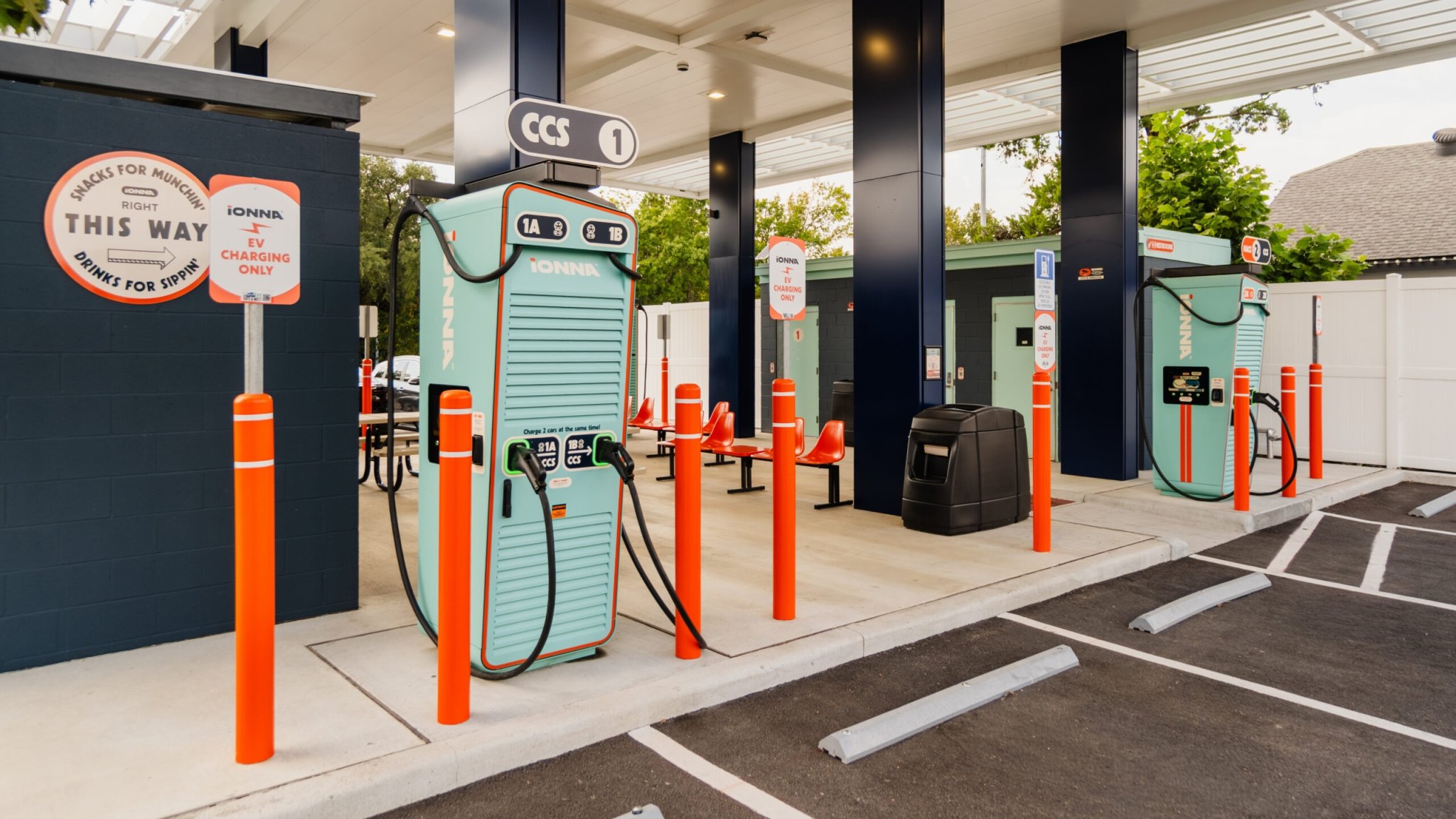
Public infrastructure for charging an EV in America is a mess. Executives have all been vocal and up front about it. So much so that seven of the world’s largest automakers formed a joint venture called Ionna to tackle the issue and stand up a nationwide charging network. Toyota joined the party a year later to bring the count to eight. But this isn’t just about selling EVs, it’s an entirely new form of business diversification.

During an interview on The Drivecast Ionna CEO Seth Cutler said, “This is a for-profit business.” That business is EV charging.

Listen to the entire conversation starting at the moment Cutler discuses Ionna needing to turn a profit below.

“We know the company has to get to financial independence and profitability over time,” Cutler said. Currently Ionna exists off an undisclosed amount of money invested into the joint venture by BMW, Mercedes, GM, Honda, Hyundai, Kia, and Stellantis along with Toyota joining a year later.

At some point the faucet will be turned off, and Cutler, who has spent most of his career in the EV charging and energy vertical, knows it.

Cutler said, “Infrastructure has to be for-profit or it’ll never survive, and if it never survives, EVs will never survive.”

The approach to profitability and scale has been multi-pronged including various partnerships with Circle K, Wawa, Sheetz, and Casey’s.

Beyond partnerships, Cutler said, “Very early on, we said let’s make some bets and plant some seeds for future trees. We’ve bought land at several dozen sites; we’ve built our own amenities where you’ve got buildings that we operate with vending machines, bathrooms, and other technology inside, like Amazon Just Walk Out; we’ve taken a piece of land, have a ground lease, and can come back later to add to it, add a building, or find a co-tenant. These things are all sitting there underground as seeds, but we’ve not focused time on that because it’s easy for an organization to get distracted and not have everybody working on driver quality and charging quality at scale. But we know that in 2027, 2028, or beyond, we’ll start to invest resources in terms of other ways to monetize or provide value to drivers with these things that we’ve developed that are different in the marketplace. But it is definitively not a focus right now.”

Ionna isn’t alone in trying to build out a nationwide network of EV fast chargers to rival Tesla’s Supercharger network. Rivian Founder and CEO RJ Scaringe is making similar bets, though his focus is a bit more spread out than Cutler’s. Despite launching the R2 and being keenly aware everyone has ants in their pants for the R3X, a large focus is being put on building the Rivian Adventure Network (RAN). As of the summer the Rivian Adventure Network was a hair smaller than Ionna’s network today, and about 4% of Tesla’s Supercharger network.

For now, Cutler was up front about the path forward, “My goal is to triple the size of the network this year from where we started at 80 at the beginning of the year. That scale isn’t baked into a lot of what people are seeing because we’re moving so fast right now,” he said.

Got a tip? Send us a line at tips@thedrive.com

The post EVs ‘Will Never Survive’ If Charging Doesn’t Make Money, Ionna CEO Says appeared first on The Drive.

  •  

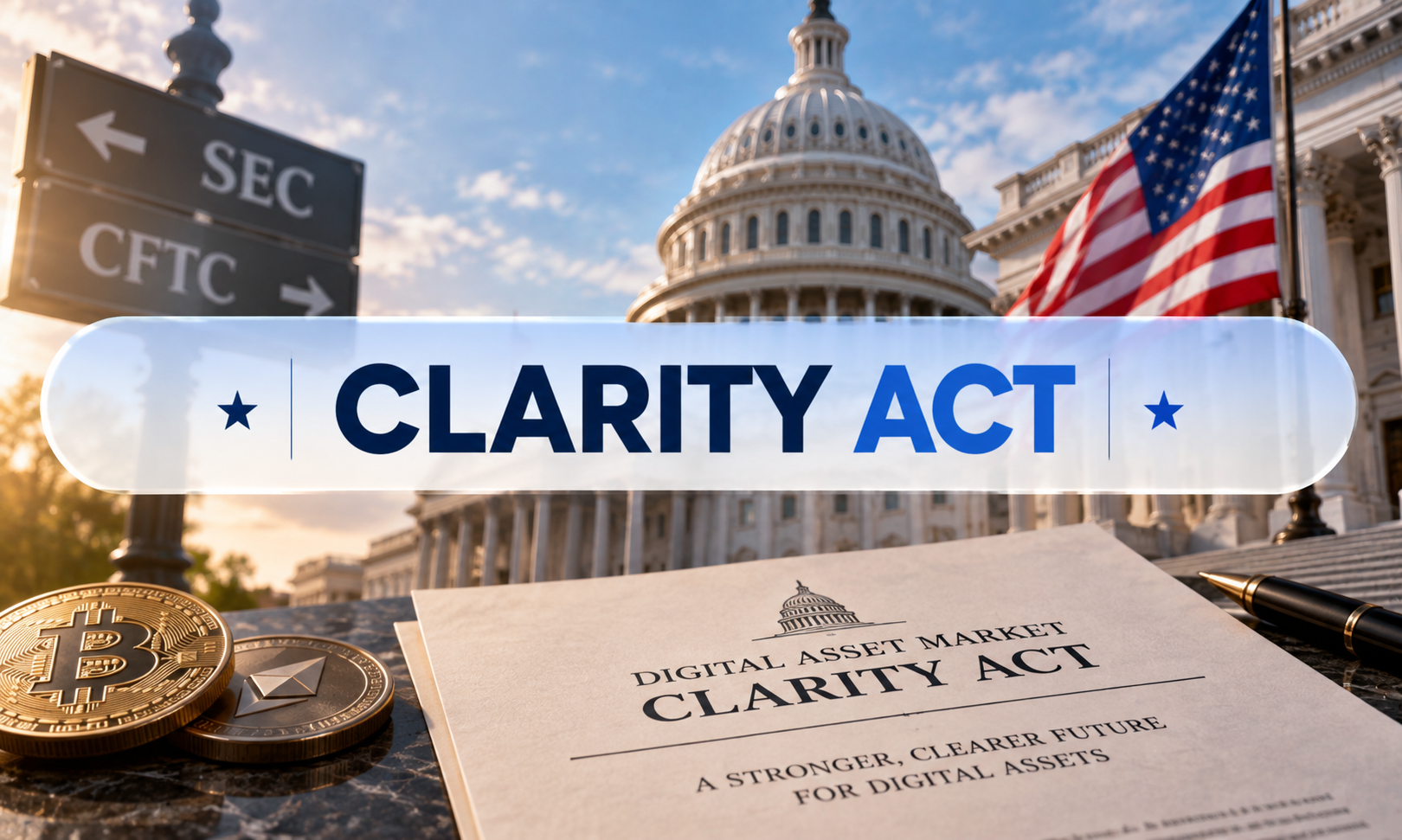
Crypto May Be Better Off Without CLARITY Act, Says Bitwise CIO: ‘Too Big to Crush’

Crypto may have benefited from the failure of the US CLARITY Act, according to Bitwise Chief Investment Officer Matt Hougan.

The CLARITY Act failed to get the 60 votes needed to move forward in the US Senate after years of negotiations. But instead of hurting the crypto market, its failure was followed by a strong rally across several digital assets.

Unexpected Wins in Washington

Both Bitcoin and Ethereum rose about 11% after the vote. Some other tokens posted much bigger gains. NEAR jumped 125%, Uniswap rose 49%, and Avalanche gained 44%, according to Hougan. The reaction may seem surprising because the crypto industry had strongly supported the bill. Hougan said the industry wanted the legal certainty that CLARITY promised. But added that the final version also included several compromises that could have created new restrictions for crypto companies.

One major area is stablecoins. The exec explained that the proposed legislation would have restricted platforms from paying customers interest or rewards on stablecoin balances. With the bill now stalled, existing stablecoin rules remain in place. Hougan said this could benefit companies such as Coinbase, which use stablecoin rewards to attract users.

CLARITY would have created a national licensing system for spot crypto exchanges. It also could have placed limits on the way exchanges combine trading and brokerage services. With the bill gone, established exchanges such as Coinbase and Kraken avoid those changes for now.

Instead of waiting for new legislation and lengthy studies, the SEC recently allowed certain tokenized US stocks to trade through blockchain-based systems under temporary rules, which, according to Hougan, could give tokenization companies a chance to test the technology in real markets sooner.

Revenue-generating tokens are another area that has benefited from clearer regulatory guidance. Several tokens, including NEAR and Uniswap, have gained strongly while using protocol revenue for token buybacks. The SEC has also clarified that, once a blockchain network is functional, announcing a buyback program does not by itself turn a token into a security.

There is still a major risk as regulation can change when a new administration takes office. A future SEC or CFTC leadership could take a tougher approach to crypto. Despite this, Hougan expects “crypto to be too big to crush.”

Progress Under Existing Rules

Michael Saylor, co-founder and former CEO of Strategy, also sees the failure differently. He recently argued that crypto may be better served by working with supportive regulators at the SEC, CFTC, Treasury, and banking agencies than accepting the restrictions included in the bill’s final version.

Saylor believes the sector should use the next few years to build compliant crypto products under existing rules instead of rushing to accept a compromise simply to get legislation passed. His focus is on products that can lower costs, expand access, and give users more control over their money.

The post Crypto May Be Better Off Without CLARITY Act, Says Bitwise CIO: ‘Too Big to Crush’ appeared first on CryptoPotato.

  •  

Fed’s Jefferson Signals October Rate Pause as Rate Hike Odds Fall

Federal Reserve Board Governor Philip Jefferson has suggested that the FOMC is likely to hold rates steady at the October meeting. This comes as crypto traders continue to price in a hold following the latest macro data point, with the odds of an October Fed rate hike sharply declining this week. Ad Ad Jefferson Hints

The post Fed’s Jefferson Signals October Rate Pause as Rate Hike Odds Fall appeared first on CoinGape.

  •  

Circle Urges EU to Change MiCA Rules, Says Only 3 of Top 30 Stablecoins Comply

Circle has called on EU policymakers to adjust certain provisions in MiCA, noting that the majority of the largest global stablecoins are not included. According to Patrick Hansen, EU strategy and policy director at Circle, only three of the world’s top 30 stablecoins are MiCA-compliant. Ad Ad Circle Pushes for Wider Stablecoin Recognition According to

The post Circle Urges EU to Change MiCA Rules, Says Only 3 of Top 30 Stablecoins Comply appeared first on CoinGape.

  •  

Is America Over the Prius?

What happens when you mix sky-high fuel prices with a rollback of EV incentives? A boom in hybrid sales, as it turns out. A year after Congress officially ended America’s electric vehicle subsidies, we’ve seen an unsurprising decline in EV sales. But as the stagnant and unfavorable geopolitical climate continues to put pressure on global fuel prices, Many (though clearly not all) buyers are turning to hybrids for their new-car purchases, and companies like Toyota are reaping the benefits. But with hybrid sales exploding, why the heck is no one buying the Prius?

Let me give you some context. At this point last year, automakers with deep EV portfolios were doing everything they could to blow out their inventory while they could still send customers home with some cash in their pockets. Toyota would have been pushing its U.S.-built plug-in hybrid models hard, while the Prius languished despite a strong start to 2025. Toyota sold only 2,011 of them last September. This year, without that same EV pressure, that number fell again—to just 1,897.

Toyota moved more than 25,000 Camry Hybrids and more than 28,000 RAV4 Hybrids in the same period. In fact, the only hybrids in the Toyota lineup that sold worse than the Prius last month were the Corolla Cross (1,821), Tacoma (1,705), the Highlander (1,088), and the Crown (406). Toyota sold more BZ EVs in September than regular Prius hybrids; you have to throw in the plug-in variant just to sneak past the EV. Consequently, in a year when hybrids are taking market share left and right, the industry’s best-known model is headed in the opposite direction. Year to date, Prius sales are down 51%, to just 16,731.

Are Toyota buyers spoiled for choice, or is America just over the Prius?

Plenty of support backs the former argument. Toyota sells multiple hybrids in its own showroom that compete with the Prius, including the Corolla and Corolla Cross; even the Camry and RAV4 overlap in price. Like the Prius, the hybrid Corollas move in modest numbers, especially compared with their gas-powered sibling. Toyota has sold nearly 200,000 ICE Corollas so far in 2025, to just over 34,000 hybrids. Not even close.

But even if there’s a case for cannibalization, there’s still one more factor to consider: the Prius is actually kind of cool now. I’d certainly rather drive this than any Corolla short of a GR. Clearly, many Toyota buyers feel differently. Bummer.

Got a news tip? Let us know at tips@thedrive.com!

The post Is America Over the Prius? appeared first on The Drive.

  •  

SRC supplies radars to General Atomics for UAS airspace surveillance

SRC has received an order from General Atomics Aeronautical Systems (GA-ASI) for two AN/TPQ-49A (Q49A) radar systems configured with Air Surveillance software to support unmanned aircraft testing and ground-based sense-and-avoid (GBSAA) operations.

The radars will be deployed at GA-ASI flight operations sites in El Mirage and Gray Butte, California, providing detection and tracking of cooperative and non-cooperative aircraft operating near uncrewed aerial system (UAS) testing areas. Delivery is expected by the end of October 2026.

The Q49A systems will provide the surveillance sensor component of a broader GBSAA system, giving UAS operators airspace situational awareness for beyond visual line of sight (BVLOS) operations. The ground-based configuration allows surveillance capabilities to be used for UAS that cannot accommodate onboard radar.

SRC said the Q49A provides 3-D target position data and can operate remotely over an IP network, with detection data fed to a central fusion processor. The radar can be installed on tripods, rooftops, towers or vehicles and is designed to operate in low-visibility and night-time conditions.

The company is also advancing FCC Part 87 certification for the Q49A, following completion of the required compliance testing. SRC said certification would support broader use of the radar for civil air surveillance and integration into GBSAA and detect-and-avoid (DAA) architectures for UAS and BVLOS operations.

For more information

https://www.srcinc.com/news-and-events/press/2026/20260929-contract-air-surveillance-radar-uas-operations.html

Image: SRC

The post SRC supplies radars to General Atomics for UAS airspace surveillance first appeared on Unmanned airspace.

  •  

DFX Goes Live: Drift Users Can Claim 1 Token Per $1 Lost as Recovery Pool Starts at $3.11M

The Drift Foundation has officially opened claims and redemptions for DFX, its recovery token issued to users who suffered verified losses in the April 1, 2026 exploit. Eligible wallets receive one DFX token for every one USDT of verified loss. The Recovery Pool currently holds roughly 3.11 million USDT, setting an early redemption rate of

The post DFX Goes Live: Drift Users Can Claim 1 Token Per $1 Lost as Recovery Pool Starts at $3.11M appeared first on CoinGape.

  •  

Peter Todd Joins MARA to Lead Private Mempool Slipstream

Bitcoin Magazine

Peter Todd Joins MARA to Lead Private Mempool Slipstream

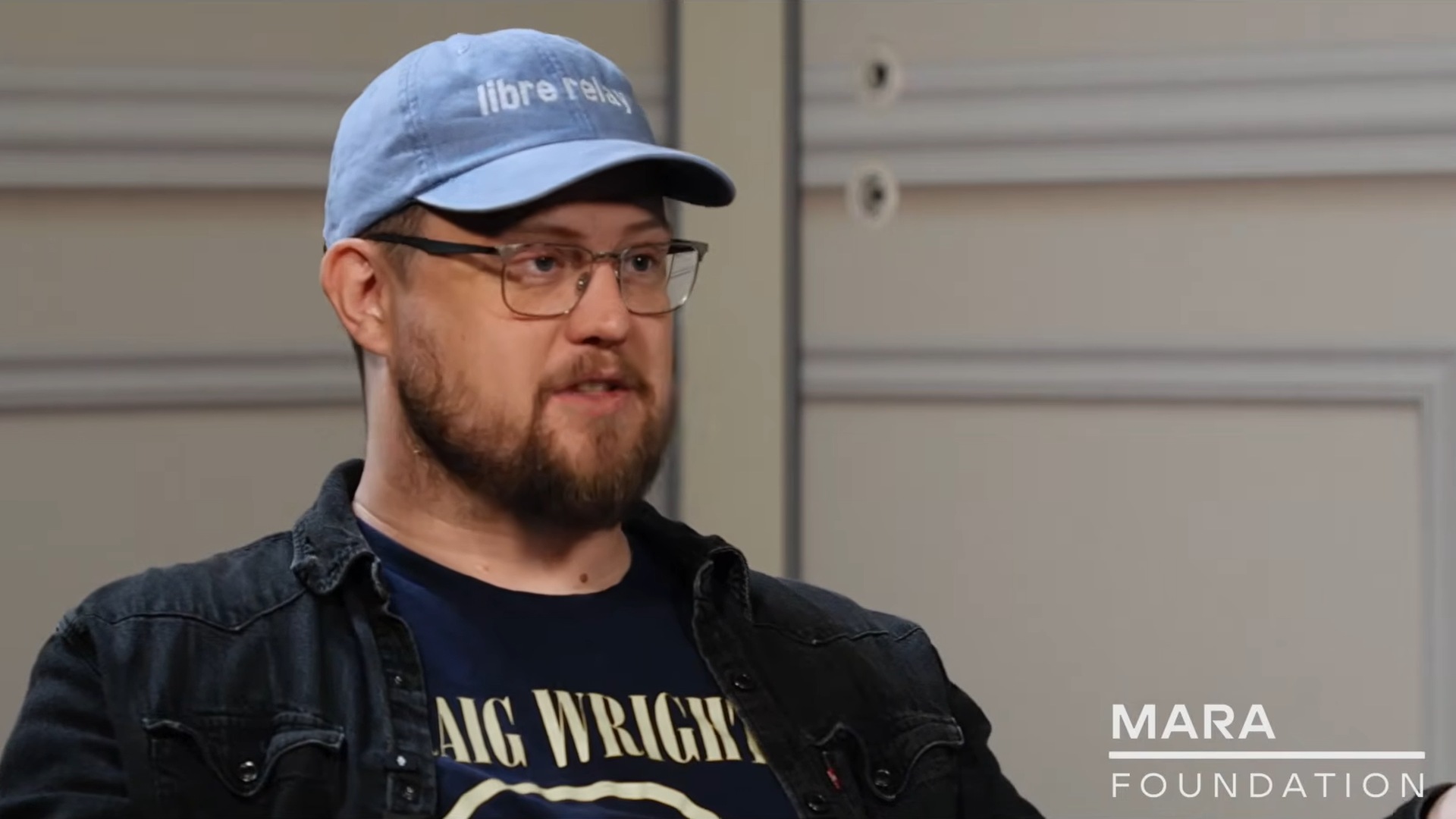
Bitcoin O.G. Peter Todd has joined the MARA Foundation as lead maintainer of Slipstream, the miner’s private Bitcoin mempool service. 

Announced by the foundation on Thursday, the new role will see Todd responsible for developing and running the service.

Slipstream lets users send bitcoin transactions straight to MARA Pool, the company’s mining pool, without going through Bitcoin’s public peer-to-peer network. It was useful after hackers exploited Coldcard hardware wallets in July, stealing over $115 million in user funds. 

Because transactions sent through Slipstream stay private until they’re confirmed in a block, the service helps to keep key information hidden before confirmation — protecting exposure of their public keys. 

“I most look forward to seeing what’s possible on Bitcoin — using Slipstream as a proving ground for experimental development and protocol innovation,” Todd said. 

Todd added: “Working with Slipstream is a natural complement to my work on Libre Relay, and my mempool policy work more broadly. I’ve always believed that Bitcoin is better when we design protocols with economic demand in mind. This is also a good opportunity to build bridges between Bitcoin Core developers and miners.”

MARA’s Slipstream first drew attention in 2024 for publishing large Ordinals inscriptions. More recently it has been used for research projects like Quantum Safe Bitcoin and Binohash, a way to emulate covenants without a soft fork.

Todd is a longtime Bitcoin Core contributor, who co-authored BIP 125 (replace-by-fee), created OpenTimestamps, and in 2024 launched Libre Relay, a Bitcoin Core fork with looser relay rules for non-standard transactions. 

He argues that mempool policy should follow what the market wants miners to mine, rather than restrict how people use Bitcoin.

This post Peter Todd Joins MARA to Lead Private Mempool Slipstream first appeared on Bitcoin Magazine and is written by Mathew Di Salvo.

💾

Enjoy the videos and music you love, upload original content, and share it all with friends, family, and the world on YouTube.
  •  

XRP Price Eyes Parabolic Rally To $30 Despite Ripple’s 1 Billion XRP Unlock Today, Says Analyst

XRP just witnessed a massive supply event today with 1 billion tokens being unlocked from Ripple’s escrow. However, analyst CrediBULL Crypto remains confident that XRP price will experience one of the best rallies of the current cycle. Even though the analyst is advising that the token might return to $1.25, it could go as high

The post XRP Price Eyes Parabolic Rally To $30 Despite Ripple’s 1 Billion XRP Unlock Today, Says Analyst appeared first on CoinGape.

  •  

From GENIUS to CLARITY: Congress Weighs On-Chain Banking for US Depositories

A nonpartisan Congressional Research Service (CRS) report published September 30, 2026, has put the debate over bank-permissible crypto activities back in the spotlight. The analysis details how the Senate version of the CLARITY Act (H.R. 3633) would formally add 11 categories of crypto activities, including digital asset underwriting and dealing, as permissible for all U.S.

The post From GENIUS to CLARITY: Congress Weighs On-Chain Banking for US Depositories appeared first on CoinGape.

  •  

Lebanon army says seized 245 kg of TNT at Syria border

The Lebanese army announced on Thursday that it had seized nearly 250 kilograms (around 550 pounds) of explosives being transported from neighbouring Syria into Lebanon, though it was unable to apprehend the smugglers. “An army unit seized approximately 245 kg of TNT, four explosive devices, eight detonators and electrical wiring for the detonators”, which were […]

The post Lebanon army says seized 245 kg of TNT at Syria border appeared first on Insider Paper.

  •  

Quant (QNT) Could Explode to $2,000: Analyst Reveals the Critical Factor

September was a strong month for many cryptocurrencies, including Bitcoin (BTC), Ethereum (ETH), and Zcash (ZEC), all of which posted significant gains.

Nonetheless, their pumps can’t be compared to what happened with Quant (QNT). The altcoin became a sensation after surging nearly 400% in a month, fueling expectations of a continued bull run among top analysts. On the other hand, traders and investors should tread lightly, as key signals suggest a short-term pullback may be coming.

Final Barrier Before the Real Boom?

As of this writing, it seems surreal that less than two weeks ago QNT was worth around $60. By the end of September, the token’s price skyrocketed to nearly $350, and now it trades just under $280.

Perhaps the biggest catalyst for the rally was the announcement that The Clearing House (which operates payment networks that process over $2 trillion each day) selected Quant to power its On-Chain Money Initiative.

One of the many analysts commenting on the token’s bull run lately is Ali Martinez. Earlier today (October 1), he set $430 as key resistance, which sits at the top of a certain channel.

In his view, a decisive break above this level could send QNT into price discovery mode, potentially triggering another parabolic expansion toward an all-time high of $2,000.

Jia Crypto also made an optimistic prediction, albeit far less bullish than Martinez’s take. She believes QNT could cross $300 “soon with big profits,” and then might rise to $400.

Beware, Bulls

Despite the overall optimism, a further price uptrend is not guaranteed. Lookonchain revealed that the Quant Network founder’s wallet has woken up after seven years of inactivity and has moved almost $7 million worth of QNT. Even if no actual sale occurs, traders may interpret the move as a sign of potential profit-taking, which can trigger uncertainty and panic selling.

Meanwhile, QNT investors have been abandoning self-custody en masse and flocking to centralized exchanges over the past several days. This in turn increases immediate selling pressure.

QNT Exchange Netflow
QNT Exchange Netflow, Source: CoinGlass

The token’s Relative Strength Index (RSI) should also serve as a warning. The ratio has surged past 70, suggesting that QNT has entered overbought territory and could be on the verge of a short-term correction. The index ranges from 0 to 100, where anything below 30 is considered a buying opportunity.

QNT RSI
QNT RSI, Source: CryptoWaves


The post Quant (QNT) Could Explode to $2,000: Analyst Reveals the Critical Factor appeared first on CryptoPotato.

  •  

Putin says Western companies’s assets seized by Russia could be returned

Russian President Vladimir Putin on Thursday said Russian assets of Western companies that Moscow had seized were frozen and could potentially be returned. Putin last month ordered the seizure of businesses and assets of Swiss food giant Nestle, French retailer Auchan, the former Leroy Merlin DIY chain and German wholesaler and food retailer Metro. Asked […]

The post Putin says Western companies’s assets seized by Russia could be returned appeared first on Insider Paper.

  •  

Official Trump Memecoin Opens Time-Weighted Contest for Top 185 Seats at Nov 22 Washington Gala

TRUMP memecoin’s organizers have launched another holder-access contest. The top 185 wallets on a time-weighted leaderboard will secure seats at a November 22, 2026 gala dinner at Trump National in Washington, D.C. President Donald J. Trump is the listed featured speaker. Scoring opened September 30, locking on a November 12 snapshot. Ad Ad Third Access

The post Official Trump Memecoin Opens Time-Weighted Contest for Top 185 Seats at Nov 22 Washington Gala appeared first on CoinGape.

  •  

US sanctions Iran’s largest automakers, major rail companies

The United States on Thursday announced fresh sanctions targeting Iran’s largest automakers, as well as major rail, manufacturing and metals companies, as Washington seeks to exert maximum pressure in its war against the country. “Because the rail and automotive sectors represent some of the regime’s largest remaining sources of revenue and logistical capacity, today’s action […]

The post US sanctions Iran’s largest automakers, major rail companies appeared first on Insider Paper.

  •  

Sweden probing suspected Baltic Sea oil spill

Sweden’s coast guard said Thursday it was investigating a suspected oil spill in the Baltic Sea off the island of Gotland. The spill was discovered on Wednesday in the shipping lane southeast of Gotland by European satellite monitoring. A coast guard aircraft later confirmed there appeared to be oil floating in the water, it said. […]

The post Sweden probing suspected Baltic Sea oil spill appeared first on Insider Paper.

  •  

XRP Is Coming to Nasdaq: Evernorth Clears Key Vote With 473M Treasury

Evernorth’s merger with Armada Acquisition Corp. II won shareholder approval on Wednesday, putting its 473 million XRP treasury on course for a Nasdaq listing.

The vote passed with about 20.5 million shares in favor and 1.4 million against, according to Armada II’s filing on Thursday. It came five weeks after the SEC declared Evernorth’s registration statement effective on August 27.

Evernorth expects the deal to close on October 7. The company’s shares should start trading the next day under XRPN, the ticker the SPAC already uses.

Over $1 Billion Raised

The firm said the deal and its private placements have raised more than $1 billion, the total it first put on the merger in October 2025. Investors contributed part of that total as XRP, which the release does not value in dollars.

Evernorth’s release puts about $300 million of the total in gross cash. Private placements supply $225 million of that cash. Another $30 million comes from convertible notes the company agreed to sell in September.

Advance funding investors provided $214 million of the private placement money, according to the proxy statement. Evernorth spent it in late 2025 on 84.4 million XRP, at an average of $2.54 per token. Those tokens are already part of its holdings.

The SPAC’s trust adds about $48 million of cash. That trust held about $241.9 million on the August 20 record date. Public shareholders could redeem their shares from the trust at an estimated $10.52 each until September 28. Neither Thursday’s release nor the vote filing says how many shareholders did.

RippleWorks supplied the largest block of Evernorth’s XRP, 211.3 million tokens, by investing them in the SPAC’s sponsor, Arrington XRP Capital Fund. The sponsor must exchange those tokens for Evernorth shares at closing. It has agreed to vote the shares as RippleWorks directs. Ripple co-founder and Executive Chairman Chris Larsen co-founded RippleWorks and sits on its board.

Ripple itself contributed 126.8 million XRP when the merger agreement was signed. A further 50 million comes from the Larsen Lam Children’s Remainder Trust.

Books Carry XRP Below Cost

Evernorth Holdings’ financial statements in the proxy put the cost of 346.3 million of its XRP at $846.6 million. By June 30, 2026, the company carried those tokens at $348.8 million. It recorded impairment charges of $233.7 million in 2025 and $264.1 million in the first half of 2026.

Evernorth books XRP at cost and writes it down to the lowest intraday price seen since it acquired each lot. The written-down value is not adjusted upward when the price recovers.

The post XRP Is Coming to Nasdaq: Evernorth Clears Key Vote With 473M Treasury appeared first on CryptoPotato.

  •  

EU trade chief says any US steps on diesel export ban would be ‘unexpected’

EU trade chief Maros Sefcovic told reporters Thursday that any moves on a US export ban on diesel would be “unexpected for Europeans,” in comments after he spoke with US counterpart Jamieson Greer. “It would have very dramatic consequences for our economic performance. And we clearly decided to stay in close touch to avoid any […]

The post EU trade chief says any US steps on diesel export ban would be ‘unexpected’ appeared first on Insider Paper.

  •  

British police arrest UK-Iranian national over airbase incident

British anti-terrorism police said they had arrested a man with dual UK-Iranian citizenship over a mysterious “major incident” on Sunday at an airbase in southwest England. The arrest came after British Prime Minister Andy Burnham told the BBC there were “strong indications that Iran played a part in what happened over the weekend at RAF […]

The post British police arrest UK-Iranian national over airbase incident appeared first on Insider Paper.

  •  

US ISM Manufacturing PMI Hits 54.5%, Below 54.8% Forecast

U.S. manufacturing activity expanded again in September, although growth eased slightly from August. The ISM Manufacturing PMI reached 54.5%, below the 54.8% forecast and August’s 54.6% reading. Ad Ad US Manufacturing Remains in Expansion The Institute for Supply Management reported manufacturing growth for a ninth-straight month. PMI readings above 50% indicate growth, and below that

The post US ISM Manufacturing PMI Hits 54.5%, Below 54.8% Forecast appeared first on CoinGape.

  •  

Why Bitcoin Is Starting Q4 on Stronger Footing Than Traditional Markets

Bitcoin outperformed stocks and gold in September as it entered the fourth quarter on a high note, according to Santiment. The world’s largest crypto asset gained around 8% during the month. In comparison, the S&P 500 saw little movement, while gold fell by more than 6%.

Several altcoins also recovered as investor interest returned to the market.

What Changed in September?

Fresh capital inflows supported Bitcoin’s rally. US-listed spot BTC exchange-traded funds (ETFs) attracted billions of dollars in September, including several large inflow days toward the end of the month. Meanwhile, Strategy added another 1,665 BTC to its holdings, which was indicative of continued corporate accumulation. Strive also expanded its corporate Bitcoin holdings by purchasing 1,107 for $94.5 million.

Improving economic conditions also helped the market. US inflation data for August came in below expectations, easing pressure on Treasury yields as well as reducing concerns about another Federal Reserve rate hike. While stock markets showed a limited response, cryptocurrencies recorded stronger gains following months of weak sentiment and heavy short positions.

Santiment found that crypto markets are entering Q4 with several potential growth drivers.

“Continued ETF demand, corporate accumulation, improving regulatory clarity, and renewed altcoin participation give traders reasons to stay optimistic.”

But while higher yields and crowded leverage can still create sharp pullbacks, the analytics firm stated that “crypto currently has catalysts that traditional assets simply haven’t matched.”

What’s Next?

Bitcoin is stuck just below $86,000, and Crypto Patel thinks this level could decide where the asset heads next. If BTC breaks above this level and holds, a move toward $100,000 could be back on the table. If it fails, however, traders will be watching $82,886, $80,300, and $76,400 for support. BIT Research’s latest report, meanwhile, has put a much bigger number on Bitcoin’s current cycle. The firm said that the bear market has likely ended and predicted an upside range of $185,000 to $215,000.

Whale wallets are also stacking up. In fact, wallets holding 10 to 10,000 BTC added 41,025 coins in just 10 days, pushing their total holdings to 13.64 million.

Bitcoin’s longer-term setup is still looking healthy as the MVRV Z-Score remained above its 365-day moving average. That level has historically acted as support during broader rallies. It doesn’t mean BTC is guaranteed to keep climbing, though. Short-term pullbacks can still hit, and they could be sharp.

For now, the bigger thing to watch is whether the Z-Score can hold above that average. If it does, CryptoQuant’s analysis states that the broader valuation trend remains supportive of further upside. A sustained break below the 365-day average would be a different story and could signal that the longer-term structure is starting to weaken.

The post Why Bitcoin Is Starting Q4 on Stronger Footing Than Traditional Markets appeared first on CryptoPotato.

  •  

21bitcoin Now Pays Interest on Idle Euros, Payable in BTC 

Bitcoin Magazine

21bitcoin Now Pays Interest on Idle Euros, Payable in BTC 

Austrian Bitcoin platform 21bitcoin will start paying 1.21% annual interest on customers’ uninvested euro balances from today — and letting them collect it in BTC, with no conversion fee.

The company says it’s the first provider in Europe to pay savings interest directly in Bitcoin.

The interest covers every euro in the account, including cash waiting for the next savings-plan purchase or reserved for an open limit order, the company said. There’s no minimum deposit and no lock-up. 

21bitcoin präsentiert den Bitcoin Bonus 🚀

Ab sofort erhältst du auf Euro-Guthaben variable Zinsen von 1,21% p.a.* 📈

Und das Beste: Wir tauschen sie auf Wunsch direkt & ohne zusätzliche Gebühren in Bitcoin um. 🔄

Aktiviere Zinsen jetzt direkt auf dem Startbildschirm in deiner… pic.twitter.com/nTVOfSZnuk

— 21bitcoin 🇩🇪 & 🇦🇹 (@21bitcoinApp) October 1, 2026

“Building wealth with Bitcoin does not begin with the purchase itself, but with the euros set aside for it,” said co-founder and CEO Daniel Winklhammer.

The money is paid by Volksbank Raiffeisenbank Bayern Mitte eG, a German bank that has owned a stake in 21bitcoin since 2023. 

Customer euros sit in a segregated trust account at the bank as instant-access savings. 21bitcoin says it passes the interest on in full and keeps no margin. The company is pitching this as a deliberate contrast to the high-yield promises that brought down several crypto lenders.

The rate is variable, and interest is subject to German withholding tax.

The launch follows 21bitcoin’s zero-fee Bitcoin savings plan, introduced earlier this year. The company last year teamed up with VR Bank Bayern Mitte eG and Sopra Financial Technology GmbH to launch a pioneering European pilot project in hopes to develop an institutional-grade Bitcoin-backed credit product.

Bitcoin-backed loans, insured cold storage, and multisig inheritance custody are slated for 2027.

Founded in 2021, 21bitcoin holds a MiCAR licence in Austria and is authorized by Germany’s BaFin. It reports more than 100,000 users and over €650 million in trading volume.

This post 21bitcoin Now Pays Interest on Idle Euros, Payable in BTC  first appeared on Bitcoin Magazine and is written by Mathew Di Salvo.

  •  

Putin says all weapons ‘on agenda’ if Russia’s Kaliningrad attacked

Russia would consider using “all types of weapons”, if its exclave of Kaliningrad was attacked, Russian President Vladimir Putin said Thursday, while insisting that Moscow had “no intention of attacking anyone”. His comments came as tensions mount over Kaliningrad — Russia’s heavily militarised territory that borders Poland, Lithuania and the Baltic Sea. “If it comes […]

The post Putin says all weapons ‘on agenda’ if Russia’s Kaliningrad attacked appeared first on Insider Paper.

  •  

US Supreme Court to review indefinite immigrant detention

The US Supreme Court said Thursday it will decide whether President Donald Trump’s administration can deny immigrants facing deportation the chance to seek release on bond, in the latest major challenge to his hardline immigration agenda. The policy, introduced after Trump returned to office last year, allows authorities to keep some immigrants detained throughout removal […]

The post US Supreme Court to review indefinite immigrant detention appeared first on Insider Paper.

  •  

TotalEnergies chief says to invest nearly $10 billion in Argentina

French energy giant TotalEnergies will invest nearly $10 billion in the coming years to expand its operations in Argentina, its chief executive said Thursday as Argentine President Javier Milei visited Paris. “I’m happy to announce that we have close to $10 billion of investments ahead of us in Argentina,” Patrick Pouyanne said at a conference. […]

The post TotalEnergies chief says to invest nearly $10 billion in Argentina appeared first on Insider Paper.

  •  
❌