❌

Reading view

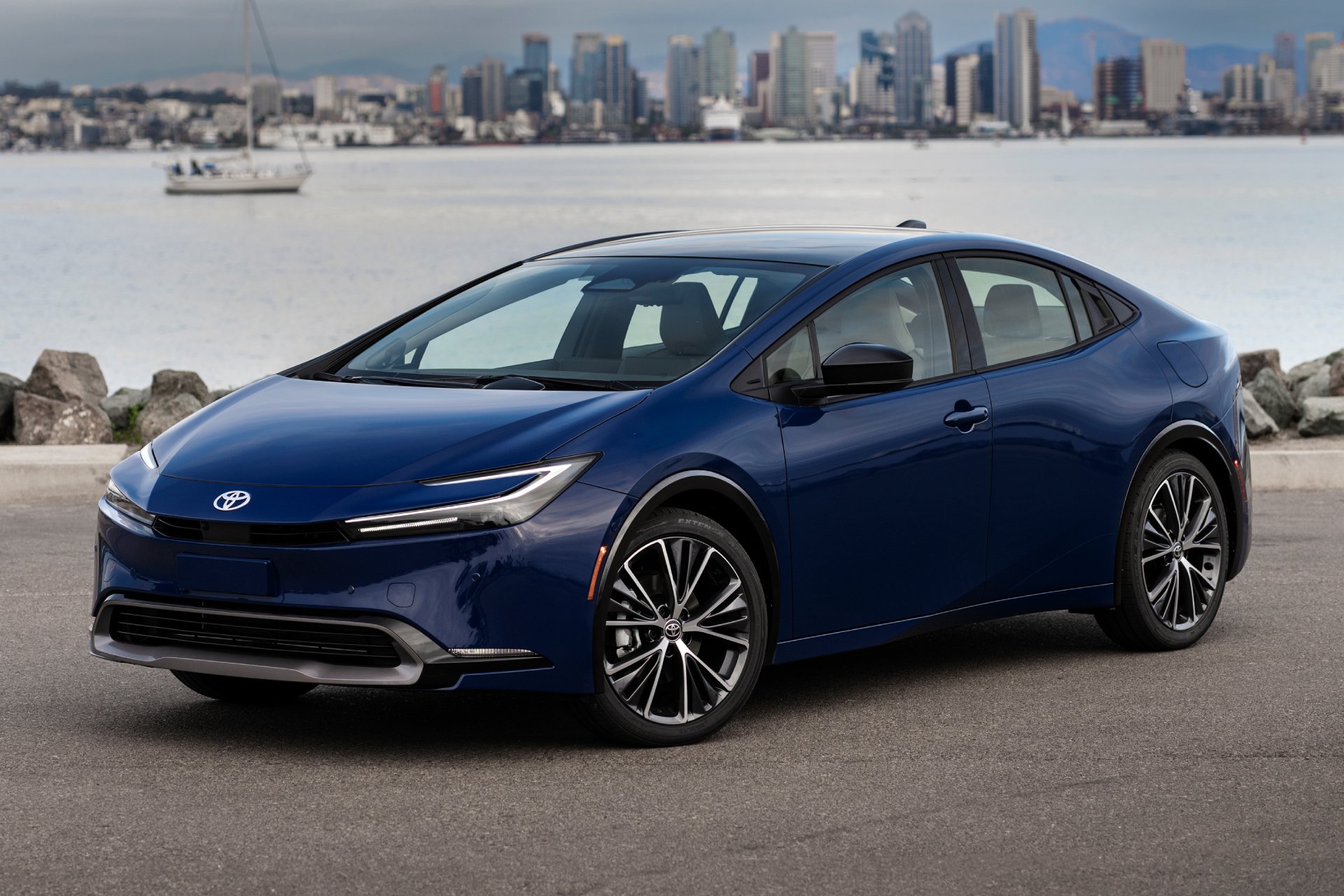
Is America Over the Prius?

What happens when you mix sky-high fuel prices with a rollback of EV incentives? A boom in hybrid sales, as it turns out. A year after Congress officially ended America’s electric vehicle subsidies, we’ve seen an unsurprising decline in EV sales. But as the stagnant and unfavorable geopolitical climate continues to put pressure on global fuel prices, Many (though clearly not all) buyers are turning to hybrids for their new-car purchases, and companies like Toyota are reaping the benefits. But with hybrid sales exploding, why the heck is no one buying the Prius?

Let me give you some context. At this point last year, automakers with deep EV portfolios were doing everything they could to blow out their inventory while they could still send customers home with some cash in their pockets. Toyota would have been pushing its U.S.-built plug-in hybrid models hard, while the Prius languished despite a strong start to 2025. Toyota sold only 2,011 of them last September. This year, without that same EV pressure, that number fell again—to just 1,897.

Toyota moved more than 25,000 Camry Hybrids and more than 28,000 RAV4 Hybrids in the same period. In fact, the only hybrids in the Toyota lineup that sold worse than the Prius last month were the Corolla Cross (1,821), Tacoma (1,705), the Highlander (1,088), and the Crown (406). Toyota sold more BZ EVs in September than regular Prius hybrids; you have to throw in the plug-in variant just to sneak past the EV. Consequently, in a year when hybrids are taking market share left and right, the industry’s best-known model is headed in the opposite direction. Year to date, Prius sales are down 51%, to just 16,731.

Are Toyota buyers spoiled for choice, or is America just over the Prius?

Plenty of support backs the former argument. Toyota sells multiple hybrids in its own showroom that compete with the Prius, including the Corolla and Corolla Cross; even the Camry and RAV4 overlap in price. Like the Prius, the hybrid Corollas move in modest numbers, especially compared with their gas-powered sibling. Toyota has sold nearly 200,000 ICE Corollas so far in 2025, to just over 34,000 hybrids. Not even close.

But even if there’s a case for cannibalization, there’s still one more factor to consider: the Prius is actually kind of cool now. I’d certainly rather drive this than any Corolla short of a GR. Clearly, many Toyota buyers feel differently. Bummer.

Got a news tip? Let us know at tips@thedrive.com!

The post Is America Over the Prius? appeared first on The Drive.
  •  

There’s Still Hope for the Old-Fashioned Hand Brake

Ten years (and about a half-dozen daily drivers) ago, I purchased a brand-new Ford Fiesta ST. Back then, when you bought one of Ford’s fun cars, the company threw in a complimentary day of driver “education” at what we colloquially call Utah Motorsports Park. If you bought a either the Focus or Fiesta ST, that program took the form of ST Octane Academy.

The Academy was a day-long school that mixed time on track with classroom sessions and a massive autocross/gymkhana course. It was in that sea of cones that we were expected to apply all of the knowledge we’d gained throughout the day for a best-of-three timed runoff—with trophies and all. As one of the few in the room with any prior autocross experience, I was salivating at the prospect of climbing to the top of our small classroom podium. You can’t win a track day, after all, but you certainly can win an autocross.

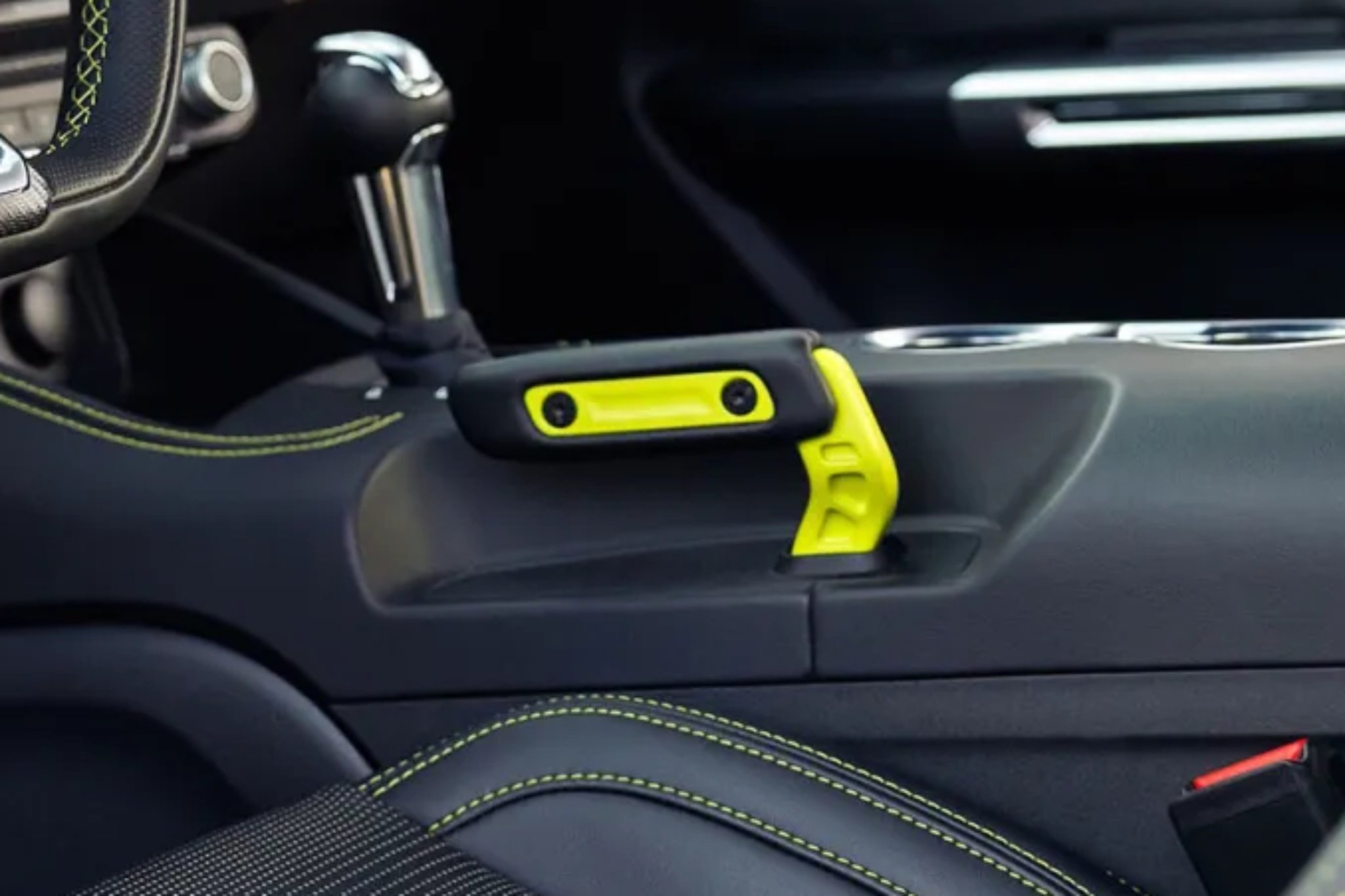
There was a catch, however: this wasn’t a traditional autocross, and these weren’t entirely stock cars. While both of Ford’s hot hatches came with an old-fashioned hand brake, these had custom-fabricated “drift” brakes instead. Functionally, they’re not really all that different. They both engage the rear brakes with the yank of a handle; the major difference is that a drift brake lacks the latching detents you find in a regular hand brake. When you let go, it simply springs back to the “off” position.

That renders it useless for holding your car stationary on a hill while you visit a restaurant, but it’s super helpful if you’re trying to break a car’s rear end loose on command. And that’s precisely what our instructors (and, at this point, scorers) wanted us to do just a few seconds into the course, where they’d placed a 180-degree turn so tight that we simply had no choice but to attempt a j-turn.

If you’ve ever autocrossed with people who take it seriously (which is most of them), you already know that getting sideways is often frowned upon. Sure, some cars drive loose, but a good course is designed so that it can be negotiated without resorting to the sort of trickery expected of us here.

Ford Mustang RTR interior
Ford

Since I considered myself one of those autocrossers who took it seriously back then, I felt a bit personally offended that such showboaty tomfoolery was going to count against my time. In my mind, “sideways” was synonymous with “slow,” and this “drift brake” was nothing but an equalizer designed to keep people like me from dominating the newbies.

Suffice it to say that I’ve mellowed quite a bit over the past decade. My inner old man may still be yelling at clouds over the fact that the EcoBoost Mustang lost its stick-shift with the S650 redesign, but I don’t view the RTR’s drift brake with the same ire I might have ten years ago. In fact, I consider myself a full-blown convert; that turbocharged RTR Mustang is actually a fun little package.

As it turns out, I actually just miss the entire notion of a hand brake. It’s one of those things whose utility is made more obvious by its absence, and where a dual-clutch gearbox can do a respectable impression of a manual in some cases, a button-activated parking brake, while perfectly adequate for use as an actual parking brake, is even more useless than a pedal-activated parking brake when it comes to traction management.

Even in the dwindling population of cars still available with a manual transmission, the old-fashioned, pull-handle parking brake is virtually extinct. Almost every one of them has been replaced by an electronic button or switch. In a way it’s strange and funny that Ford and RTR had to come together to engineer a hand brake back into the Mustang; it hasn’t even been gone long enough for anybody to really miss it.

But miss it, I do. Like the manual gearbox, it’s yet another tool we no longer have access to. It was just another sacrifice in the name of saving space—and saving somebody else money. And so I’m glad Ford and RTR took the time (and resources) to keep some part of that functionality alive. It’s nice to see that somebody still thinks “It’s just fun” is a good enough reason to do something.

Oh, and that autocross? I finished third. Yep, still bitter, just less.

Got a story tip? Let us know at tips@thedrive.com!

The post There’s Still Hope for the Old-Fashioned Hand Brake appeared first on The Drive.

  •  

Ford Wants to Charge You $12,545 for a Paint Job

Unique colors, paint jobs, and even wraps are cool. After all, it’s the unique individuals who spring up for these that keep our roads looking less bland than they already are. But how much are you willing to pay for that visual pizazz? What about 20% of the vehicle’s purchase price?

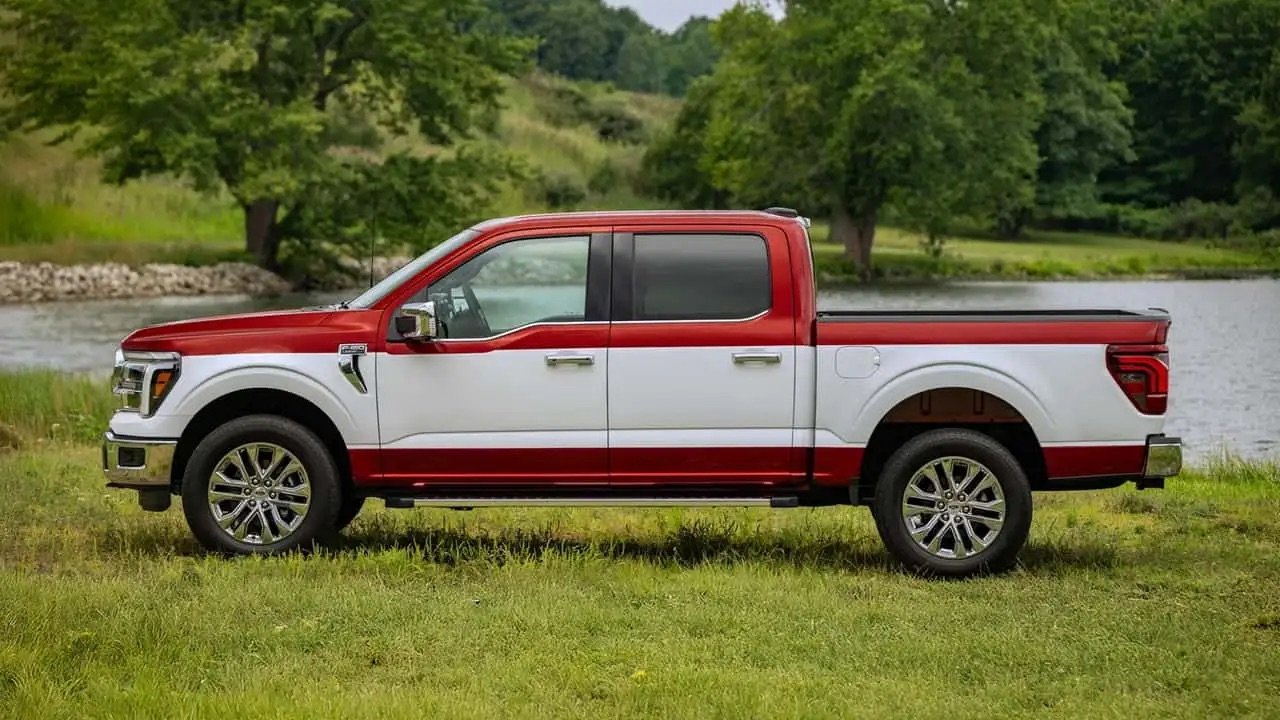
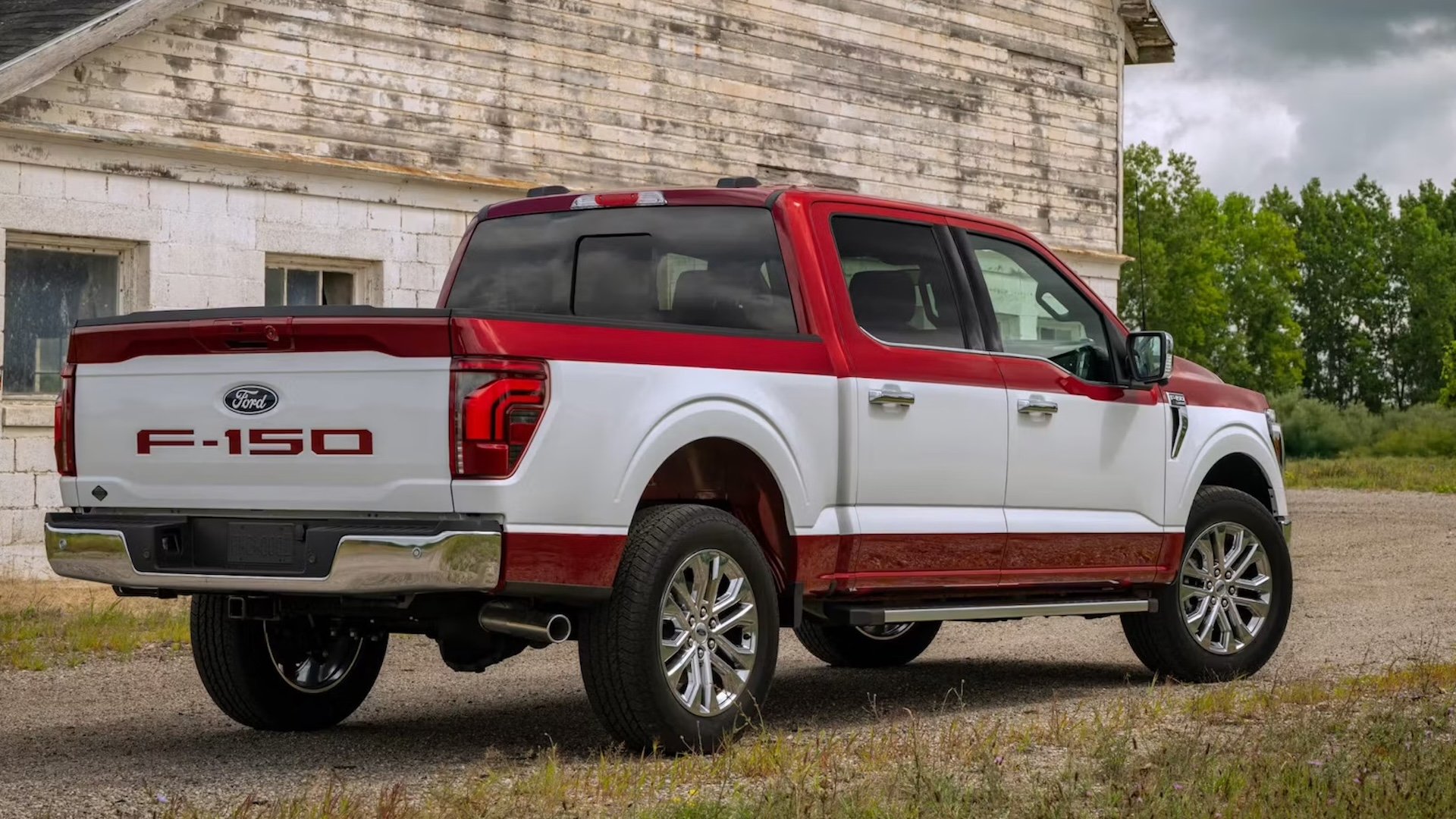
A Ford F-150 Lariat SuperCrew starts around $60,000, so checking the box for the new $12,545 two-tone paint job offered on 2027 models means you’ll spend roughly 20% of your truck’s cost on a single option. Of course, that percentage will vary depending on which trim and options you ultimately buy, but regardless, that just seems silly and, not to mention, a poor financial decision. I can’t imagine anyone will salvage any resale value from it down the road.

Ford

Speaking of poor financial decisions, you can dig yourself into an even bigger hole by opting to roll the price of that paint job into the lease or finance monthly payment. Yes, you can actually do that. Depending on your personal history and financing terms, that could mean anywhere from $200 to $320 per month on top of the car’s monthly payment. Or, y’know, you can just pay it out of pocket.

For the record, I’m a big supporter of people doing whatever they want with their money as long as it makes them happy. If you want to pay almost $13,000 (or more) for a paint job, wheels, or engine mods, by all means, do it. What I’m emphasizing here is the ridiculously high cost of that standalone option and, to a certain extent, the fact that an automaker and its credit division are salivating at the revenue they can make off this thing, fully knowing it’ll put consumers in a tough place down the road.

Would you?

Got a tip? Email us at tips@thedrive.com

The post Ford Wants to Charge You $12,545 for a Paint Job appeared first on The Drive.

  •  

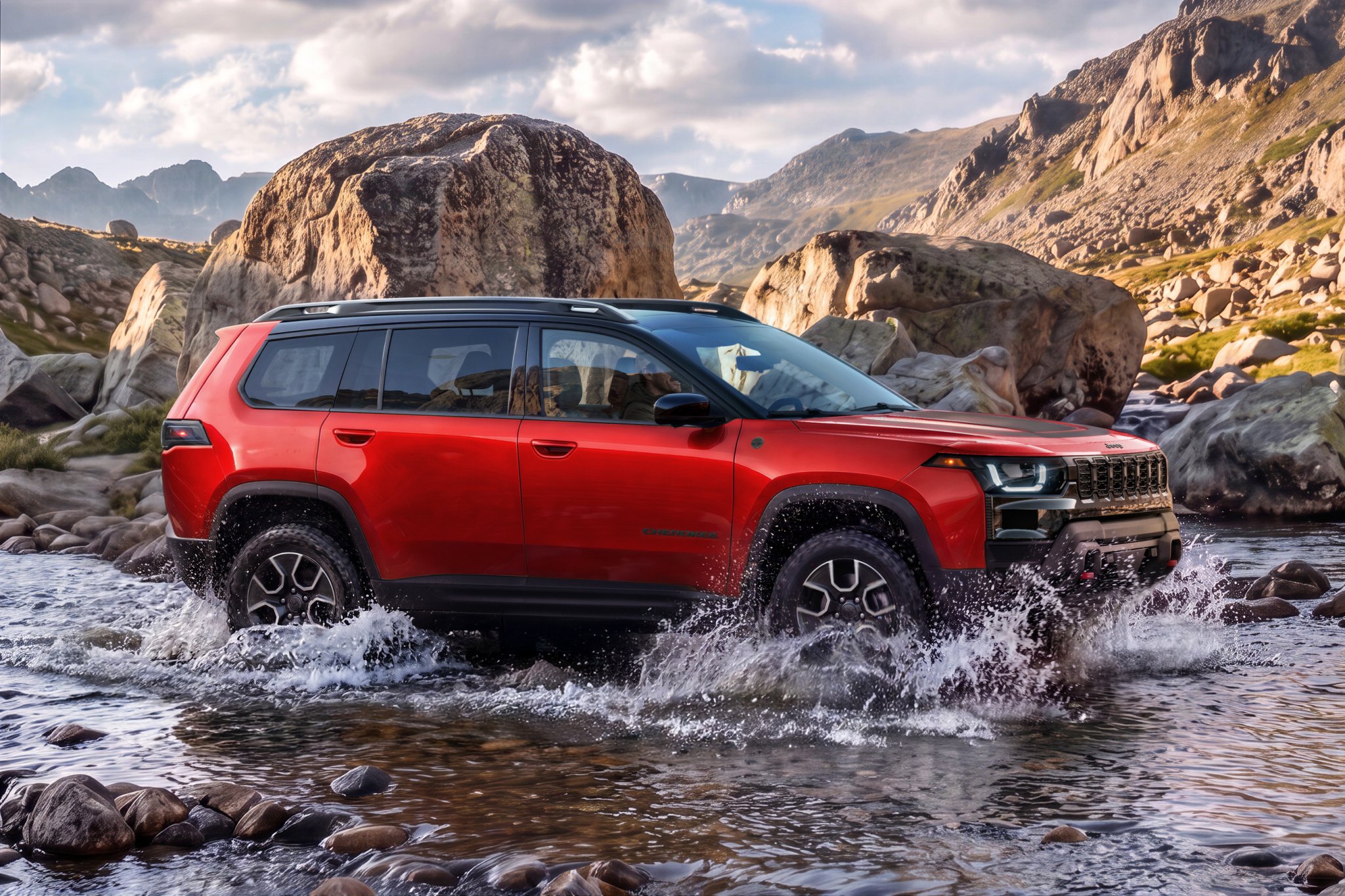
2027 Jeep Cherokee Trailhawk Puts Bronco Sport Sasquatch On Notice

The 2027 Jeep Cherokee has finally earned its “Trail-Rated” badge with the introduction of a Trailhawk. Once upon a time, Jeeps held virtually indefensible positions at the top of their respective segments when it came to off-road capability. These days, the 4×4-adjacent space is much more crowded, and simply wearing a Jeep badge isn’t a guarantee of automatic victory anymore.

Given that the new Cherokee shares its basic formula with the model it replaced, you probably won’t be surprised to learn that the new car isn’t exactly a quantum leap forward in capability. That said, the new midsizer does have a couple of tricks up its sleeve. It offers 9.0 inches of ground clearance thanks to a 1.0-inch lift over the standard Cherokee, and according to Jeep, it can ford 24 inches of water.

But the real party piece is Jeep’s “Active Drive II” all-wheel-drive system, which incorporates a two-speed transfer case and an electronic locking rear differential. The former is a segment exclusive, and Ford is the only competitor with a mechanical locking rear axle.

Year/Make/ModelGround ClearanceApproach AngleBreakover AngleDeparture AngleLow RangeLocking Rear
2027 Jeep Cherokee Trailhawk9.0 in28.8°21.9°31.8°YesYes
2026 Subaru Forester Wilderness9.3 in23.5°21.0°25.5°NoNo
2026 Honda CR-V TrailSport8.2 in17.7°N/A*22.1°NoNo
2026 Toyota RAV4 Adventure8.5 in20.0°N/A*24.0°NoNo
2026 Ford Bronco Sport Sasquatch8.7 in31.2°21.7°27.9°NoYes

*Breakover angle is not published officially by Honda or Toyota for these trim levels.

On paper, Jeep is clearly aiming for a segment-best entry here. The Bronco Sport brings similar mechanical capability (and even has the advantage in approach angle) but lacks a proper crawl ratio. Subaru enjoys an advantage in ground clearance, but relies on its fairly rudimentary X-Drive programming for the technical bits.

We’ll have to see exactly how this plays out in the real world, especially since one of Jeep’s main drawbacks doesn’t appear here: size. The Cherokee leans toward the midsize space much the same way the Compass leans subcompact, and that extra length and width will work against it when trails get tight.

Have a story lead? Let us know at tips@thedrive.com!

The post 2027 Jeep Cherokee Trailhawk Puts Bronco Sport Sasquatch On Notice appeared first on The Drive.

  •  
❌