FreshRSS

🔒
❌ About FreshRSS
There are new articles available, click to refresh the page.
☐ ☆ ✇ Bitcoin Magazine

Rutherford Chang Retrospective: Hundreds and Thousands at UCCA Beijing

By: Steven Reiss

Bitcoin Magazine

Rutherford Chang Retrospective: Hundreds and Thousands at UCCA Beijing

When people describe Rutherford Chang’s work, you hear words like: obsessive, conceptual, minimalist. These descriptions aren’t wrong, they point to something real in his practice. But they also miss what makes his approach distinctive. Chang worked with objects that industrial culture designed to be identical: records pressed in millions of copies, portraits drawn according to strict house style, coins minted for perfect interchange. His interest lay in the precise moment when the promise of sameness begins to fail, when time and human handling leave marks that transform supposedly identical objects into singular things.
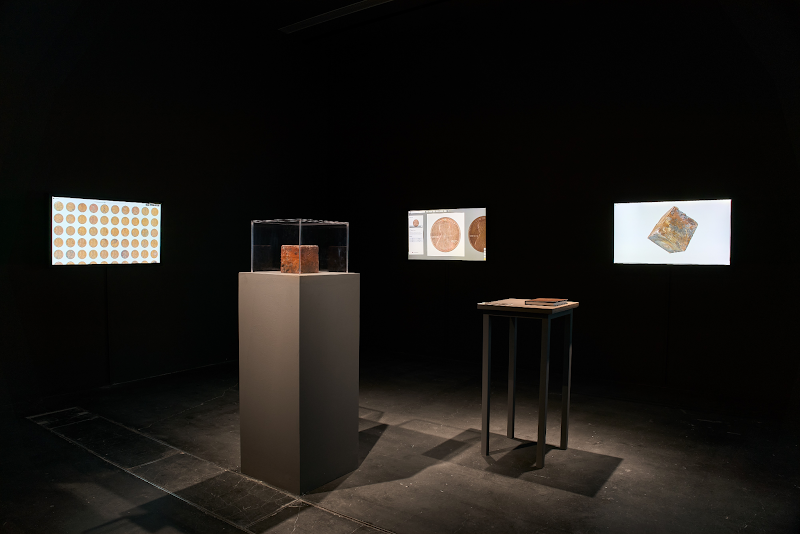
The retrospective Rutherford Chang: Hundreds and Thousands opened January 17, 2026 at UCCA Center for Contemporary Art in Beijing, one of China’s leading institutions for contemporary art. This exhibition is significant for several reasons. It represents Chang’s first institutional retrospective and his most comprehensive solo presentation to date. It is also a posthumous one. Chang died in 2025 at the age of 45, leaving behind a body of work built almost entirely around the practice of collecting and arranging mass-produced objects until their individual histories became visible and legible.

Beijing provides a fitting location for this retrospective, though not for the obvious reasons alone. Yes, Chang moved frequently between New York and China throughout his career, and yes, he showed work in Beijing early on. But the city itself offers something more specific: a context shaped by rapid cycles of construction and replacement, by the constant acceleration of change and circulation. In such an environment, Chang’s patient attention to what gets left behind, to the residues and traces that accumulate on objects even as they move through systems designed to keep them uniform, takes on particular resonance. The exhibition is co-curated by Philip Tinari, director of UCCA, and Aki Sasamoto, a fellow artist – both longtime friends of Chang who understand his working methods from the inside. Their collaboration keeps the exhibition close to the work as practice, with process and method in the foreground.

To understand Chang’s approach, we need to look carefully at the exhibition’s title. Hundreds and Thousands sounds like simple measurement, like a gesture toward quantification. Chang typically worked at scale. He collected not dozens but hundreds or thousands of examples. But what the title really describes is a method and a particular way of working that emerges when you engage with mass-produced objects at sufficient volume. Chang discovered that quantity, at a certain point, stops behaving in predictable ways. At a certain scale, repetition starts to reveal detail. Put hundreds of nearly identical objects next to each other and you start to see time. You start to see touch. You see accidents. You see storage. You see neglect. You also see care. The marks of individual handling become visible. What you’re looking at, ultimately, is a record of lived life pressed into objects that industrial culture designed to keep stable and interchangeable.

We Buy White Albums

One of Chang’s best-known projects demonstrates this method with particular clarity. We Buy White Albums operates from a constraint simple enough to state in a single sentence, though its implications unfold over years: Chang established a record store that stocked only first pressings of the Beatles’ The Beatles (1968), commonly known as “The White Album”. The store had one rule that inverted normal commercial logic: It sold nothing, it only bought.

This premise is deliberately narrow, and it remains narrow throughout the project’s duration, which turns out to be part of what allows it to scale so effectively over time. During exhibitions where Chang was present, the work functioned in real time: people could show up with their own copy of the White Album and sell it to the archive while the exhibition was on view. The act of buying became a moment of direct exchange between the work and its audience, and the archive grew through these individual transactions instead of curatorial selection or market acquisition. Each copy arrived already marked by years of handling. These marks, the accumulated evidence of circulation, carried the work forward.

To understand why this project works as it does, we need to look more carefully at the White Album itself as an object. Richard Hamilton designed the cover as an almost completely blank white surface. Minimalism at its most reductive form. And yet early pressings carry a stamped serial number, a small detail that complicates the apparent simplicity. This serial number performs a curious double function: it frames each copy as one among many (your copy is number 0234561 out of millions), while simultaneously gesturing toward something like limited edition status through the very act of numbering. Here we find the contradiction built directly into the object itself: mass-produced minimalism making a paradoxical claim to uniqueness. The serial number tells you this is just one copy out of millions, while the blank white cover invites you to make it yours.

Chang understood what this contradiction sets in motion once these objects enter circulation and begin moving through time. The clean white surface that Hamilton designed with such care doesn’t stay clean for long. Everyday life rewrites it. Water damage spreads across the cardboard in irregular patterns. Corners get torn or bent through careless handling or too-tight shelving. Owners write their names on the cover, add notes about when and where they bought the album, sometimes include dedications or detailed lists of favorite tracks. Price stickers from second-hand shops accumulate in layers, creating unintended collages of commercial history. In some cases, mold sets in during storage in damp basements or attics, creating organic patterns that can look almost intentional, or lets say, almost artistic. Through all of this, the album stops being a uniform industrial product and becomes something singular, that’s marked by its particular history.

The decision to collect these albums in any condition and not searching only for pristine, museum-quality copies, represents a choice with significant consequences for how the work means. It means treating damage and wear as information and not as degradation to be corrected or restored. This shift in how we value objects is crucial to understanding the project. A pristine copy might tell you something about careful preservation, about someone who valued the object enough to keep it protected from the world. But a tattered copy, covered in stains and marks, tells a different and probably richer story. In Chang’s hands, these marks remain visible and begin to matter in new ways. He returns again and again, across different projects, to this precise point where objects designed for perfect interchange start to fray at the edges, where they begin to carry their own record of circulation that makes them individually readable.

The work doesn’t stop with physical collection, however. Chang took the project a step further by recording multiple copies of the album and layering them into a single audio piece. One hundred versions of the White Album play simultaneously, drifting gradually out of sync as small differences in quality and accumulated wear compound into a shifting chorus of sound. The result doesn’t register as a remix or a mashup in any conventional sense. It feels closer to the archive itself made audible, a way of hearing how uniformity fails when you stack enough iterations on top of each other. What comes to the surface is not purity or fidelity to an original, but time itself, materialized in the form of friction and noise. The piece functions as what we might call material memory, with surprisingly little interest in fan culture, or the mythology that typically surrounds The Beatles.
The Class of 2008

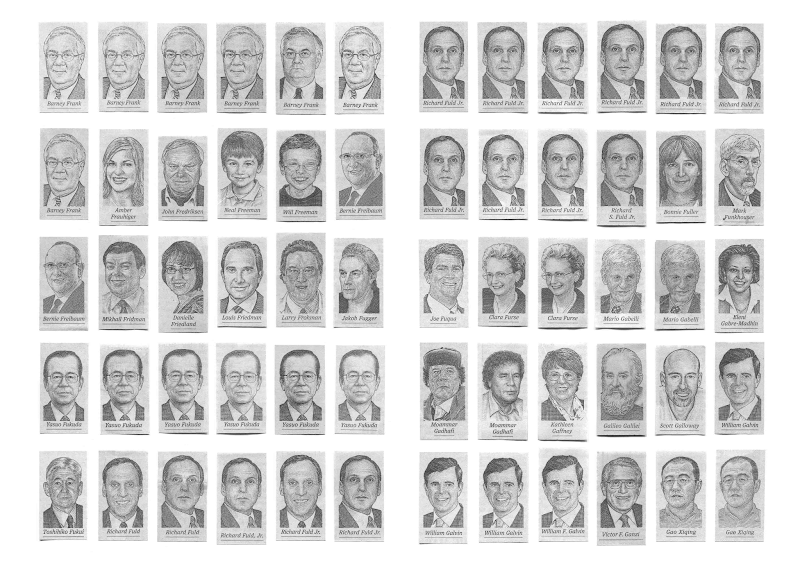
Chang applied this same basic methodological approach to a very different kind of mass-produced object: printed news media. The Class of 2008 presents itself as a straightforward catalogue. It’s an alphabetical listing of every hedcut portrait published in The Wall Street Journal during the year 2008. Before we can understand what Chang does with this material, though, we need to understand what hedcuts are and why they matter. Hedcuts are the distinctive stippled, engraving-style portraits that the Journal uses for certain figures in its reporting. The technique is borrowed deliberately from nineteenth-century engraving, and it carries with it specific associations: authority, permanence, trustworthiness, the visual register of something meant to hold up under scrutiny and stand the test of time.

The structure of the catalogue is deceptively simple: alphabetical order, with repetition kept visible in the record. If someone appeared multiple times in 2008, this is clearly indicated in the book, and those appearances are explicitly not reduced to a single representative entry. This decision about how to organize the material matters, because it allows patterns of repetition and recurrence to emerge through the reader’s encounter with the work. And the timing of the project sharpens its implications considerably. 2008 was, of course as we all know, the year when financial authority came under extraordinary strain, when economic structures that had seemed most stable revealed themselves to be fragile or even illusory. And yet throughout this period, the visual language of legitimacy in the Journal continued without interruption, day after day rendering certain faces in this particular register of authority and trust.

Chang’s catalogue simply records this continuity without adding editorial commentary or explicit critique. The alphabetical organization flattens any narrative arc that the year’s events might suggest. There’s no chronological story being told about crisis and response, no hierarchy of importance imposed through the order of presentation. Instead, repetition itself does the interpretive work. As you page through the book, you notice who appears once and who appears again and again and again. You start to see patterns in who gets rendered in this authoritative visual register and who remains outside it. The hedcut becomes not just a neutral technique of illustration but a question about legitimacy and representation: who gets marked as worth this particular kind of attention, who gets enrolled in this visual vocabulary of permanence and authority, and who remains invisible to this institutional gaze?

Game Boy Tetris

If Chang’s collecting projects make time visible through the gradual accumulation of marks on physical objects, Game Boy Tetris approaches the question of time and repetition through a different medium: labor itself, as the repetitive effort of trying and failing and trying again. The work documents Chang’s repeated attempts to achieve the highest possible score in the original Game Boy version of Tetris, filming the process over an extended period until the accumulation of attempts becomes the substance and meaning of the work. At one point during this extended engagement, he surpassed Steve Wozniak’s score on the leaderboard. A detail he noted with evident satisfaction –– a reminder of how seriously he took questions of record-keeping and documented proof of achievement.

The same simple rule-based system holds your attention through long stretches of concentration punctuated by failure and the decision to restart. The desire for completion, for reaching some definitive endpoint, keeps pulling you back into the loop even as the reasons for continuing become harder to articulate. Progress remains measurable throughout — you can track improvement across attempts, watch skills developing and patterns emerging — even as the larger meaning or purpose of this progress starts to slip away, even as the question of why this particular score matters becomes increasingly difficult to answer with any conviction.

Chang wasn’t observing obsessive cultures or completionist practices from a safe critical distance, making work about collecting or repetition without genuinely participating in those structures himself. Instead, he built systems and constraints that could absorb years of his own attention and effort while still continuing to demand more. Over time, through this sustained and genuine engagement with repetitive structures, Chang himself starts to resemble the thing he’s ostensibly studying. He becomes, in a real sense, a kind of repetitive system himself as lived practice.
CENTS

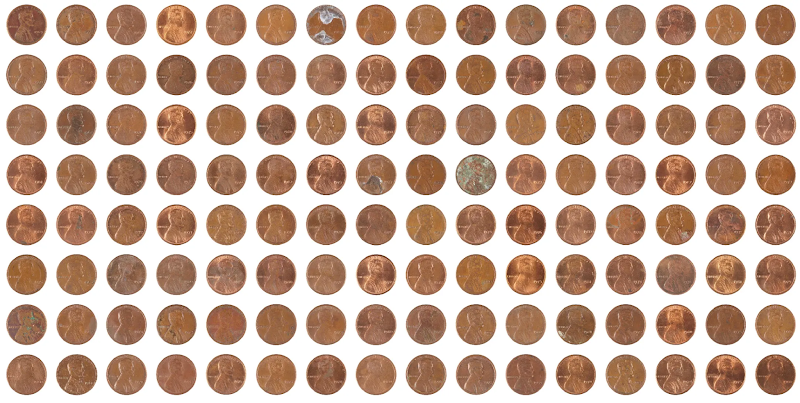
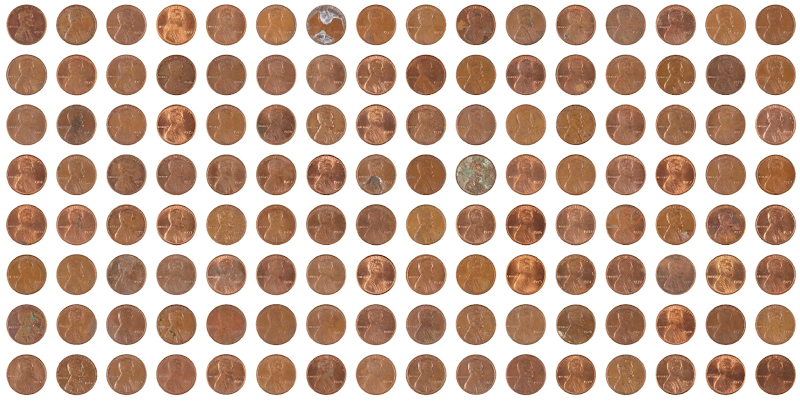
Chang’s final major project takes his long-standing interest in units, standards, and systems of record-keeping and extends it into what has become an ongoing and in some ways autonomous condition. He completed the physical collection and documentation of ten thousand copper cents in 2023, at a moment when the one-cent coin was still in regular circulation throughout the United States. In 2024 the digital records of these ten thousand individual coins were inscribed onto Bitcoin, allowing the work to continue circulating and accumulating meaning beyond Chang’s direct control or intervention. Then, in a development that gives the entire project an another historical dimension, the U.S. Mint stopped producing the circulating one-cent coin on November 12, 2025. What this means is that in hindsight, with the perspective that historical distance provides, the penny itself has begun to read as a historical object, something that belongs to a particular moment of currency and exchange that is now passing into the past.

The project starts, like most of Chang’s work, from a condition that many people vaguely know about but rarely think through with any care or precision. Chang limited his collection specifically to cents minted before 1982, the year when the U.S. Mint changed the composition of the penny to reduce costs. Before 1982, pennies were made primarily of copper; after that date, they became copper-plated zinc. This seemingly minor detail has real consequences: pennies from the earlier period can, under certain market conditions, exceed their face value when considered purely as raw material. The copper content might be worth more than one cent. This creates an odd situation where the State continues to define each coin as being worth exactly one cent (and makes melting them for their metal content illegal), while the material reality of the object suggests a different value entirely. Chang doesn’t treat this as a paradox to resolve or a problem to solve. He treats it as a given, as one of the structural conditions that makes the work possible and interesting.

The process he developed is methodical and systematic. He removed ten thousand copper cents from circulation, pulling them out of the flow of exchange and use, and documented each one individually through detailed photography (obverse and reverse, better known as heads and tails). The coins were then smelted together into a single copper block weighing sixty-eight pounds. At this moment, individual units disappear entirely into undifferentiated mass. The penny’s ordinary role in exchange, its function as a discrete unit of value that can circulate and combine with other units, comes to a definitive end. But the block itself continues to exist in multiple forms. It was rendered as a detailed 3D digital model and inscribed as a single massive inscription filling the entirety of Bitcoin block #839969. This digital version was then sold at Christie’s in 2024, entering yet another system of value and circulation, moving from material object to digital record to collectible artwork in the contemporary art market.

The documentation, meanwhile, moves in the opposite direction from this consolidation. While the physical coins condense into a single unified object and lose their existence as separable, countable units, each individual cent remains readable as a distinct record. The photographic images stay separate and individuated, each one assigned to a fixed and permanent position in the set through inscription onto individual satoshis. What disappears completely at the level of material form — you can no longer hold these particular ten thousand pennies in your hand, can no longer sort through them or arrange them or put them back into circulation — remains perfectly intact at the level of the record. You can still look at the photograph of each specific coin, still examine the particular wear patterns and surface marks and small imperfections that distinguished it from the nine thousand nine hundred and ninety-nine others.

This structure allows CENTS to hold in tension several different and potentially conflicting ideas about where value is located and how it gets established and maintained. There’s value as defined by governmental authority: the State declares that this coin is worth one cent, and that declaration carries legal force. There’s value registered in material composition: the copper content might actually be worth more than one cent when calculated according to commodity prices. And there’s value produced through preservation and documentation: the decision to photograph each coin individually, to maintain the archive’s legibility over time, to treat these mass-produced objects as worthy of sustained attention. These different registers of value remain distinct within the work, not collapsing into a single unified meaning or resolving into some synthesis.

When we place CENTS alongside We Buy White Albums and think about them as part of a consistent practice, the underlying logic becomes clear. Objects that were designed and manufactured for perfect interchange, for being functionally identical and mutually substitutable, become readable as singular and individual once their circulation is interrupted and held still, once their particular histories are made visible through careful documentation and systematic archiving.

It’s worth noting here — because it matters for understanding how the work continues to function after Chang’s death — that CENTS was initiated through collaboration with Sovrn Art, an independent, artist-first platform that provided the initial framework and support for the project’s development. After the full inscription of the work onto Bitcoin was completed, a council formed independently of Chang himself, without his organization or oversight. This council is made up of collectors who chose, for their own reasons, to take responsibility for the work’s continuation and interpretation. The council members come from different generations and different professional fields, bringing various forms of expertise and perspective to their engagement with the archive. Their work has focused consistently on keeping the distinctions within the archive visible and legible — through close reading of the documentation, through careful cataloguing of variations and patterns, through writing that approaches the material from multiple angles and asks different kinds of questions. Their involvement has centered particularly on the problem of how to keep this archive readable and meaningful over time, how to maintain the precision and care of the record as it continues to circulate through systems and contexts that Chang himself could not have anticipated.

Archive as Practice

It is easy to call Rutherford obsessive. The sustained attention over years, the commitment to completeness and thoroughness, the willingness to spend enormous amounts of time and effort on projects built around deliberately narrow constraints. The word isn’t inaccurate. And yet it still manages to miss something important about the dimension of what Chang was actually doing with his time and attention. He treated mass culture and industrial production with a kind of patience that’s rare in contemporary art. He made rarity and singularity visible inside precisely those things we’ve learned to overlook or dismiss as generic and interchangeable. He listened carefully to what we might call the noise inside familiar symbols and objects — the small variations and accumulated marks that circulation and handling inscribe on surfaces that were designed specifically to resist such marking and remain stable over time.

This attention to what accumulates in the gaps and margins of systems designed for uniformity helps explain why Hundreds and Thousands works so effectively as a title for this retrospective. On one level, it simply names the scale at which Chang characteristically worked: collecting not dozens but hundreds, not hundreds but thousands of examples. But it also names something more fundamental. A discipline, a particular kind of methodical practice that requires looking long enough and carefully enough that difference begins to appear within what first presents itself as sameness. The practice keeps returning, with remarkable consistency across different projects and materials, to what circulation leaves behind: the marks and traces that accumulate even on objects designed to remain stable and unchanged.

Chang’s work can be read, in many ways, as a sustained practice of custody and care. He kept objects, pulled them out of circulation or gathered them from its margins. He indexed and organized them into systems that made their individual histories newly visible and legible. And then, crucially, he returned them to circulation in altered form: as archives open to examination, as exhibitions that invited direct encounter, as permanent records inscribed on Bitcoin. Through this process, he built situations and structures in which circulation itself becomes visible as a process. In which value turns concrete and measurable. The archive is consistently where this transformation takes place in his work — the site and the method through which individual objects become readable as parts of larger systems and patterns.

The retrospective gathers Chang’s method into a single frame and brings together projects from different moments in his career to demonstrate the underlying consistency of his approach across various materials and contexts. What remains is the structure he built, the archives he assembled with such care, the questions he persistently refused to resolve or close down prematurely. The promise of sameness keeps failing. Difference keeps appearing in the gaps and variations. The marks stay visible for anyone willing to look closely enough, and patiently enough, to actually see them.

This is a guest post by Steven Reiss. Opinions expressed are entirely their own and do not necessarily reflect those of BTC Inc or Bitcoin Magazine.

This post Rutherford Chang Retrospective: Hundreds and Thousands at UCCA Beijing first appeared on Bitcoin Magazine and is written by Steven Reiss.

☐ ☆ ✇ Bitcoin Magazine

On the value of holding the History of Bitcoin in your hands

By: Steven Reiss

Bitcoin Magazine

On the value of holding the History of Bitcoin in your hands

In Bitcoin culture, there is still a noticeable gap between the importance of the subject and the forms in which it is presented. Much of what exists is entirely digital, quick to disappear, or shaped by a purely functional aesthetic. Even projects that engage with Bitcoin’s history or its artistic dimension often end up looking more like documentation or marketing than something with cultural presence.

When I first saw History of Bitcoin in person at the Bitcoin Conference 2025 in Amsterdam, that contrast became quite clear. The physical object had a calm, deliberate quality that stood out in an environment dominated by screens and fast exchanges. It didn’t feel like something designed to be glanced at and set aside. It felt like something that expects to be revisited.

What stayed with me was not the rarity of the materials, but the intention behind the choices. In fields like design, architecture, and art publishing, substantial coffee-table books have long played a role in giving subjects a physical anchor. Major art publishers use this format because it creates a stable place for a topic to live. A well-made book slows the pace. It encourages repeated viewing and allows ideas to settle. That kind of physical presence is still unusual in the Bitcoin world.

Many Bitcoin-related books appear as softcovers. I understand why, but they often feel interchangeable and easy to overlook. They rarely give the impression that something is meant to be kept. My point isn’t that books should be luxurious. It’s that form and material can signal whether a subject is being treated with care.

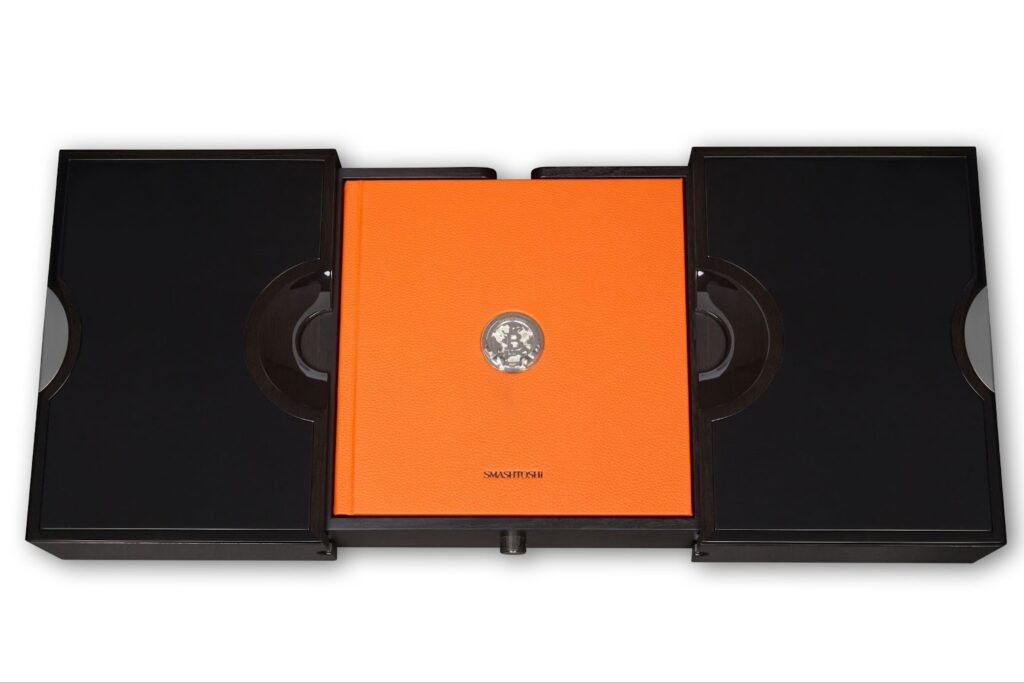
Smashtoshi, History of Bitcoin (First Edition)

Seen from that angle, the First Edition of History of Bitcoin is a considered object. It comes in a case made from five-thousand-year-old fossilised black oak. The material is unusual, but the effect is straightforward: it gives the book a steady, quiet setting. Inside, the volume is bound in bull leather with a finely made silver emblem by Asprey Studio. None of this feels like decoration. It feels like someone thinking carefully about how an object should look if it is meant to last.

The team behind the project described these choices in a way that adds another layer to this. For them, ancient materials weren’t chosen for rarity, but to reflect a belief that Bitcoin itself is built to endure for a very very long time. Placing a young technology inside something that has already lasted thousands of years creates a deliberate contrast. They also spoke of the First Edition as a kind of time capsule, an object made to outlive us and to offer future readers a way to encounter Bitcoin’s beginnings in a physical form. 

The project continues this restrained approach. The physical book and the digital archive are designed to stand alongside each other. The archive provides access and the book provides presence. Together they make the material both reachable and grounded.

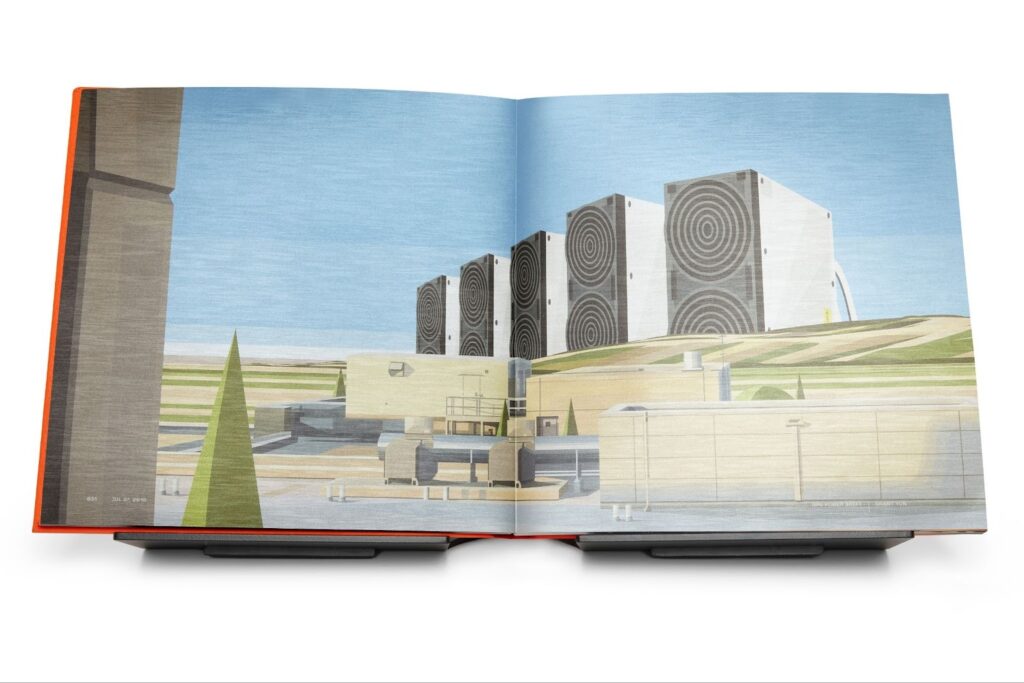
Grant Yun, GPU Power Shift

The 128 artworks in the book were created by different artists specifically for this project. Each one revisits a moment in Bitcoin’s history without trying to define a final interpretation. They open space for reflection. They invite conversation. That is one of the strengths of a good coffee-table book: it creates room for looking again.

The companion volume, the range of guest articles on the website, and even the small fragment of the original Bitcoin code included with each collector’s edition follow the same idea. They offer multiple entry points into the history rather than insisting on a single narrative.

My First Bitcoin, the nonprofit receiving the proceeds from the First Edition auction at Bitcoin MENA, teaches young people around the world. Connecting the book to this project links historical reflection with future education in a simple and meaningful way.

All of this suggests to me that presentation is not a secondary detail. It is part of the cultural work needed to give a subject depth. A carefully made book is not a decorative object. It is a way of turning something that might otherwise feel temporary into something that can endure.

That is, ultimately, why History of Bitcoin feels meaningful to me. It gives this history a form that can be kept close, something you can put down, return to, and live alongside. It doesn’t try to conclude anything. It simply gives Bitcoin a place to settle.

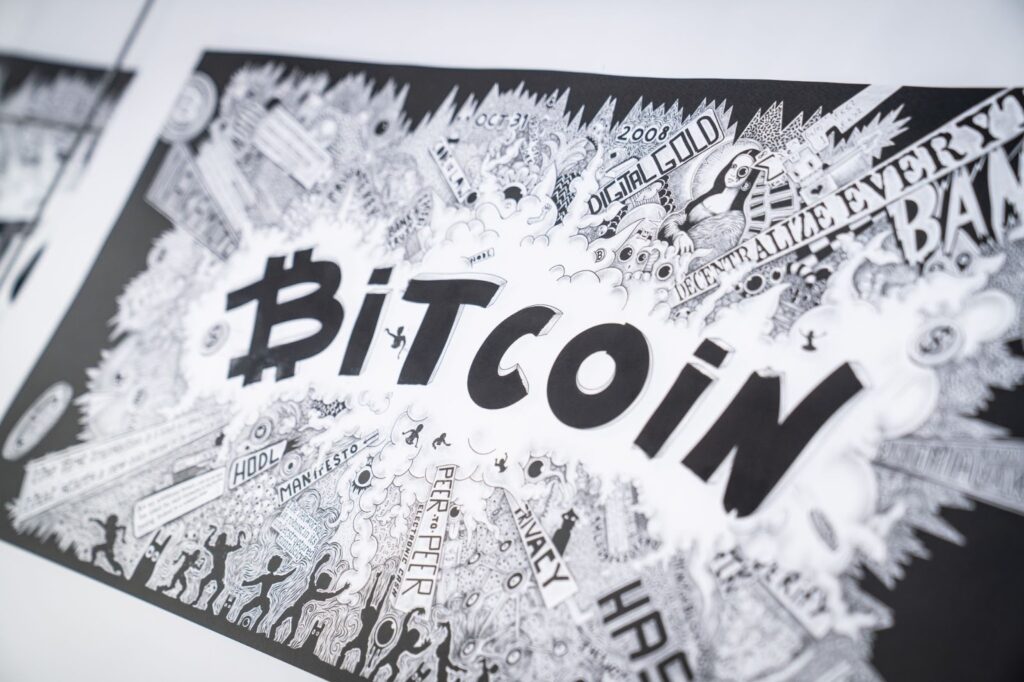
Hackatao, The World’s Most Famous Whitepaper

This post On the value of holding the History of Bitcoin in your hands first appeared on Bitcoin Magazine and is written by Steven Reiss.
☐ ☆ ✇ Bitcoin Magazine

A Defining Moment for Bitcoin Art at Sotheby’s: Tad Smith on Bitcoin Culture and Robert Alice’s Block 1

By: Steven Reiss

Bitcoin Magazine

A Defining Moment for Bitcoin Art at Sotheby’s: Tad Smith on Bitcoin Culture and Robert Alice’s Block 1

This month, a remarkable Bitcoin-focused artwork will grace one of the art world’s most prestigious stages. Block 1 from Robert Alice’s Portraits of a Mind series is set to be auctioned in Sotheby’s Now & Contemporary Evening Sale on November 18, carrying an estimate of $600,000 to $800,000. 

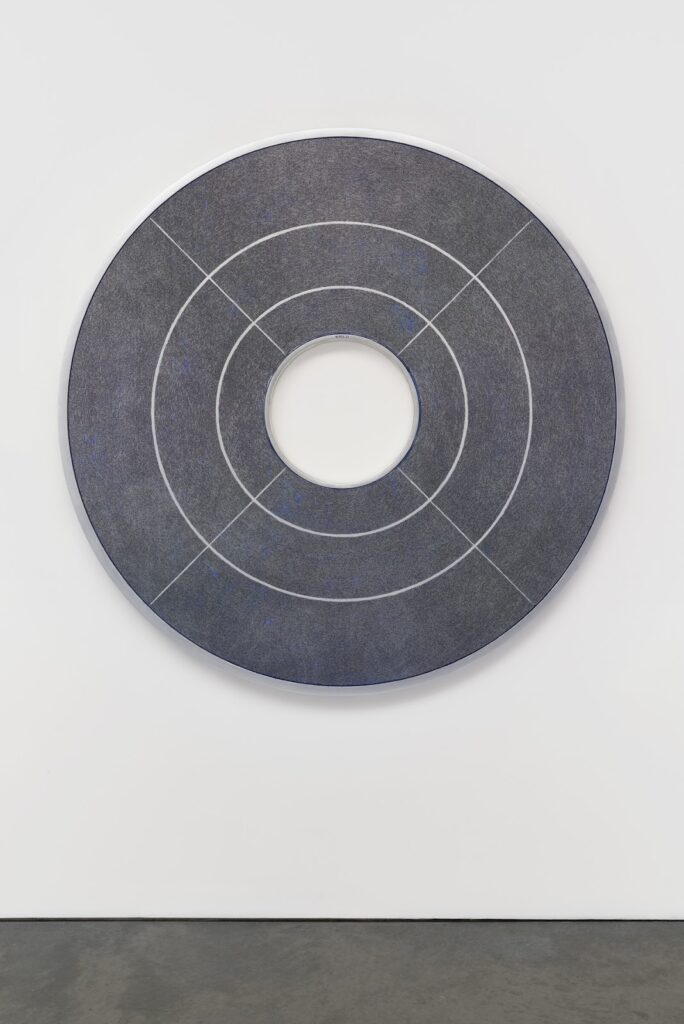
Robert Alice, Portraits of a Mind, 2019. Credit: Theo Cristelis 

This event is where marquee works by renowned artists like Yves Klein or Jean-Michel Basquiat appear, so the inclusion of Block 1 signals an important moment for Bitcoin’s cultural presence. The auction will be held at The Breuer Building — once the home of the Whitney Museum of American Art and now Sotheby’s new worldwide headquarter in New York. It marks the first time a physical artifact of Bitcoin’s history stands alongside blue-chip artworks in such a high-profile sale.

In preparing this text, I spoke with Tad Smith, the former CEO of Sotheby’s and a thoughtful Bitcoiner, about the upcoming sale and what it means for Bitcoin’s cultural standing. Speaking as an archivist and art historian, I found our conversation becoming a meditation on value: how art and Bitcoin both rely on scarcity, story, and shared belief rather than financial metrics alone. Some of his remarks are included throughout this piece. His own path –– from auction house executive to Bitcoiner –– reflects the shift he describes: from assigning value within institutions to seeing value take shape through collective consensus.

Why does this matter? For years, Bitcoin has been understood primarily as a monetary revolution or a technical breakthrough. But Bitcoin is also an emerging cultural phenomenon, lacking obvious forums for recognition in mainstream culture. When a work like Block 10 (52.5243° N, -0.4362° E) from Alice’s series enters major collections like the Centre Pompidou –– one of Europe’s foremost museums of modern art –– it externalizes Bitcoin’s cultural value by translating intangible ethos into the language of art. I will return to this later. It is a clear sign that Bitcoin’s story is seeping into broader cultural memory, validated by institutions that historically canonize what matters in art and culture. 

Block 1: The Code That Became Art

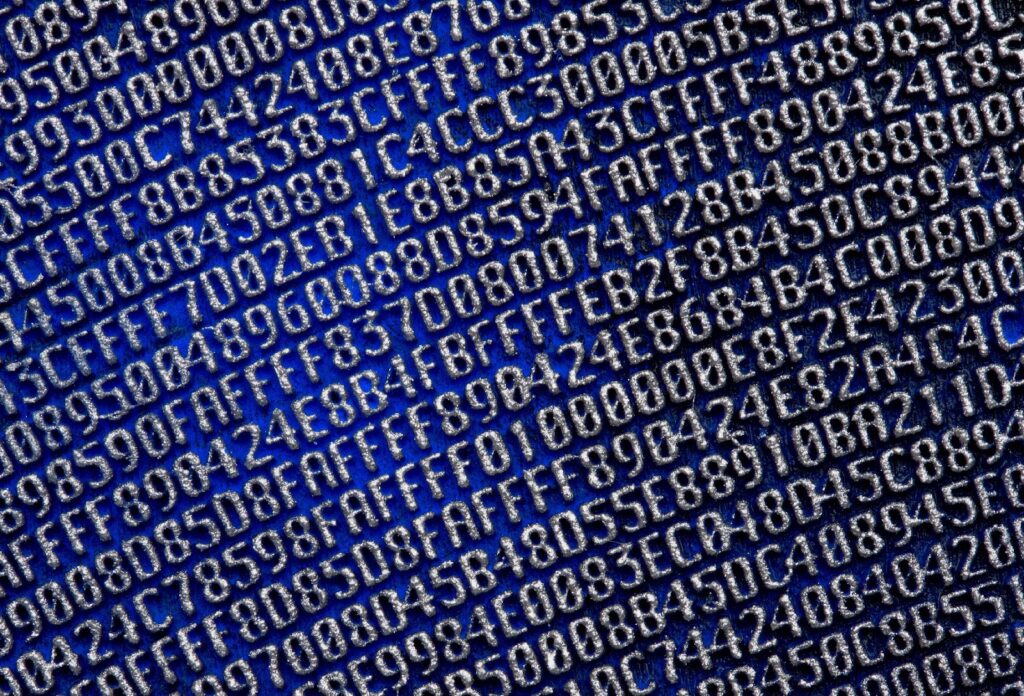
Formally and conceptually, Block 1 is steeped in Bitcoin’s origin story. Robert Alice’s Portraits of a Mind series took the original Bitcoin codebase (version 0.1.0) — arguably one of the most consequential texts of the 21st century — and dispersed it into 40 large-format paintings. In doing so, the project formed a decentralized, physical archive of Satoshi Nakamoto’s code with hundreds of thousands of hexadecimal digits distributed across the series.

Robert Alice, Detail of Portraits of a Mind, 2019. Credit: Theo Cristelis 

Each painting in the series carries a set of geographical coordinates that tie fragments of Bitcoin’s code to places of human culture and memory. Block 1 (24.9472° N, 118.5979° E) points to the Statue of Laozi in Quanzhou, a place where philosophy and exchange have quietly coexisted for centuries — near a city that once marked an important point along the Silk Road. The choice of site draws a subtle line between Taoist thought and the libertarian ethos that runs through Bitcoin: Laozi’s idea of wu wei –– governing through non-interference –– echoes the blockchain’s own preference for order without rulers. 

Tad Smith has called the series a memorial to the foundations of digital sovereignty — a body of work that captures the moment Bitcoin began to take form.

A decentered form runs through the series, echoing rai stones and allusions to Japanese currency. The work engages with themes of decentralization, code as text, code as portrait and the nature of memory. Influenced by conceptual and minimalist art (artists like Roman Opalka and Jasper Johns come to mind), Portraits of a Mind treats the Bitcoin codebase as cultural heritage, as something to be preserved and contemplated. The series makes something hidden, visible: it translates the code –– the true first text of Bitcoin, written even before the whitepaper –– into material form. On November 9, 2008, Satoshi wrote to Hal Finney: “I actually did this kind of backwards. I had to write all the code before I could convince myself that I could solve every problem, then I wrote the paper”. And Alice asks us to see code not just as functional instruction but as a foundational human document.

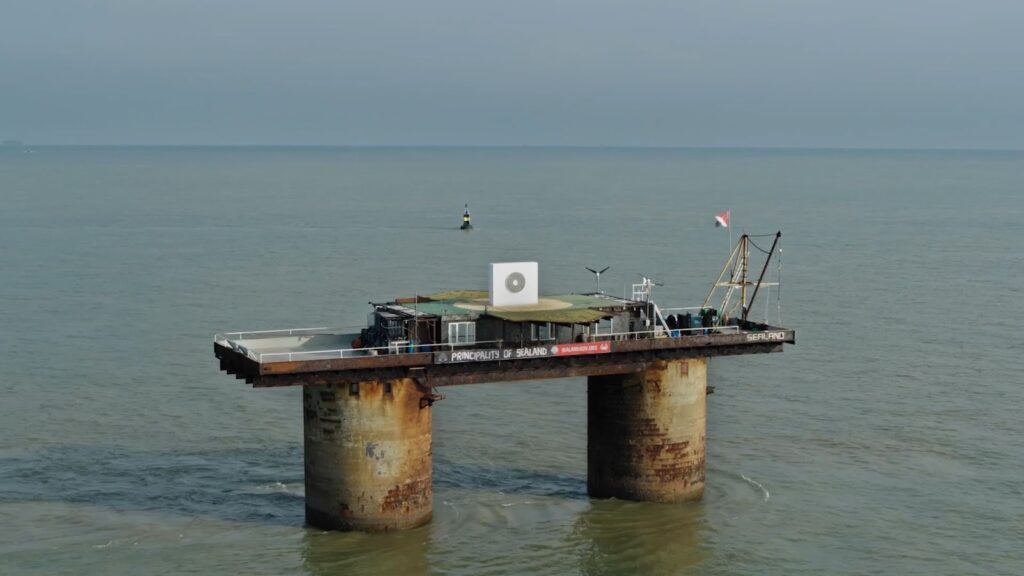
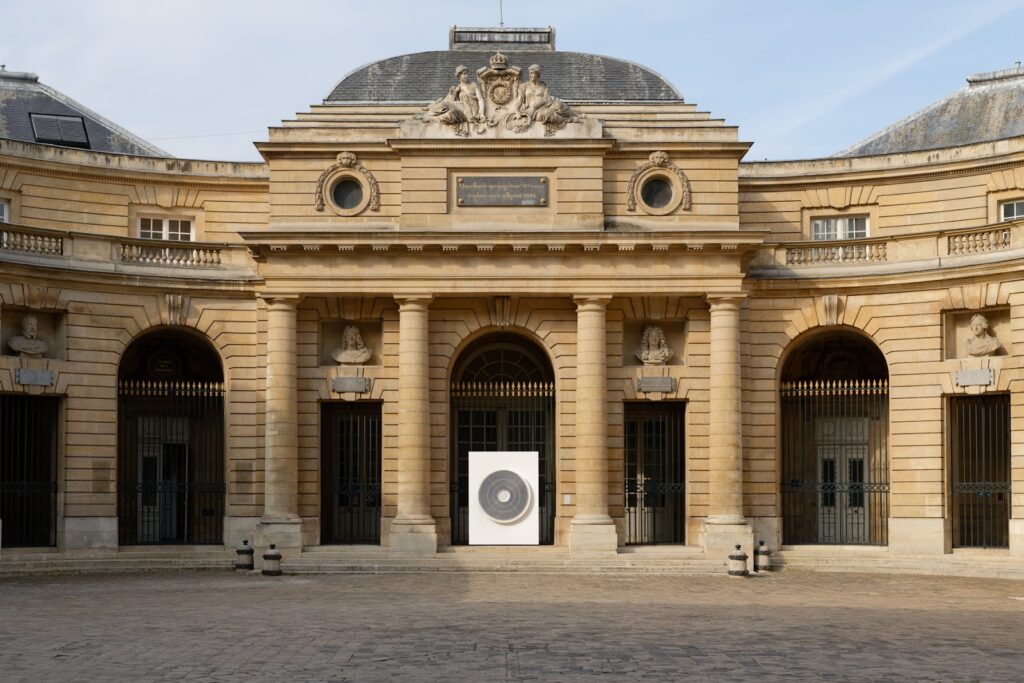
Since its debut, Portraits of a Mind has traveled in ways that mirror the network it was born from. Parts of the series have been shown in London, Hong Kong, and New York, as well as at Sealand — the self-declared cypherpunk micronation, once an illegal data haven for irregulated internet traffic. Works from the series have also appeared in museums across the world in Zurich, Seoul, Beijing, Hanover and Linz. In 2023, the series was shown at Monnaie de Paris, the world’s oldest continually running mint, further extending its reach into the contemporary art world. 

Robert Alice’s exhibition of Portraits of a Mind at Sealand, the former cypher punk data haven in the North Sea in 2021. Credit: Robert Alice

Major auction houses like Sotheby’s and Christie’s play a pivotal role in validating new artistic movements. For blockchain-based art, that validation began in 2020 when Portraits of a Mind first made waves: one of its panels, Block 21 (42.36433° N, -71.26189° E), was the first Bitcoin-focused artwork to sell at a premier auction house and laid the foundation for the crypto art explosion, pre-dating the Beeple NFT sensation by six months and back then reached around $130,000. With Block 1 joining Sotheby’s Contemporary Evening Auction in New York, Bitcoin art reaches a new level of visibility. “In the evening sale [this piece] will further increase the reputation” of the series, Tad Smith noted, emphasizing how Sotheby’s platform brings tremendous publicity and cultural cachet. Indeed, a high result at Sotheby’s would broadcast the message that Bitcoin’s codebase is now an important cultural fixture to the narrative of the 21st century, rather than a niche plaything for tech enthusiasts.

Bitcoin’s Cultural Maturation

What does Block 1 at Sotheby’s tell us about Bitcoin’s own cultural maturation? For one, it underscores that Bitcoin’s impact isn’t measured only in market cap or hash rate — it’s also measured in cultural capital. Bitcoin has spawned ideas, values, and aesthetics, yet the protocol itself can’t record those human elements. There’s a lack of on-chain metrics for culture: the blockchain timestamps transactions, but not, say, the moment a Bitcoin artwork hangs in a museum. Therefore we look to external signals. When the Centre Pompidou acquires Block 10 as mentioned earlier, or when artworld’s leading curators like Hans-Ulrich Obrist critically engage with it, those are flashes of recognition that Bitcoin has birthed something worthy of heritage status. These signals indicate that Bitcoin is evolving from a purely financial phenomenon into a broader cultural one. The acquisition of Block 10 marked the first time a fragment of Bitcoin’s code entered a national collection. In France, works that enter the national collection become part of the public domain and are legally inalienable –– they can never be sold or removed. In a country whose modern identity was forged in revolution, the gesture carries its own quiet irony: a technology built to resist authority now preserved by one of the oldest symbols of it. A part of Bitcoin’s genesis code now belongs, permanently, to the people of France –– archived under the same ideals that once demanded the rewriting of history itself. It’s hard to imagine a stronger validation that the Bitcoin narrative has broken out of its early techno-utopian niche and into the broader cultural conversation.

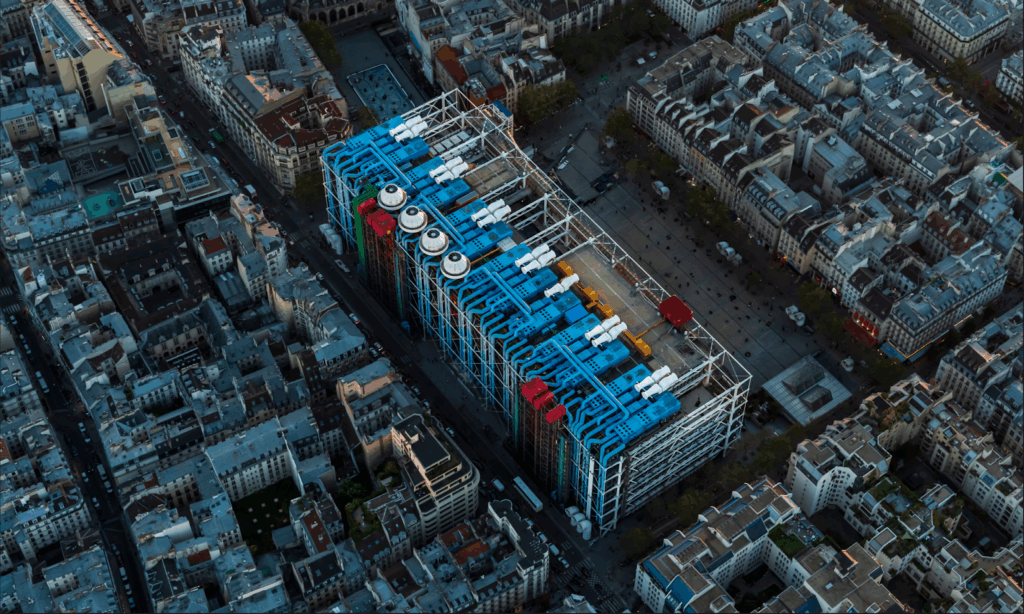
The Centre Pomidou in Paris. Home to the French National Collection of Contemporary Art, which now includes BLOCK 10 from the series, Portraits of a Mind. 

Interestingly, this institutional recognition coincides with a growing awareness within the Bitcoin community itself — an appreciation that culture is not peripheral but central to its mission. As Smith observes, “Bitcoiners have something really powerful when it comes to art. They’re on a mission and they’re highly motivated. This isn’t a hobby or something you do on the side. It’s a deeply committed crowd, full of enthusiasm and driven by a genuine desire to make the world better”.

He adds that Bitcoiners are “very culturally and socially engaged and natural storytellers who understand memetics and communication in every possible way”. That, Smith notes, “is what art is about”. Indeed to be a Bitcoiner is to be a collector, not of art, but of UTXOs. The psychology of collecting and especially ownership, runs deeply through the psyche of Bitcoiners.

In short, Bitcoiners have been creating culture all along and the cultural work began long before its memes. The very first act in its history wasn’t financial but symbolic –– Satoshi’s embedding of The Times headline in the genesis block. It was a gesture of record and resistance, the first instance of Bitcoin declaring itself through culture.

Now, as significant wealth accumulates in this community, their taste in art is maturing as well. “Many of them, of course, tend to be younger”, Smith notes, “and younger people usually aren’t all that interested in the art of older generations. That’s nothing new; it’s been that way for centuries. The younger crowd always wants its own art. That’s why art and taste evolve every few generations”.

Over time, he predicts, “Bitcoiners’ growing financial capital will translate into cultural capital”. With Bitcoin’s market value climbing into the trillions and a massive wealth transfer to millennials and Gen Z on the horizon, the future of Bitcoin art indeed looks bright. “The future is very, very bright”, Smith says, “because the younger crowd has all the tailwinds” — referring both to financial means and cultural appetite.

In effect, a new collector base is rising — one that sees Bitcoin not just as an investment, but as a story and identity worth expressing through art.

Making Culture Visible

Because Bitcoin lacks formal cultural institutions of its own, artworks like Block 1 become crucial mirrors. They reflect and externalize the cultural values of the Bitcoin adoption in a form that the wider world can see and evaluate. The Sotheby’s sale forces questions about how we value such an object: Is it its materials and aesthetics, its backstory and conceptual depth, or its significance to a community? In practice, all of these converge to give Block 1 value. That value is cultural and contextual, not merely speculative. As Tad Smith learned during his years as CEO at Sotheby’s, a painting’s price can swing wildly based on intangibles: “a piece of canvas with a certain color of paint on it and a certain artist’s name and a certain year and a certain look, is worth $20 million, and then one right next to it could be worth $2”, a disparity that revealed to him “something inherently cultural that really drives the notion of value”. Bitcoin, often touted as digital gold, similarly derives its value from a cultural consensus, a shared belief in its significance. But that consensus can be hard to perceive directly. Art provides a tangible embodiment of those beliefs. When a Bitcoin-inspired artwork commands attention and a high price, it quantifies a bit of Bitcoin’s cultural impact in a language the art world understands.

Reflecting on this connection, Smith once compared Bitcoin’s evolution to the building of a pyramid — a new financial infrastructure, a new concept for money. “For the first time in human history”, he noted, “it’s digital capital. And to start building a pyramid, you start with a bunch of blocks. On the lower level, you make a great big square, and then you add a slightly smaller one on top, and another on top of that”. He described Portraits of a Mind as “memorials of the foundation layer of the creation of future and modern digital capital. It’s the foundation document, recording the charter of where it all began”. A century from now, he suggested, people will look back to these works to understand how Bitcoin started, “they paint a picture of a moment in time”.

Robert Alice’s exhibition of Portraits of a Mind at the Monnaie de Paris, 29 June to 22 October 2023. Credit: Monnaie de Paris. 

Art teaches by being seen. It invites interpretation and dialogue; a work like Block 1 makes people ask questions — about Bitcoin’s earliest days, its philosophy, its community — and it does so beyond the usual venues of conferences or developer meetings. Those engaged in this space understand that securing Bitcoin’s place in history means telling and retelling its story in many forms. Visual art, especially works that can hang in galleries or be studied in art history classrooms, gives that story a tangible presence — externalizing Bitcoin’s narrative and weaving it into the broader fabric of contemporary culture.

Finally, the Sotheby’s event highlights a broader truth: Bitcoin’s maturation isn’t just about technological adoption or financial metrics, but about cultural integration. As Tad Smith puts it, “a life of success and wealth without culture is a pretty unexciting life”. He goes on to suggest that “the sooner you begin to experience culture and understand the beautiful qualities that make being human so incredible — literally a divine gift — the better”.

His point is simple but profound: Bitcoin’s promise lies not only in disrupting finance, but in enriching human experience. Engaging with art is part of that fulfillment. The presence of Block 1 in a venue like Sotheby’s signals that the Bitcoin community, consciously or not, is beginning to heed that message. Bitcoin is developing a cultural memory with artifacts like Block 1 acting as its external vessels.

Bitcoin is stepping out as a subject of cultural heritage, not just economic speculation. This single lot at Sotheby’s carries within it the story of Bitcoin’s birth — lines of code painstakingly inscribed in paint and gold — now acknowledged by some of the highest arbiters of cultural value, institutions whose validation both defines and depends on what culture chooses to recognize.

The sale will be closely watched, as the hammer price will say as much about belief as about value, and about how far Bitcoin’s cultural standing has come. You can’t exactly measure culture, but a number can make its value briefly visible. The fact that Block 1 now shares space with contemporary masters signals that Bitcoin’s presence in the world is no longer invisible to traditional gatekeepers. Emerging from a lineage of artistic experiments and cypherpunk culture, it has become a living, multifaceted phenomenon.

At the end, as a closing note and an invitation: the auction takes place on November 18 at Sotheby’s. You don’t have to bid, but you can look. It costs nothing to follow auctions, visit previews, or walk through museums. That’s how culture becomes understandable: by showing up to see it change.

This is a guest post by Steven Reiss. Opinions expressed are entirely their own and do not necessarily reflect those of BTC Inc or Bitcoin Magazine.

This post A Defining Moment for Bitcoin Art at Sotheby’s: Tad Smith on Bitcoin Culture and Robert Alice’s Block 1 first appeared on Bitcoin Magazine and is written by Steven Reiss.
☐ ☆ ✇ Bitcoin Magazine

The Avant-Garde and Bitcoin: Decentralized Money Didn’t Come From Nowhere

By: Steven Reiss

Bitcoin Magazine

The Avant-Garde and Bitcoin: Decentralized Money Didn’t Come From Nowhere

Bitcoin is a financial tool born of code and cryptography. But seen in a wider frame, it belongs to a cultural lineage more than a century old. Since the 1910s, avant-garde movements have probed questions that later became central to Bitcoin: Who decides value? Can rules replace rulers? How do systems record time, distribute trust or resist authority? Far from appearing out of nowhere in 2009, Bitcoin crystallized ideas that had long circulated in artistic experiments.

You don’t need to like art — or on-chain art — to follow this argument. This article is not a case for “Bitcoin art” but for understanding Bitcoin’s conceptual prehistory. If you are a Bitcoin maximalist, read what follows as the backstory of your protocol’s worldview, not an art-world detour. And if you are an on-chain maximalist, remember that maximalism of any kind denies reality: The logic of Bitcoin was not born on-chain.

Artists tend to surface and stress-test ideas before society at large absorbs them. What they explore in canvases, instructions, networks or number systems often migrates years later into economics, engineering and politics. The point of this article is not to conflate art with Bitcoin, but to show that Bitcoin is the cultural consequence of ideas rehearsed for over a century — ideas about decentralization, protocol, time and value that were already in the air long before they were established in code.

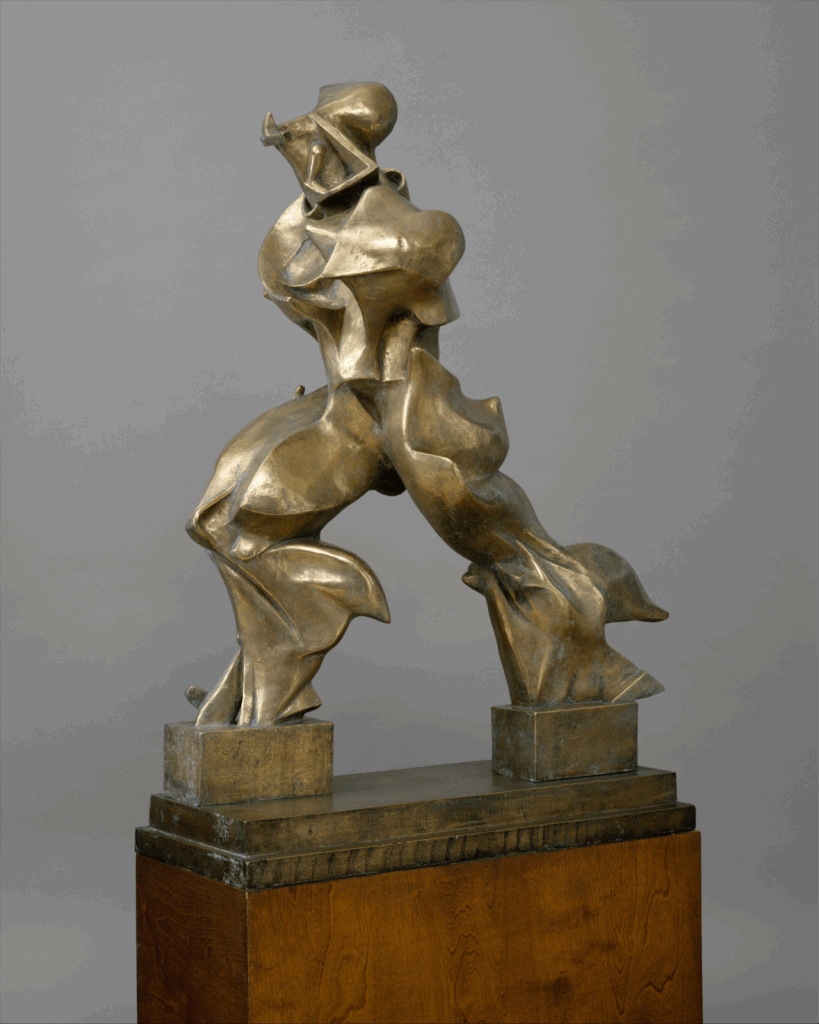
Unique Forms of Continuity in Space, Umberto Boccioni
Umberto Boccioni, Unique Forms of Continuity in Space, 1913 (cast 1950), Bronze, 47 3/4 × 35 × 15 3/4 in. The Metropolitan Museum of Art, NY

Avant-Garde Futurism: Speed, Systems and the Machine Aesthetic

If the early 20th century’s avant-garde had a launchpad, it was Italian Futurism. Announced in 1909 on the front page of Le Figaro by Filippo Tommaso Marinetti, the movement exalted “the beauty of speed,” the dynamism of the industrial city and the power of engines, aircraft and modern weapons. It called for the destruction of museums and libraries in favor of an aesthetic reboot — art in step with the machine age.

Futurist painters like Giacomo Balla and sculptors like Umberto Boccioni sought new visual strategies to capture motion: blurred outlines, repeated forms and “lines of force” that rendered figures as vectors in a dynamic system. Boccioni’s iconic “Unique Forms of Continuity in Space” (1913) depicts a striding figure whose body is broken into aerodynamic planes — more like a fluid diagram than anatomy. In sound, Luigi Russolo’s “Intonarumori” (noise intoners) brought the clang of factories and the churn of engines into orchestral performance, turning music into a mechanical event.

Futurism’s legacy is complicated — Marinetti’s later alliance with Italian fascism casts a shadow — but the movement planted seeds of a mindset crucial to later art and to Bitcoin alike: art as the design of systems, not just objects. The Futurists embraced rhythm, repetition, serial processes and the deliberate use of technology as a driver. In effect, they imagined culture running on protocols — machines with outputs defined by rules and cycles.

The Futurists embraced the rhythm of machines, the pulse of the assembly line, the precision of the stopwatch. Bitcoin transposes that rhythm into economics: Value emerges not from decree but from a timed, rule-governed process distributed across the network. Futurism never imagined digital money, yet it prepared the ground by making repetition and system-thinking feel natural. 

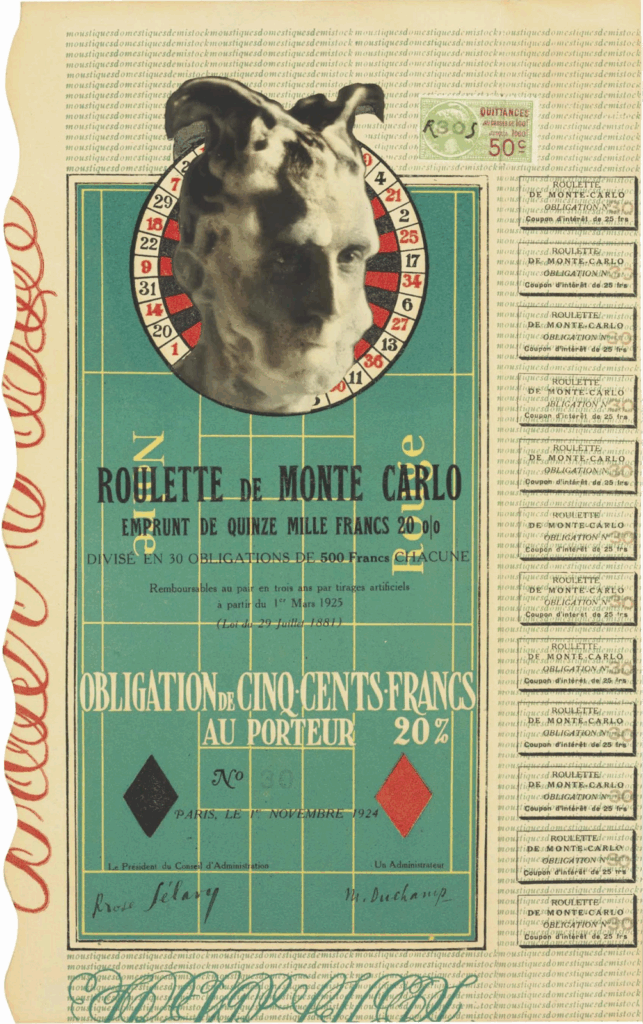
Monto Carlo bonds, by avant-garde artist Marcel Duchamp
Marcel Duchamp, Monte Carlo Bonds (here: No. 30/30), 1924, imitated rectified readymade–ink, gelatin silver print collage and tax stamp on printed paper, 12 1/4 x 7 5/8 in.

Dada: Anti-Art as an Attack on Systems

Amid the chaos of World War I, another avant-garde arose in Zurich, New York and Berlin: Dadaism (circa 1916-1920s). Futurism threw itself at the promises of modernity; Dada, in contrast, set out to smash them. Dada artists rebelled against the rationality that had led to war; they created “anti-art” — absurdist performances, nonsense poems, collages of trash — to shock and upend bourgeois sensibilities. In doing so, they directly attacked the authority of art institutions and the concept of inherent value in art.

The familiar example is Duchamp’s “Fountain” (1917), but an equally revealing case is his Monte Carlo Bonds (1924): printed bearer “securities” issued in a planned edition of thirty, each priced at 500 francs and designed to raise capital for a roulette “system” Duchamp claimed to have perfected. The bonds looked and read like legitimate financial instruments — complete with detachable dividend coupons, corporate statutes on the verso and Man Ray’s photograph of Duchamp with shaving-foam “horns” inside a roulette wheel — but were staged as artworks. The company’s chair was Duchamp’s female alter ego, Rrose Sélavy; the administrator, Duchamp himself. Buyers were, in theory, investors; in practice, they treated the sheets as art objects, leaving every coupon uncut. The piece collapses two regimes of value — finance and art — and exposes the same underlying mechanism: value is not intrinsic, it is a social contract sustained by trust, scarcity and rules. Duchamp even paid a token interest once before abandoning the gambling scheme, an elegant reminder that the belief structure around the object quickly outstripped any cash flow it could ever yield.

Dada’s irreverent destruction of logic and value systems sowed seeds that later artistic (and even financial) revolutionaries would harvest. Later, Cypherpunks and Bitcoiners would challenge the fairness of the financial order; the Dadaists had already mocked the so-called rationality of polite society. They revealed that what people accept as valuable — whether a work of art, a bond certificate or fiat currency — might just be a shared fiction propped up by authority. In Dada, we see the prototype of Bitcoin’s ethos of challenging institutional authority: If Duchamp showed a urinal or a satirical bond could be “art” through collective agreement, Bitcoin showed that a piece of code can be “money” through collective agreement.

Notably, Dada was also inherently international and decentralized. Its artists (Hugo Ball, Tristan Tzara, Hannah Höch, etc.) were dispersed across Europe and the U.S., yet connected via manifestos, magazines and mail. This early 20th-century art network operated outside state or museum control — effectively a proto peer-to-peer network of creative exchange. In the way Dadaists mailed ideas and manifestos to each other across borders, we can glimpse the later ideal of a decentralized, censorship-resistant communication system.

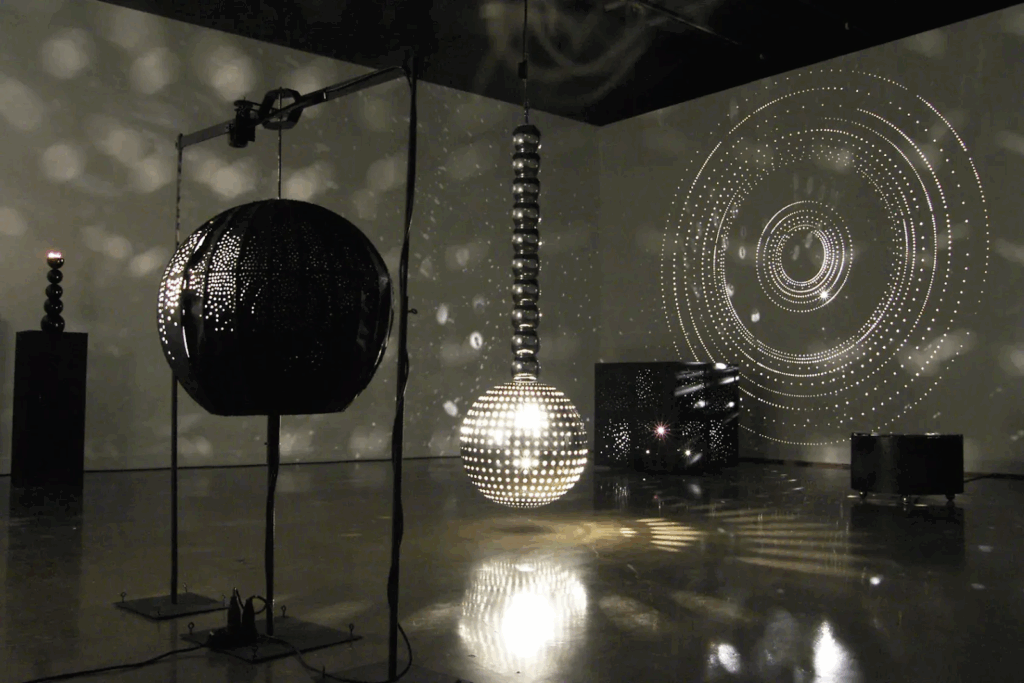
Otto Piene: Lichtballett
Installation view, Otto Piene: Lichtballett, MIT List Visual Arts Center, 2011. Photo: © Timothy Lloyd

ZERO: Building with Rules

By the late 1950s, Europe’s postwar avant-garde was looking for a clean slate. In Düsseldorf, Heinz Mack and Otto Piene founded ZERO (1957), soon joined by Günther Uecker. “Zero” for them wasn’t nihilism; It was a reset, a way to sweep aside the subjectivity of earlier modernism and construct art from scratch, using only light, rhythm and repetition.

ZERO’s works were precise and repeatable: Piene’s “Lichtballette” used mechanical projectors to choreograph moving patterns of light; Mack constructed mirrored reliefs and spinning discs to create optical vibration; Uecker covered surfaces with dense fields of nails, turning hammering into a serial procedure. The art was in the process — the timed flicker, the rhythmic rotation, the grid of repeated forms.

Equally important, ZERO was never a closed group but an international network, linking to parallel movements in the Netherlands (Nul), France (GRAV) and Italy (Azimut). Exhibitions and collaborations spanned multiple countries, operating more like a decentralized platform than a single “school.”

For Bitcoin’s lineage, ZERO offers two resonant ideas. First, the reset: Starting from “zero” to construct a system by explicit rules recalls the symbolic reboot of Bitcoin’s Genesis Block. Second, the focus on time, repetition and seriality anticipates a culture attuned to protocols — systems where outputs arrive at fixed intervals and cumulative sequences matter. 

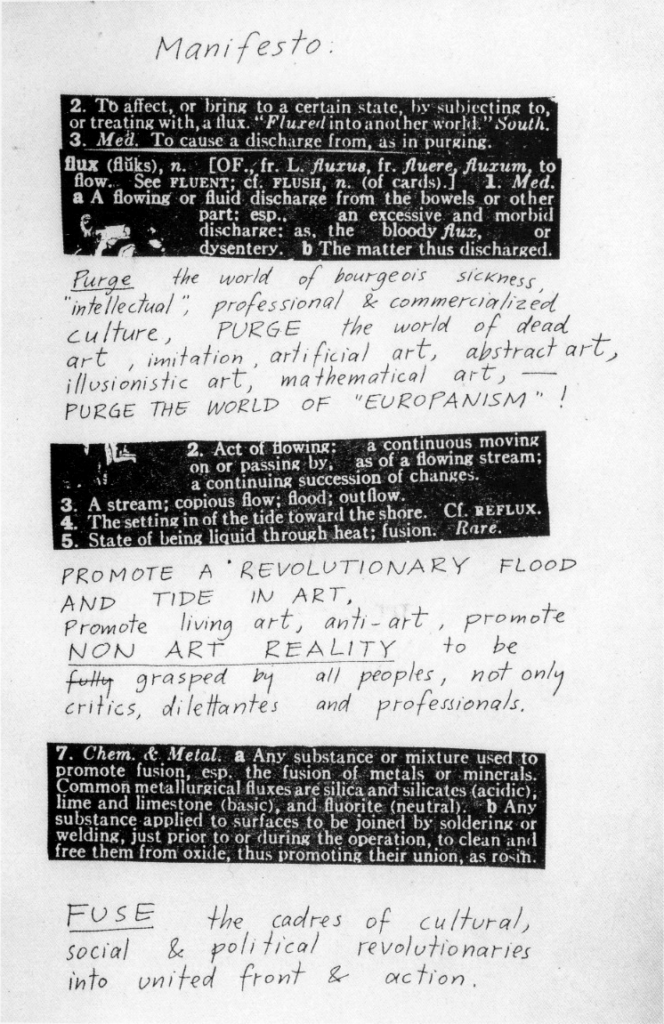
Fluxus Manifesto, 1963
George Maciunas, Fluxus Manifesto, 1963, offset lithograph, 8 1/4 x 5 13/16 in.

Network Art: From Mail to Fluxus to the Net

While ZERO was exploring rules and serial processes, other artists of the 1960s turned toward communication itself as a medium. Their works made art into a distributed process, shared across people and places, outside the control of galleries or states.

One form was Mail Art, pioneered by Ray Johnson in the early 1960s. Small drawings, collages and notes circulated through the postal system, creating an “Eternal Network” of participants. Anyone could join; the post became a decentralized gallery where no curator decided who belonged. In Eastern Europe and Latin America, Mail Art even slipped under censorship, showing how a simple network could resist centralized control.

In parallel, Fluxus, led by George Maciunas and a loose international circle, declared that anyone can make art. Their performances, event scores and “fluxkits” were cheap, reproducible and often humorous — designed to evade traditional collecting and institutional ownership. Fluxus was art as open source action: participatory, irreverent and spread through informal networks of friends and collaborators.

By the 1990s, these impulses migrated online with Net Art. Early internet artists used chatrooms, email and websites as venues for collaborative works that were interactive, ephemeral and uncollectable in the traditional sense. Net Art made the network itself the artwork.

Mail Art, Fluxus and later Net Art all treated the network itself as a stage. Letters, performances, websites — each bypassed the gatekeepers of museums and markets, proving that exchange could be free, horizontal and self-sustaining. Bitcoin builds on that same intuition: validated by the network, not an institution. 

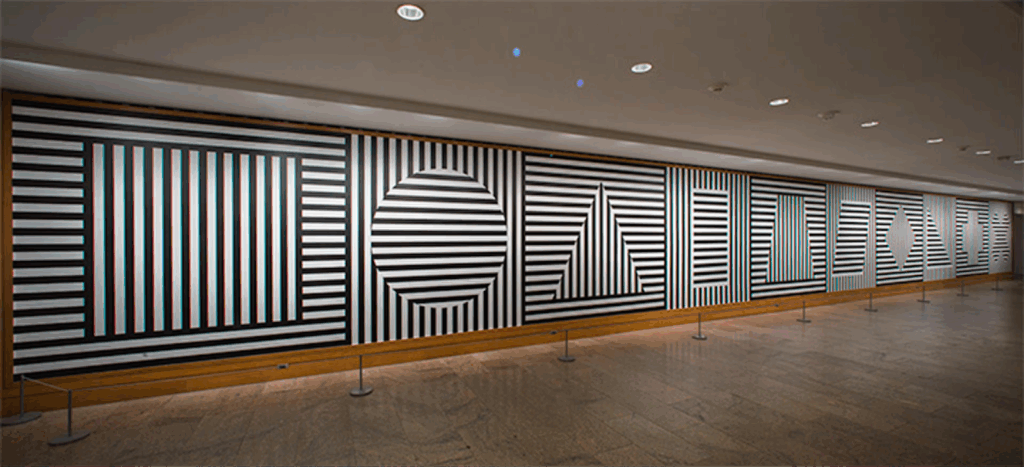
Installation view by SolLeWitt, Wall Drawing #370
Installation view, Sol LeWitt, Wall Drawing #370: Ten Geometric Figures (including right triangle, cross, X, diamond) with three-inch parallel bands of lines in two directions, 1982, India ink on a wall, dimensions vary with installation.

Conceptual Art and Algorithmic Thinking: From Ideas to Code

By the late 1960s, avant-garde art took a radical turn: The object itself was no longer essential. In conceptual art, what mattered was the idea or instruction. Sol LeWitt wrote in 1967 that “the idea becomes a machine that makes the art.” His “Wall Drawings” consisted of sets of directions — lines, arcs, grids — executed by others. The authorship resided in the rule, not in the handcrafted product. The point was profound: Art could function like a protocol, a system anyone could run.

Almost at the same moment, artists began to make that principle literal. Algorithmic art translated imagined rules into actual computer code. Vera Molnár, for example, programmed early plotters in the 1960s to produce abstract line drawings. These works were generated rather than drawn; their originality lay in the algorithm itself. She described her method as a machine imaginaire, where systematic variation could produce surprising forms.

Seen together, these two practices created a cultural shift. Conceptual art established the logic that the work is the instruction rather than the object, while algorithmic art showed how that logic could be executed in code — precise, repeatable, and indifferent to the hand of the maker. Bitcoin fuses both. It is at once a conceptual protocol — rules inscribed in advance, like a score — and a piece of running code executed by miners and nodes, who perform the role of LeWitt’s assistants or Molnár’s machines: They don’t invent, they follow instructions. This lineage prepared audiences to see systems and protocols themselves as creative and valuable forces. Without it, the idea that an immaterial construct like Bitcoin — a set of rules enforced by code — could carry real value would have been harder to imagine.

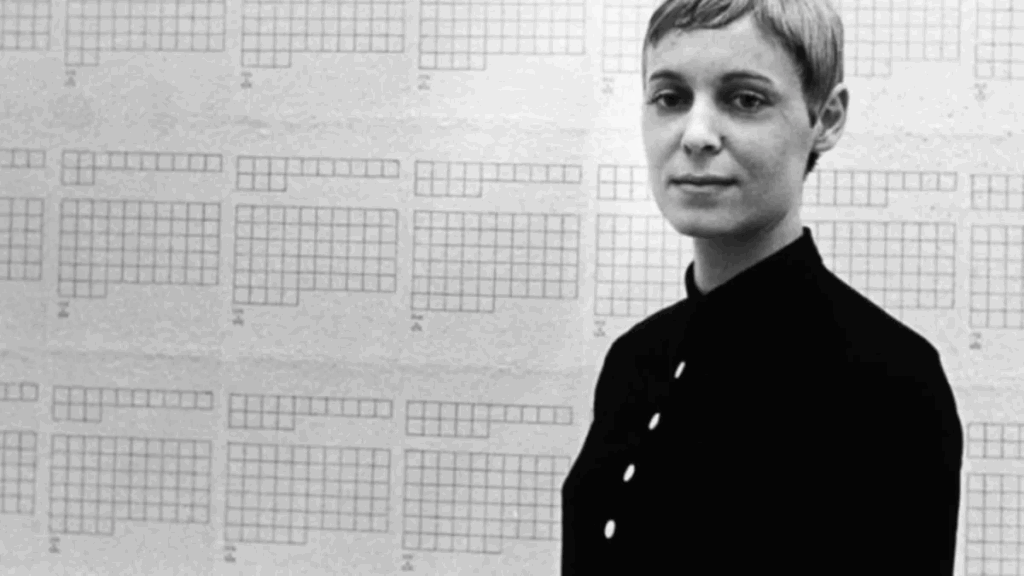
Hanne Darboven
Hanne Darboven. Photo: © Angelika Platen

Avant-Garde Time: On Kawara and Hanne Darboven

If conceptual and algorithmic artists turned rules into art, others in the same era turned to time itself as their system. Few bodies of work make the analogy to blockchain more striking than those of On Kawara and Hanne Darboven.

Beginning in 1966, On Kawara painted dates — plain white text on monochrome canvases — in his ongoing “Today Series.” Each painting had to be completed on the date it depicted; if not, it was destroyed. Often it was stored with a local newspaper, a kind of analog timestamp. Alongside this, Kawara logged every person he met (“I Met”), every route he took (“I Went”), the times he rose each morning (“I Got Up” postcards) and telegrams that declared simply: I am still alive. What emerged was a strict, cumulative chronology of existence: day after day, block after block, a sequence of proofs that life had occurred.

Hanne Darboven, working in Germany, went even further. From the late 1960s she devised numerical systems that translated calendar dates into endless handwritten sequences of sums, columns and grids. Her installations stretch across entire walls — hundreds of sheets filled with notations representing days, months, decades. Darboven turned the passing of time into a literal record of numbers, an unbroken chronology with no story beyond the sequence itself.

Seen together, Kawara and Darboven reveal how time, repetition and documentation can become both material and meaning. Their work anticipates exactly what Bitcoin later encodes. Each block on the chain functions like a Kawara date painting: a timestamp that proves the system is still alive. The sequence of blocks resembles Darboven’s endless grids, discrete units of time lined up to form an immutable chronology. And in both cases, meaning arises not from any single entry but from the accumulation of the whole chain. What Kawara and Darboven made visible is that even the simplest act of marking time can take on depth when repeated and preserved.

Cildo Meireles, Quem Matou Herzog?, 1970, © Cildo Meireles

Systems and Power: Institutional Critique and Currency Hacks

While some artists turned inward to rules and time, others in the late 1960s and ’70s turned outward to expose the hidden systems of power — financial, political, institutional. Their work shows most clearly how art anticipated Bitcoin’s impulse to bypass authority.

In New York, Hans Haacke set out to reveal how money and power shape culture. For his 1971 project “Shapolsky et al. Manhattan Real Estate Holdings, A Real-Time Social System” he used public records, maps and photographs to document the slum properties of a major real estate network in the city. The work was scheduled for a solo show at the Guggenheim, but six weeks before opening, the museum canceled the exhibition and dismissed the curator. No direct link between the landlords and the museum was ever established, but the cancellation itself made Haacke’s point: Institutions are never neutral and attempts at transparency can be too uncomfortable to display.

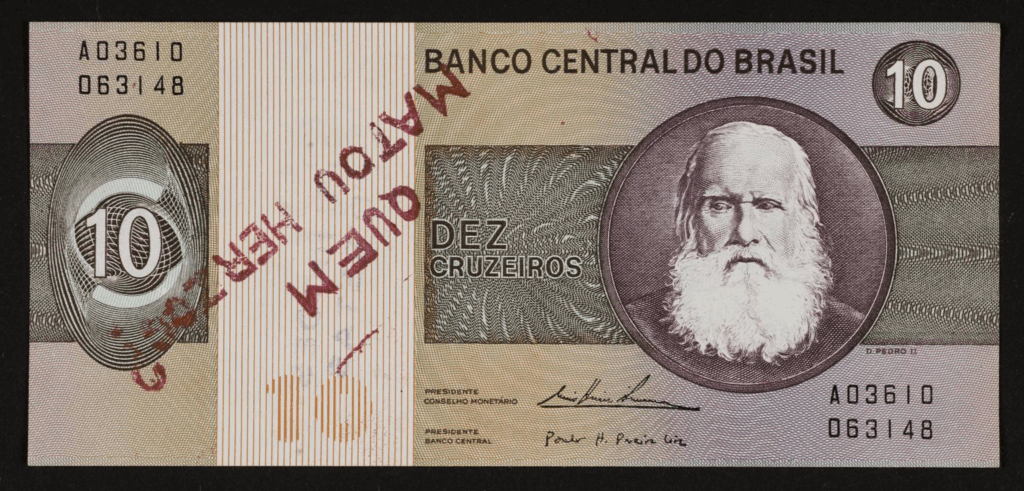
In Brazil, under dictatorship, Cildo Meireles developed a quieter but equally radical tactic. His “Insertions into Ideological Circuits” (1970) placed dissenting messages into everyday exchange systems. On Coca-Cola bottles, he silk-screened political slogans that only appeared once refilled; the bottles then reentered circulation. In his “Banknote Project,” he stamped questions like “Who killed Herzog?” (after a murdered journalist) onto currency, then spent the notes back into the economy. The system — Coca-Cola’s distribution, the state’s money supply — became the medium for critique. Meireles demonstrated that even a currency could be hacked into a carrier of counter-authority.

For Bitcoin, the resonance is unmistakable. Meireles’s stamped banknotes foreshadow the idea of embedding messages in a financial system itself — Satoshi Nakamoto’s Genesis Block inscription (“Chancellor on brink of second bailout for banks) is a direct continuation of that gesture. Both artists understood that systems are never neutral: They embody ideology. By inserting new content or exposing hidden structures, they revealed how authority could be challenged not with slogans alone but by repurposing the system against itself.

Bitcoin pushes that artistic lesson to its limit. Haacke revealed hidden structures and Meireles hacked messages into the circuits of money, Bitcoin doesn’t just comment on the system, but builds a new one. It inherits Haacke’s demand for transparency by making every transaction publicly visible on the blockchain and it carries forward Meireles’s spirit of subversion by creating a parallel currency outside the reach of state control. What had once been artistic interventions now scales into a global protocol. It’s not a metaphor about money, but a functioning redesign of how money itself can work.

Bitcoin as the Cultural Consequence

Looked at together, these movements tell a story that runs straighter than it first appears. Futurism celebrated the rhythm of machines; Dada stripped away institutional authority and showed how value depends on agreement; ZERO started again from light, rules and repetition; Mail Art, Fluxus and Net Art turned networks into the work itself; conceptual and algorithmic artists shifted attention from objects to protocols and code; On Kawara and Hanne Darboven treated time as something to be marked and accumulated, day by day; and Haacke and Meireles showed how power systems could be exposed or quietly hacked from within.

Each of these experiments rehearsed ideas that Bitcoin later fixed in its code: decentralization, rules over rulers, value as consensus, transparency as a form of truth, time as structure and the use of systems themselves as instruments of critique. None of this arrived out of thin air in 2009. For decades, artists had been testing the same ground — whether in paintings, instructions, mail networks, grids of numbers or altered banknotes — long before those intuitions were written into code. 

None of this replaces Bitcoin’s technical invention. Proof-of-work remains the foundation that makes the system unforgeable, but it does not explain why people choose to protect and transact with it. This is why it misses the mark to see Bitcoin only as a financial tool or to dismiss its cultural dimension as a side story. Bitcoin is also a cultural artifact, shaped by a long history of challenges to authority and experiments with rules and systems. You don’t need to like art to see that. What Bitcoin embodies is not an isolated breakthrough but the continuation of ideas rehearsed for more than a century. Recognizing that history does not weaken Bitcoin’s invention; it roots it in a broader cultural lineage. Bitcoin is not an accident of code but the latest chapter in a century-long attempt to imagine systems beyond authority, to bind time into structure and to prove that value is ultimately what we choose to share and defend.

BM Big Reads are weekly, in-depth articles on some current topic relevant to Bitcoin and Bitcoiners. Opinions expressed are those of the authors and do not necessarily reflect those of BTC Inc or Bitcoin Magazine. If you have a submission you think fits the model, feel free to reach out at editor[at]bitcoinmagazine.com.

This post The Avant-Garde and Bitcoin: Decentralized Money Didn’t Come From Nowhere first appeared on Bitcoin Magazine and is written by Steven Reiss.
☐ ☆ ✇ Bitcoin Magazine

How Companies Are Adding Bitcoin Art to Their Corporate Collections

By: Steven Reiss

Bitcoin Magazine

How Companies Are Adding Bitcoin Art to Their Corporate Collections

Bitcoin art and Bitcoin corporations don’t seem to mix. But for decades — indeed centuries — companies have collected art to express their role in society. As early as the 15th century, the Banca Monte dei Paschi di Siena (1472) established one of the first corporate art collections. What began merely as decorative embellishment quickly evolved into a status symbol and a sign of wealth, success and cultural responsibility. Can Bitcoin-native companies gain strategic advantages through digital art? And what role does Bitcoin art play as a new asset class and cultural anchor?

Why Do Companies Collect Art? 

Paintings, sculptures and installations now hang in corporate headquarters worldwide, not just to beautify walls but as statements: Art signals cultural capital and underscores a firm’s identity and values. With the rise of the digital economy, especially Bitcoin, the question arises how this tradition can continue in the 21st century. 

Corporate art collections are now a fixed part of corporate culture. By the mid-2010s there were already more than 2,000 major corporate collections in North America and beyond, together worth billions. The motivations are diverse: Surprisingly, immediate financial gain is not the main driver; the tax deduction isn’t what’s motivating companies. Rather, art engagement helps firms advance strategic goals, reach new client groups, strengthen employee loyalty and enrich the quality of life around the company. In other words, art in business creates cultural capital — the value that French sociologist Pierre Bourdieu defined as the sum of cultural knowledge and prestige.

Companies that collect art therefore pursue image building and cultural promotion simultaneously. Historically, a clear pattern emerges: In the prosperous 1950s, many U.S. corporations began collecting art to make cultural statements on their newly built campuses and to support the community. The movement peaked in the 1980s, then cooled when other forms of corporate philanthropy (education, social causes) came to the fore. Yet companies that kept buying art did so under stricter criteria and with a clear purpose.

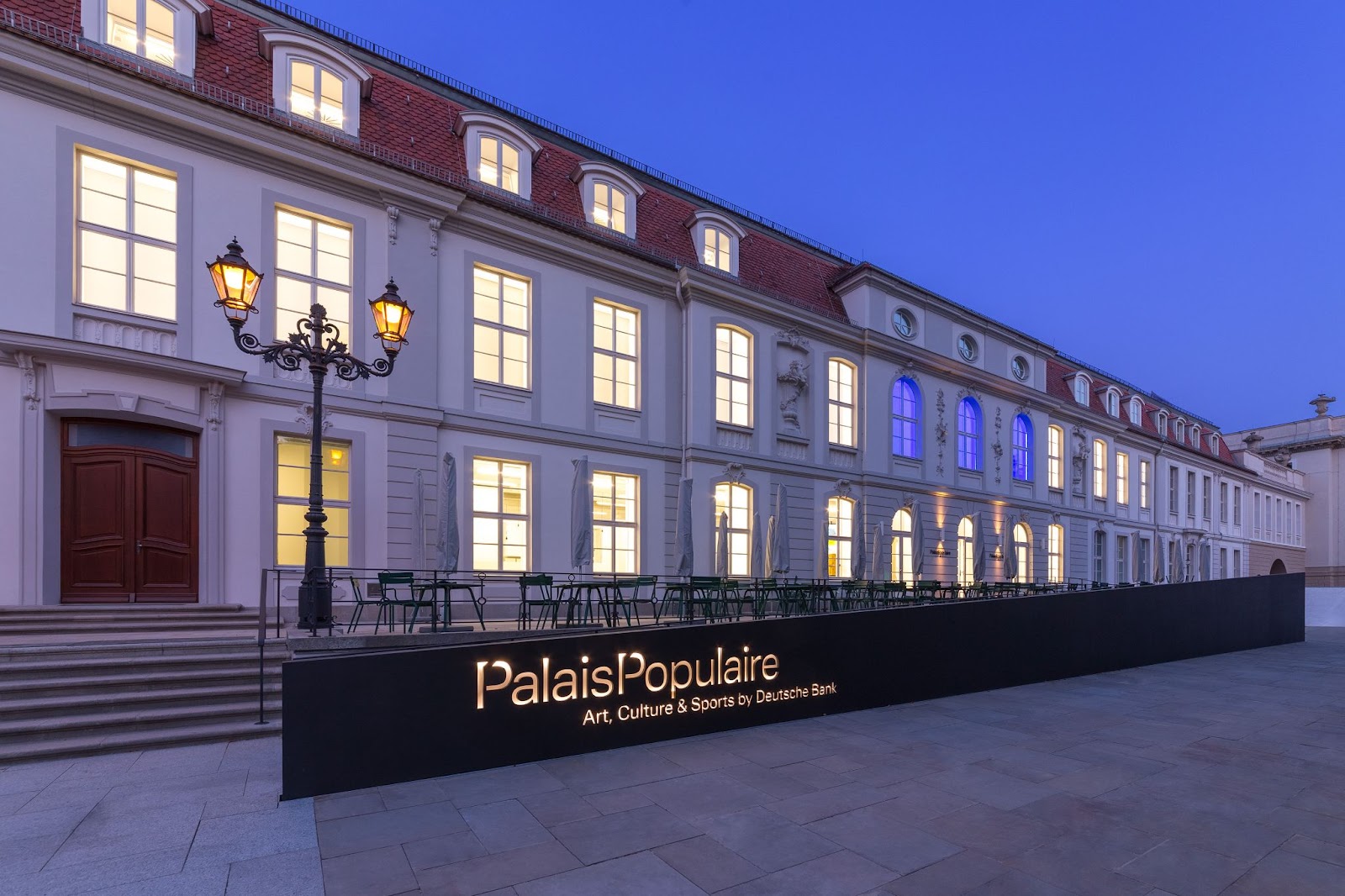
PalaisPopulaire terrace by night, credit: Photo-files.de

Strategic Leveraging of Art: Cultural Capital and Brand Identity

Corporate art collections fulfill several roles at once. Internally, they create inspiring environments that foster creativity and identification; externally, they serve as reputational tools: Art signals education, stability and community spirit, and art collections have long since become part of brand identity. 

The best examples show that the goal is not ostentation but social value: Deutsche Bank, for instance, founded its collection in 1980 expressly to support emerging German artists. Today, it holds tens of thousands of works of international art and even operates its own museum in Berlin (the PalaisPopulaire) to stage public exhibitions. Here, art builds bridges between the company and society. JPMorgan Chase has pursued a similar concept for decades: Its “Art at Work” program, initiated in 1959 by David Rockefeller, focused deliberately on emerging and overlooked artists worldwide — an unusual approach but one that truly fosters art. Such collections are proactively built and make art central to corporate DNA rather than using it merely as decoration.

A strategically managed collection becomes a lever for cultural capital. By choosing art (including Bitcoin art) that fits the company’s philosophy, a firm can subtly communicate its values: innovation, internationality or reverence for tradition. UBS began building its corporate collection in the early 1970s as part of a commitment to cultural engagement, focusing from the outset on both established and emerging artists from across the globe. The UBS collection, for example, reflects the bank’s global reach by acquiring art from every region where it operates, including new markets such as Thailand or Korea. Guided by independent curators and an international advisory board, UBS has created a collection that represents the diversity of its communities while spotlighting young, emerging artists. 

Economists see such investments as akin to other intangible assets: They raise brand value through cultural legitimacy and recognition. Firms are the new patrons: Bank collections, for instance, have gone beyond their original marketing function and now act as “new Medici”-patrons, on par with Renaissance families who once supported the arts. Especially as public cultural budgets shrink, this private patronage is more important than ever. Properly managed, corporate collections thus serve not only the firm but society at large, filling gaps left by underfunded public museums. They are, correctly used, a cultural asset for the public.

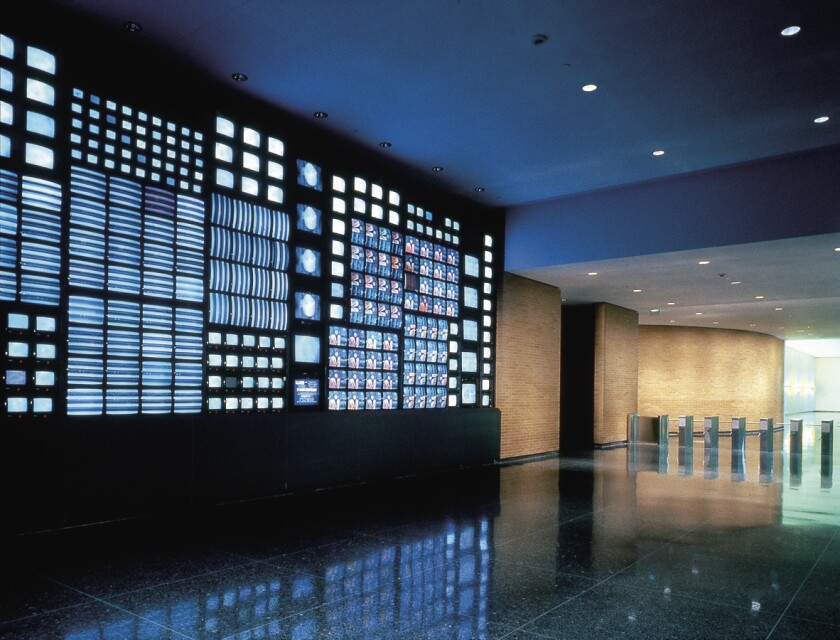
photo credit

Change in the Last Ten Years: From Contemporary Art to Bitcoin Art

Recently, corporate collections have evolved mainly in content. Contemporary works — painting, sculpture, photography — still dominate, but digital art forms are increasingly gaining ground. Digital art has existed since the 1960s (from early computer-plotter drawings to video art), and collections like JPMorgan’s integrated video and media art decades ago. In the 2010s, however, blockchain technology sparked a revolution: NFTs (non-fungible tokens) made it possible to attach proof of ownership to digital artworks and trade them. Progressive companies, especially in tech, began to include digital works in their collections or even build their own NFT portfolios to underscore an innovative image.

The development, however, was not linear. The NFT boom of 2021 — fueled by spectacular auctions such as Beeple’s “Everydays” for USD 69 million — led to exuberance; many collectors, including corporations, bought digital art at peak hype. Disillusion soon followed: Since its 2021 peak, the NFT art market has collapsed by over 90 percent, from USD 2.9 billion annual turnover in 2021 to roughly USD 24 million in the first quarter of 2025. This drastic correction is reflected in the caution of established collectors. According to an Art Basel/UBS survey, the share of digital art in high-net-worth collections fell in parallel. In short, after the hype came the reality check, and companies that jumped too quickly onto the NFT bandwagon hit the brakes as the speculative bubbles burst.

This should be viewed not as an end, but as maturation. What remains is a core of serious actors and institutions that believe in the long-term potential of digital art and now collect more selectively. For corporate collections, this means digital art can now be integrated with greater prudence — not as a short-term PR stunt but as a substantive addition. Firms should focus on digital art of clear artistic quality and historical context rather than chasing every trendy NFT. New presentation formats, such as company galleries or online platforms, are being tested. The past decade has thus seen art and tech converge, with corporate collections gradually learning to view digital art as part of their concepts.

Digital Art From a Bitcoin Perspective: Status Quo and Future in Collections

Within Bitcoin, digital art opens a special chapter. For years, the NFT market played out mainly on Ethereum and other smart-contract platforms, whereas Bitcoin — conceived chiefly as a monetary system — was culturally represented more by physical objects (Casascius coins, sculptures or paintings with Bitcoin themes) and meme culture (e.g., Pepe). Yet Bitcoin-centric art projects actually predate the NFT hype: Experimental works began appearing on the Bitcoin-fork Namecoin as early as 2012, and the Colored Coins initiative in 2013 offered another way to encode and transfer digital assets on-chain. The launch of the Counterparty protocol (2014) accelerated things, with the first Counterparty-minted artworks emerging; most famous are the Rare Pepe trading cards (2016), now regarded as pioneers of crypto-art. Native experiments directly on Bitcoin Layer 1 also surfaced around 2015, but Bitcoin only captured broad public attention as a medium for digital art after the 2023 Ordinals boom. For corporate collections, this signals that Bitcoin-based digital art has deep historical roots, is clearly on the rise, and can hardly be ignored by anyone wishing to stay current.

Nardo, Bitcoin Magazine

From a Bitcoin-only perspective, digital art is viewed not merely as an asset but as a cultural expression of the ecosystem. Often described as a socioeconomic movement, Bitcoin carries its own aesthetics and ideology (decentralization, censorship resistance, HODL mentality, etc.). These values are reflected in artworks — from blockchain data visualisations to portraits of Satoshi Nakamoto to meme-infused creations. Such Bitcoin-native works could become iconic cultural goods, comparable to corporate art of earlier eras — think industrial paintings of the 19th century or propaganda art of the early modern age that accompanied economic upheavals. For current collections this means adopting Bitcoin art now is not just acquiring any digital art but a piece of financial and tech history. The 2020s are writing the artistic narrative of cryptocurrency companies. By collecting emerging and historical Bitcoin art, they can become part of that narrative and help shape it.

Why Bitcoin-Native Firms Should Collect Art and Bitcoin Art

Given these developments, why should Bitcoin companies collect art now? The answer mixes reputation, identity and responsibility. A collection can certainly burnish the image of Bitcoin firms, showing openness to culture and reducing perceptions that they are mere tech or finance nerds. More important is their active contribution to cultural formation within the Bitcoin ecosystem. Bitcoin is more than a protocol; it is a social movement with its own conferences, memes and a global community. Culture is the glue that holds such movements together. If companies like Nakamoto, Strategy or Metaplanet build collections, they create identity anchors for the Bitcoin community. A curated Bitcoin art collection can visualise the movement’s values and stories — acting like a visual manifesto.

At the same time, the companies become protagonists of this culture. Just as major banks became “new Medici” through their collections, Bitcoin firms could establish themselves as digital patrons who nurture and shape an emerging art scene. This goes beyond sponsorship: It means taking long-term responsibility for cultural heritage. In the competition for top talent and customers, that can be decisive. I mean, who wouldn’t wish to work for or invest in a company that helps shape culture and history rather than merely chase profit? A well-communicated art initiative can spark loyalty and excitement that no budget could buy, both inside the firm.

There is also an economic network effect: A vibrant cultural environment around Bitcoin increases the entire ecosystem’s appeal. The more art, music, literature and discourse exist about Bitcoin, the more firmly it becomes anchored in society. That can indirectly boost demand (people encounter Bitcoin through art), foster innovation (artists experiment with the technology) and improve public acceptance (it is not just “number go up” but a global cultural phenomenon), ultimately raising network value. Companies collecting and supporting art now invest in Bitcoin’s future viability, yielding long-term commercial benefits. Strategy, as the largest bitcoin treasury company, has an inherent interest in strengthening Bitcoin culturally as well as financially to safeguard the longevity of its holdings. Art can become a soft-power instrument, creating narrative legitimacy for Bitcoin in the broader public.

Measures: Building Museums, Scholarships, Prizes and Archives

What concrete art initiatives could Bitcoin companies pursue? Historical precedents abound.

Some banks and corporations have founded their own museums or art halls (Deutsche Bank’s PalaisPopulaire, Samsung’s Leeum Museum in Seoul). A Bitcoin company could similarly establish a Bitcoin Art Museum to exhibit outstanding works: digital projections, interactive pieces, classical paintings or sculptures with Bitcoin themes. First initiatives already point in this direction. The Bitcoin Museum in Nashville, for example, is a noteworthy early attempt to tell the story of Bitcoin through a mix of artefacts, memorabilia and artworks, to showcase the journey from Cypherpunk beginnings through the Mt. Gox era to the present. Such a museum serves as a cultural meeting point for the community and the public. 

My idea for companies builds on this: to assemble collections that go beyond contemporary Bitcoin artists, tracing the intellectual history of Bitcoin in art since the 1910s. Professionally managed, these collections would be rooted in historical context, adaptable for thematic exhibitions and available for loans to strengthen both the academic recognition and the cultural presence of Bitcoin-related art.

Scholarships and prizes are powerful levers. A firm might offer an annual “Bitcoin Art Scholarship” to support talented young artists engaging with Bitcoin, or a prize for Bitcoin-based digital art (e.g., for the most innovative Ordinals project of the year). Such awards would create instant resonance in the art and crypto scenes, granting recipients greater visibility — think of the Arab Bank Switzerland Digital Art Prize. 

Like major collections of the past that deliberately bought works from then unknown artists, Bitcoin companies should now seek tomorrow’s hidden champions rather than merely chasing volume without cultural value. Supporting the avant-garde of Bitcoin art today could later prove both culturally and financially rewarding: Analysts have remarked that blockchain-based digital art could become the next trillion-dollar asset class, appealing to global collectors and new investor groups.

A frequently overlooked but essential component is building archives and documentation structures. Art is only as valuable as its history is traceable — especially in the digital realm. Companies could therefore invest in archival infrastructure, for example, a database of all known Bitcoin-related artworks, with details on artists, descriptions, on-chain transaction histories and more.

Professional Support: Art Historians, Curators and Museum Practice

Ambitious and worthwhile as these plans are, companies need expertise. Collecting art and especially digital art, is not something to be handled casually by a few economists or IT specialists. Bitcoin firms wishing to invest in culture should involve artworld professionals from the start. This has tradition: the UBS collection, for instance, has been managed by curatorial experts for decades and advised by an international board. These experts know how to build a collection with a coherent narrative, assess quality and ensure proper conservation and presentation.

Digital art brings additional challenges, from questions of digital inventory to modes of display. Here, tapping museum experience pays off: A company might collaborate with media-art specialists who have already curated digital exhibitions. Art historians can bridge “new Bitcoin art” and art history, placing the collection in context. Whether avant-garde art, protest art or digital art since the 1960s, such perspective deepens understanding and helps identify artists likely to remain relevant. Continuous documentation and research further enhance cultural value.

Ethical and legal advice is another aspect. In this field, where sources of wealth are scrutinized, transparency and responsible conduct are vital. Art historians and curators ensure collections are not staged merely as PR but remain credible and respectful toward the art community. Classical corporate collections usually commit to buying art on the primary market directly from artists or galleries, thereby supporting living artists instead of chasing auction trophies. This attitude, away from quick flipping toward sustainable patronage, is advisable for Bitcoin companies. Hiring or consulting curators to design and care for the collection mirrors best practice in corporations that systematically maintain their collections.

Finally, art and culture as investments require long-term thinking. Classical art investments have historically yielded moderate returns of about 6% per year, and experts advise buying art primarily from passion, not for returns alone. The same likely holds for Bitcoin art: Its intangible gains (social influence and cultural heritage) are paramount, though financial appreciation may follow. Professional advice helps balance artistic and financial value. When both align, art collections become precisely the strategic asset that does not appear as a number on the balance sheet yet exerts enormous impact within and beyond the company.

Conclusion: A Bright Future for the Arts

In an era where the distinction between the digital and physical worlds is becoming increasingly blurred, corporate art collections are on the verge of entering a new era. Bitcoin represents not only an economic but also a cultural paradigm shift. Corporate art collections in the age of Bitcoin are more than a continuation of an old tradition with new tools; they are an opportunity to shape an emerging cultural cosmos. Historically, companies collected art to present their face to society, inspire employees and make their values tangible. 

Today, Bitcoin companies can adopt these motives and infuse them with new life: By collecting digital artworks on-chain, they create cultural capital in a language that fits their business DNA. They can leverage this capital strategically to generate network effects. Each supported artist and each donated artwork strengthens the narrative of Bitcoin as not merely technology or investment but a cultural movement.

The next steps for me are clear: art scholarships for emerging Bitcoin artists; dedicated exhibition spaces online and offline; partnerships with museums and art academies; perhaps even a corporate museum. Companies should approach the task with humility and seek professional expertise. Just as a CFO is consulted for investment strategy, a curator should be consulted for art strategy. Equipped in this way, Bitcoin-focused firms could become genuine cultural actors, earning future recognition akin to today’s collections of UBS, Deutsche Bank, or JPMorgan.

The young Bitcoin art scene currently presents a historic opportunity: Its culture is still malleable, the “canvas” largely unpainted. Companies that act now can write cultural history. They will own not only digital masterpieces but also contribute to the identity of a decentralized future. Bitcoin is poised to open a new chapter; art provides the language to tell it. Corporate collections can help shape the canon. This is strategic leveraging in its noblest sense: uniting capital and culture to create something of lasting value for the company, for the community and for the future.

Nakamoto’s art collection will make the Rothschild’s look like a kindergarten classroom.

— David Bailey🇵🇷 $1.0mm/btc is the floor (@DavidFBailey) July 11, 2025

This post How Companies Are Adding Bitcoin Art to Their Corporate Collections first appeared on Bitcoin Magazine and is written by Steven Reiss.
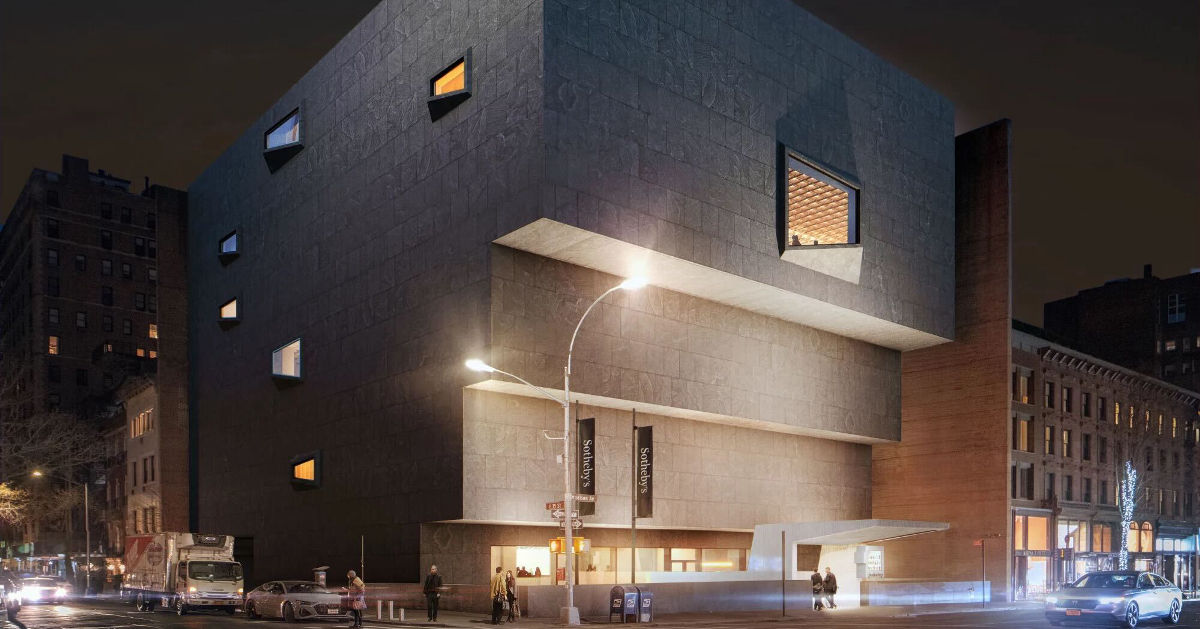
❌