The Liquid Network said Sunday that purported white-hat hackers withdrew about 4,000 bitcoin, worth about $320 million, from the federation wallet that backs L-BTC. Bridge nodes were disabled, and the sidechain was paused. Other issued assets, including USDT, DePix and RWAs, were unaffected, the official account said on X.
The Liquid Network is a federated sidechain of Bitcoin, founded by Adam Back’s Blockstream. The Liquid chain issues a variety of assets such as LBTC, which it backs with BTC on the Bitcoin main chain, held in a large multisig of 15 corporate and known members. 11 of the 15 members need to sign a valid multi-signature transaction to move coins from the treasury. Before the hack, the treasury held over 4200 BTC; after the hack, Blockstream’s proof of reserves page reports a little over 207 BTC left.
The hackers withdrew 4,019.4 BTC from the reserve address in a peg-out transaction using the SideSwap Peg-out Authorization Key. SideWap is a bridge exchange and a member of the Liquid Federation. While details on the mechanism of the hack are not confirmed yet, it appears an inflation bug on the LBTC side chain was exploited by the hackers to create over 4,000 LBTC that did not exist before, and cash them out for on-chain bitcoin from the federation. Because the transaction appeared as valid, given the consensus bug, the federation members’ HSM security servers signed the BTC withdrawal transaction, worth roughly 320 million at the time.
The hacker moved the funds to an address ending in 6gyqjlte, from which they quickly signed a new transaction with a message on the OP_RETURN arbitrary data field saying “we are whitehats. contact us on chain.” Those coins were still at that address at the time of writing.
A small mainnet transaction to the hacker address followed by an OP_RETURN saying “Please contact security@blockstream.com”, presumably from a Blockstream public address, though that remains unconfirmed. A later OP_RETURN spend from the hacker address carried “Please contact us on Signal @m671aw.70”, however, this may be spam and does not share a link to the address with the stolen funds.
In response to the breach, exchanges were told to pause L-BTC deposits and withdrawals. Bridge nodes on the Liquid Network have been paused, limiting access to the side chain, which continues to produce blocks.
JAN3 CEO Samson Mow said Aqua’s Liquid features were affected and that on-chain bitcoin still worked. Other wallets in the industry that use the Liquid Network are expected to be affected. Users holding LBTC now effectively have their savings at risk, since the underlying BTC is currently not redeemable. Given the private nature of the Liquid chain, user onchain analytics are scarce and not much public information is known about how much LBTC is held by retail users versus corporations of Blockstream itself. Nevertheless, should the funds not be returned, it would be a heavy blow to the Liquid Network’s user base.
Users of LBTC don’t have many options but to wait for conversations with the hackers to resolve. Given the size of the hack, it would be difficult for the hackers to get away with stealing all that bitcoin, though perhaps not impossible. What may happen is that the hackers ask for a finder’s fee and return the majority of the funds.
British financial services firm Hargreaves Lansdown is letting retail investors buy bitcoin — nearly one year after it said the cryptocurrency was “not an asset class.”
The Bristol, UK-based investment firm’s website said it was offering bitcoin and other crypto exchange-traded notes to investors. ETNs are investment funds which trade on stock exchanges and track the prices of digital assets.
It comes after the firm, which manages nearly £173 billion (over $233 billion) in assets, last year warned customers about buying bitcoin.
NEW: U.K.'s largest investment platform Hargreaves Lansdown is now offering Bitcoin products to 2 million clients! pic.twitter.com/GgdeHK8vyM
“While longer-term returns of Bitcoin have been positive, Bitcoin has experienced several periods of extreme losses and is a highly volatile investment — much riskier than stocks or bonds,” the firm said at the time.
“The HL Investment view is that Bitcoin is not an asset class, and we do not think cryptocurrency has characteristics that mean it should be included in portfolios for growth or income and shouldn’t be relied upon to help clients meet their financial goals.”
Now, a number of ETNs tracking the price of bitcoin and other cryptocurrencies are available. The firm warns users that “crypto ETNs are considered high-risk and may be volatile.”
U.S. regulator the Securities and Exchange Commission in 2024 approved bitcoin exchange-traded funds for investors after a decade of saying no to the products.
The funds had the most successful debut in the history of ETFs as investors previously unable to buy exposure to the asset class rushed in to buy the products.
Run by top asset managers and banks like BlackRock, Fidelity, and Morgan Stanley, the investment vehicles now collectively manage over $100 billion in assets.
Hardware wallet manufacturer Trezor has said that a data breach first announced last month is worse than originally reported.
The Prague, Czech Republic-based company said Friday that an additional 67,000 U.S. customers had their names, emails, phone numbers, shipping addresses and order numbers leaked. The leaked data came from orders made between November 2019 and August 2021, according to Trezor.
Trezor first announced in August that data from 11,742 customers from the U.S., UK, Sweden, Colombia, Brazil, Italy, and Portugal had been exposed — with names, emails, phone numbers and shipping addresses leaked.
Two days ago, we received an update from our shipping provider, ShipMonk. We're deeply saddened to share the news that the recent data breach affects more customers than originally thought.
Another 67,000 customers from the US who ordered between November 2019 and August 2021… https://t.co/yDQvTlAA2S
Another 1,947 customers just had their names, cities and emails exposed in the breach.
In Friday’s announcement, Trezor said that its third-party fulfillment partner, ShipMonk, had falsely reassured the company about deleting customer data.
“Throughout our entire relationship with ShipMonk, we repeatedly requested and received written assurance confirming the deletion of the data, in line with our contract, data policy, and past communications,” Trezor wrote.
“We are very disappointed that, despite receiving this confirmation, the data was not deleted in their systems.”
Neither Trezor nor ShipMonk immediately responded to Bitcoin Magazine’s questions.
Trezor first announced in August that the data had been leaked because ShipMonk experienced “unauthorized access to their systems containing customer data.”
The company added that it had directly emailed all customers involved in the breach. Trezor’s parent company, SatoshiLabs, told Bitcoin Magazine last month that it was investigating the incident.
Trezor is one of the most popular Bitcoin hardware wallet solutions, and also has support for storing other cryptocurrencies.
Bitcoiners’ personal data has been targeted by cybercriminals in the past: back in 2020, an unauthorized party accessed popular hardware manufacturer Ledger’s e-commerce and marketing database, leaking over 1 million email addresses and the personal contact data of nearly 10,000 customers.
At the start of this year, customers reported receiving emails from Global-e, Ledger’s payment partner, that a data breach at its cloud systems leaked sensitive customer data.
El Salvador has not used public funds to accumulate bitcoin since the International Monetary Fund’s last review of its loan program, the fund said Thursday.
In a report Thursday, the body said that the Central American country had instead received bitcoin from private donations, citing documentation from the government. It added that “no further Bitcoin accumulation beyond the documented donations is expected.”
El Salvador made headlines in 2021 when it became the first country in the world to make bitcoin legal tender. Salvadoran president Nayib Bukele in 2022 said the country would buy one bitcoin per day but it was never clear where the money was coming from — or if he was actually buying at all.
“Documentation has been provided verifying that Bitcoin accumulation since the first review reflects private donations and that no public resources were used,” the IMF release said.
“Understandings were also reached on steps to modernize the legal, regulatory, and supervisory framework for digital assets and to further strengthen the governance and risk-management arrangements for public-sector crypto-asset holdings. Going forward, no further bitcoin accumulation beyond the documented donations is expected.”
The report added that public participation in the government-sponsored bitcoin wallet has been largely wound down, with majority ownership and operational control handed to a private operator.
El Salvador in 2021 debuted a state-sponsored wallet called Chivo for its citizens as part of its plan to increase bitcoin adoption in the country.
“IMF staff thank the Salvadoran authorities for the constructive discussions and excellent collaboration,” the report added.
The IMF El Salvador entered a $1.4 billion loan agreement at the end of December but the fund asked for the country to scale back certain aspects of its bitcoin strategy.
Institutions like the World Bank and the IMF have long criticized President Bukele’s Bitcoin law, which also asked businesses to accept the cryptocurrency if they had the technological means to do so.
President Bukele in 2024 admitted that Salvadorans weren’t using the cryptocurrency to buy things as expected, but always boasted that the government was still stacking sats.
Since launching a crime crackdown to tackle the country’s notorious crime gangs, murder rates in El Salvador have plunged. The country was once the most dangerous place in the Americas but President Bukele is now trying to turn it into a tech hub.
Crypto companies like Tether have since relocated to its capital, San Salvador.
Bitcoin slid Friday after a better-than-expected labor report showed that the U.S. job market accelerated in August.
The leading cryptocurrency was recently trading for close to $79,764 after dropping as low as $78,706 earlier in the morning in New York. It’s currently down over 1% over a 24-hour period. On Thursday, the coin soared above $82,000.
The Federal Reserve is typically more likely to raise interest rates when the labor market is strong, because more people employed means more spending, and more spending can push inflation up.
Federal Reserve Chair Kevin Warsh last week gave his first major speech as head of the U.S. central bank and said he had “more work to do” to fight inflation. Bitcoin has typically done well in a low-interest rate environment.
Traders currently view a U.S. Federal Reserve interest rate hike at the upcoming September 15–16 policy meeting as roughly a 50% to 60% probability.
But U.S. President Donald Trump on Friday demanded the Federal Reserve slash interest rates.
Writing on his social media platform Truth Social, Trump said: “Lower the interest rates because the U.S.A. is a much stronger credit than it was just a short time ago!”
He added: “We should have the LOWEST RATE of any country in the World, like ‘the old days.'”
Bitcoin has decoupled from stocks recently as investors have renewed concerns around dollar debasement.
The cryptocurrency started surging last month, after the U.S. Treasury Department said it would more than double the size of its government debt repurchases. The coin had its best run in three years and third best August ever.
The much-talked about debasement trade is back in the spotlight, and bitcoin has been trading in lockstep with gold, according to analysts. The so-called debasement trade is when investors buy an asset as a way to hedge against a currency losing value.
News dropped last month that U.S. public debt exceeded $40 trillion for the first time too. Excessive debt also undermines confidence in the dollar, making assets like bitcoin and gold attractive.
The National Sheriffs’ Association this week dropped its opposition to the crypto Clarity Act, after having previously warned that the proposed bill could help criminals.
Writing Thursday to Senate Majority Leader John Thune and Minority Leader Chuck Schumer, the association said it was changing its stance to neutral given how complex the issue is.
A number of lawmakers were hoping to vote on the Clarity Act in August. After a delay, a vote will now go ahead this month. The bill will establish a framework for distinguishing between digital assets that are securities, commodities or payment stablecoins — legislation that the crypto industry has long called for.
“Given the complexity of the legislation and the number of important details that remain under consideration, the NSA is changing its position on the Clarity Act to neutral,” the letter from NSA President Sheriff Troy Wellman and Executive Director Justin Smith read.
JUST IN: Major U.S. law enforcement organization National Sheriffs’ Association no longer opposes The Clarity Act
“We believe the most appropriate course is to step back and allow the legislative process to proceed to establish a…much needed regulatory framework.” pic.twitter.com/NBpKlrUsUj
“At this time, we believe the most appropriate course is to step back and allow the legislative process to proceed to establish a clear, effective, and much needed regulatory framework.”
The NSA had previously warned that the bill could create regulatory and anti-money laundering loopholes by exempting certain crypto developers and infrastructure providers from money transmitter rules.
Despite being passed in the house of representatives last year with strong bipartisan support, the Clarity Act has been in a deadlock for much of 2026. The banking lobby raised concerns over stablecoin yield and some lawmakers have said improvements need to be made surrounding ethics.
An updated bill of the Clarity Act was introduced in July that addressed some of these concerns — banning government officials and their families from issuing or promoting crypto.
Pro-crypto senator Cynthia Lummis wrote on Friday that the “bipartisan bill” gives “law enforcement real tools to fight the illicit finance crimes hurting hard working Americans.”
Major financial institutions, lawmakers and companies have said they support the latest draft of the new bill, but some Republicans have accused Democratic lawmakers of deliberately playing politics and holding the bill back.
Bitcoin may be rallying but that doesn’t mean the bear market is over. Not yet, anyway.
A new report from asset manager Fidelity said that while bitcoin was behaving like it did in previous cycles, it could still hit a bottom in November.
Bitcoin started rallying in mid-August after the U.S. Treasury Department said it would more than double the size of its government debt repurchases. The asset’s price recently stood at close to $81,639, up nearly 30% over a 30-day period.
Some have since argued that bitcoin is out of its bear market. The coin touched a record high in October last year, hitting $126,080.
“Given bitcoin’s recent performance, the bottom could already have occurred in July,” Chris Kuiper, Vice President of Research at Fidelity Digital Assets, wrote.
“It could also drop again to make another new low in November or later,” he continued, adding that bitcoin cycles have historically not been precisely four years long, so they “aren’t reliable for timing the market.”
Throughout most of June and July, bitcoin’s volatility was particularly muted, and the coin traded below $65,000.
But that all changed in August after the Treasury Department’s announcement, which has since brought the so-called debasement trade back in the picture again.
To get an idea of where bitcoin moves next, Kuiper argued that investors should pay attention to what happens with the crypto Clarity Act. Proponents argue it could provide “greater regulatory certainty and support continued innovation in the U.S. digital asset ecosystem,” he wrote.
President Donald Trump in August urged lawmakers to get the long-awaited crypto market structure bill over the line, helping spur bitcoin’s run. The president called the draft “very, very powerful” after meeting with crypto industry bigwigs at the White House.
The digital asset industry has long called for clear rules on how regulators should treat bitcoin, stablecoins and other cryptocurrencies.
Bitcoin’s correlation with gold is at its highest in six years as investors increasingly look for ways to hedge against currency debasement.
That’s according to a new report from Bitwise, which this week pointed out that the precious metal and leading cryptocurrency are trading in lockstep because the U.S. government has “materially intervened in the macro picture.”
Bitcoin started surging last month, after the U.S. Treasury Department said it would more than double the size of its government debt repurchases. The coin had its best run in three years and third best August ever.
JUST IN: Bitcoin's correlation with gold hit a six-year high, according to Bitwise
“The last time the bitcoin-gold correlation was that high was in 2020, following the rounds of fiscal and monetary stimulus during the Covid crisis,” Bitwise’s European Head of Research, André Dragosch, wrote.
He added that bitcoin’s correlation with the stock market dropped to a one-year low, “implying some kind of decoupling between hard assets and the stock market.”
Bitcoin has been pushed as “digital gold” for years but has sometimes traded with tech stocks as a “risk-on” asset.
But the so-called debasement trade — when investors buy an asset as a way to hedge against a currency losing value — was a much-talked about investment strategy last year and appears to be back.
The reason is down to the government intervening in markets, Dragosch argued. When the Treasury said it would try to rein in long-term borrowing costs, the dollar’s value slid and sent investors flooding back to gold — and bitcoin.
The Treasury the same week also said the U.S. public debt exceeded $40 trillion for the first time. Excessive debt also undermines confidence in the dollar.
“Investors are no longer asking whether to hedge currency debasement with gold or bitcoin. They’re simply hedging with both,” the report added.
“Bitcoin spent its first fifteen years being priced as a risk asset. If this correlation trend with gold holds, the next fifteen may look very different.”
The leading cryptocurrency again rallied this week, and was recently trading for close to $81,438 after jumping nearly 6% over a 24-hour period.
U.S. congressman French Hill expressed the importance of bipartisan support to get the long-awaited crypto market structure bill, the Clarity Act, over the line before the midterms.
The lawmaker told Fox Business Thursday that Democrats and Republicans have come to “narrow their differences in getting the bill drafted.
Pro-crypto lawmakers were hoping the Clarity Act passed before Congress departed for August recess. After a delay, a vote will now go ahead on September 15.
WATCH: Chairman @RepFrenchHill on the importance of passing the Clarity Act:
"…we passed the CLARITY Act in the House last summer with 78 Democratic votes. It is time for the Senate to join us and pass the CLARITY Act. Members on both sides of the aisle in the Senate have… pic.twitter.com/GMva1XOTDK
“Can Democrats work with Republicans and make sure America leads the world in distributed ledger technology and financial services?” Hill said.
“This one remaining significant issue is the ethics provision, and that is best solved by passing the legislation because everybody — no matter what family they belong to, the Trumps or not — would then be under a regulatory framework fully scrutinized by the United States government in commodity and securities and banking regulators,” he added.
The Clarity Act was first introduced by Hill, the House Financial Services Chairman, last year.
Crypto companies have long called for clear regulations for the industry. The Clarity Act drafts a framework to formally divide oversight between regulators, distinguishing which digital assets are securities, commodities or stablecoins.
The House of Representatives passed the bill last July but it has been stalled this year, mostly because the banking lobby clashed with crypto companies over paying customers stablecoin yield.
A new draft tackling the issue of ethics started circulating in July. It bans government officials from promoting or making money from crypto — something Democrats have criticized the Trump family for doing.
A group of Democrats said the bill fell short and wanted amendments. Some were accused of deliberately holding it back by Republicans like Cynthia Lummis.
Some have praised the bipartisan work that has already gone into the bill, namely Coinbase, America’s biggest crypto exchange. The company’s Chief Policy Officer, Faryar Shirzad, said in July that while some Democratic lawmakers were holding back the long-awaited legislation, younger Democrats wanted to pass it.
President Donald Trump in August said that in order for the U.S. to remain the “undisputed leader in Bitcoin and crypto,” lawmakers had to pass the “very, very powerful legislation.”
Payward, the parent company of crypto exchange Kraken, and fintech company SoFi Technologies on Thursday announced a deal to route SoFi customers’ crypto orders through Kraken’s institutional trading platform and list SoFi’s stablecoin on the exchange.
Under the agreement, SoFi will send its digital asset order flow to Kraken Prime, Kraken’s prime brokerage arm, which launched in 2025.
Rather than filling trades against a single order book, Kraken Prime uses smart order routing to compare prices and depth across multiple venues and execute where the fill is best. SoFi said customers will see no change to the app itself.
Payward is also joining the SoFi Exchange Network, the bank’s real-time settlement system, and will list SoFiUSD — SoFi’s bank-issued stablecoin — on Kraken.
Kraken Prime’s institutional and business clients will in turn gain access to SoFi’s business banking services and round-the-clock fiat settlement. The companies said qualified custody services would follow later.
SoFi holds a national bank charter and has 15.8 million members. The partnership is the latest in a series of tie-ups between Kraken and established financial firms, following arrangements with Deutsche Börse on foreign exchange and derivatives infrastructure, Nasdaq on a tokenized equities gateway, and Franklin Templeton on tokenizing exchange-traded funds.
The news comes after SoFi, a purely digital lender, last year became the first nationally chartered bank in the United States to launch crypto services for retail customers.
SoFiUSD is coming to Kraken.
Soon you'll hold, buy & sell SoFiUSD right in your Kraken account, through @Payward's partnership with @SoFi.
SoFi members get better prices, with @KrakenPrimeHQ pulling liquidity from across the market.
The company’s new SoFi crypto platform allows members to buy, sell and hold bitcoin directly within their bank accounts.
Kraken — like other crypto exchanges — is pushing into the traditional finance world, allowing users to trade stocks, bonds and other assets. The company has sold its app as a “primary account for everything.”
Over the past 30 days, the bitcoin price has surged over 23% following both positive regulatory news and announcements from the U.S. Treasury Department regarding debt buybacks.
But other major crypto company stocks rose quicker. Bitcoin treasury Strategy (NASDAQ: MSTR) was trading more than 13% higher on Thursday. The company on Monday resumed bitcoin buys after a 10-week pause to reshuffle its cash balance sheet.
America’s biggest crypto exchange, Coinbase, also saw its stock shoot up. Nasdaq-listed COIN was trading 11% higher in the same time period.
Elsewhere, bitcoin mining companies had a boost too. Top public companies in the space — including the Nasdaq-listed HIVE Digital, MARA, and CleanSpark — all were up on Thursday.
HIVE Digital led the pack with a 13% jump, while MARA Holdings was up more than 10% on the day.
Clean energy bitcoin miner CleanSpark jumped by 9%; IREN, which is slowly phasing out its mining operations to focus on AI-compute, was up by 4%.
Bitcoin had a phenomenal run in August — its third best such month in its history — after the U.S. Treasury Department said it would more than double the size of its government debt repurchases.
The announcement, aimed to tame surging yields not seen in nearly 20 years, hurt the dollar but has benefited non-yielding assets like bitcoin and gold.
Soon after, President Donald Trump urged lawmakers to get the long-awaited crypto Clarity Act over the line — digital asset legislation the industry has long called for.
Investors rushed back into bitcoin exchange-traded funds as a result, throwing over $2.8 billion at the vehicles — the most since October, when the coin hit a new all-time high.
Bitcoin had spent a lot of the year trading below $80,000 per coin, with June and July mostly below $65,000. The coin hit a new record of $126,080 in October. It is now nearly 40% below that number.
Multinational bank Standard Chartered announced Thursday that it had debuted bitcoin spot trading for institutional clients in the United Arab Emirates.
The bank said that eligible institutional clients would be able to use the service — the first of its kind in the country.
Standard Chartered in 2024 launched digital asset custody services in the UAE, months before it debuted spot crypto trading in other countries.
JUST IN: Standard Chartered Bank becomes first Global Systemically Important Bank to launch institutional Bitcoin trading in the UAE pic.twitter.com/yeOMtcO7bo
“The UAE has developed a clear digital assets regulatory framework that supports institutional participation and innovation,” Rola Abu Manneh, Chief Executive Officer, UAE, Middle East and Pakistan at Standard Chartered, said.
He added: “By combining execution with secure custody, governance and the connectivity of a global bank, we are providing clients with a more integrated way to participate in digital asset markets.”
Standard Chartered in 2025 set up a trading desk for bitcoin and other cryptocurrencies in London, making it one of the first global banks to enter spot cryptocurrency trading.
The crypto desk became part of the forex trading operation. The bank the same year debuted a blockchain unit called Libeara to help institutions tokenize traditional assets.
Standard Chartered has lately said that bitcoin’s price should continue to surge this year. Writing in an August note to investors, the bank’s Global Head of Digital Assets Research, Geoffrey Kendrick, said that a $100,000 price forecast by year-end was too low.
“Once investors remember how quickly prices can accelerate to the topside, and we get past the 6 October date (12 months after the all-time high) an overshoot towards the all-time high (USD126k) before year-end may be possible,” he said, adding that bitcoin’s bear market so far has been the shallowest on record.
Wall Street’s top regulator has said that he expects the long-awaited Clarity Act will get passed this month and the U.S. will be on track to be the “crypto capital of the world.”
Speaking to Fox Business on Tuesday, Securities and Exchange Chairman Paul Atkins confirmed that the regulator was pushing ahead with rules to help the crypto industry.
Pro-crypto lawmakers had hoped to pass the Clarity Act before Congress broke for August recess, but the vote slipped to September. The bill will establish a framework for distinguishing between digital assets that are securities, commodities or stablecoins.
JUST IN: SEC Chairman Paul Atkins says "The Regulation Crypto Assets proposal is our most historic step yet to cement America as the Crypto Capital of the World" pic.twitter.com/lcHtWcslgO
“The Clarity Act will be voted on in the Senate on the 15th of September,” Atkins said. “I anticipate and hope that it will be passed by the Senate and sent ultimately to the President’s desk for a signature.”
He added: “We’re changing the past approaches to try to update [rules], modernize them in the age of blockchain and crypto assets.”
Despite a vote on the Clarity Act being delayed, regulators like the SEC and Commodity Futures Trading Commission have said they will still proceed with trying to shape crypto policy.
Last week, the SEC sent a proposal to the White House aiming to “clarify the framework for the custody of crypto assets” for investment advisers and companies.
Despite being passed by the House of Representatives last year, the Clarity Act has been in a deadlock for most of this year after the banking lobby clashed with lawmakers and crypto businesses over whether platforms like Coinbase should be able to pay customers yield.
Some lawmakers have sought to change wording in the bill regarding ethics, and a new bill started circulating in July. The draft bans government officials from promoting and making money from crypto.
But other Democratic lawmakers said it still fell short; a number of pro-crypto Republicans accused Democrats of deliberately playing politics and delaying the bill.
Mexican billionaire Ricardo Salinas is at it again.
This time, the third richest man in Mexico told his followers that “fiat inflation is a hidden tax,” and the way to hedge against it was to buy bitcoin.
Salinas, the former chairman of home appliance and electronics retailer Grupo Elektra and Banco Azteca founder, told his followers to opt out and start protecting their savings.
When you work, you trade your time (your life) for money. But when governments create money at will and dilute its value, they steal the time you sacrificed to earn it.
Fiat inflation is a hidden tax. Don’t be fooled: learn, protect your savings, and defend your freedom, buy… pic.twitter.com/1l8ZtoFCaA
— Don Ricardo Salinas Pliego (@RicardoBSalinas) August 31, 2026
“Bitcoin changes one fundamental rule: no one can print more just because they want to,” Salinas said in a video on X on Monday.
“While you have to work to earn more money, the system can simply create more of it. Don’t be fooled: learn, protect your savings, and defend your freedom, buy bitcoin and hold it.”
It’s not the first time Salinas has told his followers to be aware of government monetary policy.
The billionaire posts on X almost daily to millions of followers, and criticizing central bank money creation is one of his recurring themes, appearing in tweets, interviews, conference keynotes, and video messages.
In recent years, the entrepreneur has stepped up his criticisms of governments — and his praises of bitcoin. Earlier this year admitted he had increased his allocation in the asset from 10% to 70% of his portfolio.
Salinas’ bitcoin enthusiasm all stems from central bank monetary policy. Speaking at Bitcoin 2022, Salinas described traditional money as “the fiat fraud.”
“What they are doing is printing money out of thin air, and then making fake purchases,” he said of the Federal Reserve.
The business magnate has also talked about his success in “orange pilling” his friends and family.
“I convinced my wife to mortgage the house that she has and take a loan to buy bitcoin,” he once boasted in an interview.
A lot of people have heard of Bitcoin but even among those who hold it, knowledge is shallow.
Though for those holding the leading cryptocurrency, it appears to be solving a problem: getting around failing banking rails or inflation.
That’s according to new findings from the U.S. Ivy League research university Cornell, which spoke to nearly 26,000 around the globe about Bitcoin.
In its new Bitcoin Adoption Index report, the top college found that El Salvador, Venezuela and Nigeria were the countries that had the highest number of people who had ever owned bitcoin.
“Ranked by the share of all respondents who have ever owned bitcoin, the leaders are not wealthy financial centers — they are economies where the national currency has been unstable and everyday access to dollars or reliable banking is hard,” the report read.
“In each, bitcoin functions less as a speculative bet and more as a practical workaround.”
Still, Cornell found that actually being able to explain the fundamentals of the protocol was difficult for most — including how many bitcoins would ever be minted in existence. In fact, 58% of those surveyed said they didn’t know the supply was capped at 21 million coins.
But technicalities aside, the cryptocurrency has still proved helpful to people wanting to use it, the report found.
One Venezuelan — who wasn’t named — told interviewers that Bitcoin was “faster, cleaner, and much less risky” than other methods of getting dollars in the country.
While another Salvadoran was quoted saying: “When nobody controls [bitcoin], it means we all have control of it.”
And a Nigerian interviewee reportedly told Cornell researchers: “I’ve been to six African countries and whenever I go there, I don’t fear it because I know I can spend my bitcoin.”
Bitcoin adoption started growing in Venezuela ahead of other countries years ago, when hyperinflation crippled the economy and strict government currency controls meant getting dollars became difficult.
El Salvador made bitcoin legal tender — along with the dollar — in 2021. The country’s leader admitted that getting its citizens to use the cryptocurrency was difficult but the Central American nation still says it buys the asset for its government coffers.
In Nigeria, which has had some of the highest transaction volumes in the world, saving in bitcoin has been used by some to get around the collapse of the naira.
Cornell University’s research was fielded by Morning Consult in partnership with the Tech Policy Institute in Cornell University’s Jeb E. Brooks School of Public Policy, the Cornell Bitcoin Club, the Human Rights Foundation and the Reynolds Foundation.
Researchers interviewed 25,880 people in 25 countries between December 16, 2024 to March 10, 2025, asking 125 individual questions.
Top bitcoiner Adam Back has invested €7.6 million ($8.8 million) in Capital B, the Euronext Growth-listed company that bills itself as Europe’s first bitcoin treasury company.
The company said Wednesday that the investment will be used to buy more bitcoin. Adam Back is the CEO of bitcoin infrastructure company Blockstream, and one of the biggest and well-known figures in the space
Capital B’s announcement comes after the company last week said it had raised €21 million ($24 million) in a private placement backed by Blockstream’s Adam Back and asset manager TOBAM.
Capital B announces a €21.0 million capital raise with global institutional investors, including strategic investors Adam Back and TOBAM, to accelerate its Bitcoin Treasury Company strategy
“The proceeds of the Private Placement will be used primarily to strengthen Capital B’s balance sheet through the accumulation of bitcoin as a long-term reserve asset,” the company said in a statement.
“This capital increase is a key step in implementing the company’s Bitcoin Treasury Company strategy, focused on increasing the number of bitcoin per share on a fully diluted basis over time.”
It added that the placement would fund it buying 376 additional bitcoins, taking its potential holdings to 3,521 coins from its current stash of 3,145.
Capital B is the 26th biggest publicly traded bitcoin treasury in the world, according to Bitcoin Treasuries, with a total of 3,145 bitcoins in its coffers — worth $242 million at today’s bitcoin price of $76,959.
Capital B built much of that position through fundraising rounds during the first half of 2026.
In May, it acquired 192 coins for €13 million after completing three capital raises.
Capital B’s is trying to build a bigger bitcoin position as other treasuries look to raise funds and accelerate their buys.
NYSE-listed AI-powered education company Genius Group last week said it was aiming to build parallel AI and bitcoin treasuries worth a combined $1.6 billion, after the company sold its entire bitcoin reserves to repay $8.5 million in debt.
The Bitcoin treasury model has taken a hit since last year when the price of the leading cryptocurrency took a hit.
A number of companies in the space have had to liquidate their holdings — including the biggest corporate holder of bitcoin, Nasdaq-listed Strategy.
Quantum this, quantum that…who put a stupid cat on-chain!?
Ahem.
Alright, let’s be serious. The threat that a viable, actually functioning, quantum computer would pose to Bitcoin if it were to be built is very serious. It is the concrete example of an existential threat, in every sense of the word.
One of the bedrock foundations that Bitcoin rests upon is the assumption of a functioning cryptographic system that can be used to produce unforgeable signatures, i.e. that if you follow that system’s protocol properly when signing things, there is no way that anyone but a bitcoin’s rightful owner could produce a signature needed to spend it unless the rightful owner failed to secure their private key from theft.
Quantum computers toss that right out the window. There goes the integrity of the entire mechanism that is used for owners of bitcoin to authenticate their ownership for the protocol to process their legitimately authorized transactions, and ONLY their legitimately authorized transactions. There’s no way for anyone to actually own anything in the context of the Bitcoin protocol if that assumption breaks.
Bitcoin breaks if that assumption breaks.
Thankfully, there are many different cryptographic systems that exist, and not all of them rest on assumptions that a quantum computer breaks. That’s the good news. The bad news is that its all a set of tradeoffs, none of them are ideal, and there are going to be some hard choices that have to be made.
But there are solutions to just about every one of the problems that a viable quantum computer would create…except the problem of choosing which solutions to use. So in light of that, here is The Quantum Issue.
This issue is a lot more structured than most past issues, and that is to ensure that it guides a reader through the entirety of the problem space and solution space without assuming any prior understanding (this is a very deep and technical subject).
The first set of articles goes through the general issue of quantum computing itself, how it differs from classical computing, why that matters, how likely it is one is developed soon, etc.
The second set examines Bitcoin’s exposure. How is it exposed? How badly is it exposed? How can that degree of exposure change?
The third set examines concrete (or developed enough to not be too hard to get to a concrete place) solutions to securing your bitcoin in a quantum safe way, and handling a network wide migration to those solutions.
This piece is the Letter from the Editor featured in the latest Print edition of Bitcoin Magazine, The Quantum Issue. We’re sharing it here as an early look at the ideas explored throughout the full issue.
The CEO of bitcoin treasury Strategy brushed off concerns investors may have about the company selling some of its stash, instead telling reporters that the move was to strengthen its balance sheet.
Speaking to Bloomberg on Tuesday, Phong Le said that the company now has a “bullet-proof balance sheet” and it was the “right trade at the time” to sell bitcoin when it did.
Strategy, the largest corporate holder of bitcoin, restarted its buying the cryptocurrency on Monday after a 10-week pause. After halting its buys in June, it instead sold small amounts of its bitcoin and built two cash reserves.
“We don’t really make decisions specifically on bitcoin’s price,” Le said.
He added: “We’re a net accumulator, and so I don’t sit around and say, ‘Well, when am I going to sell Bitcoin next?’ It comes down to a bit of a capital management mathematical equation of when we would do it.”
“I don’t foresee us selling bitcoin as we enter into what I consider a pretty heavy bull market.”
Strategy — formerly MicroStrategy — is an enterprise software company that pivoted to buying and holding bitcoin in 2020.
It first bought the cryptocurrency to protect its shareholders from inflation but has since aggressively bought the asset and pivoted to being a bitcoin treasury. It is now the largest corporate holder of the cryptocurrency, with 845,050 bitcoins worth $65.1 billion at today’s prices.
Investors can buy Strategy’s Nasdaq-listed stock (MSTR) to get heightened exposure to bitcoin’s performance.
This year, Strategy has bought back some of its preferred stock, STRC, which is trading at a discount, and increasing its dollar cushion.
In the company’s quarterly earnings in July, Strategy posted a $8.22 billion loss. But Le said the firm’s current paper loss wasn’t important for the time being, and that next year, its stock would soar again.
“We’re the J.P. Morgan of the crypto economy, so whether we sell 1,000 Bitcoin out of 840,000 to me is irrelevant to the conversation,” Le said.
Strategy stock (NASDAQ: MSTR) was trading 2% lower on Wednesday. Year-to-date, the stock is down 22%.
Bitcoin slid on Tuesday after investors went into “risk-off” mode following escalating attacks between the U.S. and Iran.
The largest cryptocurrency had initially shrugged off President Donald Trump’s threats to the Middle Eastern nation, as well as the first strikes.
But things heated up on Tuesday, and bitcoin’s price slid. It was recently down more than 2% on the day, trading for $77,363. The coin had pushed past as high as nearly $81,282 on Friday.
The Tuesday attacks from the U.S. were because Iran tried to put mines in the Strait of Hormuz, and also because of an attack on an American military base in Jordan, according to President Trump.
U.S. Central Command said on X that Iran had also attacked commercial ships.
Today at 12 p.m. ET, U.S. forces began striking Islamic Revolutionary Guard Corps (IRGC) targets in Iran. The strikes follow recent attempted attacks by the IRGC against commercial shipping in the Strait of Hormuz and against American service members deployed to the region.
“The strikes follow recent attempted attacks by the Islamic Revolutionary Guard Corps against commercial shipping in the Strait of Hormuz and against American service members deployed to the region,” the post read.
Iran responded with a “decisive operation” against U.S. military bases, according to Iranian media. Oil surged on the news.
Bitcoin’s price has been sensitive to geopolitical tensions this year — especially after Iran and Israel attacked Iran. The cryptocurrency has typically faced downward pressure on news of war, only to then rally when Trump raised hopes of a ceasefire.
Despite Bitcoin’s price being relatively muted, in recent months, it has made more wild swings since mid-August.
Bitcoin’s immediate reaction to rising oil prices is to drop: more expensive energy means higher inflation, and higher inflation typically means the U.S. central bank will postpone rate cuts, which can restrict the liquidity that bitcoin needs to gain momentum.
The Federal Reserve’s chair, Kevin Warsh, last week gave his first major speech as leader of the central bank and said that inflation in the world’s largest economy had not come down enough.
Traders are now no longer pricing in an interest rate cut this year, instead expecting a hike. Bitcoin has typically performed well in the past in low interest rate environments.
Still, the coin had one of its best runs in August after the U.S. Treasury said it would at least double the size of its liquidity-support buyback operations, in response to surging borrowing costs.
The announcement hurt the dollar but non-yielding assets like bitcoin and gold have benefited.
Bitcoin is known for its summer slumps. But August was different.
In fact, the leading cryptocurrency had its third best August ever.
As highlighted on Tuesday by Bitwise’s European Head of Research, André Dragosch, bitcoin delivered returns of 25% last month.
“No ‘summer lull’ so far,” Dragosch wrote on X, highlighting that the only better Augusts the coin has had were in 2017 when it gave investors returns of nearly 66%, and 2013, with close to 31%.
OFFICIAL: August 2026 is in the books and it's been the 3rd best August in bitcoin's history.
August 2017: +65.6% August 2013: +30.7% August 2026: +25.0%
Multiple analyses point to the months of June-September showing weaker average returns than the rest of the year.
Throughout most of June and July, bitcoin’s volatility was particularly muted, and the coin traded below $65,000.
But that changed in mid-August after the U.S. Treasury Department said it would more than double the size of its government debt repurchases due to fixed income markets under pressure and yields surging to levels not seen in nearly 20 years.
Lower long-term yields reduce the opportunity cost of holding non-yielding assets like bitcoin and gold, and generally support risk-on sentiment.
Investors flooded into bitcoin as a result.
Positive news soon followed, with President Donald Trump urging lawmakers to get the long-awaited crypto Clarity Act over the line. The digital asset industry has long called for clear rules on how regulators should treat bitcoin, stablecoins and other cryptocurrencies.
Despite a delay in a vote on the legislation, Trump called the draft “very powerful.” The president made the comments after having met with crypto industry bigwigs and CEOs.
Investors also rushed back into ETFs in August, throwing over $2.8 billion at the vehicles — the most since October, when the coin hit a new all-time high.
Bitcoin in August had its best run in three years — and is up nearly over 20% over the past month.
The asset reached as high as $81,281 last week before sliding again on Friday.
Bitcoin’s price recently stood at $76,883, nearly down 3% over a 24-hour period.
BlackRock’s iShares Bitcoin Trust exchange-traded fund has delivered better returns since its 2024 launch than Vanguard’s popular S&P 500 fund.
That’s according to Bloomberg data highlighted by the firm’s senior ETF analyst, Eric Balchunas, who said that the BlackRock product’s cumulative percentage return was only slightly ahead of Vanguard’s in the time period.
BlackRock’s bitcoin ETF is up 71% since its January 2024 debut, while Vanguard’s S&P 500 ETF up 66% on a total-return basis.
Hard to believe $IBIT is beating $VOO since inception but it's true..altho it's close. And to be fair, IBIT's path to 70% looks like the El Toro roller coaster at Great Adventure (i needed two Advil last time I rode that thing) while $VOO was a walk in the park in comparison.… pic.twitter.com/vpOgI7JZKL
The iShares Bitcoin Trust — IBIT — started trading in 2024 after the Securities and Exchange Commission gave the green light to 11 spot bitcoin ETFs following a decade of denials.
“IBIT’s path to 70% looks like the El Toro roller coaster at Great Adventure (I needed two Advil last time I rode that thing) while $VOO was a walk in the park in comparison,” wrote Balchunas on Tuesday.
U.S. investors now have several funds to choose from to buy shares that track the price of bitcoin managed by the likes of Fidelity, Grayscale and Morgan Stanley. But BlackRock’s product is the most successful: It currently manages $61.4 billion in assets, according to its website.
By comparison, the second biggest bitcoin ETF, the Fidelity Wise Origin Bitcoin Fund, manages nearly $11 billion.
BlackRock, which manages over $15 trillion in assets, sent shockwaves through the crypto space after it applied for a spot bitcoin ETF in 2023. Its fund now allows more traditional investors to get exposure to bitcoin; its product also experiences more day-to-day trading action than the other ETFs.
Investors piled back into ETFs in August, which has also helped bitcoin’s price. From August 17 to 27, investors threw over $2.8 billion at the vehicles — the most since October, when the coin hit a new all-time high.
Bitcoin reached as high as $81,281 last week before sliding again on Friday.
Bitcoin is up this month but there’s one place where it’s more significantly more expensive: South Korea.
The so-called Kimchi Premium — when bitcoin costs more on Korean exchanges — is back as retail investors pile back into the coin. Bloomberg first reported the news and CoinGecko data shows that bitcoin’s price is nearly 1% higher on Upbit, Korea’s biggest exchange, than Binance.
Named after a popular dish in the Asian nation, the phenomenon comes down to Korea’s market being partly walled off. Prices have historically run higher there because of strong local retail demand combined with strict capital controls and trading regulations.
As a result, the Bitcoin/won trading pair is more common in South Korea compared to the Bitcoin/U.S. dollar pair in other places. When there is demand for the asset, it will naturally be higher in the country as compared to other places.
The phenomenon has been described as a retail FOMO indicator, since Korea has few notable crypto funds and tight capital controls. The premium has reached as high as 21.5% in 2022.
Bitcoin was recently trading for $78,287, unmoved over the past 24 hours. It’s also at the same price it was seven days ago, but over the past month, the coin has rallied by 24%.
The price of the biggest digital asset started surging after the U.S. Treasury in August said it would at least double the size of its liquidity-support buyback operations. The announcement hurt the dollar but non-yielding assets like bitcoin and gold have benefited.
President Donald Trump also said the same week that the long-awaited crypto Clarity Act was an important piece of legislation, and urged lawmakers to get it over the line.
JUST IN: There's now a 59% chance Bitcoin will be above $82,500 this month, according to Polymarket.com pic.twitter.com/kTYEZsxQvk
Crypto industry bigwigs have been calling for clear rules for distinguishing between digital assets that are securities, commodities or payment stablecoins, and news that regulators will soon have such a framework has typically benefited crypto markets.
Speculators are now betting on Polymarket that there’s a 59% chance bitcoin will be above $82,500 this month, leading some to call an end to the bear market.
Bitcoin’s roughly 50% decline from its October 2025 high has created a useful test for the institutional investment thesis. It is relatively easy to make the case for a new asset while prices are rising, correlations are favorable and capital is flowing into the market. The more revealing exercise comes after a major drawdown, when investors can revisit the original assumptions and determine which were structural and which were simply products of the preceding cycle.
That is effectively what BlackRock has done in its latest research, Re-Underwriting Bitcoin: Still a Portfolio Diversifier. Rather than treating the recent drawdown as evidence for or against Bitcoin in isolation, the firm returns to the question most relevant to an allocator: how has Bitcoin actually affected the risk and return characteristics of a diversified portfolio?
The results are more consequential than the headline return figures suggest. In BlackRock’s rolling 10-year analysis through May 29, 2026, a traditional 60/40 equity and fixed-income portfolio generated an annualized return of approximately 9.9% with annualized standard deviation of roughly 10.1%. Introducing a 1% Bitcoin allocation increased annualized return to approximately 10.9%, while volatility moved only modestly higher to roughly 10.3%. At a 2% allocation, annualized return reached approximately 11.8%, with standard deviation of about 10.6%.
Put differently, the 2% allocation added roughly 190 basis points of annualized return relative to the traditional portfolio while increasing annualized volatility by approximately 50 basis points. The portfolio’s Sharpe ratio improved from 0.81 to 0.96, while maximum drawdown changed from -20.3% to -20.9%. Those figures are hypothetical and backward-looking, but they illustrate why judging Bitcoin primarily by its standalone volatility can produce an incomplete assessment of its portfolio impact.
The more relevant question is how that volatility interacts with everything else an investor already owns. BlackRock continues to characterize Bitcoin as having risk and return drivers that are fundamentally different from traditional assets, rooted in its fixed supply, decentralized structure and independence from any sovereign issuer. Those characteristics do not prevent Bitcoin from trading alongside risk assets during periods of deleveraging, but BlackRock’s research suggests those correlations have historically been episodic rather than permanent.
That distinction helps explain the portfolio results. A modest allocation does not import Bitcoin’s standalone volatility into a portfolio on a one-for-one basis. What matters is the marginal contribution of that allocation to total portfolio risk relative to the return it has historically generated. In BlackRock’s analysis, that trade-off remained favorable at 1% and 2%, even after incorporating one of Bitcoin’s most significant recent drawdowns.
Why 1–2% keeps appearing in BlackRock’s work
This is not the first time BlackRock has arrived at this range. Its earlier portfolio research approached Bitcoin sizing through risk contribution, concluding that a 1–2% allocation could represent a reasonable range for investors willing and able to accept Bitcoin’s risk. At those weights, BlackRock found that Bitcoin could contribute a similar share of overall portfolio risk as an individual mega-cap technology holding in a conventional 60/40 portfolio. Beyond 2%, however, Bitcoin’s contribution to total portfolio risk begins to increase disproportionately.
The new analysis approaches the same question from the opposite direction. Rather than asking how much risk Bitcoin contributes, it examines what investors historically received for assuming that additional risk. The improvement in Sharpe ratio from 0.81 for the traditional portfolio to 0.90 with 1% Bitcoin and 0.96 with 2% Bitcoin suggests that the incremental return historically more than compensated for the additional portfolio-level volatility.
This does not establish 1% or 2% as an optimal allocation, and BlackRock does not present it that way. The appropriate exposure will depend on liquidity requirements, investment horizon, governance constraints and risk tolerance. What the analysis does provide is a more rigorous framework for the discussion. The allocation question can increasingly be evaluated in terms of marginal risk, correlation, drawdown and portfolio efficiency rather than through a binary debate over whether Bitcoin itself is too volatile to own.
BlackRock has also seen the demand firsthand
There is another dimension to BlackRock’s latest analysis that is difficult to separate from the firm’s experience in the market.
BlackRock launched the iShares Bitcoin Trust, IBIT, in January 2024. Less than a year later, it had accumulated more than $50 billion in assets, making it what BlackRock itself has described as the largest exchange-traded product launch in history. It reached that milestone roughly five times faster than the previous record holder.
Its significance has only grown since then. BlackRock now describes IBIT as the world’s largest and most traded Bitcoin ETP, and the fund became the firm’s highest-revenue ETF in 2025 despite competing within a global BlackRock lineup of more than 1,000 products.
The concentration within the U.S. spot Bitcoin ETF market is equally notable. According to current ETF holdings data tracked by Bitcoin For Corporations, U.S. spot Bitcoin ETFs collectively hold approximately 1.25 million BTC, representing nearly 6% of Bitcoin’s fixed 21 million supply. IBIT alone accounts for roughly 775,000 BTC, or more than 60% of the Bitcoin held across the U.S. spot ETF complex.
That does not make BlackRock’s research independent of commercial context; IBIT is an important and increasingly valuable BlackRock product. That context should be understood rather than ignored. But it also means the firm’s reassessment is occurring alongside more than two years of observing how investors actually use Bitcoin exposure at scale.
The distinction is useful. The theoretical case for Bitcoin as a portfolio asset is increasingly being accompanied by observable allocation behavior. Investors have now had access to Bitcoin through familiar brokerage, advisory and institutional infrastructure across multiple market regimes, including periods of rapid appreciation and severe drawdowns. IBIT’s growth suggests that demand has persisted well beyond its initial launch window.
A drawdown is precisely when a thesis should be re-underwritten
The timing of BlackRock’s report may ultimately be more informative than the portfolio simulation itself.
Bitcoin is not being reassessed at an all-time high. BlackRock published the analysis after an approximately 50% drawdown from Bitcoin’s October 2025 peak, a period the firm associates with leveraged positioning being unwound, slowing ETP flows and weaker demand from companies accumulating Bitcoin. Its conclusion is that these forces represented a positioning correction rather than a fundamental change in Bitcoin’s investment case.
That is what re-underwriting is supposed to accomplish. An investment thesis should not survive because investors are attached to it; it should survive because its underlying assumptions continue to hold when conditions change.
For Bitcoin, those assumptions extend beyond historical returns. The asset remains scarce by design, globally liquid, independent of a sovereign issuer and structurally different from the liabilities that dominate traditional portfolios. BlackRock argues that concerns around fiscal sustainability, monetary stability and geopolitical risk may therefore become increasingly relevant to Bitcoin’s long-term adoption.
The portfolio evidence does not prove what Bitcoin will return over the next decade, nor does IBIT’s success establish what an appropriate allocation should be. What the two developments show together is that the institutional conversation has advanced considerably. Bitcoin is no longer being evaluated solely as an unconventional asset that institutions may or may not choose to own. It is increasingly being evaluated through the same disciplines applied elsewhere in capital allocation: sizing, risk contribution, correlation, liquidity, drawdown and expected return.
What this means for corporate leaders
For CFOs, boards and corporate operators, that evolution may be the most important takeaway from BlackRock’s work.
The relevant decision is not whether Bitcoin is volatile; that is already known. Nor does a corporate allocation need to resemble the concentrated Bitcoin strategies pursued by companies that have explicitly built their capital structures around the asset. Between zero exposure and a Bitcoin-centric balance sheet sits a much broader spectrum of possible allocations.
BlackRock’s research provides a useful framework for thinking about that spectrum. A relatively small allocation was sufficient to materially alter the historical return characteristics of a conventional portfolio without producing a comparable increase in portfolio-level risk. At 2%, approximately 190 basis points of additional annualized return came with roughly 50 basis points of additional annualized volatility in the period studied. The allocation was small; its effect was not.
For corporate leaders, the implication is less about adopting BlackRock’s specific allocation range than adopting the discipline behind the analysis. Bitcoin can be underwritten like any other strategic allocation: define its purpose, determine an acceptable risk contribution, establish liquidity and governance requirements, size the position accordingly and periodically revisit the assumptions.
That is a considerably more mature question than whether a company should simply “buy Bitcoin.”
BlackRock has now re-underwritten that question after another full market cycle and a roughly 50% drawdown. Its historical portfolio math still makes the case that, in measured amounts, Bitcoin can improve the equation. For corporate decision-makers, that is the takeaway worth bringing into the boardroom.
Disclaimer: This content was prepared on behalf of Bitcoin For Corporations for informational purposes only. It reflects the author’s own analysis and opinion and should not be relied upon as investment advice. Nothing in this article constitutes an offer, invitation, or solicitation to purchase, sell, or subscribe for any security or financial product.
Bitcoin treasury Strategy has blasted Morgan Stanley Capital International’s proposal to exclude it from its Global Investable Market Indexes, calling it “misguided” and “flawed.”
Writing in a letter to MSCI Monday, the Nasdaq-listed Bitcoin behemoth’s founder, Michael Saylor, and CEO, Phong Le, said that the company was discriminating against digital asset businesses.
MSCI said earlier this month that it was consulting on a plan to define “non-operating companies” and make them ineligible for its Global Investable Market Indexes. The removal of such companies would exclude firms like Strategy from indexes visible to a large pool of institutional investors.
Strategy responded today to MSCI’s proposed “non-operating company” exclusion. While not material to $MSTR, the proposal is misguided, flawed, and conflicts with established securities laws and accounting principles. Read our letter and share your support: https://t.co/Vup3T5TbvY
MSCI’s latest proposal comes after the company in 2025 proposed excluding from its indices all companies whose digital-asset holdings represent 50% or more of total assets.
“MSCI’s continued effort to discriminate against digital assets is misguided and calls into question MSCI’s neutrality and reliability,” Strategy’s letter read.
It added: “The proposal, like the 2025 proposal that MSCI withdrew, is discriminatory, arbitrary, and misguided. If adopted, the proposal would have no meaningful impact on Strategy’s business, but it would profoundly harm MSCI’s reputation as a reliable and neutral index provider. Like the 2025 proposal, the current proposal should be withdrawn.”
Strategy argued that MSCI was relying on unprecedented classifications to define Bitcoin as a “non-operating” asset. Strategy said it reports its Bitcoin business as an operating segment and its Bitcoin gains and losses as operating expenses.
The company said that MSCI’s methodology for targeting “non-operating companies” was “arbitrary and unexplained,” and was just a way of unfairly targeting digital asset treasuries.
Strategy further argued that the company is an operating one, employing 1,500 people across the globe and actively using its Bitcoin to “create shareholder value.”
Strategy — formerly MicroStrategy — is an enterprise software company that pivoted to buying and holding bitcoin in 2020. It first bought the cryptocurrency to protect shareholders but has since aggressively bought the asset and is now the largest corporate holder of the cryptocurrency, with 845,050 bitcoins worth $65.8 billion at today’s prices.
Investors can buy Strategy’s Nasdaq-listed stock (MSTR) to get heightened exposure to bitcoin’s performance.
MSTR closed Monday trading 4% higher. Year-to-date, the stock is down 15%.
Bitcoin on Monday shrugged off tensions in the Middle East, barely moving despite U.S. President Donald Trump vowing to hit Iran hard.
The price of the biggest cryptocurrency recently stood at $79,076, unmoved over a 24-hour period. The coin also hasn’t budged from where it stood seven days ago.
Geopolitical strife has this year hurt Bitcoin’s price, with the cryptocurrency typically facing downward pressure on news of war and rallied in hopes of a ceasefire.
When the U.S. and Israel first attacked Iran in February, the coin nosedived, and had been shaky on news of war in March and April.
But in recent months, Bitcoin’s volatility has been muted, according to analysts, and Monday was no different: President Trump promised to hit Iran again but the asset didn’t flinch.
“We’re going to hit them hard,” President Trump was quoted telling a Fox News reporter on Monday. The U.S. and Iran started strikes again on Sunday — the first in over one month.
Bitcoin started a phenomenal run two weeks ago — its best in three years — and is up nearly 30% over the past month.
Its price started surging after the U.S. Treasury would at least double the size of its liquidity-support buyback operations. The announcement hurt the dollar but non-yielding assets like bitcoin and gold have benefited.
Positive regulatory news has also helped bitcoin this month: President Donald Trump this month said that the long-awaited crypto Clarity Act was a “very, very powerful” piece of legislation, and urged lawmakers to get it over the line.
The Clarity Act aims to establish a framework for distinguishing between digital assets that are securities, commodities or payment stablecoins — legislation that the crypto industry has long called for.
JUST IN: Crypto ETFs attracted $3.2 billion in inflows last week, "their largest weekly intake since October 2025", The Kobeissi Letter reports.
BlackRock's IBIT led with $928 million last week, adding to their $1.3 billion from the prior week, and marking the biggest 2-week… pic.twitter.com/ROC9tYPMGN
Investors have piled back into exchange-traded funds this month, too, which has also helped bitcoin’s price. From August 17 to 27, investors threw over $2.8 billion at the vehicles — the most since October.
Bitcoin reached as high as $81,281 last week before sliding again on Friday.
Strive’s stock soared on Monday after the company announced a $143 million bitcoin buy, making it the fifth biggest publicly traded crypto treasury.
The Nasdaq-listed company announced its latest buy of 1,800 bitcoins between August 24 and August 28. It snapped up the coins for an average price of $79,431, according to a filing with the Securities and Exchange Commission.
The Dallas, Texas-based company now holds 23,156 coins worth $1.8 billion at today’s prices. Its stock (NASDAQ: ASST) was trading 9% higher at about 12.30pm in New York. Year-to-date, Strive’s stock has risen by nearly 40%.
Strive’s year-to-date Bitcoin yield, a metric that compares growth in bitcoin holdings relative to share count, reached 40.8% as of its Aug. 28 filing, up from less than 37% in early June.
Strive now is the fifth biggest bitcoin treasury, behind only Strategy, Twenty One, Metaplanet, and MARA.
Founded by former Ohio gubernatorial candidate Vivek Ramaswamy in 2025, after raising $750 million to buy Bitcoin, Strive debuted as an official bitcoin treasury.
In January 2026, it completed the acquisition of Semler Scientific in an all-stock deal — the first instance of a publicly traded Bitcoin treasury company acquiring another such company.
The idea is that investors can get amplified returns from Strive’s stock. The company buys bitcoin with equity, and maintains a debt-free balance sheet: no bonds, no credit lines, and no leveraged positions that could trigger forced liquidation in a downturn.
Strive CEO Matt Cole has described the company as debt-free with zero margin requirements and zero encumbered bitcoin.
Strive’s latest purchase comes as Strategy, the biggest corporate holder of bitcoin, restarted its buying last week.
The software company had paused buying bitcoin for 10 weeks but announced it had bought 4,603 bitcoins for $369.7 million between August 24 to August 30.
Russia’s largest bank, Sberbank, has said it expects trading volume with its new crypto rollout to hit 4 trillion rubles ($46.43 bln) in the first year, according to reports.
Volumes are also expected to hit 7.5 trillion rubles ($87.06 bln) by 2029, Sberbank Deputy Chairman of the Executive Board Anatoly Popov was quoted saying, as reported by Tass on Saturday.
The forecast was deemed “conservative” according to the news report. Sberbank in July revealed plans to debut a Bitcoin and crypto wallet as well as digital asset custody by December. The Bank of Russia in July published draft regulations for crypto trading, and the State Duma is preparing the comprehensive regulation of digital assets.
And in a Friday report, Tass quoted Sberbank Deputy Chairman Anatoly Popov saying that the bank was planning to accept Bitcoin — and other cryptocurrencies — as collateral for loans.
Russia is fast moving ahead with regulating digital assets in the country. Russian President Vladimir Putin this month signed a law to set in stone the regulation of digital currencies and digital rights in the country.
The new law reportedly allows only registered entities to operate as exchanges, and puts limits on the amount of crypto retail investors can use.
Still, despite the rollout, using digital assets as a means of payment or legal tender within Russia is still banned. Using crypto as a form of payment has been prohibited in Russia since 2022.
President Putin has appeared to praise Bitcoin in the past, once saying that the leading cryptocurrency can’t be stopped.
Since the U.S. and European governments cut Russia off from the SWIFT payments system after it invaded Ukraine in 2022, Russian companies have been using Bitcoin to skirt around the penalties.
But the Russian state keeps a tight grip on what its citizens can do with crypto: authorities have been cracking down and arresting people operating unregistered crypto exchanges.
And the amounts involved barely matter — a nuclear engineer in Sarov was sentenced to 18 years for sending about $13 from his crypto wallet to groups the state designates as terrorist organizations.
Bitcoin treasury Strategy resumed its bitcoin buys last week, snapping up nearly $370 million in the leading cryptocurrency, according to a Monday announcement from the company.
A filing with the Securities and Exchange Commission shows that Strategy bought 4,603 bitcoins for $369.7 million between August 24 to August 30. Each coin was bought at an average price of $80,318, according to the filing.
The buy comes after Strategy paused its bitcoin buys in June, instead focusing on building a cash buffer, buying back its stock and even sometimes selling some of its holdings.
“Strategy is evolving from one-way capital issuance to active capital management,” Strategy CEO Phong Le said in June.
“We intend to move between issuing securities when capital is attractive and repurchasing securities when our instruments trade at levels that make buybacks accretive. This flexibility is designed to create shareholder value, improve corporate performance, and strengthen the quality and market standing of Strategy’s securities in the eyes of investors.”
Strategy now has $5.1 billion in its USD Reserve and $1.61 billion its new USD Cash reserve — which was announced last week.
The company holds 845,050 bitcoins worth $65.8 billion at today’s prices.
Software company Strategy — formerly MicroStrategy — began buying bitcoin in August 2020 as a treasury strategy to boost shareholder returns during the pandemic.
It has since spent more than $63.7 billion on buying bitcoin and remains by far the largest corporate holder of Bitcoin in the world. Its approach spawned a wave of copycat companies that have since adopted similar crypto-treasury strategies of their own.
Chairman and Strategy founder Michael Saylor has said that the company is now focusing on creating digital credit: high-yield products, such as its preferred equity, STRC, which are backed by its bitcoin holdings.
Strategy’s stock (NASDAQ: MSTR) was trading slightly higher on Monday morning in New York. Year-to-date, its price has dipped nearly 20%.
Bitcoin was trading for $77,821 on Monday morning in New York after hitting a high last week of $81,281. Over a 24-hour period, the coin now sits unmoved, but over a 30-day period, it has jumped by more than 24%.
In 1915, Kazimir Malevich hung a black square on a gallery wall and called it the zero point of painting – the end of the image, presented as an image. A little over a century later, the black square returns in Remains, but this time as consequence rather than statement. If the collector of one of these works by artist Rupture does nothing, the on-chain response is to produce the black square for them, one pixel at a time, one block at a time, until nothing is left of the image.
Remains is a series of four hybrid works in which a painting and a related ordinal are structurally bound. Each inscription contains exactly 210,000 pixels – the number of blocks mined in a bitcoin halving epoch. Beginning at the next halving in April 2028, the inscription begins to decay in real time: one pixel dies for every block the network mines. The only way to stop it is hidden beneath the surface of the physical painting – a unique alphanumeric code, retrievable only by destroying a meaningful portion of the work, which must then be inscribed as a “child” of the ordinal to permanently halt the decay. Preserve the painting, and the image on the blockchain is consumed. Save the inscription, and the painting is wounded forever. The collector cannot remain passive. Inaction is itself a choice, and the Bitcoin blockchain makes both outcomes permanent.
Art history is full of destruction deployed as a gesture. Robert Rauschenberg erased a de Kooning drawing in 1953 and framed the absence. Banksy fed Girl with Balloon through a shredder hidden in its own frame the moment the auction concluded at Sotheby’s. And in 2016, Sun Yuan and Peng Yu caged an industrial robot at the Guggenheim and gave it a single task: sweep the blood-red fluid endlessly pooling around its base back toward itself, a futile act of self-maintenance it performed for three years, slowing visibly, until it stopped. Can’t Help Myself may be the saddest machine ever built. It is also a close ancestor to Remains: both works run on a clock, and both make the audience watch something decay in real time. But where the robot’s fate was sealed by its programming, Remains leaves the outcome unwritten. Destruction here is not a spectacle performed by the artist. It is stewardship demanded of the collector.
Rupture (b. 1993, Switzerland) is a self-taught artist based in Mexico City. Within the digital art space, he has produced one of the most widely collected artist-made bodies of work on Bitcoin, the Persona series (750 works, 2024–2025), alongside earlier work on Ethereum; he was also among the first artists to release work on Solana. The physical practice reaches back further: exhibiting internationally since 2016, with presentations at Museum Halle Saint-Pierre in Paris, Art Basel Miami, the 2nd Triennial of Self-Taught Visionary Art in Belgrade, and a nomination for the Prix Suisse d’Art Brut, figurative painting built on dense, obsessive mark-making and an insistence on the irreversible. Remains is where the two paths collide: painting and blockchain bound into single objects, each incomplete without the other.
Bitcoin is the most consequential permanence system produced in the digital age. Its architecture assumes that what is recorded cannot be lost. Remains takes that assumption seriously enough to test it — and in doing so forces a reckoning with a fundamental asymmetry between physical and digital culture: one forgets by nature, the other records permanently regardless of intent.
I sat down with Rupture ahead of the exhibition to talk about decay as a medium, the collector as an unwilling participant, and what it costs to save anything.
BMAG: Let’s start with the mechanism, because it’s the basis of the whole series. Each digital component contains exactly 210,000 pixels – the number of blocks in a Bitcoin halving epoch – and beginning at the April 2028 halving, one pixel dies for every block the network mines. Discuss how you arrived at that structure. Did the concept come first and the math followed, or did the number 210,000 suggest the work?
Rupture: The concept was there before any of the pieces existed. I was thinking a lot about permanence, especially in relation to digital mediums. Bitcoin is seen as the most permanent and unchangeable record humanity has built, and Ordinals were marketed on exactly that thesis – a truly permanent storage layer, unlike NFTs on other chains with their broken links and files sitting on someone’s server. Persona, my first series on Ordinals, embraced that promise. With Remains I wanted to turn it on its head.
I think there is something beautiful about impermanence. We live in a moment where movements like transhumanism want to engineer it away, and I understand the impulse, but I’d argue the opposite: life would lose its meaning if it were eternal. The same applies to art. Tibetan monks spend weeks building a sand mandala and then sweep it away – the dissolution becomes part of the work.
So I set out to make a digital work that would be consumed by Bitcoin’s own metabolism. From there the structure basically assembled itself. The closest on-chain analogue to a pixel dying was a block being mined – a discrete, irreversible event that happens roughly every ten minutes, forever. So I linked them one to one. An epoch is 210,000 blocks, which meant the image had to be 210,000 pixels. The math followed the concept.
BMAG: The “kill switch” is hidden beneath the paint on the physical painting. To retrieve the code that stops the decay, the collector has to destroy a meaningful portion of the physical work – and then inscribe it as a child of the Ordinal. Did you paint these differently knowing the surface is also a type of vault? It’s very taboo to touch (or cut) a painting (outside ofLucio Fontana).
Rupture: I tried to approach these the way I would approach any other painting. The only real difference is that I had to start with the code. Each one was written on paper, laminated, and sealed at the center of the panel under layers of molding paste and gesso. Only then could the painting begin. So the secret is literally the first layer. Everything else sits on top of it.
As for the taboo – I think most of us, me included, are conditioned to ascribe a much higher value to the physical object. The painting feels irreplaceable in a way the inscription doesn’t, even when the inscription is the scarcer thing. That conditioning is what makes the concept work. The taboo gives the act of destruction its emotional weight, and that weight is what the collector has to sit with.
I deliberately left it open-ended. I’m not telling anyone what the right choice is. The collector confronts the question of value and permanence and answers it for themselves – publicly, and only once.
BMAG: There’s a lineage of destruction in art – Rauschenberg erasing de Kooning, Tinguely’s self-destroying machine at MoMA, Banksy’s shredder at Sotheby’s. And more recently, the “burn a physical to mint a digital” gesture that flared up during the initial NFT boom. Remains feels like a response to that last one in particular: in your work, destruction isn’t a spectacle the artist performs – it’s a responsibility the collector inherits. Where do you place yourself in that lineage, and what do you think the burn-to-mint era got wrong?
Rupture: I like to think of destruction as integral to creation. Jasper Johns destroyed nearly everything he made before 1954 so he could start over. Agnes Martin did the same, more than once. So artists questioning the preciousness of the art object is nothing new. And I think that preciousness is inherited – art objects have absorbed the aura that used to belong to relics. Now that commodities are the closest thing we have to a religion, cutting open a painting might be our version of desecration. Which is exactly why it carries weight.
The burn-to-mint mechanic treats the physical as a husk. You burned the painting to “upgrade” it into a token, the destruction was filmed, and the spectacle was the marketing. What it got wrong, I think, is that nothing was actually at stake. You destroyed something to get something the market valued more. That’s more of a transaction than a sacrifice.
In Remains there’s no version where you come out ahead. The collector already owns both halves, and destruction doesn’t produce anything new, it only decides which loss to accept. The loss runs on Bitcoin – a system built for remembering, repurposed as an engine of forgetting.
BMAG: The press text says the collector cannot remain passive – that inaction is itself a choice. That’s a strong tenet of the bitcoin idea. Self-custody works the same way: hold your own keys, and doing nothing is perhaps the best outcome. Did you set out to build a custody parable of some kind, or did the parallel arrive after? Artmaking can sometimes be nonlinear and we don’t see the connections in order.
Rupture: The parallel only occurred to me after the work existed. And funny enough, Remains actually inverts the rule. In self-custody, doing nothing is the safe move, while for Remains, doing nothing is what kills half the work.
But the deeper thing is the same in both. You’re on your own. There’s no institution behind you, no support line, no one to make the decision for you or undo it afterwards. The system just records what you do, and there are no exceptions.
Most people have never owned anything under those conditions. Bitcoiners have. I think that’s why they tend to understand this work faster – they know what it feels like to be the only one responsible for something that can’t be undone.
BMAG: At the next halving, the decay clock starts for any un-rescued work. Anyone can watch the inscriptions on-chain as they change. Is a completed black square a failedRemains, or the most honest version of the work?
Rupture: It definitely isn’t a failed Remains. It’s the piece brought to one of its logical outcomes. The work was never meant to be just the image – it’s the image plus the decision, and a black square is what one of those decisions looks like. It means the collector chose the painting, whether out of conviction or paralysis, and the chain holds the receipt: 210,000 confirmations of a single choice, applied one block at a time over four years. I don’t know of another artwork that documents its owner’s decision at that resolution.
And then there’s the Malevich analogue, which you opened with. He declared the zero point of painting. Remains arrives at the black square instead of starting from it – block by block, with an exit available the entire time. I don’t know which of the four pieces will end there, if any. That’s the one part of the work I can’t determine.
BMAG: For someone standing in front of these four paintings at the exhibition – someone who knows bitcoin as a price ticker but has never thought about what permanence actually costs – what do you want them to walk away thinking about?
Rupture: How permanence is never free. Nothing survives by default. Every object in every museum is there because someone paid for it to be – in money, in labor, in space, in other things thrown away to make room. History isn’t just what happened. It’s what someone decided was worth keeping. What persists does so because something else was set aside or destroyed. We just rarely see the other half of the equation.
Remains by Rupture debuts September 2–8, 2026 at PRIV.Y Gallery, 46 Hester Street, New York, presented by BMAG and running parallel to NFT.NYC. The opening reception is September 2. RSVP atluma.com/cckjg9kl.
BMAG is also running a bounty on X: enter for a chance to win Memory Theatre VI, an original work by Rupture. Full details and entry atshop.museum.b.tc/items/memory-theatre-vi.
The Bitcoin Museum & Art Gallery (BMAG) is the curatorial and cultural programming division of BTC Inc and the Bitcoin Conference. Learn more atmuseum.b.tc.
Bitcoin slid Friday afternoon, cooling down after a phenomenal run following huge investment from U.S. ETF buyers.
The leading cryptocurrency was trading for $77,379 on Friday afternoon in New York after dropping more than 3% over a 24-hour period.
Bitcoin hit a high this week of $81,281 but slowed down after Federal Reserve Chair Kevin Warsh gave his first major speech as head of the central bank — saying on Friday that he had “more work to do” to fight inflation.
The Bitcoin price has in the past dropped when the Federal Reserve thinks inflation is too high because it means less chance of a rate cut; the leading cryptocurrency typically does better in a low-interest rate environment.
JUST IN: U.S. Bitcoin ETFs have brought in $1.14 billion in inflows this week.
Bitcoin started surging last week after the U.S. Treasury would at least double the size of its liquidity-support buyback operations. The announcement last week hurt the dollar but non-yielding assets have benefited.
Exchange-traded funds, managed by the likes of BlackRock, Fidelity, and Grayscale have received net positive inflows for nine days in a row, according to Farside Investors data. Last week was their best week since October — when bitcoin hit a new all-time high — and that run has continued into this week.
Since August 17, investors have thrown over $3 billion at the funds. BlackRock’s iShares Bitcoin Trust received the lion’s share of the investment, but Morgan Stanley’s new Bitcoin Trust — which debuted this year — also experienced significant inflows.
Analysts have said that the so-called debasement trade — when investors buy an asset as a way to hedge against a currency losing value — was leading investors to eye-up bitcoin again.
Investors taking part in the trade think that bitcoin, gold and other precious metals are a good way to protect themselves from excessive government spending.
Total U.S. debt crossed $40 trillion for the first time this month.
The debasement trade is back — and will benefit bitcoin.
That’s according to asset manager Grayscale’s crypto research team, who wrote in a note this week that the U.S. government debasing its currency would lead to cash hitting digital assets.
“Unchecked government debt growth undermines the credibility of fiat currencies and drives investors to seek out alternative stores of value like physical gold and certain cryptocurrencies,” the note by the firm’s head of research, Zach Pandl, read, adding that primarily bitcoin would benefit.
US public debt has reached over $40 trillion. The Treasury is buying back bonds to ease rising borrowing costs, but core deficit remains.
Grayscale Research believes this may drive investors towards the debasement trade: Bitcoin $BTC, Ethereum $ETH, and Zcash $ZEC.
The so-called debasement trade is when investors buy an asset as a way to hedge against a currency losing value. The trade was hot last year, and helped bitcoin’s run, but the digital asset’s run lost steam after October as traders turned their attention to stocks related to artificial intelligence.
But since last week, bitcoin has benefited from news that the U.S. Treasury would at least double the size of its liquidity-support buyback operations. The announcement last week hurt the dollar but non-yielding assets have benefited.
“That buybacks are needed at all is the problem: heavy growth in government debt is driving up the cost of borrowing,” the note continued. “The Treasury is treating the symptoms (rising bond yields) because they cannot cure the disease (structural deficits).”
The note added that on the same day last week as the buyback announcement, the Treasury also said the U.S. public debt exceeded $40 trillion for the first time.
As debt and interest payments grow, the government needs to either raise taxes, cut spending, or issue more debt.
Bitcoiners see the more politically likely path as expanding the dollar supply — which is ultimately bad for the dollar, and good for scarce assets like bitcoin.
After bitcoin started surging last week, the dollar had its worst week of August and was trading at a three-month low.
Bitcoin was trading for $77,493 on Friday afternoon in New York after hitting a high this week of $81,281. Over a 24-hour period, the coin now sits unmoved, but over a 30-day period, it has jumped by more than 20%.
Bitcoin’s time has come in Asia — especially with a changing regulatory landscape — and its people and companies should take advantage.
That was the message Metaplanet CEO Simon Gerovich gave at this year’s Bitcoin Asia conference, where on Friday he spoke of how his company went from failing to the third biggest bitcoin treasury in the world.
Bitcoin Asia kicked off on Thursday in Hong Kong, bringing the biggest names in the space to Hong Kong to talk about everything from treasury companies to building apps from scratch.
JUST IN: Japanese public company Metaplanet CEO says the bottom for Bitcoin's price is in
"The buyers arriving now aren't going anywhere. I believe the bottom is in. And I'm expecting a much brighter rest of the year." pic.twitter.com/zz0RUxspSz
“The previous cycles belonged to the West, and the first Asian cycle has already started,” Gerovich said. “The only question left is who builds it. Will you?”
Often dubbed Asia’s answer to Nasdaq-listed Bitcoin treasury Strategy, Metaplanet pivoted from its core hotel and technology business to buying Bitcoin in 2024. The Tokyo Stock Exchange now holds 43,000 bitcoins worth about $3.3 billion at today’s prices.
Gerovich said in his speech that his company was small and going nowhere fast until it started putting bitcoin on its balance sheet, basically allowing investors to buy exposure to the biggest digital coin via its regulated shares.
He said that the strategy is a major opportunity for Asian companies, which can now capitalize on the changing regulatory landscape and the growing interest in Bitcoin.
Asian nations, including Japan, Hong Kong, and Singapore, are making regulatory changes to support digital assets.
Gerovich noted that Japan in particular is a country where its citizens have saved like no other part of the world — and that capital can now be put to good use.
“Hoarding cash has stopped making sense, and every household in Japan can now feel it,” he said.
“Japanese households hold roughly 14 trillion dollars in financial assets. About half of that sits in bank deposits, earning almost nothing, and that’s just Japan, add Korea, Southeast Asia, and the wealth managed out of this place, Hong Kong, and you’re looking at the deepest pools of patient savings on Earth.
“And for the first time in a generation, these savings are looking for somewhere to go.”
Gerovich added that Asian companies, institutions, and savers should take advantage of the current market conditions and build the Bitcoin infrastructure in their own regions.
“The end of the cash hoarding strategy and new rules are arriving at exactly the same time, and together, they set up what I think is the single biggest opportunity in Asian markets today,” he added.
Capital B, the Euronext Growth-listed company that bills itself as Europe’s first bitcoin treasury company, has raised €21 million ($24 million) in a private placement backed by Blockstream’s Adam Back and asset manager TOBAM — money it says could buy 270 more bitcoin and push its stack to roughly 3,415 BTC.
The company said Friday that a total of 36,219,070 shares were sold at €0.58 each as part of the deal, a 6.45% discount to Wednesday’s closing price.
Capital B said the net proceeds are expected to reach about €19.9 million after fees and transaction costs.
JUST IN: French company Capital B announces a €21.0 million capital raise to "accelerate its Bitcoin Treasury Company strategy" pic.twitter.com/I3RcJYlSsI
Capital B is the 27th biggest publicly traded bitcoin treasury in the world, according to Bitcoin Treasuries, with a total of 3,145 bitcoins in its stash — worth $245 million at today’s bitcoin price of $77,960.
Capital B, which describes itself as Europe’s first bitcoin treasury, built much of that position through fundraising rounds during the first half of 2026.
In May, it acquired 192 coins for €13 million after completing three capital raises.
Capital B’s announcement as other treasuries look to raise funds and accelerate their buys. Just this week, NYSE-listed AI-powered education company Genius Group said it was aiming to build parallel AI and bitcoin treasuries worth a combined $1.6 billion, after the company sold its entire bitcoin reserves to repay $8.5 million in debt.
Bitcoin treasuries have faced headwinds since 2025 when the price of the leading cryptocurrency took a hit. A number of companies in the space have had to liquidate their holdings, including the biggest corporate holder of bitcoin, Nasdaq-listed Strategy.
Bitcoin dropped, then popped after Federal Reserve Chair Kevin Warsh gave his first major speech as head of the U.S. central bank and said he had “more work to do” to fight inflation.
The leading cryptocurrency was recently trading for $79,474 after dropping as low as $78,630 before quickly rising again.
Bitcoin has typically done well in a low interest rate environment but the Federal Reserve has been reluctant to lower borrowing costs due to sticky inflation in the world’s biggest economy.
“But on the price-stability side of our mandate, the numbers are more concerning,” Warsh said after talking about employment.
He added: “We must be confident that underlying inflation is moving to our objective, clearly and at sufficient speed. Otherwise, we have work to do.”
Bitcoin has in the past dropped on news that the Federal Reserve thinks inflation is too high because it means less chance of a rate cut. Following Warsh’s speech, traders priced in a 50% chance of rate hike in September.
But Bitcoin has appeared to — at least for now — shrug off the speech.
Bitcoin’s started surging last week after the U.S. Treasury Secretary Scott Bessent announced the department would double the size of its long-dated bond buybacks.
The news sent yields down lower, and the dollar slid while non-yielding assets like bitcoin and gold jumped.
Positive regulatory news also helped the coin: President Donald Trump last week said that the long-awaited crypto Clarity Act was a “very, very powerful” piece of legislation, and urged lawmakers to get it over the line.
The proposed law will establish a framework for distinguishing between digital assets that are securities, commodities or payment stablecoins — legislation that the crypto industry has long called for.
The Federal Reserve Bank of Kansas City is on Friday holding the annual event at Jackson Hole, Wyoming, where central bankers, Federal Reserve officials, policymakers and academics will gather to discuss “Financial Innovation: Implications for Payments and Policy.”
According to the Federal Reserve Bank of Kansas City website, this year’s event will touch on how “recent years have seen a dramatic increase in innovation in financial intermediation and payments,” including new technologies such as “cryptocurrencies and stablecoins.”
Pakistan has launched its virtual asset regulatory regime in less than six months while using just 8% of the budget allocated to build it, according to Bilal Bin Saqib, the country’s Minister of State and Chairman of the Pakistan Virtual Assets Regulatory Authority (PVARA).
Speaking at Bitcoin Asia in Hong Kong on August 28, Saqib said approximately $200,000 was used to build and operationalize the new regulatory framework, leaving roughly 92% of the approved budget unspent.
“We used only 8% of our approved budget to get this done,” Saqib announced. “Government should not measure success by how much money it spends. It should measure success by how much it delivers.”
Pakistan moved from primary legislation to notified regulations and a live licensing regime in under six months, establishing a formal pathway for companies operating in the digital asset sector.
The framework covers activities including exchanges, custody, brokerage, asset management, lending and settlement, while introducing requirements around governance, anti-money laundering and counter-terrorism financing, customer asset safeguarding, cybersecurity and market conduct.
For Pakistan, the regulatory rollout represents a significant shift toward bringing Bitcoin and digital asset activity into the formal financial system and providing companies with a defined framework for operating in the country.
Rethinking How Governments Build
Saqib framed the PVARA rollout as more than a regulatory achievement, arguing that it demonstrates how governments can operate differently in an environment where technology is developing rapidly.
Rather than building a large bureaucracy, the authority focused on smaller teams, technology-driven workflows and delivering a functioning regulatory framework.
“Technology is moving at machine speed. Government has to learn how to move much faster without compromising structure, accountability or consumer protection,” Saqib stated.
Saqib argued that governments need to balance speed with institutional credibility as emerging technologies continue to develop.
“Speed without structure can be dangerous. But structure without speed can become irrelevant.”
The approach reflects a broader vision for how Pakistan intends to compete in financial technology. Rather than simply adopting technologies developed elsewhere, the country is positioning itself to participate in the development of new financial infrastructure.
Beyond Crypto: The Agentic Economy
Saqib said Pakistan’s regulatory ambitions extend beyond today’s digital asset market.
The country is looking toward an economy increasingly shaped by tokenized markets, programmable payments, stablecoins, machine-to-machine commerce and artificial intelligence agents.
AI agents could eventually transact on behalf of individuals, companies and other machines, creating new questions around financial authority, identity, compliance and consumer protection.
Among the questions governments may need to address are who is responsible when an AI agent executes a financial transaction, how delegated authority should work and how anti-money laundering controls can function when machines transact directly with one another.
“Today we are regulating virtual asset service providers,” Saqib stated. “Tomorrow we will need regulation around agentic payments and the agentic economy.”
Saqib described the country’s virtual asset framework as an initial building block for this broader financial system.
Pakistan Wants to Build at the Frontier
The strategy represents an attempt to compress the traditional timeline for emerging markets, which often adopt financial and technological innovations after they have already matured in larger economies.
“Emerging markets do not have to spend the next decade catching up. We can build at the frontier,” Saqib said.
With a population of more than 240 million, Pakistan represents a potentially significant market for emerging financial technologies.
For PVARA, the immediate test will be whether the new regulatory regime can attract legitimate digital asset businesses while maintaining the consumer protections and oversight built into the framework.
But Saqib’s vision extends beyond regulation itself.
Pakistan’s rapid transition from legislation to live licensing — accomplished with only 8% of its approved budget — is being presented as a model for how governments can approach the next generation of financial infrastructure.
The country now wants to apply that same philosophy to an economy where digital assets, artificial intelligence and programmable finance increasingly converge.
You can watch Saqib’s full appearance at Bitcoin Asia 2026 below.
Genius Group has announced a new plan to buy bitcoin — just months after selling its entire stash.
The NYSE-listed AI-powered education company said in a Thursday statement that it was aiming to build parallel AI and bitcoin treasuries worth a combined $1.6 billion, with total company assets targeted at $2 billion by fiscal year 2031.
Just in April, Genius Group sold its entire bitcoin reserves to repay $8.5 million in debt. The sale came as a number of digital asset treasuries were struggling due to a drop in crypto prices.
“Every dollar of preferred capital deployed into our bitcoin and AI Treasury that generates returns above the preferred dividend rate flows directly to our ordinary shareholders’ net asset value,” Genius Group CEO Roger James Hamilton said.
Genius Group first adopted a “Bitcoin first” strategy in late 2024, building a position that grew to 440 BTC by February 2025.
That effort was disrupted when a court order blocked the company from raising funds or issuing shares, forcing a series of sales that reduced its holdings — including roughly 86 BTC sold in a single month, leaving about 84 BTC by February 2026.
The company has now sold its remaining bitcoin entirely, using the proceeds to eliminate $8.5 million in debt. The liquidation reportedly came at a loss, leaving Genius Group with no crypto reserves.
Against that backdrop, the company is now proposing to rebuild a bitcoin treasury — this time alongside a similarly sized AI treasury — funded not through equity sales but through a new preferred stock offering.
Genius Group intends to draw on its $1.2 billion SEC-cleared shelf registration to issue Perpetual Preferred Securities, targeting an initial $12.5 million raise. Proceeds would be split between the AI treasury, the bitcoin treasury and a cash reserve covering about 18 months of dividend payments.
The plan mirrors moves by the biggest corporate holder of bitcoin, Strategy. The company has raised over $16 billion via perpetual preferred stock for its bitcoin holdings. Nasdaq-listed Strive Asset Management has raised more than $150 million similarly.
Genius Group says preferred capital will become its primary funding tool going forward, reducing reliance on its ordinary share ATM program.
Japan Bitcoin Industry Co., Ltd. has debuted a self-custodial Bitcoin payments platform designed to help Japanese companies sell to international fans who are often shut out by traditional payment systems.
Using this week’s Bitcoin Asia conference in Hong Kong to introduce the product, JPI dropped Aurora — aiming to reach an audience that could not be serviced before.
The pitch is simple: anime, manga, games, and other Japanese content have a massive global following, but the payment rails supporting that content haven’t kept pace.
Aurora aims to close that gap by letting international customers pay in Bitcoin over the Lightning Network, while giving Japanese merchants a simple point-of-sale and API layer to manage invoicing, payment tracking, and integrations.
According to JBI, the market for Japanese anime content outside Japan reached ¥2.17 trillion in 2024, up 26% year-over-year — yet many overseas fans still struggle to pay for streaming subscriptions, digital merchandise and limited-access drops due to geographic payment restrictions.
The platform’s core design principle is that JBI never touches the money. Each merchant runs its own self-custodial Lightning node, receiving Bitcoin directly from customers.
JBI says this setup gives businesses cleaner regulatory footing, since the company isn’t acting as a custodian, while still handling the harder operational lift — node uptime, liquidity, accounting and auditing, and conversion to fiat — that has historically kept enterprises from adopting Bitcoin payments on their own.
JBI says aurora draws on lessons from its existing consumer business, UseBitcoin.jp, which has let customers buy digital gift cards — including au PAY, V-Preca and Kyash cards — using Lightning payments for the past two years.
The company is inviting media, prospective merchants and wallet providers to connect with the team at Bitcoin Asia 2026 in Hong Kong.
Bitcoin again closed in on the $81,000 mark on Thursday before dropping again as its stellar week continued.
The leading cryptocurrency was recently trading for $80,236 after notching as high as $80,793 earlier in the day in New York.
Bitcoin is now up more than 2% over the past day after gaining 10% in a week. The coin’s rise comes ahead of Federal Reserve Chair Kevin Warsh’s keynote on Friday where he is expected to talk about digital payments — including crypto.
JUST IN: The Bitcoin Fear & Greed Index is now up to 71, "Greed"
The Federal Reserve Bank of Kansas City will hold the annual event at Jackson Hole, Wyoming, where central bankers, Federal Reserve officials, policymakers and academics will gather to discuss “Financial Innovation: Implications for Payments and Policy.”
According to the Federal Reserve Bank of Kansas City website, this year’s event will touch on how “recent years have seen a dramatic increase in innovation in financial intermediation and payments,” including new technologies such as “cryptocurrencies and stablecoins.”
It will be Warsh’s first major speech as chairman of the Federal Reserve. Warsh, who has made pro-Bitcoin statements in the past, has been reluctant to lower interest rates; President Donald Trump, who nominated Warsh, has since last year pushed for borrowing costs to come down.
Bitcoin in the past has done well in a low interest rate environment.
Bitcoin’s run started last week when it sustained its biggest run in years following positive regulatory news and an announcement from the U.S. Treasury.
But recent positive regulatory news has helped the coin. While a vote on the long-awaited crypto Clarity Act has been delayed until September, President Donald Trump last week said that the bill was a “very, very powerful” piece of legislation, and urged lawmakers to get it over the line.
The proposed law will establish a framework for distinguishing between digital assets that are securities, commodities or payment stablecoins — legislation that the crypto industry has long called for.
And U.S. Treasury Secretary Scott Bessent also last week announced the department would double the size of its long-dated bond buybacks.
The news sent yields down lower; lower long-term yields reduces the opportunity cost of holding non-yielding assets like bitcoin and gold, and generally supports risk-on sentiment.
Speaking at Bitcoin Asia in Hong Kong on Thursday, Damian Chen, VP of growth at the Starknet Foundation, demonstrated how funds vulnerable to future quantum attacks can be secured without requiring a network-wide fork, thanks to the company’s latest solution.
“This is a monumental moment,” Chen said. “This is the first post-quantum-resistant Bitcoin transaction on bitcoin mainnet today. It required no soft forks; it required no hard forks; it required no core protocol upgrades, and it’s live today.”
The transaction happened using a method created by StarkWare researcher Avihu Levy. It works like this: Bitcoin transactions sit briefly in a public queue before confirmation. During that window, they expose cryptographic material that a sufficiently powerful quantum computer could use to forge a signature and steal the funds before the transaction is confirmed.
But rather than accepting the first valid signature, his method generates millions of signature candidates until it finds one with a specific structural property that doesn’t expose that vulnerable material while waiting in the mempool.
This “signature grinding” is deliberately computationally expensive — a single transaction takes hours to produce — but that cost is what makes it resistant to quantum shortcuts.
Touting Quantum safe Bitcoin transactions — dubbed “QSB” — to institutions, Chen said that even if attackers have a fund’s private keys, they couldn’t make a fraudulent transfer.
“QSB introduces a new hash authorization, and so an attacker with a sufficiently capable computer, even if they have your exposed public key, even if they derive your private key from your public key, even if they try to use that to authorize a spend to move your coins out of your wallet, those things are not enough for them to do so,” he said.
It’s worth noting that ordinary Bitcoin nodes currently don’t recognize this non-standard transaction format, so it couldn’t go into the public mempool and instead had to be handed straight to a miner willing to accept it — with mining company MARA’s Slipstream service being the one that mined the QSB transaction.
Quantum researchers have warned that a time will come when Bitcoin’s software — which underpins the biggest and strongest computer network in the world — will need to be upgraded to deal with quantum computing.
While some crypto VC firms have urged action, top Bitcoin developers have argued that many of today’s quantum computers have limited capabilities, and have only demonstrated trivial computations.
Still, they have noted that their development could arrive unexpectedly — just like advances with artificial intelligence — and have started developing some solutions.
Chen added: “The question to me has never been when will quantum arrive. We all know quantum will arrive at one stage, but the question to me has always been, how long will it take for you to be ready when quantum does arrive?”
Tune in to the Bitcoin Asia 2026 Day 1 livestream, featuring CZ, Gracy Chen, Justin Sun and more global Bitcoin leaders live from Hong Kong — the center for ...
Binance founder Changpeng “CZ” Zhao has said that Bitcoin will hit $1 million dollars per coin sooner than we think — and eventually surpass gold’s market value.
Speaking at this year’s Bitcoin Asia on Thursday, the crypto entrepreneur also said that Bitcoin is “dangerous” for countries that don’t use it.
Bitcoin Asia kicked off on Thursday in Hong Kong, bringing the biggest names in the space to Hong Kong to talk about everything from treasury companies to building apps from scratch.
JUST IN: Former Binance CEO CZ says "I think for Bitcoin to hit $1,000,000 would be a good thing. And it'll happen."
“I think for Bitcoin hitting a million dollars would be a good thing — it will happen,” CZ said. “You think we need 25 years for that to happen? No, I actually don’t think we need 25 years, I think it’s going to happen much quicker.”
CZ continued: “Bitcoin will, for sure, become more important than gold,” adding that large counties would over the years realize that the leading cryptocurrency is a “much better asset.”
Bitcoin’s price started surging last week on news that the U.S. Treasury would at least double the size of its liquidity-support buyback operations. The announcement last week hurt the dollar but non-yielding assets like Bitcoin and gold have benefited.
The price of Bitcoin has jumped nearly 12% over the past seven days, touching as high as $81,160 this week before dropping again to its current price of $80,520.
Bitcoin’s $1.6 trillion market cap is still well below gold’s $32.2 trillion value.
Regarding nation state adoption, CZ said that countries that don’t end up adopting Bitcoin will lose out — just like with other emerging technologies, such as AI.
“If you think about AI, which country doesn’t want to hold the AI technology itself? Not investing in AI technology, not promoting the AI industry in your country, is dangerous for you,” he said.
“Many countries view Bitcoin as this dangerous thing — it’s not. Bitcoin is much more dangerous if you don’t use it: you’re missing out.”
He added that countries making the move to shift into Bitcoin would take time but would eventually happen.
In the wake of Coldcard’s catastrophic entropy bug, self-custody advocates and experts have begun recommending a new standard, multi-vendor multisignature wallets, an approach that looks to minimize —among other threats— dependency on any single hardware wallet manufacturer.
The Coldcard entropy bug that went undiscovered since at least 2021 has taught a hard lesson to the Bitcoin self-custody advocates and users. No matter how legitimate or competent a wallet provider might seem, how well recommended and reputable, a major bug may be possible. As a result, Bitcoiners are questioning old recommendations and assumptions, including many declaring the ‘death of single sig’ the popular self-custody method of trusting the private key pair generation to one wallet alone.
The Threat Model
Self-custody by any measure is an advanced practice in Bitcoin. Advocates recommend it as a way to protect user funds from exchange malfeasance like that seen in the cases of FTX and MtGox, among many others. But recent events have driven a revaluation of custody practices, with many bitcoin owners moving coins to exchanges — at least temporarily — while others upgrading or changing their self-custody setups altogether. Nick Neuman, CEO of Casa, claimed that 233k bitcoins moved to safety in reaction to the Coldcard hack.
To understand when self-custody makes sense and for whom, it is essential to understand your personal threat model. A threat model is the careful analysis of threats to an individual, for the purpose of designing security practices and structures ahead of time.
A simple threat model practice can be to take a step back and think about all the possible things that worry you about self-custody, and add them to a list. Then think about all the things that advocates caution users about, and append them to that same list. Next, sort or rate items on that list based on which are most likely to happen to you, and which are most likely to happen in general. Finally, you can rank each item in the list by how catastrophic it would be if it occurred; can your current setup and plans survive the realization of that threat?
Two of the most likely causes of loss of funds in Bitcoin self-custody are user error related to backups or forgotten passwords, and of course theft. Many of the wallets believed to be lost bitcoins that have not moved come from bad backups of private keys in the early days, resulting in data loss after a computer failed. Others simply used passwords too difficult to brute force, and then forgot them, encrypting their private keys forever.
On the theft dimension, bad entropy attacks likely rank among the most successful attacks on self-custody to date, with Coldcard joining a significant list of other wallets that have suffered bugs of the sort, intentional or otherwise, such as Trust Wallet, and many lesser-known and possibly malicious mobile wallets. In some cases, fake wallets like the iOS Sparrow Wallets simply stole user funds by keeping a copy of the user-generated private keys and sweeping the funds once deposited. In all of these examples, more thoughtful user behavior before trusting random software with your life savings is the solution.
Once users have a clear threat model in place and a good enough understanding of the technology, designing security practices becomes more a science than an art. And while every individual has specific circumstances they need to take into account, some structures have emerged as the most resilient to most threats. One such practice becoming widely recommended and adopted among long-term self-custody Bitcoin holders is a carefully formed multisig setup.
Multi-vendor Multisig
The term “Multi-vendor Multisig” is relatively new in the self-custody niche. The term “multisig” has nevertheless gone viral in 2026, clearly triggered by the Coldcard hack that saw the loss of over 100 million dollars worth of bitcoin, mostly from single seed wallets. Most single-seed Coldcard users appear to have generated their private keys on the device without adding an extra passphrase, extra words that add custom entropy to the private keys, nor without extra dice rolls, which do the same in a different format.
The weak entropy from the Coldcard firmware — which users had no reason to distrust, given the company’s strong brand — in turn made guessing the related private keys easy, with a bit of custom work, which hackers eventually figured out.
The resulting viral interest in multisig is warranted. Multisig Bitcoin wallets protect users from such hardware manufacturer errors by letting users construct a Bitcoin address that requires signing from multiple private keys and thus multiple devices, in what is known as a Bitcoin script.
Bitcoin scripts are contracts of sorts that set spending conditions for a bitcoin wallet. All Bitcoin wallets can be thought of as having some kind of script involved, with the simplest and most popular being that anyone who can sign a valid transaction can spend all or any funds therein. Multisig scripts instead require a threshold of valid signatures from different keypairs to result in a valid withdrawal. These scripts are enforced by the Bitcoin consensus rules.
Multi-vendor multisig theory posits that users should make sure every keypair used to construct a Bitcoin multisig is generated from a different wallet vendor.
One example that is likely popular today might be the use of a Trezor Safe 7 hardware wallet with one key, a second key generated by a Ledger Nano, and a third key generated by a multisig wallet provider, considered a recovery key. A script of this sort would require any 2 valid signatures out of the three possible signatures in the setup.
By using two different hardware wallet providers, the user minimizes trust in any single wallet vendor, protecting them from an entropy failure like the one seen in Coldcard.
Other Multisig setups can add more keys, with a 3-of-5 threshold also being common and a standard offering of a multisig-specialized wallet like Casa. It is at this point that the terminology commonly used and understood to describe Bitcoin spending software starts to break down, and as a result merits clarification.
Wallets like Casa are software interfaces that let users combine partially signed transactions from different private key pairs. In this scenario, it becomes more useful to describe ‘hardware wallets’ like Trezor or Ledger as ‘key signers’ since no single keypair in the set holds enough of the key material to spend all the Bitcoin held in the Multisig script address.
So Casa is a Multisig wallet that lets you use a threshold of hardware signers to secure and send bitcoin funds. Fundamentally, they help users interact with Bitcoin script and create consensus-valid transactions easily. Other examples of such multisig wallet providers include Nunchuck, Sparrow desktop wallet and Unchained Capital.
In cases like Casa and Unchained, the wallet provider offers users a recovery key controlled by the company, which some users find useful. Nunchuck and Sparrow, on the other hand, are designed for full user autonomy in this regard, though Nunchuck does offer a premium recovery key-related plan as well.
The Upsides of Multivendor Multisig
Another benefit of a multisig wallet is its potential resistance to the infamous wrench attacks. Countries like France, which make Bitcoin and crypto ownership a matter of public record as a consequence of tax filings, have become focal points for crypto theft-related kidnapping. Self-custody or not, targets of this kind of crime are vulnerable to theft, particularly when the funds can be moved in full quickly, be it from a custodial exchange the user can access from their phone, or some self-custody setup.
Advanced forms of multisig, like multi-jurisdictional or time-locked multisig, make it so that users have to travel, ideally through an airport, in order to reach other key signers needed to construct a valid bitcoin transaction. Or perhaps the recovery key involved in the multisig has the condition that it will not sign for two weeks after the user submits the request and corresponding transaction data. The result is the removal of the final central point of failure in Bitcoin custody: the user’s own willingness to send the bitcoin, particularly when under duress.
While best practices in the case of wrench attacks broadly try to avoid ending up in that situation in the first place, making it difficult to spend your coins actually protects users from a wide range of attacks as well, including phishing schemes and other forms of social engineering that use pressure tactics to fool users into sending funds quickly.
Multisig has also begun to enable novel forms of Bitcoin insurance, as demonstrated by AnchorWatch, a multisig wallet and insurance company that offers bitcoin theft protection denominated in BTC. The company’s services today are primarily offered to Americans through the Lloyd’s of London insurer.
The Downsides of Multisig
One critical downside of Multisig is that the user does not only need to have access to the threshold key material needed to sign, be it two hardware wallets as in our example, or one of the hardware wallets and a recovery key from the wallet company. The user also needs to store a copy of the Multisig script or template, so that they can recreate the smart contract and thus the valid withdrawal conditions for spending. Most Multisig wallets store this information for clients, but they will also send a copy to users so they can recover independently of the Multisig wallet, should it one day go offline.
Bitcoin exchange-traded funds have continued their winning streak, attracting billions of dollars in new investment over the past week.
U.S. investors have thrown $2.56 billion since last Monday, according to Farside Investors data, helping push the leading cryptocurrency’s price higher.
And this week alone, nearly $652 million in fresh cash has hit the products managed by the likes of BlackRock, Morgan Stanley, and Fidelity.
Bitcoin was recently trading for $78,302 after jumping nearly 25% over a seven-day period. The coin touched as high as $81,160 on Monday.
JUST IN: U.S. spot Bitcoin ETFs have taken in $2.08 billion over the past 5 trading sessions pic.twitter.com/GskNy0yPfc
Bitcoin’s rise comes after a sluggish June and July when it mostly traded below $65,000.
The cryptocurrency has benefited from news that the Treasury would at least double the size of its liquidity-support buyback operations. The announcement last week hurt the dollar but non-yielding assets like Bitcoin and gold have benefited.
Bloomberg Intelligence ETF Analyst Eric Balchunas wrote on X Wednesday that the debasement trade was back.
“Gold and Bitcoin ETFs have combined for +$7b in flows in past week, by far a record for a 5-day period as debasement trade steals spotlight from AI,” he said.
The debasement trade is when investors buy an asset to hedge against a currency losing value. Investments like Bitcoin and precious metals have done well as part of the trade as they cannot be endlessly printed.
Last year, the investment strategy was much talked about but then went quiet as investors focused more on buying artificial intelligence-related equities.
Investors now are fretting over U.S. borrowing, a weak dollar and efforts to contain long-term yields.
Bitcoin ETFs had their best week since October last week, with nearly $2 billion in inflows.
Positive regulatory coming out of the White House has also spurred the flurry of trading activity. President Donald Trump held a meeting with crypto executives earlier last week before urging lawmakers to get the long-awaited crypto Clarity Act over the line.
President Donald Trump may be the most crypto-friendly leader the U.S. has had so far — but what would happen to Bitcoin if the Democrats were to get back in power?
Well, it wouldn’t necessarily be bad, according to asset manager VanEck’s Head of Digital Assets Research, Matthew Sigel.
Speaking on CNBC Wednesday, the analyst also said that contrary to what many believe, ex-President Joe Biden wasn’t anti-Bitcoin.
Republicans have repeatedly blasted Democrats as anti-crypto. Regulators under ex-president Joe Biden cracked down on digital asset companies, filing various lawsuits.
“Biden was actually okay for Bitcoin,” Sigel said. “It’s the rest of cryptos that might have a problem [if Democrats get back in power].”
He added: “With the ascendant socialist wing of the Democrat Party, I can tell you here in New York City that there are plenty who are reminded of why there is value in a decentralized, scarce asset that can’t be printed and spent on nonsense.”
President Trump campaigned on a ticket to help the digital asset industry and has passed a number of pro-crypto executive orders, including setting up a Bitcoin Strategic Reserve.
The price of Bitcoin surged off the back of Trump’s 2024 victory and notched a new record last year. Despite some sluggish months in 2026, the leading digital asset began to rise again last week after the president urged lawmakers to get the long-awaited crypto Clarity Act over the line.
Bitcoin has jumped nearly 24% over the past seven days, touching as high as $81,160 this week before dropping again to its current price of $78,438.
Pro-crypto lawmakers had hoped to pass the Clarity Act before Congress broke for August recess, but the vote slipped to September after Democrats balked at the latest draft.
Some Republican senators have accused Democrats of deliberately holding the legislation back.
The Clarity Act aims to create a legal framework classifying digital assets as securities, commodities or payment stablecoins, and determining which regulator oversees each.
Sigel’s comments echo those of Coinbase’s Chief Policy Officer, Faryar Shirzad, who said in July that crypto was “maybe the most bipartisan issue in Washington.”
Speaking about the delay in a vote on the Clarity Act, Shirzad said that while some lawmakers were holding back the long-awaited legislation, younger Democrats were for the framework.
“A lot of the opposition is generational — so it is Democrats who oppose it — but I think younger members who understand the technology, understand that money is transforming how we should engage financially, how we need to adapt, and so it’s really a generational shift,” he said on The Hill’s Rising show.
A potential Democrat administration won't hurt Bitcoin: VanEck
VanEck's Matthew Sigel says Democrat's victory in the midterm elections would not hurt Bitcoin, but could be a problem for other cryptocurrencies. He says Pr...
Coinbase and Nasdaq-listed Better Mortgage have announced the availability of Bitcoin-backed mortgages for Americans.
The crypto exchange and lender said Wednesday that the service was designed in accordance with the Federal National Mortgage Association, or Fannie Mae.
Coinbase and Better announced the funding of the first Bitcoin-backed mortgage in June. The service now hopes to cater to younger wannabe homeowners who have Bitcoin holdings.
JUST IN: Coinbase announces the expansion of their Bitcoin-backed mortgages
"Borrowers in the US can now use Bitcoin as collateral for a down payment – without having to sell it or face margin calls." pic.twitter.com/PXNojVSVrl
“In 2025, high interest rates, record home prices, and limited inventory pushed the median age of a first-time homebuyer to 40,” Chief Technology Officer at Better Mortgage, Ziggy Jonsson, said.
“Coinbase counts millions of monthly users worldwide, and by allowing Coinbase One members to pledge crypto as collateral without selling their holdings, we’re opening a new path toward homeownership for a generation of borrowers whose wealth increasingly lives onchain.”
Ben Shen, head of financial services and loyalty products at Coinbase, added: “By enabling borrowers to pledge their digital assets in the mortgage underwriting process, we are allowing crypto to be more useful and powerful in the real-world — expanding the pathways to homeownership while preserving long-term investment positions.”
The announcement added that Coinbase One members will be eligible for a rebate equal to 1% of the mortgage value, up to a maximum of $10,000.
The debut loan by Coinbase and Better was closed by a married Michigan couple, Joe and Amy, in June. The couple used their Bitcoin holdings as collateral to fund their down payment rather than liquidating their position, the companies said at the time.
Crypto-backed lender Milo said earlier this year that it had surpassed $100 million in digital asset mortgages, including a record $12 million loan, as more high-net-worth and institutional clients were using Bitcoin as collateral for home financing.
Bitcoin-backed loans are still a niche product but one of the biggest lenders in the space, Ledn, has released research claiming that the space could grow from its current size of $3 billion to $1 trillion in the next 10 years.
The Securities and Exchange Commission has sent a proposal to the White House aiming to “clarify the framework for the custody of crypto assets” for investment advisers and companies.
In a rule change sent Tuesday, the regulator said it wanted to “improve and modernize the regulations” surrounding custody for the crypto space.
The proposal comes after a vote was delayed on the long-awaited Clarity Act. Despite the delay, regulators like the SEC and Commodity Futures Trading Commission have said they will still proceed with trying to shape crypto policy.
JUST IN: SEC has sent a new proposal to the White House concerning "amendments to the custody rules" to "clarify the framework for the custody of crypto assets" pic.twitter.com/c45BK1tlok
“This rulemaking would clarify the framework for the custody of crypto assets for investment adviser and investment companies, as well as make other modernizations needed to remove burdens from certain outdated provisions that are no longer needed to provide investor protection given the evolution in the markets and security trading and holding practices,” the proposal read.
Pro-crypto lawmakers had hoped to pass the Clarity Act before Congress broke for August recess, but the vote slipped to September after Democrats balked at the latest draft.
Some Republican senators — like Senator Cynthia Lummis — accused some of deliberately holding it back.
Still, pro-crypto regulators want to press ahead. CFTC Chairman Michael Selig has said he will proceed with rulemaking whether or not the Clarity Act is enacted, aiming to finalise rules before the administration’s term is out.
And earlier this month, the SEC proposed its own framework to allow token issuers to raise money in the U.S. without falling foul of securities laws.
President Donald Trump campaigned on a ticket to help the crypto industry and received major backing from Silicon Valley entrepreneurs. Since taking office, regulators have taken a remarkably different approach to watchdogging the digital asset space.
The president last week urged lawmakers to get the Clarity Act over the line. SEC Chair Paul Atkins has said he is “committed to supporting Congress in advancing” the bill.
Bitcoin is out of its bear market. But expect a possible pullback.
That’s according to analysts at crypto research firm CryptoQuant, who say the coin is behaving like it has done in the past. CryptoQuant founder, Ki Young Ju, wrote on X Tuesday that the asset had “entered into the early bull phase.”
Ju Pointed to movements bitcoin made in its last cycle before entering a bull market, and said the coin was currently doing the same thing.
JUST IN: Bitcoin is currently having its 3rd best August EVER, currently up 25% this month pic.twitter.com/q45AHHpK4e
CryptoQuant research shows that bitcoin flows to derivative exchanges have started again, confirming that traders have entered “risk-on” mode, which “has marked the start of a new bull cycle” in the past.
And another analyst at the firm, Theophiluspep, wrote that while the coin was entering a bull market, “spot demand, ETF flows, and market momentum have turned decisively bullish, but elevated profit-taking, exchange inflows, and overbought conditions suggest a potential near-term cooldown.”
He added: “This looks increasingly like a genuine regime shift into the early phase of a new bull market, driven more by improving spot demand and institutional ETF buying than by excessive leverage.”
Bitcoin started surging last week. It is currently up 22% over a seven-day period and was recently priced at $78,716. It briefly touched $81,160 on Monday.
Its rise comes after a sluggish June and July when it mostly traded below $65,000.
U.S. investors last week reversed course and bought up shares in the bitcoin exchange-traded funds, which had their best week since October — the same time bitcoin notched its record of $126,080.
Data from Farside Investors shows that the funds — managed by the likes of BlackRock, Fidelity, Grayscale, and Morgan Stanley — received $1.9 billion in new cash.
The change in sentiment comes after the Treasury Department’s announcement last week to at least double the size of its long-dated bond buybacks.
Since the Treasury made the announcement, yields have gone down, while bitcoin and gold have shot up. The dollar last week was trading at a three-month low and on track for its worst week of August. Bitcoin, on the other hand, had its best week since 2023.
Positive regulatory news coming out of the White House also helped: President Donald Trump held a meeting with crypto executives earlier last week, and urged lawmakers to get the Clarity Act over the line.
Bitcoin is no longer oversold but there’s still time to buy, according to Fairlead Strategies’ Katie Stockton.
Speaking on Tuesday to CNBC, the financial research firm’s managing partner said that Bitcoin cleared its 200-day moving average back in May, meaning that a potential breakout could be coming.
Bitcoin started rallying last week on news that the Treasury would at least double the size of its liquidity-support buyback operations. It’s up over 22% over a seven-day period, and was recently trading for $78,915. The coin traded above $81,000 on Monday.
JUST IN: Fairlead Strategies founder tells CNBC Bitcoin is "not over bought yet, so that's the good thing."
"We're looking for more upside from gold…maybe it won't be quite as long lived as what we expect from Bitcoin" pic.twitter.com/lXly8WRO3Y
“It’s not overbought yet, so that’s the good thing,” said Stockton.
“Whenever you see a breakout above a resistance level, it’s always better to have that immediate follow-through to essentially confirm the breakout.”
Bitcoin was trading under $65,000 for most of June and July and experiencing its lowest volatility in its 17-year history.
Its recent rally has some analysts saying that the so-called debasement trade could be hot again. The debasement trade is when investors buy assets when they think fiat money is losing value.
And losing value it is: The dollar slid following the Treasury’s announcement last week. Gold and bitcoin have since rallied.
Bitcoiners have long argued that the biggest cryptocurrency can work as a hedge against government printing, along with precious metals.
U.S. investors last week piled back into Bitcoin exchange-traded funds; the investment vehicles had their best week since October, with nearly $2 billion in inflows.
Bitcoin’s price was also helped after President Trump last week gathered with crypto executives at the White House and said that getting the Clarity Act over the line would keep the U.S. ahead of China.
Lawmakers were hoping to get a vote on the crypto market structure bill, or Clarity Act, in August. A vote will now go ahead in September. The bill will establish a framework for distinguishing between digital assets that are securities, commodities or payment stablecoins.
Crypto exchange Kraken clients were reportedly locked out of their accounts after receiving tiny amounts of sanctioned digital coins.
In a statement to Bitcoin Magazine, Kraken said the coins were transferred in what is known as a “dust attack” — when small quantities of cryptocurrency is sent to numerous wallet addresses to track and de-anonymize them.
Kraken said the aim of the transactions was to trigger compliance checks by spreading sanctioned funds onto other platforms. Bloomberg first reported the news.
“We don’t know who is behind these attacks, but they likely expect that if sanctioned funds land in a client account, it triggers a full account lock, causing operational disruption for a large number of users,” a Kraken spokesperson said.
The spokesperson added that its customers were briefly locked out of their accounts but its “compliance team mobilized quickly to restore access while continuing to hold the sanctioned funds as required.”
“We are working with authorities to ensure these attacks don’t have their intended impact,” the statement added.
A total of 12,000 such transfers were sent from the wallet to addresses linked to Kraken between this month, Bloomberg reported, citing Arkham Intelligence. Arkham identified the wallet as linked to HTX based on addresses the exchange has publicly disclosed as part of its proof of reserves.
Chinese exchange HTX, formerly known as Huobi, is one of the world’s biggest crypto exchanges. The European Union sanctioned it in July because it has, according to European authorities, helped Russians evade sanctions.
“Recent dust attacks from HTX-owned wallets appear to be an attempt to spread UK- and EU-sanctioned funds to other platforms in order to discredit the broader industry,” the Kraken spokesperson continued.
Dusting has been happening for years. Back in 2022, someone sent celebrities Ethereum from a Tornado Cash wallet one day after the U.S. Treasury Department sanctioned the coin mixing app used by North Korean state-sponsored hacking groups.
Celebrities targeted in the 2022 dusting attack included comedian Jimmy Fallon, YouTuber Logan Paul and Coinbase CEO Brian Armstrong. The feds said they wouldn’t prosecute the celebrities hit with sanctioned crypto.
The U.S. this week closed in on Iran, further targeting its crypto-related methods of dodging sanctions in a new economic campaign against the country.
In a Monday announcement, the U.S. Department of the Treasury said it had placed Iran’s digital asset sector under the same sanctions authority it has long used against the country’s oil, banking and metals industries.
.@SecScottBessent: "This is a sustained campaign to collapse every last option for Iran. Let there be no ambiguity as to the position of the United States: an economic engagement of any kind with this murderous regime will expose those responsible to the full reach of American… pic.twitter.com/tlx2gcNs1d
The move, as part of Operation Economic Outcast, a campaign against the Islamic Republic dubbed “economic D-Day,” is a first, and a significant escalation in exposure for crypto businesses worldwide.
With the new action, the Office of Foreign Assets Control can sanction any person, regardless of where they are located.
“The Iranian regime increasingly turns to cryptocurrency as a tool of choice for sanctions evasion, supporting transactions linked to the Islamic Revolutionary Guard Corps and Iranian regime insiders,” OFAC said in a statement.
Foreign exchanges, OTC desks, payment processors and infrastructure providers that knowingly facilitate transactions supporting Iran’s digital asset sector are now exposed to designation themselves, along with the loss of access to the U.S. financial system that typically follows.
OFAC also designated members of a group within the Ministry of Intelligence and Security accused of hacking U.S. critical infrastructure on the regime’s behalf and published their wallets.
Group co-leader Behzad Mesri and members Keyvan Fayyaz Ghareh Blagh and Arman Kahzadian each had bitcoin, and other crypto addresses added to the Treasury’s sanctioned list. The three belong to a larger MOIS contingent that has pursued U.S. targets through data theft and intrusions against corporations and government offices.
Bloomberg first reported in May that Iran had started a bitcoin-backed insurance service for Iranian shipping companies.
The U.S. in July said that it had frozen crypto linked to the Iranian regime, mostly in the form of the Tether stablecoin.
Stablecoins like Tether’s USDT can be frozen by the company that issues the asset but bitcoin, being decentralized and having no single issuer, cannot.

 FreshRSS



 U.K.'s largest investment platform Hargreaves Lansdown is now offering Bitcoin products to 2 million clients!









 Capital B announces a €21.0 million capital raise with global institutional investors, including strategic investors Adam Back and TOBAM, to accelerate its Bitcoin Treasury Company strategy





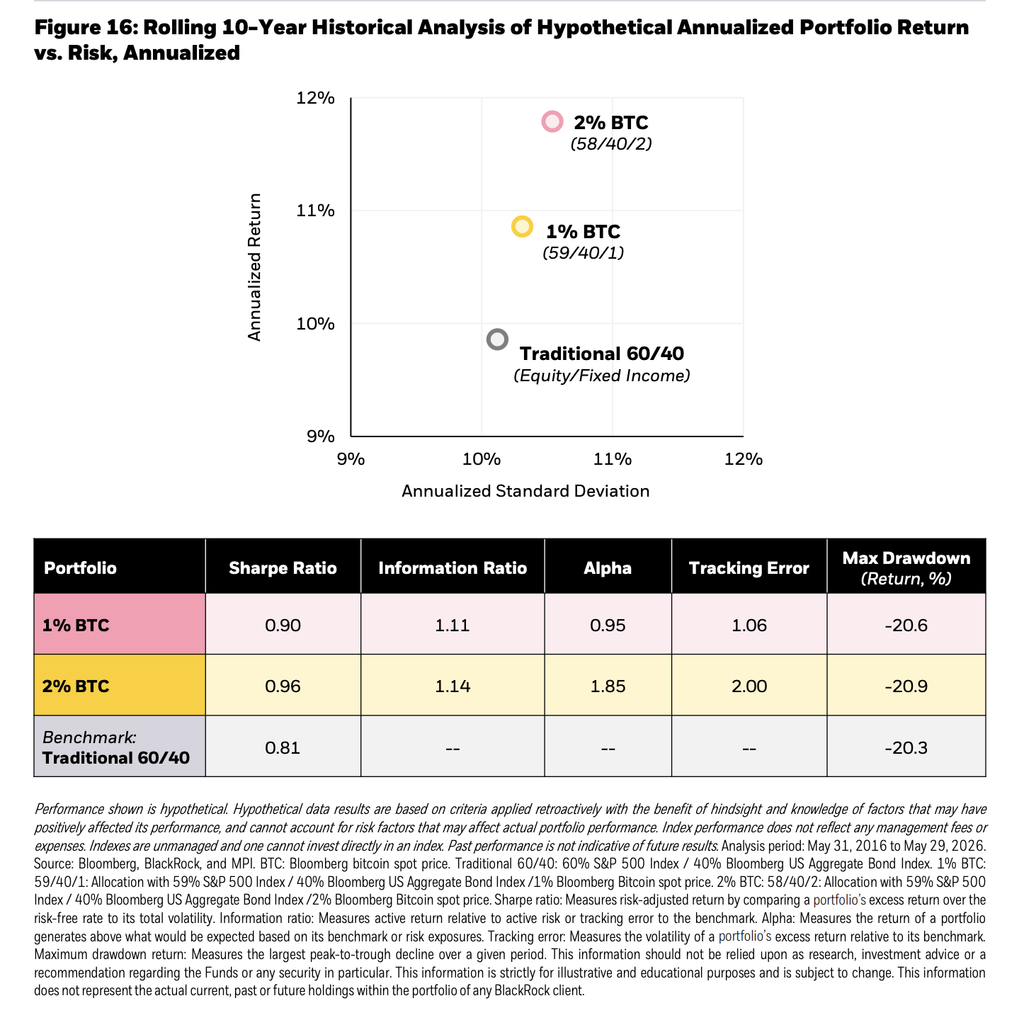
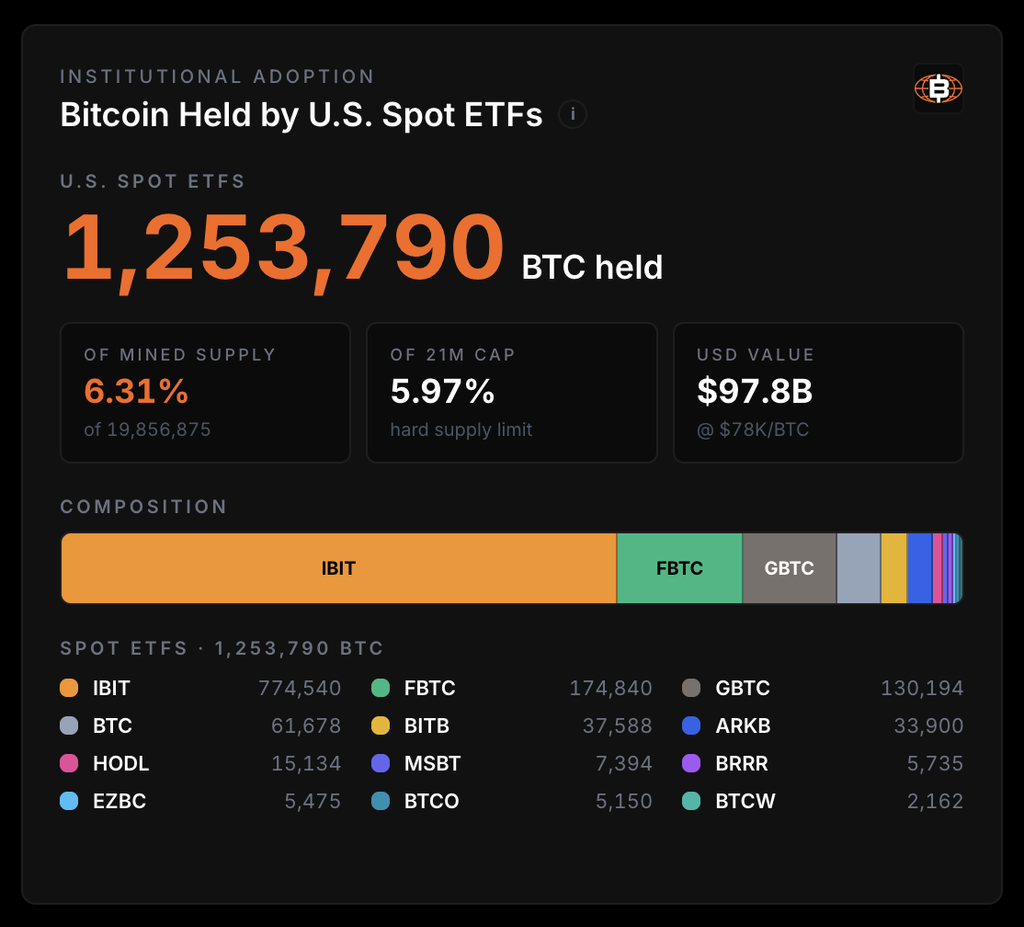
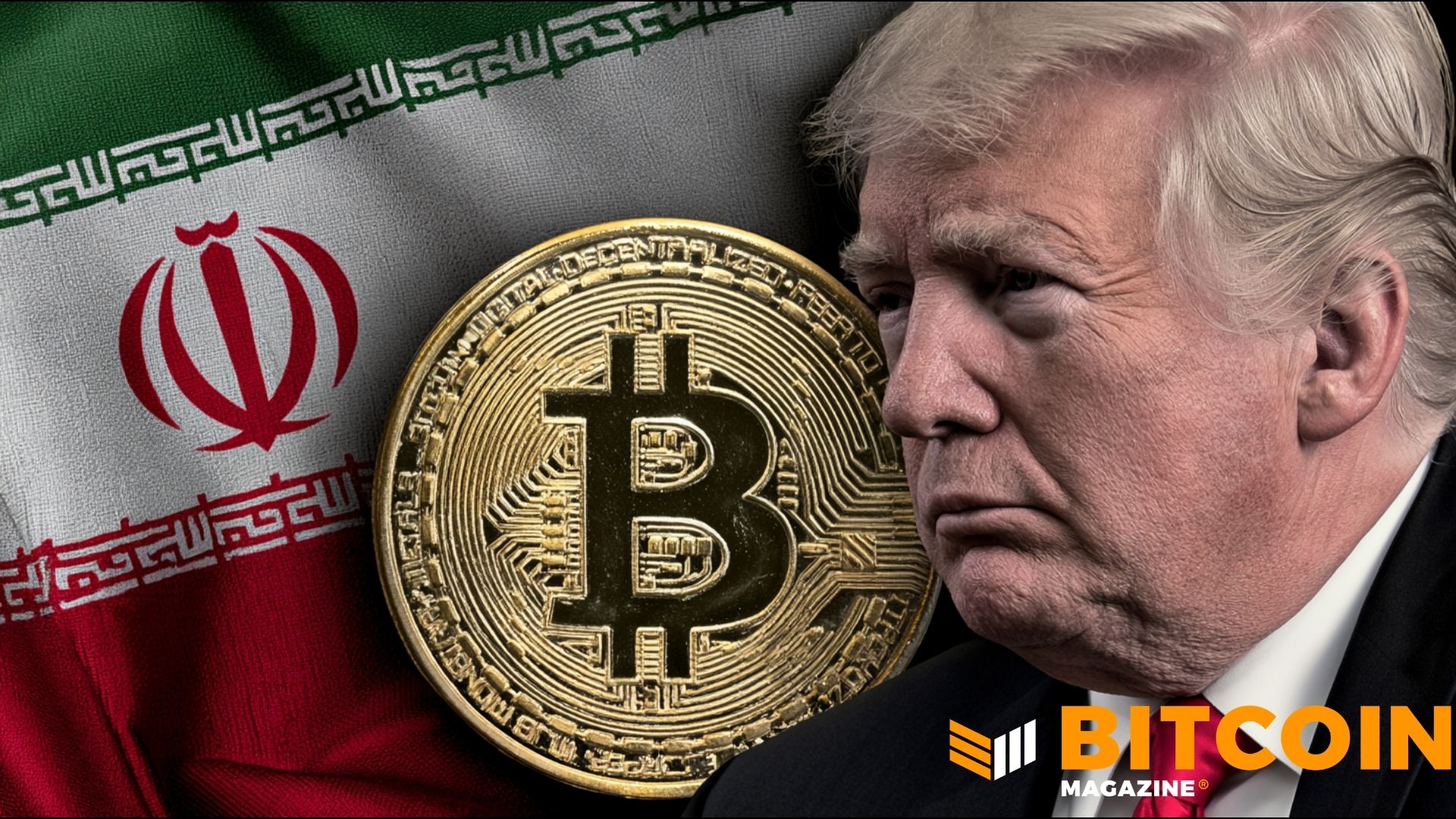









 Japanese public company Metaplanet CEO says the bottom for Bitcoin's price is in
 French company Capital B announces a €21.0 million capital raise to "accelerate its Bitcoin Treasury Company strategy"