FreshRSS

🔒
❌ About FreshRSS
There are new articles available, click to refresh the page.
☐ ☆ ✇ The Drive

Tuning the Bugatti Tourbillon’s V16 Exhaust Sound Took a Lot of Work. It Was Worth It

By: Stephen Edelstein

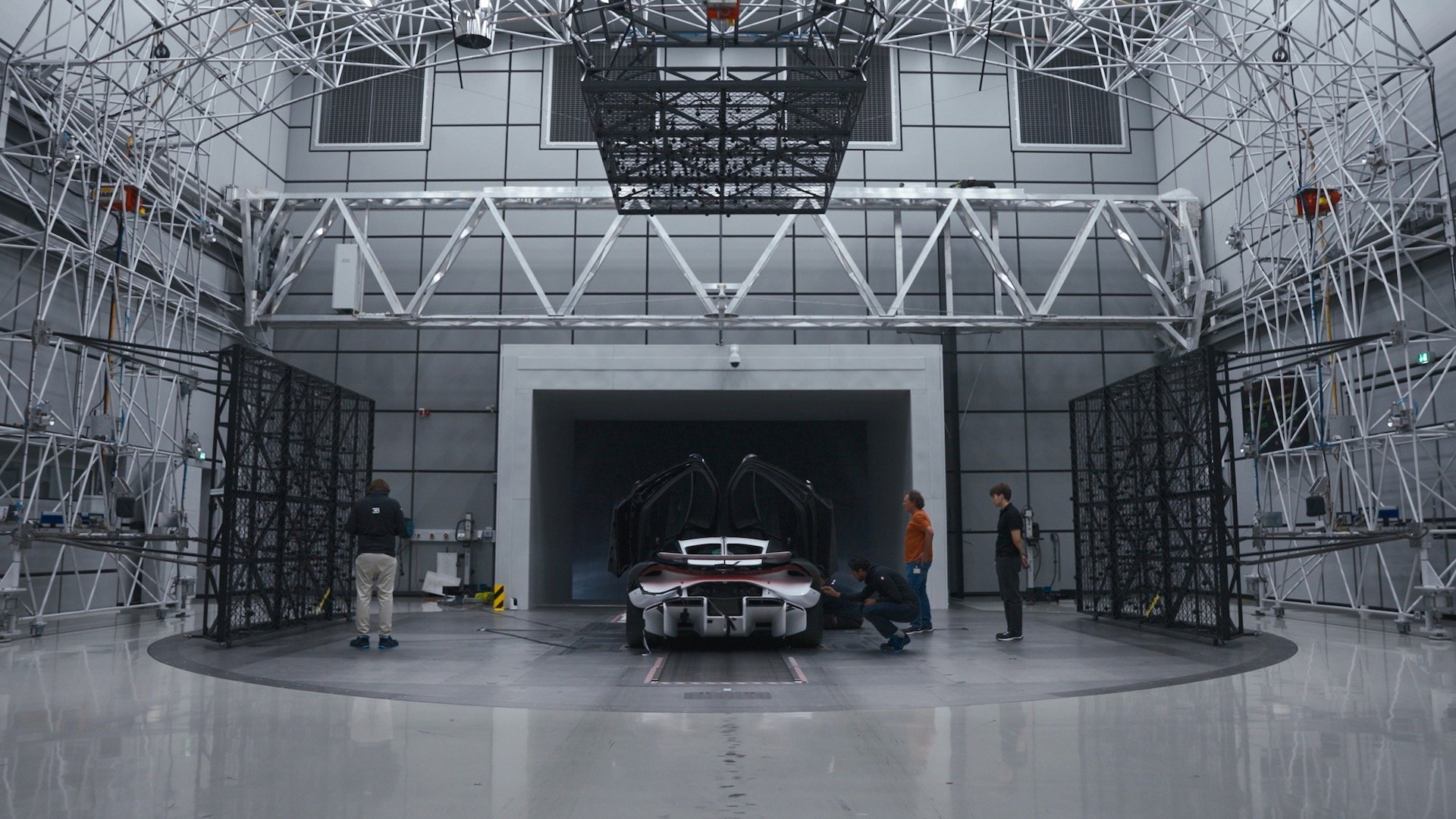
A naturally aspirated V16 that revs to 9,000 rpm is a great starting point, but Bugatti didn’t leave anything to chance. As explained in a video from the automaker, its engineers spent thousands of hours developing and testing the exhaust sound of the Tourbillon. Even a naturally talented singer can benefit from voice coaching, y’know.

The 8.3-liter, cross-plane-crank engine built by Cosworth sounds pretty great on its own. In the Tourbillon, the V16 is teamed with three electric motors to produce a combined 1,800 horsepower, getting the hypercar from zero to 62 mph in two seconds flat, and on to a top speed of 276 mph. Making this first-ever Bugatti plug-in hybrid sound good regardless of the level of electric intervention was a new challenge the engineers of the Veyron and Chiron didn’t face.

Bugatti Tourbillon sound test
Bugatti

Those Volkswagen-era Bugattis were also designed not just for record-breaking performance, but with an attitude toward everyday usability more reflective of a mass-market conglomerate than a boutique brand. So the Tourbillon had to be loud, but refined. And thankfully, engineers intend for the Tourbillon to be driven with the windows down—which isn’t always the case in this era of hyperfixation on airflow. They also claim that what drivers and passengers will hear is completely natural, without any artificial sounds pumped through speakers.

A variety of engine types have powered Bugattis throughout the years, from the outgoing quad-turbocharged, 8.0-liter W16 to the straight-eights of the classic prewar grand prix cars. It’s hard to pull anything consistent out of all that, but Romain Volatier, the automaker’s head of NVH and acoustics, zeroed in on a “dirty and raw” character. The Tourbillon’s exhaust has a building rumble, not a clean metallic ring.

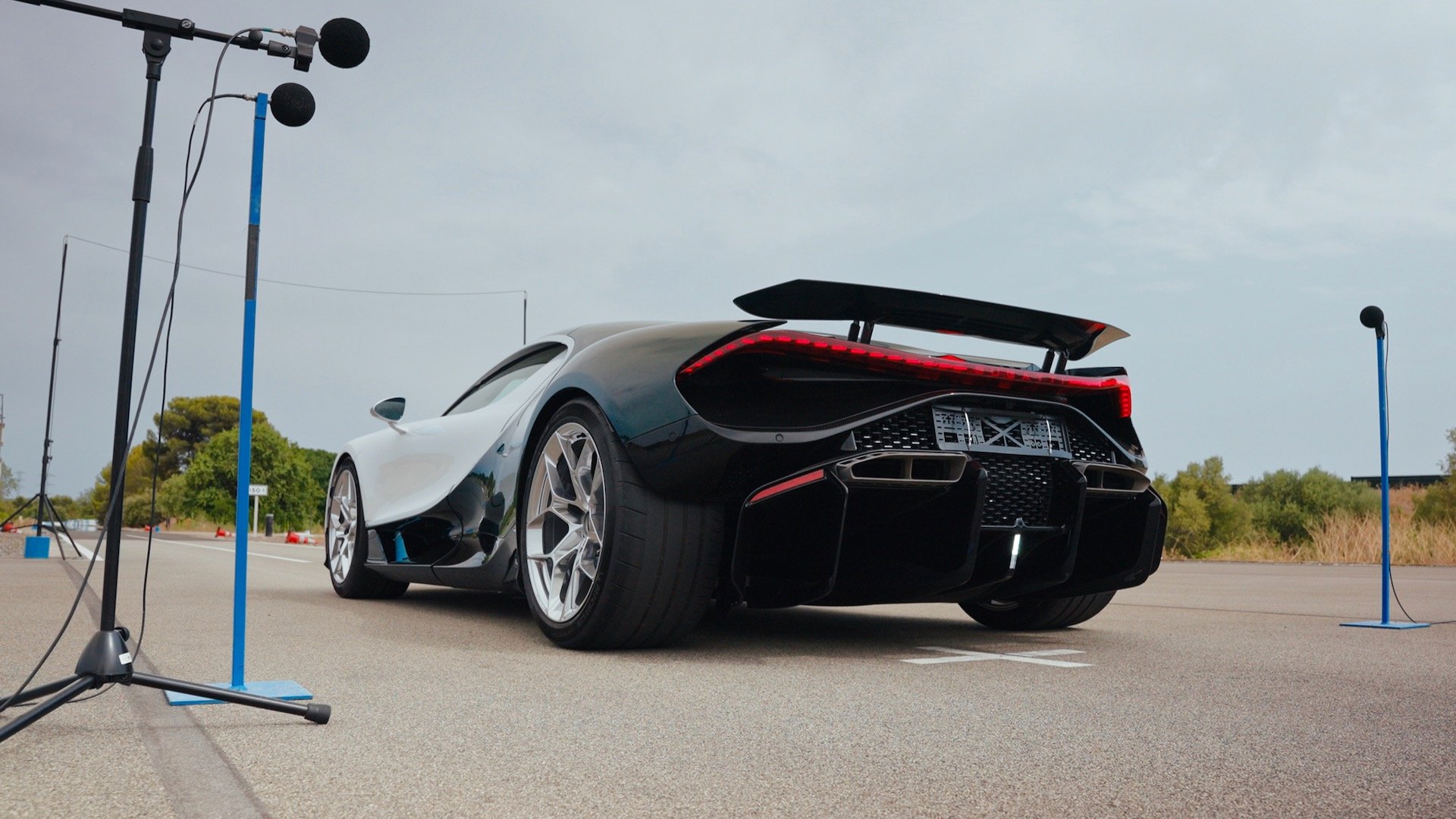
Of course, the Tourbillon also had to be road-legal. As shown in the video, the car had to pass drive-by sound tests by emitting no more than 72 decibels. That’s a total figure that includes not only the exhaust, but any noise the car might make. Tires, air flowing around the body, and any other mechanical noises contribute to that number, so quieting them means the exhaust can be louder.

Tourbillon deliveries are expected to start later this year but, with production capped at 250 cars, they won’t be a common sight. I hope that if I’m lucky enough to see one, I’m also lucky enough to hear it at full chat.

The post Tuning the Bugatti Tourbillon’s V16 Exhaust Sound Took a Lot of Work. It Was Worth It appeared first on The Drive.

☐ ☆ ✇ The Drive

GMC Offered Plaid Valve Covers as a Factory Option in 1963

By: Stephen Edelstein

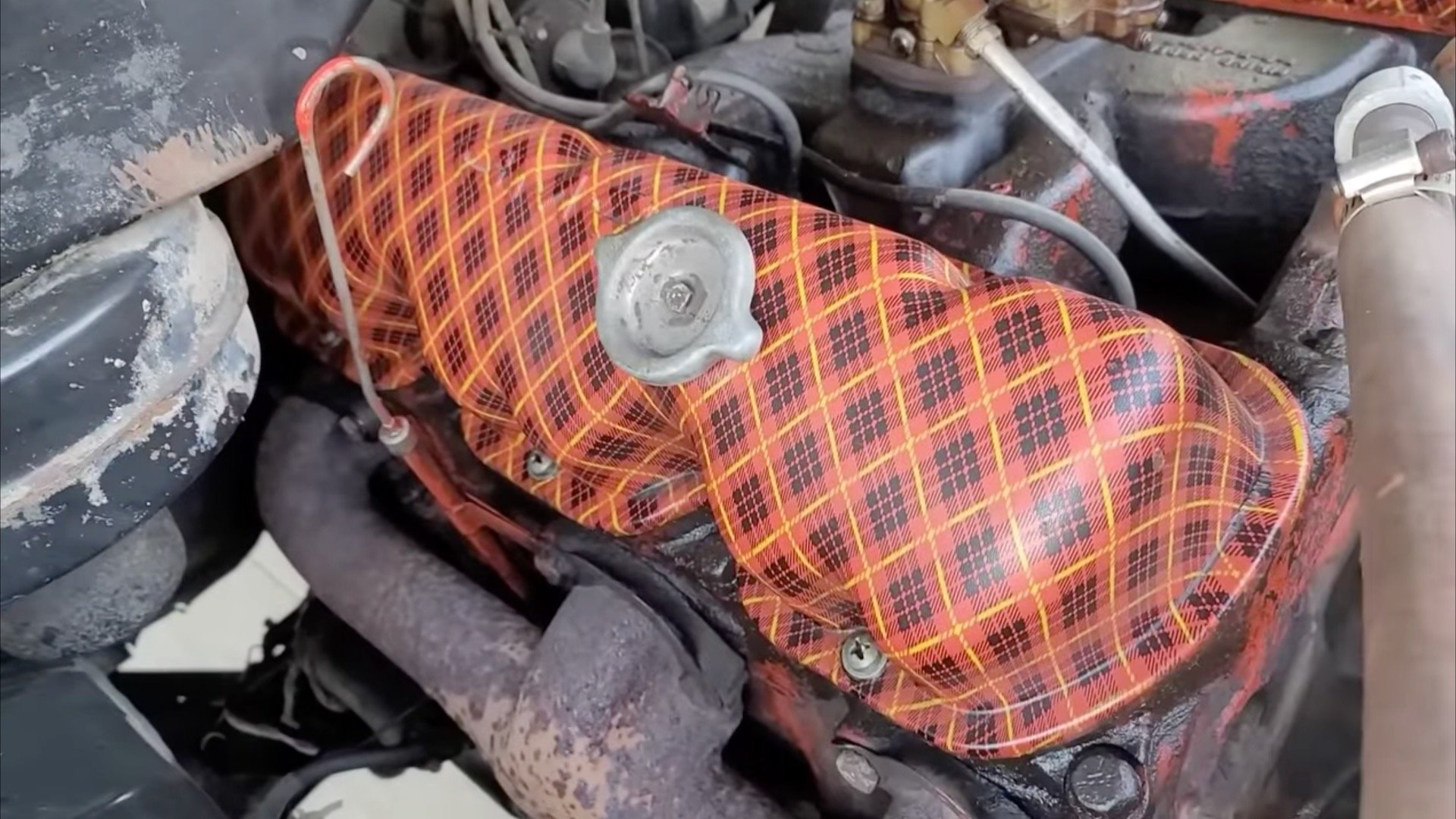
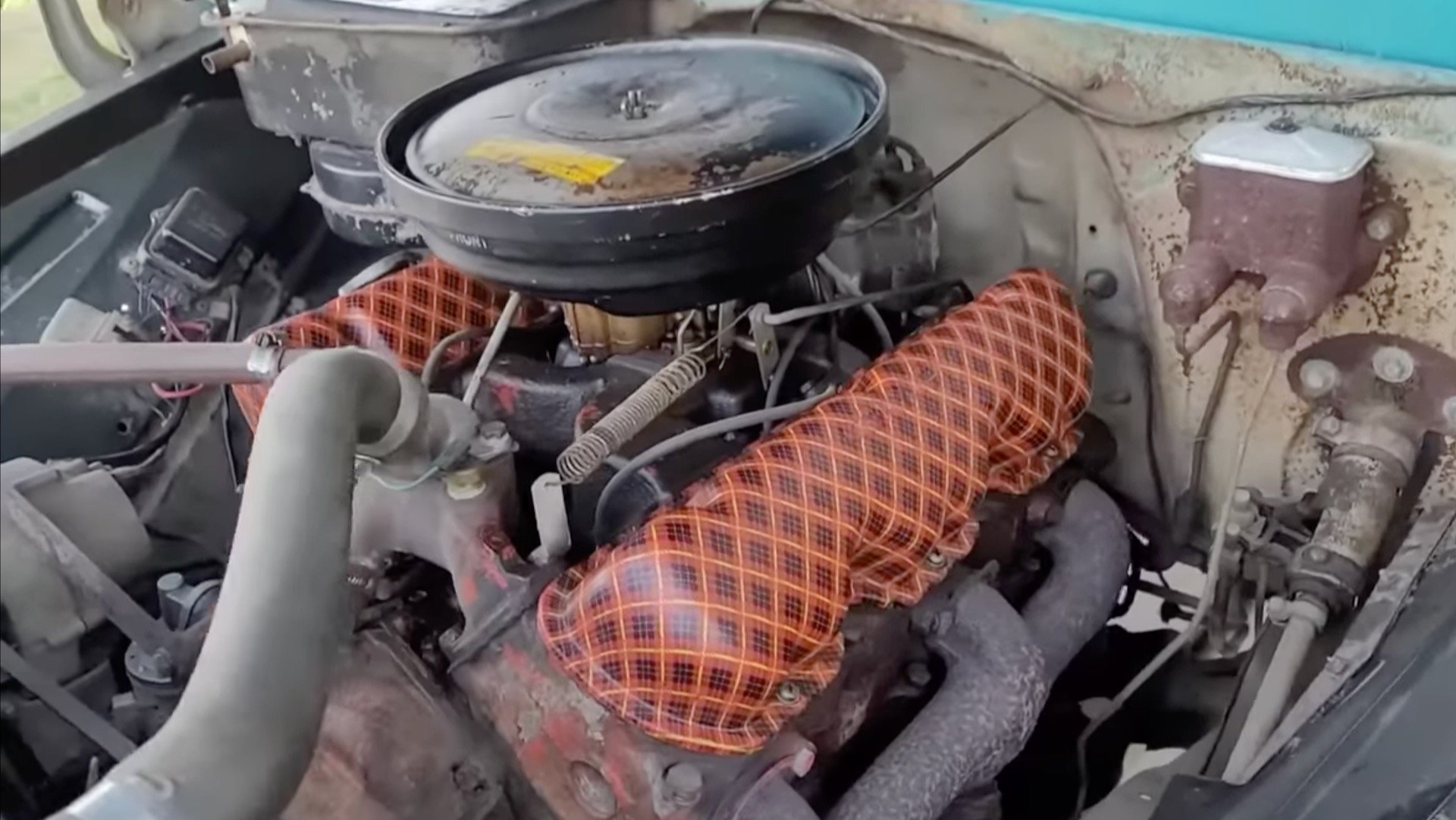
If you want to dress up an engine, valve covers are a solid place to start. Too bad the options usually begin and end with chrome. Sixty years ago, GMC tried something very different. For reasons lost to time and General Motors’ corporate archives, the truck brand briefly offered plaid valve covers on its big-block V6s.

If you’ve never seen these, don’t be surprised. They were apparently used only on half-ton trucks equipped with the 305-cubic-inch V6 for the 1963 model year. While automakers were a lot more adventurous with colors and styling in the 1960s, they clearly did not start a trend of patterned valve covers. That’s probably just as well. I’m a fan of Pfaff Motorsports’ and Stewart Grand Prix’s plaid liveries, but this just looks bizarre to me.

1963 GMC plaid valve covers
Kyle’s Car Farm via YouTube

As for why GMC did this, a post on the 6066 GMC Club forum (via Hemmings) citing a conversation with a former GMC engineer claims it wasn’t about fashion, but economy. The story goes that when GMC launched this generation truck in 1960, one of the main complaints from customers was the poor fuel economy of the big-block V6. Engineers tested different carburetors and camshafts to find a solution, and when they did find one, they used adhesive shelf-lining paper with a tartan pattern to mark engines running the improved setup because it happened to be around.

According to the post, people from GMC’s marketing department saw the engines wear the improvised plaid valve covers and, perhaps leaning into cultural stereotypes of Scottish cheapness, decided to put them into production. That did happen, as you can see from the very clean 1963 GMC truck in the embedded video from Kyle’s Car Farm. Given the constant churn in styling features between model years at the time, and the extra cost of applying the plaid covering, it’s not surprising that they were a one-year-only option.

This generation of half-ton trucks was already a major milestone for the manufacturer. It was the first of GM’s light-duty pickups to use a dedicated truck platform, and it lasted until 1966, when it was replaced by the seminal “Action Line” generation.

It’s hard to imagine GMC bringing this back for the Sierra or Canyon, and you’d have a hard time seeing the plaid through a modern truck’s plastic engine cover if it did. Remarkably, though, a company is selling the correct pattern for restorations of the original 1963 trucks.

The post GMC Offered Plaid Valve Covers as a Factory Option in 1963 appeared first on The Drive.

☐ ☆ ✇ The Drive

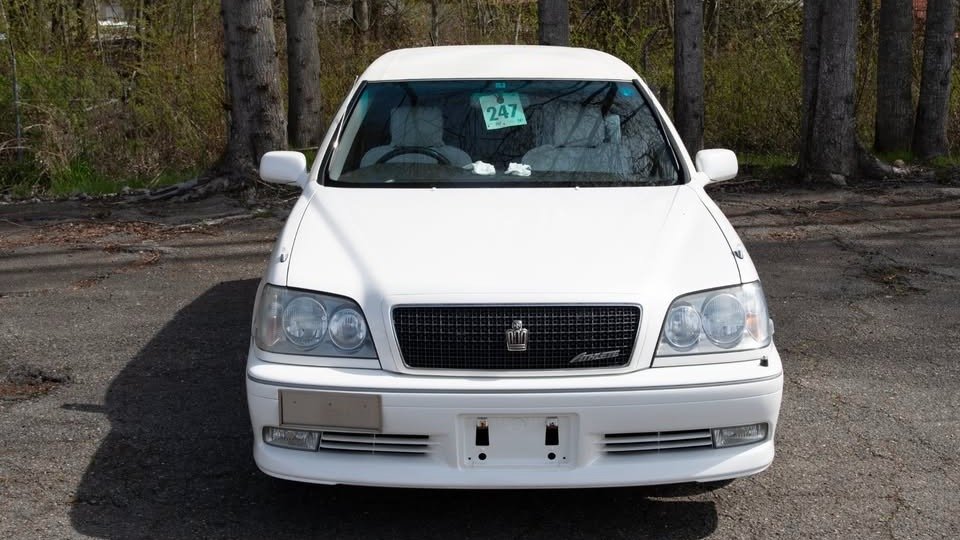
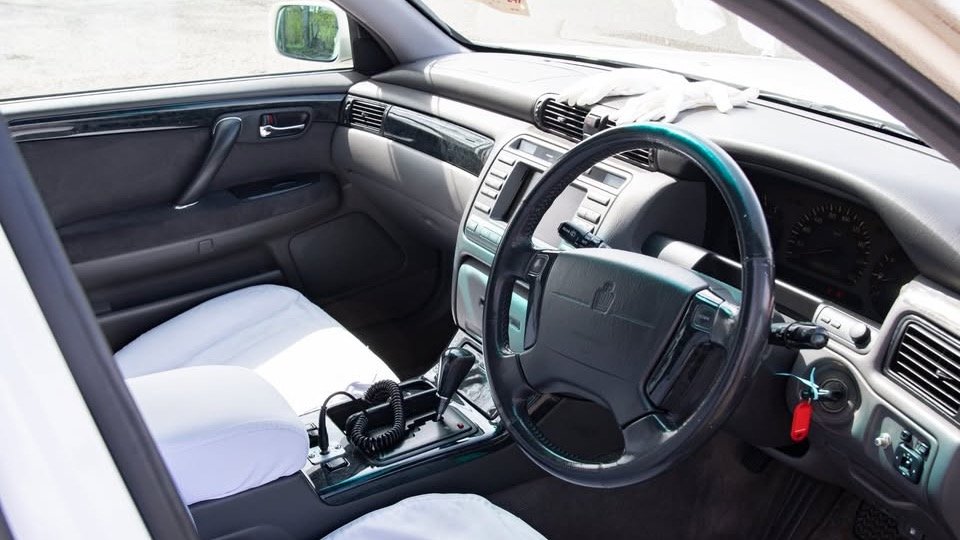
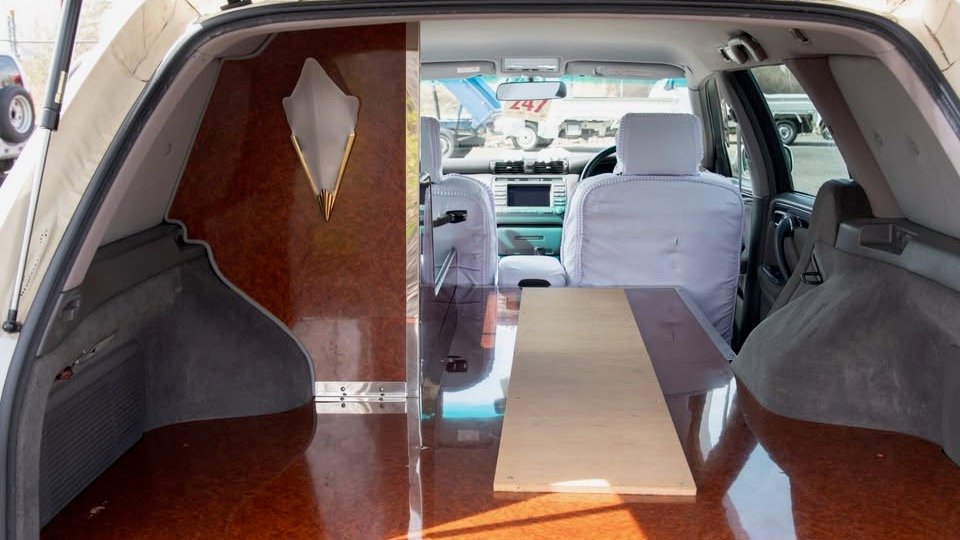
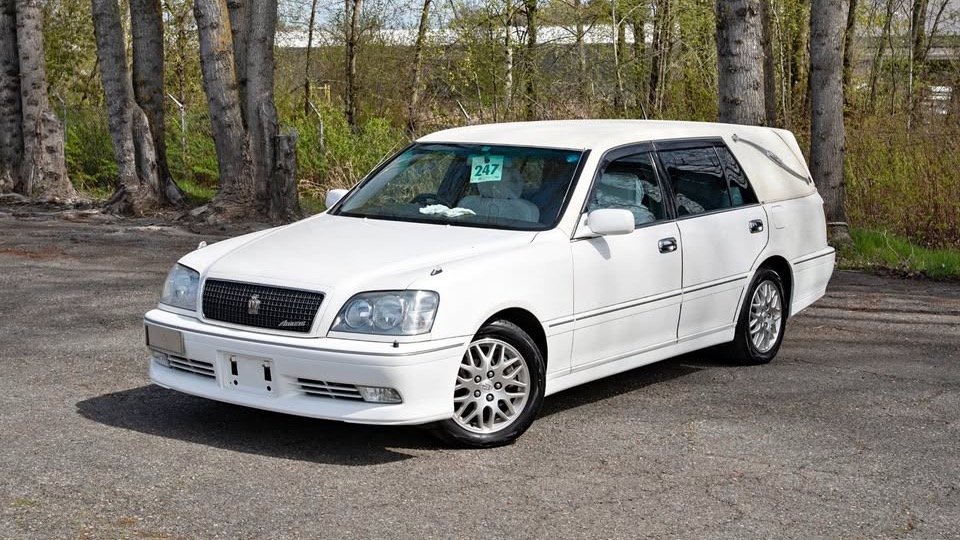
Let’s Hope This 1JZ-Powered Toyota Crown Hearse Has Tie-Downs for the Casket Because I Want the Driver to Whip It Into the Graveside

By: Stephen Edelstein

We all have to take that last ride eventually, but what if a Cadillac or Lincoln isn’t your style? For practical reasons, the choice of hearse can’t always reflect a person’s car preferences in life, but JDM fans are in luck. In their home market, Nissan and Toyota produce stately sedans that make the perfect basis for hearse conversions. One of those just popped up on Facebook Marketplace.

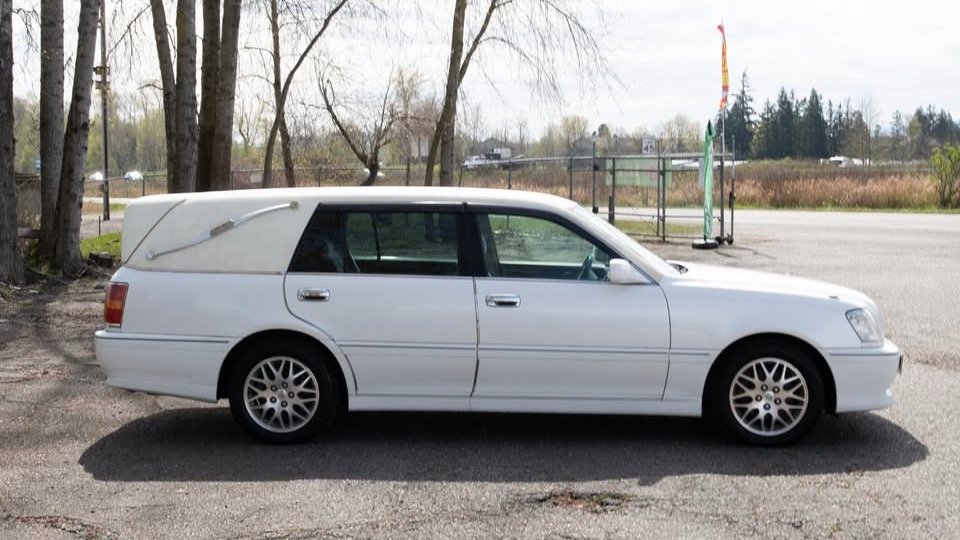
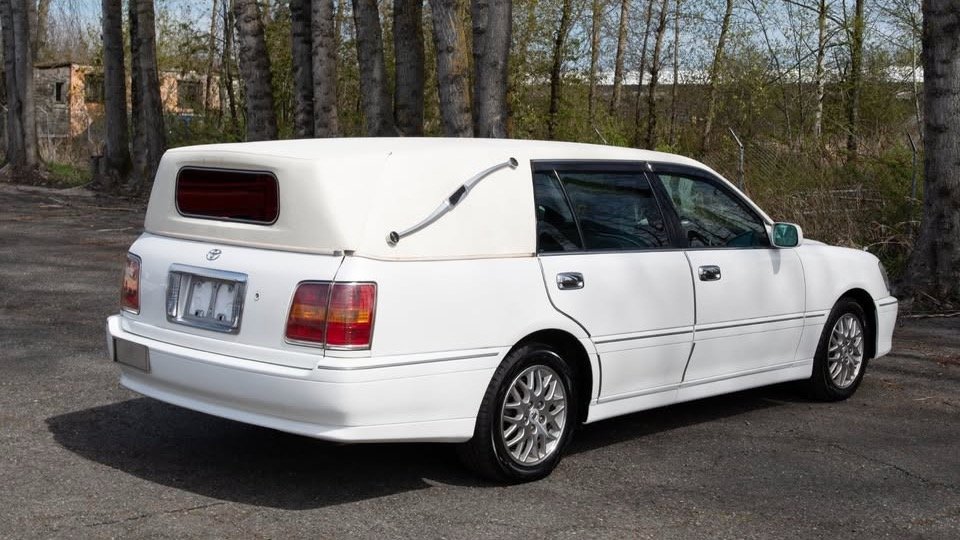
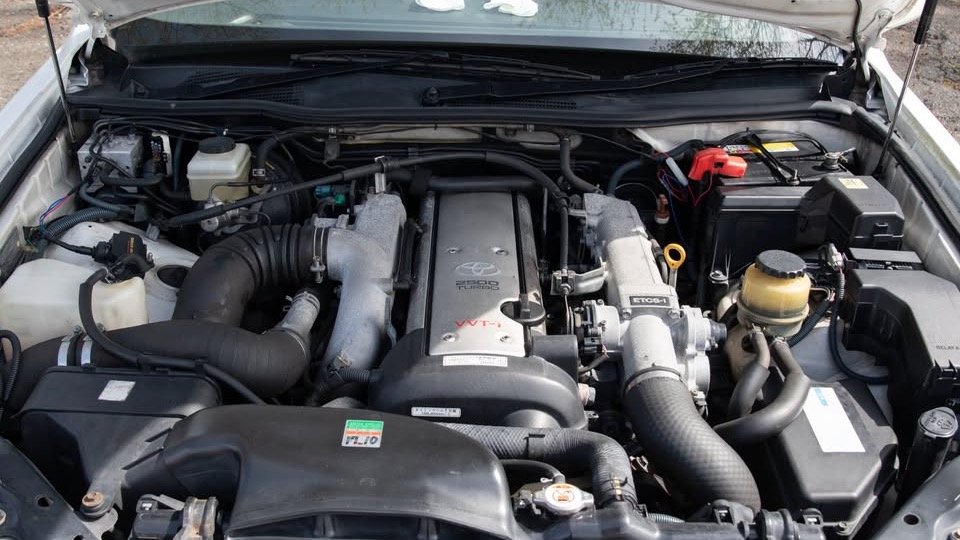
This 2001 Toyota Crown Athlete V has the requisite casket space, but otherwise looks like the perfect start for a drift build. It’s powered by a 1JZ-GTE turbocharged 2.5-liter inline-six—and engine with plenty of tuning potential—and it’s rear-wheel drive. The transmission is an automatic, but if we recall correctly, there wasn’t a manual option for these cars. Toyota made both sedan and wagon versions of this generation (the S170), and this hearse looks like it might have been converted from the latter.

2001 Toyota Crown Athlete V hearse
Dylan Cain via Facebook Marketplace

While not as elaborate as traditional Japanese hearses, this looks like it will get the job done without drawing accusations of cultural appropriation. The wheelbase doesn’t appear to have been stretched, so the casket lies over where the rear seats would normally go. And while the cargo area is nicely decked out in wood paneling, that doesn’t extend to the hastily converted rear seating area. But it’s not like the passenger will notice.

The S170 Crown was introduced in 1999 and produced through 2002. The Athlete was the sportier version (there was a luxe Royal as well, plus the stretched Majesta), distinguished by the turbocharged 1JZ and styling elements like a mesh grille and subtle body kit.

The Crown nameplate itself is one of the oldest in the Toyota lineup, dating back to 1955. In recent years Toyota has expanded its use to a lifted sedan based on the TNGA platform and the Signia crossover (both currently sold in the United States) alongside the traditional rear-wheel-drive models (which are not).

2001 Toyota Crown Athlete V hearse
Dylan Cain via Facebook Marketplace

The listing doesn’t have much information about this car, but does confirm that it has 81,797 miles. As 2001 model, it only became legal to import under the 25-year rule this year. The car is located in Washington State, but the $19,995 asking price is in Canadian dollars, so it’s possible the hearse was biding its time in Canada until it was legal to import. The asking price is $14,514 U.S. at current exchange rates, which is quite a bit higher than what similar-vintage JDM Crowns have been going for on Bring a Trailer, but this is an unusual vehicle.

There have been plenty of unorthodox hearse conversions, but this one is for the JDM fans. Or anyone who doesn’t want their last ride to be slow and stately. Short of strapping a jet engine to one, this is probably about as sporty as a hearse will get.

Got a tip? Reach out to tips@thedrive.com

The post Let’s Hope This 1JZ-Powered Toyota Crown Hearse Has Tie-Downs for the Casket Because I Want the Driver to Whip It Into the Graveside appeared first on The Drive.

☐ ☆ ✇ The Drive

Shaping Your Car Exhaust Like a Silly Straw Is Horrible for Performance, Dyno Proves

By: Stephen Edelstein

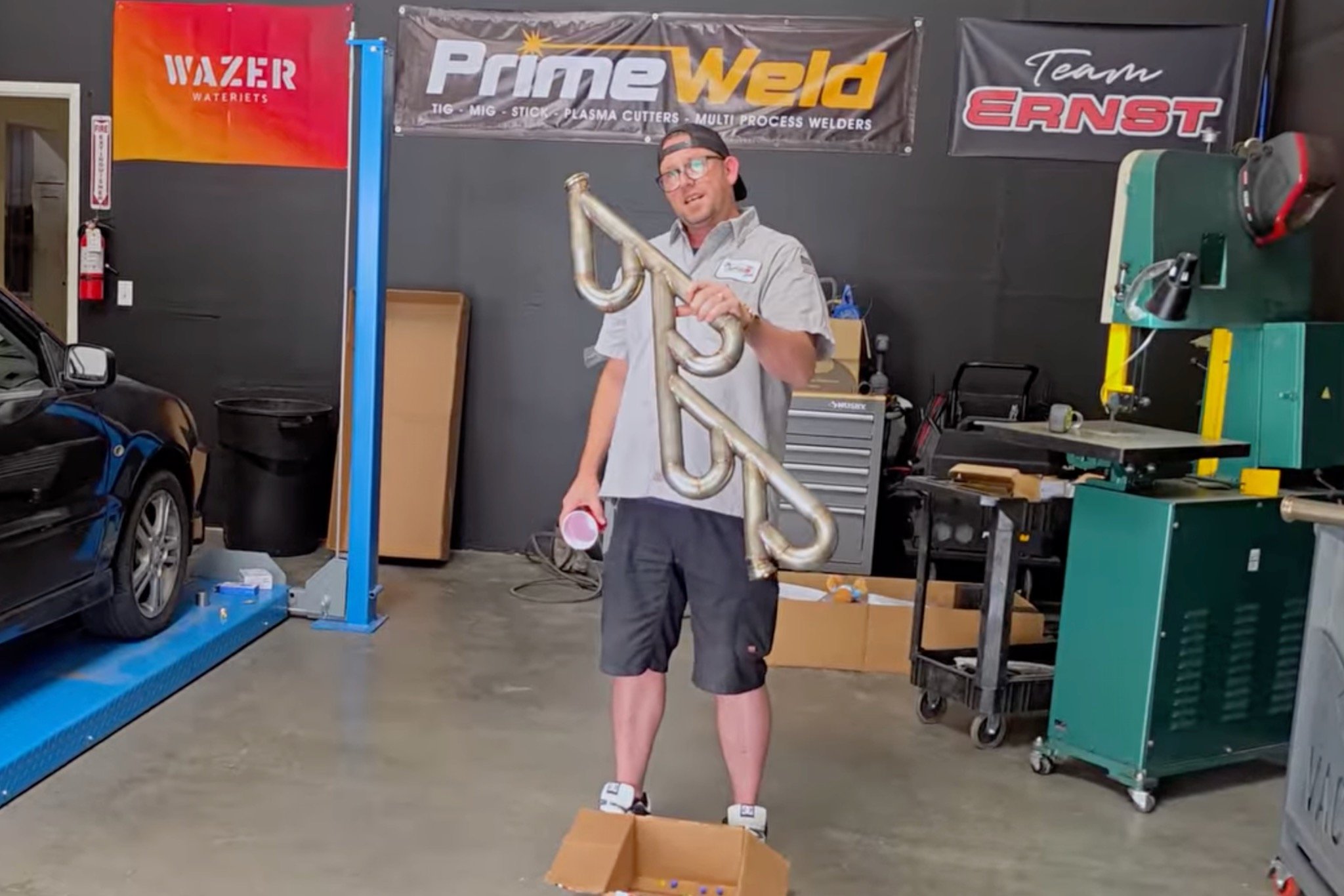
Exhaust systems come in many shapes and sizes, and that can have a real effect on performance. The Fabrication Series YouTube channel recently proved that by testing both conventional and unconventional exhaust shapes. Where does this team of fabricators go from there? To a design not even intended for cars, obviously.

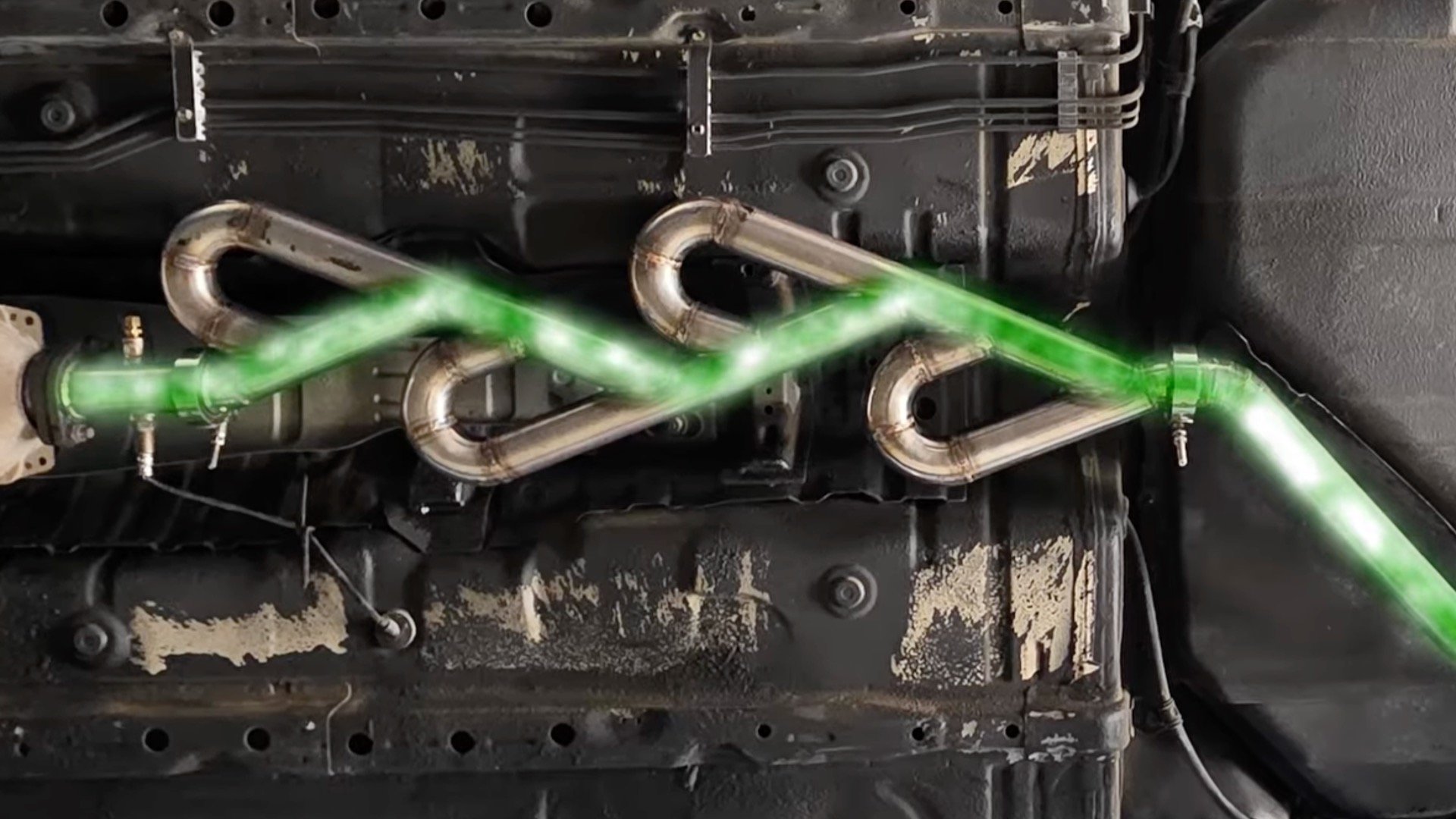
The subject of this video is a Tesla valve which, while it is also named after inventor Nikola Tesla, has nothing to do with the automaker. A Tesla valve might look like a silly straw design, but it’s actually a one-way valve that has no moving parts. Curved segments that look like half hearts allow fluids to flow in one direction, but not the other. Most applications involve liquids rather than gases, but that didn’t stop Justin and his team from making a Tesla valve exhaust system and dyno testing it.

Tesla valve exhaust
The Fabrication Series via YouTube

Patented in 1920, the Tesla valve’s channels direct the flow back onto itself in one direction and provide a straight shot in the other, preventing the flow from reversing. A lot of these loop-like channels are needed to get the job done, but due to the limited amount of space under the car (it wasn’t intended to accommodate so many curves in the exhaust, after all), there was only enough room for four. To see how well it worked (or didn’t), the Tesla valve exhaust was run on the dyno in both the correct and reverse directions, with a stock exhaust system acting as the control group.

With the exhaust positioned correctly, the Mitsubishi Lancer Ralliart test car made a little less power than with its stock exhaust, but we’re talking single-digit differences: 142 horsepower for the Tesla valve versus 146 hp for the stock exhaust, averaged across three pulls. The real difference was in the noise level. The Tesla valve exhaust made effectively no noise; everything audible was coming from under the hood.

Flipping the exhaust around didn’t completely cut off flow—the engine was still able to start—but it pegged the back-pressure gauge. The amount of back pressure was also pretty high with the exhaust oriented correctly, granted, but it seemed to have more of an effect here. Not surprisingly, the engine took longer to build revs and made less power as it did, averaging 134 hp. The reversed exhaust also generated lots of extra heat.

So while a Tesla valve might reduce noise, it does so by making your engine run a lot less efficiently. It turns out something not intended to be used as an exhaust system doesn’t work that well as an exhaust system. Nor does it work that well as a Tesla valve. As Justin points out in the video, gases can compress, so forcing them through the valve’s channels builds up pressure but doesn’t stop the flow completely, as it would with a liquid. That’s the principle behind turbochargers, and it’s why you won’t see a Tesla valve exhaust at this year’s SEMA show.

The post Shaping Your Car Exhaust Like a Silly Straw Is Horrible for Performance, Dyno Proves appeared first on The Drive.

☐ ☆ ✇ The Drive

This Groovy and Patriotic ‘Austin Powers’ Corvette Is Up for Grabs

By: Stephen Edelstein

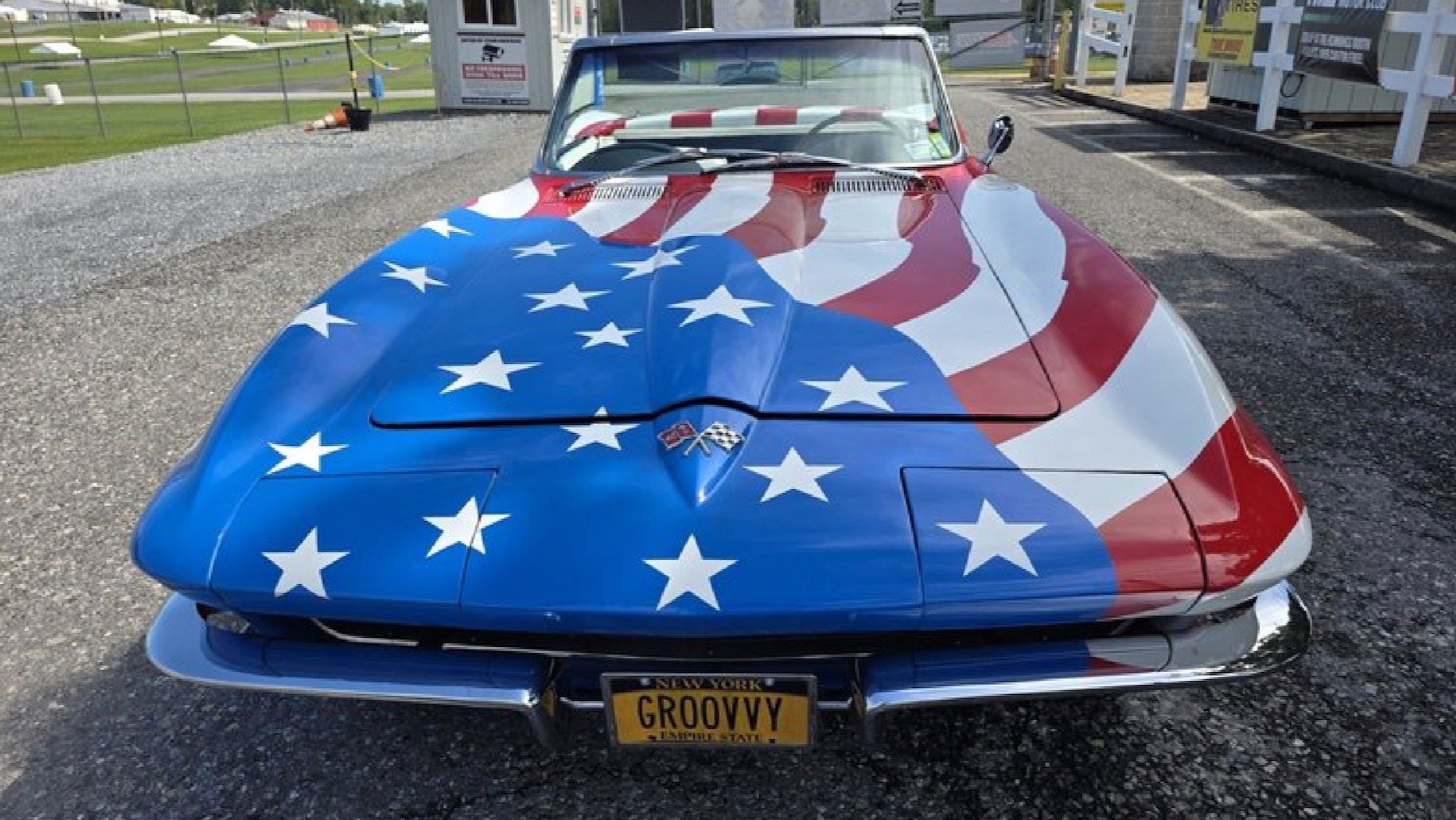
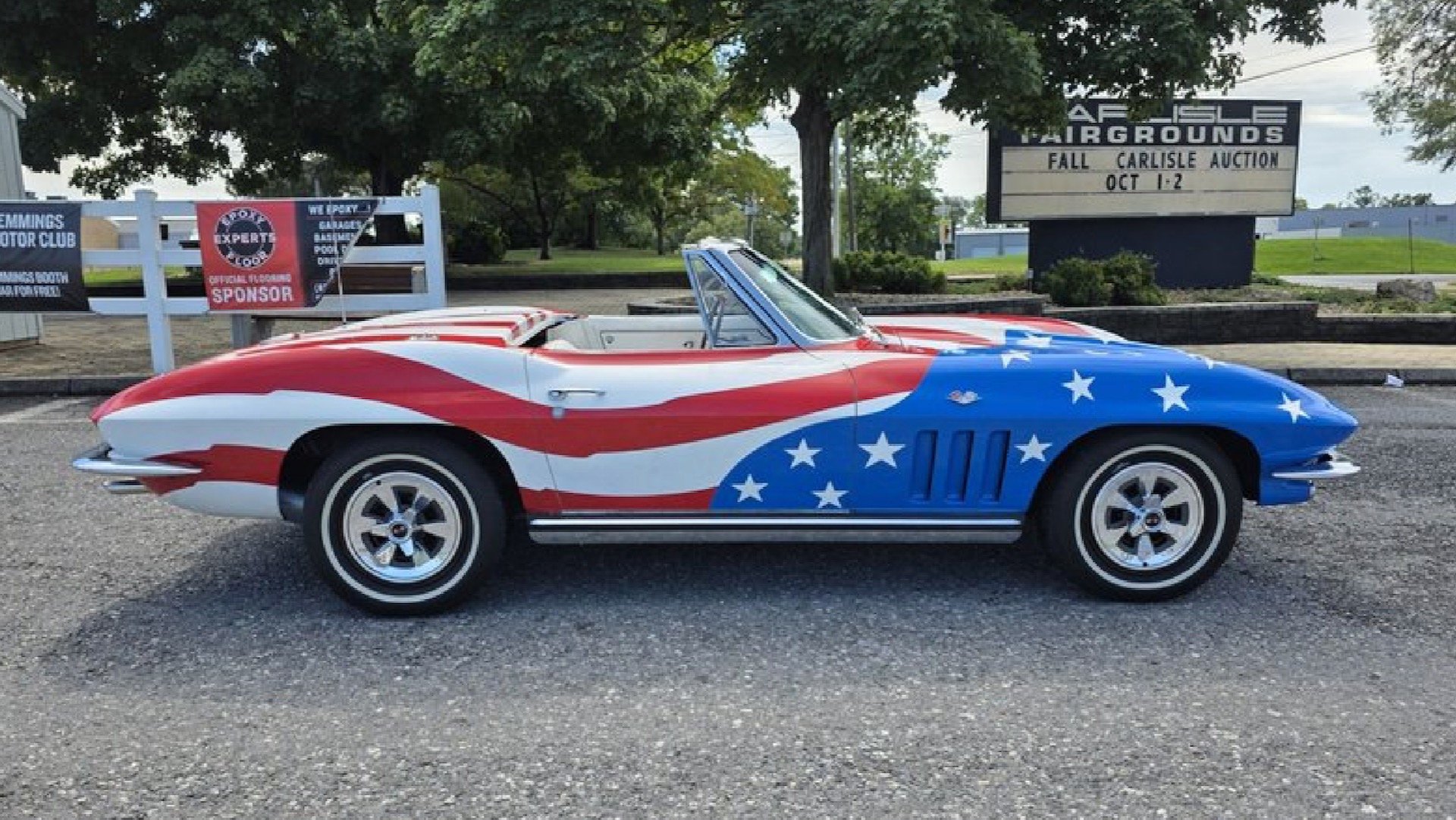
As spoof spy movies, cool cars were obligatory for the Austin Powers trilogy. And while some of the jokes have gotten stale, classic sports cars like the 1965 Chevrolet Corvette convertible from The Spy Who Shagged Me are as cool as ever.

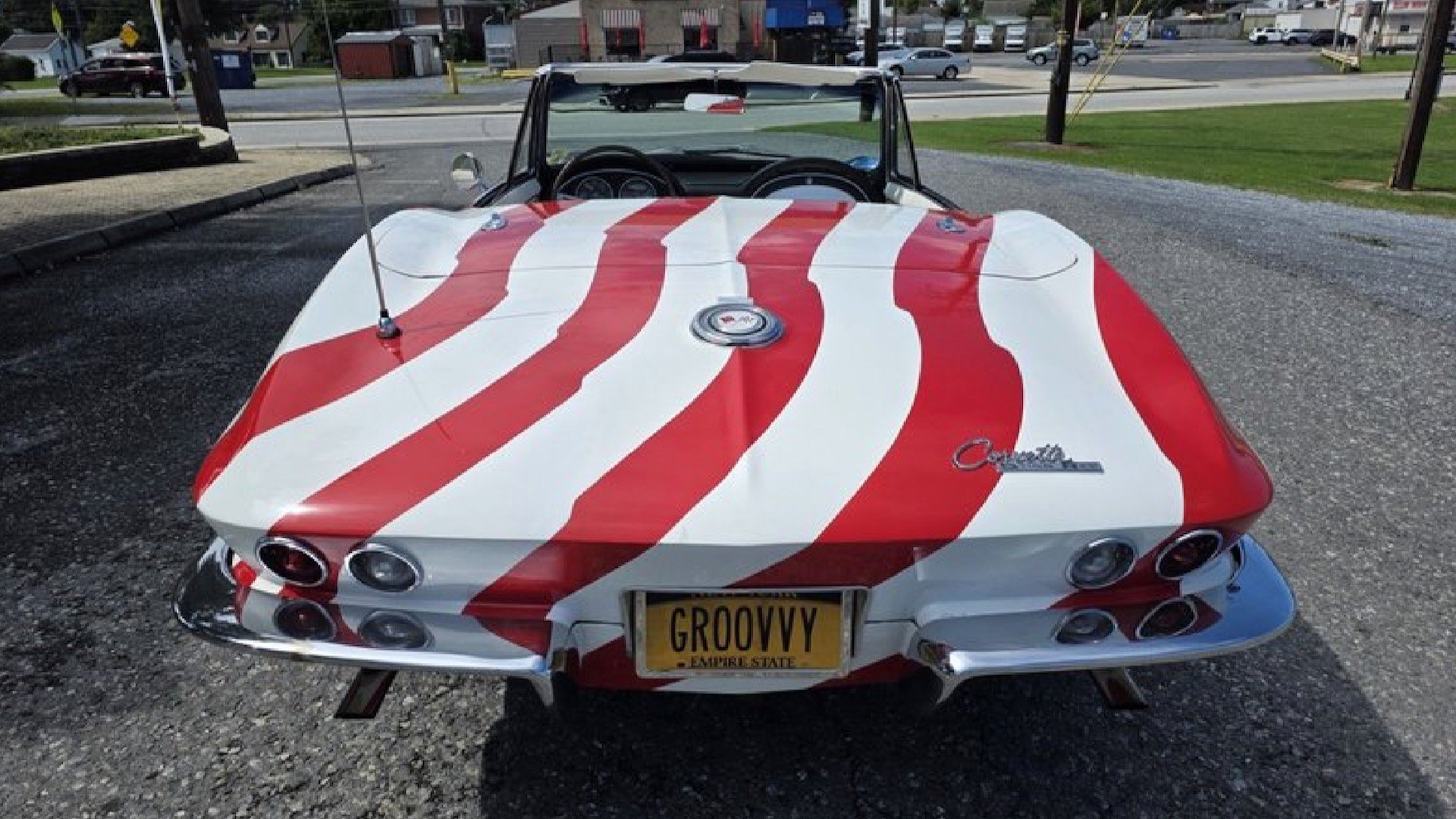
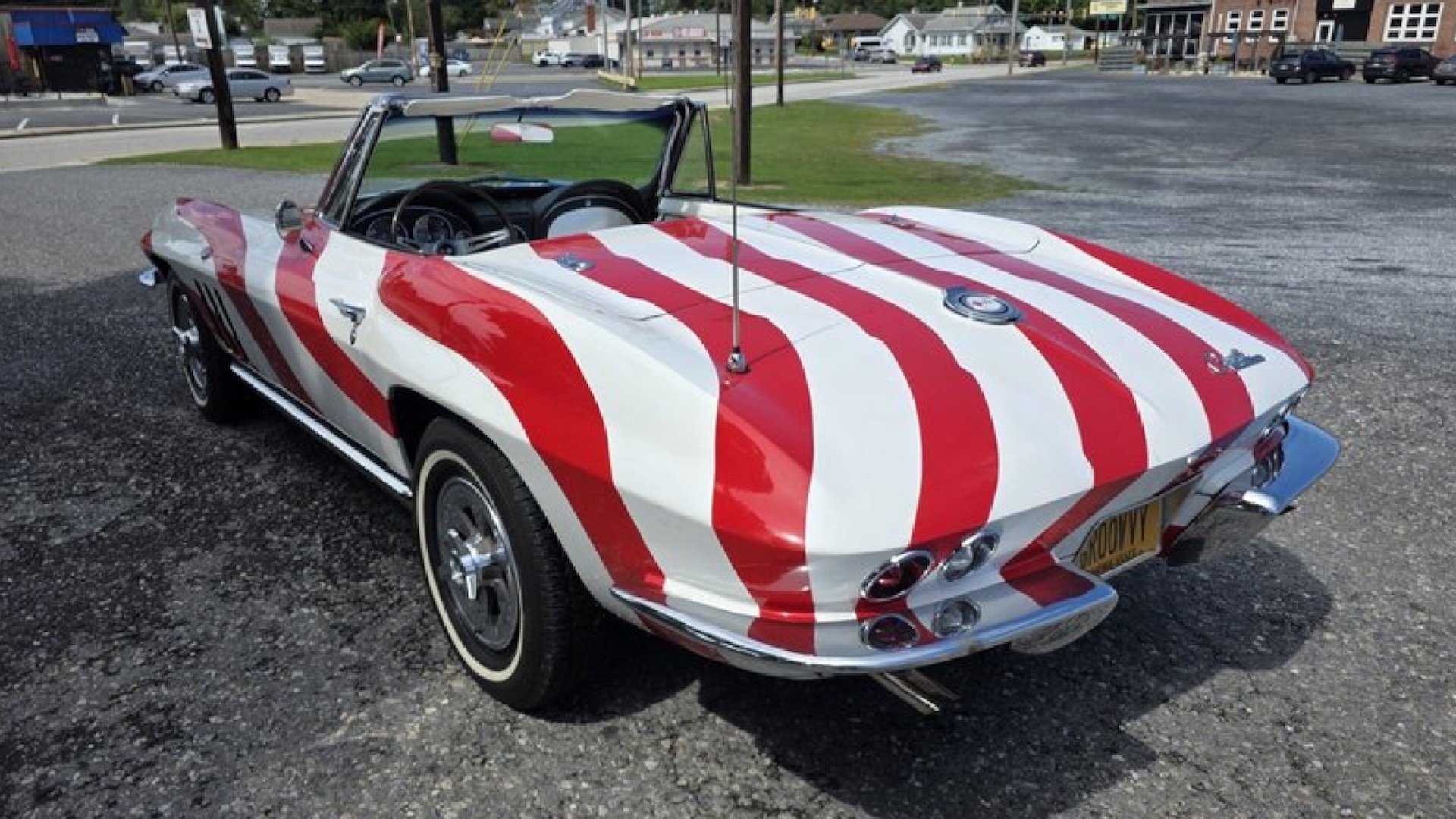
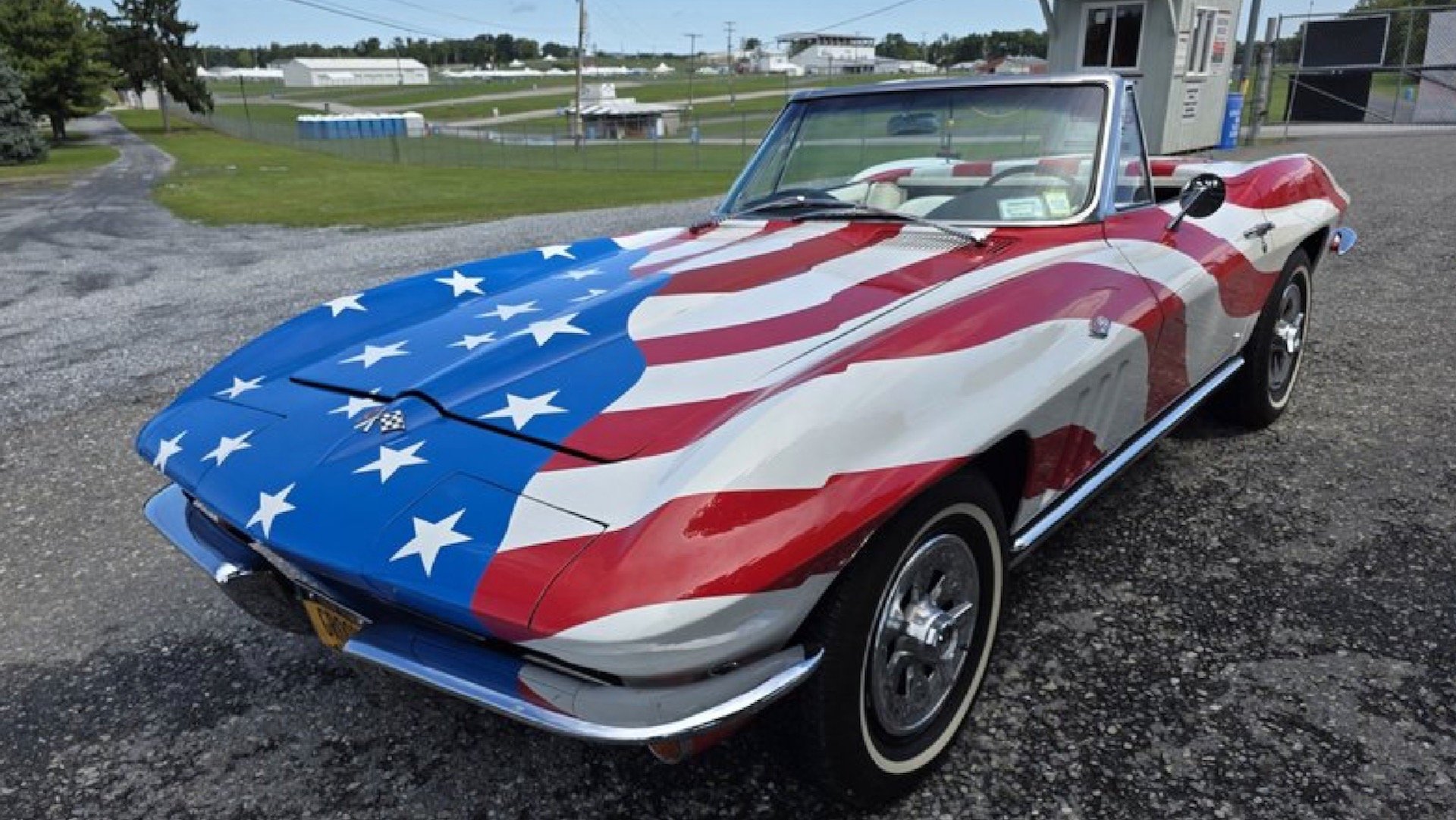
The C2 ‘Vette from the 1999 sequel will be one of the star attractions at Carlisle Auctions’ fall auction, scheduled for October 1-2. Decked out in an American flag paint scheme and wearing the license plate “CIA 1,” it was driven in the movie by CIA agent Felicity Shagwell (played by Heather Graham). It was the natural counterpart to the Union Jacked 1967 Jaguar E-Type “Shaguar,” which also makes an appearance here, along with a Volkswagen New Beetle with a psychedelic livery.

Austin Powers 1965 Chevrolet Corvette
Carlisle Auctions

Like the Jag, the Corvette appears to be the only car used in filming. That’s unusual, given that movie productions often source multiple identical cars more specific shots, and to keep things rolling in the event of damage or mechanical issues. But the production didn’t call for any gadgets or outrageous stunts, so one car could do the job more easily. The same car was also featured in the music video of Lenny Kravitz’s 1999 cover of “American Woman” from the movie’s soundtrack, so buying it will give you a double dose of Millennial nostalgia.

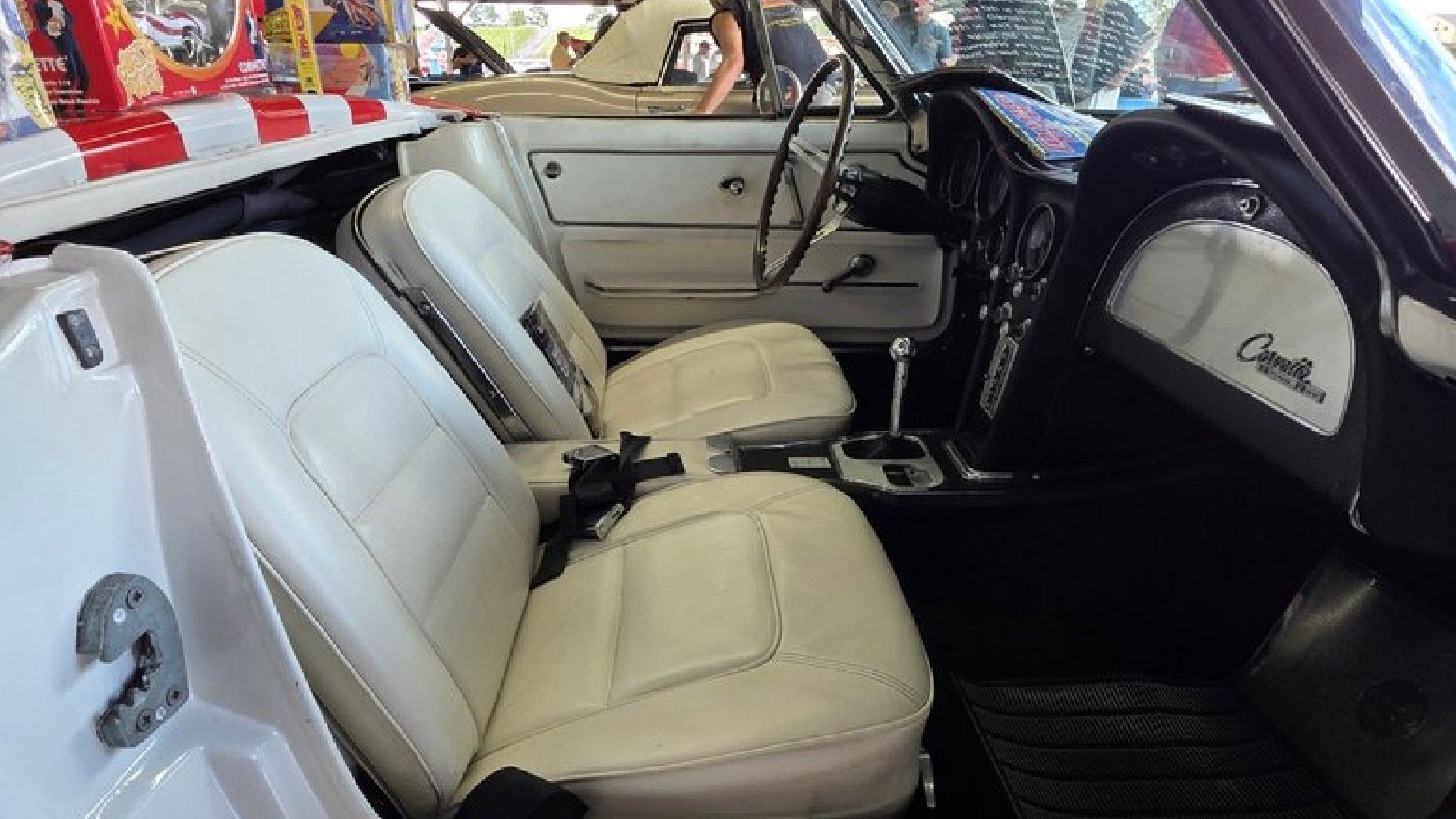
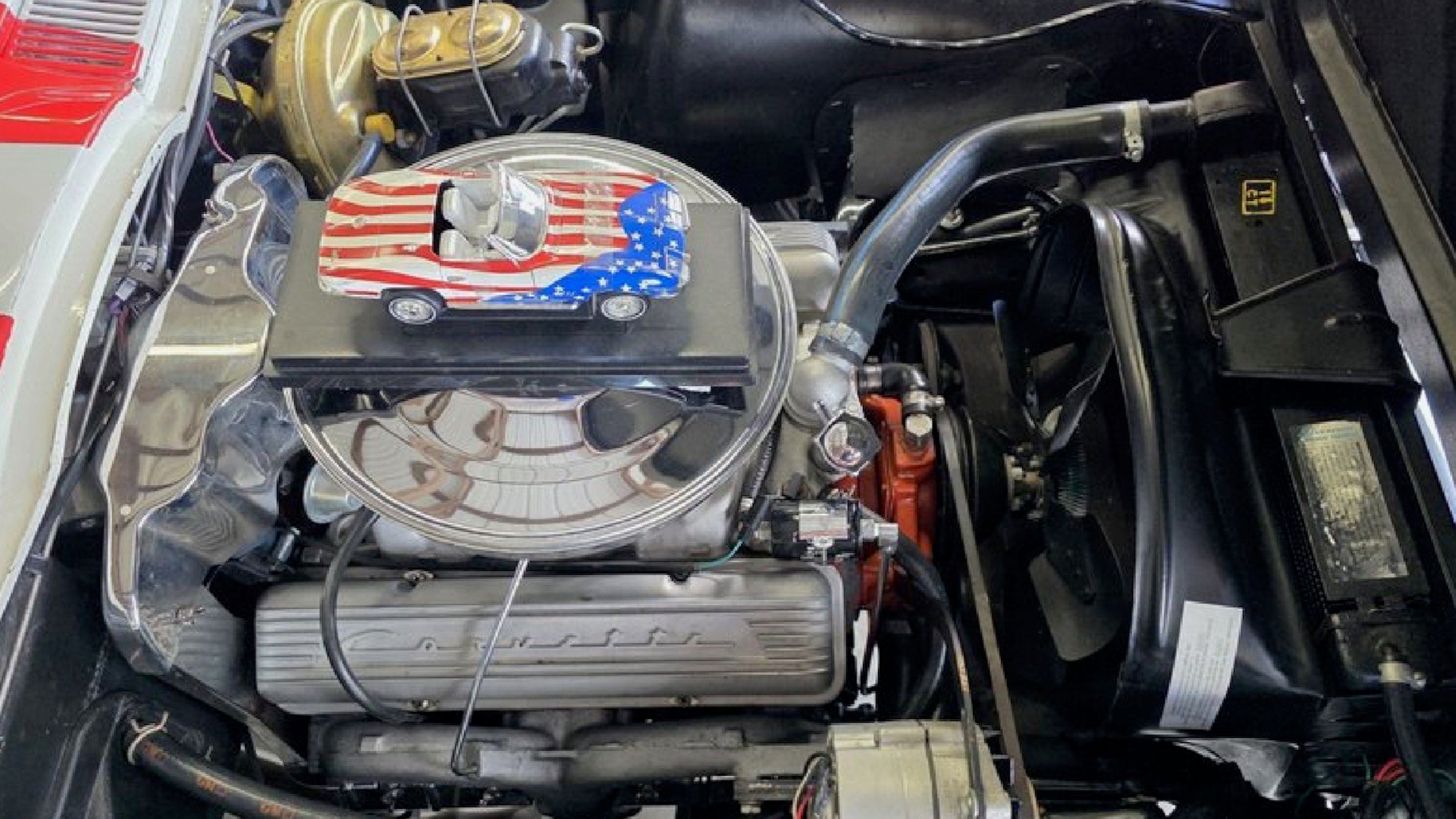
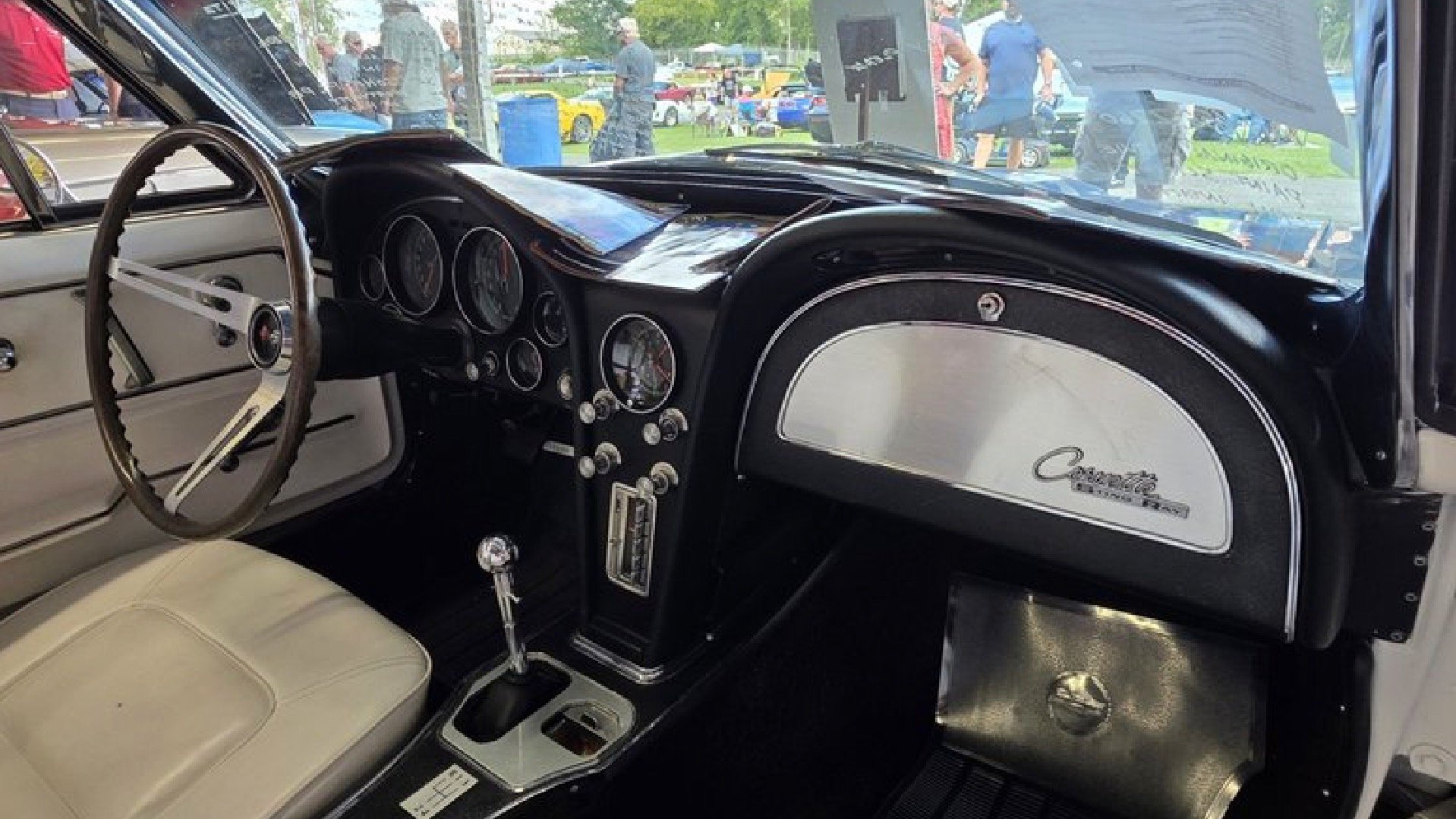
In addition to its pop culture provenance, this is simply a nice C2 Corvette. It has a numbers-matching 327-cubic-inch (5.3-liter V8) and four-speed manual transmission. According to the listing, it was given a frame-off restoration that was completed in 2008 and has only accumulated 7,000 miles since then. Documentation, including the bill of sale from New Line Cinema to the first post-Hollywood owners, is provided.

Austin Powers 1965 Chevrolet Corvette
Carlisle Auctions

As the shortest-lived Corvette generation, and the one from the peak of the muscle-car era, the C2 is already a darling of collectors. Whether the movie connection boosts the hammer price of this car beyond that of an ordinary 327, four-speed convertible remains to be seen, but the potential ceiling is pretty high. The “Shaguar” E-Type sold for $880,000 at auction in January 2025.

The winning bidder will not be able to drive around unnoticed. Even if people don’t remember its movie role, nothing says “America” like a star-spangled Corvette convertible (although this homemade Jeep Liberty chop job comes pretty close). The question is whether this car’s driver will get more salutes or raised pinky fingers.

Got a tip? Reach out to tips@thedrive.com

The post This Groovy and Patriotic ‘Austin Powers’ Corvette Is Up for Grabs appeared first on The Drive.

☐ ☆ ✇ The Drive

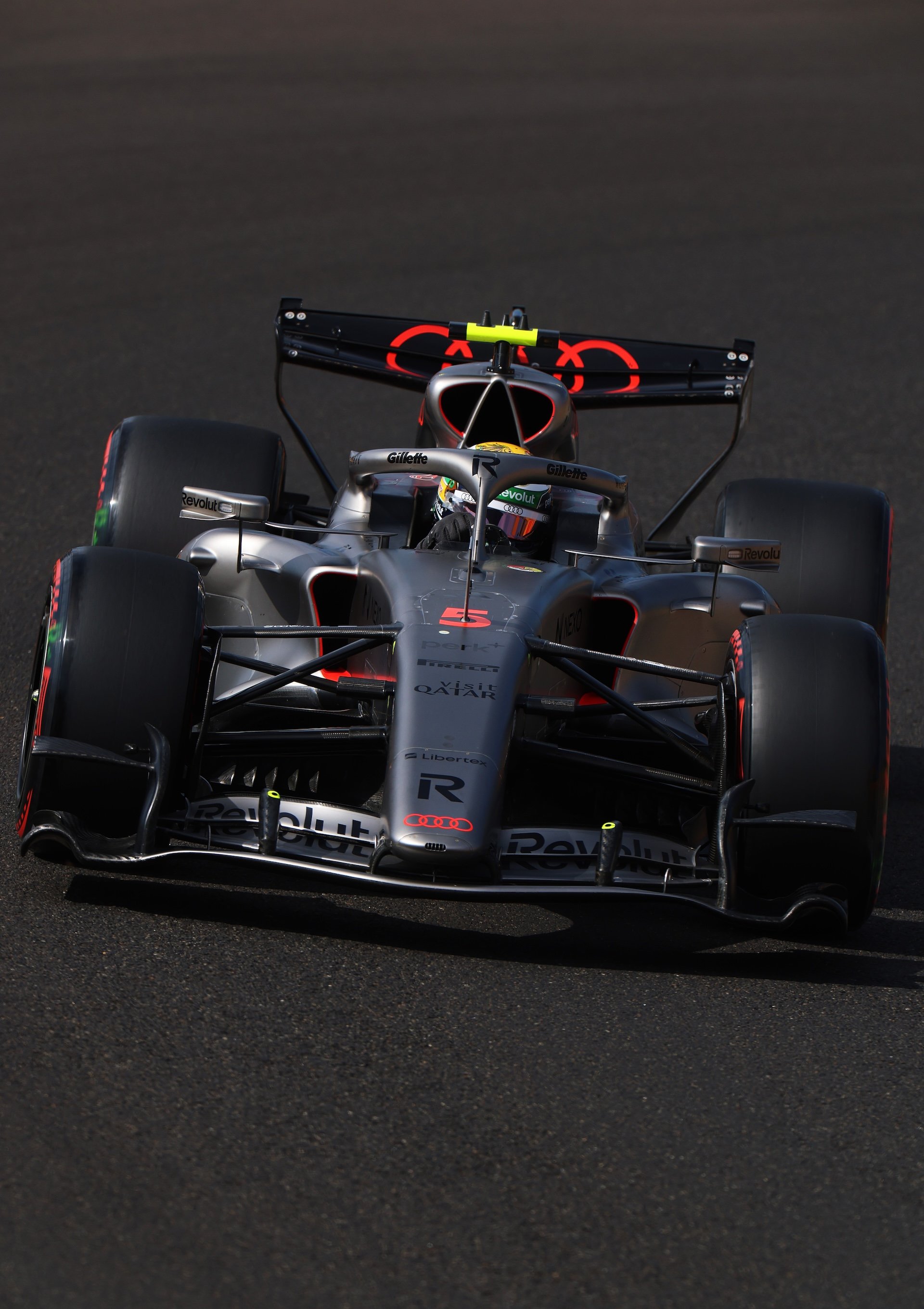
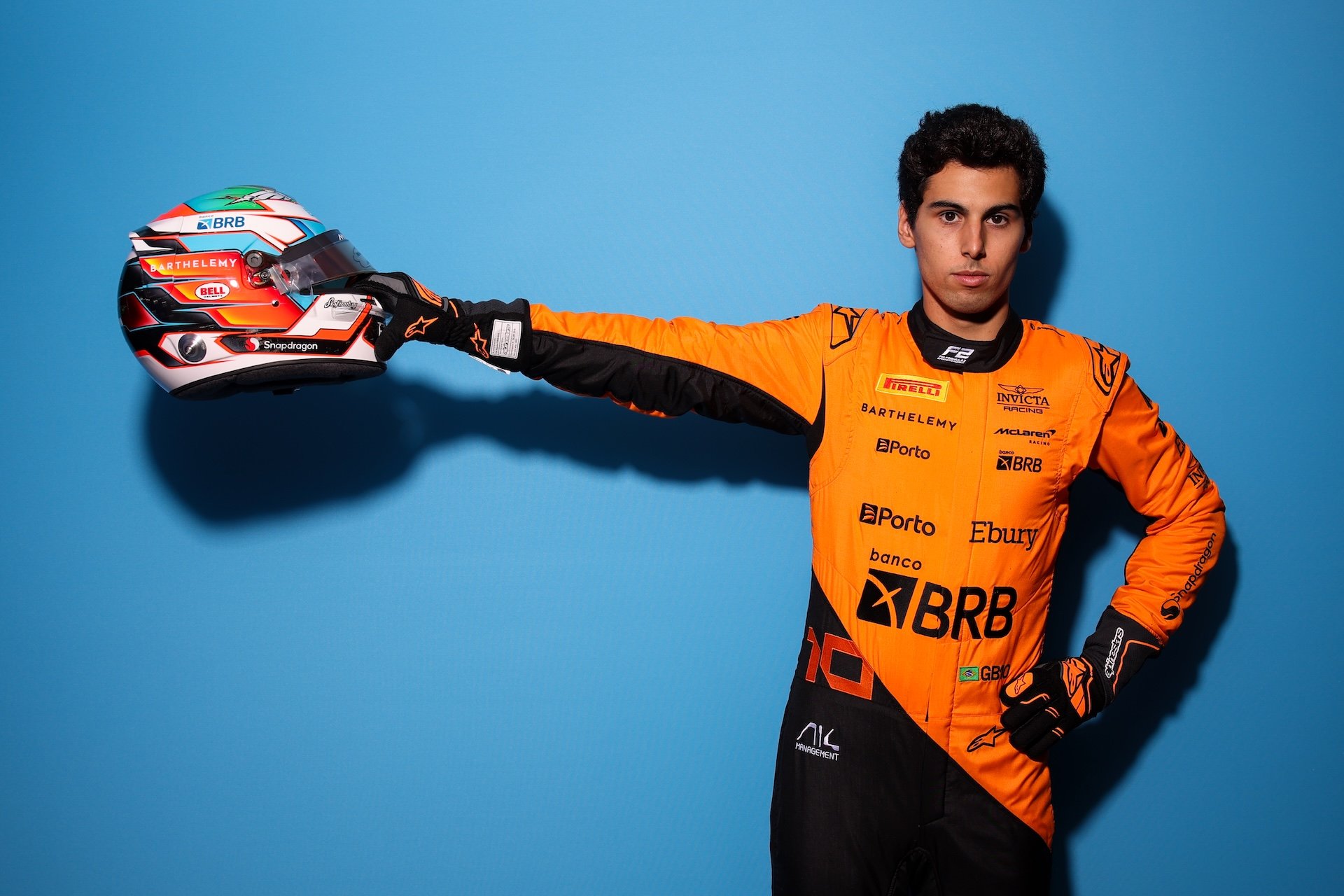
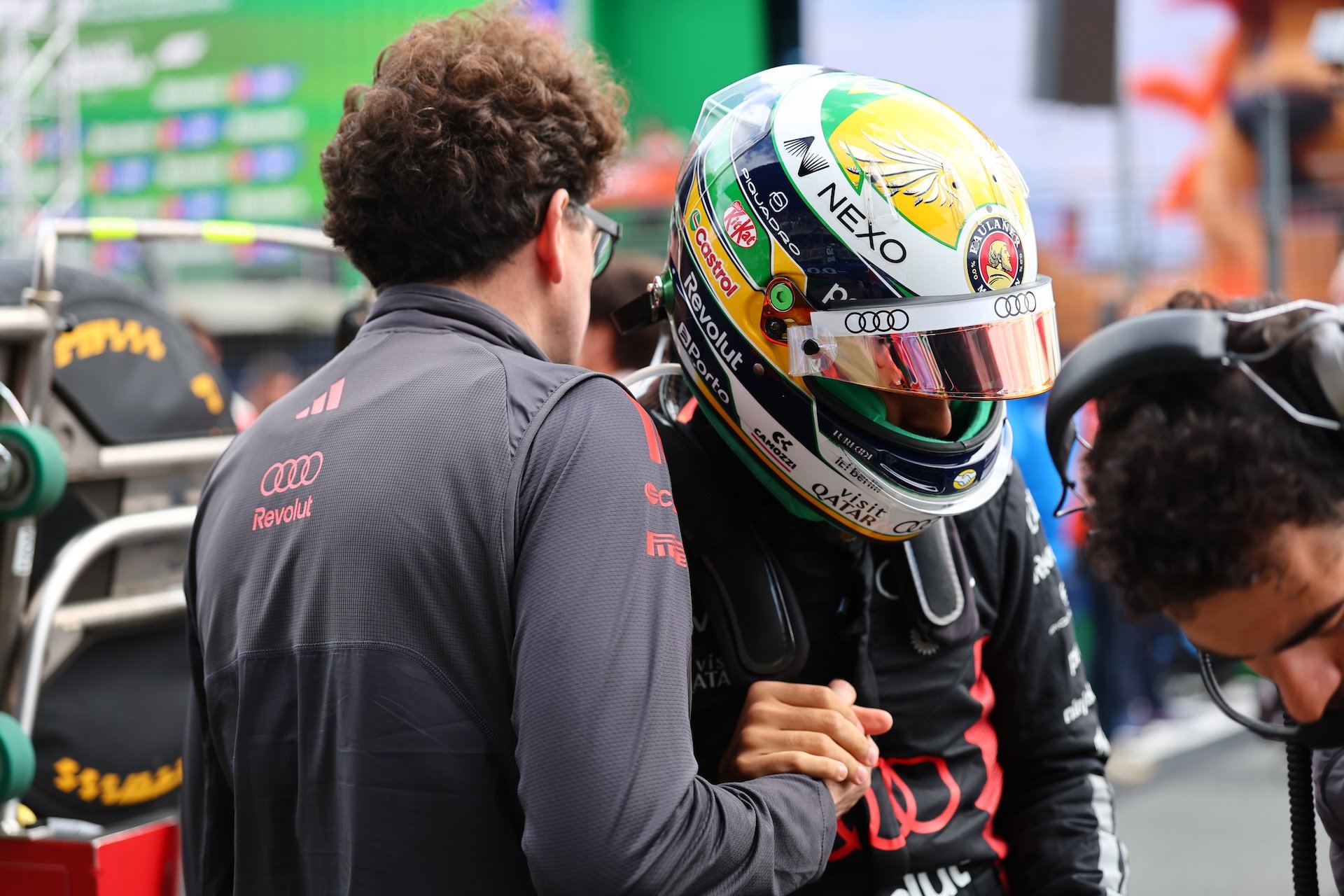
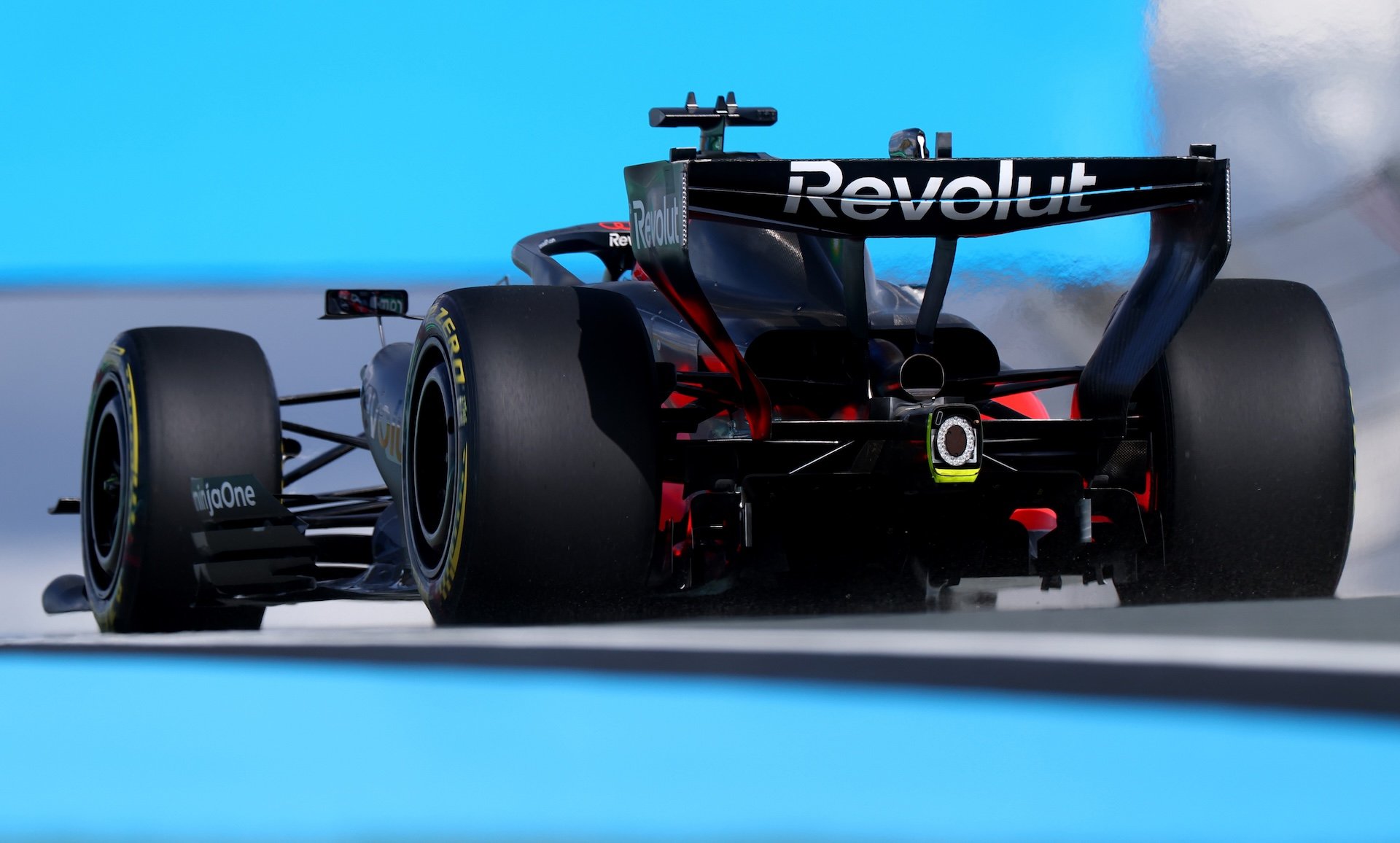
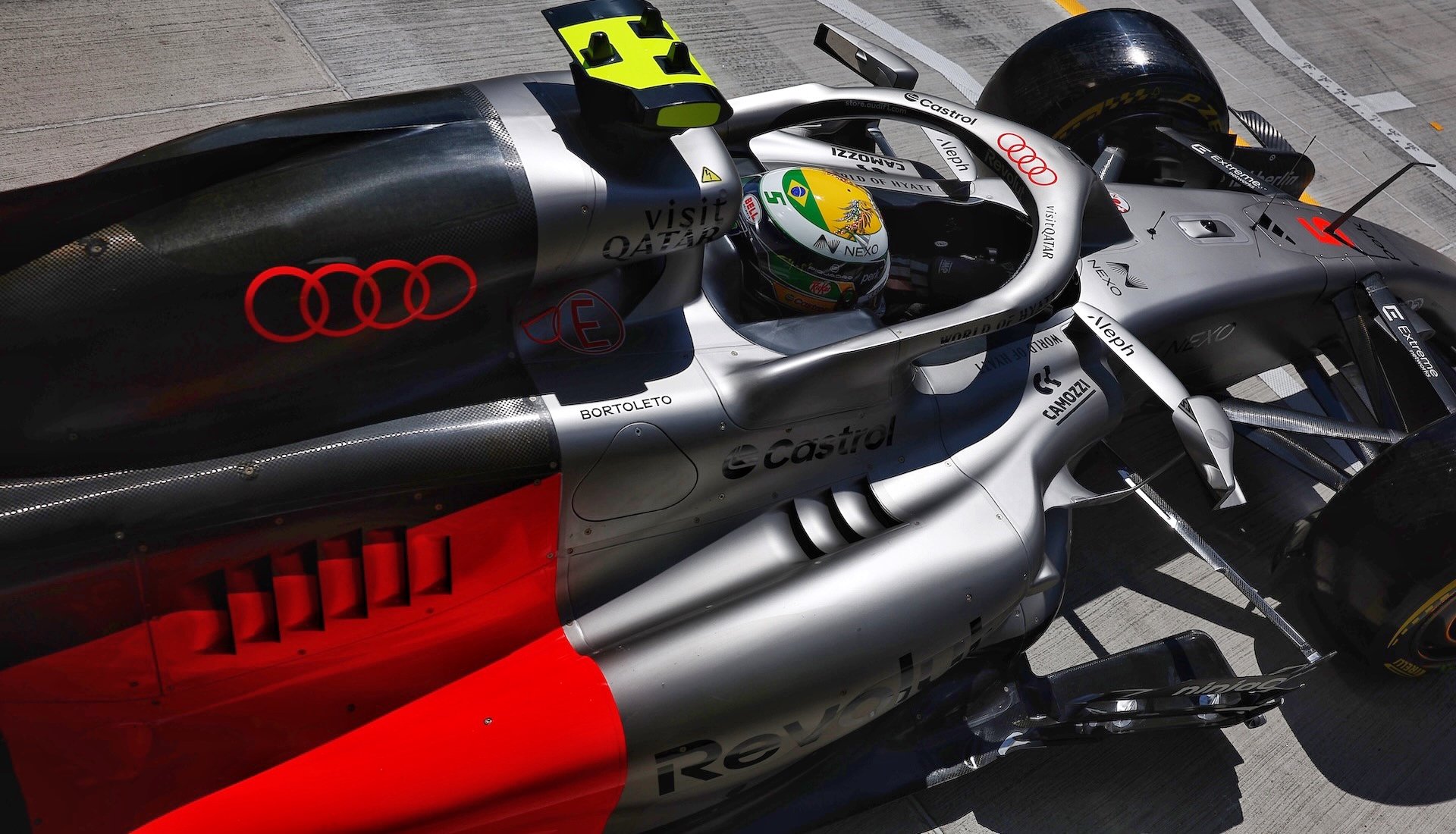
Gabriel Bortoleto Is ‘Willing to Sacrifice Everything’ to Achieve F1 Greatness. Anything Less Isn’t an Option

By: Jerry Perez

Ask the seasoned veterans and team headhunters up and down the Formula 1 paddock, and there’s only one name they’ll whisper when discussing rising talent and untapped potential: “Gabi.” As someone with decades of experience in various F1 teams put it to me, “he’s got the same level of talent as Max and Kimi, but maybe an even stronger work ethic.” Those are fighting words, but after interacting with the young Brazilian several times earlier this season, they’re the right words to describe Audi F1 driver Gabriel Bortoleto.

Bortoleto’s story is well known by now: a young man who was given the chance to race karts after other members of his family found success in motorsport. His father, Lincoln, enjoyed great popularity in the Stock Car Pro Series, a crowd-favorite championship in Brazil; Lincoln now serves as its CEO. His brother, Enzo, competed in karts all the way up to F4 and British Formula 3. To say that fuel runs through that family’s veins is an understatement.

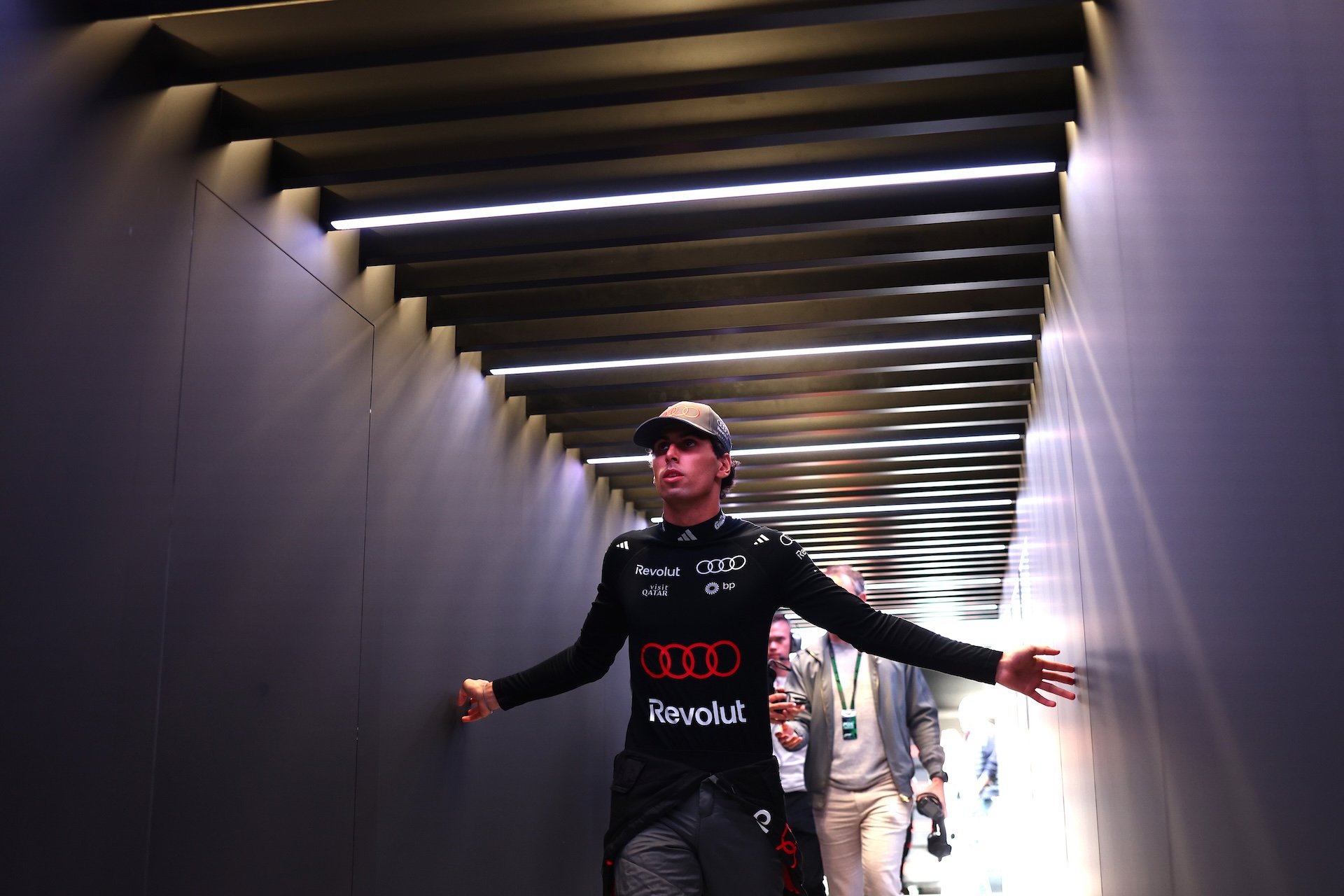
2026 Dutch Grand Prix - Saturday
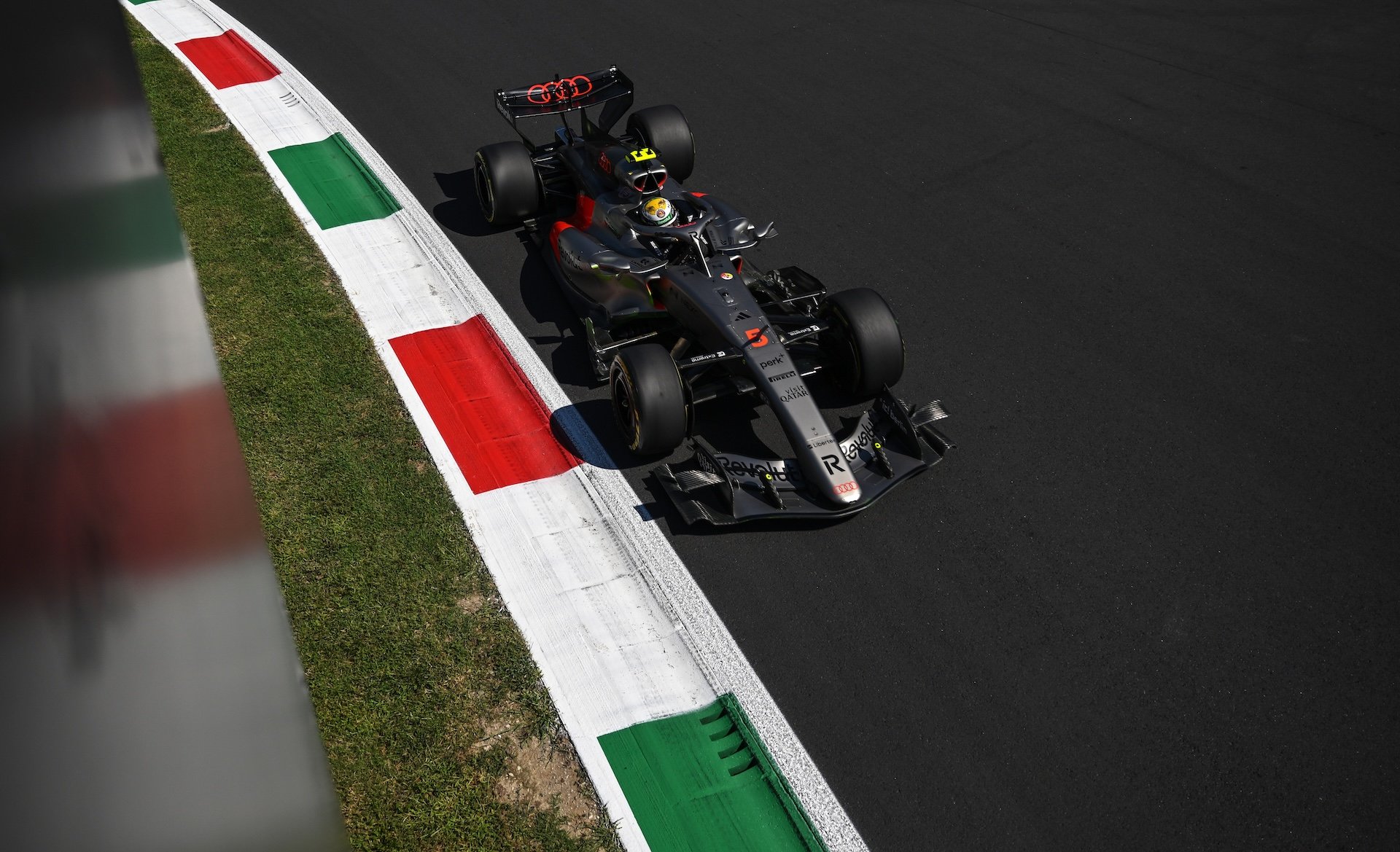
2026 Italian Grand Prix - Friday
Andy Hone, Sam Bagnalli via Audi F1 Team

It’s also known that Enzo made an enormous sacrifice—the sacrifice—to make sure his brother could keep racing. Despite having the talent and a well-defined trajectory to reach the upper echelons of open-wheel racing, the older of the two siblings hung up his helmet so the younger could continue. It’s also worth mentioning that even with all the resources the well-off and well-positioned family could muster, the journey to the top is so intense and expensive that both parents and siblings understood there was only enough to catapult one Bortoleto to F1. All the bets were on Gabriel.

This loving dedication and unwavering support from Enzo and the entire family fuel the young Audi driver to this day and will continue to do so through his career. It’s what the family has focused on for most of his life, but most importantly, it’s what he has worked so hard for since he was a young child. But let’s face it, at 21, he is still a child—a fact I’m crudely aware of given that my own son is just a year and change younger than him.

Aware of his backstory when I sat down with Bortoleto for a chat earlier this summer, I explored various questions that dug deeper and hopefully exposed his character: how passionate, hungry, and thankful he is about where he’s come from, where he’s at, and where he is going in his wild and turbulent career as an F1 driver. I think you’ll agree that he played ball. Obrigado, Gabi.

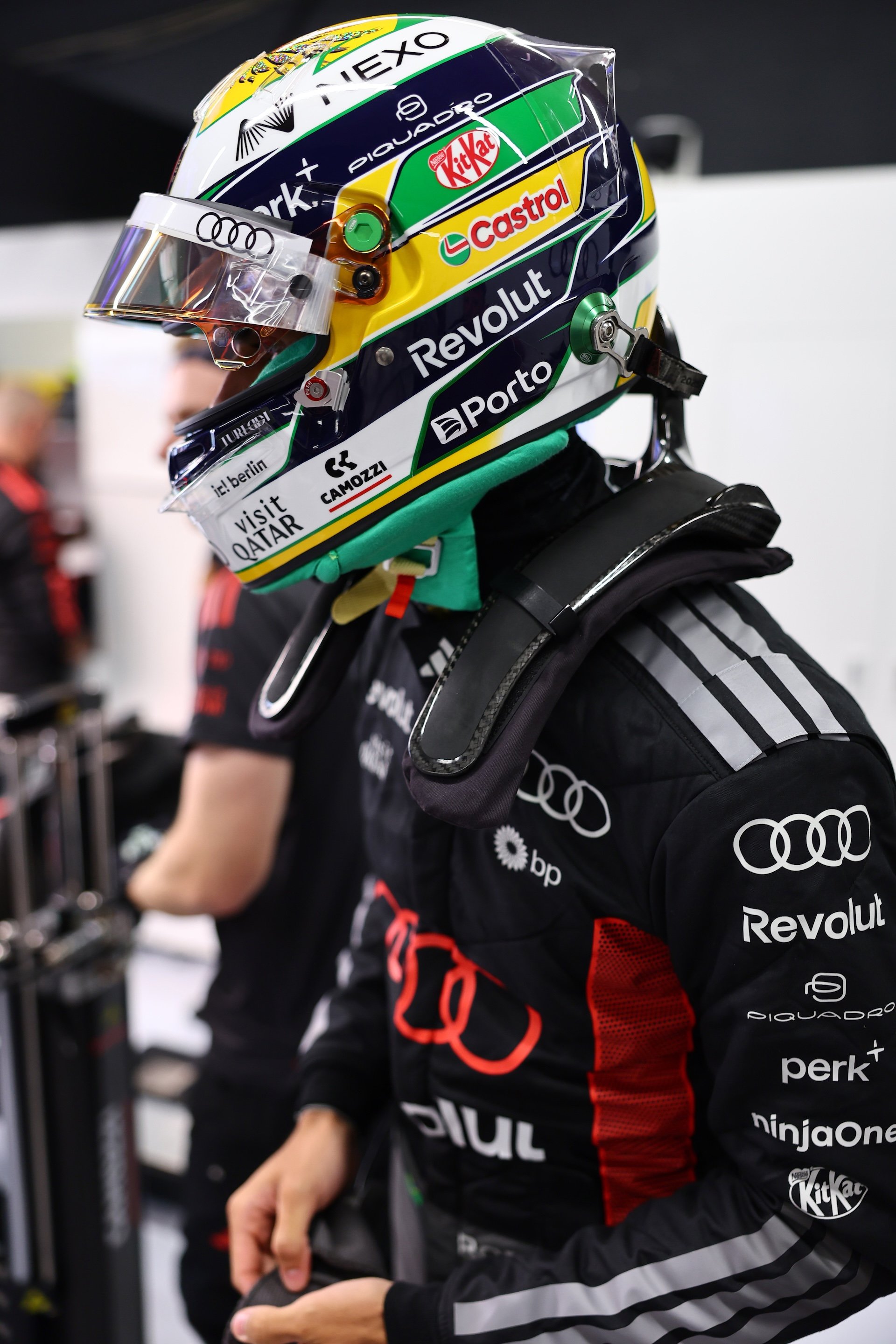
2026 Dutch Grand Prix - Friday
2026 Hungarian Grand Prix - Saturday
Andy Hone, Steven Tee via Audi F1 Team

Jerry Perez: When you first jumped in a kart at around six years old, who did you pretend to be when behind the wheel?

Gabriel Bortoleto: No, not really, no one. I just wanted to be myself. I was so young, you know; you don’t pretend to be anyone when you’re that age. You just want to have fun and enjoy driving. Ayrton [Senna] was my idol, and it was always very clear that I wanted to be like him, but I didn’t pretend to be him.

What I meant is that many times when you play fútbol or basketball or whatever sport you’re into as a kid, you role-play and pretend to be one of the big stars of the moment.

That’s actually a good point because in fútbol, I used to do that. When I kicked the ball around, I wanted to be Neymar, or Messi, or Ronaldinho, but not in karting. In karting I always wanted just to be myself—I wanted to drive.

During your early karting years, who did you look up to at that point in F1?

Felipe Massa; he was a great Brazilian driver. However, I was always a big, big fan of Ayrton. I really liked the way Ayrton drove; I liked that he had crazy and bright helmets, and when you are a kid, when you are six years old, that’s so nice. He was very cool.

JEREZ DE LA FRONTERA, SPAIN - SEPTEMBER 21: Gabriel Bortoleto of Brazil and Trident (2) poses for a photo during day one of Formula 3 Testing at Circuito de Jerez on September 21, 2022 in Jerez de la Frontera, Spain. (Photo by Joe Portlock - Formula 1/Formula Motorsport Limited via Getty Images)
Gabriel Bortoleto of Brazil and Trident drives on track during practice ahead of Round 4:Monte Carlo of the Formula 3 Championship at Circuit de Monaco on May 25, 2023 in Monte-Carlo, Monaco. (Photo by Beata Zawrzel/NurPhoto)
Joe Portlock, NurPhoto via Getty

Did you switch favorite F1 drivers as you grew up?

The truth is, as soon as Max [Verstappen] entered F1, I was a fan of him. I think I really liked the way he was driving, the way he was young and delivering such a strong performance from the beginning.

How was that transition from karting to F4—what was the most difficult part of jumping from a kart to a formula car?

[I had] to adapt to a completely different way of driving. Karting is a great school, but most of the time you don’t have gear shifts in karting and stuff like this, and then you go to F4, and it’s a completely different car. It feels like less grip than in karting, actually, and it’s really quite a tough car to drive because it’s very different from before—and also from what you’re going to drive in the future. But yeah, it was not difficult; it was just a different way of adapting.

I’d like to hear about those moments between championships, between teams, those dreaded off-seasons when there’s always a risk that that next seat may not come, that next drive may never arrive. Is there a specific one that stands out?

I think it was the off-season going into 2021: we chose a team that wasn’t very good, the owner had a few problems, and the team wasn’t doing well. Then we had to change teams at the last second; there were not really many options. I ended up on a good team after all, but in the sense that we were okay—not a top-3 team—though we did get a few podiums that season and a few points. It [ended up being] a great season for me.

BAHRAIN, BAHRAIN - FEBRUARY 11: <> during day one of Formula 3 Testing at Bahrain International Circuit on February 11, 2024 in Bahrain, Bahrain. (Photo by Ryan Pierse - Formula 1/Formula Motorsport Limited via Getty Images)
IMOLA, ITALY - MAY 19: Second placed Gabriel Bortoleto of Brazil and Invicta Racing (10) celebrates on the podium during the Round 4 Imola Feature race of the Formula 2 Championship at Autodromo Enzo e Dino Ferrari on May 19, 2024 in Imola, Italy. (Photo by James Sutton - Formula 1/Formula Motorsport Limited via Getty Images)
James Sutton, Ryan Pierse via Getty

There had to be a time when you maybe thought your career had come to an end and said, “Maybe this is where I don’t reach the next step?”

I don’t think there was ever this moment. I must be honest, I’m a big believer, you know. I’m also realistic, but I was always a big believer, so for me, there was never this moment. I think the only moment that probably came close was after F3, going into F2. Everything was going alright; I was leading the championship, but I didn’t have a spot in F1 yet, so I didn’t know what was happening to my career after that. I didn’t know what series I was going to. I wanted to be in F1, and I didn’t even know if I would keep racing [in general] if I didn’t make it there. So yeah, it was just a moment when I didn’t know what was next, what the next step was, and that was interesting for me because it was the first time that happened in my life. I ended up getting the F1 seat, and happy days—we are here living a big dream.

You have gone through this journey at a very young age—I mean, you’re still very young! Do you think this prepares you early on for the harsh reality of F1?

I think so because it makes you stronger, you know? There is no perfect life in the sense that you don’t go through good moments and [more] good moments. This has never existed with any driver. So I think this is important for shaping you as a person and for when you actually deal with very tough moments in F1, because they are going to happen. You need to be able to go through them with friends, [have] mental strength, and just be strong and leave them behind, you know? You need to understand what you need to do better to be a better person and a driver. And I think I learned this from a young age.

2026 Dutch Grand Prix - Saturday
Andy Hone via Audi F1 Team

You just touched on something I had written down in my notes: your mental strength. How do you become mentally strong, especially as a teenager?

That’s a secret question (laughs). I don’t know, I really don’t know. You just live through moments, you know, you live through things, and you prepare. I think it’s who you are, the ambitions you have, how much you are willing to sacrifice in life to achieve your dreams and your goals. If you are willing to sacrifice everything in life to be a world champion one day, nothing is going to stop you, and your mental strength is always going to be the strongest ever, because nothing is going to stop you. If you are not very passionate about it, or you are passionate but not enough to get through the bad moments, then maybe you don’t deserve to achieve greatness at all. That’s my view of it.

How important has your family been through these moments—your parents, your brother, everyone?

Everything—they’re everything to me. They have supported me through every single second of my career and never let me down. They made sure that I kept my ambitions, goals, and dreams alive and never gave up on them. And that made me a better driver and a better, stronger person as well.

Father-son relationships can be complicated. I recently spoke with Mick Schumacher, and he explained that Michael never pushed or forced him to race and was very sort of hands-off. Then there’s Max, who has been very outspoken about how tough Jos was with him as a kid. What was yours like?

My father was always supportive, but never aggressive in any sense. He was always clear about the sacrifice that my family was making to help me race. It was very clear since I was 10 or 11 years old that [they were like], “Okay, our lives completely shifted because of you [racing].” It was a pressure that was put on me, but in a positive way. My dad never put any negative pressure on me, but made it clear to me that “we’re all in on you,” he and his company. He’s a successful guy, but, like, all the work my brother sacrificed to stop racing because of me. My dad always wanted to see me work hard. If I was lazy, he would come and give me shit for it, you know? He would say things to my face, but I never gave him many opportunities to do that, if I’m being very honest with you. I always had it very clear what I had to do and the hard work I had to put in. I think the only time he gave me shit was at the beginning of my career, when I didn’t really like simulators because I was not the best at them. 
He said, “You are too lazy, and you’re not good enough in the sim; that’s why you don’t like it. You say you don’t like it because you’re not good at it. But if you practice, get good at it, and get strong at it, I’m sure you will like it, so don’t be lazy and get your head up and work.” So I started doing that, and I became a very good sim driver and very competitive—and then I started liking it (laughs). He was right.

2026 Dutch Grand Prix - Friday
Rudy Carezzevoli, Simon Galloway via Getty

I’ve been told you spend a lot of time in the simulator now, so clearly it worked, whatever he said.

It did, yeah. Big hero.

Lastly, this role with Audi. I would probably call it a once-in-a-lifetime opportunity to start with what’s essentially a new team. How do you take the most advantage of what you have right now?

The best thing I can do is understand the brand I’m representing and do my best for it. There are a lot of people working hard to put us at the top in F1; they want [to achieve here] everything they have achieved outside of F1. It’s a big responsibility, and I will just give it my all. I will sacrifice everything to bring this team to the top and win with them.

Email the author at jerry@thedrive.com

The post Gabriel Bortoleto Is ‘Willing to Sacrifice Everything’ to Achieve F1 Greatness. Anything Less Isn’t an Option appeared first on The Drive.

☐ ☆ ✇ The Drive

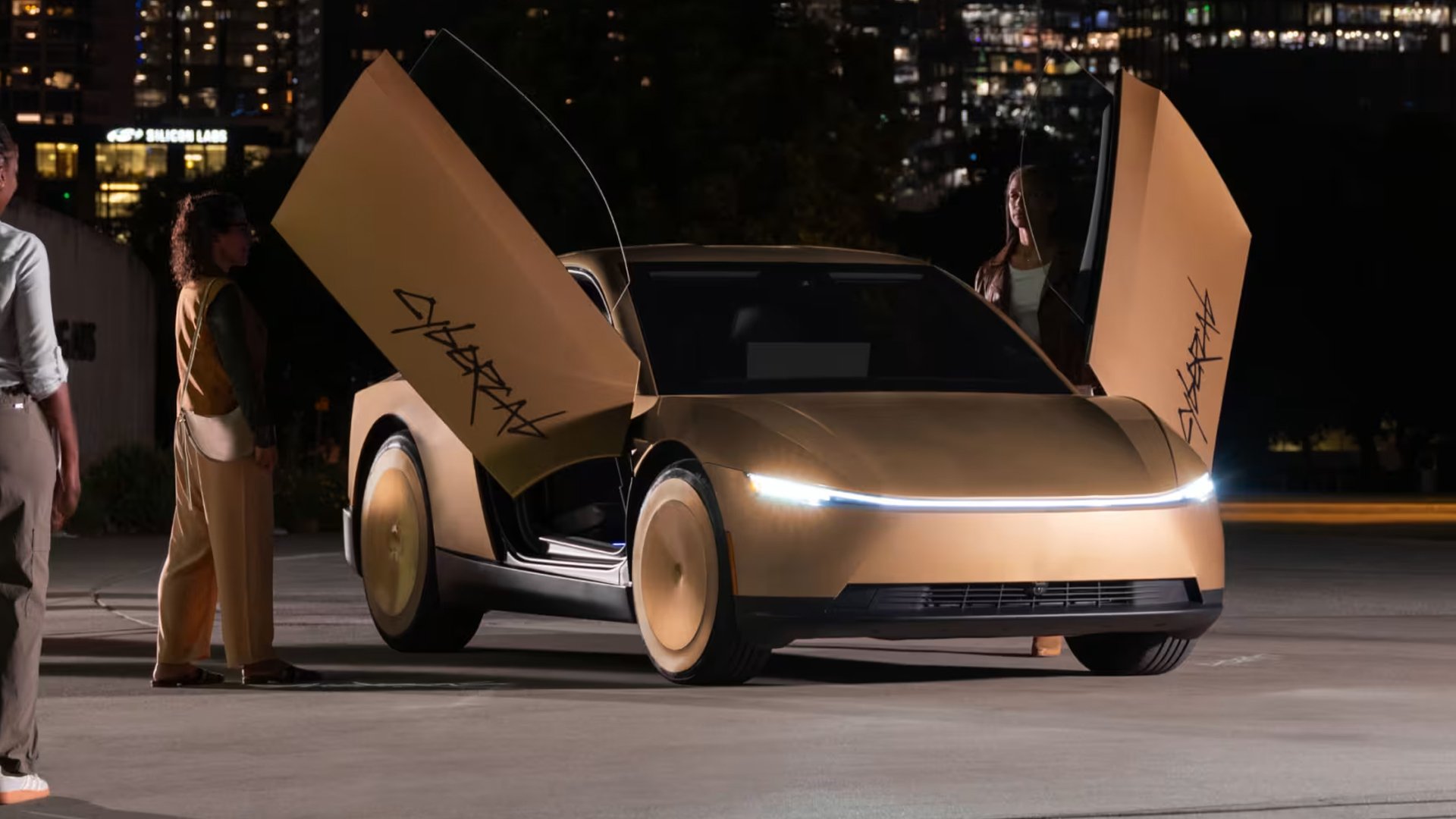
Tesla Cybercab Isn’t Just Missing a Steering Wheel. It Doesn’t Even Have Brake Lines

By: Andrew P. Collins

The Tesla Cybercab, aka Robotaxi, is a driverless personal transportation pod resembling a car. With no steering wheel and no pedals, I’m sure it’ll feel freaky to ride in even if you’re used to the marvels of modern automotive automation. But the differences between Cybercab and most regular cars go beyond what you can see from the seats—the brake system is fundamentally different from almost everything else on the road.

As for whether or not these things will actually be on the road en masse remains to be seen—the NHTSA has already opened an investigation into how Tesla certified these for public use. More on that later.

As for the interesting stopping tech, well, a typical automotive braking setup is hydraulic, relying on long hoses full of fluid to control the movement of the pads. When you push your brake pedal, a little piston is pumped, pushing sealed fluid out to the calipers, which then pinch spinning rotors. The Cybercab has calipers and rotors—but no master cylinder or brake lines. It uses a completely electric brake-by-wire system, which is still (almost) unheard of in 2026.

Some cars use electronic brake controls to operate a hydraulic system (like Lexus’ electro-hydraulic brake design), and Tesla isn’t even the very first to have no brake fluid at all in a production vehicle (the Chery Exeed EX7 claimed that title earlier this year).

That’s an important distinction: Electro-hydraulic (EHB) braking, like Lexus uses, has been in production vehicles for many years. Electro-mechanical braking (EMB)—no fluid at all—is newer and more novel.

The way this works is, instead of a master cylinder and plumbing and a pedal, there’s a little electronically controlled actuator putting braking force on the rotors, individually, at each corner.

Kyle Conner from the Out of Spec Reviews EV-focused YouTube channel was at the vehicle’s reveal party and shared this little clip of a partially assembled Cybercab, showing exactly what we’re talking about:

Old heads in various comment sections are calling this a little scary, but even as a Luddite myself, I think brake-by-wire here actually makes a lot of sense. The advantages are significant—I’m sure production costs were slashed (which was probably Tesla’s main motivation to employ such a system)—but it also allows for disparate levels of force to be applied to each wheel individually, which could aid in traction. As an EV, the Cybercab will likely do most of its self-slowing with regenerative braking. And when it does need mechanical brakes, it won’t let them get all that hot—it’s a city cab, not a sports car.

The Cybercab is really a marvel of low-cost construction, using as few and as light parts as possible. The exterior body panels are literally injection-molded polyurethane. It’s basically a giant PowerWheels car.

Tesla seems to have front-loaded the expense of making this thing (figuring out how to make the thing work with as few parts as possible), and now is banking on manufacturing and maintaining a ton of them for very little money. Seems like a logical model for cabs to me, though I still think it’s strange they only have two seats. (Though most cab rides reportedly are for two or fewer people, so there’s empirical reasoning behind that decision, too.)

The specific supplier of the Cybercab’s brake system has not been officially cited yet, but a critical mass of critics seem to be agreeing that it’s likely Brembo’s Sensify system.

I suspect we’ll see this in other vehicles in the near future, too. Meanwhile, I’m looking forward to learning more about the Cybercab—it’s kind of aesthetically cute and conceptually quite fascinating. Kyle Conner described it as looking like it’s built for long-term use in his video clip; it looks more to me like it’s designed to be disposable, like a phone, and similarly built so cheaply that whole-vehicle replacement would be a trivial expense.

Wall Street doesn’t seem quite as enamored with it as the first YouTubers to see it, though. Tesla’s stock is down as “underwhelming Cybercab launch draws US probe.” Oh, yeah, the vehicle is already under investigation to “examine the process and technical data on which Tesla relied when certifying the Cybercab and related issues.”

Got any Cybercab insider knowledge? Tell me about it! I’m andrew.collins@thedrive.com.

The post Tesla Cybercab Isn’t Just Missing a Steering Wheel. It Doesn’t Even Have Brake Lines appeared first on The Drive.

☐ ☆ ✇ The Drive

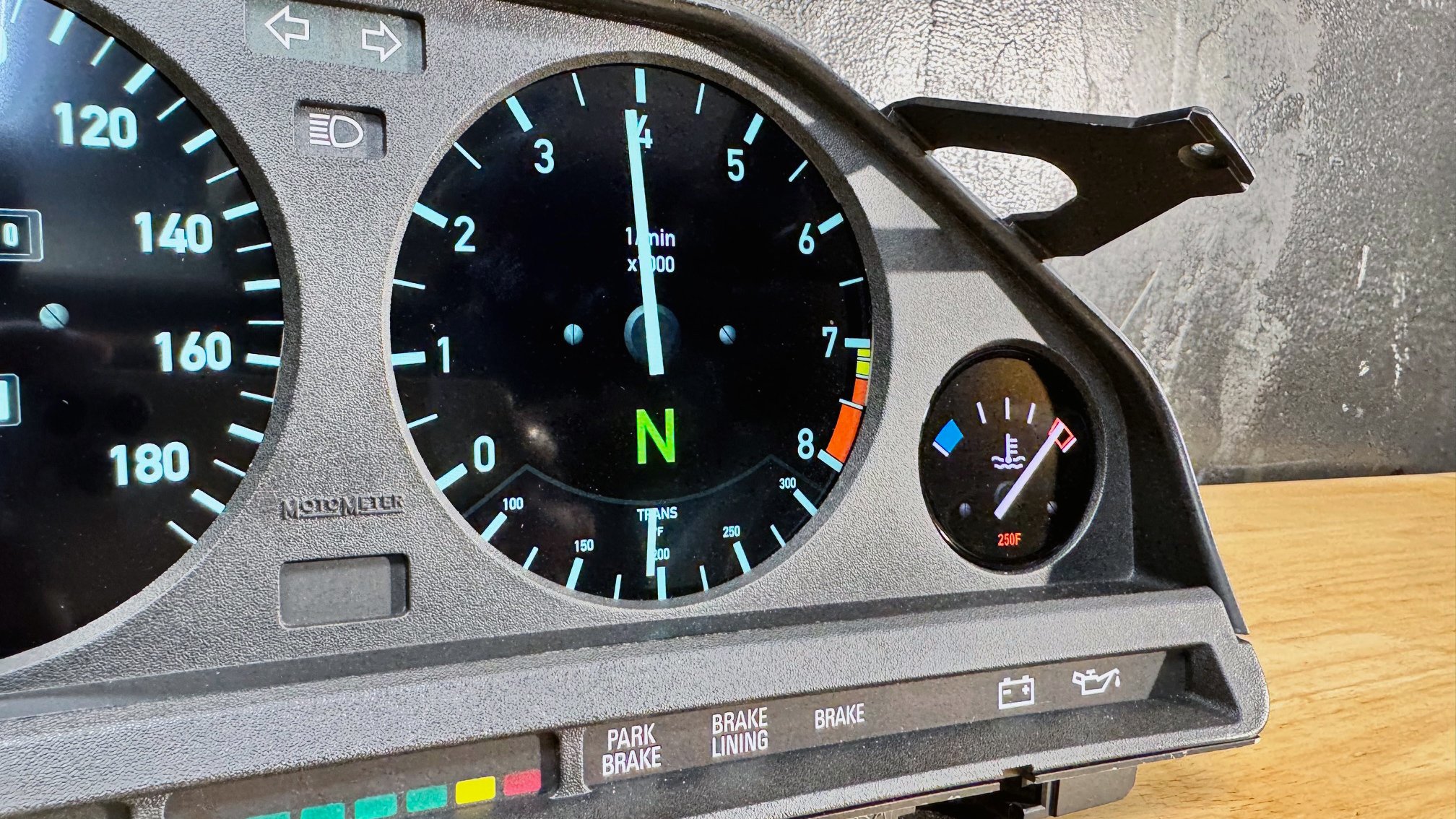
This Independent BMW Mechanic Built a Cooler Digital Dash Than BMW Itself

By: Adam Ismail

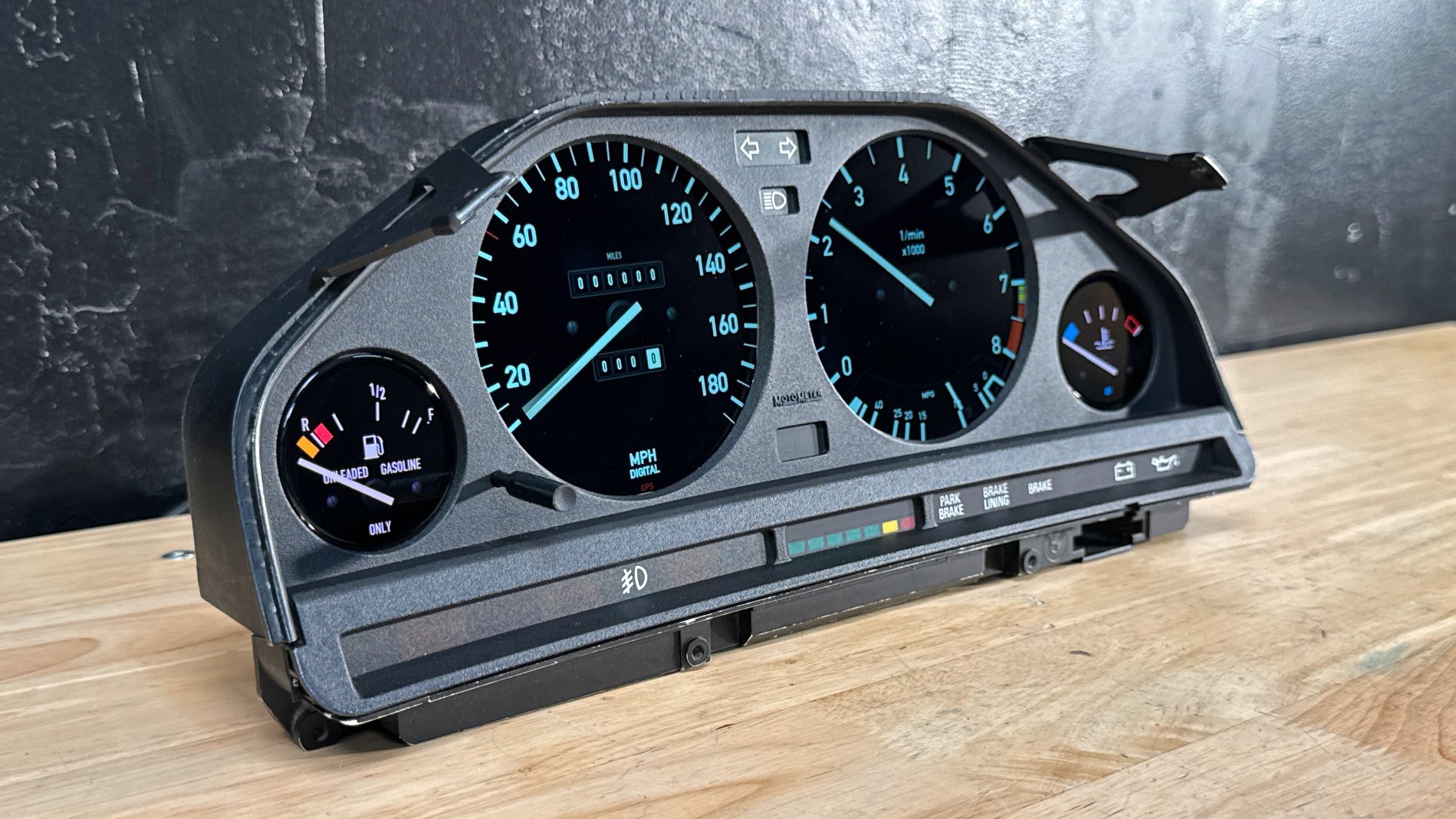
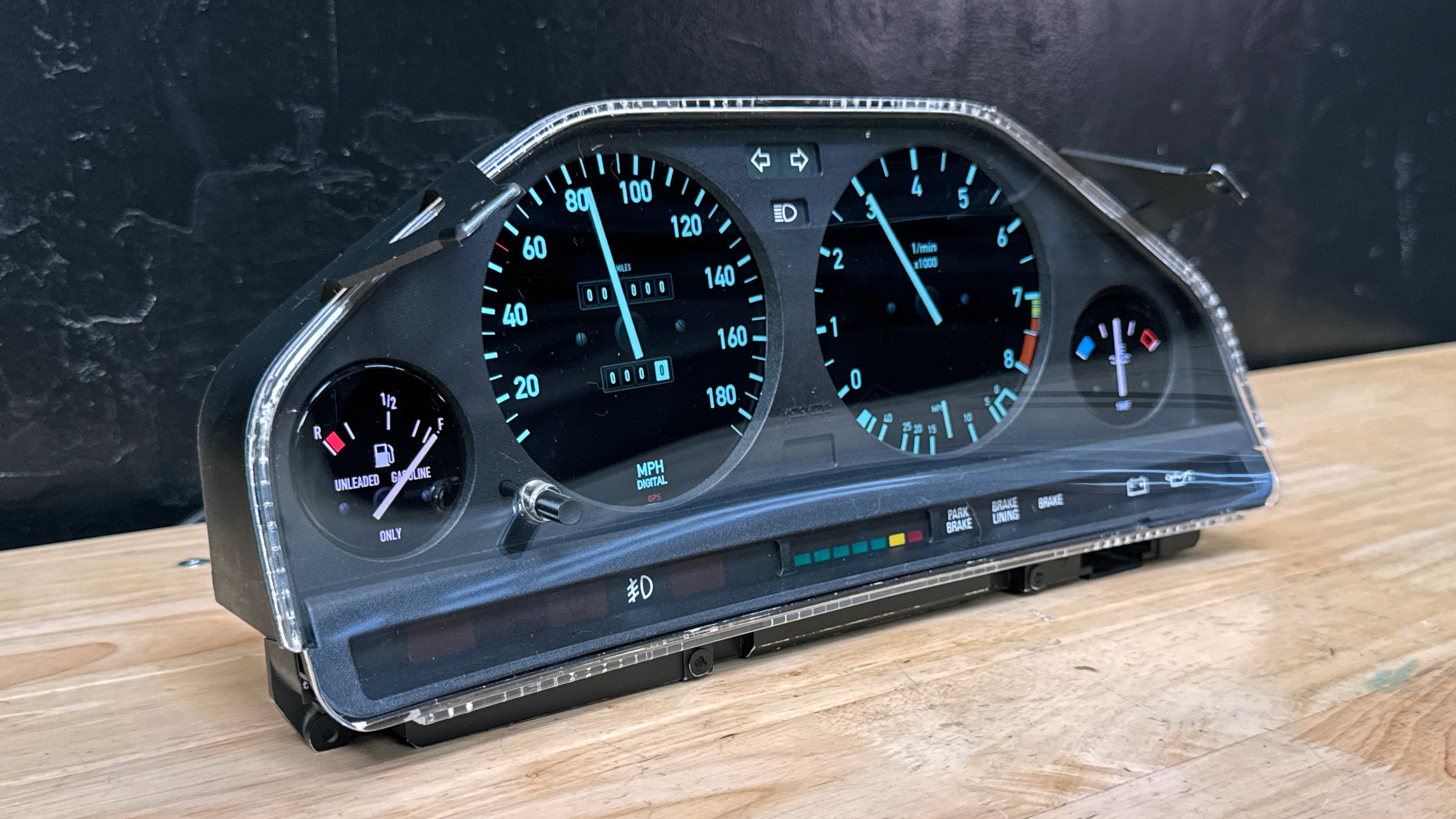
A while back, we said that big screens in cars wasn’t the answer—many more tiny ones are. Clever minds in the aftermarket have started to explore that concept, building digital gauge clusters for vehicles that are much more refined, and more thoughtful, than a tablet stuck in a binnacle. One such inventor is Jean, owner of Usual Suspects garage in Naples, Florida that specializes in BMWs and Porsches. He started developing his own plug-and-play hardware and software for digital clusters in the E28 BMW 5 Series and E30 3 Series because he wanted it to exist, only to discover that plenty of other owners did, too.

We first came across Jean’s project on his garage’s Instagram page, where he’s regularly uploading behind-the-scenes footage of his work. Jean doesn’t expect to have a final, shippable product ready until next year, but his first inkling to embark on this labor of love dates back to the start of the decade. After some false starts with suppliers, and initially struggling to find the proper displays to suit his vision, he returned to it three years ago and took on everything himself, including the programming—all the while running his existing business.

“I didn’t know how to code beforehand,” Jean told me over the phone. “I started with one screen on a piece of cardboard, but I had the layout for the E30s. I bought another one, and then I realized it’s not going to fit in the E30 housing, so I moved it over to the E28, which is what I really started with in the beginning of everything.

“Then I started thinking, ‘All right, how can I make this unique?’ I added my little shift light, trip reset button, and I kind of started having fun with the code on my spare time.” Jean said he “just kind of let [his] brain go crazy” with the possibilities, and was also able to return to developing an E30 version, once he found touchscreens that fit.

Perhaps not surprisingly, sourcing displays was one of the biggest hurdles Jean told me he had to overcome in this journey, one that repeatedly derailed it in the early days. Circular screens weren’t as readily available back in 2020 as they are now, especially in the sizes he needed. And even once they became more common, fitting everything required to drive them was another bugbear.

But finding displays that fit just right and can be packed behind a standard BMW instrument cluster of the era without too many extra parts is really important to Jean’s vision for the project, which is that everything has got to be not only plug-and-play, but also easy to install and remove, if a customer wants to move their digital cluster into a different car down the line.

A good look at Jean’s E30 setup. Usual Suspects Garage

“I’m trying to take account for every single variable that I can come up with in terms of the differences in years, the differences in wiring, and like what’s needed and what’s not needed,” Jean said, adding that his main focus at the moment is UI refinement.

“I don’t want it to be laggy because then it reminds you that it’s digital,” Jean said. “I was looking at a video of, I think it’s MoTeC unit, in a Gunther Werks Porsche. I noticed the needle was kind of laggy, and I was surprised that, you know, that’s what you accept at that price level for certain things, but obviously you don’t buy the car for that. When you have a car that extreme, you don’t buy the car for the cluster, but people are going to buy my cluster for the cluster, right? So I can’t have that.”

Jean is targeting a price of $1,300 for a whole unit. It’ll include a control knob, “because no one’s really gonna want to reach behind a steering wheel and mess with a touchscreen,” as he says, as well as wireless connectivity to enable over-the-air updates, likely from a paired smartphone with a companion app. He’s open to phone projection as well, via Apple’s new CarPlay Ultra system that is made for circular screens, though it’s not currently in the project’s scope.

A Pro version with built-in navigation is under consideration, though. That’s where a digital replacement cluster could really shine—not just in recreating the look of the original gauges, but in letting drivers quickly scroll through all kinds of information without leaving the original aesthetic completely behind.

It’s a lot of ground to cover, especially since it’s simply Jean working on this with his cousin, all completely self-funded for now. He’s considered crowdfunding, but would go down that route only after he’s proven himself with the initial launch. “Realistically, I don’t want to lose anyone’s trust,” he said.

There are plenty of people tuned into what he’s doing, though, as over 1,000 people have registered their interest in the BMW clusters. Some work has already been done for a Porsche version, and, down the line, he’s eyeing Mercedes, too. “For reference, my Facebook page was sitting at 1,000 followers, and within like two weeks, it was at 40,000,” he told me, off the back of a few snippets of the project that went viral in enthusiast communities. When Jean started all this, he was building the product he wished somebody else had. Now, he’s leading the way.

Got a tip about a cool aftermarket project you want us to cover? Reach out to tips@thedrive.com

The post This Independent BMW Mechanic Built a Cooler Digital Dash Than BMW Itself appeared first on The Drive.

☐ ☆ ✇ The Drive

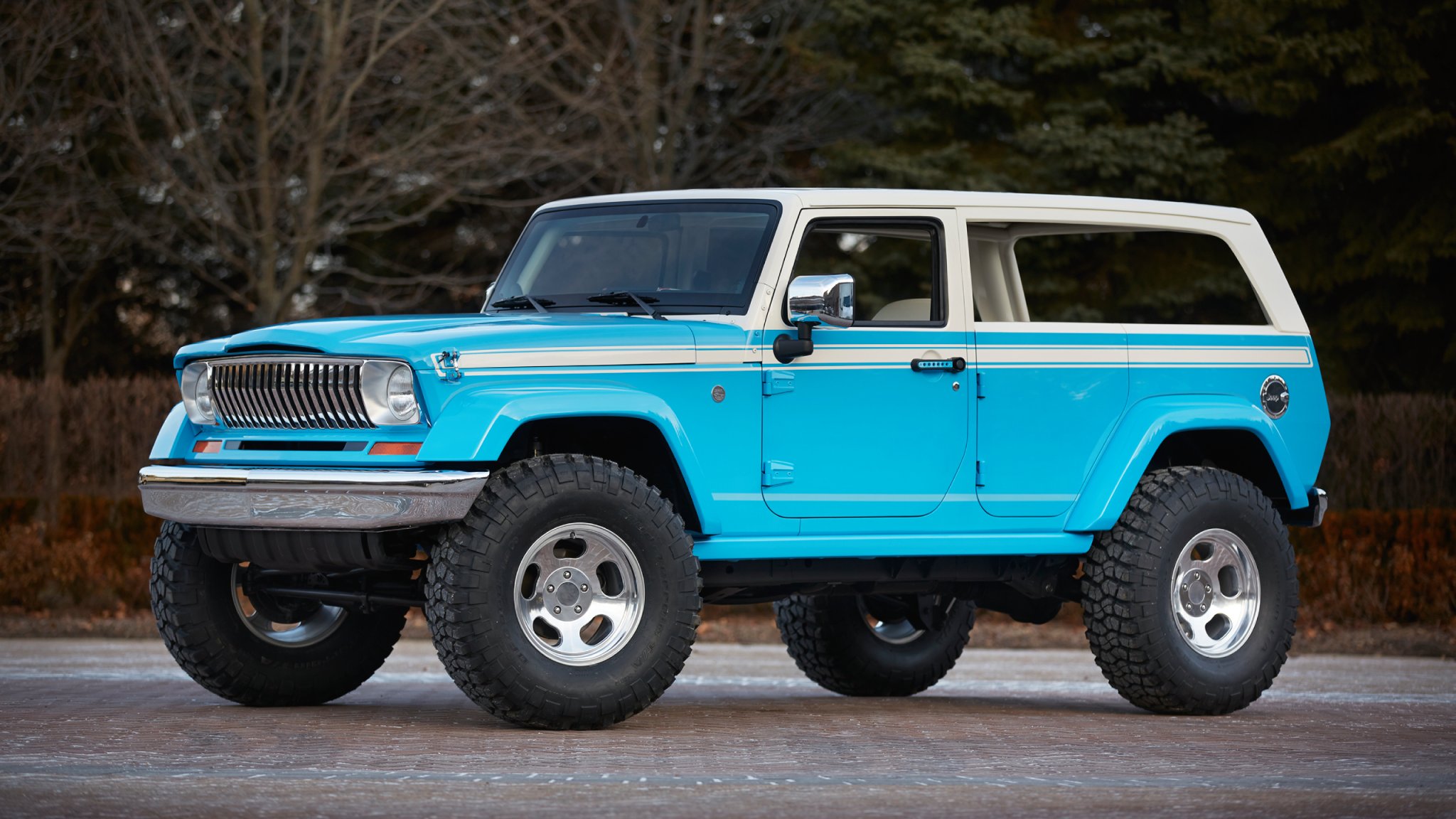
Jeep’s Best Path to a V8 Wagoneer Is Hiding In Plain Sight

By: Byron Hurd

So far, Jeep has been somewhat left out of the V8 party. The Wrangler 392 soldiers on, and Gladiator 392 is coming, but at the other end of the spectrum, the V8 has been eliminated from the Grand Wagoneer and was essentially DOA in the current-generation Grand Cherokee. The latter ostensibly launched with a Hemi option, but good luck finding one. It only lasted until 2023, and the long-wheelbase L model lost its Hemi option in 2024.

Things are a bit weird at Stellantis right now, to put it mildly. Virtually every brand has a new (or freshly un-retired) exec at the helm, and each of its brands is still fighting to overcome the whiplash of the past five years. Two things are happening here. First, Stellantis has had other priorities for the Hemi, and second, the company just spent a ton of money to develop a new family of turbocharged inline engines (both 4- and 6-cylinder) that it needs to try to recoup.

They’re good motors, and the company has every incentive to make a return on that investment. More and more, it seems like Jeep is going to be the program’s primary beneficiary, since Durango is leaning hard on the Hemi-ssance. In fact, between stuffing them into Dodge’s volume leader and the Ram 1500, Stellantis started running out of V8s.

The 4xe plug-in hybrid took its place, and, well, we saw how that worked out. Even as a replacement, it didn’t match the Hemi’s 7,200-pound tow rating—nor does any other current powertrain option in the Grand Cherokee lineup. This leaves a subset of potential buyers in the lurch. Jeep has teased the return of a Hemi to the Grand Cherokee, which seems virtually inevitable at this point. But I’d like to propose an alternative: How about a Wagoneer Classic?

Hear me out: You give the Durango a seven-slot nose job, jazz up the interior with some nostalgia-soaked design elements, and stick a Waggy badge on it. Offer it with the 3.6, 5.7, and 6.4, and since it’s a Wagoneer, it doesn’t have to be “Trail Rated” to fit with Jeep’s modern branding. Translation? No need to mess with the powertrain. The Durango is essentially the cheaper version of the Grand Cherokee L we didn’t get until the current generation—a long-wheelbase WK2—and since it’s already in production, the tooling costs would be relatively insignificant.

Is this as easy as dropping the 5.7-liter Hemi back in the Grand Cherokee and shipping it? Certainly not, but it would be a relatively low-stakes move for a company determined to make hay while the sun shines. Plus, it’s an opportunity to attract more enthusiasts to the Wagoneer sub-brand. That’s no bad thing, right?

Got a story tip? Let us know at tips@thedrive.com!

The post Jeep’s Best Path to a V8 Wagoneer Is Hiding In Plain Sight appeared first on The Drive.

☐ ☆ ✇ The Drive

In America, a Bull Bar Is a Look. In Australia, It’s Just Another Factory Option

By: Andrew P. Collins

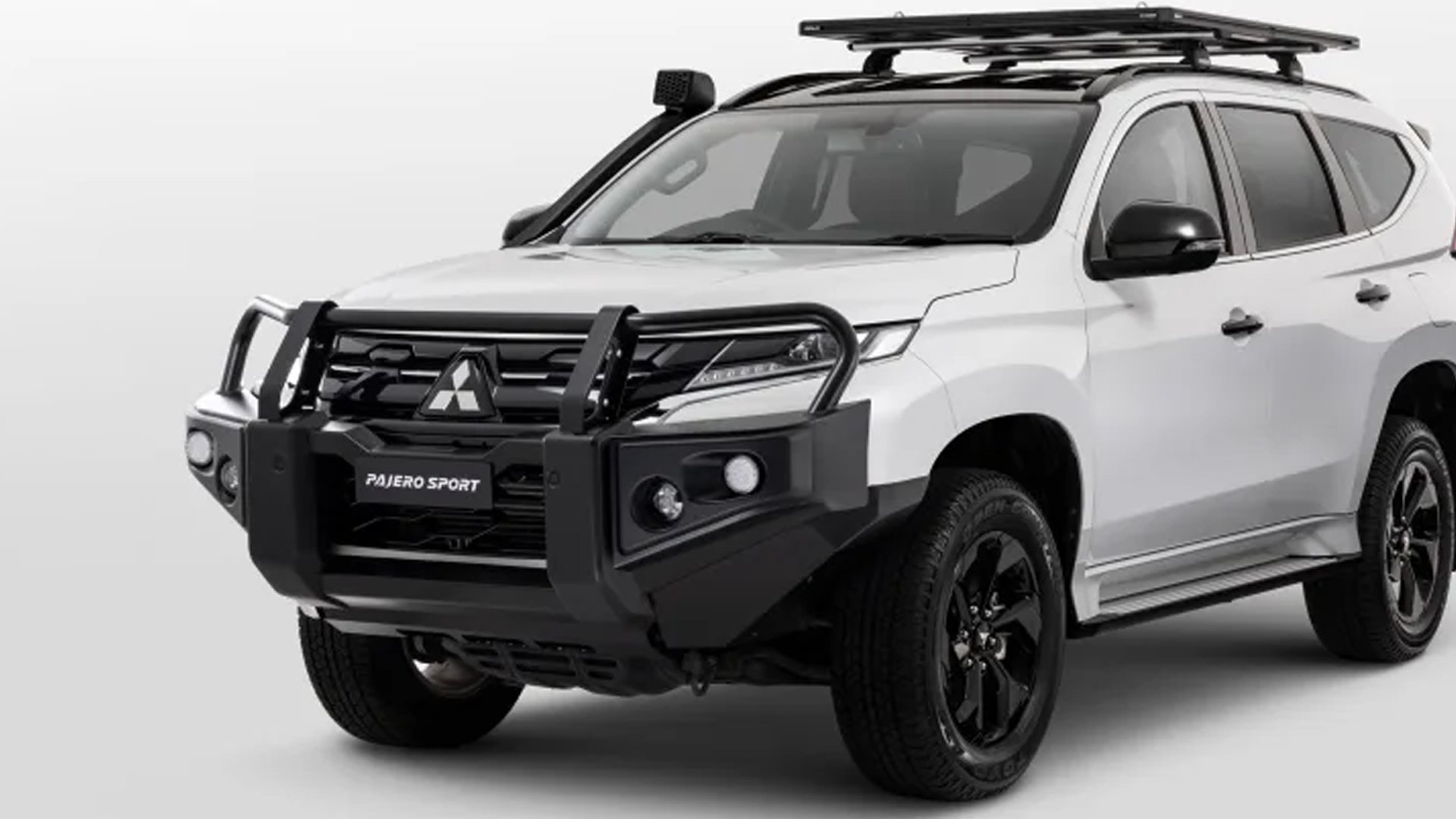
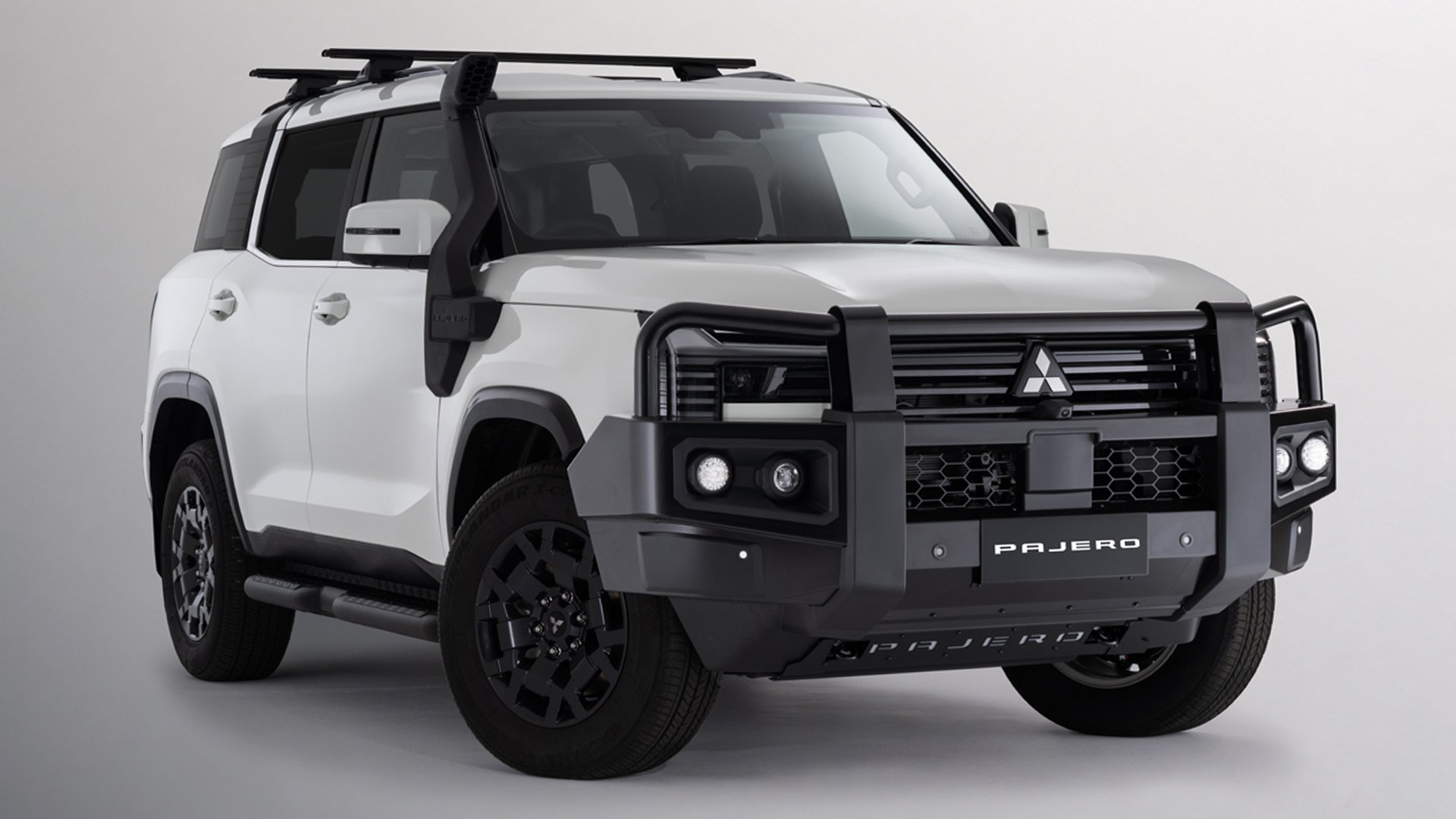
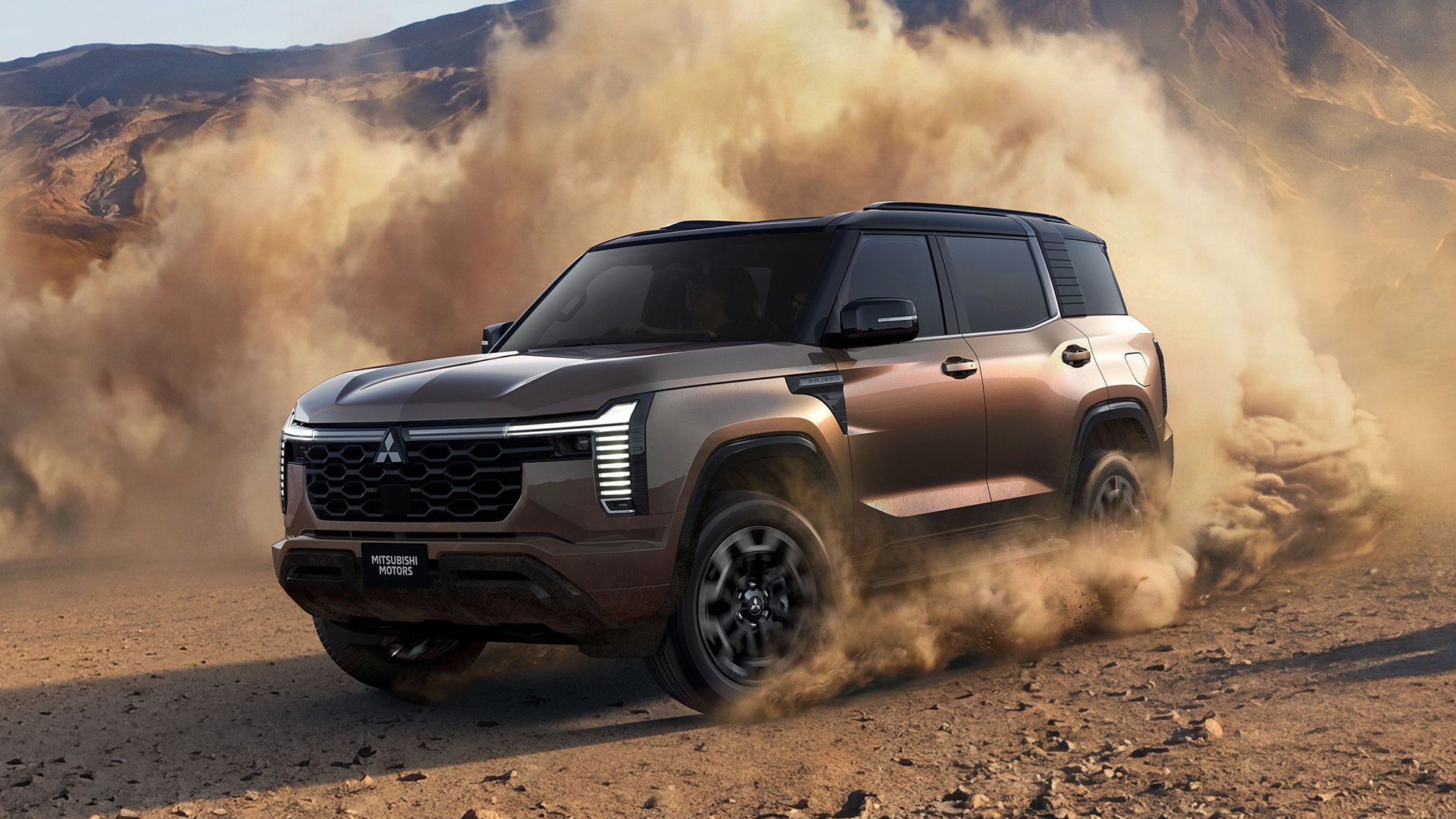
The new Mitsubishi Pajero dropped this week; Americans know this model as the Montero. And while it left our market without ceremony 20 years ago, the three-row off-roader remained popular overseas as a less-expensive Toyota Land Cruiser alternative. In Australia, for example, the vehicle’s new design is a big deal. And clearly, Mitsubishi is serious about making this thing outback-worthy. Get a load of the optional steel bumper from the factory accessory catalog.

It’s kind of funny seeing a big, battering-ram bumper on a modern SUV design, isn’t it? Looks like something you’d slap on at Los Santos Customs in GTA V. Mitsubishi hasn’t released the full options list yet, but in that one teaser picture we can clearly see a real kangaroo-killing bumper, snorkel, and skid plate. The description is just: “Make the All-New Pajero uniquely yours with a wide range of Mitsubishi Genuine Accessories. Designed for Australian conditions and developed specifically for Pajero, each accessory delivers seamless integration, exceptional quality and confidence on every journey.”

This would be consistent with what Mitsu Australia offers on the Pajero Sport. Toyota sells something similar for the 300 Series Land Cruiser in the Land Down Under, too. (And of course, the mighty 70 Series is still sold there).

Toyota, Mitsubishi

So, yeah, while those look like aftermarket bumpers (and may indeed be made by ARB or another bumper brand that also sells direct to consumers) they’re OEM parts you can get from the factory. And even though they’re slightly odd-looking on modern vehicles, I do think they’re pretty darn cool.

The advent of front vehicle sensors and higher standards for pedestrian safety has largely removed such options from American vehicles, but in kangaroo country, they’re still a necessity.

And it’s not because Australia is a lawless land. Quite the opposite, in fact—speed enforcement is much stricter there than it is here. The legal driving-intoxication limit is lower. Firearms are much more tightly regulated. A driver’s license is harder to get and puts much greater restrictions on beginner drivers than US ones do.

No, the proliferation of seriously heavy-duty truck bumpers is not an “Aussies can do whatever they want” thing. It simply makes more sense there. Australia is about the same size as the contiguous United States, but with about 10% of the population. Meanwhile, the density of animals on the road is much higher.

I lived in Australia circa 2011 as an off-road tour guide, and crisscrossed the entire nation east/west, north/south, and a few diagonals, about a dozen times. We’d run 17-day trips where we’d see our last traffic light on the first day and not see another until the last. Once you get away from the coast, it’s animal country. Kangaroos ranging in size from “small dog” to “could beat up Jason Momoa,” plus emus, are an absolute menace to vehicles. As an animal lover, I share this with no pride, but I lost count of how many ‘roos I killed—in some areas of the outback, they simply bounce off your bumper like bugs while you blaze down a dark highway.

It can become impractical to pull over and inspect your vehicle after every kangaroo strike—there’s probably a Slim Dusty song about that (look him up if you want to experience a little piece of Australia for yourself now).

All this to say, Australia’s one place where prioritizing animal defense over pedestrian safety actually makes sense objectively.

As for me, the kangaroos got their revenge. I collided with a particularly dumb one while riding a Yamaha TTR250 motorcycle, and the main souvenir I took home from the trip was a slightly bent skeleton—left arm has ridden about an inch lower than my right ever since. I also had to drive across the Simpson Desert (three days) with a cracked collarbone and a misaligned acromioclavicular joint. But that’s a story for another time.

Got any Australian outback driving stories? Hit me up at andrew.collins@thedrive.com

The post In America, a Bull Bar Is a Look. In Australia, It’s Just Another Factory Option appeared first on The Drive.

☐ ☆ ✇ The Drive

VW Cuts Another 50,000 Jobs and Possibly a Brand: TDS

By: Adam Ismail

Hello and welcome to The Downshift, or TDS for short, The Drive’s morning news roundup bringing you the biggest automotive headlines from around the world.

The Downshift recaps news briefly, with links to full stories for those seeking more info. Here’s your bulletin for Friday, September 4, 2026. Happy Labor Day and enjoy the long weekend!

🏭 Volkswagen’s board of supervisors finally approved a plan to restructure the company, to the tune of 50,000 more job cuts. That brings the planned total reduction in headcount to 100,000, of a global workforce of more than 650,000 people. Additionally, rather than close four of its plants, in Emden, Hanover, Neckarsulm, and Zwickau, VW will “seek alternatives” for their continued operation, which could mean sales to other automakers. [Reuters]

👕 Please excuse the self-promo, but we’ve collaborated with our friends at Blipshift to bring back another five of our favorite t-shirt designs. They’re on sale starting today, and will remain up for grabs until Thursday, Sept. 17. Get ’em while you can!

💺 According to a leaked document related to VW’s restructuring plan, the company may retire Seat as a brand in the coming years, while allowing Cupra—the much newer performance-minded spinoff of the Spanish automaker—to live on. [Autoblog]

🔥 BMW has recalled 190,000 older sedans in Germany, spanning 2014 through 2020 model-year 3, 5, and 7 Series vehicles, for starter relays that are not sufficiently protected against moisture, which could lead to corrosion, a short and, naturally, a fire. It’s worth stipulating that this recall has not been picked up by NHTSA here in the States yet, so until then, anyone who believes their vehicle might be impacted should check with their local dealer. [BMW Blog]

📃 The Alliance for ‌Automotive Innovation, a lobbyist coalition of automakers that includes Ford, General Motors, Honda, Hyundai, Stellantis, Toyota, and Volkswagen, sent a letter to Congress urging lawmakers to “enact a Chinese vehicle, software, and hardware ban” that would prohibit manufacturers like BYD, Chery, and SAIC from acquiring authorizations for U.S. sale—while notably leaving non-Chinese companies that have exported cars from China, like Ford and GM, to continue doing that if they so choose. [Reuters]

💪 The reborn, Chevy small-block-powered Jensen Interceptor has been fully revealed, with a face that’s a little more reminiscent of a recent Camaro than anything else. [CarBuzz]

🏁 Weekend races to watch (all times Eastern):

  • NASCAR O’Reilly Auto Parts Series at Darlington: Saturday at 7:30 p.m. on CW/ESPN
  • Formula 1 Italian Grand Prix: Sunday at 8 a.m. on Apple TV
  • World Endurance Championship 6 Hours of COTA: Sunday at 2 p.m. on truTV/Max
  • IndyCar at Laguna Seca: Sunday at 3 p.m. on Fox
  • NASCAR Cup Series at Darlington: Sunday at 5 p.m. on USA
  • NHRA Drag Racing US Nationals Finals: Monday at 12 p.m. on FS1

Got a tip or feedback for TDS? Reach out to tips@thedrive.com

The post VW Cuts Another 50,000 Jobs and Possibly a Brand: TDS appeared first on The Drive.

☐ ☆ ✇ The Drive

Lolly, Lolly, Lolly, Get Your Cool Shirts Here

By: Adam Ismail

We weren’t joking. The Drive’s collab with Blipshift, purveyors of our favorite enthusiast-themed merch for many years, is back with a new drop of five hall-of-fame shirts. It’s live right now, patiently (adverb!) waiting for you to check it out. Hope you dig it.

If you know Blipshift, you know the site has had a fantastic catalog of apparel over the years, but the options change every few days. Plus, once a design goes out of print, it doesn’t come back—usually. Because, as part of our partnership, we’re reviving some of our favorites of the past.

In classic Blipshift style, each one will be available in whatever medium you like. It’s going to start getting chillier out there before you know it, so if a t-shirt isn’t in season, how about a long-sleeve or hoodie? Maybe a onesie for the budding enthusiast in your life? Heck, if you’re sufficiently clothed, you can always pick one up as a poster.

For this drop, you have two weeks—from Friday, Sept. 4, until Thursday, Sept. 17—to grab these five designs: Crazy Taxi, Daytonaaa, That’s No Pipe, We Have Luft, and Zipdependence Day. Plus, The Drive retro logo design remains on sale, harkening back to our OG look in those salad days of 2012. (That was longer ago than you think; there were only four Grand Theft Autos back then.) You can always find that one, as well as whatever we’re currently slinging, on our Blipshift store page.

Crazy Taxi

Daytonaaa

That’s No Pipe

We Have Luft

Zipdependence Day

The Drive Retro Logo

After this drop is through, on Thursday 9/17, the next one will start two weeks after that, on Friday 10/2. That’s how it’ll work for the rest of the year: two weeks on, two weeks off, etc. You never know what’s going to make the cut, so keep your eyes peeled. Here are the dates for the next three drops—before you know it, we’ll be Christmas shopping:

  • 10/2-10/15
  • 10/30-11/12
  • 11/27-12/10

One more thing: these are all made on demand, so production doesn’t begin until after each sale ends, so Blipshift knows how many to make. That means it’ll take a couple of weeks after you place your order before the package lands on your doorstep. But good things take time, y’know?

If you ruined your favorite shirt long ago (as I did with that Daytona tee) and want to score a new one, send your requests for revivals to feedback@thedrive.com. It just might show up in the next drop. Or let us know if you’ve got any great ideas for entirely new designs. We take requests!

The post Lolly, Lolly, Lolly, Get Your Cool Shirts Here appeared first on The Drive.

☐ ☆ ✇ The Drive

When a Tornado Destroyed 100 Brand New Corvettes, This Salvage Yard Got to Work

By: Caleb Jacobs

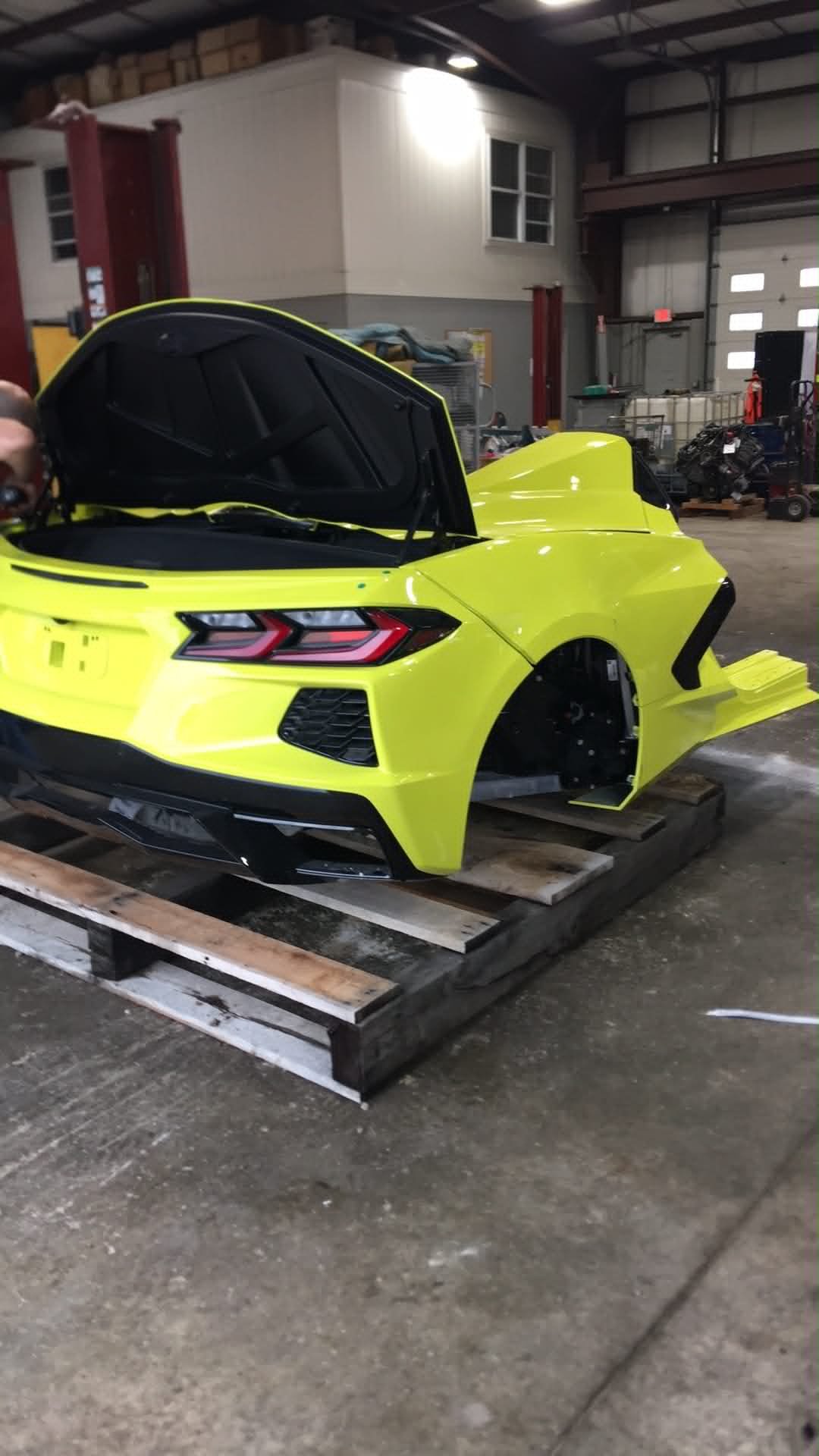
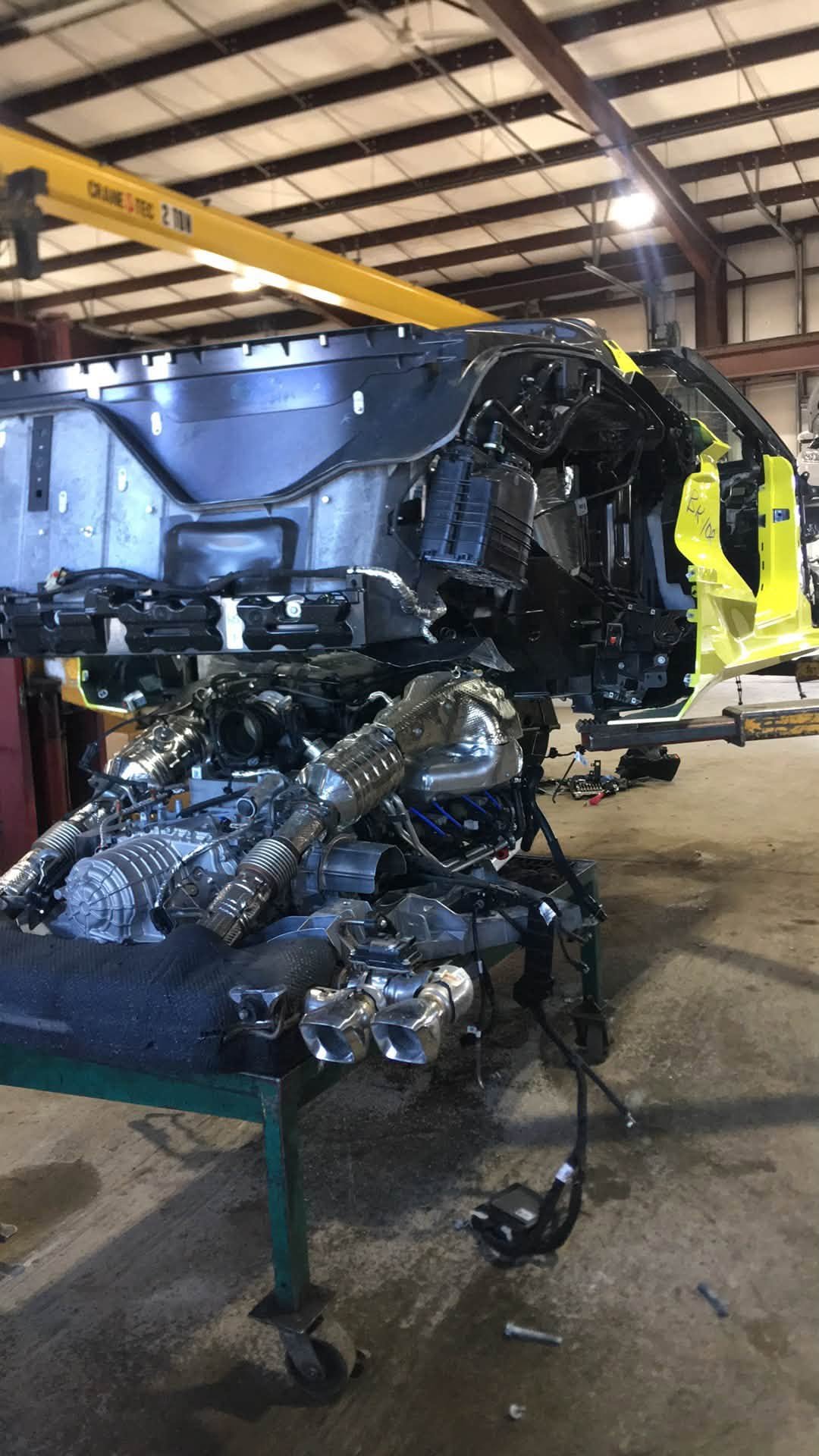
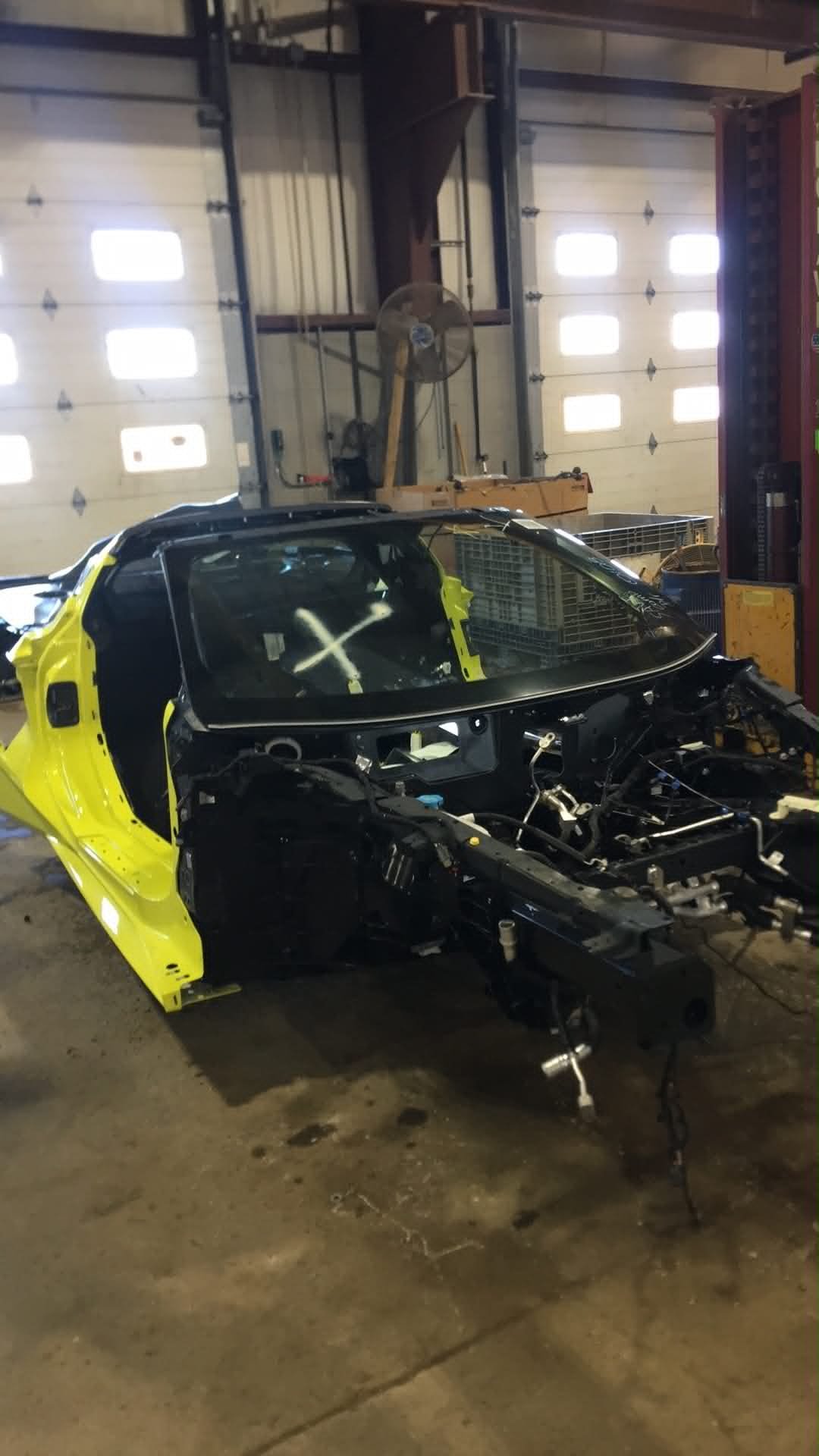
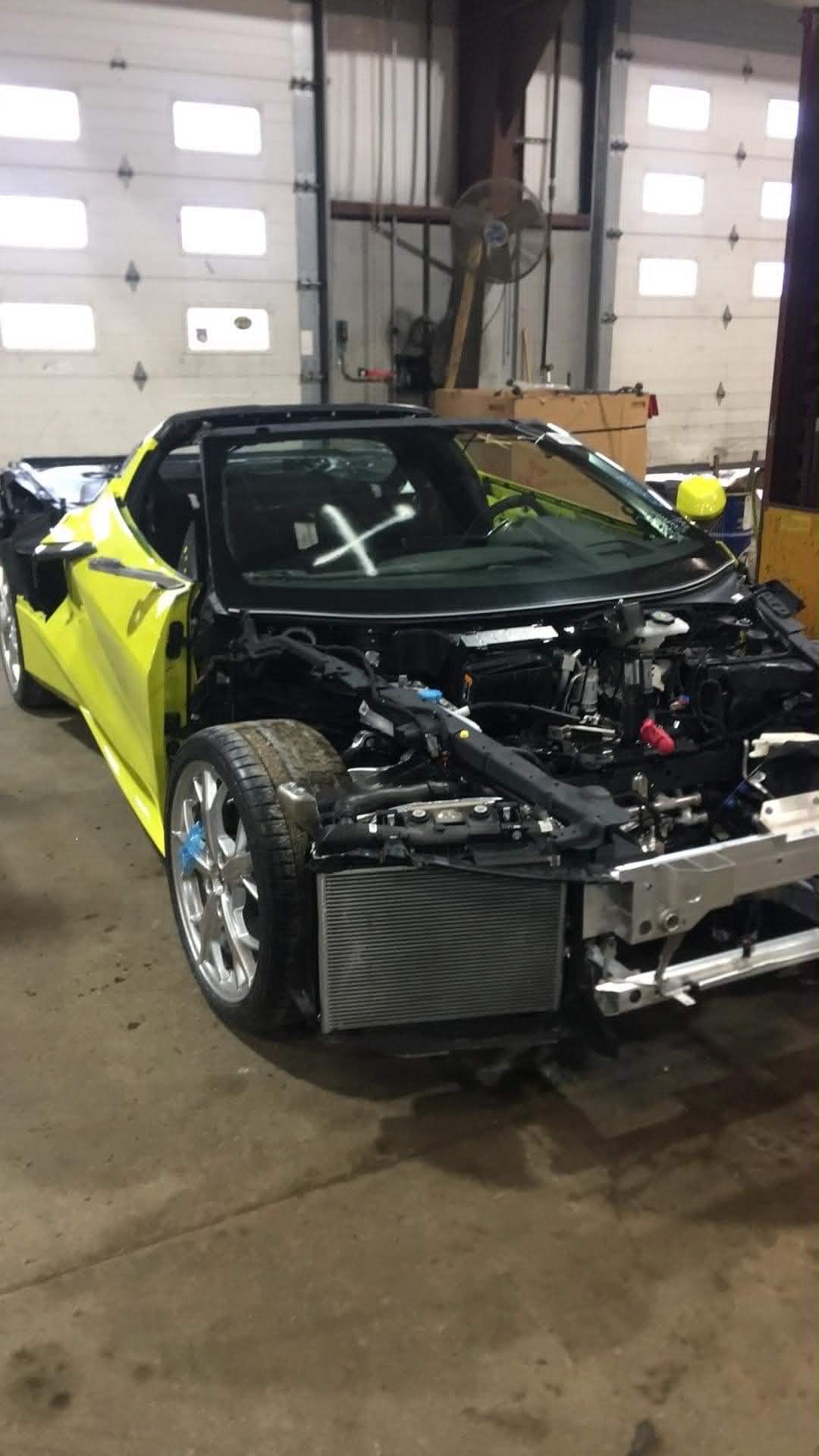
The C8 Chevy Corvette was undoubtedly one of the most anticipated cars of our lifetimes. Gearheads had been waiting for the ‘Vette to go mid-engined for decades, and finally, Chevy obliged. But the manufacturer hit an unfortunate snag early in the car’s production run that kept more than 100 Stingrays from ever hitting the road. In fact, they were all sent to a salvage yard, destined for dismantling and demolition. This is the story of how it happened.

If you have a strong memory, you might recall the tornado that damaged General Motors’ Bowling Green Assembly Plant in December 2021. The storm sparked a fire inside the facility, which exclusively builds Corvettes. At this point, the C8 had only been in production for a year, so there weren’t many running around yet. Seeing one in the wild was a treat, but seeing one after another pour into Stricker Auto Parts in Batavia, Ohio, was really something.

Salvage C8 Corvette
Salvage C8 Corvette
Salvage C8 Corvette
Salvage C8 Corvette
Salvage C8 Corvette
Woodley said GM salvaged something like 122 brand-new Corvettes after the factory fire. Brandon Woodley

Brandon Woodley worked at the scrap facility as a dismantler, and nearly five years after those then-new Corvettes flooded his day job, he talked to me about the experience. “I had seen them in pictures, but I had never even seen one in person,” Woodley told me. “And then they come in and say, ‘All right, get to cutting.'” 

Woodley remembers that they were hauled in on transporters, just as if they were headed to a dealership. As he explained to me, many of them passed the salvage yard’s quality checks. When I asked if he saw any that were totally trashed, Woodley replied, “Not really. Not that I saw. Most of them, the damage wasn’t really that bad.”

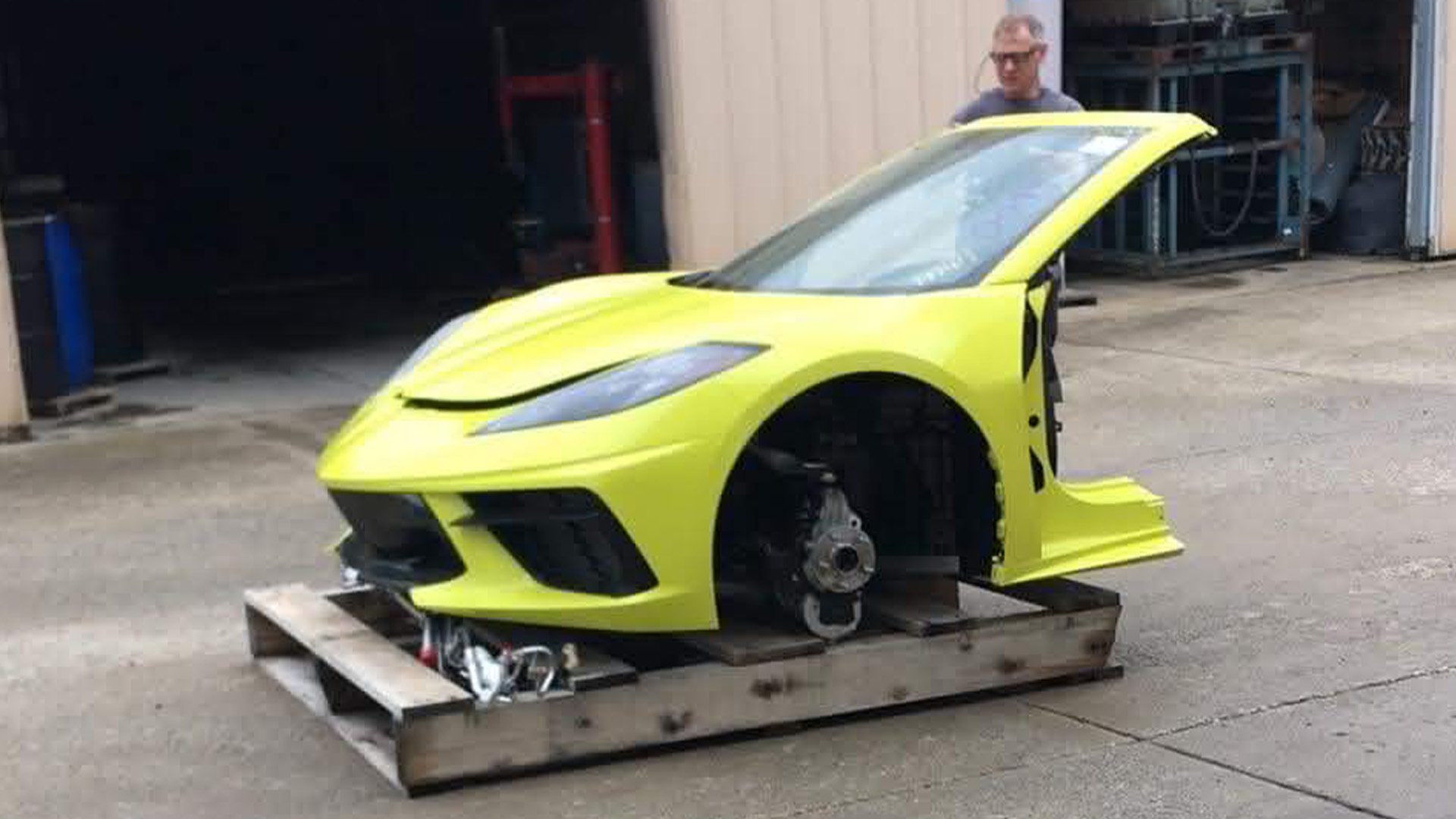
Still, due to liability concerns, they all had to be torn apart. Stricker Auto Parts made sure every VIN was removed from the body shells, which employees like Woodley then cut in half. “They didn’t want anybody trying to rebuild and make a car out of it,” he said. Can you imagine how many YouTubers would have scrambled to buy a scrapped C8 back then?

Salvage C8 Corvette
Salvage C8 Corvette
Brandon Woodley

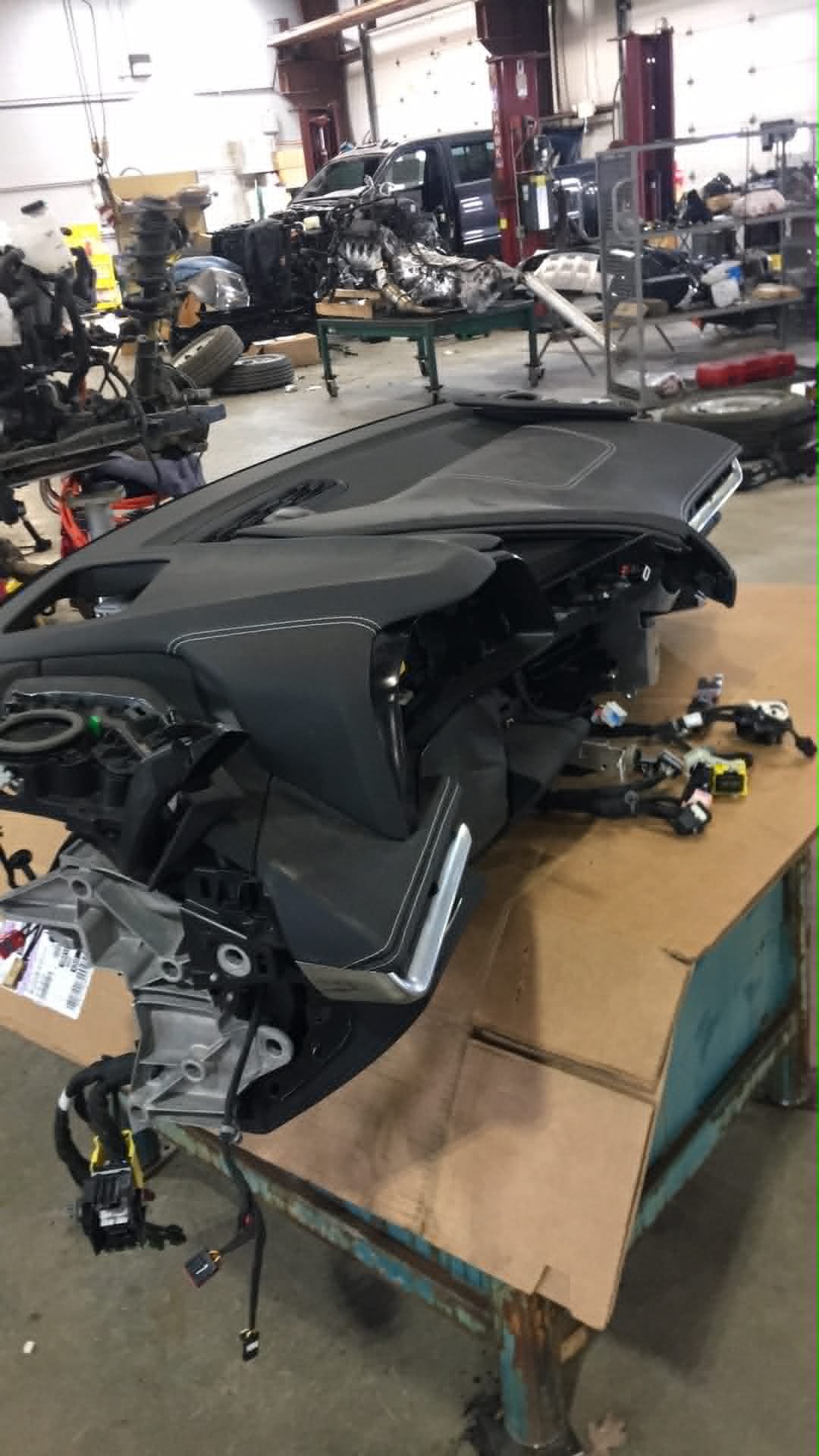
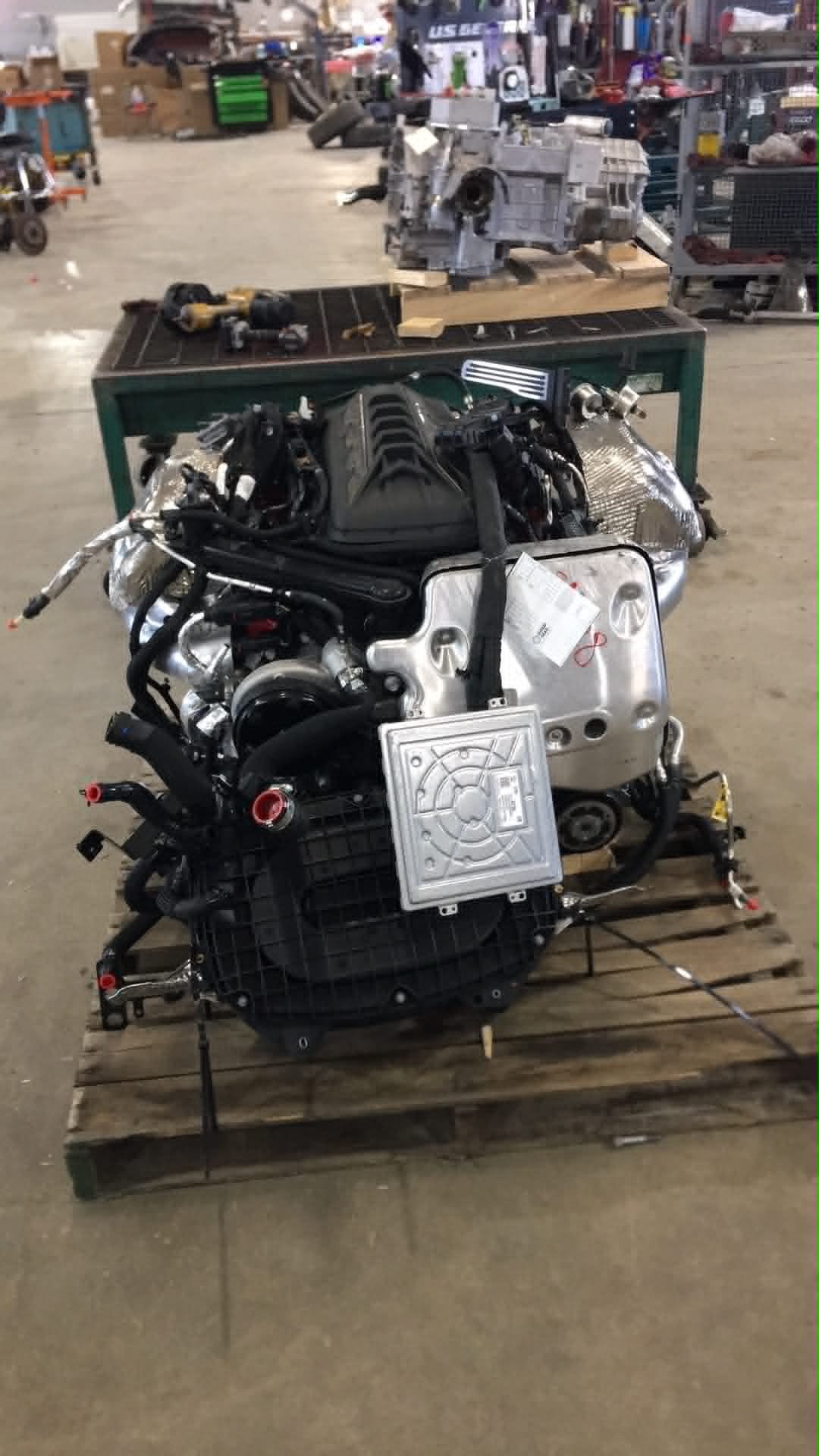
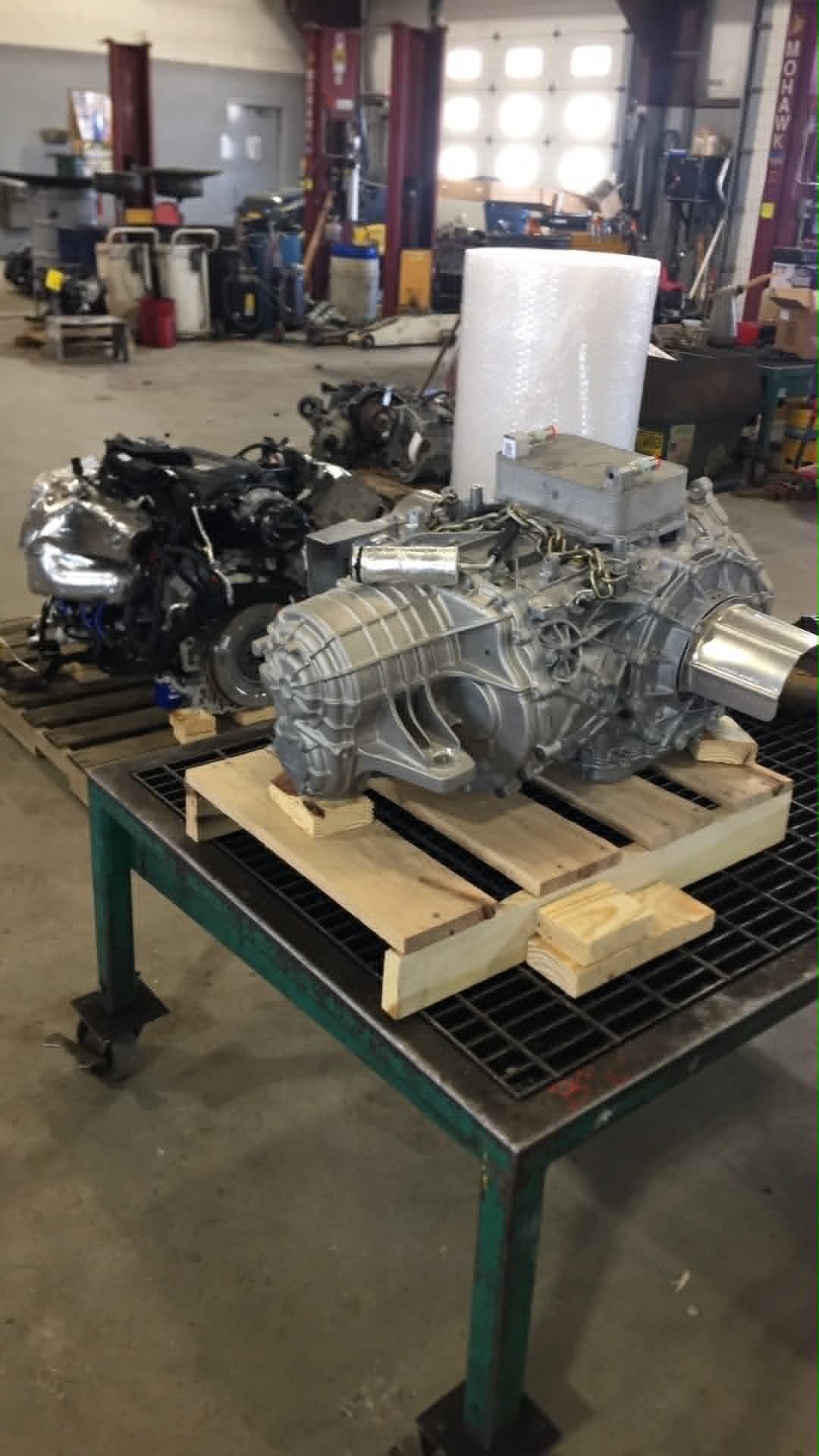
Woodley told me that many parts were sent back to GM, including entire drivetrains. These were all Stingrays with the 6.2-liter V8; Chevy hadn’t begun Z06 production yet. “They would drain all the fluids out, and then they’d come to me,” Woodley explained. “They’d hand me a stack of tags of what they wanted off, and I would pull every single thing off and put all the bolts for it in little baggies and tag it up and send it out.”

Curious what became of these salvaged parts, I asked GM if any of them were reused in new Corvettes. A company spokesperson replied, “Vehicles damaged by the December 2021 storm were scrapped. No parts from these vehicles were used in new builds. Despite significant damage to the plant in the storm, the Bowling Green Assembly team rallied to resume normal production 11 days later with the full standard of quality owners expect.”

You could say some aspects of this operation were secretive at the time, but since nearly five years have passed, the unofficial statute of limitations is up. Woodley no longer works for Stricker Auto Parts, and he explained that while he never had to sign anything prohibiting him from speaking publicly about the cars, he still waited until now to say something.

C8s are a lot more common these days. But at the time? People were lining up at the dealer, waiting for theirs to be delivered. And here these guys were, chopping them up into pieces.

Got a tip or question for the author? Contact them directly: caleb@thedrive.com

The post When a Tornado Destroyed 100 Brand New Corvettes, This Salvage Yard Got to Work appeared first on The Drive.

☐ ☆ ✇ The Drive

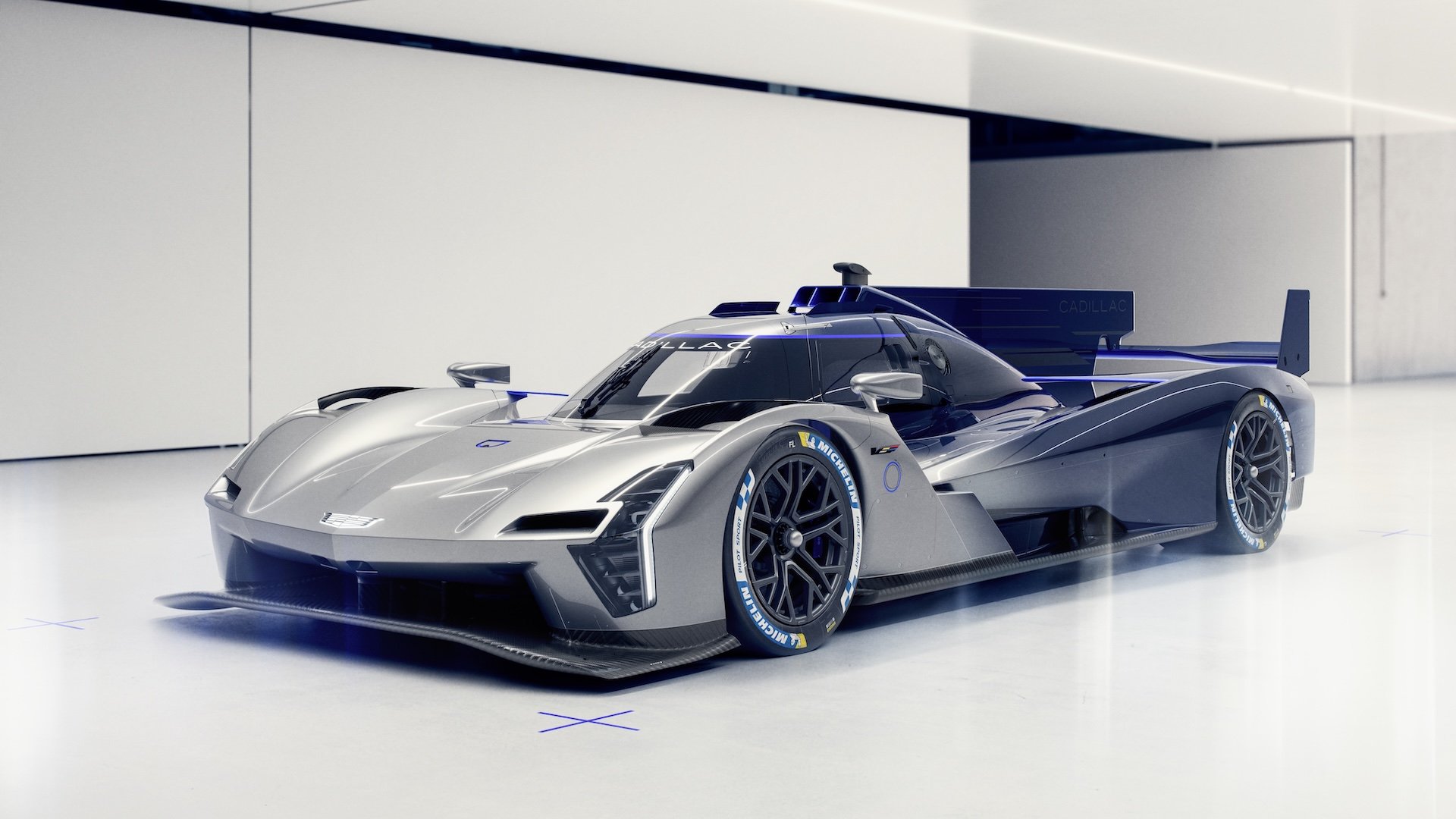
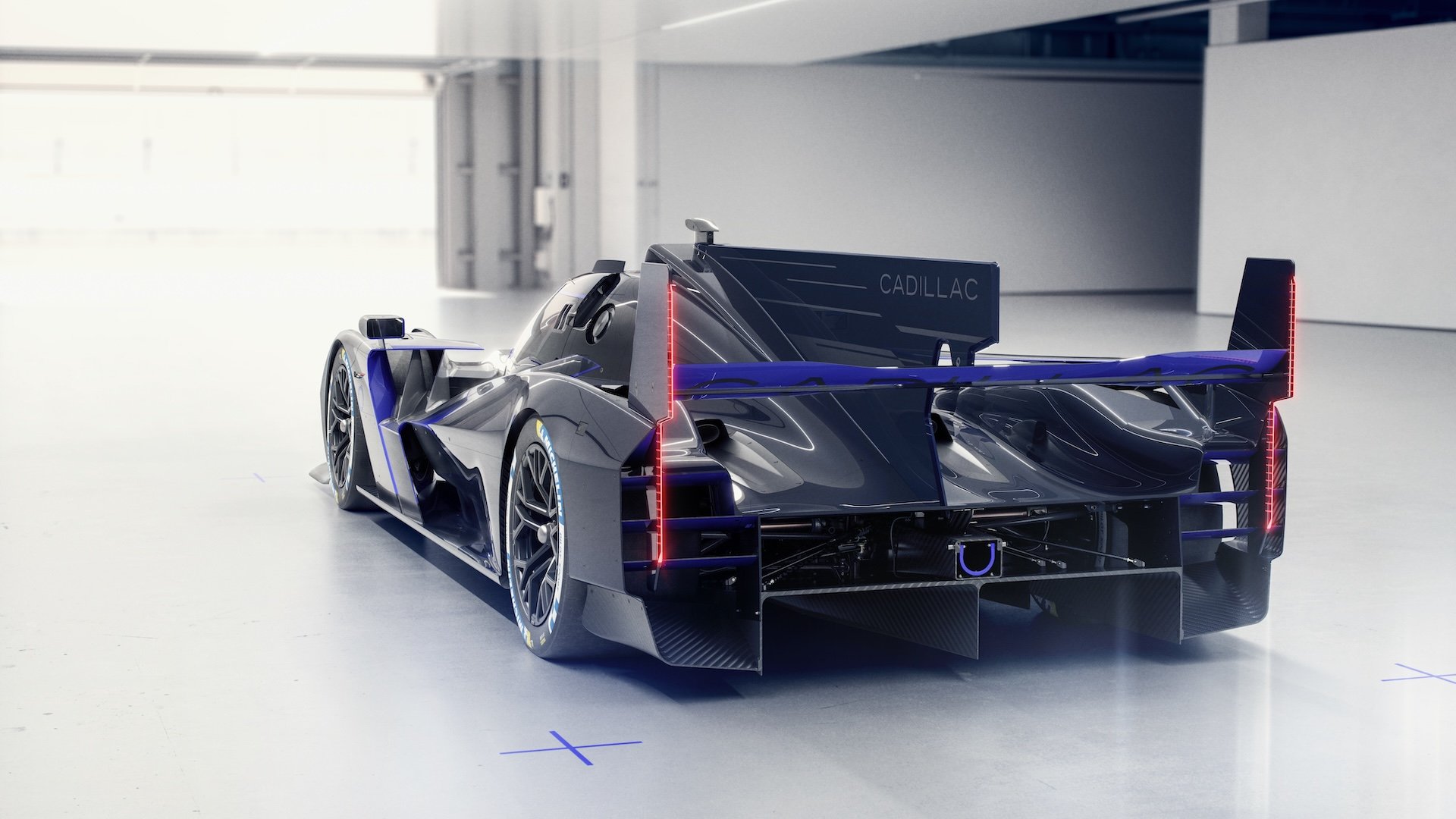
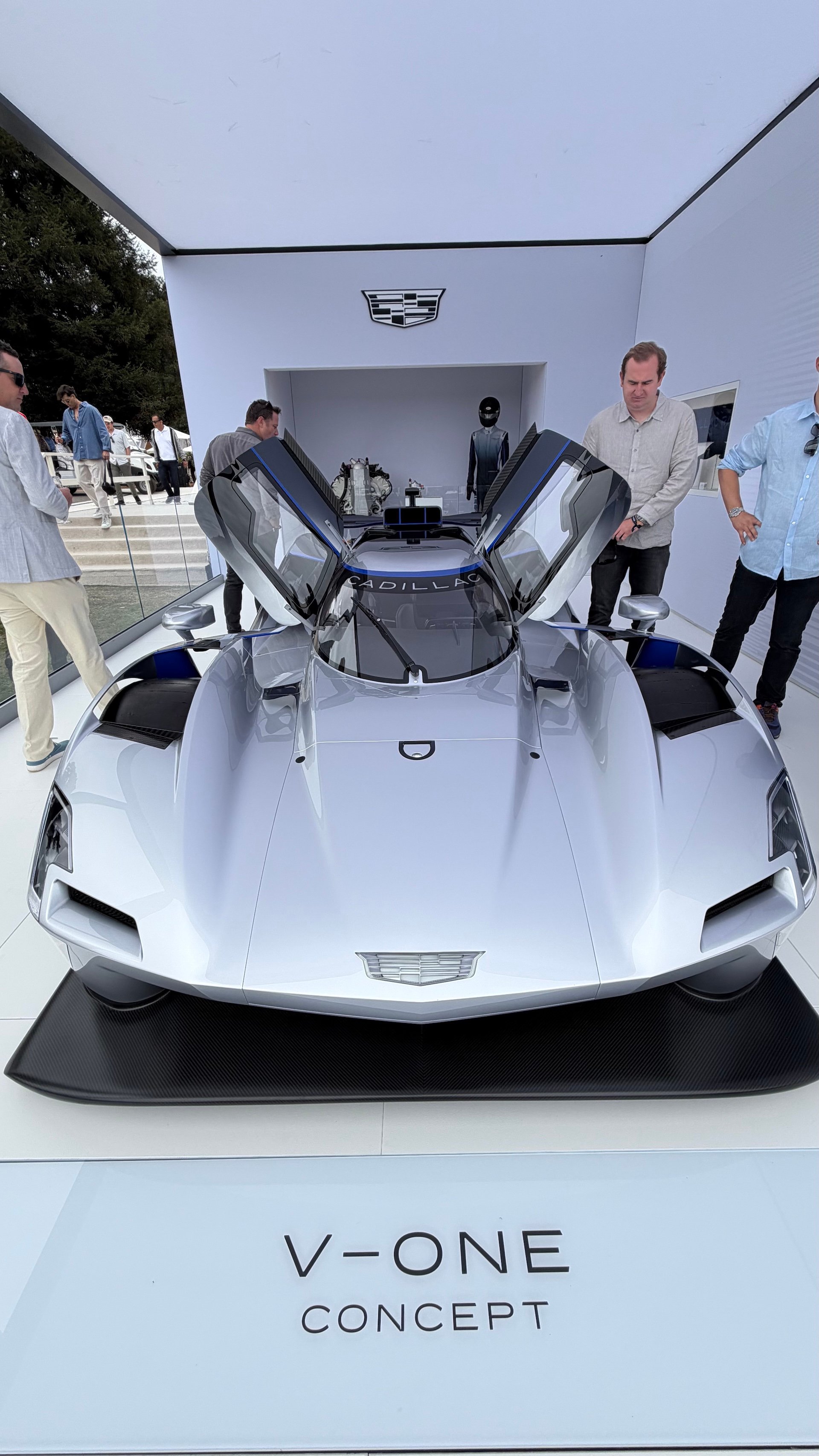
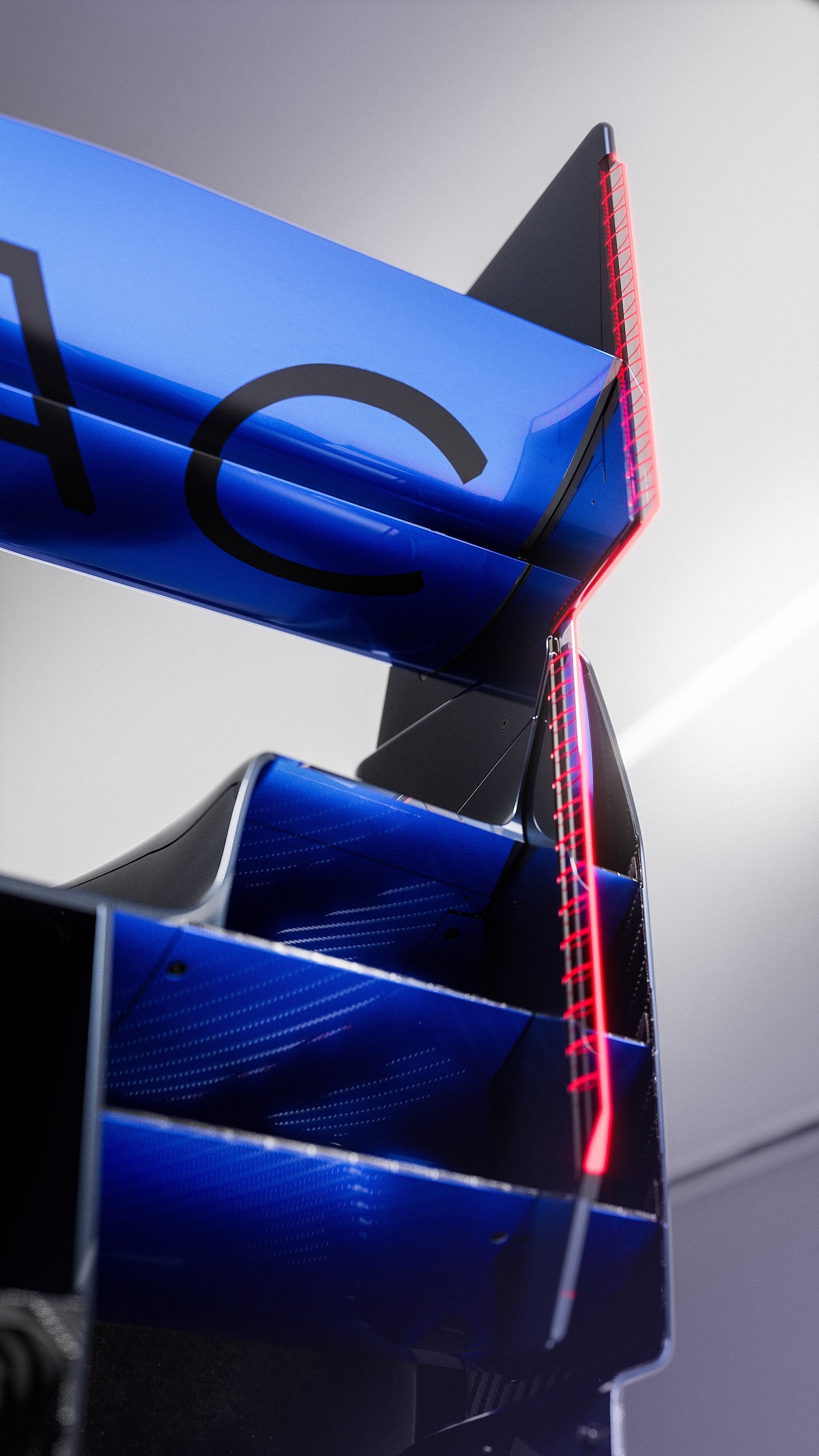
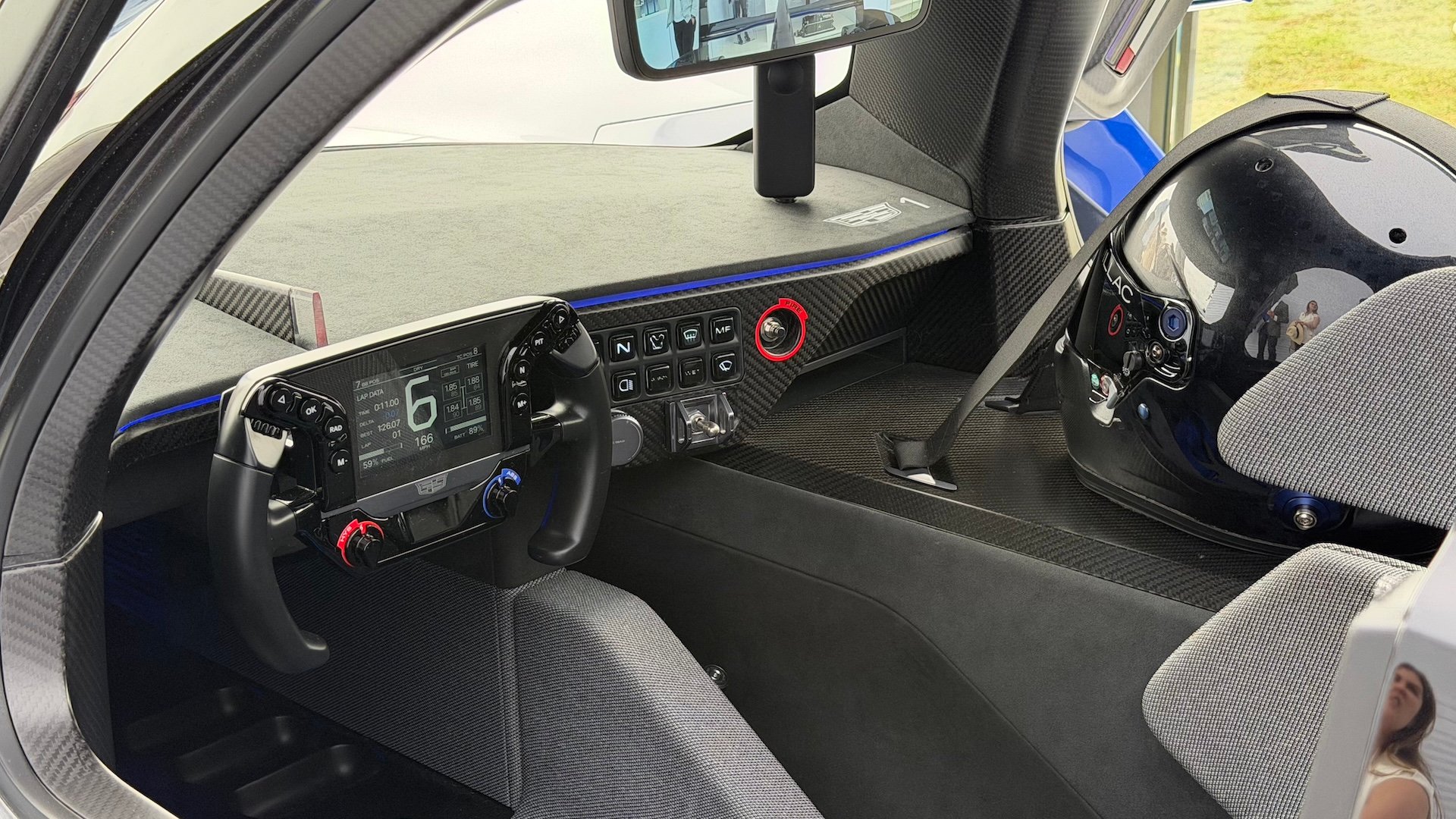
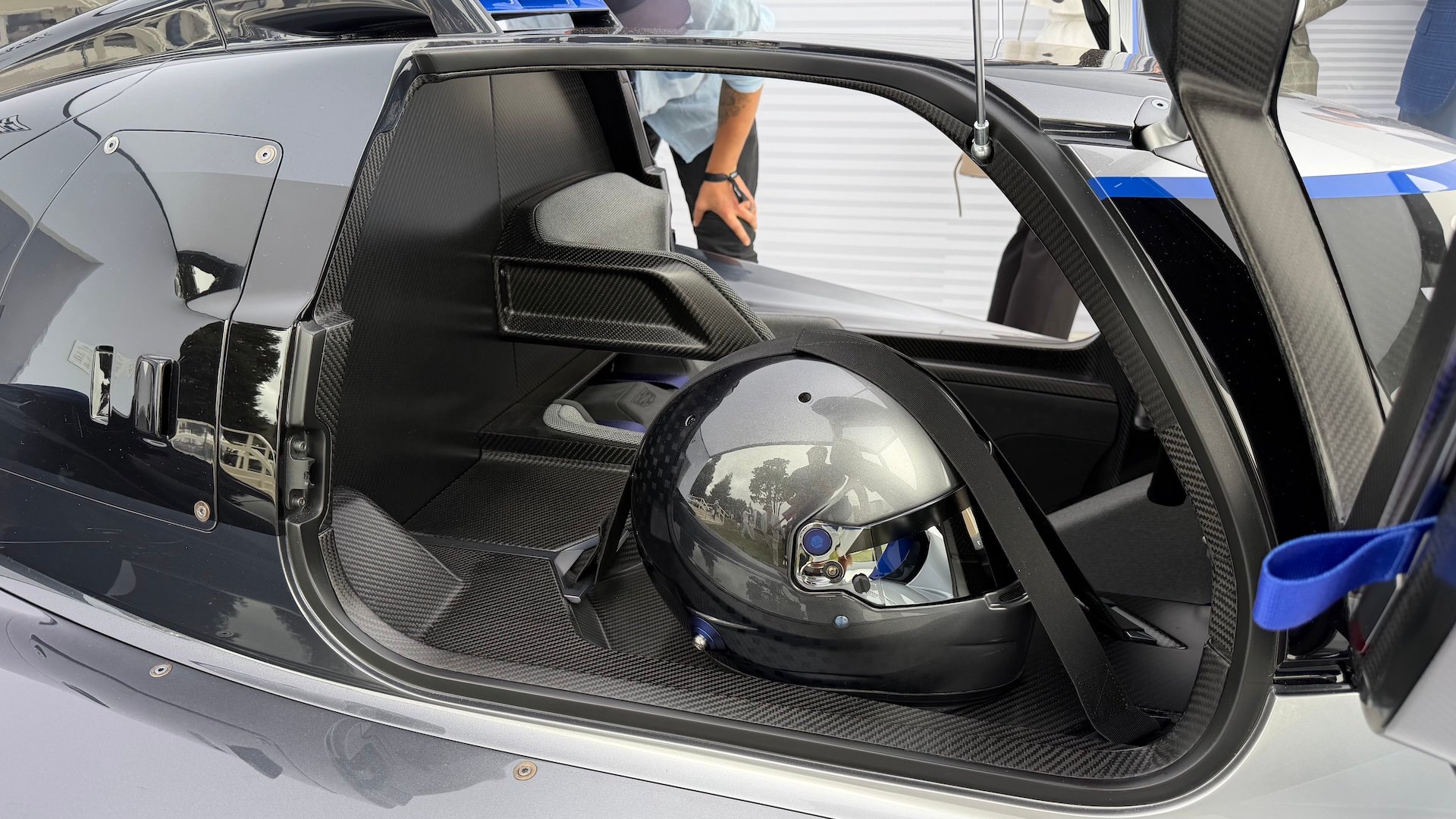
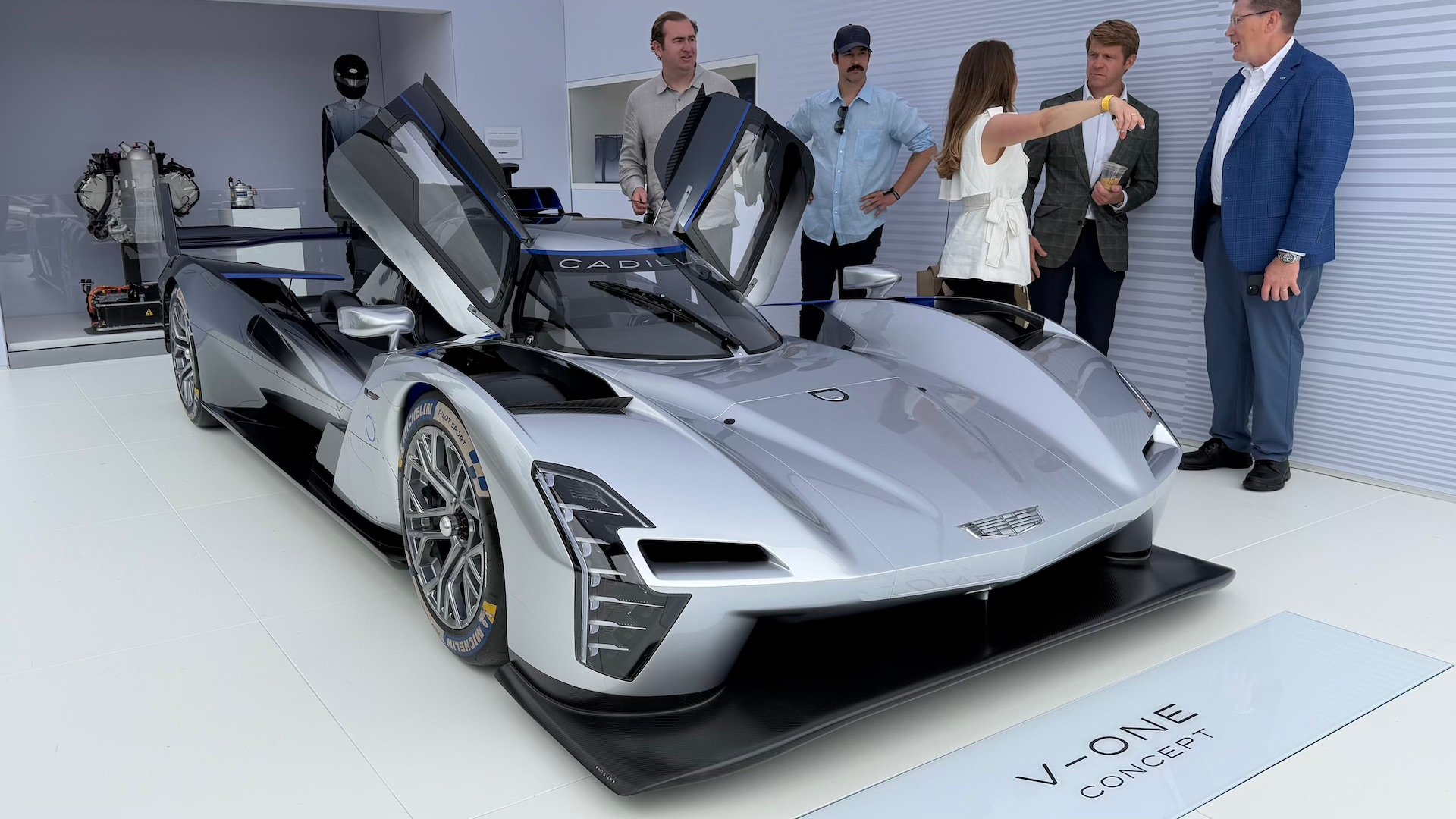
Cadillac V-One Concept Engineer Spills the Secrets of a Customer-Spec Le Mans Hypercar

By: Jerry Perez

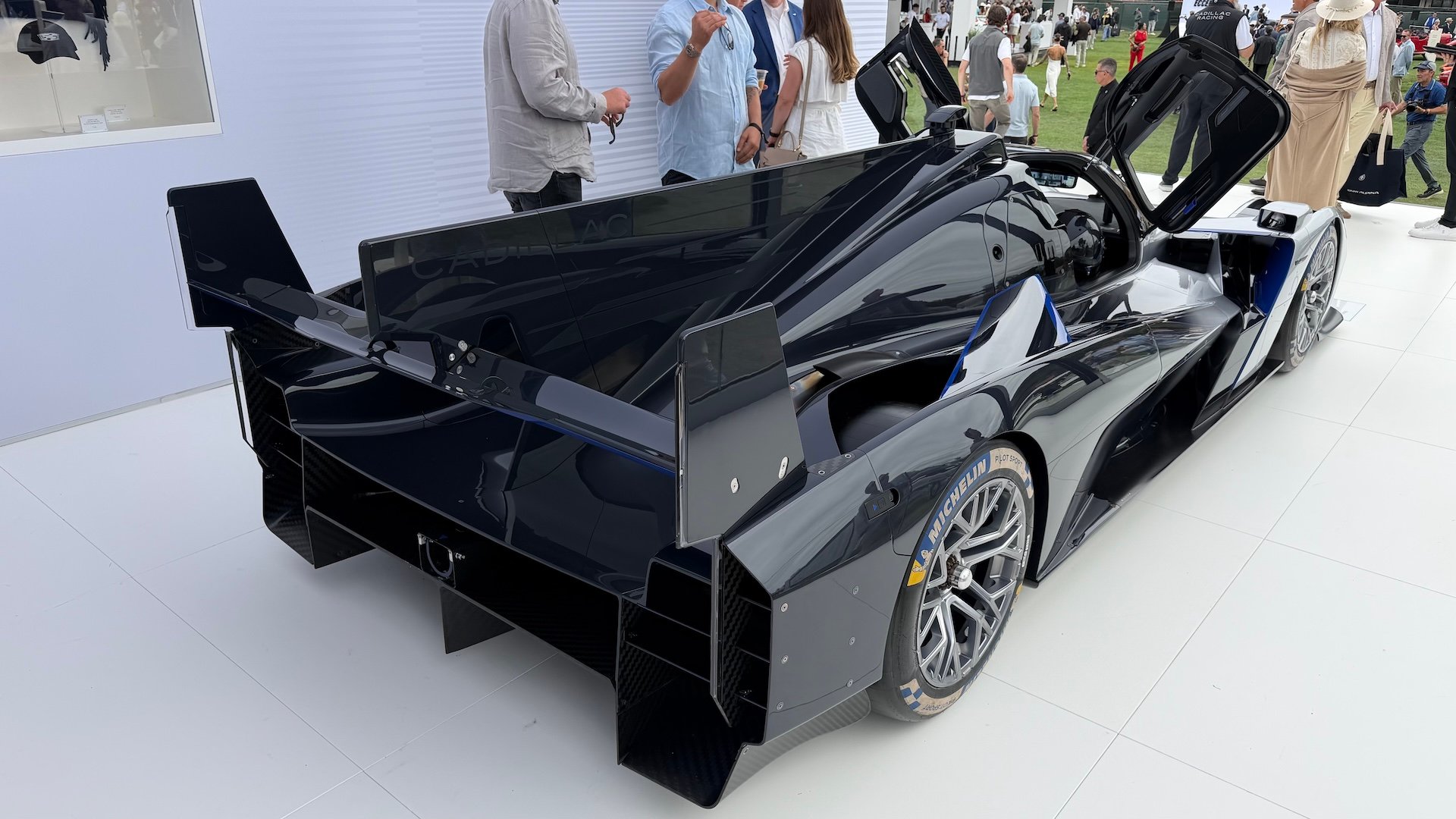
Ask the nice folks at Cadillac about this slick prototype race car displayed at The Quail during Monterey Car Week, and they’ll tell you over and over again that it’s just a “design study,” a “concept,” a “race car project.” Ask folks who have their ears on the ground at paddocks across the globe, and they’ll tell you that the program to sell these simplified Le Mans racers to customers is just about finalized.

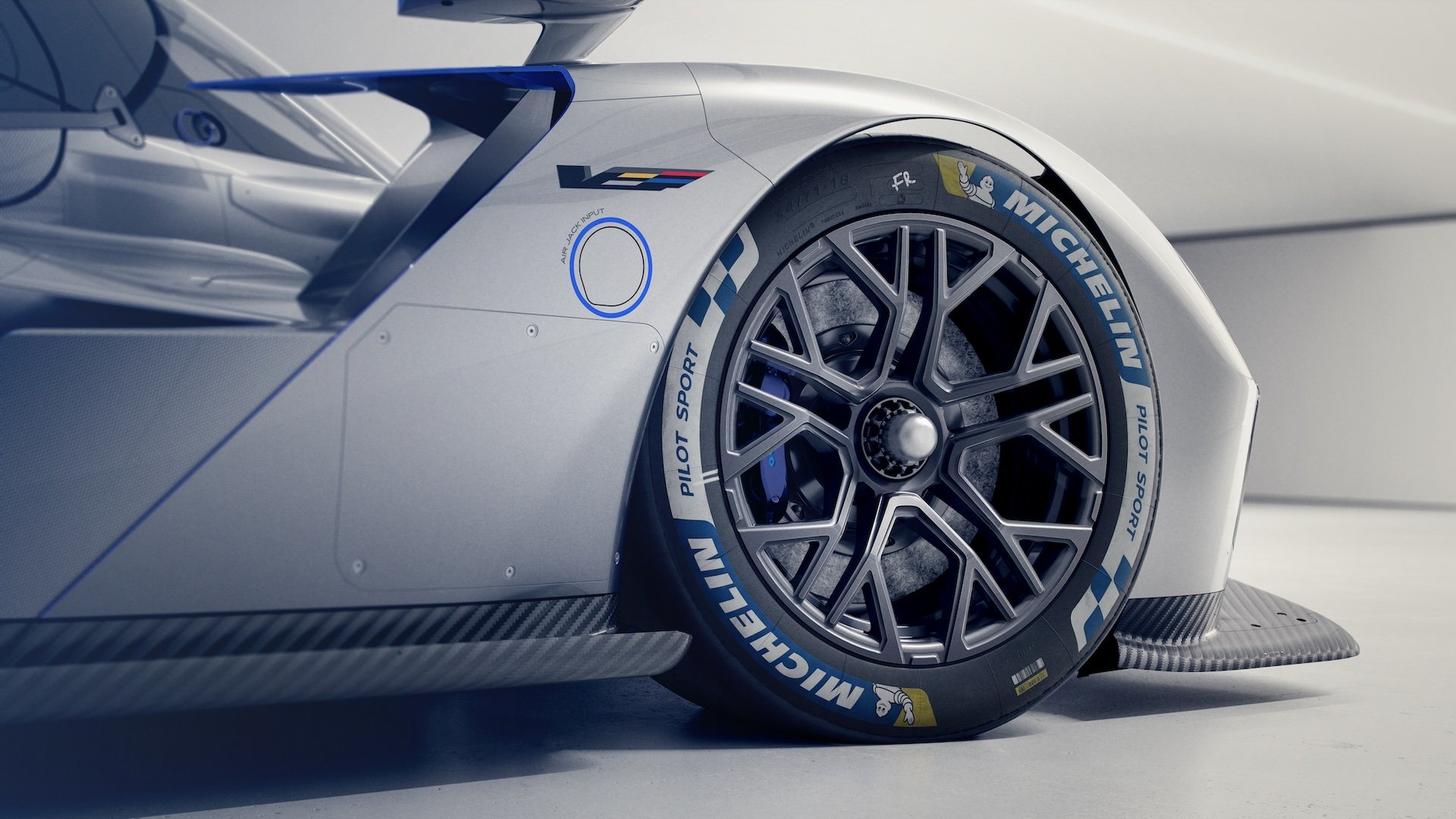
That’s the best way to describe this beauty that Cadillac calls the V-One: an 830-horsepower, simplified Le Mans Hypercar—capital H because the real deal races in WEC’s Hypercar class (and IMSA’s GTP). And regardless of whether General Motors plans on selling these to a wider audience or just a select few—or even just one person like Porsche did for Roger Penske—the task of dumbing down one of the world’s most advanced race cars is no small feat.

Cadillac

There’s the engine side, the hybrid side, the electronics, suspension, downforce, maintenance intervals that could quickly bankrupt a very wealthy person, and, last but not least, selling a vehicle that 99.9% of people don’t have the skills to drive is a challenge in and of itself. And for those who do have the skills, then there’s the problem of where do you drive it, and how big of an army of engineers do you need to operate it? Where do you store it, and how do you prep it to make sure it starts up again later?

I spoke with Sean O’Shea, the lead propulsion engineer for Cadillac Racing and GM Motorsport’s hybrid powertrains, to get all of those answers and then some. He and I had the chance to explore the V-One up close and learn about what makes this project so ambitious, but also so exciting.

Here’s how Cadillac is building a Le Mans Hypercar that anyone can jump in and drive:

Jerry Perez, Cadillac

Jerry Perez: I know the official company line is that this is a concept, but what is Cadillac really trying to achieve here? Is the goal to just make a concept that never goes anywhere, or something that will become a reality? And how are you involved in all of this?

Sean O’Shea: As the engineering representative linking the design and the racing program, I’m really trying to make sure that [V-One] doesn’t stray too far from the race-car side and that this could be a reality. It’s a concept now, but everything you see here is very feasible and could be a reality.

I’m a big racing guy; I’ve been racing everything since I was little, like go-karts, cars, dirt bikes, all of it. I love racing, so when I got involved in the project, I wanted to make a track car that was a simplified version of our race car, but still had all the same tools and the same experience you would get as a pro driver, without being overly complicated.

Race cars are known for being complicated, so how do you take a Le Mans racer and make it less complicated?

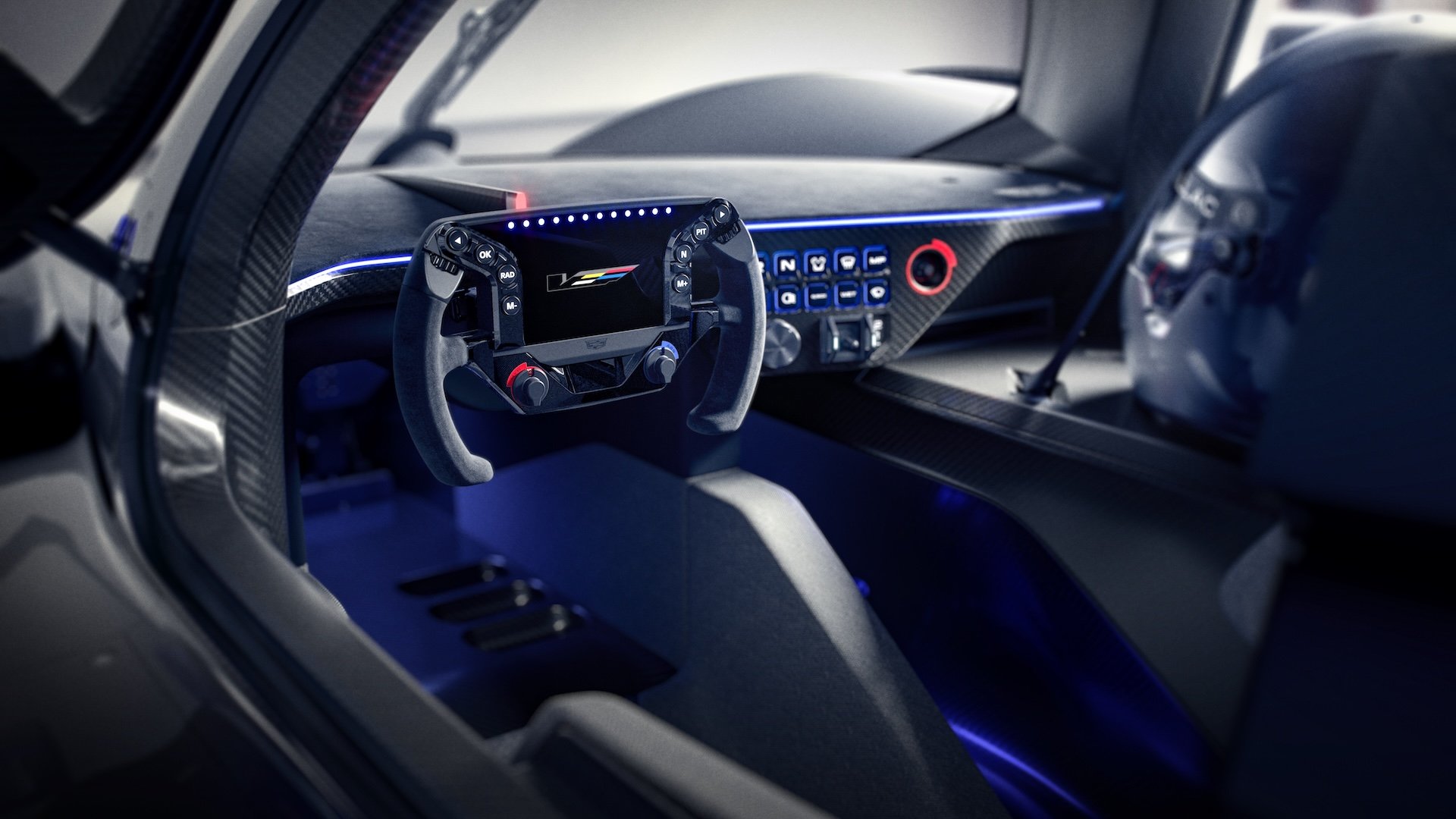
Well, first, I want it to be a really fun track car, and one of the major details is that it needed to be an “ambient start car,” right? This means you can start it at 70 degrees and let it warm up on its own without having to pre-warm it [with auxiliary machinery like an F1 car]. Also, all the differential, traction control, and suspension are a simplified version of the real car. This means you can just go out and just drive the car and have a really good time. However, I didn’t want to take away from the sound, the power, or the downforce you have in a real race car. This way, when you get in it and look around, you get the same view as any of our pro drivers like Earl Bamber, Jack Aitken, or Delatraz. You’ll also have the same buttons around the cockpit, but maybe not all 12 control variations or whatever, right? That’s what I mean by the simplified version: something we mortals can learn, work through, and have a good time with.

Jerry Perez

I once spoke with Jenson Button while he was racing the Acura ARX at the Rolex 24, and he flat-out told me that the steering wheel and some of the controls of the GTP car—as well as the rear axle, brake balance, and traction control—were more complicated than in an F1 car from his era. If he is saying that, I can’t imagine what a normal person would say.

We had Jenson drive the [WEC] car, and yeah, the race car project is so complicated given what they want to accomplish. Between settings, energy recovery, and energy per lap, I worked with our pro drivers and just asked them: what would you like to simplify in the car if you wanted it to be fun? They gave me a lot of ideas, so if you look at the interior, it’s just an LMDh car, just a simplified version of it. We still have traction control with two settings—X and Y for lateral and longitudinal grip—and we really wanted to put ABS in the car, although these cars normally don’t have it. I wanted ABS to kind of eliminate the issues around break-in temperatures, tire warm-up procedures, and all of that. Just let the ABS handle it, then let the driver go out and learn to steer, shift, and go fast.

We worked closely with the [pro] drivers to understand how we can reduce complexity. And on the propulsion side and differential side, we worked with all of our performance engineers to, again, learn how to simplify things.
We went to Goodwood last year and this year, and it was like, how can the car be easy to use? You know, we started just kind of throwing calibration ideas out there, so that our driver could just basically drive out of the paddock and drive onto the track and not have a team of engineers with them.

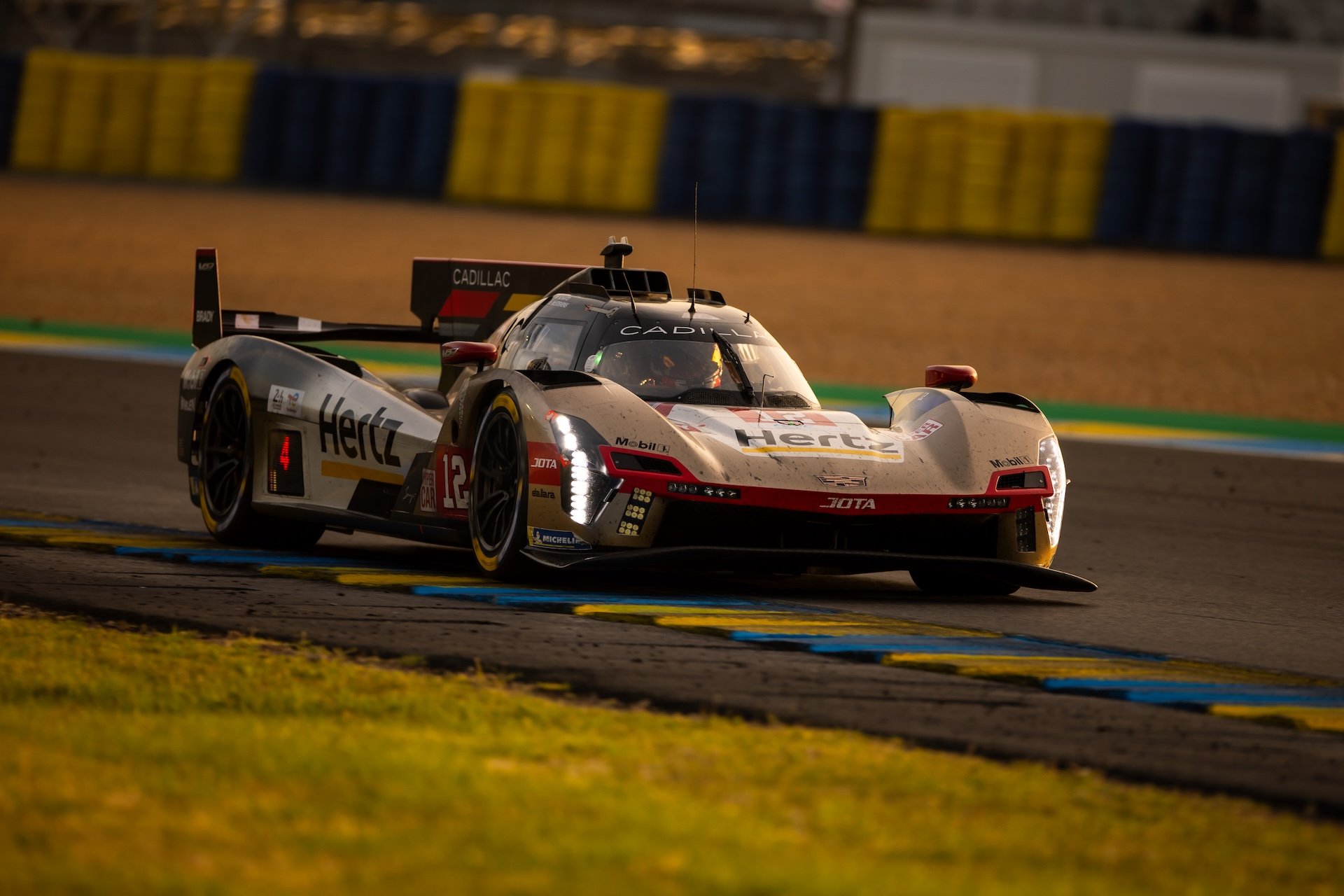
The #12 Cadillac V-Series.R of Cadillac Hertz Team Jota, driven by Louis Deletraz of Switzerland, Will Stevens of Great Britain, and Norman Nato of France, competes during the 94th 24 Hours of Le Mans, a round of the FIA World Endurance Championship, at Circuit des 24 Heures du Mans on June 14, 2026, in Le Mans, France. (Photo by Daniele Paglino/NurPhoto)
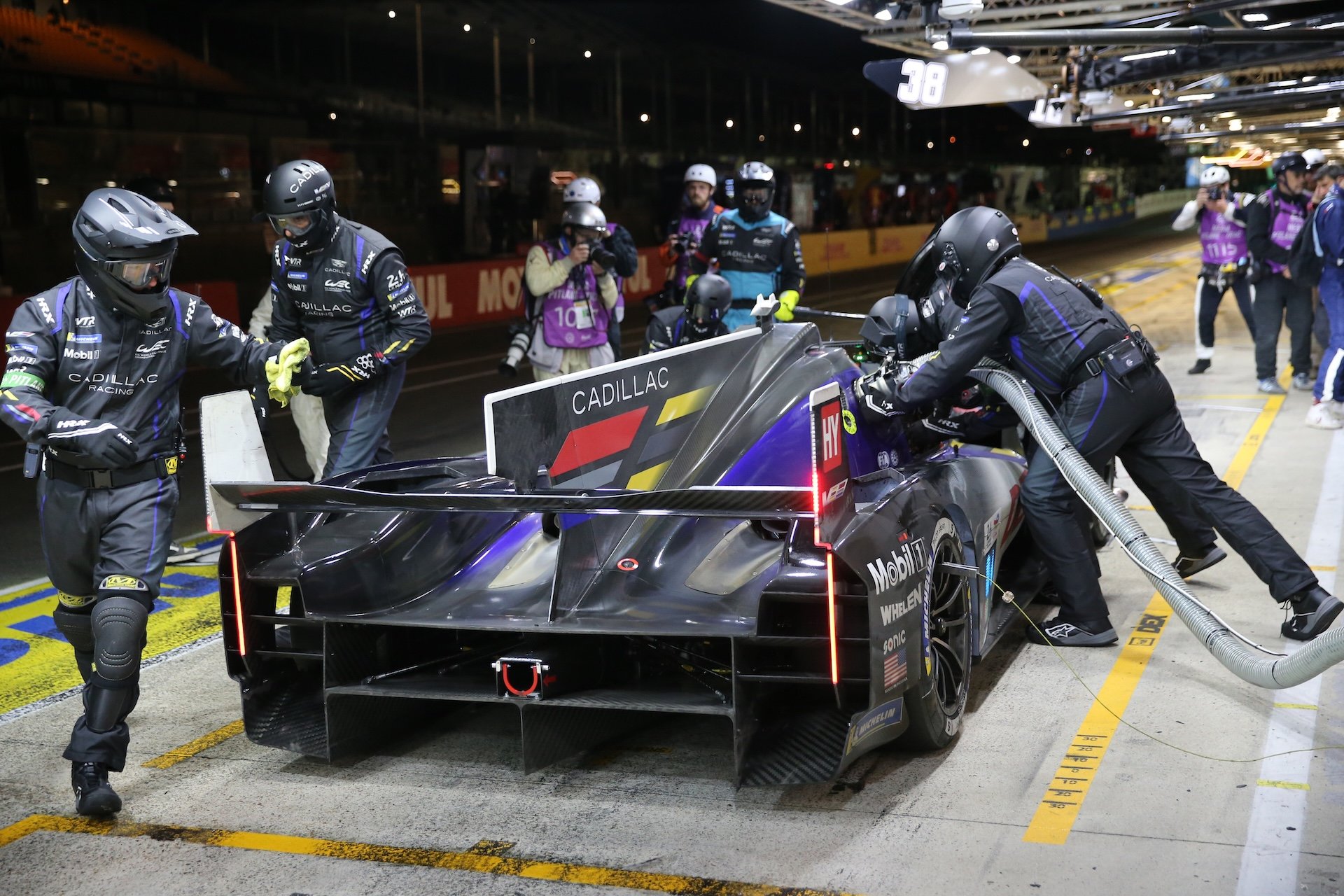
#101 Cadillac WTR, Cadillac V-Series.R: Ricky Taylor (United States), Jordan Taylor (United States), Filipe Albuquerque (Portugal) during the 24 Hours of Le Mans at the Circuit de la Sarthe in Le Mans, France, on June 14, 2026. (Photo by Alessio Morgese/NurPhoto)
Daniele Paglino, Gabriele Lanzo via Getty

If you were to build this, would the driver just jump in and go?

The idea would be that we jump in, start it, and go. Well, you have to let it warm up before you go anywhere, you know, give it a little care. This is expensive, after all.

Would customers keep their cars at home, or would Cadillac store and transport them to tracks, as Ferrari does with its FXX program?

We have ideas and a kind of plan, but it’s nothing we’re ready to divulge yet. But for me, being just an enthusiast, if I bought this, I would want to keep it at home and impress my neighbors.

Who all has driven the V-One, and what’s their feedback so far?

Our pro drivers are in it since this is really close to the race car. We engineers don’t really drive it at all. I’ve been in the seat and pushed it around on EV drive, but nothing more than that. I really draw on their experience because they also drive our road cars; they’ve helped with the ZR1X programs, and they spend a lot of time in the sim rig. Together, we really looked at the interior [cabin] space and explored how to make it a little bigger. So I was like, can we remove the sway bars? And they were like, no, we need adjustable sway bars. I said, okay, but do you just need the rear and not the front? And the drivers were like, you need both—so we kept both. That type of stuff.

Jerry Perez

Which buttons did you keep on the dash and steering wheel, and what about the air conditioning?

Yes, there’s AC inside the car. The race car gets very hot, so we knew we wanted to keep that. There’s also pit lane limiter and other buttons to adjust various settings we already discussed.

You kept the loud bang from the transition from electric to ICE, like the race car when leaving pit lane, right?

Right, we didn’t want to change any of that. Plus, these things are miserable at slow speeds, so it’s much easier to maneuver the car on electric power; then you can just drive around. Again, the idea is to make it simple to use. Start the car, let it warm up. When you pull out of the pits, the ICE engine shuts off, and you leave in EV. Then you let one of the paddles go, and it turns the ICE engine on, and you go.

Biggest challenge of this project?

The interior, really. It’s the biggest change from the race car. We just want to make sure that we had space for a normal-sized human in there. And also visibility, because the race car is very claustrophobic. And we had to do all this without changing the tub shape, because if you change the tub, now you gotta make new tooling and homologate everything else. After that, it was just simplifying all the sensors and electronics.

Cadillac

Whenever a car company announces an “F1 car for the road,” it usually ends up rather messy. Whether it’s the McLaren F1, the Mercedes-AMG One, you name it, they’re awesome, but they’re full of gizmos and maintenance and reliability nightmares. I know this isn’t an F1 car, but pretty darn close.

Never driven an AMG One, but I’ve seen a lot about it, including on the forums. But to me, the complication just isn’t necessary. The core experience for me is being in the car, just having a good time, feeling the downforce, feeling the Gs, hearing the sound, and racing the car on a track. So, for everything we did here, I just wanted to simplify the race car and make it reliable and easy to use. The whole point is to give the owner the experience of driving the car, not to mess with gizmos, gadgets, screens, and everything else. Drive the car!

What are maintenance intervals like on one of these?

Anytime we do a performance car, anything inside GM, we start with a vehicle technical spec. So you put in what you want the car to do. right? Do you want to have good fuel mileage? 
Do you want to have faster 0-60 or lap times, all that stuff? When I did the vehicle technical spec for this, we targeted a lap time—it was a little bit slower than in the race car, and I targeted our performance interval, which is our highest in GM, to 24 hours of just changing tires. So, for 24 hours of racing, just add fuel, change tires, and go. If you want to go out and run 24 hours, that’s what the car will need.

Lastly, how will you gauge whether a potential customer can handle a V-One? Can someone who’s never driven a race car just jump in and have fun?

That’s what I hope, and that applies to me too. I’ve driven a lot of stuff in my life, but I’ve never driven a full downforce car, so my ultimate goal is just to drive this and have a good time.

Email the author at jerry@thedrive.com

The post Cadillac V-One Concept Engineer Spills the Secrets of a Customer-Spec Le Mans Hypercar appeared first on The Drive.

☐ ☆ ✇ The Drive

Save Hundreds: Yakima and Thule Car Racks Are 20% Off for REI’s Labor Day Sale

By: Andrew P. Collins

The REI Labor Day sale, running now through September 7, is a great opportunity to save serious money on big-ticket car and camping accessories. High-quality bike racks are not cheap, so 20% off can mean more than a couple hundred bucks. Check out the best buys right here.

I tested Yakima’s StepUp Swing trailer-hitch bike rack this summer and absolutely loved it. Solid build quality, serious convenience—it’s so nice to be able to move bikes out of the way of my side-opening rear door without removing them. Anyway, that’s normally about $1,000 is now down to $800. There are plenty of options at lower prices, too, if you can skip the swing function.

Bike Rack Deals

See It

And here are some more automotive adventure-adjacent items you might want to score a deal on.

Travel Gear + Luggage Deals

See It

Camping Gear Deals

See It

Watersport Deals

See It

And here’s the rest of the rundown on Labor Day sale discounts, directly from REI:

Selected Offers:

  • 25% off selected REI Co-op Brand clothing and gear
  • 25% off all Darn Tough socks
  • 20% off all Thule and Yakima racks, roof boxes and accessories
  • 25% off selected Altra footwear
  • 25% off all KEEN footwear
  • 25% off selected Osprey packs and duffels
  • 25% off all Sea to Summit products
  • Up to 50% off clearance deals

REI Outlet Flash Deals:

  • August 31-September 1: Save up to 60% off select REI Outlet items
  • September 3-September 4: Save up to 60% off select REI Outlet items

REI Co-op Members enjoy even more benefits during the Labor Day Sale:

  • Extra 20% off one REI Outlet item
  • Extra 25% off installation services of new bike parts or accessories with purchase of product

REI Co-op Members can find added value throughout the event with member-only offers on REI Outlet and bike shop services. Anyone can join the co-op as a lifetime member for a one-time fee of $30, giving access to a range of benefits, including an annual Co-op Member Reward of 10% back on eligible purchases, discounts on shop services and experiences, special access to curated products and more. 

The post Save Hundreds: Yakima and Thule Car Racks Are 20% Off for REI’s Labor Day Sale appeared first on The Drive.

☐ ☆ ✇ The Drive

Lexus RX Is About To Get a Lot Less Boring

By: Andrew P. Collins

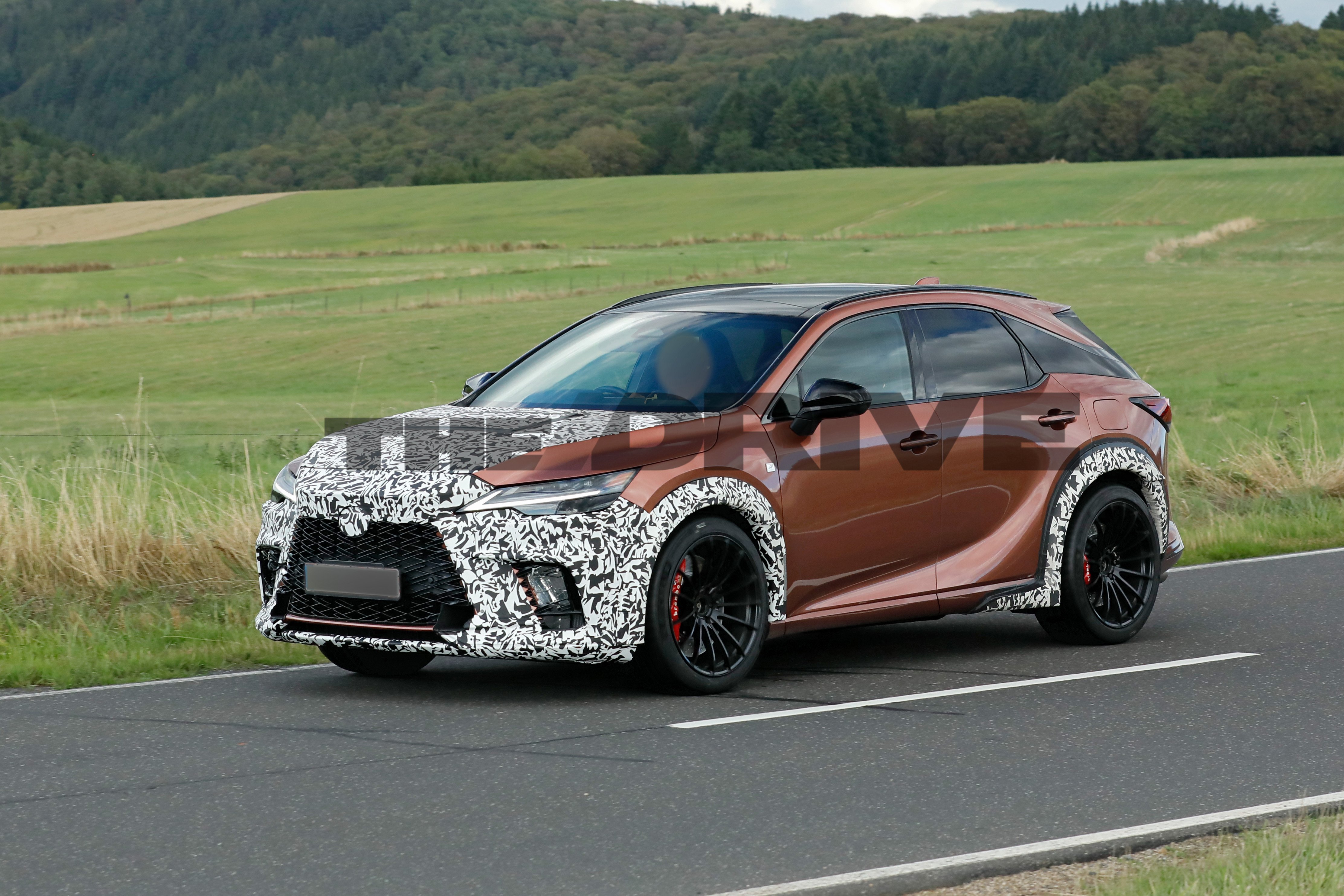
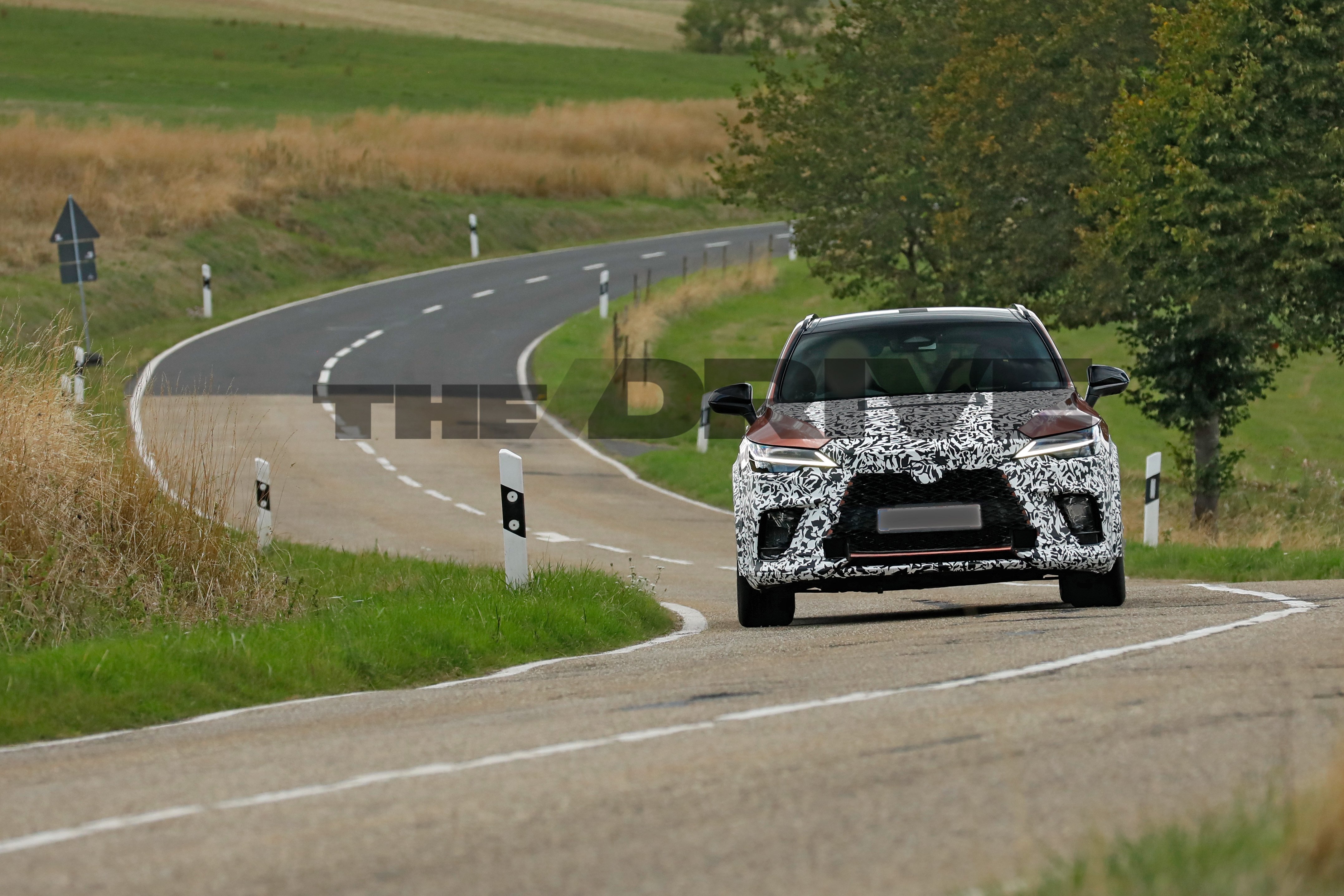
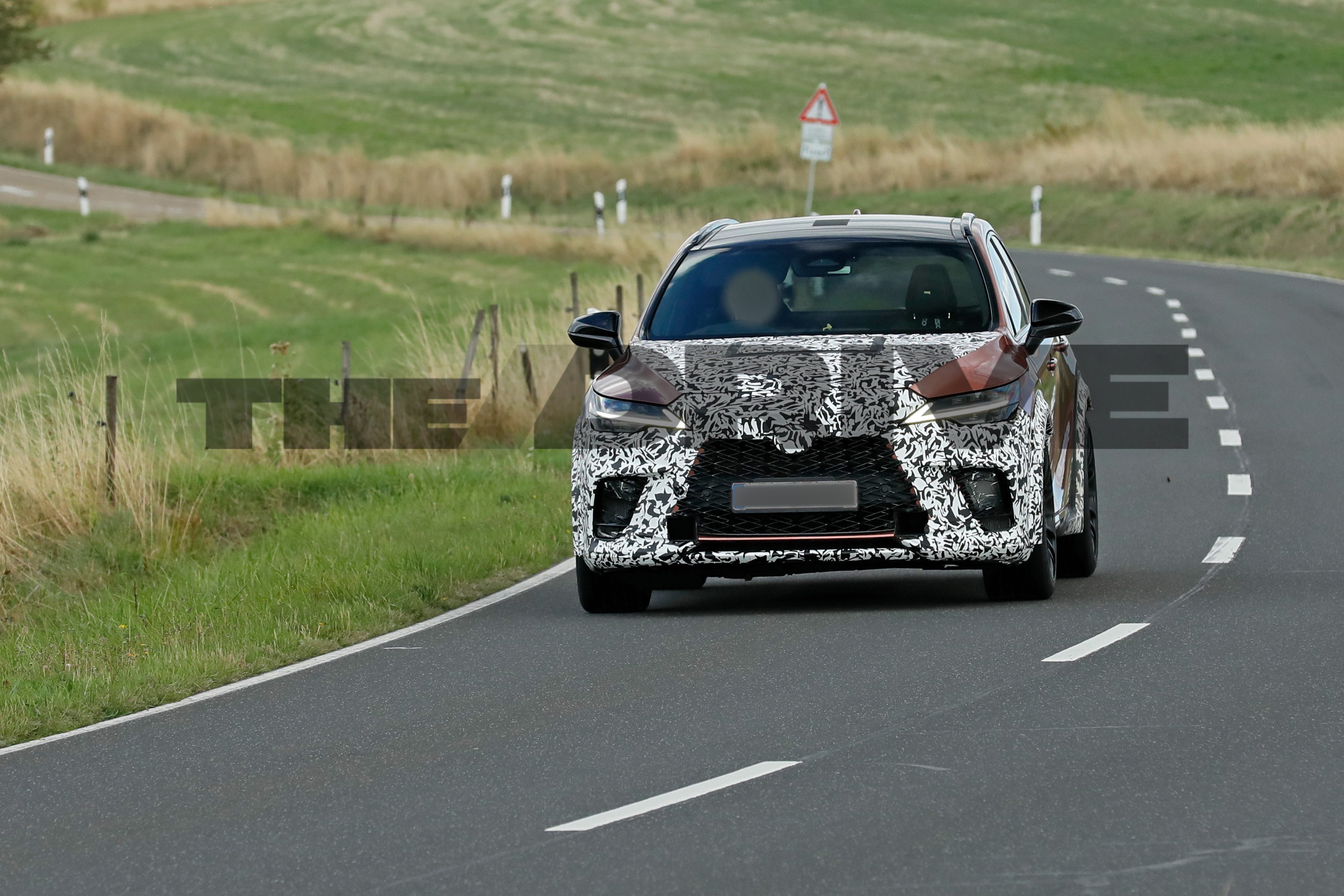
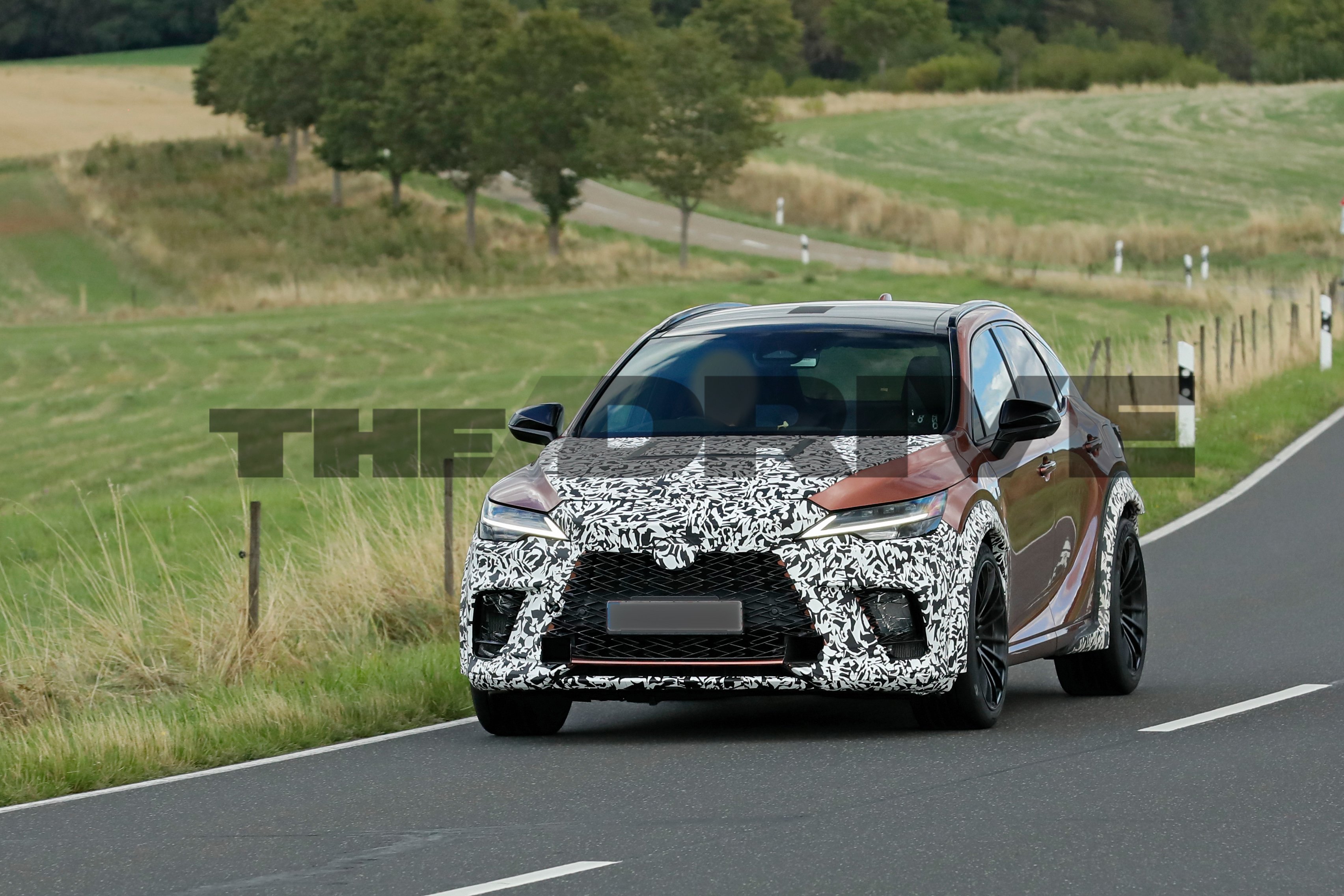
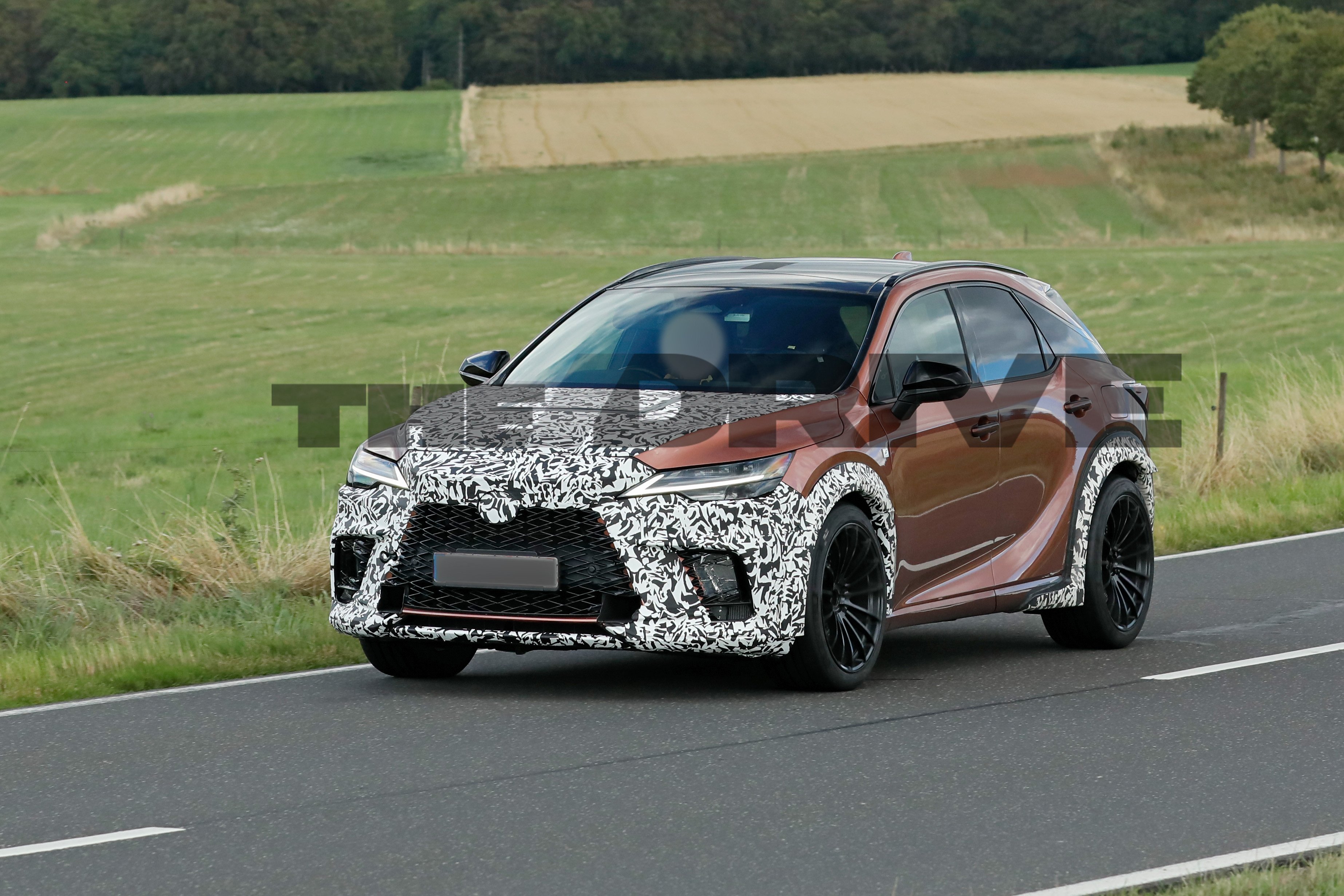
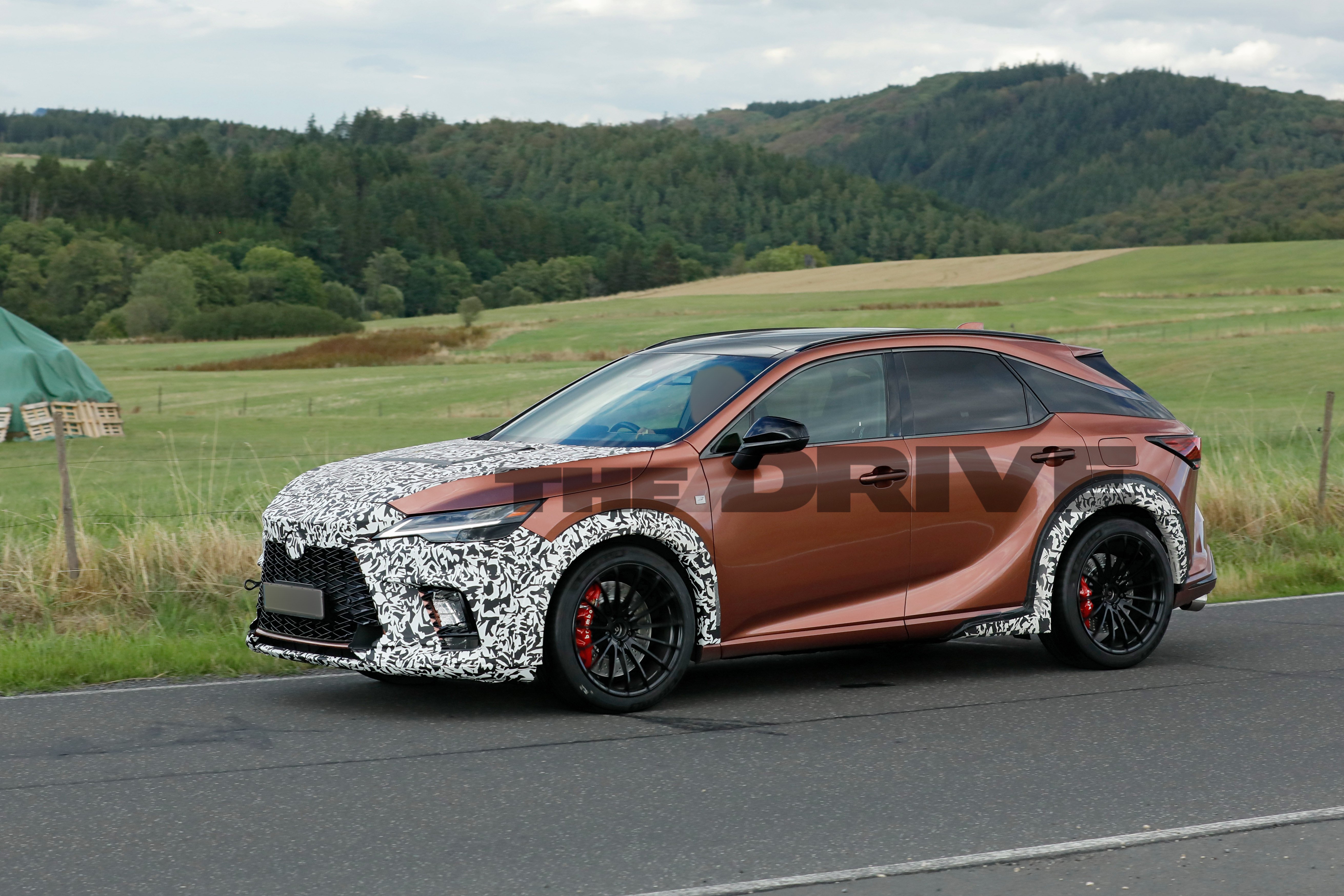
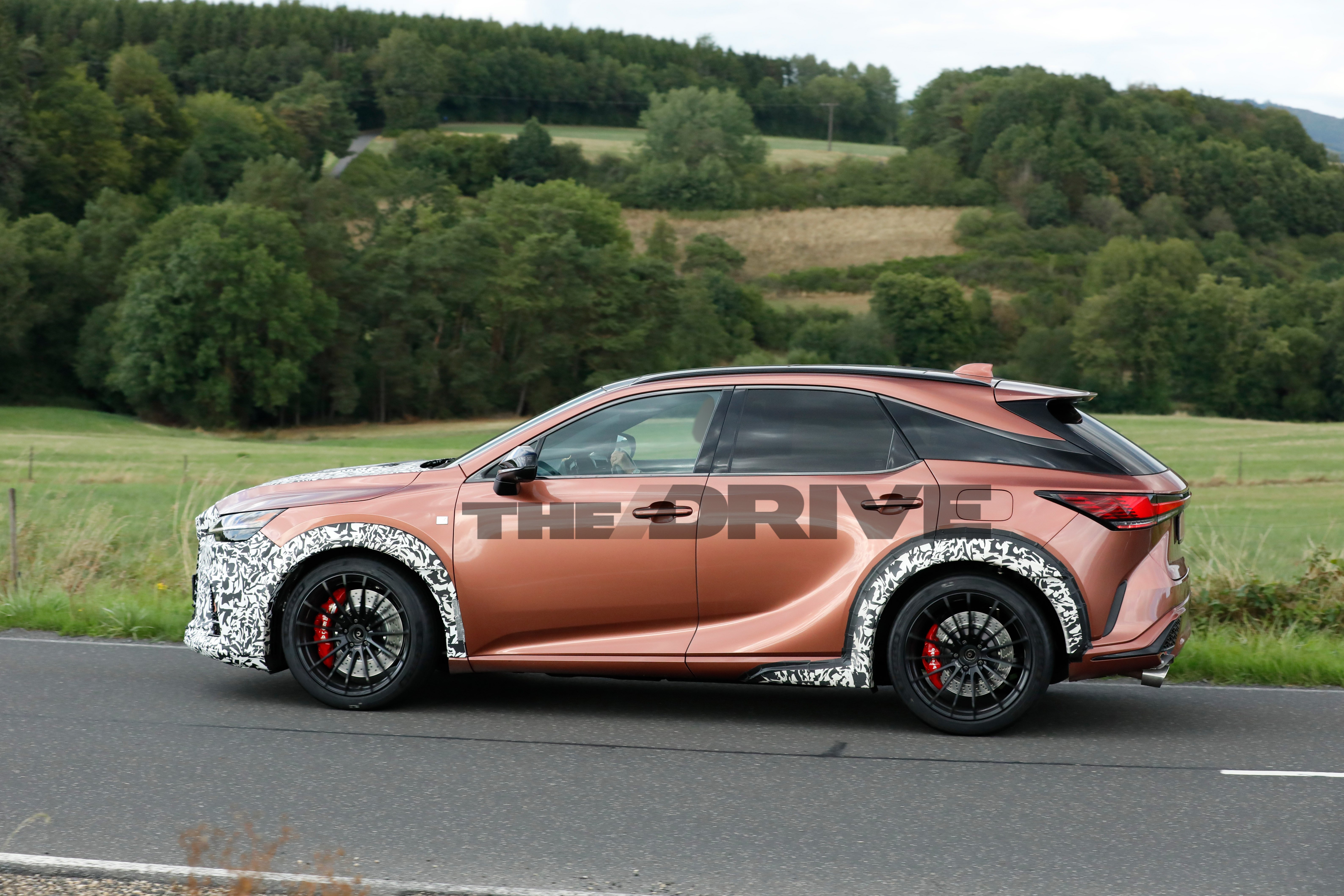
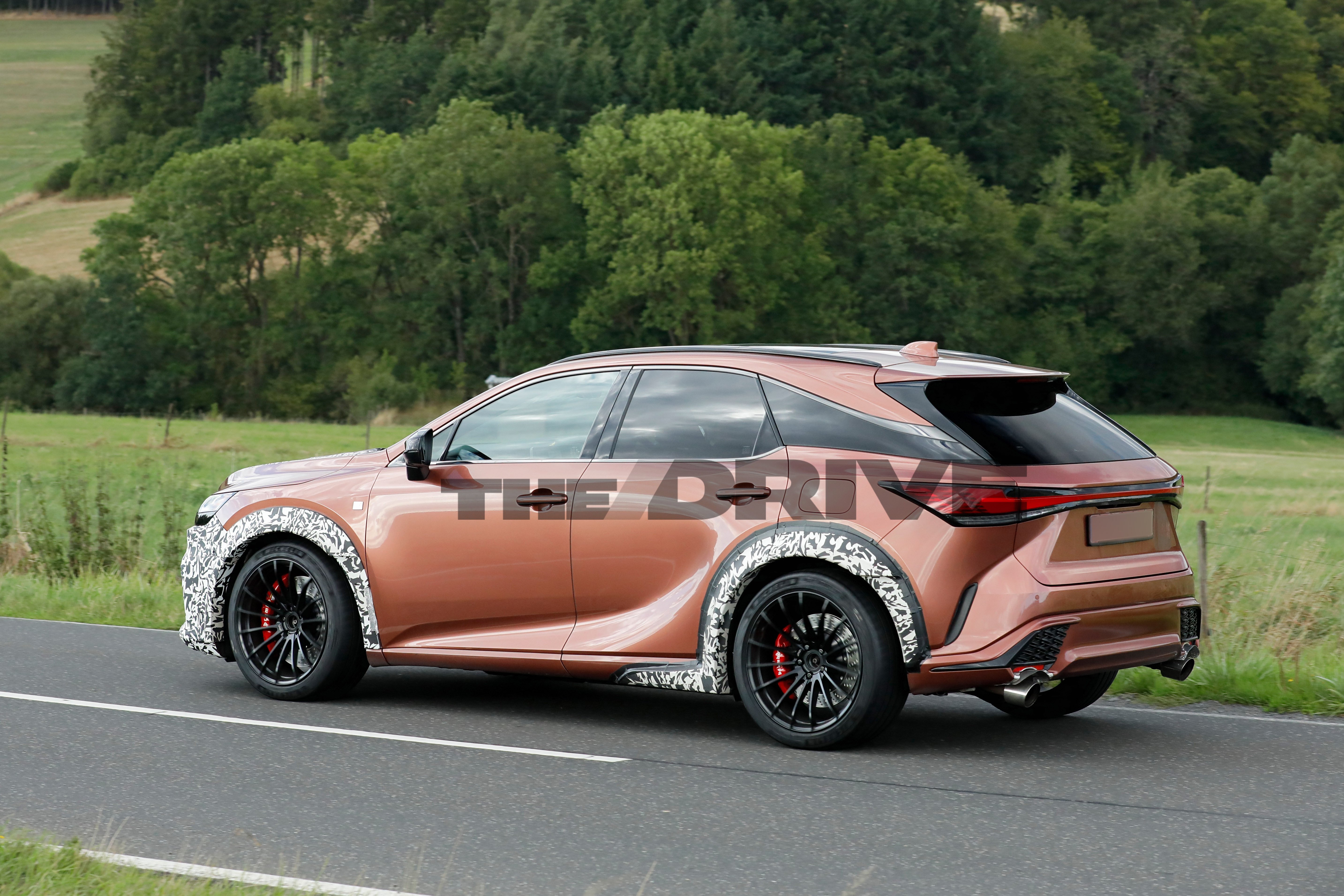
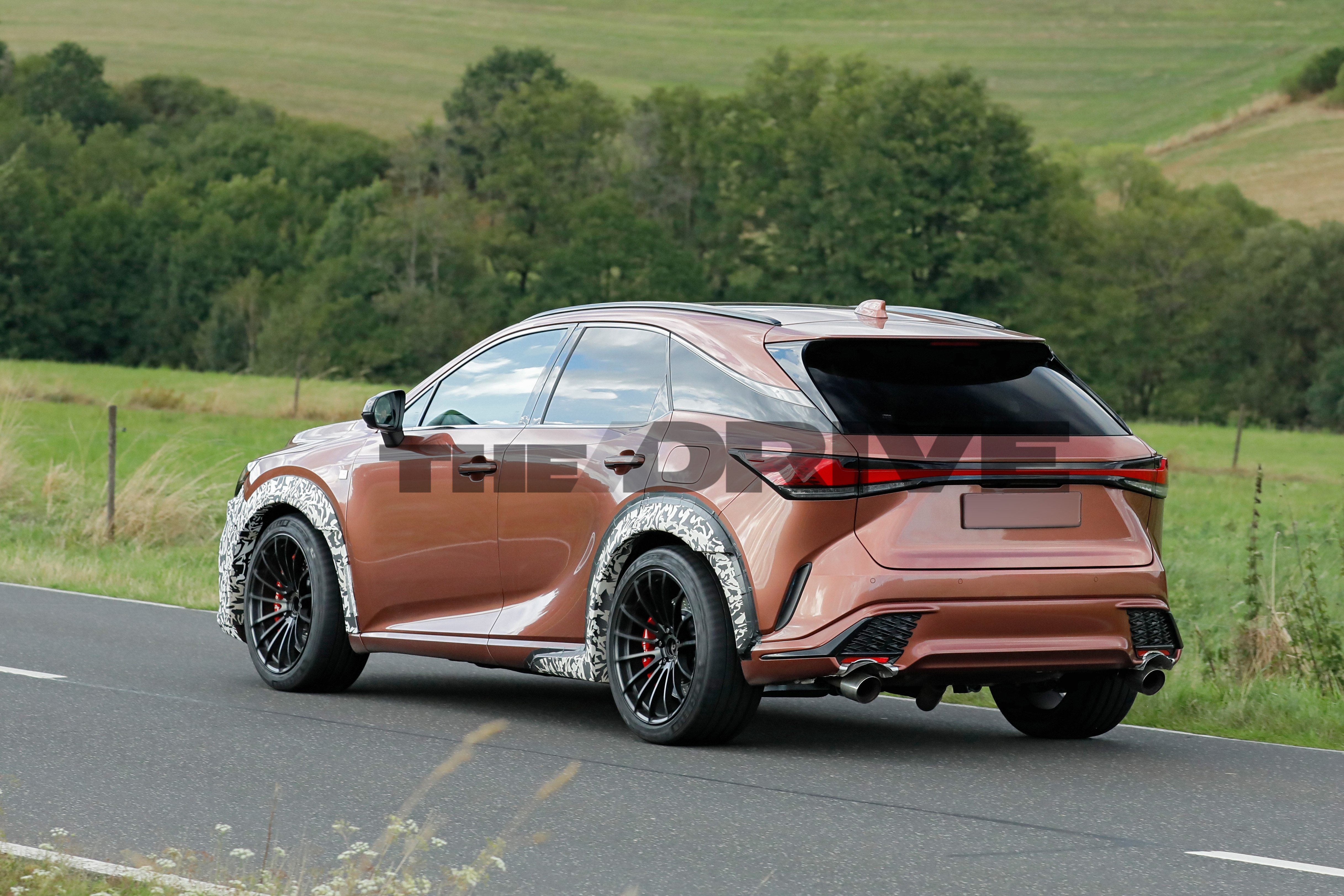
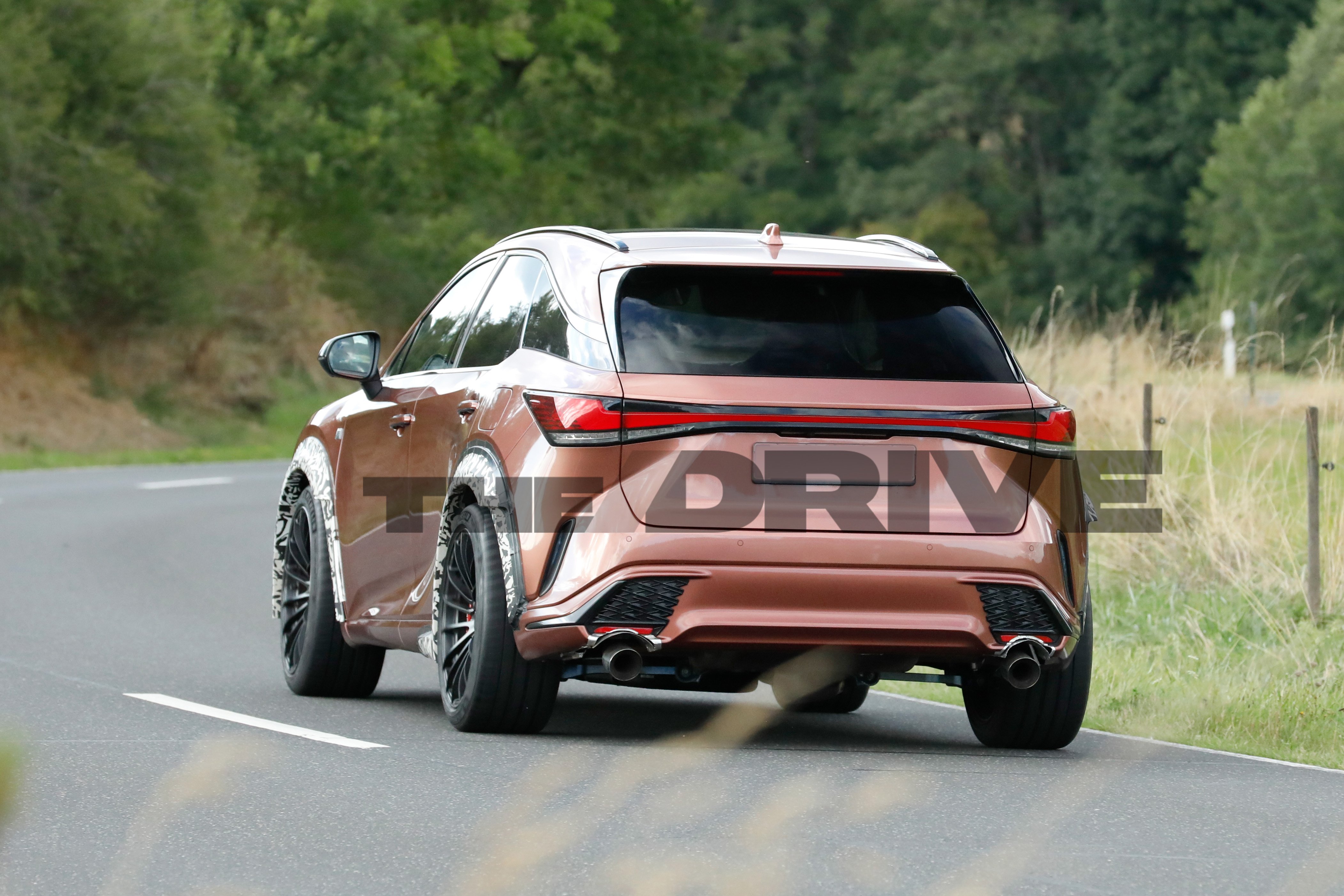
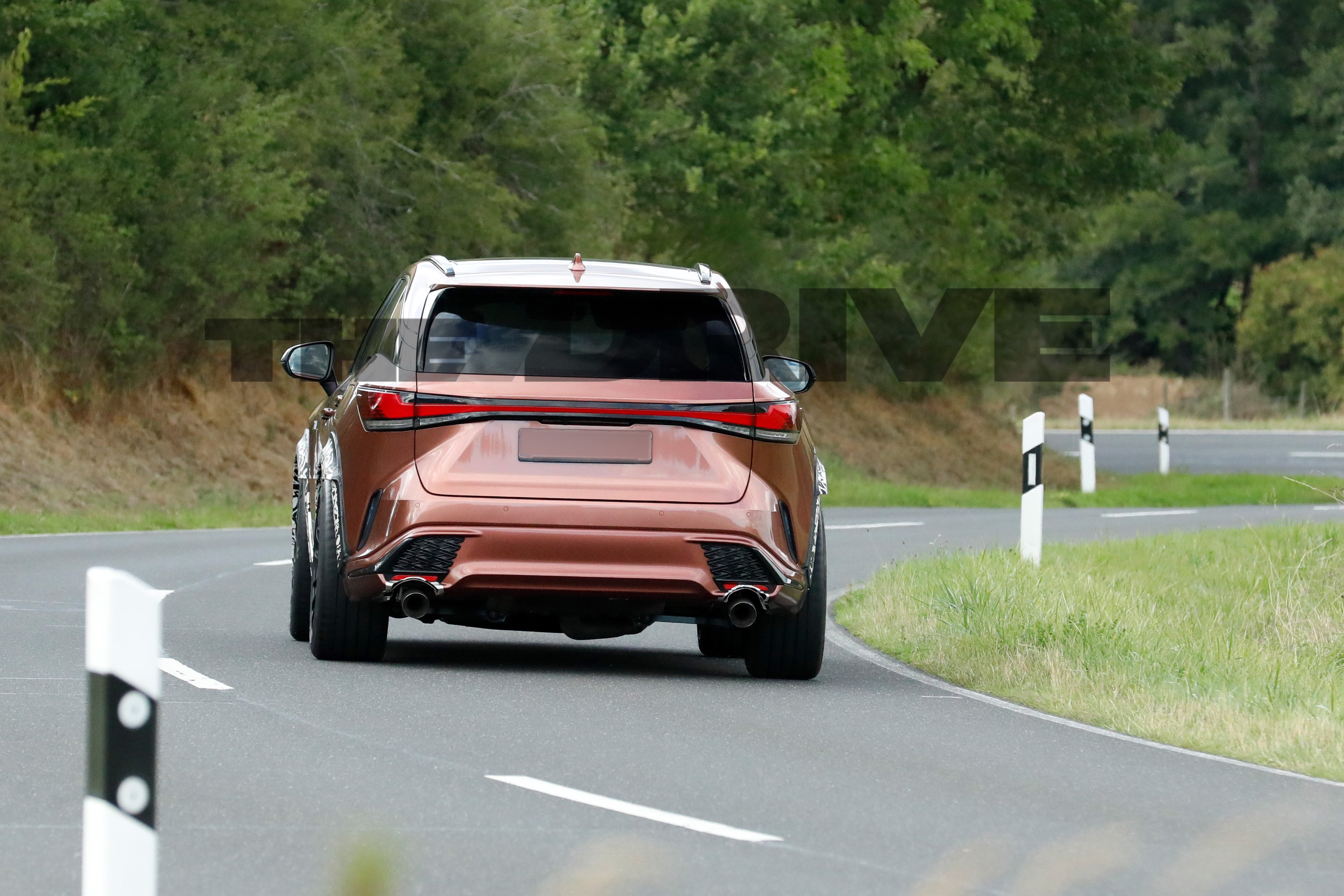
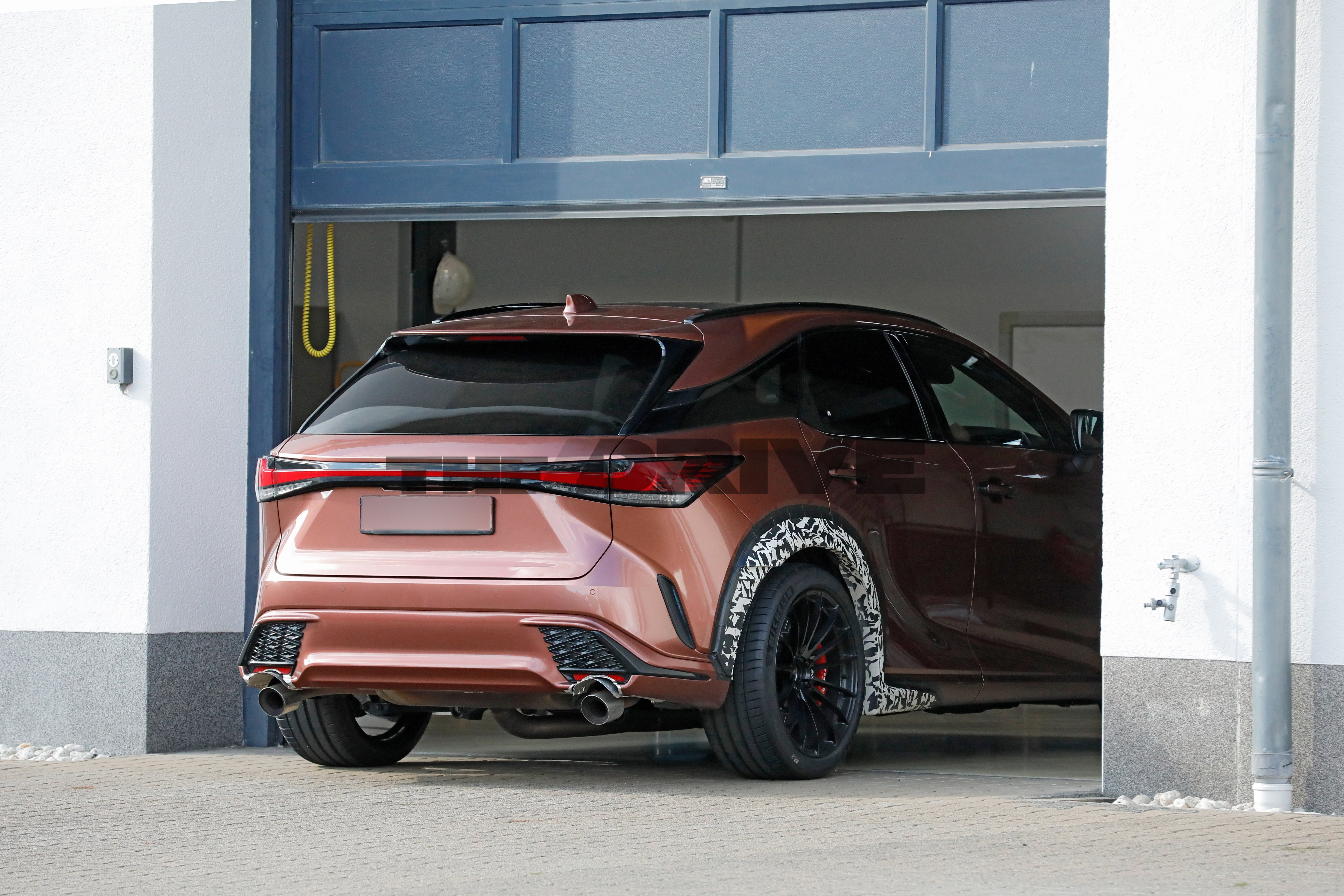
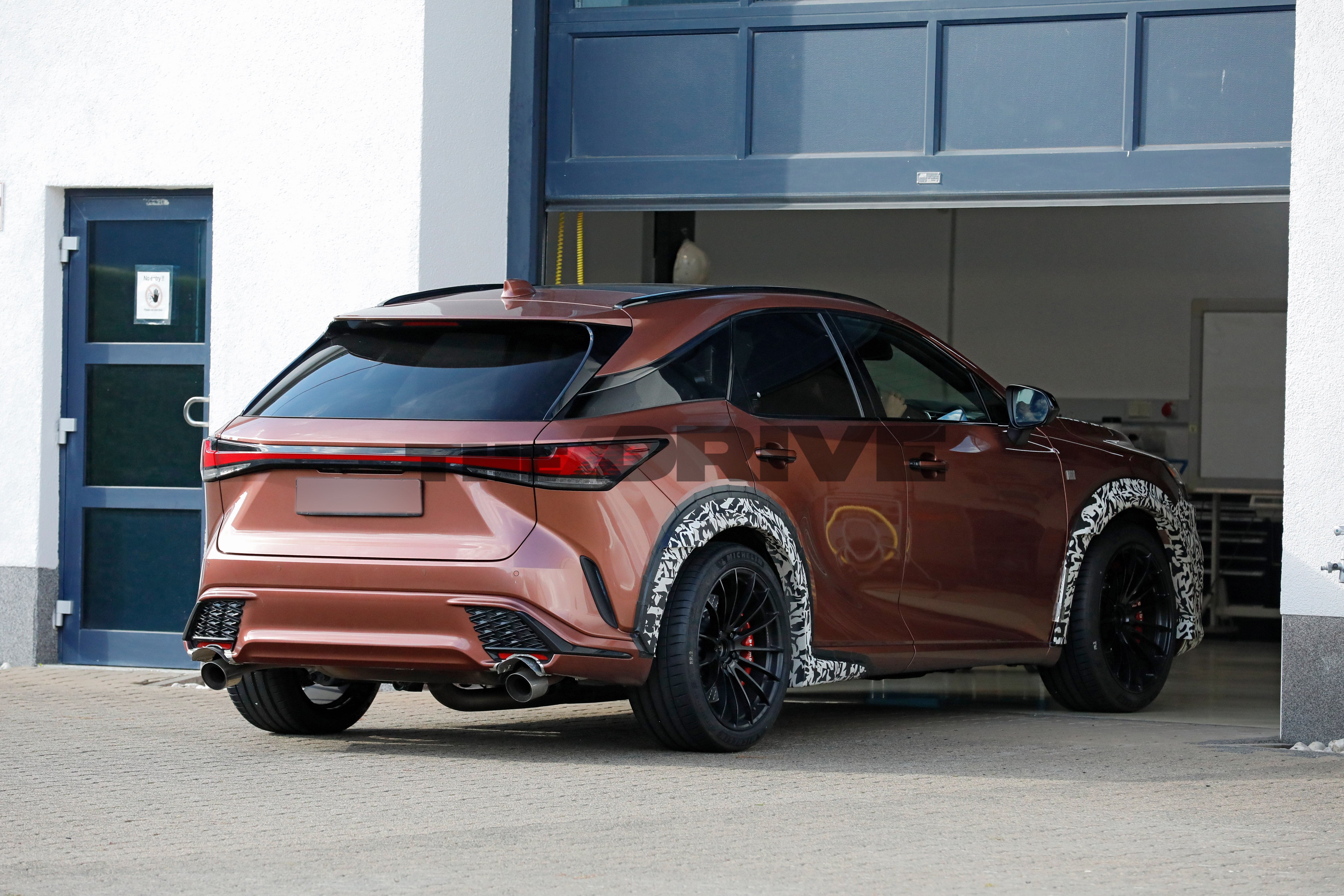
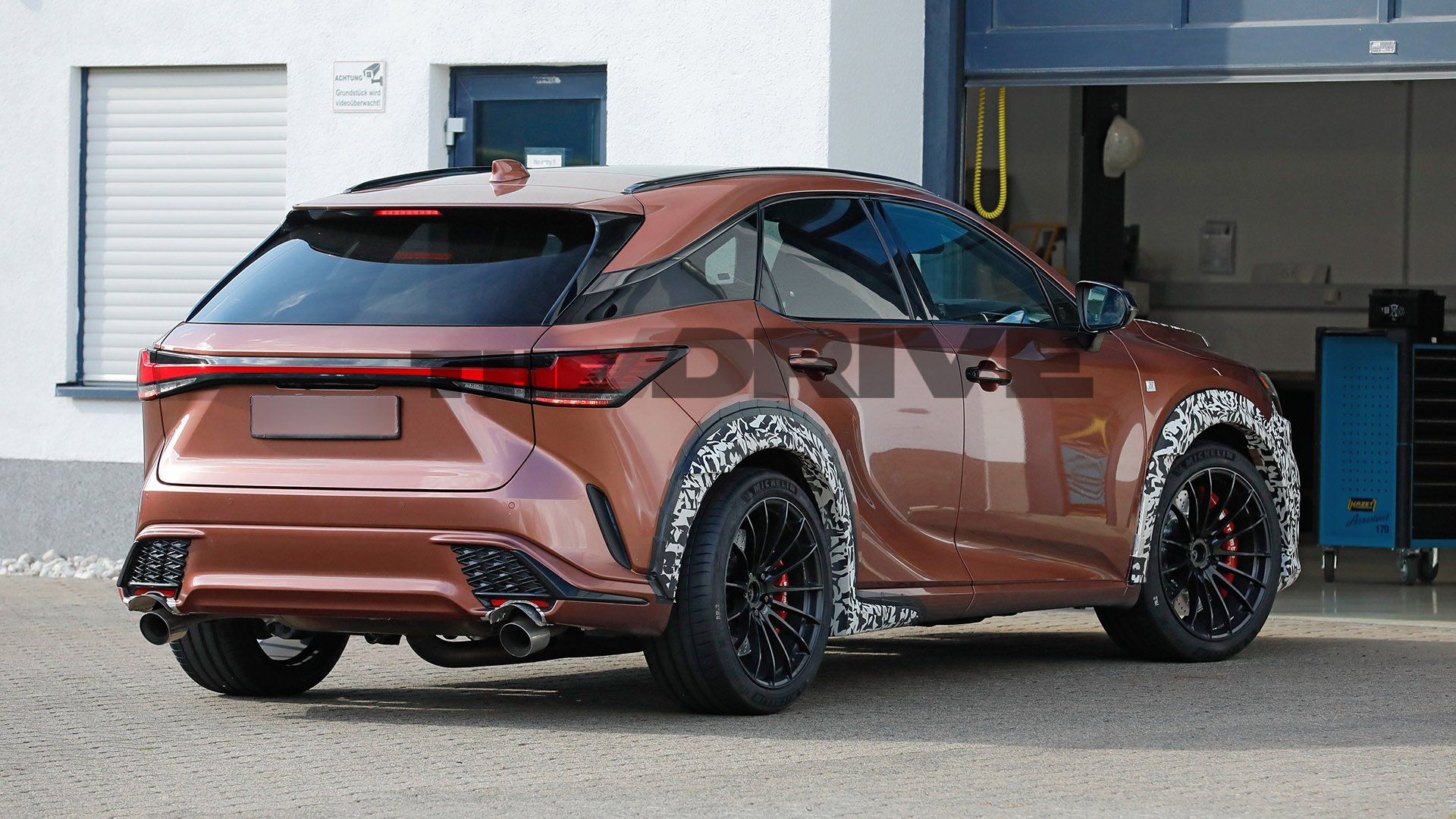
The Lexus RX RR is a near-future high-performance SUV slated to stand up to rivals like the BMW X5 M and Mercedes-AMG GLE 63. Rumor has it, it’ll even have “Morizo” nomenclature like the sporty Lexus LBX sold overseas. For now, we can confirm one thing about the enhanced RX: It’s going to look sick.

A semi-camo’d prototype was spied in Europe wearing fierce fender flares and a pretty mean-looking set of exhaust outlets. The wheels and tires have a really aggressive low-offset fitment, and you can see red Brembo brake calipers clearly in this album of spy shots. Zooming in on the images, it looks like we can spot 21-inch wheels, staggered Michelin Pilot Sport 4 SUV tires (265s front, 295s rear), cross-drilled and slotted rotors, and front intakes that may house intercoolers.

While no official performance specs have been shared yet, reports have speculated that this super-SUV variant of the RX could have a 600-horsepower hybrid powertrain. While some rivals are running big engines, word has it that Lexus is going with a 2.0-liter turbo four paired with two electric motors.

The Lexus RX, physically, is kind of an in-betweener. It’s considered a rival to the “mid-size” X5 and GLE, but is a bit smaller. That may translate to a performance advantage for the platform, as it’s upgraded for this special variant. The vehicle certainly looks right with a low stance and wide track. The RX is, historically, not a car many people would call “cool.” I think this version is on the right track to change that.

“Morizo” is, of course, Akio Toyoda’s racing pseudonym. The name’s been bestowed on some of Toyota’s hottest machines in the recent past, like the super-spec version of the GR Corolla.

I expect we’ll see this on dealer lots in calendar-year 2028, but of course the final form will be revealed sooner.

Got any insider info on the upcoming Lexus RX RR? Drop me a line at andrew.collins@thedrive.com!

The post Lexus RX Is About To Get a Lot Less Boring appeared first on The Drive.

☐ ☆ ✇ The Drive

Gran Turismo 7’s Huge Spec IV Update Shows It’s Listening To Players

By: Adam Ismail

Gran Turismo 7 will be getting another significant update before the year is out, series producer Kazunori Yamauchi announced during this morning’s PlayStation State of Play event. It’ll be issued in two parts—one in October, and then another in December—adding a total of 12 cars and two tracks to the game, as well as a host of features fans have been requesting for some time.

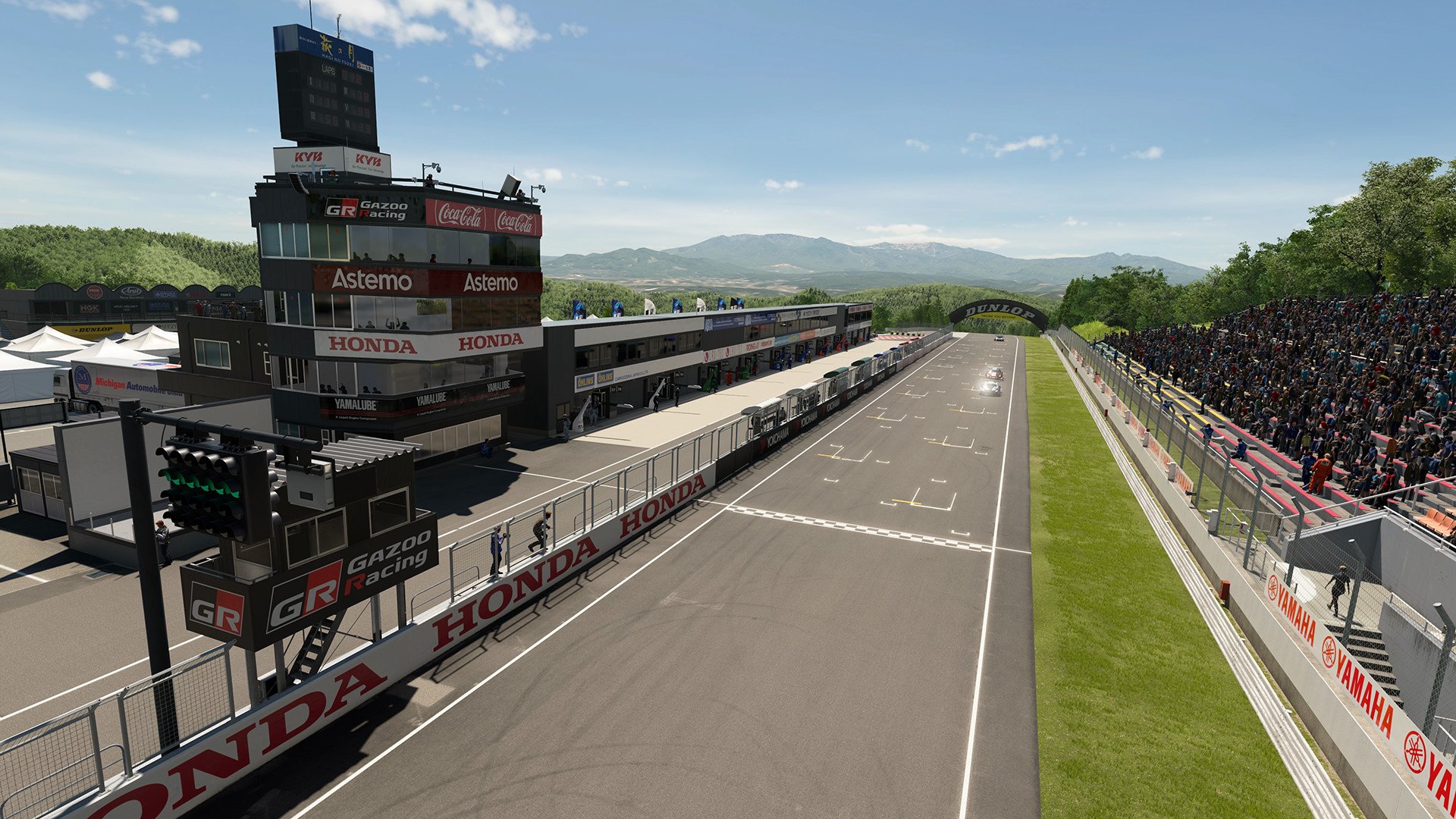
We’ll start with the tracks, because they’re both significant, for different reasons. Sportsland Sugo, a mainstay on the Super GT calendar located in Japan’s Tōhoku region, we’ll be making its GT debut first in October. It hasn’t appeared in a great many video games over the years, but it was featured in the Project Cars series, and real ones may remember it from Sega’s Ferrari F355 Challenge way back in the day.

Sugo is a fantastic circuit—not too long, tons of elevation change, plenty of very satisfying mid-speed corners, and some beautiful views. Personally, it’s one I’ve wanted to see in GT7 for a long time, and I’m excited it’s finally happening.

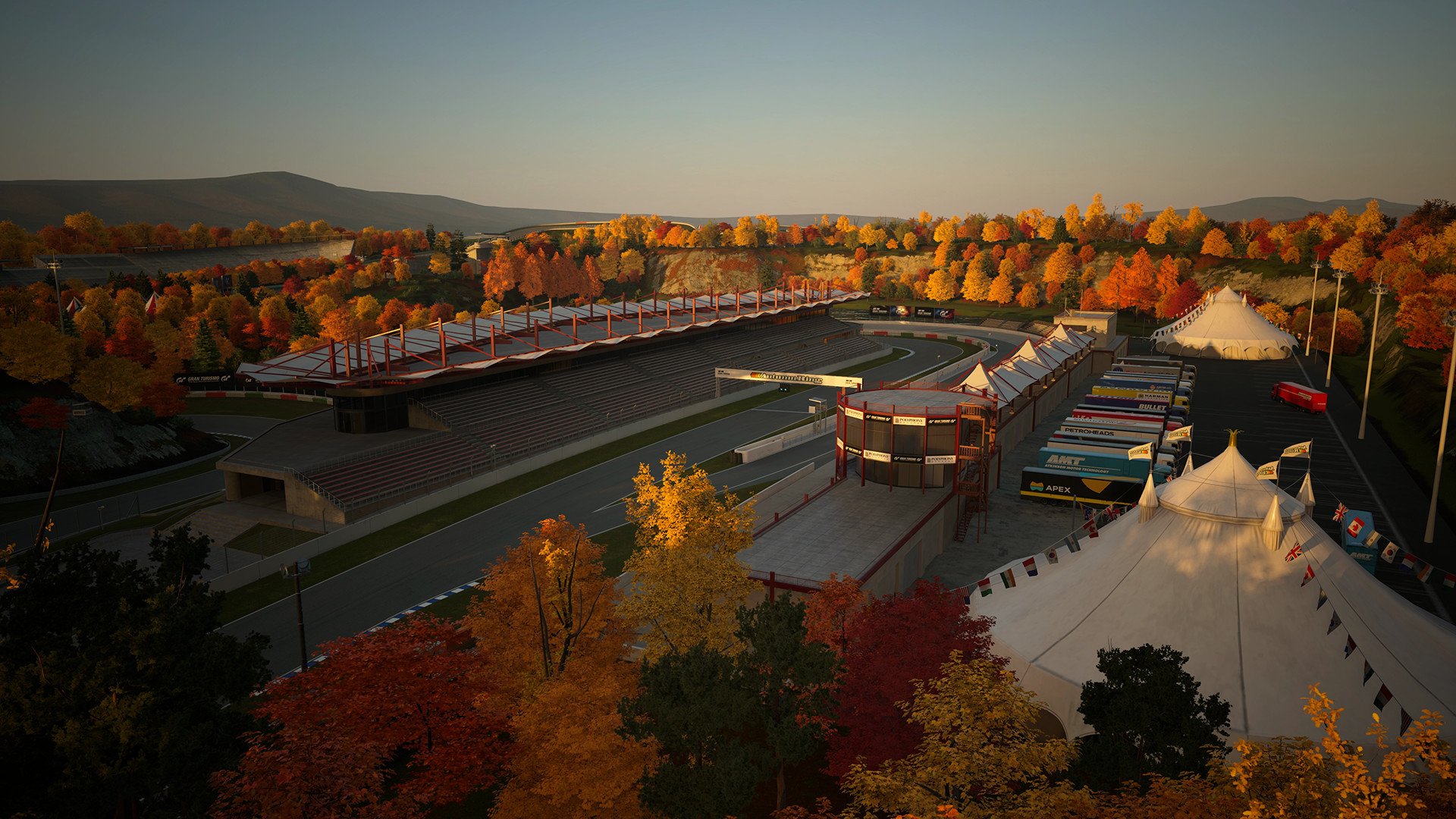
Sportsland Sugo at top, and Autumn Ring at bottom. Note the large grandstands in the background of the Autumn Ring shot, and what looks like the first corner of the old layout, seemingly floating in mid-air without runoffs or grandstands around it. Sony Interactive Entertainment

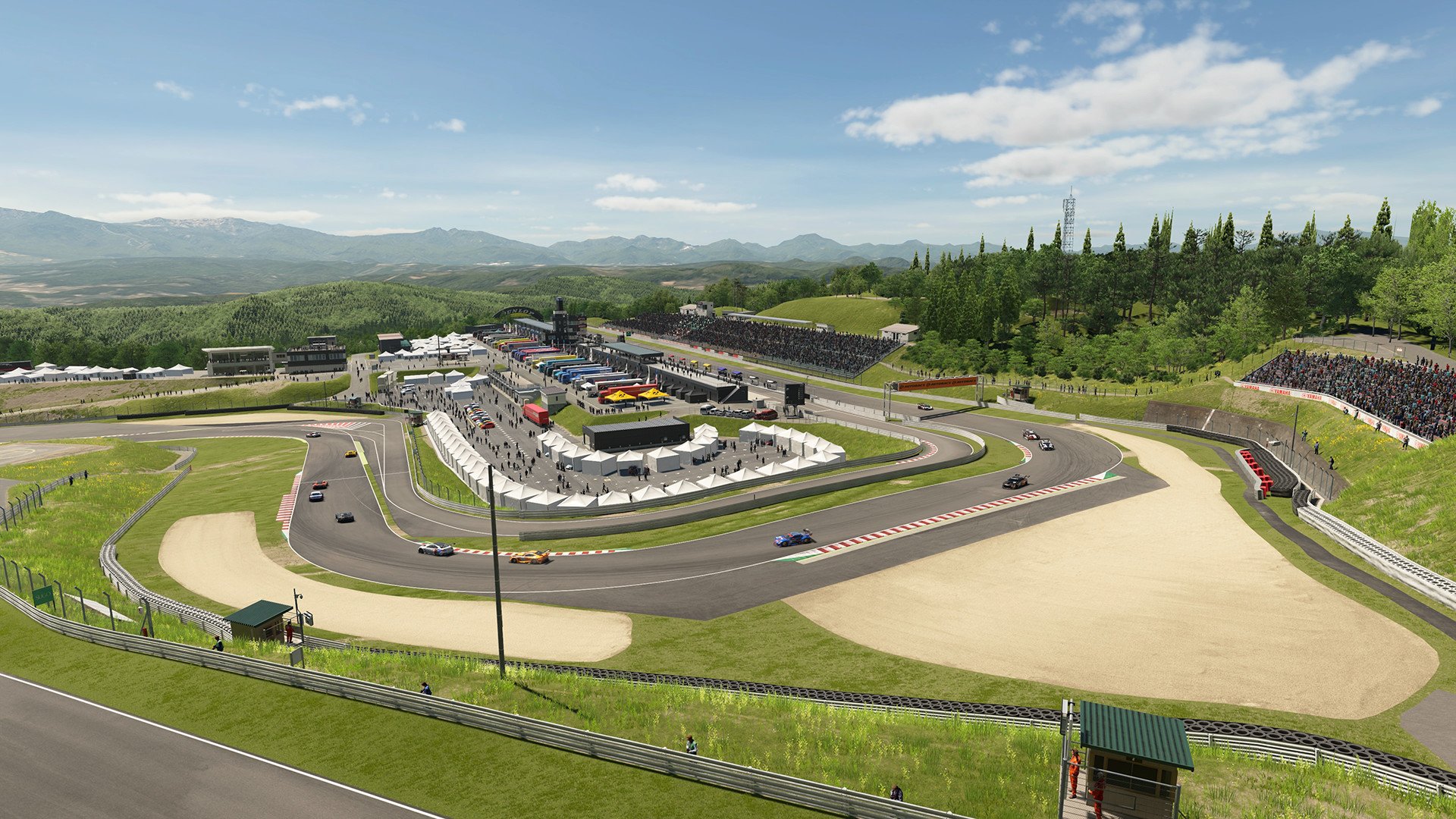
That said, longtime Gran Turismo fans will definitely be more excited for the other new track, which is actually an old one. Autumn Ring will return in December for the first time since GT6, and interestingly, it’ll be offered with two layouts. Kaz said that players “can race Autumn Ring with its original layout and scenery faithfully recreated,” but there will also be an “expanded” version, a “much larger racing circuit that offers a variety of new ways to drive.”

It’s unclear if this new take on Autumn Ring, one of the series’ oldest original tracks alongside High-Speed Ring, Trial Mountain, Grand Valley Speedway, and Deep Forest, is actually connected to the original circuit or separated from it entirely, like the two variations of Dragon Trail Speedway. It’s also uncertain if Autumn Ring Mini, the very short version of the track well-suited for low-power cars, will be included too.

The few still images Polyphony Digital has provided don’t provide us with an angle to see if the Mini layout is still feasible with the new track model. However, both screenshots are centered around Mini’s start/finish line, which is in a different spot from the full track’s main straight, so that could give us a clue.

Beyond tracks, there are a lot of other additions to name, so here they are courtesy of the official website:

October

・ Six new cars.
・ A new Spec IV opening cinematic.
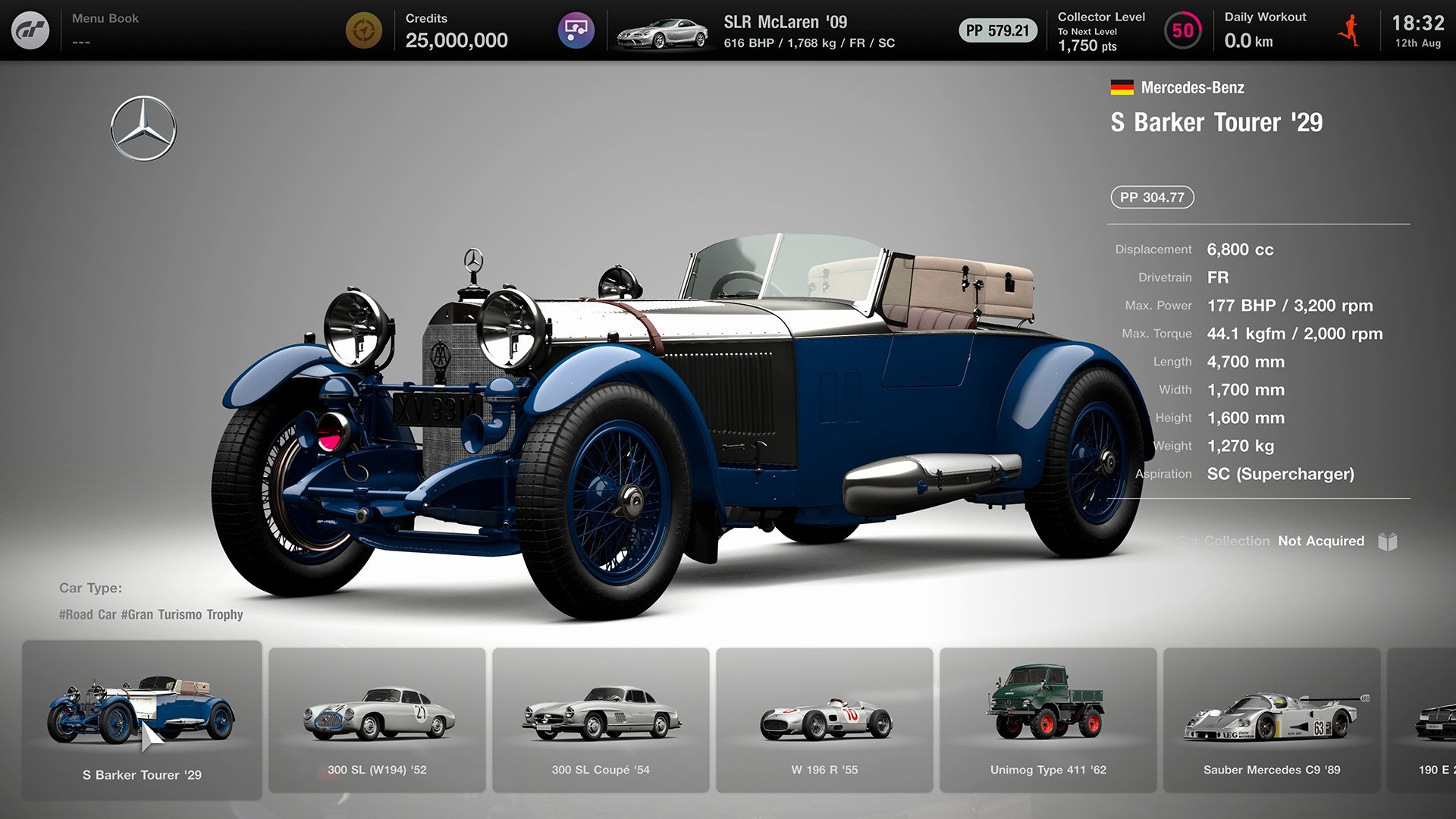
・ Vintage, a section featuring cars no longer available to purchase new.
・ Car Concierge, a service for ordering Used and Legend cars.
・ Experience, a mode featuring brand-specific driving challenges.
・ Car Viewer, a feature that lets you admire the cars in your garage.
・ An increased Collector Level cap.

December

・ Six new cars.
・ Family, a new mode for players of all ages.
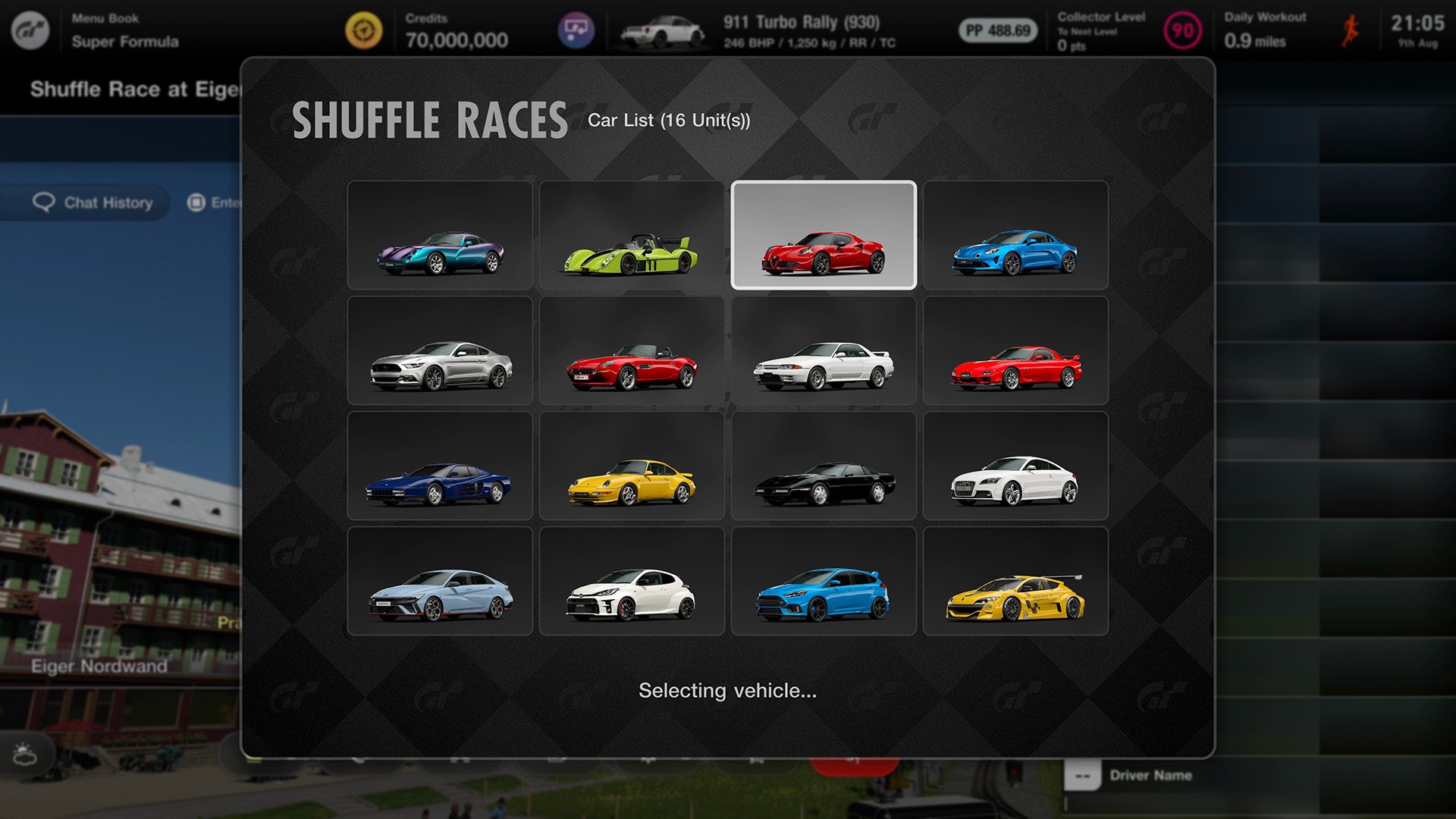
・ Shuffle Race, a luck-based race featuring randomly selected cars.
・ Online Drift Trial, a new mode where players can test their drifting skills against others worldwide.
・ The next evolution of Gran Turismo Sophy.
・ A new Power Pack difficulty level for advanced players.

Highlights include the Car Concierge, which will allow you to directly purchase a vehicle not currently offered for sale in the used or legend dealerships. It does appear there will be a delay as you wait for these to become available, and you’ll be able to view them as you can new cars, from a new “Vintage” section within each manufacturer’s menu. And GT5 fans will surely be excited for the return of Shuffle Races in December, a multiplayer mode that sets a performance cap and then gives every player a random car within it, for unpredictable battles.

The Vintage Dealership and Shuffle Race menus. Sony Interactive Entertainment

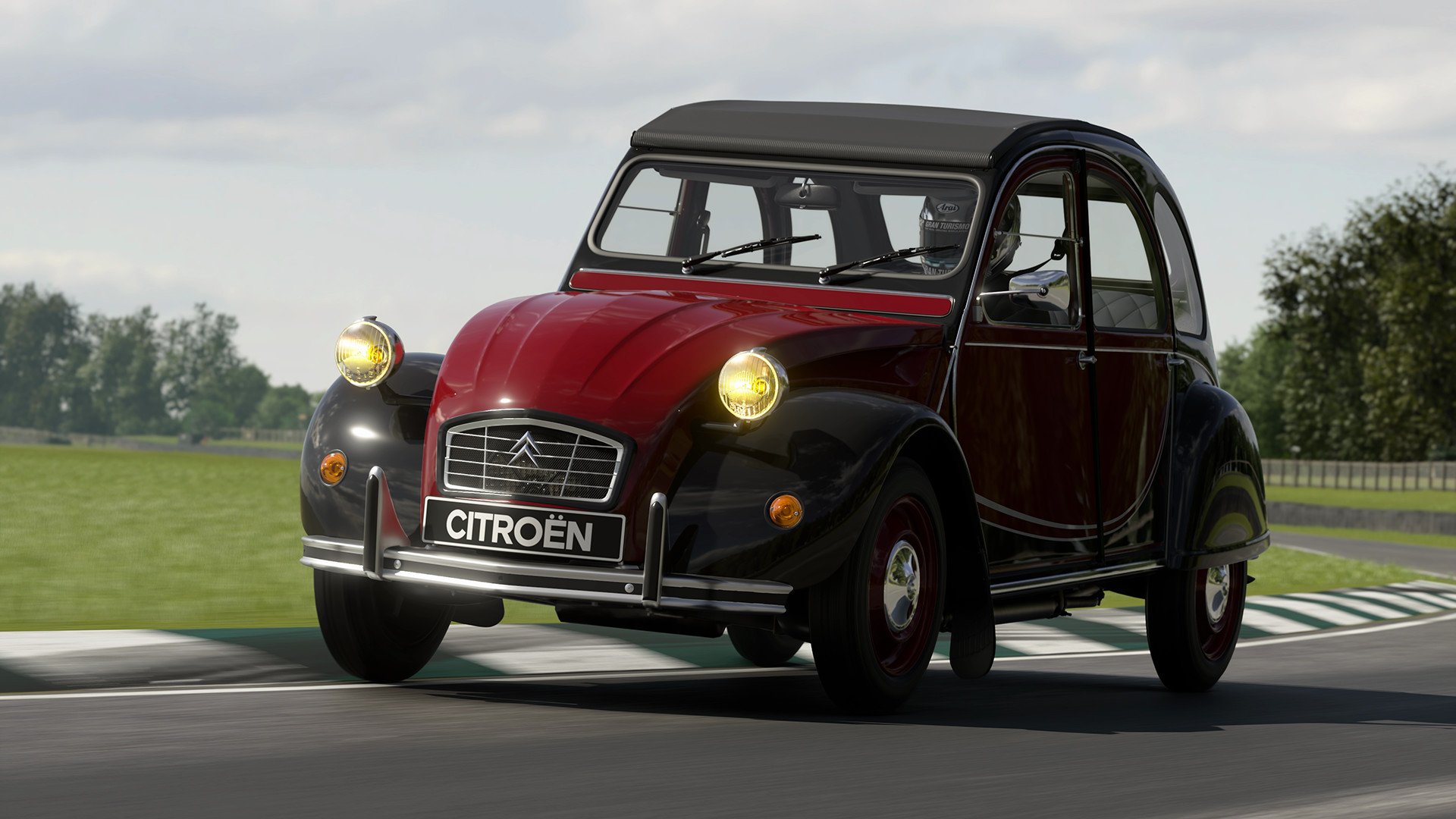
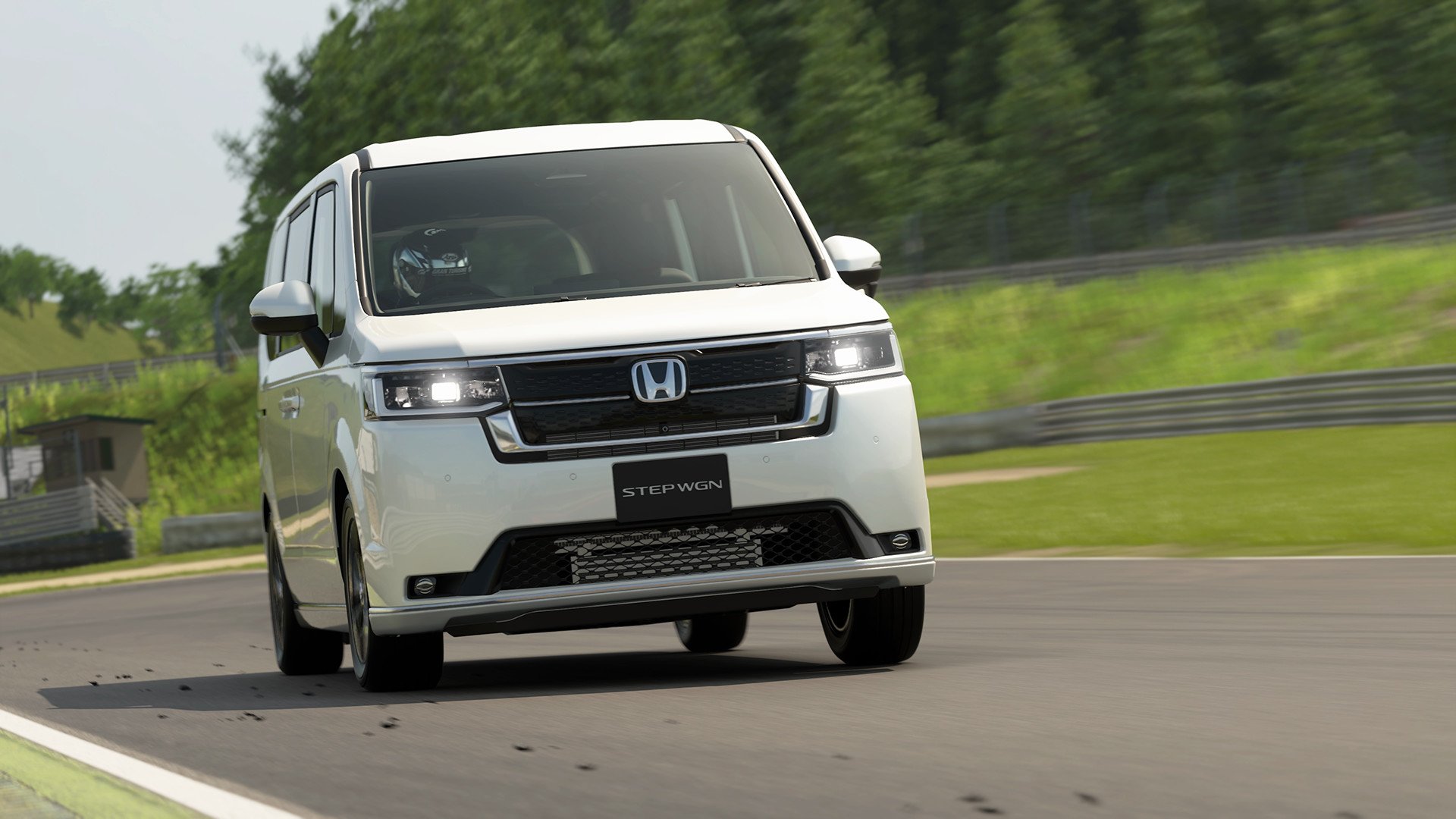
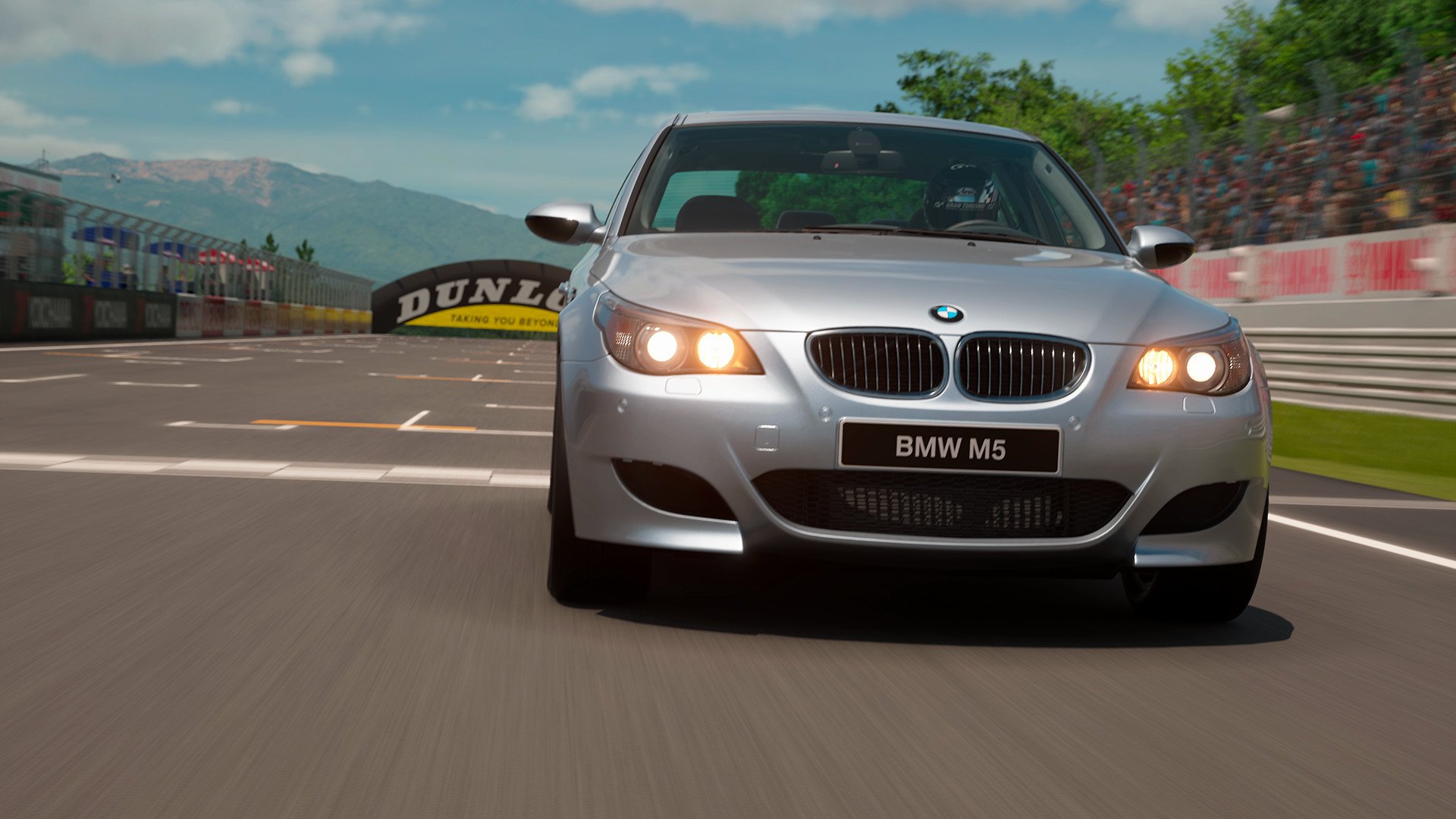
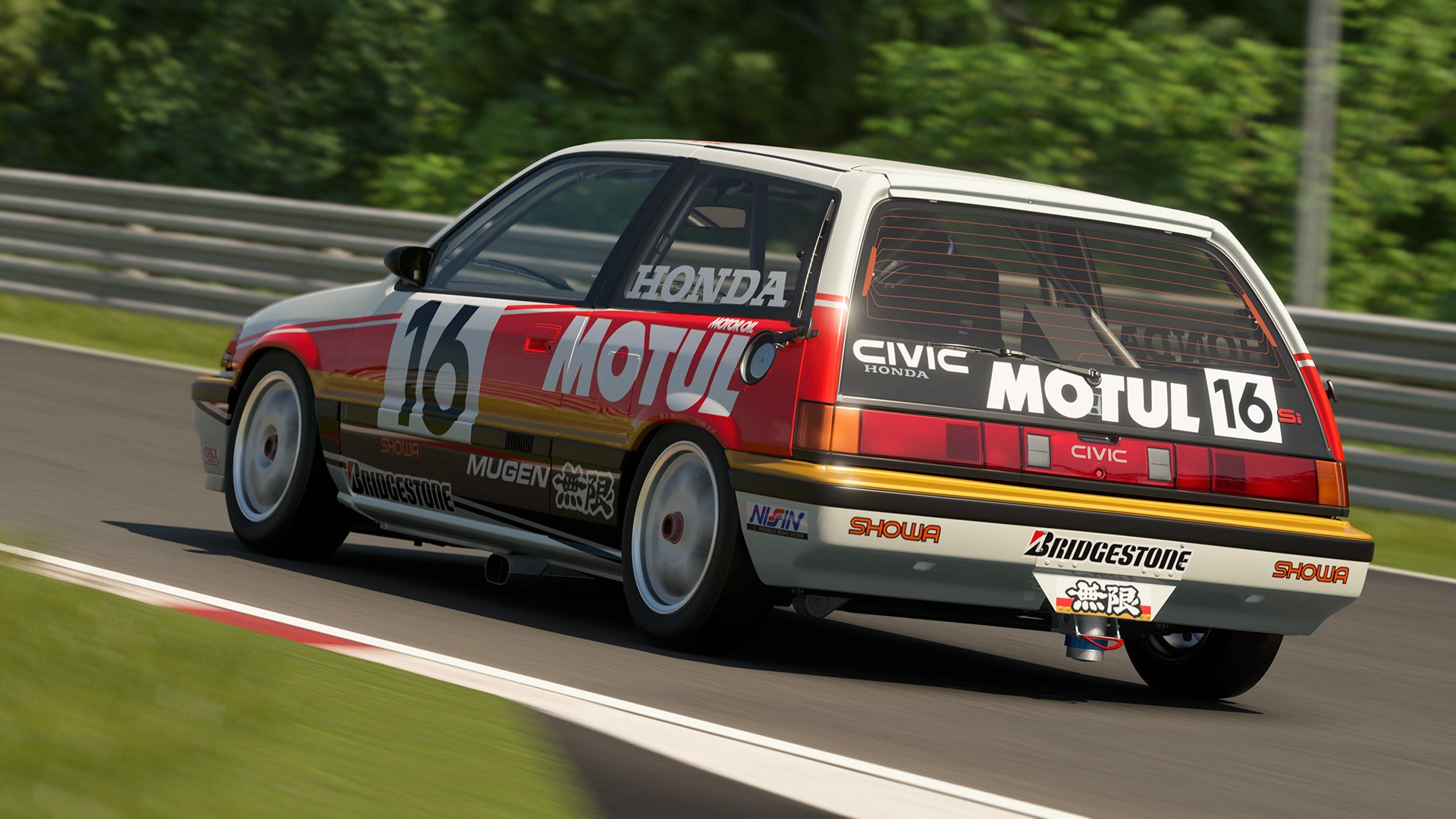
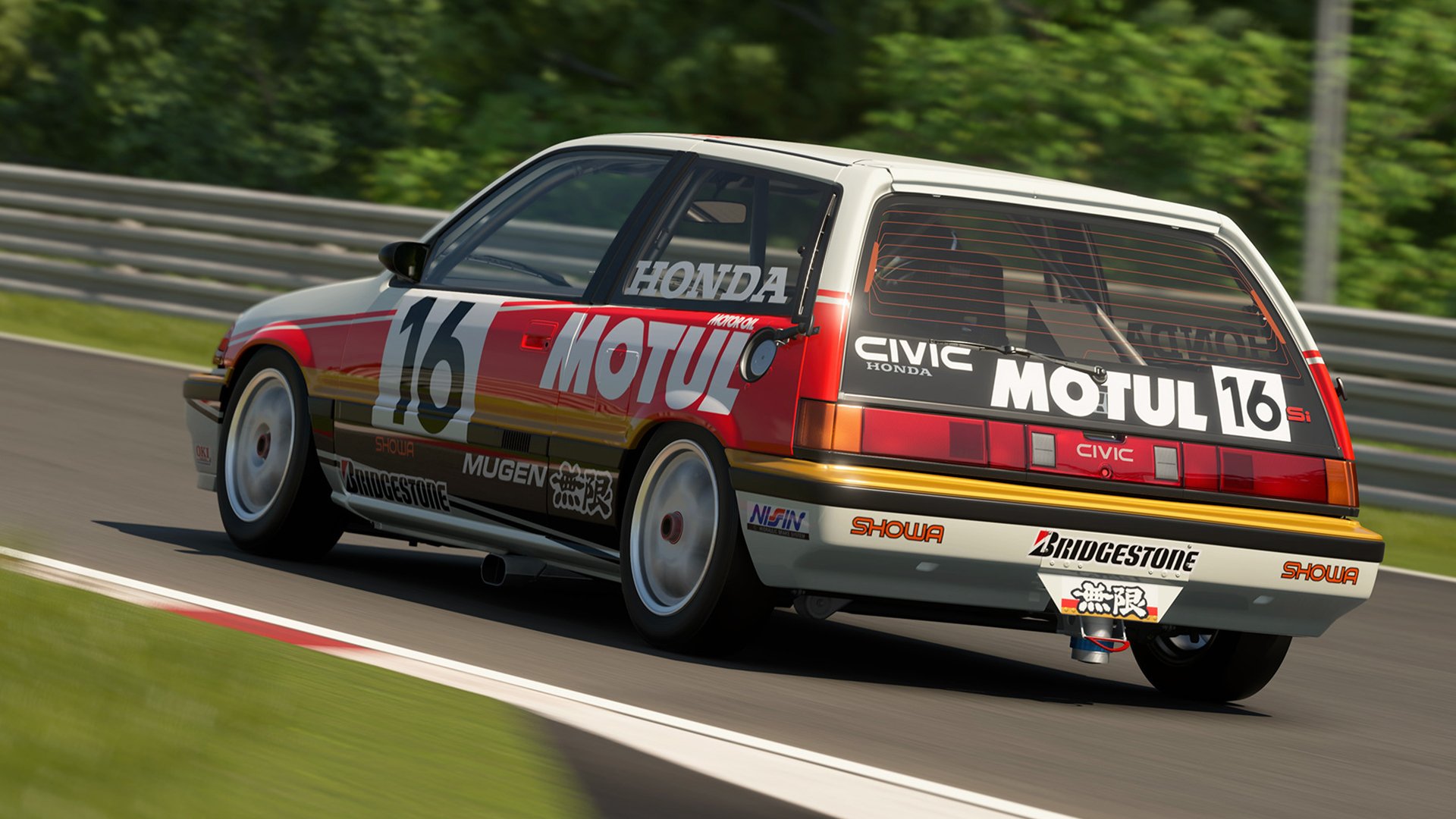
We don’t know each of the 12 new vehicles coming, but Polyphony has provided images of a few. They’ll include the E60 BMW M5, Citroen 2CV6, a revised version of the Mazda RX-Vision GT3, and the Mugen Motul Civic Si Group A race car that competed in Japanese touring cars in the late ’80s.

It seems we may not learn more about Spec IV until the Gran Turismo World Series esports competition hits Singapore exactly a month from today, so we’ll have to be patient.

Sony Interactive Entertainment

Got a news tip? Reach out to tips@thedrive.com

The post Gran Turismo 7’s Huge Spec IV Update Shows It’s Listening To Players appeared first on The Drive.

☐ ☆ ✇ The Drive

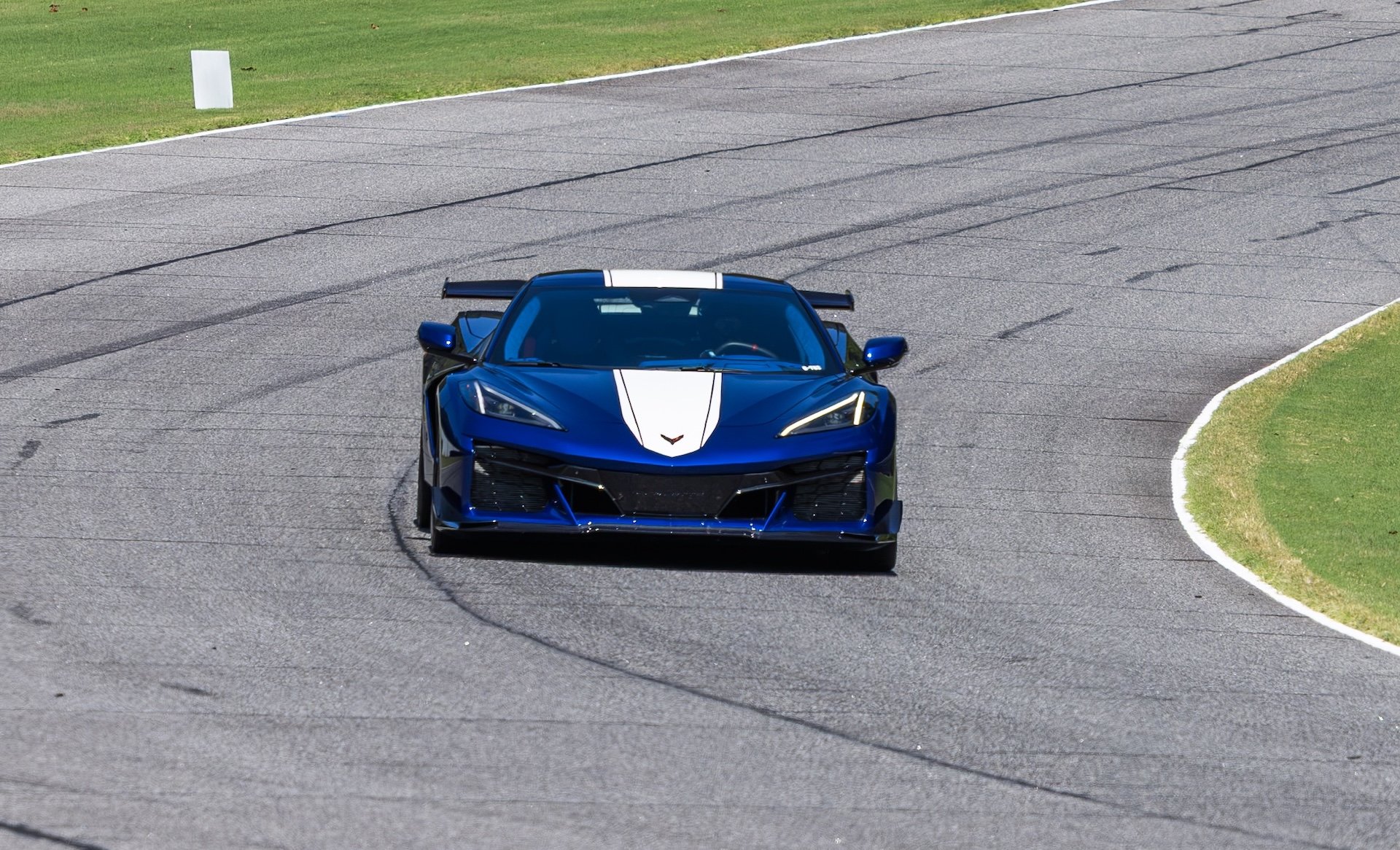
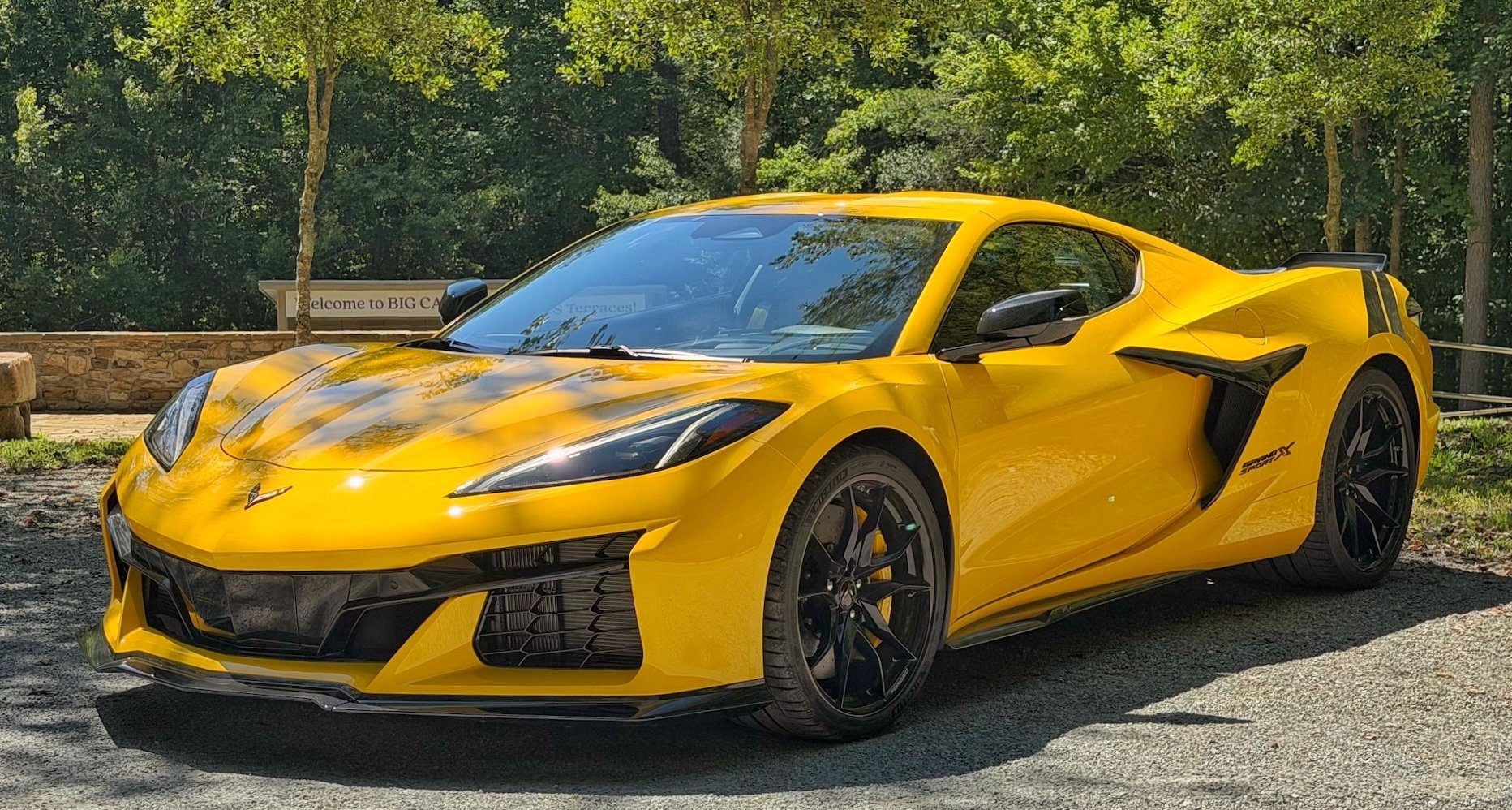
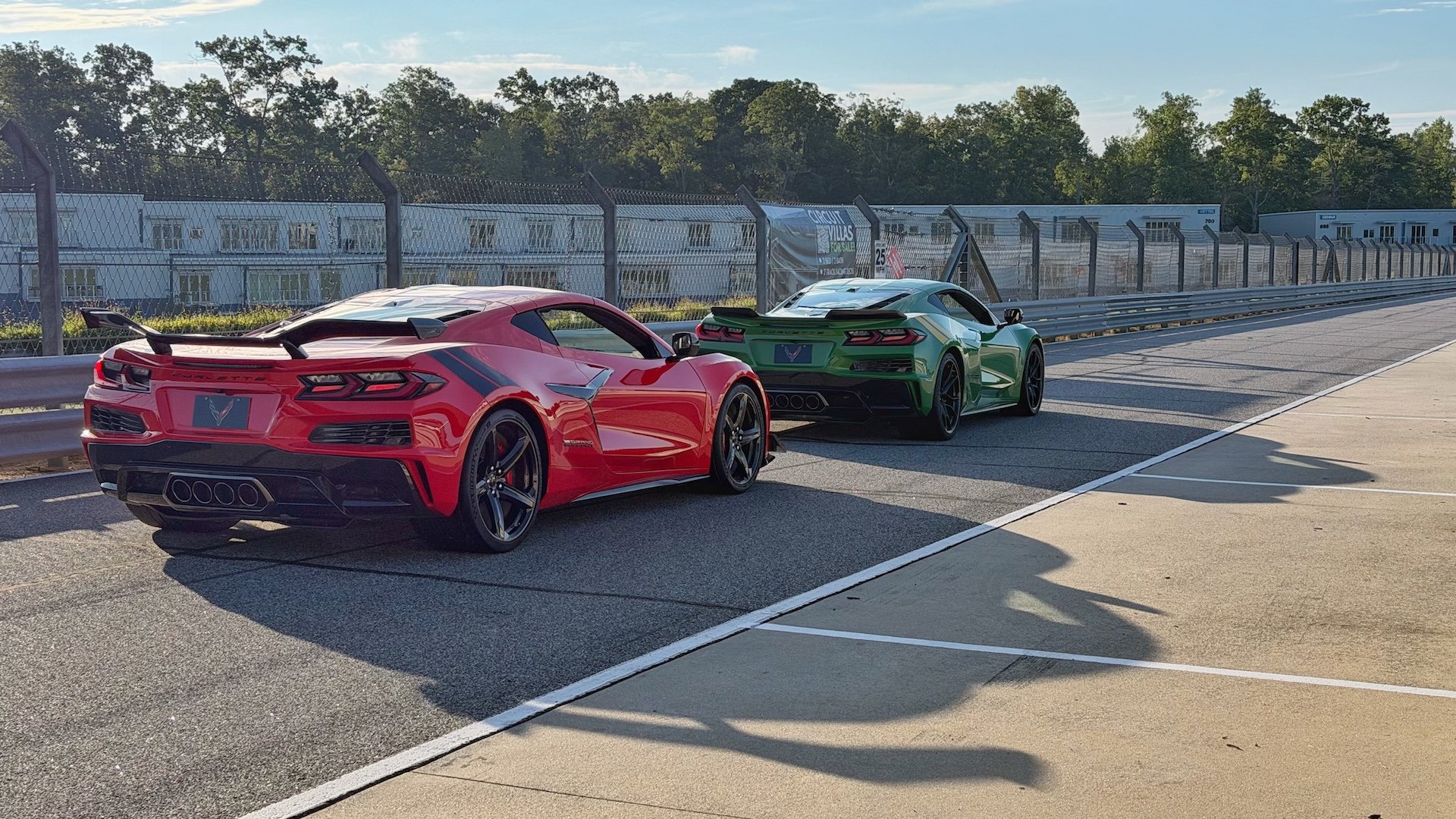
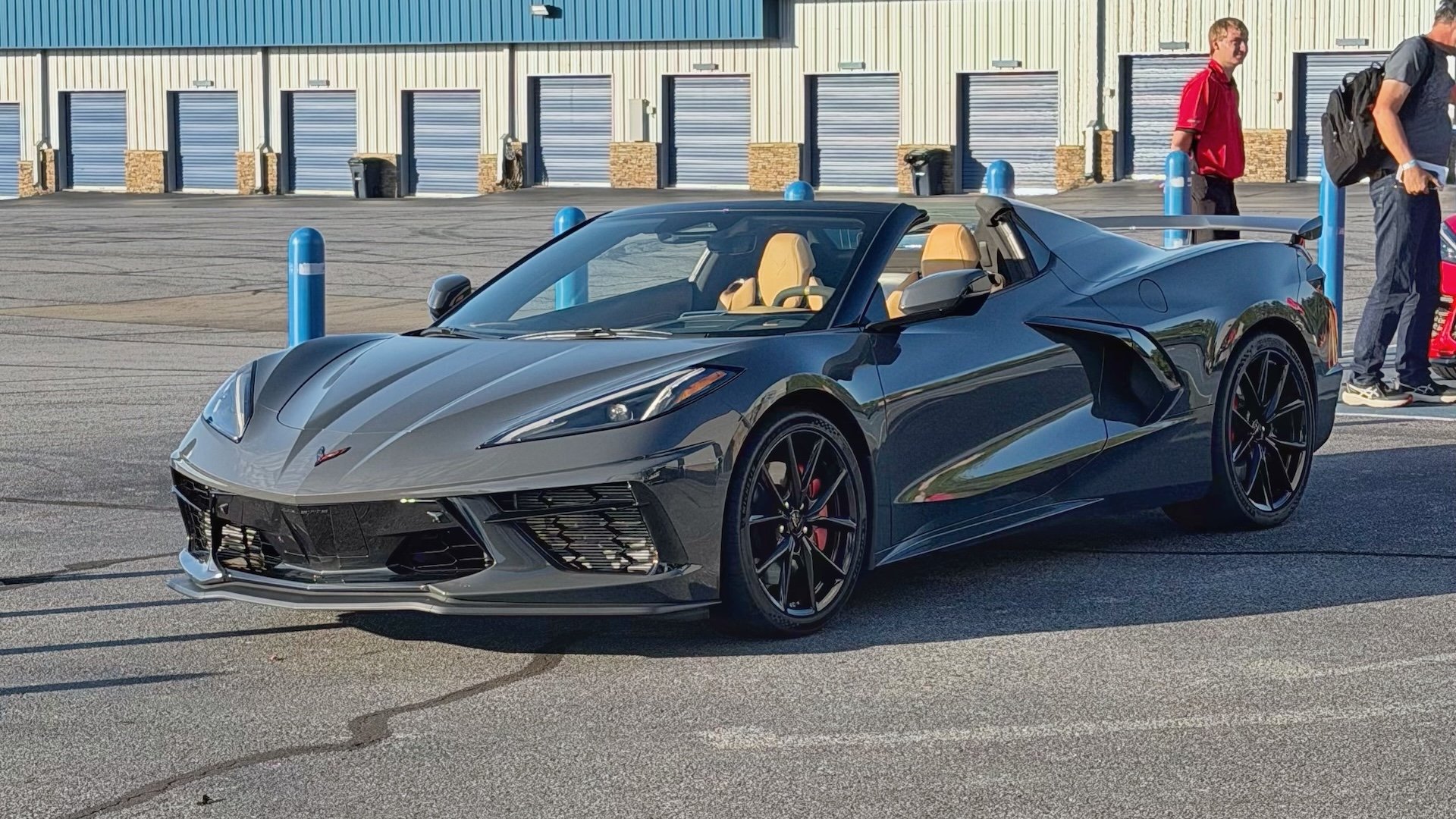
How the 2027 Chevy Corvette Grand Sport X Built on the Bones of the Old E-Ray Hybrid

By: Jerry Perez

The electrified Corvette is dead; long live the electrified Corvette. When the 2027 Chevrolet Corvette Grand Sport X was announced, it became obvious that the first-ever hybrid ‘Vette, dubbed the E-Ray, wasn’t entirely being put out to pasture—more like, tinkered with, improved, and renamed. The result is a 721-horsepower, all-wheel-drive American sports car with a honkin’ V8 behind the cockpit.

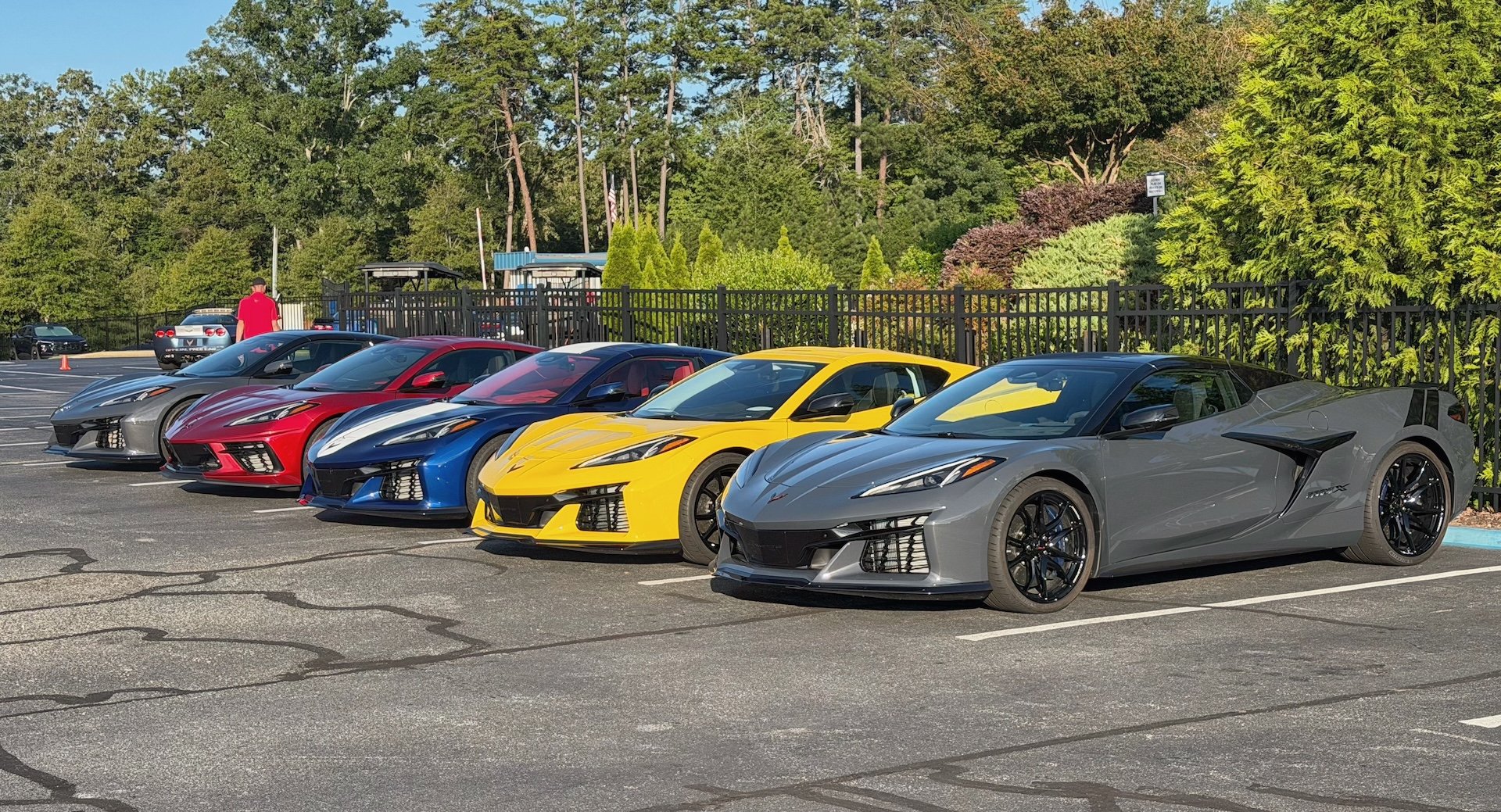
I recently drove the entire LS6-powered lineup: Stingray, Grand Sport, and Grand Sport X, which you can read about in detail here.

Jerry Perez

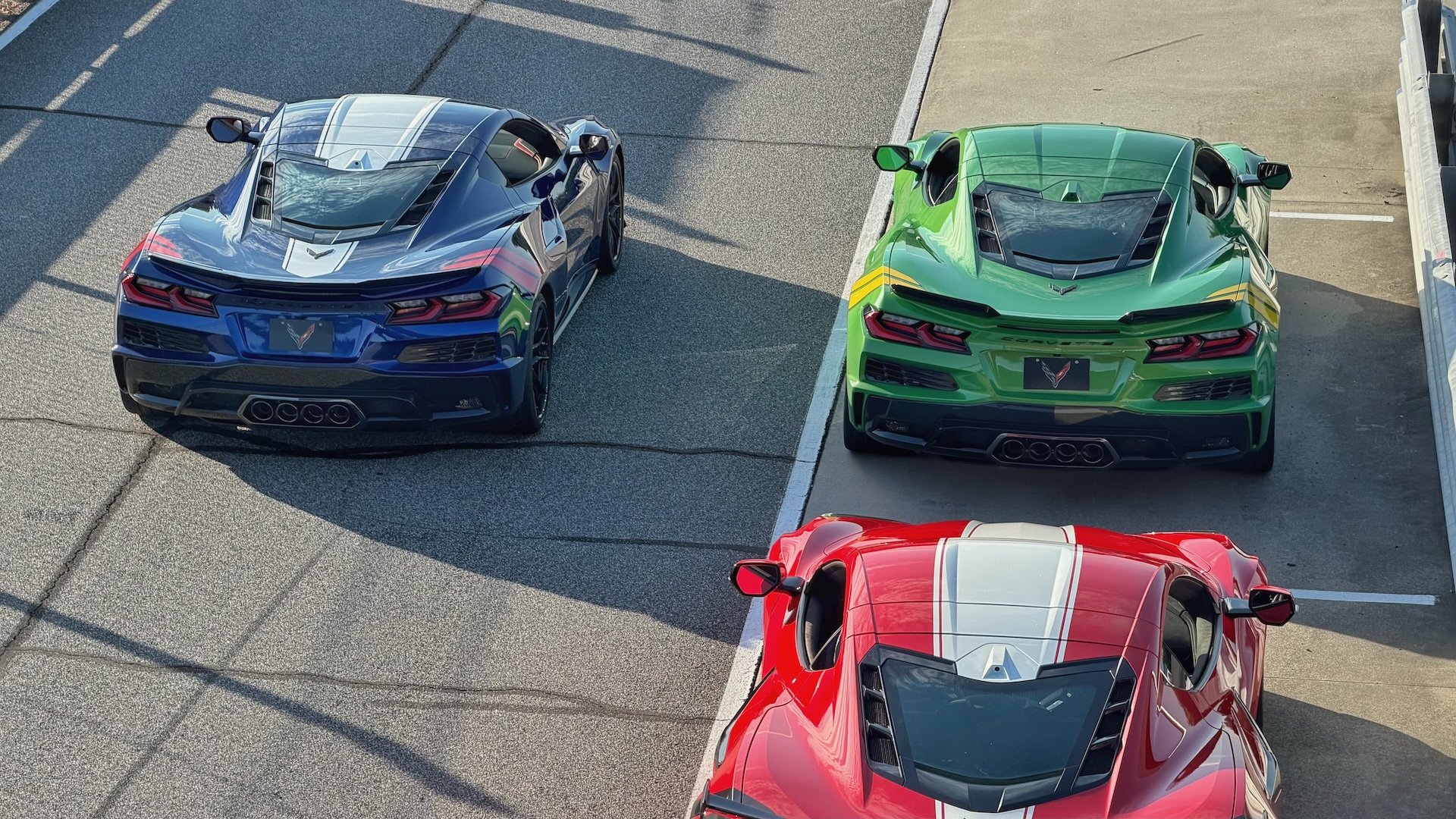
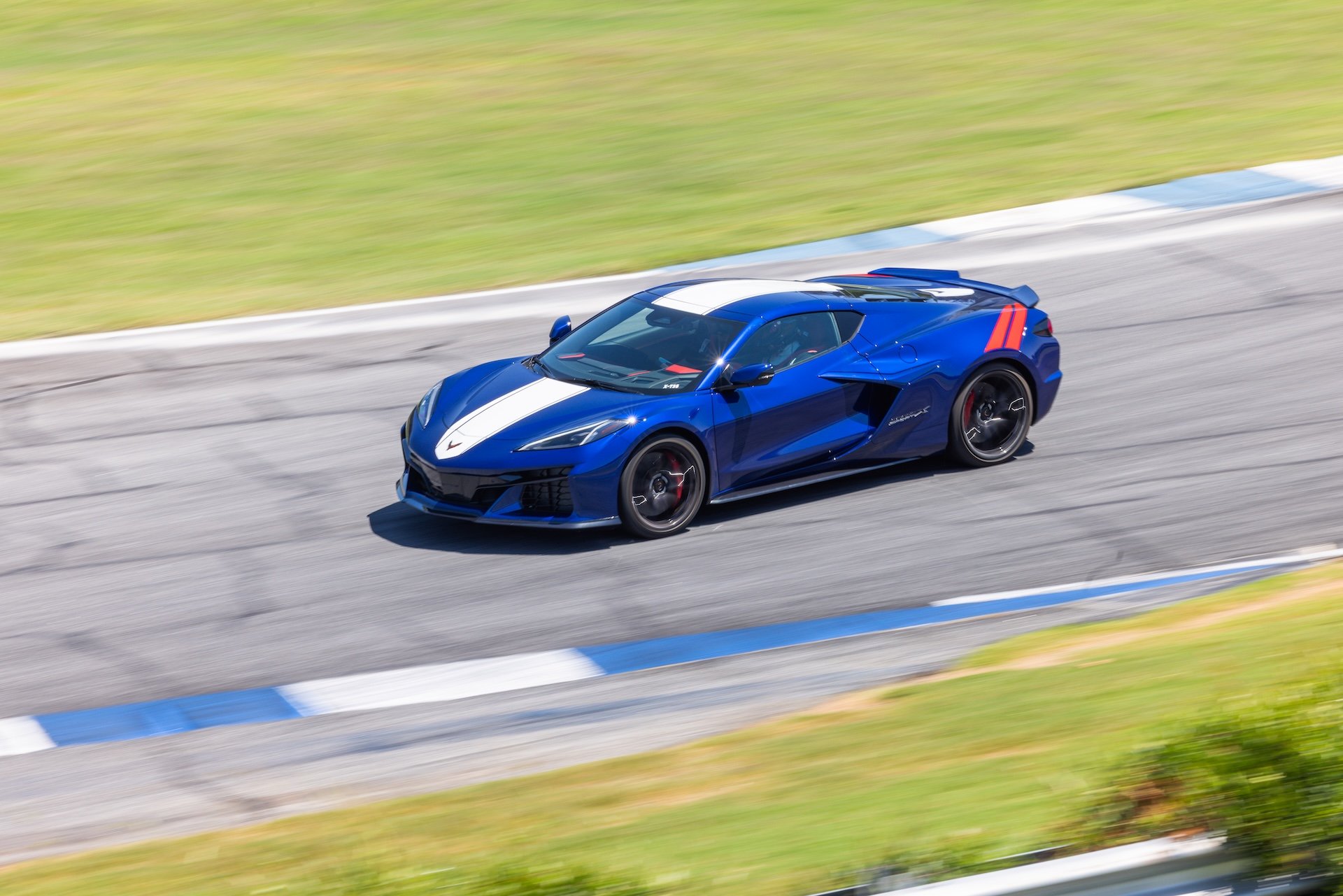
When it comes to the Grand Sport X specifically, I set out to find out how this new all-weather hot rod differs from the defunct E-Ray, and to learn what it’s like on the racetrack and on the street. With a new 6.7-liter LS6, a hybrid system, the body kit of a Z06, and an electrified front axle plucked from the mighty ZR1X, it’s the ultimate expression of the “normal” Corvette. Going any higher in the range, into Z06 and ZR1 territory, commands bravery and many, many more dollars.

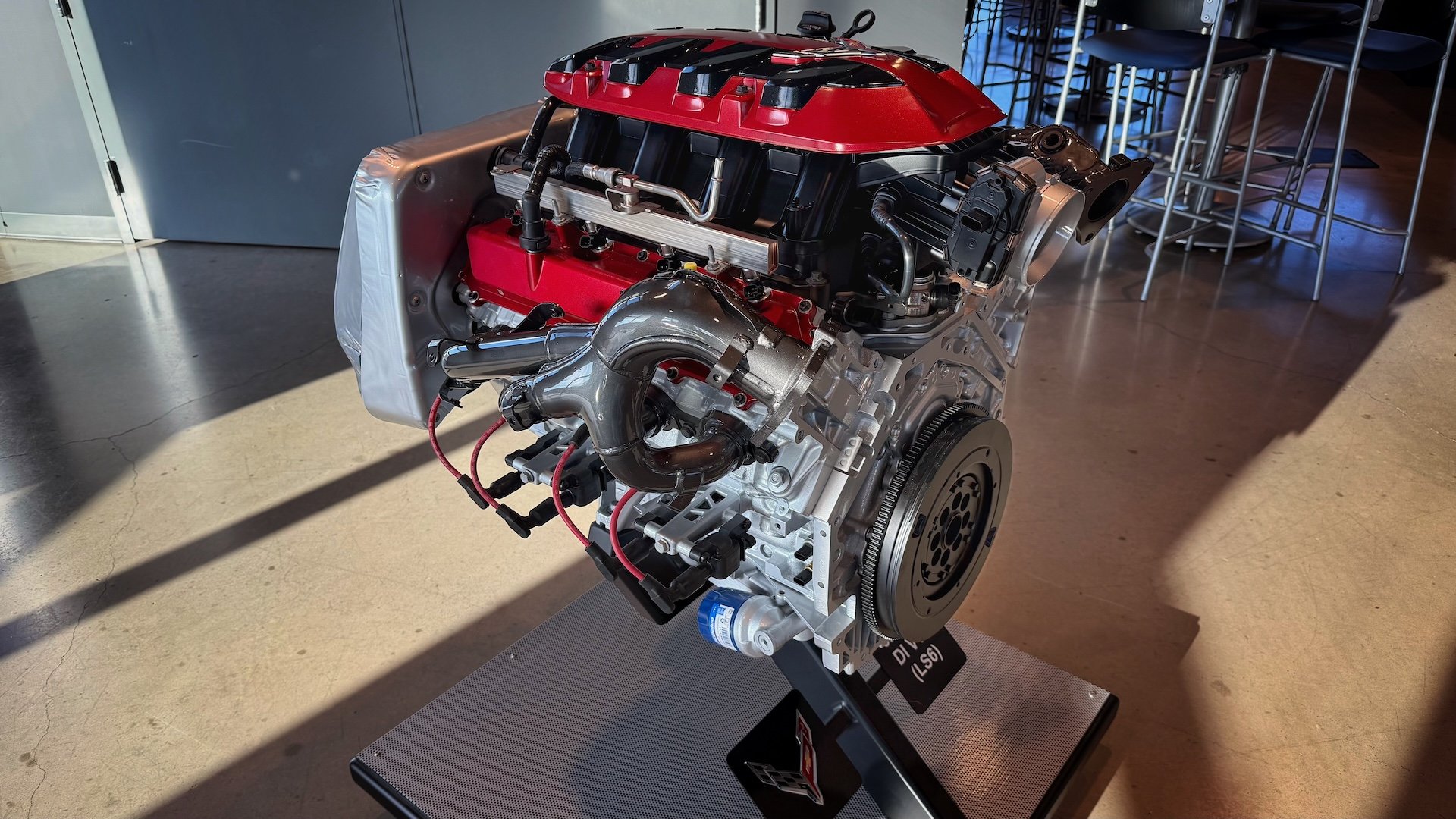
New LS6 V8

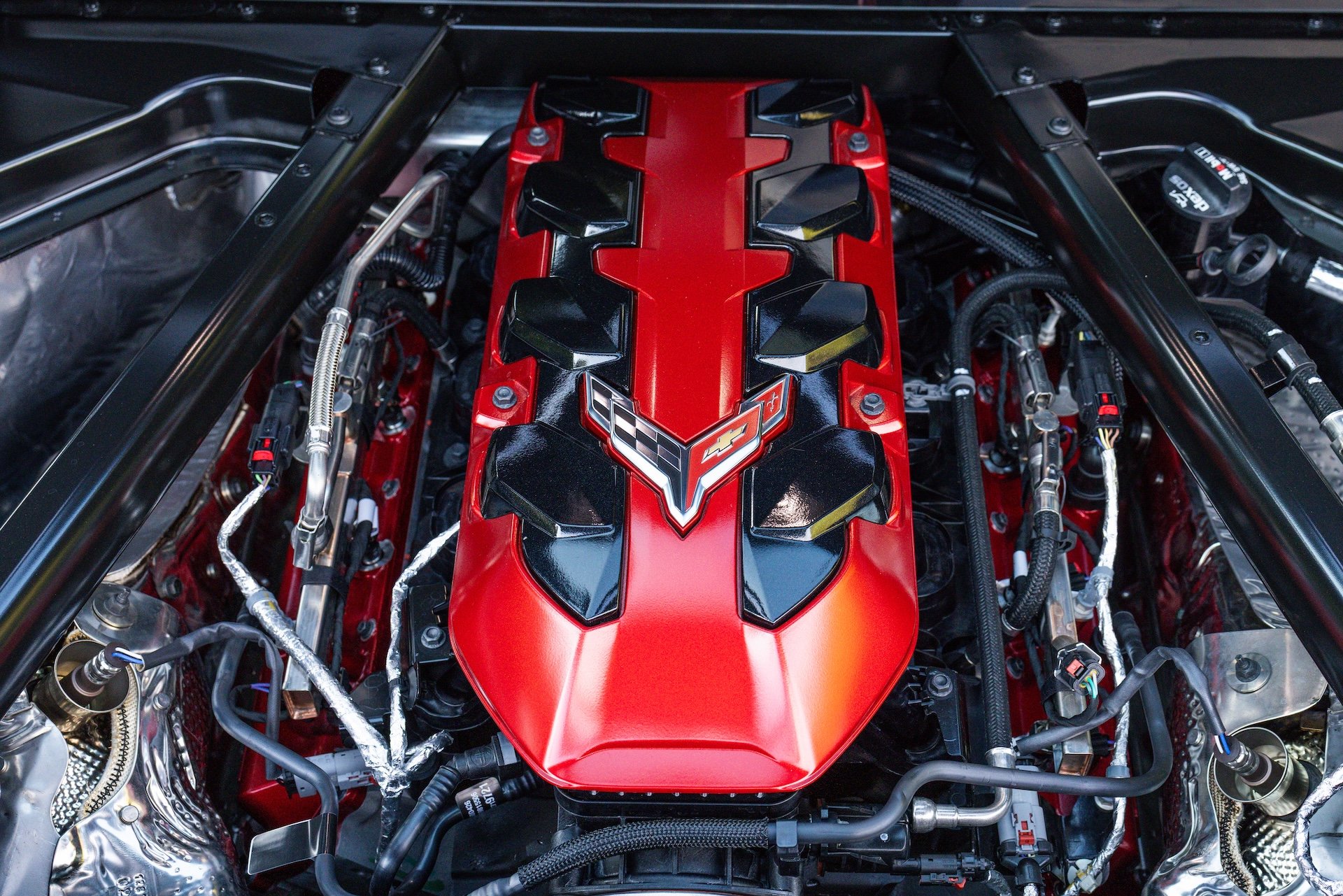
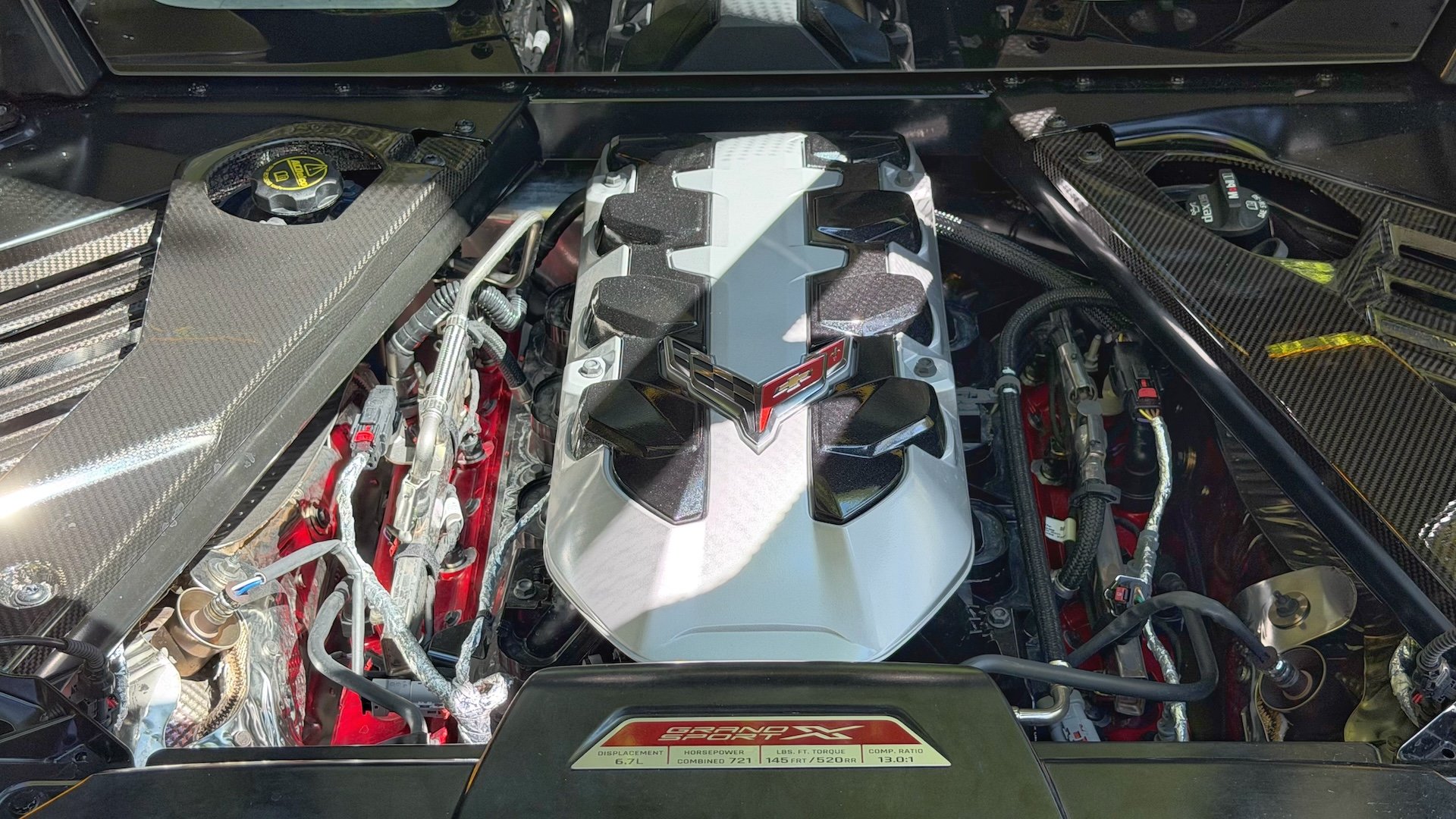
Proudly announced with the most torque of any naturally aspirated V8 Chevy has ever produced, the new 6.7-liter LS6 makes 520 lb-ft, eclipsing its predecessor, the LT2, which offered 470 lb-ft. And while the base Stingray and the regular Grand Sport offer 535 hp—up from 490 in the previous 6.2-liter—the Grand Sport X puts out 721 courtesy of some electrons.

Other highlights of the new mill include a 13.0:1 compression ratio (highest ever for Corvette) for sharper response, and a 95-mm throttle body with tunnel ram intake with high-velocity ports to move more air. Likewise, a new lubrication system, forged pistons and rods, and revised exhaust manifolds ensure durability in extended high-load, high-temperature environments.

Jerry Perez

The Grand Sport X, like all other C8 Corvettes, is only available with an eight-speed dual-clutch automatic transmission.

From E-Ray to Grand Sport X

The Grand Sport X doesn’t bother looking back at its predecessor all that much. The V8 is completely new, and so is the hybrid drivetrain, comprised of the electric motor and battery. So from a drivetrain perspective, the X is more of a new car than an evolution of the E-Ray. The hardware is borrowed from the ZR1X that recently set the all-time production-car record at Pikes Peak with J.R. Hildebrand behind the wheel, so you know it’s pretty darn capable. Naturally, there are engine tuning differences, given that the ZR1X isn’t propelled by the new LS6, plus it has 1,250 hp, which is a whopping 529 more than the GSX. For reference, the old E-Ray put out 655 ponies.

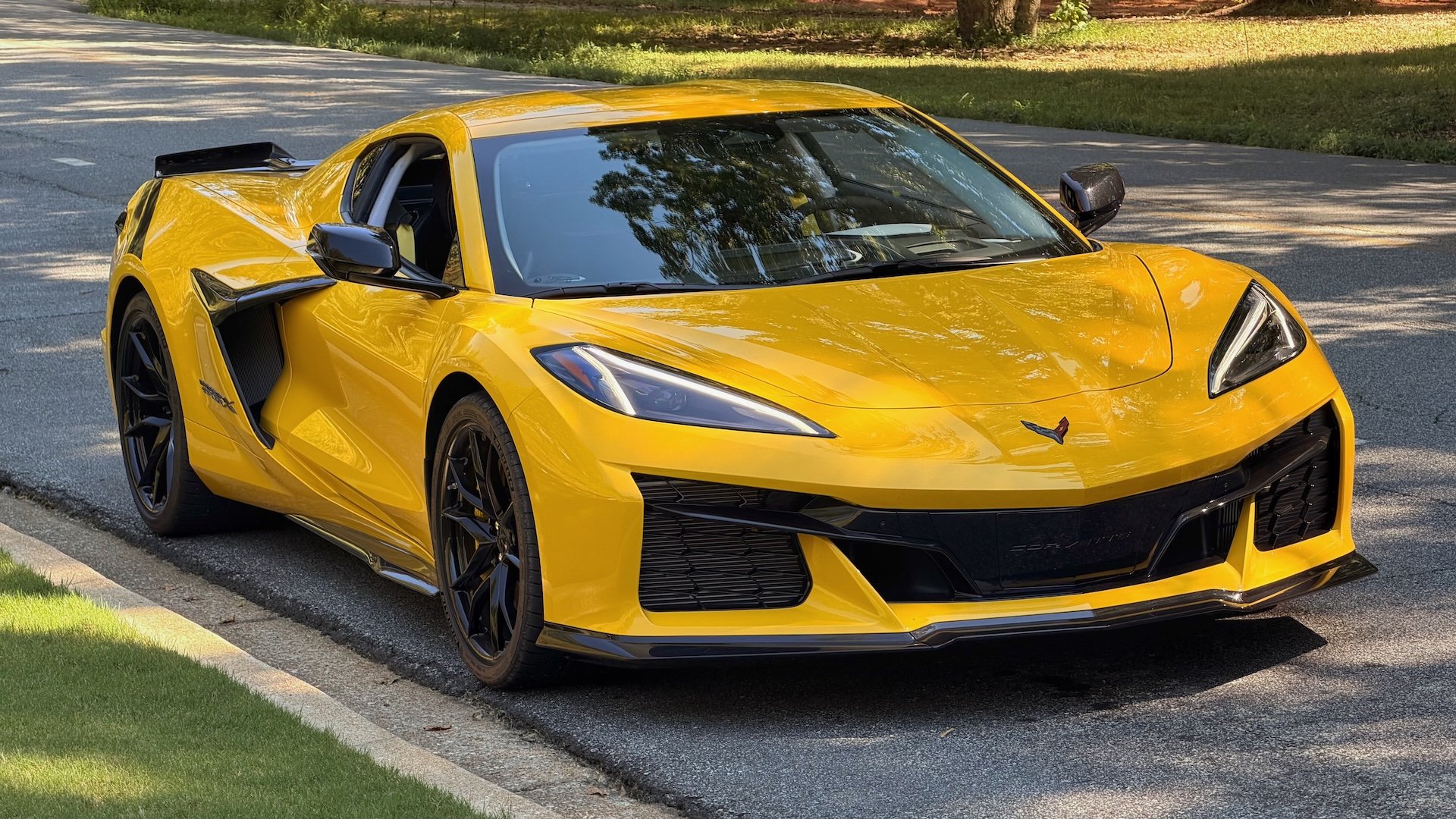
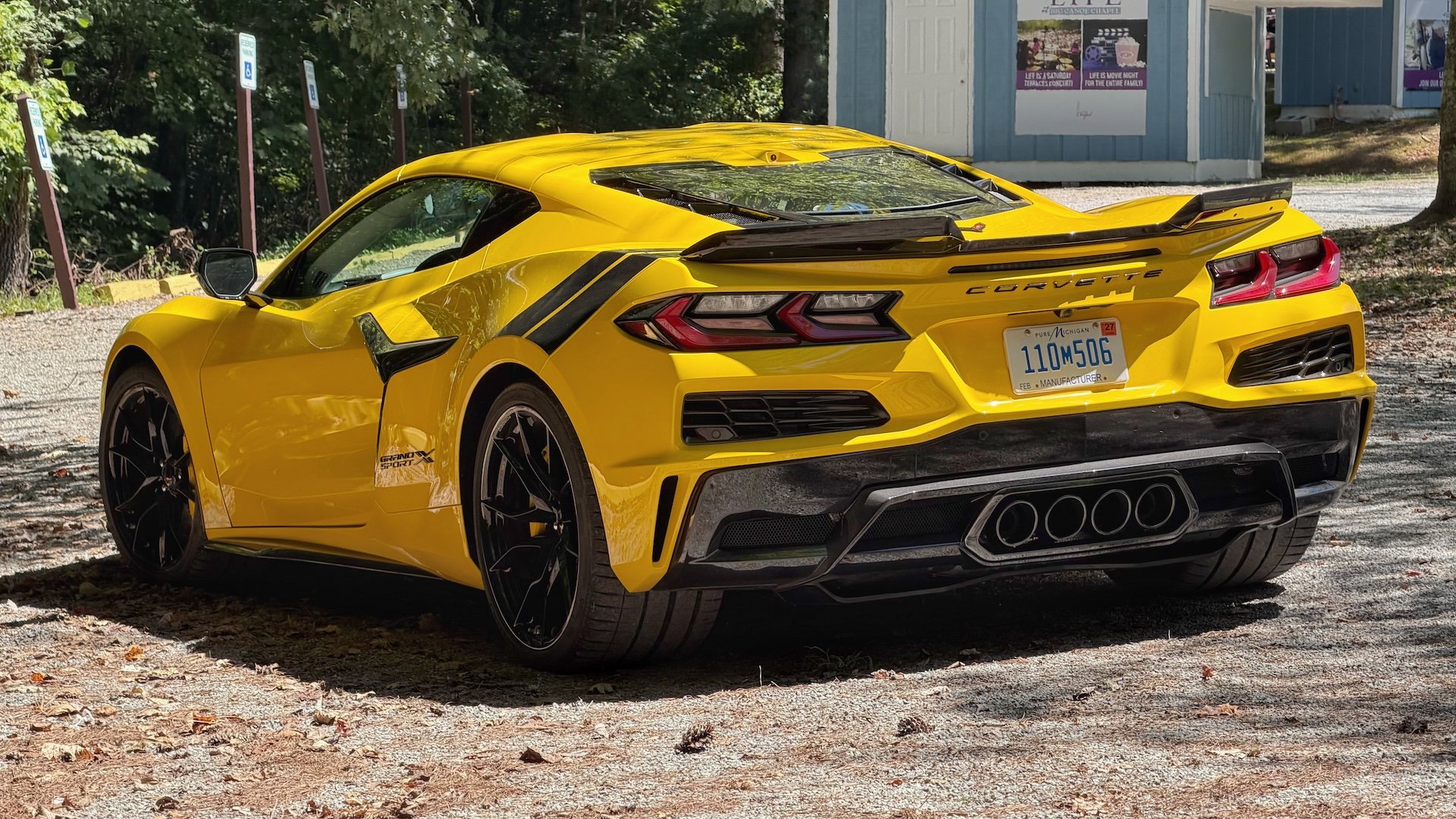
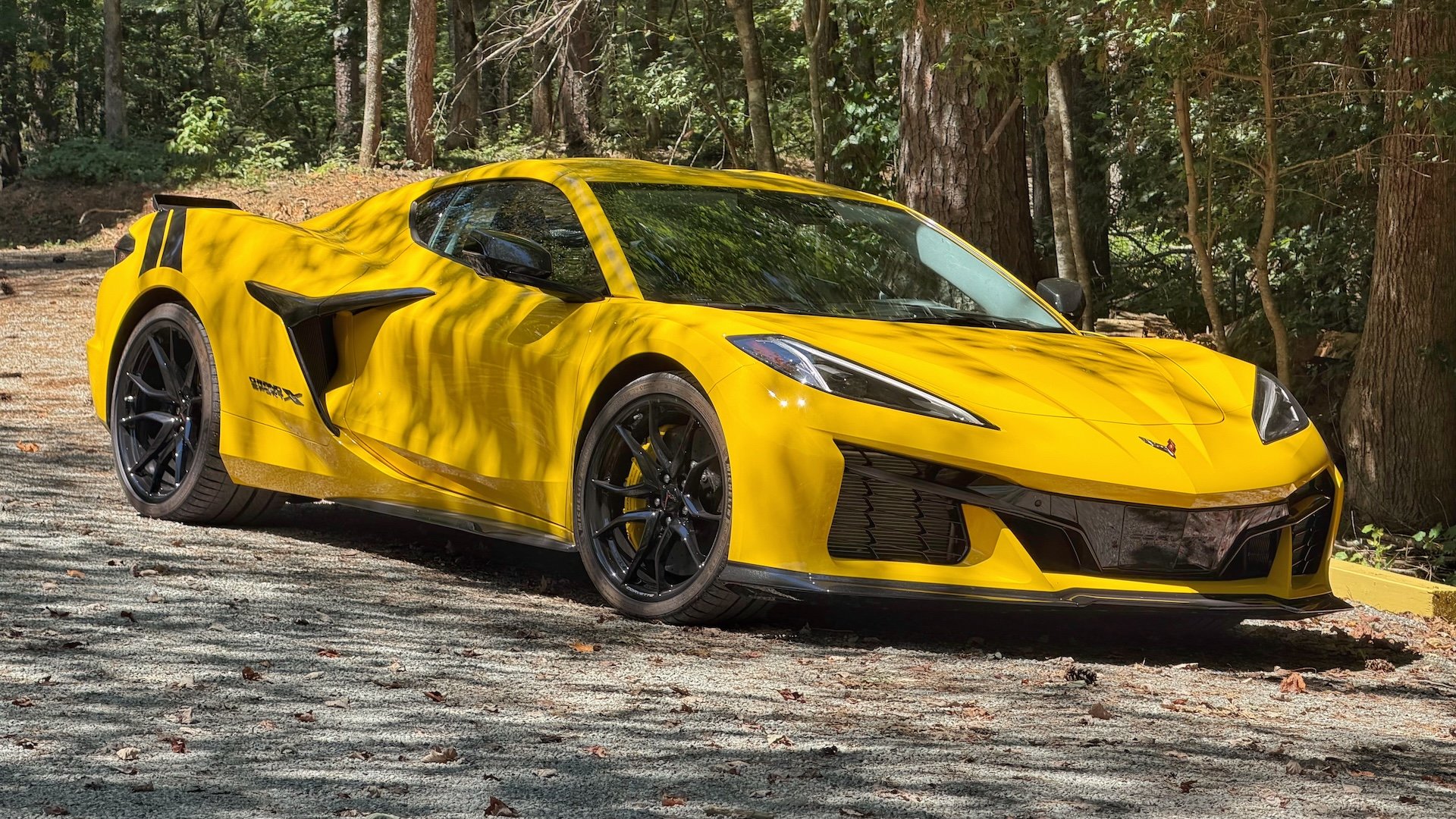
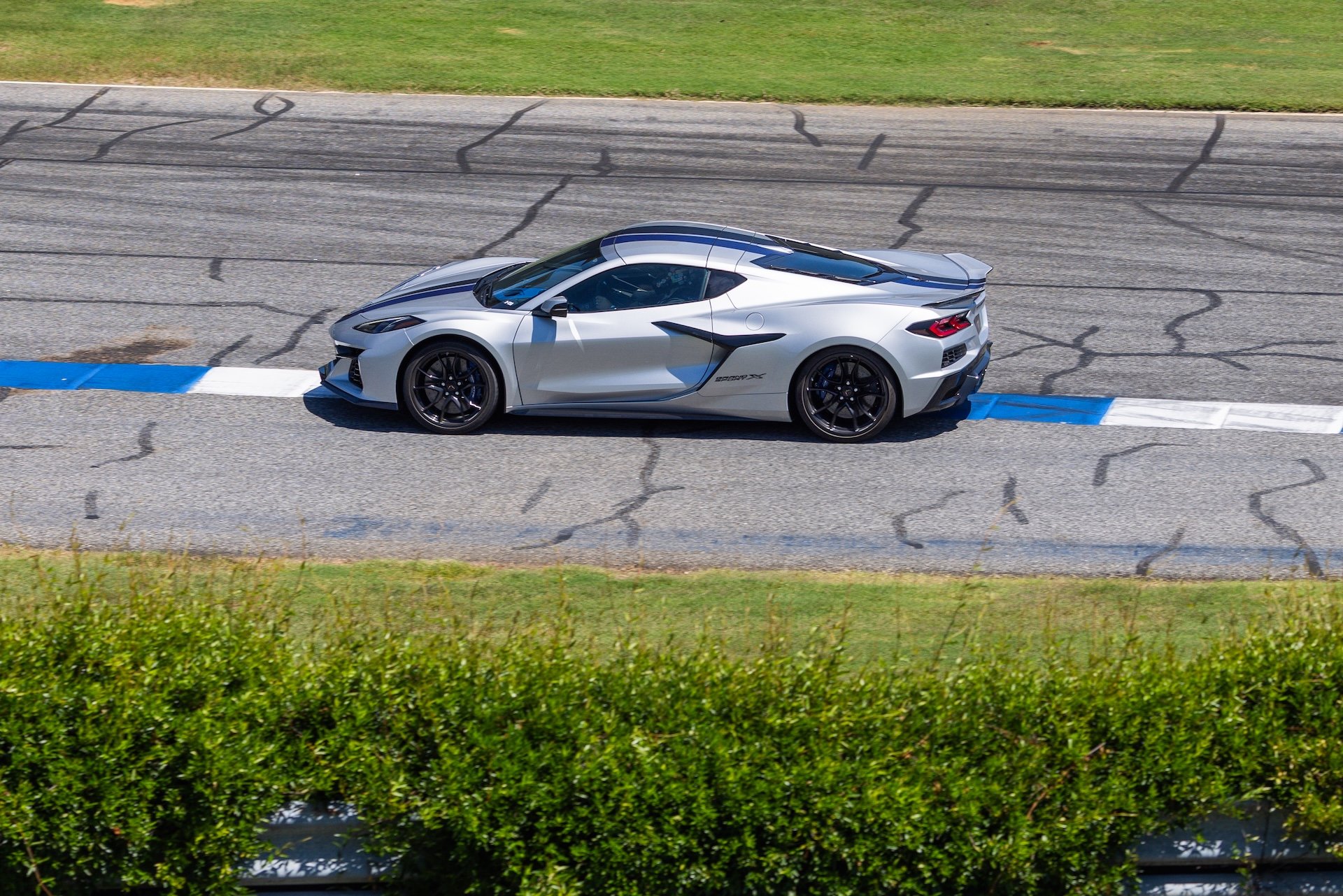
It’s a similar situation when it comes to styling. Historically, the Grand Sport has borrowed its design characteristics from the range-topping Z06, and that’s no different this time around. The wider, more aggressive-looking kit is pulled directly from the Z06, though the oversized badging ahead of the rear wheels, especially the X, will make you look twice to make sure it’s not a ZR1X without the massive rear wing. Overall, the new GSX looks a lot more like the new GS than it does the E-Ray.

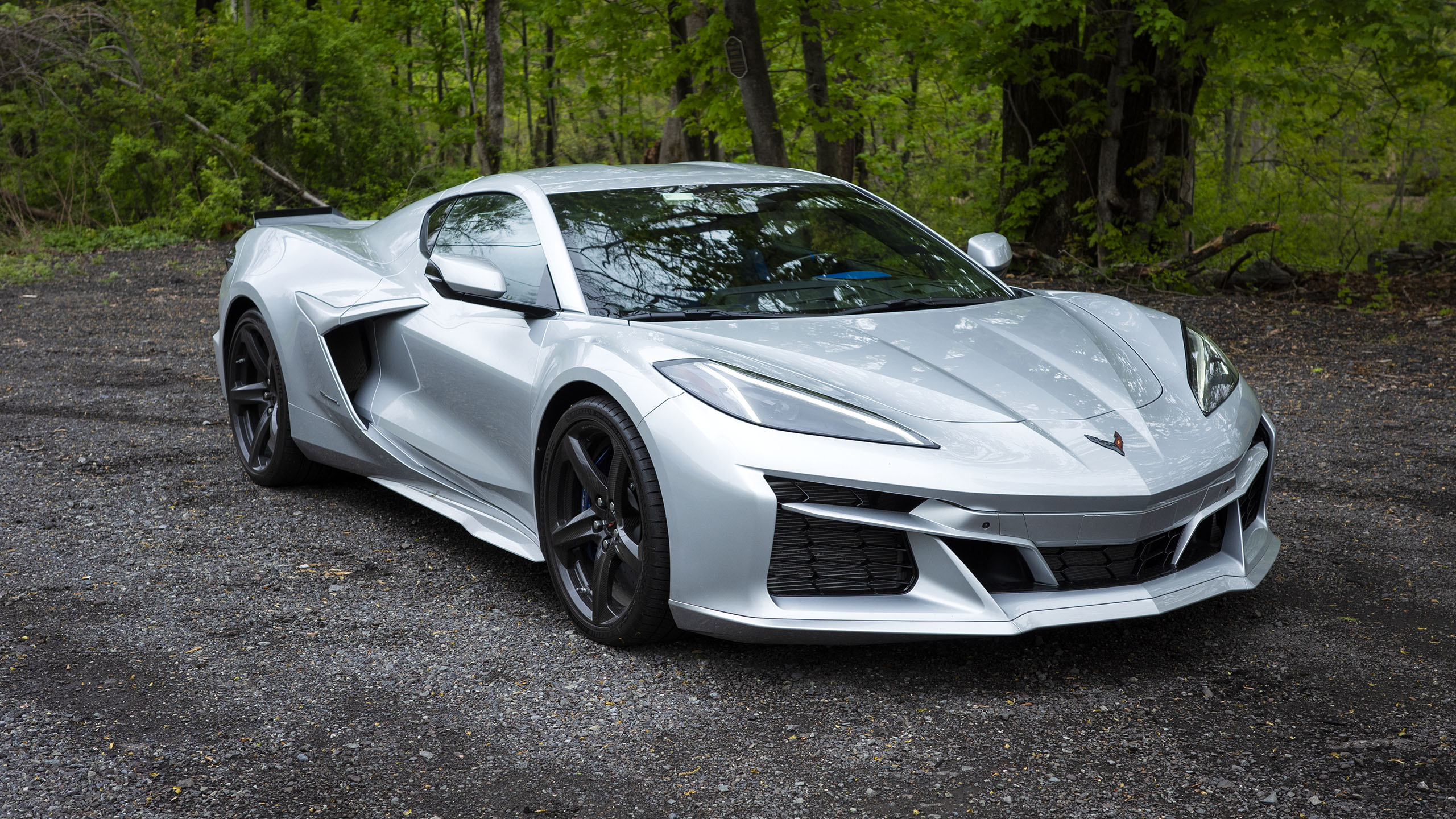
Top: Grand Sport X – Jerry Perez Bottom: E-Ray – Adam Ismail

The chassis remains mostly untouched, though the Stingray and Grand Sport receive a recalibrated MagneRide for better performance, a change that carries over to the top trim of the LS6 lineup. The cabin also remains largely the same as the E-Ray’s, with only minor model-year updates.

In terms of performance, the X can do 0-60 mph in 2.4 seconds, versus the E-Ray’s 2.5 seconds, which is good. What isn’t that good is the fuel economy: 15 mpg city, 24 mpg highway, and 18 mpg combined, compared with the E-Ray’s 16 mpg city, 24 mpg highway, and 19 mpg combined. Call me crazy, but I don’t think anyone will care.

Driving the 2027 Chevy Corvette Grand Sport X

I never had the chance to drive the E-Ray, but my colleague and friend Adam Ismail recently did. From his June 2026 review:

“I’d heard that the C8 punched above its price bracket, and obviously the aforementioned figures tell a story, but I wasn’t ready for how much of a capital-S supercar the E-Ray actually is. Everything just feels locked in, optimized, honed for palpability and communication. My loaner rode on Michelin Pilot Sport All-Season rubber—not summer tires—and even so, the eagerness with which it changed direction and the total lack of ambiguity when it did were intoxicating. As was the raucous song of the small-block two feet from my spine, but that part is probably the least surprising of all. The hybrid E-Ray, by the way, supplements that growl with a weirdly distant siren tone that had me constantly looking in my mirrors.

Jerry Perez, Chevy

“Perhaps the front axle torque played a role in my confidence; I know it certainly made its presence known with a few flicks of the left paddle. Of course, it’s quick, and public roads don’t allow you to safely explore that for much longer than a brief pull. Everything about this car is so effortlessly capable yet full of character. And sure, the ride may beat you up a bit, and potholes, poor pavement, and driveline vibrations rarely go unnoticed, but you drive this thing precisely because it doesn’t dull the senses. It awakens them.”

It sure sounds a lot like my experience in the Grand Sport X, down the annoying fake sound that’s pumped into the cabin via the speakers to somehow remind you that you’re driving a hybrid ‘Vette. In the X, it’s not so much a siren as it is a spaceship-y whirring sound. I really didn’t like it.

On the track, it also feels locked-in and ready to tackle whatever series of corners you throw at it. It doesn’t take long to realize how much front grip this car has over its rear-drive sibling. At Atlanta Motorsport Park’s especially long and fast corners, the X exudes composure and ruthlessness in how it dices through sweepers and apexes. As Hildebrand explained while giving me a balls-out lap around the circuit, you don’t really understand how much energy the battery is sending to the front axle to keep the car rotating through tight or fast corners until you either look at the data, run out of battery, or hop in the rear-drive GS back-to-back.

Jerry Perez, Chevy

As Adam explained in his review, “the electric motor isn’t here to shrink anybody’s carbon footprint,” and that’s roughly the same case in the new model. Away from the track and on curvy country roads outside of Atlanta, the X was always ready to lurch forward and pounce on any corner or straight. Depending on which driving mode you selected, the LS6 could be somewhat subdued to make sure you don’t wake up the neighbors at startup, or so you can hold a meeting from the car. But in others, like Sport or Track, it was excessively loud. In fact, I only noticed how loud it really was after I took my helmet off, finished my track stint, and then drove on the street.

Ultimately, without driving both cars back-to-back, it’s hard to compare the nuances of the old LT2 V8 in the E-Ray versus the LS6 in the GSX, but knowing how much time and effort the engine team put into the new engine, I’d assume that all driving dynamics have been improved in the new car. Perhaps Chevy still has an E-Ray lying around in the Midwest and will let me take it out for a spin before snow starts falling.

At the end of the day, both cars represent a breakthrough for the Bowtie, especially considering many fans of the brand never thought they’d see a mid-engine Corvette. Now, we not only have a mid-engine car but also a hybrid one that’s all-wheel drive. And if you step out of the LS6 range, there’s even a $250,000 Corvette that can go 233 mph. What a time to be alive.

Click here for my full review and scoring of the 2027 Grand Sport X and its siblings.

Email the author at jerry@thedrive.com

The post How the 2027 Chevy Corvette Grand Sport X Built on the Bones of the Old E-Ray Hybrid appeared first on The Drive.

☐ ☆ ✇ The Drive

We Drove the New LS6-Powered 2027 Chevy Corvette Lineup. Here’s the One to Get

By: Jerry Perez

The 2027 Chevrolet Corvette Grand Sport is finally here, and so is its electrified, all-wheel-drive twin, the 2027 Chevrolet Corvette Grand Sport X (RIP E-Ray). Behind the cockpit of these driver-focused trims sits the automaker’s next-generation high-performance V8: the LS6. The new 409-cubic-inch V8 is also making its way into the base-model Stingray for 2027 models, meaning that buyers are now spoilt for choice when it comes to choosing the mid-engine ‘Vette that fits their performance and budget needs.

The Stingray offers 535 horsepower and 520 lb-ft of torque, which carries over into the rear-wheel-drive Grand Sport (the GS gets an array of handling and appearance upgrades; more on this later), while the big-daddy Grand Sport X then gets help from a permanent magnetic drive motor on the front axle, which bumps its performance credentials to 721 hp.

Jerry Perez

I recently drove the Grand Sport and Grand Sport X on the track and the street, but the base Stingray only on the latter. And while you might not expect a big difference between three variants of the same model powered by the same engine, you’d be surprised just how unique the character of each car really is. That’s even true of the GS and GS X, where, in theory, the “only” difference is the active front axle and extra power.

Without further ado, here’s your LS6 explainer and 2027 Chevy Corvette buying guide:

Jerry Perez

New LS6

GM didn’t mince any words with the opening line of its press release: “This next-generation V8 produces more torque than any other naturally aspirated V8 before it.” It’s true. Its 520 lb-ft of torque eclipses its predecessor, the LT2, which offered 470 lb-ft of twist. Then there’s the obvious displacement upgrade, from 6.2 liters in the old mill to 6.7 liters in the new one. And lastly, horsepower is up a very healthy 45 ponies, from 490 hp to 535.

Under the direction of assistant chief engineer Mike Kociba, who proudly proclaims that “there’s no replacement for displacement,” the new 6.7-liter mill boasts a 13.0:1 compression ratio—the highest ever for Corvette—for sharper response and a 95-mm throttle body with a tunnel ram intake featuring high-velocity ports to move more air. There’s also a new lubrication system, forged pistons and rods, and revised exhaust manifolds that ensure durability in extended high-load, high-temperature environments.

Jerry Perez, Chevy

When it comes to putting the power down to the ground, buyers can choose from an eight-speed, dual-clutch automatic transmission or a… well, actually, that’s it.

2027 Corvette Stingray: The Everyday ‘Vette

It may be the cheapest, but while hopping in and out of the three Corvettes that day, I never got the feeling that I was in a base-model car. Of course, depending on options and packages, there may be some differences in materials, color choices, and performance—but the Stingray succeeds at offering the core Corvette experience.

Jerry Perez, Chevy

The V8 in the Stingray produces 535 hp and 520 lb-ft of torque. The test car I drove on public roads near Atlanta Motorsports Park was a 3LT with the Z51 performance package, which included new suspension tuning via its optional magnetic ride control. The final drive ratio is shorter for 2027 to improve throttle response, and Chevy also claims improved aero performance, while opting for the new Michelin Pilot Sport S 5 as a stock tire.

The LS6 feels at home in the base car, providing robust acceleration and, best of all, a really good tune to listen to on your commute or weekend getaway. The engine is loud by nature, but Chevy’s tuning of the programmable driving modes really makes it sing loud and proud—or not, should you choose a quiet start-up or a chill “Tour” mode. Bump that up to Sport or Track, and I hope you brought ear protection, especially if you’re driving a long distance. A side exhaust setup remains the standard option, but buyers can now opt for a center exit, and yes, it makes a difference. The latter is richer in bass and therefore sounds fuller.

On the road, the Stingray is just about everyhttps://www.thedrive.com/car-reviews/2027-chevy-corvette-lineup-ls6-reviewthing you expect and could want. It’s quick on its feet, and it’ll go like stink when you ask it to. You’ll feel the increased power, but you’ll really feel the extra torque, which matches the car quite well, as it already feels like a sports car with a pinch of muscle car. Also, it’s relatively friendly at high speed, unless really pushed to its limits. The ride quality in my tester was more than satisfactory; a good thing given the infamous Atlanta traffic.

2027 Corvette Grand Sport: The Sweet Spot

Atlanta Motorsports Park is a difficult track. It’s a real driver’s circuit that puts your skills to the test, but, perhaps more importantly, it also puts many of the car’s capabilities to the test. Suspension and brake components are tortured lap after lap due to its elevation changes and banked or off-camber corners. Most of all, however, it reveals how good a car’s balance is, and whether it can put the power down to the ground on its long and fast corners—one of which is a 100+ mph left-hander.

Chevy

Push your right foot down, and the Grand Sport lurches forward like a bat out of hell and straight into two esses, which right away show you how nicely dialed-in the steering is. The GS is a precision instrument, and this attribute really shines on the following corner, an uphill left-hander that opens up and then closes in as the elevation drops and the track disappears from your field of vision. Both the front and rear right tires are absolutely screaming through this 50- to 60-mph corner. As explosive as the LS6 is, it’s also gentle and builds power progressively, a byproduct of its increased displacement.

The tarmac never quite straightens out all the way, but I’m able to reach wide-open throttle for a couple of seconds before slamming on the brakes again for yet another tight corner with a big elevation change. In a nutshell, AMP is this same scenario over and over again. The Grand Sport feels at home here, with its healthy power and torque, dialed-in suspension, and great driving dynamics. Sadly, the GS and GS X I drove on track featured the more comfortable Competition Sport seats, which are great for the street but lack bolstering for the kind of extreme cornering speeds that AMP offers. Fun fact: When building a Corvette from the ground up, you’re now able to outfit it with two different seats, meaning the driver can opt for the track-day-friendly GT1 and GT2 seats, but choose a less hardcore seat for the passenger.

Jerry Perez

2027 Corvette Grand Sport X: The Modern Racer’s Corvette

JR Hildebrand came as close as anyone can to winning the Indy 500 (with the exception of David Malukas this year), but since that heartbreak in 2011, he has gone on to deliver impressive drives in IMSA and most recently, Pikes Peak. After setting the hybrid production car record at Pikes Peak this year in a 1,250-hp Corvette ZR1X, it was only fitting that I hopped in a GS X with him for a few laps around AMP. But before I was thrown around like a rag doll by Hildebrand, I set out to find out what the evolution of the Corvette E-Ray had to offer.

The first thing I noticed, aside from the wider Z06 body kit, was how much heavier the front end felt, and I’m not talking about the steering. (However, Track mode boosts the steering more than I’d like in both GS and GS X.) After enough laps, this sensation goes away because you get used to it, but this heavier feeling eventually turns into a net positive when you begin to realize how much more front-end grip this car has over its rear-drive sibling. A lot more. The two especially long, tight, and fast corners that I mentioned above are much less challenging to take at higher speed in the X. I don’t mean that it’s less intimidating at all, because it isn’t, but it does feel like the car is better planted, and you feel slightly less nervous about pushing the front tires beyond their grip limit.

Jerry Perez, Chevy

The biggest difference between the two Grand Sports, besides the electrified front axle, is the power rating. It’s a big jump from 535 to 721, and boy, do you feel it. However, you don’t feel a gut-punch as you’d expect. The extra power is evident at the edges of performance, such as the low and high end, like when coming out of a corner at full tilt or when you’re really nearing the top of the rev range. You can even hear the extra power, because Chevy added a silly spaceship sound that kicks in when you’re at full throttle or when you manually deploy the battery power via a switch on the steering wheel. It’s pretty cheesy.

This is the ultimate expression of the LS6, and it makes you smile from ear to ear—unless you’re riding shotgun with Hildebrand, of course, because then you’re just trying not to throw up all over the dash.

Verdict

Three different flavors, three different levels of performance, three price points, one great engine: the 6.7-liter LS6. If I had to spend my own money on one of these, it’d be the plain Grand Sport, and I’d add the $3,500 Z52 performance package, which adds summer performance tires, (steel) performance brakes, and active dampers.

Jerry Perez, Chevy

The X is a phenomenal piece of engineering and an extremely capable track machine—and, not to mention, its all-wheel-drive system means you can drive it year-round and up to about four inches of snow, according to GM engineers who drive their test cars through Michigan winters. That said, its price is just too steep. I prefer the GS’s less complicated approach to traditional hot-rodding, and I don’t have to turn off the silly spaceship sound every time I go for a drive.

If you’re trying to ball on a “budget,” there’s always the Stingray, which, depending on the packages you get, can practically be a Grand Sport without the badge.

Chevy provided The Drive with travel, accommodations, and access to the vehicle for the purpose of writing this review.

2027 Chevrolet Corvette Stingray, Grand Sport, X Specs

StingrayGrand SportGrand Sport X
Base Price $75,990$90,990$114,195
Powertrain6.7-liter V8 | 8-speed dual-clutch automatic | rear-wheel drive6.7-liter V8 | 8-speed dual-clutch automatic | rear-wheel drive6.7-liter V8 and permanent magnetic drive single motor | 8-speed dual-clutch automatic | all-wheel drive
Horsepower535535721
Torque520 lb-ft520 lb-ft520 lb-ft
Seating Capacity222
Curb Weight3,520 lbs3,520 lbs3,800 lbs
0-62 mph2.8 seconds2.75 seconds2.4 seconds est.
EPA Fuel Economy15 mpg city | 25 hwy | 18 combined15 mpg city | 23 hwy | 17 combined15 mpg city | 24 hwy | 18 combined
Score8/109/108/10

Email the author at jerry@thedrive.com

The post We Drove the New LS6-Powered 2027 Chevy Corvette Lineup. Here’s the One to Get appeared first on The Drive.

☐ ☆ ✇ The Drive

Ford Wants 100,000 Fathom Sales in First Year. It Took F-150 Lightning Five Years: TDS

By: Adam Ismail

Hello and welcome to The Downshift, or TDS for short, The Drive’s morning news roundup bringing you the biggest automotive headlines from around the world.

The Downshift recaps news briefly, with links to full stories for those seeking more info. Here’s your bulletin for Thursday, September 3, 2026.

🔊 The latest episode of The DrivecastThe Drive’s weekly podcast, went live yesterday on Apple PodcastsSpotify, and wherever you get your podcasts.

📈 Ford has set a target of selling 100,000 examples of its new Fathom electric truck in the model’s first year on the market, according to a new report. That may be a tall order, as the automaker never managed to move more than 33,000 F-150 Lightning pickups in a single year, and needed five years to manage 105,000 vehicles sold. On one hand, the Fathom will start at $30,000, a price much lower than the Lightning was ever offered for. On the other, the Lightning did benefit from a federal EV tax rebate that is long gone for buyers. [Wall Street Journal]

⛐ Spanish rally co-driver Luis Moya, known for his successful career with Carlos Sainz, has poured fuel on the fire that is Toyota’s Celica revival. “Next year will be a bit of a dull year,” Moya said of the 2027 WRC season, “but we already know that the Toyota team is going to have a Celica,” later adding, “they are going to have a Celica as their Rally1 car, and they will have a Rally2 car as well.” [Rally Journal via Autoblog]

🚙 Scout has announced two new concepts based on the Traveler that demonstrate the range of performance options and trim customization owners may have at their disposal when the electric SUV goes on sale in 2028. [Scout Motors]

🔩 Tesla has issued strangely specific recall of 19 Model Y SUVs that have front suspension fasteners not torqued to specification. [NHTSA]

📉 Volvo recently ranked 24 of 32 brands in a dealership satisfaction survey, 14 spots lower than it placed five years ago. Franchises are facing inventory issues and sales programs that are changing too quickly, and the automaker’s software quality problems haven’t helped things, either. [Automotive News]

🏢 Uber will lay off 3,300 employees, or 10% of its staff, as part of its largest cuts since the COVID-19 pandemic. [Reuters]

🚕 Tesla is holding a Cybercab launch event in Austin on Thursday at 5:45 p.m. ET, where we may learn more about the curious two-seat robotaxi. [Reuters]

Got a tip or feedback for TDS? Reach out to tips@thedrive.com

The post Ford Wants 100,000 Fathom Sales in First Year. It Took F-150 Lightning Five Years: TDS appeared first on The Drive.

☐ ☆ ✇ The Drive

Dear Ford: Don’t Gatekeep the 6×6 Ranger Super Duty You Made for England

By: Caleb Jacobs

As Americans, we get almost all of the cool trucks. It’s hard to complain when we have the Ford F-150 Raptor R, Ram TRX SRT, and Chevy Silverado ZR2, among others. But that doesn’t mean the Ford Ranger Super Duty would never be welcome here—especially in its new 6×6 configuration.

The Ranger Super Duty is exactly what it sounds like: A midsize truck with harder-working hardware underneath. It’s rated to tow 9,920 pounds and carry 4,370 pounds of payload in stock form, thanks to upgraded suspension that pairs nicely with a 3.0-liter turbodiesel V6. Markets like Australia eat that up, but the six-wheeler you’re looking at here was actually developed for the United Kingdom Ministry of Defense’s Light Mobility Vehicle (LMV) program.

Ford Ranger Super Duty 6x6
Enhance! Strangely enough, those look like six-lug wheels. The “normal” Ranger Super Duty wears eight-lugs. Ford

Ford already sells a tray-bed variant of the truck, but this takes it a step further by adding an extra axle. “We engineered Ranger for conversion from day one,” explained Jim Baumbick, president of Ford Europe. Specifically, the Blue Oval designed the Ranger Super Duty 6×6 for duty as both a troop-carrying vehicle and a battlefield ambulance.

The truck’s cab is ready to work in these applications, too. It sports a 12-inch screen, and while wireless Apple CarPlay probably isn’t that crucial to the job, the display allows operators to easily control “third-party tactical mission software,” as Ford explains. It also has pre-wired auxiliary switches that can be used for emergency lighting, communications, or whatever the heck.

Ford Ranger Super Duty conversion vehicles for UK Ministry of Defense LMV program
Ford

From what I can tell, there’s no guarantee yet that Ford will supply these to the UK Ministry of Defense. They were created to compete for the government’s LMV program, so it’s possible that another vehicle might get the honors. Regardless, I think Ford should build these and sell them to the public. Including me. For work, of course.

Got a tip or question for the author? Contact them directly: caleb@thedrive.com

The post Dear Ford: Don’t Gatekeep the 6×6 Ranger Super Duty You Made for England appeared first on The Drive.

☐ ☆ ✇ The Drive

The Subaru WRX Is Back With a Vengeance

By: Adam Ismail

Look back about 12 months, and Subaru WRX sales were not in an enviable spot. 2025 marked the model’s worst-performing trip around the sun ever, though it wasn’t necessarily a byproduct of lagging demand. The WRX suffered as a casualty of Subaru’s manufacturing musical chairs over the last few years, when the new Forester supplanted it in production-line priority. While unfortunate, the move made sense from a business perspective, given that the SUV is a major sales driver for the small automaker.

But that’s in the past now, and since inventory for the sport sedan has recovered, and its base model is back on the menu, the WRX has enjoyed a much more comfortable end to the summer. 191% more comfortable, to be precise.

The WRX closed out August with almost three times the sales it pulled over the same month in 2025—1,778 cars, versus 611. Pack that into the year to date, and the WRX is selling 37.7% better than it was entering September 2025, having already reached 10,324 units sold. That’s just around 600 cars shy of 2025’s total, so the rally-bred sedan is all but certain to outperform last year’s historic low.

Of course, we’re happy to see it. It would seem that Subaru pulled the base WRX because it knew it had to make every sale count, so to speak, over a lengthy period when inventory would be constrained. The base version returned in January at $32,495, about $5,000 cheaper than the six-speed Premium, which was the lowest rung on the WRX ladder last year.

Today, the base WRX has more equipment than ever, though Subaru’s lack of meaningful performance updates beyond better brakes and suspension for higher-end packages like the TR and tS have left the current car feeling a bit long in the tooth. Meanwhile, a limited-slip differential still isn’t an option at any level, and every WRX still rolls off the line with the same 271-horsepower, 2.4-liter turbocharged boxer-four. We want to believe that the special models STI teased in Japan earlier this year will finally surprise us, but we’ve been burned so many times before.

Got a tip? Reach out to tips@thedrive.com

The post The Subaru WRX Is Back With a Vengeance appeared first on The Drive.

☐ ☆ ✇ The Drive

The Feds Diluted Gas to Cut Prices. Diesel Has No Such Fix

By: Joel Feder

Analysts and economists are starting to sound the alarm over a different number than the price of a gallon of gasoline and this number has massive implications for the economy: the price of diesel.

One year ago, the average cost of a gallon of diesel fuel in America was $3.70. Today, at the time of this recording, it’s $5.60. That’s 50% higher, and some forecasts have it touching a record $6 a gallon by the end of the year. Not good.

America doesn’t actually run on Dunkin, it runs on diesel. Unlike gasoline, the Government can’t mess with the formulas of diesel to try and lower price, and it certainly can’t dilute diesel like it tried with gasoline earlier in the year.

Fact is, our economy runs on diesel fuel. It’s in the semi-trucks and freight trains hauling all your Amazon packages, the buses taking your kids to school, the tractors and combines harvesting your food, and even the tanker trucks carrying regular gas to your local station. Not to mention the millions of heavy duty pickup trucks used by fleet operators and tradesmen across basically every sector. The price of diesel is a cost that almost every business and municipality in America has to account for, directly or indirectly. So when it goes up by 50%… well, that pain can only be contained for so long.

There’s no easy fix—just as the kids are going back to school, farmers are hitting peak harvest time, and holiday shopping season is almost upon us. On the latest episode of The Drivecast we discuss the domino effect of the diesel price spike. How bad will it get, how far will the ripple effects reach, and is $5 a gallon just the new normal?

New here? The Drivecast is The Drive‘s weekly podcast that takes you behind-the-scenes on the largest controversies, stories, and characters shaping the automotive industry along with the way our roads look today. Powered by The Drive‘s inside access, original reporting, exclusives, and insights, The Drivecast aims to make everyone an insider.

Listen to The Drivecast via SpotifyApple Podcasts, or Amazon Music. Love it? Like it? Want to help? Leave a five-star review on your platform of choice to help get The Drivecast in front of more people. Have a suggestion, tip, request, or feedback? Drop us a line at feedback@thedrive.com. I promise, we read every single email.

Full Transcript

Kyle: So, Caleb, let’s set the record straight here. How much diesel do you buy?

Caleb: Really, I should buy more than I currently do, because my 7.3 Ford Power Stroke is broken and has been for way too long.

Kyle: Ooh, sore subject.

Caleb: Yeah, you said we wouldn’t talk about that on this podcast. But no, for real, we have a Kubota tractor that we run often, and you fill that up 5 gallons at a time or so, so you don’t feel the pain nearly as bad. Still, doing it a few times a month, you definitely feel the pain. I don’t have it half as bad as over-the-road truckers or guys who are farming their fields and have got to go in harvest time. It could be worse, I feel for them for sure.

Joel: Just imagine if boats—wait, other people’s boats run on diesel. Thank goodness our boats don’t run on diesel. We run on 91 non-oxy premium, which is not cheap, but not diesel.

Caleb: Come on, baby.

Kyle: Nothing is cheap these days. Diesel prices—many people are used to seeing it on the gas station sign, but most people don’t pay attention to it because most people don’t drive diesel. It’s just another number that’s out there. In the past, it was often lower than regular gasoline at various points in time, and it’s one of those invisible costs that, as we said in the intro, affects literally everything in this country. Every kind of business, every kind of product, somewhere along the way involves being transported, made, or powered by diesel fuel. It is a really important thing that most people just look past. We’ve had plenty of other high prices to complain about; if you don’t actually use diesel yourself, it’s out of sight, out of mind—until it’s not. So, Caleb, just to sum it up, why has diesel gotten so expensive as the year’s gone on, and at a faster rate recently than regular gas?

Caleb: There are a few reasons, and at least two of them involve international armed conflicts. There’s the war between Russia and Ukraine, and also the closure, or at least serious restriction, of ship traffic through the Strait of Hormuz. While it’s maybe obvious why it would matter that the Strait of Hormuz traffic is super limited—obviously you can’t carry a whole lot of oil through there—the Russia-Ukraine conflict is a mess for a lot of reasons. In relation to this topic, Russia is actually the world’s second-largest exporter of refined fuel. There have been several successful Ukrainian drone attacks on Russian refineries that have totally knocked out their capacity. The crude oil supply actually isn’t that bad or too badly affected in terms of being a choke point on this whole process; it’s the refined fuel—what people can actually use on the other side of it—that has been an issue. Whenever we talk about the supply of diesel being low, it’s not because there’s less oil being pumped out of the ground or less being sent to the refineries; it’s that it just can’t make its way from the refineries out to the people. One more important point on this is that the global supply of diesel is affected by all of this. It’s not like, “Oh, I get my diesel from somewhere else.” There is tremendous demand for diesel across the world, not just in the United States—you could say maybe especially in the United States—but it doesn’t matter. Nobody is better off in this situation than the rest of us, so we’re all pulling from the same supply, and that supply is really low.

Joel: You got a little ahead of it there, because I was going to say, when you talked about the Strait of Hormuz and Russia and Ukraine, I live in Minnesota, Kyle lives here, why do those wars and conflicts over there affect the price at my pump for diesel? That was definitely on my mind.

Caleb: It’s exactly that. We are all going to the same place saying, “Can I have some more, sir?” Right now there just isn’t any of that; there’s not enough to go around. I couldn’t tell you off the top of my head what the price increases are elsewhere in the world. Here, we saw it’s nearly $2.00 a gallon more than it was at this point last year. Everybody is struggling with this, and we are starting to see the pain of that already—the knock-on effects of what happens when diesel price goes up and the rest of the economy has to respond—but I fear it’s just going to get worse from here.

Kyle: Yeah, and the U.S. hasn’t built a new refinery—this might sound crazy—since the ’70s. We have just expanded and invested in existing production facilities. I remember when Iran first started lobbing missiles at a bunch of facilities in the Middle East, it’s one thing to rebuild a pipeline, or pull off a diplomatic coup and reopen something like the Strait of Hormuz, but it takes time to build a refinery. You’re talking hundreds of millions or billions of dollars, and years-long construction. This is not like a switch that can be flipped, or backup refineries just waiting to come online. The stat from Goldman Sachs was telling—take what those guys say with a grain of salt, sure—but right now global refinery capacity outages are currently 60% higher than usual at this time of year compared to the seasonal average. That is really what’s going to put the ongoing squeeze on consumers eventually into next year. This is not something that, once the Strait of Hormuz opens, suddenly all this oil gets released and everything goes back to normal in due time. This is a much bigger issue with no easy fix and a lot more complex factors at play that we’re going to be feeling for many months.

Caleb: Exactly. Here recently there was a Reuters report that said Russia’s fuel export ban is likely to continue throughout September. Don’t be surprised if that gets re-upped for the next month, and the next month, and the next month. This has already been renewed several times at this point, so it’s a slow process. There are physical limitations on what you can do in order to make these facilities, build them back up, and get them fully operational. We are all feeling the pain from that.

Joel: If you think America runs on Dunkin’, you’re just a sucker for marketing, honestly, because it really runs on diesel. In theory, it takes fewer steps to produce diesel than gasoline, but regulations and taxes drive the price up even when there aren’t global conflicts, drone strikes, and shipping choke points. Caleb, talk to us about the modern realities of the situation in terms of diesel alone.

Caleb: Sure. Think about everything that you could buy at the grocery store—it was delivered there on a diesel truck, very likely. Sure, you talk about last-mile delivery maybe taking place with EVs depending on where you live, but diesel was very much involved in getting the goods to where you are. That’s just the reality of it. We might have the benefit that we’re not all truckers or farmers, but all those extra costs get passed down to us. I hear the argument a lot, especially from old farmers around here where I live in the Ozarks. They say, “It’s not even that hard to make diesel, why should it be this much more expensive than gas? I could probably make this tractor run on peanut oil, whatever.” Hey, maybe they could, right? But you have to take into consideration, especially for on-road use, you’ve got to use ultra-low-sulfur diesel that is taxed, right? There’s absolutely no chance that that’s going to get removed just to make it lighter on people’s wallets. I did a little bit of napkin math, so take this for what it’s worth, but we have the price of diesel almost $2.00 more per gallon than it was a year ago. Take into consideration a semi-truck; a lot of them have dual 100-gallon tanks, okay? Per fill-up, that is an additional $388. If you’re going from empty to full, that’s an extra $388 per fill-up. You can be generous and say a loaded semi gets 8 miles per gallon—lots of them don’t get that, all right—and factor in how many miles they can go in a day based on the time they’re allowed, they’re probably stopping for fuel twice in a week. I know this is all rough math, but if you’re filling up with fuel eight times in a month—not crazy to think for a semi—that would total $9,040 in diesel fuel alone. That is $3,100 more than it would have cost in August of last year. You can’t escape that.

Kyle: And that is one truck. That is one truck. So you can imagine a fleet company that has even 100 trucks.

Caleb: Oh, yeah.

Kyle: That is $300,000 more per month that needs to come from somewhere. There are lots of areas like this, as we discussed: trains, farm equipment, construction equipment, even pickup trucks. But semis are hauling the majority of goods in America, especially to the final destination, the final place where it’s sold or picked up. It’s kind of like the situation we had when the tariffs were first introduced at the beginning of last year. There’s all this freak-out and panic over what this means, how costs are going to go up, and how it’s going to get passed down to consumers. Then, for a while, nothing really happens because companies, especially bigger companies, are operating on longer timeframes. They’re projecting costs a couple of quarters in advance, so they’re figuring out ways in the short term to absorb that while they simultaneously figure out how to pass it on to consumers and get that money back from somewhere, either by cutting costs or raising prices. With this diesel thing, we’re in that staggered window where prices have spiked a lot this summer, and if they remain at this level, it’s going to take maybe a couple of months, but it’s not going to take that long for people to start to feel the increase in prices as all these companies charge more to ship all of the goods in America. Then the companies that make those goods need to charge more because they’re paying more for shipping, and we end up in this vicious cycle where suddenly the cost of diesel is almost like an inflationary force. It is really not a good picture.

Joel: I want to be clear, we’re not a political outlet and we’re not getting into politics, but we’re literally running into an election season. We’ve got a war going on that’s affecting this, we have the cost of goods—you talk about the cost of eggs—it’s not just diesel, it’s everything, right? So it’s interesting to see how this all plays in the political sector and whether it affects the outcome of all these things this fall, right? Because whether it’s flock cameras or diesel prices, everybody loves a lightning rod they can latch onto.

Caleb: Yeah, for sure. At my house, my kids eat so many blueberries, strawberries, and salads. We’re having to pay a lot more for our Cyclospora outbreaks; it’s really starting to impact us.

Kyle: That diarrhea does not come cheap, that’s for sure. But anyway, I’m curious—I live in Los Angeles, Joel lives in Minneapolis, and Caleb, you live in Missouri. Prices are so high out here anyway that people are feeling it, but I haven’t heard anyone talking about the price of diesel out here. I would assume, Joel, it’s probably the same for you. But Caleb, you mentioned your friends and acquaintances and the farmers wondering why they can’t just make cheaper diesel. Is this something that people who use diesel vehicles or equipment every day are now talking about in the same way that high gas prices are talked about by everybody? Has it really been picked up like that?

Caleb: Oh yeah, unquestionably so. Fortunately where I live, the average gallon of diesel price is lower than the national average. So whereas at the time of recording that’s more like $5.60 a gallon, we’re closer to $5.10 a gallon.

Kyle: Big savings.

Caleb: Big savings, big savings, everybody. Come to Missouri, get your fuel. But that’s still a huge leap from where it was. We’ve seen lots of fluctuation over time, of course. I started driving 12 years ago, and at that point it was pretty common to pay about $4.00 a gallon. Then that was unthinkable, it was wild, this is crazy. I, yet again, had a 7.3 Power Stroke during those days; that one ran, this one that I have now does not. You had dual tanks, man, you could spend a whole lot on diesel. I’m personally glad that my 7.3 is not up and running right now, because filling up two tanks at $5.10 a gallon, even though that’s a lot lower than the nationwide average, man, I just wouldn’t. Being real honest with you, in my case it’s largely optional; we have a gas truck that we’re able to pull with. I would just park that sucker, so maybe it’s doing me a favor by having never-ending electrical gremlins.

Kyle: Thank you, Ford.

Caleb: Thanks to the dude that tuned this thing up before I bought it. It is so massively screwed on just the dumbest issues. It’s not a Ford problem; we can blame Ford for a lot, but the 7.3 Power Stroke was one of their gifts to man, and man screwed this one up.

Kyle: As he often does. The other thing we should mention is that although the average price of diesel in America is extremely high right now, it is actually not the record. The record came in 2022 right after Russia invaded Ukraine—again, Russia and Ukraine, big factor. That was a peak of $5.82 a gallon. Obviously, inflation has happened a lot since then, so the inflation-adjusted costs, we’re still a fair ways off of what it was at the beginning of 2022. But that was very time-limited, and everyone knew why it was happening, and there weren’t all these compounding crises around the world making it difficult for everyone to adjust. So if you look at the line graph, there’s a big spike right when it happens, and then over the next two years it drops back down, not to where it was exactly, but close-ish to where it was right after the big COVID disruptions and right before Russia invaded Ukraine. So we are not quite in unprecedented territory yet, but we’re getting close, and this time there’s not this one thing that happened that everyone can figure out how to work around and suddenly everything goes back to relative normality. We are in a very weird and unpredictable time. It’s not looking good.

Caleb: Yeah, we’re all worn out on that saying “the new normal.” I hope that’s not the case forever with this, but certainly in the interim, this is the new normal.

Joel: I think our senior editor, Adam Ismail, is always saying, “What I wouldn’t give for some precedented times.” I think that applies here.

Caleb: Yeah, I’d agree.

Kyle: I’m tired of living through history. Another ripple effect that we touched on briefly in the intro is on school districts and local governments. School districts operate fleets of school buses; by and large, those also run on diesel, although some run on natural gas. A medium-sized school district with a normal fleet of buses could be looking at hundreds of thousands of dollars in additional costs over the coming months. That is another big problem; it’s not like they have a ton of money to begin with, and I think we’ve all seen what happens when districts have to make tough choices: teachers get laid off, teachers don’t get raises, class sizes rise, and then there’s a whole ripple effect from all of those things within the schools. So, Joel, I hope you’ve got your seatbelt on, that’s all I’ll say.

Joel: Yeah, I mean, we didn’t get a note from the school district saying fuel is going to be more expensive this year so you owe us more money, but I’ve gotten a lot of other emails about my kids going back to school. Some people in this house are excited, some people are not; it’s a very emotional time.

Caleb: Where I live it’s rural, and all of the towns around, the kids from each of these towns go to one high school for the entire county. It’s no stretch to say that they’re going 60 miles in terms of starting at one place and ending there at the last stop. There are lots of side roads that they’ve got to go down. It’s the same story here. Whenever you’ve got that much distance to cover, you’re doing it in the morning, you’re doing it in the evening. Yeah, it is not looking too good. I tell you, it might be enough to stop the bleacher construction for the football field at our local high school, and I don’t know what our kids will ever do about their education if the bleachers can’t be completed.

Joel: Meanwhile, in the state of Minnesota, we’ve got the State Fair going on, and I guarantee you no diesel prices are stopping anybody from making their trip to the State Fair. I’m just saying, you’ve got to get the corn dog and the fried pickles.

Kyle: Well, that’s kind of everything in a nutshell here, because drivers around the country have spent the last six months adjusting to these higher prices. They’ve remade their household budgets, or they’ve gone into credit card debt, or they’ve just—that has mostly been accounted for, even if it’s not a sustainable thing, at least people have adapted. But the price of diesel, because the way that people will feel it is so widespread and in so many different areas that really vary depending on where you live and your situation in life and if you have kids and whatnot, it’s not this thing where suddenly the price goes up, you see it on the sign, and you’re like, “Okay, now I know how much I have to spend on gas this month.” You have no idea of knowing how much prices are going to rise, which prices are going to rise, and when. It all just trickles down when it does. So, yeah, people may say, “I’m still going to go to the State Fair even if I drive a diesel truck,” but that’s just one area where the cost of diesel impacts their life. All those other areas, it’s just going to have to be wait-and-see and then try to adapt. Again, this is happening just as people are starting to get into the holiday shopping season, and people have already reconfigured their household budgets so they can buy their kids’ Christmas presents or Hanukkah presents, and suddenly those costs may also go up. We’re just trying to express that this is something that most people have no idea of how it’s going to impact them, if they even know that it will at all—but it will.

Joel: I think that’s it, right? Hank going to the Minnesota State Fair, he’s going to feel the pain when he has to fill up to drive to the State Fair, and he’s still going to buy fried pickles or whatever. But Mom and Dad buying Halloween candy, they’re not going to know why the Twix and the Reese’s are more expensive. They’re just going to say, “Well, eggs cost more, so this costs more,” and they’re not going to realize it might be because of diesel fuel, right? The reality of the situation is that it’s going to affect everything. Goods and services are going to cost more money, especially as we head into the holiday season, and this time it’s because of fuel.

Caleb: Yeah, and you’re not going to see any big tax cuts on diesel to make it more affordable on people. Think of—we can use this hypothetical again, right? We’re talking about a state fair. Let’s say that taxes just get totally stripped on diesel so that way it’s cheaper to fill up at the pump. Well, what happens whenever you have an event like that? There’s a million and one semi-trucks, heavy-duty pickups pulling trailers that love to just totally obliterate interstate highways, bridges, anything that they come across, right? Heavier vehicles take a heavier toll on infrastructure. Then suddenly they’re going to say, “Hey, where’s the money at that we would normally use to fix this?” That would never happen, that would never happen, that’s the point that I’m getting at. The hypothetical seems unlikely because it is incredibly unlikely. Don’t count on the Feds doing some kind of switcheroo like they have and diluting regular gasoline with ethanol. The same tricks don’t apply here, folks.

Kyle: Yeah, and also another place where the same tricks don’t apply, or the same expectations don’t apply: when gas prices rose at the beginning of the year, you saw an immediate spike the next month in hybrid car sales in America, and EV sales, too. This is, again, after the whole tax credit kerfuffle and the price of those went up by $7,500 by default, and everyone predicted, “Well, that’s it for EV adoption for the next 10 years.” Sales did drop, but then there are always people in the market for a new car, so when they are deciding on that and suddenly there’s a geopolitical catastrophe and gas prices go up by two bucks, it’s pretty easy for someone to adapt and say, “Okay, well, I’m just going to buy a hybrid next time,” and then they get to enjoy those savings. So there’s basically one practical electric semi-truck on sale that you can buy in America, and that’s the Tesla Semi. Other than that, it’s not like any of these fleet operators can just suddenly, next month’s purchase order, “I’m going to buy a bunch of electric semis instead, and then we can reap those savings elsewhere.” All these heavy-duty pickup truck operators—heavy-duty electric trucks are not a thing. There is no backstop to help with the demand destruction, as the economists put it, to just get the demand to a place where the supply can actually catch up. It just doesn’t work like that with vehicles in America, especially. We’re used to people seeing high gas prices and changing their purchase decisions on new cars accordingly; that can’t happen for a number of reasons with the price of diesel.

Caleb: Exactly. I’ll tell you this: a lot of people who are buying diesel trucks for leisure aren’t about to admit they can’t afford one, they’ll just get a bigger loan.

Joel: That’s the perfect place to end it. Let’s not even get into start talking about truck loans.

Caleb: See that? I told you everybody, I own a diesel, I am one of you. It’s just the fact of the matter. Nobody is going to skip out on a diesel and tell somebody else it’s because they can’t afford the price to fill it up. Come on, boys.

Kyle: Someone help Caleb with his budget, his family is dying. Too much diesel, too much diesel.

Caleb: Too much diesel, too much diesel.

The post The Feds Diluted Gas to Cut Prices. Diesel Has No Such Fix appeared first on The Drive.

☐ ☆ ✇ The Drive

Do UTVs Really Need Fancy Dual-Clutch Transmissions? Let’s See

By: Caleb Jacobs

Dual-clutch transmissions have always been pitched to car enthusiasts as lightning-fast. If you want engagement, get a manual; if you want speed, get a DCT. Automakers like Porsche and Nissan pioneered the hardware in the 911 and GT-R, respectively, before more pedestrian performance cars like the Hyundai’s N models adopted it later. But we’re at a point now where even a utility side-by-side like the 2026 Honda Pioneer that I’m testing has a DCT.

You’re probably wondering: “Why?” Well, that’s what I’m here to talk about.

Can-Am Maverick R
2026 Honda Pioneer
Both of these have a DCT, but that’s where the similarities stop. Caleb Jacobs

To be clear, not many UTVs have DCTs: The Can-Am Maverick R, the Honda Pioneer, and the Honda Talon. That last one is the only rig of the three I haven’t tested so far. These machines—the maniacal Maverick R, with its praying mantis-like front suspension, and the hard-working Pioneer—have little else in common. Still, the shifting experience is mighty similar.

I’ve already written at length about the Maverick R, but it’s worth remarking on the transmission specifically. It actually makes a ton of sense in a rig like this, with its turbocharged engine making 240 horsepower. The DCT makes it feel more like a rally car than, say, the Polaris RZR Pro R does with its more traditional continuously variable transmission.

Can-Am Maverick R
Caleb Jacobs

A shiftable transmission is your friend when you need to deploy more revs in a moment’s notice. Sure, the CVTs in modern performance side-by-sides are a lot better than they used to be, but you can’t replace the ability to find third gear with a quick shifter-paddle pull. Imagine a scenario where you’re rushing downhill and encounter a tight series of esses with trees on either side. When you can downshift purposefully, engine braking will help slow you down while the revs remain high for a ready throttle response.

Plus, it just feels sick.

2026 Honda Pioneer
Caleb Jacobs

The Pioneer’s dual-clutch, on the other hand, is unique. Not much else about the UTV is sporty; however, the six-speed certainly exhibits the thunks and thuds characteristic of a DCT. That’s because there’s always a clutch waiting to engage after the other disengages. One clutch handles the odd gears, while another handles the even gears.

The new Pioneer has four drive modes: Comfort, Normal, Sport, and Tow/Haul. Each one tweaks the machine’s power delivery and shift points. Now, you might not feel the differences as much in a side-by-side with a more typical CVT, but they’re absolutely noticeable in the Pioneer. Rather than a deafening whine from the engine running wide-open as it gains acceleration, the Honda’s parallel-twin climbs through the rev range with each shift. In that sense, it’s far more truck-like.

Speaking of trucks, the Pioneer works more like they do than your average side-by-side. It doesn’t seem like it’s straining under load, and in my experience, it’s been easier to control in low-speed environments. That’s partially because you can use the transmission and, in turn, the engine to help slow you down. It’s the same tactic I talked about with the Maverick R in the esses, except applied to towing a utility trailer or hauling a load of firewood in the back.

And then there’s the feel. It’s hard to describe the Pioneer’s transmission without using some onomatopoeia. Accelerating after a steep uphill brings on a casual sa-konk, while a spirited stab at the throttle builds more of a theatrical response from the DCT. Heavy gas pedal application smooths out the shifts, but not to the point where they’re unnoticeable. It’s genuinely a strange experience when you’re used to a CVT.

A Tale of Two UTVs: Spec Comparison

Can-Am Maverick RHonda Pioneer
Base Price $44,299$22,294
Powertrain999cc turbo three-cylinder | 7-speed dual-clutch automatic | four-wheel drive999cc two-cylinder | 6-speed dual-clutch automatic | selectable four-wheel drive
Horsepower24072
Curb Weight2,2501,781
Top Speed80 mph est.63 mph

My concern with DCTs in UTVs is not surprising: What happens if they break? I won’t pretend that CVTs are bulletproof, but they’re a lot more common, and many dedicated riders are skilled enough to repair them on the trail. I’m not sure what the DCT equivalent of a slipped belt is, but I doubt you could easily do it on the side of a giant hill. And just to be clear, these Honda DCTs don’t have a horrible reputation for reliability, as far as I’ve seen. It’s just like all the technological advancements in today’s diesel trucks: great when they work, a major headache when they don’t.

To answer the question of whether or not UTVs need fancy dual-clutch transmissions, I’d have to say “no.” But they have their benefits if you’re willing to maintain them properly. Just make sure that you’ve done your research before you drive one, because the sensation of grabbing another gear like you’re some type of race car driver might be too intoxicating to turn down—no matter how well it fits your use case.

Got a tip or question for the author? Contact them directly: caleb@thedrive.com

The post Do UTVs Really Need Fancy Dual-Clutch Transmissions? Let’s See appeared first on The Drive.

☐ ☆ ✇ The Drive

Lake Como Villa Where James Bond Shot Mr. White in ‘Casino Royale’ Is Up for Sale

By: Jerry Perez

You can try dressing up as your favorite superhero, but sadly, you’ll never have their superpowers—with the exception of Batman, I suppose, since he’s just a wealthy, vengeful orphan. But when it comes to everyone’s favorite spy, 007, you can cosplay to your heart’s desire, but it’s gonna cost ya. Dearly.

If you’ve already got the Aston Martin in the garage and the Omega on your wrist, you can now move into that iconic villa where Her Majesty’s most famous agent says the iconic line: “The name’s Bond, James Bond.”

You can watch the final two minutes of the movie in the clip below.

Offered by Sotheby’s Italy, the listing is for one of five luxury apartments found within the gorgeous villa on Lake Como, near Milan. The two-level unit measures 121 square meters, or roughly 1,300 square feet, and boasts two bedrooms and two full bathrooms. As the video above by Lake Como Wonders highlights, owners also enjoy access to the sprawling grounds, shared pool, private beach, two parking spots, and a private dock and boathouse.

The Neo-Medieval-style villa was built in 1929 and was reportedly featured in many Italian films before going big-time and hosting Bond, as well as the less fortunate Mr. White, who drives a lovely Jaguar XJR in the film and was shot in the leg at close range. Side note: Mr. White technically doesn’t die in the film but is badly hurt, so maybe he’s still dragging himself around the basement of the villa. If you buy it, let me know he’s still around.

As is the case with most high-profile properties around Lago di Como, the price was not immediately disclosed. Prominent villas in the area average from 10 million to 15 million euros, but given that this is an apartment within the property, it’s likely in the 3 to 6 million range—give or take a bit for the Hollywood premium.

Happy shopping.

Got a tip? Email us at tips@thedrive.com

The post Lake Como Villa Where James Bond Shot Mr. White in ‘Casino Royale’ Is Up for Sale appeared first on The Drive.

☐ ☆ ✇ The Drive

Finally: A New Car With Crotch Vents

By: Andrew P. Collins

REO is a “coming soon” car brand, promising something that commenters are constantly clamoring for: A simple, cheap, gasoline-powered pickup truck. The pitch is exciting: $21,500 list price, no spyware, focused on affordability and easy maintenance. But the company has also teased one luxury feature worth getting excited about—a crotch vent.

Crotch vents, sometimes more crassly called “ball chillers,” used to be fairly common. Many older cars have A/C vents below the steering column, firing cool air at the driver’s lower torso and between their thighs. In sweaty places like the American South, or these days, New York in summer, a crotch-cooling vent can really make car rides considerably more comfortable.

I’m still pretty skeptical about REO’s viability as a business long-term, but they’re saying all the right things to get low-cost truck enthusiasts excited. And this is definitely one of those things.

REO Industries Founder and CEO Zach De Bernardi is a Texas real estate guy trying to fill the market gap that’s basically only being served by used last-gen Ford Rangers. The logline is basically “The affordable American truck—gas, mechanical, body-on-frame. Engineered to run 500,000 miles. Built in Texas, sold direct.”

The Runabout, as it’s going to be called, racked up thousands of early reservations. But from where I’m sitting, REO is still a long way from anything resembling mass marketing. Building a car in compliance with modern safety standards that’s also as cheap and simple as something from the ’90s won’t be easy—but I’m glad at least one company thinks it might not be impossible.

Another enticing proposition, besides a low list price and a crotch-chilling vent, is an open-source nature—REO, so far, positioning itself as extremely right-to-repair friendly, going so far as to be basically open-source and fixable or modifiable by almost anyone.

I wish these guys luck. I’m skeptical of their odds of success. But on paper, REO is presenting what many people I know would consider the perfect truck. We’ll be watching their progress with a lot of interest.

Got any REO insights or opinions? Hit me up at andrew.collins@thedrive.com.

The post Finally: A New Car With Crotch Vents appeared first on The Drive.

☐ ☆ ✇ The Drive

Driven: Linglong’s Leao Lion Climber Tires On an Actual Off-Road Trail

By: Michael Febbo

Off-road tires are expensive. SUV and truck enthusiasts can easily spend as much as a Porsche 911 owner when it comes time for new rubber. The latest tires from Leao, one of China’s largest manufacturers, are looking to eat into the competitive off-road market by offering similar performance at a remarkably lower price. I tested the Lion Climber X/T and R/T on Jeep Wranglers on a certified Honor Trail to see if they earn a badge of their own.

This tire review is focused on real-world driving impressions, feel, and feedback—vibes over VBOX numbers.

It’s rare that I can do a press event without having to get on an airplane. I was invited to test Leao Lion Climber R/T and X/T tires in my own stomping grounds of the Nevada desert, so of course, I agreed. While I’m not an off-road expert, I’ve done a few schools, had some one-on-one training, and conquered dozens of off-road courses. More importantly, I have plenty of experience with traction in my years of driving and car reviewing.

Leao Lion Climber tires posing on a rock.
Leao

Our Leao test was a bit free-form, but gave me the opportunity to experience the tires in challenging situations. The drive was led by Las Vegas Rock Crawlers, which supplied modified Jeeps and guided the caravan. The Leao brand, as well as several others, is owned by Linglong Tire, an outfit that has not enjoyed the most prestigious reputation but is now looking to change that.

Linglong has actually been around for 50 years already, but is mostly known in the U.S. for low-cost commuter-car rubber. The company’s now looking to move upmarket just a little, and improve the quality of its tires while still undercutting other options.

Leao Lion ClimberDriven
Test CarJeep Wrangler Unlimited (lightly modified)
Tire Size35×12.5R17
Tire Weight68 lbs (X/T), 69 lbs (R/T)
Load RangeE (X/T), F (R/T)
Suspension & GeometrySolid axles, lift kit
How We’re DrivingLocal and highway on-road, 12-mile off-road trail at Red Rocks
Where We’re DrivingRed Rock National Conservation Area, Las Vegas, Nevada
The HighsOff-Road performance of the bigger brands at a much lower price.
The LowsThe R/T and X/T are off-road-focused tires, and most SUV and truck owners will notice reduced on-road performance.
Where To Buy Check Price at Walmart (X/T, R/T)
Confirm size before ordering!

Leao Lion Climber X/T and R/T: What, Why, and Who

Linglong may not be a highline brand name, but it’s a long-running tire company and, in fact, a top-12 global tire manufacturer. The company is based in Shandong, China, where it operates five factories. It also has a factory in Thailand and another in Serbia. It supplies tires as OE fitments on some VW Group products and has been making inroads in the US for a few years.

Leao

The Leao Tires subbrand has a huge range of truck, bus, and tractor tires for everything from daily driving on pavement to slow crawling through muddy farm fields. The Lion Climber X/T and R/T all-terrains are made in Thailand.

There are four basic categories, listed from most on-road focused to most off-road focused: all-terrain A/T, rugged-terrain R/T, extreme-terrain X/T, and mud-terrain M/T. The more off-road focused they are, generally means softer rubber compounds and chunkier tread blocks, which results in quicker wear, less on-road precision, lower fuel economy, and more road noise. The extreme-terrain is the newest segment. It attempts to offer the aggressive looks of the M/T, with less noise and better on-road performance. 

The Leao Team makes no bones about these tires being a value choice. Off-road tires are expensive, like any enthusiast niche tire. I’ve wasted more Z-rated rubber just commuting than I’d like to admit, and I imagine most off-road enthusiasts would begrudgingly say the same. Serious enthusiasts may feel the difference, but let’s be honest, a lot of people buying R/T and X/T tires are only doing real off-roading a couple of times a year.

Leao Lion Climber X/T and R/T: Review

The Price

Leao isn’t looking to go head-to-head on performance with the biggest and most expensive brands. Both tires I tested were 35×12.5-17s, a popular size for off-roaders. The Lion Climber R/T and X/T can be found online for roughly $230 and $250, respectively. The more popular brands like General, Nitto, Toyo, BFGoodrich, etc, are $350 to almost $500 per tire. 

The Curb Appeal

I see and hear SUVs and CUVs every day rolling through parking lots on off-road tires that have likely never seen more than a gravel road on the way to a hiking trailhead. For some, a set of knobby off-road tires is the best method to communicate their wild, off-the-beaten-path, “I have very strong feelings about energy drink brands” lifestyle. The Lion Climber R/T and, more so the X/T, deliver for those customers just as well as any other tire. The tread wraps down from the shoulders, covering nearly a third of the sidewall. While the tread is wide, flat, and looks to generously fill the rated width of the tire, the rounded sidewalls offer plenty of rim protection. Both tires use a traditional blocky tread pattern, but the 3PMSF rating means there are more sipes in the big blocks than several competitors’ tires that aren’t Severe Snow rated.

Leao tires on Wranglers
Leao

The First 100 Miles

The day was spent in a convoy, rolling out of the Red Rock Casino’s parking lot at the crack of 9 am. It’s roughly six miles to the entrance of Red Rock National Conservation Area, where we followed the Scenic Loop to Rocky Gap Trail. Red Rock’s Scenic Loop is the best, and honestly, the only good driving road within a couple of hours of Vegas. Well, it would be if it weren’t for the 15 mph speed limit and Park Rangers. We followed the speed limit with commendable diligence. 

Rocky Gap is a Jeep-designated Badge of Honor trail. Our trip out and back was roughly 12 miles. The trail consists mostly of broken, loose rocks with plenty of off-camber and washed-out sections. 

After Rocky Gap, we finished the Loop and headed back to base the way we came. Throughout the day, I switched between Jeeps fitted with both tires for comparison.

The Casual Drive

Jeeps, especially lifted Jeeps, are one of the few vehicles still in production that feel as though the driver is an integral part of the equation, even in a straight line. They wallow and wander around, and the suspension lift and off-road tires only amplify it. The first thing I noticed was a lack of the roar I expected from the chunky tread. Wranglers are loud, with the windows up and stereo off, there’s plenty of other noise, but it was hard to pick out just the tires.

Likewise, it was hard to say that the ponderousness was attributable to the tires. Driving keeps you busy at highway speeds with nearly constant steering inputs, but it never made me uncomfortable. I wouldn’t consider putting something like this on my SUV, but mine is more lifted-hatchback than an outdoor adventurer.

Leao Lion Climbers on Wranglers.
Leao

Road Driving

As mentioned, we drove the Scenic Loop around Red Rock, which I’ve been driving since I was a teenager. Every day of the week, it’s filled with cyclists, hikers, and tourists in rental cars, so the 15 MPH speed limit is appropriate. 

As you might expect from off-road tires, steering precision isn’t a priority. In a straight line, any camber in the road requires constant but not consistent steering input. There’s always a bit of sawing motion going on. Corner turn-in results in huge steering gain. Make a big initial input, let the suspension and tires load up, and readjust as needed. I may be making more of a comparison to the all-season passenger tires on my own car-based-SUV than what is fair.

Driving the X/T and R/T back to back, I can’t say there was a huge difference between the two. Leao says the X/T is designed for 40% on-road use, while the R/T is only 25% on-road. I guess that means the R/T is a full 15% more “off-roady.”

Lion Climber tire.
Leao

The Off-Road Run 

The majority of Rocky Gap Trail is broken rock. This is one of the hardest terrains to design for. Rocks the size of softballs and smaller act like ball bearings under your tires and offer almost no grip until they bind up together. Then, you have a surface more abrasive than concrete and sometimes as sharp as knives. The smaller rocks want to wedge themselves between tread blocks, so tires have to eject those, while also gripping them enough to propel the vehicle. This is complicated by the tread blocks needing sipes to achieve the 3PMSF rating, which are basically built-in tearpoints.

While I didn’t notice a huge difference in on-road performance, I did notice quite a difference on the trail. The R/T provided more feel for the level of grip, and I could meter torque far more effectively. It also instilled far more confidence descending on the broken rocks; it seemed to recover faster and allowed for more steering input while scrubbing speed. The R/T also felt more compliant climbing over large fixed rocks. There isn’t enough real dirt or sand on the trail to give a qualified opinion. But, based on rocky performance alone, the R/T delivered far better trail performance without giving up much on the road compared to the X/T. 

Jeeps climbing here.
Leao

The Highway Drone Factor

Neither the Lion Climber X/T nor the R/T had road noise that seemed inappropriate for an off-road tire. After a few highway miles with the windows up and no accessories, I turned on some music and was able to hear all of Matt Freeman’s basslines and Tim Armstrong’s lyrics without interruption from tread roar. I’ve talked to several engineers and product managers at other tire companies who’ve told me there’s a segment of customers who consider obnoxious levels of road noise a feature, not a bug, for off-road tires. Those customers may be disappointed in the Lion Climbers. 

The Passenger Comments

I occasionally had a photographer or videographer sit shotgun with me throughout the drive. When one of them was in the car, I spent most of the time interrogating them on where to find the best hipster coffee and authentic tacos in their neighborhoods. If you don’t regularly interact with camera-slingers, you don’t realize these people are like walking, talking Yelps—looking through a viewfinder all day turns you into a legit food critic. Tires didn’t really come up.

Wrangler heading home.
Leao

The Verdict

Linglong Tire has a bit of an image issue based on its early product. One of the first passenger tires tested turned in a disappointing wet-weather braking result. Engineers went back to the drawing board, and when ADAC performed the same testing, the new tire was best in class. The company is putting in real effort to move its products up the rankings.

The Leao Lion Climber X/T and R/T give a good first impression both on and off-road. You can’t deny the value proposition of a tire that sells $230 per tire and competes with Coopers, Nittos, and Falkens that are all over $400. Both tires have a 3PMSF rating, which several top-rated competitors lack. The X/T does come with a 55,000-mile warranty compared to the R/T’s 50,000-mile warranty, but I would consider that almost negligible. If it were me, I would buy the R/T over the X/T. The Lion Climber R/T delivers better off-road performance and doesn’t give up performance in other areas, at least during my testing.

Linglong gave us a hotel room and provided us with access to loaner vehicles fitted with these tires for the purpose of testing.

The post Driven: Linglong’s Leao Lion Climber Tires On an Actual Off-Road Trail appeared first on The Drive.

☐ ☆ ✇ The Drive

2026 Cadillac Optiq-V Review: Premium Design, Premium Price, Mediocre Ride

By: Adam Ismail

Key Takeaways

  • High performance but lacks excitement. The Cadillac Optiq-V boasts 519 horsepower and impressive speed but fails to deliver an engaging driving experience.
  • Luxury comes at a cost. With a starting price of $70,000, the Optiq-V offers style and luxury but sacrifices range and efficiency.
  • Interior elegance with usability issues. The cabin features high-quality materials but suffers from confusing controls and lack of intuitive design.
  • Range and charging fall short. The Optiq-V’s range is limited to 250 miles, and its charging speed lags behind competitors.

Bottom line: The Cadillac Optiq-V offers luxury and power but lacks the engaging drive and efficiency expected at its price point.

AI assisted, editor reviewed

Modern car manufacturing is really something. Take the Chevrolet Equinox EV, a rather boring but totally competent electric commuter. Thanks to the modular nature of electric powertrains, General Motors can pop the lid off that SUV, pack in more powerful motors along with some other go-fast nuts and bolts, snap on a more stylish and luxurious body, and create this: The Cadillac Optiq-V. It’s a $70,000 version of a vehicle that Chevy sells for half that.

So, we started with one of the most affordable and popular EVs in America, and we ended up in the territory of a bona fide high-performance electric SUV. The Optiq-V makes 519 horsepower and 650 lb-ft of torque. It has massive six-piston Brembo brakes up front, stiffer anti-roll bars, and adaptive dampers; it also completes the 0-60 dash in 3.5 seconds.

The problem is, I didn’t really enjoy driving it. And that sucks all the wind from the sails of a vehicle like this, wearing the badge that it does, which is typically an initial for fun.

Adam Ismail

The Basics

An ordinary Cadillac Optiq starts at $52,695 and is powered by a 315-hp motor on the rear axle. For about another $16,000, you can get into the Optiq-V, which considerably boosts not only the power and poise in the corners but also style and luxury.

I think this is a handsome SUV with a nice profile, even if it’s not as dramatic as the Lyriq’s. The Nimbus Metallic paint on my tester here is a bit lighter than I’d probably go for, but it’s unique and still plays off the deeper hues of the interior trim and the graphic pattern along the C-pillar. I’m pleased to report that the panel is not opaque when viewed from inside the car and functions as a typical tiny quarter window.

Adam Ismail

This particular example came in at $79,270, which is indeed a lot of money. Part of that is because of the paint, which is a $725 option. The $2,555 Charging and Convenience package upgrades the onboard AC charger to 19.2 kW, from the regular 11.5 kW. This has an adverse effect on range, unfortunately, reducing it to all but 250 miles with this configuration, down from the regular 278 miles. More on that later.

Rather, the bulk of extra dollars and cents comes courtesy of the $5,500 (!) carbon fiber exterior package, which clads the trim, including that rather prominent rear diffuser, in the stuff. It probably goes without saying, but I don’t think this option adds much of consequence to the vehicle.

Adam Ismail

Driving the Cadillac Optiq-V

Here’s the thing about the Optiq-V: Cadillac engineers say they seriously touched every part of this car, well beyond its powertrain, and I fully believe them. It is quick in a straight line, of course, but it’s also rigid, rides confidently but never punishingly so, and can hang on with loads of grip in high-speed corners.

But of course, like many electric SUVs, this one is heavy, and I don’t think enough was done to make it feel otherwise. Interestingly, the steering rack was one of the aspects Cadillac tweaked specifically for the Optiq-V, but they didn’t go far enough—the ratio is just too slow. Couple that with the effort required to turn it, and its unnecessarily large size, and you’re left with a vehicle that paradoxically can hold its own in the twisties, but almost discourages you from finding out how well.

Adam Ismail

Again, it’s not that this thing doesn’t corner flat, because it very much does, but the disconnect between objective agility and perceived agility almost surprises you when you push it. You almost have to remind yourself that it wants to and is engineered to be driven hard, and I assume Blackwing owners don’t encounter that phenomenon.

In less dynamic situations, the Optiq-V felt every bit the luxury EV it’s billed as behind the wheel, with a ride that lets you feel the texture of the road but is never too harsh, superb sound deadening, and seamless blending between regeneration and friction braking. I still turned off regen—it’s become a GM tradition for me, after all, as I can’t stand the strength with which their cars make the world stop turning the moment you lift your foot off the throttle—but the option is there if you want it. And even if I wish the steering was livelier, it is still nevertheless very accurate.

Interior and Tech

In some respects, the Optiq’s cabin represents everything Cadillac is doing well right now. It’s elegantly simple with fantastic materials, from the heather tweed dashboard upholstery to the matte-metallic pop of electric blue that runs from the driver’s-side A-pillar to just beneath the center stack. The fit and finish of the Optiq-V’s interior is unquestionably my favorite thing about it.

Adam Ismail

It would be nicer if it were just a bit more intuitive to operate. I’ve whined about CarPlay’s omission in enough reviews of GM EVs, so we won’t retread that ground, but even the climate vents are hard to direct with any kind of purpose. You can’t see the vanes on the vents themselves, and they’re really slender, so you kind of just have to yank the knobs around until a thin blade of air eventually brushes against you, which is never as obvious as you’d think. This trim comes with massaging seats, though they offer exactly one pretty underwhelming mode, and the dial they’re linked up to on the front door cards is very confusing to operate.

The steering wheel, in addition to being too large as we discussed, is entirely controlled through capacitive keys, which is frustrating. And while I know GM’s infotainment system has received high marks from some, I always find myself wishing it were more customizable and that it let me modify gauge cluster widgets with fewer taps.

Adam Ismail

Although the lack of a frunk is frustrating, there’s plenty of space in here, and rear-seat passengers should be quite comfortable. Compared to the Equinox EV, legroom in the back is trimmed ever so slightly due to the fancier, thicker front seats, but the Equinox was already working with a ton of second-row real estate as it is, so this isn’t a problem at all.

Range and Charging

Range is where the argument against the Optiq-V in particular, compared to other trims, gets pretty damning. Technically, this vehicle can deliver up to 278 miles of range, depending on how it’s configured. Mine was limited to 250, which is simply not enough for a considerably sized SUV you’d haul the family in.

Adam Ismail

That’s Cadillac’s official estimation, and that’s pretty much exactly what I got, never seeing better than 3 miles per kilowatt-hour. At a time when more and more EVs, even fast ones, are landing in the high 3s or even breaking the 4 mi/kWh mark, efficiency needs to improve.

Of course, the ordinary Optiqs don’t have this problem. The rear-wheel-drive model is rated to return a very respectable 317 miles on a full charge, while the dual-motor non-V flavor calls for 303 miles. Making matters worse, the Optiq inherits the Equinox EV’s peculiar charging behavior, which limits you to 150 kW at a Level 3 DC fast charger, compared to the 250 kW or so that the Hyundai Ioniq 5 achieves. For a bargain, entry-level EV, 150 kW is totally acceptable. For an $80,000 one, though, that performance becomes harder to swallow. At least there’s an integrated NACS port, which means you don’t have to think twice about stopping at a Tesla Supercharger.

Adam Ismail

Verdict

Cadillac’s mission to take a basic electric crossover and transform it into a grand tourer with the Optiq-V is admirable. Yet, while I take no issue with its luxury credentials, it lacks the vigor you’d hope for at its price and concedes far too much range.

This isn’t a question of “Who is this car for?” because the market has long since proven that there’s an audience for premium SUVs with some sporting pretense. The problem is that Cadillac hasn’t nailed the sporty part of the equation, while other automakers—from Hyundai to Porsche—have.

Cadillac provided The Drive with a seven-day loan of this vehicle for the purpose of writing this review.

2026 Cadillac Optiq-V Specs

Base Price (as tested)$68,795 ($79,270)
Powertrain85-kWh lithium-ion battery | dual-motor all-wheel drive
Horsepower519 hp
Torque650 lb-ft
EPA-Estimated Range250 miles (278 miles with 11.5-kW charger and all-season tires)
Max DC Fast-Charge Rate150 kW
Seating Capacity5
Curb Weight5,445 pounds
Cargo Volume26 cubic feet behind second row | 57 cubic feet behind first row
Ground Clearance6.0 inches
0–60 mph3.5 seconds
Score5/10

Quick Take

The Cadillac Optiq-V feels premium but doesn’t drive with the liveliness that the label commands, and is frustratingly inefficient on a full battery compared to other trims.

Adam Ismail

The post 2026 Cadillac Optiq-V Review: Premium Design, Premium Price, Mediocre Ride appeared first on The Drive.

☐ ☆ ✇ The Drive

Say Hello to the First All-New Mitsubishi Montero in 20 Years: TDS

By: Adam Ismail

Welcome to The Downshift, or TDS for short, The Drive’s morning automotive news roundup bringing you the biggest headlines from around the globe.

The Downshift summarizes stories with a sentence or two, along with links for those who wish to dive deeper. Here’s what’s cooking on Wednesday, September 2, 2026.

🔊 A new episode of The DrivecastThe Drive’s weekly podcast, will go live later today on Apple PodcastsSpotify, and wherever you get your podcasts.

♦ Mitsubishi has finally revealed the long-awaited Pajero for overseas markets. Built on a ladder frame, powered by a 2.4-liter turbodiesel, and offering Super Select 4WD with four modes including the ability to lock the center differential, it appears to be pretty much everything that fans of the company’s classic SUVs have wanted for some time. It looks good, too, with a purposeful exterior design and a cabin that’s both utilitarian and relatively luxurious. The SUV will launch in Thailand first, before hitting Japan and Australia, with the Middle East and Latin America to follow. It’s unclear if the Montero that Mitsubishi ultimately offers in the U.S. will be this vehicle or a different one entirely, with a closer link to one of Nissan’s products already sold here. [Mitsubishi]

🚢 Speaking of Nissan, the company has fast-tracked its first homegrown hybrid SUV in some time, the new Rogue, to the U.S. many months earlier than anticipated. Nissan originally planned to offer the next-gen Rogue in the States beginning midway in 2027. Instead, it’ll introduce the SUV in this market by importing limited quantities of high-trim-level vehicles from Japan to start. [Automotive News]

🔋 The Range Rover Electric has debuted, and wouldn’t you know, it looks exactly like a gas-powered one. It’ll offer 333 miles of range via a 119-kWh battery that operates on an 800-volt architecture for fast charging, and start at $140,550. That’s around $25,000 more than the cheapest Range Rover with an engine. The switch to battery power has conceded some towing capacity as well, as the EV version maxes out at pulling 5,500 pounds, rather than the roughly 7,700 pounds of the six- or eight-cylinder models. [Land Rover]

🚕 Zoox, the robotaxi company backed by Amazon, will expand to San Diego and Houston, while Google-affiliated Waymo will move into Denver, San Diego, and Tampa, both companies announced this week. [Reuters]

🔧 Ford has recalled 10,000 vehicles powered by EcoBoost engines—from both Broncos to the Mustang, Explorer, and Ranger—for improperly manufactured piston domes. This can lead to piston failure and thus, no drive power. Dealers will inspect and replace the engine long block, if necessary. [Ford Authority]

🛻 In other Ford news, the company took its upcoming Fathom small electric pickup on a little photo shoot around Vegas. [Road & Track]

⚡ The Lexus NX SUV has been refreshed for the 2027 model year, and only conventional hybrid and plug-in hybrid versions will be offered. [Lexus]

Got a tip or feedback for TDS? Reach out to tips@thedrive.com

The post Say Hello to the First All-New Mitsubishi Montero in 20 Years: TDS appeared first on The Drive.

☐ ☆ ✇ The Drive

Kia Is on Fire

By: Kyle Cheromcha

Well well well: More evidence that people still want to buy new cars, they just don’t want to pay an arm, a leg, and their firstborn for them. Kia just set an all-time monthly sales record in August with 83,798 cars sold, putting the budget-ish Korean brand on track to hit record annual sales for the fourth year in a row.

As the overall market has been under pressure this year, and continued high gas prices have reordered household budgets, Kia’s success seems to come down to mainly two things: price and hybrids. Kia has a total of seven models that still start under $30,000, and every one except the Niro Hybrid saw sales increase over last August—but even that one is still pacing ahead of 2025 year-to-date. Meanwhile, its cumulative hybrid sales in August practically doubled (+99%) over last year, with the Sportage Hybrid up 40%, the Sorento Hybrid up 22%, and the Carnival Hybrid up 15%.

And as some car companies have observed, sedans may be down, but they’re certainly not out. The K4 and K5 together moved over 20,000 units (though K4 hatchback sales weren’t broken out), together outselling the Seltos and Sorento crossovers. The middle-ground Sportage is still Kia’s top selling model with 18,723 sold, but the K4 is actually beating the Telluride, which many people would tell you is the model most responsible for Kia’s mindshare this decade, in both August and 2026 YTD sales.

Also keep in mind that neither the K4 or K5 are offered with hybrid powertrains in America; if Kia makes that happen, as buyers have been asking, it would definitely unlock a higher ceiling.

Another thing to keep an eye on: no surprise that Kia’s full EV sales are all down, because last August is when buyers were rushing to grab one before the federal tax credit expired. But the EV9 is still tracking well on the year, and the sub-$30K EV3 is just going on sale now. It could very well be that even in this environment, a brand like Kia can still make EVs work by following the K-shaped market with the pricey EV9 and the cheapo EV3. That would leave the EV6 in no-man’s land, which might be why its sales are down significantly.

The full breakdown by model is below. It is worth noting that Kia still trails Hyundai and stalwarts like Honda and Toyota, and most brands have moved away from monthly reports, so we won’t see the full picture until the end of the quarter. But at this point, Kia is handily outselling Mazda and Subaru.

MODELAUG 2026AUG 20252026 YTD2025 YTD
EV91,7892,67910,4749,354
EV67121,7965,4298,961
EV36060
K412,88112,09198,55498,814
K57,5236,84752,61147,291
Niro2,9833,12418,47217,663
Seltos9,2145,57450,52535,430
Sportage18,72318,023129,713119,587
Sorento9,8808,62668,26667,510
Telluride12,69312,17798,11184,090
Carnival7,3896,52254,73645,602
TOTAL83,79383,007590,377570,641

Got a tip? Send us a note: tips@thedrive.com

The post Kia Is on Fire appeared first on The Drive.

☐ ☆ ✇ The Drive

Vintage Chevy Tow Truck That Was Stuck on a Mountain for a Year Is Finally Pulled Out

By: Caleb Jacobs

Abandoned vehicles are a problem across the country, and especially out west. With so much land and wide-open space, people take it upon themselves to ditch their unwanted cars wherever they feel like. That’s enough to upset some folks, and for others, it’s enough to take action. That’s what happened recently when one tow truck operator criticized another company online for leaving its crashed wrecker on the side of a Colorado mountain. As is often the case on the internet, however, that’s only part of the story.

Milo’s Towing and Recovery responded to a call on Sept. 29, 2025, that proved treacherous. Owner Chris Frey says they were dispatched to Hamlin Gulch Road, a trail that was covered in snow, and his squarebody Chevrolet wrecker slid off a rock. It ended up in a precarious position, but it got worse from there as the ground gave way when the driver attempted to run a winch cable to a nearby tree. No one was hurt—except for the Chevy.

Hamlin Gulch location on Google Maps
Milo's tow truck wrecked on mountainside
The landscape looks awfully different in August, but you can see how this would be tough with more than a foot of snow. Milo’s via Facebook

Frey explained in a Facebook post that they decided not to chance a risky recovery with winter taking hold. He claims he was in touch with the Forest Service, which allegedly agreed it’d be best to wait until spring. The truck sat there through the coldest months, banged up and still wearing its Milo’s branding.

Fast forward to May 31, 2026, and that’s where Zac Beaman gets involved. Beaman owns a tow truck himself, and he’s one who was driven to action by all the abandoned vehicles littered across the Rocky Mountains. He posts his off-road experiences on Facebook and YouTube under the name Zacstrax. When he came across the wrecked Milo’s truck, he reached out to the company about retrieving it, but they supposedly couldn’t agree on a price.

From there, Beaman criticized Milo’s and Frey for leaving the truck on a mountainside for months. His original post got quite a bit of traction online before he removed it.

“[Zac] reached out to me about my truck and offered to pull it out for me with a cost of 3k to 5k [dollars],” Frey shared on Facebook. “My message back to him was confused. I said I would leave it there before I paid that kind of money to have someone else remove it. My meaning behind that was not to abandon it up there at all. That was never, ever my intention. That is why my logos, phone number, license plates, and VIN were still on it. I never, ever wanted to leave my truck up there. The plan was always to remove it.”

Milo's tow truck wrecked on mountainside
It took a pair of 4×4 wreckers to recover the heavy Chevy. Milo’s via Facebook

Frey was finally able to retrieve the Milo’s Chevy on August 25. It took a lot, seeing as the rear axle snapped in half on the way up. But all the hullabaloo was enough to make it on CBS Colorado, which reported on the viral back-and-forth.

“I’m glad he got it out. That’s all that matters,” Beaman told the outlet. “That’s more satisfying than anything. It was in a tough spot, too. He did a good job of getting it out.”  

Beaman and Frey still aren’t buds. That said, Beaman says there’s been an uptick in abandoned vehicle recoveries since he first posted about Frey’s truck on that mountainside. In his eyes, it’s a net positive.

Got a tip or question for the author? Contact them directly: caleb@thedrive.com


The post Vintage Chevy Tow Truck That Was Stuck on a Mountain for a Year Is Finally Pulled Out appeared first on The Drive.

☐ ☆ ✇ The Drive

EV Renter Hit With $418 Charging Bill After Using Dealer’s Public Charger

By: Adam Ismail

If you’re ever peeking around for public chargers when you’re in an unfamiliar area, dealerships tend to come up a lot. And, indeed, many of them are intended to be used by the public, regardless whether the driver has visited the store before. But if you’re not careful, you could endure the misfortune that one Michigan resident did, when he charged his rented Chevrolet Bolt at a Hyundai dealer, only to learn after the fact that he had been billed at a rate of $5 per kilowatt-hour and $5 per minute.

The grand total? $418.

The Bolt has a 65-kWh battery pack, and the customer in this case—Stanley Kpenkann—told news channel WXYZ that the EV was extremely low on juice, estimating he had about 20 minutes of driving range left. He searched the EVgo app and found a Hyundai dealership on Hall Road in Macomb Township, which would seem to be Elder Hyundai, with a ChargePoint charger.

Kpenkann told the news channel he never saw pricing before initiating the session, which lasted 44 minutes, though it was apparently listed on the charger’s display. EVgo and ChargePoint have a “roaming agreement,” whereby EVgo users can also tap into ChargePoint’s network.

Kpenkann reached out to EVgo, as many would after a bill like that, thinking it was a mistake. EVgo informed Kpenkann it wasn’t, and, seemingly after much hemming and hawing, eventually relented and gave him a “goodwill refund” of $405—a frankly insulting label, though he was surely pleased to get that money back in his bank account. The remaining $13.27 represented what Kpenkann should’ve paid based on the EVgo plan he was subscribed to, which just adds insult to injury; this man paid 31 times the normal rate to recharge the Bolt for as long as he did.

You may be wondering why the Hyundai dealer priced this particular charger this way. It is apparently “reserved for its own customers and vehicles,” based on what the dealer told WXYZ, and priced exorbitantly to deter public use. Surely, the dealer could’ve blocked public use some other way if it really wanted to, or at least attached a disclaimer to ensure that anyone about to use the charger knew what they were signing themselves up for. And it goes without saying that this particular terminal probably shouldn’t be listed on EVgo, or indeed any public-charging map, especially as a public charger.

For some perspective, the average per-kilowatt rate for a Level 3 DC fast-charger nationwide is $0.53, per Qmerit. So not only was the electricity 10 times more expensive, but that’s before you factor in the per-minute fee as well. It’s a sobering reminder to any EV owner or renter, next time you’re on the road and displaced from your typical public charger, to take note that not all public stations are priced with you in mind.

Got a tip or feedback for TDS? Reach out to tips@thedrive.com

The post EV Renter Hit With $418 Charging Bill After Using Dealer’s Public Charger appeared first on The Drive.

☐ ☆ ✇ The Drive

Cadillac Could Have Used a $2 Sticker on the Optiq. It Chose to Etch Glass Instead

By: Adam Ismail

If you haven’t been up close to one of Cadillac’s electric SUVs anytime recently, you might not know that the brand does something pretty interesting with the rear-quarter glass near the D pillar of these models. What you see above isn’t a decal; it’s actually an etching, styled after the Mondrian pattern featured in the Cadillac logo, with a pop of blue on the go-fast Optiq-V.

It’s a neat touch of flair, and, at least in the Optiq’s case, it doesn’t adversely impact visibility inside the car. That glass still functions as a window, and the strakes from the pattern are translucent and not too distracting. Cadillac, however, has opted to remove it from the Vistiq for the 2027 model year.

We got in touch with Cadillac to learn why and whether the change to the Vistiq foreshadows the elimination of the graphic across the lineup. According to Cadillac, it doesn’t sound like that’s the plan.

Adam Ismail

“Cadillac updated the rear quarter-panel etched pattern on the VISTIQ in response to feedback from customers and dealers,” a spokesperson told The Drive. “This change does not represent a broader removal of the design treatment across the lineup.

“On the 2027 model-year Cadillac OPTIQ, the etched pattern will remain, with a subtle tint introduced as a mid-model-year update on all trims except the V-Series,” the statement continued. “The OPTIQ-V will retain the current untinted pattern to preserve clear differentiation for the V-Series model.”

In other words, the Optiq will retain the etching, though it will look different depending on the model you buy. As the brand’s configurator shows, it appears uniquely on the V-badged Optiq compared to the other trims. You get that stripe of blue along the top edge, which neatly corresponds to some interior surfaces and the bright blue Brembo calipers, and there’s a different fade to the Mondrian pattern.

Note how the pattern presents on the normal, non-V 2027 Optiq. Cadillac

Is this graphic likely to really be a deal-breaker—or car-seller—for a specific buyer? Probably not, though I can say it impressed me when I got an Optiq-V for loan a few weeks back, as an attention to detail that you’d figure Cadillac should want to exercise, being the crown jewel of the GM family and all.

Got a news tip involving car design? Email the author: adam.ismail@thedrive.com

The post Cadillac Could Have Used a $2 Sticker on the Optiq. It Chose to Etch Glass Instead appeared first on The Drive.

☐ ☆ ✇ The Drive

Mazda Plans to Turnaround Struggles With ‘Unprecedented’ Product Revival Campaign: TDS

By: Adam Ismail

Good morning and welcome to The Downshift, or TDS for short, The Drive‘s daily news roundup that gathers the biggest automotive headlines from around the world.

The Downshift summarizes stories into a few sentences and peppers in links for those seeking more detail. August is officially in the rearview, so here’s your bulletin for Tuesday, September 1, 2026.

📉 Mazda enjoyed a string of very successful quarters after fully committing itself to SUVs, but that good fortune has seemingly started to wear out. President and CEO Masahiro Moro told a Japanese publication that the company is planning refreshes to its product line “on a scale unprecedented to date,” in an attempt to turn around a sales slide that’s been deepening for nearly two years. Mazda targeted global deliveries last year of 200,000 units, but only managed about 150,000. [Autoblog]

🔌 Ford is recalling just under 150,000 Mustangs, model years 2024 through 2026, for a fault with the ground connections for the engine-compartment wiring harness, leading to a risk of losing drive power or some other functions, like climate control, headlights, and windshield washing. Ford dealers will replace the ground terminals free of charge as part of the recall. [Reuters]

💸 Honda and Hyundai have released their August U.S. sales figures, with Honda up 1% and Hyundai down 1.7%. The auto market was predicted to slow last month, and Hyundai’s slight drop was in line with its expectations, citing a softening in deliveries at the beginning of the summer. [Automotive News]

🚙 Porsche is planning a new SUV targeted at U.S. buyers, larger than the Cayenne with three rows of seating, per a new report. This is not to be confused with the canceled, electric K1 SUV that it had been working on earlier in the decade; this new project may share the platform Audi is using for the new Q9. [Automotive News]

🌍 Genesis expects to enter four new European markets next year—Austria, Denmark, Poland, and Portugal. Hyundai’s luxury arm only entered France, Italy, Spain and the Netherlands in 2026. [Automotive News]

🐏 While U.S. truck buyers still await Ram’s smaller pickup offerings, like the Dakota and Rampage, Brazil is getting a limited edition Rampage, called the Rebel Ignition, with exclusive Pacific Blue Metallic paint, and it looks good. The Rampage is currently built only in Brazil. [Mopar Insiders]

Got a tip or feedback for TDS? Reach out to tips@thedrive.com

The post Mazda Plans to Turnaround Struggles With ‘Unprecedented’ Product Revival Campaign: TDS appeared first on The Drive.

☐ ☆ ✇ The Drive

2027 Bentley Supersports First-Drive Review: The Lightweight Sports Car Bentley Should’ve Built All Along

By: Byron Hurd

Key Takeaways

  • Bentley’s track-ready transformation. The 2027 Supersports sheds over 1,000 pounds, offering a lightweight, agile experience with 657 horsepower.
  • Engineering overhaul. Features include rear-wheel drive, massive carbon-ceramic brakes, and advanced steering systems for superior handling.
  • Limited availability. Only 500 units produced, already sold out despite a $490,000 price tag.
  • Performance meets luxury. Balances track capabilities with Bentley’s signature luxury, marking a new era for the brand.

Bottom line: Bentley's 2027 Supersports redefines its performance legacy with a lightweight, track-ready coupe, but its exclusivity means few will ever experience it.

AI assisted, editor reviewed

What has nearly 700 horsepower, weighs a little more than two tons, and makes beautiful V8 noises? I can think of two answers. One of them is the Cadillac CT5-V Blackwing. The other? You’re looking at it: the 2027 Bentley Supersports.

Bentley has been down this well before, so a muscular yet agile coupe from Crewe shouldn’t come as a surprise. The “Supersports” nameplate dates back to the 1920s—and you also need to go back nearly that far just to find a Bentley grand tourer that weighs less than two tons. For as long as I’ve been reading (or involved in) performance car tests, weight has always been a glaring issue with Bentley’s speedier machines. Remember, this is the company that gave us the W12, and for more than a century, it embraced a level of maximalism rivaled only by Maybach and Rolls-Royce.

And that has always left me with one nagging question: How much fun can you really have in a coupe that weighs as much as a Chevy Suburban? We’ve seen them try to answer that with the Mulliner and GT Speed models, which have pushed the limits of power output while offering casual nods toward weight reduction. Sure, there are big, heavy trucks that do big, silly things, but we’re talking about luxury touring cars here, not a TRX knock-off.

So, when Bentley’s head of comms, Mike Sayer, sat down across from me in Monterey and said, “This is the car that the GT3-R should have been,” needless to say, he got my attention.

What does that mean, exactly? Like the Supersports, the GT3-R was a limited-production nod to Bentley’s motorsports history, but unlike this latest take on the formula, the 2015 Continental GT3-R still leaned heavily toward the road car. It still had standard all-wheel drive, and, despite its engineers’ best efforts, still weighed nearly 5,000 pounds—a figure that makes even a Hellcat appear svelte.

Bentley’s more-is-more approach to speed certainly produced some wicked fast cars, but they were only good for a few laps around a race track before everything—brakes especially—needed a little nap. With Supersports, Bentley has finally flipped that script. In what Sayer described as a true “skunkworks” effort, the Continental’s engineers ripped all of the heavy bits out of the coupe and gave the 4.0-liter V8 some massaging. It now delivers 657 horsepower and 590 lb-ft of torque exclusively to the rear wheels.

With the hybrid system and front drive line yanked out, Bentley then went after every body part it could realistically replace. All said and done, the Supersports is over 1,000 pounds lighter than the Continental GT Speed. It also inherited virtually all of that car’s party tricks, plus a few more. The meaty brakes bite 17.3-inch carbon-ceramic rotors up front and 16.1-inch rotors out back. Bentley says it’s the largest brake setup in the business. You also get the GT Speed’s rear-axle steering setup and electronic anti-roll system. Sway bars—who needs ’em?

The Supersports may not be the most luxurious Continental, but it is still a Bentley. The company quotes the Supersport’s maximum lateral acceleration at 1.3G on the optional Pirelli Trofeo RS tires, but buyers can also opt for the more garden-variety Pirelli P-Zero tires. That’s still a summer tire, but it’ll wear (and ride) better than the Trofeo.

Put that all together, Bentley says, and you get the company’s first truly track-ready car. And to prove it, it invited me to Laguna Seca so I could turn a few laps and find out.

When engineers get the opportunity to go this nuts with a platform, the result is a bit unhinged—that’s often the result when the inmates are given responsibility for running the asylum. Given how dramatically this car differs from the standard Continental, Bentley would have been forgiven for handing us the keys to something with a few physical and metaphorical screws loose. But in keeping with Bentley’s philosophy of “effortless progression,” the Supersports is almost apologetically composed even when you start exploring its limits.

What hits you first is just how uneventfully the Supersports gains speed. Mat the accelerator and you’ll feel your organs jockey for position near the back of your ribcage as the V8’s torque swells, but there’s no manic wail from the twin-turbo V8. It blats out a sharp, warm baritone that retreats into an upshift just when things are starting to sound nasty. It’s both novel and a bit deceptive, because it only takes a couple of those interruptions before you’re in triple-digit territory.

SERFOSS

Laguna is a big, wide, fast racetrack. Cresting the blind kink in Turn 1, the Supersports feels planted, imparting confidence. The big brakes are welcome in the downhill approach to Turn 2, and the same weight that trivialized the front “straight” forces you to be a bit more patient here. You want it pointed the right direction before you unleash all that torque through the rear wheels.

The electronic limited-slip diff does a good job keeping the big Bentley’s rear end in check through the flatter portions of the track, but sitting side-seat, Sayer eggs me on to push even harder, insisting that the Trofeos will hold on—and they do. The rear-axle steering really comes alive when you start to speed up the cornering transitions; get all the weight on the Bentley’s nose, and it’ll rotate gracefully as you trail off the throttle. That’ll help keep Turn 11 exciting even when you’re not going wheel-to-wheel.

I’d be curious to further explore this Bentley’s duality of character off the racetrack, but sadly that wasn’t on the agenda. While our peers got their turn at the wheel on Laguna, we busied ourselves cruising CA’s picturesque Route 1 in a pair of Continental GT Cs instead.

Contemplating my time behind the wheel of the Supersports, I can’t help but contrast it with the Aston Martin Valhalla. They couldn’t really be more different in character. The Bentley is a remainder—it’s what you have leftover when you strip a luxury grand tourer of the things you don’t need to go fast around a race track. The Valhalla, meanwhile, is a race car freed from the draconian restrictions of a sanctioning body. Aston’s approach was additive where Bentley’s was subtractive. Despite not having any real-world seat time in the Bentley, I suspect it would take far longer to tire of the big, Continental-based coupe than Aston’s admittedly sublime supercar.

It seems unfair to compare the Supersports to the Valhalla at face value, but in the real world, these cars are for very similar people. Both are being produced in extremely limited numbers, and even if you’re among the first to read this review, you’re still months late to actually reserve an example of either car. Yes, the Bentley’s MSRP (just under $490,000) is half that of the Valhalla’s, but with cars like these, what the manufacturer recommends to retailers is simply an irrelevant abstraction. The price is whatever number gets you to the front of the line with a dealer who manages to wrangle one of the 500 global allocations Bentley made available—emphasis on made. It’s sold out worldwide.

It’s a shame that Bentley’s first compelling foray into the track-day space will be constrained to such a small production run, but the Supersports proves two things conclusively. First, Bentley can build a performance coupe that weighs less than your three-row family SUV, and second, there’s support within Bentley for pursuing such frivolities.

They have my support too.

Bentley provided The Drive with travel, accommodations, and access to the vehicle for the purpose of writing this review.

2027 Bentley Continental Supersports Specs

Base Price $490,150
Powertrain4.0-liter turbocharged V8 | 8-speed dual-clutch automatic | rear-wheel drive
Horsepower657
Torque490 lb-ft
Seating Capacity2
Curb Weight4,400 lbs est.
0-62 mph3.7 seconds
Top Speed192 mph
EPA Fuel EconomyTBA
Score9/10

Quick Take

At last, a proper track-day Bentley. But good luck finding one.

The post 2027 Bentley Supersports First-Drive Review: The Lightweight Sports Car Bentley Should’ve Built All Along appeared first on The Drive.

☐ ☆ ✇ The Drive

Half-Off Tools, Free Batteries, and More Labor Day Saving at The Home Depot To Finish Off Your Last Summer Projects

By: Andrew P. Collins

Whether you’ve got lingering summer projects to finish or you’re just looking to score a great tool deal, Labor Day is the perfect time to pounce on great discounts from The Home Depot. It’s running some of its best buy-tool-get-battery deals on Milwaukee, special buy pricing on Ryobi, over half off Rigid, and sweet accessory deals to stay outfitted as the seasons get ready to change.

Here’s a quick roundup of all the best buys we’re clocking from this year’s Labor Day promo blitz from The Home Depot.

Milwaukee: Free Tools and Batteries

These “buy one, get one free item” deals are the best way to score batteries. But if you already have power, you can get more tools too.

See It

Pressure Washers: Up to 24% Off (Ryobi, DeWalt, John Deere, and Simpson)

Brand-name pressure washers at a range of power and price points are discounted this week.

See It

Generators (Generac, Ryobi, and More): Save up to 20%

Storm season is coming—be ready!

See It

Lawn Mowers: 30% off the Ultimate Makita Grass-Cutting Combo

There are a bunch of mower deals, but this Makita buy is red-hot. You get 30% off a 36V walk-behind, then you get a $369 string trimmer for free!

See It

Ryobi Deals: Some Tools Down to 60% Off

Ryobi is running Special Buy pricing on a huge range of tools, some of which is less than half price.

See It

DeWalt Deals: Free Batteries Plus Discounts

Some DeWalt tools are discounted, others come with free batteries. You can’t lose.

See It

Rigid: Half off an Impact Wrench and More

This half-inch high-torque impact wrench, with a carry case, battery, and charger, is a steal of a deal at $250 (list is $557).

See It

Power Tool Accessories: Stack Discounts

You’re going to need bits and drivers to make all those tools useful, right? Check out all the accessory savings here.

See It

The Home Depot’s Labor Day savings promotion runs from August 27 to September 9 for 2026. Don’t forget to check out The Home Depot’s Labor Day deal master list if you want to squeeze every bargain you can out of this year’s holiday pricing. Prices and promos were accurate at the time of publication, but may change. So click early and click often!

The post Half-Off Tools, Free Batteries, and More Labor Day Saving at The Home Depot To Finish Off Your Last Summer Projects appeared first on The Drive.

☐ ☆ ✇ The Drive

Those Sketchy ‘Freedom Fuel’ Gas Stations Were Selling Stolen Fuel: Lawsuit

By: Adam Ismail

Back in July, a new chain of gas stations called the Freedom Fuel Network popped up in the Northeast, seemingly out of nowhere, with extremely attractive prices. It seemed to have friends in high places right from the very start, with its first retail site promoted by the White House’s official X account, and President Donald Trump lauding the company for “stepping up” as “a VERY smart Retailer.” The federal government denied that it was subsidizing Freedom Fuel or involved with the company on any level, so, naturally, people wondered how it managed to swoop in with gas 30 cents per gallon below the national average.

A new lawsuit purports to have the answer to that question: The gas was stolen.

That’s the claim from the Mansfield Oil Company of Gainesville, Georgia, which has sued New Jersey-based distributor KRSM for allegedly neglecting to pay it for 1.1 million gallons of fuel, valued at $4 million. KRSM then allegedly turned around and sold some of that gas to Freedom Fuel at a discount, which it would’ve been able to do, per the suit, because it never paid Mansfield for it in the first place. That’s the plaintiff’s explanation for why Freedom’s product was indeed so cheap.

“Despite the fact that the last delivery was more than five weeks ago, KRSM has not paid one dollar towards the $4,000,000 that KRSM owes Mansfield,” said Urs Broderick Furrer, the lawyer representing Mansfield, in a statement quoted by The New York Times. While it’s unclear where each of those 1.1 million gallons ended up, Mansfield believes that some of it was delivered to at least 10 of Freedom’s 29 stores across New Jersey and Pennsylvania.

A Freedom Fuel Network station in West Berlin, New Jersey, seen on August 10. Al Drago/Getty Images

Meanwhile, Mauro Tucci, the lawyer representing KRSM President Syed Kazmi, said that “KRSM disputes the allegations in this case, which is an accounting dispute over fuel invoices mis-priced by Mansfield Oil.” It’s worth pointing out that Mansfield says it wasn’t able to actually invoice KRSM until late July “due to a data error,” and that KRSM ultimately refused the bill. Mansfield claims that Kazmi then told it over the phone in the following weeks that he would pay, but he didn’t.

Making this all even stranger, ever since Freedom Fuel Network’s inception—and despite its social media boost from the Trump administration—nobody has been able to figure out who actually owns the chain. KRSM and Kazmi deny any relationship to it. And a White House spokesperson told the Times that “the Administration has had zero contact or dealings with the defendant: KRSM Inc or Sayed Kazmi.”

Mansfield’s lawsuit was filed August 19 in the U.S. District Court for the Eastern District of Pennsylvania. Judge Gerald Austin McHugh has directed KRSM to hold $2.75 million at minimum in a bank account during litigation, and Mansfield is pursuing “at least $3.998 million plus interest, costs and other damages” from KRSM, per MDM Distribution Intelligence.

Got a news tip? Reach out to tips@thedrive.com

The post Those Sketchy ‘Freedom Fuel’ Gas Stations Were Selling Stolen Fuel: Lawsuit appeared first on The Drive.

☐ ☆ ✇ The Drive

Lewis Hamilton Scored a Huge Ferrari F40 Barn Find

By: Jerry Perez

It’s a known fact that seven-time Formula 1 world champion Lewis Hamilton loves the Ferrari F40. So much so that in his first official photoshoot as a Scuderia Ferrari driver, he posed next to one. More recently, he went viral for taking over the streets of Tokyo in another F40, making a full video production of his midnight shenanigans with his partner, Kim Kardashian. Today, he took to Instagram to reveal that he scored a massive barn find: his very own Ferrari F40.

Hamilton doesn’t say exactly when he discovered the car, but he does say that he found it covered in dust after it had been sitting in a garage “for over 30 years.”

“My very own F40. This is the car of my dreams and has been for as long as I can remember,” said Hamilton on Instagram. “As a kid I dreamt of having one. When I joined Ferrari last year I made sure to have one with me on my first day at Maranello. That’s how much it means to me.

“These cars are works of art and incredibly rare, so when I found this one, covered in dust after being sat in a garage for over thirty years, I knew I had to bring her home. First to Maranello, where the master engineers and mechanics at the factory worked for weeks to bring her back to life,” he added. “Massive thank you to everyone who had a hand in this project. This has truly been a dream come true. I can’t wait to share more with you all. Stay tuned …”

I don’t know what the odds are that Hamilton was casually jogging through a random town when he stumbled upon the lightly cracked door of a garage and saw an F40 hiding inside, or maybe he was jogging through the wilderness when he spotted a barn and wandered in, only to discover his dream car sitting under a pile of junk; I simply don’t know. He most likely had a headhunter from Maranello willing to follow up on any lead of an undisturbed F40 ready to hit the market, and this happened to be it. Maybe Hamilton will share the story at some point—I hope.

Either way, it’s great to see Lewis genuinely excited about his newest toy, and to see the Rosso Corsa supercar now making its way through Ferrari’s Classiche program to be brought back to life. I especially love the photos of Hamilton posing next to the car or the engine, almost as if he were the proud father of a newborn baby.

As we’ve explored before, there was a time when Hamilton had chosen to give up his car collection and even got rid of his private jet to lower his carbon footprint. However, that seemed to change right around the time he moved from Mercedes to Ferrari, so now it just looks like he’s having fun any way he wants to. Both moves are admirable in their own right, so good for him.

Judging by how he wrapped up his Instagram caption: “Stay tuned…” I’m sure we’re not done hearing about this project. I can’t wait.

Got a tip? Email us at tips@thedrive.com

The post Lewis Hamilton Scored a Huge Ferrari F40 Barn Find appeared first on The Drive.

☐ ☆ ✇ The Drive

There’s a ‘CRX Farm’ in Kansas With a Huge Hoard of Classic Honda Parts for Sale

By: Adam Ismail

Of all of the subjects that get us going here at The Drive, one of the top candidates has to be “unconscionably large amount of obscure vehicles and associated parts for sale in a field.” Oftentimes, we tend to encounter this, unsurprisingly, with classic Americana (are Crown Vics old enough to qualify as “classic” yet?) and, occasionally, we’ll come across something like a paradise for Porsche owners. But Jeremiah Freeman’s “CRX Farm” in Kansas is special, because when was the last time you saw so many golden-era Hondas in one place?

Although CRX Farm obviously has a nice ring to it, Jeremiah is kind of underselling his operation here, because it contains much, much more than CRXs. Sure, there are 67 second-gen hatches, 20 first-gen examples, and 29 Del Sols, by the owner’s count. But you’ve also got various types of Civics, some Accords, Integras, and Preludes, and the odd Acura RSX. If you need something for one of Honda’s more utilitarian models, there are also some CR-Vs, Elements, Odysseys, and a Pilot in stock.

Surveying the field, plenty of these vehicles aren’t in a drivable condition, and Jeremiah says he rarely sells entire cars anyway. Rather, the true value here is for anyone working on their own old Honda or Acura that needs that pesky, hard-to-find component, as some of these machines are getting on 40 years old now, and hundreds of thousands have faded from traffic in the interim. I mean, when was the last time you saw an EF Civic Wagon casually on the road? Meets don’t count.

Jeremiah Freeman via Facebook

You might assume that Jeremiah started this business out of a lifelong love for fun Hondas, but it actually unfolded in stages. Over a decade ago, he found himself searching for a fuel-efficient daily after starting a new job that required him to cover 500 miles a week. He learned about the CRX HF—a model that returned 55 mpg when new—and drove the wheels off it.

Eventually, a series of repairs led to acquiring a parts car, and when Jeremiah eventually found little interest in selling both CRXs whole, he began parting them out. “After a few months of selling parts locally on Craigslist I did some quick math and realized that I had made more money in parts than I had paid for the car initially,” he told me over a DM.

One thing led to another, and today the collection has grown to about 275 Hondas in total. Jeremiah works as a registered nurse and told me that he’s “not very mechanical and couldn’t build a car to save my life,” but the way he’s kept his own vehicles running and gotten the proper parts into enthusiasts’ hands would suggest otherwise.

“I have a couple rules for doing business,” Jeremiah told me. “Don’t be an asshole. Don’t waste my time. I’d say about 60% can’t overcome this hurdle.” Anyone who has ever tried to sell anything, especially over the internet, could probably relate. And while the CRX Farm rarely sells complete cars, if one is running with a clean title, it won’t get parted out.

Almost two years ago, YouTuber Caseys Customs ventured out to the farm in Rossville, Kansas, to secure some hardware for his rear-wheel-drive, V8-swapped CRX build. The video, embedded below and timestamped, gives a first-person look at Jeremiah’s inventory at the time, which notably includes a few non-Hondas, including a Dodge Daytona IROC, of all things.

If you can’t make it to Kansas, that’s OK—Jeremiah ships parts all over the world. Surely, the Honda community is very thankful for that. You can peruse his gargantuan list of wares on his Facebook seller page.

Jeremiah Freeman via Facebook

Got a tip on a massive collection of cars or parts for sale? Hit us up at tips@thedrive.com

The post There’s a ‘CRX Farm’ in Kansas With a Huge Hoard of Classic Honda Parts for Sale appeared first on The Drive.

☐ ☆ ✇ The Drive

Audi Wants to Build More ‘Emotional’ Cars Like the R8, but It Has ‘Different Priorities’ Right Now

By: Byron Hurd

The folks at Ingolstadt sure knew what they were doing with the new Audi Nuvolari. Yes, in some ways it’s simply a stopgap supercar, but it’s also a reminder that the company employs passionate engineers who want to build emotionally engaging cars. Unfortunately for them, Audi is busy trying to relaunch pretty much its entire product line.

As you might imagine, that makes it tricky to pitch passion projects. In times like these, Audi is looking to make the most of what it has in front of it, and in the age of increasingly software-defined vehicles, a lot of that boils down to tech. We may not be getting a more affordable Nuvolari, but we are going to see its tech trickle down to the rest of Audi’s lineup.

Rouven Mohr, Audi CTO and head of R&D, called the Nuvolari the company’s “North Star” during a Monterey Car Week Q&A attended by The Drive. This short-lived halo model will guide Audi in tuning its broader portfolio.

What sort of cars might benefit from the Nuvolari’s niche performance tricks? Audi hasn’t quite decided yet. Mohr says the company wants to get back to building cars that attract enthusiasts, but the reality of the company’s situation makes it impossible to promise anything right now.

“You’ll see other emotional products,” Mohr said. “This does not mean R8—yes or no. This is not decided. We have different priorities at the moment.

“But you can be sure that it will be not the last emotional car of Audi because this is also something that [CEO] Gernot Dollner, Massimo and myself, we are standing for,” Mohr continued. “All of us, we love cars. And emotionality is very important also for a brand that wants to sell more volume. But you need an emotional connection.”

Audi hopes the tricks learned from Nuvolari will help make its other cars more engaging, too. Programming from its newfangled all-wheel-drive system, for example, will make its way into Audi’s more mainstream offerings.

“You will find a different interpretation in the standard cars of the intelligent drivetrain, meaning that the torque distribution in the car is done on a very intelligent and self-learning base,” Mohr said. “You will see it in the future of Quattro, even on the standard cars, in two kinds of interpretations.”

“One interpretation is to maximize traction and driving fun,” Mohr said. “But you can use this technology also to have the most efficient four-wheel drive system based on self-learning.”

The former will be the default for RS models, according to Mohr, while the latter will be the baseline for its non-enthusiast lineup. This is made possible because Quattro is no longer strictly defined by its mechanical components.

“In the past it was always hardware, which kind of central differential you are using,” Mohr explained. “And then you have a different four-wheel drive system today. It’s a mixture between which kind of hardware you’re using and also which kind of functionality, which kind of software intelligence you have to use for the actuation.”

But when it comes to physical hardware, there are far more limitations to consider.

“It’s clear not everything is possible in the [typical] car. I mean, we cannot do titanium aluminum rings embedded in the carbon structure, like in the rear wing,” Mohr added.

“But let me say the typical click noise, the perfect mixture between haptical elements and digital experience. This kind of feeling embedded in the car was also always Audi’s strength. You come, you close the door, the door has a super solid closing sound, and you sit in the car and you feel relaxed, you feel whole. This is an aspect you see in the Nuvolari, and you will see also in the future Audi cars,” he said.

According to Mohr, Audi is best at connecting with drivers when it goes against the grain.

“Like the first TT,” Mohr suggested. “People were saying, ‘Oh, what is this?’ Also our story with Avant, we have a lot of things that we were going a little bit against what the others were doing. And in this situation, Audi was always most successful.”

And don’t expect Audi’s future treasures to be relegated to the European market.

“America, I can tell you it’s a very important thing for us, especially now,” Mohr said. “We want to strengthen the American market, because Audi in the past unfortunately was losing a little bit of the awareness in the US.”

We’ll be waiting—some of us less patiently than others.

Got a story tip? Let us know at tips@thedrive.com!

The post Audi Wants to Build More ‘Emotional’ Cars Like the R8, but It Has ‘Different Priorities’ Right Now appeared first on The Drive.

☐ ☆ ✇ The Drive

Campers Are Wrapping Their Cars in Tarps to Keep Antifreeze-Addicted Marmots Away

By: Andrew P. Collins

News from the front lines of the never-ending war between cars and rodents: Marmots are a menace (in general, apparently) and are tragically addicted to antifreeze. People who park in marmot country have taken to making giant tarp diapers for their cars to keep the critters from chewing into coolant lines. It is an unfortunate situation all around, but it makes for a pretty funny visual.

People driving around the Sequoia and Kings Canyon National Parks areas are urged to pack giant tarps to park on, which they’re then folding up and holding in place to create a defense shield of tarpaulin between their engines and the animals.

This WSJ video and article about marmots “terrorizing California hikers and stealing their shoes” describes an escalating conflict between marmots and the humans who come visit their habitats. It’s making the rounds because the idea of a creature that looks like the Buc-ee’s mascot with “yellow-bellied” in its name being “dangerous” is silly, and the image of cars wrapped bottom-up like ballpark hot dogs is weird.

The WSJ story just came out, but this is not a new phenomenon—the National Park Service already has a “Marmots – Protecting Your Vehicle” page explaining how to set up the tarp system we’re talking about here. I had actually never heard of this (I even lived in Mono County, CA for a while), but heck, it made local news rounds more than a decade ago, too:

Like many silly news stories, this becomes less cute and more sad if you spend two whole seconds thinking about it. Of course marmots are becoming more aggressive—more and more people are encroaching on their space, and from the looks of the video, doing dumb things like feeding them. The animal attraction to antifreeze isn’t their fault, either. In fact, it’s not even limited to marmots. Many creatures find the smell of engine coolant appealing, including dogs, which is why it’s extremely important to clean up coolant spills right away if you have a shop dog.

And, yeah, it’s funny to picture a giant rodent drunk on something that looks like Mountain Dew. But consuming ethylene glycol actually leads to quick kidney failure and death.

I have a hypothesis as to why it’s a particularly big problem in these high-elevation places. Driving to Sequoia or Kings Canyon National Park involves sustained high-load, low-speed driving as people come up from the coast or inland. That’s a lot of strain on a cooling system, creating a higher probability of leaks. Even if a cooling system is solid, it can burp out excess coolant (by design) through an overflow tube. Cars that had just driven to Sequoia National Park from San Francisco or LA would be more likely to drip out a little coolant than a vehicle just roaming around town. I bet that’s happening, and the marmots are unable to resist the wafting coolant smell—to them, an expansion line is like a beer tap.

With that in mind, it makes sense that this diaper defense actually would be effective, especially if you set it up quickly. Obviously, a marmot could chew through a tarp—have you seen the teeth on those things? But with the tarp in place, the coolant could potentially get caught and be more isolated from the environment. If the coolant smell is kept from emanating into the woods, marmots won’t want to bother with the car in the first place.

So if you’re parking in marmot country, like the rural parts of California near Mineral King, you really do need to defend your machine from marmots! Marmots drinking coolant means dead animals and non-functional cars; big ol’ lose-lose right there.

Got any good protect-car-from-critters tips? I need all the help I can get—mice are always eating my cars. Drop me a line at andrew.collins@thedrive.com.

The post Campers Are Wrapping Their Cars in Tarps to Keep Antifreeze-Addicted Marmots Away appeared first on The Drive.

☐ ☆ ✇ The Drive

World’s Largest Mack Truck Is Driving Again After Major Restoration

By: Caleb Jacobs

The mighty M100SX is the biggest bulldog that Mack Trucks ever built. Only three examples were made in the 1960s, and just one still exists today. It was acquired by The Mahan Collection Foundation in New Jersey a couple of years ago, and I wrote a detailed story about the giant’s new shot at life after more than five decades. Now, the truck’s restoration is nearly complete, and it’s driving under its own power again thanks to the 1,788-cubic-inch diesel engine under the hood.

If you want the comprehensive backstory on the Mack—right down to its original build schematics and spec sheet—be sure to check out my write-up from 2024. In case you’re in a hurry, I’ll give you a brief breakdown.

Mack M100SX
Here’s a good look at the truck when it was relatively new, around 1970. Via The Mahan Collection Foundation

The rig you’re looking at here shipped from the factory with a two-stroke Detroit 12V149T engine making 1,000 horsepower at 1,900 rpm. Original measurements show it spanning 32 feet and 1 inch from the front bumper to the back of the frame, and it’s 13 feet and 6 inches tall. It tipped the scales at 95,485 pounds without any bodywork, and the payload capacity exceeds 100 tons thanks to a GVWR of 331,875 pounds.

After several years of infrequent back-and-forth, The Mahan Collection Foundation was able to acquire the M100SX. It had sat for a long while at the Pile Foundation Construction lot in Far Rockaway, New York, on Long Island. Getting it back in running condition took nearly two and a half years, but clearly, it was worth the effort:

You can hear the big Detroit making noise with its unique center exhaust stacks. Because the engine compartment is far larger than the cab—it’s not even close—the operator sits off and to the right. And before you ask why they don’t let it run wide-open on the highway, just know that this truck only ever topped out at 28.8 miles per hour. The gearing is low and the movement is slow; such is the case with heavy off-road haulers like this.

I’ve reached out to The Mahan Collection Foundation for more information on the Mack’s restoration. Hopefully, I can bring you a more detailed follow-up that explains what went into the big job. One way or another, we can all be glad that a piece of trucking history is back in action. It almost brings a tear to a guy’s eye…

Got a tip or question for the author? Contact them directly: caleb@thedrive.com

The post World’s Largest Mack Truck Is Driving Again After Major Restoration appeared first on The Drive.

☐ ☆ ✇ The Drive

VW Poised for US Leadership Shakeup, Report Claims: TDS

By: Adam Ismail

Welcome to The Downshift, or TDS for short, The Drive’s morning news roundup bringing you the biggest automotive headlines from around the world.

The Downshift recaps news briefly, with links to full stories for those seeking more info. We hope you had a fine weekend, and here’s your bulletin for Monday, August 31, 2026.

🪪 According to a new report, Volkswagen of America is about to undergo a major personnel shift, with current Audi sales chief Marco Schubert expected to take over the role of VW Group’s current top exec in the country, Kjell Gruner, who would depart the company. The automaker’s American branch had staked its hopes new Atlas SUV that went on sale this past summer, but it hasn’t performed to expectations yet, and insiders say it isn’t pulling the same profit margins as the previous generation did. [Automotive News]

🚙 Jeep has released a 17-second video teasing the upcoming Cherokee Trailhawk, showing it overcoming obstacles like dunes and rocks. [Carscoops]

⚡ In other Jeep news, the Recon EV is finally about to launch, and some have noticed that its spec sheet lists 20 more horsepower than it had previously, for a total of 670 hp. Unfortunately, range remains a paltry 230 miles. Dealers are already offering considerable discounts ahead of sale, as well. [Carscoops]

🍁 Toyota and Honda stand to lose out the most in the trade war between the U.S. and Canada, as the two companies combine for three quarters of all vehicles built up north. If the Trump administration’s proposed 50% tariffs on Canadian-built vehicles go into effect on January 1, some of their production lines could become casualties. [Reuters]

🤝 Nissan and Honda have announced that they planned to launch their jointly developed ECUs and software by 2029. [Reuters]

🏭 General Motors reached a tentative deal over the weekend with Canadian union Unifor to build the next-gen heavy-duty GMC Sierra at an Ontario plant. [Reuters]

🪖 Ford CEO Jim Farley stated during the company’s recent earnings call that it is pursuing more U.S. military projects, saying, “We already dominate in that market in the commercial world. We want to offer the U.S. government the same advantages that our commercial customers get.” [Ford Authority]

📱 35% of people who own a vehicle with a front-passenger touchscreen say it has never been used, according to a new study. [Motor1]

🍏 Lexus has announced another limited-edition IS for North America with a new “Envious Green” exterior color and black BBS wheels. Only 350 units will be sold. The third-gen IS originally hit the market for the 2014 model year. [Lexus]

🏁 Weekend race winners:

  • WRC Rally Del Paraguay: Sami Pajari for Toyota
  • NASCAR O’Reilly Auto Parts Series at Daytona: Ryan Sieg for RSS Racing
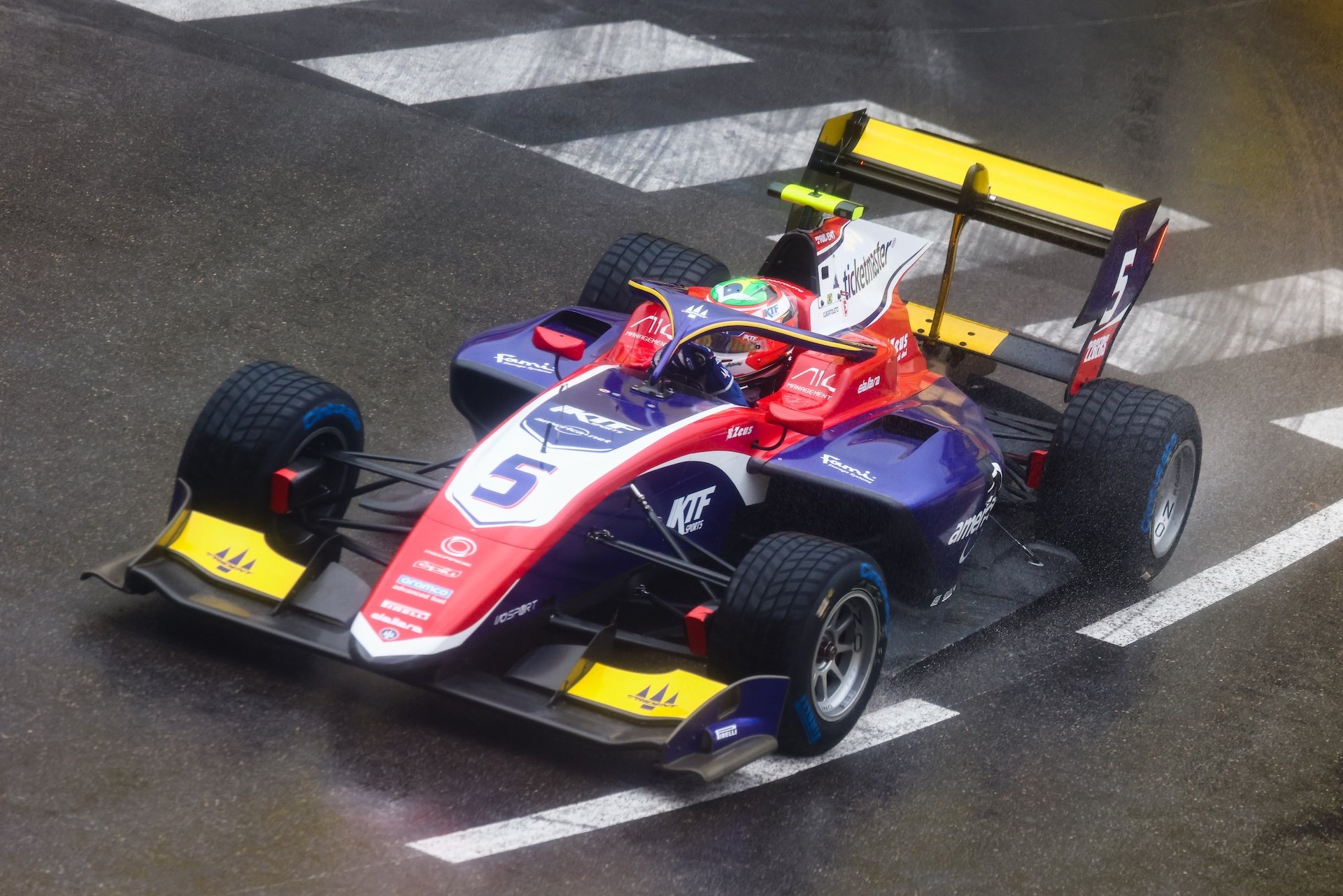
  • IndyCar at Milwaukee: Pato O’Ward for Arrow McLaren (Races 1 and 2)
  • NASCAR Cup Series at Daytona: Ryan Preece for Roush Fenway Keselowski Racing
  • MotoGP Aragon Grand Prix: Marc Marquez for Ducati
  • GT World Challenge America at Road America: Justin Rothberg and Robby Foley for Turner Motorsport

Got a tip or feedback for TDS? Reach out to tips@thedrive.com

The post VW Poised for US Leadership Shakeup, Report Claims: TDS appeared first on The Drive.

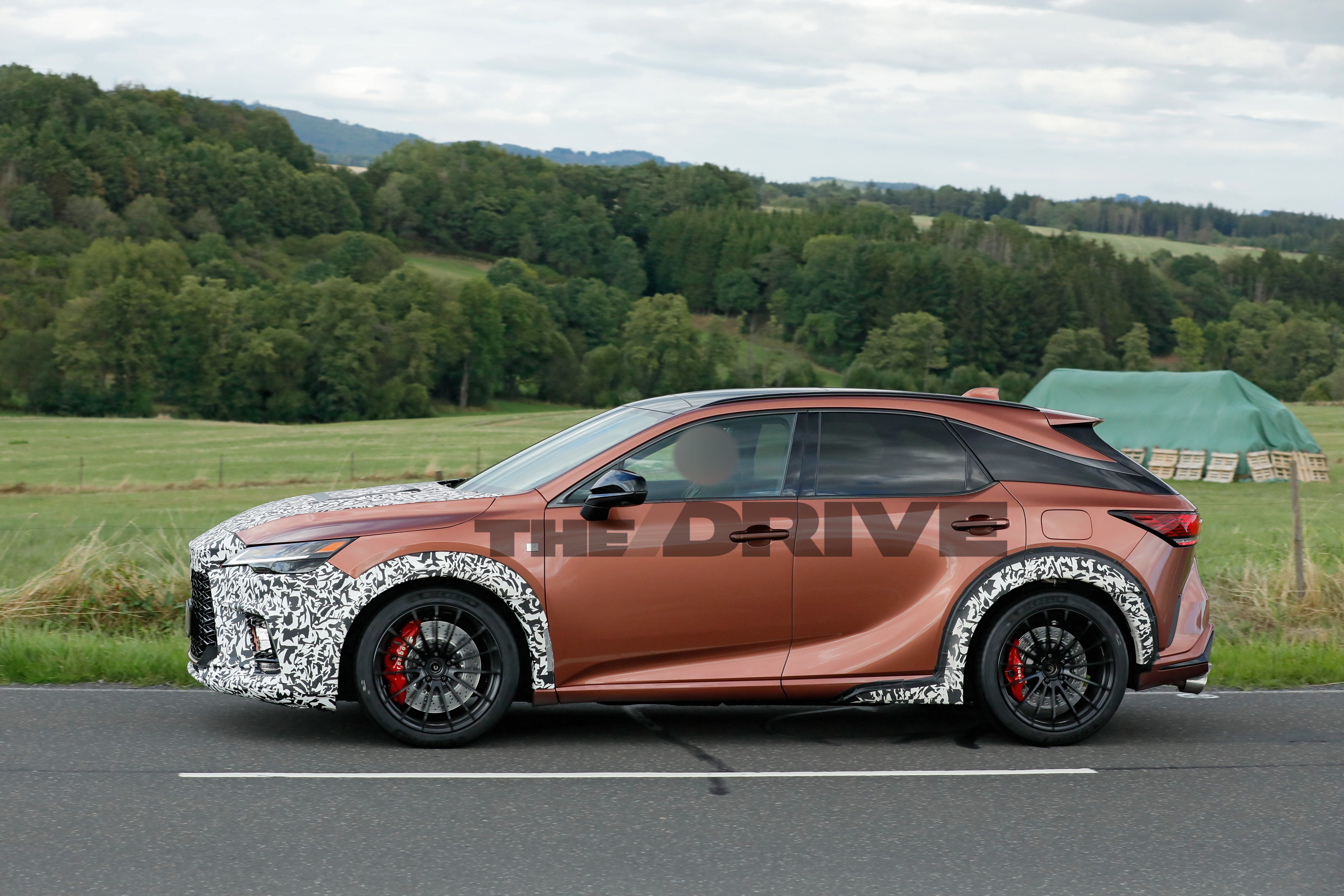
☐ ☆ ✇ The Drive

Driving a 1991 Acura NSX Made Me Cry

By: Jerry Perez

Most people will usually advise you against meeting your heroes because, more often than not, you’ll be disappointed. A similar concept applies to cars, usually vintage ones, where people idolize them until they actually take them on the open road, only to realize they’re not all they’re hyped up to be; the brakes suck, the transmission’s slow, the suspension’s too soft, etc. Luckily, the first-generation Acura NSX was never my hero car, so I was blown away when I recently got to drive one. So much so, in fact, that I cried.

Nothing against the NSX, but as a kid who grew up in Mexico City in the ’90s, my bedroom walls were adorned with the likes of the Lamborghini Diablo, Ferrari F40 and F50, Porsche 959, and even a Ford GT90, among many Senna and, eventually, Schumacher posters. It wasn’t until I was an older teenager that I developed a liking for Honda products (probably because I learned to value money and appreciated reliability, fuel economy, and such), and that’s when the concept of a fast, nimble, cool-looking, but also reliable Japanese sports car like the NSX became appealing to me.

Jerry Perez, Acura, Sean Grove

Fast-forward many years to my current career, and I’ve been able to drive the latest Acura NSXs, and not just on the street, but on hallowed ground, like the Daytona road course. Back in 2019, I chased Indy 500 winner Simon Pagenaud around the famous circuit in an NSX—at night—putting all the driving skills I’ve gathered throughout my entire life to the test. Three years later, when the NSX Type S came out, I did the same thing again at the same place, but this time in the very car that Acura had loaned Max Verstappen a couple of months prior. And at some point between those two track events, I went on a 1,000-mile road trip to prove the NSX is also a practical grand tourer. Yet, through all these years, it’s been the O.G. NSX that’s somehow eluded me.

That finally changed earlier this month during Monterey Car Week, where, as a guest of Acura, I had access to a couple of cars from the Honda Collection Hall, one of which was an old-school NSX. Dressed in a still-glossy Formula Red, with a black leather interior, in the type of condition that only an automaker-maintained car could be, I set out to drive on one of the country’s most beautiful and picturesque roads: Highway 1.

Jerry Perez

It didn’t take more than a minute for me to realize that I was in for a real treat, the kind that, frankly, comes often in my line of work, yet this one was different. Despite its 85,000 miles, I felt like I was driving a new old car—a very special one. The pedals were stiff and springy in a way that only happens in old cars. The steering was heavy (no power steering) but not overly so, and by far the most noteworthy attribute of all was the shifter. I hadn’t even left my hotel’s parking lot when I was already in love with the transmission.

The Acura NSX revolutionized the world of sports cars back in the early ’90s with its sleek design, aluminum chassis, and cutting-edge Honda engine that revved to 8,000 RPM. It out-engineered and out-performed many of the flagship European cars of its time, all while offering everyday reliability, fuel economy, and comfort. Its 270-horsepower, 3.0-liter V6 VTEC engine featured titanium connecting rods, and much of the technology that made it lighter, quick-revving, and reliable was derived from Formula 1. It was paired with a five-speed manual, though a four-speed automatic (with power steering) was also offered.

Jerry Perez

I was on my way out of town toward Bixby Bridge when dark clouds suddenly rolled in. “Just my luck,” I thought, “I’m in an amazing car on an amazing road, and now it’s raining.” As it turned out, that was a good thing because every supercar owner who had descended on the peninsula retreated to their luxury hotel or rented villa, leaving me with a mostly empty stretch of glorious, curvy, oceanside road from Monterey to Big Sur. Plot twist: it was bright-blue skies and sunny just five miles down the highway. Score!

The next 60 miles, from Carmel Valley Ranch to the Big Sur Inn and back, were some of the most enjoyable I’ve ever driven in any car, anywhere in the world. Every straight, every corner, every little sandy nook where I pulled over to take a photo was magical. The sound of the V6 revving past 6,000 and all the way to 8,000 RPM—I can still hear it. It gives me goosebumps.

Jerry Perez

I’ve driven a lot of cars; man, a lot of cars. From Fiat Pandas and Nissan Tsurus to Ferraris, Paganis, Rolls-Royces, and two of my all-time faves, the F430 Scuderia and Prodrive P25, and yet it was a nearly 40-year-old Acura that brought tears to my face. The way the unassisted steering wheel transmitted the car’s dynamics and the road’s grit; how the shifter clicked into place with every throw; and the relaxed, velvety sound of the engine singing as I worked my way up and down the gears were deeply emotional. If you believe that cars can talk, as I do, then you better believe this one had some things to say.

Every moment I shifted from second to third at almost full throttle, felt those revs build as I touched fourth, and then downshifted in a relaxed but precise manner (no need to really hustle this beauty), sequestered me away from this planet and took me to a place where I felt truly happy, a place where I envisioned myself as my lifelong hero (whom I have tattooed on my left forearm) wheeling a car just like this one around Suzuka. Some would say the suspension is a bit too soft—and they’d be partly right—but this is a car meant to be daily driven, not just tracked. The seating position is phenomenal, and the distance between the steering wheel and shifter is just perfect; as is the spacing between all the pedals.

Jerry Perez

In typical Honda style, everything about the NSX still worked: the defroster, the wipers, all the electronics. Not sure I’d be saying the same had I driven a 40-year-old European sports car, whether it be a Ferrari, Jaguar, or BMW. Everything felt purposeful; there was nothing wasted, nothing just for the sake of showmanship. It’s a serious car that doesn’t take itself too seriously.

Suddenly, I was back to where I’d started, and it was time to hand the keys back to Acura. I’d have driven the best car in the world.

Email the author at jerry@thedrive.com

The post Driving a 1991 Acura NSX Made Me Cry appeared first on The Drive.

☐ ☆ ✇ The Drive

Porsche Finds Yet Another Way to Shed Weight, and It’s in Sound Systems

By: Stephen Edelstein

Weight is the enemy of performance, and Porsche knows it. From stripped-down specials like the 911 Carrera RS to today’s Weissach Packages, Porsche has fought many battles in the war against poundage. And the engineers in Stuttgart have just identified a new front in that war: car audio systems.

In what the automaker claims is a world first for production cars, Burmester audio systems in near-future Porsche models will have gallium nitride (GaN) semiconductors. GaN conducts current with greater efficiency and allows for greater power density than current semiconductor materials, Porsche stated in a press release, making audio-system hardware lighter and more compact.

Porsche next-gen Burmester audio system
Porsche

GaN semiconductors might be new to car audio, but they’re not new overall. Their industrial use dates back to the 1990s, when they were first employed at scale in blue LEDs. Today, chips with GaN semiconductors can be found in everything from tablets and USB chargers to satellites, Porsche notes. They’re prized for high switching frequencies and lower energy losses than typical silicon-based semiconductors. This reduces the amount of heat generated, increasing overall efficiency and thus allowing for smaller, lighter hardware.

Less heat also means lower cooling requirements. Porsche claims the heat sink packaged with these chips is 20% lighter, and that other “passive components” can be made smaller as well. The heat sink is made of aluminum, so shrinking it also saves material, and considering how energy-intensive aluminum production is, Porsche expects to avoid some carbon dioxide emissions this way.

Porsche next-gen Burmester audio system
Porsche

Porsche began studying GaN semiconductor tech for automotive use in 2023, and launched a development program with the University of Stuttgart’s Institute for Robust Power Semiconductor Systems in 2024. The tech will first be deployed in a 400-watt amplifier for a Burmester 3D system in 2027, and Porsche is looking at other applications beyond that.

“The semiconductor can be used for power conversion in high-voltage systems,” said Dr. Lars Heuken, Porsche semiconductor manager, in a statement. “This makes GaN particularly interesting for the high-voltage systems of electric sports cars, for instance.” Porsche remains committed to EVs generally, but seems to be having trouble getting a true sports car—in the form of an electric Boxtser/Cayman replacement—across the line.

The post Porsche Finds Yet Another Way to Shed Weight, and It’s in Sound Systems appeared first on The Drive.

☐ ☆ ✇ The Drive

There’s Only One of These Coachbuilt Ferrari Shooting Brakes With a Big V12, and You Can Own It

By: Stephen Edelstein

The design team at Ferrari isn’t above mining the past for inspiration, especially when it comes to one-off cars for customers with big budgets. But why should the factory have all the fun? Ferrari’s back catalog of legendary names and designs provides enough fertile ground for third parties to do the same.

Due to be auctioned off by Broad Arrow, the one-off Daytona Shooting Brake Hommage by Dutch designer Niels van Roij burrows deep into Ferrari lore. It’s inspired by another one-off car that was itself a tribute to a classic Ferrari. The story starts in 1972, when Bob Gittleman commissioned Luigi “Coco” Chinetti Jr.—son of Luigi Chinetti, the former racing driver who established the Ferrari franchise in North America—to build a unique car. Chinetti Jr. teamed up with designer Gene Garfinkle, and they settled on an homage to the Ferrari 250 GT SWB Breadvan.

Ferrari Daytona Shooting Brake Hommage by Niels van Roij
Broad Arrow Auctions
Ferrari Daytona Shooting Brake Hommage by Niels van Roij
Broad Arrow Auctions
Ferrari Daytona Shooting Brake Hommage by Niels van Roij
Broad Arrow Auctions
Ferrari Daytona Shooting Brake Hommage by Niels van Roij
Broad Arrow Auctions

The Breadvan was a race car, its unique bodywork intended to provide an aerodynamic advantage. But Chinetti and Garfinkle intended this car to be a road-going grand tourer. Starting with a 365 GTB/4 Daytona coupe, they designed shooting brake bodywork with large windows and an all-glass tailgate opening that brings to mind European hearses. The aluminum bodywork was fabricated by British firm Panther Westwinds, the company best known for Neo-Classics. The finished car reportedly cost four times as much as a stock Daytona.

Niels van Roij loves shooting brakes. He’s designed ones based on the Rolls-Royce Wraith and Tesla Model S, and even turned a 550 Maranello into a modern Ferrari Breadvan. So while the listing claims the designer was approached by a client about building a tribute to the 1972 Daytona Shooting Brake, it’s easy to imagine that van Roij already had the idea in his head.

Ferrari Daytona Shooting Brake Hommage by Niels van Roij
Broad Arrow Auctions
Ferrari Daytona Shooting Brake Hommage by Niels van Roij
Broad Arrow Auctions
Ferrari Daytona Shooting Brake Hommage by Niels van Roij
Broad Arrow Auctions
Ferrari Daytona Shooting Brake Hommage by Niels van Roij
Broad Arrow Auctions

The Daytona Shooting Brake Hommage is based on a 2009 Ferrari 599 GTB Fiorano, which is apparent when looking at the lower bodywork, windshield, and side windows. However, the front and rear perspectives faithfully recreate the Daytona’s trademark visored headlights and all-glass Kamm tail, respectively. The transformation took about 15,000 hours, according to the listing, with modern methods like CAD modeling and 3D printing employed alongside traditional hand craftsmanship. The 5.9-liter V12, which made 611 horsepower and 448 pound-feet of torque from the factory, was left untouched.

If I’d gone through the trouble of commissioning a one-off car, and waiting nearly two years for it to be finished, I’d probably hang onto it for a little while. But despite only being unveiled this past July, the Daytona Shooting Brake Hommage will soon have a new owner. Broad Arrow expects it to sell for $524,000-$757,000 at its Zoute Concours Auction, scheduled for October 9.

The post There’s Only One of These Coachbuilt Ferrari Shooting Brakes With a Big V12, and You Can Own It appeared first on The Drive.

☐ ☆ ✇ The Drive

Teach Your Kids How V8s and Stick Shifts Work With This $40 Model Car

By: Stephen Edelstein

If you’re looking for a way to share your love of cars with your kids, and the floor of every room in your house is already a minefield of Lego bricks and errant Hot Wheels, there’s a new alternative that will also teach them how cars work.

Thames & Kosmos, a company that specializes in educational toys, has a model car kit with a working engine, transmission, differential, and suspension. Even better, the engine is a V8 and the gearbox is a four-speed manual. At $39.95, the kit is only a little pricier than an entry-level Lego Speed Champions set or traditional plastic model kits. But neither of those can show how cars actually work.

Thames & Kosmos V8 Race Car
Thames & Kosmos

Sporting the classic cigar-on-wheels shape of a prewar Grand Prix racer or Indy roadster, the model has a tiny V8 engine with a rotating crankshaft and pistons. The block is clear so you can see everything moving, and the other components have the same level of detail. The transmission has miniature gears, synchronizers, and input and output shafts, plus a working shifter to row the gears with. An electric motor (powered by two AAA batteries) attached to the input shaft spins everything.

Just like in a real car, the rotational energy is transferred to a differential. Again, the basic workings are replicated in miniature, with a ring and spider gear splitting power between the left and right axle shafts. Double-wishbone suspension with coil springs is also faithfully replicated, and this open-wheel car makes it even easier to see the suspension at work. The steering wheel can also be mounted on the left or right side of the cockpit.

Thames & Kosmos V8 Race Car
Thames & Kosmos

The kit consists of 233 pieces and comes with a 40-page manual that provides both assembly instructions and explanations of key mechanical engineering concepts, according to the online ad copy. It’s recommended for ages 10 and over.

Toys can show kids that cars can be cool, and video games can show them that driving can be fun. This will give them an appreciation for the engineering that makes all of that coolness and fun possible, plus a modicum of patience from having to assemble all of those tiny parts the correct way.

The post Teach Your Kids How V8s and Stick Shifts Work With This $40 Model Car appeared first on The Drive.

☐ ☆ ✇ The Drive

Tom Cruise Confirms ‘Days of Thunder’ Sequel Coming Summer 2028

By: Joel Feder

It’s happening, officially.

On Saturday, Tom Cruise announced via Instagram that Days of Thunder will return with a sequel in summer of 2028. The announcement included Anne Hathaway, who will apparently be part of the resurrected cult classic.

Filming for the new Days of Thunder has not commenced. Cruise and Hathaway joked in the announcement they’ll go make the movie after Hathaway has her baby. Hathaway is pregnant with her third child.

What exactly the Days of Thunder sequel will be called is unclear. The NASCAR race car shown in the announcement post simply had Days of Thunder with “Summer 2028” on the side while painted in the iconic livery used in the first movie. Cole Trickle’s name was above the door on the car, which is the race car driver that Tom Cruise played in the first movie.

In July, it was reported that Cruise had signed on to the sequel with Paramount . Reportedly the production house was seeking a director for the new movie. The original Days of Thunder was directed by Tony Scott, but Scott died in 2012.

Robert Duvall also starred in the original movie, but the iconic actor died in February. But Randy Quaid, who played Tim Daland, a car dealer owner who wanted to start a NASCAR race team, is still alive and is currently 75 years old.

In 2025 NASCAR legend Jeff Gordon said he wanted to be part of the new Days of Thunder sequel, but this was before the movie or Cruise’s involvement was confirmed.

After the success of Top Gun: Maverick Cruise said he wanted to resurrect Days of Thunder and give it the same treatment. The original Days of Thunder came out after Cruise made the original Top Gun.

Mark your calendar for two years from now, Days of Thunder fans. Special tires will undoubtedly be included.

Got a tip? Send us a line at tips@thedrive.com

The post Tom Cruise Confirms ‘Days of Thunder’ Sequel Coming Summer 2028 appeared first on The Drive.

☐ ☆ ✇ The Drive

For Sale: 6×6 Ford Truck Developed as an Amphibious Military Prototype Circa 1960

By: Stephen Edelstein

Bring a Trailer became the go-to site for car-shopping procrastination by specializing in offbeat listings that would normally be ignored by traditional auction houses. Today the site is often populated with overpriced Integras, supercars getting flipped, and ordinary used cars from sellers looking to maximize their earnings. But the site still occasionally serves up something delightfully unusual.

Even if you’re a fan of military vehicles, you probably haven’t seen this 3.5-ton Ford 6×6 cargo truck. It’s a prototype that was built around 1960 and has spent most of the last five decades under restoration, only making rare appearances in online posts as the current owner —who acquired the truck in 2023 as an incomplete project vehicle—has tried to unload it.

1960 Ford XM434E2
Bring a Trailer
1960 Ford XM434E2
Bring a Trailer
1960 Ford XM434E2
Bring a Trailer
1960 Ford XM434E2
Bring a Trailer

Designated the XM434E2, the prototype was part of a canceled development program for medium-duty trucks launched in the late 1950s. The U.S. Army Ordnance Corps sought proposals for a range of trucks of different capacities, and General Motors and REO reportedly submitted prototypes alongside Ford. However, the program never advanced beyond the prototype stage.

The Army’s requirements included amphibious capability and the ability to be air-dropped, according to the listing. So this truck has a duplex-drive system that allows power to be sent to either the wheels or a rear-mounted propeller. Plus, it has aluminum bodywork to keep it as light as possible. Measuring 20 feet long, eight feet wide, and 10 feet tall, with a 126-inch wheelbase, the truck is powered by a 534-cubic-inch diesel V8 producing 195 horsepower. It’s coupled to a six-speed manual transmission and single-speed transfer case.

1960 Ford XM434E2
Bring a Trailer
1960 Ford XM434E2
Bring a Trailer
1960 Ford XM434E2
Bring a Trailer
1960 Ford XM434E2
Bring a Trailer

This truck is very cool, but it’s also very much a work in progress. The seller notes that the recently overhauled fuel pump needs to be tuned, the power steering and transfer case seals leak, and the driveshaft for the propeller is missing. There’s also lots of visible corrosion and some small items that need to be addressed, like the non-functioning windshield wipers. The tires mounted on the truck in the accompanying photos look cracked, although spares are provided (along with other parts). But the truck does have a Wisconsin title and a VIN identifying it as a 1960 model, so it can be registered for road use.

Like most other automakers, Ford built up a substantial military business during World War II and tried to keep that going into the Cold War, when paranoia over the Soviet threat made fat defense contracts easy to come by. As the company is quick to note, Ford built the most Jeeps during World War II, as well as B-24 Liberator bombers. The XM434E2 was not the truck to carry on that legacy, apparently. But Ford is still trying to earn more military business with its current pickups.

The post For Sale: 6×6 Ford Truck Developed as an Amphibious Military Prototype Circa 1960 appeared first on The Drive.

❌