Watch Argentina vs Australia 2nd Test live streams
After a stunner in San Salvador de Jujuy, the rugby teams of Argentina and Australia head south to Mendoza for the second and final Test match of their mini series.
With fairly fresh memories of their embarrassing 67-27 capitulation on Argentine soil two years ago, the Wallabies came out all guns blazing last week to record an impressive, hard-fought 27-21 win to maintain coach Les Kiss's perfect record since taking charge. Flanker Tom Hooper's 55th minute try to take the lead was ultimately enough to tip the evenly balanced scales in Australia's favour, following tries from Brandon Paenga-Amosa, Carter Gordon and Fraser McReight.
The win may have allowed the Aussies to leapfrog Argentina in the world rankings, but they'll have to respond to injuries to Hooper and Tate McDermott, with Ben Donaldson coming in at 10.
That will be a boost to Felipe Contepomi's men who are looking for a big push towards next year's Rugby World Cup. He's brought in four news faces to the starting XV, including his own replacement fly-half in Nicolás Roger. Can the Pumas bite back?
Follow our guide below for where to watch Argentina vs Australia 2nd Test live streams from anywhere with a VPN. We've also got details of the kick-off time and full team line-ups below.
How can I watch Argentina vs Australia 2nd Test for free?
In the US RugbyPass TV will show then Argentina vs Australia 2nd Test for free. You can also access this via the RugbyPass app (iOS/Android).
If you're from the US but are currently overseas, you can simply use a VPN to tap into that free coverage. More details below...
Watch Argentina vs Australia 2nd Test live streams from anywhere
You won't be able to watch your regular Argentina vs Australia live streams if you're travelling overseas this weekend. The platform will detect that you're in a foreign country and block you. Thankfully, you can use a VPN to get round this.
We rate NordVPN as one of the best VPNs for streaming sports. It offers a generous 30-day guarantee for all your money back if you're not happy with the service.
Australia: 15 Tom Wright, 14 Max Jorgensen, 13 Joseph-Aukuso Suaalii, 12 Len Ikitau, 11 Filipo Daugunu, 10 Ben Donaldson, 9 Ryan Lonergan, 8 Harry Wilson (captain), 7 Fraser McReight, 6 Rob Valetini, 5 Jeremy Williams, 4 Josh Canham, 3 Taniela Tupou, 2 Billy Pollard, 1 Angus Bell. Replacements: 16 Josh Nasser, 17 Aidan Ross, 18 Massimo De Lutiis, 19 Lukhan Salakaia-Loto, 20 Charlie Cale, 21 Kalani Thomas, 22 Carter Gordon, 23 Isaac Henry
What is the Argentina vs Australia head-to-head?
Australia have won 31 of the 44 Tests with Argentina taking 10 and three draws.
We test and review VPN services in the context of legal recreational uses. For example:1. Accessing a service from another country (subject to the terms and conditions of that service).2. Protecting your online security and strengthening your online privacy when abroad.We do not support or condone the illegal or malicious use of VPN services. Consuming pirated content that is paid-for is neither endorsed nor approved by Future Publishing.
Australia's flanker Fraser McReight struggles to elude Argentina's fly-half Santiago Carreras during the Rugby Union test match between Argentina and Australia San Salvador de Jujuy.
Australia's flanker Fraser McReight struggles to elude Argentina's fly-half Santiago Carreras during the Rugby Union test match between Argentina and Australia San Salvador de Jujuy.
Watch South Africa vs New Zealand 3rd Test live streams
The niceties are out of the window ahead of the South Africa vs New Zealand 3rd Test, which isn't technically the decider but certainly feels that way. It's the last game of the Rugby's Greatest Rivalry series to take place on South African soil, even if Soweto hasn't always felt like home for the Springboks.
They've played three games at the Calabash and lost two of them. The team that beat them on both occasions? That would be the All Blacks, by 22-29 in 2010, and by 16-32 two years later.
Despite being outscored by four tries to three, another flawless display of kicking by Cheslin Kolbe dragged South Africa level. Eben Etzebeth's interventions at the lineout were also crucial, causing New Zealand to turn the ball over three times in key areas of the pitch.
It's fair to say Dave Rennie didn't take the first defeat of his All Blacks tenure well. He said that the Boks props "walk around" the mark, triggering a full-scale feeding frenzy in the media.
Rassie Erasmus and forwards coach Daan Human were quick to bite back, though it's worth clarifying that Rennie's allegation didn't come entirely out of the blue. Erasmus, ever the provocateur, had already raised Rennie's ire by making wave after wave of last-minute changes to his starting lineup.
The shared flight to Baltimore next week should be interesting.
Follow our guide below for where to watch South Africa vs New Zealand 3rd Test live streams from anywhere with a VPN. We've also listed the full schedule and venues below.
How can I watch South Africa vs New Zealand 3rd Test for free?
The 3rd test of the South Africa vs New Zealand Test series will be broadcast on RugbyPass TV. It's also available to access via the RugbyPass app (iOS/Android).
In New Zealand, meanwhile, free-to-air Three and its ThreeNow streaming platform are showing all eight games on tape delay. The 3rd Test kicks off at 3.10am NZST on Sunday, but will be shown in full again at 11.30am NZST.
If you're from the US or New Zealand but you're currently abroad, you can simply use a VPN to tap into that free coverage of the 3rd Test. More details below...
Watch South Africa vs New Zealand 3rd Test live streams from anywhere
You won't be able to watch your regular South Africa vs New Zealand 3rd Test live streams while traveling abroad. The platform will detect that you're in a foreign country and block you. You can use a VPN to get round this.
We rate NordVPN as one of the best VPN for streaming sports. It offers a generous 30-day guarantee for all your money back if you're not happy with the service.
Outside the UK today?Use NordVPN to watch South Africa vs New Zealand as if you were back home.
Watch South Africa vs New Zealand 3rd Test live streams in Australia
The South Africa vs New Zealand 3rd Test is available to watch on Stan Sport in Australia, which costs AU$20/month on top of a AU$9.99/month Stan base plan.
If you're currently spending time in Australia from the US, use a good VPN, as detailed above, to tap into your free RGR coverage.
South Africa vs New Zealand 3rd Test: Need to know
What time does the South Africa vs New Zealand 3rd Test kick off?
The South Africa vs New Zealand 3rd Test kicks off at 4.10pm BST on Saturday, 5 September.
That's 11.10am ET in the US, 5.10pm SAST in South Africa, 1.10am AEST in Australia on Sunday, and 3.10am NZST in New Zealand on Sunday.
What is the Springboks vs All Blacks head-to-head?
The Springboks have won 44 of their 112 previous encounters with New Zealand. The All Blacks have won 64, and the other four ended in draws.
In South Africa, the head-to-head stands at 29-26-1.
We test and review VPN services in the context of legal recreational uses. For example:1. Accessing a service from another country (subject to the terms and conditions of that service).2. Protecting your online security and strengthening your online privacy when abroad.We do not support or condone the illegal or malicious use of VPN services. Consuming pirated content that is paid-for is neither endorsed nor approved by Future Publishing.
The Springboks' Siya Kolisi celebrates scoring a try against the All Blacks during the 2026 Rugby's Greatest Rivalry tour
The Springboks' Siya Kolisi celebrates scoring a try against the All Blacks during the 2026 Rugby's Greatest Rivalry tour
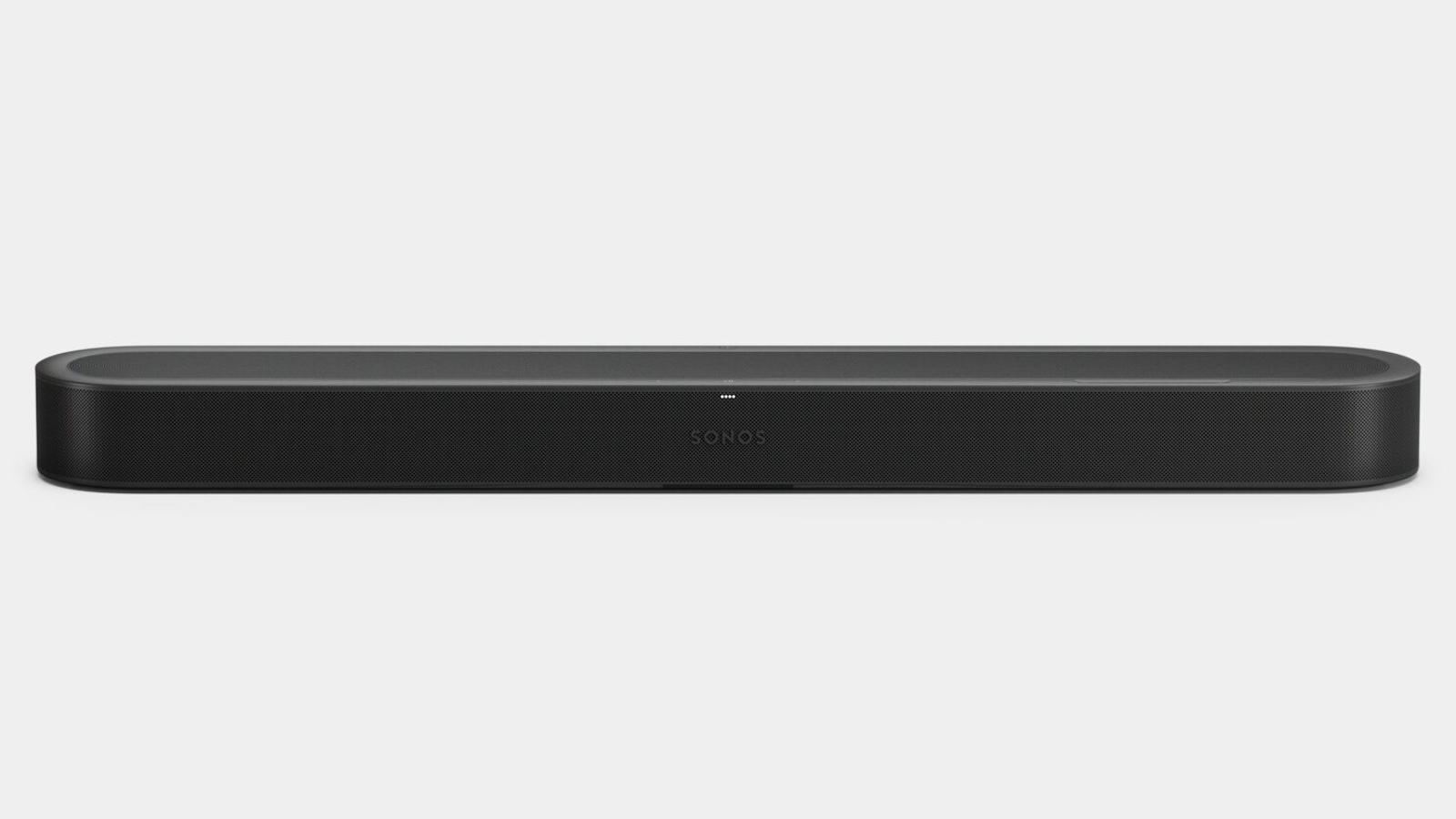
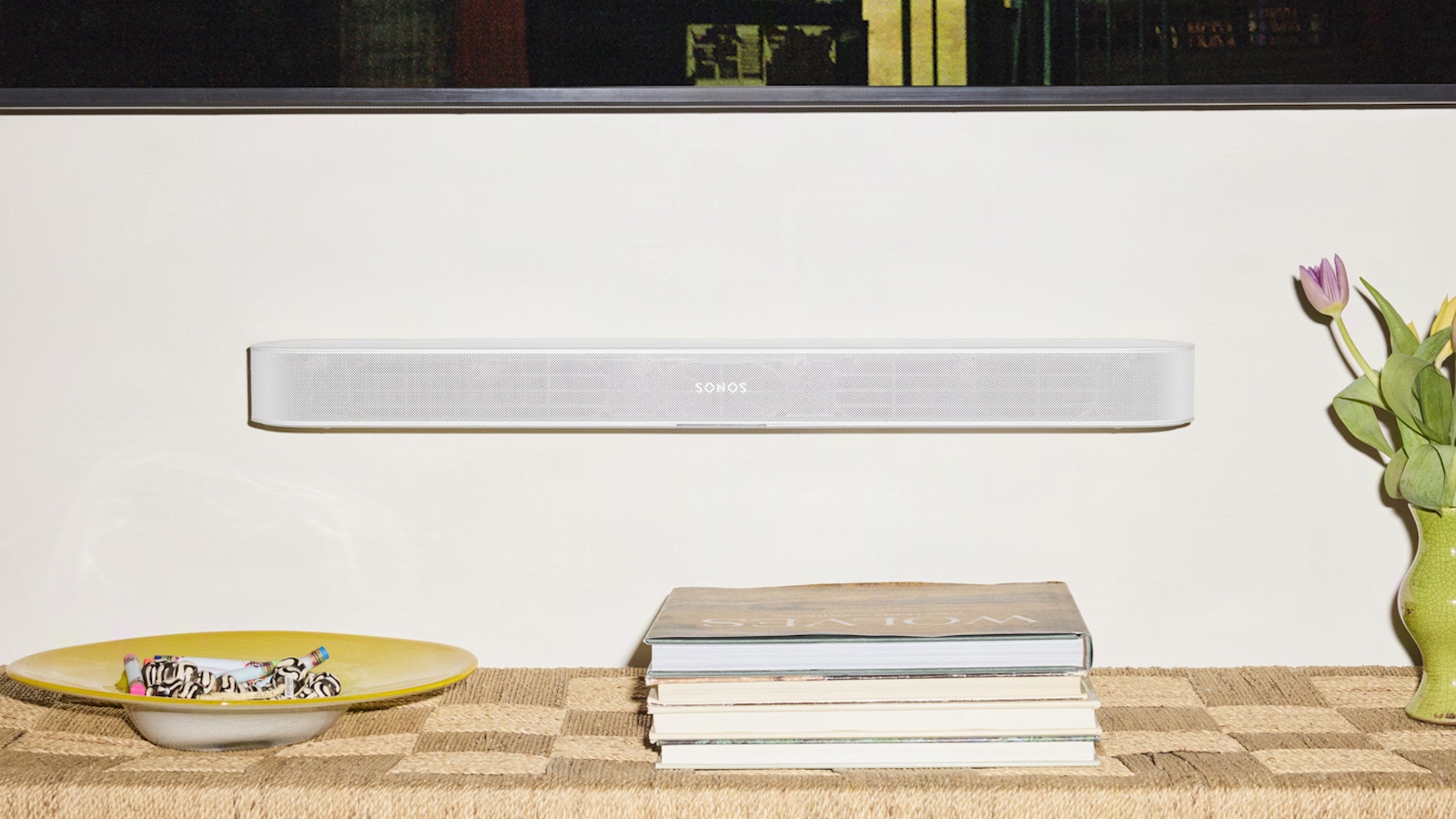
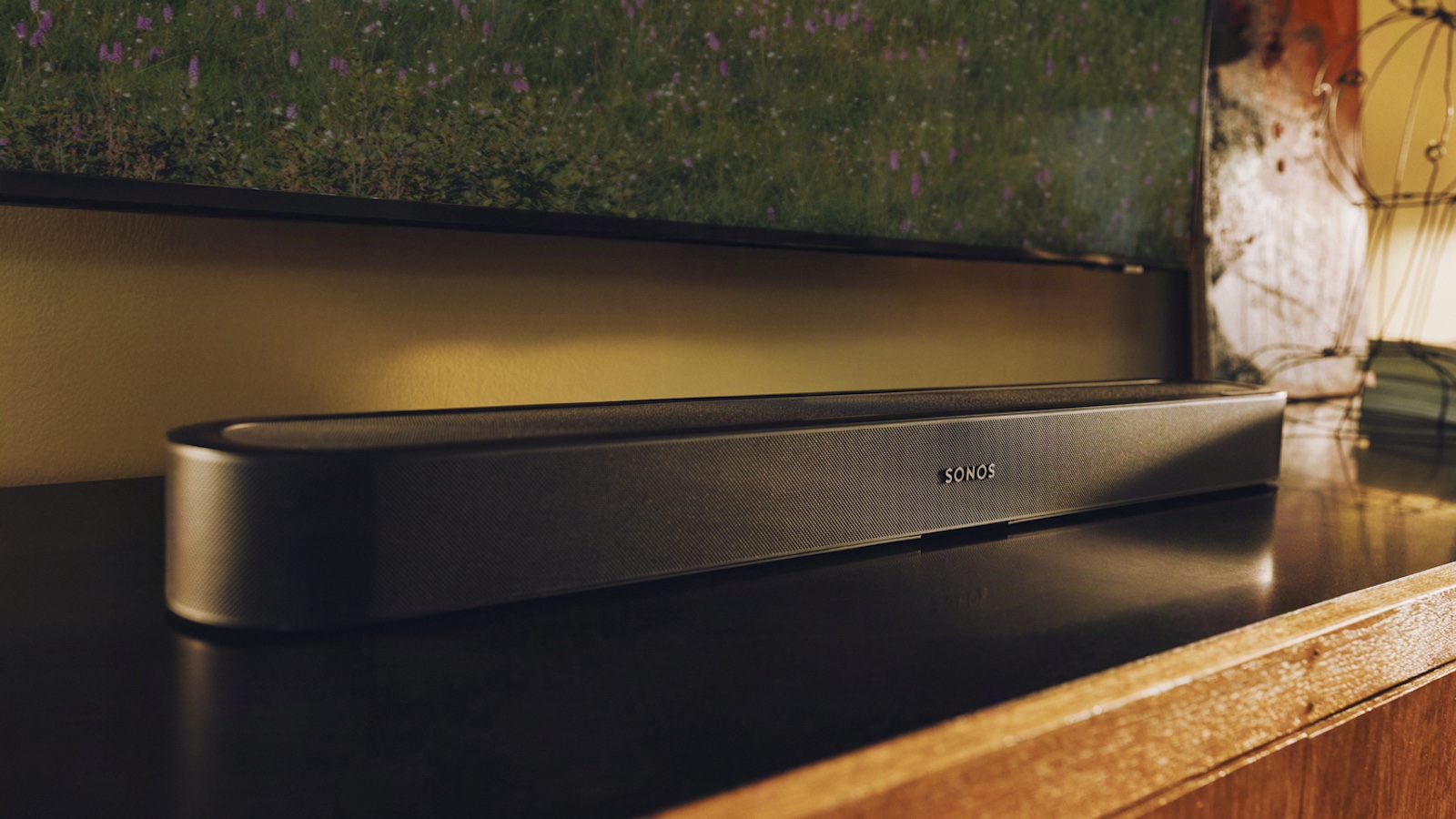
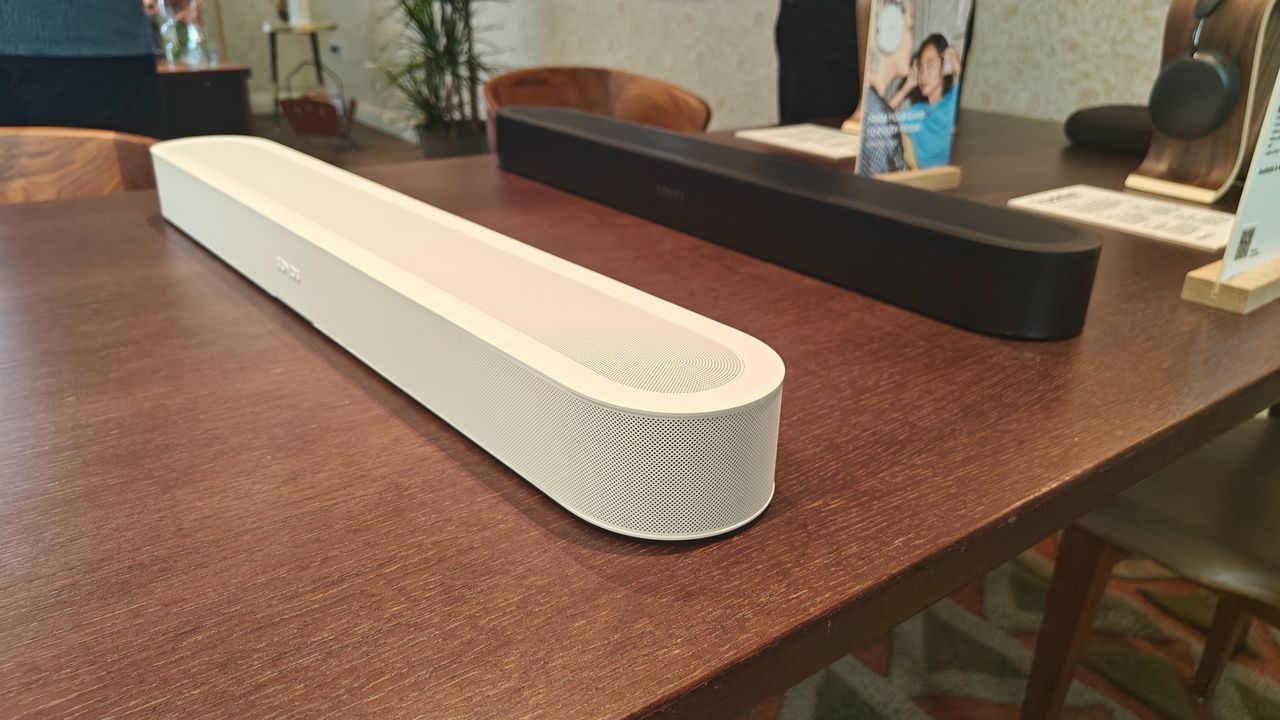
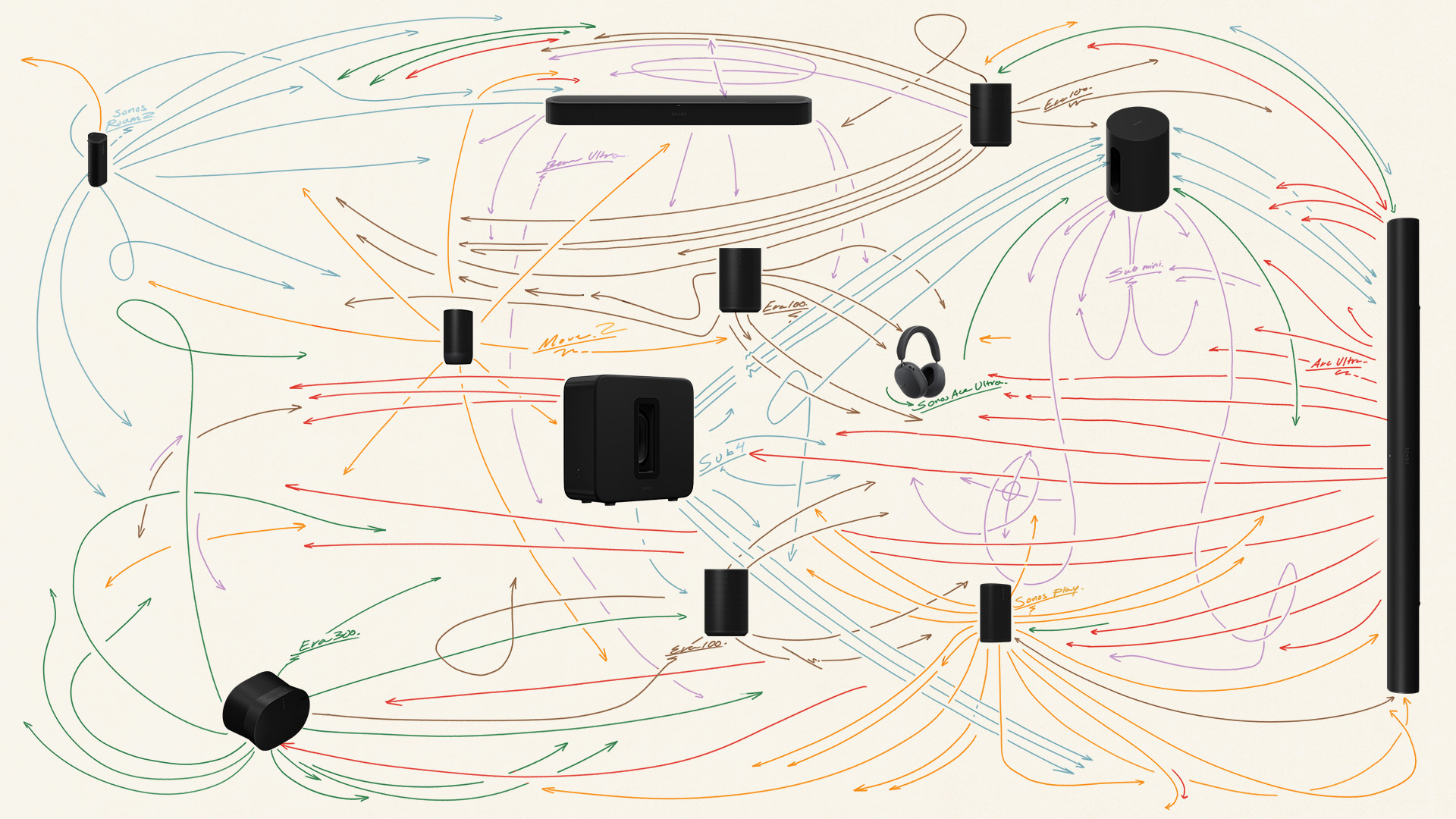
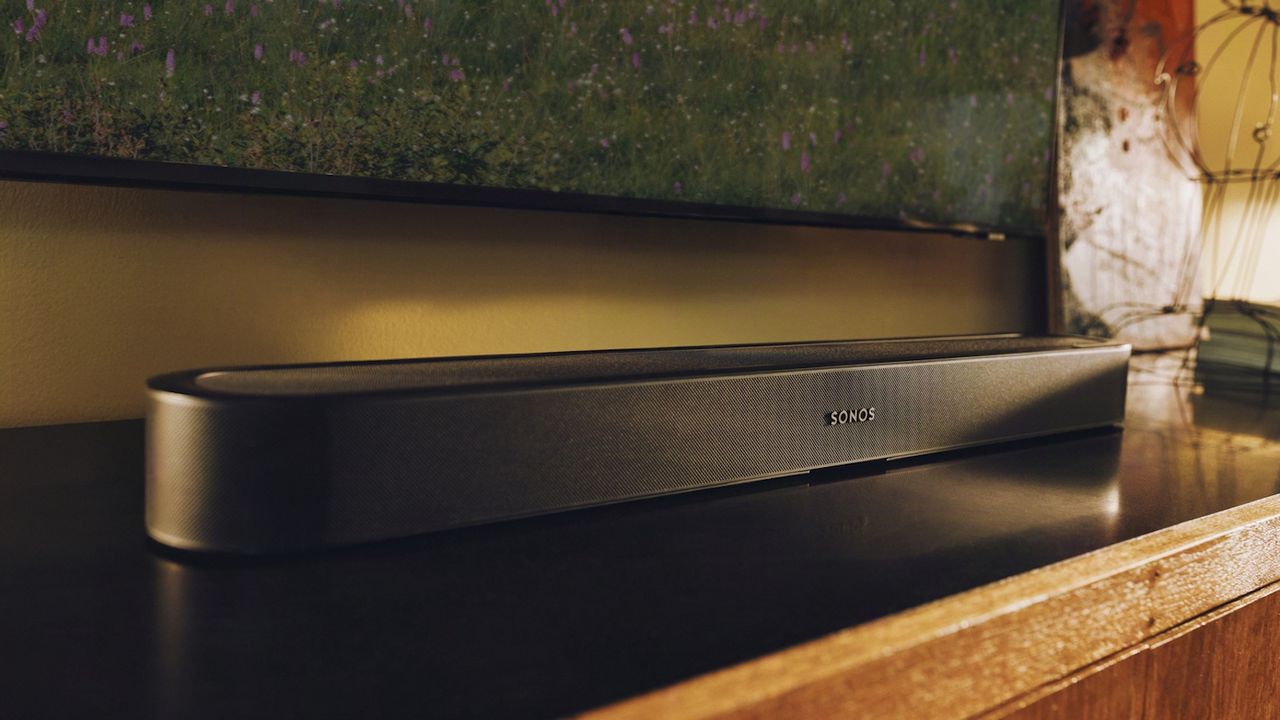
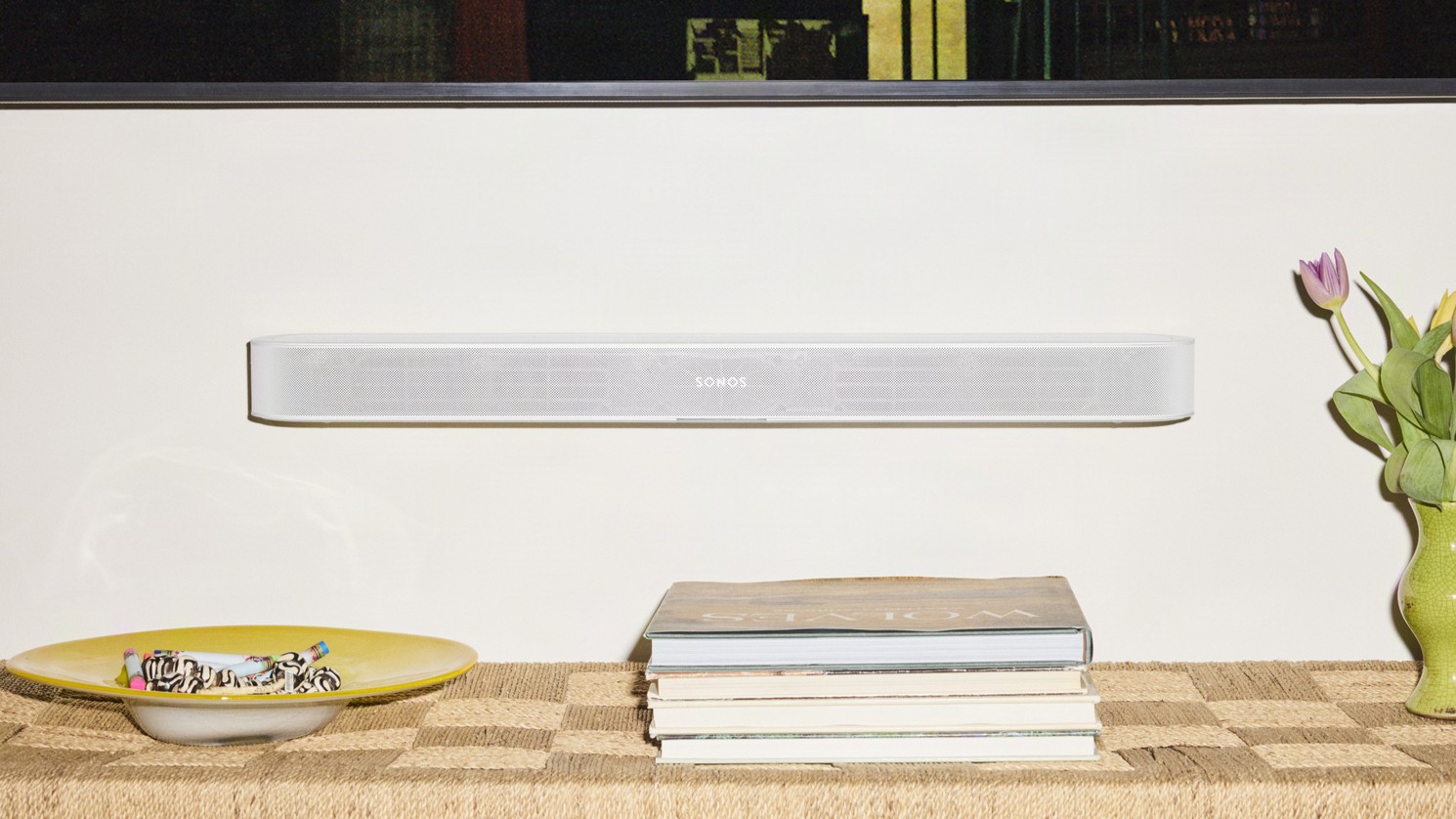
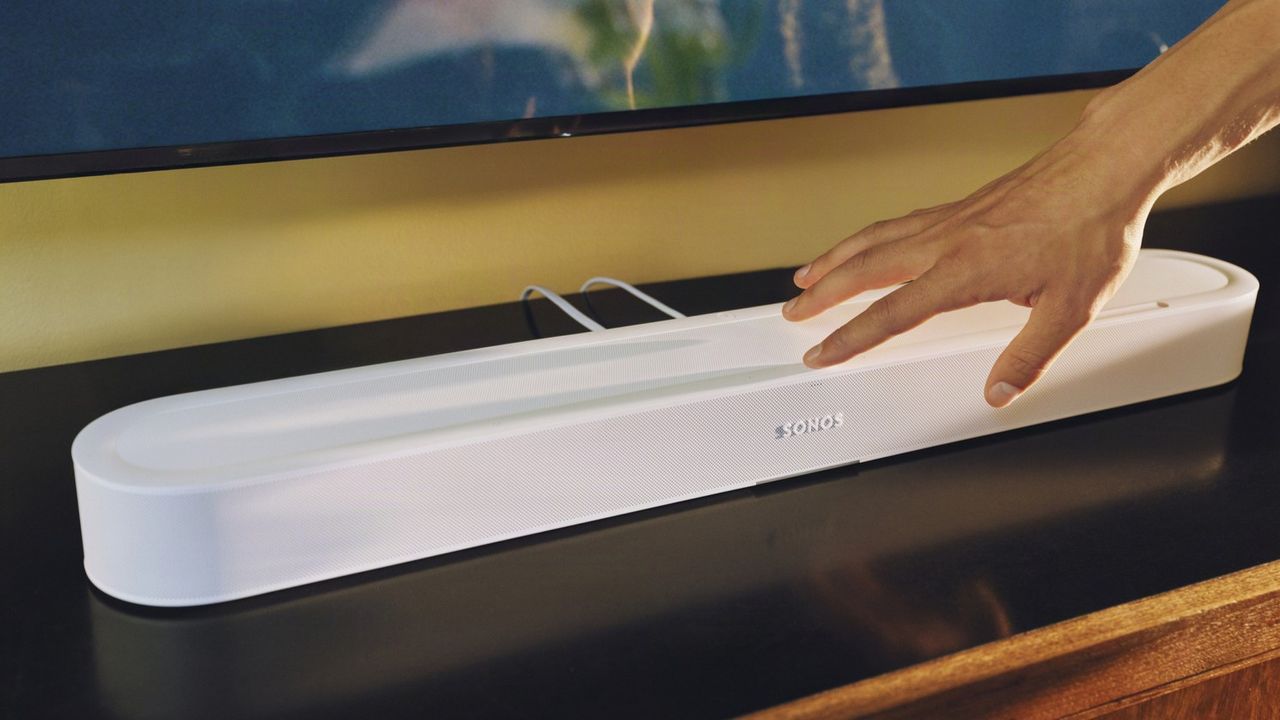
This week, one of the biggest pieces of news to break is that, after years of our team wishing upon an AV star, Sonos has released a new Beam Dolby Atmos soundbar.
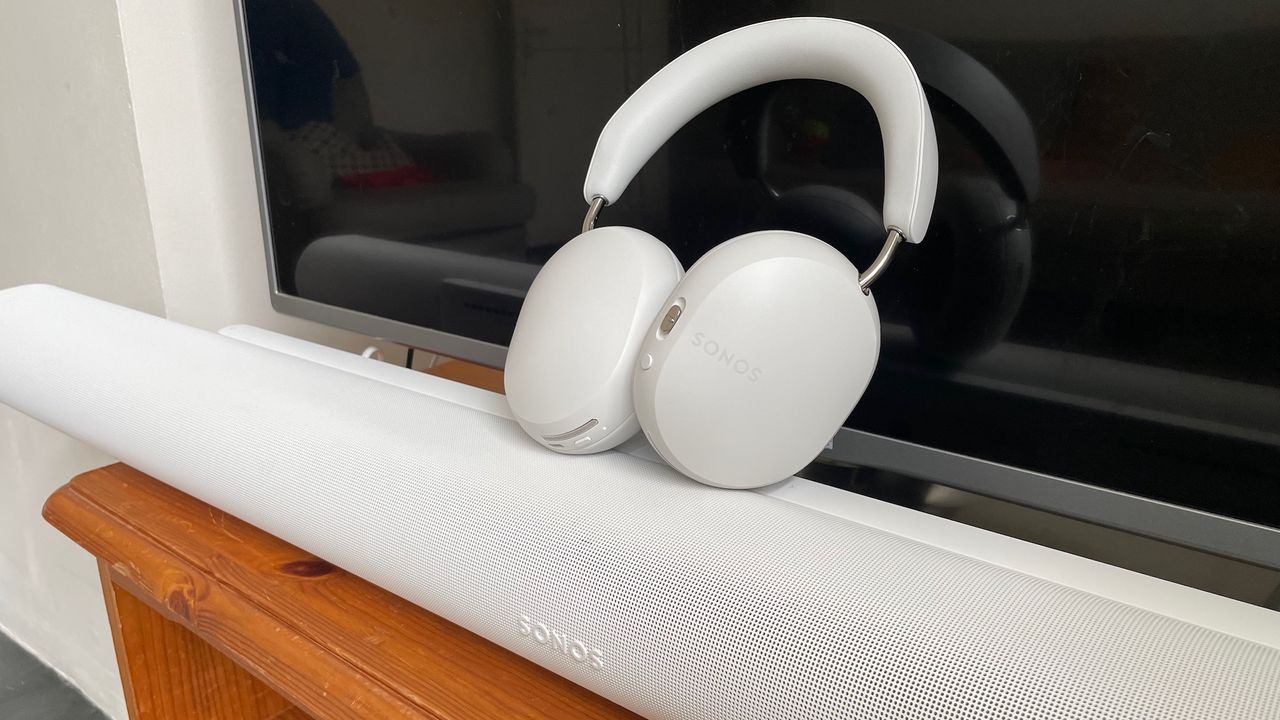
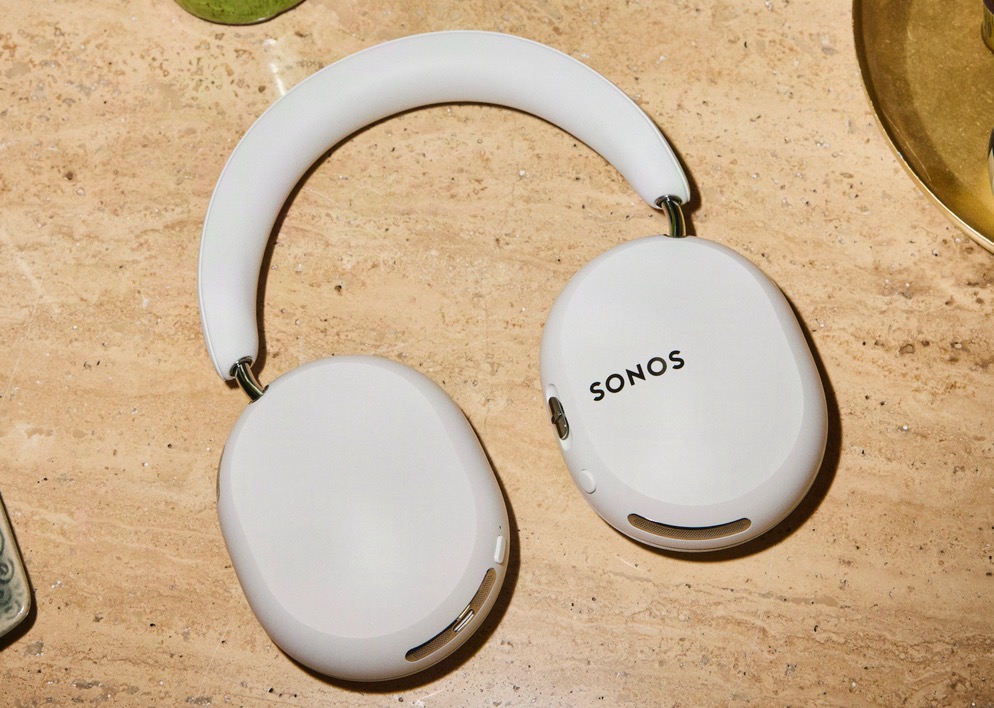
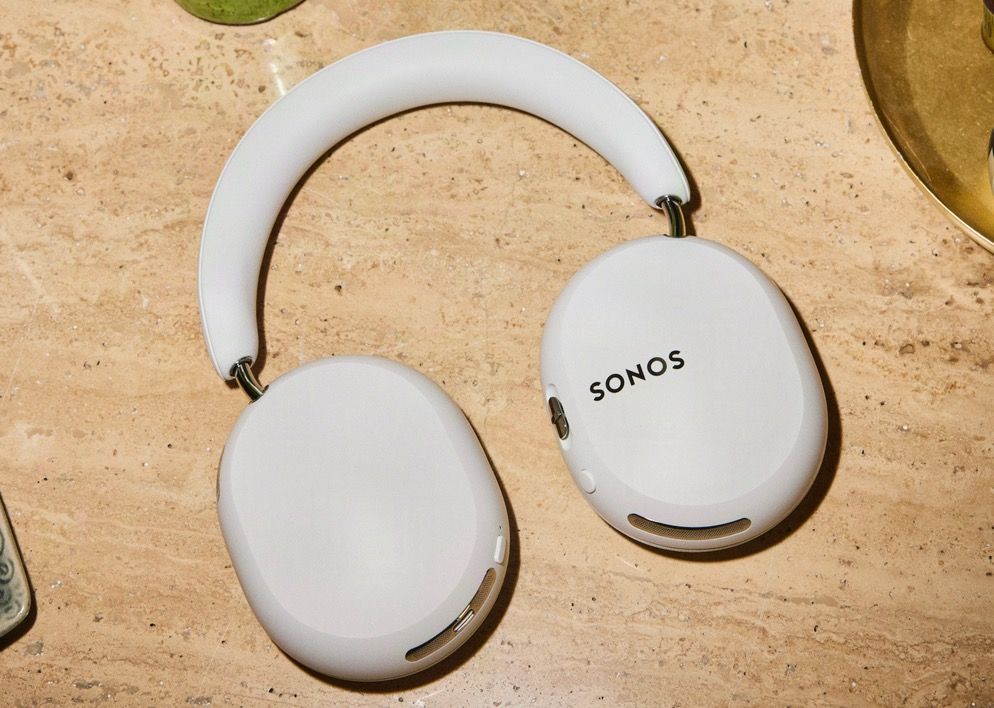
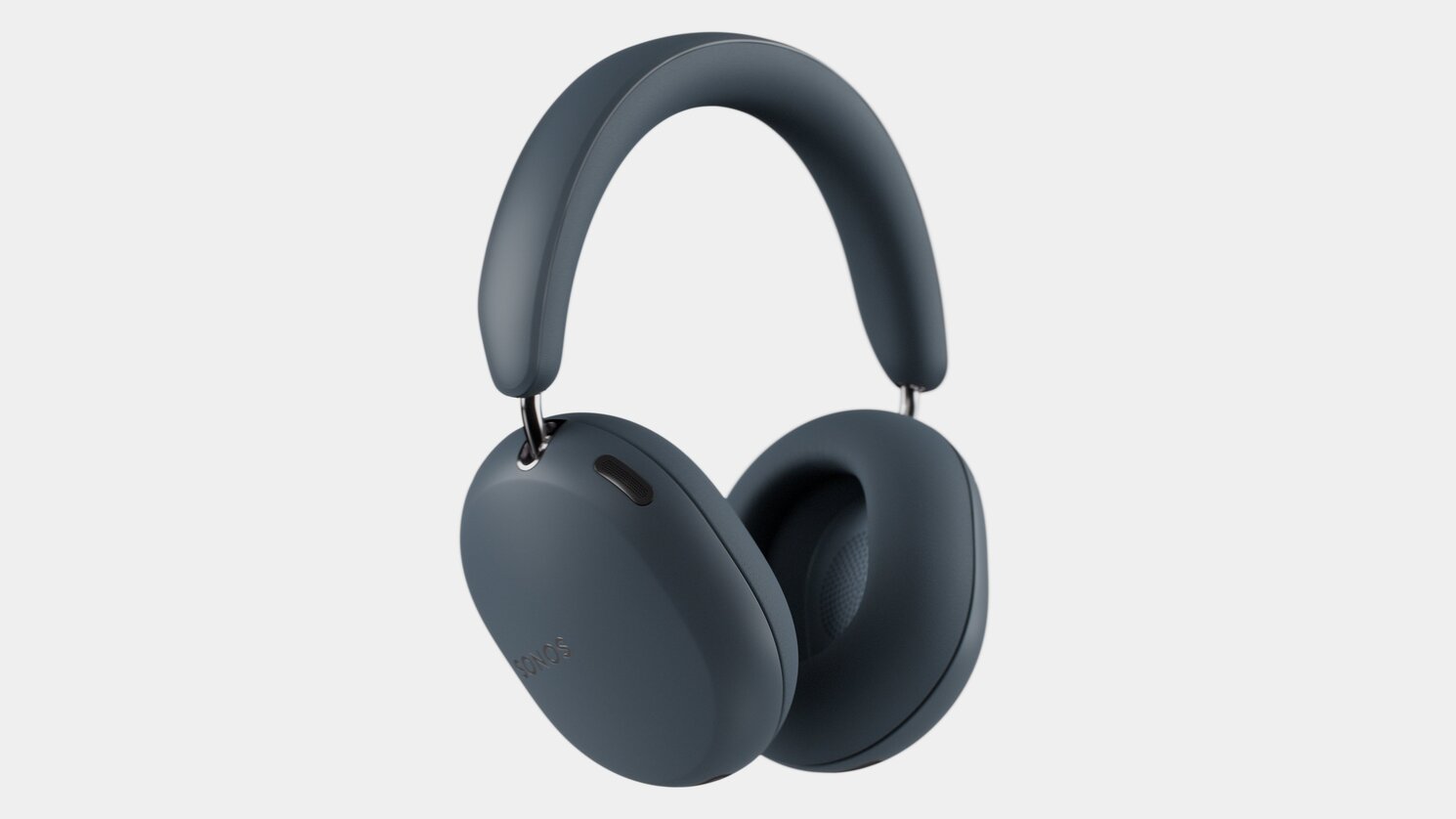
Unveiled alongside the new Sonos Ace Ultra wireless headphones, I want to kick off this opinion piece by making clear: I think the Ultra looks impressive and is, in nearly every way, the successor we’ve been waiting for.
In fact, as our reviewer on the ground at IFA, Robyn Quick, rattled off the details about the bar to the team back home, all of us (outside of senior staff writer, Harry McKerrell, who’s always miserable) had a smile growing on our faces.
Upgraded drivers, including the addition of proper up-firing height channels? Yep, it’s got them.
The ability to add Sonos Era 100 or Era 300 satellite wireless speakers as surrounds? Yes, the awesome feature has finally trickled down from the Arc Ultra into the more affordable Beam range.
And as a cherry on top, Robyn then penned a feature detailing how it sounds. The top line is, while it’s too early to give our final verdict, the Ultra left a very strong opening impression – so much so that a game of rock, paper, scissors ensued among the team to decide who would be the primary reviewer (it ended in a stalemate).
All in all, it was huzzahs abound at What Hi-Fi? towers.
FutureFutureSonosSonosSonosHisenseSonosSonos
But then, one more fact came rumbling in that replaced our smiles with a quizzical expression. Specifically, the Ultra is not a replacement or successor to the Sonos Beam (Gen 2); it’s actually a new step-up model in Sonos’ range.
Yes, we don’t know how the Beam Ultra will perform in our test rooms, but truthfully, given the Beam 2’s age, this was a curveball for us.
Why would the company do that when the Beam 2 is so old? Surely, it’s time to let the old girl retire? These were some of the mutterings that came out of our mouths as we processed the information.
But as I pondered the question, a final bit of information trickled through from the launch event that, at least for me, explained the move.
The Beam Ultra is a lot more expensive, set to retail for £699 (around $946 / AU$1320). The Beam (Gen 2) – outside of big sales events where it’s dropped as low as £349 – usually retails for £429 / $429 in most stores right now.
Cash-rich people may laugh at the idea of going for a soundbar that launched in 2021, when a newer model is out. But truthfully, £160 / $160 is a lot of money for most of us right now.
As a person who has listened to the Beam (Gen 2) alongside newer rivals, I can confirm it is still a very competent unit. That’s why it remains the recommended small option in our best Dolby Atmos soundbars guide.
So given that it still sounds good, keeping it around and giving normal people an entry point to Sonos’ ecosystem that won’t completely break the bank not only makes sense, but for me is 100 per cent the right thing to do.
It’s also why, even if the Beam Ultra delivers the sonic goods in our review rooms later this year, I can easily envision the Beam (Gen 2) retaining its recommendation. There are very few good, sub-£500 soundbars around and even fewer with the Beam’s compact form factor. So it’s definitely not beyond the realm of possibility…
In the immortal words of Green Day, it might be tempting to skip this month and be woken up when September ends.
But then you'd miss the pretty great deals, especially if you or a loved one are heading to university in the coming weeks.
Whether you're into hi-fi or home cinema, there's a little something for everyone this week, all the way from mid-range Bluetooth speakers to premium AV receivers.
These are all products our expert reviewers have tried and tested, some as recently as last week. And all of the below have earned at least five stars to get the What Hi-Fi? recommended thumbs-up.
Curious? Take a look for yourself...
Harman Kardon
Harman Kardon Luna 2 Portable Bluetooth Speaker
Apple
iPhone 17 Pro 256GB
Beyerdynamic
DT 700 Pro X Wired Headphones
Arcam
Arcam AVR31 AV Receiver
Sonos
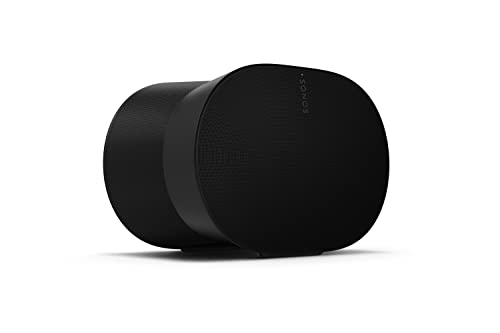
Era 300 Wireless Smart Speaker
Hisense
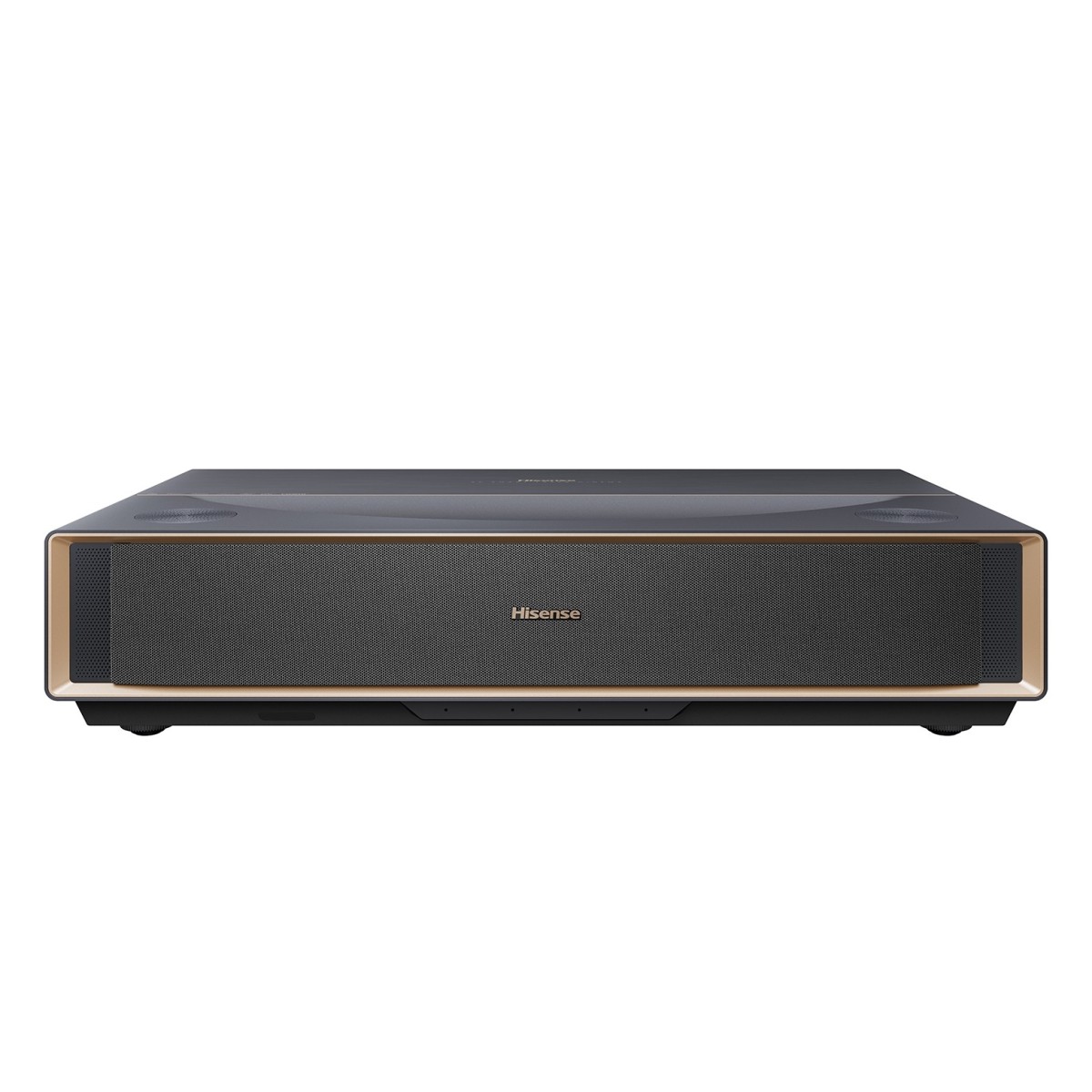
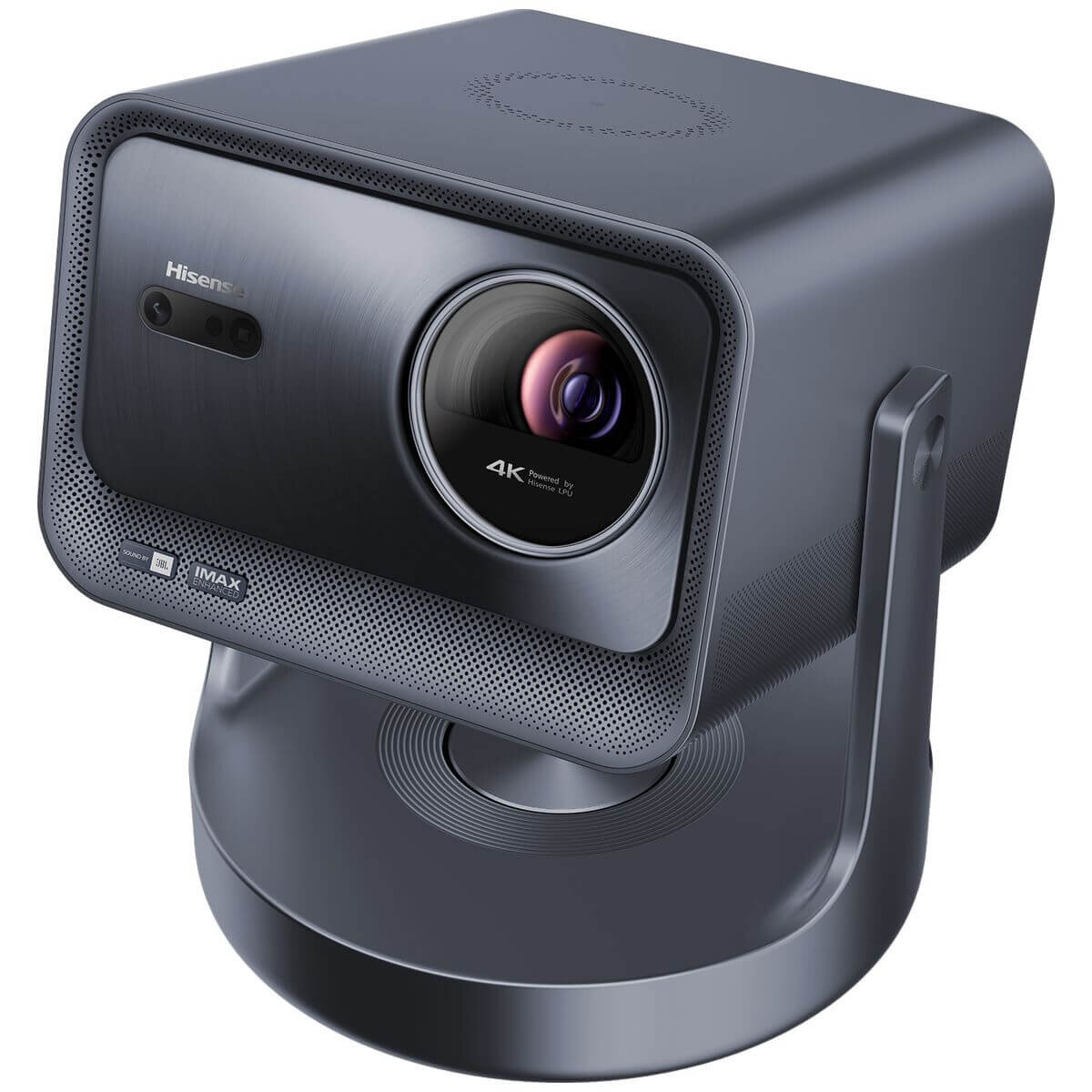
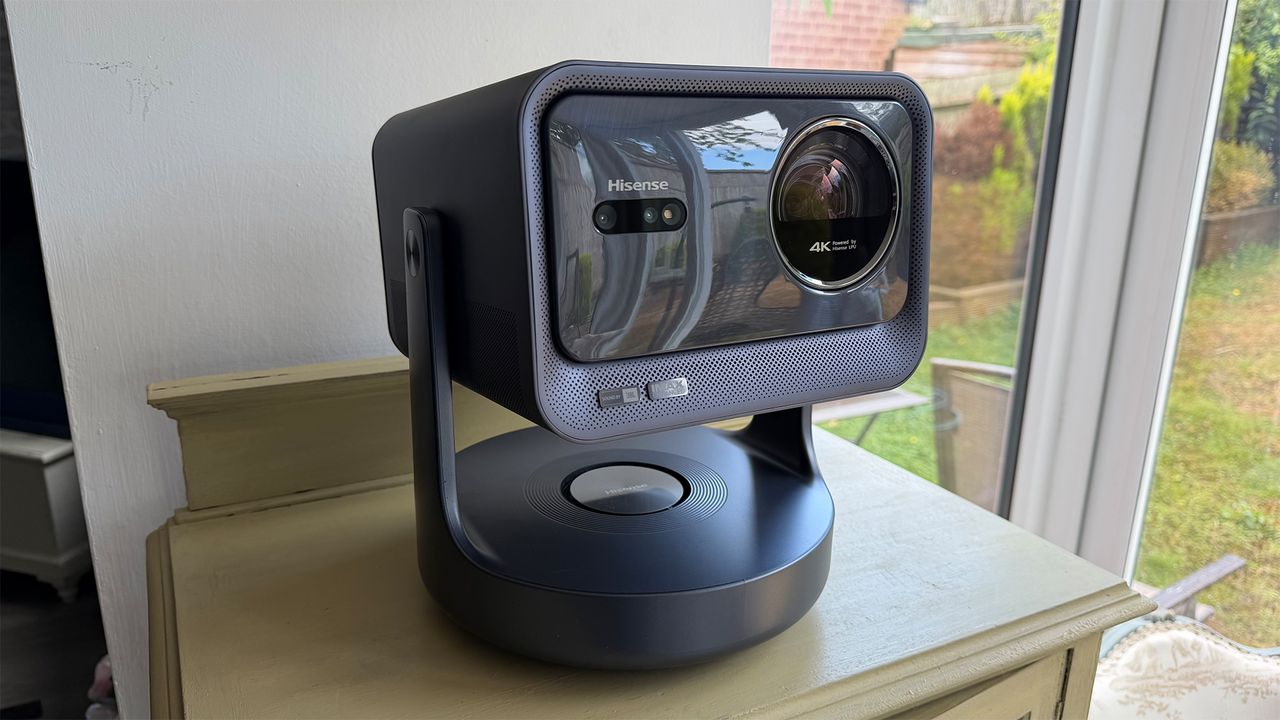
PT1 UST Projector
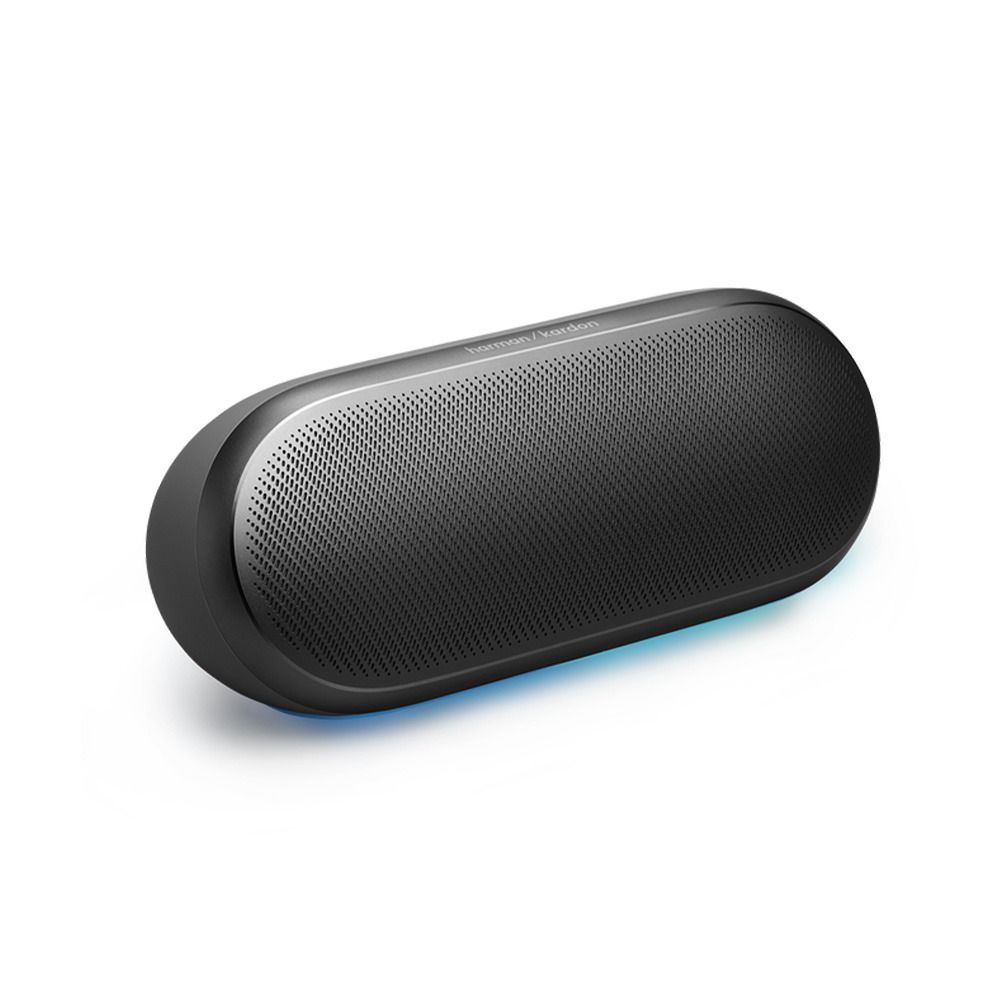
The Harman Kardon Luna 2 has a classy design with a ring light that is far more elegant than the garish party lights of other Bluetooth speakers. Sonically, it doesn't quite topple the class leaders, but it has an articulate, clear and spacious presentation with a particularly excellent midrange presence.
The iPhone 17 Pro may be superseded in a matter of weeks, but that just means there's some great discounts available now. At the time of writing, at least, the 17 Pro is the best iPhone yet for movies and music, with a gorgeous but balanced picture and superb sound.
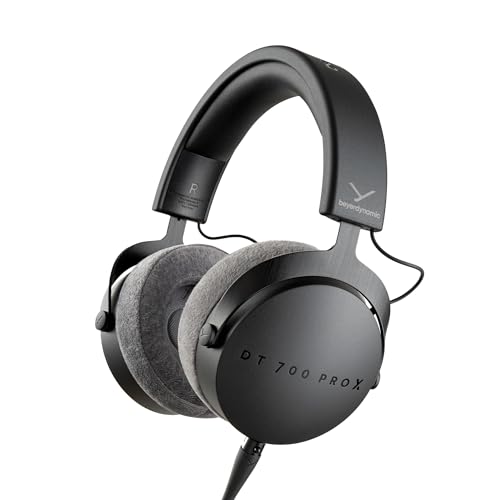
The Beyerdynamic DT 700 Pro X may be studio headphones marketed at content creators, but there's plenty to offer consumers with excellent detail and a musical but articulate sound. If you’ve got a desktop hi-fi system in need of new headphones, these are one of our top recommendations, now at a new lowest price.
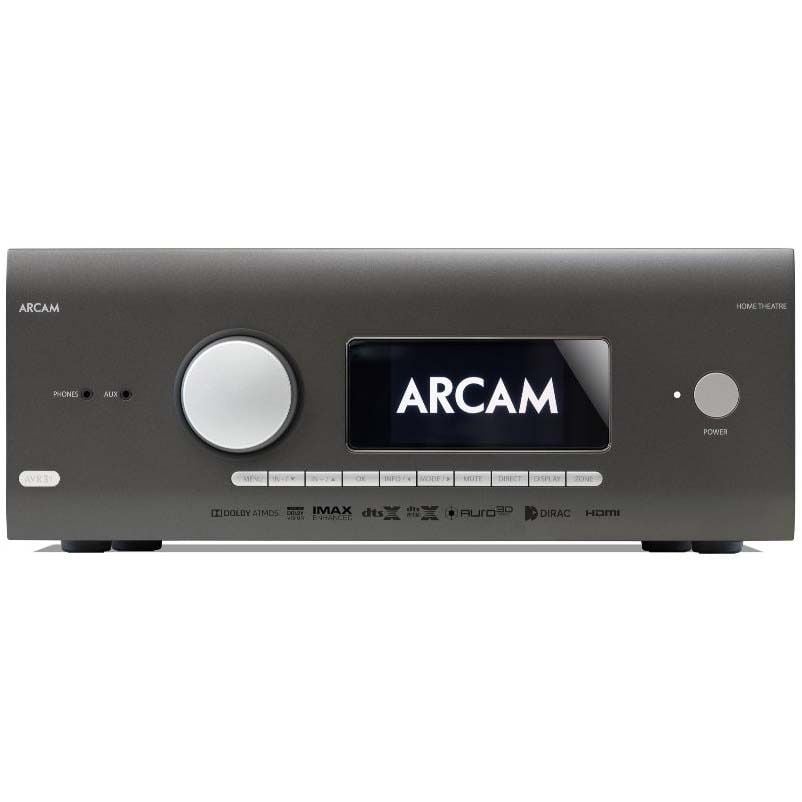
The Arcam AVR31 may be getting on a bit, but it's still one of the best AV receivers we've ever tested. It's a sophisticated, premium amplifier that offers both high-class sound and impressive connectivity features, with a healthy seven HDMI 2.1 inputs and three outputs. Now a whopping 57 per cent off.
A former What Hi-Fi? Award winner, the Sonos Era 300 is a wireless smart speaker that comes packing all the goodness and seamlessness of a Sonos system, with a key stand-out feature: spatial audio. However, it performs admirably with any format of music you throw at it, and the vast array of features go a long way toward justifying the price tag.
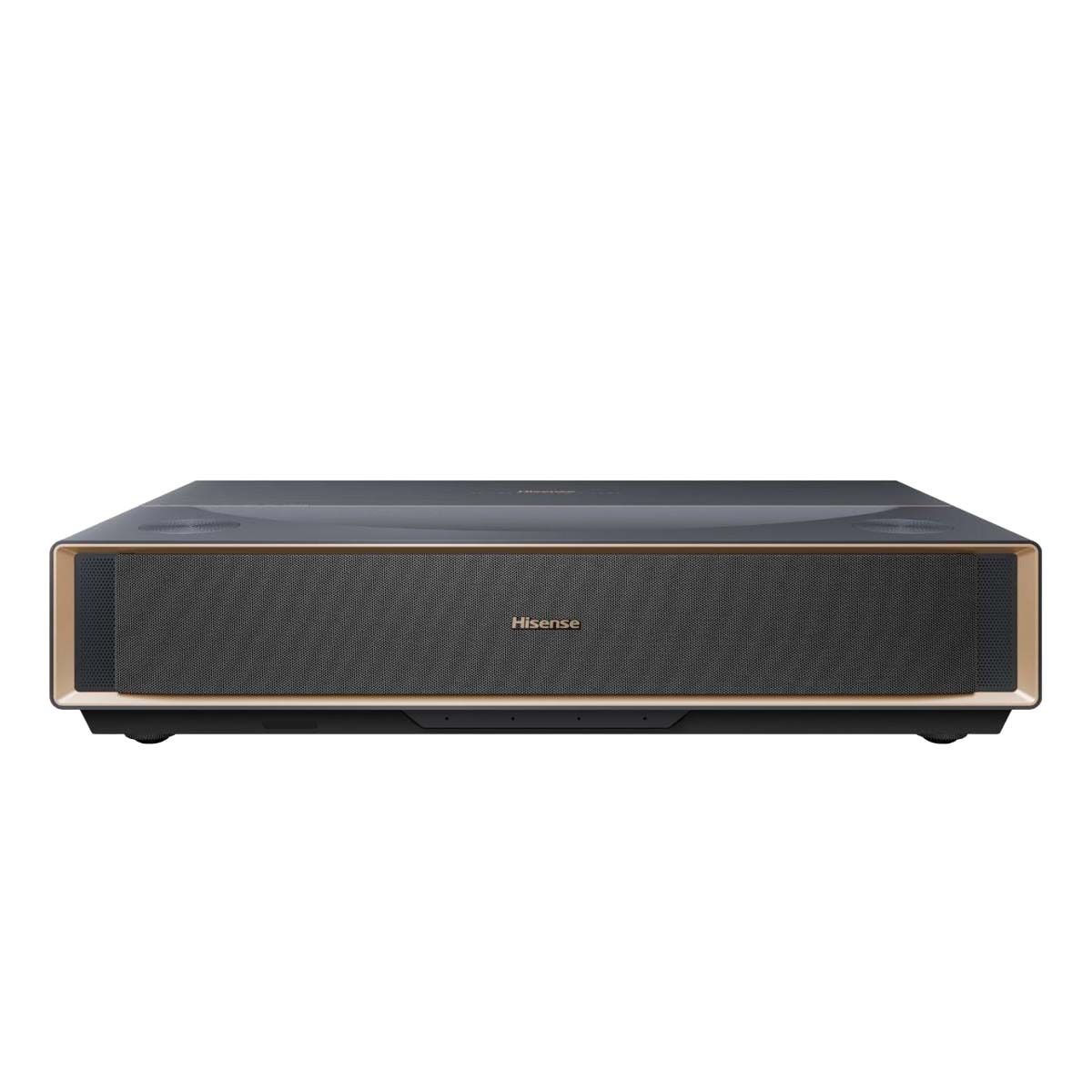
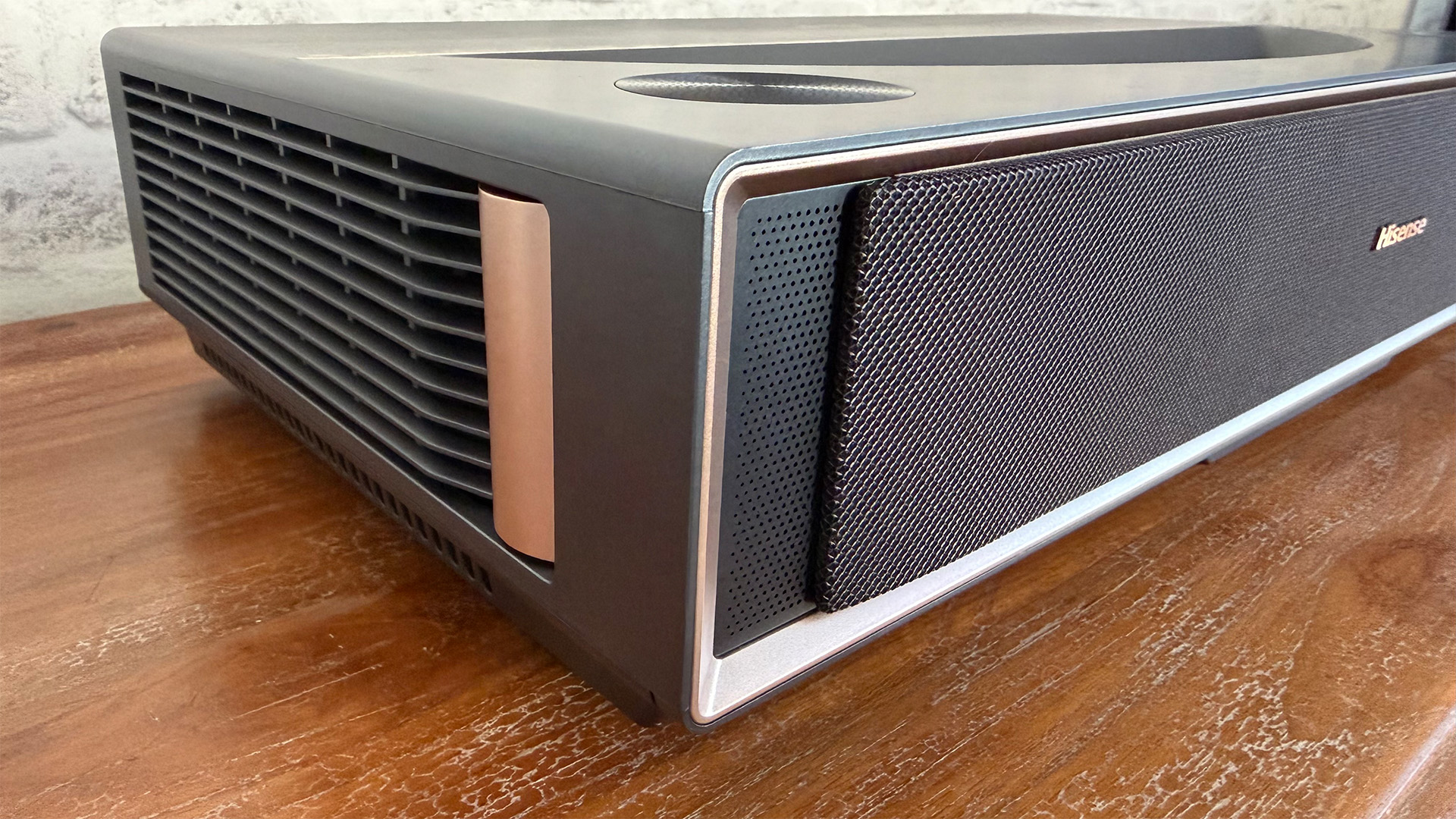
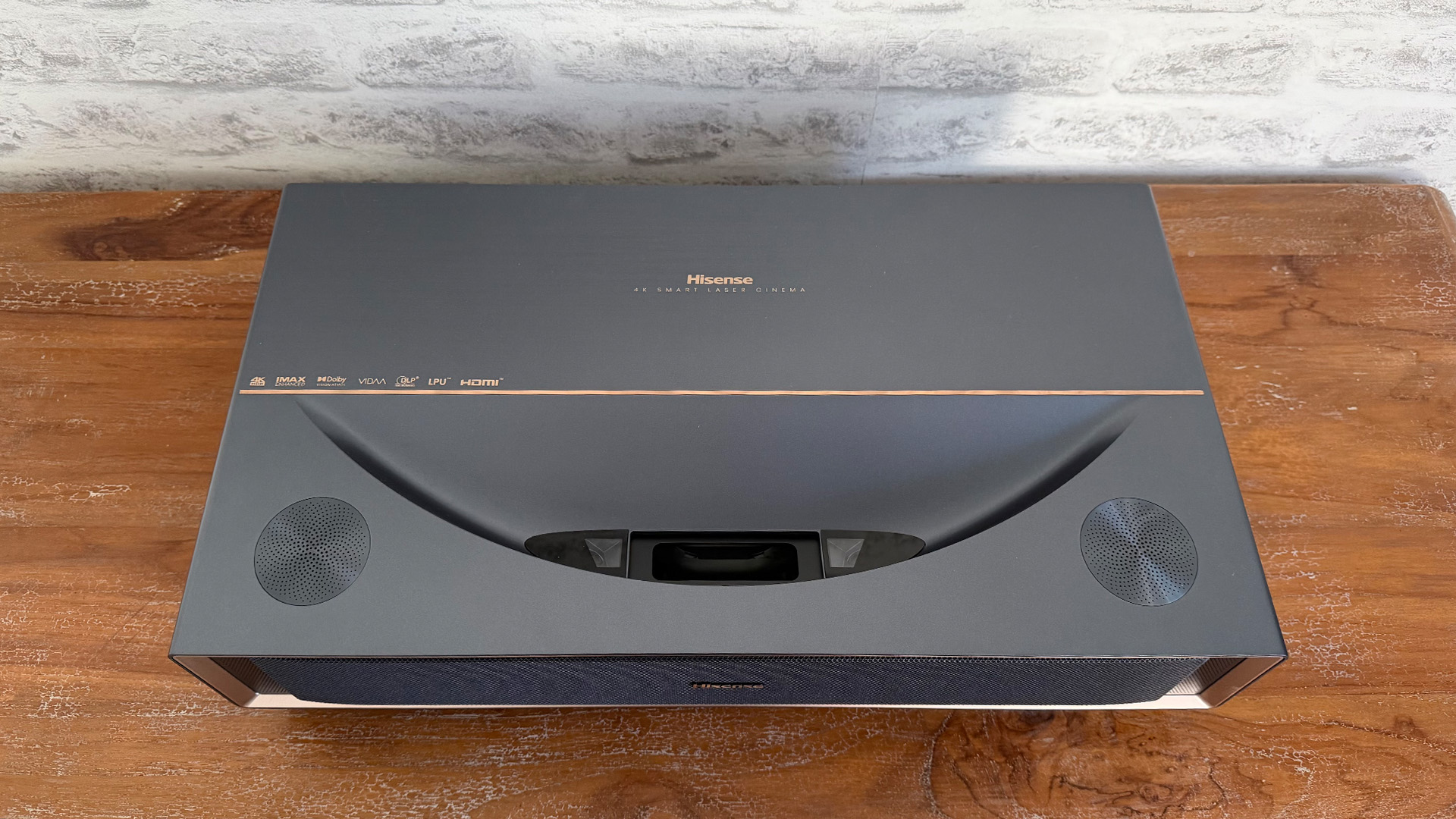
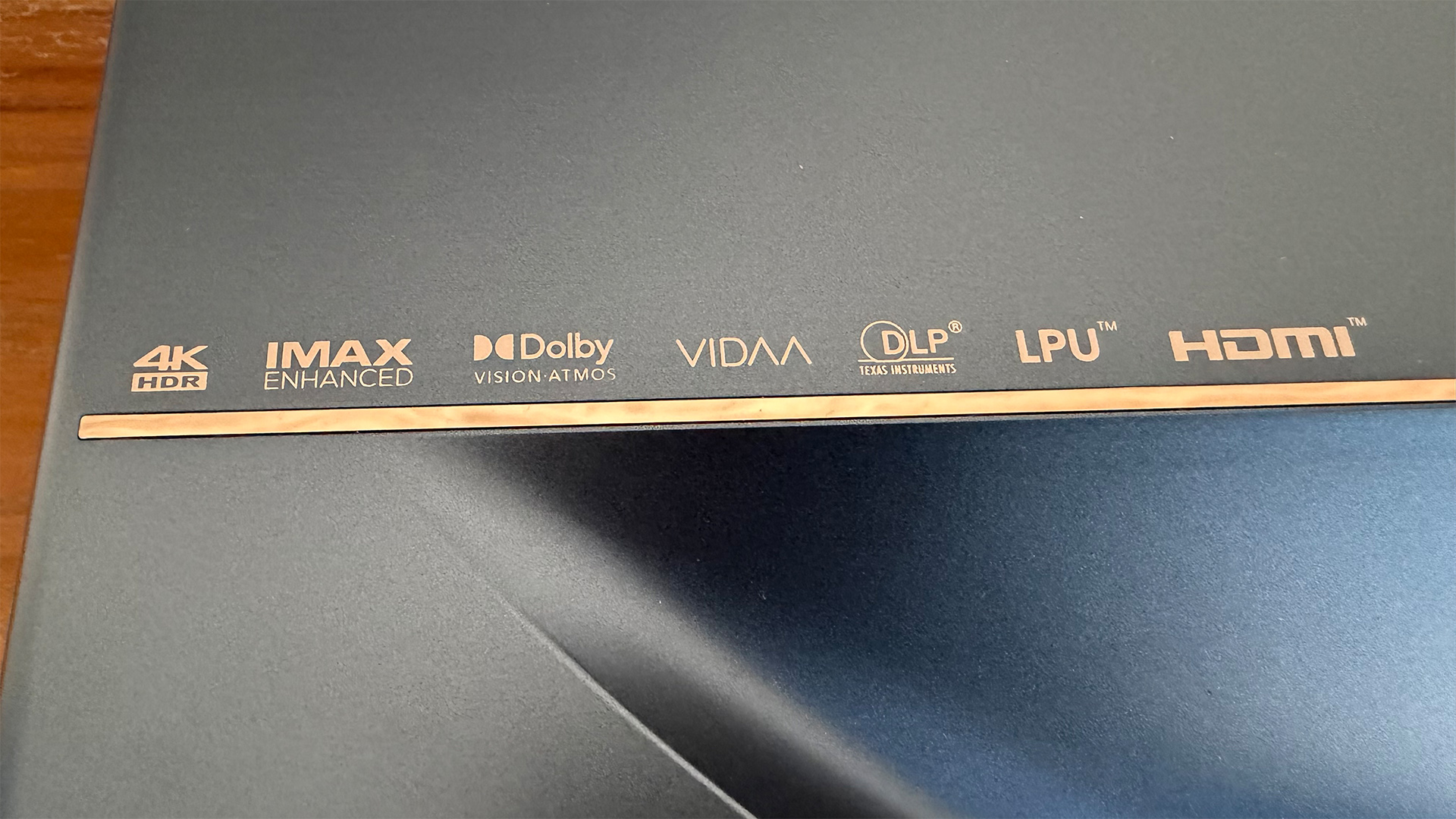
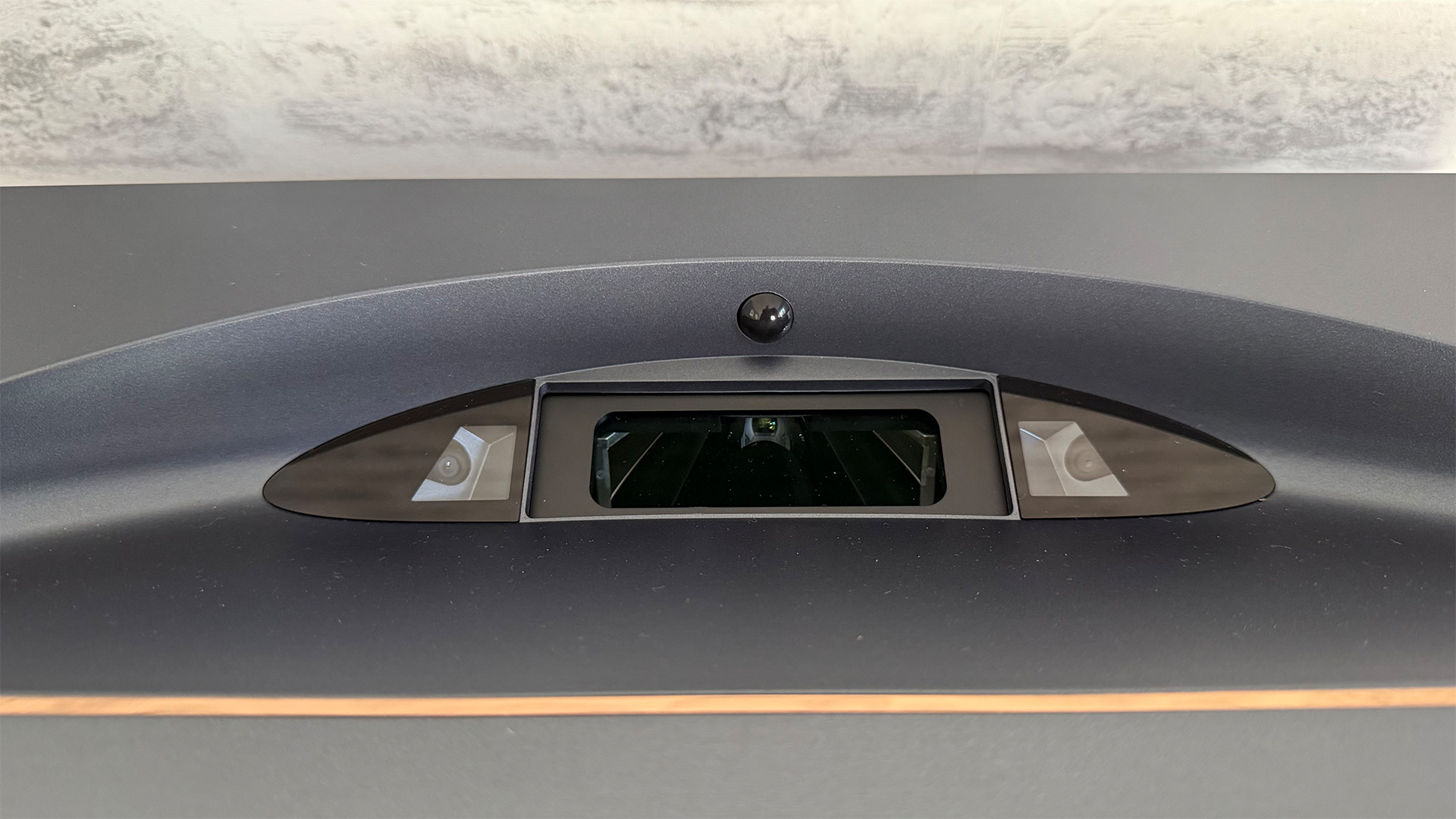
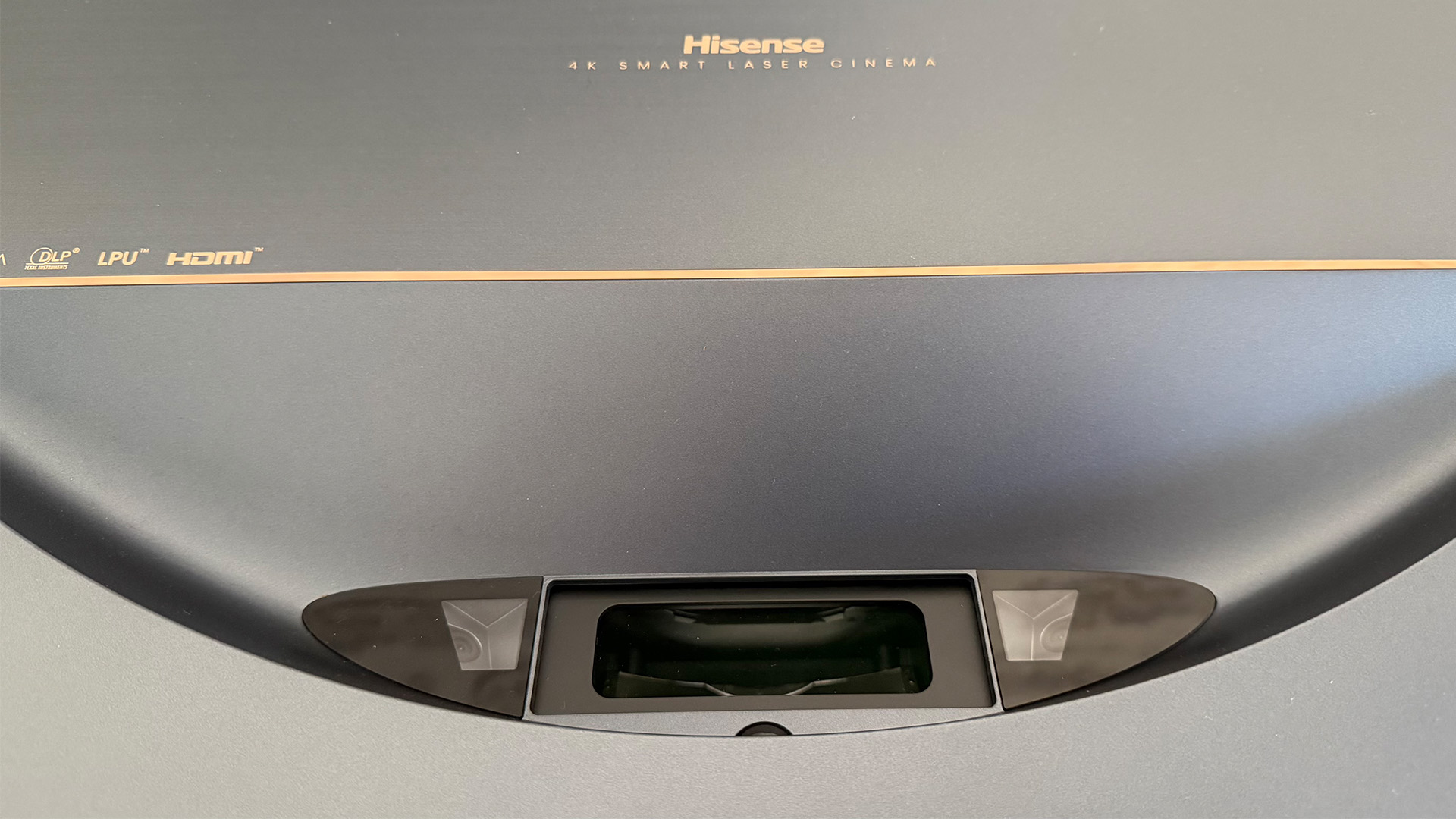
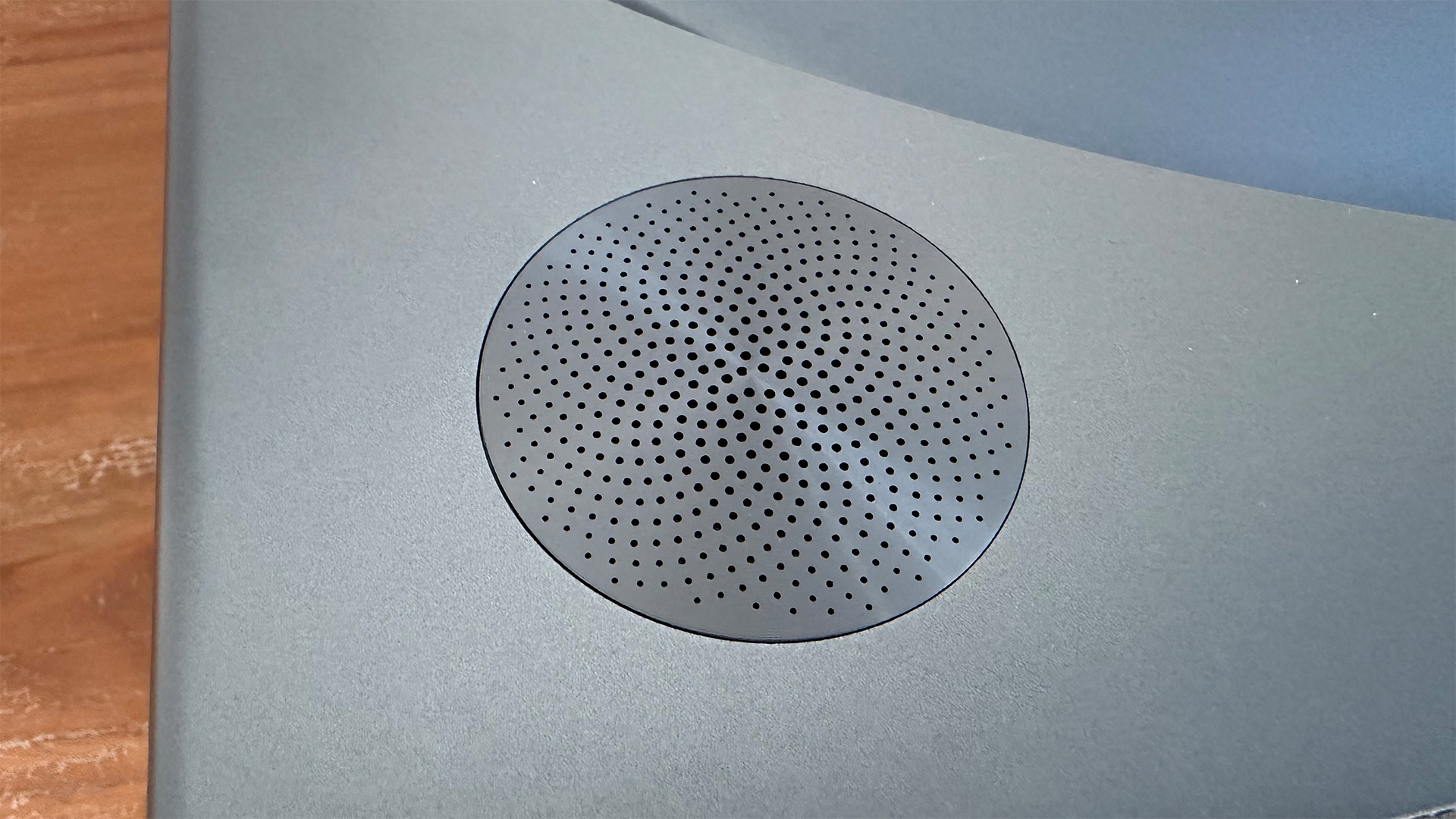
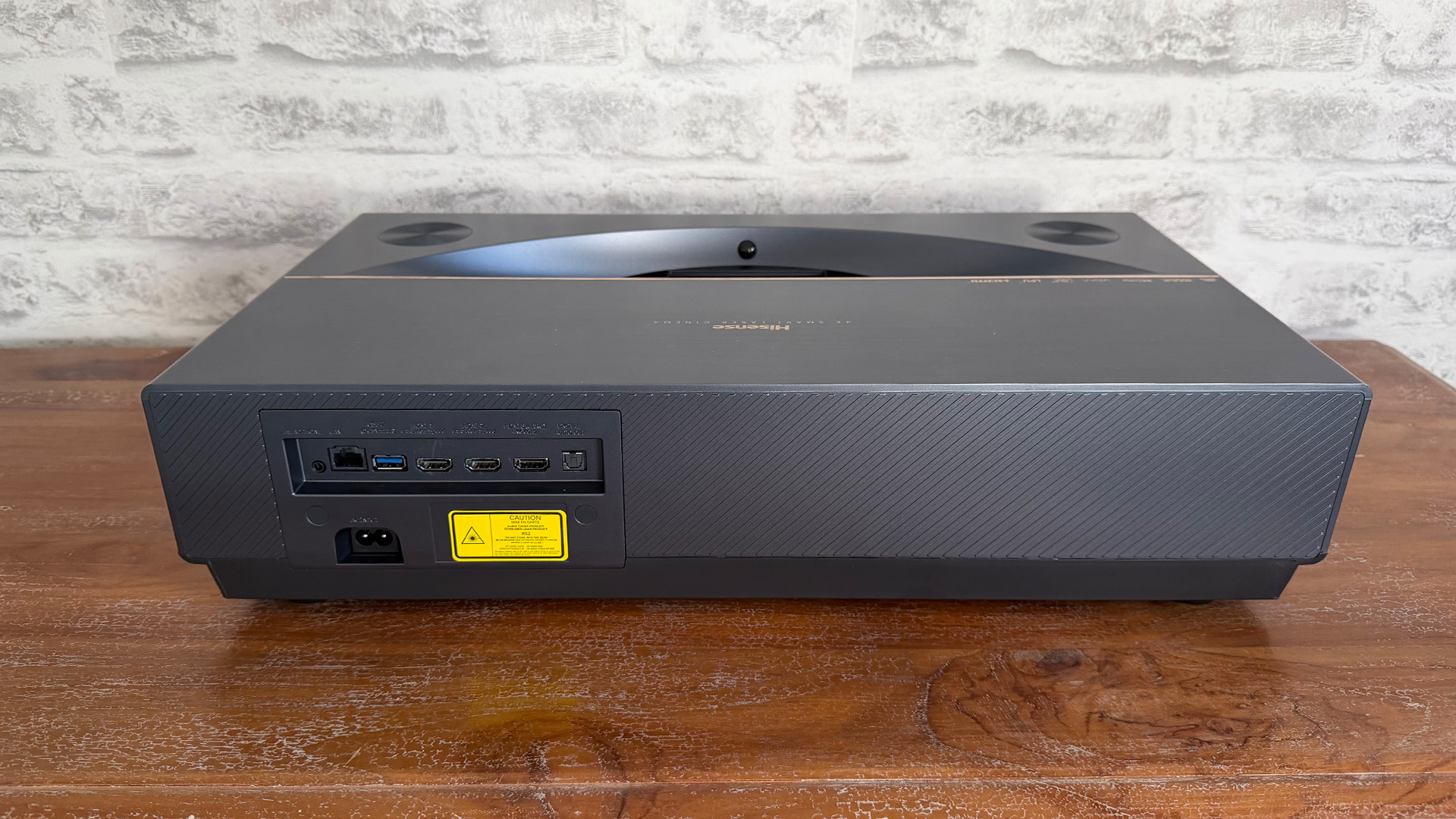
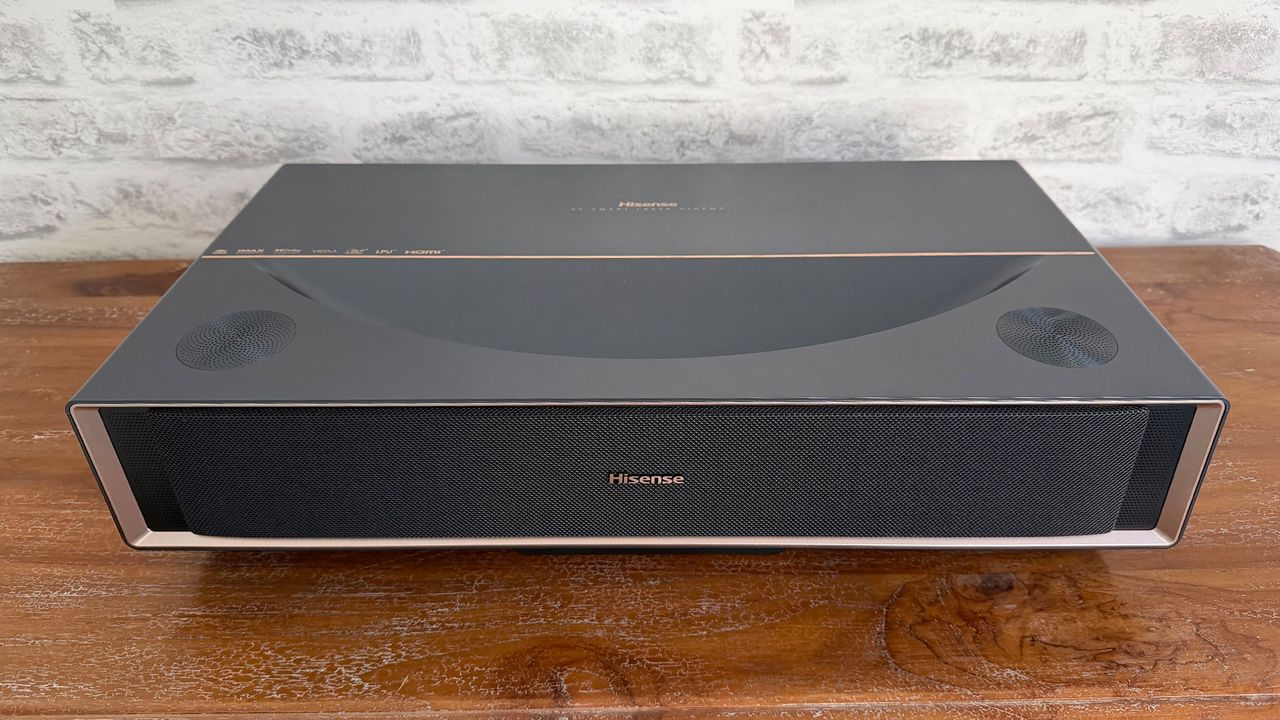
We've only just reviewed the Hisense PT1, but we were very impressed with the inclusion of a full tri-chroma (RGB) laser projection, built-in Vidaa smarts, a premium design and a potent integrated sound system for a very reasonable price. That price is now a whole lot more reasonable – pay only £1199 with the code RSTV400.
The long Labor Day weekend is the last big sales event before Black Friday, so it’s well worth taking a look at the deals.
And while it may be tempting to wait a few more months, there are some record-low prices to be had already – including a whopping 50 per cent off a pair of multi-Award-winning headphones.
There’s plenty else to consider, though, including our 2025 TV Product of the Year, a new OLED favourite and a saving on Apple’s best AirPods.
Whatever you decide on, every product below has been tried and tested by our expert review team. Each device is compared to the market leaders, and only those with four stars or more get our sought-after recommendation.
So kick back this long weekend and enjoy some of the deals…
Sony
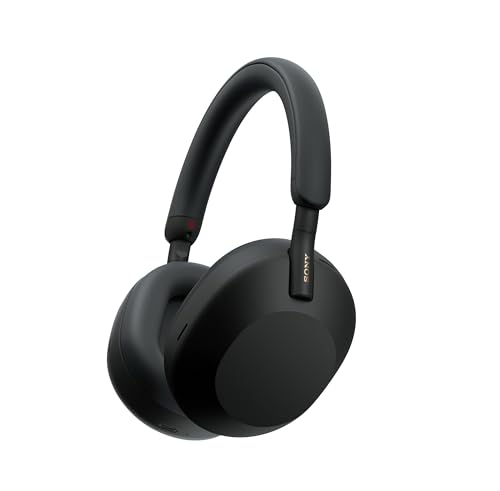
WH-1000XM5 Wireless Headphones
LG
C6 65-inch OLED TV
Amazon
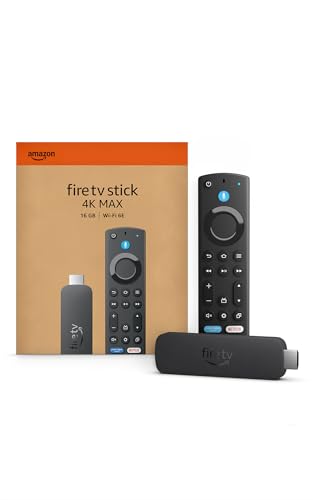
Fire TV Stick 4k Max (2nd Generation) Streaming Device
Apple
AirPods Pro 3 Wireless Earbuds
JBL
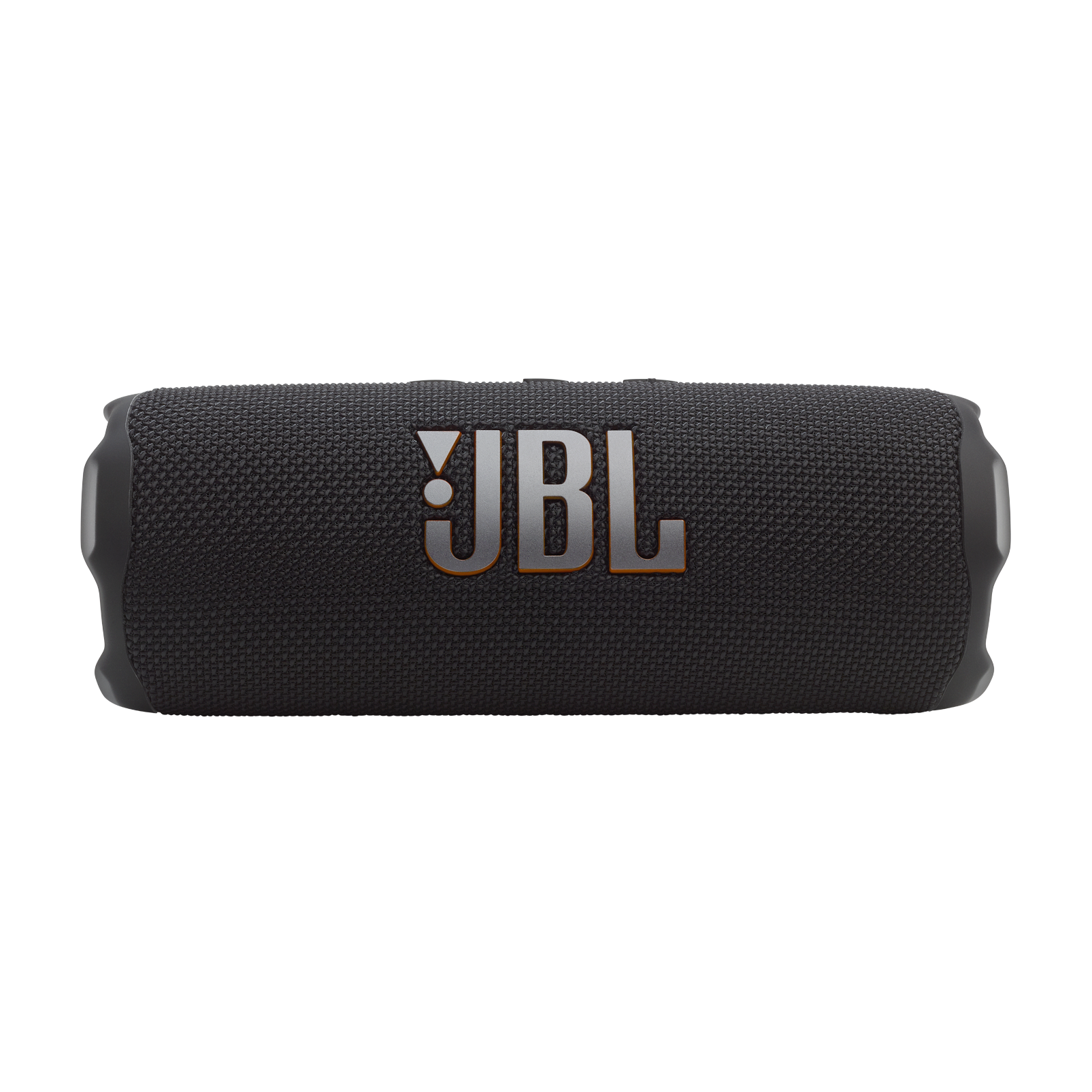
Flip 7 Bluetooth Speaker
Sony
Bravia 8 II 55-inch QD-OLED TV
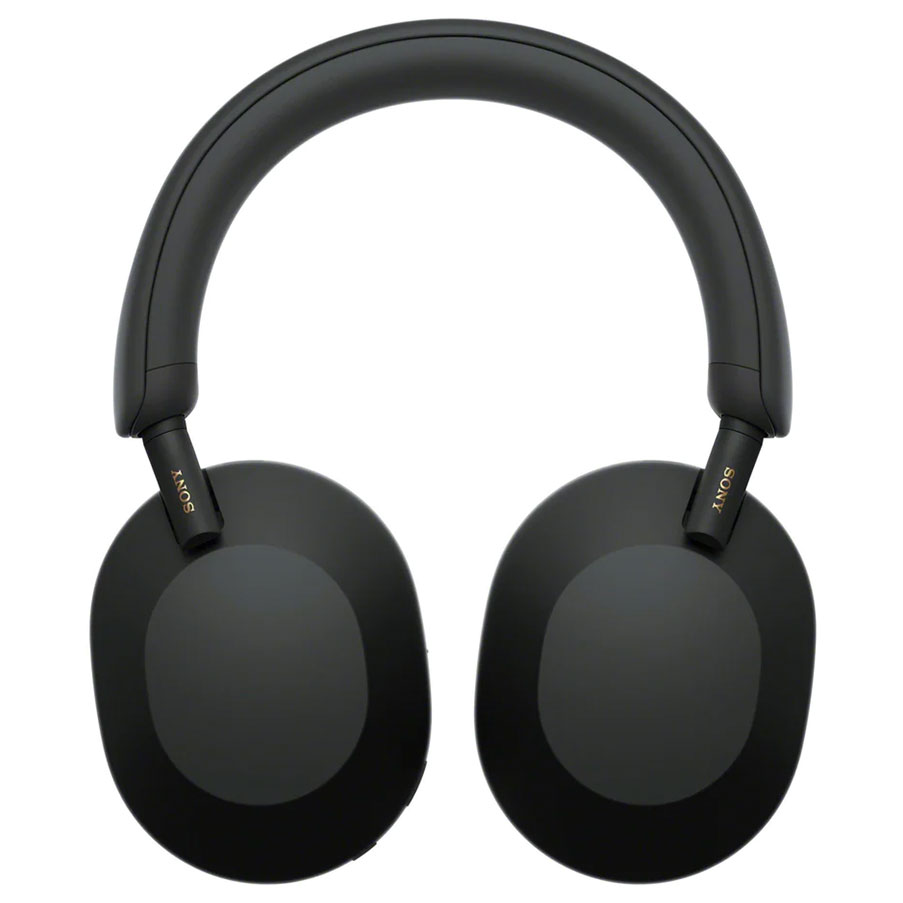
The Sony WH-1000XM5 premium noise-canceling headphones are great performers, and this fantastic half-price saving makes them even better value. The newer WH-1000XM6 have taken their place, but the XM5 are still very much recommended.
The LG C6 is one of our favorite TVs of the year so far, with a new processor delivering a brighter, richer and more refined OLED picture than its predecessor. If you’re looking for a mid-range OLED, this is the one to get, and its awesome gaming specs are ideal for GTA 6 in a few months.
If you’re looking to add streaming smarts to your TV or just upgrade its capabilities, then the Amazon Fire TV Stick 4K Max (2nd Generation) is our video streamer Product of the Year and our top choice at this price range. The stick adds Amazon’s app-packed Fire OS, with a detailed, rich picture and support for all four HDMI formats.
The AirPods Pro 3 have it all, with spacious, powerful and dynamic sound, effective noise-canceling and a comfortable, lightweight design. If you have an iOS device, these are the AirPods we recommend, and you’ll get to enjoy the snappy, seamless synergy between the two.
JBL has been king of the portable Bluetooth speaker game for a while now, and the JBL Flip 7 is no different. With skilful handling of dynamics and rhythms, excellent build quality and a strong feature set that includes Auracast and lossless wired audio, there’s a lot on offer here.
The Sony Bravia 8 II is our current reigning TV champion, scooping the Product of the Year gong in this category thanks to its exceptionally bright, vibrant and three-dimensional picture, excellent shadow detail and cinematically authentic presets. We’ve been singing its praises for some time, so this discount is the perfect time to see what all the fuss is about.
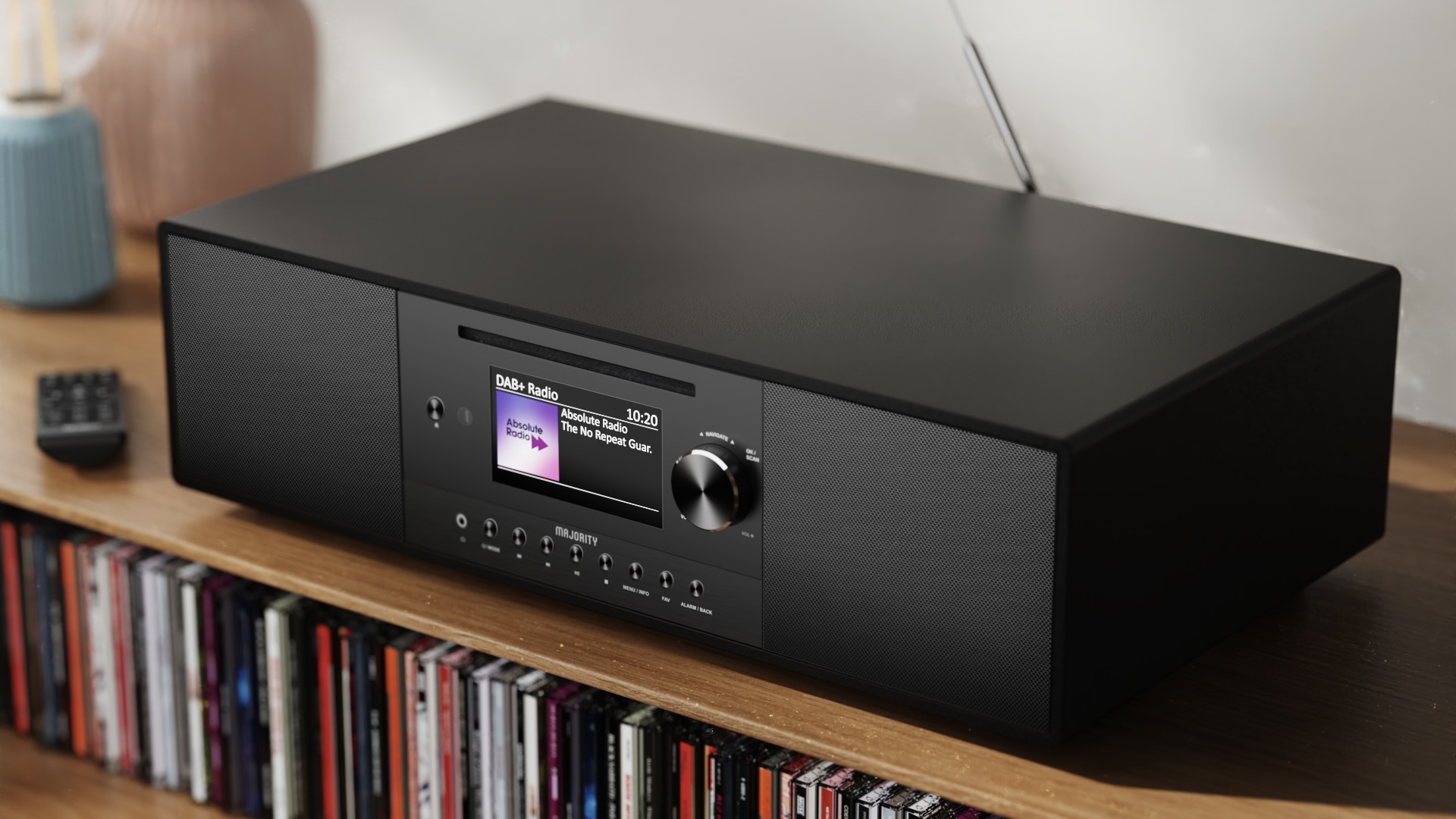
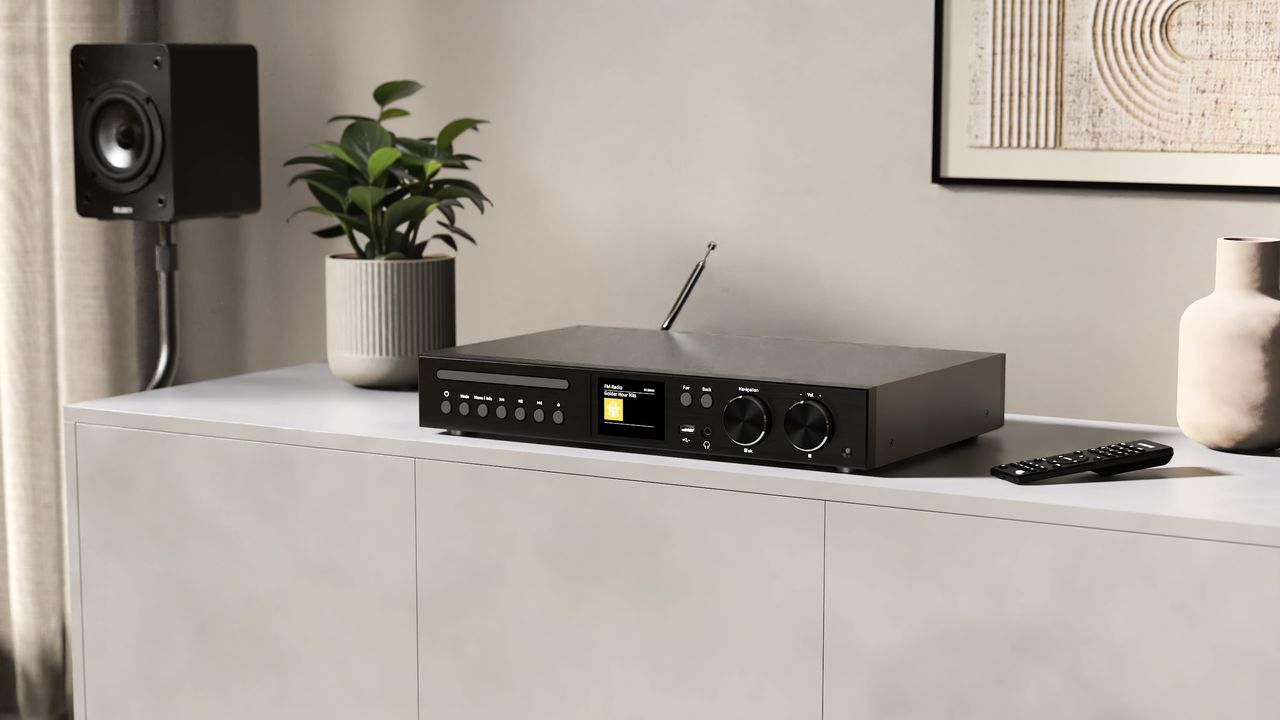
British manufacturer Majority has expanded its home audio range with four new products designed for listeners “who want modern music streaming but also want to use their CD collection”.
The new products include the Fitzwilliam trio – which includes the Fitzwilliam CD, Fitzwilliam Amp and Fitzwilliam CD Amp – and the Quadriga Maxi all-in-one system, which combines streaming with a built-in CD player and speakers.
According to Majority, the Fitzwilliam trio has been designed to “let customers choose the right starting point for the equipment they already own, from adding connected sources to an established system, to powering passive speakers”.
First up is the Fitzwilliam CD. This is a slot-loading CD player, which offers support for CD, CD-R and CD-RW formats.
Far from being limited to physical music, the Fitzwilliam CD also features wireless listening and streaming options via Bluetooth 5.2, Spotify Lossless, Amazon Music and Deezer, as well as USB MP3 playback and internet radio. There's even support for DAB, DAB+ and FM radio.
Another analogue source can be connected via stereo RCA inputs, while stereo RCA, optical and coaxial outputs offer a variety of analogue and digital options.
The Fitzwilliam CD’s front panel features an 8cm colour display, showing the station, track and menu information. Users can control the unit wirelessly by remote, through the OKTIV app, or manually using the front-panel buttons.
Alongside the Fitzwilliam CD, the Fitzwilliam Amp provides 100 watts per channel of Class-D power via its Texas Instruments amplifier. Streaming and radio options are built in, with support for Spotify Connect with Spotify Lossless, Amazon Music, Deezer, internet radio and podcasts.
DAB, DAB+ and FM radio are also included, alongside Bluetooth support and MP3 playback from USB drives up to 128GB.
The amplifier has optical and coaxial digital inputs alongside a standard stereo RCA connection. For further listening versatility, outputs include stereo passive speaker outs, stereo RCA pre-amplifier outputs and a 3.5mm headphone jack.
According to Majority, preset EQ modes and customisable ‘My EQ’ controls allow bass, treble and loudness to be adjusted “to suit the room and speakers”.
(Image credit: Majority)
Last but not least is the Fitzwilliam CD Amp, which pairs a tray-loading CD player with 100 watts per channel of Class D power from a Texas Instruments amplifier.
Like the Fitzwilliam CD, the Fitzwilliam CD Amp supports CD, CD-R and CD-RW, alongside Spotify Lossless, Amazon Music, Deezer, Bluetooth, USB MP3, internet radio, podcasts, DAB/DAB+ and FM.
The Fitzwilliam CD Amp accepts digital and analogue sources thanks to its stereo RCA, optical and coaxial inputs. Outputs include stereo speaker, stereo RCA pre-amplifier, and 3.5mm headphone connections.
The CD Amp has an 8cm colour display screen and can be controlled using built-in physical controls, a remote, or the OKTIV app.
What if you want everything combined in a single box? That's where the Quadriga Maxi comes in. Boasting 200 watts of total power, the 2.1-channel system combines two 7.6cm full-range drivers with a built-in 13cm bass woofer for “room-filling listening without separate equipment”.
The Quadriga Maxi features a slot-loading CD player, with CD, CD-R, CD-RW and MP3 CD support, alongside Spotify Connect, Amazon Music, Deezer, internet radio, podcasts, DAB/DAB+, FM, Bluetooth 5.2 and USB MP3 playback.
The all-in-one system includes optical, stereo RCA and 3.5mm aux inputs. For simple navigation of its extensive feature set, an 11cm colour display is provided, alongside wireless control options via remote and the OKTIV app.
The Fitzwilliam range and Quadriga Maxi are available now. Pricing is as follows:
It's *gasp* September. But before we start an existential crisis about how the year is moving too fast, the evenings are getting darker and it will be Christmas before we know it, it's time for our Pick of the Month column.
Here, our reviewers once again look back at all the great products that passed through our test rooms this month.
As you'd expect, these products have all been put through the proverbial wringer by our dedicated testing teams. Only devices that earned five stars are included here, with a whopping seven joining the club this month.
So luckily, we've done the hard work of sorting the wheat from the chaff – so take a look, and we'll explain why we rate them so highly below.
Only an incremental AV upgrade over the 16 Pro and standard iPhone 17
An Island-free picture would be nice
Samsung
Galaxy Z Fold 8 Smartphone 512GB Storage
Pros
Bright, punchy and detailed picture
Excellent contrast for enhanced depth and solidity
Fun and useful form factor
Cons
Slightly overcooked skin tones
Sound could be more dynamically expressive
Expensive compared to non-folding rivals
Dali
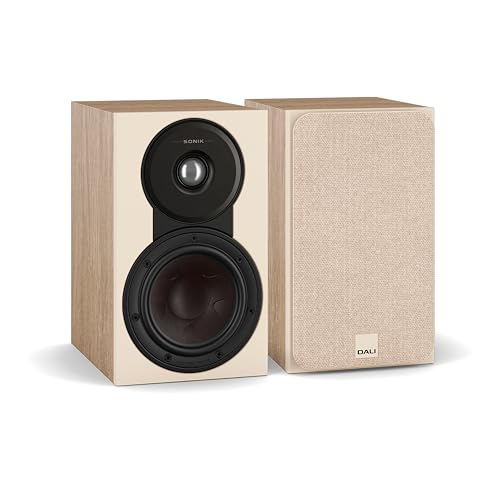
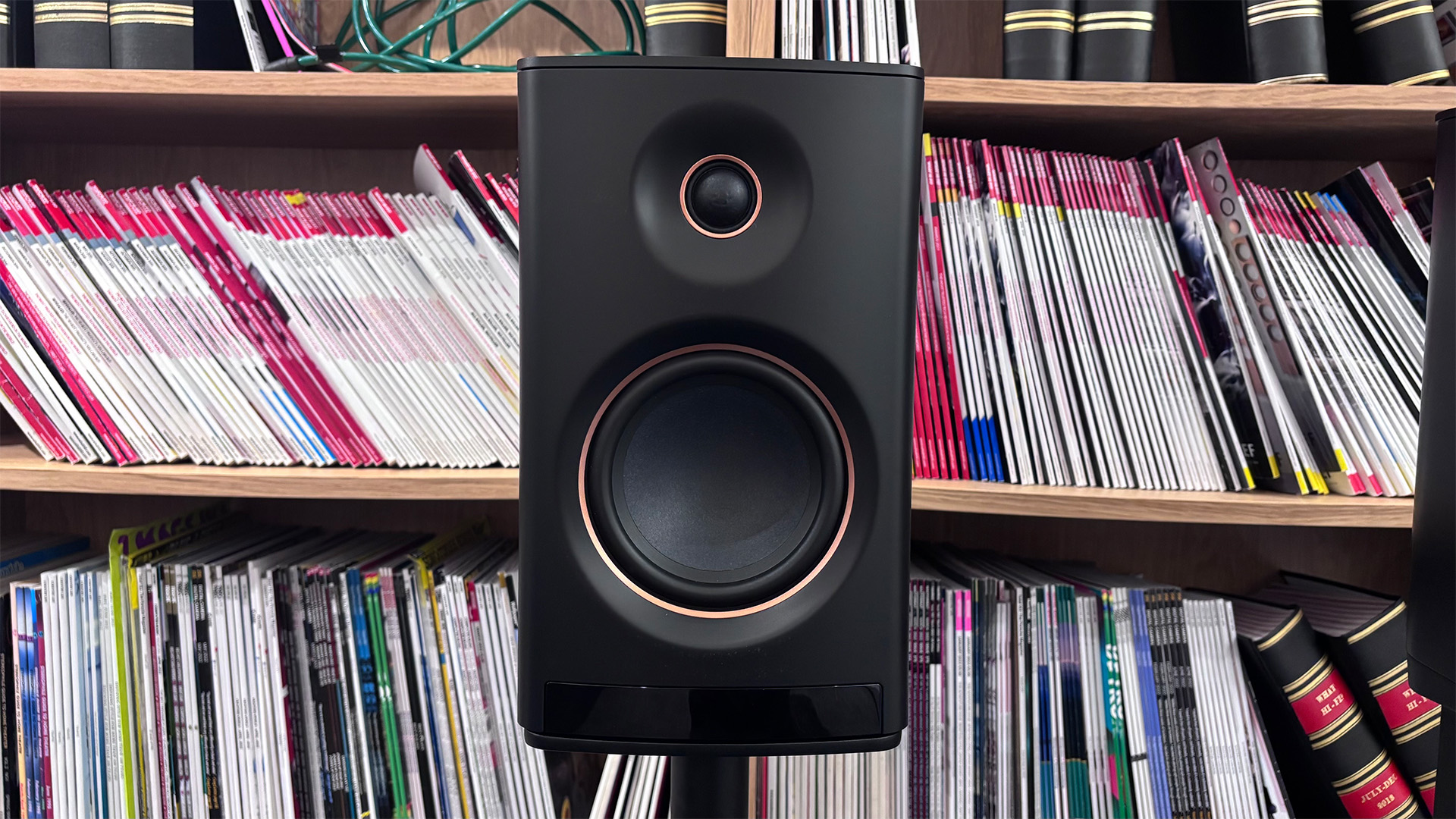
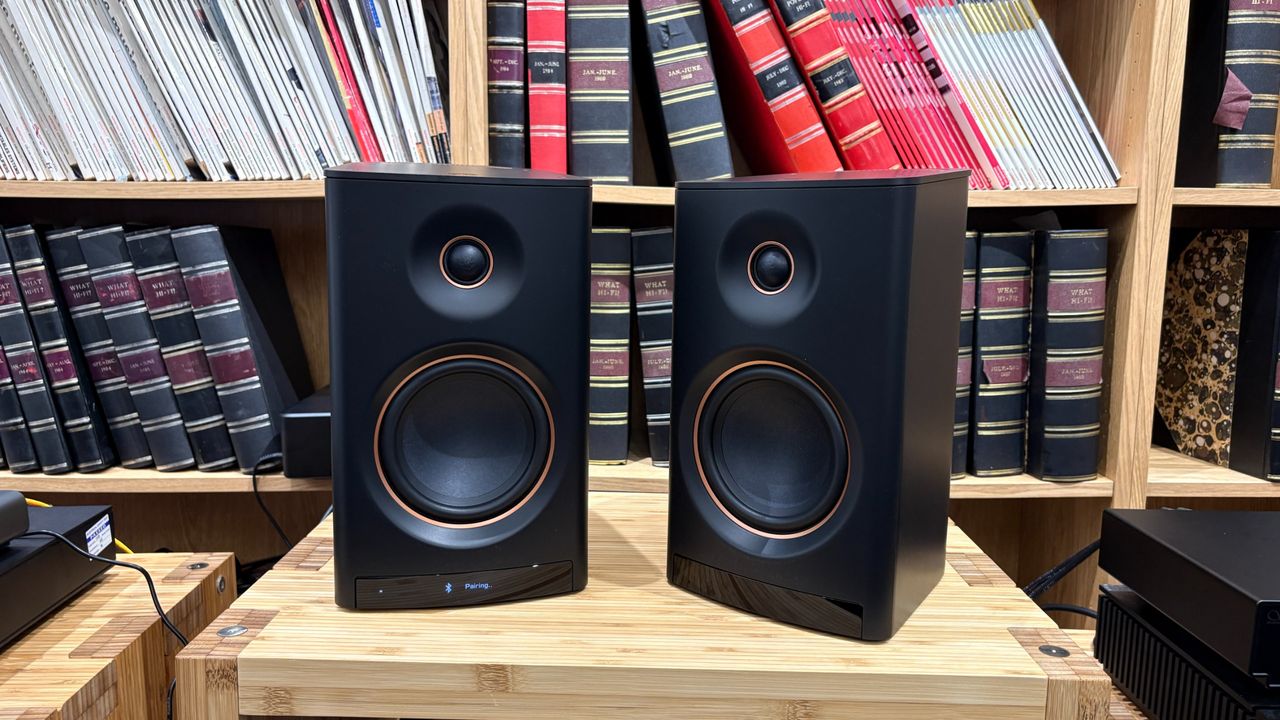
Sonik 1 Bookshelf Speakers
Samsung
Galaxy Tab S11 Ultra Tablet
Pros
Huge, bright screen
Powerful performance
Impressive battery life
Cons
Size can feel unwieldy
Heavy
Priced as a laptop replacement, so may be overkill for movies and music
Amazon
Fire HD 8 Tablet
Pros
Good, clean picture for the price
Solid sound
Great value and regularly discounted
Cons
Very reflective screen
App selection is behind competition
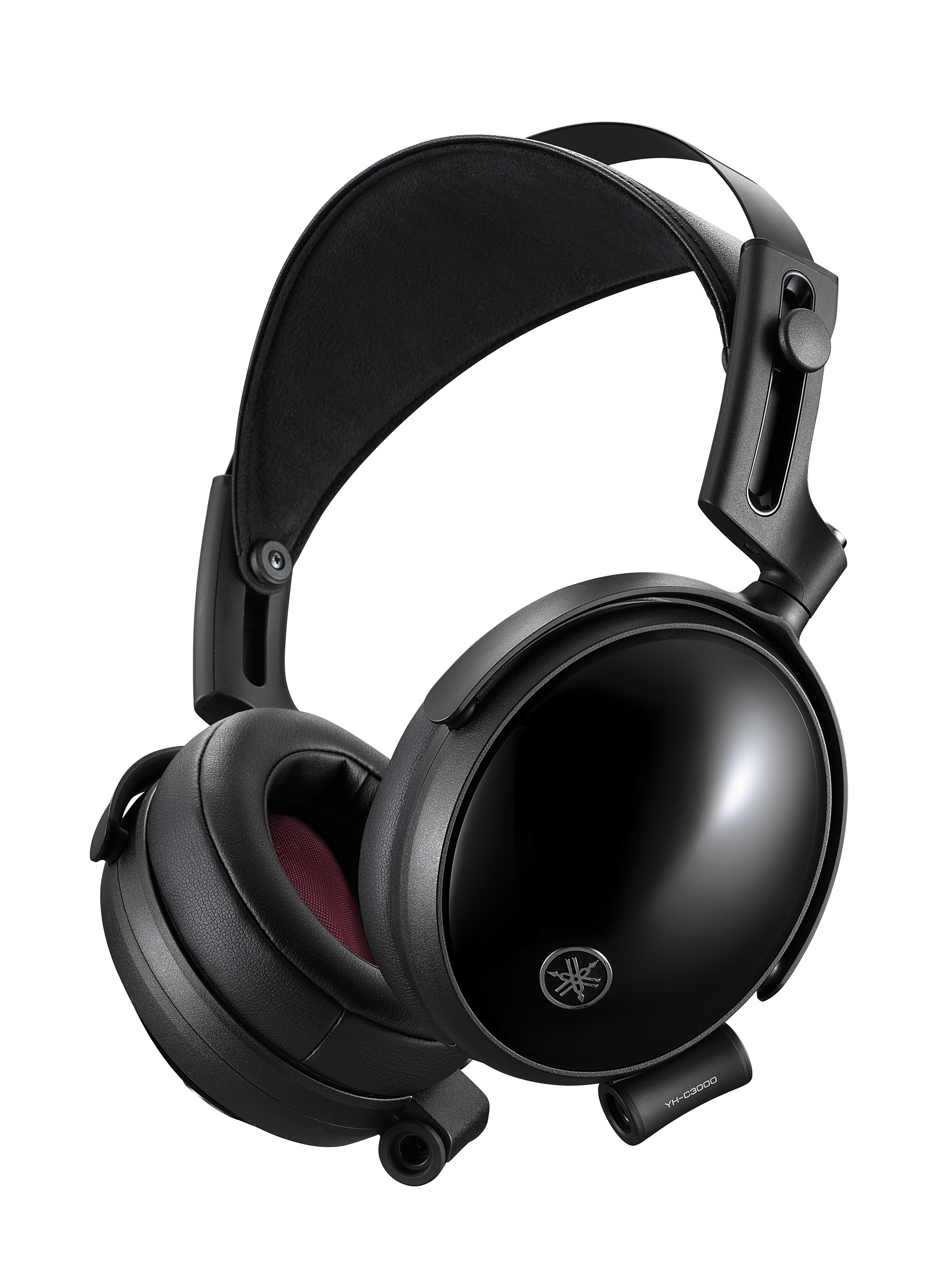
Yamaha
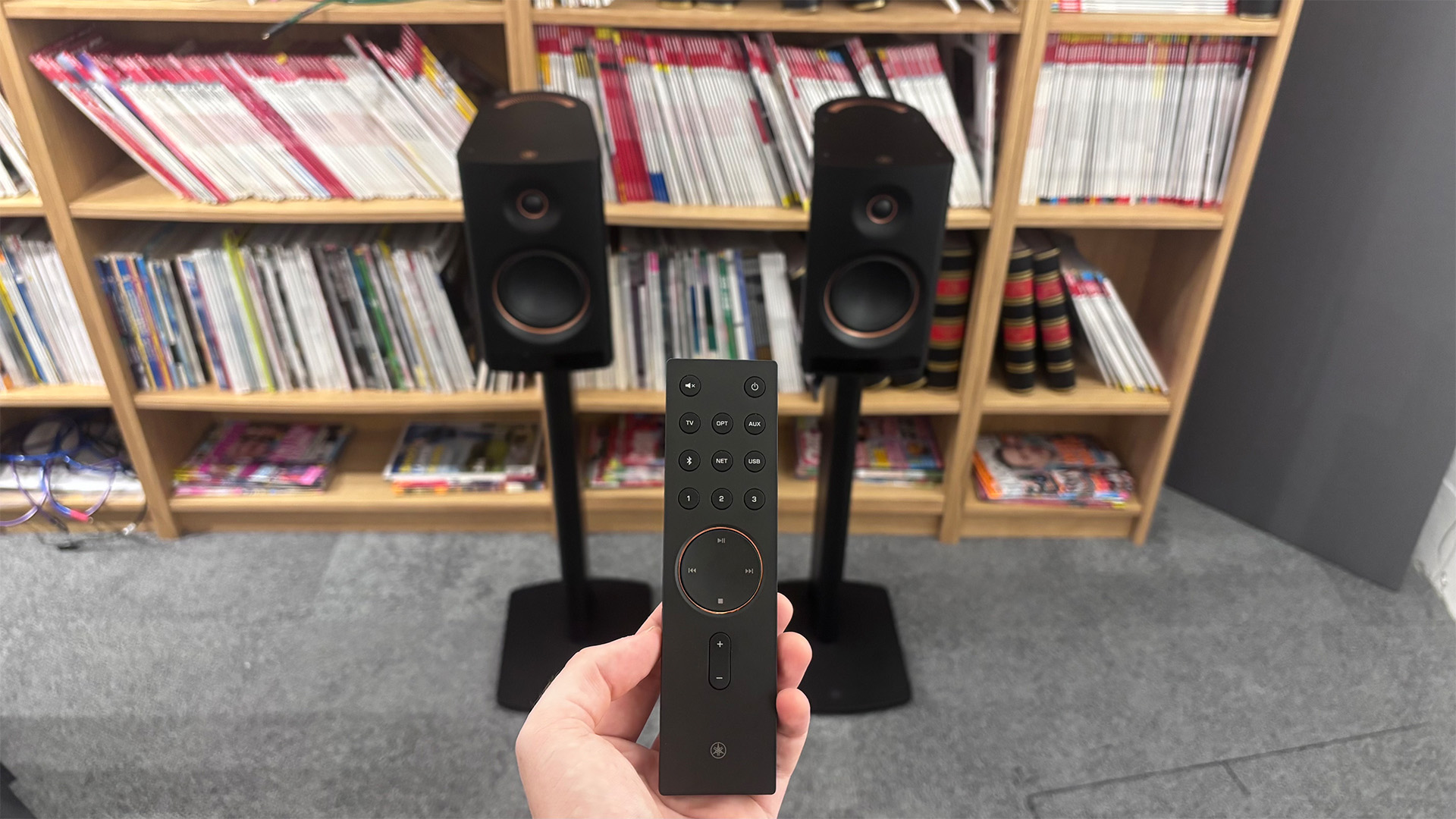
YH--C3000 Wireless Headphones
Pros
Set a new performance benchmark
Fast, clear, natural sound
Fluid, expressive dynamics
Rhythmically tight
Smart, comfortable, lightweight design
Cons
Glossy ear cup finish is a fingerprint magnet
Adjustment slider cover feels cheap
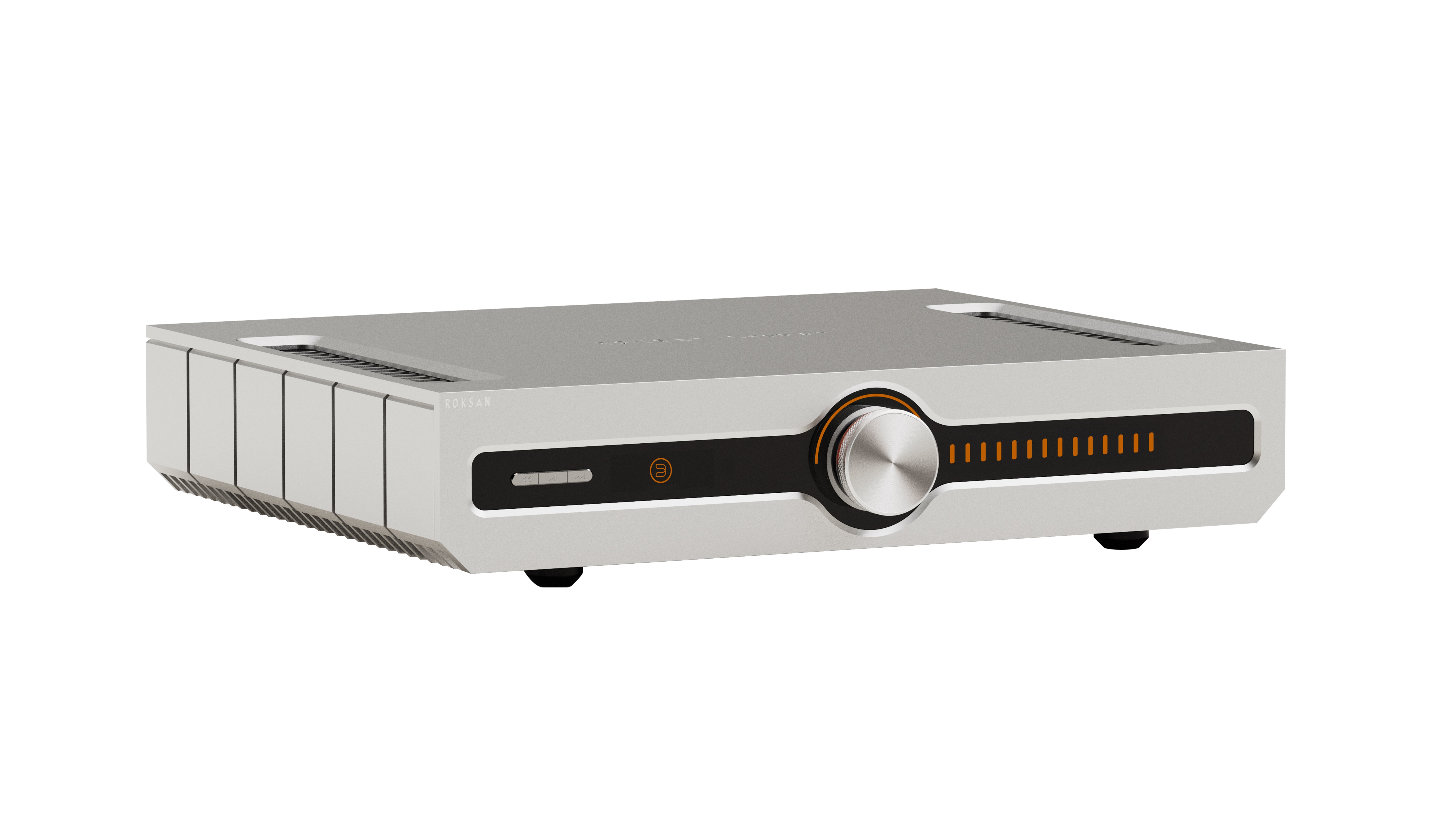
Roksan
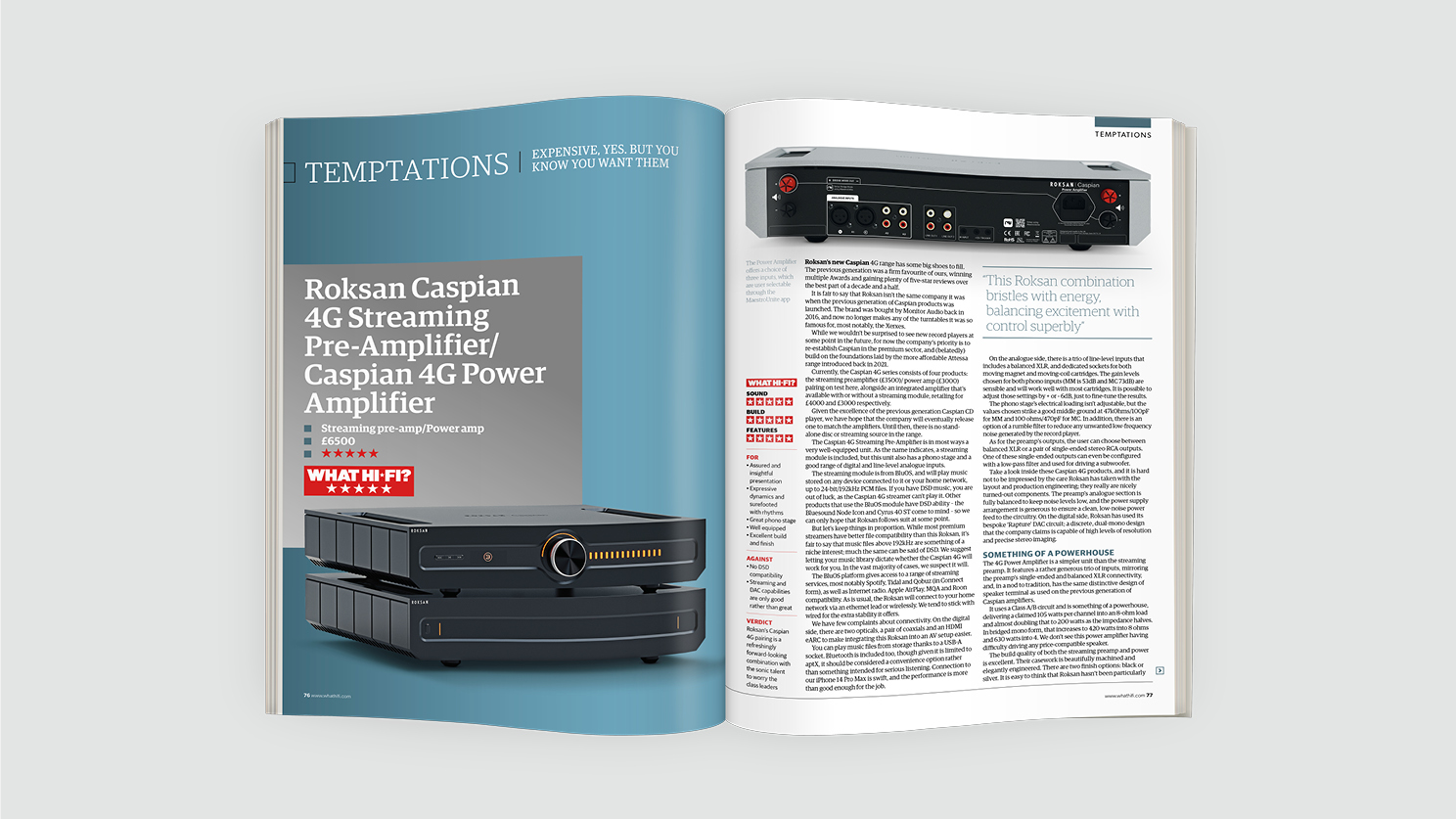
Caspian 4G Streaming Pre-Amplifier/Caspian 4G Power Amplifier
Pros
Assured and insightful presentation
Expressive dynamics and surefooted with rhythms
Great phono stage
Well-equipped
Excellent build and finish
Cons
No DSD compatibility
Streaming and DAC capabilities are only good rather than great
The Apple iPhone 17 Pro may have a successor in only a matter of days, but we still highly recommend it, especially now that it's available discounted. It's the best iPhone yet for movies and music, with a gorgeous but balanced picture and superb sound.
The Samsung Galaxy Z Fold 8 is a pricey but brilliant portable movie machine with a bright, punchy and detailed picture and a new content-friendly aspect ratio. If you've been considering a folding phone, this is the most compelling option we've reviewed so far.
The smallest speakers in Dali’s new Sonik range follow in the footsteps of their floorstanding sibling, the five-star Sonik 5, with expressive, well-balanced sound and solid build quality. The Dali Sonik 1 will also forgive less than ideal placement, making them a strong choice for music lovers without a dedicated listening space.
The Samsung Galaxy Tab S11 Ultra is as close to cinematic as a tablet can get, with a huge Dynamic AMOLED 2X display screen and a peak brightness of 1600 nits. You'll want to make use of broader performance features and beefy specs for this price, but this is the Android tablet to beat for movies and music on the go.
Amazon's Fire Tablet range has long been incredibly good value, and the Amazon Fire HD 8 is no different. Available for well under £100 when on sale, the Fire HD 8 absolutely nails the basics when it comes to movies and music – and regularly surpasses them.
Yamaha continues one of head-fi's greatest comebacks. The Yamaha YH-C3000 sets a new standard in their high-end class, with a fast, clear, natural sound and fluid, expressive dynamics.
The Roksan Caspian 4G Streaming Pre-Amplifier/Caspian 4G Power Amplifierhas some big shoes to fill, but does so effortlessly. The pairing is a refreshingly forward-looking combination with the sonic talent to worry the class leaders, and makes us highly excited for what Roksan does next. You'll have to purchase them separately – the Caspian 4G Power Amplifier is at Richer Sounds for £2999.
Looking to get the inside scoop on all the latest hi-fi news and reviews, with some added insights from our editor-in-chief (me)?
Keen to get a sneak peek at what our team of experts are working on, including which review units we’re testing, companies we’re visiting and events we’re attending?
Got an opinion to share that you’d like immortalised on What Hi-Fi?, in a new Quote of the Week section?
If the answer is yes to any of these questions, then we have some good news: we’re launching a new Editor’s Cut newsletter that will give you all three.
Editor’s Cut is part of a fresh push on What Hi-Fi? to make it easier for you, our lovely readers, to get to know and interact with our team of experts.
The newsletter will be sent every Saturday and will include a bespoke letter from our editor, plus his musings on the two biggest stories and reviews from the week.
On top of that, subscribers will be treated to a new What’s Next? summary detailing some of the big things coming the week after – including launch events we’re covering, products we’re testing and people we’re interviewing.
Whether it’s a new section you want added, or a question about one of the items in What’s Next?, or something you want us to raise with a manufacturer we're talking to, we want to hear from you!
If you’ve got a musing or hot take on a topic, we even have a new Quote of the Week section, which is open to readers as well as the people we’re interviewing and our reviewers.
Hopefully you’ve been enjoying our quizzes over the past few weeks. We’ve had quite a few testing brain teasers, ranging from ‘name that cable’ to ‘can you name these hi-fi firsts’, but this week we’re switching topics to the world of TV, and TV tech in particular.
Below, you’ll find all the clues to our crossword, which packs in multiple TV terms to try and bamboozle you. Give it a go and see if you can record the fastest time and beat our own experts at their own game. Enjoy!
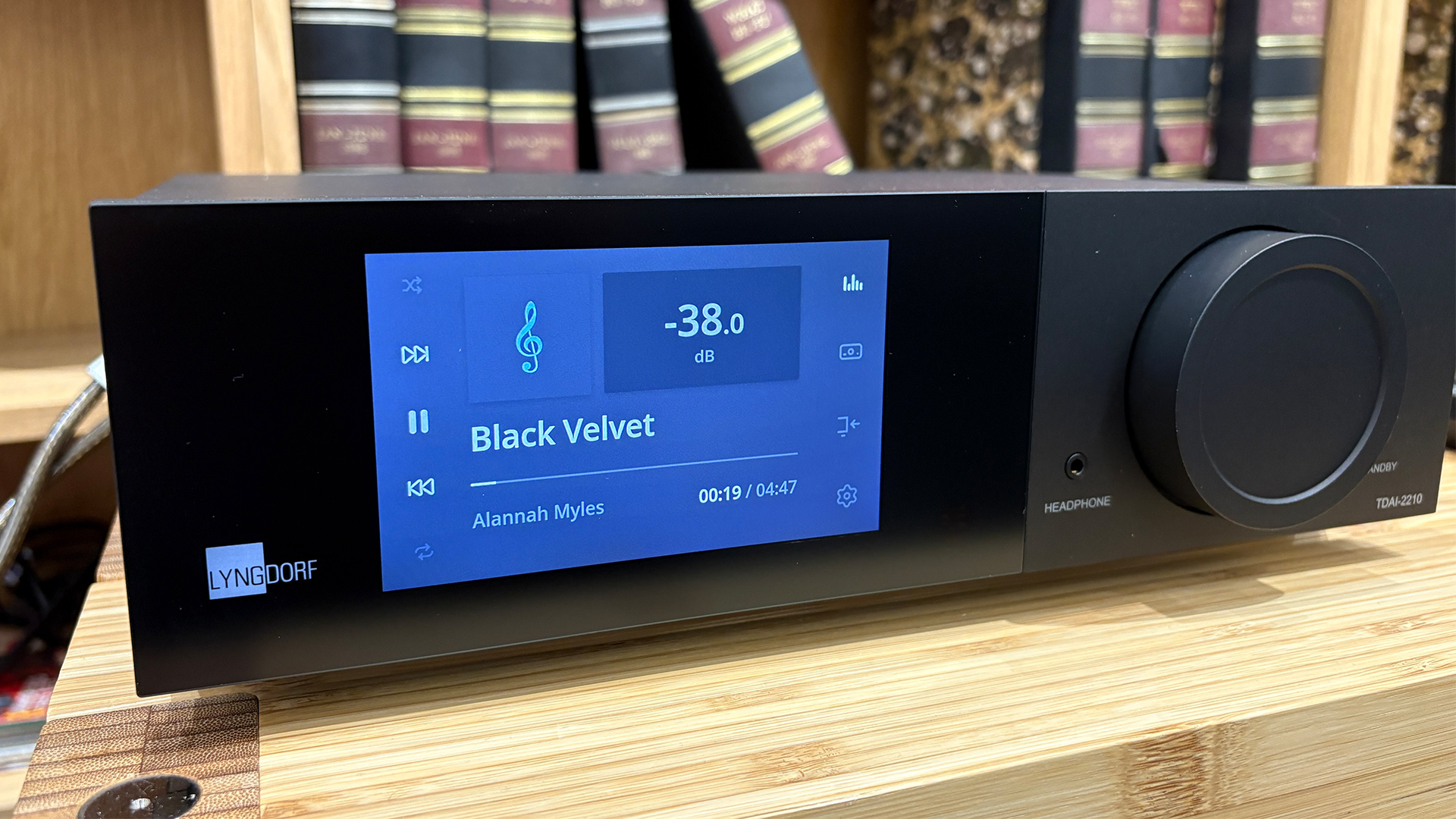
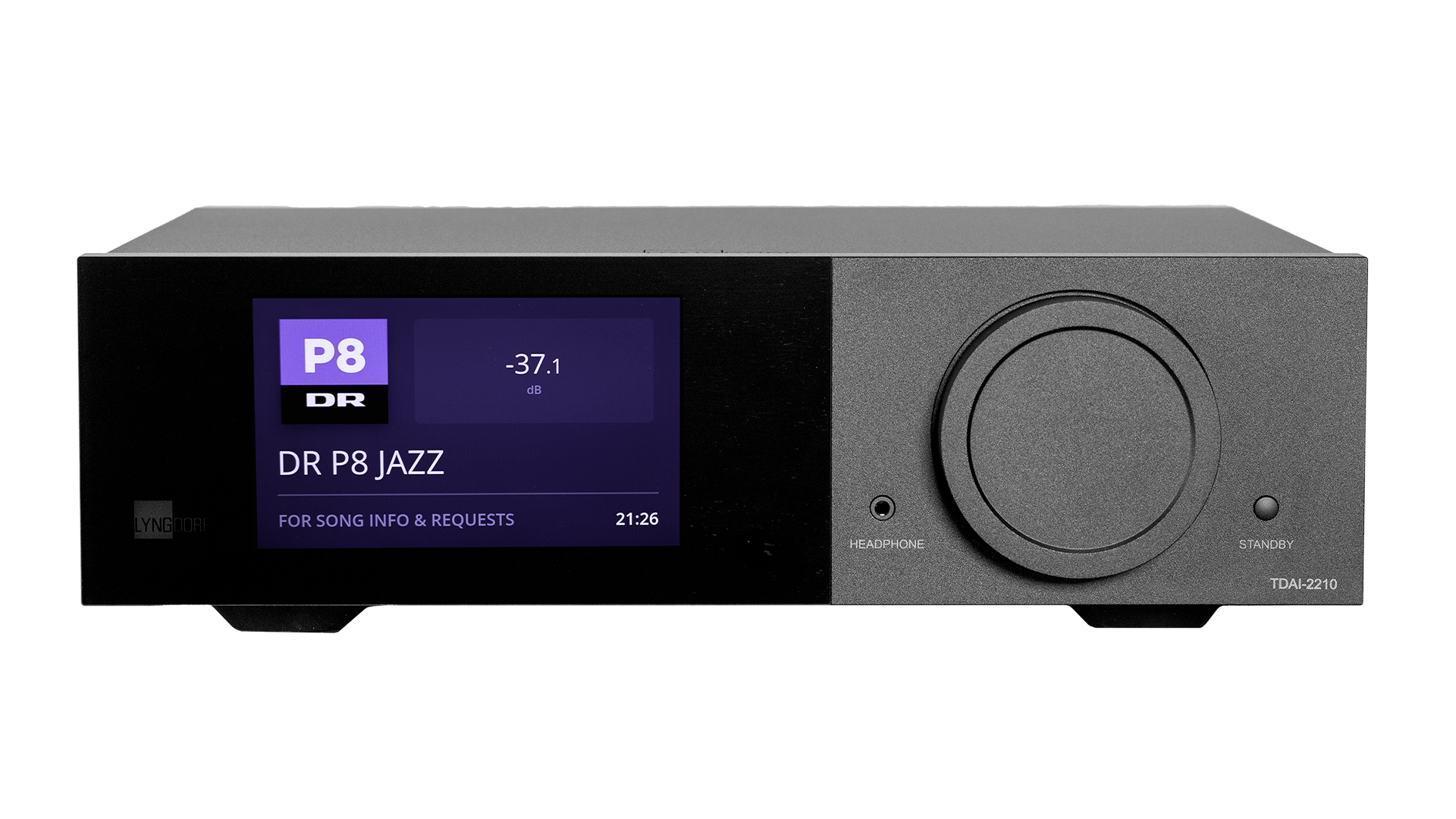
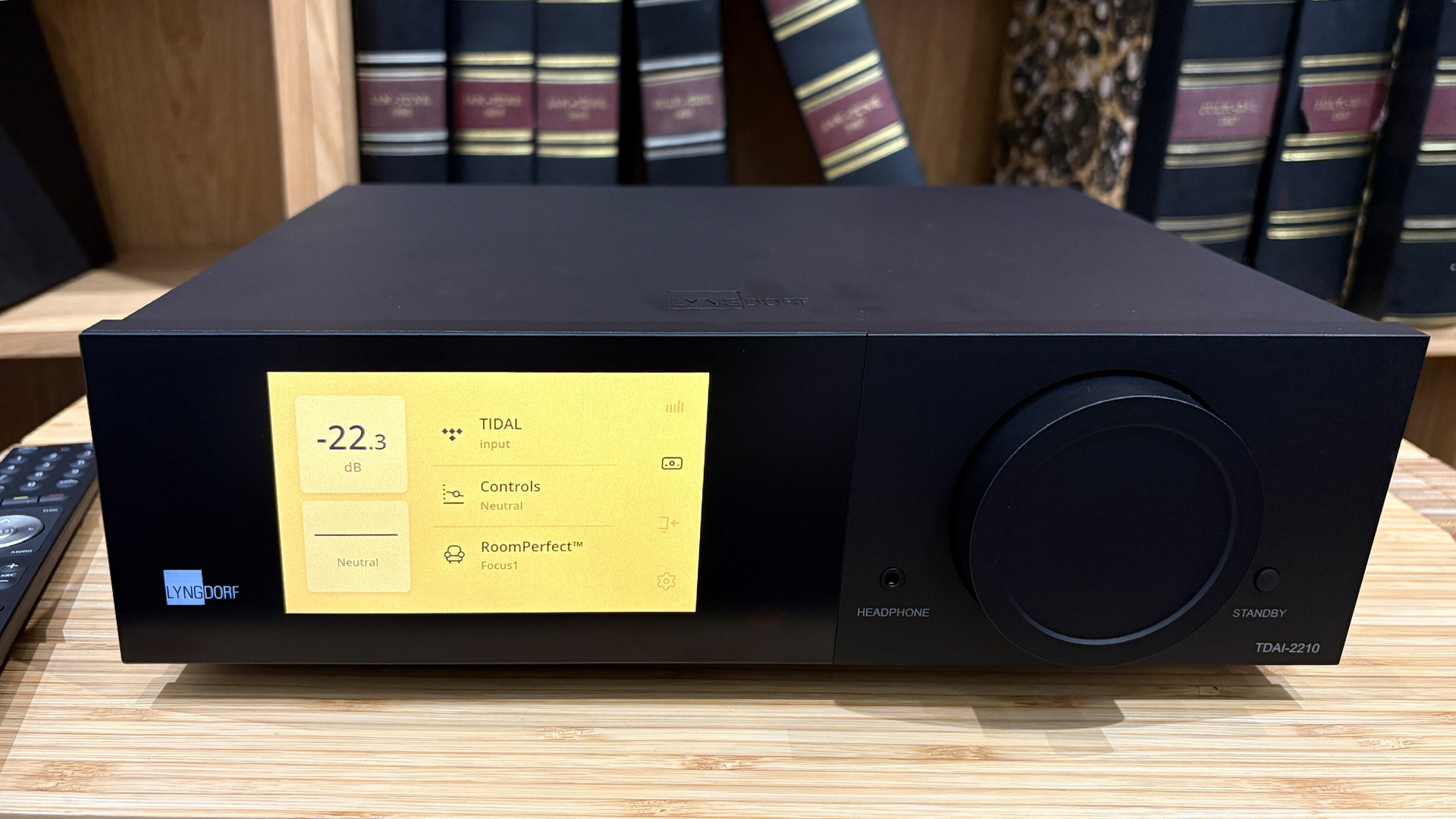
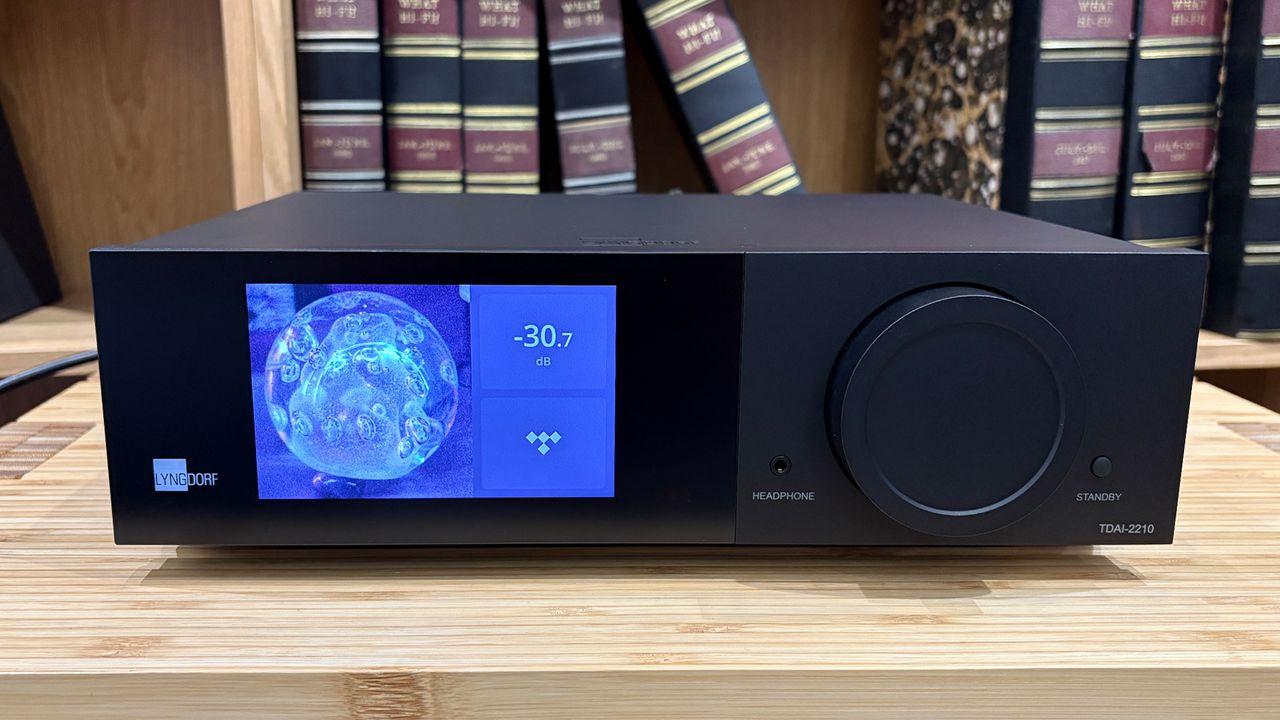
Lyngdorf does things a little differently. Even in the increasingly popular world of versatile one-box streaming amplifiers, the Danish hi-fi brand stands out from the usual suspects with the all-new TDAI-2210.
From the fully digital amplification architecture and unusual digital volume control to its bespoke app interface layout, this Lyngdorf sits a little adjacent to the mainstream alternatives – and it feels every bit a modern hi-fi product.
Build & design
(Image credit: What Hi-Fi?)
The Lyngdorf TDAI-2210 may sit in between the brand’s existing TDAI-1110 and TDAI-3310 models, but it is no middle child with hand-me-downs. It is completely redesigned from the ground up, with a new PCB layout, a cleaner signal path and better power supply filtering – and is the most advanced product in the range.
Lyngdorf TDAI-2210 tech specs
(Image credit: Lyngdorf)
Streaming features UPnP/DLNA, AirPlay 2, Google Chromecast, Spotify Connect, Tidal Connect, Qobuz Connect, airable internet radio, Bluetooth, Roon Ready
Power output 105 watts per channel (into 8 ohms)
Network Wi-fi and ethernet
Inputs RCA line level, coaxial x 3, optical x 2, HDMI eARC (2.1), USB-C, USB-A
Outputs RCA line level, balanced XLR, coaxial
Headphone output 3.5mm
Max file resolution 24-bit/192kHz PCM (32-bit/384kHz via USB only)
Dimensions (hwd) 10.2 x 32.5 x 30cm
Weight 4.8kg
Finishes x 1 (matte black)
The TDAI-2210’s key technical element is in the name: TDAI stands for Total Digital Amplification, Integrated. This is not a common Class D amplifier, but a fully digital amplifier that keeps the incoming music signal digital all the way through, from the digital inputs up to the filtered speaker outputs; even analogue signals are converted to digital before being processed by the amplifier. This technology is Lyngdorf’s own design and is an evolved version of the first digital amplifier – the TacT Millennium – that we reviewed a quarter of a century ago.
The amplifier’s output is rated at 105W per channel into 8 ohms, and it doubles in power (to 210W) as impedance halves to 4 ohms. This means the amp will drive any price-compatible speakers without any issue, in electrical terms at least.
(Image credit: What Hi-Fi?)
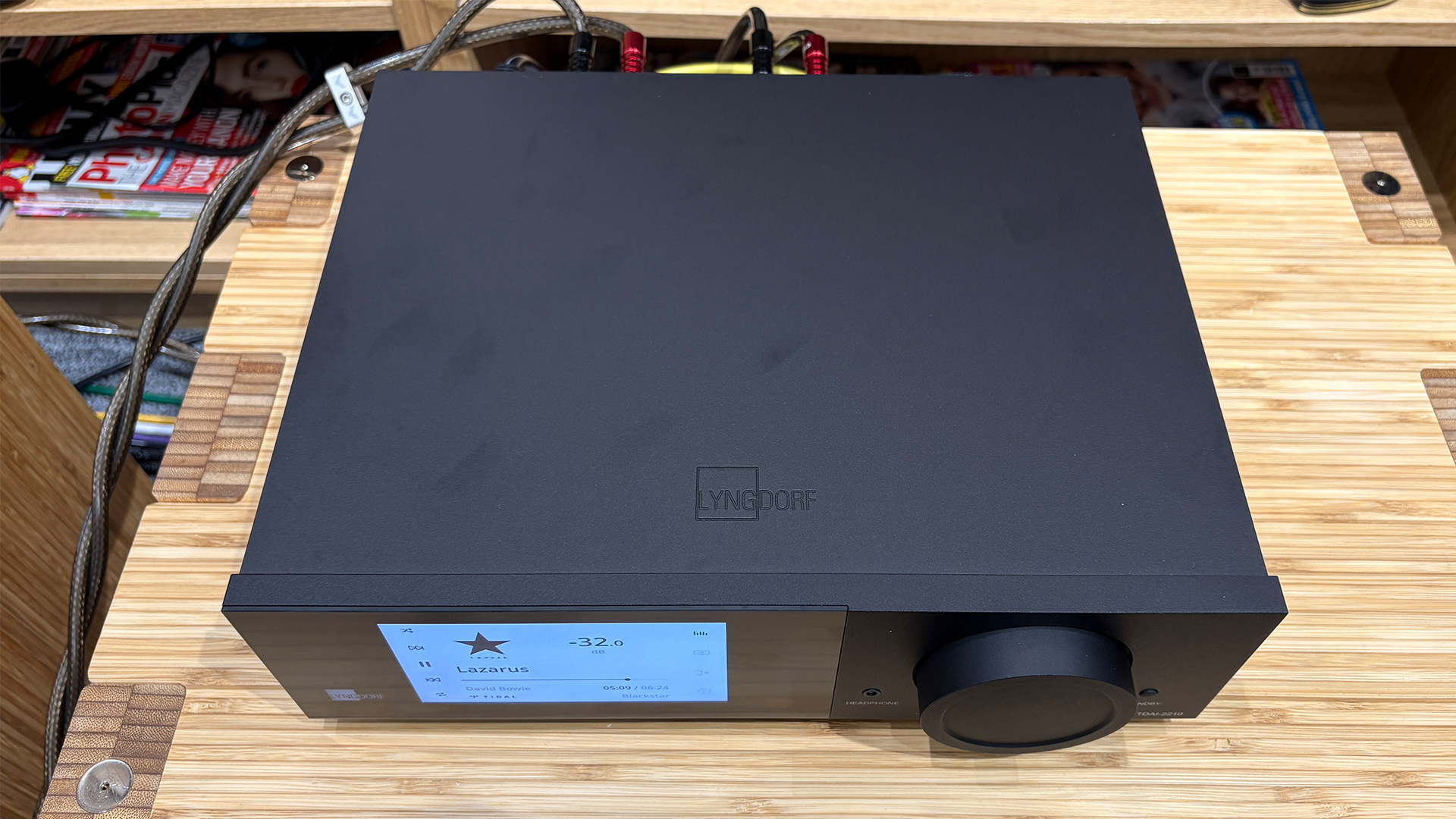
The unit itself is compact and minimal, coming in a matte black finish that looks rather unassuming at first. Lyngdorf says it wanted to prove you can have a high-performing, high-end product even in a small footprint, and the TDA-2210 fits the brief. The build quality is reassuringly solid, and details such as the ridges on the sides of the unit are finished to a high standard.
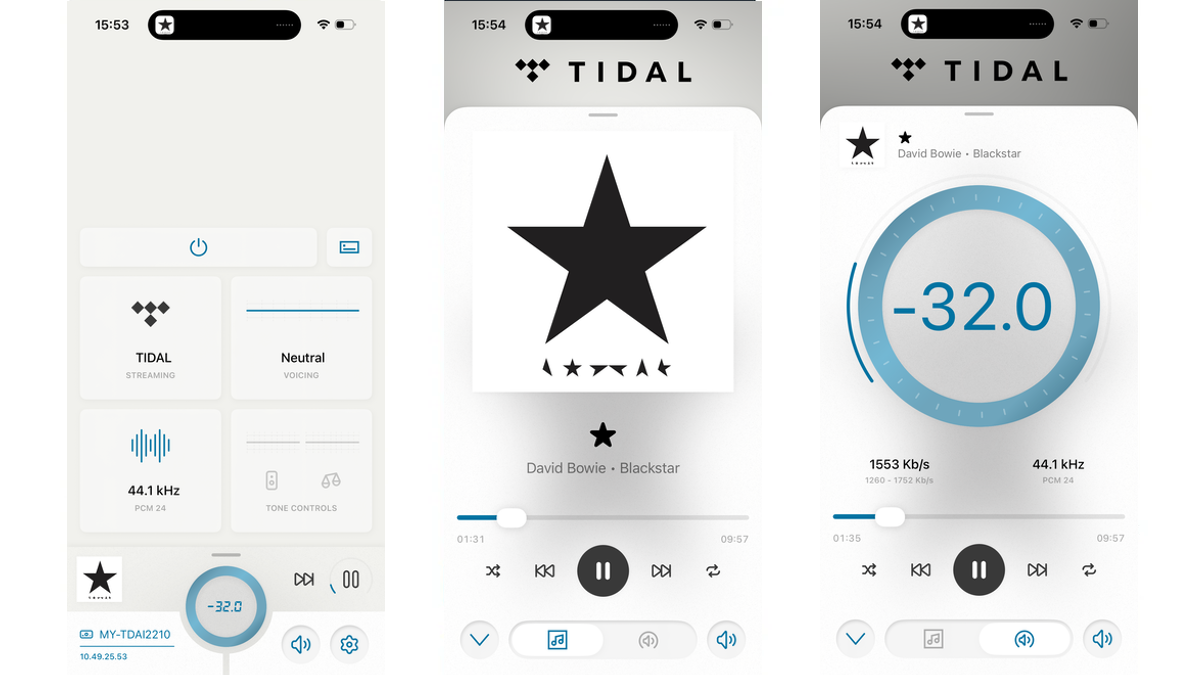
Lyngdorf has focused its attention on the high-contact points of the streaming amp: the large full-colour touchscreen display, the “lossless” volume control, and the redesigned My Lyngdorf control app.
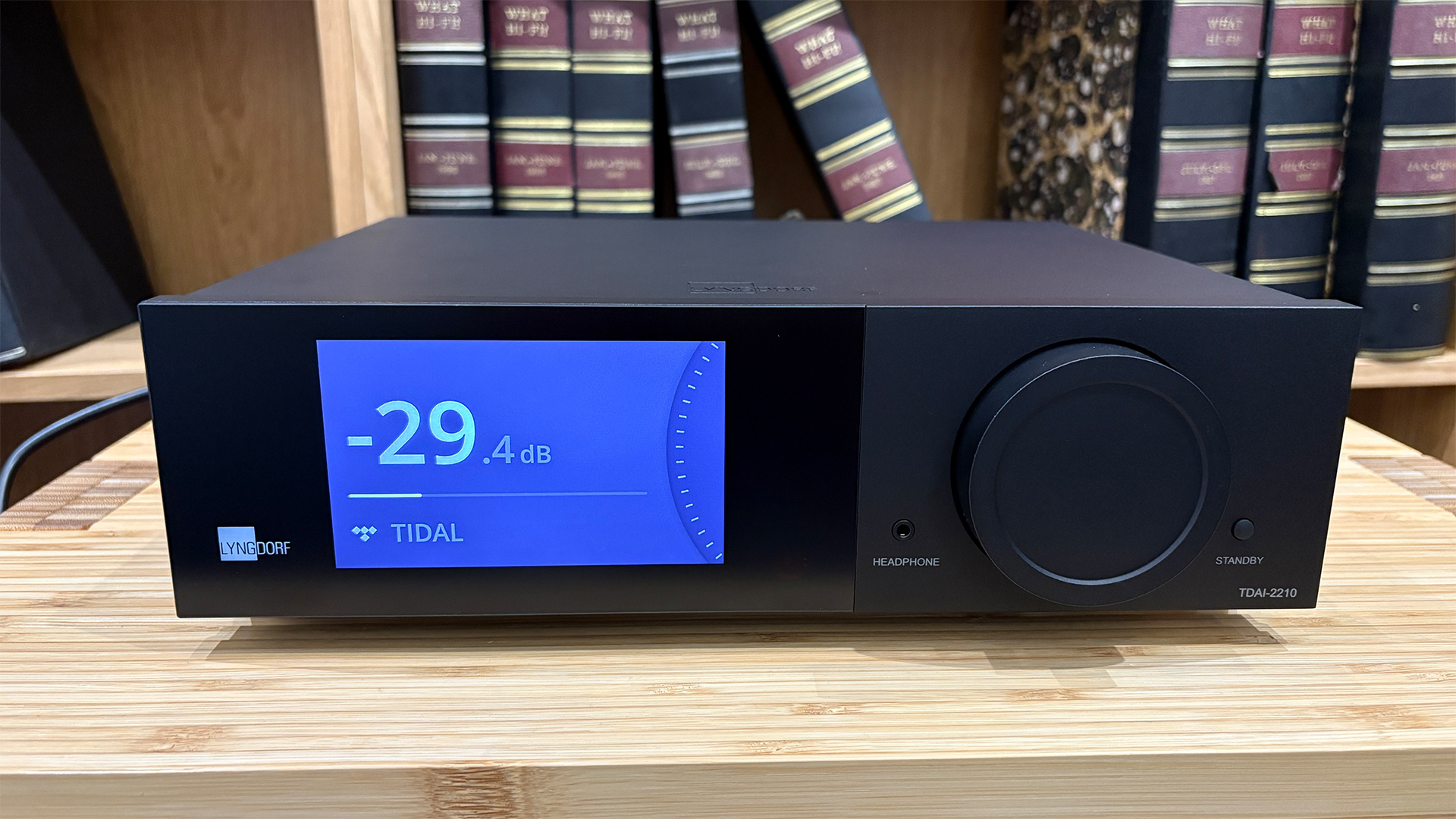
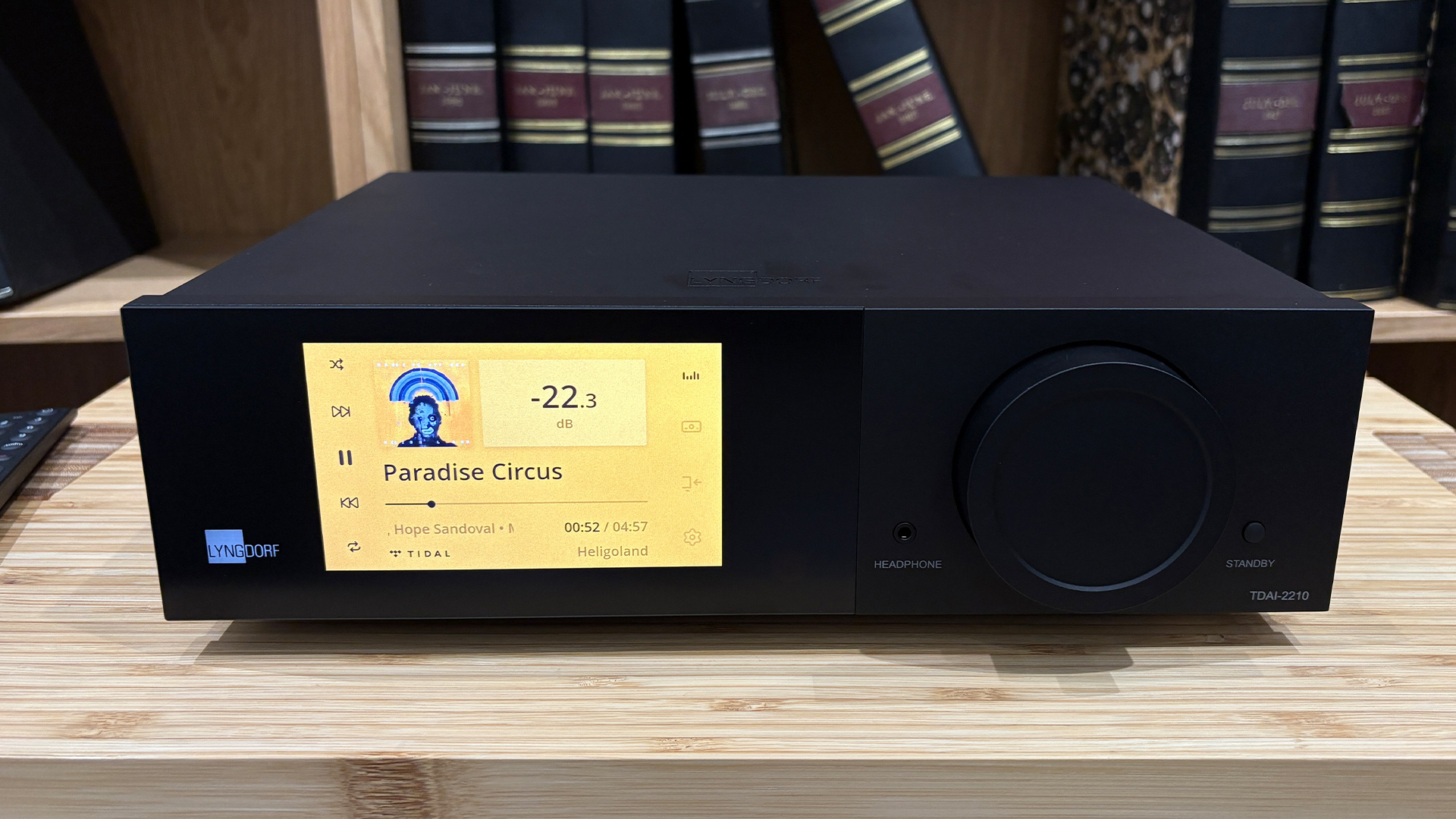
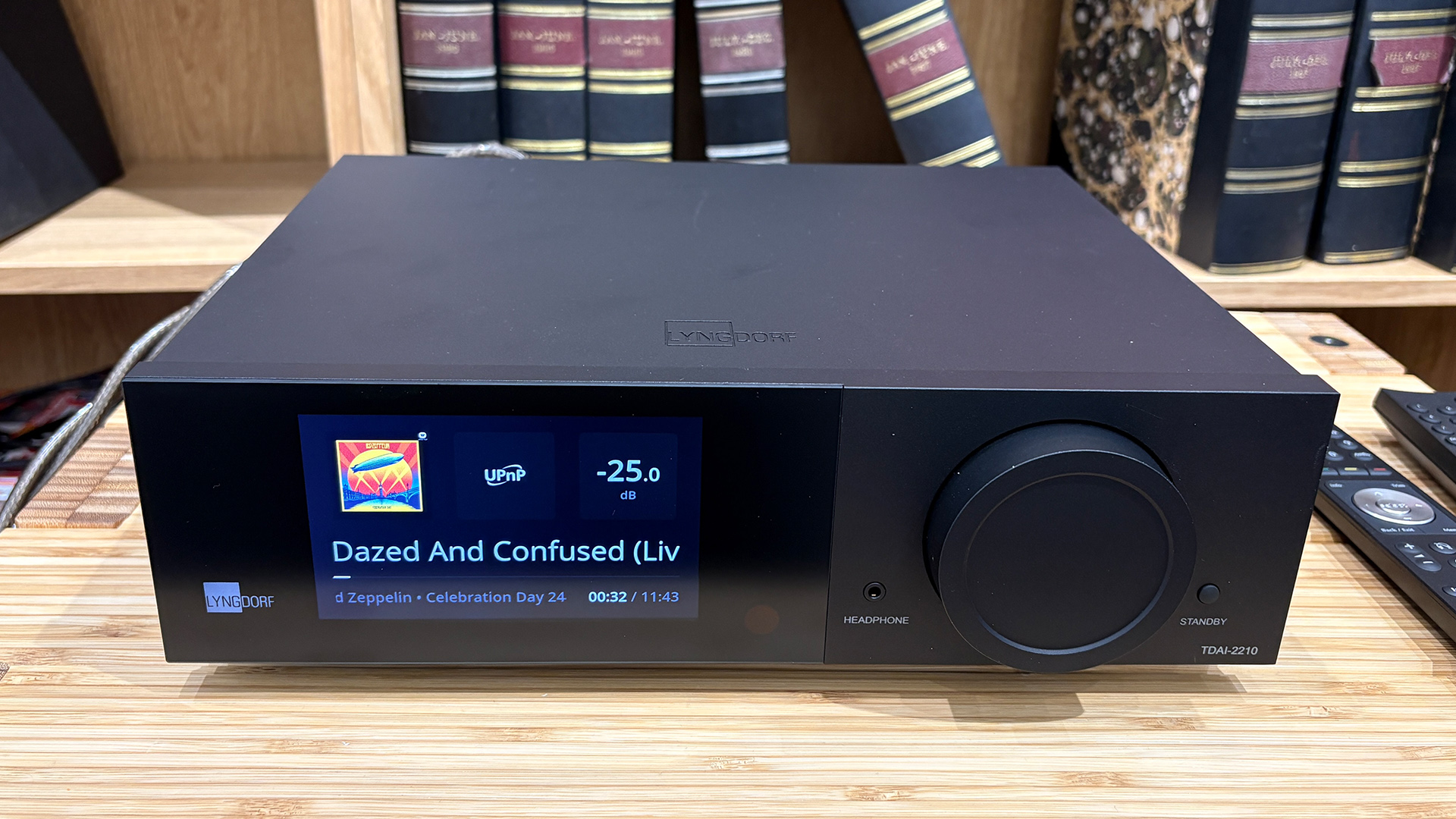
Let’s start with the glass touchscreen display, which is crisp and clear, with album artwork and the large icons easy to see from a distance. The glass has a smooth feel that is responsive to every tap and, most importantly, leaves no fingerprints.
We also like how the display screen’s background changes colour to match the album artwork being shown. There is a display option that shows a spectrum analyser, but Lyngdorf bucks the current trend by avoiding any retro VU meters.
(Image credit: What Hi-Fi?)
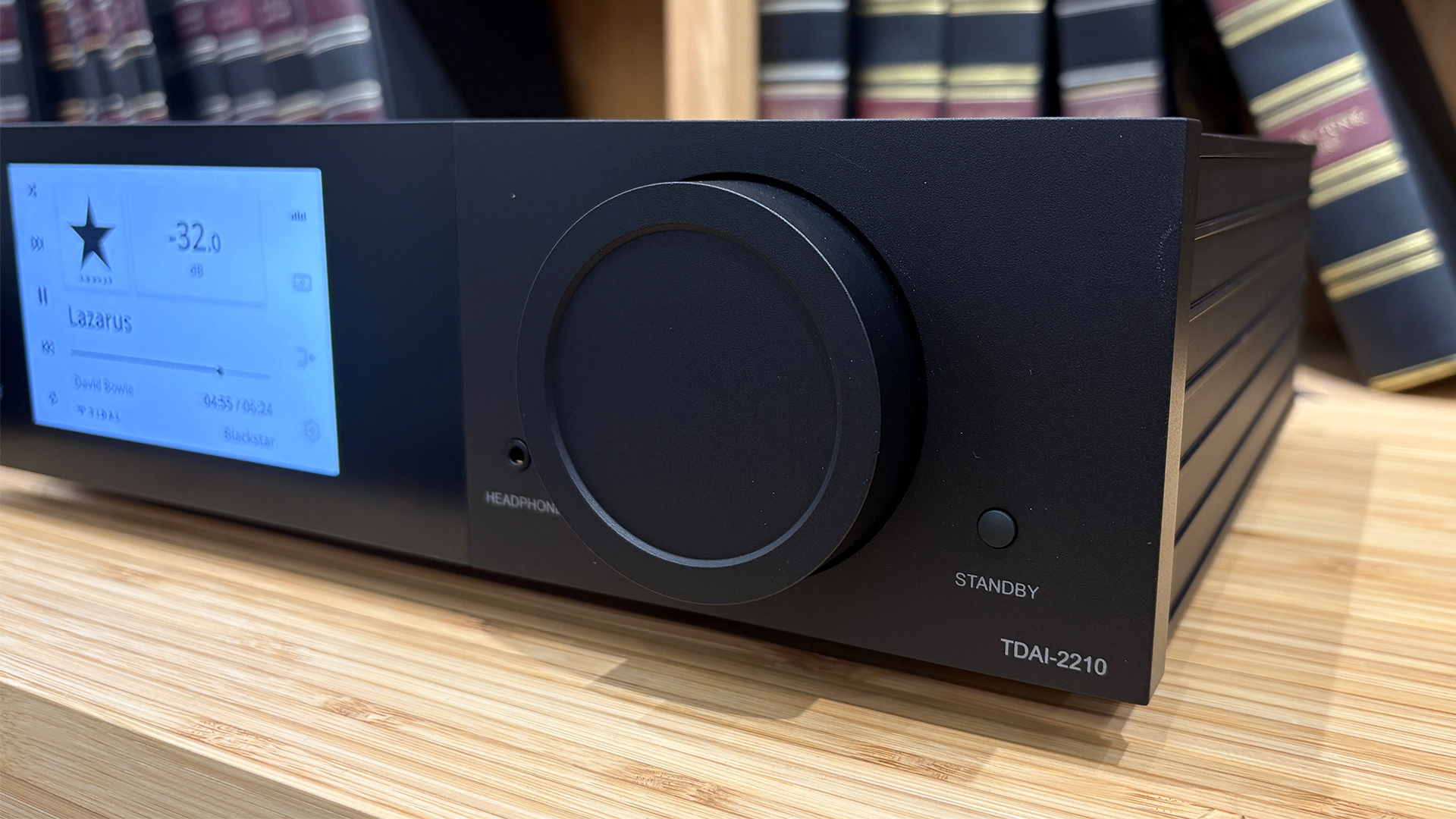
One of the TDAI-2210’s standout features is the digital volume control, which changes the gain from the output stage rather than attenuating the incoming signal as is conventional. This avoids distortion or any issues with channel balance that are inherent in potentiometer-based volume controls.
The volume dial software is calibrated beautifully, with every tiny incremental movement on the dial having an instant visual feedback on the large display. Using it feels organic and rewarding. You can make very subtle and specific adjustments to the level, and spinning the dial faster results in quicker volume changes.
Combined with the My Lyngdorf app, the TDAI-2210 is a delight to use. It’s clear that Lyngdorf has put a lot of effort into how the streaming amp feels to use. The interface layout is clean and logical, and it both looks and feels considerably more modern than the usual lines of text and sub-menus we see in rival systems.
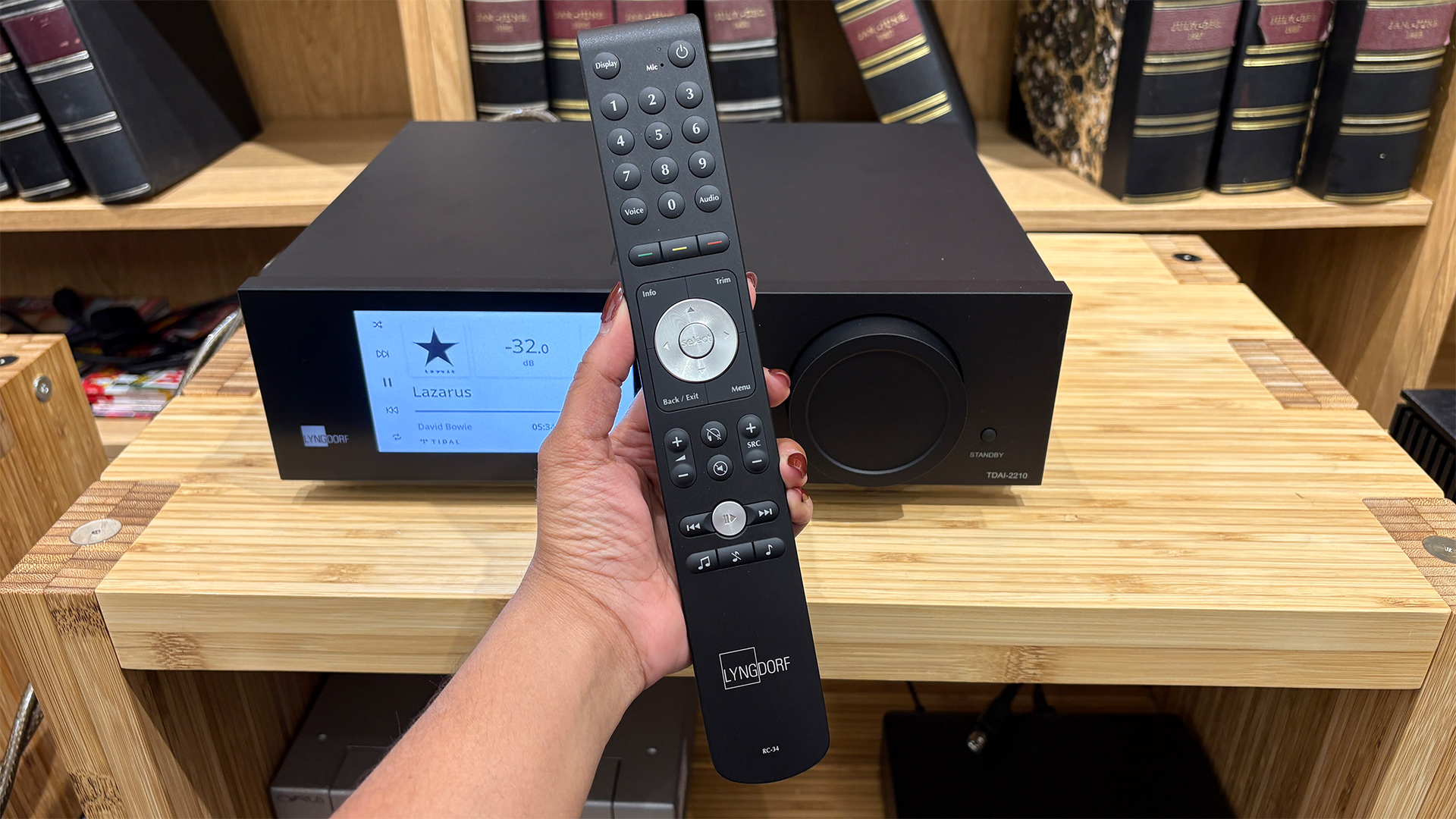
The harmonious way the display, app and controls respond to all our interactions throughout testing is very pleasing. There is a traditional remote control included, too.
(Image credit: What Hi-Fi?)
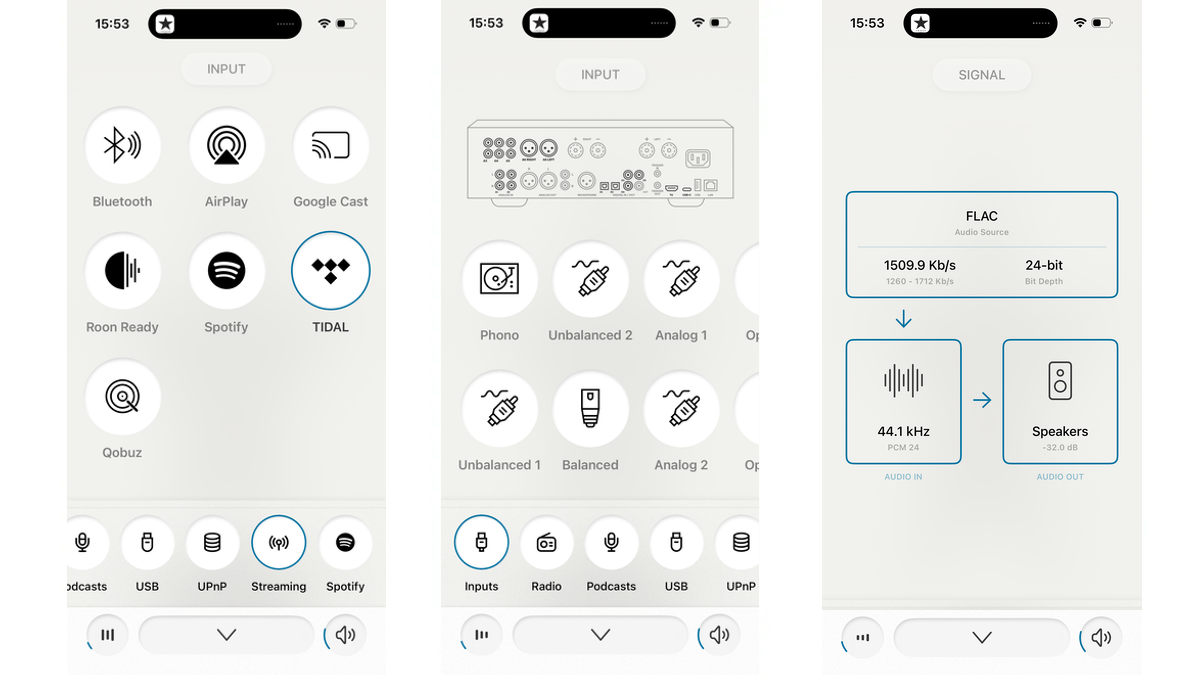
The app – and by extension the TDAI-2210 itself – is as straightforward or as complex as you want it to be. You can customise the app and display so it only shows the main information you are interested in, or you can delve further into the settings to find ways of fine-tuning the Lyngdorf’s sound to your heart’s content.
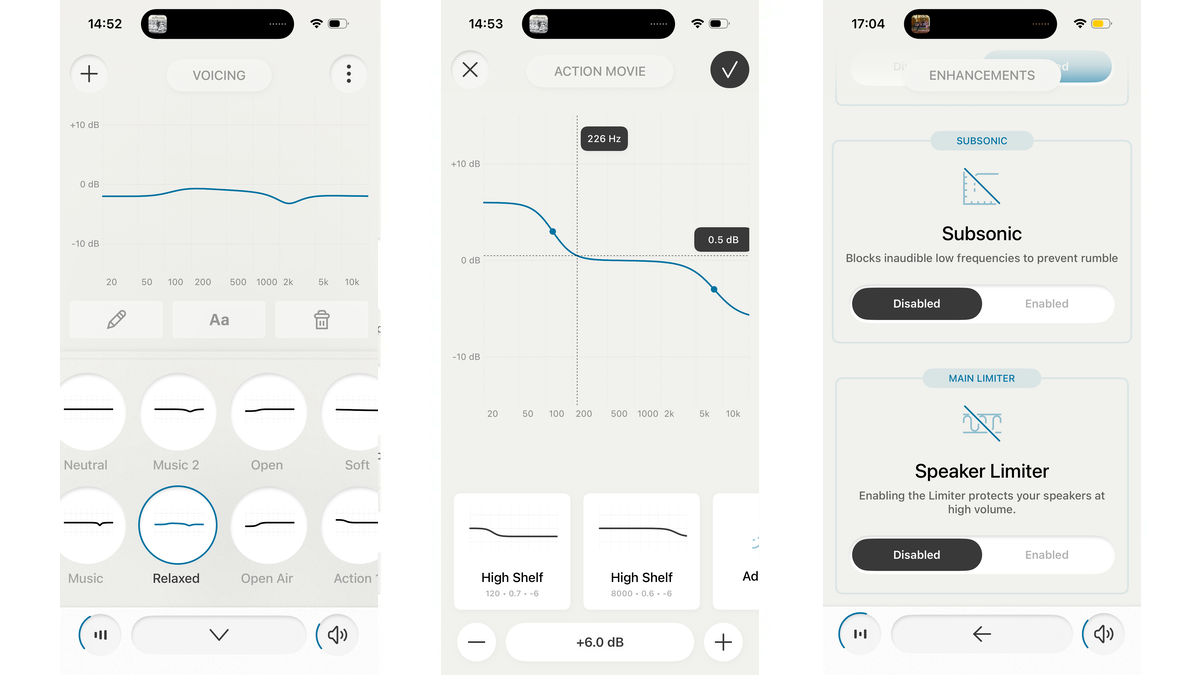
There are rather good ‘Voicing’ EQ presets that you can also customise, treble/bass tonal adjustments, and ICC (Intersample Clipping Correction) settings that deal with potential distortion or ‘clipping’ effects when digital music is converted into analogue sound.
Here, Lyngdorf recommends turning off the default ‘subsonic/rumble filter’ for best sound performance, while we would also recommend disabling the ‘speaker limiter’ for a more open and dynamic sound.
Features
FutureFutureFuture
On the streaming side, the TDAI-2210 is well appointed with all the popular ways of playing music wirelessly. There’s support for Tidal Connect, Qobuz Connect, Spotify Connect and global internet radio via Airable. Bluetooth and Google Cast are also on the menu, while AirPlay 2 is coming soon via a software update due in late September. Streaming music using any of these methods is swift and stable.
You can also play music from connected NAS drives thanks to UPnP/DLNA compatibility. At the moment, you can’t access your NAS library from within the My Lyngdorf app, although this functionality will be available in the late September software update. Until then, you can use third-party apps such as BubbleUPnP and MConnect, and it worked perfectly fine for us when streaming WAV and FLAC tracks from our Naim Core server.
Hi-res file support is a standard 24-bit/192kHz PCM across most inputs, while higher 32-bit/384kHz files are supported when stored locally on a USB drive. There is no support for DSD files here, and we can imagine some might be put off by the omission at this premium price.
(Image credit: What Hi-Fi?)
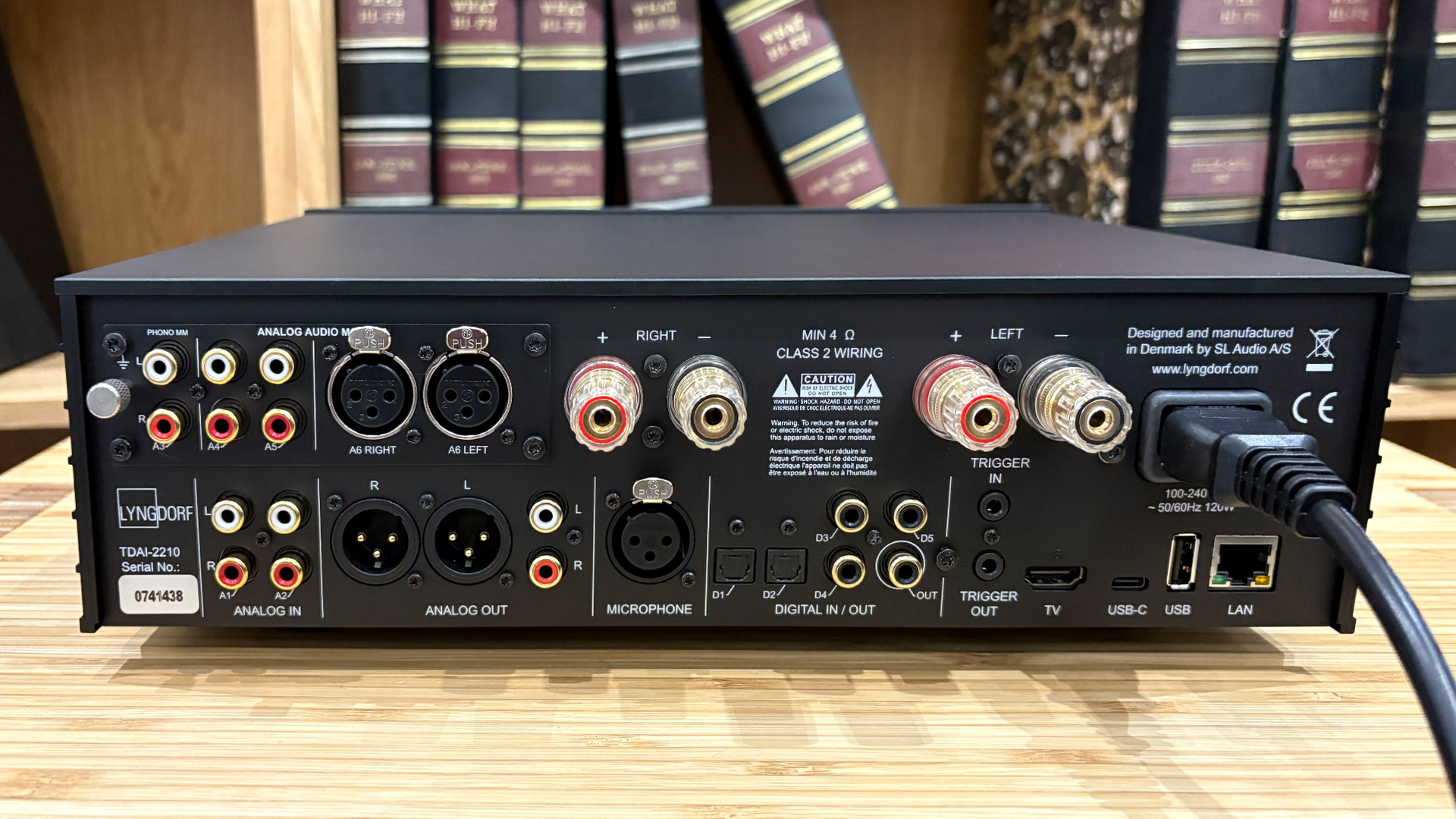
The TDAI-2210 has a good spread of physical connections, including RCA line level inputs and outputs, a pair of balanced XLR outputs, and multiple digital coaxial and optical inputs. An HDMI eARC input is available for seamless audio integration with a TV, and there are two USB inputs (type A and C) for plugging in media hard drives and laptops, respectively.
Lyngdorf offers two optional modules to add even more connectivity. Our review sample is fitted with the “high-end analog” module, which adds a moving-magnet phono stage and three additional analogue inputs, including a balanced XLR pair, which promise better analogue-to-digital conversion thanks to a higher-quality Asahi Kasai DAC.
This module adds over £500 / $500 to the standard price, but is a useful option for those who require the extra connections. Meanwhile, the HDMI 2.1 module adds two more HDMI inputs and one output, with a much steeper additional cost increasing the unit’s price to £4399 / $5499.
More useful is that the TDAI-2210 comes with Lyngdorf’s own RoomPerfect room correction technology. It’s a sophisticated system that tunes the streaming amp’s sound to the room it’s placed in, via multiple readings taken from random positions of the included mic.
(Image credit: What Hi-Fi?)
The most complicated part of the process is setting up the included mic stand; the app will walk you through the rest of the straightforward calibration process. It’s worth taking the time to do this during set-up, and you can toggle the saved RoomPerfect settings on/off to hear the differences.
Our dedicated listening rooms are already acoustically treated, and we found that the RoomPerfect setting boosted the bass and added more heft to voices and instruments. But it also takes away too much of the Lyngdorf’s spacious, open presentation for our liking, while voices lose some of their natural expressiveness.
Still, it’s a subtler effect than other room calibration software we have used, and we would recommend trying it out.
Sound
(Image credit: What Hi-Fi?)
To complete the TDAI-2210 system, all you need to do is add a pair of speakers. We use a variety during our testing, from the Epos ES7N standmounters to our reference ATC SCM50 speakers, while models ranging from KEF LS50 Meta to the PMC Prodigy 5 and even the Acoustic Energy AE300 Mk2 would all suit. We would just avoid pairing the Lyngdorf with any lean, bright-sounding speakers.
We start with Dolly Parton’s Jolene streamed over Tidal Connect. The TDAI-2210 delivers a lively, nimble-footed performance, which keeps us tapping along to the catchy tune. The sweeter edges of Parton’s indelible voice and her personality come through with a good dose of detail and clarity.
The Lyngdorf hews true to Parton’s smaller-scale ’70s-era recording, but it also has no issue expanding its wings and giving a grander stage to Massive Attack’s Paradise Circus and Agnes Obel’s The Curse. Instruments are given ample space and breadth, and the leading edges of notes are nicely defined, while voices are placed centre stage and focused in the airy soundstage.
The Lyngdorf sounds wonderfully clean, crisp and sprightly no matter what music we play through it, making it easy to listen to.
Basslines perhaps aren’t as meaty as rivals owing to the Lyngdorf favouring a leaner presentation, but this does add to that agile sense of rhythm that holds our interest. A greater dose of dynamic punch would render the iconic bassline and outro in Fleetwood Mac’s The Chain more dramatic and impactful, while the physicality of orchestral pieces from John Williams and Hans Zimmer could be more tangible and authoritative. Still, the TDAI-2210’s crisp precision and fluid sense of rhythm deliver just enough snap to remain musically satisfying.
(Image credit: What Hi-Fi?)
The Arcam SA35 (£2999 / $3300 / AU$6495) is the main rival here and, while it’s not as sophisticated as the Lyngdorf in use, it is the better (and cheaper) of the two when it comes to outright sound quality. The Arcam delivers a more powerful and authoritative sound, along with richer layers of texture and detail around every piano note, plucked string and French horn. Better low-level dynamics and a fuller tone add greater expression to voices, too.
Playing around with the Voicing presets and EQ settings helps to add a bit more body and immediacy to the Lyngdorf, but the differences between the two remain.
Despite the Arcam comparison, we still like the Lyngdorf’s amicable presentation and how it gets across the essence of a song. The switch from a brash heavy metal track to the more intimate, gentler tones of Elliott Smith’s Between The Bars is nicely communicated. Musically, it all hangs together pretty well.
The Lyngdorf’s sound is consistent through all the digital inputs, and we find that they sound better than their analogue counterparts. Plugging our Cyrus CDi CD player into the coaxial and RCA stereo inputs, we find that, while subtler, the analogue connection sounds less forthright and powerful. The analogue inputs on the optional module fare better and sound more fluid, but they’re still a touch soft-sounding compared with the standard digital ins.
Listening through the Beyerdynamic DT 990 Pro X, the sound is also consistently clean, detailed and nimble through the 3.5mm headphone output. We also plug the Rega Planar 3 RS Edition turntable into the optional module’s phono inputs, and it’s nice enough to listen to, but lacks the Lyngdorf’s lively energy that we like so much.
We'd like to hear more dynamic punch and richness to do justice to our records; if you’re serious about vinyl replay, we would recommend a dedicated phono preamp such as the Graham Slee Reflex M or Rega Fono MM Mk5.
Verdict
(Image credit: What Hi-Fi?)
There is something inherently likeable about the Lyngdorf TDAI-2210. It may not beat the class leaders, but its digital-first approach is clever and appealing, and the way the TDAI-2210 behaves when we interact with it is hugely rewarding.
With its fresh, modern outlook and lively sound, the TDAI-2210 is a great alternative to the mainstream options at this premium price, and is worth an audition.
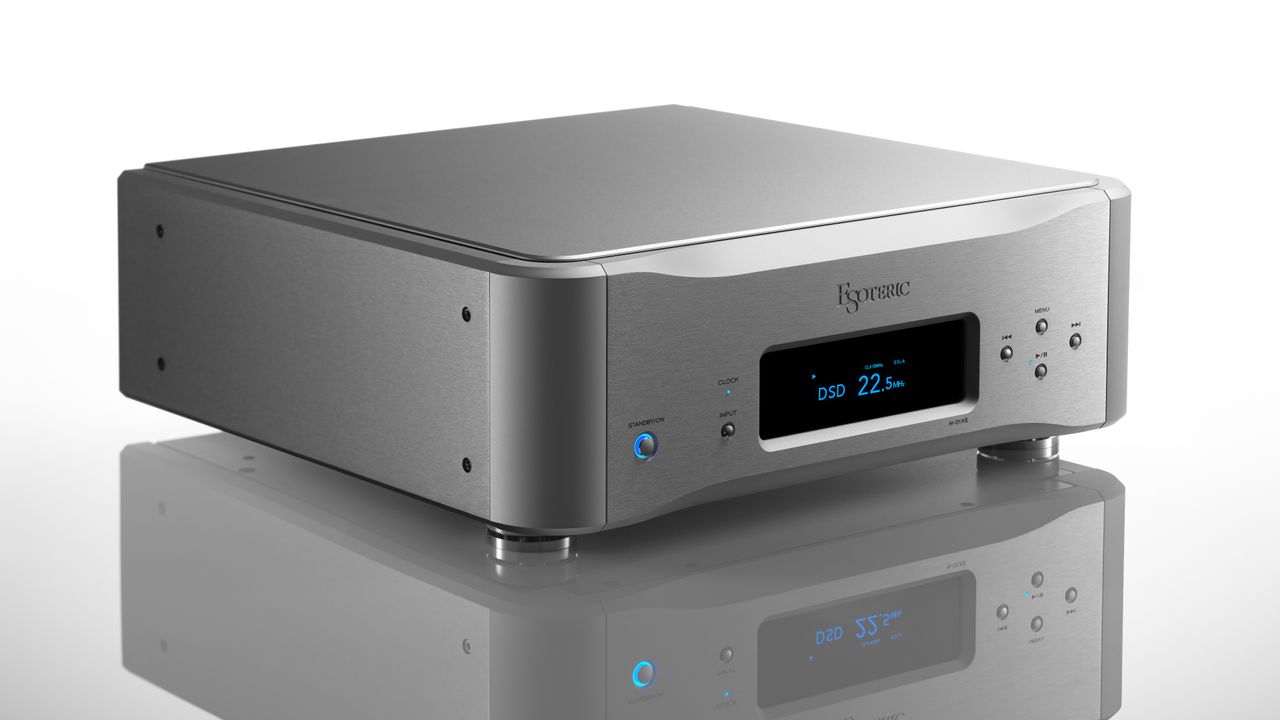
Esoteric has launched the N-01XE, its latest music streamer which promises to blend an "exquisite metal construction" with high-grade components for an "authentic, emotionally engaging sound".
At its heart, the N-01XE incorporates Esoteric's Master Sound Discrete DAC, boasting the brand's second-generation 'G2' architecture for what it teases as a "breathtakingly powerful" and dynamic performance.
The DAC chip itself uses a dual-mono configuration with independent power transformers for left and right channels, contributing to what Esoteric describes as "a smooth, natural, and remarkably analogue-like sound".
The Discrete DAC G2 has been built using high-precision 'MELF' resistors and Esoteric's board-mounting technologies for a more powerful, musical and dynamic audio signature.
Further, Esoteric's own 'Network Engine G4' promises "top-of-the-line" processing power thanks to its powerful CPU and dedicated linear power supply, a configuration that aims to reduce distortion and contribute to the new player's "smooth, richly detailed" character.
(Image credit: Esoteric )
The N-01XE is capable of supporting mega-hi-res files up to 48-bit/768kHz PCM alongside DSD512. In pursuit of digital-to-analogue conversion that matches the characteristics of both DSD and PCM files, dedicated digital processing algorithms have been independently developed for each format.
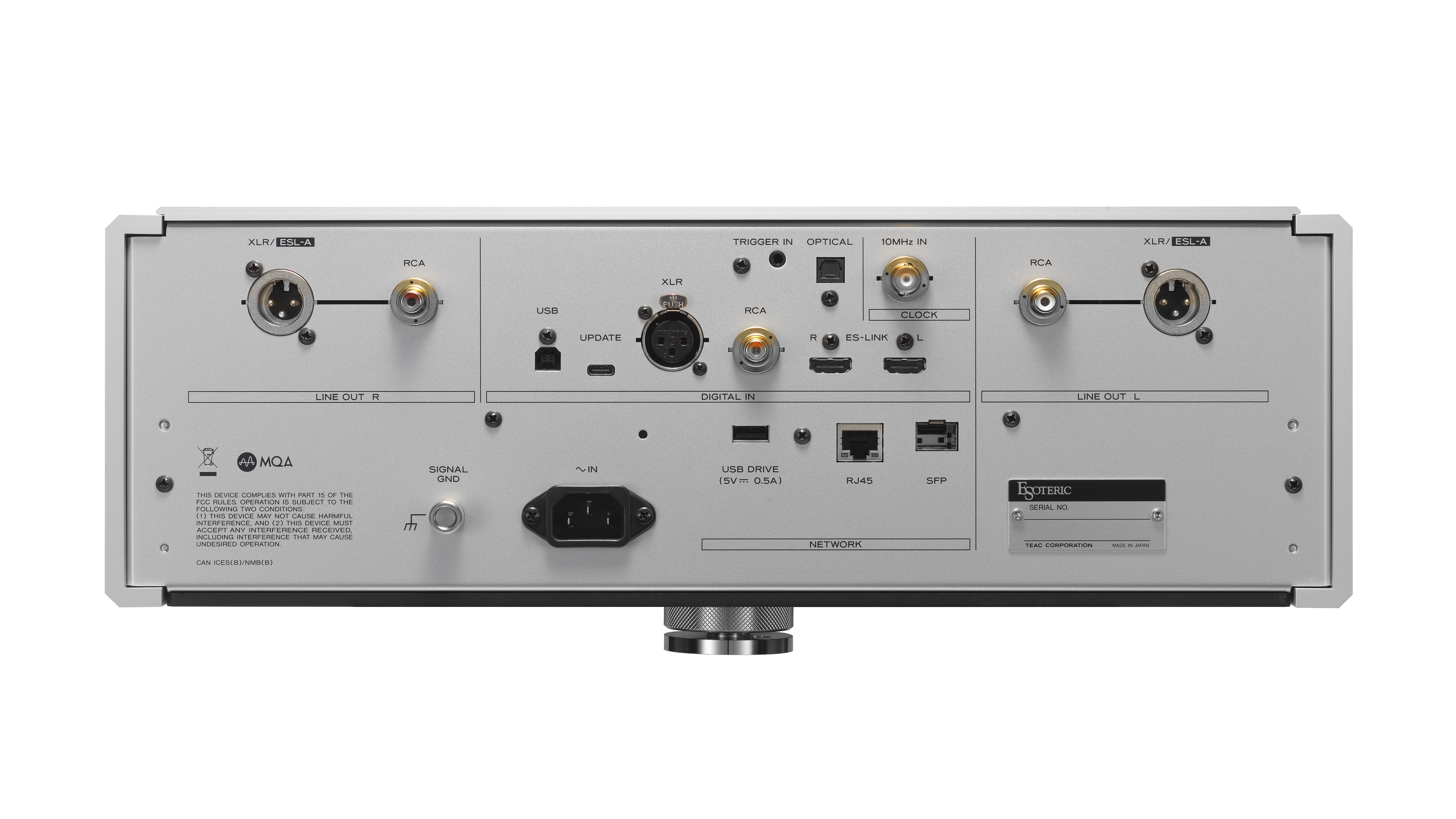
The new unit boasts a wide-ranging connectivity suite, including coaxial, optical and USB-C digital inputs alongside RCA and XLR analogue outputs. The N-01XE is Roon Ready, while wi-fi connectivity grants access to the likes of Tidal Connect, Qobuz Connect and Spotify.
On the outside, the network player's multi-layer chassis is built to prevent interference between the various circuit components, while a semi-floating top panel has been designed to contribute to the streamer's sonic openness. A set of isolation feet provides a stable foundation for the N-01XE's "focused, open soundstage".
The Esoteric N-01XE is available now, priced at £22,999 / $28,000 / €26,500. We've previously tested Esoteric's N-05XE streaming preamp (£13,000 / $13,000 / AU$17,000) and was mightily impressed with its excellent sound quality and superb engineering, so we imagine the new N-01XE sets an even higher bar.
AI in music is the talk of the town. Whether you’re a music fan, watching from the sidelines as streaming services make continual updates to their AI policies, or a musician fighting for their individuality in a lawsuit against an AI music company, it has become blatantly clear that this particular technology isn’t going away any time soon.
Indeed, with the recent investments of major labels such as UMG, Warner and Sony in AI music companies, it looks as though the role of AI in the music industry is only likely to expand.
As a 50-year-old hi-fi publication, music is at the heart of our work. While testing products, our review team listens tirelessly to a broad range of tracks, carefully assessing how human emotions and real-life recordings are conveyed by the equipment at hand. As such, we wanted to find out more about the role AI is playing in the records we listen to.
To do so, we spoke to British sound engineers about the ways that AI is changing their work.
Exposing Flaws
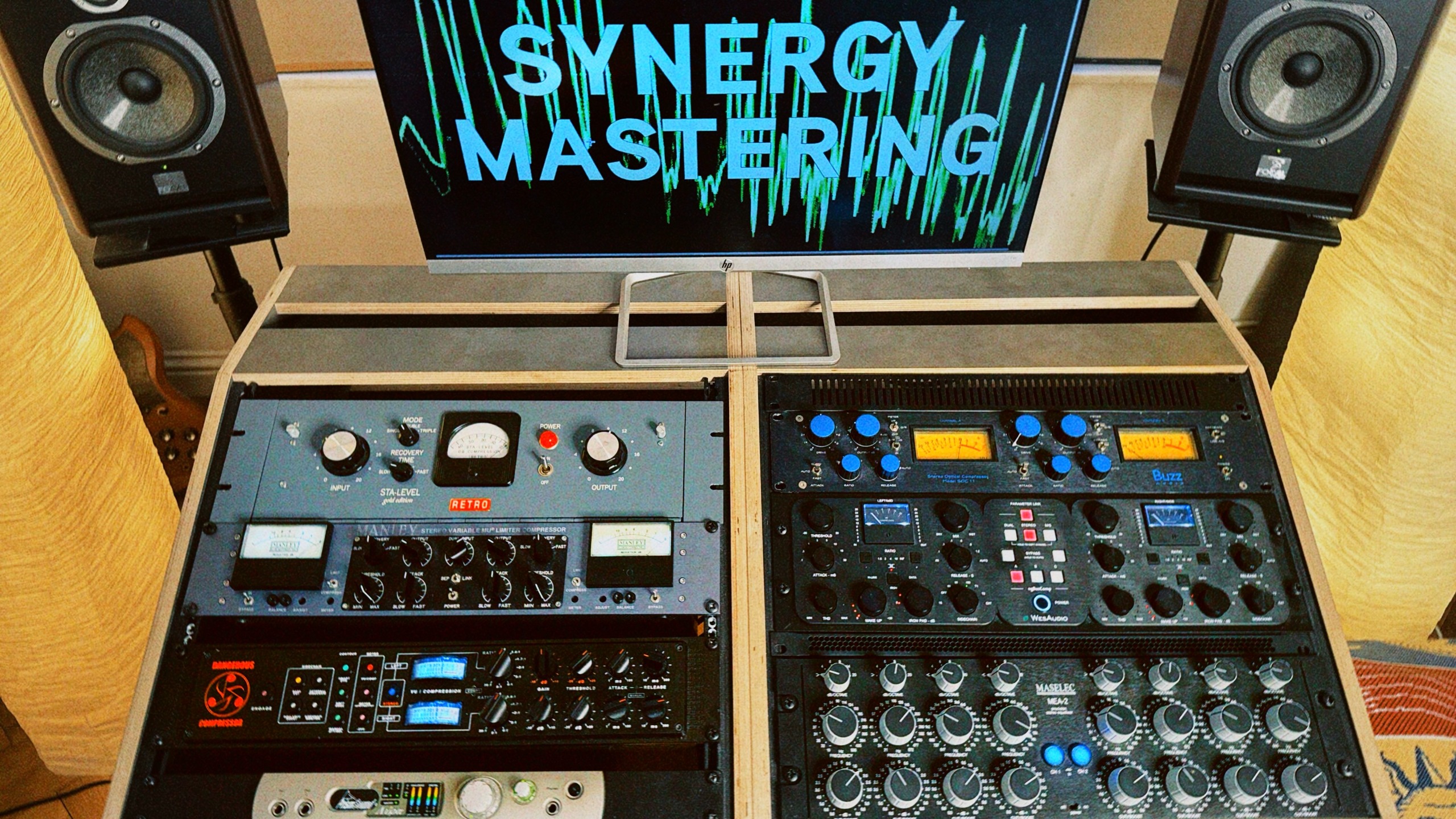
Charlie Francis' Synergy Mastering studio (Image credit: Synergy Mastering)
In the view of Jake Murray, director and studio manager at Strongroom Studios, generative AI within music is uncovering pre-existing issues within the industry.
“People try to spin it as this new thing on the horizon,” says Murray, “but what I’m seeing – much like during the Covid-19 pandemic when artists lost all touring revenue and it exposed problems with streaming and digital remuneration – is that this new software is exposing flaws with the commercialisation of music and the behaviour of corporations.
“In the case of recent lawsuits, the record labels aren’t happy because data they could monetise is being scraped on a massive scale,” he says. “But for a massive corporation, AI music is incredible, it is product, through and through. There are no creator rights, no unpredictable behaviours on tour, no ‘I’m tired, I want out of my contract.’ I think anyone who believes that major labels are going to continue fighting generative AI once they’ve got a deal in place is wrong.”
Izzy McPhee, a freelance mastering engineer who has worked with acts such as Dream Wife, Walt Disco and Marla Kether, feels that AI’s encroachment presents artists with new challenges. “The pace at which music is created and released now, definitely puts pressure on artists to prioritise singles and virality over the integrity of their music,” she says. “The instantaneous results of AI affect how quickly everyone expects information, and of course, music.”
Such pressures feed back into the use of AI, as musicians reach for tools that allow them to create faster and more cheaply. The attraction of such tools isn’t hard to appreciate given that nearly half of professional musicians were found to earn less than £14,000 a year in a 2023 census by Help Musicians and the Musicians’ Union.
One of Murray’s friends, who is a dance musician, recently approached him in a crisis about having used Suno to create a vocal topline. “He found himself really conflicted about whether to use it,” says Murray. “It sounded so close to what he had imagined, but it wasn’t sung by a singer, recorded by a sound engineer, mixed, balanced, processed and submitted to the production house. It hadn’t generated those three or four stages of revenue. It had only cost him the comparatively meagre subscription fee.
“It’s vital that we remember we are talking about lives and livelihoods here,” he says. “I think it’s going to be left to the individuals to decide what they think is kosher or not.”
"Human creativity is what makes beautiful music"
Strongroom 3 control room (Image credit: Jasper Fry)
AI has seen widespread adoption beyond music. Even at Strongroom, Claude AI has proven handy in aggregating the studio’s vast discography.
“It has been incredibly useful for data management,” says Murray. “And best of all, nobody would have wanted to do that job. Previously, when I’ve sat down with new employees and broken the news that they are going to spend a few weeks sorting through the discography, the look on their faces is like they are about to die.”
Murray adds that, within musical work, there is a “grey area” of audio effects plug-ins that use AI.
“I’m a bit unclear about what people count as AI in the studio,” he says.
Recent software such as Synplant 2, which uses AI-powered features to turn audio samples into editable synthesiser patches, walks a fine line. “Depending on who you talk to, these are either plug-ins or neural networks or AI. But I don’t think anyone really has a problem with any of those [pieces of] software, aside from whether they like the sound or not.”
When it comes to the creative, musical and technical parts of her workflow, McPhee takes a stronger stance on using AI tools: “I have made a conscious decision not to use AI, and not to master songs that have been AI-created. A big part of my ethos is that human connection, collaboration and creativity is what makes beautiful music, and the bottom line is that I don’t think AI can replicate this.”
Charlie Francis, a mastering engineer who has worked with artists such as REM, Del Amitri and Gruff Rhys, says that he hasn’t yet seen a reason to use AI in his work, but acknowledges that some of the software he uses has been developed with machine learning.
“My perception is that my clients value my instincts and experience above anything else, so I would be very wary of allowing AI to make any judgments for me,” says Francis. “Automated systems in rendering and other areas are very useful, but they don't involve any decisions and have no artistic influence.”
"Heaven forbid, we might be able to define an era"
(Image credit: Deezer)
A common trait in almost all conversations around AI is their tendency to focus on the future. As technological advances outpace all but the experts’ comprehension (and sometimes even theirs), many of us are left guessing about the state of things to come.
Speculating on AI’s musical future, Murray says: “The people who want to produce homogeneous rubbish aren’t going to need anyone to do it for them anymore. As a result, I think we could see a new era of Muzak (background music played in public spaces such as elevators, shops and waiting rooms).
“On the flip side, I think the people who care are going to make more human-sounding music. I think music made by people whose priorities are expression, connectivity and interaction is going to become more characterful and less perfect. We might see a broader spread in terms of how music can sound, perhaps a release of the tension around things sounding ‘perfect’. Heaven forbid, we might actually be able to define an era again.”
McPhee echoes Murray’s sentiment: “I think there will be a corner of the music industry where people are consuming AI music, and are happy to follow algorithms and playlists that are AI-generated. However, I also think a lot of people will tire of the rapid turnaround, viral side of music and seek out human-made music and connection – whether through listening or attending gigs and concerts.
“In a world of constant overstimulation, I already find myself trying to find moments where I can sit down and immerse myself in longer form albums that take me on an emotional musical journey,” she says.
Francis adds: “A musician friend of mine thinks songwriters regurgitate iterations of everything they have heard before, which would make them indistinguishable from AI, but I think the human genius for making unseen connections and making distinctive work can't be written off so easily. We discount our own emotional and experiential life at our peril.”
The consensus among the engineers seems to be that, while AI threatens revenue streams and professional opportunities for musicians, its mass-produced genericism could drive creative innovation among those who view music as an essential, communal art form. The question is: will musicians find the time to create on an income yet further reduced?
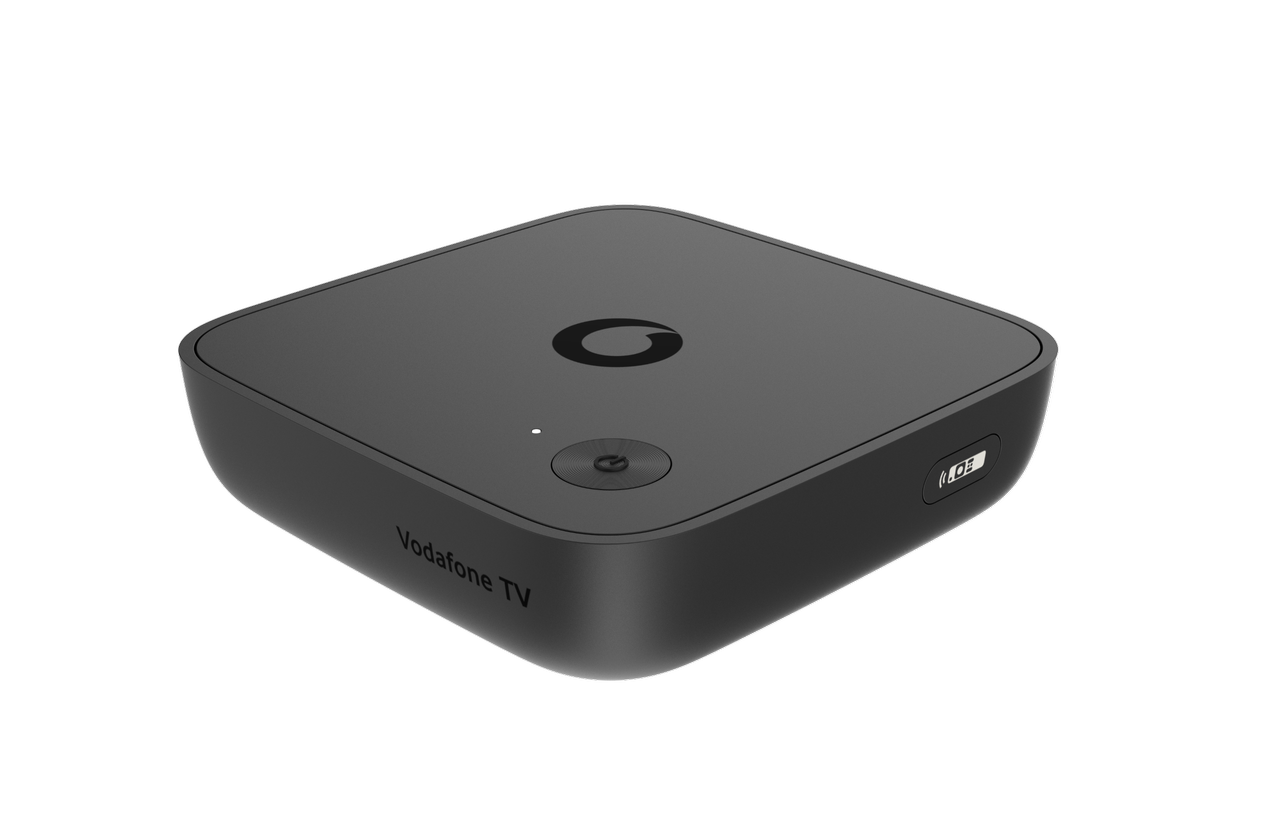
Telecommunications giant VodafoneThree has announced Vodafone TV, a set-top streaming box designed to bring streaming, live TV and gaming together on a single device.
The "small but powerful plug-in hub" gives you access to live TV channels via Freely and includes Netflix and HBO Max.
Catch-up apps such as BBC iPlayer, ITVX, and Channel 4 are also available, and customers can add subscriptions to Amazon Prime, Disney Plus, and more on a 30-day rolling basis.
Vodafone TV comes with support for Dolby Vision and Dolby Atmos, as well as 4K picture resolution. The device runs on Android TV, powered by 3GB of RAM with 32GB of storage available.
In addition, 302 cloud games are available to stream for no extra cost, and further apps can be downloaded from the Google Play Store.
The interface includes AI smart search, Google Assistant and personalised recommendations, while a companion smartphone app also lets users continue watching on the go.
Consumer Director at VodafoneThree, Rob Winterschladen, said: “Vodafone TV is so much more than TV, it’s a family entertainment platform that brings together live TV, On Demand, streaming, gaming, music and all the apps on the Google Play Store."
Pricing is yet to be announced, but Vodafone TV will be available from October to new and existing customers with a home broadband, 5G Broadband or mobile plan.
Your eyes aren't playing tricks on you – Pierre Gasly really is on pole for today's Italian Grand Prix. It's the Alpine man's first pole at the 190th time of asking and, even more extraordinarily, it comes six years to the day after his one and only F1 victory: 2020's Italian GP at Monza. The lights are set to go out at 9am ET / 2pm BST.
Find out as we show you how to watch Italian Grand Prix live streams for free from anywhere in the world.
Gasly is starting alongside George Russell on the front row of the grid. The pre-season favourite, who's trailing championship leader Kimi Antonelli by 59 points, needs to make the most of his teammate's relegation to the back of the grid for taking a new engine – a penalty that Russell himself will have to absorb sometime in the coming weeks.
What made Gasly's pole especially galling for Russell and Mercedes is that Antonelli spent much of Qualifying giving his teammate a tow.
It's safe to say there's no danger of Cupid being let loose on the Silver Arrows. Antonelli would have loved a crack at victory on home soil, but Toto Wolff doesn't do raomance. Instead, he'd decided that the Italian Grand Prix was the best place for Mercedes to replace his power unit – and thereby trigger a grid penalty. Spoilsport.
Oscar Piastri went third-fastest, but was handed a three-place penalty for impeding Liam Lawson, which moves Max Verstappen into the front five, behind Lewis Hamilton and Charles Leclerc, favourites of the Scuderia-mad tifosi.
Leclerc has won the Italian Grand Prix twice (2024, 2019) in the colours of Ferrari, prompting extraordinary scenes in the pitlane and grandstands on both occasions. Hamilton, a five-time winner of this race (2018, 2017, 2015, 2014, 2012), finished sixth on his first visit to the track as a Ferrari driver. If there's one race he'd like to win above any other, it's this – he'd be the first British driver to win the race for the Scuderia since John Surtees in 1964.
After back-to-back victories, reigning champion Lando Norris starts from eight.
Below we'll show you how to watch Italian Grand Prix live streams from anywhere in the world.
Watch Italian Grand Prix 2026 live from anywhere
Most F1 live streams are location-sensitive, which means you won't be able to access your preferred coverage when travelling abroad. A VPN (Virtual Private Network) is a straightforward but powerful app that lets you alter your virtual location and thus unblock any Italian GP stream – including the free coverage in Italy, Austria, Luxembourg and Belgium.
NordVPN is our pick of the best VPN services. It's affordable, fast, stable and easy to use. Try it risk-free for 30 days and see for yourself.
NordVPN offers a 30-day money-back guarantee with its VPN service.
🔓 Unlocks Apple TV+ / Sky Sports 💰 £2.59/month 🆓 3 months extra free
Get NordVPN now to unlock Italian GP streams from anywhere.VIEW DEAL ON
How to use a VPN for any Italian GP live stream
1. Sign up to the VPN of your choice. NordVPN is the one we recommend.
2. Open the VPNapp and choose the location of the service you wish to access. For the F1, you may wish to choose Austria for Servus TV.
3. Head over toServus TV on your browser or device and enjoy the free Italian Grand Prix live stream.
How to watch Italian Grand Prix 2026 in 4K Ultra HD in the UK
In the UK, you can watch the Italian Grand Prix, along with every F1 race, in 4K via Sky Q, Sky Glass and Sky Stream packs. You'll need to subscribe to an Ultra HD package and have a 4K TV.
Head over to the Sky Sports F1 Ultra HD channel to watch every race, qualifying and practice in 4K and HDR.
F1 TV Pro includes live HD coverage of every F1 practice, qualifier and race. No ad breaks.
F1 TV Pro is available in over 188 countries – but not the UK (you can use the basic 'Access' version for live timings but you can't watch any races live). F1 TV Premium is available in the US.
F1 TV Pro is available via the F1 TV website, iOS/Android apps, Roku TV, Apple TV, Android TV, Google TV and other mobile devices.
Latest F1 TV Pro prices:
F1 TV Pro in India – $3.99/month (cheapest)
F1 TV Pro in South Africa – $4.99/month
F1 TV Pro in Brazil – $5.99/month
F1 TV Pro in Netherlands – €11.90/month
F1 TV Pro in USA – $10.99/month
F1 TV Pro in Mexico – $129/month
Watch Italian Grand Prix 2026 live streams in the USA
(Image credit: Mario Renzi/Formula 1 via Getty Images)
In the USA, Apple TV is showing the Italian Grand Prix – and practice sessions are free-to-air all season.
A subscription costs $14.99 per month after a 7-day FREE trial, though better deals are available to Apple customers.
Buying an eligible Apple device, including select iPhone, iPad, Apple TV and Mac models, gets you free Apple TV access for three months.
Apple One, which bundles Apple TV with Apple Music, Apple Arcade and 50GB of iCloud Storage, starts at $19.95 per month after a 1-month free trial.
Alternatively, for a limited time the Apple Music Student Subscription includes Apple TV, and costs $6 per month.
Watch Italian Grand Prix 2026 live streams in Australia
Fox Sports has the rights to show every live F1 race in Australia. That means Foxtel and Kayo Sports subscribers get a front-row seat to the Italian GP too.
Kayo offers new customers a FREE 7-day trial to test the waters, after which it starts at AU$29.99 a month for the base Standard tier. For up to 4K video quality and simultaneous streaming on up to two devices, you'll need the Kayo Premium plan for AU$45.99 a month.
Subscribers can also stream the action via Foxtel Now by adding the Sports package ($30 a month).
10Play shows free highlights of every 2026 F1 race.
Italian Grand Prix 2026: Start Times Around The World
VPN services are evaluated and tested by us in view of legal recreational use. For example:a) Access to services from other countries, (subject to the terms and conditions of that service).b) Safeguarding your online security and making your online privacy more robust when abroad.Future plc does not support nor condone the illegal or malicious use of VPN services. We do not endorse nor approve of consuming pirated content that is paid-for.
Pierre Gasly celebrates securing Italian Grand prix 2026 pole position
Pierre Gasly celebrates securing Italian Grand prix 2026 pole position
When we think of the best times for outrageous deals, Black Friday and Prime Day usually spring to mind.
However, it seems the Labor Day sales have pipped them to the post for this particular deal. The Sony WH-1000XM5, a What Hi-Fi? favourite and the recipient of multiple Awards over the years, are down to $198 at Amazon.
That's officially 50 per cent off for Sony’s superb premium noise-cancelling headphones, and a fair bit cheaper than the previous lowest price we've seen of $248.
So what are you waiting for? If you haven't upgraded your headphones in a few years, this is an incredible value deal for a former flagship pair.
The five-star Sony WH-1000XM5 headphones are multiple What Hi-Fi? Award-winners and were only knocked off the top spot on our best wireless headphones guide by their successors, the XM6. Sensational sonic clarity, punchy delivery and precise, agile bass are all on board.
While this model has been superseded by the Sony WH-1000XM6, the XM5 are still a highly recommendable pair of wireless headphones and a fair bit cheaper than the XM6's current price tag of $398.
We gave the XM5 five stars at full price, so with this discount the cans are an excellent performance-per-pound proposition. Their engaging sound quality, impressive noise-cancelling, great call quality and comfortable fit make them a match for any rival at this price level.
The XM5 have had a complete revamp compared to previous entries in the series, with a slimmer “noiseless design” that folds flat into their carry case.
It's a design that certainly works when it comes to comfort, with our expert testers ranking them among the best with just the right amount of clamping force.
Noise canceling is impressive, thanks to the Integrated Processor V and eight microphones. Automatic noise canceling optimisation is also available, adapting the ANC as you move around without any manual fiddling needed.
Bluetooth Multipoint and LDAC Bluetooth support are also included - the latter allows streaming of high-quality audio from compatible devices at bitrates higher than conventional Bluetooth, while the former allows two devices to be connected to the headphones at the same time.
The XM5 also debuted some new features for the premium headphone line: Speak to Chat pauses playback when you start talking, Quick Attention lowers the volume when you cover the right earcup, and Wearing Detection automatically pauses your audio when you take the headphones off, restarting as soon as you put them back on.
And the all-important sound quality? Hugely musical and entertaining, with more detail than previous generations.
"With low frequencies, the WH-1000XM5 also display a newfound precision," our Sony WH-1000XM5 review reads. "It’s not that the previous model didn’t deliver, but the WH-1000XM5 make even the XM4s sound a little thick in the lower mids and bass. The new headphones expose greater detail and can differentiate between notes more easily.
"Move higher up the frequency range, and these Sonys continue to extract more information thanks to an extra sense of clarity. Notes are also dispatched with unerring precision – the XM5 headphones don't miss a beat when it comes to timing."
With a reduced price of $198 at Amazon, you'll be hard-pressed to find better value at this price point. With impressive sound quality, punchy delivery, an impressive feature set and a substantial 30 hours of battery life all packed in, the Sony WH-1000XM5 still have a lot to offer for a lot less money.
Xgimi has announced the Aura 3 series, which it claims is the world’s first 4K/120Hz UST projector lineup.
The series consists of two models: the flagship Aura 3 Max and the step-down Aura 3 Pro.
Both projectors will support 4K/120Hz gaming with VRR and ALLM, and they each boast an RGB Triple Laser light engine, a claimed 8000:1 native contrast ratio, and Dynamic Dual Iris Technology for "unprecedented contrast, depth and detail".
Xgimi claims a 200-inch maximum projection size, with a 120-inch image possible from just eight inches away from the wall.
There's also Google TV built in, as well as support for HDR in the HLG, HDR10, HDR10+ and Dolby Vision formats. The projector is IMAX Enhanced certified as well.
Rather surprisingly, two pairs of 3D glasses are included for any remaining 3D fans out there, while audio is supplied by an 80W Harman Kardon speaker system with Dolby Atmos support.
Xgimi claims the Aura 3 Max can deliver brightness of up to 5700 ISO lumens, while the Aura 3 Pro tops out at 4100 ISO lumens. Prices are $2399 (around £1775 / AU$3335) and $2199 (around £1626 / AU$3057), respectively.
UST projectors have generally had to compromise on refresh rates at 4K, so the Aura 3 series will be particularly appealing to gamers looking for a TV replacement.
The AURA 3 Series will launch on Kickstarter on October 20th in the US, with pre-orders now open from Xgimi directly. Customers can unlock an extra $200 off by placing a $50 deposit.
Tom Petty once sang that “the waiting is the hardest part”, and we happen to agree, having waited a long time for Yamaha to release a new active wireless speaker system. As such, when we heard about the release of the NX-70A, we were keen to get them into our test rooms for a listen.
But we’ve had plenty of talented wireless systems to keep us occupied in the meantime. Among those producing wireless all-in-one systems, KEF has become something of a trailblazer, earning five-star reviews from the What Hi-Fi? review team for its premium LS Luxe (£3500 / $4000 / AU$6375) and LS50 Wireless II systems (£2199 / $3000 / AU$4000), the latter of which is a multiple What Hi-Fi? Award winner.
Falling between these two five-star options, at a price of£2590 / $3000 / AU$4799, the Yamaha NX-70A system is entering a highly competitive price bracket. The speakers’ dedicated SPS-70A stands cost an extra £517 / $500 / AU$799. While this isn’t an inconsiderable sum, it falls in line with the price of stands for their closest rivals.
The question on all of our minds: will this speaker system prove itself worth the wait?
Build & design
(Image credit: What Hi-Fi?)
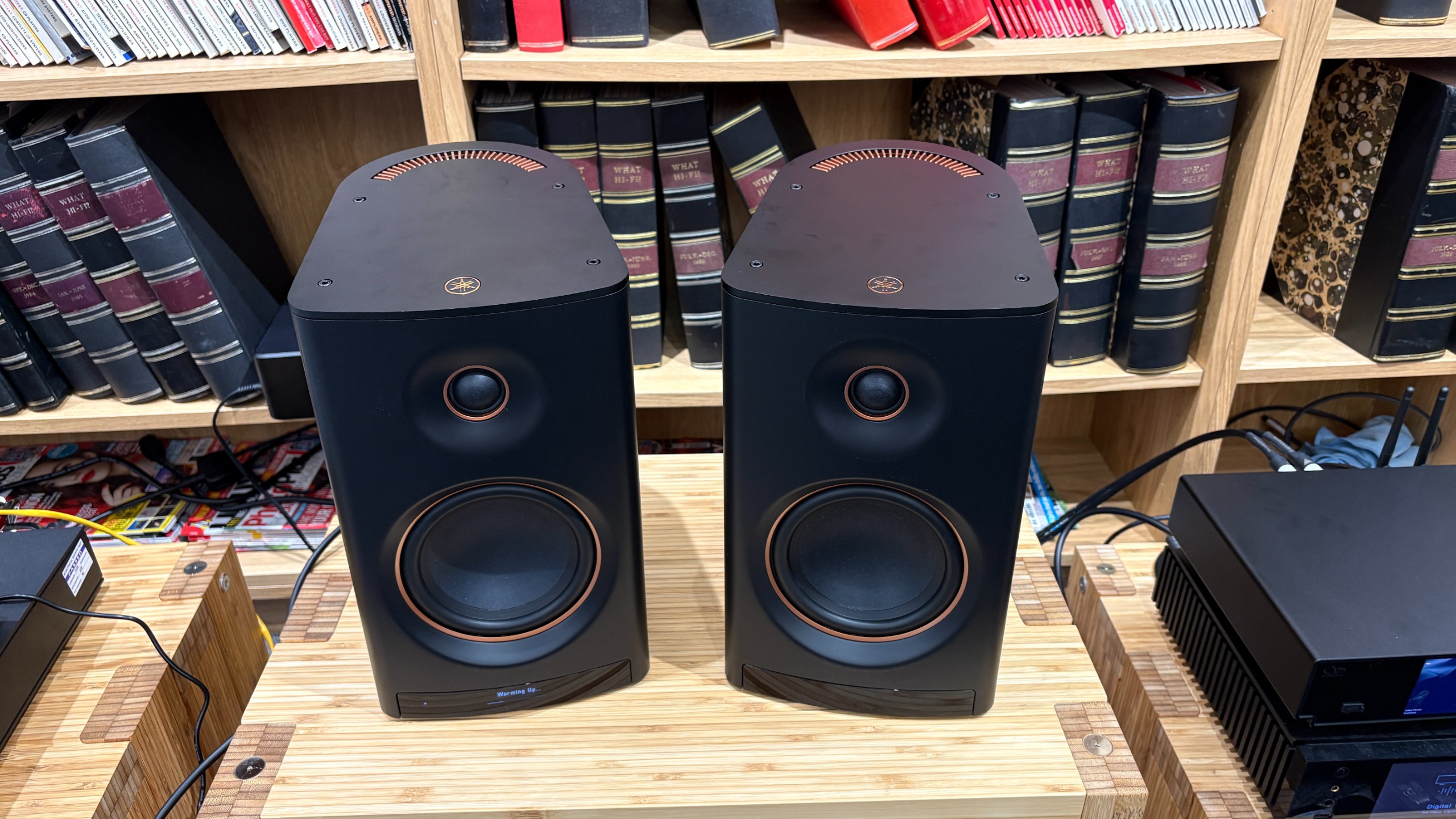
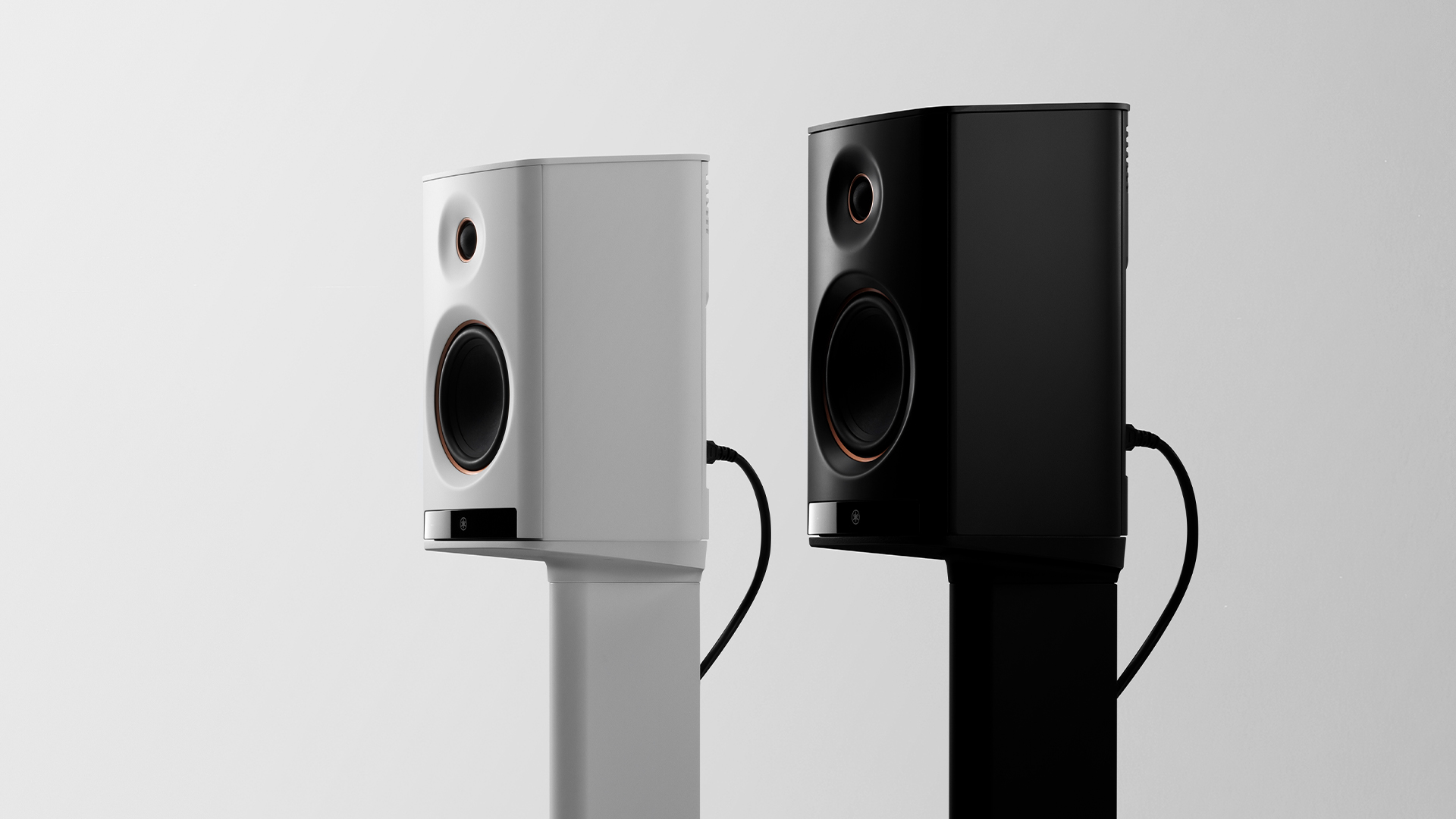
We are immediately struck by how smart and well-built the Yamaha NX-70A speakers are. The sleek, rounded rear of the cabinets kills two birds with one stone by looking suave while suppressing internal standing waves. A 5mm-thick, copper-accented aluminium top plate provides a robust feel with the added bonus of extra cabinet rigidity.
Yamaha NX-70A tech specs
(Image credit: Yamaha)
Driver 13cm mid/bass woofer, 30mm dome tweeter
Max power 160W per channel
Streaming AirPlay 2, Google Cast, internet radio, UPnP, Bluetooth 5.3, Roon Ready, wi-fi, Ethernet
Weight 5.7 kg (primary speaker) / 5.4 kg (secondary)
Finishes x2 (Black, White)
Our test pair arrives in a black finish, but a white option is also available.
The NX-70A measure a fairly conventional 33.3 x 18.9 x 23.4cm (hwd). The primary speaker (which houses all the physical inputs) weighs 5.7kg, while the secondary speaker weighs 5.4kg. So, these Yamaha speakers are not particularly heavy, even for their reasonable size.
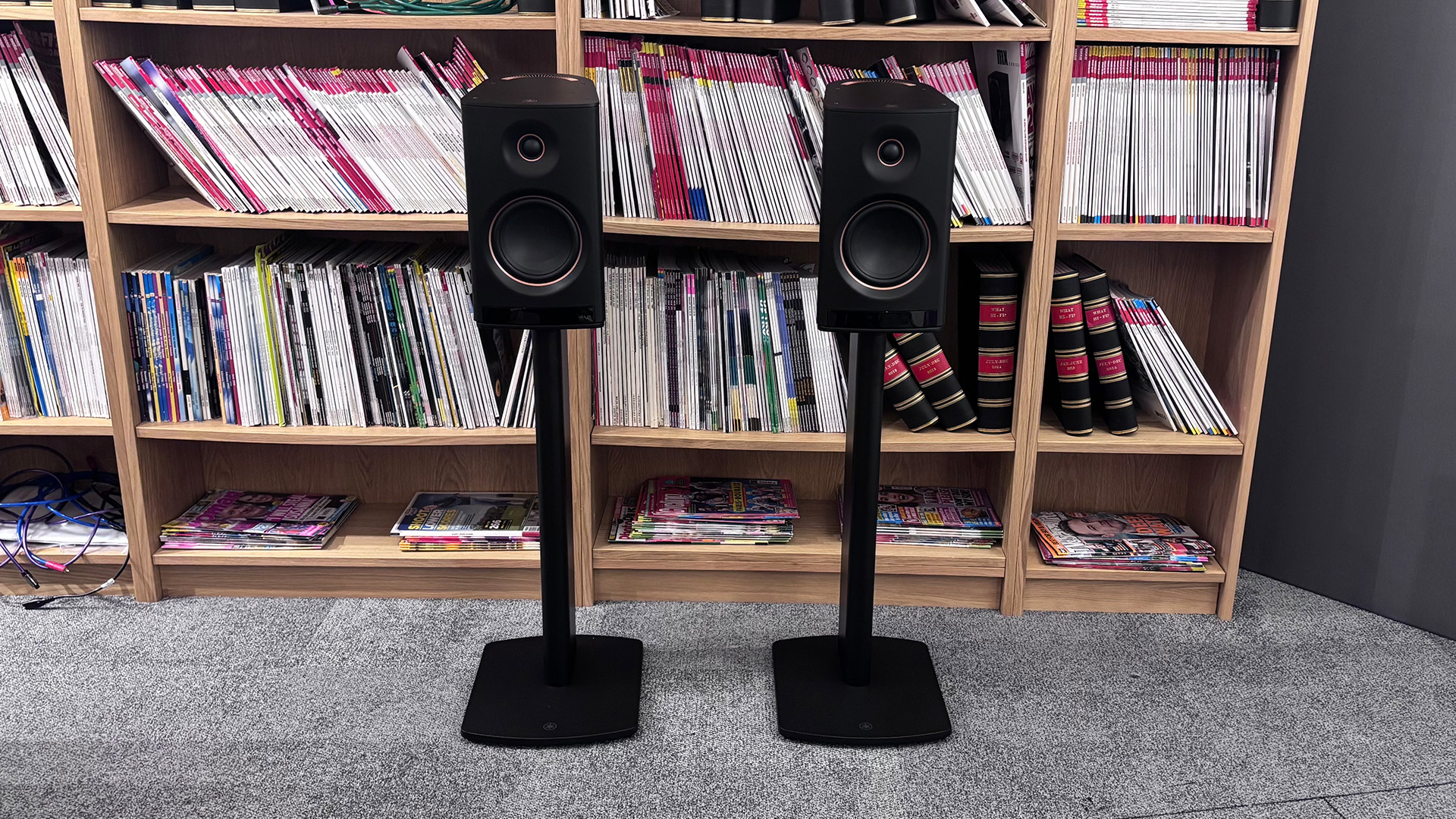
We are pleased to find that the NX-70A screw into their SPS-70A stands, which are 66cm tall, for an even more integrated appearance. The speakers fit precisely, with no overflow from the stands, which we think is a satisfying touch. It is worth noting that you will have to assemble the stands yourself, but with the help of included instructions, the construction is straightforward.
(Image credit: What Hi-Fi?)
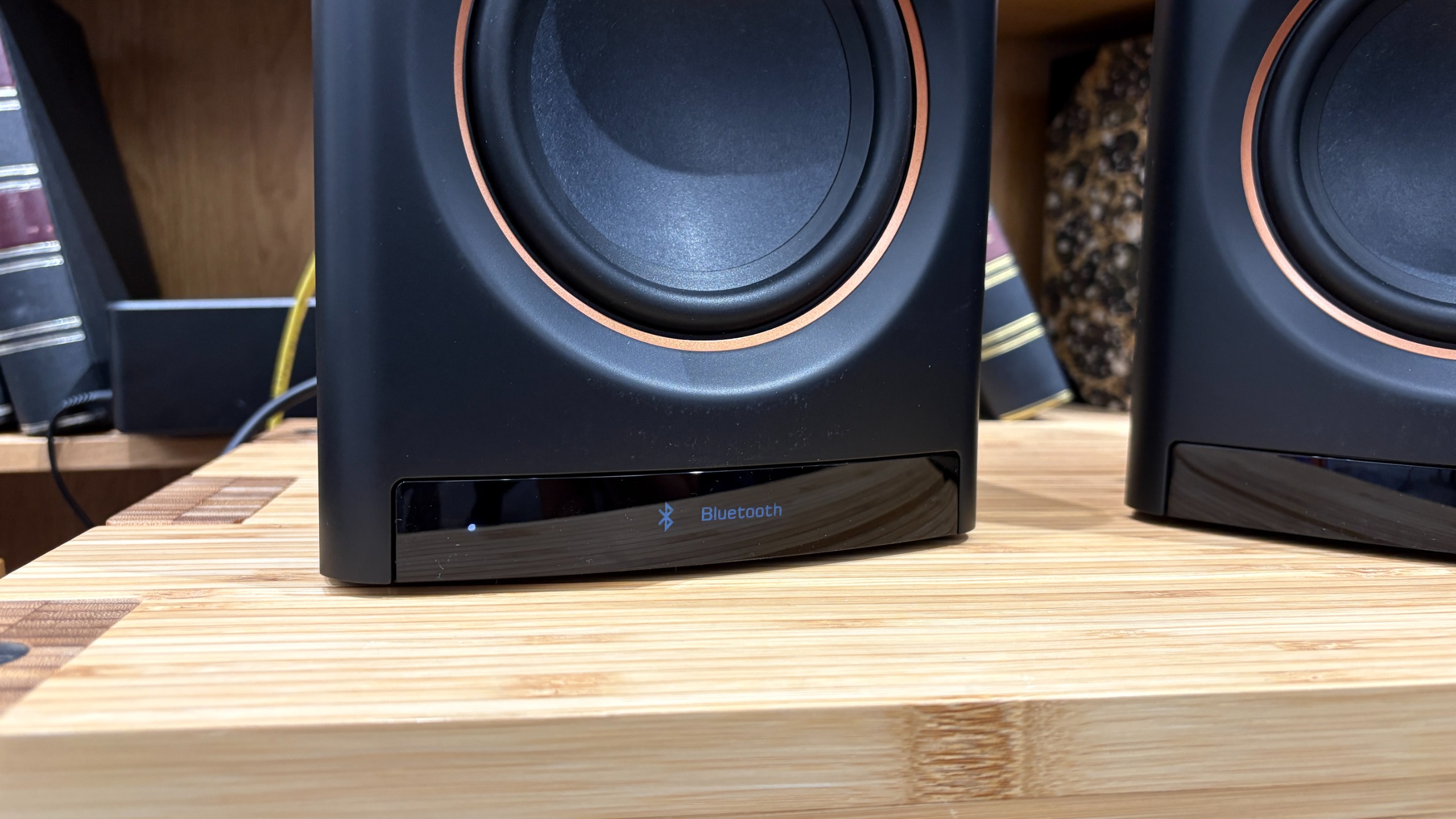
A small display screen runs along the bottom of the speakers, showing the currently selected source, volume or connection status. The crisp, clean display is a welcome addition that most rivals don’t feature, but we would have liked it to be bigger, as the small text is hard to read from a comfortable listening distance.
As for the drivers, both use Yamaha’s ‘Harmonious Diaphragm’ material, which is a blend of Zylon (a strong, lightweight synthetic polymer) and the same spruce wood as used in the soundboards of the company’s grand pianos.
The 30mm dome tweeter and 13cm ported mid/bass unit are both driven by dedicated amplifiers providing 60W and 100W of Class D amplification, respectively. Despite their output rating, the active speakers run surprisingly cool and don’t heat up significantly during testing.
Features
(Image credit: What Hi-Fi?)
The NX-70A's internal DAC supports music files up to 32-bit/384kHz PCM and DSD256, which should please anyone with a huge and varied digital music library.
However, the link between the speakers does limit the final resolution you hear. The two speakers can be connected to each other wirelessly, or with an included 3m cable. While the wireless connection offers more flexibility in terms of placement, its resolution limit is reportedly 24-bit/48kHz, while using the physical connection ups the limit to 24-bit/96kHz.
A host of wireless streaming options are accessible from Yamaha’s dedicated MusicCast platform, including Spotify Connect, Tidal Connect and Qobuz Connect, alongside access to internet radio and UPnP servers.
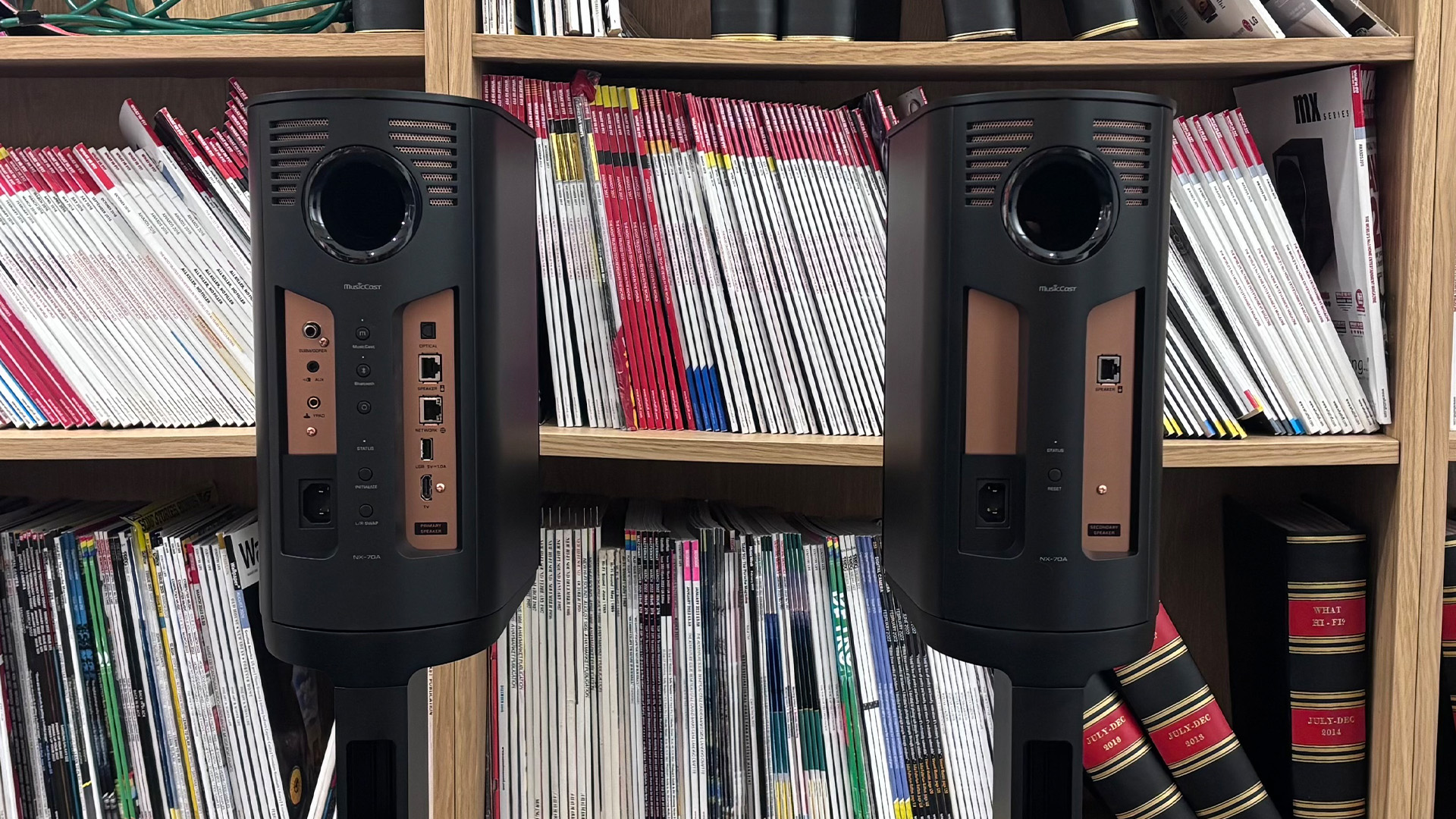
In terms of physical connections, Yamaha has included a 3.5mm stereo mini jack, optical, HDMI (eARC), USB-A (for firmware updates as well as music playback) and a microphone input for the brand’s built-in YPAO room equalisation system.
Outputs on the primary speaker include a subwoofer out, alongside the connection to the secondary speaker.
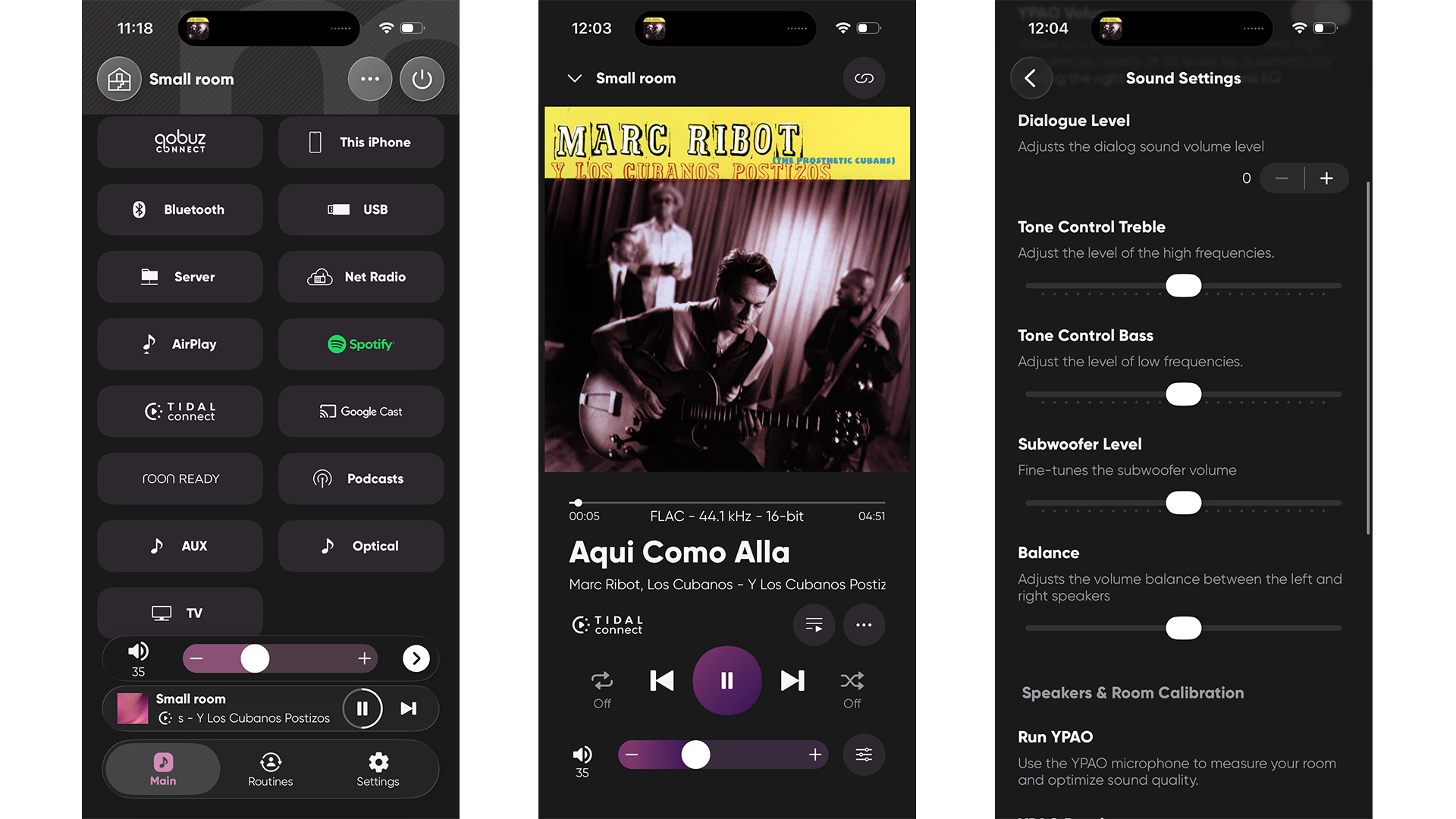
When setting up the speakers, we find the MusicCast control app works well, allowing source selection, playback controls, playlist creation and access to speaker settings, such as tonal and balance controls. The YPAO set-up is also done via the app (more on this later).
Searching through songs stored on our Naim Core server is simple and intuitive, and sound modification features, such as tonal controls, are sensitive enough to be useful, allowing for fine adjustments.
(Image credit: What Hi-Fi?)
Notably, MusicCast doesn’t include the native search options that are available in native control apps, but offers to open the Tidal, Spotify or Qobuz apps when they are selected. Nonetheless, we encounter no difficulties streaming when we switch to Tidal Connect. If you are using other streaming services, worry not, because music can be sent via AirPlay 2 or Google Cast. The NX-70A system is also Roon Ready.
The NX-70A also has Bluetooth 5.3, but only supports the standard SBC and AAC codecs. Given the price of this system, it’s a shame that Yamaha hasn’t included higher-quality aptX support, but we note that the KEF rival doesn’t include it either. At this level, some manufacturers view Bluetooth as a fallback, and, indeed, with the breadth of listening options available, we don’t find ourselves using the feature often.
YPAO is Yamaha’s Parametric Room Acoustic Optimizer, which uses an included microphone to measure the room’s sonic characteristics and counteract any unwanted effects. The process is simple, guided by step-by-step instructions in the app, and involves plugging in an included microphone and running test tones. The entire process only takes a few minutes.
In our acoustically treated test room, engaging the YPAO setting makes for a more controlled and precise bass, effectively countering low-frequency dominance when placing the speakers close to a rear wall. These gains come at the cost of midrange detail and an overall sense of high-frequency refinement, however, so we ultimately opt to leave the setting off.
Sound
(Image credit: What Hi-Fi?)
While these speakers are small enough to be used on a desk, they don’t shine brightest when used there, losing a degree of balance and dynamic expression. For the best results, we recommend sticking to their dedicated SPS-70A stands.
Experimenting with positioning, we find that the speaker system can sound perfectly comfortable close to a rear wall, with plenty of tonal adjustment available via the app to balance things out should bass dominate. We also angle the speakers in a little towards the listening position, where we find they provide the best stereo image.
We listen to the NX-70A system wired and wirelessly, and find it has a greater sense of air and clarity with a wired connection. As such, we used the physical connection throughout testing, kicking off with some hi-res wireless streaming via Tidal Connect.
Our immediate impression of this Yamaha speaker system is one of composure and poise. Music feels pleasantly balanced, with a healthy portion of low-end that provides punch when it is needed, without becoming overwhelming.
Listening to The First Disciple by Tamino, guitar parts are delivered with warmth and clarity. The leading edge of plucked strings is pleasingly rendered and gives way to the full-bodied, hearty resonance of each note. Later in the song, when bass and percussion come in, the NX-70A has no trouble providing the low-frequency depth and textural clarity necessary to bring the woozy, swirling arrangement to life.
This speaker system reaches somewhat deeper and is more authoritative in the bass than rivals such as the KEF LS50 Wireless II. Low frequencies are substantial and punchy, while remaining nicely defined and seamlessly blended into the overall sonic balance.
Switching up the tempo, we stream YHWH Nailgun’s Ballerina from our Naim server. Again, the NX-70A provides all the clarity and power we were hoping for. Compared with the steady rhythmic grip of the LS50 Wireless II, however, we find the Yamaha leaves us feeling a little lost in the song’s chaotic momentum, with a weaker sense of drive.
(Image credit: What Hi-Fi?)
To hear how the Yamaha fares with classical music, we listen to Tchaikovsky’s Symphony No.5 in E Minor, Op. 64, TH. 29: II. Andante cantabile con alcuna licenza - Moderato con anima. Here, the NX-70A offers striking impact and weight to the strings, alongside pillowy, yet well-contoured brass. Dynamically, the system keeps pace with the undulating banks of strings, conveying the piece’s most ferocious and delicate moments with equal maturity and grace.
We are particularly pleased with the way the NX-70A communicates spatial qualities, and truly get a sense of the acoustic environment the piece was recorded in. Closing our eyes, the listening experience feels quite transportative. We also notice just how fluidly the Yamaha system transitions between quiet and loud sections.
Across genres, the NX-70A puts in a commanding, full-bodied performance. While it isn’t quite up to the standards of the Award-winning LS50 Wireless II in terms of subtlety and fine-grained nuance, the Yamaha speaker system is, nonetheless, a highly engaging and enjoyable listen.
We work through the range of physical inputs on the NX-70A, using our reference Cyrus CDi player as a source. Using the optical input, we were pleased with the way the system retains its positive sonic characteristics, but we find there is a slight loss in clarity and dynamic distinction while using the 3.5mm stereo aux connection.
Generally speaking, Bluetooth wouldn’t be our chosen connection when sound quality is paramount. This rings true here, as we found that using the Bluetooth connection results in decreased rhythmic drive and textual detail, but we do appreciate the added convenience that the feature offers.
Verdict
(Image credit: What Hi-Fi?)
The Yamaha NX-70A is a sonically talented and highly adaptable wireless all-in-one speaker system. While it might not be an outright class leader, this system is nonetheless worthy of serious attention for its expansive feature set, heaps of aesthetic panache and mature, expressive sound.
When testing entry-level Dolby Atmos soundbars, there’s one Award-winning model that all new entrants must compete with: the Sonos Beam Gen 2.
Since it burst onto the scene in 2021, the five-star soundbar has blown away the competition with its refined delivery of both movie soundtracks and stereo music.
We have been waiting patiently for a new model for ages now, and the time has finally come.
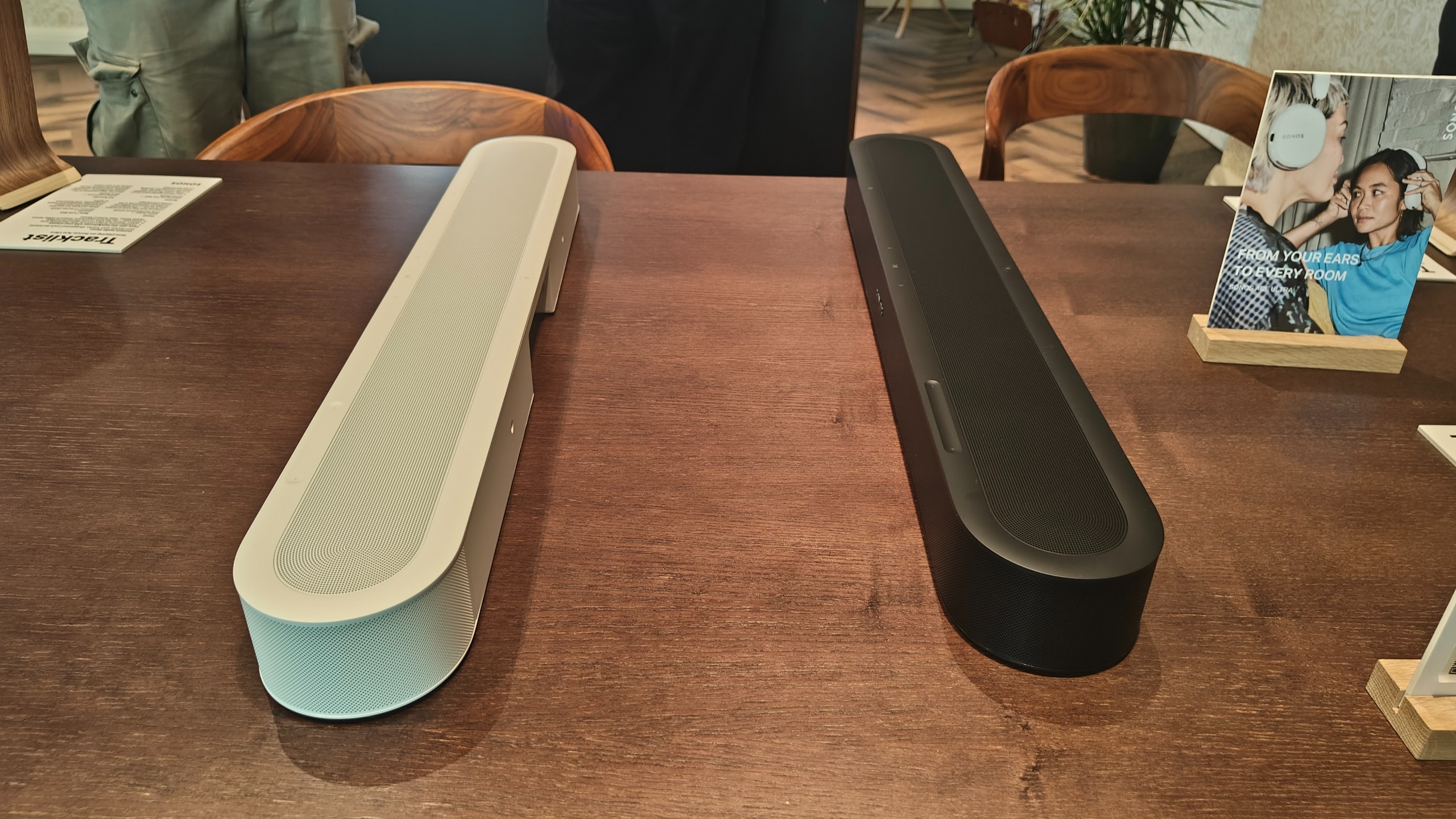
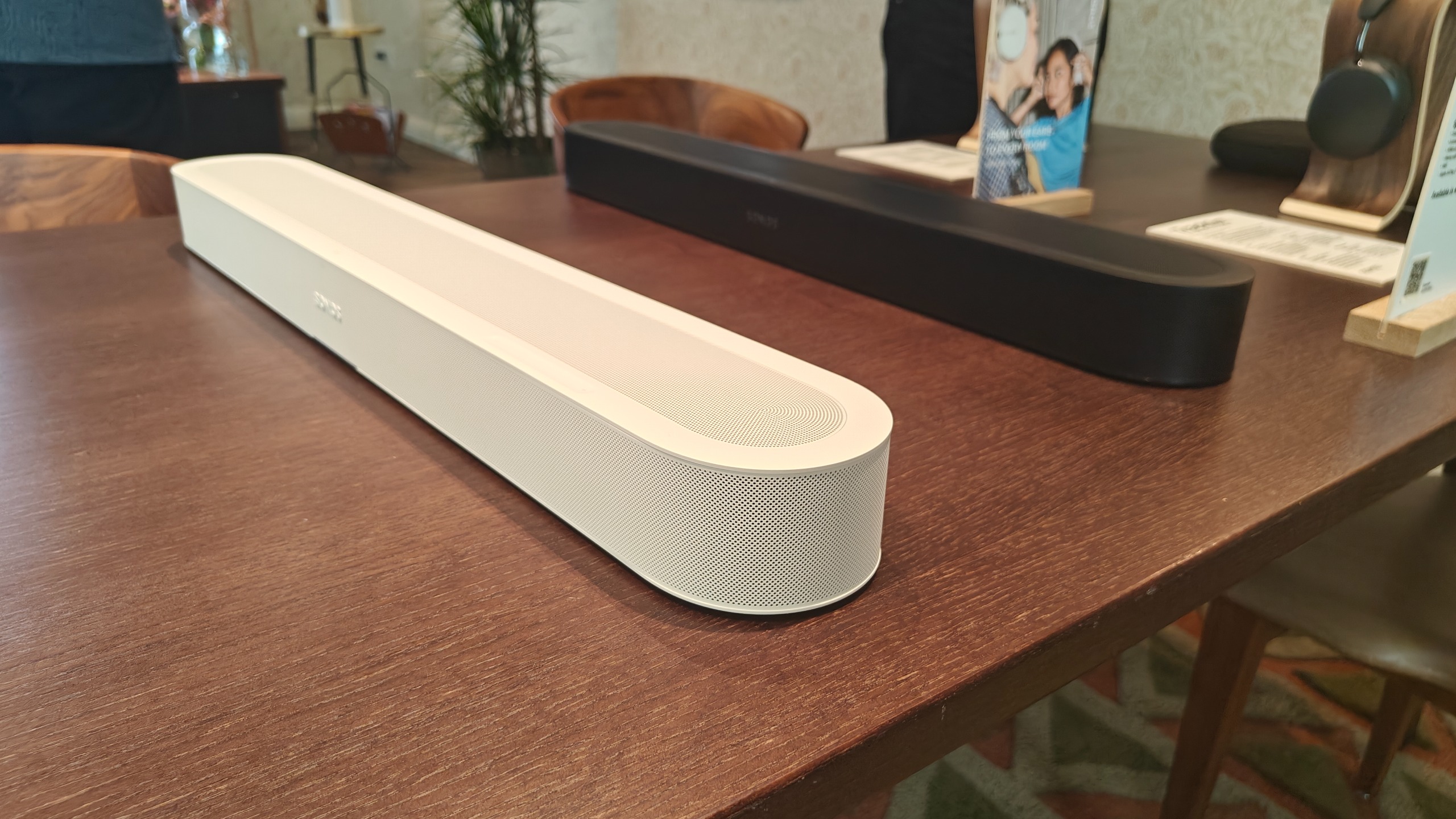
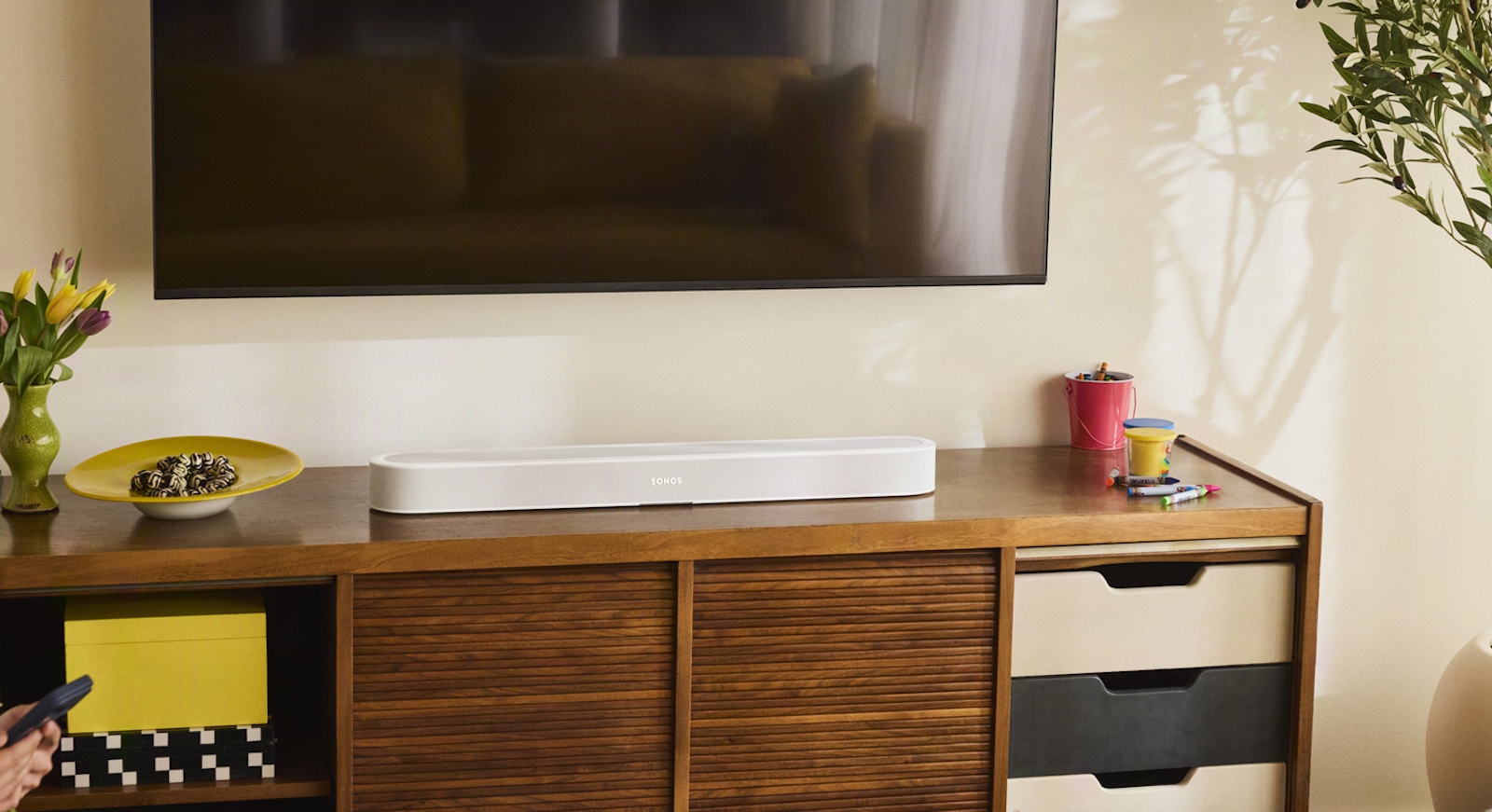
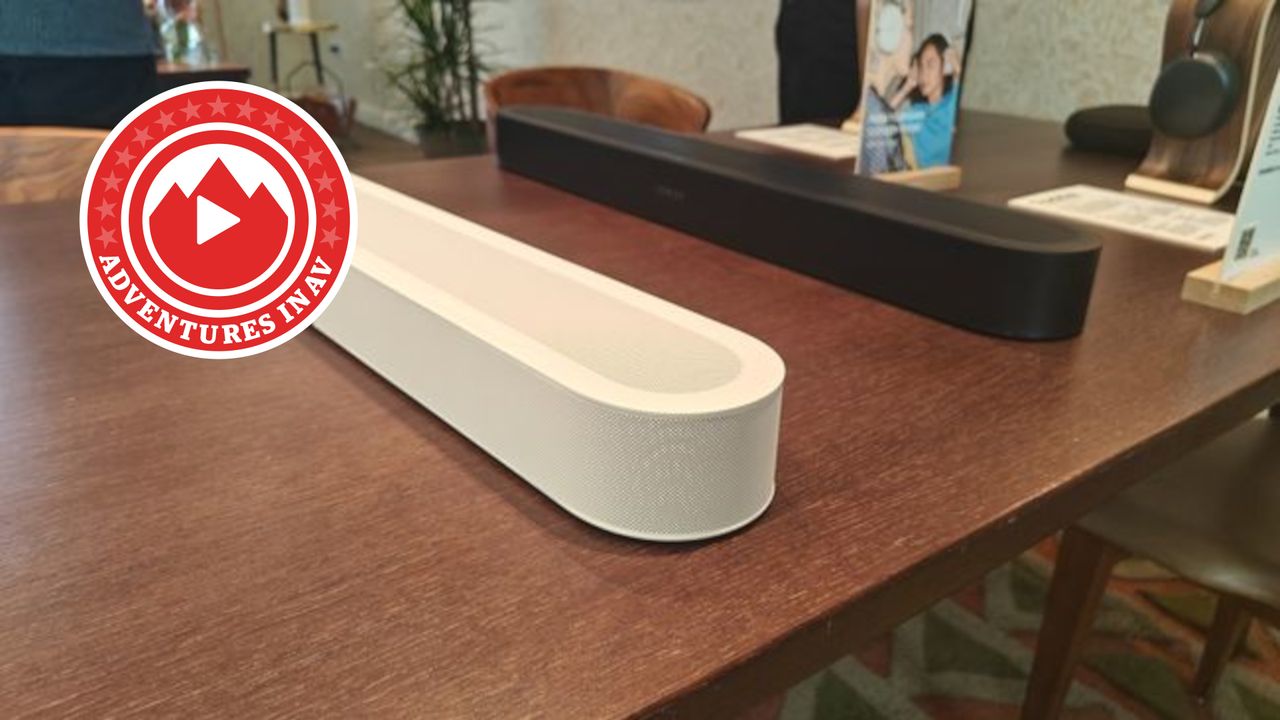
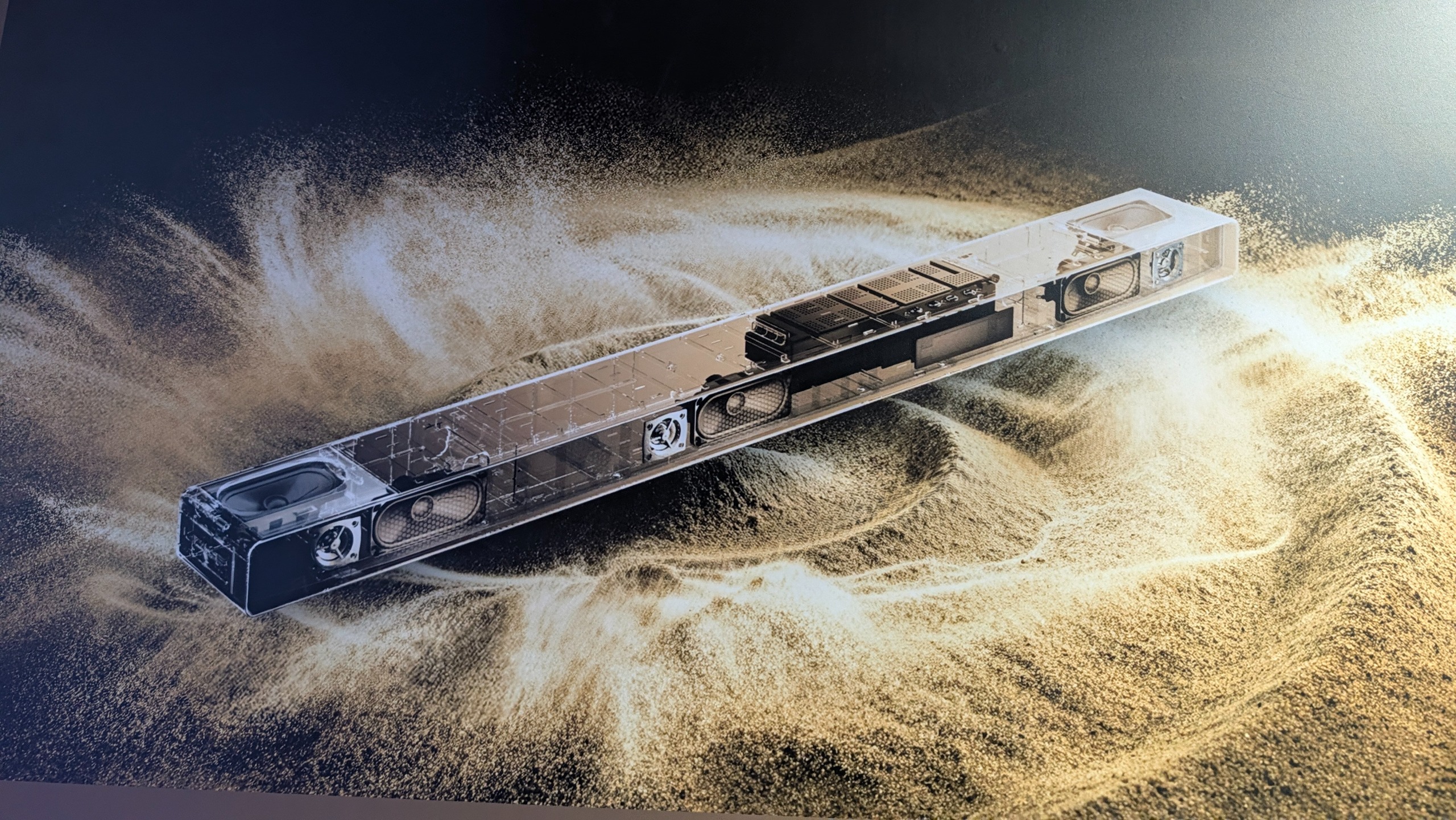
The Sonos Beam Ultra isn’t a replacement for the Beam Gen 2, but an upgraded model that will sit above it, and the big news is that, unlike its sibling, the Ultra sports dedicated up-firing speakers to aid in its delivery of Dolby Atmos sound.
In fact, the Beam Ultra has nine drivers in total – four more than the Beam Gen 2. These are arranged in what Sonos says is a 7.1.2-channel configuration.
The Ultra is launching on 29th September for £699 / $699 / AU$1099. That price puts it between the Beam Gen 2 (£449 / $449 / AU$649) and the also Award-winning Arc Ultra (£999 / $999 / AU$1799).
As with both of those sibling soundbars, the Beam Ultra can be upgraded through the addition of surrounds and/or a subwoofer, and you can easily jump from out-loud to personal listening if you also have a pair of Sonos’s Ace or new Ace Ultra headphones.
This is all great stuff on paper, but how does the Beam Ultra actually sound? We got a chance to hear it during a demo session in Berlin, and it certainly sounds promising.
(Image credit: Future)
Of course, we will save our final verdict until we get the bar into our acoustically treated test room for extensive, comparative testing, but these are our first impressions.
The demo kicked off with a Dolby Atmos mix of Harry Styles’ Ready, Steady, Go!. Harry’s vocals were clear, direct and expressive, immediately drawing us into the track.
The instrumentals were well placed around the soundfield, too, with the guitar plucking featured in the mid-section delivered with a strong sense of precision.
Next, we got a taste of how the soundbar performs with movies. Watching the scene in Sinners when Sammie summons spirits from the past, present and future, the up-firing drivers worked their magic and the sound could be felt well above the TV screen.
When the track I Lied To You reached its crescendo, it created a room-filling experience that was very impressive considering the size of the bar.
From our first listen, the bass was not the deepest, but the soundbar delivered refined and detailed lower frequencies that gave the demo scenes a strong foundation.
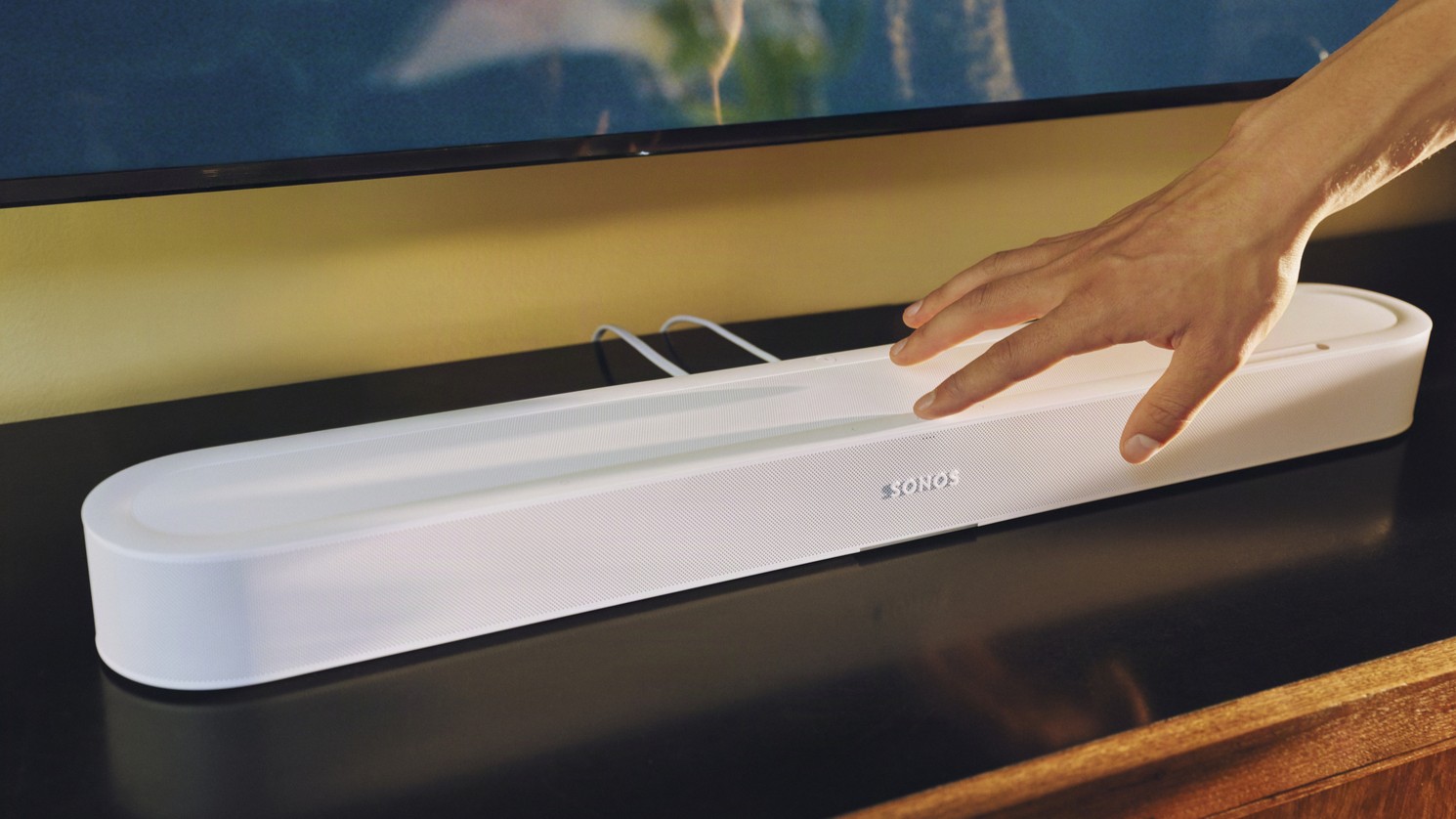
In terms of design, the bar is impressively lightweight and has a compact footprint. There are perforated grilles at the top of the soundbar for the up-firing drivers, and these look quite stylish. On the lip of the Beam Ultra you will find volume and Bluetooth controls, as well as play and pause 'buttons'.
As mentioned, we will of course wait until we have fully reviewed the new bar in our dedicated test room before we deliver our final verdict, but during this initial listening session, the Beam Ultra made all the right noises.
The big question is whether it's the perfect halfway house between the Beam Gen 2 and Arc Ultra or a soundbar stranded in no man's land between two awesome Award-winners. We should be in a position to answer that question very soon.
“We know the home, we know audio, we know music” – those are the particularly bullish words of Sonos's vice president of software, Sid Patel, whom we recently spoke to about Sonos’s new operating system rebrand (we were also given the lowdown on its new Ace Ultra headphonesand Beam Ultra soundbar).
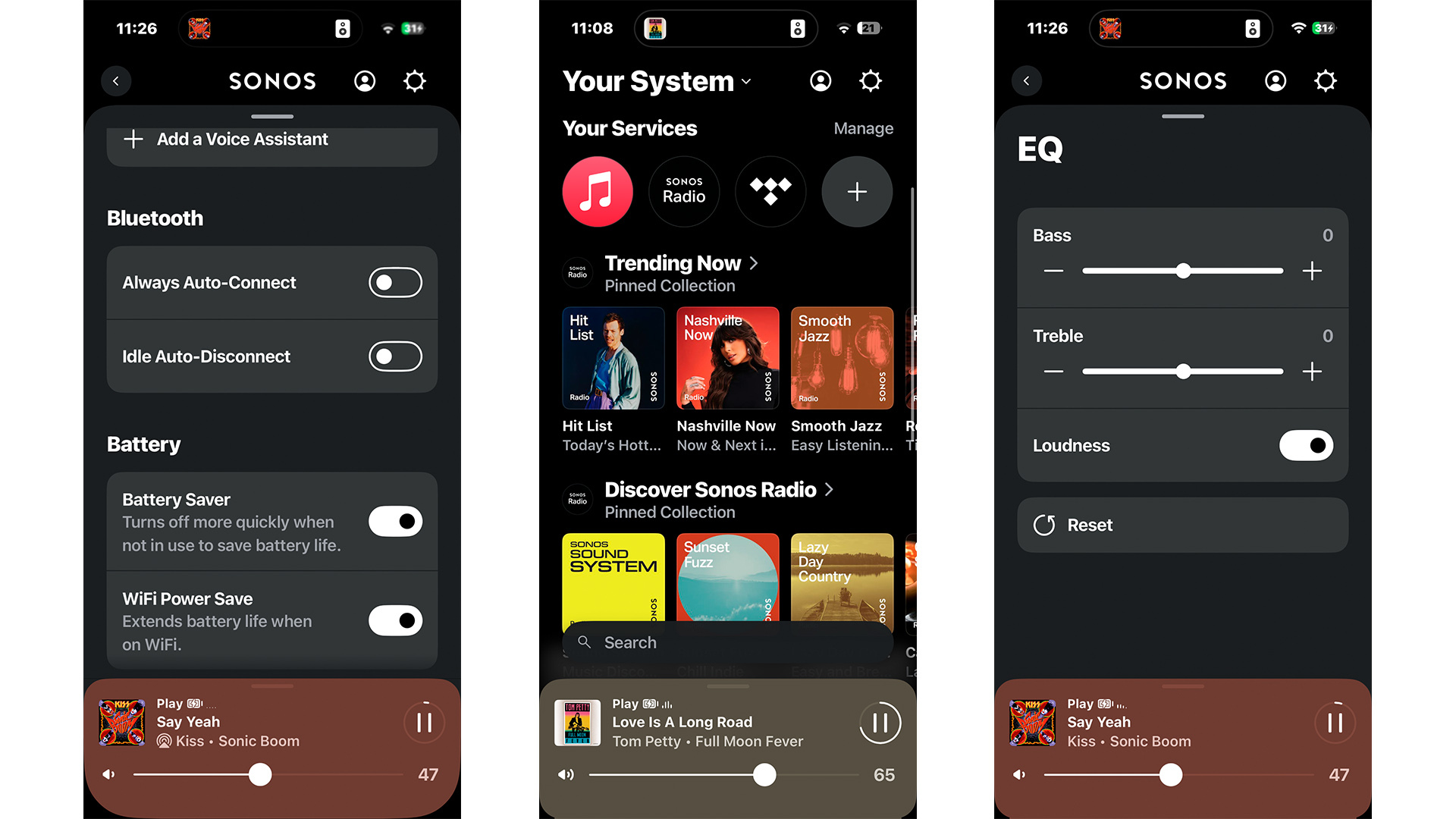
In case you’re catching up, last week the company announced Sonos 27, a new overarching name for the company’s audio operating system which covers the entire Sonos ecosystem. It’s promising better integration between Sonos products and various ways to control them, but without completely excluding other brands.
The company plans to update it annually, just like Apple’s iOS, so we’ll see Sonos 28, 29, etc.
But getting back to the quote, we wouldn’t be surprised if those words might have raised an eyebrow or two among current or ex-Sonos customers, especially given the brand’s tricky timeline over the past couple of years.
The last tweaks to its operating system didn’t go down too well. An ill-fated Sonos app update back in 2024 resulted in what was once a robust, rock-solid and intuitive way of interacting with Sonos products turning into a bit of a mess. Not only was it affected by bugs and glitches, but key features were omitted, much to the disdain of numerous Sonos customers.
Such was the fallout from this event that the then Sonos CEO Patrick Spence was forced to step down eight months later, in January 2025. At the time, the Sonos board even went as far as to say it would not take a bonus "unless the company succeeds in improving the quality of the app experience and rebuilding customer trust".
Despite this botched app release happening more than two years ago, it’s probably fair to say there are still many existing and potential Sonos customers who are still sitting on the fence and requiring a bit more reassurance from the brand.
(Image credit: Sonos)
Of course, the proof will be in the experience. If Sonos does what it’s promising and there aren’t any hiccups with either its new software or hardware, then it might be back in the good books of those disappointed by its recent efforts.
But what do you think? Have you been convinced by the statements coming from Sonos?
If you were disappointed by app-gate, have you been convinced to come back into the fold, or are you happy to watch from the sidelines to see what happens before you commit to any new products? Sonos has many music and movie fans in its midst and surely won’t make the same mistake twice?
Let us know by voting in our poll above and commenting below. We’re interested to hear your thoughts!
Roku has announced its first-ever OLED TVs: the Roku Pro Series OLED TV and Roku Pro Series LX OLED TV.
However, rather than just the panel tech, it's the aggressive pricing that has caught our attention.
Prices start at $999 (around £740/ AU$1389) for the 55-inch Pro Series OLED and $1299 (around £962/ AU$180) for the Pro Series LX OLED.
The Roku Pro Series OLED is available in 55- and 65-inch sizes, and comes with a 120Hz panel with support for Dolby Vision, HDR10+ and HLG. Gaming features include ALLM, VRR, and FreeSync Premium, and it also supports Dolby Atmos.
The step-up Roku Pro Series LX OLED TV adds a 144Hz refresh rate, a Roku Voice Remote Pro, an advanced polariser to cut reflections and "a brighter picture and even wider range of colors".
Both TVs will run on the popular Roku platform. We've found the operating system to be simple to use but a little basic, but the use of adverts, such as automatic startup ads, has proved controversial before.
“OLED technology has been locked behind premium price tags, forcing many customers to choose between the display they want or a price that works for them,” said Chris Larson, Vice President, Retail Strategy, Roku. “We see a clear opportunity to change that equation. With the new Roku Pro Series OLED and LX OLED TVs, we’re removing that cost barrier and making a top-tier viewing experience genuinely accessible.”
Cheap, good OLED TVs have long been elusive. The only other 55-inch OLED TV we've tested around this price was the three-star Toshiba XF9F at £799. If the Pro Series OLED can deliver, it could be the closest thing to an "affordable" OLED around at this size – even the aggressively priced LG B6 is sitting at £899 right now.
The Roku Pro Series OLED is available now in the US at Amazon, with the Pro Series LX releasing in October.
We've reached out to Roku about UK availability and will update this page if we hear back.
Beyerdynamic has announced a new affordable pair of wireless over-ear headphones with active noise cancellation at IFA 2026, called the Aventho Y.
According to Beyerdynamic, these closed-back, foldable headphones use 45mm dynamic drivers to deliver “Beyerdynamic’s renowned sound" and have been “designed for long-term ownership”.
The headphones are designed to be comfortable and durable, with components that can be replaced individually. These include a user-replaceable battery, magnetic earpads, aluminium sliders and stainless steel hinges.
The Aventho Y’s ANC system uses two built-in microphones to detect and filter out environmental sounds, reducing “background noise to a minimum”. A ‘Transparency Mode’ is also available, which lets sounds in so you can stay aware of your surroundings.
The headphones support Bluetooth 6.0 with multipoint connectivity, meaning that you can easily switch between two connected devices. Notably, the headphones only support standard AAC and SBC codecs.
(Image credit: Beyerdynamic)
In terms of battery life, Beyerdynamic quotes an impressive 60 hours with ANC switched on, which extends to 90 hours with ANC disabled. A full charge takes one hour, but just five minutes of fast charging will provide up to six hours of playback.
Through the Beyerdynamic app, users can customise the sound thanks to a 5-band EQ and genre-based sound presets, as well as receive firmware updates and manage automatic power settings.
According to Andreas Rapp, CEO of Beyerdynamic: "The Aventho Y was developed around a simple idea: audio isn't just something people hear – it's something they use every day to focus, recharge, connect and express themselves. We wanted to create a headphone that delivers the performance people expect from Beyerdynamic while giving them the freedom to make it their own – in both the sound they hear and the style they choose.”
The headphones come with a USB-C charging cable and a soft carry bag. Optional accessories, such as ultra-soft black or grey earpads, a low-latency USB-C dongle and a detachable boom microphone, can be purchased separately for those that want to further customise the Aventho Y's use case with music, gaming, videos and more.
The Beyerdynamic Aventho Y will be available in four colours – Liquid Black, Blue Fusion, Soft Jade and Peach Blush – and are set to cost £129 / €149 / $150.
Hisense has given us a preview of its first 2027 soundbar at IFA 2026, and it has its sights set squarely on Samsung's Award-winning formula.
The UX1 bundles a soundbar, wireless subwoofer, and two wireless satellite speakers for a true surround sound experience, and Hisense claims it can output a staggering 1840W across the whole system.
The ethos behind this premium package is that Hisense wants to up its audio game to bring it in line with its premium TV offerings.
The company now sells made-to-order Micro LED sets and 116-inch RGB Mini LED TVs, so naturally it wants a premium audio offering that reflects its flagship products.
Hence the UX1's title – Hisense already offers the UX range of premium TVs, so this has been conceived as a dedicated audio companion for that range.
Generally speaking, Hisense is really paying attention to audio this year and, from what we've seen, next year, too – the Chinese tech giant's stand in Berlin had a whole section dedicated to soundbars, party boomboxes, and portable wireless speakers, so it looks as though the brand is taking sound seriously.
And the UX1 is clearly the most serious product of this new range, and I've walked away from the Hisense booth with three key thoughts on why it could be a genuine competitor for Samsung's dominant HW-Q990H system.
1. It's packed full of drivers
(Image credit: What Hi-Fi?)
Hisense proudly touted the driver tech within this system during my stand tour, and I can see why.
This is an 11.2.6-channel system, and Hisense has packed 26 individual drive units into the soundbar, subwoofer, and surround speakers. 14 of those drivers appear to be in the main soundbar unit alone, with the rest embedded within the other components.
That includes side-firing and up-firing speakers within the soundbar and the surround speakers, which means that the UX1 should (in theory) have no issue presenting Dolby Atmos height effects.
We're anticipating the "bubble of sound" effect we look for in all premium soundbar systems here, so we're hoping the UX1 delivers.
2. It's taken some big bass inspiration
(Image credit: What Hi-Fi?)
The subwoofer bundled with the UX1 uses an almost identical setup to the Samsung system. It sports dual opposing 8-inch woofers, which Hisense says will help to reduce unwanted bass distortion.
While I didn't get a chance to listen to the soundbar outside of some looping branded demo content, I have relatively high hopes for the bass performance, based on the specs.
That said, Hisense has taken a different approach to the design of its sub. Unlike the petite and polite Samsung subwoofer, this Hisense has quite the presence.
I think it wears its heft well, though: it combines sharp lines with smooth edges, and if the design facilitates better bass performance, then it makes sense to me.
3. It could be a high end version of a system we already love
(Image credit: What Hi-Fi?)
Hisense struck gold with the AX5125H budget Dolby Atmos soundbar system, so think what it can do with a proper flagship version of that concept.
While that isn't always the case – sometimes budget products aren't indicative of their premium counterparts and vice versa, even when they come from the same company – I think it's fair to say that expectations are high based on our experience with the Award-winning budget package.
If Hisense can scale up the AX5125H into a flagship sound system, then Samsung could have a problem on its hands.
Pricing is, of course, crucial to figuring that part out, and with this being a 2027 product, we don't have that information right now.
That said, if I were Samsung right now, I'd be nervous. The HW-Q990H is a stellar soundbar system, but with fresh competition coming in 2027, the next version of that package might need to be more than an iterative update.
So from the outside, it can look like a lot of effort for something that, unless you "get it", doesn't seem that important.
There are many answers to this question, even among the What Hi-Fi? team, which includes numerous experts who have chosen to dedicate their professional and personal lives to the endeavour.
But one of the most consistent themes we hear when answering the question is that it all began with a specific piece of hardware.
Which is why, for this month’s Ask The Reader question, we want to know: what product got you into hi-fi?
Or was it a set of speakers you bought in college out of the back of a van at a car boot sale, not knowing the treasure you’d just stumbled upon?
Perhaps you’re a bit younger and discovered the magic of hi-fi after adding a streamer to a classic separates set-up you inherited?
Whatever the answer, we want to know!
You can post your answer in the comments section of this page, or in our forums. Just make sure to tell us what the product was and why it was so special.
Maybe it was the album it was playing? Maybe it was the company you kept, or the place you heard it that made it so special?
As always, at the end of the month we’ll publish a new piece collating your most interesting answers! So please make sure to keep your language PG-13 and stick to our community guidelines for a chance to be included.
Dubbed the Sonos Ace Ultra, they’re successors to the original Ace, which launched back in 2024 and promise not only new features and a raft of changes inside and out, but improved sound quality too.
But what exactly has Sonos done to try and elevate its new headphones above the old model? We’ll go through all of that and more below.
Sonos Ace Ultra vs Sonos Ace - Price
(Image credit: Sonos)
They might be Sonos’s flagship wireless headphones, but the good news is there hasn’t been a price hike for the new model.
In fact, if you live in the UK, the Ace Ultra are actually cheaper than their predecessors were at launch. The Ultras go on sale on the 29th September and cost £399 / $449 / AU$699 compared to the £449 / $449 / AU$699 of the original model.
Of course, the Ace have been around for a couple of years now, which means you can find regular discounts closer to the £299 / $299 / AU$449 mark if you shop around online.
We’ve been told both pairs will continue to coexist for some time, so we’d expect there could be potential for further price drops for the original over time, especially around peak sales periods such as Black Friday.
Sonos Ace Ultra vs Sonos Ace - Design and build
(Image credit: Future)
We haven’t had the opportunity to go hands-on with a pair yet, but on the design and build front, it doesn’t appear that too much has changed from the Sonos Ace.
That’s not necessarily a bad thing as we were fans of the the way the headphones looked and felt in situ.
Looking at pictures of the Ace Ultra, the earcup and headband plastics look the same as before but the new model does use “new rebound foam ear cushions” so it’ll be interesting to see if the pads feel any different when you’re wearing them.
A quick spec comparison does actually show that the new model weighs ten grams more (322g versus 312g) but whether you’ll be able to actually feel the difference remains to be seen.
Sonos is offering two new finishes (sand and agave) to choose from, in addition to the standard black and white options you had with the original Ace.
The multi-function button/slider (also known as the 'control key') makes a return and is your main way of interacting with the headphones and controlling things such as volume, ANC, playback and switching between the headphones and your Sonos wireless speaker.
The big design news is that the Ace Ultra get a brand new Sonos-designed 40mm driver. Sonos hasn’t provided any information on the materials used or how it is improved over ots predecessor but this is obviously huge news as the sound quality on offer will largely be dicteated by how this performs.
Sonos Ace Ultra vs Sonos Ace - Features
(Image credit: Sonos)
While the exterior design and build quality of the Ace Ultra might look familiar, there have been significant changes under the hood.
The key change is the introduction of Sonos’s new “Headphone Engine 2" which is a next-gen wi-fi hardware and software system that lets you link the headphones directly to your existing Sonos system.
It’s a feature that was missing from the originals at launch and will be the first time you can connect the headphones to other compatible Sonos wireless speakers, as well as its current line of soundbars, including the recently announced Beam Ultra. It’s done at the press of a button on either the headphones or app.
Sonos is promising big things on the noise-cancelling front, claiming that the ANC for the Ace Ultra is twice as powerful as that on the Ace.
It’s an adaptive system which should be able to change intensity as you change your surroundings, while it can also take into account any gaps in the seal due to headphones, hair etc. An Aware mode allows for transparency so you can hear the environment around you.
Presumably this is partly down to the fact that the new model boasts ten mics compared to eight used on the Ace.
(Image credit: What Hi-Fi?)
This should also mean that calls are quieter and that background noise should be easier for the headphones to filter out. Their Sidetone feature should mean you’re able to hear yourself speak naturally while ANC is turned on.
Ace Ultra also get a boost in battery life, up from 30 hours in the old Ace to 35 hours in the new model with ANC activated. There’s a low power mode withing the Sonos app which claims to extend battery life by up to 30% but it isn’t clear whether this can work with ANC on or if you have to sacrifice some features to achieve it.
AptX Lossless is supported once again as the ability to listen over a wired USB-C connection although it’s a shame that sample rate support hasn’t increased from the 16-bit/48kHz of the original Ace.
Sonos Ace Ultra vs Sonos Ace - Sound quality
(Image credit: Sonos)
Although we’re going to have to wait until we get the Ace Ultra in our test rooms and use them out in public to see how they fare in the sound quality stakes, we are at least hoping for a much improved audio performance compared to the original.
In our Sonos Ace review we said the headphones delivered “a simplistic and safe sound – not one we would call exciting or enthralling”. We found them perfectly fine but at no stage did they come close to matching the class leading Bose and Sony rivals for entertainment, dynamics or detail.
The new model comes with a new custom-built driver in tow, which Sonos claims delivers “deep bass, clear detail, and balanced sound with no distortion”. The company has even called upon “award-winning audio engineers” to help tune the sound. Will Sonos be able to deliver? We have our fingers well and truly crossed.
Sonos Ace Ultra vs Sonos Ace - Initial verdict
With the Ace Ultra, Sonos has obviously gone to great lengths to try to produce a sequel that goes above and beyond what it served up with the Sonos Ace.
On paper, it certainly looks like most bases have been covered, and if they can deliver all the features and functionality that Sonos has promised in an intuitive, easy-to-use package, then that will go a long way to winning our test team over.
However, to really make a name for itself in the crowded wireless headphones market, not only will the Ultra Ace need to offer standout features that work, it will need to perform well across the board, whether we’re talking about ANC, call quality or sound quality.
We've been begging for precipitation for months, and at long last, it has rained in the UK! The ground is still as dry as a bit of reheated chicken, but we've finally seen evidence that this long, torturous summer might soon be giving way to a damp and soggy autumn.
Like the changeable weather, it's also been a strange and tumultuous time for music: the great Dolly Parton sadly passed away at the age of 80, and we got a new hip-hop album from one of the most left-field celebrities we can think of. We'll get to that below, as we share the songs that have been on our review team's playlist over the past few weeks.
There's even talk that The Rock is planning to release a country album, thus proving that nominative determinism doesn't always work in the way that you expect. You're called The Rock, Dwayne, not The Country. The clue is very much in the name.
A minute-long song is usually a novelty, a throwaway interlude, something to keep the label's wolf from the door. But despite being exactly that length, Ballerina, from YHWH Nailgun’s sophomore album Magazine, is far from thoughtless filler. It isn't even an exception within the album; Magazine’s longest song comes in at just 1:36.
Ballerina’s 60 seconds are populated by reverberant, growling synths, playful drums and the distinctive rasping of the band’s singer, Zack Borzone, who sounds something like Birthday Party-era Nick Cave with a chest infection. Periodically, the song descends into an erratic cacophony of record-scratching, before returning abruptly to its hypnotic, twisting groove.
The song'soverall arrangement (scratching breaks aside) is sparse and staccato, but the depth of its groaning, overdriven synths, alongside a skilful deployment of reverb, makes this an interesting listen when assessing a system’s stereo imaging and depth. If your system is working well, you might be surprised by how quickly Ballerina lures you into its uniquely graceful breed of chaos.
Words by Ioan Hazell
Eve of Destruction by Barry McGuire
I’ve been playing rather a lot of Mafia III recently, and while the game itself is somewhat hamstrung by its repetitive mission design, outdated mechanics and reboot-inducing glitches, it proudly boasts one of the best and most bulging licensed soundtracks this side of a Grand Theft Auto title.
Given that it’s set in the southern US in a fictional version of ‘60s New Orleans, Mafia III uses its in-game soundtrack to craft that hazy American mise-en-scène, with contemporary classics such as Aretha Franklin’s Respect and Creedence Clearwater Revival’s Fortunate Son reflecting the simmering political upheaval running beneath the central narrative.
Then there’s Barry McGuire’s Eve Of Destruction, an anti-war polemic that also incorporates themes of racial inequality, political polarisation, global instability and, my old favourite, the impending nuclear apocalypse.
The charm of Eve Of Destruction is in its raw, unfiltered nature. McGuire isn’t the most velvety crooner in town, favouring a hard, throaty delivery that only enhances his urgent fury as he pointedly warns the listener: “Don't you understand what I’m trying to say? If the button is pushed / There’s no running away / There’ll be no one to save with the world in a grave.”
I wish I could say things had changed, Barry old chum. A man after my own nihilistic heart.
Words by Harry McKerrell
Jolene by Dolly Parton
It's one of the most well-known stories in music: Dolly Parton wrote two of her biggest hits – I Will Always Love You and Jolene – in one day (or thereabouts) in 1973. What a woman. Whitney Houston's powerhouse vocals transformed the first song when she covered it in 1992, although I have a soft spot for Parton's more small-scale, fragile and intimate original.
And while Jolene has been covered many, many times in various genres, Parton's original remains a true country classic.
It's an addictive rhythm, with the guitar strums sounding distinctly tactile and propulsive. Parton's indelible voice holds steady and firm, full of confidence and defiance, even as she begs the titular Jolene to not steal her husband away. True story or not, it's a song that has spanned decades and genres, and shows just how far-reaching Parton's cultural influence is. Jolene is a cracking tune, full of fluid dynamics and a catchy chorus, and with a vocal performance that should keep your attention rapt to the story, no matter how you listen to it.
It's hard to put into words just how much of a shining light Dolly Parton was, not just as a musician, but as an actress, a philanthropist, a savvy businesswoman – coming across both sharp-witted and kind, and imbuing everything she did with a genuine joy. She will be hugely missed, but never forgotten. Not with songs like Jolene, 9 To 5, Here You Come Again out in the ether, that's for sure.
Words by Kashfia Kabir
Present Tense by Pearl Jam
During my formative weeks as a What Hi-Fi? journo, I was shipped off to one of my first press events at a London listening room. One of the hitherto unfamiliar assortment of sound engineers and PRs asked me the standard question about the sort of music I was into, and while I was enthusing about the ‘90s Seattle grunge scene, I mentioned my affection for a nice slice of Pearl Jam.
To my surprise, one of the attendees revealed that they used a Pearl Jam track for testing all the time, although it wasn’t one of the big-hitting anthems, such as Black, Jeremy, Alive, with which I was familiar. Instead, he suggested I check out Present Tense from the lesser-known No Code album, and nearly four years down the line, I still dig it out on the regular whenever testing duties call.
He really was on to something. Instead of sludgy riffs and meaty hooks, Present Tense trades on gentle, almost hesitant guitars which tease and twinkle within a decidedly uncluttered soundscape. This is where a fine pair of wired headphones, say, would have a chance to prove their talents in providing that airy, spacious soundscape in which each twang and strum can rise and decay without bleeding or distortion.
That’s before we even get to lead vocalist Eddie Vedder, a man whose raspy vocals are imprinted onto my brain like initials scrawled into wet cement.
Present Tense is distinct from many of Pearl Jam’s established catalogue because, astonishingly, you can actually make out most of Vedder's lyrics. Listen to Yellow Ledbetter, by contrast, and not even the greatest hi-fi system will give you a hope of understanding what on Earth he’s actually singing.
Words by Harry McKerrell
Mad Technology by Czarface Meets Frankie Pulitzer
I’m so confused, I don’t know where I am or what day it is.
Surprise number one: Tom Hardy has officially dropped a hip-hop album. Yes, that Tom Hardy. You know, the burly acting chap who played Bane, Charles Bronson and Eddie Brock in Venom. He’s done a hip-hop album, and it’s on Spotify and Tidal and everything.
Surprise number two: he’s brought backup. Performing under the pseudonym Frankie Pulitzer, Hardy has teamed up with hip-hop supergroup Czarface, which itself counts Inspectah Deck – formerly of Wu-Tang Clan – among its key members.
Surprise number three: it’s genuinely, almost unfathomably, pretty darn good. Forget mumble rap churned out over the same off-sync processed beats – this is full-blooded, heavy-hitting hip-hop straight out of the 1990s, with Mad Technology going hard and heavy with its big beats, staccato piano riff and ruthlessly aggressive flows.
Hardy’s turn comes right at the end, and rather than sticking out like – well, an actor in a rap collective – he fits in pretty well. Considering that’s about as likely as Sir Patrick Stewart slotting perfectly into Arsenal’s current back four, our Tom deserves a rather hearty pat on the back.
Anker has announced four additions to its Soundcore range, including the Space 2 Pro over-ear wireless headphones, Liberty Buds 2 wireless earbuds and Aeroclip 2 Pro and Aeroclip 2 open earbuds.
We only have limited details, but here’s what we know about the upcoming releases so far.
All of the new products use Anker’s latest 'Thus' chip. The new silicon is a compute-in-memory audio chip, which is designed to run AI calculations within its own memory, rather than splitting processing across several components, for improved efficiency and processing speed.
The new Space 2 Pro over-ear wireless headphones are the follow-up to the Soundcore Space 2, which our reviewers gave a two-star rating earlier this year, citing poor dynamics and detail compared with more talented competition at the price. The Space 2 Pro are £70 / $70 more expensive than the previous model and will cost £200 / $200, so we are hoping Anker has taken note of our reviewers' points.
Outside of this, Anker confirmed the Space 2 Pro have an optimised headband and “soft, skin-friendly ear cushions” for “pressure-free wear”. The headphones have a battery life of 60 hours (30 hours with ANC switched on), which is less than the Space 2, but a significant figure nonetheless.
AeroClip 2 Pro (Image credit: Anker)
Personalised audio will also be available in the form of HearID 5.0, which tests users’ hearing in order to provide a tailored sound curve.
Further features confirmed by Anker include adaptive ANC and enhanced call clarity, which are both delivered by eight sensors working in tandem with the AI chip.
Similarly, Anker claims the Liberty Buds 2 deliver “crystal clear calls in noisy environments”, thanks to an eight-sensor array working alongside the Thus chip. The company also says the new earbuds “block out chaos instantly”, using a six-sensor, full-band ANC system.
The Liberty Buds 2 weigh just 4.7g and also feature HearID 5.0 for personalised listening. For the drivers, we are told, the wireless earbuds use a 9.2mm wool paper diaphragm for “high dynamic detail”.
Anker hasn’t yet confirmed the Liberty Buds 2’s battery life.
According to the company, the AeroClip 2 Pro open buds are an “AI note-taker for every need”, thanks to the Thus chip, which captures online meetings and calls and “transcribes, summarises, answers and syncs your workflow.”
“Crystal clear calls” are yet again promised, this time courtesy of four high signal-to-noise ratio MEMS microphones and two bone conduction sensors, paired with built-in AI noise extraction.
The AeroClip 2 Pro use an 11.3mm dual diaphragm driver with ‘AdaptiveTune’ (Anker’s adaptive ANC option), which the company says provides “immersive sound in any environment”.
The open design features no silicon eartips, but promise “comfortable, secure all-day wear thanks to their C-shaped bridge.
A standard AeroClip 2 model will also be available. All we know about the product so far is that it will also use the Thus chip for clear calls and will have an eight-hour battery life.
The Space 2 Pro, Liberty Buds 2 and AeroClip 2 are set to launch on 22nd September, with retail availability in the UK, US and EU. The launch date of the AeroClip 2 Pro is yet to be announced, and Anker says that the product will only be available in the US. Full pricing is as follows:
Huawei has announced a new generation of wireless earbuds, the FreeBuds Neo.
Positioned as a more accessible sibling to the FreeBuds Pro, the new earbuds share a lot of common features with the flagship range.
The FreeBuds Neo feature a lightweight, mini stem design. Each earbud weighs approximately 4.8g.
Huawei has also updated the eartips, optimising the design across “eight key ear-related surfaces”. While we're not 100 per cent clear what it means by "ear-related surfaces", the work will reportedly make them more comfortable to wear for prolonged periods and ensure they fit a wider range of ears.
An 11mm polymer composite dynamic driver is at the heart of their “turbo drive unit”, which uses a multi-port vent system to balance pressure behind the diaphragm for “smoother, more controlled diaphragm movement”. Huawei says that the driver’s lightweight, high-rigidity diaphragm delivers “clear highs and a realistic sense of presence”.
Standard Bluetooth codecs are supported, as well as higher-quality Bluetooth codecs including LDAC, which allows data transmission up to 990kbps when connected to a compatible source. The buds also support Huawei’s own L2HC codec that allows for higher 2.3Mbps high-resolution lossless transmission, but only with select Huawei smartphones/tablets.
The earbuds have an 'unlimited spatial audio' feature, which uses real-time head tracking to keep audio stable relative to head movements. There is also a fixed spatial audio option, as well as 'pinpoint game audio' – a setting optimised for first-person shooter games, which provides accurate tracking of footsteps and gunshots.
The FreeBuds Neo feature a “dual-channel noise cancellation architecture”, which sees a C-shaped tube and air vent working in tandem to minimise the entry of outside mid/high frequencies into the ear. A third-gen audio chip is used to process and cancel environmental sound, resulting in an average noise cancellation of -30dB across the hearable frequency range.
(Image credit: Huawei)
In an effort to boost call clarity, the FreeBuds Neo use three microphones and a bone conduction sensor, alongside AI processing. The earbuds' "anti-wind" design further reduces airflow interference, allowing users to take calls in noisy situations.
Like the FreeBuds Pro 5, the new earbuds feature tap controls on the stem, and see their antennae upgraded to offer an improved Bluetooth range of up to 170m, alongside enhanced resistance to interference.
The Huawei Audio Connect app can be used to control the earbuds, letting users switch between noise cancellation modes and EQ settings, locate the earbuds and check battery levels. The FreeBuds Neo are compatible with Android, iOS, and Windows and support cross-system dual device connection.
In terms of battery life, the FreeBuds Neo provide 40 hours of charge with their case, and up to 10 hours from the earbuds alone, which falls to 6.5 hours with ANC enabled. Notably, a 10-minute quick charge will give you four hours of playback.
The Huawei FreeBuds Neo will be available in four colours: Stellar Silver, Nebula Pink, Ice White and Starry Black. They are due for release in the UK on 23rd September, costing £120.
Customers purchasing the FreeBuds Neo before the 26th of October will be given a £20 discount.
Onkyo has announced a trio of new wireless speakers: the GX-AiO 50, the GX-AiO 100, and the GX-AiO 150.
An expansion of Onyko's desktop-friendly 'Creator' range, the three one-box speakers are designed to bring extensive connectivity and versatility to three varying sizes and form factors.
The GX-AiO 50 is the smallest in the range, the GX-AiO 100 sits in the middle, while the GX-AiO 150 is the largest, most premium option.
All three boast a 2.1-channel acoustic architecture which combines dual main drivers with a built-in, independently amplified subwoofer. All three use Class D amplification and Onkyo's own digital signal processing to minimise noise and distortion, resulting in "clear detail" and "deep, dynamic bass".
Physical connections include HDMI ARC alongside a USB-C and optical input, plus a switchable phono input if you want to hook up a turntable. For wireless listening, Bluetooth 5.3 is also available.
Three listening modes are accessible across the range. Eco Mode provides more precise low-volume control for nighttime listening and smaller spaces, whereas Standard Mode is designed for everyday listening. Max Mode, meanwhile, puts each system at its highest output for when you want to get the party started.
Plus, if you want to go even louder, you can connect any GX-AiO system into a stereo pair.
(Image credit: Onkyo)
While they come in different sizes and clock in at different price points, all three systems follow a similar design language whereby a central control dial is flanked by two main drive units.
Integrated LED lighting around the control dial and the subwoofer slits has also been added "to create a warm ambient glow without overwhelming the room".
According to Vinny Bonacorsi, Onkyo's Chief Operating Officer: "The new Creator AiO series delivers what today’s younger music lovers want: compact size, simplicity, connectivity and affordability, paired with timeless industrial design. This series represents another bold step forward in Onkyo’s evolution, bringing our passion for music to a new generation.”
The Onkyo Creator GX-AiO series will be available this autumn in a choice of black or white finishes. Prices are as follows:
While it may have forged much of its reputation on its budget hi-fi separates, including the outstanding A8 integrated amplifier, Rotel's premium Michi product series has produced some real gems. From the Michi X3 amplifier to the Michi Q5 CD player, Rotel knows how to operate in the higher echelons of the hi-fi market.
Now, the Japanese brand is adding to its more premium collection of separates with two new additions to the Michi lineup: the Michi Prestige P430 preamplifier and the Michi Prestige S430 stereo amplifier.
According to Rotel, the S430 stereo amp is aimed at listeners who want to step up to a fully fledged separates system, delivering 230 watts per channel into 8 ohms.
The new amplifier uses an advanced architecture which combines an oversized in-house-manufactured toroidal transformer, large bulk-storage capacitors, isolated signal routing and multi-stage push-pull output transistors, all of which combine for "firm bass control" and outstanding "dynamic impact".
In terms of connections, the Michi Prestige S430 houses balanced XLR and RCA inputs alongside dual 5-way speaker binding posts. Externally, the S430 features an aluminium chassis and a front-panel display with selectable metre displays and a backlit power toggle.
Rotel Michi Prestige P430 (Image credit: Rotel )
Also arriving is the Michi Prestige P430 preamplifier, designed to bridge the gap between traditional and modern sources for listeners who want ample connectivity options alongside the performance of a separates set-up.
Central to the new preamplifier is an ESS SABRE ES9028PRO 8-channel DAC which, says Rotel, renders recordings "with pristine clarity, natural detail, and an open, precisely focused soundstage". The P430 is capable of supporting PCM files up to 32-bit/384kHz, as well as DSD256.
Further, the new preamplifier has been built to preserve signal integrity via its transparent signal paths and refined power-supply architecture, resulting in a sound which balances "exceptional control and musical insight".
The P430 boasts balanced XLR and RCA inputs and outputs, coaxial and optical inputs, and HDMI ARC for connecting to a home cinema set-up and a moving magnet phono stage for partnering with a turntable.
Further connections include dual subwoofer outputs, a 6.35mm headphone port, and wireless Bluetooth connectivity with aptX HD codec support for streaming files up to 24-bit/48kHz.
The Michi Prestige S430 stereo amplifier and Michi Prestige P430 preamplifier are available this September. The S430 will set you back £3599 / $3999 / €3999, while the P430 is priced at £3599 / $3999 / €3999.
Four weeks on, the answers have come flooding in (many breaking our PG-13 language rule). But, to our surprise, unlike our team of testers, you are not only united in your belief we are not living in a golden age, you also (generally) agree on the reason why.
It’s all about physical media
(Image credit: Future)
The importance of physical media was a central point in all your arguments, which shouldn’t be a surprise given how vocal you (and we) are about the benefits of 4K Blu-ray over streaming.
This was initially expressed by reader “mrj6j”, who argued that, despite having a “proper” set-up that he’s spent years, even decades, honing, the age of streaming is a blemish he can’t ignore, which makes it impossible to call the current world a golden age.
“I have been into home cinema for a long time and agree we are at a point where it is more affordable, but mine has grown into a 4k projector in a dedicated room with a 7.2.4 Atmos set-up. And a 136-inch screen in total darkness. But this has taken a long time to grow into what it is today. But it is exceptional; it often sounds better than the cinema (I had it professionally calibrated), and I can enjoy it whenever,” wrote mrj6j.
“The problem is that the 4k discs are the best format, better than streaming without doubt. But do those with a home cinema set-up utilise this? They should, and more distributors should too.”
Reader Michael Peterson agreed, adding that even if you have a more modest set-up, as he does, the increased price and limited selection of 4K Blu-ray discs and players is an issue that stops the 2020s being a golden age for home cinema.
“I have an entry-level Samsung, my Sony receiver, Elac sub1010 and 8-inch speakers in a 2.1 set-up. I use my Xbox One S for Blu-ray and streaming. Good enough [for] me. 4K Blu-ray would be better if the prices of discs and players were more affordable and discs were more reliable,” he wrote.
But it wasn’t just about 4K Blu-ray; some readers, including Andrew Wood, argued: “Culturally [the golden age was], when you shuffled into town, to a shop, to hire or buy a video/DVD and then watched it on your wide-screen CRT TV with built-in 5.1.”
Our hot take
(Image credit: Future)
We agree; there is something undeniably special about physical media. At a technical level, we have long championed 4K Blu-ray. It offers a much higher bitrate, superior HDR and far less data compression than streaming, giving you a sharper, more detailed image in most instances. That’s why we use an ever-evolving library of 4K Blu-ray test discs when reviewing home cinema hardware. We even have a monthly Now Showing column where we detail the new movies we're using.
While none of us would go so far as to want to return to tapes and CRT TVs – read this feature chronicling our editor’s attempts to resurrect his VHS collection last year, and you’ll see why – we also agree there’s something emotionally special about physical media. Having it on a disc you own gives you a more personal, emotional attachment to the film, as rather than just clicking on something an algorithm’s decided you will like, you’ve chosen that film, specifically, at some point.
As Andrew Wood points out, there was also something truly magical about the Blockbuster years, when we had to physically go outside to rent a new movie. Many of the team are old enough to remember the experience, and have fond memories of the family trips (and arguments) we had going out to pick a new film to watch after the final school bell rang on Friday. That makes it hard not to agree that there is some substance to his argument that, "culturally", that was a golden age for film fans – even if the hardware was worse and it wasn’t as easy to find new films to watch.
Some people will never be able to get past the cost of these Marten speakers, and we can understand why. Standing just 42cm tall, the two-way Parker Duo Diamond Edition look under-equipped to survive in a high-end sector dominated by sonically talented and intimidatingly muscular floorstanders.
Given the significantly larger internal volumes and formidable driver arrays featured on those towering rivals, the Parker Duo Diamond Edition’s chances don’t look good. In the event, it turns out that these modestly-proportioned Swedish boxes can look after themselves.
Any company that names its product ranges after Jazz greats shows, at the very least, a good amount of musical appreciation. Marten invokes the likes of Coltrane, Mingus and Oscar, among others, and uses the Parker name for its step-up series.
It may be shocking for some to discover that the Parker Duo on test here is merely one of the early steps on the Marten ladder. Unusually, it is available in two forms: the standard version of the Duo (£11,995 / $19,000 / AU$18,500) and the Diamond Edition on test here.
Design & build
(Image credit: What Hi-Fi?)
The standard Parker Duo uses ceramic diaphragms in both its 25mm tweeter and 19cm mid/bass unit. Its crossover point is set at a fairly typical 2200Hz, and the network design is a mixture of first and second-order filters. A rear-firing 23cm aluminium passive radiator is used to tune the bass.
Finishes x 4 (matte walnut, piano black, piano white, piano walnut)
Sensitivity is claimed to be 88dB/W/m and nominal impedance is rated at 6 ohms. Note, the minimum impedance is just 3.1 ohms, which suggests these speakers will perform best with a muscular amplifier.
The Diamond Edition adds more spice to the formula by swapping the standard model’s ceramic tweeter for a diamond dome, and upgrading the crossover’s polypropylene capacitors for more exotic copper-foil types. The internal wiring is upgraded too. Everything else, including the electrical specifications, remains the same.
See the Diamond Edition in real life, and it gets off to a good start. Build quality is as immaculate as the price demands. The gloss black finish of our review samples is wonderfully deep and mirror-like.
Not all our team like the unusual styling of this product, or the fixed metal grilles over the drive units, but we have no complaints about fit and finish.
The Parker Duo’s front panel is 6cm narrower than the rear, which looks a bit odd at first. This unusual shape reduces the build up of internal standing waves, while the use of 35mm-thick M-Board (a proprietary laminated material) for the enclosure’s panels is claimed to produce a more rigid and inert structure than more conventional alternatives.
(Image credit: What Hi-Fi?)
The performance of any standmounter is massively dependent on the quality of its support. Marten makes dedicated stands for the Duo, and they are impressively weighty and rigid. Their construction is based around three rigid pillars and a thick steel base, fitted with four isolator feet co-developed with IsoAcoustic. These stands cost a chunky £3295 / $5000 / AU$5750 per pair, but are good enough for us to consider them an essential part of the deal.
Any product at this level positively demands a top-class system. Our reference set-up consists of Naim’s ND555 / 555 PS DR music streamer and the Technics SL-1000R/Kiseki Purpleheart record player feeding a Burmester 088/911 MkIII pre/power amplifier combination.
The cables are a mix of premium offerings from Chord Company and Vertere Acoustics. For benchmarking purposes, we have the ATC SCM50 and the PMC MB2 SE speakers.
These Marten speakers perform best when given plenty of space to breathe. In our 3 x 7 x 5m test room, they sound most at home with the front panel around 90cm from the back wall and angled in slightly towards the listening position so that the tweeter axis crosses a little behind our heads.
Given such a placement, these speakers produce a lovely, consistent tonal balance combined with the kind of three-dimensional stereo imaging that almost feels physical.
Sound
(Image credit: What Hi-Fi?)
That huge price tag may lead many to expect sonic fireworks every time these speakers play music. That’s not how it works.
The Parker Duo Diamond Edition does exactly what every truly great speaker should, and that’s reproduce the source material with the minimum of alteration. So, if you have a poor compressed recording, or less than capable electronics in your system, these standmounts will merely reflect that, imperfections and all.
Unusually for such revealing and analytical performers, these Marten speakers won’t go out of their way to highlight those flaws. You can hear the shortcomings easily, of course, but they remain in proportion, and the good parts of the recording will still shine.
However, feed these speakers a diet of great recordings – classics such as Miles Davis' Kind Of Blue or Take Five by the Dave Brubeck Quartet, for example – and they will turn in a performance full of subtlety, dynamics and cohesion that’s almost eerily convincing.
That the Marten Parker Duo Diamond Edition are capable of a high level of resolution should not be a surprise. Such qualities should be a given at this level. However, what sets them apart from most rivals is the degree to which they step beyond the mechanics of hi-fi – you know, a cone moving backs and forward, crossover components and enclosure resonances – to put the music front and centre.
These speakers sound impressively natural regardless of whether we are talking about rendering instrumental textures in classic jazz recordings or the nuances of Billie Eilish and Khalid’s vocals on the wonderful song, Lovely.
(Image credit: What Hi-Fi?)
When we play Tchaikovsky’s Marché Slave Op.31, these Marten standmounts stay controlled even when pushed hard to high levels. Just as pleasingly, they refuse to harden up and compress to any significant degree under such circumstances.
There are certain boxes that need to be ticked for a speaker to succeed at this level. Tonality has to be spot on, and it is. These standmounts sound neutral while still displaying natural warmth and richness; this is a rare combination that few rivals manage.
Next, dynamic expression should be top class. That’s another tick here, whether we are talking about the wide-ranging sweeps of Tchaikovsky’s symphony or the finesse needed to get the most from the Billie Eilish/Khalid track, the Duo Diamond Edition manages it.
Then we come to rhythmic drive, a quality many hi-fi products struggle with. A quick spin of Michael Jackson’s Who Is It? reveals that these Marten speakers excel in this area too, communicating the song’s momentum and energy beautifully.
We haven’t even got to the icing on the cake yet. These relatively small speakers do bass, proper deep bass, way beyond that we would expect for this size of standmounter. As we listen to the Jackson track we are floored by the power and authority of the lows. The Parker Duo Diamond Edition hit hard and true, delivering the lows with enviable articulation and precision.
Compared to the cheaper but appreciably larger ATC SCM50 speakers, the Martens deliver richer, punchier bass with broadly comparable extension. The company claims low-frequency extension down to an impressive 36Hz ±2 dB. That sounds believable.
Verdict
(Image credit: What Hi-Fi?)
The real shame of a product like this is that very few people will actually be able to hear and enjoy it, given its price and restricted exposure.
However, if you are one of the lucky few with the budget and system to do a speaker like this justice, we recommend a serious audition; the Marten Parker Duo Diamond Edition is a true endgame speaker.
Well this is something we haven’t seen from a Bluetooth speaker before: a design that mimics a kettlebell. And from turntable brand Lenco, too. Quite a departure.
The Orbita-360 isn’t aimed specifically at fitness fans, and it doesn’t weigh too much, so we wouldn’t start using it for kettlebell swings. But it is waterproof, so can be used outside, and it fires out sound in 360 degrees.
Inside is a 2.1-channel audio system comprising a 4-inch subwoofer, four full-range drivers and dual passive radiators, delivering 60W RMS (120W maximum). It promises “rich, room-filling audio with impressive bass and clarity.” And because its sound is projected evenly in 360 degrees, everyone in the surroundings should enjoy the same listening experience, no sweet spot required.
It supports Auracast, and so can pair with other compatible speakers to create more immersive wireless sound. And it’s rated IPX6 waterproof, so is protected against “strong water jets” – in other words, it’s safe to use by pools or fountains, and will happily withstand the inevitable downpour during your picnic.
The battery is good for 13 hours of use (that’s one hour less than the Award-winning JBL Flip 7). And it has nine lighting effects (including continuous and beat-synchronised modes) from its built-in LEDs, for adding a bit of razzle-dazzle to your gatherings.
But really it’s the design that sets it apart, of course. It’s unlike anything we’ve seen before, though the materials are more traditional – there’s an aluminium carry handle and a fabric finish (similar to those seen on the Amazon Echo range). The colour choices are also quite vanilla: Diamond Black or Lunar Grey.
Lenco is better known for its affordable turntables, such as the L-85. It has made speakers before, though its current range consists of the kind of hideous karaoke speakers that usually signal that a night out has gone awry.
The Orbita-360 is out now for £230 (around $300 / AU$440).
And, I have to say, I think it broadly looks excellent, delivering pretty much everything that Beam owners like me have been asking for.
But ‘pretty much everything’ and ‘everything’ aren’t the same thing, and we always want more.
So, here are the five features of the Beam Ultra about which I’m most excited, and the three elements that I find slightly disappointing.
Good: up-firing drivers
(Image credit: Sonos)
This is the big one: the thing Sonos Beam owners have been clamouring for since the launch of the original model back in 2018 – dedicated up-firing drivers.
In fairness, the Beam Gen 2 does an excellent job of creating a Dolby Atmos effect with its front-firing drivers and clever virtualisation tech, but the Beam Ultra should be significantly better in this regard. I find that very exciting indeed.
Good: more drivers in general
The Beam Ultra actually features nine drivers, which is four more than the existing Beam Gen 2.
As well as the two up-firers, the new soundbar features a forward-firing driver, two side-firing drivers, and four woofers, arranged into what Sonos says is a 7.1.2-channel configuration.
This should bring improvements to spaciousness and directness as well as Dolby Atmos delivery – assuming Sonos has nailed the tuning, that is.
Good: compact dimensions
(Image credit: Sonos)
It might feature four more drivers than the Beam Gen 2, but the Beam Ultra is still impressively compact, measuring 6.5 x 75 x 10.5cm.
In other words, it’s only 10cm wider than the diminutive Beam Gen 2, which means it will still fit neatly below or in front of most TVs – even smaller models – and it won't visually dominate a typical living room.
Good: upgradability
(Image credit: Sonos)
As with Sonos’s previous soundbars, the Beam Ultra can be upgraded through the addition of a subwoofer and/or wireless surrounds, and the new model’s launch is coinciding neatly with a new feature called ‘Portable Surround’.
This, as the name suggests, will allow you to use two portable speakers – the Play and Move 2 are compatible – as surrounds with one of Sonos’s soundbars.
Why does that matter? If you use a pair of non-portable speakers (Era 300s or Era 100s, for example) as surrounds, that's likely all they’ll ever be. Use portable speakers, though, and they can be picked up and used as music speakers anywhere in or out of the house. That’s much better value for money.
Good: new app
(Image credit: Sonos)
The launch of the Beam Ultra is also coinciding neatly with the launch of the new Sonos app, called Sonos 27.
Sonos is promising fancy features such as integration with any and all AI chatbots, so you can control your system via ChatGPT if you like, but, frankly, I’m just excited for the promised usability overhaul.
I still find the current Sonos app a real pig to operate, so I can’t wait to see how Sonos has (hopefully) improved things.
Disappointing: no HDMI passthrough
(Image credit: Sonos)
Look, I wasn’t expecting Sonos to add HDMI passthrough – I don’t think this is a feature that Sonos will ever support – but that doesn’t mean I’m not disappointed that it’s not been added.
I own a TV with just two HDMI 2.1 inputs, and one of those doubles as the eARC port. Once that’s taken up by a soundbar, I have just the one left. Seeing as I have both a PS5 and an Xbox Series X, that’s a bit of a pain in the bum, and it wouldn’t be if the soundbar just had a dedicated HDMI input and 4K/120Hz passthrough.
For Sonos, though, simplicity is key, so I think the single HDMI socket is here to stay.
Disappointing: no DTS:X
Again, this isn’t something I was expecting, and I don’t actually think a lack of DTS:X in the context of a mid-range soundbar is actually that big a deal, but it would still be better to have than not, especially as there are rivals that offer both Dolby Atmos and DTS:X.
Whether the Beam Ultra is good value will ultimately depend on how it sounds, but at £699 / $699 / AU$1099, it certainly looks expensive on paper.
There are rivals from the likes of JBL and Harman Kardon that offer up-firing drivers and similar driver configurations for around the same money as the Beam Gen 2. If the Beam Ultra had simply replaced the Beam Gen 2 at its £449 / $449 / AU$649 price, it would be exceptionally tempting.
At £699 / $699 / AU$1099, though, Sonos is asking us to pay a significant premium, and the new soundbar is going to have to deliver some seriously impressive performance to justify it.
In fairness, this is nothing new for Sonos, which typically prioritises performance over specs – let's see if it's got the formula right again when we get the Beam Ultra in for review.
The remarkable resurrectionof vinyl over the past decade or so shows no sign of abating. Quite the contrary, in fact. Indeed, there are plenty of people, apparently, who are getting into record collecting even before they own a turntable!
That is a situation that we at What Hi-Fi? feel obliged to address. In this issue, then, we have some excellent suggestions for turntables that will make living with a record deck and enjoying your vinyl collection as easy and fuss-free as possible. Whether it’s fully automatic functioning, an incorporated phono stage or Bluetooth capabilities so you can link in with your wireless system, it’s all there for you.
We also have a remarkable Group Test of floorstanding speakers from £900-£1200, where Dali takes on established favourites from Acoustic Energy, Fyne Audio and Monitor Audio. And we round-up premium standalone soundbars, showing that a single unit can get much of the way towards delivering a full surround-system’s sound.
Turntables that make vinyl replay a doddle
(Image credit: What Hi-Fi?)
Perhaps you’re just considering dipping your toes into vinyl waters for the first time, but don’t necessarily want the fuss of a purist approach, where manual speed control – physically changing the belt over between 45 and 33⅓rpm – is just the tip of the audiophile iceberg. Or, maybe you’re an old hand with vinyl, but are pining for the simple life.
What you may be looking for is the tactility and fantastic, warm sound of vinyl that you’ve heard about, but with a little more simplicity and convenience. And for that, any of the turntables we are recommending over the following pages will suit you very nicely.
The decks we round up this month are designed to be as fuss-free as possible. Automatic speed control is, thankfully, present on all these turntables. Some have auto start/stop functionality, some even have Bluetooth so you can beam your vinyl music wirelessly to your chosen set-up.
Make no mistake though, every record player here, regardless of convenience, feature set and ease of use, sounds great – as you should expect from some of the world’s foremost turntable manufacturers. There’s a brace each from Sony and Audio-Technica, and Dual, Pro-Ject and Technics also make our list of seven.
What each of these turntables aims to do is get you playing your vinyl quickly and easily – whether it is your first deck, you’re dusting off your record collection for the first time in years, or you’re somewhere in between.
Premium soundbars round-up
(Image credit: What Hi-Fi?)
The very best soundbars will take your home-cinema sound to the next level, without the need for multiple speakers.
Their compact nature makes them the ideal solution for those without the space for a full surround-sound set-up, with fronts, surrounds, subs, AVRs and the whole shebang. While there really is no substitute for such a set-up, it’s just not always practical.
But, if truly immersive cinematic sound is a priority, and your budget allows, a premium soundbar such as those featured here will mean less of a compromise, while still avoiding the trailing wires and need for placement of multiple boxes.
We have four premium soundbars for your consideration this month, from KEF, Sennheiser, Canvas Hi-Fi and Focal. None of these audio systems is cheap, of course, but each is a viable option for rivalling a full surround-sound system with a smaller footprint.
See if your next home cinema sound update could be found in this quartet of rather impressive soundbar solutions, only in this month's What Hi-Fi?
Budget stereo amplifier head-to-head
(Image credit: What Hi-Fi?)
The sub-£1000 integrated stereo amplifier market is a tough nut to crack. Such amplifiers need to be forgiving enough to work well with budget sources and speakers, while having the sonic stretch to shine with higher-quality partners. Arcam’s A5 has been the dominant force in this sector since its introduction in late 2023, and the revised, current Award-winning A5+ version has simply reinforced that superiority.
The arrival of the Marantz Model 70 could be a problem for Arcam, though. Marantz is a recognised master of entry-level stereo amplification, and make no mistake, the company has been aggressive here, pitching the Model 70 directly at the class champion. We’ve tested both amplifiers against each other to find out.
Floorstanders group test
(Image credit: What Hi-Fi?)
When it comes to floorstanding speakers, those in the £1000 ballpark face a difficult challenge: maintaining a mid-range price tag while matching the performance of higher-end separates. They should shine in use alongside premium gear, while giving budget options their best shot at success.
The Fyne Audio F501E are our current Award-winners in this bracket, with a powerful sound that justifies their significant proportions. However, they have recently come up against aggressive competition from the Dali Sonik 5, which, for speakers of their relatively modest size, bring with them a host of competing talents.
The priciest of our quartet of floorstanders, the Acoustic Energy AE309 Mk2 are hotly pursued by the Monitor Audio Bronze 300 7G, which land dead centre of our price range at £1000.
Which of these pairs of towers is our top recommendation at this level? Find out in this month's mag.
First with reviews
(Image credit: What Hi-Fi?)
As always, our First Tests section is where you'll find What Hi-Fi?'s considered verdicts on the very latest hi-fi and AV gear.
A new affordable stereo amplifier is always interesting, and this month past masters Marantz return with the Model 70. Will it impress as much as the outgoing Marantz PM6007 has?
The Model 70 isn't the only Marantz separate to have entered our test rooms this month. The CD 70 is, as you might guess, a CD player – with CD sales reportedly on the rise, this could be a timely move for Marantz in a market that hasn't exactly been awash with players in the last few years.
Elsewhere we have reviews of the KEF LS Luxe active speakers, Denon AVR-X2900H home cinema amplifier, Grado SR325 Classic headphones, Q Acoustics 3050c 5.1 speaker package, Hisense XR10 projector, Samsung S85H OLED TV and Acoustic Energy AE Active speakers.
Find all these reviews in October's What Hi-Fi? – out now!
High-end and mightily tempting
(Image credit: What Hi-Fi?)
Our Temptations section of the magazine is where you'll find the highest of the high-end of hi-fi and AV products.
The Roksan Caspian 4G Streaming Pre-Amplifier and 4G Power Amplifier combination "bristles with energy, balancing excitement with control superbly". Our reviewers also note that the units "render an expansive soundstage". Tempted? Deep pockets? Find out more this month!
Marten has named its latest standmount speakers after jazz legend Charlie Parker, and indeed the Marten Parker Duo Diamond edition are musically rather special. "These speakers sound neutral while still displaying natural warmth and richness," we say in our review. Find out more about these classy speakers in this month's What Hi-Fi?.
(Image credit: What Hi-Fi?)
Finally, don't forget to check out our Buyer’s Guide, featuring a definitive and freshly updated list of all the best home entertainment kit you can buy – including winners of 2025's What Hi-Fi? Awards. If you’re looking to purchase anything from a pair of the best wireless headphones to a home cinema speaker system, this section will tell you where to spend your money wisely.
Whatever you do, don't miss the October 2026 issue of What Hi-Fi?. Grab a copytoday, or simply download it onto your tablet or smartphone. Enjoy!
Samsung and Canvas HiFi have announced the Samsung HiFi S99H, a new edition of the Korean giant's flagship OLED TV, married to a soundbar from the Danish audio brand.
Two versions of the Canvas soundbar are available with this particular TV model – the standard Canvas with 1000W of Class D amplification, or the larger Canvas L with a staggering 1500W.
The Samsung HiFi S99H will make its debut at IFA 2026 in Berlin this week, and will be available in 55-, 65-, 77-, and 83-inch sizes.
Prices start at $7,999 (UK and AU$ are TBC) – we tested the 55in version of this TV at £2499 / $2500 / AU$3999 back in June, so you can see this HiFi version is very much a premium product.
A fixed floor stand or wall mount is included, and there's an optional rotating floor stand available in aluminium or black.
Samsung has described the S99H HiFi as "more than simply the combination of a TV and a sound system.
The ambition is to create a new category in which true HiFi, picture quality and furniture design are developed as one integrated solution — developed for consumers who do not want to choose between performance and interior design."
We've previously tested the Canvas HiFi 65 soundbar and were very impressed by its clear, detailed sound and excellent handling of voices. We're yet to test the Canvas L, which Canvas HiFi has marketed as the "world's first audiophile soundbar".
Both Canvas soundbars are stereo, but include Baach's 3D audio processing to create a wider and more immersive soundstage.
In our Samsung S99H review, we gave the flagship OLED five stars, but noted that the audio lacked volume and bass weight. The HiFi S99H looks to rectify this shortcoming.
The Samsung HiFi S99H will be available in selected Canvas showrooms from October, with the Canvas L version available later this year.
"Good things come to those who wait", and I've been waiting a long time for a new Sonos Beam. Three long years, to be precise.
Thankfully, it looks like my patience has paid off, as Sonos has finally announced a new version of its compact Beam Dolby Atmos soundbar, and upon first impression, it's exactly what I've been waiting for.
The Sonos Beam Ultra takes the concept of the Award-winning Beam Gen 2 and elevates it; and I mean that in a literal sense.
While the Beam Gen 2 sported a five-speaker array with four elliptical mid-range drivers and a single tweeter, the Beam Ultra takes things up a notch with nine drivers in a 7.1.2 arrangement. That includes two upward-firing drivers for the first time on a Sonos Beam.
This upgrade was top of my wish list for a new Sonos Beam. While the Gen 2's advanced psychoacoustic processing delivers a surprisingly convincing Dolby Atmos experience, it's hard to beat dedicated height channels when it comes to delivering a proper "dome of sound" effect.
The addition of up-firing drivers brings the Beam Ultra closer to the Arc Ultra in many ways. Taking Sonos' usually excellent sound tuning into account, I'm really hoping that the Beam Ultra will deliver the height I felt was missing on the Beam Gen 2 after years of waiting.
However, there's one missing upgrade that has tempered my excitement ever so slightly. Specifically, the firm's SoundMotion woofer technology.
As we mentioned in our Sonos Arc Ultra review, this smaller, redesigned bass driver features "four smaller, lightweight motors in opposing corners" which are "able to push the cone to shift far more air and produce far more bass".
As a result, the Arc Ultra delivers "deep, tuneful and expressive bass", and it's a noticeable difference compared to the original Arc soundbar.
A smaller, more efficient bass driver seems like a perfect fit for the Beam, especially given the footprint of the soundbar. The Beam is also starting to see challengers in the market when it comes to bass performance, so a low-end upgrade would have been appreciated.
Despite this, Sonos appears not to have outfitted the Beam Ultra with its SoundMotion bass tech, which feels like a missed opportunity to me.
That's not to say the Beam Ultra won't deliver better bass. We'll only know if it is better in that metric when we run the two head-to-head in our review rooms. I just think the Arc Ultra tech would have been a great fit for the new Beam, considering our positive experience with it.
Nevertheless, the Beam Ultra is shaping up to be the compact Atmos-equipped soundbar that I've been waiting for, and I can't wait to hear it in action.
Sonos has formally named its app and multi-room operating system. Sonos 27 is being introduced this year with two new products – Ace Ultra and Beam Ultra – and boasts new AI control features, and new app navigation.
According to the company's press release, it "represent[s] the next stage of Sonos’ evolution from a collection of connected audio products into an increasingly intelligent and adaptable audio operating system for the home".
Why now? We spoke to Sonos's vice president of software, Sid Patel, and senior director of product development, Brandon Holley, both of whom have been with the company for over a decade, to dig into the newly-christened Sonos 27 operating system.
"For years, people have seen us as a speaker company, but what we actually have been building is an audio operating system," says Holley.
"Why now? We really think we've not done enough justice to tell the story of what the software does with the overall system and the speakers, and what it brings, and so this [branding] gives us a place to talk about the software and hardware and how it all works together," says Holley.
"Underneath it's extremely complex, there's a lot going on... but from a customer's standpoint, we want them to understand that every interaction, every piece of the system, whether it's the hardware or a partnership with a specific music provider – that is all part of a system."
"We've spent 20 years learning how a home feels and functions, and finally, we're naming the thing that we've been building all along," says Holley.
Sonos 27 is the overarching operating system powering the Sonos ecosystem and its many products, with Sonos aiming to treat its "audio operating system" like an Apple/Android operating system that updates every year. The '27' in the name will update every year, changing to '28' next year, we're told, just like iOS 26 will update to iOS 27 this year.
Fabric – "the magic that has been Sonos for 20 years"
(Image credit: Sonos)
While naming the various things the Sonos ecosystem can do might seem like a marketing exercise, what is more concrete is the company's commitment to ensuring its ecosystem isn't a walled garden like other brands, offers various ways to control its products, and that these products work together more seamlessly.
Ensuring that the new Ace Ultra wireless headphones connect to every Sonos 27-compatible product seamlessly is a key component of this. "That is not a promise we fulfilled fully with Ace; we are fulfilling it with Ace Ultra," says Patel.
Sonos Fabric is the name given to the multi-room capability of the ecosystem, in the way that Sonos products can be linked together – or as Patel calls it, "the magic that has been Sonos for 20 years".
That includes the whole-house multi-room grouping of products, a stereo pairing between two speakers, and the new 'headphone linking' feature, which will let you transfer sound between a Sonos speaker or soundbar to Sonos Ace Ultra wireless headphones.
Another new feature under the 'Fabric' umbrella opens up the possibility of portable surrounds. The Sonos Play and Move 2 portable speakers (which feature Bluetooth and wi-fi) can now be used as rear surrounds alongside the Sonos Arc/Arc Ultra, Beam (Gen 2) and Beam Ultra soundbars. Sonos' Positioning Technology will use high-frequency sound to "sense a speaker's location and adapt its role" accordingly.
New AI-enabled ways to control your Sonos products
(Image credit: What Hi-Fi?)
It will come as no surprise that AI is a big part of the new operating system, and as an evolution of the brand's "open platform philosophy", Sonos will let users control its ecosystem using any AI assistant they prefer.
"AI is obviously all the rage in the industry, but the way we're approaching it is like how we've approached it from the beginning for everything," says Patel. "We're creating a platform where we plug into other AI ecosystems and AI ecosystems can plug into us, similar to how music partners can plug into us today."
Sonos 27voice is the brand's own assistant for "music and mood curation" that has been customised and is more AI-friendly, while the Sonos 27mcp (Model Context Protocol) infrastructure will let you connect any external AI assistant or agent to your Sonos system (e.g. ChatGPT, Claude, Gemini, Siri) so you can ask it to control music anywhere in your home.
"We know the home, we know audio, we know music," says Patel, "and so we've taken a layer and created intelligence there, so what we do is bring that intelligence to the home." The focus is on letting users control their music in a way that's quickest and feels most natural to them, whether that's using voice control, the app, the web app, the on-unit buttons or AI.
"From the time you bring your speaker home and your system home and you set it up, we want you to be listening to TV or music as fast as possible," says Patel of the brand's number one goal for the app.
A new feature called Sonos Custom Agents will also let users "create their own agents" through their system, allowing you to customise the model, persona and voice for your own personal AI assistant.
"We are in a new era where we're listening to our customers a lot more"
(Image credit: Sonos)
A big part of the creation of Sonos 27 and any updates going forward will be listening to customer feedback, especially on the app. It's a concentrated effort after the disastrous app redesign of 2024, which led to widespread customer dissatisfaction, the then-CEO stepping down, and Sonos rolling back many of the app features to re-gain trust amongst its customers.
"We still believe the Sonos app is the best way to experience your system along with all the other control services like voice and web and direct control," says Patel.
"We are in a new era where we're listening to our customers a lot more," Patel acknowledges, and declares many of the new app changes have been "community driven and very experimental", with the Sonos team engaging with customers on Reddit and social media channels to get instant feedback.
"We sort of opened the door to even our engineering team engaging with customers on Reddit, which is not something we did in the past. And it's actually worked out really well for us."
The Sonos 27app will gain fresh discovery and tab navigation, a new "virtual" volume dial, presets, lock screen integration and more. On top of that, the brand says it's still "innovating" and working closely with Apple and Google to further integrate Sonos features within a smartphone's native operating systems.
Will this be a turning point for Sonos, and will it be enough to claim back trust amongst its many long-term customers? There is a definite sense of confidence that the new features will work as promised, and we'll be getting our hands on Beam Ultra and Ace Ultra review samples imminently to try out all the new features and see how the updated app works – so stay tuned.
Sonos 27 will be available as a free update to all current-generation Sonos products (i.e. all products working with the 'S2' app/OS since 2020), with the portable surrounds support, new app navigation and Sonos 27mcp rolling out from 8th September.
Sonos has just taken the wraps off the Beam Ultra, a new Dolby Atmos soundbar that sits between the entry-level Beam Gen 2 and premium Arc Ultra.
One of the coolest things about the Beam Ultra is that, unlike the Beam Gen 2, it has dedicated up-firing speakers for a more involving Dolby Atmos delivery.
Dolby Atmos isn't the only 3D audio format in town, though. DTS:X is a serious alternative, and one that's particularly popular with home cinema enthusiasts, yet Sonos has resolutely refused to support it on any of its speakers.
Given the chance to speak with Brandon Holley, Sonos’s Senior Director of Product, ahead of the Beam Ultra’s launch, we asked about that.
“Beam Ultra doesn’t support DTS:X at this time”, he said.
But could it (and other Sonos speakers) do so one day?
“It’s definitely a question that we ask ourselves, and it’s one of the many features, codecs and partnerships that we’re constantly entertaining. The door isn’t closed to any of those particular things”.
I realise that all seems a bit "nothing to see here", but I actually took some encouragement from the way Holley said it, and I genuinely believe this is a discussion that Sonos is having regularly.
It’s always seemed slightly odd to me that Sonos – a brand that has had format and service agnosticism at its core from its inception – would support Dolby Atmos and not DTS:X.
Sure, DTS:X is comparatively niche, but so are a large number of the streaming services that the Sonos ecosystem supports.
I wouldn't be surprised if DTS:X eventually found its way onto Sonos speakers. The more pressing question, though, is whether the Sonos Beam Ultra is any good in its own right.
We intend to answer that question by putting it through our comparative review process just as soon as possible.
The Sonos Ace Ultra wireless headphones have landed, and it looks like good news throughout, with Sonos promising a "direct connection to the Sonos system."
Positioned above the three-star Ace – the brand's first headphones released in 2024 – the new step-up Ace Ultra have been designed from the ground up to deliver the improvements to sound, noise-cancelling and wider compatibility with the Sonos ecosystem that were missing from Sonos' debut over-ears.
At the heart of the Ace Ultra is the "Headphone Engine 2", a next-gen wi-fi hardware and software system that lets you link the headphones directly to your existing Sonos system. It's the feature that we (and Sonos customers) have wanted all along, allowing you to swap audio from any Sonos wireless speaker or soundbar to the Ace Ultra headphones at the press of a button (or via the app), and back again.
Listening to music on the Ace Ultra from your laptop or smartphone is still done via Bluetooth rather than wi-fi, but this is a marked improvement over the original Sonos Ace, where you could only 'swap' audio from select Sonos soundbars.
The Ace Ultra feature all-new Sonos-designed 40mm drivers, and the sound is tuned with input from the Sonos Soundboard, which features leading figures in music and film (including Grammy winners) to deliver a sound "that stays true to the artist's intent."
Active noise cancellation has been given a boost, with the Ace Ultra promising to be twice as effective in this regard. The Ace Ultra house 10 mics (up from eight on the original Ace), with an adaptive ANC system that continuously monitors your surroundings to deliver the best ANC experience.
An Adaptive EQ also tunes the ANC to adjust to any imperfections in the acoustic seal around the earcups, such as gaps in the fit for those wearing glasses.
An Aware mode, which lets outside sounds in, also returns, as does support for headtracking with Dolby Atmos content.
Battery is up to 35 hours (up from 30 hours from the original Ace) with ANC activated, and you can get three hours from a fast-charge of three minutes. The higher-quality aptX Lossless codec is supported, while native support for 16-bit/48kHz resolution is once again supported via a wired USB-C connection.
(Image credit: Sonos)
The general design of the Sonos Ace Ultra remains the same as before, with soft foam cushions to provide maximum comfort, and physical buttons that include a multi-function button/slider (called the 'control key') through which you can adjust volume, change noise modes and playback, and send music to and from your connected Sonos speakers via the 'headphone linking' feature.
There are three-band and eight-band EQ settings in the app to further customise the sound to your tastes, whereas TrueCinema technology tunes the headphones' sound according to your room's acoustics when connected to a compatible Sonos soundbar.
The Sonos Ace Ultra headphones will cost £399 / $449 and be available globally from 29th September, with pre-orders starting from today, 1st September. The headphones will be available in four finishes: new sand and agave colours, as well as the standard black and white options.
Interestingly, the established Sonos Ace will continue to be available. The Ace are currently priced at £299 / $299 / AU$449, which is a considerable drop from their launch price of £449 / $449 / AU$699. Those in the UK will also get a bonus saving, as the new Ace Ultra will launch for £50 less than the inaugural Ace did.
We have high hopes for the new Sonos Ace Ultra headphones, which seem to address many of the issues we had with the original Ace – such as incomplete features, buggy connections, "average" sound, and ANC quality that didn't compete with strong rivals.
Let's see if they give the current Sony, Bose and Sennheiser class leaders a run for their money.
Sonos has finally launched a new version of its Award-winning Sonos Beam (Gen 2) soundbar.
The new Beam Ultra was unveiled at a pre-launch press event today and sits in the same family as the more premium Arc Ultra, which came out in 2024.
The “mid-size soundbar” boasts a 7.1.2-channel configuration. This includes two up-firing drivers.
The up-firing drivers are a key upgrade over the older Beam Gen 2, which didn't feature them.
Despite the upgrade, there is still no DTS:X support. The omission isn't a huge surprise, as none of the company’s soundbars features it, but it is a bit of a shame for those wanting comprehensive surround sound options.
When asked whether Sonos would add DTS:X in the future, Senior Director of Product Development at Sonos, Brandon Holley told us: "The door isn't closed for us, but just in terms of delivering the value that we think our customers are specifically asking for, that's what Beam Ultra has today."
The Beam Ultra also features a redesigned centre channel and four levels of AI Speech Enhancement to help it deliver clearer dialogue.
There’s also a Night Sound setting if you don’t want to disturb the neighbours, which should compress the bar's dynamic range. Once again, the firm's Trueplay calibration is on hand to fine-tune the sound to your space.
You can also link the Beam Ultra with other Sonos products to create a multi-room listening experience, including the newly announced Sonos Ace Ultra over-ear headphones.
(Image credit: Sonos)
Holley added that the firm has worked to ensure the Beam Ultra delivers better audio with music, telling us: "We treat music as important as we do home theatre performance, and so we want it to sound great musically as a soundbar as well."
That's something we found to be true with Sonos' previous models, so we are hopeful it will be the same with the new addition.
The Beam Ultra will be available in two finishes (black and white) and you can mount the bar to your wall or simply place it in front of your TV. We don't have its full dimensions yet, but Holley told us that the Beam Ultra has been intentionally designed not to block the TV screen, even if it is sitting on the surface.
So, how much will the new soundbar set you back? In the UK, the Beam Ultra will launch at £699 (around $946 / AU$1320). That means it sits between the Sonos Arc Ultra and the Sonos Beam Gen 2, which launched at £999 / $999 / AU$1799 and £449 / $449 / AU$649, respectively. The base Beam Gen 2 will remain on sale, sitting below the Ultra in Sonos' range.
We haven't managed to get the Beam Ultra into our test room yet, but we should have a chance to get up close with it very soon at the IFA trade show in Berlin. Watch this space.
A lifestyle projector needs to get the balance between performance and portability just right, and the Hisense C2 Ultra makes a pretty compelling case for itself.
Not only does it focus on convenience and is incredibly easy to set up, but it also delivers a bright, punchy 4K picture and outstanding built-in sound.
And now you can get all of that with a solid discount, too. The C2 Ultra is down to £1599 at Sevenoaks, a £200 drop from the £1799 price we tested it at only last week.
And there's more. You even get an Xbox Design Lab Controller and 1 month of Game Pass thrown in for free, so you can take advantage of the projector's many gaming features.
The Hisense C2 Ultra is designed with convenience and flexibility in mind, but we still found the picture quality bright and punchy, and it sounds outstanding for a projector. Get a free Xbox Design Lab Controller and one month of Game Pass too.
The Hisense C2 Ultra clearly has portability in mind, and this is reflected in the design. It's compact at 29 x 25 x 25cm (hwd), and even comes with a neat cloth carry bag.
Constantly moving a projector around can involve constant set-up adjustments, but Hisense makes this as smooth as possible. The C2 Ultra can rotate a full 360 degrees on its circular base, for starters, and its cradle design supports a generous 135 degrees of vertical tilt.
The Auto Magic AI Adjusting 2.0 system is also one of the most straightforward AI set-up systems we've seen, with a genuine plug-and-play experience that seldom needs any manual intervention.
The triple-laser DLP projector is rated to deliver up to 3000 lumens of brightness and claims to support huge image sizes of up to 300 inches. The larger you go, the more brightness you lose, though, and we found 100-150 inches to be the sweet spot.
The built-in Vidaa smart platform isn't quite as sophisticated as Google TV, but it does boast all the major domestic and international streaming services as well as Freely.
There's also support for all four HDR formats – including HDR10+ and Dolby Vision – a rarity for a projector, as well as an IMAX Enhanced picture preset.
Gaming features include ALLM, 240Hz refresh rate support, and a measured 34.4ms of input lag in Game mode with a 60Hz signal. Ideal for that bundled Xbox controller, then.
And it's not all features over performance – the picture the Hisense produces is still effortlessly watchable.
As our Hisense C2 Ultra review reads: "The C2 Ultra’s HDR images are bright, for starters, making full use of the available 3000 lumens to deliver images that look both excellently punchy in a dark environment, and strong enough to hold their own, retaining good colour saturation and solidity, even in fairly bright living room conditions."
Our only issue was a cloak of greyness in some uniformly dark scenes, and a moderate level of rainbow effect in bright highlights.
It's the sound that really impresses for a projector, however – the unusually powerful, 40W JBL sound system delivers a remarkable amount of bass, as well as a palpable sense of three-dimensionality for Dolby Atmos.
The Hisense C2 Ultra is absolutely stacked with features as well as being extremely user-friendly. Given how much you get for the price, this really is a bargain – and even more so with £200 at Sevenoaks.
JBL has dominated the portable Bluetooth speaker market with its Go, Flip, Charge and Xtreme models, and now it is turning its attention to the wireless multi-room speaker category with the new JBL Cove range.
The Cove range is designed to bring "superior JBL sound to every room", touting a flexible and expandable whole-home audio ecosystem powered by JBL's in-house platform and managed via the JBL One app.
The new series consists of three models available at launch: the compact Cove M1, the battery-powered Cove P1, and the flagship, six-driver-toting Cove X1. Each speaker can be used in its own right, as a stereo pair, or as part of a multi-room setup.
The smaller Cove M1 houses a trio of tweeters alongside a single woofer, while the Cove P1 packs four tweeters and a single woofer. The flagship Cove X1, meanwhile, also houses a quad tweeter array, complemented by a pair of woofers.
Both the Cove X1 and Cove P1 support Dolby Atmos, with the battery-powered Cove P1 boasting 14 hours of playtime on a single charge and an IP56 certification for protection against dust and water.
(Image credit: JBL)
To help you get the most out of your multi-room system, JBL’s own 'Constant Sound Field' automatically tunes the speakers to their given environment, while 'AI Sound Boost' further aims to optimise performance based on where and how you listen.
You're not short on wireless connectivity, either. Alongside standard Bluetooth, wi-fi access grants support for AirPlay 2, Google Cast, Spotify Connect, Tidal Connect, and Qobuz Connect, and all members of the new Cove family are Roon Ready. Spotify Tap provides quick access to Spotify, while built-in Alexa Plus voice control is also available.
The Cove range will connect with JBL's Bar Series MK2 soundbars (which include the Bar 300MK2 and Bar 1000MK2), and you can use a pair of Cove speakers as rear surrounds for a home cinema setup.
According to Carsten Olesen, President of Consumer Audio at Harman: "JBL Cove marks an important step in our ambition to become a leading force in home audio, combining powerful JBL Legendary Sound with the simplicity, flexibility and outstanding value that will help even more people discover how simple it is to have great sound throughout the home.”
Each member of the JBL Cove range will be available in white or black finishes from October 2026. The JBL Cove M1 is priced at £200 / €230 / $230, the Cove P1 at £400 / €450 / $400, and the Cove X1 at £430 / €500 / $450.
Dali has announced the release of a new subwoofer, the Basik Sub, which the company says is “a natural partner” to its Kupid and Sonik 1 standmounters.
The Basik Sub uses a 20cm downward-firing woofer made from paper pulp, which Dali claims combines “low mass with rigidity to provide detailed low-frequency performance”.
According to the company, the Basik Sub’s downward-firing configuration allows more even bass distribution and improves flexibility when it comes to positioning.
It's powered by Class D amplification, delivering 170W RMS and a peak of 220W. And the subwoofer's reasonable dimensions of 31.9 x 29.5 x 31 cm (hwd) should also make it easy to integrate into smaller listening spaces.
The subwoofer includes a stereo line-in and a mono LFE input to cater for hi-fi and home cinema applications. The speaker also features built-in controls, such as a gain, crossover adjustment (40–120Hz) and phase controls (0–180°), which Dali says “make it straightforward to integrate Basik Sub into a wide range of systems”. A dual-stage limiter has been included to protect the drivers from overloading.
A vented voice-coil helps to maintain cooling and minimises air compression at high listening levels, while a switch-mode power supply regulates power consumption and heat generation.
(Image credit: Dali)
According to Krestian Pedersen, head of product management at Dali: "We've seen a rise in popularity of bookshelf speakers with our own award-winning KUPID and SONIK 1 speakers over the last year. This has been fuelled by small, affordable streaming amplifiers and turntables which allow consumers to create a custom hi-fi system for the price of a smartphone.
"BASIK SUB is designed as a natural enhancement for these systems as almost all affordable streaming amplifiers and speakers feature a dedicated subwoofer output and bass management features, making it possible to get the full scale and bandwidth from a compact and interior-friendly package"
The Dali Basik Sub is set to go on sale in October for £429 / $800 / €500 and will be available in six finishes: Solid Black, Solid White, Caramel White, Golden Yellow and Chilly Blue.
They can deliver bigger images and usually cost much less than the largest TVs, and do so while sat just inches from your screen, rather than having to squat in the middle of your living room.
It’s also easy to see why Hisense UST projectors in particular have done so well.
Hisense has more experience with them than most brands, which now typically pays off in superior performance levels, and it has the economies of scale to sell UST projectors more cheaply than most rivals.
Even by Hisense’s standards, though, the PT1 is quite the head turner, offering full tri-chroma (RGB) laser projection, built-in Vidaa smarts, a premium design and a potent integrated sound system for just £1599 in the UK.
Is this really Hisense’s biggest bargain to date, though, or does the price come with strings attached?
Price
(Image credit: What Hi-Fi?)
The Hisense PT1’s £1599 / $2199 / AU$2500 price is aggressive for any UST projector, never mind one as well specified and richly featured as this one.
If your projector doesn’t need to be a UST model, Hisense has a strong ‘coffee table’ offering in the shape of the C2 Ultra, while BenQ’s Award-winning W2720i is a strong rival if you’re after a projector focused more on a dedicated home theatre approach.
Design
(Image credit: What Hi-Fi?)
The PT1 doesn't stray too far from the conventional rectangular UST projector design, with speakers on the front edge and a lens slit on top. That's quite a contrast to models such as the futuristic AWOL Vision Aetherion Max and gleaming metallic Leica Cine 1.
(Image credit: What Hi-Fi?)
It offers enough eye-catching refinement in its build quality and the crisp bronze metallic trim and side detailing, though, to look like it should cost more than it does.
Hisense’s love affair with UST projectors started with the notion that when partnered with a screen they could essentially replace the traditional TV set, so it’s no great surprise to find the PT1 shipping with pretty much the same long, sleekly finished and button-packed remote control you get with the brand’s latest premium TVs. It even has the same solar recharging panel at the bottom of its front edge, and a series of buttons for directly accessing various streaming apps.
Features
(Image credit: What Hi-Fi?)
As a UST projector, the PT1 is capable of producing images as large as 150 inches when sat just inches from your wall. However, thanks to a slightly restrained claimed peak brightness of 2500 lumens (less than you get with Hisense’s cheaper PL2 UST model), you’re probably better off thinking of 120 inches or so as being the maximum image size this projector can stretch to while retaining the sort of punchy images you’ll likely want in today’s HDR world.
Talking of HDR, the PT1 joins other current Hisense laser projectors in supporting all four of the main HDR formats: HLG, HDR10, HDR10+ and Dolby Vision. Such comprehensive HDR support remains uncommon in the projector world, and it means the PT1 will always play the best version of any HDR content you feed it. It’s able to apply dynamic tone mapping to HDR10 content, too, in a bid to optimise such images to the projector’s capabilities.
The PT1 is capable of playing 4K images through its 2.07 million micro mirror DLP optical engine courtesy of Texas Instruments' XPR technology (a combination of pixel shifting and fast DLP mirror ‘flashing’), and its light comes from three separate lasers, one for each of the red, green and blue colour elements.
This is the most important way it differs from the cheaper PL2 model, which only uses single-element laser lighting, and it should enable the PT1 to produce a much wider colour range.
In fact, Hisense claims it can reproduce 110 per cent of the AV world’s most extreme (and actually rarely used) BT.2020 spectrum, making full coverage of the smaller DCI-P3 spectrum typically used in HDR mastering well within its reach.
(Image credit: What Hi-Fi?)
The PT1 also carries an AI Colour mode that claims to fine-tune every frame to deliver, in Hisense’s words, “richer, more accurate colours that go beyond what typical displays can offer”.
The PT1's built-in smart system is the ninth generation of Hisense’s own Vidaa platform. While Vidaa might not be the most glamorous or ‘intelligent’ smart system on the market, it is straightforwardly organised and presented, making it relatively easy to use.
It also carries all the main global and UK apps, including the relatively new Freely UK platform that lets you livestream most of the UK’s terrestrial broadcaster channels rather than having to depend on an aerial to receive them. This is particularly handy given that the PT1 no longer sports the digital tuner input you used to get on Hisense’s earliest laser TV projectors.
Connections are still decent, though. They include three HDMI ports (two with ‘enhanced’ HDMI 2.1 gaming features), a USB-C port, an optical digital audio output, a headphone jack and a LAN port. There's also wi-fi and Bluetooth support, including Apple AirPlay.
Home theatre fans will be pleased to hear that the PT1’s available picture presets include both Filmmaker and IMAX Enhanced modes, while gamers will appreciate the projector’s support for 240Hz frame rates (at HD resolution), 4K resolution at 120Hz refresh rates, ALLM switching, and a reasonably speedy (for a projector) measured input lag of 37.1ms with 60Hz feeds in the default Game mode.
This input lag can be reduced, too, to 20.4ms if you activate the DLP Turbo feature in the picture menus. Activating DLP Turbo, though, switches off all your auto and manual keystone correction work – not ideal for us given the unexpected difficulties we experienced with getting the PT1’s provided auto keystone correction feature to get the edges of the images straight.
The relatively deep and substantial bodywork associated with UST projectors often helps them integrate substantial sound systems, and the PT1 sports an unusual 2.0.2 channel arrangement, where the two main front-firing speakers are partnered with a pair of up-firing units. Total amplification is 46 watts.
Picture quality
(Image credit: What Hi-Fi?)
If you’re careful which settings you use, the PT1 is capable of delivering plenty of the impressively natural, balanced and refined pictures we’ve come to expect from Hisense UST projectors.
Provided you use its Filmmaker Mode or IMAX Enhanced presets with HDR10 footage, and the Dark Dolby Vision setting with Dolby Vision content, images enjoy a wonderfully no-nonsense and essentially glitch-free quality.
This is expertly built on a combination of remarkably deep and consistent blacks for such an affordable UST projector. There is excellent sharpness and texturing with both native 4K and upscaled HD sources; and eye-catchingly natural skin tones of the sort that elude so many other similarly affordable projectors.
Motion with 24p movie sources looks natural out of the box in the presets we’ve just recommended too, without the need to mess around with any motion compensation settings.
Both the Filmmaker Mode and IMAX Enhanced presets default to the Film option for the PT1’s Ultra Smooth Motion setting, confirming the sense we’ve got from other recent Hisense projectors that this Film setting is now one of the most cinematic movie motion presets in the projector world.
However, while the Filmmaker Mode, IMAX Enhanced and Dolby Vision Dark modes are endlessly watchable in pretty much fully blacked out rooms, they look a little dim and dull in any even half-bright living room environment.
This doesn’t matter, of course, if you’re looking for a projector to go into a dedicated home cinema room, but UST projectors such as the PT1 are typically positioned as lifestyle options, designed to cope with bright as well as dark room settings. So, while the PT1’s lack of brightness versus most UST projectors might actually serve its pictures well when it comes to their excellent black levels, they become a limitation if you’re looking for a UST projector to essentially take the place of a living room television. Don’t forget, either, that if you try to push the PT1’s pictures towards the biggest extremes of its claimed screen size range, the picture will shed significantly more brightness.
It’s perhaps telling that if you go into the PT1’s Screen Type menu, the only options available are Wide Angle ALR screen, High Gain ALR Screen 1, High Gain ALR Screen 2, and No Screen. There’s no option for a relatively neutral or negative gain screen of the sort a home cinema purist might prefer to use, perhaps acknowledging that the PT1’s limited brightness needs extra ‘help’ from whatever surface it’s being projected onto.
We were able to confirm that the PT1’s most accurate image modes do indeed benefit from a brightness boost when projected onto the 120-inch AWOL Vision Cinematic+ ALR Motorised floor-rising acoustic screen. However, the screen’s relatively high gain made dark scenes look a little less convincing in a dark room than they did on our usual almost-neutral-gain screen.
(Image credit: What Hi-Fi?)
It also adds to the overall cost of the projector set-up, of course, as a good-quality ALR (Ambient Light Reflecting) screen is considerably more expensive than a regular neutral-gain screen.
Naturally, the PT1 has picture settings that can push the picture quite significantly harder in terms of brightness and colour saturation than the relatively accurate modes we’ve recommended so far. Using the HDR Standard, HDR Dynamic or, to a lesser extent, Dolby Vision Bright modes, however, has a really quite strange impact on the projector’s colour performance, with the tones that generally looked so balanced and authentic in Filmmaker Mode especially suddenly starting to take on some quite ‘off’ tones.
A kind of bluish green hue tends to dominate the overall tone of the HDR Standard setting, while skin sometimes takes on the sort of tones you only see in the real world with people who’ve spent way too long on a sun bed.
For example, the leaden skies over Los Angeles as Agent K heads to the old orphanage in Blade Runner 2049 take on a curious purple hue at times, and what should be subtle tonal differences become overstated, drawing too much attention to themselves by simply not looking subtle or authentic enough.
The brighter settings do create a more HDR feeling with HDR sources, including giving peak bright highlights impressive punch for a display technology that doesn’t have any local dimming processing to draw on. The overcooked nature of some of the colour tones is reduced a little by the natural desaturating effect of ambient light, too, if you’re in a non-blacked-out space.
Overall, though, we don’t find the Standard and Dynamic HDR10 settings and Dolby Vision Bright modes as truly engaging and immersive as we would have liked while using the projector in day-to-day living room conditions.
The PT1’s brighter presets also cause an increase in the rainbow effect, where the DLP projector engine causes stripes of pure red, green and blue to flit over stand-out bright objects, though it is far from the worst offender we’ve seen in this respect.
Sound quality
(Image credit: What Hi-Fi?)
You certainly can’t accuse the PT1 of not trying to deliver a compelling audio performance to go with its king-sized pictures. In fact, if anything, it tries a bit too hard.
At first hearing, you’re immediately impressed by two striking audio achievements: loudness and the size of the soundstage. The speakers mounted on the projector’s front edge drive their sound forward with impressive power and volume, easily filling the gap between the projector and seating position with a potently expressed three-dimensional space.
The smaller up-firing speakers built into the PT1’s top are a little less well-rounded, but they deliver a palpable sense of height and plenty of subtle placement details within the resulting vertical wall of sound. Cooling fan noise, meanwhile, is noticeable by its absence, even during the quietest movie scenes.
Lower mid-range sounds are rich and rounded, too. The projector can even deliver enough bass to give big movie moments a level of heft and scale not found on most integrated TV and projector sound systems.
The only problem is that this bass doesn’t know when to stop, sometimes trying so enthusiastically to reproduce the movie world’s most foundation-troubling low-frequency sounds that the speakers either collapse in on themselves, so that the overall sound becomes swallowed and muted, or succumb to distracting crackles and buzzes.
Deep male voices can sound a bit thick and dominant, too, though we can finish on the good note the audio mostly deserves by adding that voices sound connected with the action on the screen, rather than as if they’re coming from the speakers below.
Verdict
(Image credit: What Hi-Fi?)
The Hisense PT1 is yet another highly competent projector from Hisense. In its most accurate, dark room-friendly picture settings, in fact, it’s rather more than competent, delivering excellent images for its money, with outstanding black levels and natural colours.
Its relative lack of brightness compared with many of today’s UST projectors, though, together with some colour issues when using its brightest picture settings, make the PT1 less of a dark room/bright room all-rounder than people looking for the convenience of a UST projector might want it to be.
Happy Monday and welcome to another retrospective on all the big news over the past seven days in the worlds of hi-fi, TV and home cinema, plus our pick of the review headlines from our test team.
We’ve had a bit of everything this week, from Apple’s big annual announcement to a talented tablet from Samsung.
Here’s everything you need to know…
Naim launched Uniti Star Lite
(Image credit: Naim Audio)
We’ve been huge fans of Naim’s Uniti Star streaming system since it launched way back in 2016. And Naim took the wraps off a new version last week, but with one major change.
The new Lite model doesn’t have the built-in CD player and ripper of the original. Unfortunately, this is due to supply issues, but Naim does claim to have upped the audio performance from the machine. Even with the lack of CD-spinner, we can’t wait to get it in our test rooms.
Yes, it’s that time of year again. Everyone in the world of tech has been waiting for that one email to go around announcing Apple’s intention to unleash its latest generation iPhone on the buying public.
But will it just be iPhones that we see this year? Rumour has it a new pair of AirPods could be on the way together with refreshed tablets and, if we’re lucky, maybe even a new Apple TV 4K. All will hopefully be revealed on the big date…
Both cinephiles and gamers were disappointed when Sony announced that its next-generation PlayStation console was going to ditch physical discs, so imagine our surprise (and glee) when Xbox announced a new initiative which looks like it could keep the disc format ticking over for a little while yet.
Our test team had a great time getting to grips with Samsung’s huge Galaxy Tab S11 Ultra tablet this week.
Okay, so we realise a 14.6in tablet isn’t going to be for everyone, but if you’re a movie fan who can’t live without their fix of the big screen on the move, we think the Samsung Galaxy Tab S11 Ultra has iPad Pro-rivalling credentials that need to be taken seriously.
Our experts were also excited to get Bose’s new Lifestyle Ultra Soundbar into our test rooms, but we weren’t exactly blown away by what this flagship Dolby Atmos ‘bar has to offer.
We felt it was a good-looking unit boasting premium build quality and an intuitive control app, but it was ultimately an unsatisfying and undynamic listen, and the Sonos Arc Ultra continues to be our recommendation at this premium level.
FiiO loves retro-looking hi-fi components, and this week, it announced a product which “takes inspiration from the 'golden era of 1950s tube amplifiers". At £769 / $769 / €665 the EA13 is a relatively affordable full-size vacuum tube amplifier, but with a solid feature set and design.
This week we got a glimpse of the wonderful blue lights of McIntosh’s VU meters, this time sat on the front of the company’s new CS7500 streaming preamplifier.
Dressed in McIntosh’s trademark black, green and blue colours, the CS7500 promises a wide assortment of connectivity options and all the streaming smarts you’d expect from a product costing over $12,000.
The world's biggest tennis stars (with one notable exception) have headed to the historic Flushing Meadows to do battle at the fourth and final Grand Slam of the 2026 season — the US Open. And we're serving up all the information you need to watch every match live and from anywhere.
While champion Carlos Alcaraz is fit enough to play in New York, his long layoff means it's hard to know how far he'll be able to progress — he may have even surprised himself to have reached week 2. And, with world number 1 Jannik Sinner out with his own injury and Félix Auger-Aliassime, Alex de Minaur and four-time champ Novak Djokovic all crashing out early, the likes of French Open victor Alexander Zverev, 2021 winner Daniil Medvedev, and Americans Ben Shelton, Frances Tiafoe and Learner Tien must all fancy their chances.
It's hard to look past Aryna Sabalenka securing her third straight US Open title on the women's side and she's yet to lose a set over the first three rounds, but there's plenty of homegrown talent that will hope to impress in front of a notoriously partisan Queens crowd. Expect plenty of vocal encouragement for Jessica Pegula, Coco Gauff and Iva Jovic.
Today (Sunday 6th September) is the halfway point of the tournament and sees the first day of Round of 16 singles action. And it's a home player up first in the Arthur Ashe Stadium (11.30am ET), as Taylor Townsend tries to upset Sabalenka. Then it's the men's champ Alcaraz against another American foe in Tommy Paul. The evening session (from 7pm ET) sees another pair of home heroes; there's Shelton versus a rejuvenated Stefanos Tsitsipas, followed by Emma Navarro against Anna Kalinskaya. Tiafoe vs Medvedev looks like the other potential blockbuster on court today — they're billed as being on 'not before 3pm' in the Louis Armstrong.
Follow our guide below for where to watch US Open 2026 live streams.
Tennis fans in Australia are in luck, as 9Now is showing US Open 2026 live streams for free.
9Gem is showing extensive daily coverage of the tournament for free Down Under, with its live coverage also available via the free streaming platform 9Now.
If you're from Australia but are currently abroad and want to watch a US Open 2026 live stream, you can simply use a VPN. More details below...
Watch US Open 2026 live streams from anywhere
You won't be able to watch your regular US Open 2026 live streams while traveling abroad. The streaming service will spot that you're in a foreign country and block you.
You can use a VPN (virtual private network) to get around this, though. It's a straightforward piece of software that sets your device to appear as if it's in a different country, allowing you to watch any US Open 2026 live stream from anywhere in the world.
We rate NordVPN as one of the best VPN for streaming sport. It offers a generous 30-day guarantee for all your money back if you're not happy with the service.
Boasting lightning fast speeds, great features, streaming power, and class-leading security, NordVPN is our #1 VPN.
✅ 3 months extra FREE ✅ Up to 75% off usual price ✅ 30-day money back guarantee
Use Nord to unblock your usual coverage and watch the 2026 US Open live with our exclusive deal.View Deal
Watch US Open 2026 live streams in the US
ESPN is providing full coverage every single day for US Open 2026 in the US, via ESPN, ESPN2, ABC, and the ESPN App.
Cord cutters will need the ESPN Unlimited plan to watch online, with prices starting from $31.99 per month. Alternatively, you can bundle it with Disney Plus and Hulu for $35.99 per month.
Sky TV plans that include the Sports channels usually start from around £35 a month and you can tailor your package to include other premium channels.
Now Sports Memberships will also show the tennis, with plans starting from £14.99 a day. There's a £27.99 a month plan for better value.
Outside the UK during the US Open? Get NordVPN to access your usual stream through Sky Go or the Now app.
Watch US Open 2026 live streams in Australia
Although not every US Open 2026 game will be broadcast for free in Australia, tennis fans can watch select matches on 9Gem at no cost.
That means you can also stream all the action via the network's 9Now streaming service and app.
Comprehensive US Open coverage comes courtesy of Stan Sport, with subscriptions costing from $29.99 a month. They also carry Champions League and Premier League football.
Again, you'll need to use a safe, reliable VPN to access 9Now and Stan when traveling abroad.
US Open 2026 Preview
(Image credit: Elsa/Getty Images)
It's not often that the tennis calendar heads into its fourth and final major of the year having had six different Grand Slam winners (the last time was 2018), but a combination of fierce combination and a litany of injuries to top players means that no single player has managed to completely dominate 2026.
On the men's side, both the reigning US Open champion (Carlos Alcaraz) and incumbant world number 1 (Jannik Sinner), looked like they would recommence their intriguing rivalry at Flushing Meadows. But Sinner has had to pull out through injury, and Alcaraz has only just been passed fit from the wrist issues that meant he missed Roland Garros and Wimbledon.
It means the men's draw is wide open for another challenger to prevail. Alexander Zverev should probably be considered the player most likely after finally removing the 'nearly man' monkey from his back. His French Open victory proved to the world — and himself — that he could win on the biggest stages. And, after then reaching the Wimbledon final the very next month, he could easily begin racking up the Slams.
He'll have to get past four-time champion Novak Djokovic, of course, but his competition won't begin and end with the GOAT. Hot Canadian prospect Félix Auger-Aliassime has come on leaps and bounds this year, while Flavio Cobolli and Alex de Minaur have been two of the most consistent players on the tour.
There are plenty of Americans who will like their chances of ending the country's 23-year barren run at the majors, with Ben Shelton, Taylor Fritz, Frances Tiafoe, Learner Tien and Brandon Nakashima all within the top 16 seeds. While Arthur Fils will try to ride the wave of momentum from his Cincinnati Open win last week.
Women's world number 1 Aryna Sabalenka has won the last two editions of the US Open and it's hard to look too far past her making it a third by the time the final rolls around on September 12.
Mirra Andreeva and Linda Nosková have both had breakout years to win their very first Slams, while number 2 seed Elena Rybakina took down Sabalenka in the Aussie Open for her first major win in nearly four years. All three will like their chances of a deep run at Queens, while previous winners Coco Gauff, Iga Świątek and Naomi Osaka will all also be in the conversation.
To thrill the crowds and pad the TV ratings, the legendary Williams sisters — Serena and Venus — have got a wildcard in the women's doubles. The 46-year-old two-time winner Venus is also set to play the singles.
US Open 2026 schedule
Men's
Round 1 — Sun, August 30 - Tue, September 1
Round 2 — Wed, September 2 - Thu, September 3
Round 3 — Fri, September 4 - Sat, September 5
Round of 16 — Sun, September 6 - Mon, September 7
Quarter-final — Tue, September 8 - Wed, September 9
Semi-final — Fri, September 11
Final — Sun, September 13
Women's
Round 1 — Sun, August 30 - Tue, September 1
Round 2 — Wed, September 2 - Thu, September 3
Round 3 — Fri, September 4 - Sat, September 5
Round of 16 — Sun, September 6 - Mon, September 7
Quarter-final — Tue, September 8 - Wed, September 9
Semi-final — Thu, September 10
Final — Sat, September 12
Who are the US Open 2026 seeds?
Men
Alexander Zverev
Carlos Alcaraz
Félix Auger-Aliassime
Novak Djokovic
Flavio Cobolli
Alex de Minaur
Daniil Medvedev
Ben Shelton
Taylor Fritz
Arthur Fils
Frances Tiafoe
Rafael Jódar
Lorenzo Musetti
Learner Tien
Alexander Bublik
Brandon Nakashima
Jakub Menšík
Jiří Lehečka
Casper Ruud
Tommy Paul
Luciano Darderi
Valentin Vacherot
Andrey Rublev
Francisco Cerúndolo
Alejandro Tabilo
Arthur Rinderknech
Tomás Martín Etcheverry
Alexander Blockx
Cameron Norrie
Matteo Arnaldi
Zizou Bergs
Ignacio Buse
Women
Aryna Sabalenka
Elena Rybakina
Jessica Pegula
Coco Gauff
Mirra Andreeva
Linda Nosková
Karolína Muchová
Iga Świątek
Elina Svitolina
Amanda Anisimova
Marta Kostyuk
Belinda Bencic
Naomi Osaka
Iva Jovic
Diana Shnaider
Sorana Cîrstea
Alexandra Eala
Ekaterina Alexandrova
Jasmine Paolini
Maja Chwalińska
Anna Kalinskaya
Madison Keys
Elise Mertens
Anastasia Potapova
Marie Bouzková
Emma Navarro
Barbora Krejčíková
Sára Bejlek
Ann Li
Jeļena Ostapenko
Leylah Fernandez
Maria Sakkari
Who are the recent US Open winners?
Men's champions
2025 — Carlos Alcaraz 2024 — Jannik Sinner 2023 — Novak Djokovic 2022 — Carlos Alcaraz 2021 — Daniil Medvedev 2020 — Dominic Thiem 2019 — Rafael Nadal 2018 — Novak Djokovic 2017 — Rafael Nadal 2016 — Stan Wawrinka
We test and review VPN services in the context of legal recreational uses. For example:1. Accessing a service from another country (subject to the terms and conditions of that service).2. Protecting your online security and strengthening your online privacy when abroad.We do not support or condone the illegal or malicious use of VPN services. Consuming pirated content that is paid-for is neither endorsed nor approved by Future Publishing.
Carlos Alcaraz of Spain returns a shot during the US Open tennis 2026.
Carlos Alcaraz of Spain returns a shot during the US Open tennis 2026.
Season 1 of The Traitors Ireland was one of the more emotional and brutal iterations of the show, as Faithfuls Kelley Higgins, Oyin Adeyemi and Vanessa Ogbonna fought their way to the grand prize. It also made a star out of retired prison officer Paudie Moloney, more recently seen in Ireland’s version of Dancing with the Stars.
Now the iconic reality gameshow returns, with host Siobhán McSweeney welcoming a new class of Faithfuls and Traitors to Slane Castle, battling it out both physically and mentally in the hopes of bagging a potential €50,000 prize.
Season 2 promises to be just as explosive as the first outing, with RTÉ teasing: “With new twists, new gameplay and plenty of surprises in store, audiences can expect all the drama, intrigue, treachery and unforgettable moments that make The Traitors Ireland unmissable.”
The Traitors Ireland season 2 premieres on August 30 in Ireland, with international release dates yet to be confirmed.
From Ireland but abroad? Don't sweat – you can watch The Traitors Ireland online by usingthis VPN to access all episodes on RTÉ Player in a few moments. Here's how to do it....
Season 2 of Traitors Ireland will air on RTÉ One in its native country, starting Sunday, August 30. Episodes will also stream for FREE on RTÉ Player.
Remember: use a VPNto access the service when travelling outside of Ireland – otherwise you'll find yourself geo-blocked. Boo.
Watch The Traitors Ireland S2 from abroad with a VPN
If you're away from home you might find yourself geo-blocked from your usual account. A Virtual Private Network (VPN) can help you to get around this obstacle. It creates a private connection between your device and the internet, enabling you to appear to be in your home country. There are lots of VPN options, but we think NordVPN is currently the very best VPN for streaming.
Editors Choice
Try NordVPN risk-free for 30 days NordVPN offers a 30-day money-back guarantee with its VPN service. You can use it to unblock streams on your mobile, tablet, laptop, TV, games console and more. There's 24/7 customer support and three months free when you sign up. Give it a try.
PS.VPNs are a great tool for privacy too and well worth having. You can also access your music streaming service from abroad, as well as websites and shopping (if you want to compare prices).VIEW DEAL ON
How to use a VPN to watch TV shows abroad
Using a VPN to watch The Traitors Ireland is incredibly simple:
1. Install the VPN of your choice.NordVPN is the one we recommend.
2. Open up the VPN app and choose the location that you signed up for the service in (e.g. UK).
3. Head to RTÉ Player on your browser or device and enjoy watching The Traitors Ireland online from anywhere in the world. Simple!
Where to watch The Traitors Ireland S2 in the UK
While a version of RTÉ Player is available to viewers across the Irish sea, the UK iteration of the platform doesn't host Traitors Ireland.
But, UK fans can still watch season 1 for FREE via BBC iPlayer, although season 2 isn't likely to drop for a little while yet.
Can I watch The Traitors Ireland S2 in the US?
Peacockis the home of all things Traitors in the US, however Traitors Ireland is yet to arrive on the streamer. With season 1 still banished, we wouldn't expect season 2 to arrive any time soon.
Where to watch The Traitors Ireland S2 in Canada
Traitors Ireland streams on Cravein Canada. Season 1 arrived pretty soon after its Irish debut, so while we wouldn't expect new episodes immediately, we can't imagine there will be too long of a delay for season 2.
Where to watch The Traitors Ireland S2 in Australia
The good news for Aussies is that Traitors Ireland season 2 will stream for FREE on 10Play. The bad news is that with the first season only arriving recently, viewers could be in for a bit of a wait.
The Traitors Ireland Uncloaked will return on RTÉ Player and YouTube this season as host Kevin McGahern and guests dissect the events of each episode immediately after it airs.
This review originally appeared in Sound+Image magazine, Australian sister publication to What Hi-Fi?. Click here for more information on Sound+Image, including how to get the latest issue direct to your door, how to subscribe to the print edition and how to find our digital editions.
As it says on the tin, these are Sennheiser ‘Pro’ headphones, which means they come from the part of Sennheiser which is still fully Sennheiser, designed in Wedemark, Germany, by Sennheiser’s pro-gear people, then hand-assembled in the company’s extensive manufacturing facilities in Romania.
The HD 480 Pros are, therefore, much differentiated from the consumer Sennheiser brand licensed (though currently up for divestment) by Swiss medical company Sonova, which manufactures its consumer lines like Momentum and Accentum noise-cancellers over in Ireland.
In pro circles, as in consumerland, Sennheiser is a respected brand regarded as providing both quality and reliability. And we often comment that there are bargains to be found in professional headphone ranges, as these haven’t faced quite the surge of raging competition that has marked the last couple of decades of consumer headphones. Not all the HD Pro headphones are priced like these 480s: the HD 280 Pro headphones, say, can be found for as little as £83 / $100 / AU$139. The HD 380 Pros are no longer available, but will be familiar workhorses to many; we use a pair as regular headgear for studio and radio work.
Now here’s the new HD 480 Pro, with quite the price differential from the workaday lower cans, but then these, along with the open-back HD 490 Pro, reside at the very top of the 400 series of purpose-built professional audio headphones. They are priced on Sennheiser's own international sites at £339 / $399 / AU$739, but we have already seen the Australian price significantly discounted.
However, we were supplied the slightly-superior HD 480 Pro ‘Plus’ version, raising the price to £369 / $439 / $819, although the ‘Plus’ bonus is entirely an upgrade from a mere carry bag to a hard travel case like the ones you’d get with upmarket noise-cancelling headphones; there is no change to the headphones themselves for the additional Plus pricing.
On the left, the yoke-dominant HD 380 Pro, now out of production. in the middle a Sennheiser consumer Momentum model. On the right the new HD 480 Pro, showing it to be rather larger than the Momentum but using a similar yoke support to the consumer headphone. (Image credit: Future / JF / Adobe)
Design & facilities
Sennheiser HD 480 Pro specifications
(Image credit: Sennheiser)
Type: closed, overear, dynamic
Driver: 38mm
Impedance: 130 ohms (at 1kHz)
Sensitivity: 107dB SPL at 1kHz/1Vrms; 98dB at 1kHz/1mW
Frequency response: 3Hz to 28,700Hz (-10dB)
Weight: 274g (w/o cable)
As with the hard case of the Plus version, the exterior design of these closed-back cabled headphones veers towards a consumer look: plain oval headshell and pivoting yokes, rather like those used with increasing monotony in recent years on Sonova’s consumer headphones. Previous Pro models were different: the HD 380 Pro had a yoke design which cut right into the shell, while the yokes and cables on the HD 280 Pros almost entirely obscure the shell, stuck to the outer surface like face-huggers.
Here the oval shell is more like that of the Momentums – free, although significantly larger in size, and not flat-backed but interestingly concave, the smooth surface unadorned other than some almost-invisible writing in black on black, like Disaster Area’s spaceship in Hitchhikers’ Guide, reading ‘HD 480 Pro Professional Studio Headphones’ (image below).
The headband extension system is entirely different to consumer cans however, employing a wide flat steel slider with nicely firm ratchets to keep it at your preferred length on either side. The earcups are velour, for our money better than pleathers and their ilk for hot and heavy use, as well as being very comfortable, and easily replaced. And they include a Sennheiser-patented feature for fit, known as Special Axes Geometry, where the mechanical design is supposed to adapt to any shape of head, maintaining equal and comfortable contact pressure.
Their overall weight will certainly seem remarkably low to anyone used to carrying electronics in their earshells: despite being larger than Momentums they are lighter: 274g on our scale versus 295g for the Momentum 4s (Momentum 5 specs say 290g). You can feel a little added weight from the hanging cable, of course, which here connects via a mini-XLR 4-pin plug to a socket on the left headshell. But there’s a little rubber seal over a socket on the right headshell, which you can switch to the left, should you prefer right-sided cable entry. Super handy.
(Image credit: Future)
The cable is long and curly, and at the plugging-in end it has a minijack plug and 6.5mm (quarter-inch) adaptor. A coily cable structure can claim to block cable-borne noise for the wearer, but some studio technicians hate coily cables, because they hang down and make audible tapping noises hitting things as musicians nod their heads! Happily optional non-curly cables are available in 1.8m and 3m lengths. A cable for balanced 4.4mm sockets is also available.
As for the interiors, the HD 480 Pro have 38mm dynamic drivers backed by neodymium magnets, their voice coils described as “ultra-light” without any further detail. The shell design promises multiple stages of passive sound shielding, with the interior chambers designed, says Sennheiser, to eliminate unwanted vibration, reflections and distortion in what it calls a ‘Vibration Attenuation System’.
These models are said to be aimed at being versatile for applications in the studio and beyond, but especially for recording, mixing and production; increasing numbers of mixers and producers are now favouring open-backed models like the HD 490 Pro, but those spill sound, so can’t be used in recording rooms and booths where the privacy of closed shells works both ways.
With mixing and studio work in mind, Sennheiser is presumably targeting a neutral response. Its literature promotes two things in particular: long-term comfort, and tight, accurate bass reproduction.
“With closed-back headphones, a good reproduction of the low-end is usually difficult to achieve,” says Sennheiser. “This is where the HD 480 PRO excel… their low-end is super-accurate and realistic.” notes Jimmy R. Landry, Category Market Manager, Music Industry at Sennheiser.
They claim a response down to -10dB from 3Hz to 28,700Hz, and offer a nominal impedance of 130Ω at 1kHz, making them versatile enough to be driven by sources from professional mixing desks and audio interfaces to laptops and even mobile devices.
(Image credit: Sennheiser / JF)
Listening sessions
Coily cable attached and the HD 480 Pros under the considered control of the excellent headphone output on Eversolo’s DAC-Z10, we settled in for some serious listening. For this we had the quarter-inch adaptor screwed on to the integrated minijack plug, though later we used the minijack alone into a 2026 MacBook Pro headphone output, which now has DC load detection and adaptive voltage output to suit the headphones plugged in. (The Eversolo conducts a similar analysis.)
Both of these put the headphone socket on our left, but we’d been warming them up with use at a radio studio which had the socket on the right; for this we simply detached the cable from the left headshell, moved the rubber grommet and reattached the cables to the right. This is a very convenient system, and sturdily connected with a four-pin miniDIN using a release tab. We would note, though, that it will get heavy use for those moving the headphones around in the hard shell case which comes with the ‘Plus’ version of these headphones, as you have to detach the cable each time you stow them in that case.
(Image credit: Sennheiser)
The HD 480 Pros achieve excellent relative accuracy for use in studio and mixing scenarios; bass elements in particular are toned and tight, full but not pumped up. Yet they don’t lack emotion; they’re also a very enjoyable listening when you’re simply there to enjoy the music, for their insight especially – we found ourselves analysing the vocal lines on the Madonna/Kylie Love Sensation, listening to separate Mags from Kyls. The HD 480 Pros easily distinguished between the Madonna vocal line, treated and slightly raspy with age, and the subsequent sexier (and better phrased) Kylie lines. Compare Kylie’s kitten version of the line “It’s more than love… yeh!” with an emotionless Madonna-only version (on the third track of the EP release) to hear one queen of pop very much schooling the other… Kylie wins! We didn’t think too much of the song, but these headphones certainly laid out its pumped-up beats and swirly production tricks to their best advantage.
We used Roon to play Nick Drake’s ‘Bryer Later’ at 24-bit/96kHz, the delicacy of the delicious folk-and-strings instrumental Introduction, then the surprisingly rocky Hazey Jane II, driven along by the chugging guitar of Richard Thompson and the solidity of a Pegg/Mattacks rhythm section from Fairport Convention. Even with levels high, everything held solid here, the bass sufficiently present while nimble and clear in pitch and tone, with the drum work almost entirely tucked in a little pocket behind Drake’s unique vocal, while the horn arrangement sit at far left and right extremes.
It’s a joy to sit under a mix like this under headphones of this clarity; it’s not pumpy, it’s not enthusiastic, it’s just on the money. You’d have to go electrostatic or planar magnetic to hope for more in the way of detail, but here you gain the airshifting power of a conventional dynamic driver to underpin it all.
(Image credit: Sennheiser)
From our MacBook Pro hard-drive we played Pete Townshend’s 2026 ‘remake’ remixes of the 2019 album ‘Who’. Every element of Ball and Chain was laid clear: the opening guitar intro, the crisp piano motif, the distant soaring guitars joined by close-up acoustic plucking, until Daltrey arrives central and strong, rich and more gravelly even than Madonna, though his energy gives little betrayal of the fact he was 74 when he recorded it.
In addition to giving free access to each element in the mix, the headphones presented the track as a cohesive whole, and it was all tonally spot on from the transducers in their geometrically-angled positions, from Daltrey down to the running bass lines that were delivered at full strength from top to bottom.
We played a lossless Apple Music Classical Session by Max Richter, new arrangements of bits from the ‘Hamnet’ soundtrack. See things that others don’t begins with piano so very gentle that its presence is almost outweighed by the sense of an audience trying not to cough or rustle their programmes around the hall acoustic – which was very successfully created by the Sennheisers, then washed through by the entry of simple mournful strings in a kind of well-tempered version of Pärt-style sadness. It’s a short piece, but made beautiful by the HD 480 Pros.
They loved an open mix, so that while slamming home most of the new Stones album, the relaxed country shuffle of Ringing Hollow had the space to again enjoy each element individually, as well as the song as a whole. Steve Jordan’s drums got the space to shuffle, with the kick drum as only the gentlest of underpinning bass taps, but the snare rim shots snapping through.
This album, which is mastered at quite a high level, did occasionally get a little shouty through the Sennheisers when we took the level above their comfort levels. While the sweet spot was plenty loud enough, those liking even more might find there’s a limit to their smooth delivery.
It was similar with Amy Shark’s It’s Kinda Hot (the chorus sounding very Alex The Astronaut): beautifully handled up to the last few stops, then a little overwhelmed by the combination of complexity and sheer level.
We doublechecked these from the Eversolo DAC’s headphone output and found the same effect, also something odd, where the bass pedal imparted about the same energy all the time even as everything else was turned up, as if the pedal just wasn’t going to push any more no matter where we went. In an all-in-one speaker we might think this to be algorithmic speaker feedback limiting output short of distortion, but here it may just be the physical limit of the phones to give that element any more energy.
(Image credit: Sennheiser)
We found them impeccably comfortable despite their significant size, although we never quite got the hang of putting glasses on while wearing them, despite a special ‘soft zone’ for this purpose, and Gunnar Dirks, Senior Product Manager for professional headphones, saying specifically that they fit every head precisely and comfortably even if you’re wearing glasses. Not that he's wearing glasses on his LinkedIn photo.
These were very small notes against many hours of listening delight. We used them for at least 12 hours during radio broadcasts, and they proved perfect cans for the studio as the closed shells prevented feedback while the sound all came through at their ‘studio’ monitoring quality. We’ll leave the engineers to complain if the curly cable is tapping on the desk…
(Image credit: Sennheiser)
Verdict
The HD 480 Pros are extremely high-quality headphones, suited to both studio use via their good passive isolation and relative accuracy, and to music listening, where their high frequencies open up a mix to examination and appreciation, while the bass is tight and full but never swampy. They are quite large but super-comfy, so well-suited to long sessions whether making or enjoying music.
No noise-cancelling, no app, no messing with endless EQ options; we found it all rather relaxing, as well as a reminder that if it’s cabled headphones you’re after, then there are two Sennheisers to choose from, and you certainly shouldn’t ignore the Professionals.
Argentina take on Australia in a two-match Test series, with the opening match taking place today in San Salvador.
Los Pumas pushed South Africa close earlier this month and will be hoping to claim a series victory over the Wallabies across the next couple of weeks. Felipe Contepomi has opted to stick with the same side that faced the Springboks, with the likes of Santi Carreras and Simón Benítez Cruz the key to unlocking Australia’s defence.
For the Wallabies, this will be new head coach Lee Kiss’s first real test. He enjoyed a winning start to his tenure earlier this month, overseeing two victories in a bilateral series against Japan, but Argentina will provide a much sterner examination. Australia have surprisingly left captain Harry Wilson out of the 23, although they are boosted by the return of Exeter Chiefs flanker Tom Hooper. Carter Gordon will continue at fly-half.
Follow our guide below for where to watch Argentina vs Australia live streams from anywhere with a VPN. We've also listed the full schedule and venues below.
In the US RugbyPass TV will show Argentina vs Australia for free. You can also access this via the RugbyPass app (iOS/Android).
If you're from the US but you're currently abroad, you can simply use a VPN to tap into that free coverage. More details below...
Watch Argentina vs Australia live streams from anywhere
You won't be able to watch your regular Argentina vs Australia live streams if you're travelling abroad today. The platform will detect that you're in a foreign country and block you. You can use a VPN to get round this.
We rate NordVPN as one of the best VPN for streaming sports. It offers a generous 30-day guarantee for all your money back if you're not happy with the service.
Watch Argentina vs Australia live streams in the UK
You can stream Argentina vs Australia on Sky Sports in the UK, it is available on the Sky Sports+ channel.
Outside the UK today?Use NordVPN to watch on Sky Sports as if you were back home.
Watch Argentina vs Australia live streams in Australia
Stan Sport is your go-to to watch in Australia, which costs AU$20/month on top of a AU$9.99/month Stan base plan.
If you're currently spending time in Australia from the US, use a good VPN, as detailed above, to tap into your free Argentina vs Australia coverage.
Argentina vs Australia: Need to Know
What time does Argentina vs Australia kick-off?
The first test between Argentina and Australia will kick-off at 8pm BST, which is 3pm ET in the US. For those in Argentina it will be a 5pm start while Aussies will have to wake-up early at 5am AEST (Sunday).
What is the team news for Argentina vs Australia?
Argentina: 15 Geronimo Prisciantelli, 14 Rodrigo Isgro, 13 Lucio Cinti, 12 Faustino Sanchez Valarolo, 11 Ignacio Mendy, 10 Santiago Carreras, 9 Simon Benitez Cruz, 8 Joaquin Moro, 7 Benjamin Grondona, 6 Pablo Matera (captain), 5 Tomas Lavanini, 4 Guido Petti, 3 Francisco Moreno, 2 Ignacio Ruiz, 1 Boris Wenger.
Replacements: 16 Leonel Oviedo, 17 Rodrigo Martinez, 18 Tomas Rapetti, 19 Efrain Elias, 20 Juan Penoucos, 21 Agustin Moyano, 22 Nicolas Roger, 23 Matias Moroni.
Australia: 15 Tom Wright, 14 Max Jorgensen, 13 Isaac Henry, 12 Hunter Paisami, 11 Harry Potter, 10 Carter Gordon, 9 Ryan Lonergan, 8 Rob Valetini, 7 Fraser McReight, 6 Tom Hooper, 5 Jeremy Williams, 4 Josh Canham, 3 Allan Alaalatoa (captain), 2 Brandon Paenga-Amosa, 1 Isaac Kailea.
Replacements: 16 Billy Pollard, 17 Angus Bell, 18 Massimo De Lutiis, 19 Lachlan Shaw, 20 Charlie Cale, 21 Tate McDermott, 22 Ben Donaldson, 23 Joseph-Aukuso Suaalii.
What is the Argentina vs Australia head-to-head?
Australia have won 30 of the 43 Tests with Argentina taking 10 and three draws.
We test and review VPN services in the context of legal recreational uses. For example:1. Accessing a service from another country (subject to the terms and conditions of that service).2. Protecting your online security and strengthening your online privacy when abroad.We do not support or condone the illegal or malicious use of VPN services. Consuming pirated content that is paid-for is neither endorsed nor approved by Future Publishing.
Argentina's Santiago Carreras takes a penalty kick during the Rugby Championship match against Australia at Allianz Stadium in Sydney on September 13, 2025
Argentina's Santiago Carreras takes a penalty kick during the Rugby Championship match against Australia at Allianz Stadium in Sydney on September 13, 2025

 FreshRSS