FreshRSS

πŸ”’
❌ About FreshRSS
There are new articles available, click to refresh the page.
☐ β˜† βœ‡ The Motley Fool

September Is Historically the Worst Month for Stocks. A Pattern From 2000 Says This Could Happen Next.

By: newsfeedback@fool.com (Steven Porrello) β€”

Key Points

September has a bit of a bad rep on Wall Street. The ninth month of the year has historically delivered negative or weaker returns with such consistency that it has even been dubbed "The September Effect."

It's a market anomaly -- an unusual pattern -- but this year it is compounded with real market uncertainty. Among investor concerns: sticky inflation, rising energy prices, hawkish signals from bankers, high yields on U.S. Treasury bonds, a trade war between the U.S. and Canada, an actual war between U.S. and Iran, plus ballooning national debt and continued fears over an AI bubble.

Missed Nvidia in 2009? This Rare Signal Is Flashing Again. In 2009, a "Double Down" signal flashed for a little-known chipmaker called Nvidia. For the first time in years, that same "Total Conviction" signal is flashing for a company 1/100th the size of Nvidia. Continue Β»

A person with a red pen draws a circle with an arrow at the bottom of a downward trending red line.

Image source: Getty images.

These are, to be fair, just the negatives, and a complete picture would have to add the positives, such as soaring profits for S&P 500 (SNPINDEX: ^GSPC) companies, steady growth in the U.S. economy, and a stock market that is broadening beyond a few megacap leaders.

There is, however, one persistent concern that goes beyond September's historically weak performance. One of the market's most reliable valuation metrics has been flashing a warning light for months. And, if history is any guide, Wall Street won't like what's coming next.

History might be repeating

To be sure, there's no metric that can tell us what's coming next, no metric, for instance, that can predict a crash or correction. But there is one that is pretty good at comparing today's market with predecessors to measure its valuation. That metric would be the CAPE -- and right now, it's in historically high territory.

S&P 500 Shiller CAPE Ratio Chart

Data by YCharts.

The CAPE, also known as the Shiller P/E, averages the S&P 500's last decade of inflation-adjusted earnings. It smooths over one-time events, like recessions or profit surges, to give a clearer picture of how expensive stocks are. Higher CAPEs typically signal that the market could be overvalued, while lower ones mean the opposite.

When you look at the chart, you'll notice three figures. There's the average, which, over 155 years, sits at about 18. Then, there's the highest CAPE ever recorded, 44, which came during the dot-com era. Then there's today's CAPE, roughly 41.

A period with a higher-than-average CAPE reading has historically preceded a period with weaker long-term returns. In extreme cases, the former precedes major market declines, corrections, and outright crashes. The two aren't causally related -- a high CAPE reading doesn't cause a market crash -- but the reading does tell us that stocks look historically expensive and are therefore more vulnerable to whatever triggers the next sell-off.

If history repeats itself, today's bull market could end the same way as the dot-com era's. But history doesn't always repeat -- more accurately it rhymes -- and there's no way of asserting with any certainty that today's market is destined for the same catastrophic ending that popped the dot-com bubble. Even if the market did experience a period of weaker returns, many of today's companies could continue growing their earnings and rewarding investors who stuck with them through the turbulence.

What should investors do?

The important thing is not to overreact. Panicking, trying to time the market, or selling great companies indiscriminately could do more damage than a downturn itself.

In fact, the best thing to do right now is to stay invested in companies you believe in no matter what happens in the larger market. That's easier said than done. Instincts take over when heavy losses are piling up and bad headlines are coming in from every side. You might even think yourself foolish for staying invested -- but history has often rewarded investors willing to look a little foolish in that sense.

Should you buy stock in S&P 500 Index right now?

Before you buy stock in S&P 500 Index, consider this:

The Motley Fool Stock Advisor analyst team just identified what they believe are the 10 best stocks for investors to buy now… and S&P 500 Index wasn’t one of them. The 10 stocks that made the cut could produce monster returns in the coming years.

Consider when Netflix made this list on December 17, 2004... if you invested $1,000 at the time of our recommendation, you’d have $421,997!* Or when Nvidia made this list on April 15, 2005... if you invested $1,000 at the time of our recommendation, you’d have $1,413,876!*

Now, it’s worth noting Stock Advisor’s total average return is 978% β€” a market-crushing outperformance compared to 213% for the S&P 500. Don't miss the latest top 10 list, available with Stock Advisor, and join an investing community built by individual investors for individual investors.

See the 10 stocks Β»

*Stock Advisor returns as of September 6, 2026.

Steven Porrello has no position in any of the stocks mentioned. The Motley Fool has no position in any of the stocks mentioned. The Motley Fool has a disclosure policy.

☐ β˜† βœ‡ The Motley Fool

Why SoundHound AI Stock Rocketed 16.8% Higher in August

By: newsfeedback@fool.com (Scott Levine) β€”

Key Points

After dipping 5.3% lower in July, shares of SoundHound AI (NASDAQ: SOUN) stock jumped higher last month after the artificial intelligence (AI) company' reported strong Q2 2026 financial results.

According to data provided by S&P Global Market Intelligence, SoundHound AI stock rose 16.8% in August.

Missed Nvidia in 2009? This Rare Signal Is Flashing Again. In 2009, a "Double Down" signal flashed for a little-known chipmaker called Nvidia. For the first time in years, that same "Total Conviction" signal is flashing for a company 1/100th the size of Nvidia. Continue Β»

investor touches digital AI icons.

Image source: Getty Images.

$61.9 million in Q2 2026 revenue sounded good to SoundHound AI investors

Surpassing the $52.4 million that analysts had anticipated, SoundHound AI reported second-quarter 2026 revenue of $61.9 million, a 45% year-over-year increase. At the bottom of the income statement, the company also exceeded expectations. While analysts estimated SoundHound AI would report an adjusted loss per share of $0.05, the company posted a slimmer $0.02 adjusted loss per share.

Although SoundHound AI is still incurring a net loss, the company is making progress toward profitability. In Q2 2026, it expanded its gross profit margin to 45.1% from 39% during the same period last year.

In the press release addressing the financial results, SoundHound AI interim CFO and co-founder James Hom lauded the success of the company's recently launched OASYS, an AI system that enables customers to build and deploy conversational AI agents to accomplish several tasks, such as handling transactions, tasks, and workflows on behalf of customers and employees, stating, "We are excited by the strong interest we are already seeing with OASYS, which is a testament to the category-defining technology we continue to deliver to the market. Our investment in innovation, combined with our cost discipline, is key as we drive our business toward achieving profitable growth."

In addition to the recent quarter, investors celebrated the company's updated 2026 revenue guidance, which ranges from $230 million to $260 million. Should the company achieve the midpoint of this forecast, it will represent year-over-year sales growth of 45%.

While the market celebrated the company's financial results, some analysts took a more bearish stance on the AI stock -- a factor that contributed to shares giving back some of the gains they had made immediately after the company's Q2 results announcement. Piper Sandler analyst James Fish, for example, cut the price target on SoundHound to $7 from $8, maintaining a neutral rating. Similarly, Gil Luria, a DA Davidson analyst, reduced the firm's price target to $10 from $12.

SoundHound AI stock is hanging on the discount rack

Falling 5.9% so far in September, SoundHound AI stock has given back some of the gains that it logged in August. Couple this with the fact that shares of the AI stock are trading at 13.9 times sales -- a discount to their five-year average P/S multiple of 17.2 --, and it looks like now's a good time to start a position.

Should you buy stock in SoundHound AI right now?

Before you buy stock in SoundHound AI, consider this:

The Motley Fool Stock Advisor analyst team just identified what they believe are the 10 best stocks for investors to buy now… and SoundHound AI wasn’t one of them. The 10 stocks that made the cut could produce monster returns in the coming years.

Consider when Netflix made this list on December 17, 2004... if you invested $1,000 at the time of our recommendation, you’d have $421,997!* Or when Nvidia made this list on April 15, 2005... if you invested $1,000 at the time of our recommendation, you’d have $1,413,876!*

Now, it’s worth noting Stock Advisor’s total average return is 978% β€” a market-crushing outperformance compared to 213% for the S&P 500. Don't miss the latest top 10 list, available with Stock Advisor, and join an investing community built by individual investors for individual investors.

See the 10 stocks Β»

*Stock Advisor returns as of September 6, 2026.

Scott Levine has no position in any of the stocks mentioned. The Motley Fool has positions in and recommends SoundHound AI. The Motley Fool has a disclosure policy.

☐ β˜† βœ‡ The Motley Fool

1 Cryptocurrency Up 29% in 3 Weeks to Buy Before It Soars Another 515% by 2029

By: newsfeedback@fool.com (Adam Levy) β€”

Key Points

  • Recent developments at the U.S. Treasury have pushed this cryptocurrency higher.

  • Increased regulatory clarity could pave the way for broader institutional ownership.

  • Analysts at Bernstein expect the cryptocurrency to double by next year, and it could climb more than six-fold by 2029.

Most investors know the cryptocurrency market can move quickly. A 5% or 10% move in a token's price in a few hours isn't uncommon. So, Bitcoin's (CRYPTO: BTC) 29% rise in just a few weeks, including a 21% climb in three days between Aug. 19 and Aug. 22, isn't too out of the ordinary. The leading cryptocurrency trades nearly 41% above its July low as of this writing.

The current momentum in Bitcoin is driven by a couple of key factors that could push its price significantly higher from here. In fact, one analyst thinks the cryptocurrency could reach $500,000 by 2029, representing upside of more than 500% from here.

Missed Nvidia in 2009? This Rare Signal Is Flashing Again. In 2009, a "Double Down" signal flashed for a little-known chipmaker called Nvidia. For the first time in years, that same "Total Conviction" signal is flashing for a company 1/100th the size of Nvidia. Continue Β»

Here's what investors need to know.

A coin with a circuit printed on it.

Image source: Getty Images.

A 40-year trend is ending, and Bitcoin will benefit

Bitcoin is often called digital gold. Its limited supply and status as a store of value independent from any central bank make it very gold-like. However, it doesn't always trade like gold, which is much less volatile than Bitcoin.

However, Bitcoin has seen its price behave very much like gold during two important occasions in the recent past, as pointed out by Bitwise's head of research AndrΓ© Dragosch in a recent memo. First, Bitcoin moved in line with gold during the 2020 COVID-19 crisis amid multiple rounds of fiscal and monetary stimulus from the Fed and U.S. government. More recently, the two have moved in line with one another as Secretary of the Treasury Scott Bessent signaled the Treasury's plans to increase buybacks of long-term bonds.

Bessent's intervention is a move to tamp down long-term interest rates, which have climbed to their highest level in 19 years. A team of analysts at Bernstein doesn't think interest rates will come down anytime soon, regardless of government intervention. The analysts note that interventions like Bessent's treat the symptom rather than the problem: ongoing government deficits.

The 40-year trend in lower interest rates may be over. With higher interest rates in place, stores of value like Bitcoin may become more expensive.

Importantly, higher long-term interest rates are a challenge worldwide. The United Kingdom, France, Germany, Australia, and Japan are also seeing long-term government bond rates rise. As government debt rises and interest rates compound the challenge, there's a growing likelihood that global currencies will decline in value. As a result, hard assets like gold or Bitcoin will see their prices rise, even if their "value" stays the same.

New regulations could give Bitcoin a boost

There's a growing effort by the U.S. government to regulate cryptocurrencies. The Genius Act, enacted a year ago, established clear rules for how stablecoins are formed and the treasury requirements for maintaining them. The Clarity Act is currently in Congress and would formally classify Bitcoin as a commodity, which falls under the Commodity Futures Trading Commission's (CFTC) jurisdiction.

Unfortunately, the Clarity Act is unlikely to pass without some changes. Lawmakers cite conflicts of interest with President Donald Trump's cryptocurrency holdings and meme coin business. However, it's very likely that additional regulatory clarity will come in the next few years. That will pave the way for broader institutional adoption.

That's important because institutional investors looking to hedge against rising government debt and higher interest rates are a much larger force than the current capital held in Bitcoin. For reference, there's currently $31.2 trillion held in gold. Bitcoin's market cap of $1.6 trillion, and the broader $2.7 trillion market cap of all cryptocurrencies, are relative drops in the bucket.

How much higher can Bitcoin climb?

The analysts at Bernstein believe currency debasement could push the price of Bitcoin substantially higher over the next few years. They see it reaching a new all-time high by next year, topping $150,000 by mid-2027.

The analysts expect Bitcoin to maintain its historical four-year cycle, which could push the price to $300,000 by the end of 2029 in their base case. In their bull case, however, the price could climb to $500,000, aided by positive regulatory developments and macroeconomic tailwinds.

The analysts expect another four-year cycle to follow after prices peak in 2029. The old highs could become the new lows, just as we saw earlier this year when Bitcoin found a floor around $60,000. That means right now could be an excellent opportunity to buy into Bitcoin's momentum, as fundamental drivers can push the price higher.

Should you buy stock in Bitcoin right now?

Before you buy stock in Bitcoin, consider this:

The Motley Fool Stock Advisor analyst team just identified what they believe are the 10 best stocks for investors to buy now… and Bitcoin wasn’t one of them. The 10 stocks that made the cut could produce monster returns in the coming years.

Consider when Netflix made this list on December 17, 2004... if you invested $1,000 at the time of our recommendation, you’d have $421,997!* Or when Nvidia made this list on April 15, 2005... if you invested $1,000 at the time of our recommendation, you’d have $1,413,876!*

Now, it’s worth noting Stock Advisor’s total average return is 978% β€” a market-crushing outperformance compared to 213% for the S&P 500. Don't miss the latest top 10 list, available with Stock Advisor, and join an investing community built by individual investors for individual investors.

See the 10 stocks Β»

*Stock Advisor returns as of September 6, 2026.

Adam Levy has positions in Bitcoin. The Motley Fool has positions in and recommends Bitcoin. The Motley Fool has a disclosure policy.

☐ β˜† βœ‡ The Motley Fool

Buying Archer Aviation Today Could Set You Up for Life

By: newsfeedback@fool.com (Steven Porrello) β€”

Key Points

  • Archer Aviation is an eVTOL developer with defense and commercial ambitions.

  • The company is currently making its way through a tough regulatory process, yet significant revenue could be around the corner.

  • The stock is speculative, but offers investors immense upside.

Imagine a city free from rush-hour traffic -- not a city that literally doesn't have cars (like, say, Venice), but one that has aerial forms of transportation, like flying cars.

That picture in your head is something that could become real in the next decade. The term for it is "urban air mobility." It won't look like The Jetsons or Back to the Future II -- that is, present-day cars that can hover and propel. Rather, urban air mobility will give us electric vertical takeoff and landing (eVTOL) aircraft, basically a combo of drone and helicopter. They will be quieter than helicopters, with a quick velocity that can reduce an hour of traffic to a 10-minute aerial hop.

Missed Nvidia in 2009? This Rare Signal Is Flashing Again. In 2009, a "Double Down" signal flashed for a little-known chipmaker called Nvidia. For the first time in years, that same "Total Conviction" signal is flashing for a company 1/100th the size of Nvidia. Continue Β»

The total addressable market of urban air mobility could become a trillion-dollar market, which opens an opportunity to invest in its start-ups. One of those start-ups is Archer Aviation (NYSE: ACHR) -- and it very much has the potential to set investors up for life.

Archer stock is still taxiing on the tarmac

Archer is one of the frontrunners in the eVTOL market. It is currently working on certifying its flagship aircraft, Midnight, which could potentially taxi passengers within urban hubs and to and from airports.

Two Archer aircraft on the tarmac.

Image source: Archer Avation.

The bull case for Archer rests on its pushing Midnight successfully to the end of the FAA's regulatory timeline. The company has completed three of the necessary four phases -- it closed phase 3 in April 2026 -- and while it hasn't given a date for when it could hypothetically finish the fourth, it will likely take one to two years.

That said, Archer has been transforming its business profile, from an air taxi company to one with ambitions in defense and broader commercial aviation.

To that end, Archer has recently agreed to acquire three businesses from Boeing (NYSE: BA): Wisk, Insitu, and SkyGrid. Together, these three give Archer more exposure to autonomous eVTOL craft (Wisk), military drones (Insitu), and air traffic management (SkyGrid). Better still, one of these businesses, Insitu, is profitable, with over $200 million in annual revenue generated. For Archer, which brought in about $5 million last quarter, that additional $200 million could be significant to its growing costs.

Speaking of which, quarterly losses for Archer have been widening. That isn't surprising for a company that is spending heavily on certification and expansion, but it does raise the stakes for management's execution. It also raises the possibility that Archer will draw from equity financing, thereby diluting existing shareholders.

Plenty of blue sky ahead

The way to life-changing wealth for Archer investors is, doubtless, an FAA-certified Midnight. From there, Archer will have to scale production to make a fleet of air taxis, with enough aircraft to service major cities in the U.S. This will not happen overnight, and it could be many years before Archer is even generating revenue from its eVTOLs.

Archer is a speculative stock, which is a nice way of saying it lacks a strong business. It has dreams, plans, and big ideas, but no eVTOL or profits. By the same token, if it did have those latter two, the stock would not offer the same high-reward potential that it does today. That's a risk investors will have to accept if they want a shot at the upside.

Should you buy stock in Archer Aviation right now?

Before you buy stock in Archer Aviation, consider this:

The Motley Fool Stock Advisor analyst team just identified what they believe are the 10 best stocks for investors to buy now… and Archer Aviation wasn’t one of them. The 10 stocks that made the cut could produce monster returns in the coming years.

Consider when Netflix made this list on December 17, 2004... if you invested $1,000 at the time of our recommendation, you’d have $421,997!* Or when Nvidia made this list on April 15, 2005... if you invested $1,000 at the time of our recommendation, you’d have $1,413,876!*

Now, it’s worth noting Stock Advisor’s total average return is 978% β€” a market-crushing outperformance compared to 213% for the S&P 500. Don't miss the latest top 10 list, available with Stock Advisor, and join an investing community built by individual investors for individual investors.

See the 10 stocks Β»

*Stock Advisor returns as of September 6, 2026.

Steven Porrello has positions in Archer Aviation. The Motley Fool has positions in and recommends Boeing. The Motley Fool has a disclosure policy.

☐ β˜† βœ‡ The Motley Fool

NuScale Stock Is Down 83% -- Bargain or Trap? The Honest Answer Will Surprise You.

By: newsfeedback@fool.com (Steven Porrello) β€”

Key Points

  • NuScale stock has fallen sharply on a spate of negative news.

  • The company lacks a firm first sale, has lost a big long-term shareholder, and is burning cash.

  • The stock is a high-risk, high-reward play on the future of power, and it might not be the right investment for every investor.

NuScale Power's (NYSE: SMR) stock has plummeted, to say the least. Put differently, NuScale investors who bought shares at its 52-week high of $57 have seen their investment drop about 83%. That's enough to make anyone, whatever their risk tolerance, lose their patience.

NuScale now trades at a sub-$10 price, yet it still carries a roughly $4 billion market cap. That puts this small modular reactor (SMR) developer in the mid-cap range, even though its business, unproven and unprofitable, looks more like an early-stage start-up than a mid-sized company.

Missed Nvidia in 2009? This Rare Signal Is Flashing Again. In 2009, a "Double Down" signal flashed for a little-known chipmaker called Nvidia. For the first time in years, that same "Total Conviction" signal is flashing for a company 1/100th the size of Nvidia. Continue Β»

I would not, therefore, call NuScale a bargain; nor, however, would I call it a trap.

SMR plant with modules against a blue background.

Image source: Getty Images.

I would call NuScale a beaten-down nuclear stock, one that was formerly riding highs on a purely emotional wave of exuberant speculation, and is now trading closer to its actual value -- perhaps still even above its actual value -- due to a torrent of negative news and investor impatience.

That negative news includes:

  • Having almost no revenue (about $75,000 last quarter).
  • The loss of its longtime shareholder, Fluor.
  • The lack of a firm first sale.
  • A massive $750 million share sale that could further dilute shareholders.

Add to that a $506 million milestone payment to its partner, ENTRA1 Energy, for setting up a potential deployment of NuScale's SMRs with Tennessee Valley Authority (TVA), and it's surprising this stock still trades in the mid-cap range.

True, a lot of negative news has already been priced in, which could create an outsize reaction should any positive news emerge. But if investors are looking at NuScale in the long term, an uncomfortable amount of uncertainty continues to obscure any proper perspective on its true value.

At the end of the day, NuScale is a high-risk, high-reward play on nuclear energy. If you're at all averse to that risk, a nuclear energy exchange-traded fund (ETF) could help you capitalize on the same trend with broader exposure.

Should you buy stock in NuScale Power right now?

Before you buy stock in NuScale Power, consider this:

The Motley Fool Stock Advisor analyst team just identified what they believe are the 10 best stocks for investors to buy now… and NuScale Power wasn’t one of them. The 10 stocks that made the cut could produce monster returns in the coming years.

Consider when Netflix made this list on December 17, 2004... if you invested $1,000 at the time of our recommendation, you’d have $421,997!* Or when Nvidia made this list on April 15, 2005... if you invested $1,000 at the time of our recommendation, you’d have $1,413,876!*

Now, it’s worth noting Stock Advisor’s total average return is 978% β€” a market-crushing outperformance compared to 213% for the S&P 500. Don't miss the latest top 10 list, available with Stock Advisor, and join an investing community built by individual investors for individual investors.

See the 10 stocks Β»

*Stock Advisor returns as of September 6, 2026.

Steven Porrello has no position in any of the stocks mentioned. The Motley Fool recommends NuScale Power. The Motley Fool has a disclosure policy.

☐ β˜† βœ‡ The Motley Fool

Stock Market Investors Just Got a Warning From the Federal Reserve. History Says This Will Happen Next.

By: newsfeedback@fool.com (Trevor Jennewine) β€”

Key Points

  • The Federal Reserve recently warned investors that the S&P 500's equity risk premium was near its lowest level since the dot-com bubble.

  • The S&P 500's low equity risk premium means Treasury bonds are more attractive on a relative basis than they have been in decades.

  • Three Fed officials wanted to raise interest rates in July, and new rate-hiking cycles have often coincided with stock market corrections.

The S&P 500 (SNPINDEX: ^GSPC) and Nasdaq Composite (NASDAQINDEX: ^IXIC) have added 13% and 14%, respectively, this year. The driving force behind those gains has been strong corporate earnings growth, particularly among technology companies.

However, the Federal Open Market Committee recently published the minutes from its July meeting, and they included a warning for investors: The S&P 500's equity risk premium is near its lowest level since the dot-com bubble, which means Treasury bonds are more attractive on a relative basis than they have been for decades.

Missed Nvidia in 2009? This Rare Signal Is Flashing Again. In 2009, a "Double Down" signal flashed for a little-known chipmaker called Nvidia. For the first time in years, that same "Total Conviction" signal is flashing for a company 1/100th the size of Nvidia. Continue Β»

History says that could sink the stock market.

A downward-trending red arrow overlaid on U.S. currency styled to look like a grid.

Image source: Getty Images.

The Federal Reserve warns that the stock market's equity risk premium is near historic lows

Equity risk premiums measure the extra return investors anticipate for purchasing stocks rather than risk-free assets, such as U.S. Treasury bonds. The Federal Reserve calculates the S&P 500's equity risk premium by subtracting the real 10-year Treasury yield from the index's forward earnings yield.

To elaborate, the real 10-year Treasury yield is the nominal yield minus the forecast inflation rate, so it measures the expected increase in purchasing power. And the forward earnings yield is the inverse of the forward price-to-earnings ratio, so it measures forecast earnings (as a percentage) per dollar invested.

Minutes from the Federal Open Market Committee's (FOMC) July meeting state:

The staff judged that asset valuation pressures were elevated. Equity valuations remained high despite some moderation from year-end, supported by AI enthusiasm and strong corporate profits. The equity premium was at a level that has only been lower in recent history during the dot-com bubble.

What does that mean? The Federal Reserve is warning investors that stocks are expensive when compared to real 10-year Treasury yields. Specifically, the excess return investors can expect from owning stocks rather than risk-free Treasury bonds is lower today than it has been since the dot-com bubble.

Additionally, the S&P 500 has maintained an equity risk premium below 2.5% for five straight months. That last happened in May 2002, and the S&P 500 declined 16% over the subsequent year.

Several Federal Reserve officials wanted to raise interest rates at the July meeting

In July, the Personal Consumption Expenditure (PCE) price index, the Fed's preferred inflation gauge, increased 3.7% from the previous year. Inflation now hovers at levels last seen in early 2023, and the FOMC attributed that to three things: President Donald Trump's tariffs, elevated energy prices tied to the Iran war, and demand for artificial intelligence.

The FOMC held interest rates steady at the July meeting even though PCE inflation has now topped the Fed's 2% target for 65 months. However, three officials voted for a quarter-point rate hike, up from zero in June, which itself was a change from April, when one FOMC member actually voted for a quarter-point rate cut.

An increasingly hawkish Fed, coupled with stubborn inflation, has the market convinced that rate hikes are inevitable. CME Group's FedWatch tool, which calculates the probability of future interest rates using pricing data from futures contracts, shows the most likely outcome is a quarter-point hike in September 2026 followed by another quarter-point hike in January 2027.

If the Fed raises rates, it will be the first hike in a new tightening cycle. The stock market has often suffered corrections under those circumstances. In the last 30 years, the S&P 500 and Nasdaq Composite have fallen by an average of 10% and 12%, respectively, at some point during the three-month period following the first rate hike in a new tightening cycle.

However, there is a silver lining for patient investors. The stock market has eventually recouped its losses from every past correction, which means every single one has been a buying opportunity.

Should you buy stock in S&P 500 Index right now?

Before you buy stock in S&P 500 Index, consider this:

The Motley Fool Stock Advisor analyst team just identified what they believe are the 10 best stocks for investors to buy now… and S&P 500 Index wasn’t one of them. The 10 stocks that made the cut could produce monster returns in the coming years.

Consider when Netflix made this list on December 17, 2004... if you invested $1,000 at the time of our recommendation, you’d have $421,997!* Or when Nvidia made this list on April 15, 2005... if you invested $1,000 at the time of our recommendation, you’d have $1,413,876!*

Now, it’s worth noting Stock Advisor’s total average return is 978% β€” a market-crushing outperformance compared to 213% for the S&P 500. Don't miss the latest top 10 list, available with Stock Advisor, and join an investing community built by individual investors for individual investors.

See the 10 stocks Β»

*Stock Advisor returns as of September 6, 2026.

Trevor Jennewine has no position in any of the stocks mentioned. The Motley Fool has positions in and recommends CME Group. The Motley Fool has a disclosure policy.

☐ β˜† βœ‡ The Motley Fool

The 2027 Social Security COLA Is Coming Into Focus: How Inflationary Trump-Era Policies Could Push Social Security Benefits Higher Next Year

By: newsfeedback@fool.com (Adam Levy) β€”

Key Points

We're just a few weeks away from learning one of the most important numbers that will affect the finances of more than 71 million Americans in 2027. The annual Social Security cost-of-living adjustment, or COLA, for next year will be determined on Oct. 14 this year.

The COLA is designed to offset the impact of inflation on monthly Social Security benefits, ensuring that retirees and people with disabilities have enough to help make ends meet. President Donald Trump has enacted several policies that have affected Social Security, but several inflationary policy decisions made since he took office in early 2025 could have a notable impact on the 2027 COLA. In fact, next year's COLA could be one of the highest during the past 15 years.

Missed Nvidia in 2009? This Rare Signal Is Flashing Again. In 2009, a "Double Down" signal flashed for a little-known chipmaker called Nvidia. For the first time in years, that same "Total Conviction" signal is flashing for a company 1/100th the size of Nvidia. Continue Β»

Here's what it means for Social Security beneficiaries.

President Trump in the Oval Office holding up an executive order.

Image source: Official White House. Photo by Molly Riley.

Trump's policies added to inflation

The annual COLA is based on a measure of inflation known as the CPI-W. The CPI-W tracks a basket of goods that represent the average spending of an urban wage earner or clerical worker in the U.S. It's slightly different than the more commonly reported CPI-U, which is meant to cover a broader group of all urban consumers.

The Social Security Administration uses the average year-over-year increase in the CPI-W reading during the third quarter of each year to determine the COLA for the following year. That means it won't determine the exact COLA until the September reading is released on Oct. 14.

We currently have only one of the three data points needed to determine the COLA, and the next one will arrive on Sept. 11. So far, Trump's policies have had a noticeable impact on inflation this year, which could lead to a substantial COLA.

The first policy driving inflation higher is the president's tariffs. Although the administration's initial wave of tariffs took effect more than a year ago, they're still pushing up prices. That's despite the Supreme Court striking down those tariffs as illegal. Many businesses waited to pass on the increased costs to consumers, but now that they have, they're not rolling back prices.

Trump has continued to find new ways to impose tariffs on many goods, and he recently imposed steep tariffs on Canadian imports. Those tariffs took effect in August and could affect prices and inflation measures in September.

The second major policy decision affecting inflation is the unresolved Iran war, launched by Trump at the end of February. The attacks led Iran to restrict navigation through the Strait of Hormuz, cutting off global oil supply as well as key chemicals and materials shipped through the strait. That increased prices across the board, as energy is a necessary input for almost everything in the economy.

The U.S. and Iran have recently escalated the conflict, a trend already reflected in oil futures and gas prices. That could lead to a higher-than-anticipated inflation reading in September.

The 2027 COLA could be another big one

There are several expert projections for next year's COLA to consider. But as we get more data, the range of possible outcomes is narrowing.

The Federal Reserve Bank of Cleveland provides a forecast of inflation for the current month (and the previous month if it hasn't yet been reported). While it focuses on the CPI-U, the CPI-W reading typically moves in line with the broader reading. Its current forecast calls for inflation to climb 3.4% in both August and September. If that proves accurate, the 2027 COLA will likely be 3.4%.

That projection is in line with analyst Mary Johnson's expectations after digesting July inflation numbers. She had previously projected 3.7% in July but just 1.2% at the start of the year.

The AARP projects the COLA could come in at 3.5%, suggesting faster price increases in August and September than in July. And the Senior Citizens League estimates the 2027 COLA could be 3.6%. That's up from its January projection of 2.6%.

Even if the COLA comes in at the low end of those projections, it's set to be the fourth-highest annual increase since 2010. At the high end, it will tie for third. Only 2022 and 2023, when the country experienced a burst of intense inflation, would be higher.

But as anyone who's dealing with higher prices today knows, a big COLA isn't all it's cracked up to be. Social Security beneficiaries have to deal with accelerating inflation today before they receive the commensurate benefits boost next year. That can add a lot of financial strain. Beneficiaries should hope for policies that lead to slow, stable inflation, something we haven't seen in years.

The $23,760 Social Security bonus most retirees completely overlook

If you're like most Americans, you're a few years (or more) behind on your retirement savings. But a handful of little-known "Social Security secrets" could help ensure a boost in your retirement income.

One easy trick could pay you as much as $23,760 more... each year! Once you learn how to maximize your Social Security benefits, we think you could retire confidently with the peace of mind we're all after. Join Stock Advisor to learn more about these strategies.

View the "Social Security secrets" Β»

The Motley Fool has a disclosure policy.

☐ β˜† βœ‡ The Motley Fool

If a Stock Market Crash Is Coming, History Says Investors Who Make This Simple Move Will Win

By: newsfeedback@fool.com (Trevor Jennewine) β€”

Key Points

  • The S&P 500 and Nasdaq Composite have recorded double-digit gains in 2026, but the stock market faces headwinds related to inflation and midterms.

  • Following the first rate hike in a tightening cycle, the S&P 500 and Nasdaq have usually fallen into stock market correction territory at some point in the next three months.

  • Since 2010, following the first close in correction territory, the S&P 500 and Nasdaq have gained an average of 18% and 21%, respectively, in the next year.

Year to date, the broad-based S&P 500 (SNPINDEX:^GSPC) has advanced 13%, and the technology-heavy Nasdaq Composite (NASDAQINDEX:^IXIC) has added 14%. But the next stock market downturn is only a matter of time.

In the near term, elevated oil prices tied to the Iran conflict, potential interest rate hikes, soaring bond yields, and midterm elections are sources of uncertainty that could drag stocks lower (or even cause a market crash). But history says investors will profit from the next correction if they make one simple move.

Missed Nvidia in 2009? This Rare Signal Is Flashing Again. In 2009, a "Double Down" signal flashed for a little-known chipmaker called Nvidia. For the first time in years, that same "Total Conviction" signal is flashing for a company 1/100th the size of Nvidia. Continue Β»

Here are the important details.

Red financial trading chart with falling prices and sell signals

Image source: Getty Images.

Why the stock market is vulnerable to a downturn

The U.S. stock market is vulnerable to a drawdown (perhaps even a crash) for several reasons. First, President Trump's tariffs and high energy prices tied to the Iran war have caused inflation to accelerate. At the same time, the Federal Reserve has become increasingly hawkish. Three FOMC members voted for rate hikes at the July meeting, up from zero at the June meeting.

So what? If the Fed raises interest rates, it would mark the first rate hike in a new tightening cycle, and the major stock market indexes have frequently suffered corrections under those conditions. In the last 30 years, following the first hike in a cycle, the S&P 500 and Nasdaq Composite declined by an average of 11% and 14%, respectively, at some point during the next year.

Second, a combination of factors -- expectations for higher interest rates, an abundance of corporate bonds issued by artificial intelligence companies, and concerns about national debt -- have led investors to sell Treasury bonds, driving yields higher. The 30-year Treasury bond has paid more than 5% for 44 straight trading sessions, the longest stint since 2007.

So what? Treasury bonds look increasingly attractive relative to equities as payouts increase, and the longer yields remain elevated, the more likely investors are to move money from stocks to bonds. The last time 30-year Treasury bonds yielded over 5% for 44 straight trading sessions, the S&P 500 and Nasdaq Composite fell 17% and 14%, respectively, over the next year.

Third, the president's party tends to lose congressional seats during midterm elections, which creates policy uncertainty that weighs on the stock market. Since 1950, the S&P 500 has declined by an average of 18% at some point during midterm election years, and those loses typically materialized in the third quarter, according to Carson Investment Research.

History says investors who buy the dip during a stock market correction will profit

The S&P 500 suffered six market corrections in the last decade, and two of them eventually became bear markets. However, following the index's first close in correction territory (i.e., the day it first closed 10% below its high), the S&P 500 returned an average of 18% over the next year and it added 40% over the next two years.

Similarly, the Nasdaq Composite suffered nine market corrections in the last decade, and four of them eventually became bear markets. However, following the index's first close in correction territory, the Nasdaq returned an average of 21% over the next year and it added 39% over the next two years.

The one thing investors should not do is attempt to time the market by selling stocks with the intention of buying them back at some point in the future. Legendary fund manager Peter Lynch once warned, "Far more money has been lost by investors in preparing for corrections, or anticipating corrections, than has been lost in corrections themselves."

Here's the big picture: Stock market declines are inevitable, but the S&P 500 and Nasdaq Composite have eventually recouped their losses from every past drawdown. In that sense, every past decline has been a good opportunity for investors to buy shares of index funds that track the S&P 500 or Nasdaq. Anyone who followed that advice in the past turned a profit, and there is no reason to expect a different outcome in the future.

Should you buy stock in S&P 500 Index right now?

Before you buy stock in S&P 500 Index, consider this:

The Motley Fool Stock Advisor analyst team just identified what they believe are the 10 best stocks for investors to buy now… and S&P 500 Index wasn’t one of them. The 10 stocks that made the cut could produce monster returns in the coming years.

Consider when Netflix made this list on December 17, 2004... if you invested $1,000 at the time of our recommendation, you’d have $421,997!* Or when Nvidia made this list on April 15, 2005... if you invested $1,000 at the time of our recommendation, you’d have $1,413,876!*

Now, it’s worth noting Stock Advisor’s total average return is 978% β€” a market-crushing outperformance compared to 213% for the S&P 500. Don't miss the latest top 10 list, available with Stock Advisor, and join an investing community built by individual investors for individual investors.

See the 10 stocks Β»

*Stock Advisor returns as of September 6, 2026.

Trevor Jennewine has no position in any of the stocks mentioned. The Motley Fool has no position in any of the stocks mentioned. The Motley Fool has a disclosure policy.

☐ β˜† βœ‡ The Motley Fool

This eVTOL Stock Could Set Early Investors Up for Life

By: newsfeedback@fool.com (Steven Porrello) β€”

Key Points

  • Archer Aviation acquired three businesses from Boeing, one of which is developing autonomous eVTOLs.

  • If Archer builds a fleet of pilotless eVTOLs, it would cut a major expense: the pilot.

  • Archer lacks FAA-type certification for its eVTOL, but if it can succeed with a pilotless eVTOL, the economics could be highly advantageous.

Confession: I've been wrong about Archer Aviation (NYSE: ACHR). Not totally wrong, but wrong enough to make me rethink the stock. In truth, I've been analyzing the stock too narrow-mindedly, with too much focus on its air taxi business and not enough on the other developments taking shape around it.

Two of those developments are in defense and autonomous technology. And I think they will make Archer one of the most formidable eVTOL businesses on the market.

Missed Nvidia in 2009? This Rare Signal Is Flashing Again. In 2009, a "Double Down" signal flashed for a little-known chipmaker called Nvidia. For the first time in years, that same "Total Conviction" signal is flashing for a company 1/100th the size of Nvidia. Continue Β»

Archer's latest move could reduce future costs by a quarter

By now, you probably know what Archer is, or what it's trying to build. It's a frontrunner in the nascent electric vertical takeoff and landing (eVTOL) industry. Long term, it wants to operate an air taxi service, a kind of Uber (NYSE: UBER) in the skies, a transportation network to taxi people through the air to vertiports in major cities.

The urban mobility market, which includes eVTOL services, is expected to grow into a multitrillion-dollar market over the next several decades. That has also been one of the primary reasons to invest in companies like Archer, whose $4 billion-ish market cap could grow exponentially if this industry attracts the heavy demand expected of it.

Air taxi services will always be Archer's crown jewel, and the company has shown zero interest in backing away from that market. But since it can't actually operate an air taxi business yet, because FAA-type certification is stilling pending, the need for revenue has led it to make some surprising moves, one of which I'll talk about here.

Archer aircraft on the tarmac with a person walking past it and low-lying hills in the background.

Image source: Archer Aviation.

That move was its recent decision to take three businesses from Boeing (NYSE: BA) in exchange for 19.75% of Archer's pre-close share count, plus two warrants for $100 million of stock apiece. All three cross into Archer's business in some way: Wisk designs eVTOLs, SkyGrid's software manages air traffic, and Insitu builds drones. But Insitu seems like the real prize right now. Let me put it this way: It is a profitable business that is generating $200 million in annual revenue. And for Archer -- whose second-quarter revenue was about $5 million -- any profit could stop a multimillion-dollar cash-burning hole that has seemed impossible to fill.

ACHR Cash from Operations (Annual) Chart

Data by YCharts.

Insitu's revenue can help cash flow Archer's business in the short term. But, to return to my prediction, the purchase that could make Archer's business thrive isn't Insitu but Wisk.

Like Archer, Wisk is building eVTOLs. Unlike Archer's eVTOL Midnight, however, Wisk's aircraft is being developed for autonomous -- that is, pilotless -- flight. Obviously, that raises the bar on safety and regulation, which is already high because of the novelty of eVTOLs, but if autonomous technology can be relied upon, it would eliminate one of the most expensive portions of an air taxi flight: paying the pilot.

Indeed, one academic study of eVTOLs, published in 2024, estimated that autonomous operations could cut operating costs by about 27% compared with piloted flights. Granted, that's just an estimate, and Archer's real-world economics could differ significantly, but the point is clear: Pilotless flights could improve Archer's bottom line, perhaps by a significant amount.

Archer, I predict, is aiming for pilotless eVTOL flights, and if it succeeds, it will become one of the most efficient, profitable, and advantaged eVTOL businesses out there. That future, of course, still hinges on FAA certification, but if Archer gets there, today's investors would be getting in before that advantage is recognized.

Should you buy stock in Archer Aviation right now?

Before you buy stock in Archer Aviation, consider this:

The Motley Fool Stock Advisor analyst team just identified what they believe are the 10 best stocks for investors to buy now… and Archer Aviation wasn’t one of them. The 10 stocks that made the cut could produce monster returns in the coming years.

Consider when Netflix made this list on December 17, 2004... if you invested $1,000 at the time of our recommendation, you’d have $421,997!* Or when Nvidia made this list on April 15, 2005... if you invested $1,000 at the time of our recommendation, you’d have $1,413,876!*

Now, it’s worth noting Stock Advisor’s total average return is 978% β€” a market-crushing outperformance compared to 213% for the S&P 500. Don't miss the latest top 10 list, available with Stock Advisor, and join an investing community built by individual investors for individual investors.

See the 10 stocks Β»

*Stock Advisor returns as of September 5, 2026.

Steven Porrello has positions in Archer Aviation. The Motley Fool has positions in and recommends Boeing. The Motley Fool recommends Uber Technologies. The Motley Fool has a disclosure policy.

☐ β˜† βœ‡ The Motley Fool

Warren Buffett's Successor Greg Abel Spent $4.5 Billion Buying 1 Stock Last Quarter, and He Spent At Least $3.3 Billion Buying More This Quarter

By: newsfeedback@fool.com (Adam Levy) β€”

Key Points

  • Greg Abel broke two long streaks started by Warren Buffett in the last few years of his tenure as CEO.

  • Much focus has been on Abel's ability to deploy Berkshire's ample capital and equity portfolio.

  • Investors have an opportunity to follow Abel into one of his biggest investments of the last few months.

One of the biggest questions Greg Abel faced after he took over for Warren Buffett as CEO of Berkshire Hathaway (NYSE: BRKA) (NYSE: BRKB) at the start of 2026 was how he would manage the company's massive equity portfolio.

Unlike Buffett, Abel doesn't have a significant background in capital allocation decisions. Abel is known as a strong operations manager, which makes him well-suited for overseeing Berkshire's dozens of owned-and-operated businesses.

Missed Nvidia in 2009? This Rare Signal Is Flashing Again. In 2009, a "Double Down" signal flashed for a little-known chipmaker called Nvidia. For the first time in years, that same "Total Conviction" signal is flashing for a company 1/100th the size of Nvidia. Continue Β»

But with an equity portfolio value of about $360 billion and roughly equal amounts of investable cash and Treasuries, as of this writing, the liquid portfolio accounts for far more of Berkshire's value than its own operations do. That's why many investors have been watching what Abel will do with the company's portfolio.

Last quarter, Abel made some big moves, including purchasing about $4.5 billion of a single stock. And the company's quarterly filing revealed that he's buying billions more this quarter. Here's what investors need to know.

A person holding a phone with a stock trading app displaying a quote for Berkshire Hathaway.

Image source: Getty Images.

Abel broke two long streaks at Berkshire Hathaway

As Warren Buffett wound down his tenure as CEO, he had created a couple of notable streaks in Berkshire's capital allocation.

The first streak was that he was a net seller of stocks for 13 straight quarters. Abel continued that streak in the first quarter, unless you count the $9.7 billion acquisition of OxyChem as a stock purchase. Total net stock sales in the 14 quarters added up to $194.8 billion.

Abel ended that streak last quarter. He bought a total of $23.5 billion worth of equities while selling just $3.7 billion. The biggest of those stock purchases, by far, was Alphabet (NASDAQ: GOOG) (NASDAQ: GOOGL).

Buffett initiated the Alphabet position in the third quarter of 2025 and noted that he approves of Abel's decision to make it one of Berkshire's largest positions. That includes a $10 billion private placement Abel took in June, in addition to purchasing the stock in the public market.

Alphabet is currently Berkshire's third-largest position, and Abel may be buying more of the stock while the price trades below the level at which he took the private placement. Investors will have to wait for public disclosures to find out for sure.

It's another stock Abel bought in the second quarter that we know for certain he bought more of since the end of June. And that relates to the other notable streak Buffett started. After buying back Berkshire shares for 24 straight quarters, Buffett stopped repurchasing the stock in the third quarter of 2024. That began a streak of six straight quarters without a buyback.

Abel ended that streak in his first quarter as CEO, buying back a few hundred million in shares. He made a massive step-up in buybacks last quarter, with repurchases totaling $4.5 billion. And he's not done yet.

Berkshire's quarterly report shows that the number of shares outstanding fell by about 0.32% from the end of June to the end of July. With a market capitalization hovering above $1.05 trillion, Abel spent more than $3.3 billion buying additional shares of Berkshire Hathaway in July alone. And he could buy more.

Should investors follow Abel?

Warren Buffett has generally advised Berkshire Hathaway shareholders to buy the stock whenever management buys back shares. It's a very simple indicator for investors to follow, and it's trustworthy due to Buffett's stance on share repurchases. He reiterated, on multiple occasions, that all share repurchases must be price-dependent. Management should buy back stock only when it trades below its intrinsic value.

The board updated its repurchase authorization to reflect that stance in 2018, and it remains in place today. Abel is only allowed to repurchase shares when he and Buffett determine that the price is below the conservatively determined intrinsic value. As such, investors can safely assume management believes the stock was undervalued in July. Unfortunately, the stock has traded higher in August and at the start of September.

Nonetheless, the stock looks fairly valued. Its price-to-book ratio is around 1.45, which may be somewhat inflated, given we're just a few weeks away from the end of the third quarter. That's historically a good price to pay for the stock.

Furthermore, Berkshire stock has mostly traded sideways in 2026 while the market has piled into insurance stocks and railroad stocks (two of Berkshire's biggest operations), and its marketable equity portfolio has increased in value. That's despite strong operating results for the insurance underwriting business and improvements in railroad profitability in the first six months of the year. The stock performance may reflect investor sentiment regarding Abel's capabilities as an asset allocator.

While investors shouldn't expect the massive returns Buffett generated from equities over his lifetime, Abel appears capable of deploying capital strategically in new equity investments and returns to shareholders. After the market digests the regime change, the stock should be able to move higher.

Should you buy stock in Berkshire Hathaway right now?

Before you buy stock in Berkshire Hathaway, consider this:

The Motley Fool Stock Advisor analyst team just identified what they believe are the 10 best stocks for investors to buy now… and Berkshire Hathaway wasn’t one of them. The 10 stocks that made the cut could produce monster returns in the coming years.

Consider when Netflix made this list on December 17, 2004... if you invested $1,000 at the time of our recommendation, you’d have $421,997!* Or when Nvidia made this list on April 15, 2005... if you invested $1,000 at the time of our recommendation, you’d have $1,413,876!*

Now, it’s worth noting Stock Advisor’s total average return is 978% β€” a market-crushing outperformance compared to 213% for the S&P 500. Don't miss the latest top 10 list, available with Stock Advisor, and join an investing community built by individual investors for individual investors.

See the 10 stocks Β»

*Stock Advisor returns as of September 5, 2026.

Adam Levy has positions in Alphabet. The Motley Fool has positions in and recommends Alphabet and Berkshire Hathaway. The Motley Fool has a disclosure policy.

☐ β˜† βœ‡ The Motley Fool

Here's Why USA Rare Earth Is a Buy Before Its Next Earnings Report

By: newsfeedback@fool.com (Steven Porrello) β€”

Key Points

USA Rare Earth (NASDAQ: USAR) is quickly becoming one of America's most strategically important mining companies, at least if the economy, technology, and national security count for anything.

Why all the attention? Two words: rare earths. Indeed, rare-earth metals, as their name suggests, are a class of elements that are tough to find in economically useful deposits. They are essential to everything from smartphones and electric vehicles (EVs) to fighter jets and guided missiles, and China controls most of the world's capacity to process them.

Missed Nvidia in 2009? This Rare Signal Is Flashing Again. In 2009, a "Double Down" signal flashed for a little-known chipmaker called Nvidia. For the first time in years, that same "Total Conviction" signal is flashing for a company 1/100th the size of Nvidia. Continue Β»

USA Rare Earth is one of only a handful of American companies that control a rare-earth deposit on American soil. Its goal is to extract rare-earth elements from a deposit in Texas, process and separate them domestically, and turn them into permanent magnets for American companies out of its factory in Oklahoma.

For some time, this has been at the heart of USA Rare Earth's growth thesis; none of it is new. What is new, however, is its pending acquisition of Serra Verde, which could turn USA Rare Earth from a would-be miner with an uncertain start date into the owner of an operating rare-earth mine. That deal will likely close before its next earnings report -- expected in early November -- and could set the stage for a huge rally.

Here's what investors should know.

Shelves on an open-pit mine.

Image source: Getty Images.

From cash burn to cash flow

For nearly all of its existence, USA Rare Earth has been all map and no territory. True, it owns Round Top Deposit, one of the largest known U.S. sources for heavy rare earths. But Round Top isn't an operational mine, and it won't become one for at least another two years.

With no functioning mine yet, and only about $13 million in trailing-12-month revenue, USA Rare Earth's annual cash burn of roughly $100 million has been a flashing warning light for investors.

USAR Cash and Short Term Investments (Annual) Chart

Data by YCharts

This is where the Serra Verde acquisition could prove to be the best move USA Rare Earth can make. The Brazilian rare-earth mine is expected to generate between $550 million and $650 million in annualized run rate earnings before interest, taxes, depreciation, and amortization (EBITDA) by the end of 2027. Not only would that help offset USA Rare Earth's cash burn, but move it closer to positive cash flow.

Oh, but it gets better. Serra Verde has already secured a buyer for 100% of its Phase 1 production. That buyer is US SIIE, a government-backed special-purpose company established specifically to buy Serra Verde's rare-earth products. The 15-year agreement includes price floors and take-or-pay protections, which are supported by $750 million in U.S. government funding.

In simple terms, Serra Verde now has a customer obligated to buy its output at protected prices. For a mining company, it doesn't get much safer than that, at least on the demand side.

Once the acquisition closes -- shareholders have already approved it -- the protections on Serra Verde would extend to USA Rare Earth. In essence, USA Rare Earth would have an operating mine to help generate cash flow for its other projects, such as its Top Deposit and magnet factories.

At its next earnings report, USA Rare Earth could very likely, I think, announce the closing of this acquisition. Investors who buy USA Rare Earth beforehand may be glad they did.

Should you buy stock in USA Rare Earth right now?

Before you buy stock in USA Rare Earth, consider this:

The Motley Fool Stock Advisor analyst team just identified what they believe are the 10 best stocks for investors to buy now… and USA Rare Earth wasn’t one of them. The 10 stocks that made the cut could produce monster returns in the coming years.

Consider when Netflix made this list on December 17, 2004... if you invested $1,000 at the time of our recommendation, you’d have $421,997!* Or when Nvidia made this list on April 15, 2005... if you invested $1,000 at the time of our recommendation, you’d have $1,413,876!*

Now, it’s worth noting Stock Advisor’s total average return is 978% β€” a market-crushing outperformance compared to 213% for the S&P 500. Don't miss the latest top 10 list, available with Stock Advisor, and join an investing community built by individual investors for individual investors.

See the 10 stocks Β»

*Stock Advisor returns as of September 5, 2026.

Steven Porrello has no position in any of the stocks mentioned. The Motley Fool has no position in any of the stocks mentioned. The Motley Fool has a disclosure policy.

☐ β˜† βœ‡ The Motley Fool

Recent News From Nvidia and SK Hynix Reveals Exactly What the Market Expects for Micron Technology's Future

By: newsfeedback@fool.com (Adam Levy) β€”

Key Points

  • Nvidia increased its supply commitments by $160 billion last quarter, mostly related to memory.

  • SK Hynix said the memory chip supply shortage could last longer than anyone expects.

  • The market's reaction to both items is telling.

Micron Technology (NASDAQ: MU) has seen its revenue and profits soar amid booming demand for AI compute, and it could see its pockets get even fatter over the next few years based on recent news from its fellow AI chipmakers. Both Nvidia (NASDAQ: NVDA), which uses memory chips like Micron's in its GPU systems, and SK Hynix (NASDAQ: SKHY), a rival memory chipmaker, announced news suggesting the memory chip supply shortage could last much longer.

The market's reaction to the recent developments provides a clear indication of what the market expects for Micron going forward. Here's what investors need to know.

Missed Nvidia in 2009? This Rare Signal Is Flashing Again. In 2009, a "Double Down" signal flashed for a little-known chipmaker called Nvidia. For the first time in years, that same "Total Conviction" signal is flashing for a company 1/100th the size of Nvidia. Continue Β»

An office building with a sign displaying Micron's logo in front.

Image source: Micron Technology.

Nvidia just made a huge commitment to memory chips

Nvidia's second-quarter earnings report included a small detail that could have a huge impact on Micron and the rest of the memory chip industry. The company increased its commitments to suppliers to $279 billion, up from $119 billion in the previous quarter. The $160 billion increase is primarily due to memory procurement, CFO Colette Kress wrote in her prepared statement accompanying the earnings release.

Nvidia likely signed long-term agreements with one or more memory chip suppliers. All three leading chipmakers started signing strategic agreements to guarantee demand well into the future in exchange for locking in prices today. That gives the companies the confidence to build new capacity with a guaranteed buyer at the end of the day. However, it caps how high prices can climb if demand growth continues to outpace supply growth.

Investors have generally seen the long-term agreements as a bullish sign for the memory chipmakers. The guaranteed revenue could reduce the cyclicality that has historically plagued memory chip stocks.

So, the fact that Nvidia made a huge commitment should be a positive signal for Micron stock. Nonetheless, the market didn't seem to react to the news; shares dropped 0.3% the day after Nvidia's earnings release.

SK Hynix's management says the memory shortage can last much longer

At a press conference following the groundbreaking ceremony for SK Hynix's new Indiana manufacturing facility, CEO Kwak Noh-jung said the current memory supply shortage could last through 2030. SK Hynix's Indiana facility isn't set to begin mass production until the second half of 2029, and with a $4 billion price tag, a lot is riding on the continuation of the tight memory chip market.

More importantly, the analyst consensus has been that supply will catch up to demand by 2028 and revenue growth will slow for the memory chipmakers. Micron's most recent guidance was that tight conditions will "persist beyond calendar 2027."

Shares of Micron barely budged on news that SK Hynix's management now expects a favorable market for its products to last through the end of the decade, driven by the unprecedented AI compute build-out.

What the market's reaction says about Micron stock

Despite positive developments or insider commentary on the memory market, Micron stock has barely moved. That suggests the market is already extremely optimistic about Micron Technology's future.

That puts shareholders in a precarious position. Good news will have practically no effect on the stock price, as we saw at the end of August. Micron needs to release news that absolutely blows away expectations to move higher. While it's been done repeatedly over the last year or so, the market's expectations are now sky-high.

On the flip side, any indication that the current earnings cycle won't be as strong as expected or won't last as long as forecast could be devastating for shareholders. The volatile stock could tumble lower on even a hint of bad news because expectations are so high.

Investors may view the stock trading at just 6 times forward earnings as a relatively low-risk opportunity, but that's not the case for a cyclical stock like Micron. There's a lot of uncertainty in those earnings forecasts. A shortfall in earnings relative to expectations could reduce both earnings and the earnings multiple, compounding the downward impact on the stock price.

Of course, exceeding those expectations could have the opposite effect. It's just become increasingly difficult for Micron to do that.

Should you buy stock in Micron Technology right now?

Before you buy stock in Micron Technology, consider this:

The Motley Fool Stock Advisor analyst team just identified what they believe are the 10 best stocks for investors to buy now… and Micron Technology wasn’t one of them. The 10 stocks that made the cut could produce monster returns in the coming years.

Consider when Netflix made this list on December 17, 2004... if you invested $1,000 at the time of our recommendation, you’d have $445,833!* Or when Nvidia made this list on April 15, 2005... if you invested $1,000 at the time of our recommendation, you’d have $1,402,153!*

Now, it’s worth noting Stock Advisor’s total average return is 993% β€” a market-crushing outperformance compared to 214% for the S&P 500. Don't miss the latest top 10 list, available with Stock Advisor, and join an investing community built by individual investors for individual investors.

See the 10 stocks Β»

*Stock Advisor returns as of September 5, 2026.

Adam Levy has no position in any of the stocks mentioned. The Motley Fool has positions in and recommends Micron Technology and Nvidia. The Motley Fool has a disclosure policy.

☐ β˜† βœ‡ The Motley Fool

Insiders and Early Investors Are Selling SpaceX Stock and Index Funds Are Buying It. Which Side Do You Want to Be On?

By: newsfeedback@fool.com (Adam Levy) β€”

Key Points

  • Institutional investors held more than $600 billion worth of SpaceX as of the end of the first quarter.

  • Most of those shares will be available to sell by the end of the year.

  • Index fund managers are acting as forced buyers, but it's not clear they can offset the selling pressure.

Space Exploration Technologies (NASDAQ: SPCX), better known as SpaceX, shattered records with its IPO, issuing almost $86 billion in stock. And while management favored retail investors with its IPO allocations, institutional investors still held a huge amount of the stock as of the end of the quarter. Filings with the SEC revealed 1,941 professional investment managers and corporate investors held more than $600 billion worth of the stock as of June 30.

Many of those shareholders were required to hold their shares through July, but in August, they finally got the opportunity to cash out some of their investments, and they'll have even more opportunities in September and October. Meanwhile, index funds will be buying up shares as more of the stock becomes publicly available.

Missed Nvidia in 2009? This Rare Signal Is Flashing Again. In 2009, a "Double Down" signal flashed for a little-known chipmaker called Nvidia. For the first time in years, that same "Total Conviction" signal is flashing for a company 1/100th the size of Nvidia. Continue Β»

The competing forces are important for everyone to understand, from individual SpaceX shareholders to index fund investors.

The SpaceX logo overlaid on an image of Earth from space.

Image source: The Motley Fool.

How much SpaceX stock are index funds buying?

When SpaceX filed to go public, many popular stock indexes updated their rules so that the giant space technology company would be included in their indexes shortly after its public market debut. Some of the most popular stock indexes with SpaceX already included are:

  • Nasdaq-100, which can be tracked using the Invesco QQQ Trust (NASDAQ: QQQ)
  • Morningstar US Total Market, which can be tracked using the Vanguard Morningstar Total Stock Market ETF (NYSEMKT: VTI)
  • Russell 1000, which can be tracked using the iShares Russell 1000 ETF (NYSEMKT: IWB)

Notably absent from the list is the S&P 500, which refused to update its inclusion criteria. SpaceX won't be eligible for the popular large-cap index for at least a year after its IPO.

All three of the above indexes began with relatively small weightings for SpaceX. That's because the company only offered about 5% of its entire company to the public with its IPO. The indexes are designed to reflect the publicly available investable universe. The Nasdaq-100 has the highest weighting for SpaceX. Not only does it have the fewest other constituents in the portfolio, but it also triples the float-adjusted market cap, meaning SpaceX could be fully market-cap weighted in the index once 33.4% of its stock is available to the public, which will likely occur before the end of the year.

With the lockup expirations in August and further expirations in September, October, and November, the indexes are set to increase SpaceX's weighting when they next rebalance. The Morningstar index and Nasdaq-100 will rebalance in mid-September. They'll increase the weight of SpaceX by about 3.4 times. The Russell 100 index will update later this year, and it'll see an even bigger increase as more share unlocks will have occurred by the time it's set to rebalance.

Considering the billions of dollars locked up in index funds tracking these indexes, plus all the mutual funds benchmarked against them (which incentivize fund managers to add exposure to SpaceX), there will be many buyers of SpaceX stock over the next few months.

But as mentioned, there are hundreds of billions of dollars worth of shares locked up, most of which will come to market by the end of the year. Most early investors are likely eager to take the stock off their books, as the massive gains may have left their portfolios heavily concentrated. It's unclear if the forced buying will be enough to offset the selling pressure.

Which side should you be on?

It's worth noting that many of the early investors may sell SpaceX stock not because they think it's a bad investment, but to reduce their concentration risk. At the same time, index fund managers will buy the stock not because they think it's a good investment, but because they're required to do so.

Index investors are caught in the middle. Those looking to avoid the stock could shift more of their assets to the S&P 500 and other indexes that won't include it until next year at the earliest. But for many investors locked into certain funds, it'll be hard to avoid. The stock will account for a growing percentage of their investment portfolio, whether they're bullish on the company or not.

Investors focused on the individual stock may find that near-term pressure from insider and early investor selling could create buying opportunities. Importantly, the value of SpaceX stock is heavily dependent on high growth expectations for its artificial intelligence and communications businesses, including technologies that have yet to prove themselves viable or scalable. Valuing the stock based on its recent financial results or even near-term expectations results in multiples that make little sense. If the stock price comes under pressure from early investors unloading large stakes, though, the price could become enticing given the business's long-term potential.

In the meantime, investors should expect significant volatility in the stock as lockup expirations trigger large selling events and index rebalancing triggers large buying events.

Should you buy stock in Space Exploration Technologies right now?

Before you buy stock in Space Exploration Technologies, consider this:

The Motley Fool Stock Advisor analyst team just identified what they believe are the 10 best stocks for investors to buy now… and Space Exploration Technologies wasn’t one of them. The 10 stocks that made the cut could produce monster returns in the coming years.

Consider when Netflix made this list on December 17, 2004... if you invested $1,000 at the time of our recommendation, you’d have $445,833!* Or when Nvidia made this list on April 15, 2005... if you invested $1,000 at the time of our recommendation, you’d have $1,402,153!*

Now, it’s worth noting Stock Advisor’s total average return is 993% β€” a market-crushing outperformance compared to 214% for the S&P 500. Don't miss the latest top 10 list, available with Stock Advisor, and join an investing community built by individual investors for individual investors.

See the 10 stocks Β»

*Stock Advisor returns as of September 5, 2026.

Adam Levy has no position in any of the stocks mentioned. The Motley Fool has no position in any of the stocks mentioned. The Motley Fool has a disclosure policy.
☐ β˜† βœ‡ The Motley Fool

Nvidia Stock: Buy or Sell? (My Final Verdict)

By: newsfeedback@fool.com (Parkev Tatevosian, CFA) β€”

Nvidia (NASDAQ: NVDA) is forecasting robust growth for the fiscal year 2028.

Missed Nvidia in 2009? This Rare Signal Is Flashing Again. In 2009, a "Double Down" signal flashed for a little-known chipmaker called Nvidia. For the first time in years, that same "Total Conviction" signal is flashing for a company 1/100th the size of Nvidia. Continue Β»

*Stock prices used were the afternoon prices of Sept. 2, 2026. The video was published on Sept. 4, 2026.

Should you buy stock in Nvidia right now?

Before you buy stock in Nvidia, consider this:

The Motley Fool Stock Advisor analyst team just identified what they believe are the 10 best stocks for investors to buy now… and Nvidia wasn’t one of them. The 10 stocks that made the cut could produce monster returns in the coming years.

Consider when Netflix made this list on December 17, 2004... if you invested $1,000 at the time of our recommendation, you’d have $445,833!* Or when Nvidia made this list on April 15, 2005... if you invested $1,000 at the time of our recommendation, you’d have $1,402,153!*

Now, it’s worth noting Stock Advisor’s total average return is 993% β€” a market-crushing outperformance compared to 214% for the S&P 500. Don't miss the latest top 10 list, available with Stock Advisor, and join an investing community built by individual investors for individual investors.

See the 10 stocks Β»

*Stock Advisor returns as of September 5, 2026.

Parkev Tatevosian, CFA has positions in Nvidia. The Motley Fool has positions in and recommends Nvidia. The Motley Fool has a disclosure policy. Parkev Tatevosian is an affiliate of The Motley Fool and may be compensated for promoting its services. If you choose to subscribe through his link, he will earn some extra money that supports his channel. His opinions remain his own and are unaffected by The Motley Fool.

☐ β˜† βœ‡ The Motley Fool

Rigetti Computing Stock: Time to Buy This Quantum Computing Stock?

By: newsfeedback@fool.com (Parkev Tatevosian, CFA) β€”

Investors are hopeful that quantum stocks could be the next thing to soar after AI stocks.

Missed Nvidia in 2009? This Rare Signal Is Flashing Again. In 2009, a "Double Down" signal flashed for a little-known chipmaker called Nvidia. For the first time in years, that same "Total Conviction" signal is flashing for a company 1/100th the size of Nvidia. Continue Β»

*Stock prices used were the afternoon prices of Sept. 2, 2026. The video was published on Sept. 4, 2026.

Should you buy stock in Rigetti Computing right now?

Before you buy stock in Rigetti Computing, consider this:

The Motley Fool Stock Advisor analyst team just identified what they believe are the 10 best stocks for investors to buy now… and Rigetti Computing wasn’t one of them. The 10 stocks that made the cut could produce monster returns in the coming years.

Consider when Netflix made this list on December 17, 2004... if you invested $1,000 at the time of our recommendation, you’d have $445,833!* Or when Nvidia made this list on April 15, 2005... if you invested $1,000 at the time of our recommendation, you’d have $1,402,153!*

Now, it’s worth noting Stock Advisor’s total average return is 993% β€” a market-crushing outperformance compared to 214% for the S&P 500. Don't miss the latest top 10 list, available with Stock Advisor, and join an investing community built by individual investors for individual investors.

See the 10 stocks Β»

*Stock Advisor returns as of September 4, 2026.

Parkev Tatevosian, CFA has no position in any of the stocks mentioned. The Motley Fool has no position in any of the stocks mentioned. The Motley Fool has a disclosure policy. Parkev Tatevosian is an affiliate of The Motley Fool and may be compensated for promoting its services. If you choose to subscribe through his link, he will earn some extra money that supports his channel. His opinions remain his own and are unaffected by The Motley Fool.

☐ β˜† βœ‡ The Motley Fool

Should Investors Buy Microsoft Stock Instead of Apple Stock?

By: newsfeedback@fool.com (Parkev Tatevosian, CFA) β€”

Microsoft (NASDAQ: MSFT) and Apple (NASDAQ: AAPL) generate hundreds of billions in revenue.

Missed Nvidia in 2009? This Rare Signal Is Flashing Again. In 2009, a "Double Down" signal flashed for a little-known chipmaker called Nvidia. For the first time in years, that same "Total Conviction" signal is flashing for a company 1/100th the size of Nvidia. Continue Β»

*Stock prices used were the afternoon prices of Sept. 2, 2026. The video was published on Sept. 4, 2026.

Should you buy stock in Apple right now?

Before you buy stock in Apple, consider this:

The Motley Fool Stock Advisor analyst team just identified what they believe are the 10 best stocks for investors to buy now… and Apple wasn’t one of them. The 10 stocks that made the cut could produce monster returns in the coming years.

Consider when Netflix made this list on December 17, 2004... if you invested $1,000 at the time of our recommendation, you’d have $445,833!* Or when Nvidia made this list on April 15, 2005... if you invested $1,000 at the time of our recommendation, you’d have $1,402,153!*

Now, it’s worth noting Stock Advisor’s total average return is 993% β€” a market-crushing outperformance compared to 214% for the S&P 500. Don't miss the latest top 10 list, available with Stock Advisor, and join an investing community built by individual investors for individual investors.

See the 10 stocks Β»

*Stock Advisor returns as of September 4, 2026.

Parkev Tatevosian, CFA has positions in Microsoft. The Motley Fool has positions in and recommends Apple and Microsoft. The Motley Fool has a disclosure policy. Parkev Tatevosian is an affiliate of The Motley Fool and may be compensated for promoting its services. If you choose to subscribe through his link, he will earn some extra money that supports his channel. His opinions remain his own and are unaffected by The Motley Fool.

☐ β˜† βœ‡ The Motley Fool

Down 84% From Its High, Is NuScale Power a Bargain Hiding in Plain Sight?

By: newsfeedback@fool.com (Steven Porrello) β€”

Key Points

  • NuScale Power stock has had a meltdown, yet the business could be near to inking its first big deal which could make it more attractive.

  • Still, it's uncertain how much revenue NuScale can earn from future projects, especially with milestone payments owed to ENTRA1.

Last October, shares of NuScale Power (NYSE: SMR) hit an all-time high of about $57. Today, shares trade at just under $10, representing a massive 84% decline.

What happened? Nothing that an 84% decline might suggest: no bankruptcy, no regulatory complications, no nuclear accidents (thank goodness). The drawback was more likely a sign that investors had lost patience with an overvalued nuclear stock with no reactor operating in the real world, and no firm first customer.

Missed Nvidia in 2009? This Rare Signal Is Flashing Again. In 2009, a "Double Down" signal flashed for a little-known chipmaker called Nvidia. For the first time in years, that same "Total Conviction" signal is flashing for a company 1/100th the size of Nvidia. Continue Β»

Funny thing is, NuScale actually looks better positioned as a company than it did at the height of its AI-nuclear boom. Investors looking for a value may want to reconsider NuScale, especially with a multi-state project moving closer to a signed deal.

The 6-gigawatt elephant in the room

If you're new to NuScale, here's a quick catch-up: The company wants to build and sell small modular reactors (SMRs), which are essentially compact nuclear power plants designed to generate carbon-free electricity from a much smaller physical footprint than your traditional nuclear facility. It is currently the only company in the U.S. with an NRC-approved SMR design, but it has not yet built a reactor for a customer.

To that end, NuScale has partnered with ENTRA1 Energy, which essentially acts as the developer for projects that use its technology. And ENTRA1 has potentially landed one of the biggest SMR projects ever conceived: 6 gigawatts (GW) of NuScale-powered nuclear capacity for the Tennessee Valley Authority (TVA), potentially involving 72 of its modules.

A definitive power purchase agreement (PPA) has not been signed; however, TVA and ENTRA1 have inked a nonbinding agreement to work on the project together. They have also identified four prospective sites, have selected at least one for a plant, and are currently evaluating the others.

NuScale logo on blue background.

Image source: The Motley Fool.

The opportunity is huge, but so is the bill

So what could this project actually be worth to NuScale?

Well, it all depends on how much revenue NuScale would eventually generate, which could be enormous or utterly disappointing. We know, for instance, that NuScale managed to eke out about $63 million in licensing and engineering revenue from a much smaller six-module project in Romania. TVA's project should be bigger, though exactly how much more NuScale would earn is anyone's guess.

That early-stage work, though, would just be the appetizer. The bigger opportunity would come from selling 72 modules to ENTRA1. There's no sticker price on those modules just yet, and I'm not going to pretend I can pull a sensible estimate out of thin air.

But here's the rub: NuScale may have to spend a lot of money before it makes any. Its deal with ENTRA1 requires additional milestone payments, including a potentially huge one if a binding PPA gets signed. It's already incurred about $507 million for the first milestone, and a PPA covering 72 modules could trigger roughly another $1.2 billion more.

Is NuScale a bargain today?

I wouldn't go so far as to call NuScale a bargain -- not yet. With the stock under $10, investors are paying less for NuScale than they were last autumn, even though it has a clearer path to commercialization. Still, until TVA turns into a binding agreement -- and that agreement into revenue -- this stock is no less speculative than it was at its height.

At today's price, I find NuScale more interesting than last year, but I wouldn't call it a value stock in hiding. Risk-tolerant investors might want to consider it for its nuclear potential, but value investors should definitely not confuse it with a beaten-down stock with a proven business.

Should you buy stock in NuScale Power right now?

Before you buy stock in NuScale Power, consider this:

The Motley Fool Stock Advisor analyst team just identified what they believe are the 10 best stocks for investors to buy now… and NuScale Power wasn’t one of them. The 10 stocks that made the cut could produce monster returns in the coming years.

Consider when Netflix made this list on December 17, 2004... if you invested $1,000 at the time of our recommendation, you’d have $445,833!* Or when Nvidia made this list on April 15, 2005... if you invested $1,000 at the time of our recommendation, you’d have $1,402,153!*

Now, it’s worth noting Stock Advisor’s total average return is 993% β€” a market-crushing outperformance compared to 214% for the S&P 500. Don't miss the latest top 10 list, available with Stock Advisor, and join an investing community built by individual investors for individual investors.

See the 10 stocks Β»

*Stock Advisor returns as of September 4, 2026.

Steven Porrello has no position in any of the stocks mentioned. The Motley Fool recommends NuScale Power. The Motley Fool has a disclosure policy.

☐ β˜† βœ‡ The Motley Fool

Marc Benioff's $25 Billion Bet Against the "SaaSpocalypse" Earlier This Year Is Now Paying Off for Salesforce Investors, and It's Not Too Late to Join

By: newsfeedback@fool.com (Adam Levy) β€”

Key Points

  • Salesforce's stock dropped as AI-related fears led investors to reevaluate its future growth prospects.

  • The company's Q2 earnings report and a recent partnership with Anthropic helped assuage those fears.

  • The outlook for the business remains strong, but the valuation reflects a lack of confidence from the market.

The first half of 2026 was a tough time for software stock investors. The sector experienced a massive sell-off, with top names, including Salesforce (NYSE: CRM), dropping sharply as fears of AI displacing enterprise software led many investors to reevaluate the segment's top stocks.

Salesforce CEO Marc Benioff told investors this isn't the first so-called "SaaSpocalypse" he's seen in his tenure as head of the leading enterprise software company. He called it "a great buying opportunity" during the company's fourth-quarter earnings call in February and thanked the board for authorizing a $50 billion share repurchase program, including a $25 billion accelerated repurchase. He executed within weeks, issuing debt and buying back the stock in a massive bet on the company.

Missed Nvidia in 2009? This Rare Signal Is Flashing Again. In 2009, a "Double Down" signal flashed for a little-known chipmaker called Nvidia. For the first time in years, that same "Total Conviction" signal is flashing for a company 1/100th the size of Nvidia. Continue Β»

And now it's paying off. Salesforce's share price is up 38% since the end of March, getting another leg up with the company's second-quarter earnings report in late August. Investors wondering if they missed the opportunity to buy the SaaS stock could be in luck. It still looks like an incredible opportunity, given several key announcements in the company's earnings report.

Salesforce logo in a cloud emblem hanging above the door to an office building.

Image source: Getty Images.

Did Salesforce just put the AI fears to bed?

Salesforce reported solid earnings for the second quarter, but investors will need to dig a little deeper to understand what drove the market to push the stock price up more than 20% after the news.

First, the company reported revenue at the top end of its guidance and saw remaining performance obligations grow at 11%. Current remaining performance obligations climbed 14%, giving credence to management's standing projection that it'll experience revenue acceleration in the back half of 2026. That's further supported by management's guidance, which included a raise in its full-year revenue outlook.

More encouraging is that the revenue growth is being driven by artificial intelligence (AI). "We're seeing incredible demand for our AI and data products, with [annual recurring revenue] about to cross $4 billion," Benioff said in the press release. That's a 210% increase in AI-related revenue year over year.

Building on that, it announced a partnership with Anthropic and introduced Claudeforce. The first set of products in Claudeforce will enable users to take actions right from a Claude chatbot window. It allows a Claude agent to access data within Salesforce and enables users to create apps and uncover answers buried in company data without any user interface constraints. It's also integrating Claude deeper into Agentforce and Slack.

The partnership reinforces Benioff's assertion that Salesforce's integration with businesses and its ability to collect and store enterprise data are essential, and the company's software will serve as an important layer that large language models can work on top of.

Salesforce is spending heavily on developing and marketing its AI efforts, though. That resulted in operating margin compression and a slight downward revision in full-year operating margin. Generally accepted accounting principles (GAAP) operating margin is now expected to come in at 20.1% for the full year, but non-GAAP operating margin remains unchanged at 34.3% for the year.

Is it too late to buy Salesforce?

Despite the big jump in the stock price, Salesforce stock still looks cheap relative to its growth potential. Management may provide another update to its long-term growth targets later this month, but last year, it suggested it could grow revenue at a double-digit rate through the end of the decade while expanding the adjusted operating margin to about 40%.

The most recent earnings results should put some doubts about its potential growth to rest, but the market still fears that management is overly optimistic. That's why shares trade for just 16 times earnings expectations.

But even if management proves somewhat overly optimistic, the stock can still climb higher from here. As AI-related revenue becomes a bigger part of the business, it strikes more deals like Claudeforce, and revenue continues to compound at a double-digit rate, it should see some operating leverage as it scales its AI efforts. That should support strong organic earnings growth.

Meanwhile, the company is generating billions in free cash flow every year. That cash is used for additional acquisitions to bolster growth, with the rest going toward share repurchases. There's still about $23 billion of its $50 billion repurchase authorization remaining. That should push earnings-per-share growth even higher.

With a solid business that's proving to be a beneficiary of AI more than a victim of it, investors may still be undervaluing Salesforce right now.

Should you buy stock in Salesforce right now?

Before you buy stock in Salesforce, consider this:

The Motley Fool Stock Advisor analyst team just identified what they believe are the 10 best stocks for investors to buy now… and Salesforce wasn’t one of them. The 10 stocks that made the cut could produce monster returns in the coming years.

Consider when Netflix made this list on December 17, 2004... if you invested $1,000 at the time of our recommendation, you’d have $446,157!* Or when Nvidia made this list on April 15, 2005... if you invested $1,000 at the time of our recommendation, you’d have $1,377,357!*

Now, it’s worth noting Stock Advisor’s total average return is 983% β€” a market-crushing outperformance compared to 212% for the S&P 500. Don't miss the latest top 10 list, available with Stock Advisor, and join an investing community built by individual investors for individual investors.

See the 10 stocks Β»

*Stock Advisor returns as of September 4, 2026.

Adam Levy has positions in Salesforce. The Motley Fool has positions in and recommends Salesforce. The Motley Fool has a disclosure policy.

☐ β˜† βœ‡ The Motley Fool

The S&P 500 Dividend Yield Just Reached Its Lowest Level Ever. Here's What History Says Comes Next.

By: newsfeedback@fool.com (Adam Levy) β€”

Key Points

  • The aggregate dividend yield of the S&P 500 has fallen to nearly 1%.

  • There are several reasons why dividend yields are lower today than at any time in history -- for example, fewer companies pay dividends now.

  • The current market could rhyme with history, but likely won't repeat it.

Dividends used to contribute significantly to investors' annual returns. For much of the 20th century, dividend yields on the S&P 500 (SNPINDEX: ^GSPC) floated between 3% and 5%, save for a few macroeconomic shocks (which sent yields higher). Today, a stock paying a 3% dividend could be considered a high-yield dividend stock. In fact, the S&P 500's aggregate dividend yield over the last 12 months has fallen to 1.04%, the lowest value on record.

The last time dividend yields were this low, it didn't bode well for investors. The S&P 500 dividend yield reached a low of 1.11% in September 2000, just six months before the dot-com bubble burst. Here's what's pushing today's dividend yield lower, how low yields played out over the long run, and what it means for investors today.

Missed Nvidia in 2009? This Rare Signal Is Flashing Again. In 2009, a "Double Down" signal flashed for a little-known chipmaker called Nvidia. For the first time in years, that same "Total Conviction" signal is flashing for a company 1/100th the size of Nvidia. Continue Β»

A post-it note with the word dividends written on it next to a wad of $100 bills and a calculator.

Image source: Getty Images.

Do low dividend yields mean a crash is coming?

There are a few reasons why dividend yields have dropped significantly since the 1980s. First and foremost, fewer companies in the S&P 500 pay dividends. Instead, more companies are using excess cash to repurchase stock. In 1982, a Securities and Exchange Commission (SEC) rule change made it easier for companies to buy back their own stock, which gives management much more flexibility in capital returns.

The second factor is that Treasury yields have steadily declined (although they've recently recovered). Lower bond yields put less pressure on management to offer high dividend yields.

Lastly, stocks trade at a considerable premium compared to their historic average. With the S&P 500 trailing P/E ratio hovering around 29 (compared to levels well below 20 through the 1980s), paying out the same percentage of earnings as a dividend would still result in a lower yield due to higher stock prices.

S&P 500 PE Ratio Estimate Chart

Data by YCharts.

That last factor may be the most concerning for investors. After all, the last time valuations climbed to similar levels and pushed dividend yields lower was practically the peak of the dot-com bubble. That said, forward P/E ratios currently sit below peak dot-com levels, and the companies leading the stock market higher sit on a solid foundation of positive earnings and cash-flowing businesses.

Do companies have a good reason for keeping dividends low?

As mentioned, one of the big reasons dividends have shrunk over the last few decades is that share repurchases have become a much more practical way to return capital to shareholders. Even after recent legislation started taxing buybacks, they're still more tax-efficient for investors than dividends in most cases. The flexibility they provide for management to make capital investment decisions has also proved especially valuable in some cases.

The most recent example is that U.S. hyperscalers are pouring hundreds of billions of dollars into building out artificial intelligence data centers. They see the potential for very strong cash returns on their investments, even as they pour as much cash as possible into the business. There have rarely been opportunities like this in the past. With the opportunity to deploy cash at a high internal rate of return, many of the biggest businesses in the S&P 500 have kept capital returns very low over the last few quarters.

Again, investors may be getting flashbacks to the dot-com bubble. Fiber build-outs ate up tons of capital in the late 1990s ahead of the bubble popping. However, much of the fiber laid back in the 1990s was done so with the expectation that demand would continue to balloon. The so-called dark fiber went unused for years. By comparison, hyperscalers are seeing demand for their compute grow in line with their capital expenditures, with data center usage remaining extremely high.

Can history tell us what comes next?

When the dot-com bubble popped, earnings dropped, and stock prices collapsed. Many businesses were forced to slash their dividends. However, dividend cuts didn't match the drop in stock prices, resulting in higher dividend yields over time. Other factors continued to pressure dividend yields, including lower Treasury yields, but it was still common to see aggregate dividend yields top 2% in the 2010s even as bond yields moved lower.

It's unlikely that history will repeat itself here, but it could rhyme. The AI build-out will eventually slow down. Cash flows will recover. Stock prices could see a correction at some point, too, if actual results fail to meet expectations. Over time, capital returns as a percentage of stock prices will improve again, and that could include larger dividends for investors.

The key is to remain patient, focus on the fundamentals driving the market, and allow management to deploy capital in the most effective manner they can for shareholders. Another market crash isn't necessary for dividend yields to climb higher from here.

Should you buy stock in S&P 500 Index right now?

Before you buy stock in S&P 500 Index, consider this:

The Motley Fool Stock Advisor analyst team just identified what they believe are the 10 best stocks for investors to buy now… and S&P 500 Index wasn’t one of them. The 10 stocks that made the cut could produce monster returns in the coming years.

Consider when Netflix made this list on December 17, 2004... if you invested $1,000 at the time of our recommendation, you’d have $446,157!* Or when Nvidia made this list on April 15, 2005... if you invested $1,000 at the time of our recommendation, you’d have $1,377,357!*

Now, it’s worth noting Stock Advisor’s total average return is 983% β€” a market-crushing outperformance compared to 212% for the S&P 500. Don't miss the latest top 10 list, available with Stock Advisor, and join an investing community built by individual investors for individual investors.

See the 10 stocks Β»

*Stock Advisor returns as of September 4, 2026.

Adam Levy has no position in any of the stocks mentioned. The Motley Fool has no position in any of the stocks mentioned. The Motley Fool has a disclosure policy.

☐ β˜† βœ‡ The Motley Fool

Nvidia Stock Investors Need to Know These Circular Financing Details

By: newsfeedback@fool.com (Parkev Tatevosian, CFA) β€”

Circular financing has been mentioned as one of the biggest risks for Nvidia (NASDAQ: NVDA) stock investors.

Missed Nvidia in 2009? This Rare Signal Is Flashing Again. In 2009, a "Double Down" signal flashed for a little-known chipmaker called Nvidia. For the first time in years, that same "Total Conviction" signal is flashing for a company 1/100th the size of Nvidia. Continue Β»

*Stock prices used were the afternoon prices of Sept. 1, 2026. The video was published on Sept. 3, 2026.

Should you buy stock in Nvidia right now?

Before you buy stock in Nvidia, consider this:

The Motley Fool Stock Advisor analyst team just identified what they believe are the 10 best stocks for investors to buy now… and Nvidia wasn’t one of them. The 10 stocks that made the cut could produce monster returns in the coming years.

Consider when Netflix made this list on December 17, 2004... if you invested $1,000 at the time of our recommendation, you’d have $446,157!* Or when Nvidia made this list on April 15, 2005... if you invested $1,000 at the time of our recommendation, you’d have $1,377,357!*

Now, it’s worth noting Stock Advisor’s total average return is 983% β€” a market-crushing outperformance compared to 212% for the S&P 500. Don't miss the latest top 10 list, available with Stock Advisor, and join an investing community built by individual investors for individual investors.

See the 10 stocks Β»

*Stock Advisor returns as of September 4, 2026.

Parkev Tatevosian, CFA has positions in Nvidia. The Motley Fool has positions in and recommends Nvidia. The Motley Fool has a disclosure policy. Parkev Tatevosian is an affiliate of The Motley Fool and may be compensated for promoting its services. If you choose to subscribe through his link, he will earn some extra money that supports his channel. His opinions remain his own and are unaffected by The Motley Fool.

☐ β˜† βœ‡ The Motley Fool

Best Semiconductor Stock to Buy: Marvell Stock or Qualcomm Stock?

By: newsfeedback@fool.com (Parkev Tatevosian, CFA) β€”

Demand for semiconductors is soaring, and these companies are benefiting.

*Stock prices used were the afternoon prices of Sept. 1, 2026. The video was published on Sept. 3, 2026.

Missed Nvidia in 2009? This Rare Signal Is Flashing Again. In 2009, a "Double Down" signal flashed for a little-known chipmaker called Nvidia. For the first time in years, that same "Total Conviction" signal is flashing for a company 1/100th the size of Nvidia. Continue Β»

Should you buy stock in Marvell Technology right now?

Before you buy stock in Marvell Technology, consider this:

The Motley Fool Stock Advisor analyst team just identified what they believe are the 10 best stocks for investors to buy now… and Marvell Technology wasn’t one of them. The 10 stocks that made the cut could produce monster returns in the coming years.

Consider when Netflix made this list on December 17, 2004... if you invested $1,000 at the time of our recommendation, you’d have $446,157!* Or when Nvidia made this list on April 15, 2005... if you invested $1,000 at the time of our recommendation, you’d have $1,377,357!*

Now, it’s worth noting Stock Advisor’s total average return is 983% β€” a market-crushing outperformance compared to 212% for the S&P 500. Don't miss the latest top 10 list, available with Stock Advisor, and join an investing community built by individual investors for individual investors.

See the 10 stocks Β»

*Stock Advisor returns as of September 4, 2026.

Parkev Tatevosian, CFA has no position in any of the stocks mentioned. The Motley Fool has positions in and recommends Marvell Technology and Qualcomm. The Motley Fool has a disclosure policy. Parkev Tatevosian is an affiliate of The Motley Fool and may be compensated for promoting its services. If you choose to subscribe through his link, he will earn some extra money that supports his channel. His opinions remain his own and are unaffected by The Motley Fool.

☐ β˜† βœ‡ The Motley Fool

Palantir Billionaire Peter Thiel Buys an AI Stock Up 560% in 10 Years (Hint: Not Nvidia)

By: newsfeedback@fool.com (Trevor Jennewine) β€”

Key Points

  • Amazon is using AI to unlock new revenue streams in cloud computing and to improve efficiency in retail.

  • Amazon is spending heavily on AI infrastructure, but accelerating cloud sales growth means those investments are paying off.

  • Amazon stock is cheaper today than it did when billionaire Peter Thiel bought shares in the second quarter.

Billionaire Peter Thiel, co-founder of Palantir Technologies, runs the investment company Thiel Macro. The company sold its entire portfolio in Q3 2025 and did not buy stocks again until Q2 2026, when it added eight new positions. The largest was Amazon (NASDAQ: AMZN), an artificial intelligence stock up 560% in the past decade.

Interestingly, Thiel does not own a position in Nvidia. In fact, Amazon is the only technology company in his portfolio. The other seven stocks come from the energy sector, likely because he believes the massive power requirements of AI data centers will become a bottleneck.

Missed Nvidia in 2009? This Rare Signal Is Flashing Again. In 2009, a "Double Down" signal flashed for a little-known chipmaker called Nvidia. For the first time in years, that same "Total Conviction" signal is flashing for a company 1/100th the size of Nvidia. Continue Β»

Regardless, investors should take a closer look at Amazon. Here are the important details.

A man in a grey suit looks contemplatively at a newsper.

Image source: Getty Images.

Amazon is using AI to unlock new revenue streams and improve efficiency

The investment thesis for Amazon is simple. The company enjoys a strong competitive presence in retail e-commerce, digital advertising, and cloud computing, three markets where annual sales growth is projected to be 12% to 16% through the end of the decade. Think of that range as a baseline forecast for Amazon's earnings growth during the same period.

However, Amazon's earnings could grow more quickly as investments in artificial intelligence unlock new revenue streams and improve productivity. Within retail, Amazon is the largest operator of industrial mobile robots, and the company is leaning on AI to make its fleet faster and more efficient. For instance, workers can engage the latest Proteus robots in natural language.

"We see a long runway for further efficiency improvements in fulfillment and shipping costs, in particular with robotics," writes Morgan Stanley analyst Brian Nowak. He thinks fulfillment and shipping costs consume 36% of retail revenue, so margins could improve substantially if Amazon successfully automates a good chunk of that work.

Elsewhere, Amazon Web Services (AWS), as the leading provider of cloud infrastructure and platform services, is well-positioned to capitalize on AI demand simply because it has a large customer base. Those customers may find it easier to adopt AI tools within AWS, where their data already resides, rather than migrate to a new cloud platform.

However, Amazon's cloud computing revenue could grow faster than the industry average as it monetizes proprietary AI agents and Trainium chips, custom silicon built specifically for training and inference workloads. Morgan Stanley estimates AWS could generate $1 trillion in revenue in 2035, implying 21% annual growth over the next nine-plus years.

Amazon is spending heavily on AI infrastructure, but those investments are paying off

Amazon reported sensational financial results in the second quarter, beating estimates on the top and bottom lines. Revenue rose 20% to $201 billion, the fifth straight acceleration, and operating income (which excludes unrealized gains from its stake in Anthropic) rose 43% to $28 billion.

Amazon's financial results in the cloud computing segment were particularly noteworthy because they offer concrete proof that the company is earning reasonable returns on investments in AI infrastructure. In the second quarter, AWS revenue increased 37%, the fastest growth in 18 quarters.

Admittedly, some investors are still anxious about Amazon's projected $220 billion in capital expenditure (capex) spending this year, up from $128 billion last year. But strong results in the AWS segment, including triple-digit sales growth from AI workloads, should allay some of those concerns.

Additionally, CEO Andy Jassy provided encouraging insight on the earnings call. "As we get a few years out and the revenue growth outpaces the incremental capex growth, which will happen at some point, the resulting revenue, free cash flow, and return on invested capital is very compelling."

Most Wall Street analysts think Amazon stock is undervalued

Wall Street estimates Amazon's earnings will increase at 21% annually over the next three years. That makes the current valuation of 21 times earnings look cheap. Those numbers give a price-to-earnings-to-growth (PEG) ratio of 1, which is even more compelling than the average PEG ratio of 1.5 in the second quarter when Peter Thiel bought the stock.

Indeed, Wall Street thinks Amazon is undervalued today. Among 70 analysts, the stock has a median 12-month target price of $330 per share. That implies 32% upside from its current share price of $255. Patient investors with a five-year time horizon should feel comfortable buying a small position right now.

Don’t miss this second chance at a potentially lucrative opportunity

Ever feel like you missed the boat in buying the most successful stocks? Then you’ll want to hear this.

On rare occasions, our expert team of analysts issues a β€œDouble Down” stock recommendation for companies that they think are about to pop. If you’re worried you’ve already missed your chance to invest, now is the best time to buy before it’s too late. And the numbers speak for themselves:

  • Nvidia: if you invested $1,000 when we doubled down in 2009, you’d have $582,768!*
  • Apple: if you invested $1,000 when we doubled down in 2008, you’d have $61,989!*
  • Netflix: if you invested $1,000 when we doubled down in 2004, you’d have $446,157!*

Right now, we’re issuing β€œDouble Down” alerts for three incredible companies, available when you join Stock Advisor, and there may not be another chance like this anytime soon.

See the 3 stocks Β»

*Stock Advisor returns as of September 4, 2026.

Trevor Jennewine has positions in Amazon, Nvidia, and Palantir Technologies. The Motley Fool has positions in and recommends Amazon, Nvidia, and Palantir Technologies. The Motley Fool has a disclosure policy.

☐ β˜† βœ‡ The Motley Fool

Should You Buy Apple Stock Before it Launches a Foldable iPhone?

By: newsfeedback@fool.com (Parkev Tatevosian, CFA) β€”

Sales are already accelerating, and an innovation in the iPhone could be fuel on the fire.

Missed Nvidia in 2009? This Rare Signal Is Flashing Again. In 2009, a "Double Down" signal flashed for a little-known chipmaker called Nvidia. For the first time in years, that same "Total Conviction" signal is flashing for a company 1/100th the size of Nvidia. Continue Β»

*Stock prices used were the afternoon prices of Sept. 1, 2026. The video was published on Sept. 3, 2026.

Should you buy stock in Apple right now?

Before you buy stock in Apple, consider this:

The Motley Fool Stock Advisor analyst team just identified what they believe are the 10 best stocks for investors to buy now… and Apple wasn’t one of them. The 10 stocks that made the cut could produce monster returns in the coming years.

Consider when Netflix made this list on December 17, 2004... if you invested $1,000 at the time of our recommendation, you’d have $446,157!* Or when Nvidia made this list on April 15, 2005... if you invested $1,000 at the time of our recommendation, you’d have $1,377,357!*

Now, it’s worth noting Stock Advisor’s total average return is 983% β€” a market-crushing outperformance compared to 212% for the S&P 500. Don't miss the latest top 10 list, available with Stock Advisor, and join an investing community built by individual investors for individual investors.

See the 10 stocks Β»

*Stock Advisor returns as of September 3, 2026.

Parkev Tatevosian, CFA has no position in any of the stocks mentioned. The Motley Fool has positions in and recommends Apple. The Motley Fool has a disclosure policy. Parkev Tatevosian is an affiliate of The Motley Fool and may be compensated for promoting its services. If you choose to subscribe through his link, he will earn some extra money that supports his channel. His opinions remain his own and are unaffected by The Motley Fool.

☐ β˜† βœ‡ The Motley Fool

Does Tesla or Alphabet Have the Winning Approach to Driverless Car Technology?

By: newsfeedback@fool.com (Parkev Tatevosian, CFA) β€”

Alphabet (NASDAQ: GOOGL) (NASDAQ: GOOG) might have more driverless cars on the road today, but if Tesla's (NASDAQ: TSLA) approach works, they could deliver rides at a lower cost.

Missed Nvidia in 2009? This Rare Signal Is Flashing Again. In 2009, a "Double Down" signal flashed for a little-known chipmaker called Nvidia. For the first time in years, that same "Total Conviction" signal is flashing for a company 1/100th the size of Nvidia. Continue Β»

*Stock prices used were the afternoon prices of Sept. 1, 2026. The video was published on Sept. 3, 2026.

Don’t miss this second chance at a potentially lucrative opportunity

Ever feel like you missed the boat in buying the most successful stocks? Then you’ll want to hear this.

On rare occasions, our expert team of analysts issues a β€œDouble Down” stock recommendation for companies that they think are about to pop. If you’re worried you’ve already missed your chance to invest, now is the best time to buy before it’s too late. And the numbers speak for themselves:

  • Nvidia: if you invested $1,000 when we doubled down in 2009, you’d have $582,768!*
  • Apple: if you invested $1,000 when we doubled down in 2008, you’d have $61,989!*
  • Netflix: if you invested $1,000 when we doubled down in 2004, you’d have $446,157!*

Right now, we’re issuing β€œDouble Down” alerts for three incredible companies, available when you join Stock Advisor, and there may not be another chance like this anytime soon.

See the 3 stocks Β»

*Stock Advisor returns as of September 3, 2026.

Parkev Tatevosian, CFA has positions in Alphabet. The Motley Fool has positions in and recommends Alphabet and Tesla. The Motley Fool has a disclosure policy. Parkev Tatevosian is an affiliate of The Motley Fool and may be compensated for promoting its services. If you choose to subscribe through his link, he will earn some extra money that supports his channel. His opinions remain his own and are unaffected by The Motley Fool.

☐ β˜† βœ‡ The Motley Fool

Kraft Heinz Market Share Losses are Improving: Time to Buy This Dividend Stock?

By: newsfeedback@fool.com (Parkev Tatevosian, CFA) β€”

Management is investing in the business to reinvigorate growth.

*Stock prices used were the afternoon prices of Aug. 31, 2026. The video was published on Sept. 2, 2026.

Missed Nvidia in 2009? This Rare Signal Is Flashing Again. In 2009, a "Double Down" signal flashed for a little-known chipmaker called Nvidia. For the first time in years, that same "Total Conviction" signal is flashing for a company 1/100th the size of Nvidia. Continue Β»

Should you buy stock in Kraft Heinz right now?

Before you buy stock in Kraft Heinz, consider this:

The Motley Fool Stock Advisor analyst team just identified what they believe are the 10 best stocks for investors to buy now… and Kraft Heinz wasn’t one of them. The 10 stocks that made the cut could produce monster returns in the coming years.

Consider when Netflix made this list on December 17, 2004... if you invested $1,000 at the time of our recommendation, you’d have $446,157!* Or when Nvidia made this list on April 15, 2005... if you invested $1,000 at the time of our recommendation, you’d have $1,377,357!*

Now, it’s worth noting Stock Advisor’s total average return is 983% β€” a market-crushing outperformance compared to 212% for the S&P 500. Don't miss the latest top 10 list, available with Stock Advisor, and join an investing community built by individual investors for individual investors.

See the 10 stocks Β»

*Stock Advisor returns as of September 3, 2026.

Parkev Tatevosian, CFA has no position in any of the stocks mentioned. The Motley Fool recommends Kraft Heinz. The Motley Fool has a disclosure policy. Parkev Tatevosian is an affiliate of The Motley Fool and may be compensated for promoting its services. If you choose to subscribe through his link, he will earn some extra money that supports his channel. His opinions remain his own and are unaffected by The Motley Fool.

☐ β˜† βœ‡ The Motley Fool

Is Qualcomm an Undervalued Semiconductor Stock to Buy Right Now?

By: newsfeedback@fool.com (Parkev Tatevosian, CFA) β€”

Management is excited about its prospects in the data center market.

*Stock prices used were the afternoon prices of Aug. 31, 2026. The video was published on Sept. 2, 2026.

Missed Nvidia in 2009? This Rare Signal Is Flashing Again. In 2009, a "Double Down" signal flashed for a little-known chipmaker called Nvidia. For the first time in years, that same "Total Conviction" signal is flashing for a company 1/100th the size of Nvidia. Continue Β»

Should you buy stock in Qualcomm right now?

Before you buy stock in Qualcomm, consider this:

The Motley Fool Stock Advisor analyst team just identified what they believe are the 10 best stocks for investors to buy now… and Qualcomm wasn’t one of them. The 10 stocks that made the cut could produce monster returns in the coming years.

Consider when Netflix made this list on December 17, 2004... if you invested $1,000 at the time of our recommendation, you’d have $446,157!* Or when Nvidia made this list on April 15, 2005... if you invested $1,000 at the time of our recommendation, you’d have $1,377,357!*

Now, it’s worth noting Stock Advisor’s total average return is 983% β€” a market-crushing outperformance compared to 212% for the S&P 500. Don't miss the latest top 10 list, available with Stock Advisor, and join an investing community built by individual investors for individual investors.

See the 10 stocks Β»

*Stock Advisor returns as of September 3, 2026.

Parkev Tatevosian, CFA has no position in any of the stocks mentioned. The Motley Fool has positions in and recommends Qualcomm. The Motley Fool has a disclosure policy. Parkev Tatevosian is an affiliate of The Motley Fool and may be compensated for promoting its services. If you choose to subscribe through his link, he will earn some extra money that supports his channel. His opinions remain his own and are unaffected by The Motley Fool.

☐ β˜† βœ‡ The Motley Fool

Is it Too Late to Buy Microsoft Stock?

By: newsfeedback@fool.com (Parkev Tatevosian, CFA) β€”

Microsoft (NASDAQ: MSFT) is embedding thousands of its engineers in corporations to help with AI enhancements.

Missed Nvidia in 2009? This Rare Signal Is Flashing Again. In 2009, a "Double Down" signal flashed for a little-known chipmaker called Nvidia. For the first time in years, that same "Total Conviction" signal is flashing for a company 1/100th the size of Nvidia. Continue Β»

*Stock prices used were the afternoon prices of Aug. 31, 2026. The video was published on Sept. 2, 2026.

Should you buy stock in Microsoft right now?

Before you buy stock in Microsoft, consider this:

The Motley Fool Stock Advisor analyst team just identified what they believe are the 10 best stocks for investors to buy now… and Microsoft wasn’t one of them. The 10 stocks that made the cut could produce monster returns in the coming years.

Consider when Netflix made this list on December 17, 2004... if you invested $1,000 at the time of our recommendation, you’d have $446,157!* Or when Nvidia made this list on April 15, 2005... if you invested $1,000 at the time of our recommendation, you’d have $1,377,357!*

Now, it’s worth noting Stock Advisor’s total average return is 983% β€” a market-crushing outperformance compared to 212% for the S&P 500. Don't miss the latest top 10 list, available with Stock Advisor, and join an investing community built by individual investors for individual investors.

See the 10 stocks Β»

*Stock Advisor returns as of September 3, 2026.

Parkev Tatevosian, CFA has positions in Microsoft. The Motley Fool has positions in and recommends Microsoft. The Motley Fool has a disclosure policy. Parkev Tatevosian is an affiliate of The Motley Fool and may be compensated for promoting its services. If you choose to subscribe through his link, he will earn some extra money that supports his channel. His opinions remain his own and are unaffected by The Motley Fool.

☐ β˜† βœ‡ The Motley Fool

Should You Buy Broadcom Stock Instead of Taiwan Semiconductor Stock?

By: newsfeedback@fool.com (Parkev Tatevosian, CFA) β€”

These are excellent semiconductor companies, but only one can be the better investment in this comparison.

Missed Nvidia in 2009? This Rare Signal Is Flashing Again. In 2009, a "Double Down" signal flashed for a little-known chipmaker called Nvidia. For the first time in years, that same "Total Conviction" signal is flashing for a company 1/100th the size of Nvidia. Continue Β»

*Stock prices used were the afternoon prices of Aug. 31, 2026. The video was published on Sept. 2, 2026.

Should you buy stock in Taiwan Semiconductor Manufacturing right now?

Before you buy stock in Taiwan Semiconductor Manufacturing, consider this:

The Motley Fool Stock Advisor analyst team just identified what they believe are the 10 best stocks for investors to buy now… and Taiwan Semiconductor Manufacturing wasn’t one of them. The 10 stocks that made the cut could produce monster returns in the coming years.

Consider when Netflix made this list on December 17, 2004... if you invested $1,000 at the time of our recommendation, you’d have $446,157!* Or when Nvidia made this list on April 15, 2005... if you invested $1,000 at the time of our recommendation, you’d have $1,377,357!*

Now, it’s worth noting Stock Advisor’s total average return is 983% β€” a market-crushing outperformance compared to 212% for the S&P 500. Don't miss the latest top 10 list, available with Stock Advisor, and join an investing community built by individual investors for individual investors.

See the 10 stocks Β»

*Stock Advisor returns as of September 3, 2026.

Parkev Tatevosian, CFA has no position in any of the stocks mentioned. The Motley Fool has positions in and recommends Taiwan Semiconductor Manufacturing. The Motley Fool has a disclosure policy. Parkev Tatevosian is an affiliate of The Motley Fool and may be compensated for promoting its services. If you choose to subscribe through his link, he will earn some extra money that supports his channel. His opinions remain his own and are unaffected by The Motley Fool.

☐ β˜† βœ‡ The Motley Fool

My Top 10 Stocks to Buy Right Now in September

By: newsfeedback@fool.com (Parkev Tatevosian, CFA) β€”

The overall market is doing well since the lows earlier this year.

Missed Nvidia in 2009? This Rare Signal Is Flashing Again. In 2009, a "Double Down" signal flashed for a little-known chipmaker called Nvidia. For the first time in years, that same "Total Conviction" signal is flashing for a company 1/100th the size of Nvidia. Continue Β»

*Stock prices used were the afternoon prices of Aug. 31, 2026. The video was published on Sept. 2, 2026.

Should you buy stock in Meta Platforms right now?

Before you buy stock in Meta Platforms, consider this:

The Motley Fool Stock Advisor analyst team just identified what they believe are the 10 best stocks for investors to buy now… and Meta Platforms wasn’t one of them. The 10 stocks that made the cut could produce monster returns in the coming years.

Consider when Netflix made this list on December 17, 2004... if you invested $1,000 at the time of our recommendation, you’d have $446,157!* Or when Nvidia made this list on April 15, 2005... if you invested $1,000 at the time of our recommendation, you’d have $1,377,357!*

Now, it’s worth noting Stock Advisor’s total average return is 983% β€” a market-crushing outperformance compared to 212% for the S&P 500. Don't miss the latest top 10 list, available with Stock Advisor, and join an investing community built by individual investors for individual investors.

See the 10 stocks Β»

*Stock Advisor returns as of September 3, 2026.

Parkev Tatevosian, CFA has positions in Amazon, Lululemon Athletica Inc., Meta Platforms, Netflix, Nvidia, Pinterest, Uber Technologies, and Visa. The Motley Fool has positions in and recommends Adobe, Amazon, Meta Platforms, Netflix, Nvidia, Pinterest, and Visa. The Motley Fool recommends Lululemon Athletica Inc. and Uber Technologies and recommends the following options: long January 2028 $320 calls on McDonald's, long January 2028 $330 calls on Adobe, short January 2028 $340 calls on Adobe, and short January 2028 $340 calls on McDonald's. The Motley Fool has a disclosure policy.

☐ β˜† βœ‡ The Motley Fool

You Won't Believe What Nvidia's Management Team Just Said

By: newsfeedback@fool.com (Parkev Tatevosian, CFA) β€”

Nvidia (NASDAQ: NVDA) is confident in the durability of its competitive advantages.

Missed Nvidia in 2009? This Rare Signal Is Flashing Again. In 2009, a "Double Down" signal flashed for a little-known chipmaker called Nvidia. For the first time in years, that same "Total Conviction" signal is flashing for a company 1/100th the size of Nvidia. Continue Β»

*Stock prices used were the afternoon prices of Aug. 31, 2026. The video was published on Sept. 2, 2026.

Should you buy stock in Nvidia right now?

Before you buy stock in Nvidia, consider this:

The Motley Fool Stock Advisor analyst team just identified what they believe are the 10 best stocks for investors to buy now… and Nvidia wasn’t one of them. The 10 stocks that made the cut could produce monster returns in the coming years.

Consider when Netflix made this list on December 17, 2004... if you invested $1,000 at the time of our recommendation, you’d have $446,157!* Or when Nvidia made this list on April 15, 2005... if you invested $1,000 at the time of our recommendation, you’d have $1,377,357!*

Now, it’s worth noting Stock Advisor’s total average return is 983% β€” a market-crushing outperformance compared to 212% for the S&P 500. Don't miss the latest top 10 list, available with Stock Advisor, and join an investing community built by individual investors for individual investors.

See the 10 stocks Β»

*Stock Advisor returns as of September 3, 2026.

Parkev Tatevosian, CFA has positions in Nvidia. The Motley Fool has positions in and recommends Nvidia. The Motley Fool has a disclosure policy. Parkev Tatevosian is an affiliate of The Motley Fool and may be compensated for promoting its services. If you choose to subscribe through his link, he will earn some extra money that supports his channel. His opinions remain his own and are unaffected by The Motley Fool.

☐ β˜† βœ‡ The Motley Fool

Why The Metals Company Stock Soared in August

By: newsfeedback@fool.com (Scott Levine) β€”

Key Points

Encountering some rough seas earlier this summer, shares of The Metals Company (NASDAQ: TMC) sank 19.6% in July. Last month, however, the deep-sea mining specialist found calmer waters -- and its stock thrived as investors celebrated the company's reporting of second-quarter 2026 financial results. Plus, an analyst's bullish take on the stock provided a catalyst at the end of the month, propelling shares higher.

According to data provided by S&P Global Market Intelligence, shares of The Metals Company rose 34% in August.

Missed Nvidia in 2009? This Rare Signal Is Flashing Again. In 2009, a "Double Down" signal flashed for a little-known chipmaker called Nvidia. For the first time in years, that same "Total Conviction" signal is flashing for a company 1/100th the size of Nvidia. Continue Β»

investor looks at tablet and celebrates.

Image source: Getty Images.

Management believes the company's sailing in the right direction

Announcing Q2 2026 financial results on Aug. 13, The Metals Company reported earnings per share (EPS) of negative $0.14 -- a slimmer loss than the $0.20 it reported during the same period in 2025.

In the press release accompanying the Q2 2026 financial results, Gerard Barron, the company's CEO, reassured investors that The Metals Company is advancing steadily toward achieving the necessary certifications. Barron stated, "The regulatory picture is becoming clearer as our applications continue to progress through NOAA's [National Oceanic and Atmospheric Administration] review process." Moreover, Barron commented that despite encountering some delays, the company remains "confident that the permit will arrive well in advance of offshore vessel commissioning by the end of 2027, which we believe remains the critical path for production start."

Towards the end of the month, investors found another reason to click the buy button. Assigning a buy rating, Stifel initiated coverage of The Metals Company stock on Aug. 27 with a $10 price target. Based on shares of The Metals Company closing at $5.01 on Aug. 26, the Stifel price target implies upside of 96%.

What's a critical metals-minded investor to do now?

While the Sifel price target is certainly noteworthy, potential investors should take it with a grain of salt. The more pressing issue for The Metals Company right now is continuing to progress toward obtaining the requisite certifications to commence commercial deep-sea mining operations for copper, nickel, and other critical metals. Investors, therefore, should be on the lookout for any updates.

Beyond updates on the company's certification applications, investors should look for news on its offshore vessel development, since securing the necessary certifications to conduct deep-sea mining operations means little if the company doesn't have the proper infrastructure in place. The Metals Company expects to award contracts for several components of its offshore system through the second half of 2026, including navigation equipment as well as a storage and offloading system.

Even if the company remains on schedule with contract awards and makes further progress toward achieving certifications, it's important to recognize that The Metals Company stock remains a largely speculative investment, as profitability may remain elusive for some time. Those with lower risk tolerances who are interested in copper stocks and nickel stocks, therefore, may want to consider other options at this point.

Should you buy stock in TMC The Metals Company right now?

Before you buy stock in TMC The Metals Company, consider this:

The Motley Fool Stock Advisor analyst team just identified what they believe are the 10 best stocks for investors to buy now… and TMC The Metals Company wasn’t one of them. The 10 stocks that made the cut could produce monster returns in the coming years.

Consider when Netflix made this list on December 17, 2004... if you invested $1,000 at the time of our recommendation, you’d have $446,157!* Or when Nvidia made this list on April 15, 2005... if you invested $1,000 at the time of our recommendation, you’d have $1,377,357!*

Now, it’s worth noting Stock Advisor’s total average return is 984% β€” a market-crushing outperformance compared to 212% for the S&P 500. Don't miss the latest top 10 list, available with Stock Advisor, and join an investing community built by individual investors for individual investors.

See the 10 stocks Β»

*Stock Advisor returns as of September 3, 2026.

Scott Levine has no position in any of the stocks mentioned. The Motley Fool has no position in any of the stocks mentioned. The Motley Fool has a disclosure policy.

☐ β˜† βœ‡ The Motley Fool

Archer Aviation: Buy, Sell, or Hold?

By: newsfeedback@fool.com (Steven Porrello) β€”

Key Points

Archer Aviation (NYSE: ACHR) has been endeavoring to make traffic jams obsolete; in the meantime, its stock appears to be stuck in one.

The electric aircraft maker has spent many years promising investors one thing: an electric air taxi network. It has spent millions developing Midnight, its flagship electric vertical takeoff and landing (eVTOL), and will likely spend millions and millions more before that same craft is FAA-certified -- assuming that day comes.

Missed Nvidia in 2009? This Rare Signal Is Flashing Again. In 2009, a "Double Down" signal flashed for a little-known chipmaker called Nvidia. For the first time in years, that same "Total Conviction" signal is flashing for a company 1/100th the size of Nvidia. Continue Β»

Meanwhile, investors have been getting restless: The stock, once trading above $14, has crashed over 62% to about $5.50 today. It has not traded above $8 since late January, despite many exciting updates and a small amount of revenue last quarter.

The seeming disconnect between what Archer wants to be -- a company capitalizing on a multitrillion-dollar urban mobility market -- and what it is (a cash-burning start-up without a cash-generating bird in the sky) begs the question: Should you dump Archer shares, or wait? Likewise, should you buy if you haven't?

The bull case for Archer is growing

Archer has many of the ingredients that constitute great companies -- or great growth stocks.

It has Midnight, its eVTOL, an aircraft that can seat four passengers (plus a pilot). It has a 400,000-square-foot manufacturing factory in Covington, Georgia, conveniently located next to the Covington Municipal Airport. There, it plans to scale up to 650 aircraft a year by 2030 and expand the facility to support 2,300 aircraft a year.

Archer's aircraft in front of an American flag.

Image source: Archer Aviation.

It doesn't have FAA-type certification for Midnight, but it isn't dilly-dallying: It's currently in the last of the four stages in the FAA's four-phase process. Better still, Archer plans to launch limited operations in American cities in late 2026 under the White House's eVTOL Integration Pilot Program (eIPP). It also plans to launch passenger services outside the U.S., including Indonesia, South Korea, Japan, Ethiopia, India, Serbia, and the United Arab Emirates.

More recently, Archer flexed its commercial and defense muscles. Through its relationship with Anduril, it has co-created an autonomous VTOL platform, with two variants -- Thunder and Halo -- announced. Both Halo and Thunder could be vital to Archer's survival, as defense contracts could provide meaningful revenue while it waits for the FAA's commercial green light for Midnight.

Finally, Archer's balance sheet carries very little debt, and it had about $1.6 billion in cash, equivalents, and investments at the end of June.

Archer's biggest problem? Numbers

One chart can sum up Wall Street's hesitations over Archer right now.

ACHR Revenue (TTM) Chart

Data by YCharts

What you're looking at is Archer's problem in miniature: widening losses, minimal revenue, and a rapidly growing share count. Archer isn't broke per se -- it can survive for at least two years on its current cash pile -- but research and production will likely require a fresh cash injection at some point, thereby diluting existing shareholders' shares even further.

But the future for Archer looks challenging, not bleak. It has a lot to prove, and that's why the stock has potential -- getting in early, staying invested, and refusing to sell during hard months could prove extremely fruitful over the next five years.

I would not, therefore, sell Archer just yet; I would hold on, as the runway for this company could be unconventionally long.

Should you buy stock in Archer Aviation right now?

Before you buy stock in Archer Aviation, consider this:

The Motley Fool Stock Advisor analyst team just identified what they believe are the 10 best stocks for investors to buy now… and Archer Aviation wasn’t one of them. The 10 stocks that made the cut could produce monster returns in the coming years.

Consider when Netflix made this list on December 17, 2004... if you invested $1,000 at the time of our recommendation, you’d have $446,157!* Or when Nvidia made this list on April 15, 2005... if you invested $1,000 at the time of our recommendation, you’d have $1,377,357!*

Now, it’s worth noting Stock Advisor’s total average return is 984% β€” a market-crushing outperformance compared to 212% for the S&P 500. Don't miss the latest top 10 list, available with Stock Advisor, and join an investing community built by individual investors for individual investors.

See the 10 stocks Β»

*Stock Advisor returns as of September 3, 2026.

Steven Porrello has positions in Archer Aviation. The Motley Fool has no position in any of the stocks mentioned. The Motley Fool has a disclosure policy.

☐ β˜† βœ‡ The Motley Fool

If You'd Put $500 Into SpaceX the Day It Went Public, Here's What You'd Have Today

By: newsfeedback@fool.com (Scott Levine) β€”

Key Points

  • SpaceX stock held its initial public offering on June 12, 2026.

  • On their first day of trading, SpaceX shares closed 7% higher than their opening price of $150.

  • Several ETFs include SpaceX among their holdings, offering alluring options for investors seeking measured exposure to the stock.

After years of waiting, investors finally gained the opportunity to buy stock in Space Exploration Technologies (NASDAQ: SPCX) after the company held its initial public offering (IPO) in June. Shares of SpaceX rocketed higher after their debut on public markets, closing 19.6% higher on their second day of trading after closing at $160.95 on the day of the IPO.

But how have those who bought shares at the IPO fared since SpaceX stock launched on June 12? Are they heading to the stars or falling back to Earth?

Missed Nvidia in 2009? This Rare Signal Is Flashing Again. In 2009, a "Double Down" signal flashed for a little-known chipmaker called Nvidia. For the first time in years, that same "Total Conviction" signal is flashing for a company 1/100th the size of Nvidia. Continue Β»

A chalk drawing of rocket ship with a $100 bill inside it.

Image source: Getty Images.

Enthusiasm fueled early gains for SpaceX stock

With much fanfare, SpaceX stock opened on its first day of trading at $150 and soared to $176.52, eventually closing at $160.95.

The upward momentum in SpaceX stock continued. Shares closed at $192.50 and then $201.80 on their second and third market sessions, respectively.

Bears quickly emerged, though.

In late June, investors balked upon learning that the company planned to offer a $25 billion bond, a considerable capital raise shortly after a successful IPO. Plus, several analysts offered uninspiring takes on SpaceX stock, countering the market's initial exuberance. On June 22, for example, KeyBanc initiated coverage of SpaceX stock with a neutral rating, and the next day, Susquehanna initiated coverage with a neutral rating and a $170 price target.

Investors also took exception to the company's second-quarter 2026 financial results presentation on Aug. 4, when SpaceX reported massive investments worth $15.8 billion in artificial intelligence (AI) infrastructure during the quarter.

SpaceX stock has failed to gain altitude

For those who hitched a ride with a SpaceX investment at the time of the company's IPO, the returns have hardly been out of this world. Those who bought $500 of SpaceX stock at the time of its IPO on June 12, 2026, have seen their positions sink to $479 as of the close of trading on Aug. 31, 2026.

Is there potential for SpaceX stock to reverse its downward trajectory?

While anticipation for the SpaceX IPO had been sky-high, shares have failed to attract the bulls. But looking at SpaceX's poor performance and concluding that the space stock isn't worthy of consideration would be grossly unwise. IPO stocks -- whether those of the Elon Musk variety or otherwise -- tend to exhibit significant volatility shortly after they debut on public markets -- a dynamic that leads many investors to eschew them completely.

Fortunately for those eager to gain exposure to SpaceX yet uninterested in the potential volatility of a stock purchase, there are several exchange-traded funds (ETFs) that hold SpaceX stock.

Should you buy stock in Space Exploration Technologies right now?

Before you buy stock in Space Exploration Technologies, consider this:

The Motley Fool Stock Advisor analyst team just identified what they believe are the 10 best stocks for investors to buy now… and Space Exploration Technologies wasn’t one of them. The 10 stocks that made the cut could produce monster returns in the coming years.

Consider when Netflix made this list on December 17, 2004... if you invested $1,000 at the time of our recommendation, you’d have $435,803!* Or when Nvidia made this list on April 15, 2005... if you invested $1,000 at the time of our recommendation, you’d have $1,334,577!*

Now, it’s worth noting Stock Advisor’s total average return is 966% β€” a market-crushing outperformance compared to 211% for the S&P 500. Don't miss the latest top 10 list, available with Stock Advisor, and join an investing community built by individual investors for individual investors.

See the 10 stocks Β»

*Stock Advisor returns as of September 3, 2026.

Scott Levine has no position in any of the stocks mentioned. The Motley Fool has no position in any of the stocks mentioned. The Motley Fool has a disclosure policy.

☐ β˜† βœ‡ The Motley Fool

Nvidia Beat Earnings Estimates Again (15 Times Straight). History Says the Stock Will Do This Next.

By: newsfeedback@fool.com (Trevor Jennewine) β€”

Key Points

  • Despite beating Wall Street's estimates, Nvidia stock dropped by an average of 4% during the month following the last eight quarterly reports.

  • Nvidia currently trades at its cheapest valuation since the AI boom began in 2023, reflecting anxiety about the sustainability of AI spending.

  • Most Wall Street analysts think Nvidia is undervalued; the median target price of $318 per share implies 46% upside from the current share price.

Nvidia (NASDAQ: NVDA) on Aug. 26 reported strong financial results for the second quarter of fiscal 2027, which ended in July. Revenue increased 106% and adjusted earnings increased 120%, driven by robust demand for artificial intelligence (AI) infrastructure.

Wall Street had been looking for 87% revenue growth and 108% adjusted earnings growth, meaning Nvidia once again beat estimates on the top and bottom lines. History says this will happen next.

Missed Nvidia in 2009? This Rare Signal Is Flashing Again. In 2009, a "Double Down" signal flashed for a little-known chipmaker called Nvidia. For the first time in years, that same "Total Conviction" signal is flashing for a company 1/100th the size of Nvidia. Continue Β»

A pensive man looks thoughtfully into the distance as he holds a newspaper.

Image source: Getty Images.

History says Nvidia stock could drop 7% by late September

Nvidia has consistently reported strong financial results since the artificial intelligence boom began in 2023. In fact, the company has now beaten consensus earnings estimates in 15 consecutive quarters, but investors have gradually become desensitized to sensational numbers.

For instance, the stock advanced 29% and 38% over the month following earnings beats in Q4 2023 (ended January 2023) and Q1 2024 (ended April 2023), respectively. But the stock actually fell by an average of 4% during the month following each of the last eight quarterly earnings beats.

What does that imply about the future? Nvidia stock closed at $210 per share ahead of the latest earnings report on Aug. 26. The price has since increased 4% to $217 per share. But if its performance matches the historical average, it will decline about 7% to $202 per share (i.e., 4% below the pre-earnings price) by late September.

Of course, that historical pattern is superficial, and past performance is never a guarantee of future results. How Nvidia stock actually performs in the coming month depends entirely on investor sentiment.

Nvidia stock looks more attractive today than it has since the AI boom started

The investment thesis for Nvidia has not changed. The company not only dominates the AI accelerator market, but also enjoys a strong competitive position in networking and central processing units (CPUs). That full-stack strategy, coupled with an unrivaled ecosystem of software tools, has made Nvidia the industry standard in AI infrastructure.

Nvidia trades at 27 times earnings, nearly the lowest valuation since the AI boom began in 2023. That multiple looks particularly cheap because Wall Street expects the company's earnings to grow at 50% annually over the next three years. Those numbers give a price-to-earnings-to-growth (PEG) ratio of 0.54, and stocks trading below 1 are typically considered undervalued.

Why is Nvidia stock so cheap? Some, if not many, investors question the sustainability of the AI capex (capital expenditure) boom. Central to the bear thesis is anxiety about circular financing deals. Nvidia has invested billions of dollars in AI companies like OpenAI, CoreWeave, and Space Exploration Technologies, which have turned around and used that cash to purchase Nvidia chips.

Bears also argue that hyperscalers are depreciating Nvidia chips too slowly. Several experts (including famous investor Michael Burry) estimate the useful life of Nvidia silicon at two to three years, but hyperscalers have been depreciating the chips over four to six years. If they are overestimating, those companies have artificially inflated their earnings in recent quarters.

On that point, bulls have a rebuttal. Recent evidence suggests hyperscalers may have actually underestimated the useful life of AI chips. Neocloud CoreWeave recently signed a contract to rent Nvidia A100 GPUs (which were introduced in 2020) through 2029, implying that the useful life of Nvidia silicon may be closer to nine years.

Wall Street analysts think Nvidia stock is undervalued

Circular financing deals certainly raise yellow flags, but they are not necessarily a problem if Nvidia is merely bridging the gap between supply and demand. In other words, so long as end-user demand for AI materializes across the consumer and enterprise spaces, it makes sense for Nvidia to help AI companies overcome capital constraints.

And investors have reason to believe that demand is materializing. Strategists at JPMorgan Chase argue that consumers are adopting AI faster than any other modern technology, including computers, the internet, social media, and smartphones. Additionally, about one in four U.S. firms have deployed AI, making it one of the fastest-growing enterprise technologies in history.

In that context, Nvidia looks like a compelling long-term investment at its current valuation. And Wall Street agrees. Among 69 analysts, Nvidia has a median 12-month target price of $318 per share. That implies 46% upside from its current share price of $217. Investors with a five-year time horizon should feel comfortable buying a small position today.

Should you buy stock in Nvidia right now?

Before you buy stock in Nvidia, consider this:

The Motley Fool Stock Advisor analyst team just identified what they believe are the 10 best stocks for investors to buy now… and Nvidia wasn’t one of them. The 10 stocks that made the cut could produce monster returns in the coming years.

Consider when Netflix made this list on December 17, 2004... if you invested $1,000 at the time of our recommendation, you’d have $435,803!* Or when Nvidia made this list on April 15, 2005... if you invested $1,000 at the time of our recommendation, you’d have $1,334,577!*

Now, it’s worth noting Stock Advisor’s total average return is 966% β€” a market-crushing outperformance compared to 211% for the S&P 500. Don't miss the latest top 10 list, available with Stock Advisor, and join an investing community built by individual investors for individual investors.

See the 10 stocks Β»

*Stock Advisor returns as of September 3, 2026.

JPMorgan Chase is an advertising partner of Motley Fool Money. Trevor Jennewine has positions in Nvidia. The Motley Fool has positions in and recommends JPMorgan Chase and Nvidia. The Motley Fool has a disclosure policy.

☐ β˜† βœ‡ The Motley Fool

Billionaire David Tepper Sold Micron and Sandisk, and Is Hedging Against 1 of Their Largest Customers

By: newsfeedback@fool.com (Adam Levy) β€”

Key Points

  • Tepper's hedge fund, Appaloosa Management, has produced phenomenal returns so far in 2026.

  • He trimmed his position in Micron and entirely disposed of his stake in Sandisk last quarter.

  • His quarterly 13F filing also revealed a large position of put options for Apple.

David Tepper is one of the greatest hedge fund managers of all time. He started Appaloosa Management in 1993 and went on to produce annualized returns of about 25% through mid-2019, at which point he had returned most of his outside investors' money.

Tepper has continued to produce excellent returns, now mostly managing his own money, taking concentrated and often contrarian positions to drive results. Appaloosa generated a massive 32% gross return in the first half of 2026 alone.

Missed Nvidia in 2009? This Rare Signal Is Flashing Again. In 2009, a "Double Down" signal flashed for a little-known chipmaker called Nvidia. For the first time in years, that same "Total Conviction" signal is flashing for a company 1/100th the size of Nvidia. Continue Β»

So, it's worth paying attention to the moves Tepper's making -- and you can, because he, like everyone who manages more than $100 million in assets, is required to disclose his fund's end-of-quarter holdings via a Form 13F four times a year.

Appaloosa's 13F for the second quarter (filed on schedule about 45 days after that period ended) showed that during the quarter, he sold two of the hottest stocks in the market: Micron (NASDAQ: MU) and Sandisk (NASDAQ: SNDK). Not only that, but he also bought put options (the right to sell shares at a set price within a preset period) on one of their biggest customers, which may suggest he sees something the market doesn't.

David Tepper at a football stadium.

David Tepper, founder of Appaloosa Management. Image source: Getty Images.

Big moves in Tepper's portfolio

Tepper has been an investor in Micron for years, establishing a position in late 2016 and holding the memory-chip maker's stock through multiple earnings cycles. It's been his portfolio's largest single holding on multiple occasions. He made a big bet on the stock in the fourth quarter, adding 1 million shares to his position and call options controlling an additional 250,000 shares. He added even more shares in the first quarter. But after the huge run-up in the stock price, he cut his stake by 41% last quarter.

It's worth noting that Micron remained the second-largest position in the portfolio at the end of the quarter -- about 15% of Appaloosa's publicly traded equity portfolio. That said, the stock has accounted for up to 29% of Tepper's portfolio in the past. This suggests that he sees better investment opportunities now, or at least, sees the need to diversify away from memory-chip makers.

That sentiment is bolstered by the fact that he completely disposed of Appaloosa's position in Sandisk. That stake was 3% of the portfolio at the end of the first quarter, but disappeared in the second-quarter filing.

Both Micron and Sandisk have benefited from growing demand for memory due to the rapid pace of the artificial intelligence data center build-out. Because the supply of memory is limited by foundry capacity (which takes quite some time to increase), prices for their memory chips have soared, creating tremendous profit growth for both companies.

But the memory-chip market is historically cyclical. High demand prompts the leading memory-chip makers to build new production capacity, which usually results in too much new supply hitting the market after a few years. Meanwhile, chip demand has also historically been cyclical, and when a supply glut meets weakening demand, prices fall and profits drop. That's why both of these stocks still trade at relatively low valuations. Even a single-digit earnings multiple can look expensive for these stocks when they are near peak earnings during a boom period.

A bet against one of their biggest customers

Tepper may believe Sandisk and Micron will continue to exhibit strong cyclicity; at the same time, the pressure on pricing from AI demand could negatively impact one of their largest customers. Tepper bought put options on Apple (NASDAQ: AAPL), which uses chips from both companies in its consumer devices for short-term memory and long-term storage.

Tepper's put options give him the right to sell 835,000 shares of Apple worth $242 million at the end of last quarter, just over 3% of Appaloosa's portfolio. That's a big bet against the iPhone maker. During Apple's third-quarter earnings call, outgoing CEO Tim Cook noted that rising memory prices will continue to pressure the company's gross margin in the coming quarters.

Investors have piled into Apple stock amid fears that hyperscalers are overspending on their AI build-outs. The big tech company has chosen not to build a massive data center operation, and thus has kept its capital expenditures far lower than those of the hyperscalers and leading AI labs, yet it has still produced strong earnings recently. That has resulted in considerable cash flow for the business.

As such, investors see it as an alternative to the leading AI stocks. But share price growth has pushed its valuation to 36 times forward earnings, which is quite high for a company that's not growing at the breakneck speed of the chipmakers or hyperscalers.

Tepper may see that valuation as too high for Apple. However, the 13F Form doesn't disclose short positions, so those Apple puts may be just half of a trade that's overall bullish or neutral on the stock.

Tepper's moves make sense in the context of his portfolio. As mentioned, Micron remains a large position in Appaloosa's equity holdings after the strong run-up in share price. Meanwhile, he sees better opportunities as uncertainty about the future of the memory chip industry remains high.

Investors should consider taking gains on Micron and Sandisk at their current prices as well. With regards to Apple, betting against it has rarely worked out for investors. Unless you think you can manage a bearish position on the stock better than Tepper (hint: you can't), I wouldn't buy puts on Apple stock.

Should you buy stock in Micron Technology right now?

Before you buy stock in Micron Technology, consider this:

The Motley Fool Stock Advisor analyst team just identified what they believe are the 10 best stocks for investors to buy now… and Micron Technology wasn’t one of them. The 10 stocks that made the cut could produce monster returns in the coming years.

Consider when Netflix made this list on December 17, 2004... if you invested $1,000 at the time of our recommendation, you’d have $437,097!* Or when Nvidia made this list on April 15, 2005... if you invested $1,000 at the time of our recommendation, you’d have $1,355,077!*

Now, it’s worth noting Stock Advisor’s total average return is 978% β€” a market-crushing outperformance compared to 213% for the S&P 500. Don't miss the latest top 10 list, available with Stock Advisor, and join an investing community built by individual investors for individual investors.

See the 10 stocks Β»

*Stock Advisor returns as of September 2, 2026.

Adam Levy has positions in Apple. The Motley Fool has positions in and recommends Apple and Micron Technology. The Motley Fool has a disclosure policy.

☐ β˜† βœ‡ The Motley Fool

Billionaire Bill Gates Has 60% of His Foundation's $33 Billion Portfolio Invested in 3 Fantastic Stocks

By: newsfeedback@fool.com (Adam Levy) β€”

Key Points

Bill Gates amassed a fortune worth $100 billion by the turn of the century, thanks to the success of Microsoft and a little help from a frothy stock market. At that point, he decided to step down as CEO of the company to focus on philanthropic endeavors. The Gates Foundation has become his primary vehicle for deploying his billions toward causes such as global health and equality. Gates, still worth over $100 billion today despite massive donations, plans to give away 99% of his wealth within the next 19 years.

To help manage the nonprofit's grants, the foundation maintains a trust with investments, including a $33 billion portfolio of publicly traded U.S. stocks. Quarterly reporting requirements give investors a glimpse of what Gates and the investment managers hold, and the stocks might be surprising, considering Gates co-founded one of the biggest tech companies in the world.

Missed Nvidia in 2009? This Rare Signal Is Flashing Again. In 2009, a "Double Down" signal flashed for a little-known chipmaker called Nvidia. For the first time in years, that same "Total Conviction" signal is flashing for a company 1/100th the size of Nvidia. Continue Β»

Here are the top three stocks in the Gates Foundation's equity portfolio.

A person putting together pieces of a pie chart.

Image source: Getty Images.

1. Berkshire Hathaway (22.5% of assets)

The Gates Foundation received an annual donation from Warren Buffett for 20 years, which came in the form of Berkshire Hathaway (NYSE: BRKA) (NYSE: BRKB) Class B stock. Buffett's donations came with the stipulation that the foundation must deploy the entire value of the donation plus 5% of its other assets over the next year to receive the next donation. But that hasn't stopped Gates from holding on to a significant chunk of the stock, making it the largest position in the portfolio.

Berkshire Hathaway's core insurance business has produced solid results so far this year. Underwriting income has grown by about 4.5% through the first six months of the year, despite continued downward pricing pressure. The railroad business continues to lag the market leaders in profitability, but CEO Greg Abel has made it a focus since taking over the role at the start of the year. Operating margin has improved from 29.7% in the first half of last year to 30.8% this year.

Much of the focus with Berkshire Hathaway is on its investment portfolio. Between equities, cash, and Treasuries, the company has approximately $720 billion in investable assets. The biggest move so far this year has been a big increase in Berkshire's stake in Alphabet, which is now its third- or fourth-largest equity position, depending on the day. That's a pretty rapid deployment, considering the company didn't have any Alphabet stock until the third quarter of last year.

Despite solid operating results and strong portfolio performance, the stock has traded sideways so far in 2026. That may present a buying opportunity for investors. Buffett and Abel seem to think so. Abel bought back roughly $8 billion in stock between April and July, something he'll do only when both he and Buffett believe the stock trades below its intrinsic value.

2. Canadian National Railway (19.7%)

Canadian National Railway (NYSE: CNI) operates a tri-coastal network of rails from the west coast of Canada to the east coast and down through the middle of the United States to the Gulf of Mexico. Despite headwinds from tariffs and an escalating trade war, revenue climbed 11% year over year in the second quarter.

Tariffs impacted shipments for forest products and fertilizers, as well as international intermodal shipments. Auto imports were weak, but the Canadian market made up for it. The escalating trade war could put pressure on operations through the back half of the year, but management raised its full-year EPS guidance along with its second-quarter earnings.

The railroad business is focused on capital efficiency this year, and it generated $1.8 billion in Canadian dollars in free cash flow through the first half of the year. It plans to return C$2.8 billion to shareholders through its capital return program, including dividends and buybacks. So far, it has repurchased C$1.3 billion worth of shares in 2026.

Investors have bid up the price of Canadian National so far this year. The stock now trades at 30 times its free cash flow from the previous 12 months. Despite strong improvements in free cash flow and its robust capital return program, investors may want to wait for a better entry point, especially considering the uncertain impact of trade negotiations between the U.S. and Canada.

3. WM (17.8%)

WM (NYSE: WM), formerly Waste Management, is a leading waste collection and disposal company. Its network of landfills gives it a tremendous competitive advantage, as it's practically impossible to replicate due to regulations that make building new landfills nearly impossible. As a result, it can collect fees from third parties while benefiting from vertical integration.

That's enabled it to produce solid operating margin improvements over the years and produce significant free cash flow. Adjusted operating margin improved by 40 basis points year over year last quarter, and cash flow from operations climbed 12%. Management is focused on paring down low-margin, low-growth businesses to improve cash flow and return excess to shareholders.

The company is a slow-and-steady revenue grower, with strong pricing power and stable operating expenses. Its ability to add ancillary businesses through acquisitions, as it did in 2024 with the purchase of Stericycle, should produce mid-to-high-single-digit revenue growth for the foreseeable future. A recent pullback in the share price has pushed the stock's EV-to-EBITDA (earnings before interest, taxes, depreciation, and amortization) ratio to near 13, which is a fair value for the steady grower.

Should you buy stock in Berkshire Hathaway right now?

Before you buy stock in Berkshire Hathaway, consider this:

The Motley Fool Stock Advisor analyst team just identified what they believe are the 10 best stocks for investors to buy now… and Berkshire Hathaway wasn’t one of them. The 10 stocks that made the cut could produce monster returns in the coming years.

Consider when Netflix made this list on December 17, 2004... if you invested $1,000 at the time of our recommendation, you’d have $437,097!* Or when Nvidia made this list on April 15, 2005... if you invested $1,000 at the time of our recommendation, you’d have $1,355,077!*

Now, it’s worth noting Stock Advisor’s total average return is 978% β€” a market-crushing outperformance compared to 213% for the S&P 500. Don't miss the latest top 10 list, available with Stock Advisor, and join an investing community built by individual investors for individual investors.

See the 10 stocks Β»

*Stock Advisor returns as of September 2, 2026.

Adam Levy has positions in Alphabet and Microsoft. The Motley Fool has positions in and recommends Alphabet, Berkshire Hathaway, and Microsoft. The Motley Fool recommends Canadian National Railway and WM. The Motley Fool has a disclosure policy.

☐ β˜† βœ‡ The Motley Fool

The Stock Market Just Entered Its Worst Month of the Year. History Says This Will Happen Next.

By: newsfeedback@fool.com (Trevor Jennewine) β€”

Key Points

  • In the last 15 years, the S&P 500 has fallen by an average of 1.3% in September, making it the worst month of the year for the U.S. stock market.

  • Since 1950, the S&P 500 has fallen by an average of 18% at some point during midterm election years, but the index usually rebounds sharply afterward.

  • The S&P 500 has eventually recouped its losses from every past drawdown, which means all of them have been buying opportunities.

The S&P 500 (SNPINDEX: ^GSPC), widely considered the best barometer for the entire U.S. stock market, has added 12% year to date. That puts the benchmark index on course for its fourth consecutive year of double-digit gains.

But there may be trouble on the horizon. September has historically been the single worst month of the year for the U.S. stock market, with the S&P 500 delivering negative returns 53% of the time in the last 15 years. However, the probability of September losses is elevated this year because the stock market tends to decline sharply ahead of midterm elections.

Missed Nvidia in 2009? This Rare Signal Is Flashing Again. In 2009, a "Double Down" signal flashed for a little-known chipmaker called Nvidia. For the first time in years, that same "Total Conviction" signal is flashing for a company 1/100th the size of Nvidia. Continue Β»

A stock price chart shows a downward-trending red arrow.

Image source: Getty Images.

September has historically been the worst month of the year for the S&P 500

In the last five years, the S&P 500 has fallen by an average of 2.7% in September, making it the worst month of the year for the stock market. That pattern holds over longer periods. In the last 15 years, the S&P 500 has declined by an average of 1.3% in September, but it has typically gained ground in every other month.

Some Wall Street strategists attribute that phenomenon, called the September Effect, to simple psychology. Investors anticipate losses in the market, so they sell stocks to avoid that outcome. But the decision to sell inevitably brings about the very losses they feared in the first place.

Another explanation is seasonality. Investors may rebalance their portfolios as they return from summer vacation; parents might sell stocks to cover school tuition; and mutual funds (many of which have fiscal years ending in September) frequently sell losing positions to harvest tax losses. All those behaviors could put downward pressure on the stock market.

Midterm elections create policy uncertainty that often drives steep losses in the stock market

Midterm election years have historically been the weakest of the four-year presidential cycle for the stock market. They are particularly well-known for their intra-year volatility. Between 1950 and 2022, the S&P 500 (and the precursor index) declined by an average of 18% at some point during midterm election years, per Carson Investment Research.

In most cases, those losses showed up later in the year, typically during the third or fourth quarter. In fact, between 1950 and 2022, the S&P 500's low point during midterm election years has occurred more often in October than any other month, and the drawdown has usually started in September.

Of course, there is no guarantee history will repeat itself this year. But the stock market tends to decline ahead of midterm elections because the president's party generally loses seats in Congress, which creates policy uncertainty. Some investors navigate the situation by selling stocks. And Donald Trump's presidency has been defined by uncertainty.

Fortunately, there is some good news: Since 1950, after the S&P 500 has hit bottom during a midterm year, the index has never been lower a year later. In fact, the S&P 500 has gained an average of 32% over the 12 months following its low point during midterm years.

What does that mean? Year to date, the S&P 500's lowest point was 6,344 on March 30. If the index's performance matches the historical average, it will advance 32% to 8,374 by March 30, 2027. That implies 9% upside from its current level of 7,659 over the next seven months.

Here's the big picture: Investors have reason to think this month will be challenging. Not only has September historically been the worst month of the year for the stock market, but the upcoming midterm elections also represent an additional source of volatility. Collectively, those headwinds could lead to steep losses.

However, the S&P 500 has always recouped past losses, and the index has delivered especially strong returns once midterm election results are finalized and policy uncertainty dissipates. So investors should treat any substantial declines this month as opportunities to buy an S&P 500 index fund or quality stocks.

Should you buy stock in S&P 500 Index right now?

Before you buy stock in S&P 500 Index, consider this:

The Motley Fool Stock Advisor analyst team just identified what they believe are the 10 best stocks for investors to buy now… and S&P 500 Index wasn’t one of them. The 10 stocks that made the cut could produce monster returns in the coming years.

Consider when Netflix made this list on December 17, 2004... if you invested $1,000 at the time of our recommendation, you’d have $437,097!* Or when Nvidia made this list on April 15, 2005... if you invested $1,000 at the time of our recommendation, you’d have $1,355,077!*

Now, it’s worth noting Stock Advisor’s total average return is 978% β€” a market-crushing outperformance compared to 213% for the S&P 500. Don't miss the latest top 10 list, available with Stock Advisor, and join an investing community built by individual investors for individual investors.

See the 10 stocks Β»

*Stock Advisor returns as of September 2, 2026.

Trevor Jennewine has no position in any of the stocks mentioned. The Motley Fool has no position in any of the stocks mentioned. The Motley Fool has a disclosure policy.

☐ β˜† βœ‡ The Motley Fool

Should Passive Income Investors Buy 3M Stock Right Now?

By: newsfeedback@fool.com (Parkev Tatevosian, CFA) β€”

3M (NYSE: MMM) is capturing the benefits of resurging industrial expansion.

Missed Nvidia in 2009? This Rare Signal Is Flashing Again. In 2009, a "Double Down" signal flashed for a little-known chipmaker called Nvidia. For the first time in years, that same "Total Conviction" signal is flashing for a company 1/100th the size of Nvidia. Continue Β»

*Stock prices used were the afternoon prices of Aug. 30, 2026. The video was published on Sept. 1, 2026.

Should you buy stock in 3M right now?

Before you buy stock in 3M, consider this:

The Motley Fool Stock Advisor analyst team just identified what they believe are the 10 best stocks for investors to buy now… and 3M wasn’t one of them. The 10 stocks that made the cut could produce monster returns in the coming years.

Consider when Netflix made this list on December 17, 2004... if you invested $1,000 at the time of our recommendation, you’d have $437,097!* Or when Nvidia made this list on April 15, 2005... if you invested $1,000 at the time of our recommendation, you’d have $1,355,077!*

Now, it’s worth noting Stock Advisor’s total average return is 978% β€” a market-crushing outperformance compared to 213% for the S&P 500. Don't miss the latest top 10 list, available with Stock Advisor, and join an investing community built by individual investors for individual investors.

See the 10 stocks Β»

*Stock Advisor returns as of September 1, 2026.

Parkev Tatevosian, CFA has no position in any of the stocks mentioned. The Motley Fool recommends 3M. The Motley Fool has a disclosure policy. Parkev Tatevosian is an affiliate of The Motley Fool and may be compensated for promoting its services. If you choose to subscribe through his link, he will earn some extra money that supports his channel. His opinions remain his own and are unaffected by The Motley Fool.

☐ β˜† βœ‡ The Motley Fool

Is FedEx an Excellent Dividend Stock to Buy Right Now?

By: newsfeedback@fool.com (Parkev Tatevosian, CFA) β€”

Management has done an excellent job preparing for the current macroeconomic headwinds.

Missed Nvidia in 2009? This Rare Signal Is Flashing Again. In 2009, a "Double Down" signal flashed for a little-known chipmaker called Nvidia. For the first time in years, that same "Total Conviction" signal is flashing for a company 1/100th the size of Nvidia. Continue Β»

*Stock prices used were the afternoon prices of Aug. 30, 2026. The video was published on Sept. 1, 2026.

Should you buy stock in FedEx right now?

Before you buy stock in FedEx, consider this:

The Motley Fool Stock Advisor analyst team just identified what they believe are the 10 best stocks for investors to buy now… and FedEx wasn’t one of them. The 10 stocks that made the cut could produce monster returns in the coming years.

Consider when Netflix made this list on December 17, 2004... if you invested $1,000 at the time of our recommendation, you’d have $437,097!* Or when Nvidia made this list on April 15, 2005... if you invested $1,000 at the time of our recommendation, you’d have $1,355,077!*

Now, it’s worth noting Stock Advisor’s total average return is 978% β€” a market-crushing outperformance compared to 213% for the S&P 500. Don't miss the latest top 10 list, available with Stock Advisor, and join an investing community built by individual investors for individual investors.

See the 10 stocks Β»

*Stock Advisor returns as of September 1, 2026.

Parkev Tatevosian, CFA has no position in any of the stocks mentioned. The Motley Fool recommends FedEx. The Motley Fool has a disclosure policy. Parkev Tatevosian is an affiliate of The Motley Fool and may be compensated for promoting its services. If you choose to subscribe through his link, he will earn some extra money that supports his channel. His opinions remain his own and are unaffected by The Motley Fool.

☐ β˜† βœ‡ The Motley Fool

Starbucks Stock Investors Have Reason to Cheer

By: newsfeedback@fool.com (Parkev Tatevosian, CFA) β€”

The turnaround is taking shape as sales accelerate.

Missed Nvidia in 2009? This Rare Signal Is Flashing Again. In 2009, a "Double Down" signal flashed for a little-known chipmaker called Nvidia. For the first time in years, that same "Total Conviction" signal is flashing for a company 1/100th the size of Nvidia. Continue Β»

*Stock prices used were the afternoon prices of Aug. 30, 2026. The video was published on Sept. 1, 2026.

Should you buy stock in Starbucks right now?

Before you buy stock in Starbucks, consider this:

The Motley Fool Stock Advisor analyst team just identified what they believe are the 10 best stocks for investors to buy now… and Starbucks wasn’t one of them. The 10 stocks that made the cut could produce monster returns in the coming years.

Consider when Netflix made this list on December 17, 2004... if you invested $1,000 at the time of our recommendation, you’d have $437,097!* Or when Nvidia made this list on April 15, 2005... if you invested $1,000 at the time of our recommendation, you’d have $1,355,077!*

Now, it’s worth noting Stock Advisor’s total average return is 978% β€” a market-crushing outperformance compared to 213% for the S&P 500. Don't miss the latest top 10 list, available with Stock Advisor, and join an investing community built by individual investors for individual investors.

See the 10 stocks Β»

*Stock Advisor returns as of September 1, 2026.

Parkev Tatevosian, CFA has no position in any of the stocks mentioned. The Motley Fool has positions in and recommends Starbucks. The Motley Fool has a disclosure policy. Parkev Tatevosian is an affiliate of The Motley Fool and may be compensated for promoting its services. If you choose to subscribe through his link, he will earn some extra money that supports his channel. His opinions remain his own and are unaffected by The Motley Fool.

☐ β˜† βœ‡ The Motley Fool

Is Texas Instruments an Undervalued Semiconductor Stock to Buy Right Now?

By: newsfeedback@fool.com (Parkev Tatevosian, CFA) β€”

Business is booming for Texas Instruments. (NASDAQ: TXN)

Missed Nvidia in 2009? This Rare Signal Is Flashing Again. In 2009, a "Double Down" signal flashed for a little-known chipmaker called Nvidia. For the first time in years, that same "Total Conviction" signal is flashing for a company 1/100th the size of Nvidia. Continue Β»

*Stock prices used were the afternoon prices of Aug. 30, 2026. The video was published on Sept. 1, 2026.

Should you buy stock in Texas Instruments right now?

Before you buy stock in Texas Instruments, consider this:

The Motley Fool Stock Advisor analyst team just identified what they believe are the 10 best stocks for investors to buy now… and Texas Instruments wasn’t one of them. The 10 stocks that made the cut could produce monster returns in the coming years.

Consider when Netflix made this list on December 17, 2004... if you invested $1,000 at the time of our recommendation, you’d have $437,097!* Or when Nvidia made this list on April 15, 2005... if you invested $1,000 at the time of our recommendation, you’d have $1,355,077!*

Now, it’s worth noting Stock Advisor’s total average return is 978% β€” a market-crushing outperformance compared to 213% for the S&P 500. Don't miss the latest top 10 list, available with Stock Advisor, and join an investing community built by individual investors for individual investors.

See the 10 stocks Β»

*Stock Advisor returns as of September 1, 2026.

Parkev Tatevosian, CFA has no position in any of the stocks mentioned. The Motley Fool has positions in and recommends Texas Instruments. The Motley Fool has a disclosure policy. Parkev Tatevosian is an affiliate of The Motley Fool and may be compensated for promoting its services. If you choose to subscribe through his link, he will earn some extra money that supports his channel. His opinions remain his own and are unaffected by The Motley Fool.

☐ β˜† βœ‡ The Motley Fool

Should You Buy Take Two Stock Before the GTA 6 Release?

By: newsfeedback@fool.com (Parkev Tatevosian, CFA) β€”

After several delays, Grand Theft Auto 6 will launch on Nov. 19.

Missed Nvidia in 2009? This Rare Signal Is Flashing Again. In 2009, a "Double Down" signal flashed for a little-known chipmaker called Nvidia. For the first time in years, that same "Total Conviction" signal is flashing for a company 1/100th the size of Nvidia. Continue Β»

*Stock prices used were the afternoon prices of Aug. 30, 2026. The video was published on Sept. 1, 2026.

Should you buy stock in Take-Two Interactive Software right now?

Before you buy stock in Take-Two Interactive Software, consider this:

The Motley Fool Stock Advisor analyst team just identified what they believe are the 10 best stocks for investors to buy now… and Take-Two Interactive Software wasn’t one of them. The 10 stocks that made the cut could produce monster returns in the coming years.

Consider when Netflix made this list on December 17, 2004... if you invested $1,000 at the time of our recommendation, you’d have $437,097!* Or when Nvidia made this list on April 15, 2005... if you invested $1,000 at the time of our recommendation, you’d have $1,355,077!*

Now, it’s worth noting Stock Advisor’s total average return is 978% β€” a market-crushing outperformance compared to 213% for the S&P 500. Don't miss the latest top 10 list, available with Stock Advisor, and join an investing community built by individual investors for individual investors.

See the 10 stocks Β»

*Stock Advisor returns as of September 1, 2026.

Parkev Tatevosian, CFA has no position in any of the stocks mentioned. The Motley Fool has positions in and recommends Take-Two Interactive Software. The Motley Fool has a disclosure policy. Parkev Tatevosian is an affiliate of The Motley Fool and may be compensated for promoting its services. If you choose to subscribe through his link, he will earn some extra money that supports his channel. His opinions remain his own and are unaffected by The Motley Fool.

☐ β˜† βœ‡ The Motley Fool

PepsiCo Management Reiterates Revenue Growth Targets

By: newsfeedback@fool.com (Parkev Tatevosian, CFA) β€”

Investors are interested in this high-quality dividend stock.

Missed Nvidia in 2009? This Rare Signal Is Flashing Again. In 2009, a "Double Down" signal flashed for a little-known chipmaker called Nvidia. For the first time in years, that same "Total Conviction" signal is flashing for a company 1/100th the size of Nvidia. Continue Β»

*Stock prices used were the afternoon prices of Aug. 30, 2026. The video was published on Sept. 1, 2026.

Should you buy stock in PepsiCo right now?

Before you buy stock in PepsiCo, consider this:

The Motley Fool Stock Advisor analyst team just identified what they believe are the 10 best stocks for investors to buy now… and PepsiCo wasn’t one of them. The 10 stocks that made the cut could produce monster returns in the coming years.

Consider when Netflix made this list on December 17, 2004... if you invested $1,000 at the time of our recommendation, you’d have $437,097!* Or when Nvidia made this list on April 15, 2005... if you invested $1,000 at the time of our recommendation, you’d have $1,355,077!*

Now, it’s worth noting Stock Advisor’s total average return is 978% β€” a market-crushing outperformance compared to 213% for the S&P 500. Don't miss the latest top 10 list, available with Stock Advisor, and join an investing community built by individual investors for individual investors.

See the 10 stocks Β»

*Stock Advisor returns as of September 1, 2026.

Parkev Tatevosian, CFA has no position in any of the stocks mentioned. The Motley Fool has no position in any of the stocks mentioned. The Motley Fool has a disclosure policy. Parkev Tatevosian is an affiliate of The Motley Fool and may be compensated for promoting its services. If you choose to subscribe through his link, he will earn some extra money that supports his channel. His opinions remain his own and are unaffected by The Motley Fool.
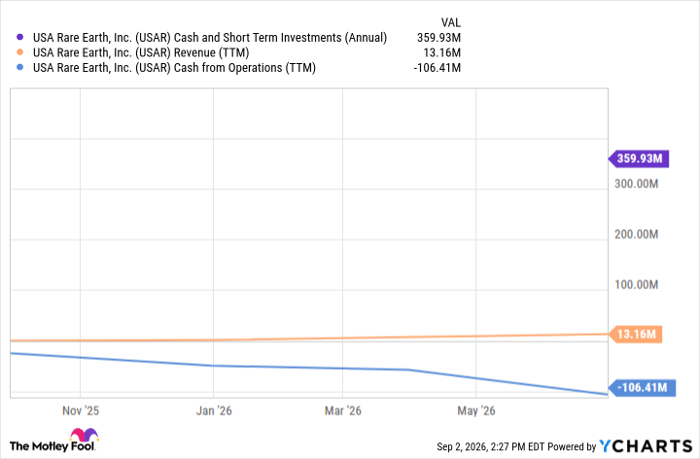
☐ β˜† βœ‡ The Motley Fool

Why Is Everyone Talking About Nvidia Stock?

By: newsfeedback@fool.com (Parkev Tatevosian, CFA) β€”

I think the primary reason everyone is interested in Nvidia (NASDAQ: NVDA) stock again is the huge share price increase following the reported earnings.

Missed Nvidia in 2009? This Rare Signal Is Flashing Again. In 2009, a "Double Down" signal flashed for a little-known chipmaker called Nvidia. For the first time in years, that same "Total Conviction" signal is flashing for a company 1/100th the size of Nvidia. Continue Β»

*Stock prices used were the afternoon prices of Aug. 30, 2026. The video was published on Sept. 1, 2026.

Should you buy stock in Nvidia right now?

Before you buy stock in Nvidia, consider this:

The Motley Fool Stock Advisor analyst team just identified what they believe are the 10 best stocks for investors to buy now… and Nvidia wasn’t one of them. The 10 stocks that made the cut could produce monster returns in the coming years.

Consider when Netflix made this list on December 17, 2004... if you invested $1,000 at the time of our recommendation, you’d have $437,097!* Or when Nvidia made this list on April 15, 2005... if you invested $1,000 at the time of our recommendation, you’d have $1,355,077!*

Now, it’s worth noting Stock Advisor’s total average return is 978% β€” a market-crushing outperformance compared to 213% for the S&P 500. Don't miss the latest top 10 list, available with Stock Advisor, and join an investing community built by individual investors for individual investors.

See the 10 stocks Β»

*Stock Advisor returns as of September 1, 2026.

Parkev Tatevosian, CFA has positions in Nvidia. The Motley Fool has positions in and recommends Nvidia. The Motley Fool has a disclosure policy. Parkev Tatevosian is an affiliate of The Motley Fool and may be compensated for promoting its services. If you choose to subscribe through his link, he will earn some extra money that supports his channel. His opinions remain his own and are unaffected by The Motley Fool.

☐ β˜† βœ‡ The Motley Fool

Prediction: This Will Be Palantir's Stock Price in a Year (Hint: It Implies a Big Move)

By: newsfeedback@fool.com (Trevor Jennewine) β€”

Key Points

  • Palantir has distinguished itself from traditional data analytics platforms with ontology-based software.

  • CEO Alex Karp says Palantir can maintain its current revenue growth rate and margins over the next 18 months.

  • Wall Street analysts expect Palantir's adjusted earnings to increase 62% to $2.22 per share in the next four quarters.

Palantir Technologies (NASDAQ: PLTR) rewarded shareholders with triple-digit returns in each year from 2023 to 2025, with total gains topping 2,600% during that three-year period. But the stock has traded sideways in 2026 despite encouraging financial results, primarily because investors are less confident in richly valued software names.

Wall Street thinks Palantir is modestly undervalued. Among 36 analysts, the median 12-month target price is $205 per share. That implies 10% upside from its current share price of $185.

Missed Nvidia in 2009? This Rare Signal Is Flashing Again. In 2009, a "Double Down" signal flashed for a little-known chipmaker called Nvidia. For the first time in years, that same "Total Conviction" signal is flashing for a company 1/100th the size of Nvidia. Continue Β»

But I think Palantir is headed to $222 per share, implying 20% upside. Here's my logic.

The Palantir logo in white on a black background.

Image source: The Motley Fool.

Palantir analytics platforms are the connective tissue that links data to decisions

Palantir designs data integration and analytics platforms for customers in the public and private sectors. The company also provides an adjunct Artificial Intelligence Platform (AIP) that serves as an orchestration tool for large language models (LLMs). In other words, AIP is an agnostic tool that lets customers employ the LLMs of their choosing to process data and automate workflows.

Palantir's products are unique because they revolve around a decision-making framework called an ontology. Whereas traditional analytics tools focus on dashboards and reports that help users make sense of information, Palantir links data to operational systems to support decision-making within the platform.

An example: Traditional analytics tools might tell a retailer that a popular product is likely to sell out before the next shipment arrives. Palantir would take that insight one step further by helping the retailer evaluate potential solutions and execute a response, such as sourcing a similar product or increasing order frequency.

"The core ontology function and value proposition is that Palantir not only organizes and displays data, but it also creates prioritized, ranked data that can be quickly understood and interacted with, ultimately automating real-world efficiency gains," writes Morningstar analyst Mark Giarelli.

Palantir has reported accelerating revenue growth in 12 consecutive quarters

Palantir reported tremendous financial results in the second quarter, beating estimates on the top and bottom lines. Revenue rose 93% to $1.9 billion, marking the 12th consecutive acceleration, and non-GAAP (generally accepted accounting principles) net income increased 215% to $0.41 per diluted share. The company also achieved a phenomenal Rule of 40 score of 155%.

Investors have good reason to think that momentum can continue. During a recent CNBC interview, CEO Alex Karp said Palantir was a "business unlike any other." He also said the company was "poised to grow with these margins and this revenue growth for another 18 months."

Why Palantir stock could climb to $222 in the next year

Palantir stock has traded sideways this year partly because investors worry that generative AI tools from Anthropic and OpenAI could displace its products. But agnostic platforms like Palantir will only become more important as LLMs proliferate. As an agnostic orchestration layer, Palantir lets clients swap and mix models without rewriting applications or disrupting enterprise workflows.

Palantir stock currently trades at 154 times adjusted earnings. Wall Street estimates earnings will increase 62% to $1.94 per share over the next year, but the company beat the consensus estimate by an average of 14% over the last six quarters. If that trend continues, adjusted earnings will total $2.22 per diluted share over the next four quarters.

In that scenario, Palantir stock could reach $222 per share even if its valuation drops to 100 times adjusted earnings. Admittedly, that is still a very rich valuation, but it's plausible for a company whose earnings are growing as quickly as Palantir's. I think patient investors with a time horizon of at least five years should consider buying a small position today.

Should you buy stock in Palantir Technologies right now?

Before you buy stock in Palantir Technologies, consider this:

The Motley Fool Stock Advisor analyst team just identified what they believe are the 10 best stocks for investors to buy now… and Palantir Technologies wasn’t one of them. The 10 stocks that made the cut could produce monster returns in the coming years.

Consider when Netflix made this list on December 17, 2004... if you invested $1,000 at the time of our recommendation, you’d have $440,710!* Or when Nvidia made this list on April 15, 2005... if you invested $1,000 at the time of our recommendation, you’d have $1,335,252!*

Now, it’s worth noting Stock Advisor’s total average return is 978% β€” a market-crushing outperformance compared to 213% for the S&P 500. Don't miss the latest top 10 list, available with Stock Advisor, and join an investing community built by individual investors for individual investors.

See the 10 stocks Β»

*Stock Advisor returns as of September 1, 2026.

Trevor Jennewine has positions in Palantir Technologies. The Motley Fool has positions in and recommends Palantir Technologies. The Motley Fool has a disclosure policy.

☐ β˜† βœ‡ The Motley Fool

The Stock Market Is Flashing a Major Red Flag Seen Only Once Before. Here's What's Different This Time.

By: newsfeedback@fool.com (Adam Levy) β€”

Key Points

  • The S&P 500 CAPE ratio topped a level seen just once before in history.

  • There are some key differences between the current market and the last time stocks were this expensive.

  • Investors should still consider their time horizon and risk tolerance for investing in today's market.

The S&P 500 (SNPINDEX: ^GSPC) has been on a phenomenal run. The popular index has doubled since the start of 2023, producing huge returns for investors. If you go back further, the S&P 500 is up more than 1,000% from its March 2009 low, producing a 15% annualized return.

That's a tremendous run for the index, and some investors may be wondering if we're approaching a new market peak. That 2009 low was the culmination of a near-decade-long stretch in which the index fell around 50% before recovering, only to fall 50% again. And now, the market is flashing the same major red flag it did just before the so-called "lost decade."

Missed Nvidia in 2009? This Rare Signal Is Flashing Again. In 2009, a "Double Down" signal flashed for a little-known chipmaker called Nvidia. For the first time in years, that same "Total Conviction" signal is flashing for a company 1/100th the size of Nvidia. Continue Β»

There are important differences between today's market and the stock market of the late '90s when we last saw this warning sign. But that doesn't mean investors can ignore it entirely.

A newspaper with a stock chart and a headline reading Where Will The Market Go Next?

Image source: Getty Images.

Will the market repeat the lost decade?

One factor that has created some concern among investors is the S&P 500's current valuation. Its price-to-earnings (P/E) ratio based on expected earnings for the next 12 months sits close to 20, well above the average of about 16 over the past 40 years.

Even more concerning is the cyclically adjusted price-to-earnings ratio (CAPE), which looks back at the last decade of earnings, adjusts them for inflation, and compares them to current market prices. The CAPE ratio currently exceeds 42, a level unseen since August 2000 and never before the 1999-2000 dot-com bubble.

The CAPE ratio is typically used to forecast long-term stock market returns. The higher the CAPE, the lower the expected long-term returns. If you go back to the first instance when the CAPE surpassed 42, in April 1999, the 10-year return for the S&P 500 was a dismal 48% decline. That doesn't bode well for the next decade.

But before investors panic and head for the exits, it's important to understand a fundamental difference between the current market and the market of 1999.

The big difference investors need to pay attention to

The biggest difference between today's high valuations and those of the dot-com bubble is the strength of corporate profits.

Back in the late '90s, many stocks were richly valued with no real profits. Today, corporate profits are booming. After-tax corporate profits reached 13.24% of gross domestic product (GDP) in the second quarter, the highest on record dating back to 1947. Meanwhile, corporate profits were historically low in the 1990s.

US Corporate Profits After Tax Chart

US Corporate Profits After Tax data by YCharts

And analysts expect very strong earnings growth for companies over the coming years, projecting 25% average earnings growth for the S&P 500 in aggregate over the next five years. Granted, sell-side analysts tend to be an optimistic group. It's worth pointing out that the long-term earnings growth forecast is the highest since 1995, including the dot-com bubble.

Therefore, the high valuation of today's S&P 500 is much more valid than the high valuation of the index 26 years ago. The fundamental earnings growth of the large-cap companies in the index is a good reason for the stocks to trade at a rich value.

At the same time, investors shouldn't ignore the riskiness inherent in buying stocks with high valuations and high expectations. As valuations climb, an investment becomes riskier. Any shortfall in expectations could cause a significant collapse in share price as analysts adjust their models and earnings multiples compress. And as mentioned, expectations are at an all-time high.

For long-term investors, buying at the current valuation isn't nearly as risky as it would be for someone who will need the money in the next few years. The market is sitting on a solid foundation of strong earnings. A shortfall in earnings results could cause a severe short-term downturn at the current prices, but it's unlikely to result in another lost decade.

Should you buy stock in S&P 500 Index right now?

Before you buy stock in S&P 500 Index, consider this:

The Motley Fool Stock Advisor analyst team just identified what they believe are the 10 best stocks for investors to buy now… and S&P 500 Index wasn’t one of them. The 10 stocks that made the cut could produce monster returns in the coming years.

Consider when Netflix made this list on December 17, 2004... if you invested $1,000 at the time of our recommendation, you’d have $440,710!* Or when Nvidia made this list on April 15, 2005... if you invested $1,000 at the time of our recommendation, you’d have $1,335,252!*

Now, it’s worth noting Stock Advisor’s total average return is 978% β€” a market-crushing outperformance compared to 213% for the S&P 500. Don't miss the latest top 10 list, available with Stock Advisor, and join an investing community built by individual investors for individual investors.

See the 10 stocks Β»

*Stock Advisor returns as of September 1, 2026.

Adam Levy has no position in any of the stocks mentioned. The Motley Fool has no position in any of the stocks mentioned. The Motley Fool has a disclosure policy.

☐ β˜† βœ‡ The Motley Fool

Can't Decide Between Investing in Rare-Earth Materials and Nuclear Energy? This Under-the-Radar Stock Provides Exposure to Both Industries.

By: newsfeedback@fool.com (Scott Levine) β€”

Key Points

  • Data center operators are embracing nuclear energy as a way to shore up their power supplies.

  • There's strong political support for domestic rare-earth element production right now.

  • For investors with low risk tolerances, nuclear energy ETFs and rare-earth ETFs may be better routes for industry exposure.

The hype surrounding rare-earth and nuclear energy stocks may be a little tempered compared to where it was last year, but there's no denying these topics remain among the most popular trends for growth investors right now.

But for those who feel limited in their ability to gain exposure to both opportunities, there's a simple, one-stop-shop solution -- a single stock that provides both rare-earth and nuclear energy exposure.

Missed Nvidia in 2009? This Rare Signal Is Flashing Again. In 2009, a "Double Down" signal flashed for a little-known chipmaker called Nvidia. For the first time in years, that same "Total Conviction" signal is flashing for a company 1/100th the size of Nvidia. Continue Β»

investor holds phone and looks up at question marks.

Image source: Getty Images.

Domestic uranium production is this company's forte

As data center operators embrace nuclear energy solutions, growth investors have two compelling routes to consider right now. Fortunately, Energy Fuels (NYSEMKT: UUUU) makes it easy for them as the company is involved in both rare-earth elements and uranium production.

With respect to uranium, Energy Fuels conducts mining operations at La Sal in Utah and Pinyon Plain in Arizona. In addition, the company operates the White Mesa Mill, which it characterizes as the "only fully licensed and operating conventional uranium mill in the United States."

Energy Fuels is also positioned to grow its uranium operations thanks to several development projects in the pipeline. The Sheep Mountain Project, for example, is one of the largest uranium projects in the U.S., with over 30 million pounds of uranium resources, according to Energy Fuels.

The company's uranium business is off to a strong start this year. Through the first half of 2026, Energy Fuels produced 1.7 million pounds of finished triuranium octoxide, the concentrated uranium product made after uranium is removed from mined rock. Initially, Energy Fuels had projected a full-year guidance range of 1.5 to 2.5 million pounds of triuranium octoxide.

On a shopping spree to grow its rare-earth operations

Thanks to the considerable political enthusiasm for U.S.-based rare-earth production, growth investors also stand to benefit from Energy Fuels' expanding rare-earth elements business. This summer, the company took a major step toward that end, beginning construction on the expansion of the White Mesa Mill -- a project that will allow the large-scale production of heavy rare-earth oxides.

In addition to the organic routes it's taking to grow this business, Energy Fuels is embracing acquisitions. At the end of August, Energy Fuels completed the acquisition of Australian Strategic Materials (ASM), which will help the company to add 1,300 metric tons of neodymium-iron-boron alloy production capacity at ASM's Korean Metals Plant.

Expected to close in early 2027, Energy Fuels' acquisition of VAC, an advanced magnetics production specialist, will help the company further expand its rare-earth business. Energy Fuels states that the acquisition will help it become "the first western company with geographically diversified commercial capabilities across every critical step of the rare-earth value chain."

Is now a good time to load up on Energy Fuels stock?

With Energy Fuels shares falling more than 30% over the past six months, investors have a much more attractive entry point to start a position now. It's important to recognize, though, that only those comfortable with more speculative investments should consider taking positions, since the company isn't profitable. For those who are more risk-averse, nuclear energy exchange-traded funds (ETFs) or rare-earth ETFs that include Energy Fuels among their holdings may be better options.

Should you buy stock in Energy Fuels right now?

Before you buy stock in Energy Fuels, consider this:

The Motley Fool Stock Advisor analyst team just identified what they believe are the 10 best stocks for investors to buy now… and Energy Fuels wasn’t one of them. The 10 stocks that made the cut could produce monster returns in the coming years.

Consider when Netflix made this list on December 17, 2004... if you invested $1,000 at the time of our recommendation, you’d have $440,710!* Or when Nvidia made this list on April 15, 2005... if you invested $1,000 at the time of our recommendation, you’d have $1,335,252!*

Now, it’s worth noting Stock Advisor’s total average return is 978% β€” a market-crushing outperformance compared to 213% for the S&P 500. Don't miss the latest top 10 list, available with Stock Advisor, and join an investing community built by individual investors for individual investors.

See the 10 stocks Β»

*Stock Advisor returns as of September 1, 2026.

Scott Levine has no position in any of the stocks mentioned. The Motley Fool has no position in any of the stocks mentioned. The Motley Fool has a disclosure policy.

☐ β˜† βœ‡ The Motley Fool

Chewy Stock Investors Celebrate as the Company Boasts 22 Million Customers

By: newsfeedback@fool.com (Parkev Tatevosian, CFA) β€”

The online pet retailer is growing effectively.

Missed Nvidia in 2009? This Rare Signal Is Flashing Again. In 2009, a "Double Down" signal flashed for a little-known chipmaker called Nvidia. For the first time in years, that same "Total Conviction" signal is flashing for a company 1/100th the size of Nvidia. Continue Β»

*Stock prices used were the afternoon prices of Aug. 29, 2026. The video was published on Aug. 31, 2026.

Should you buy stock in Chewy right now?

Before you buy stock in Chewy, consider this:

The Motley Fool Stock Advisor analyst team just identified what they believe are the 10 best stocks for investors to buy now… and Chewy wasn’t one of them. The 10 stocks that made the cut could produce monster returns in the coming years.

Consider when Netflix made this list on December 17, 2004... if you invested $1,000 at the time of our recommendation, you’d have $440,710!* Or when Nvidia made this list on April 15, 2005... if you invested $1,000 at the time of our recommendation, you’d have $1,335,252!*

Now, it’s worth noting Stock Advisor’s total average return is 978% β€” a market-crushing outperformance compared to 213% for the S&P 500. Don't miss the latest top 10 list, available with Stock Advisor, and join an investing community built by individual investors for individual investors.

See the 10 stocks Β»

*Stock Advisor returns as of August 31, 2026.

Parkev Tatevosian, CFA has no position in any of the stocks mentioned. The Motley Fool has positions in and recommends Chewy. The Motley Fool has a disclosure policy. Parkev Tatevosian is an affiliate of The Motley Fool and may be compensated for promoting its services. If you choose to subscribe through his link, he will earn some extra money that supports his channel. His opinions remain his own and are unaffected by The Motley Fool.

☐ β˜† βœ‡ The Motley Fool

Cocoa Prices are Falling: Should You Buy Hershey's Stock?

By: newsfeedback@fool.com (Parkev Tatevosian, CFA) β€”

The commodity is critically important to its operations.

Missed Nvidia in 2009? This Rare Signal Is Flashing Again. In 2009, a "Double Down" signal flashed for a little-known chipmaker called Nvidia. For the first time in years, that same "Total Conviction" signal is flashing for a company 1/100th the size of Nvidia. Continue Β»

*Stock prices used were the afternoon prices of Aug. 29, 2026. The video was published on Aug. 31, 2026.

Should you buy stock in Hershey right now?

Before you buy stock in Hershey, consider this:

The Motley Fool Stock Advisor analyst team just identified what they believe are the 10 best stocks for investors to buy now… and Hershey wasn’t one of them. The 10 stocks that made the cut could produce monster returns in the coming years.

Consider when Netflix made this list on December 17, 2004... if you invested $1,000 at the time of our recommendation, you’d have $440,710!* Or when Nvidia made this list on April 15, 2005... if you invested $1,000 at the time of our recommendation, you’d have $1,335,252!*

Now, it’s worth noting Stock Advisor’s total average return is 978% β€” a market-crushing outperformance compared to 213% for the S&P 500. Don't miss the latest top 10 list, available with Stock Advisor, and join an investing community built by individual investors for individual investors.

See the 10 stocks Β»

*Stock Advisor returns as of August 31, 2026.

Parkev Tatevosian, CFA has no position in any of the stocks mentioned. The Motley Fool has positions in and recommends Hershey. The Motley Fool has a disclosure policy. Parkev Tatevosian is an affiliate of The Motley Fool and may be compensated for promoting its services. If you choose to subscribe through his link, he will earn some extra money that supports his channel. His opinions remain his own and are unaffected by The Motley Fool.
❌