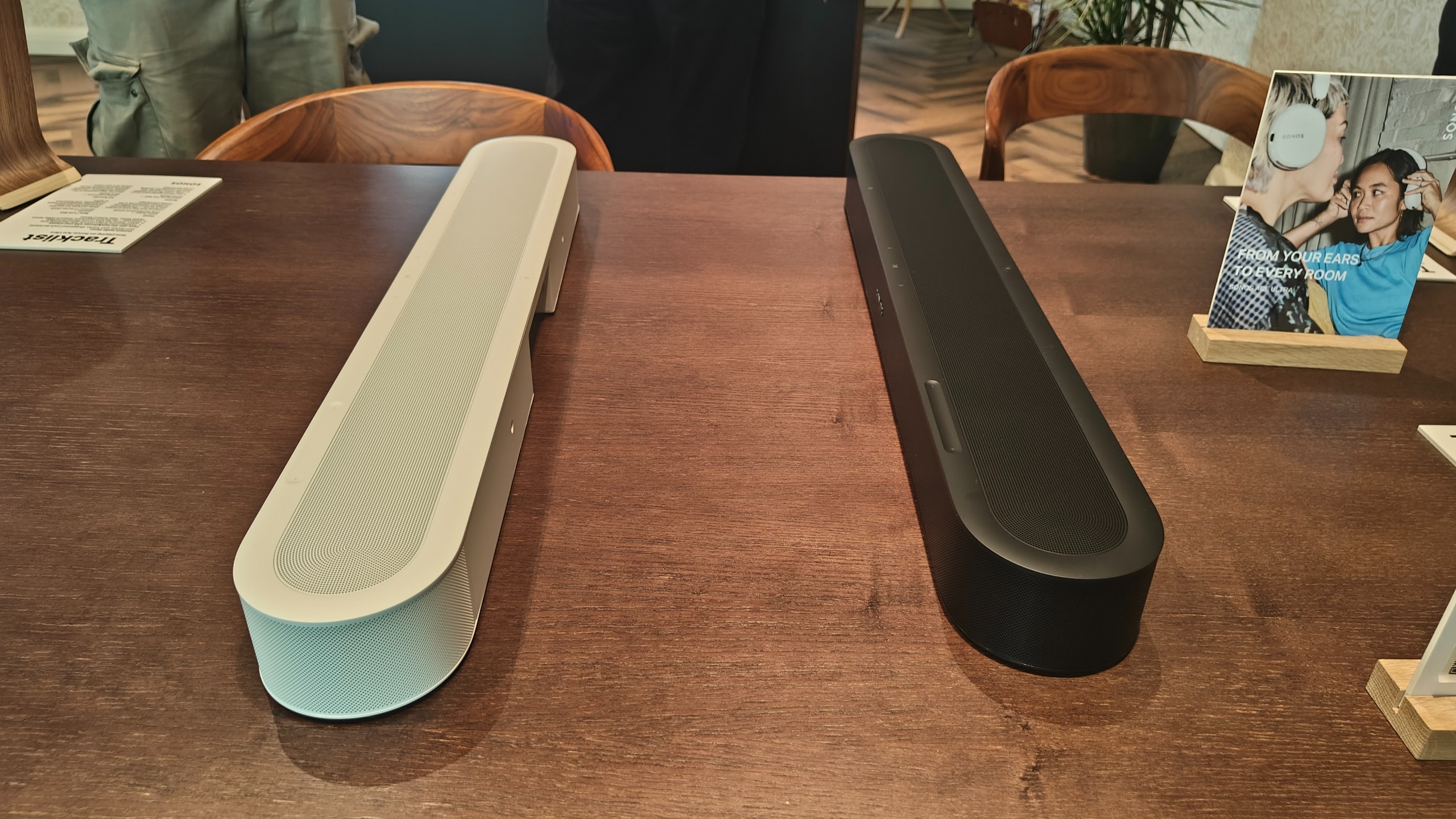
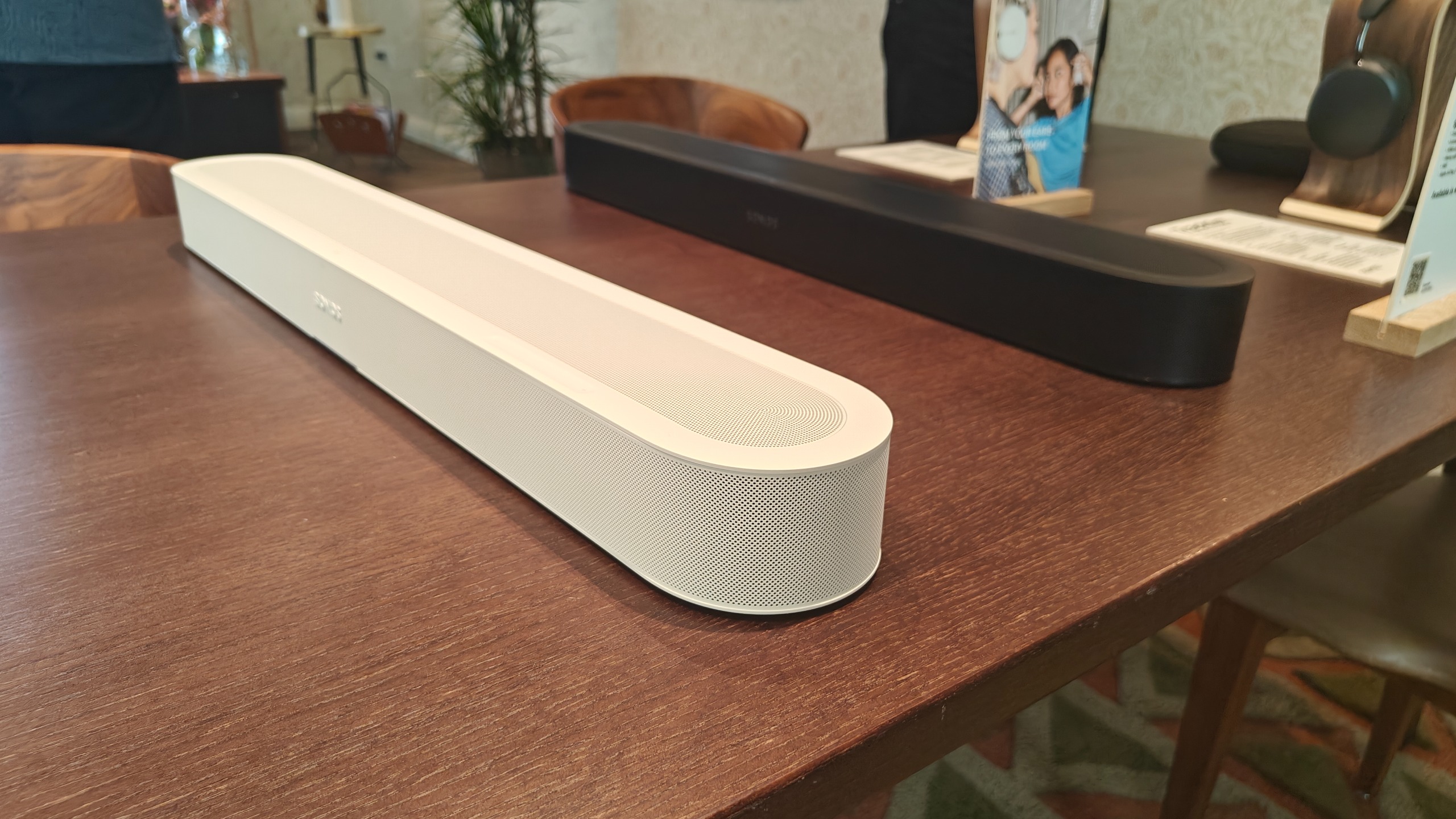
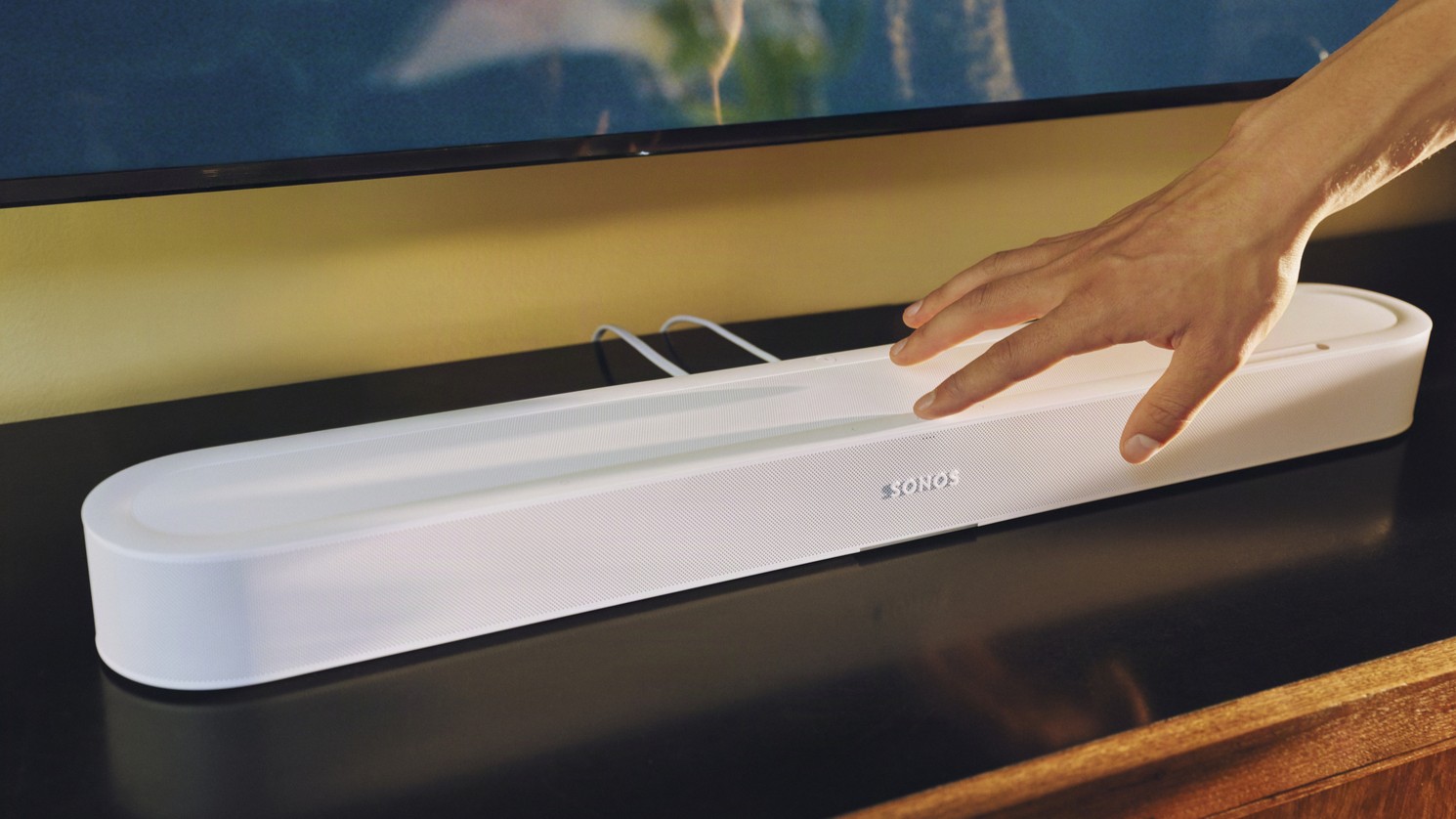
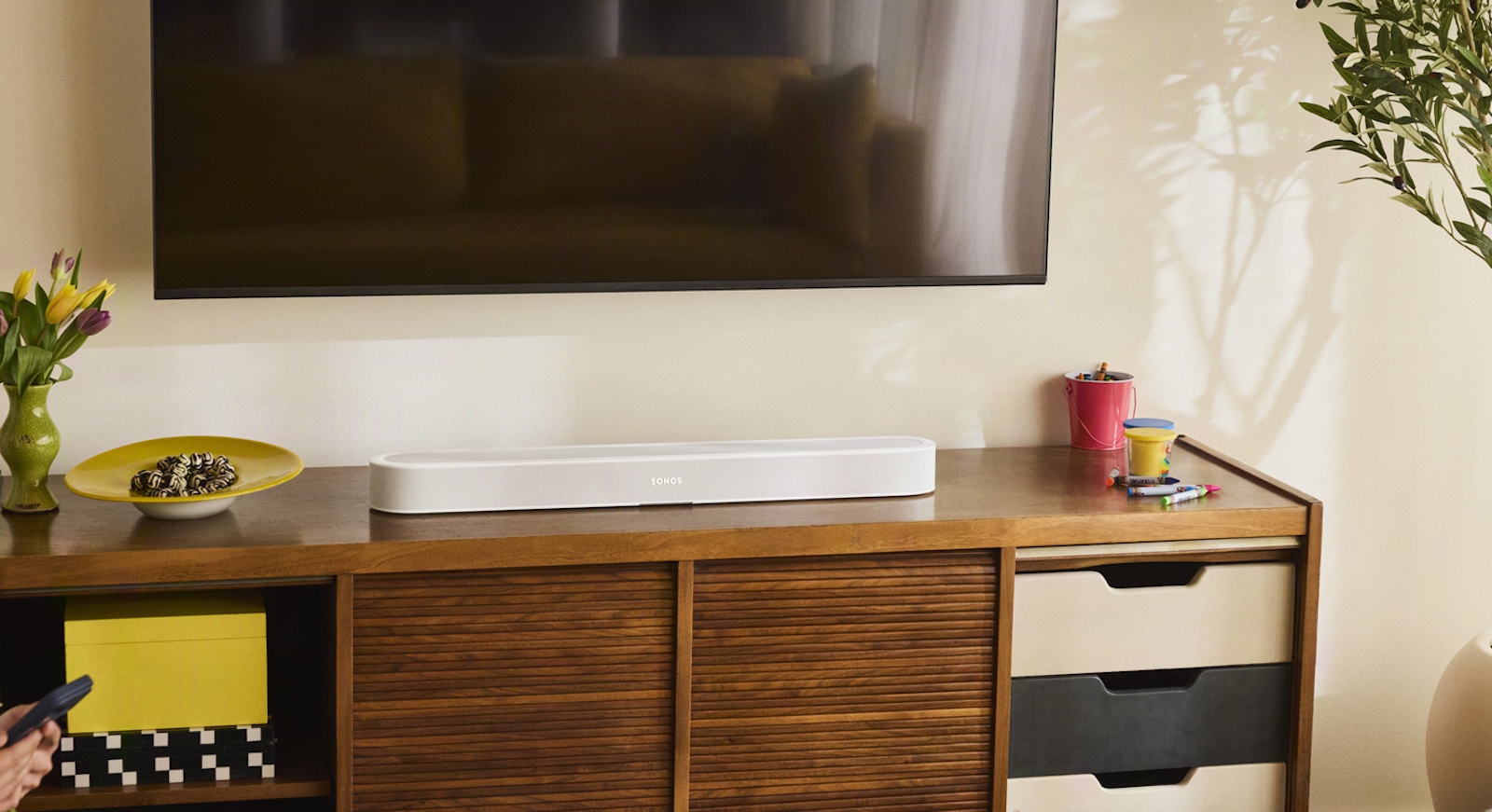
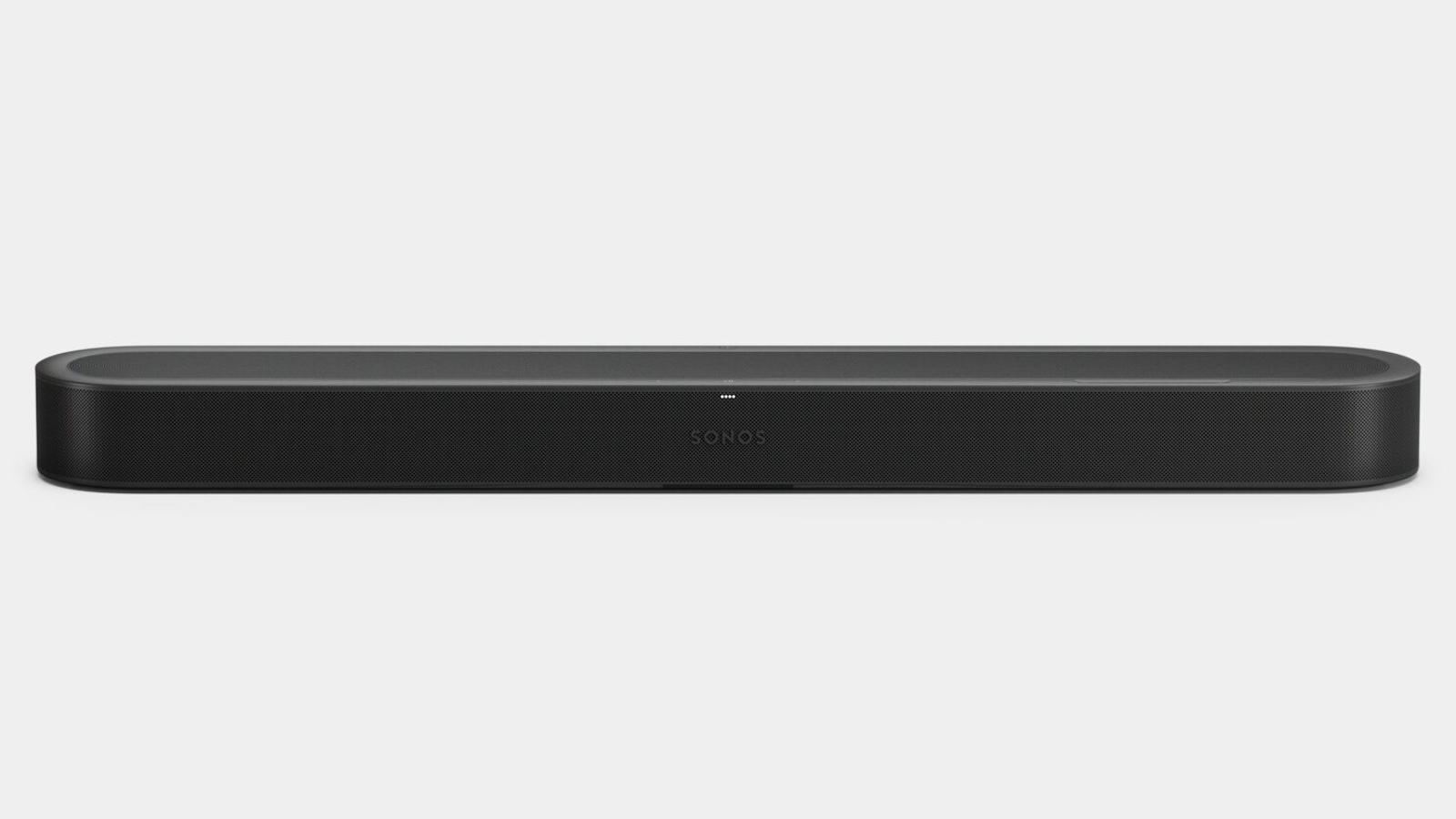
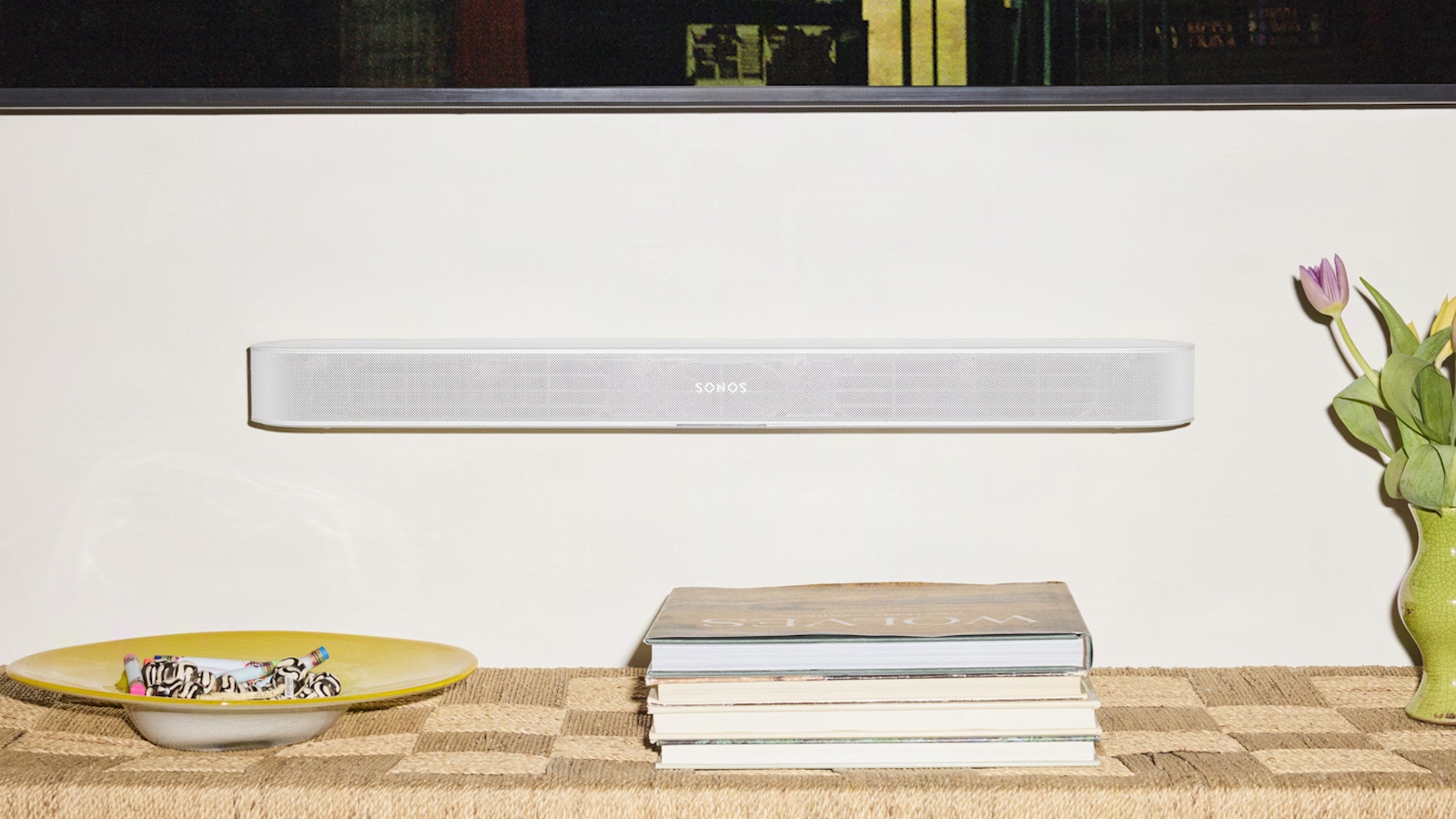
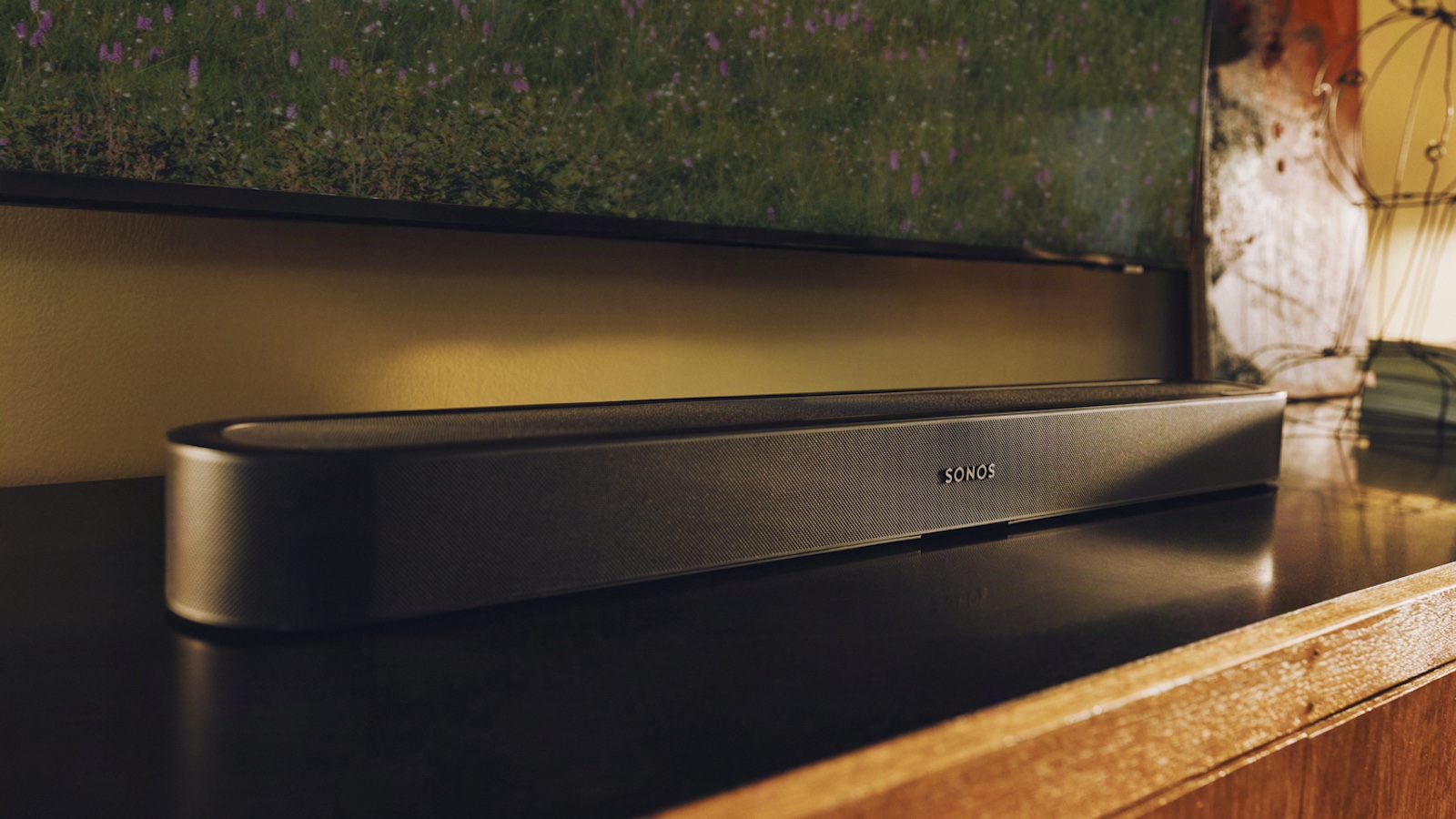
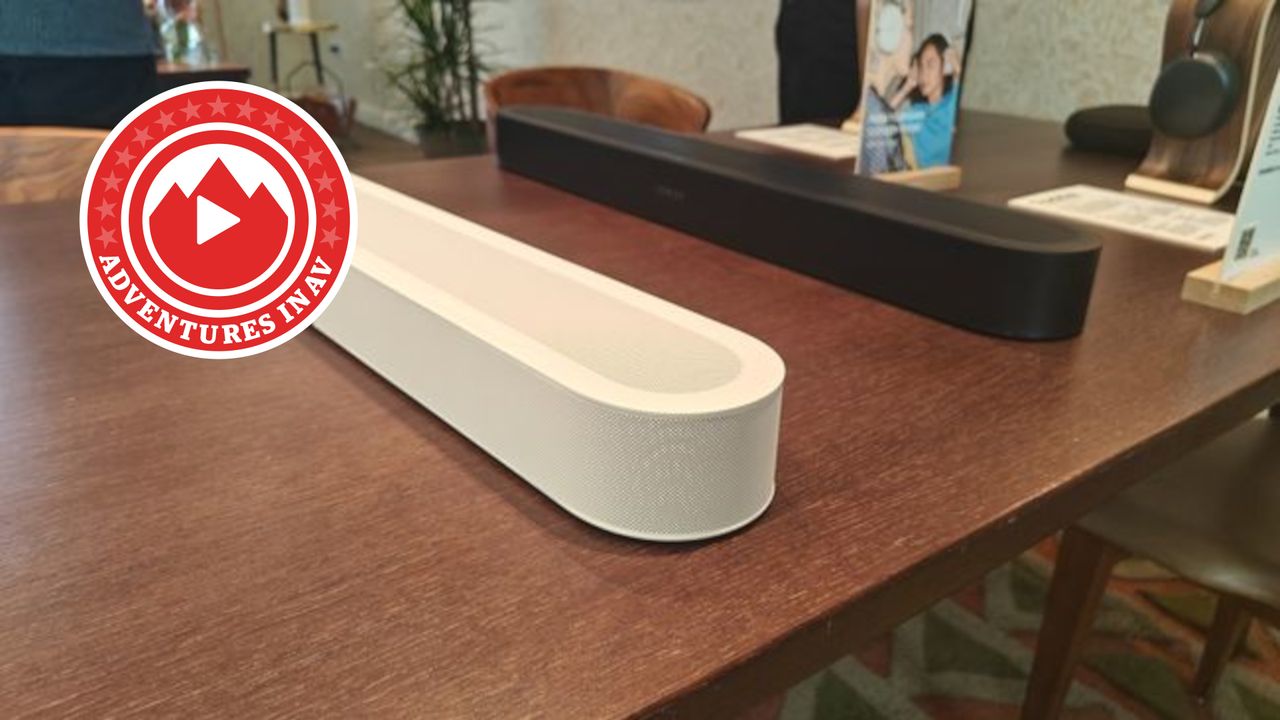
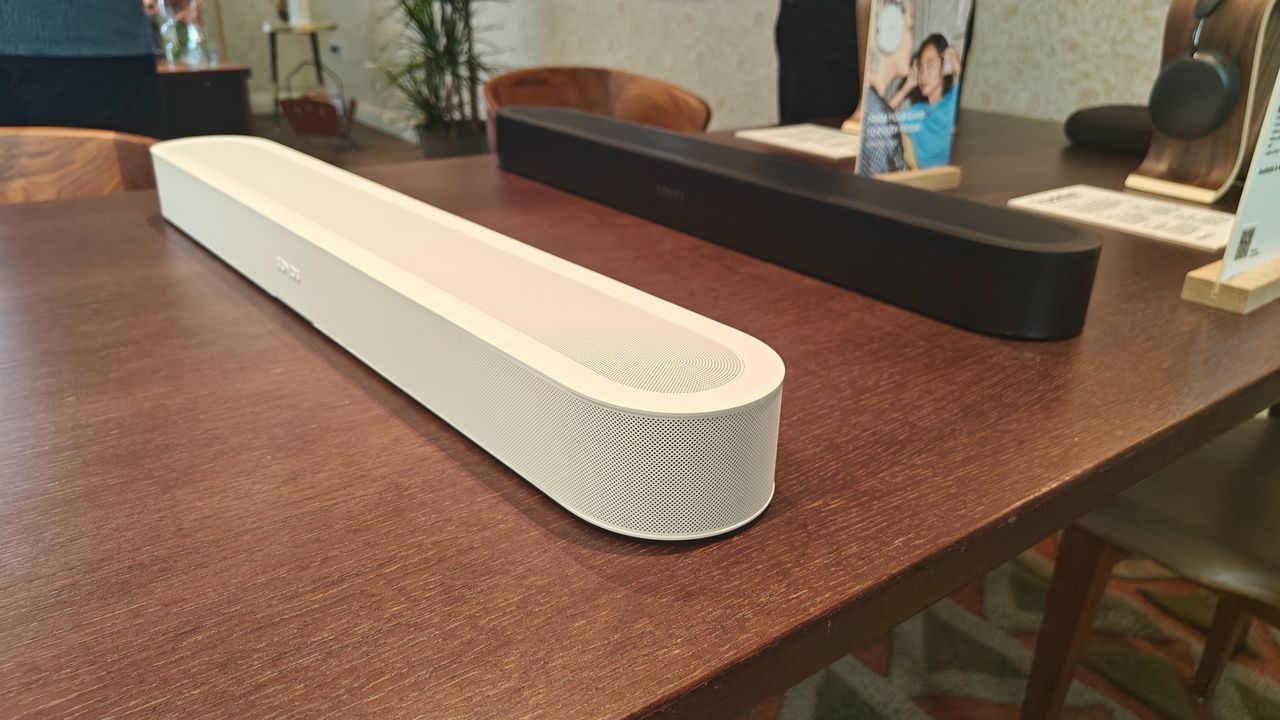
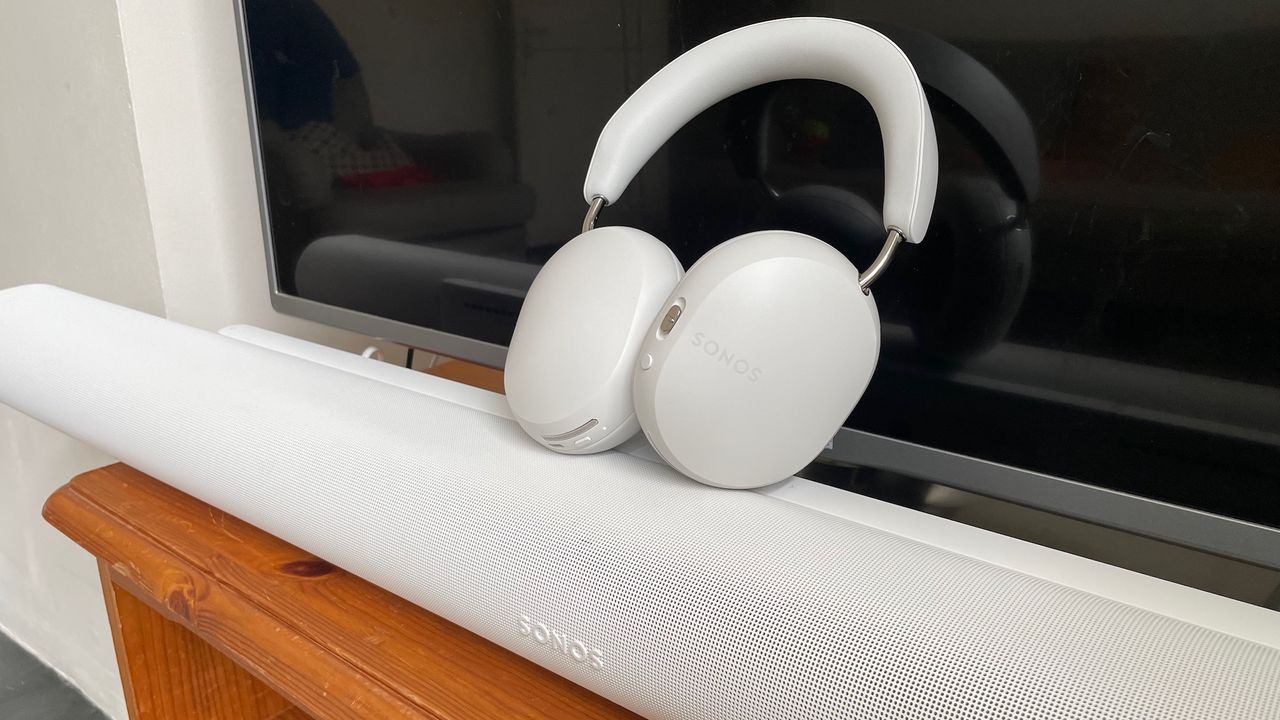
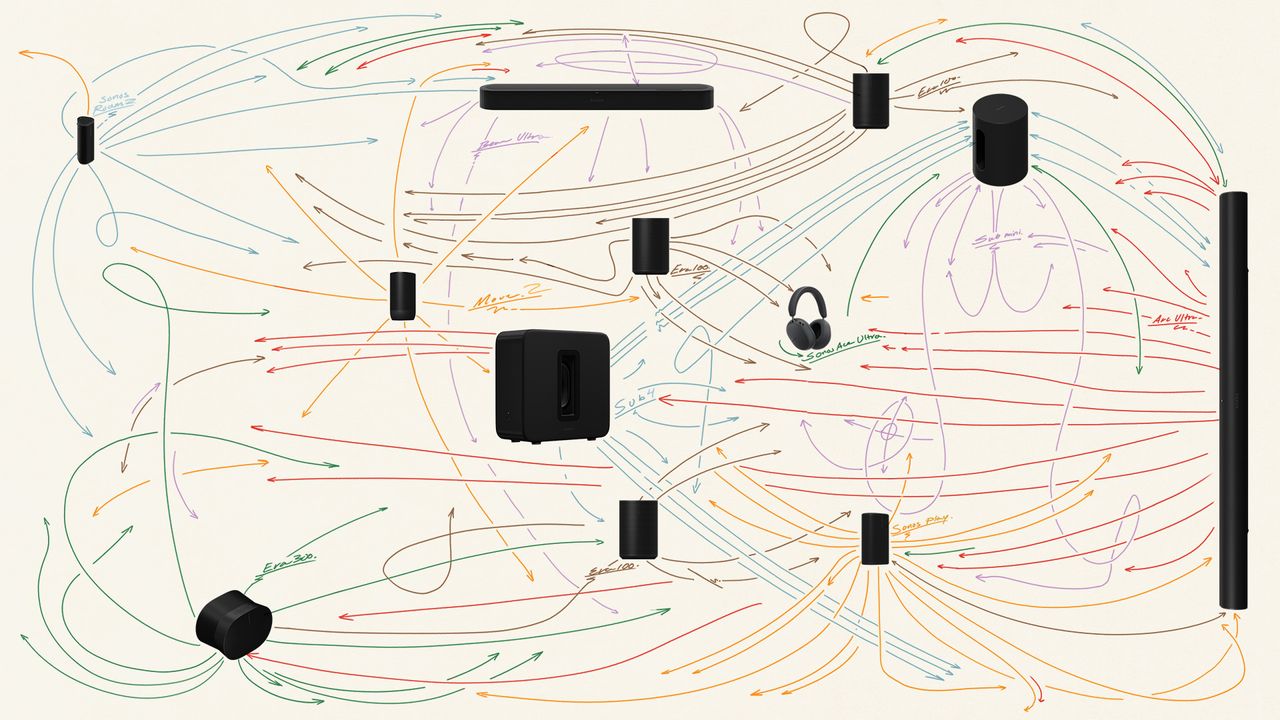
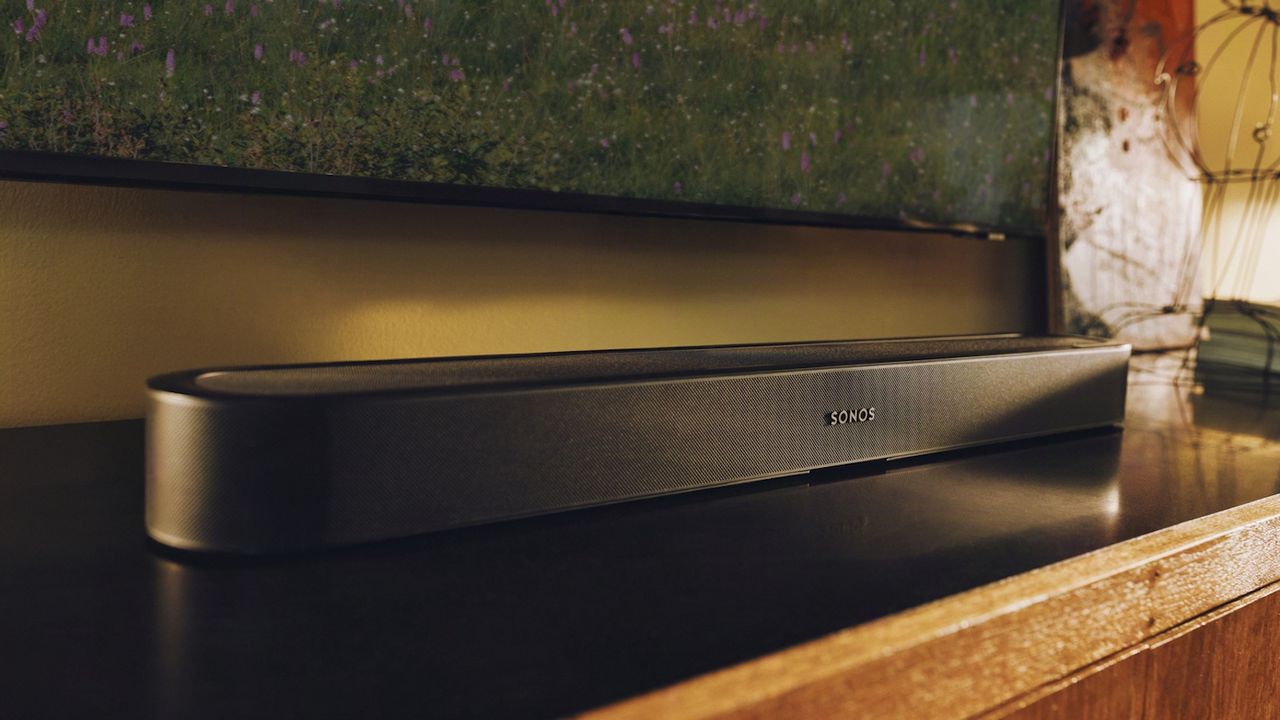
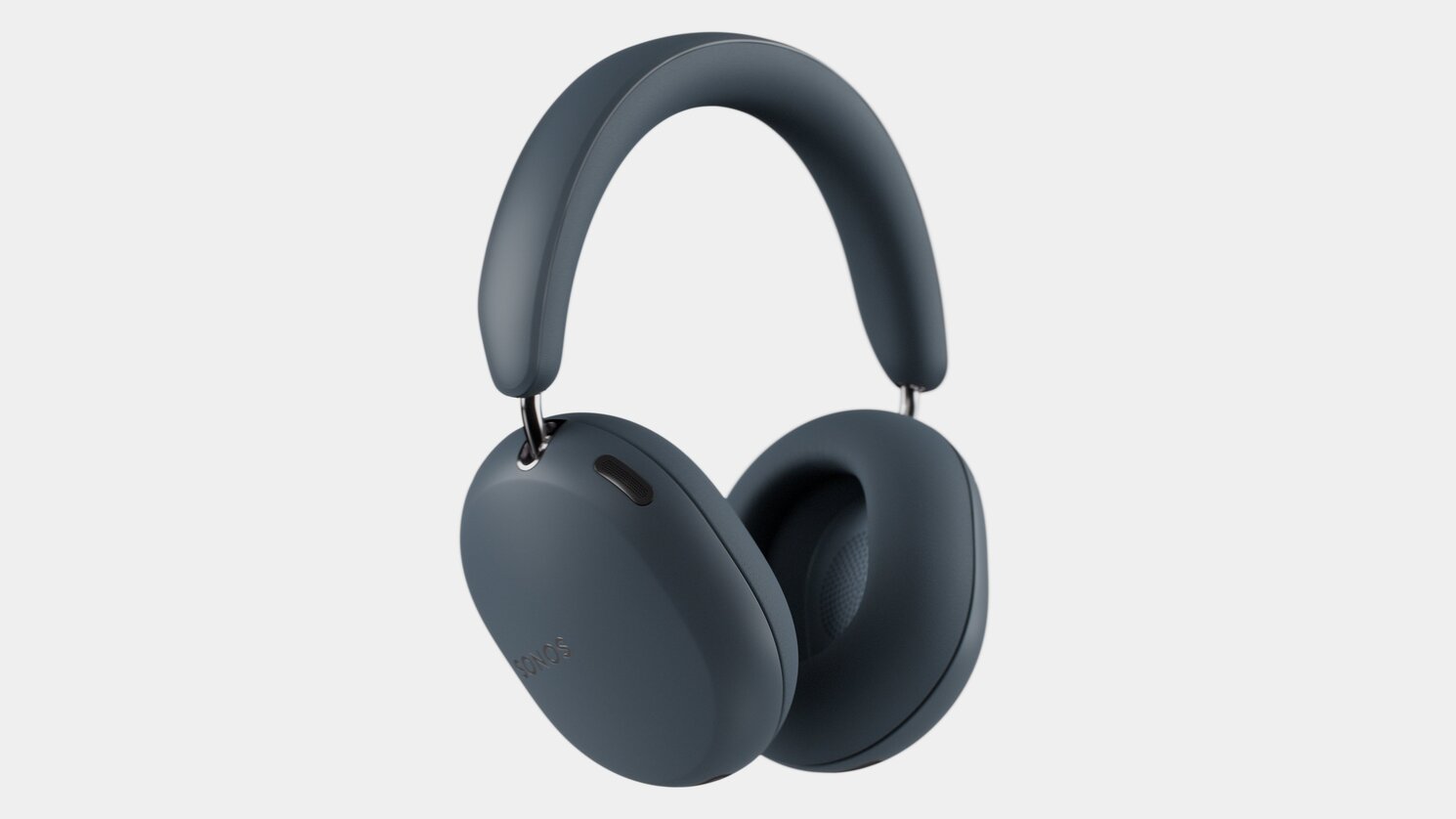
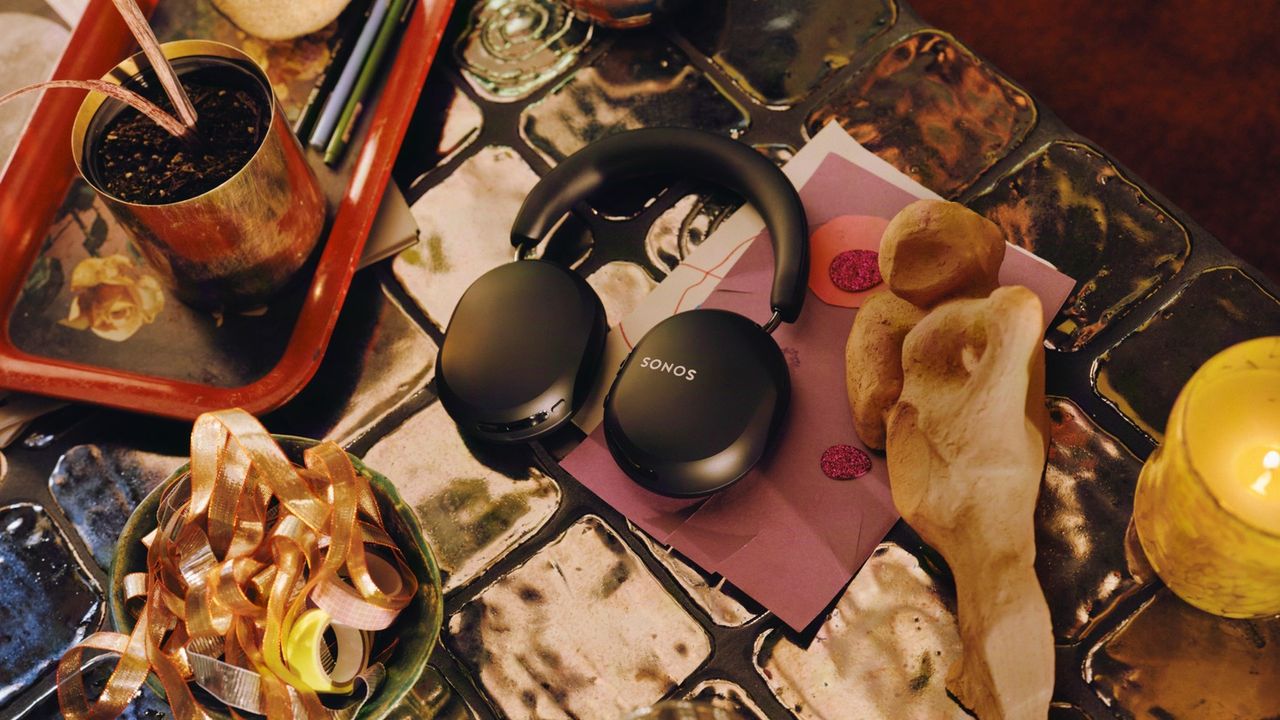
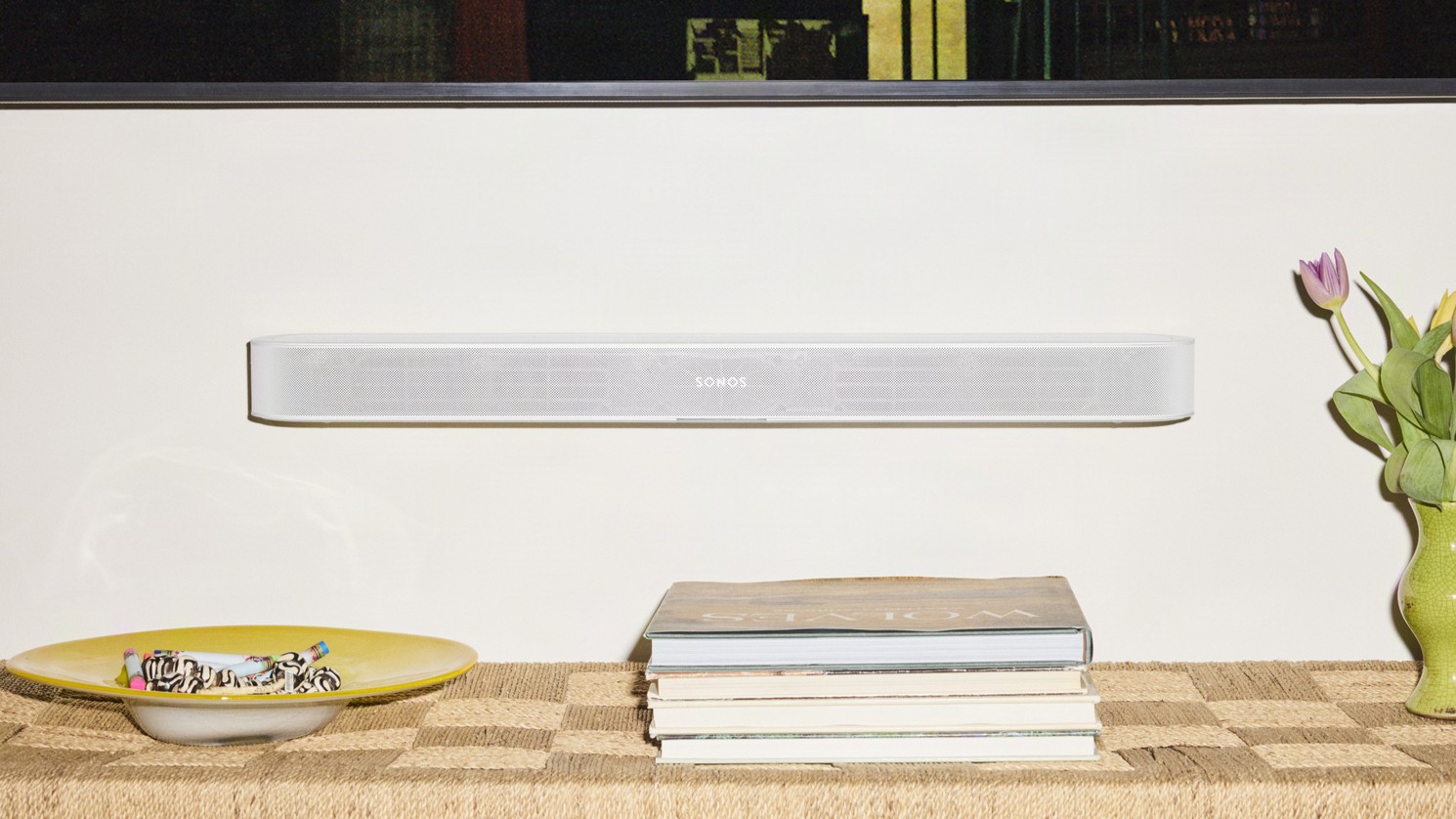
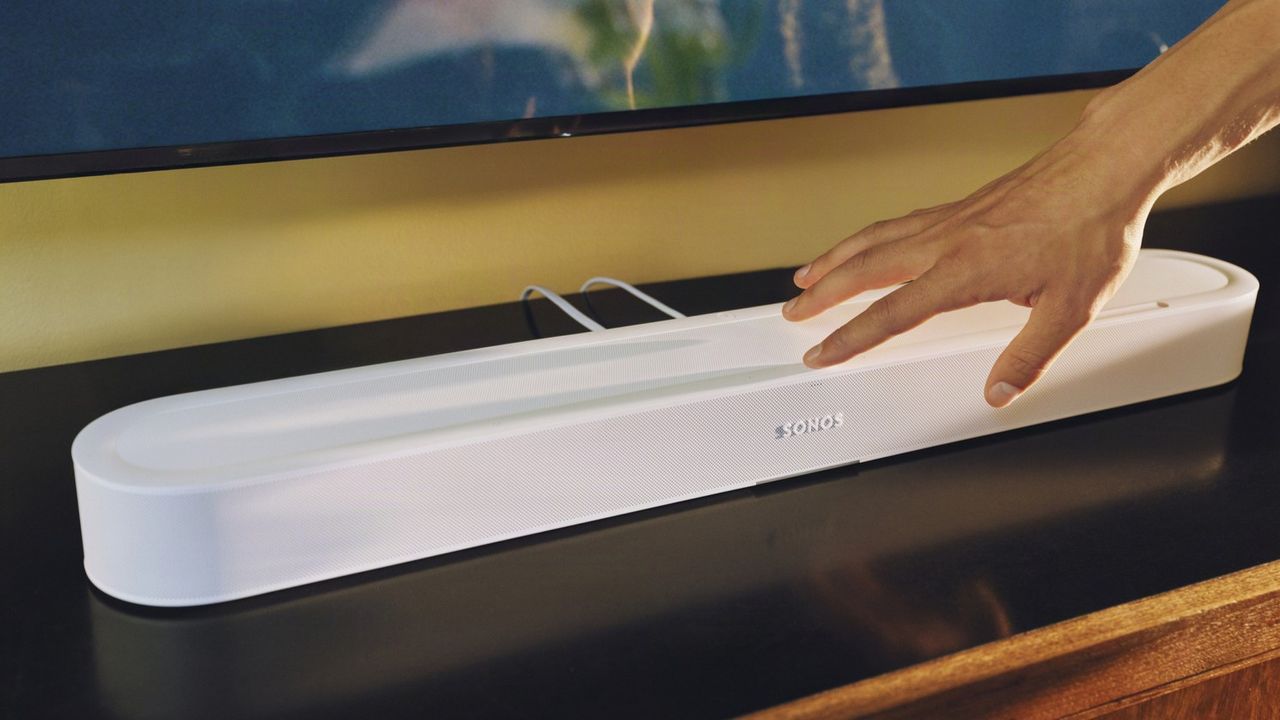
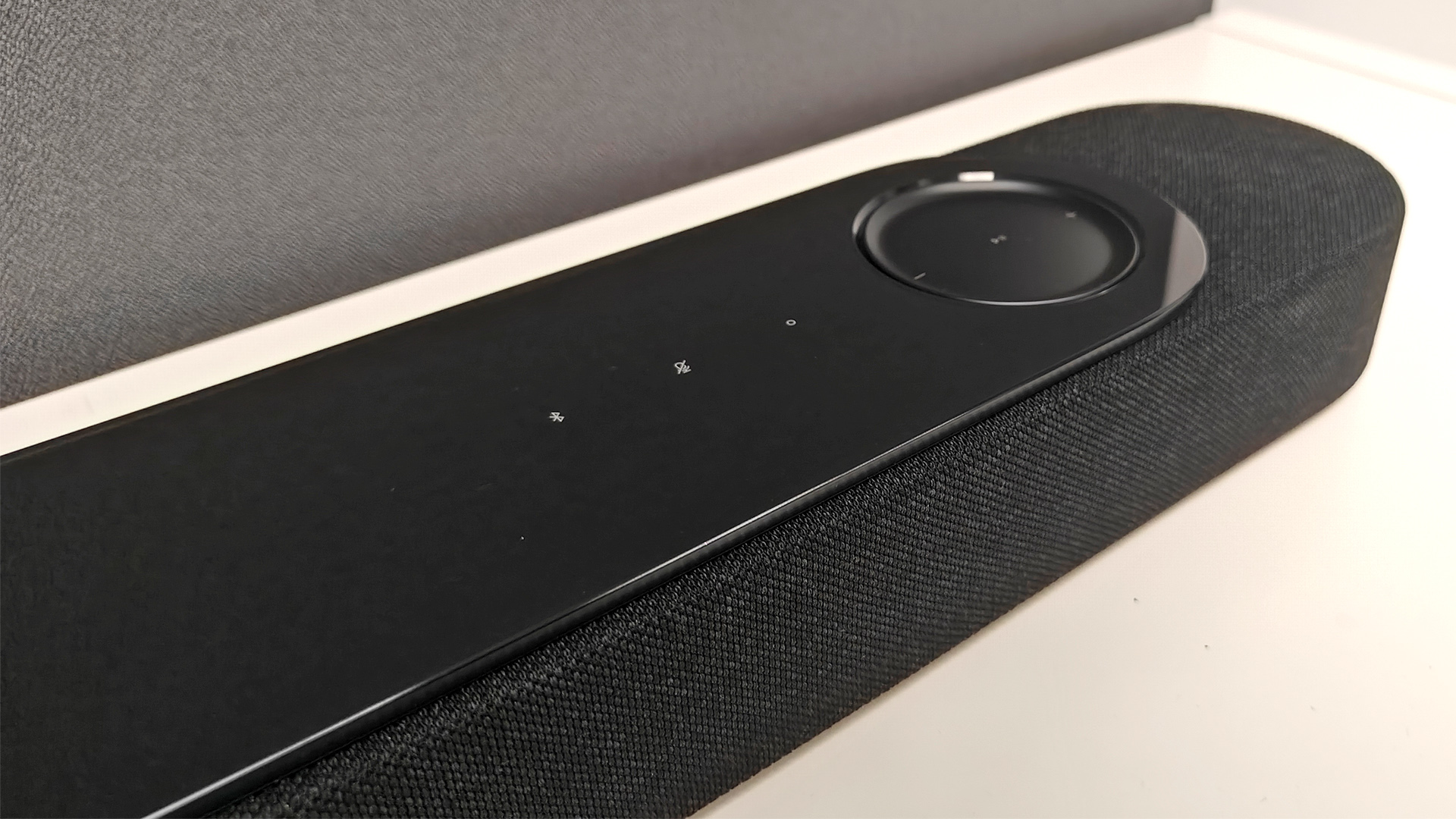
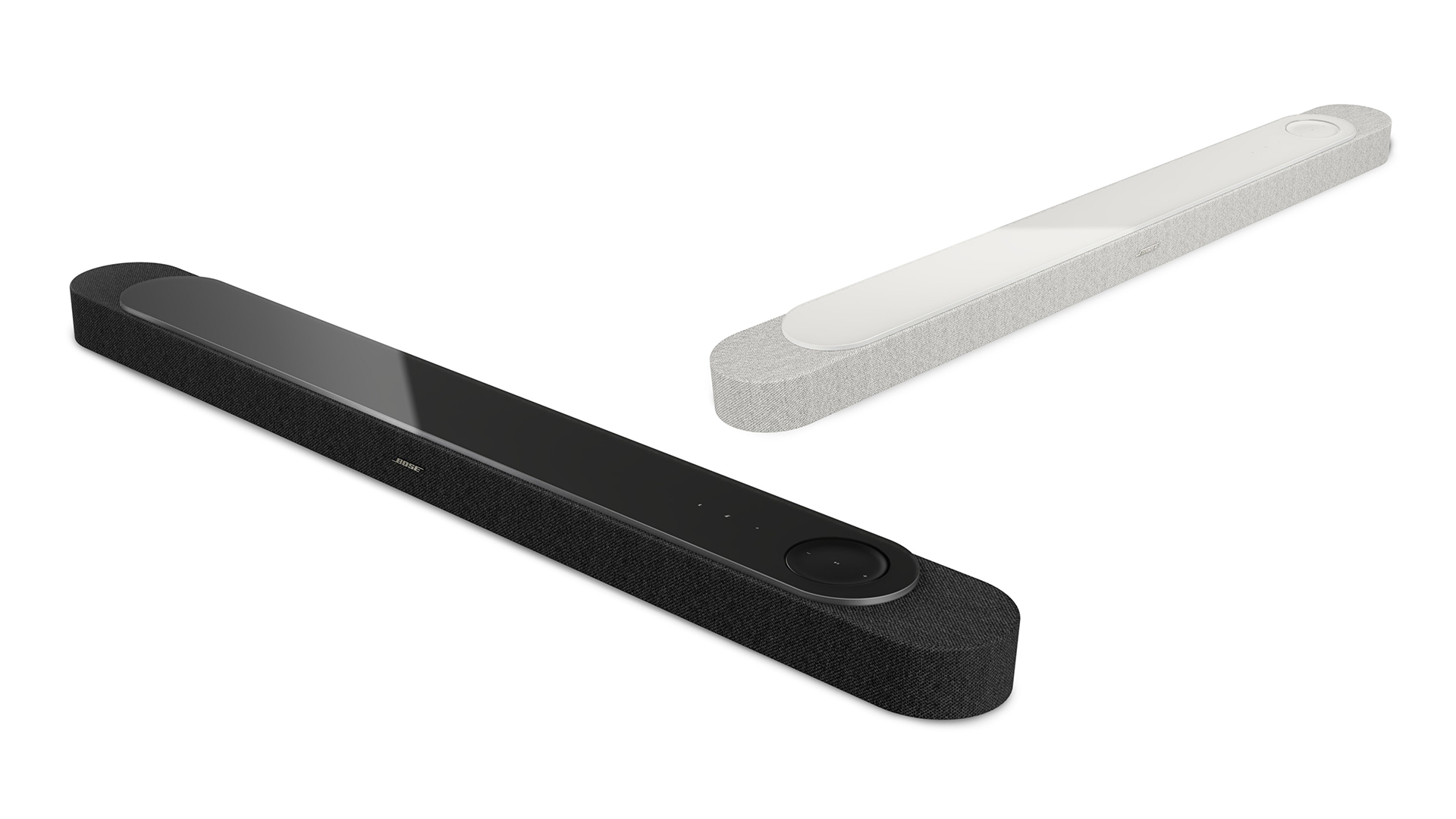
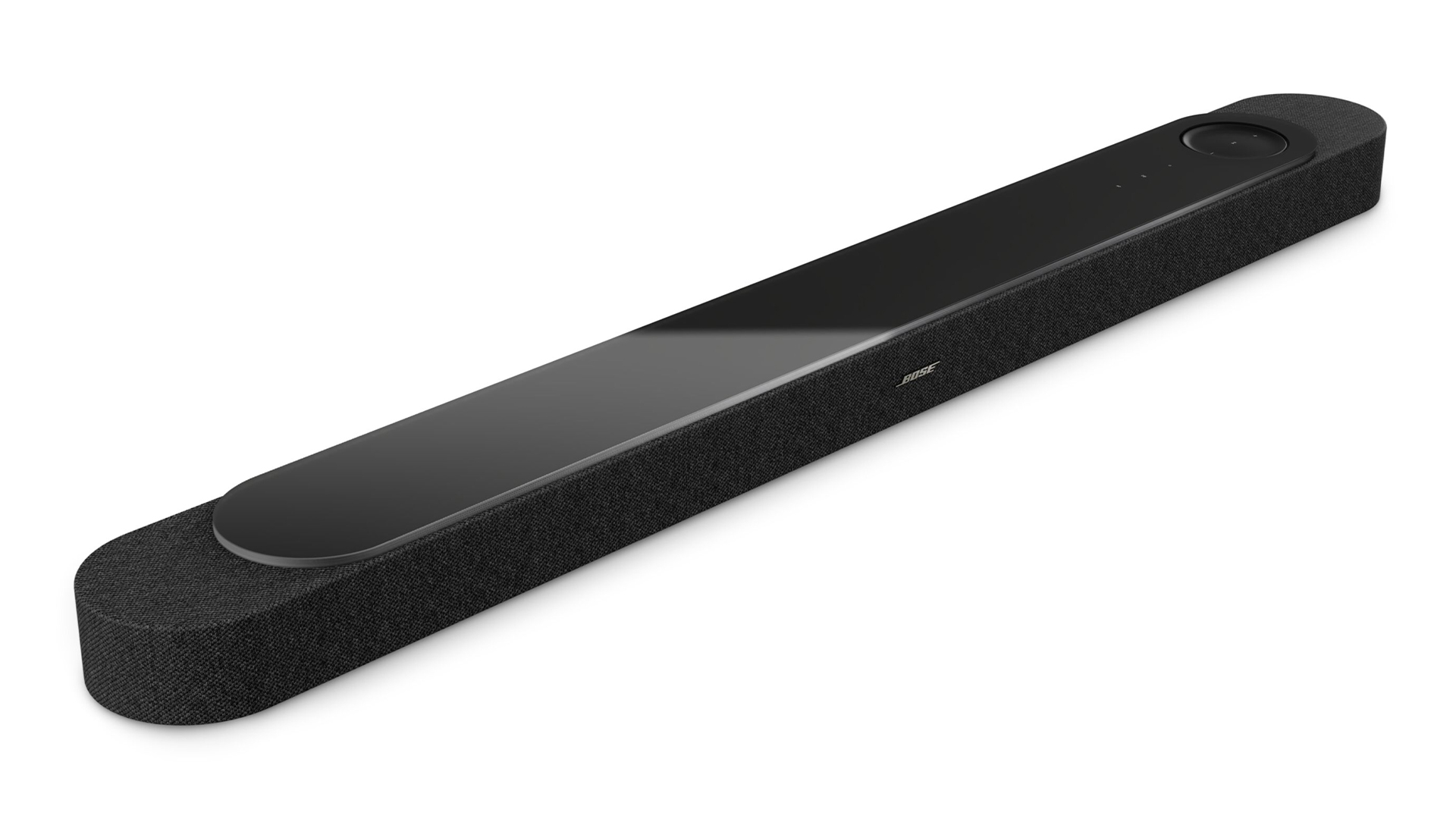
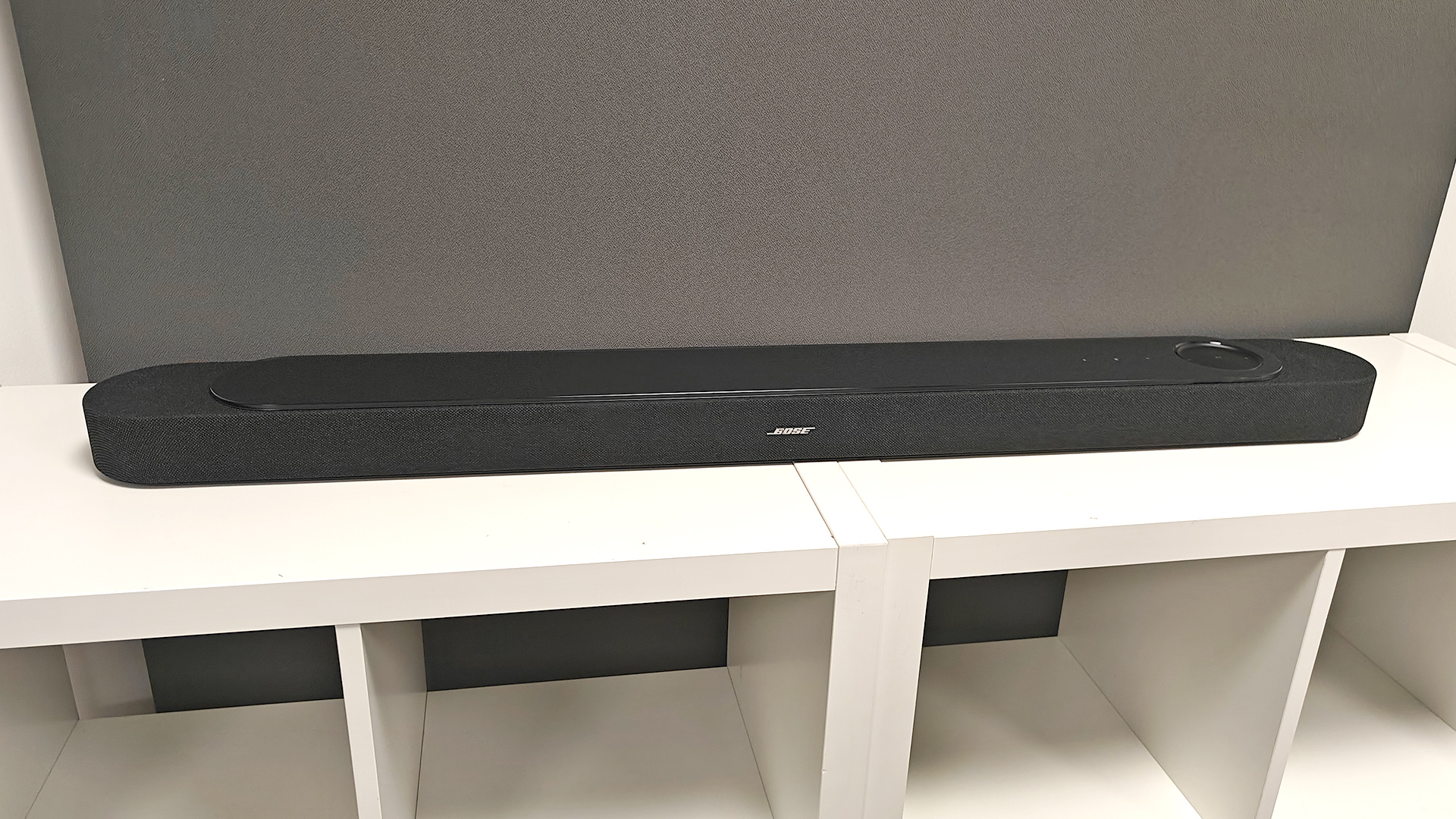
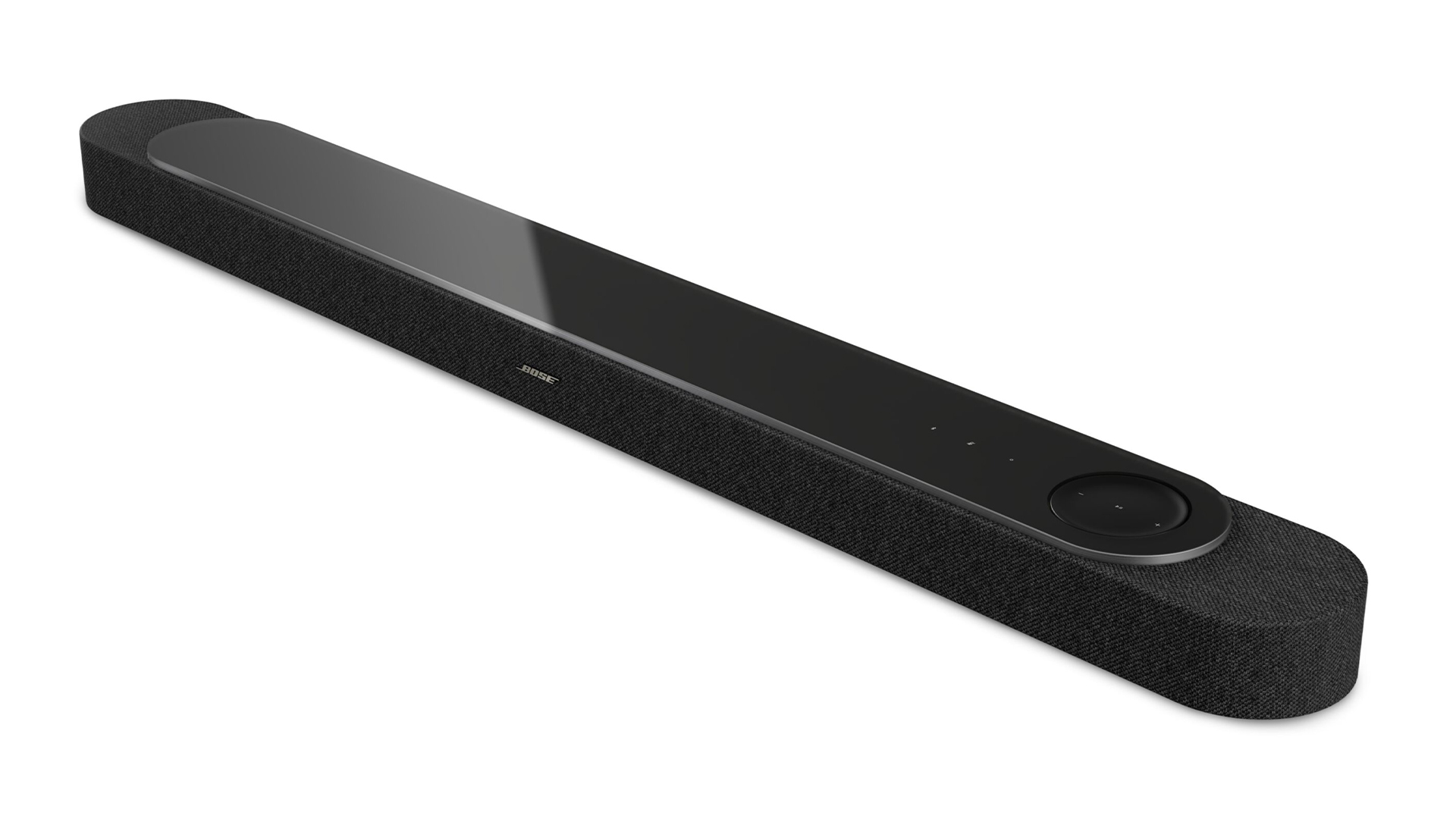
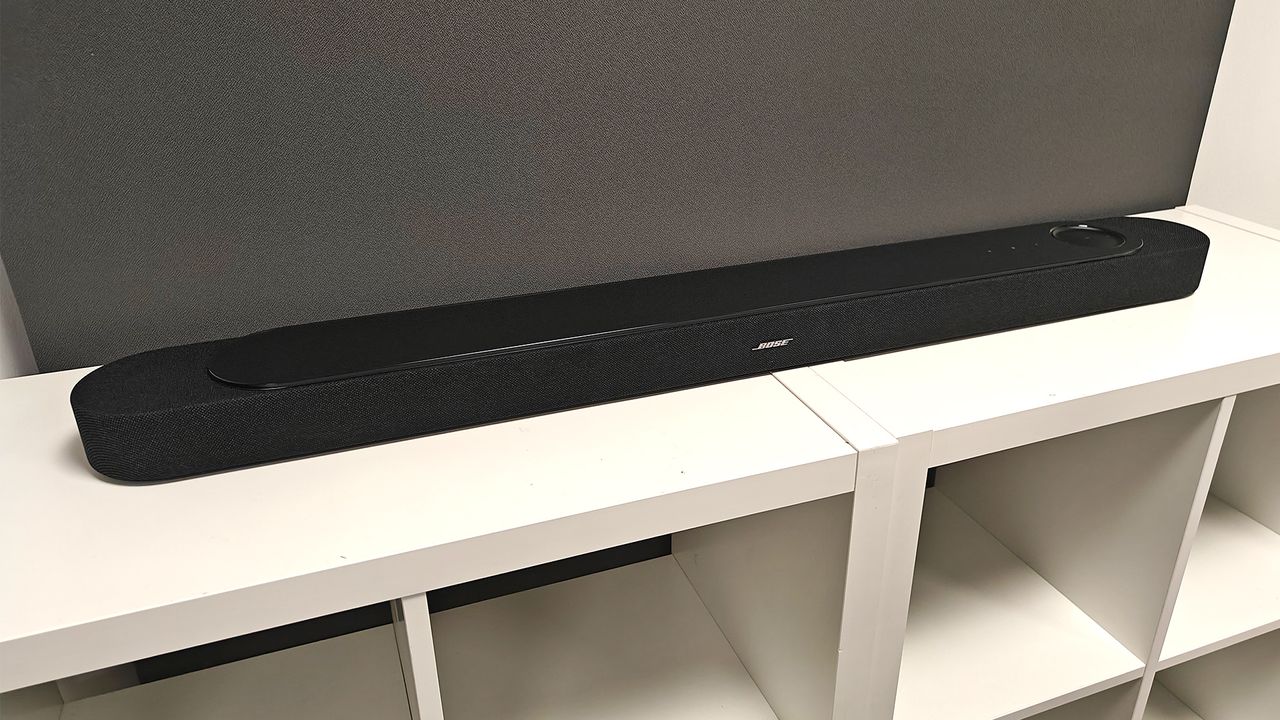
This week, one of the biggest pieces of news to break is that, after years of our team wishing upon an AV star, Sonos has released a new Beam Dolby Atmos soundbar.
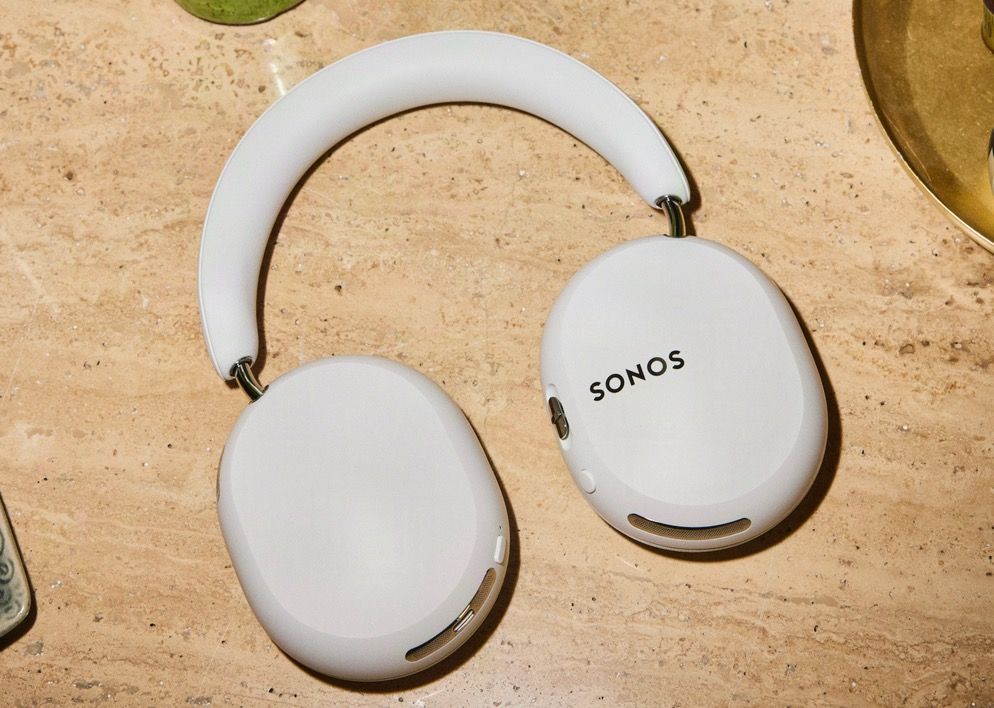
Unveiled alongside the new Sonos Ace Ultra wireless headphones, I want to kick off this opinion piece by making clear: I think the Ultra looks impressive and is, in nearly every way, the successor we’ve been waiting for.
In fact, as our reviewer on the ground at IFA, Robyn Quick, rattled off the details about the bar to the team back home, all of us (outside of senior staff writer, Harry McKerrell, who’s always miserable) had a smile growing on our faces.
Upgraded drivers, including the addition of proper up-firing height channels? Yep, it’s got them.
The ability to add Sonos Era 100 or Era 300 satellite wireless speakers as surrounds? Yes, the awesome feature has finally trickled down from the Arc Ultra into the more affordable Beam range.
And as a cherry on top, Robyn then penned a feature detailing how it sounds. The top line is, while it’s too early to give our final verdict, the Ultra left a very strong opening impression – so much so that a game of rock, paper, scissors ensued among the team to decide who would be the primary reviewer (it ended in a stalemate).
All in all, it was huzzahs abound at What Hi-Fi? towers.
FutureFutureSonosSonosSonosHisenseSonosSonos
But then, one more fact came rumbling in that replaced our smiles with a quizzical expression. Specifically, the Ultra is not a replacement or successor to the Sonos Beam (Gen 2); it’s actually a new step-up model in Sonos’ range.
Yes, we don’t know how the Beam Ultra will perform in our test rooms, but truthfully, given the Beam 2’s age, this was a curveball for us.
Why would the company do that when the Beam 2 is so old? Surely, it’s time to let the old girl retire? These were some of the mutterings that came out of our mouths as we processed the information.
But as I pondered the question, a final bit of information trickled through from the launch event that, at least for me, explained the move.
The Beam Ultra is a lot more expensive, set to retail for £699 (around $946 / AU$1320). The Beam (Gen 2) – outside of big sales events where it’s dropped as low as £349 – usually retails for £429 / $429 in most stores right now.
Cash-rich people may laugh at the idea of going for a soundbar that launched in 2021, when a newer model is out. But truthfully, £160 / $160 is a lot of money for most of us right now.
As a person who has listened to the Beam (Gen 2) alongside newer rivals, I can confirm it is still a very competent unit. That’s why it remains the recommended small option in our best Dolby Atmos soundbars guide.
So given that it still sounds good, keeping it around and giving normal people an entry point to Sonos’ ecosystem that won’t completely break the bank not only makes sense, but for me is 100 per cent the right thing to do.
It’s also why, even if the Beam Ultra delivers the sonic goods in our review rooms later this year, I can easily envision the Beam (Gen 2) retaining its recommendation. There are very few good, sub-£500 soundbars around and even fewer with the Beam’s compact form factor. So it’s definitely not beyond the realm of possibility…
Looking to get the inside scoop on all the latest hi-fi news and reviews, with some added insights from our editor-in-chief (me)?
Keen to get a sneak peek at what our team of experts are working on, including which review units we’re testing, companies we’re visiting and events we’re attending?
Got an opinion to share that you’d like immortalised on What Hi-Fi?, in a new Quote of the Week section?
If the answer is yes to any of these questions, then we have some good news: we’re launching a new Editor’s Cut newsletter that will give you all three.
Editor’s Cut is part of a fresh push on What Hi-Fi? to make it easier for you, our lovely readers, to get to know and interact with our team of experts.
The newsletter will be sent every Saturday and will include a bespoke letter from our editor, plus his musings on the two biggest stories and reviews from the week.
On top of that, subscribers will be treated to a new What’s Next? summary detailing some of the big things coming the week after – including launch events we’re covering, products we’re testing and people we’re interviewing.
Whether it’s a new section you want added, or a question about one of the items in What’s Next?, or something you want us to raise with a manufacturer we're talking to, we want to hear from you!
If you’ve got a musing or hot take on a topic, we even have a new Quote of the Week section, which is open to readers as well as the people we’re interviewing and our reviewers.
Hopefully you’ve been enjoying our quizzes over the past few weeks. We’ve had quite a few testing brain teasers, ranging from ‘name that cable’ to ‘can you name these hi-fi firsts’, but this week we’re switching topics to the world of TV, and TV tech in particular.
Below, you’ll find all the clues to our crossword, which packs in multiple TV terms to try and bamboozle you. Give it a go and see if you can record the fastest time and beat our own experts at their own game. Enjoy!
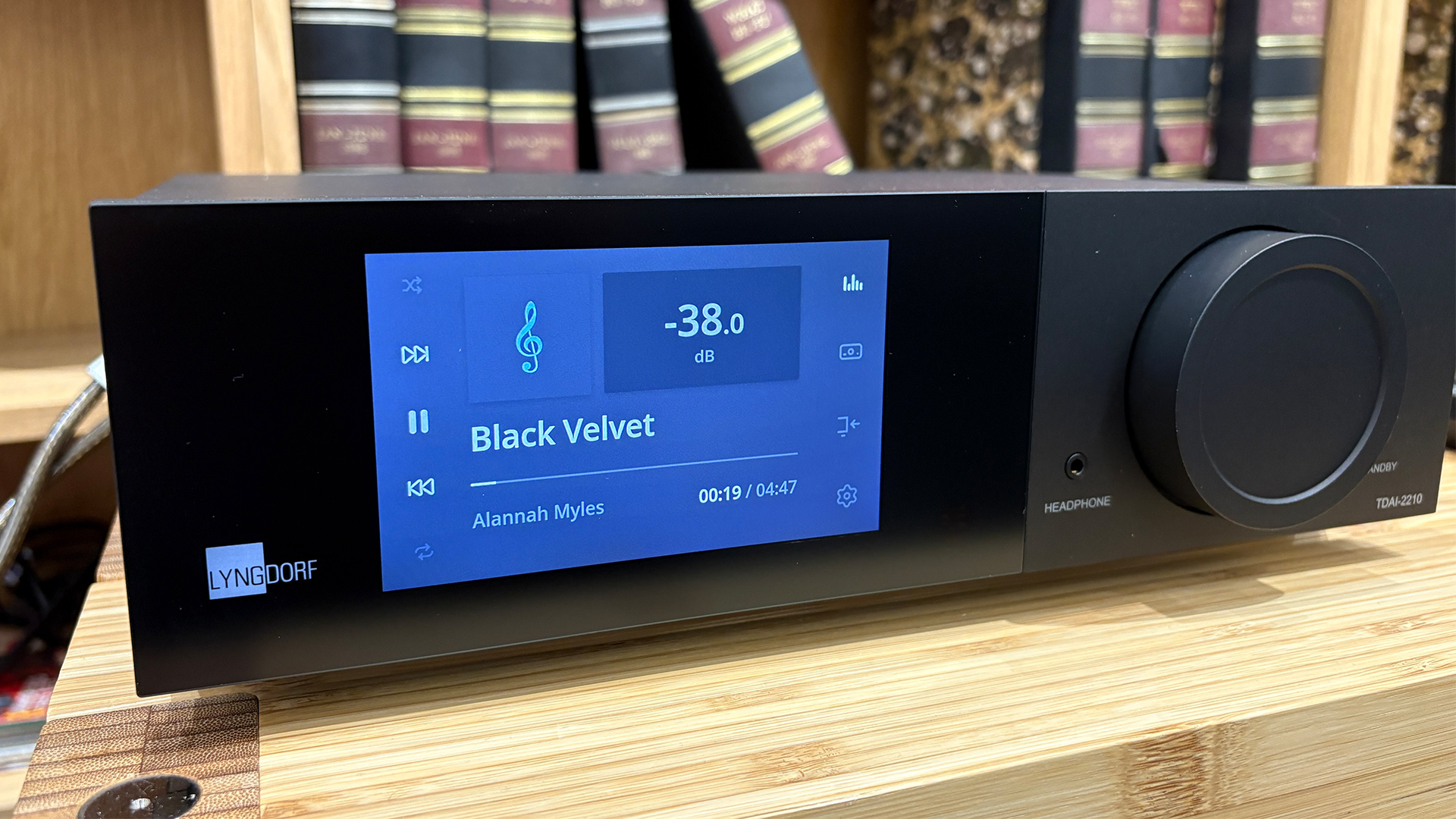
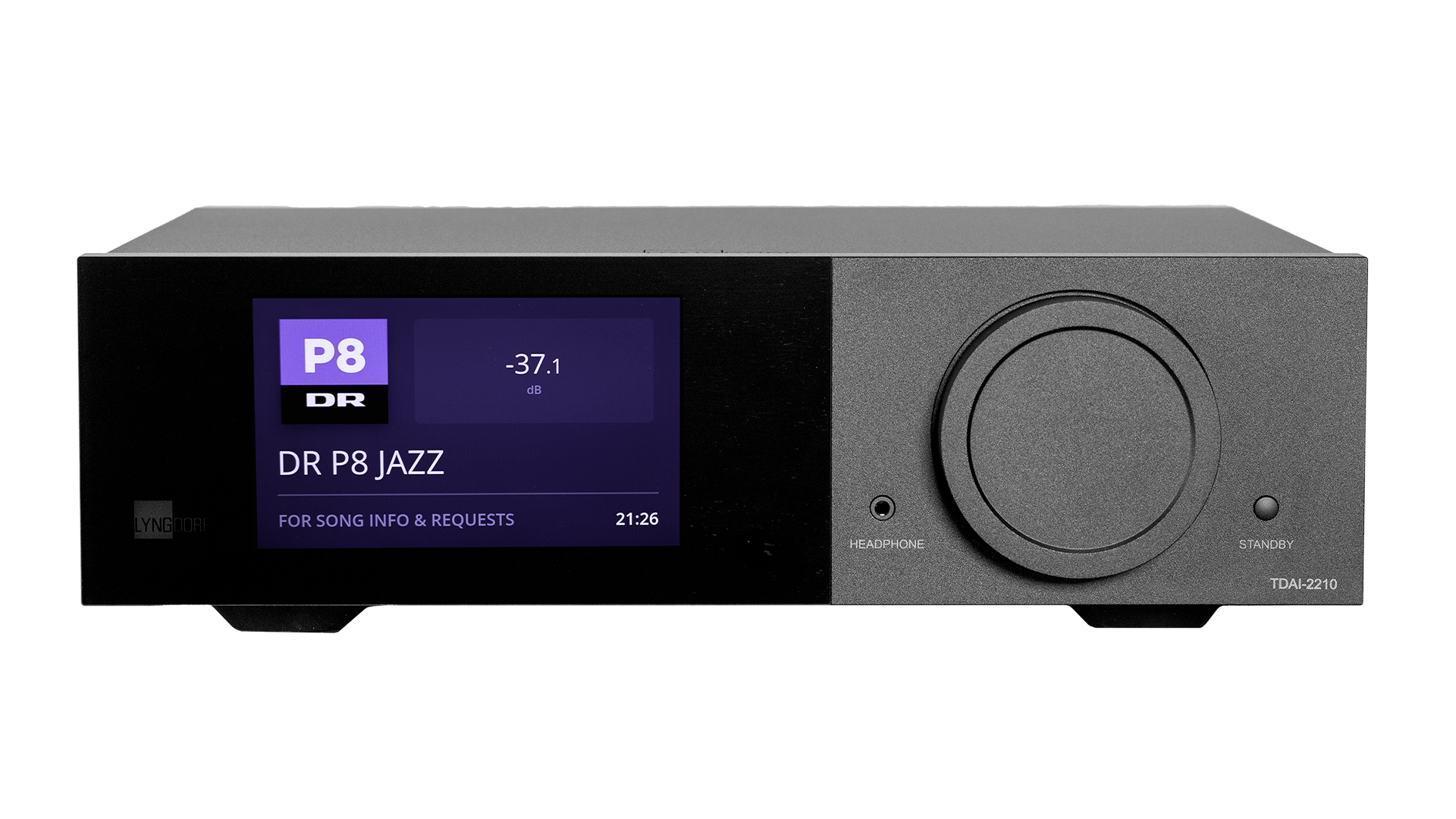
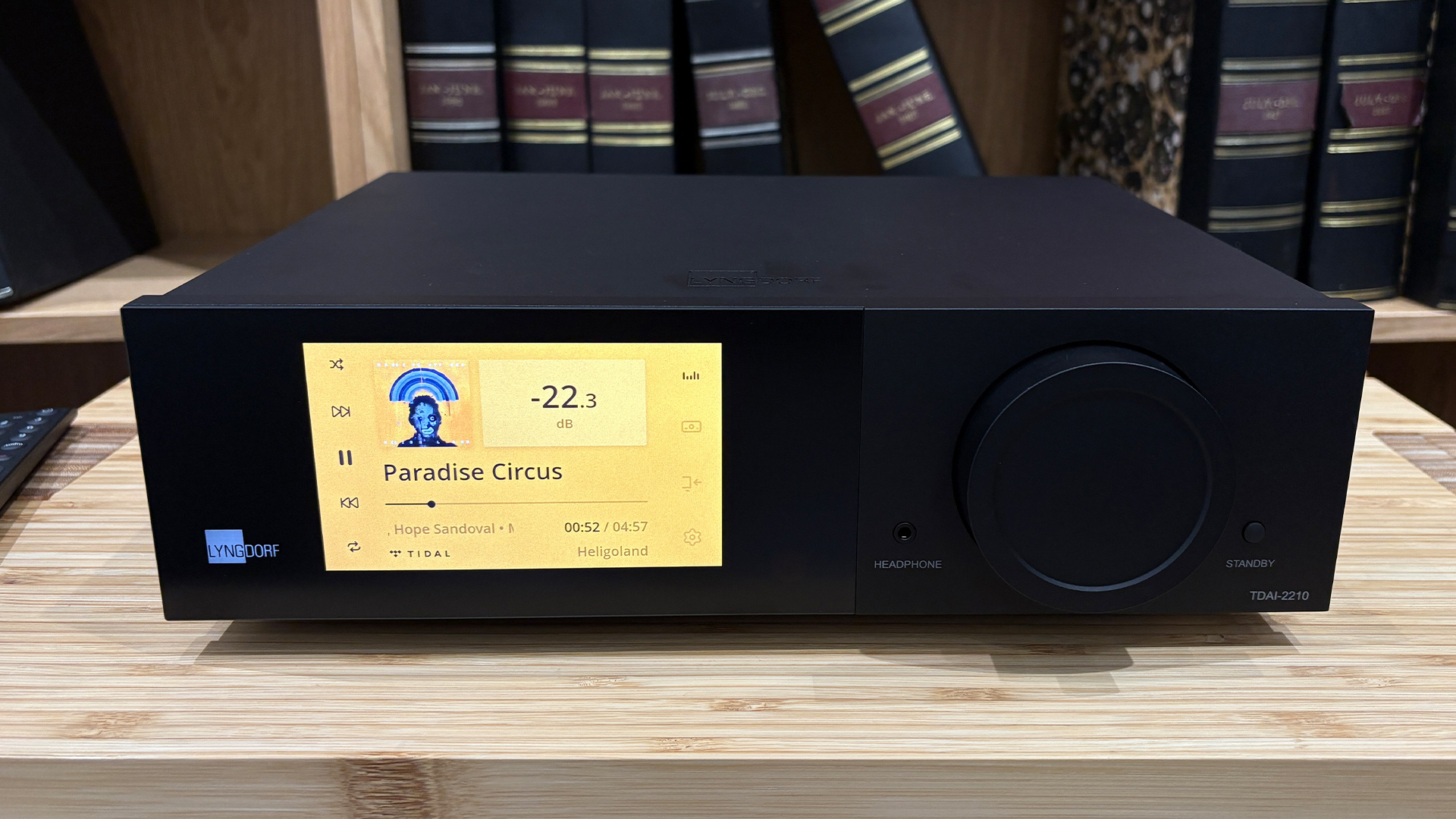
Lyngdorf does things a little differently. Even in the increasingly popular world of versatile one-box streaming amplifiers, the Danish hi-fi brand stands out from the usual suspects with the all-new TDAI-2210.
From the fully digital amplification architecture and unusual digital volume control to its bespoke app interface layout, this Lyngdorf sits a little adjacent to the mainstream alternatives – and it feels every bit a modern hi-fi product.
Build & design
(Image credit: What Hi-Fi?)
The Lyngdorf TDAI-2210 may sit in between the brand’s existing TDAI-1110 and TDAI-3310 models, but it is no middle child with hand-me-downs. It is completely redesigned from the ground up, with a new PCB layout, a cleaner signal path and better power supply filtering – and is the most advanced product in the range.
Lyngdorf TDAI-2210 tech specs
(Image credit: Lyngdorf)
Streaming features UPnP/DLNA, AirPlay 2, Google Chromecast, Spotify Connect, Tidal Connect, Qobuz Connect, airable internet radio, Bluetooth, Roon Ready
Power output 105 watts per channel (into 8 ohms)
Network Wi-fi and ethernet
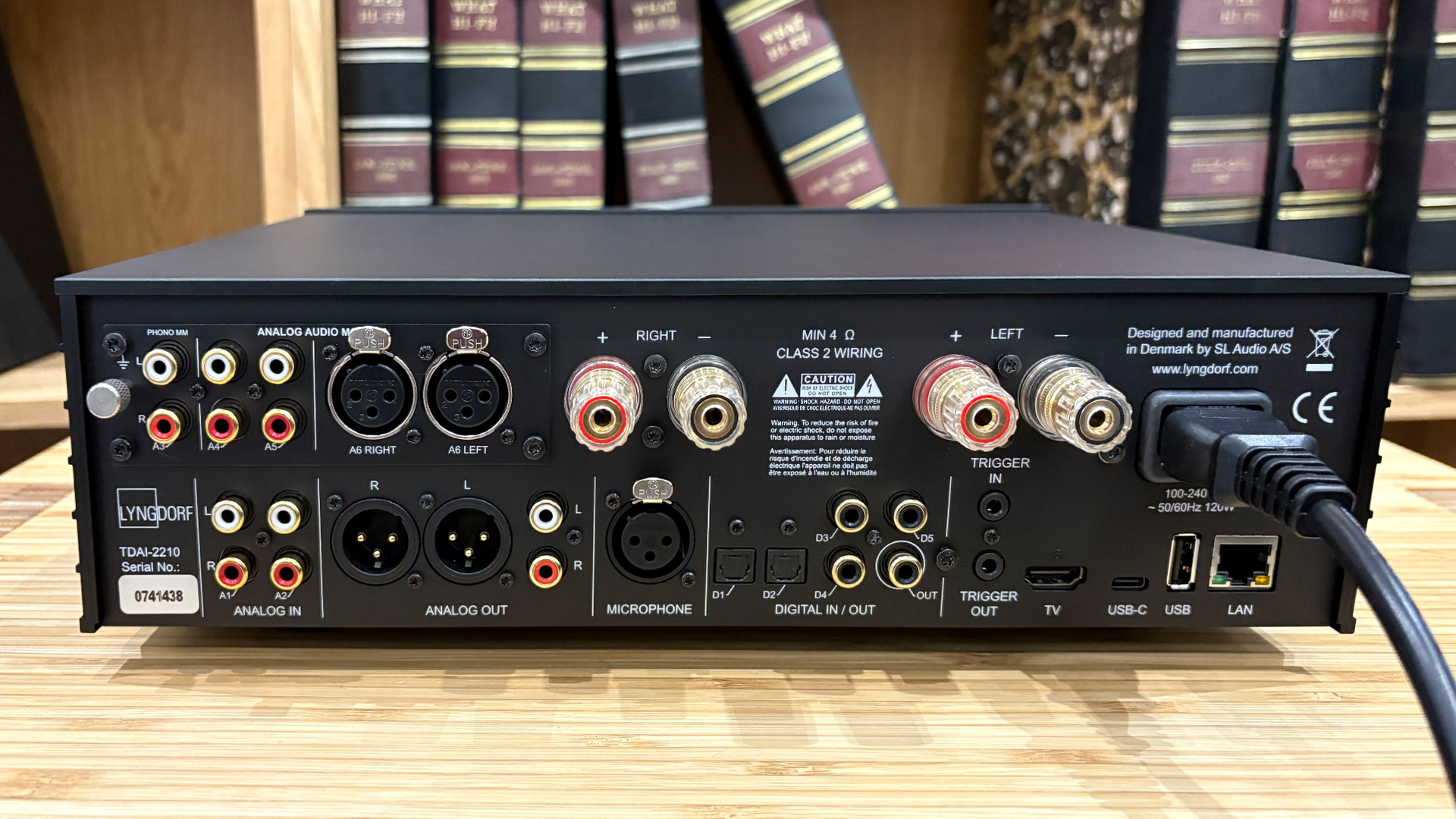
Inputs RCA line level, coaxial x 3, optical x 2, HDMI eARC (2.1), USB-C, USB-A
Outputs RCA line level, balanced XLR, coaxial
Headphone output 3.5mm
Max file resolution 24-bit/192kHz PCM (32-bit/384kHz via USB only)
Dimensions (hwd) 10.2 x 32.5 x 30cm
Weight 4.8kg
Finishes x 1 (matte black)
The TDAI-2210’s key technical element is in the name: TDAI stands for Total Digital Amplification, Integrated. This is not a common Class D amplifier, but a fully digital amplifier that keeps the incoming music signal digital all the way through, from the digital inputs up to the filtered speaker outputs; even analogue signals are converted to digital before being processed by the amplifier. This technology is Lyngdorf’s own design and is an evolved version of the first digital amplifier – the TacT Millennium – that we reviewed a quarter of a century ago.
The amplifier’s output is rated at 105W per channel into 8 ohms, and it doubles in power (to 210W) as impedance halves to 4 ohms. This means the amp will drive any price-compatible speakers without any issue, in electrical terms at least.
(Image credit: What Hi-Fi?)
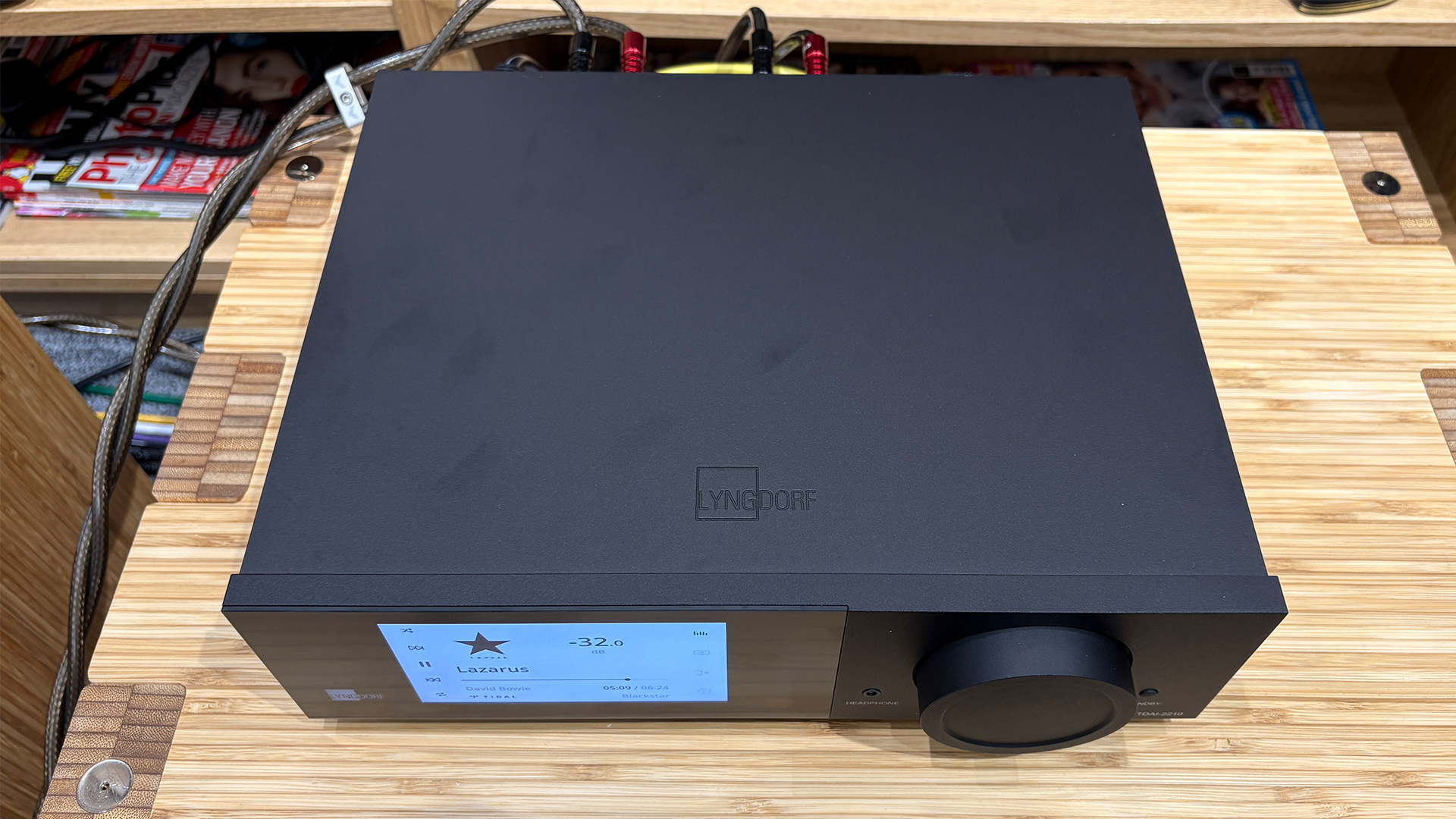
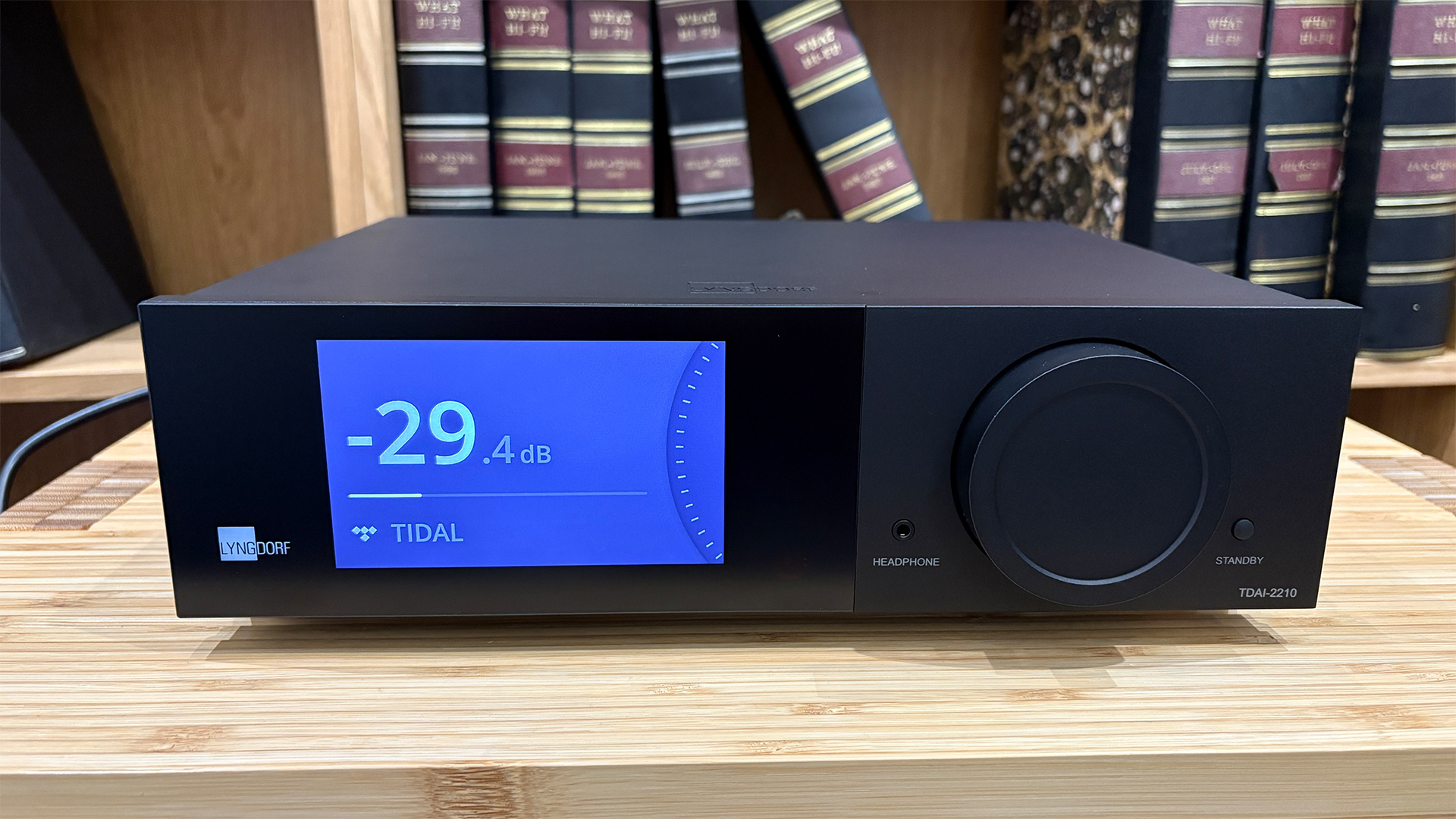
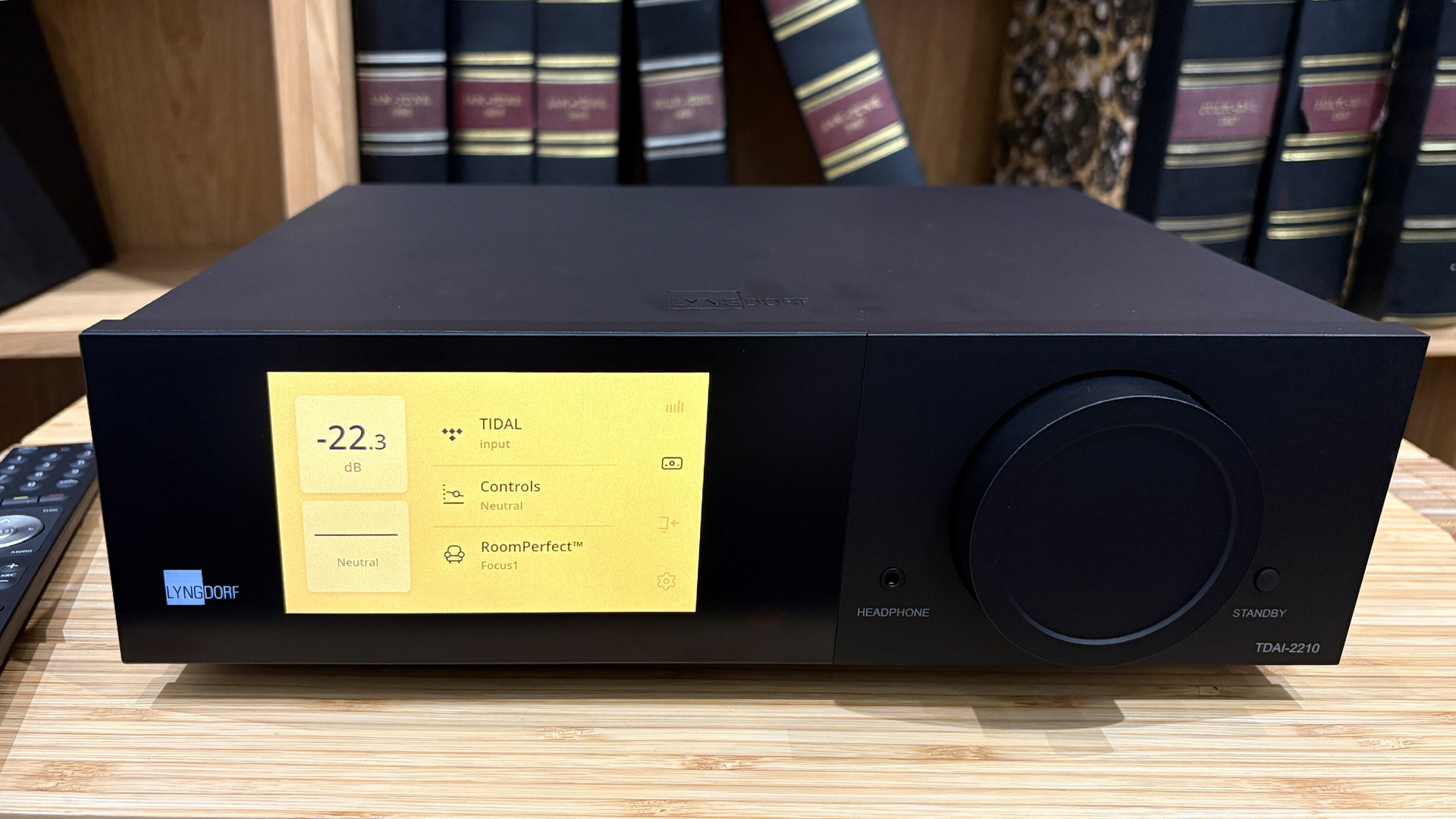
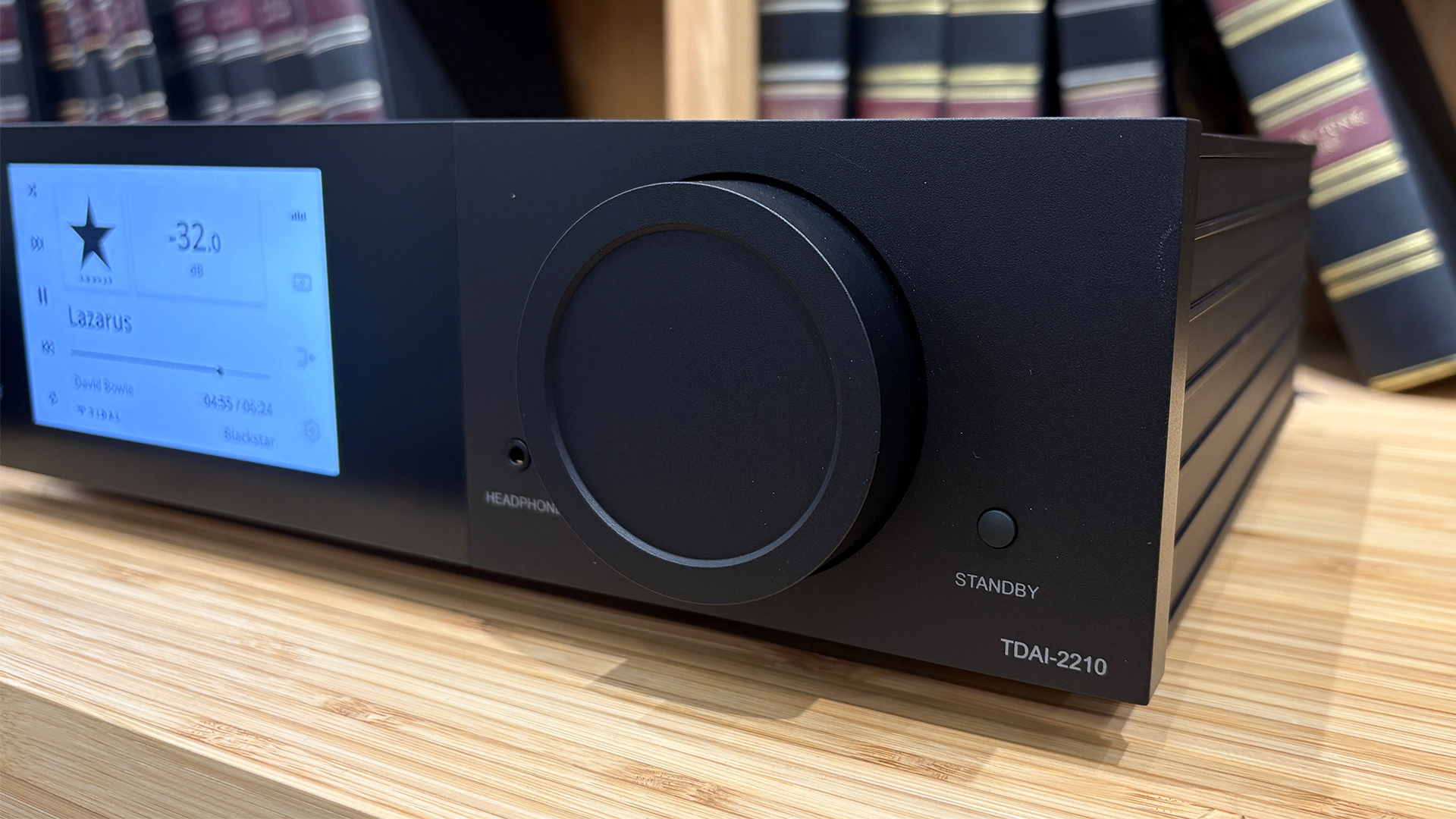
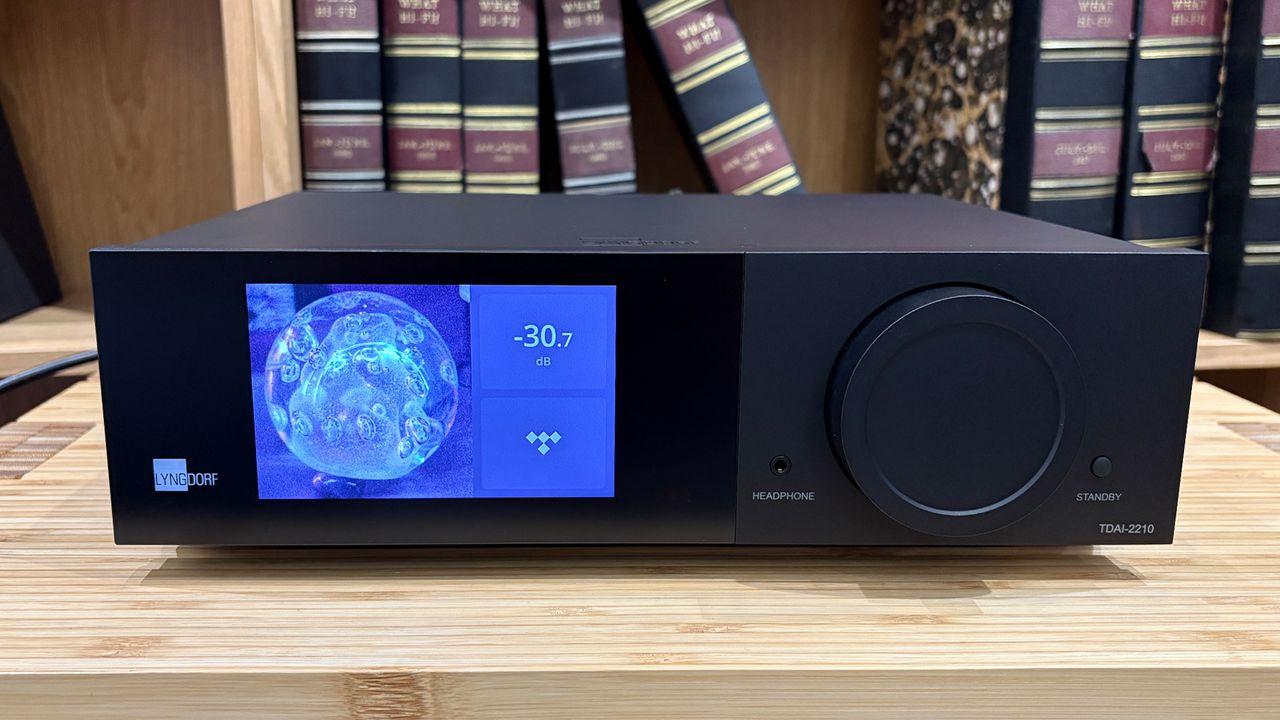
The unit itself is compact and minimal, coming in a matte black finish that looks rather unassuming at first. Lyngdorf says it wanted to prove you can have a high-performing, high-end product even in a small footprint, and the TDA-2210 fits the brief. The build quality is reassuringly solid, and details such as the ridges on the sides of the unit are finished to a high standard.
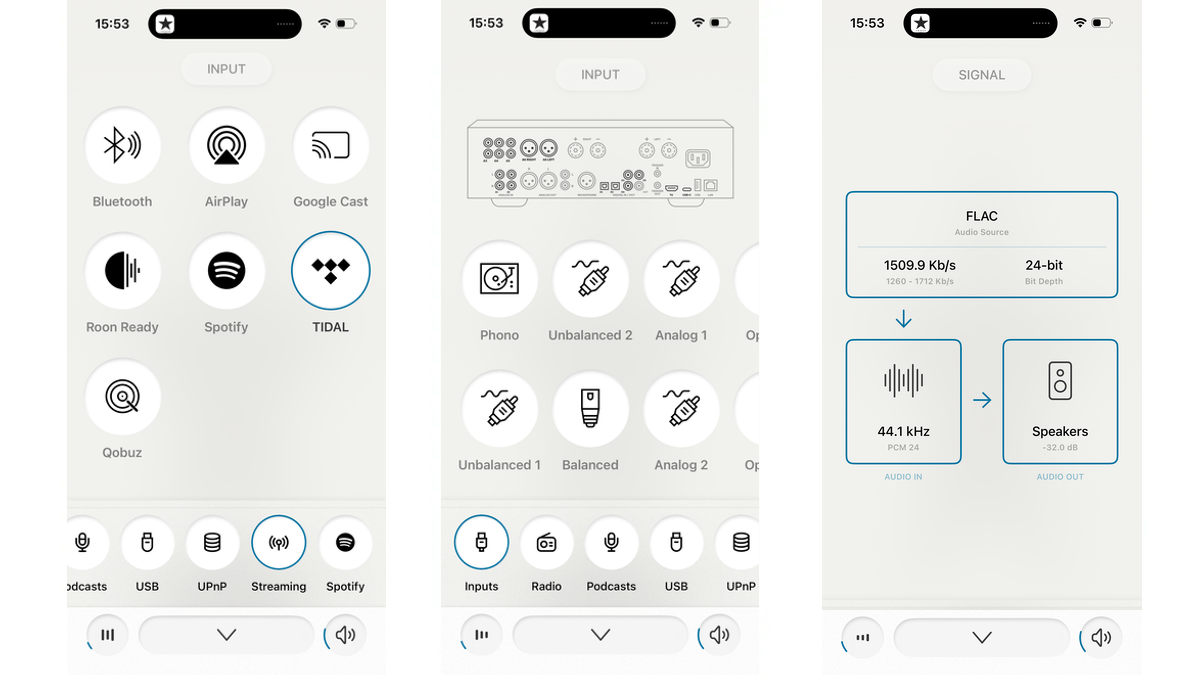
Lyngdorf has focused its attention on the high-contact points of the streaming amp: the large full-colour touchscreen display, the “lossless” volume control, and the redesigned My Lyngdorf control app.
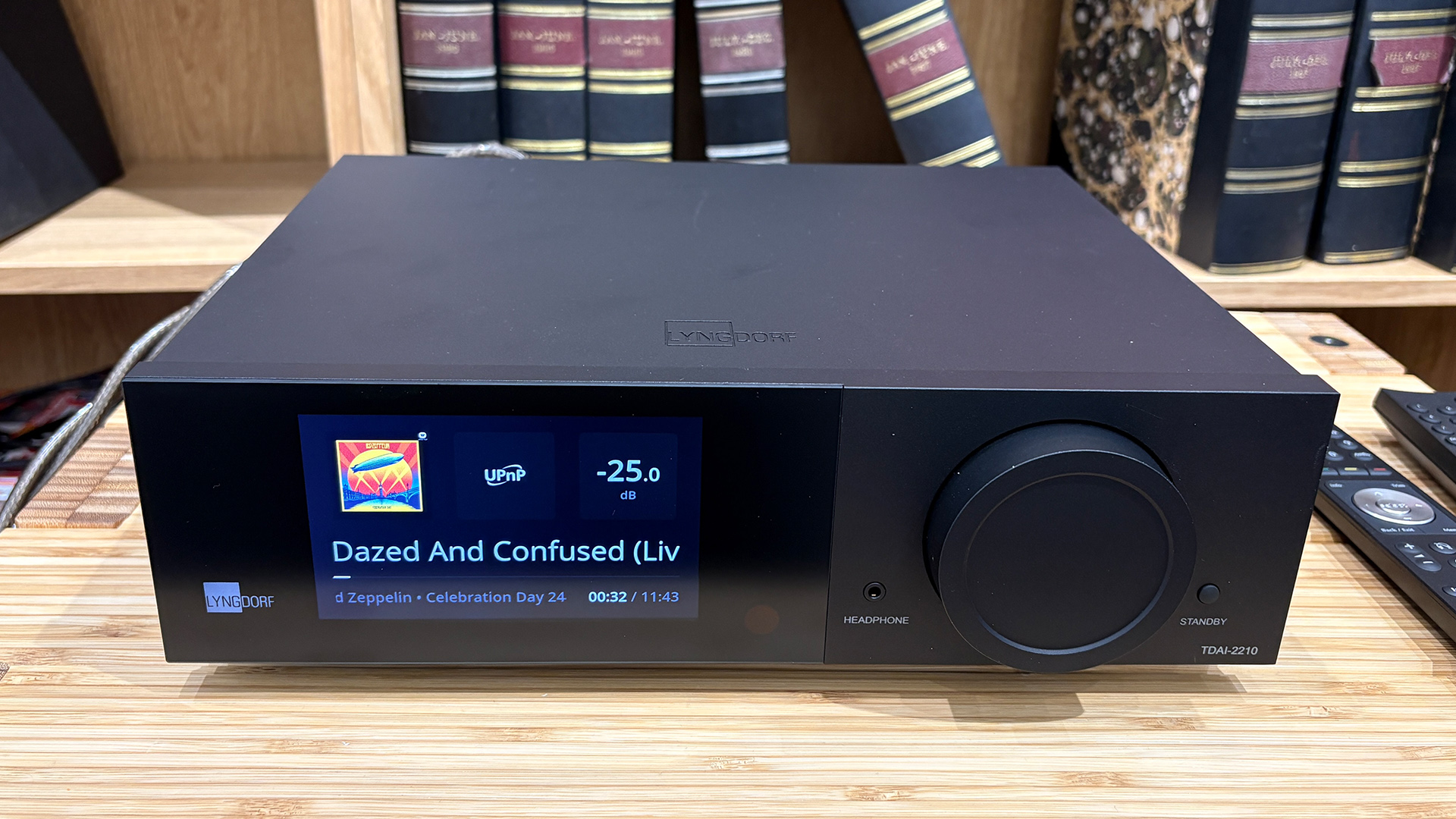
Let’s start with the glass touchscreen display, which is crisp and clear, with album artwork and the large icons easy to see from a distance. The glass has a smooth feel that is responsive to every tap and, most importantly, leaves no fingerprints.
We also like how the display screen’s background changes colour to match the album artwork being shown. There is a display option that shows a spectrum analyser, but Lyngdorf bucks the current trend by avoiding any retro VU meters.
(Image credit: What Hi-Fi?)
One of the TDAI-2210’s standout features is the digital volume control, which changes the gain from the output stage rather than attenuating the incoming signal as is conventional. This avoids distortion or any issues with channel balance that are inherent in potentiometer-based volume controls.
The volume dial software is calibrated beautifully, with every tiny incremental movement on the dial having an instant visual feedback on the large display. Using it feels organic and rewarding. You can make very subtle and specific adjustments to the level, and spinning the dial faster results in quicker volume changes.
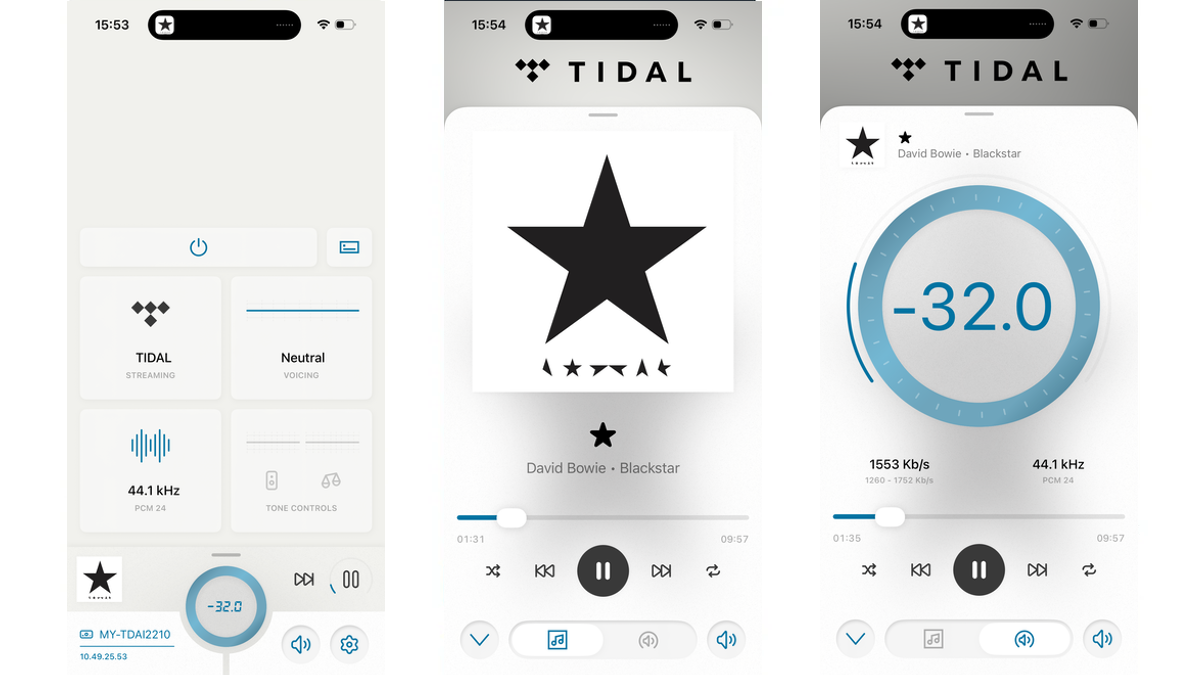
Combined with the My Lyngdorf app, the TDAI-2210 is a delight to use. It’s clear that Lyngdorf has put a lot of effort into how the streaming amp feels to use. The interface layout is clean and logical, and it both looks and feels considerably more modern than the usual lines of text and sub-menus we see in rival systems.
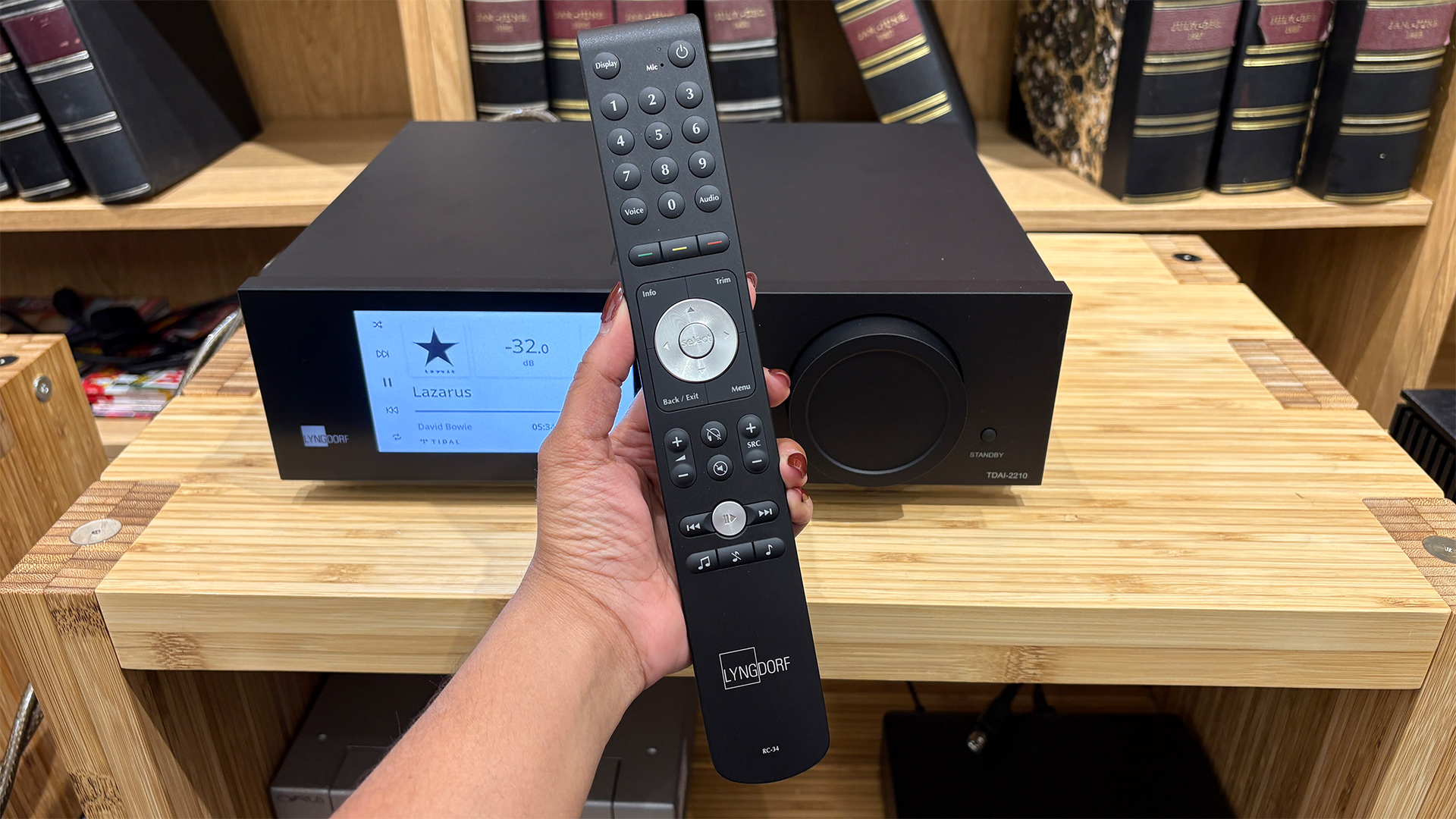
The harmonious way the display, app and controls respond to all our interactions throughout testing is very pleasing. There is a traditional remote control included, too.
(Image credit: What Hi-Fi?)
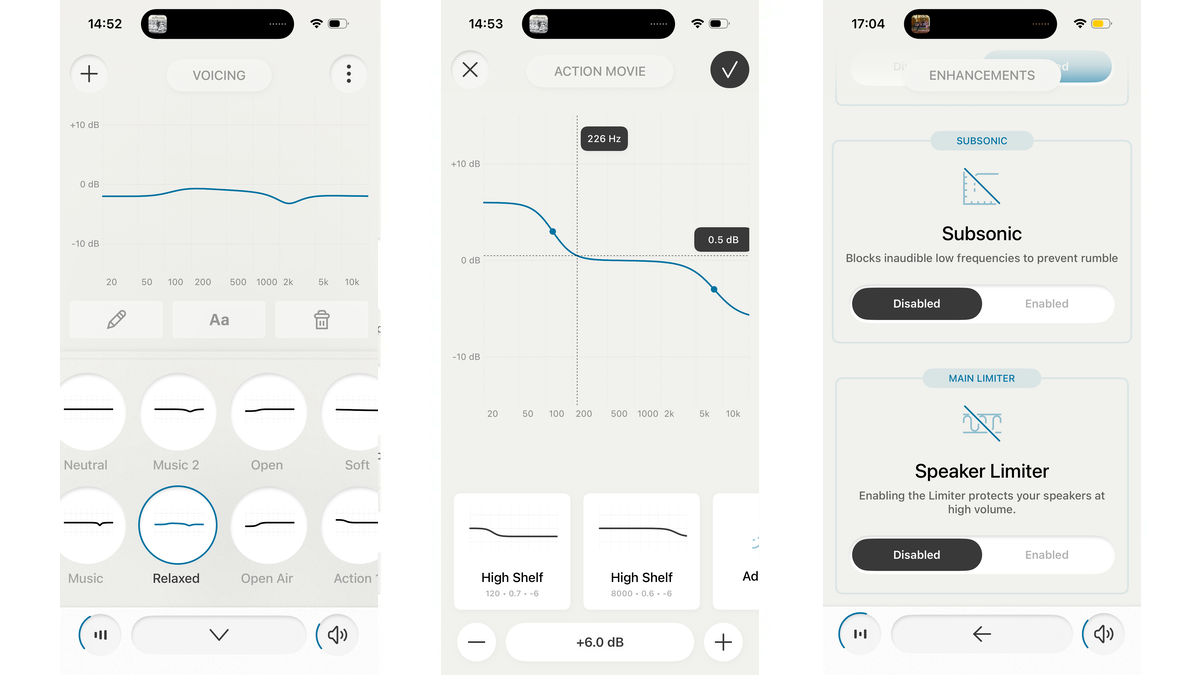
The app – and by extension the TDAI-2210 itself – is as straightforward or as complex as you want it to be. You can customise the app and display so it only shows the main information you are interested in, or you can delve further into the settings to find ways of fine-tuning the Lyngdorf’s sound to your heart’s content.
There are rather good ‘Voicing’ EQ presets that you can also customise, treble/bass tonal adjustments, and ICC (Intersample Clipping Correction) settings that deal with potential distortion or ‘clipping’ effects when digital music is converted into analogue sound.
Here, Lyngdorf recommends turning off the default ‘subsonic/rumble filter’ for best sound performance, while we would also recommend disabling the ‘speaker limiter’ for a more open and dynamic sound.
Features
FutureFutureFuture
On the streaming side, the TDAI-2210 is well appointed with all the popular ways of playing music wirelessly. There’s support for Tidal Connect, Qobuz Connect, Spotify Connect and global internet radio via Airable. Bluetooth and Google Cast are also on the menu, while AirPlay 2 is coming soon via a software update due in late September. Streaming music using any of these methods is swift and stable.
You can also play music from connected NAS drives thanks to UPnP/DLNA compatibility. At the moment, you can’t access your NAS library from within the My Lyngdorf app, although this functionality will be available in the late September software update. Until then, you can use third-party apps such as BubbleUPnP and MConnect, and it worked perfectly fine for us when streaming WAV and FLAC tracks from our Naim Core server.
Hi-res file support is a standard 24-bit/192kHz PCM across most inputs, while higher 32-bit/384kHz files are supported when stored locally on a USB drive. There is no support for DSD files here, and we can imagine some might be put off by the omission at this premium price.
(Image credit: What Hi-Fi?)
The TDAI-2210 has a good spread of physical connections, including RCA line level inputs and outputs, a pair of balanced XLR outputs, and multiple digital coaxial and optical inputs. An HDMI eARC input is available for seamless audio integration with a TV, and there are two USB inputs (type A and C) for plugging in media hard drives and laptops, respectively.
Lyngdorf offers two optional modules to add even more connectivity. Our review sample is fitted with the “high-end analog” module, which adds a moving-magnet phono stage and three additional analogue inputs, including a balanced XLR pair, which promise better analogue-to-digital conversion thanks to a higher-quality Asahi Kasai DAC.
This module adds over £500 / $500 to the standard price, but is a useful option for those who require the extra connections. Meanwhile, the HDMI 2.1 module adds two more HDMI inputs and one output, with a much steeper additional cost increasing the unit’s price to £4399 / $5499.
More useful is that the TDAI-2210 comes with Lyngdorf’s own RoomPerfect room correction technology. It’s a sophisticated system that tunes the streaming amp’s sound to the room it’s placed in, via multiple readings taken from random positions of the included mic.
(Image credit: What Hi-Fi?)
The most complicated part of the process is setting up the included mic stand; the app will walk you through the rest of the straightforward calibration process. It’s worth taking the time to do this during set-up, and you can toggle the saved RoomPerfect settings on/off to hear the differences.
Our dedicated listening rooms are already acoustically treated, and we found that the RoomPerfect setting boosted the bass and added more heft to voices and instruments. But it also takes away too much of the Lyngdorf’s spacious, open presentation for our liking, while voices lose some of their natural expressiveness.
Still, it’s a subtler effect than other room calibration software we have used, and we would recommend trying it out.
Sound
(Image credit: What Hi-Fi?)
To complete the TDAI-2210 system, all you need to do is add a pair of speakers. We use a variety during our testing, from the Epos ES7N standmounters to our reference ATC SCM50 speakers, while models ranging from KEF LS50 Meta to the PMC Prodigy 5 and even the Acoustic Energy AE300 Mk2 would all suit. We would just avoid pairing the Lyngdorf with any lean, bright-sounding speakers.
We start with Dolly Parton’s Jolene streamed over Tidal Connect. The TDAI-2210 delivers a lively, nimble-footed performance, which keeps us tapping along to the catchy tune. The sweeter edges of Parton’s indelible voice and her personality come through with a good dose of detail and clarity.
The Lyngdorf hews true to Parton’s smaller-scale ’70s-era recording, but it also has no issue expanding its wings and giving a grander stage to Massive Attack’s Paradise Circus and Agnes Obel’s The Curse. Instruments are given ample space and breadth, and the leading edges of notes are nicely defined, while voices are placed centre stage and focused in the airy soundstage.
The Lyngdorf sounds wonderfully clean, crisp and sprightly no matter what music we play through it, making it easy to listen to.
Basslines perhaps aren’t as meaty as rivals owing to the Lyngdorf favouring a leaner presentation, but this does add to that agile sense of rhythm that holds our interest. A greater dose of dynamic punch would render the iconic bassline and outro in Fleetwood Mac’s The Chain more dramatic and impactful, while the physicality of orchestral pieces from John Williams and Hans Zimmer could be more tangible and authoritative. Still, the TDAI-2210’s crisp precision and fluid sense of rhythm deliver just enough snap to remain musically satisfying.
(Image credit: What Hi-Fi?)
The Arcam SA35 (£2999 / $3300 / AU$6495) is the main rival here and, while it’s not as sophisticated as the Lyngdorf in use, it is the better (and cheaper) of the two when it comes to outright sound quality. The Arcam delivers a more powerful and authoritative sound, along with richer layers of texture and detail around every piano note, plucked string and French horn. Better low-level dynamics and a fuller tone add greater expression to voices, too.
Playing around with the Voicing presets and EQ settings helps to add a bit more body and immediacy to the Lyngdorf, but the differences between the two remain.
Despite the Arcam comparison, we still like the Lyngdorf’s amicable presentation and how it gets across the essence of a song. The switch from a brash heavy metal track to the more intimate, gentler tones of Elliott Smith’s Between The Bars is nicely communicated. Musically, it all hangs together pretty well.
The Lyngdorf’s sound is consistent through all the digital inputs, and we find that they sound better than their analogue counterparts. Plugging our Cyrus CDi CD player into the coaxial and RCA stereo inputs, we find that, while subtler, the analogue connection sounds less forthright and powerful. The analogue inputs on the optional module fare better and sound more fluid, but they’re still a touch soft-sounding compared with the standard digital ins.
Listening through the Beyerdynamic DT 990 Pro X, the sound is also consistently clean, detailed and nimble through the 3.5mm headphone output. We also plug the Rega Planar 3 RS Edition turntable into the optional module’s phono inputs, and it’s nice enough to listen to, but lacks the Lyngdorf’s lively energy that we like so much.
We'd like to hear more dynamic punch and richness to do justice to our records; if you’re serious about vinyl replay, we would recommend a dedicated phono preamp such as the Graham Slee Reflex M or Rega Fono MM Mk5.
Verdict
(Image credit: What Hi-Fi?)
There is something inherently likeable about the Lyngdorf TDAI-2210. It may not beat the class leaders, but its digital-first approach is clever and appealing, and the way the TDAI-2210 behaves when we interact with it is hugely rewarding.
With its fresh, modern outlook and lively sound, the TDAI-2210 is a great alternative to the mainstream options at this premium price, and is worth an audition.
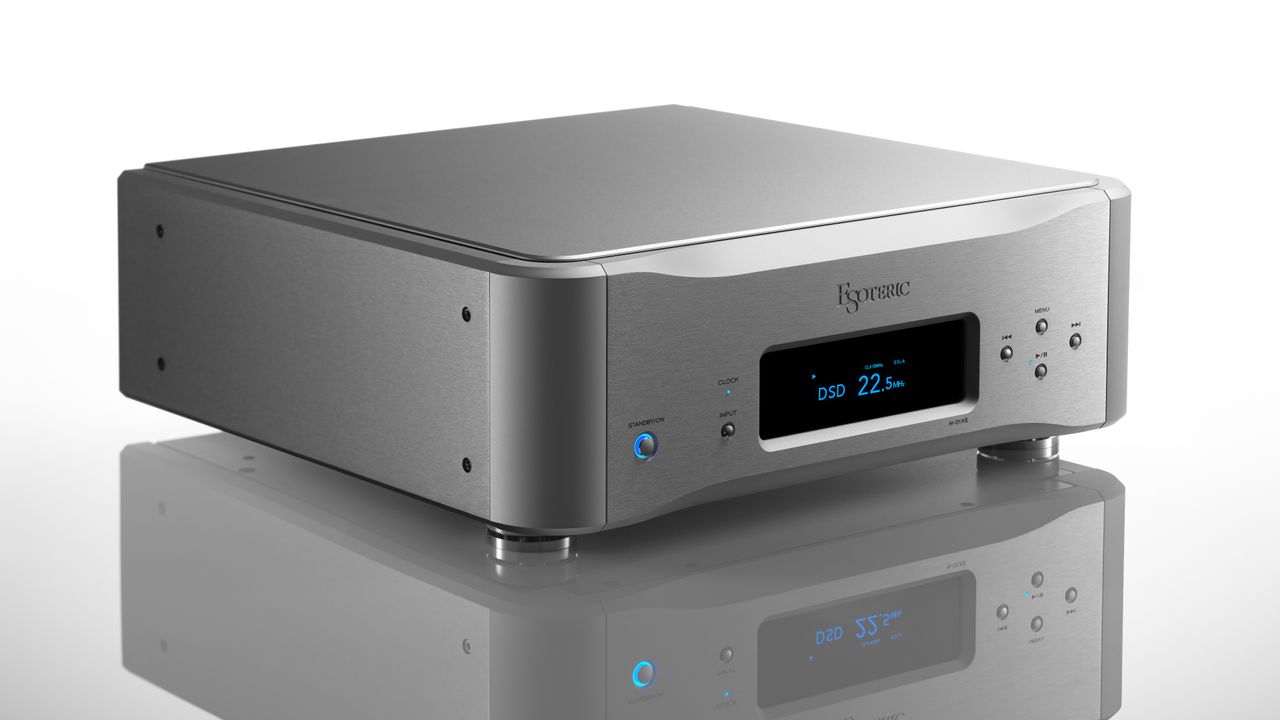
Esoteric has launched the N-01XE, its latest music streamer which promises to blend an "exquisite metal construction" with high-grade components for an "authentic, emotionally engaging sound".
At its heart, the N-01XE incorporates Esoteric's Master Sound Discrete DAC, boasting the brand's second-generation 'G2' architecture for what it teases as a "breathtakingly powerful" and dynamic performance.
The DAC chip itself uses a dual-mono configuration with independent power transformers for left and right channels, contributing to what Esoteric describes as "a smooth, natural, and remarkably analogue-like sound".
The Discrete DAC G2 has been built using high-precision 'MELF' resistors and Esoteric's board-mounting technologies for a more powerful, musical and dynamic audio signature.
Further, Esoteric's own 'Network Engine G4' promises "top-of-the-line" processing power thanks to its powerful CPU and dedicated linear power supply, a configuration that aims to reduce distortion and contribute to the new player's "smooth, richly detailed" character.
(Image credit: Esoteric )
The N-01XE is capable of supporting mega-hi-res files up to 48-bit/768kHz PCM alongside DSD512. In pursuit of digital-to-analogue conversion that matches the characteristics of both DSD and PCM files, dedicated digital processing algorithms have been independently developed for each format.
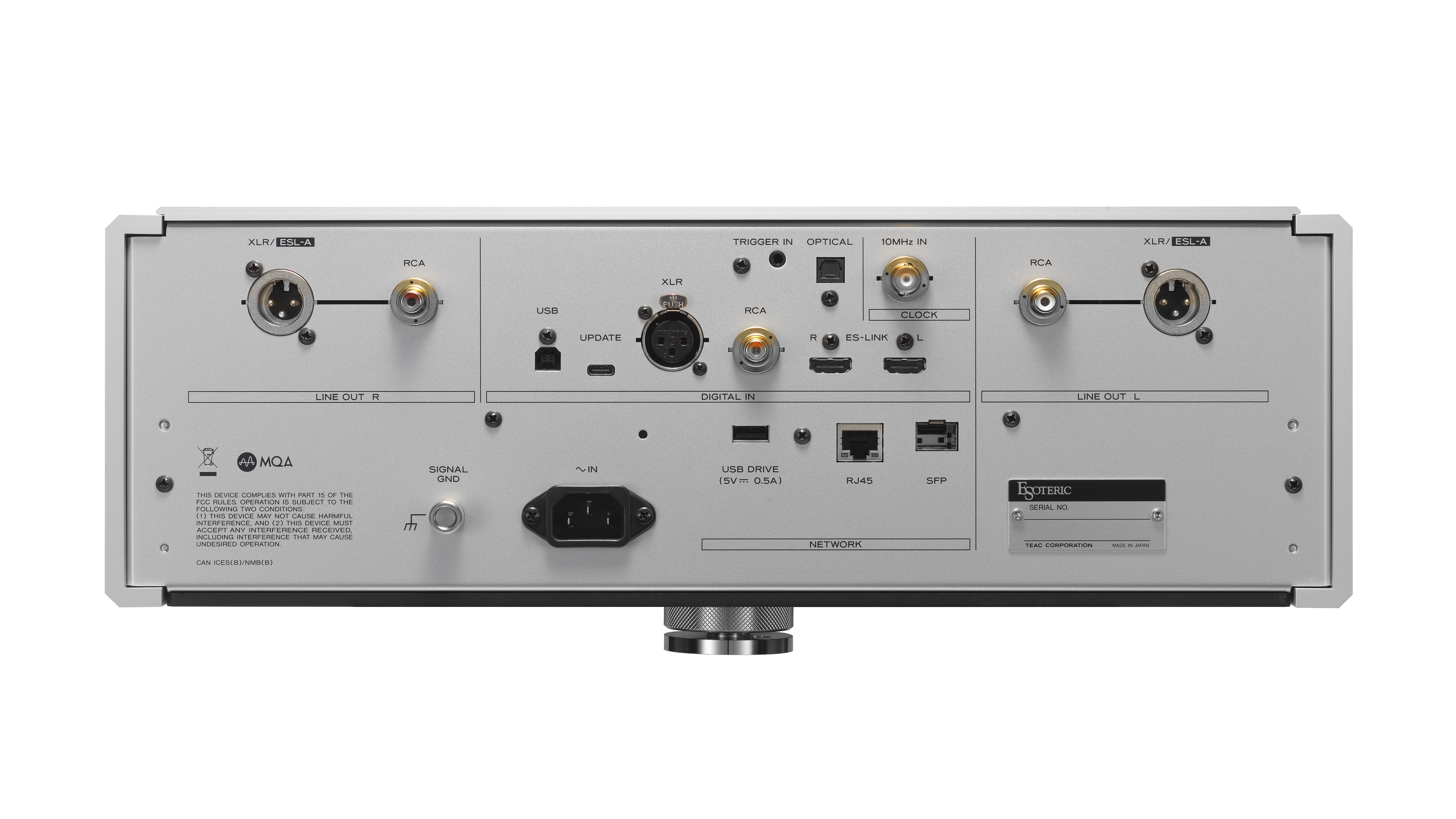
The new unit boasts a wide-ranging connectivity suite, including coaxial, optical and USB-C digital inputs alongside RCA and XLR analogue outputs. The N-01XE is Roon Ready, while wi-fi connectivity grants access to the likes of Tidal Connect, Qobuz Connect and Spotify.
On the outside, the network player's multi-layer chassis is built to prevent interference between the various circuit components, while a semi-floating top panel has been designed to contribute to the streamer's sonic openness. A set of isolation feet provides a stable foundation for the N-01XE's "focused, open soundstage".
The Esoteric N-01XE is available now, priced at £22,999 / $28,000 / €26,500. We've previously tested Esoteric's N-05XE streaming preamp (£13,000 / $13,000 / AU$17,000) and was mightily impressed with its excellent sound quality and superb engineering, so we imagine the new N-01XE sets an even higher bar.
When testing entry-level Dolby Atmos soundbars, there’s one Award-winning model that all new entrants must compete with: the Sonos Beam Gen 2.
Since it burst onto the scene in 2021, the five-star soundbar has blown away the competition with its refined delivery of both movie soundtracks and stereo music.
We have been waiting patiently for a new model for ages now, and the time has finally come.
The Sonos Beam Ultra isn’t a replacement for the Beam Gen 2, but an upgraded model that will sit above it, and the big news is that, unlike its sibling, the Ultra sports dedicated up-firing speakers to aid in its delivery of Dolby Atmos sound.
In fact, the Beam Ultra has nine drivers in total – four more than the Beam Gen 2. These are arranged in what Sonos says is a 7.1.2-channel configuration.
The Ultra is launching on 29th September for £699 / $699 / AU$1099. That price puts it between the Beam Gen 2 (£449 / $449 / AU$649) and the also Award-winning Arc Ultra (£999 / $999 / AU$1799).
As with both of those sibling soundbars, the Beam Ultra can be upgraded through the addition of surrounds and/or a subwoofer, and you can easily jump from out-loud to personal listening if you also have a pair of Sonos’s Ace or new Ace Ultra headphones.
This is all great stuff on paper, but how does the Beam Ultra actually sound? We got a chance to hear it during a demo session in Berlin, and it certainly sounds promising.
(Image credit: Future)
Of course, we will save our final verdict until we get the bar into our acoustically treated test room for extensive, comparative testing, but these are our first impressions.
The demo kicked off with a Dolby Atmos mix of Harry Styles’ Ready, Steady, Go!. Harry’s vocals were clear, direct and expressive, immediately drawing us into the track.
The instrumentals were well placed around the soundfield, too, with the guitar plucking featured in the mid-section delivered with a strong sense of precision.
Next, we got a taste of how the soundbar performs with movies. Watching the scene in Sinners when Sammie summons spirits from the past, present and future, the up-firing drivers worked their magic and the sound could be felt well above the TV screen.
When the track I Lied To You reached its crescendo, it created a room-filling experience that was very impressive considering the size of the bar.
From our first listen, the bass was not the deepest, but the soundbar delivered refined and detailed lower frequencies that gave the demo scenes a strong foundation.
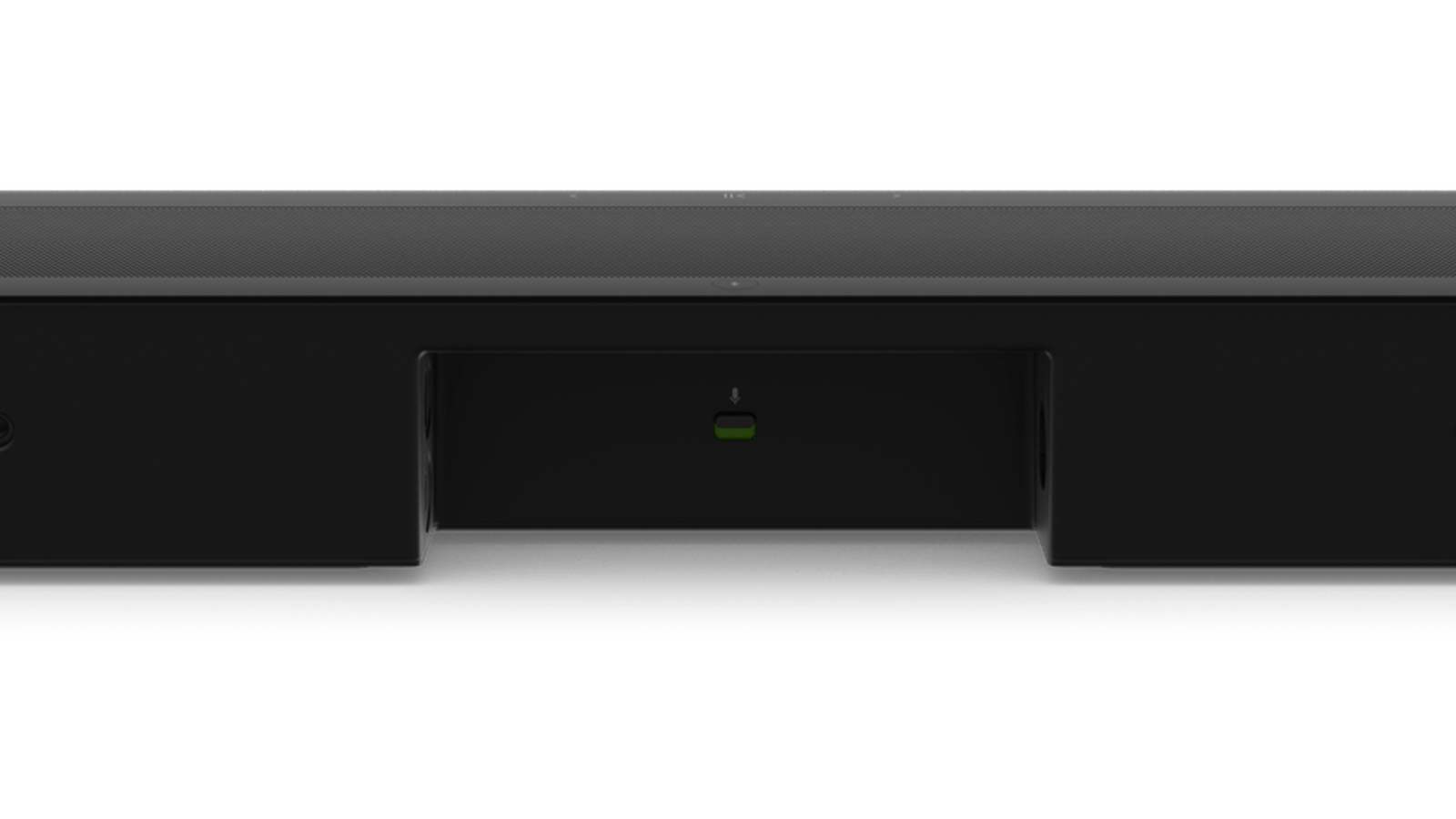
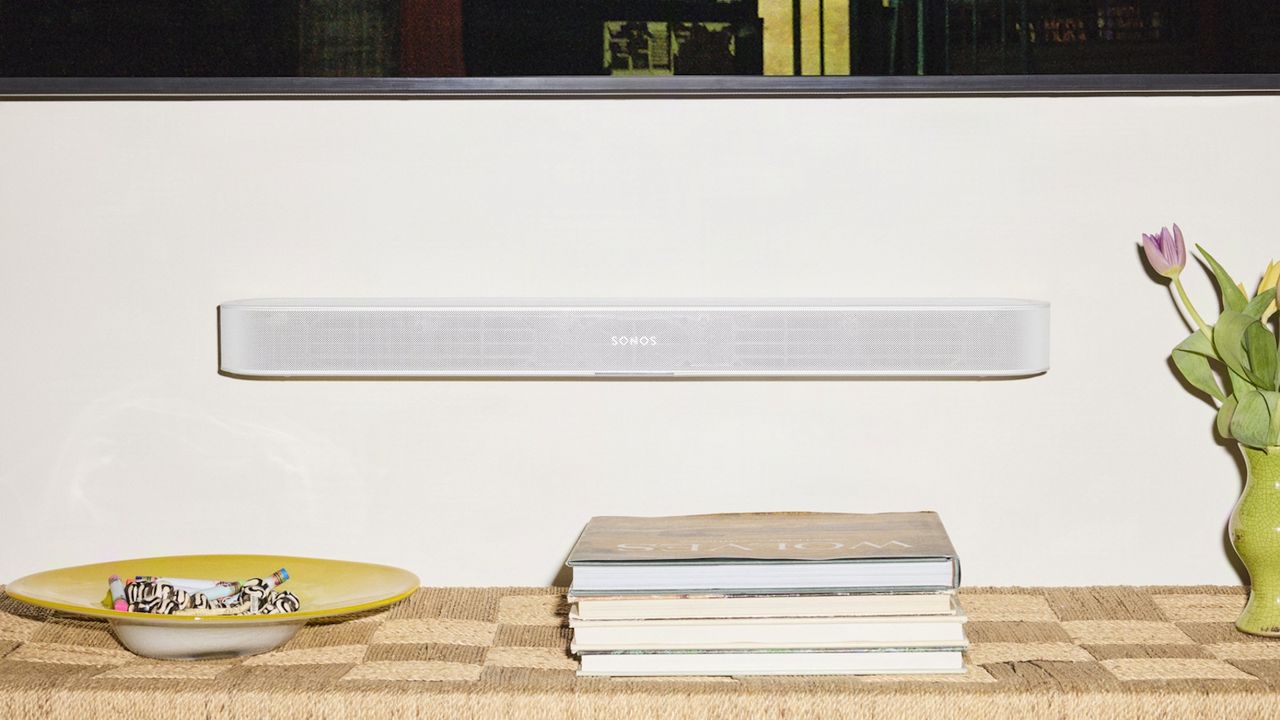
In terms of design, the bar is impressively lightweight and has a compact footprint. There are perforated grilles at the top of the soundbar for the up-firing drivers, and these look quite stylish. On the lip of the Beam Ultra you will find volume and Bluetooth controls, as well as play and pause 'buttons'.
As mentioned, we will of course wait until we have fully reviewed the new bar in our dedicated test room before we deliver our final verdict, but during this initial listening session, the Beam Ultra made all the right noises.
The big question is whether it's the perfect halfway house between the Beam Gen 2 and Arc Ultra or a soundbar stranded in no man's land between two awesome Award-winners. We should be in a position to answer that question very soon.
“We know the home, we know audio, we know music” – those are the particularly bullish words of Sonos's vice president of software, Sid Patel, whom we recently spoke to about Sonos’s new operating system rebrand (we were also given the lowdown on its new Ace Ultra headphonesand Beam Ultra soundbar).
In case you’re catching up, last week the company announced Sonos 27, a new overarching name for the company’s audio operating system which covers the entire Sonos ecosystem. It’s promising better integration between Sonos products and various ways to control them, but without completely excluding other brands.
The company plans to update it annually, just like Apple’s iOS, so we’ll see Sonos 28, 29, etc.
But getting back to the quote, we wouldn’t be surprised if those words might have raised an eyebrow or two among current or ex-Sonos customers, especially given the brand’s tricky timeline over the past couple of years.
The last tweaks to its operating system didn’t go down too well. An ill-fated Sonos app update back in 2024 resulted in what was once a robust, rock-solid and intuitive way of interacting with Sonos products turning into a bit of a mess. Not only was it affected by bugs and glitches, but key features were omitted, much to the disdain of numerous Sonos customers.
Such was the fallout from this event that the then Sonos CEO Patrick Spence was forced to step down eight months later, in January 2025. At the time, the Sonos board even went as far as to say it would not take a bonus "unless the company succeeds in improving the quality of the app experience and rebuilding customer trust".
Despite this botched app release happening more than two years ago, it’s probably fair to say there are still many existing and potential Sonos customers who are still sitting on the fence and requiring a bit more reassurance from the brand.
(Image credit: Sonos)
Of course, the proof will be in the experience. If Sonos does what it’s promising and there aren’t any hiccups with either its new software or hardware, then it might be back in the good books of those disappointed by its recent efforts.
But what do you think? Have you been convinced by the statements coming from Sonos?
If you were disappointed by app-gate, have you been convinced to come back into the fold, or are you happy to watch from the sidelines to see what happens before you commit to any new products? Sonos has many music and movie fans in its midst and surely won’t make the same mistake twice?
Let us know by voting in our poll above and commenting below. We’re interested to hear your thoughts!
So from the outside, it can look like a lot of effort for something that, unless you "get it", doesn't seem that important.
There are many answers to this question, even among the What Hi-Fi? team, which includes numerous experts who have chosen to dedicate their professional and personal lives to the endeavour.
But one of the most consistent themes we hear when answering the question is that it all began with a specific piece of hardware.
Which is why, for this month’s Ask The Reader question, we want to know: what product got you into hi-fi?
Or was it a set of speakers you bought in college out of the back of a van at a car boot sale, not knowing the treasure you’d just stumbled upon?
Perhaps you’re a bit younger and discovered the magic of hi-fi after adding a streamer to a classic separates set-up you inherited?
Whatever the answer, we want to know!
You can post your answer in the comments section of this page, or in our forums. Just make sure to tell us what the product was and why it was so special.
Maybe it was the album it was playing? Maybe it was the company you kept, or the place you heard it that made it so special?
As always, at the end of the month we’ll publish a new piece collating your most interesting answers! So please make sure to keep your language PG-13 and stick to our community guidelines for a chance to be included.
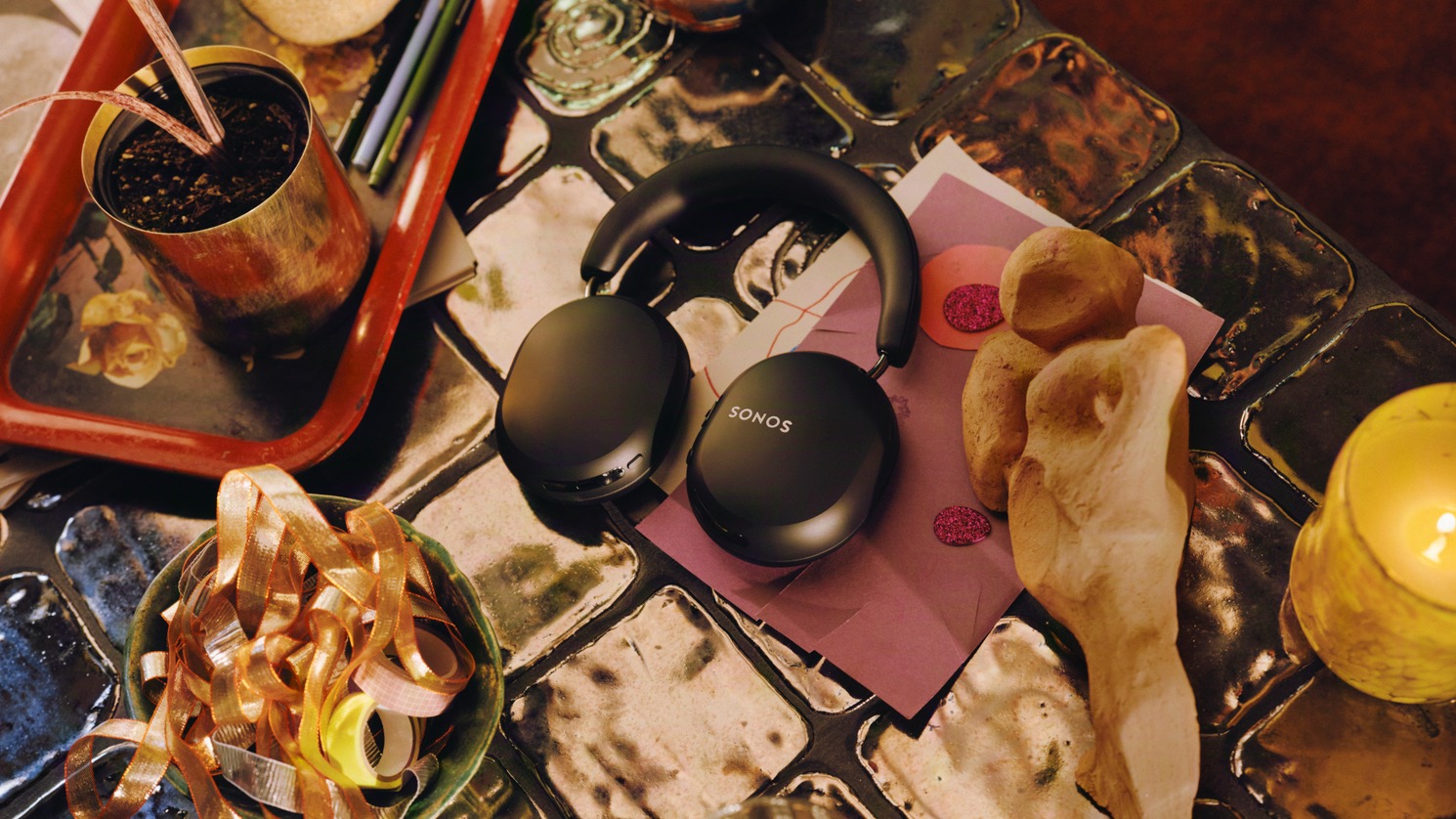
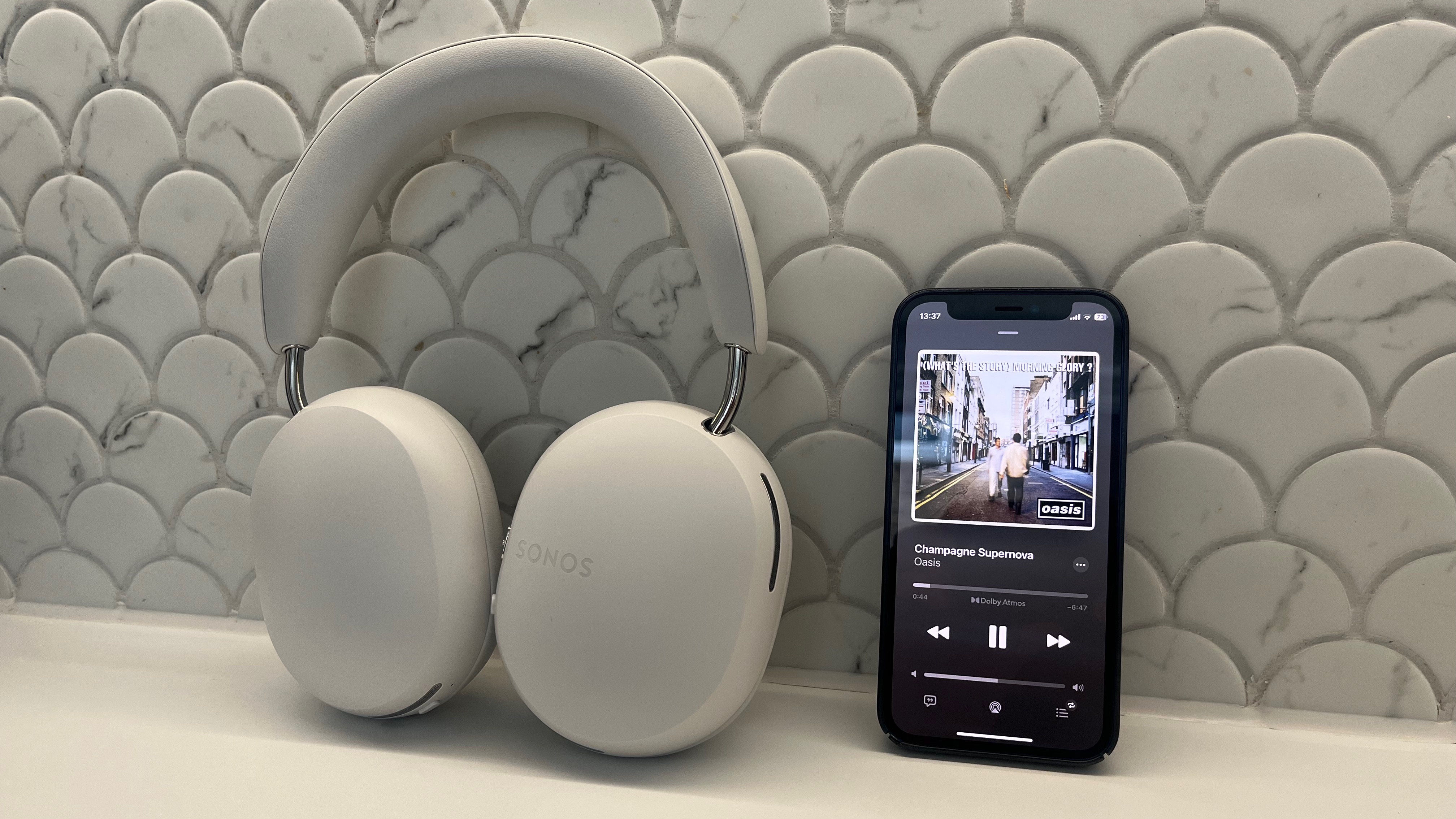
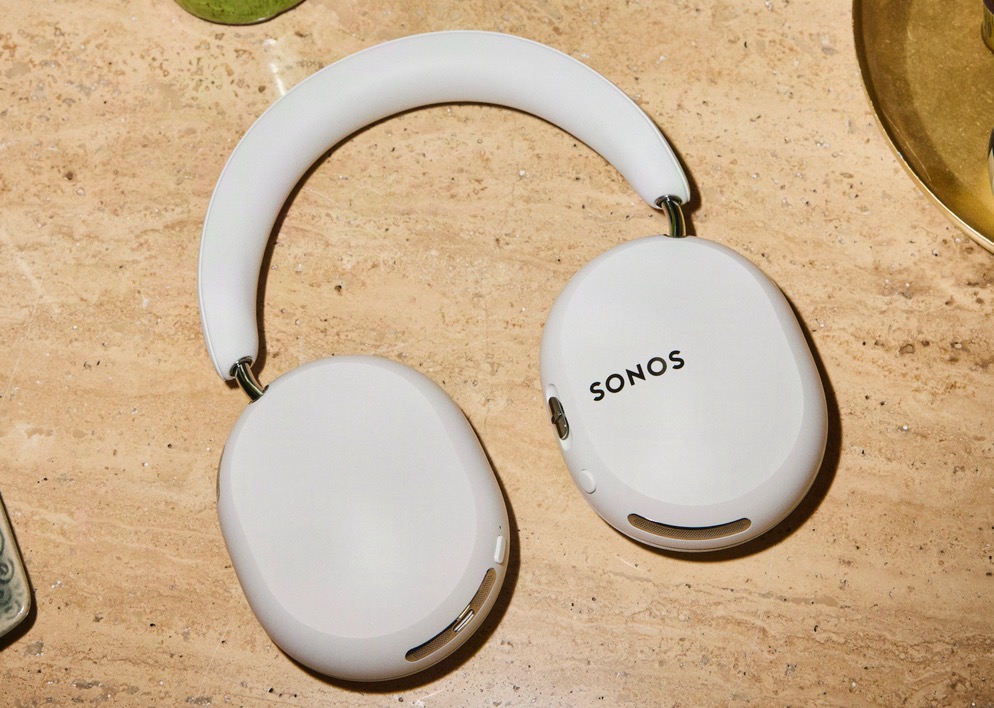
Dubbed the Sonos Ace Ultra, they’re successors to the original Ace, which launched back in 2024 and promise not only new features and a raft of changes inside and out, but improved sound quality too.
But what exactly has Sonos done to try and elevate its new headphones above the old model? We’ll go through all of that and more below.
Sonos Ace Ultra vs Sonos Ace - Price
(Image credit: Sonos)
They might be Sonos’s flagship wireless headphones, but the good news is there hasn’t been a price hike for the new model.
In fact, if you live in the UK, the Ace Ultra are actually cheaper than their predecessors were at launch. The Ultras go on sale on the 29th September and cost £399 / $449 / AU$699 compared to the £449 / $449 / AU$699 of the original model.
Of course, the Ace have been around for a couple of years now, which means you can find regular discounts closer to the £299 / $299 / AU$449 mark if you shop around online.
We’ve been told both pairs will continue to coexist for some time, so we’d expect there could be potential for further price drops for the original over time, especially around peak sales periods such as Black Friday.
Sonos Ace Ultra vs Sonos Ace - Design and build
(Image credit: Future)
We haven’t had the opportunity to go hands-on with a pair yet, but on the design and build front, it doesn’t appear that too much has changed from the Sonos Ace.
That’s not necessarily a bad thing as we were fans of the the way the headphones looked and felt in situ.
Looking at pictures of the Ace Ultra, the earcup and headband plastics look the same as before but the new model does use “new rebound foam ear cushions” so it’ll be interesting to see if the pads feel any different when you’re wearing them.
A quick spec comparison does actually show that the new model weighs ten grams more (322g versus 312g) but whether you’ll be able to actually feel the difference remains to be seen.
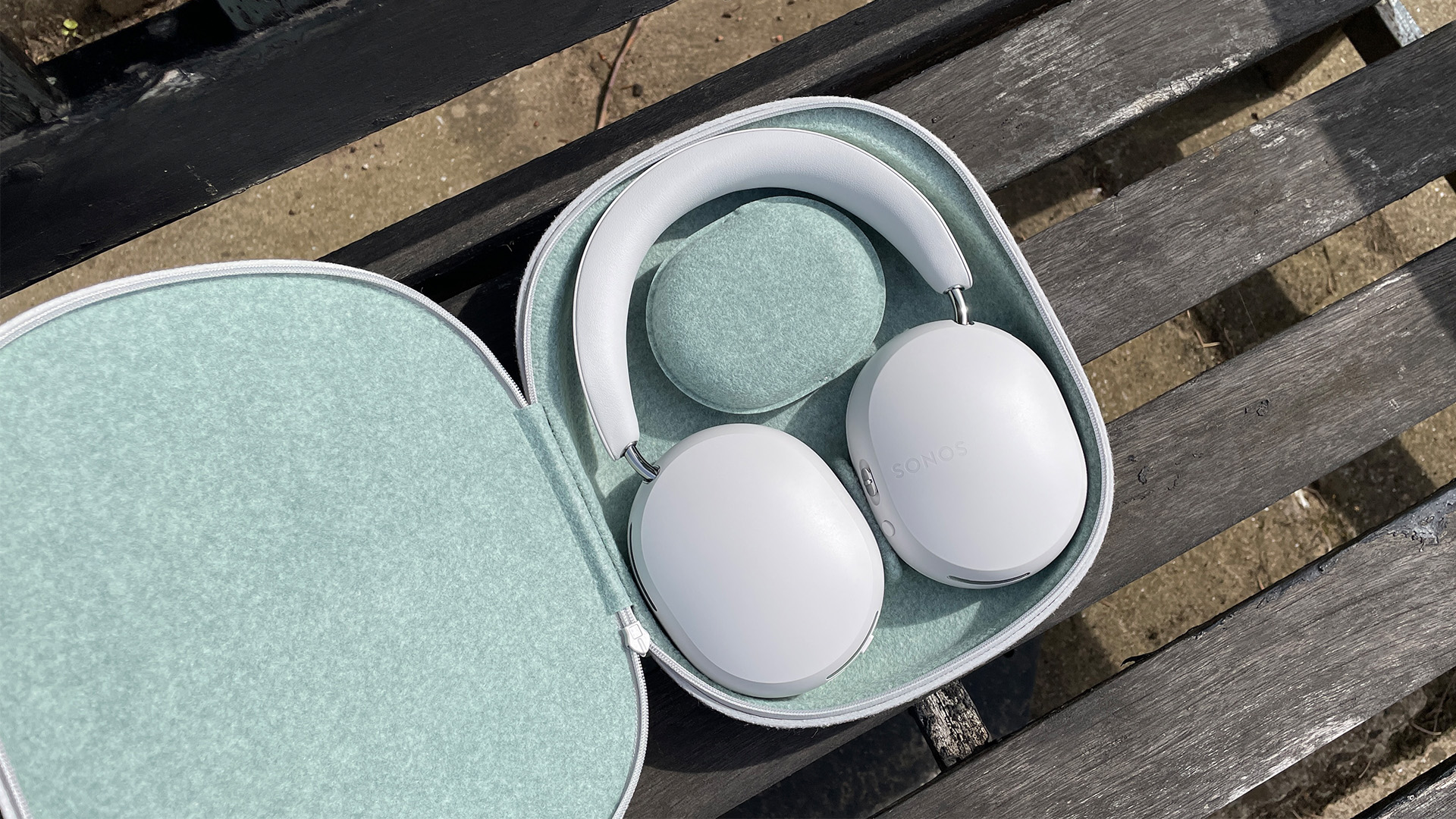
Sonos is offering two new finishes (sand and agave) to choose from, in addition to the standard black and white options you had with the original Ace.
The multi-function button/slider (also known as the 'control key') makes a return and is your main way of interacting with the headphones and controlling things such as volume, ANC, playback and switching between the headphones and your Sonos wireless speaker.
The big design news is that the Ace Ultra get a brand new Sonos-designed 40mm driver. Sonos hasn’t provided any information on the materials used or how it is improved over ots predecessor but this is obviously huge news as the sound quality on offer will largely be dicteated by how this performs.
Sonos Ace Ultra vs Sonos Ace - Features
(Image credit: Sonos)
While the exterior design and build quality of the Ace Ultra might look familiar, there have been significant changes under the hood.
The key change is the introduction of Sonos’s new “Headphone Engine 2" which is a next-gen wi-fi hardware and software system that lets you link the headphones directly to your existing Sonos system.
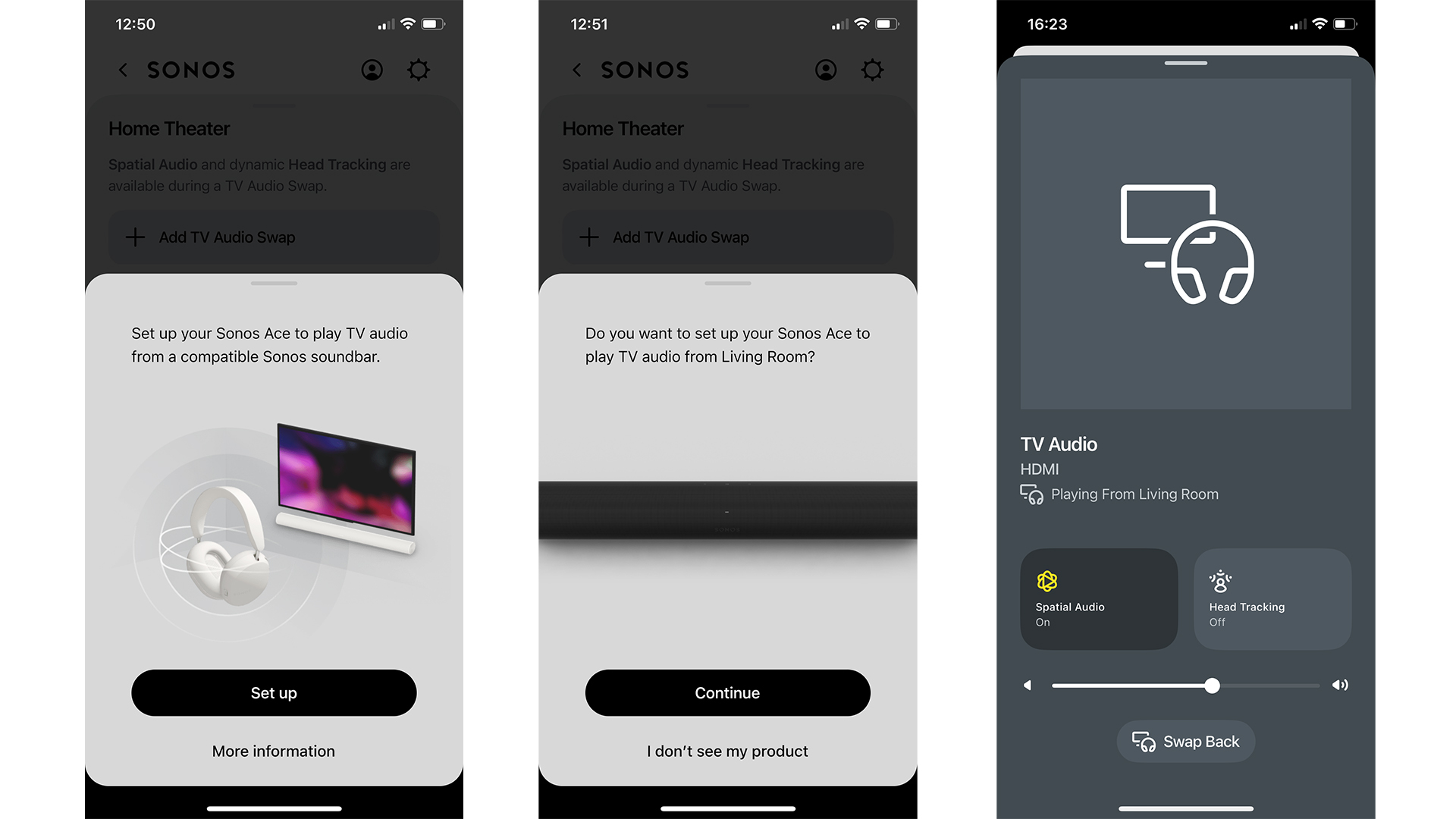
It’s a feature that was missing from the originals at launch and will be the first time you can connect the headphones to other compatible Sonos wireless speakers, as well as its current line of soundbars, including the recently announced Beam Ultra. It’s done at the press of a button on either the headphones or app.
Sonos is promising big things on the noise-cancelling front, claiming that the ANC for the Ace Ultra is twice as powerful as that on the Ace.
It’s an adaptive system which should be able to change intensity as you change your surroundings, while it can also take into account any gaps in the seal due to headphones, hair etc. An Aware mode allows for transparency so you can hear the environment around you.
Presumably this is partly down to the fact that the new model boasts ten mics compared to eight used on the Ace.
(Image credit: What Hi-Fi?)
This should also mean that calls are quieter and that background noise should be easier for the headphones to filter out. Their Sidetone feature should mean you’re able to hear yourself speak naturally while ANC is turned on.
Ace Ultra also get a boost in battery life, up from 30 hours in the old Ace to 35 hours in the new model with ANC activated. There’s a low power mode withing the Sonos app which claims to extend battery life by up to 30% but it isn’t clear whether this can work with ANC on or if you have to sacrifice some features to achieve it.
AptX Lossless is supported once again as the ability to listen over a wired USB-C connection although it’s a shame that sample rate support hasn’t increased from the 16-bit/48kHz of the original Ace.
Sonos Ace Ultra vs Sonos Ace - Sound quality
(Image credit: Sonos)
Although we’re going to have to wait until we get the Ace Ultra in our test rooms and use them out in public to see how they fare in the sound quality stakes, we are at least hoping for a much improved audio performance compared to the original.
In our Sonos Ace review we said the headphones delivered “a simplistic and safe sound – not one we would call exciting or enthralling”. We found them perfectly fine but at no stage did they come close to matching the class leading Bose and Sony rivals for entertainment, dynamics or detail.
The new model comes with a new custom-built driver in tow, which Sonos claims delivers “deep bass, clear detail, and balanced sound with no distortion”. The company has even called upon “award-winning audio engineers” to help tune the sound. Will Sonos be able to deliver? We have our fingers well and truly crossed.
Sonos Ace Ultra vs Sonos Ace - Initial verdict
With the Ace Ultra, Sonos has obviously gone to great lengths to try to produce a sequel that goes above and beyond what it served up with the Sonos Ace.
On paper, it certainly looks like most bases have been covered, and if they can deliver all the features and functionality that Sonos has promised in an intuitive, easy-to-use package, then that will go a long way to winning our test team over.
However, to really make a name for itself in the crowded wireless headphones market, not only will the Ultra Ace need to offer standout features that work, it will need to perform well across the board, whether we’re talking about ANC, call quality or sound quality.
We've been begging for precipitation for months, and at long last, it has rained in the UK! The ground is still as dry as a bit of reheated chicken, but we've finally seen evidence that this long, torturous summer might soon be giving way to a damp and soggy autumn.
Like the changeable weather, it's also been a strange and tumultuous time for music: the great Dolly Parton sadly passed away at the age of 80, and we got a new hip-hop album from one of the most left-field celebrities we can think of. We'll get to that below, as we share the songs that have been on our review team's playlist over the past few weeks.
There's even talk that The Rock is planning to release a country album, thus proving that nominative determinism doesn't always work in the way that you expect. You're called The Rock, Dwayne, not The Country. The clue is very much in the name.
A minute-long song is usually a novelty, a throwaway interlude, something to keep the label's wolf from the door. But despite being exactly that length, Ballerina, from YHWH Nailgun’s sophomore album Magazine, is far from thoughtless filler. It isn't even an exception within the album; Magazine’s longest song comes in at just 1:36.
Ballerina’s 60 seconds are populated by reverberant, growling synths, playful drums and the distinctive rasping of the band’s singer, Zack Borzone, who sounds something like Birthday Party-era Nick Cave with a chest infection. Periodically, the song descends into an erratic cacophony of record-scratching, before returning abruptly to its hypnotic, twisting groove.
The song'soverall arrangement (scratching breaks aside) is sparse and staccato, but the depth of its groaning, overdriven synths, alongside a skilful deployment of reverb, makes this an interesting listen when assessing a system’s stereo imaging and depth. If your system is working well, you might be surprised by how quickly Ballerina lures you into its uniquely graceful breed of chaos.
Words by Ioan Hazell
Eve of Destruction by Barry McGuire
I’ve been playing rather a lot of Mafia III recently, and while the game itself is somewhat hamstrung by its repetitive mission design, outdated mechanics and reboot-inducing glitches, it proudly boasts one of the best and most bulging licensed soundtracks this side of a Grand Theft Auto title.
Given that it’s set in the southern US in a fictional version of ‘60s New Orleans, Mafia III uses its in-game soundtrack to craft that hazy American mise-en-scène, with contemporary classics such as Aretha Franklin’s Respect and Creedence Clearwater Revival’s Fortunate Son reflecting the simmering political upheaval running beneath the central narrative.
Then there’s Barry McGuire’s Eve Of Destruction, an anti-war polemic that also incorporates themes of racial inequality, political polarisation, global instability and, my old favourite, the impending nuclear apocalypse.
The charm of Eve Of Destruction is in its raw, unfiltered nature. McGuire isn’t the most velvety crooner in town, favouring a hard, throaty delivery that only enhances his urgent fury as he pointedly warns the listener: “Don't you understand what I’m trying to say? If the button is pushed / There’s no running away / There’ll be no one to save with the world in a grave.”
I wish I could say things had changed, Barry old chum. A man after my own nihilistic heart.
Words by Harry McKerrell
Jolene by Dolly Parton
It's one of the most well-known stories in music: Dolly Parton wrote two of her biggest hits – I Will Always Love You and Jolene – in one day (or thereabouts) in 1973. What a woman. Whitney Houston's powerhouse vocals transformed the first song when she covered it in 1992, although I have a soft spot for Parton's more small-scale, fragile and intimate original.
And while Jolene has been covered many, many times in various genres, Parton's original remains a true country classic.
It's an addictive rhythm, with the guitar strums sounding distinctly tactile and propulsive. Parton's indelible voice holds steady and firm, full of confidence and defiance, even as she begs the titular Jolene to not steal her husband away. True story or not, it's a song that has spanned decades and genres, and shows just how far-reaching Parton's cultural influence is. Jolene is a cracking tune, full of fluid dynamics and a catchy chorus, and with a vocal performance that should keep your attention rapt to the story, no matter how you listen to it.
It's hard to put into words just how much of a shining light Dolly Parton was, not just as a musician, but as an actress, a philanthropist, a savvy businesswoman – coming across both sharp-witted and kind, and imbuing everything she did with a genuine joy. She will be hugely missed, but never forgotten. Not with songs like Jolene, 9 To 5, Here You Come Again out in the ether, that's for sure.
Words by Kashfia Kabir
Present Tense by Pearl Jam
During my formative weeks as a What Hi-Fi? journo, I was shipped off to one of my first press events at a London listening room. One of the hitherto unfamiliar assortment of sound engineers and PRs asked me the standard question about the sort of music I was into, and while I was enthusing about the ‘90s Seattle grunge scene, I mentioned my affection for a nice slice of Pearl Jam.
To my surprise, one of the attendees revealed that they used a Pearl Jam track for testing all the time, although it wasn’t one of the big-hitting anthems, such as Black, Jeremy, Alive, with which I was familiar. Instead, he suggested I check out Present Tense from the lesser-known No Code album, and nearly four years down the line, I still dig it out on the regular whenever testing duties call.
He really was on to something. Instead of sludgy riffs and meaty hooks, Present Tense trades on gentle, almost hesitant guitars which tease and twinkle within a decidedly uncluttered soundscape. This is where a fine pair of wired headphones, say, would have a chance to prove their talents in providing that airy, spacious soundscape in which each twang and strum can rise and decay without bleeding or distortion.
That’s before we even get to lead vocalist Eddie Vedder, a man whose raspy vocals are imprinted onto my brain like initials scrawled into wet cement.
Present Tense is distinct from many of Pearl Jam’s established catalogue because, astonishingly, you can actually make out most of Vedder's lyrics. Listen to Yellow Ledbetter, by contrast, and not even the greatest hi-fi system will give you a hope of understanding what on Earth he’s actually singing.
Words by Harry McKerrell
Mad Technology by Czarface Meets Frankie Pulitzer
I’m so confused, I don’t know where I am or what day it is.
Surprise number one: Tom Hardy has officially dropped a hip-hop album. Yes, that Tom Hardy. You know, the burly acting chap who played Bane, Charles Bronson and Eddie Brock in Venom. He’s done a hip-hop album, and it’s on Spotify and Tidal and everything.
Surprise number two: he’s brought backup. Performing under the pseudonym Frankie Pulitzer, Hardy has teamed up with hip-hop supergroup Czarface, which itself counts Inspectah Deck – formerly of Wu-Tang Clan – among its key members.
Surprise number three: it’s genuinely, almost unfathomably, pretty darn good. Forget mumble rap churned out over the same off-sync processed beats – this is full-blooded, heavy-hitting hip-hop straight out of the 1990s, with Mad Technology going hard and heavy with its big beats, staccato piano riff and ruthlessly aggressive flows.
Hardy’s turn comes right at the end, and rather than sticking out like – well, an actor in a rap collective – he fits in pretty well. Considering that’s about as likely as Sir Patrick Stewart slotting perfectly into Arsenal’s current back four, our Tom deserves a rather hearty pat on the back.
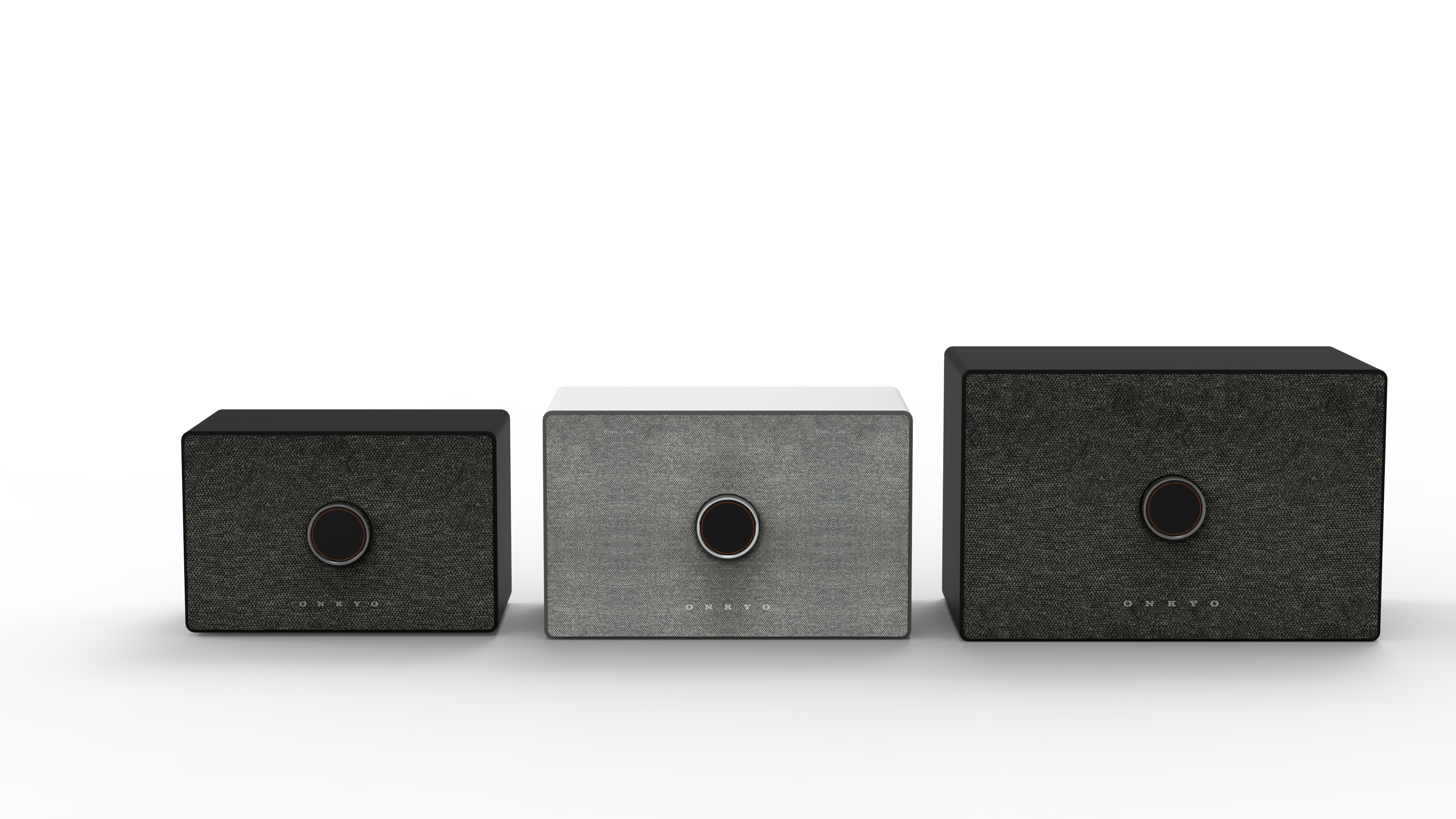
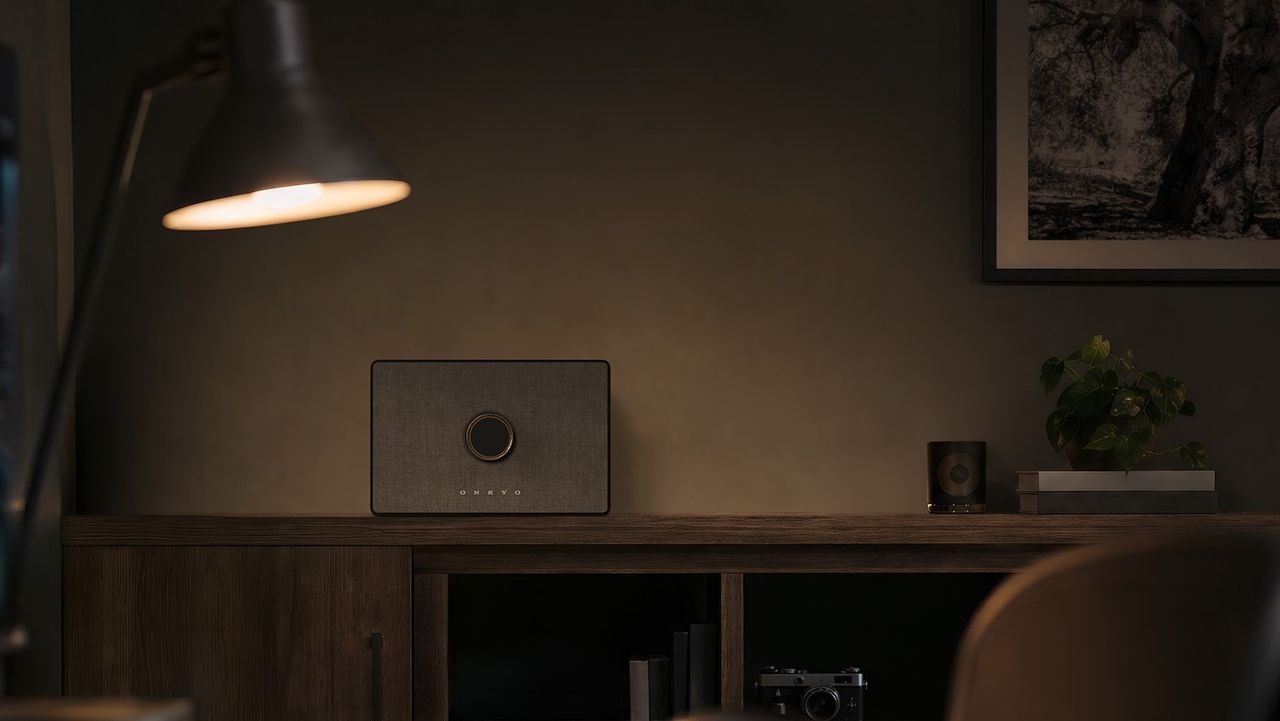
Onkyo has announced a trio of new wireless speakers: the GX-AiO 50, the GX-AiO 100, and the GX-AiO 150.
An expansion of Onyko's desktop-friendly 'Creator' range, the three one-box speakers are designed to bring extensive connectivity and versatility to three varying sizes and form factors.
The GX-AiO 50 is the smallest in the range, the GX-AiO 100 sits in the middle, while the GX-AiO 150 is the largest, most premium option.
All three boast a 2.1-channel acoustic architecture which combines dual main drivers with a built-in, independently amplified subwoofer. All three use Class D amplification and Onkyo's own digital signal processing to minimise noise and distortion, resulting in "clear detail" and "deep, dynamic bass".
Physical connections include HDMI ARC alongside a USB-C and optical input, plus a switchable phono input if you want to hook up a turntable. For wireless listening, Bluetooth 5.3 is also available.
Three listening modes are accessible across the range. Eco Mode provides more precise low-volume control for nighttime listening and smaller spaces, whereas Standard Mode is designed for everyday listening. Max Mode, meanwhile, puts each system at its highest output for when you want to get the party started.
Plus, if you want to go even louder, you can connect any GX-AiO system into a stereo pair.
(Image credit: Onkyo)
While they come in different sizes and clock in at different price points, all three systems follow a similar design language whereby a central control dial is flanked by two main drive units.
Integrated LED lighting around the control dial and the subwoofer slits has also been added "to create a warm ambient glow without overwhelming the room".
According to Vinny Bonacorsi, Onkyo's Chief Operating Officer: "The new Creator AiO series delivers what today’s younger music lovers want: compact size, simplicity, connectivity and affordability, paired with timeless industrial design. This series represents another bold step forward in Onkyo’s evolution, bringing our passion for music to a new generation.”
The Onkyo Creator GX-AiO series will be available this autumn in a choice of black or white finishes. Prices are as follows:
While it may have forged much of its reputation on its budget hi-fi separates, including the outstanding A8 integrated amplifier, Rotel's premium Michi product series has produced some real gems. From the Michi X3 amplifier to the Michi Q5 CD player, Rotel knows how to operate in the higher echelons of the hi-fi market.
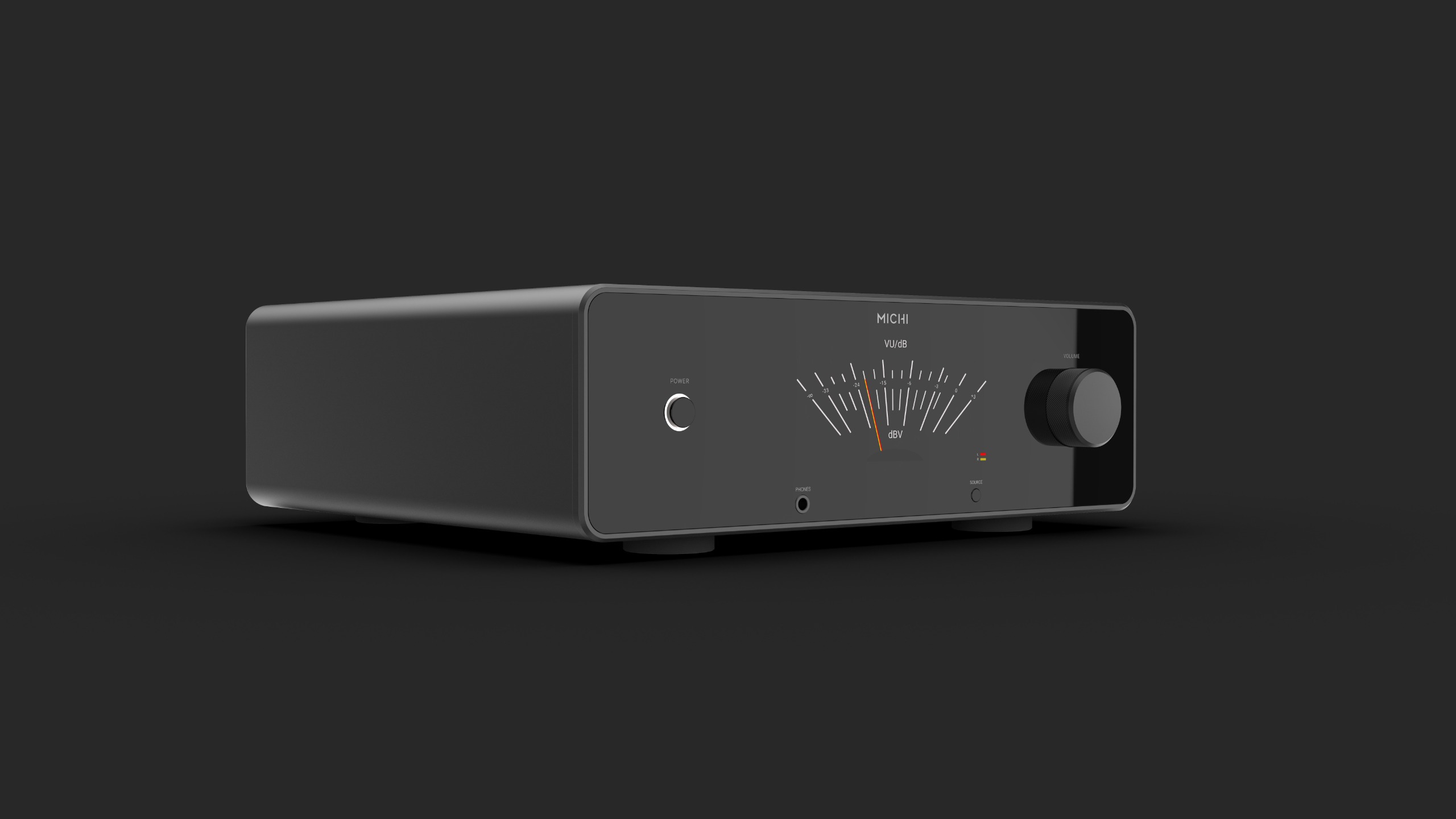
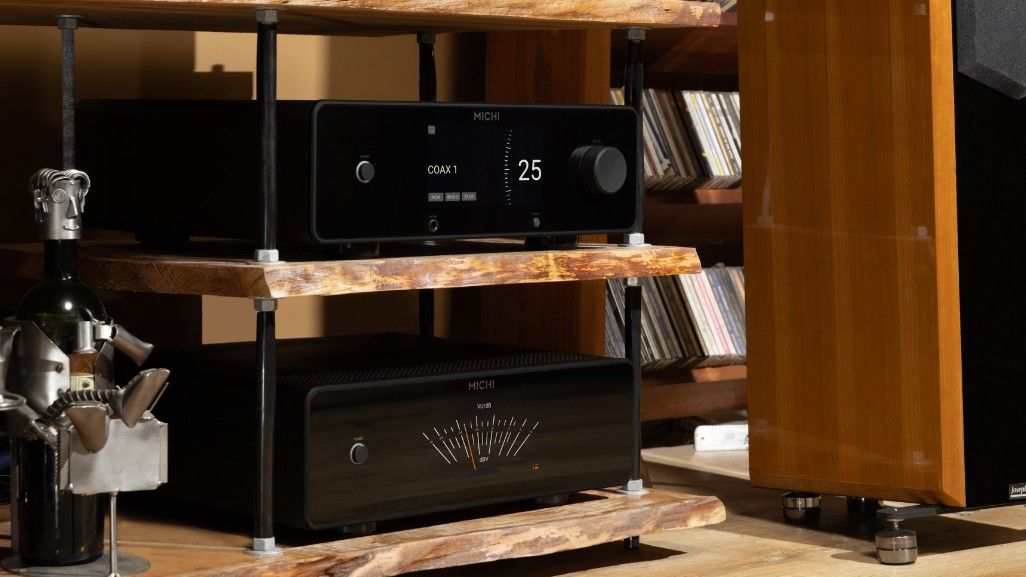
Now, the Japanese brand is adding to its more premium collection of separates with two new additions to the Michi lineup: the Michi Prestige P430 preamplifier and the Michi Prestige S430 stereo amplifier.
According to Rotel, the S430 stereo amp is aimed at listeners who want to step up to a fully fledged separates system, delivering 230 watts per channel into 8 ohms.
The new amplifier uses an advanced architecture which combines an oversized in-house-manufactured toroidal transformer, large bulk-storage capacitors, isolated signal routing and multi-stage push-pull output transistors, all of which combine for "firm bass control" and outstanding "dynamic impact".
In terms of connections, the Michi Prestige S430 houses balanced XLR and RCA inputs alongside dual 5-way speaker binding posts. Externally, the S430 features an aluminium chassis and a front-panel display with selectable metre displays and a backlit power toggle.
Rotel Michi Prestige P430 (Image credit: Rotel )
Also arriving is the Michi Prestige P430 preamplifier, designed to bridge the gap between traditional and modern sources for listeners who want ample connectivity options alongside the performance of a separates set-up.
Central to the new preamplifier is an ESS SABRE ES9028PRO 8-channel DAC which, says Rotel, renders recordings "with pristine clarity, natural detail, and an open, precisely focused soundstage". The P430 is capable of supporting PCM files up to 32-bit/384kHz, as well as DSD256.
Further, the new preamplifier has been built to preserve signal integrity via its transparent signal paths and refined power-supply architecture, resulting in a sound which balances "exceptional control and musical insight".
The P430 boasts balanced XLR and RCA inputs and outputs, coaxial and optical inputs, and HDMI ARC for connecting to a home cinema set-up and a moving magnet phono stage for partnering with a turntable.
Further connections include dual subwoofer outputs, a 6.35mm headphone port, and wireless Bluetooth connectivity with aptX HD codec support for streaming files up to 24-bit/48kHz.
The Michi Prestige S430 stereo amplifier and Michi Prestige P430 preamplifier are available this September. The S430 will set you back £3599 / $3999 / €3999, while the P430 is priced at £3599 / $3999 / €3999.
Four weeks on, the answers have come flooding in (many breaking our PG-13 language rule). But, to our surprise, unlike our team of testers, you are not only united in your belief we are not living in a golden age, you also (generally) agree on the reason why.
It’s all about physical media
(Image credit: Future)
The importance of physical media was a central point in all your arguments, which shouldn’t be a surprise given how vocal you (and we) are about the benefits of 4K Blu-ray over streaming.
This was initially expressed by reader “mrj6j”, who argued that, despite having a “proper” set-up that he’s spent years, even decades, honing, the age of streaming is a blemish he can’t ignore, which makes it impossible to call the current world a golden age.
“I have been into home cinema for a long time and agree we are at a point where it is more affordable, but mine has grown into a 4k projector in a dedicated room with a 7.2.4 Atmos set-up. And a 136-inch screen in total darkness. But this has taken a long time to grow into what it is today. But it is exceptional; it often sounds better than the cinema (I had it professionally calibrated), and I can enjoy it whenever,” wrote mrj6j.
“The problem is that the 4k discs are the best format, better than streaming without doubt. But do those with a home cinema set-up utilise this? They should, and more distributors should too.”
Reader Michael Peterson agreed, adding that even if you have a more modest set-up, as he does, the increased price and limited selection of 4K Blu-ray discs and players is an issue that stops the 2020s being a golden age for home cinema.
“I have an entry-level Samsung, my Sony receiver, Elac sub1010 and 8-inch speakers in a 2.1 set-up. I use my Xbox One S for Blu-ray and streaming. Good enough [for] me. 4K Blu-ray would be better if the prices of discs and players were more affordable and discs were more reliable,” he wrote.
But it wasn’t just about 4K Blu-ray; some readers, including Andrew Wood, argued: “Culturally [the golden age was], when you shuffled into town, to a shop, to hire or buy a video/DVD and then watched it on your wide-screen CRT TV with built-in 5.1.”
Our hot take
(Image credit: Future)
We agree; there is something undeniably special about physical media. At a technical level, we have long championed 4K Blu-ray. It offers a much higher bitrate, superior HDR and far less data compression than streaming, giving you a sharper, more detailed image in most instances. That’s why we use an ever-evolving library of 4K Blu-ray test discs when reviewing home cinema hardware. We even have a monthly Now Showing column where we detail the new movies we're using.
While none of us would go so far as to want to return to tapes and CRT TVs – read this feature chronicling our editor’s attempts to resurrect his VHS collection last year, and you’ll see why – we also agree there’s something emotionally special about physical media. Having it on a disc you own gives you a more personal, emotional attachment to the film, as rather than just clicking on something an algorithm’s decided you will like, you’ve chosen that film, specifically, at some point.
As Andrew Wood points out, there was also something truly magical about the Blockbuster years, when we had to physically go outside to rent a new movie. Many of the team are old enough to remember the experience, and have fond memories of the family trips (and arguments) we had going out to pick a new film to watch after the final school bell rang on Friday. That makes it hard not to agree that there is some substance to his argument that, "culturally", that was a golden age for film fans – even if the hardware was worse and it wasn’t as easy to find new films to watch.
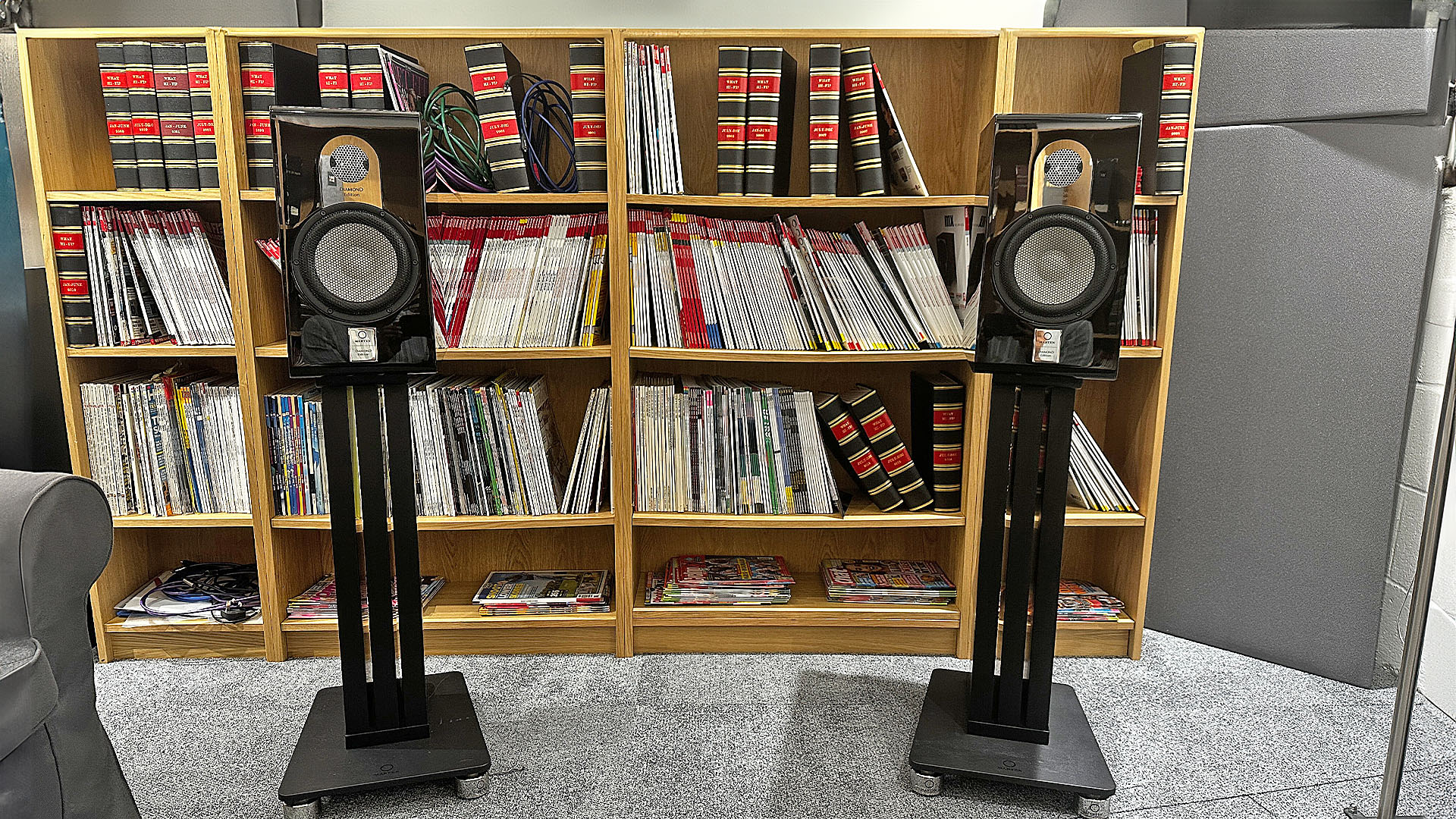
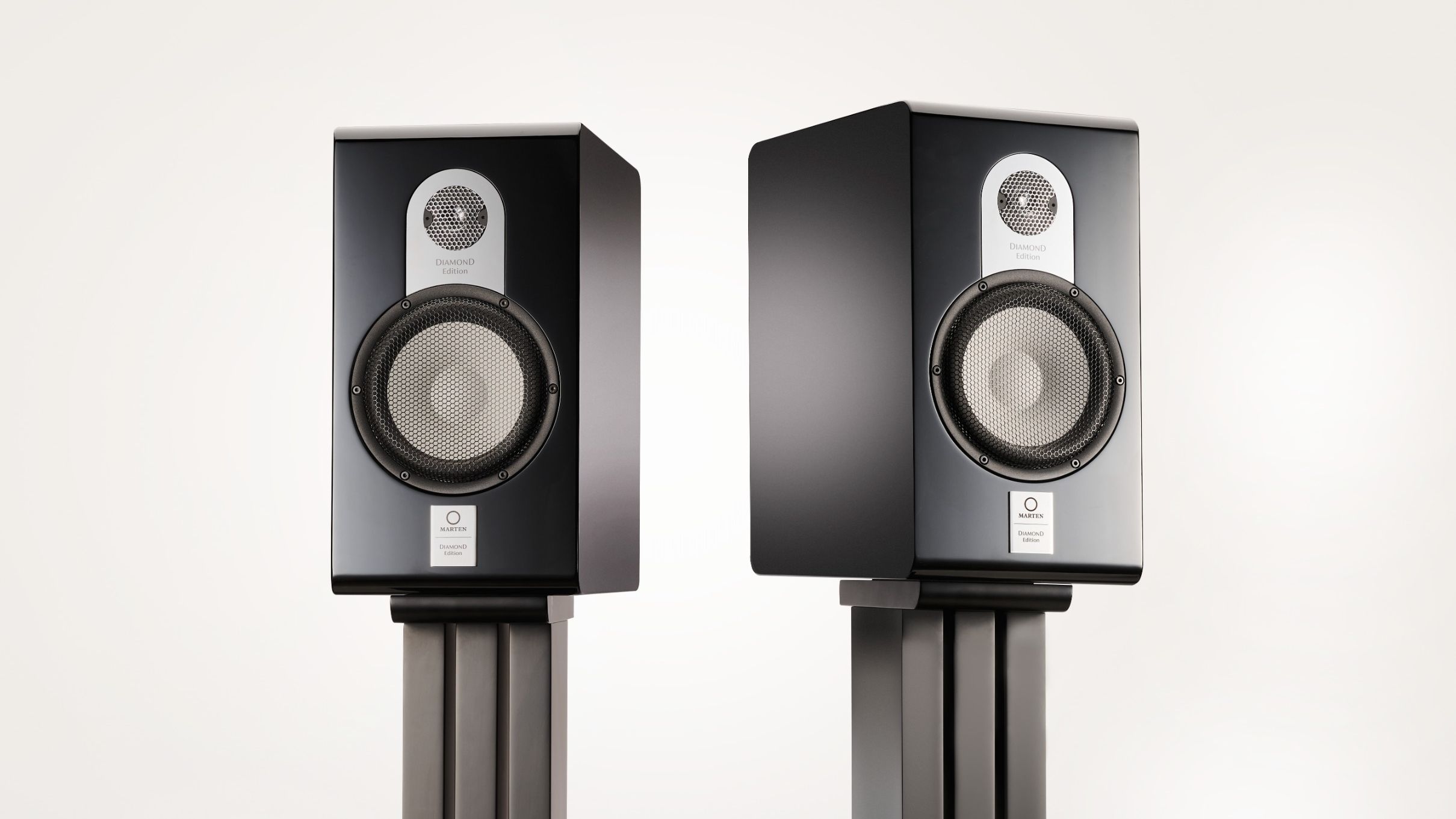
Some people will never be able to get past the cost of these Marten speakers, and we can understand why. Standing just 42cm tall, the two-way Parker Duo Diamond Edition look under-equipped to survive in a high-end sector dominated by sonically talented and intimidatingly muscular floorstanders.
Given the significantly larger internal volumes and formidable driver arrays featured on those towering rivals, the Parker Duo Diamond Edition’s chances don’t look good. In the event, it turns out that these modestly-proportioned Swedish boxes can look after themselves.
Any company that names its product ranges after Jazz greats shows, at the very least, a good amount of musical appreciation. Marten invokes the likes of Coltrane, Mingus and Oscar, among others, and uses the Parker name for its step-up series.
It may be shocking for some to discover that the Parker Duo on test here is merely one of the early steps on the Marten ladder. Unusually, it is available in two forms: the standard version of the Duo (£11,995 / $19,000 / AU$18,500) and the Diamond Edition on test here.
Design & build
(Image credit: What Hi-Fi?)
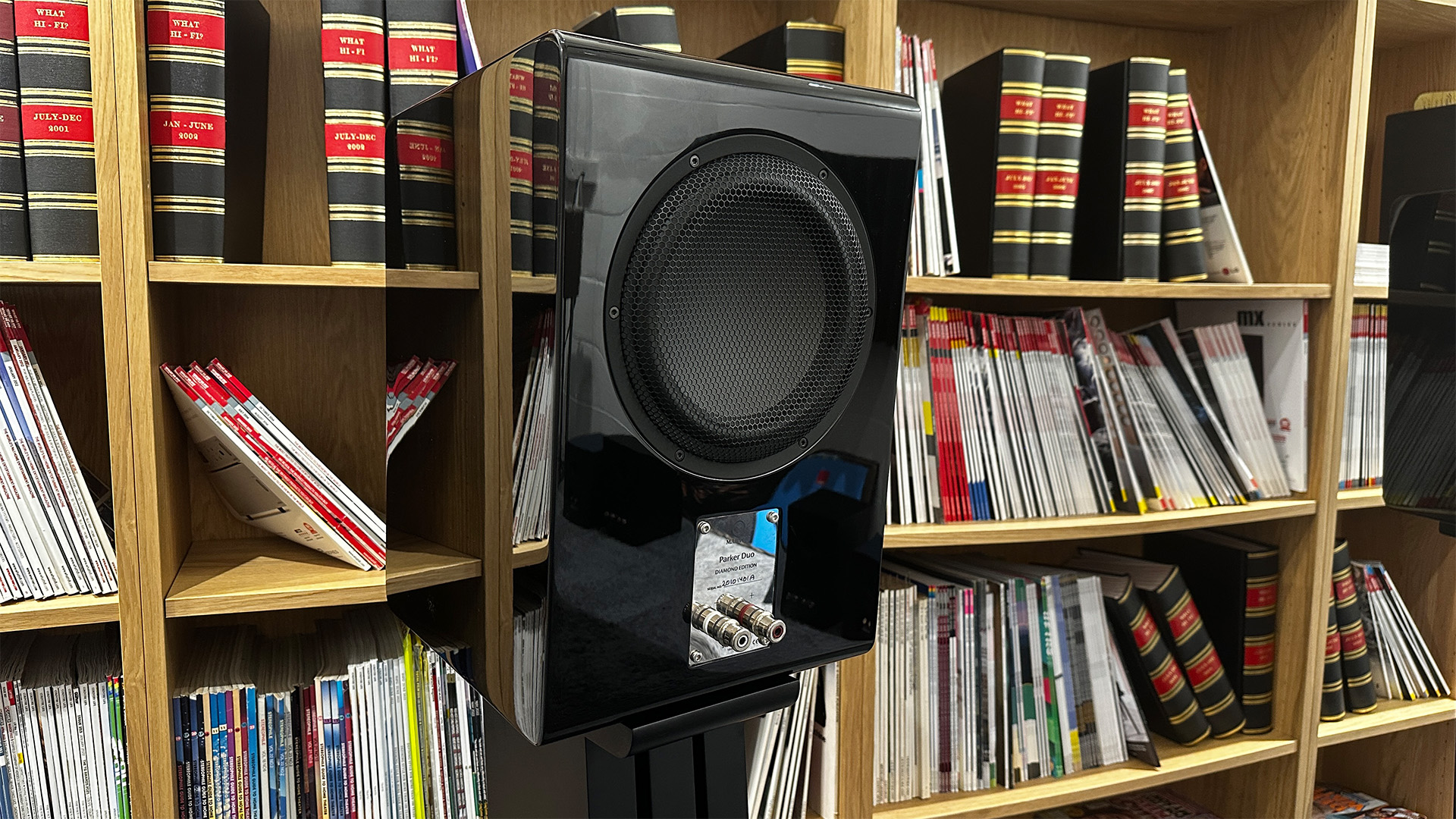
The standard Parker Duo uses ceramic diaphragms in both its 25mm tweeter and 19cm mid/bass unit. Its crossover point is set at a fairly typical 2200Hz, and the network design is a mixture of first and second-order filters. A rear-firing 23cm aluminium passive radiator is used to tune the bass.
Finishes x 4 (matte walnut, piano black, piano white, piano walnut)
Sensitivity is claimed to be 88dB/W/m and nominal impedance is rated at 6 ohms. Note, the minimum impedance is just 3.1 ohms, which suggests these speakers will perform best with a muscular amplifier.
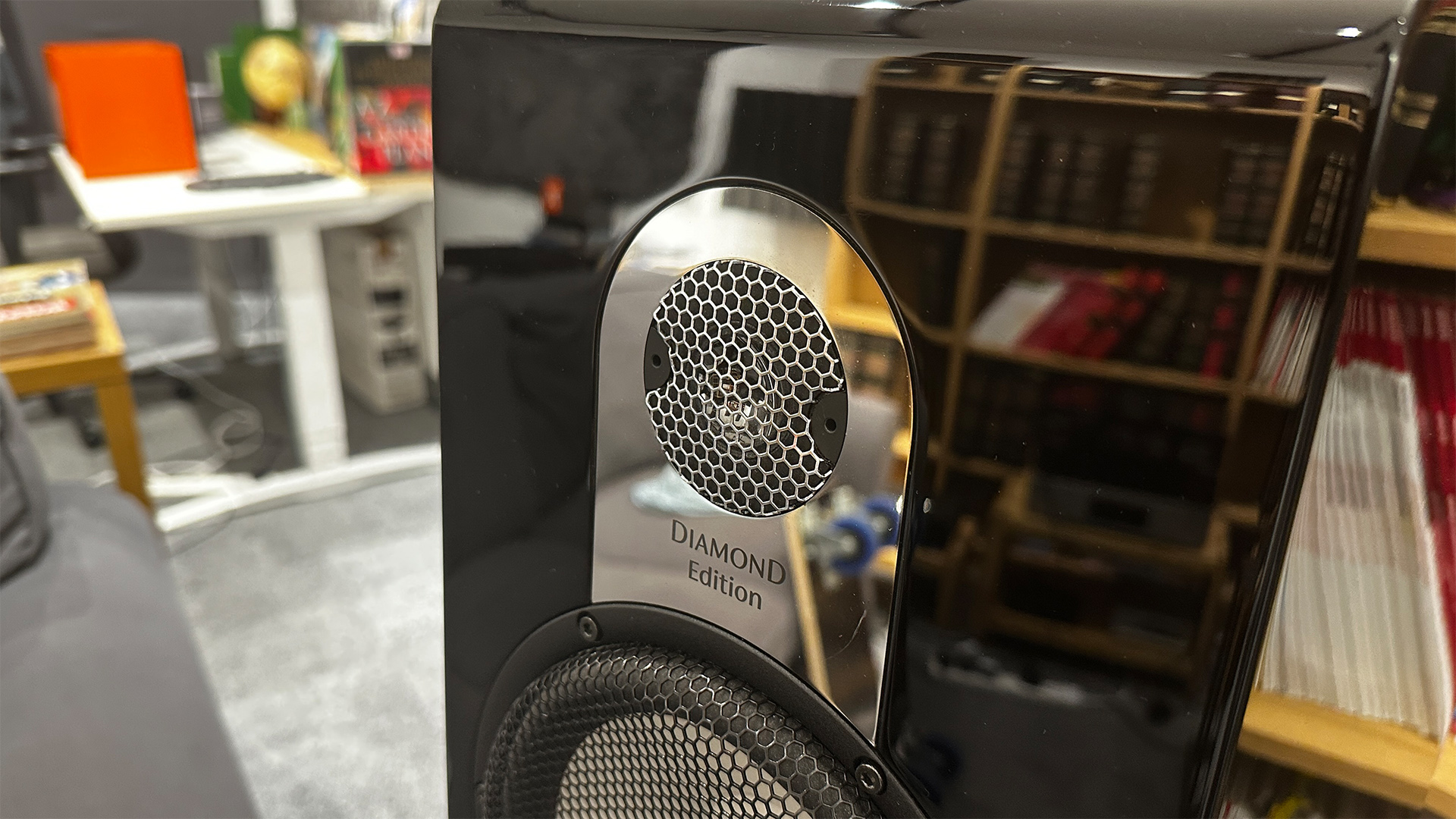
The Diamond Edition adds more spice to the formula by swapping the standard model’s ceramic tweeter for a diamond dome, and upgrading the crossover’s polypropylene capacitors for more exotic copper-foil types. The internal wiring is upgraded too. Everything else, including the electrical specifications, remains the same.
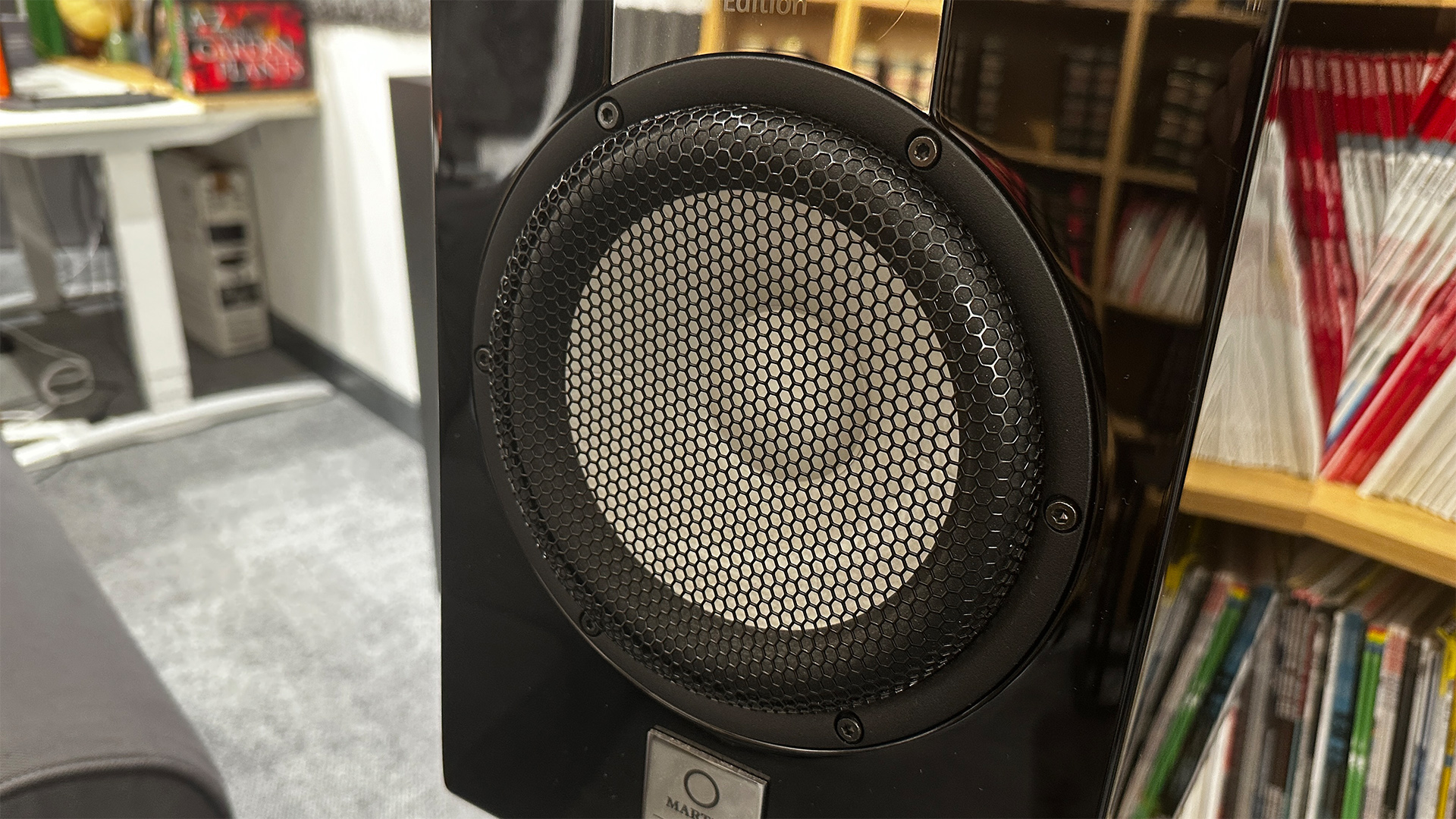
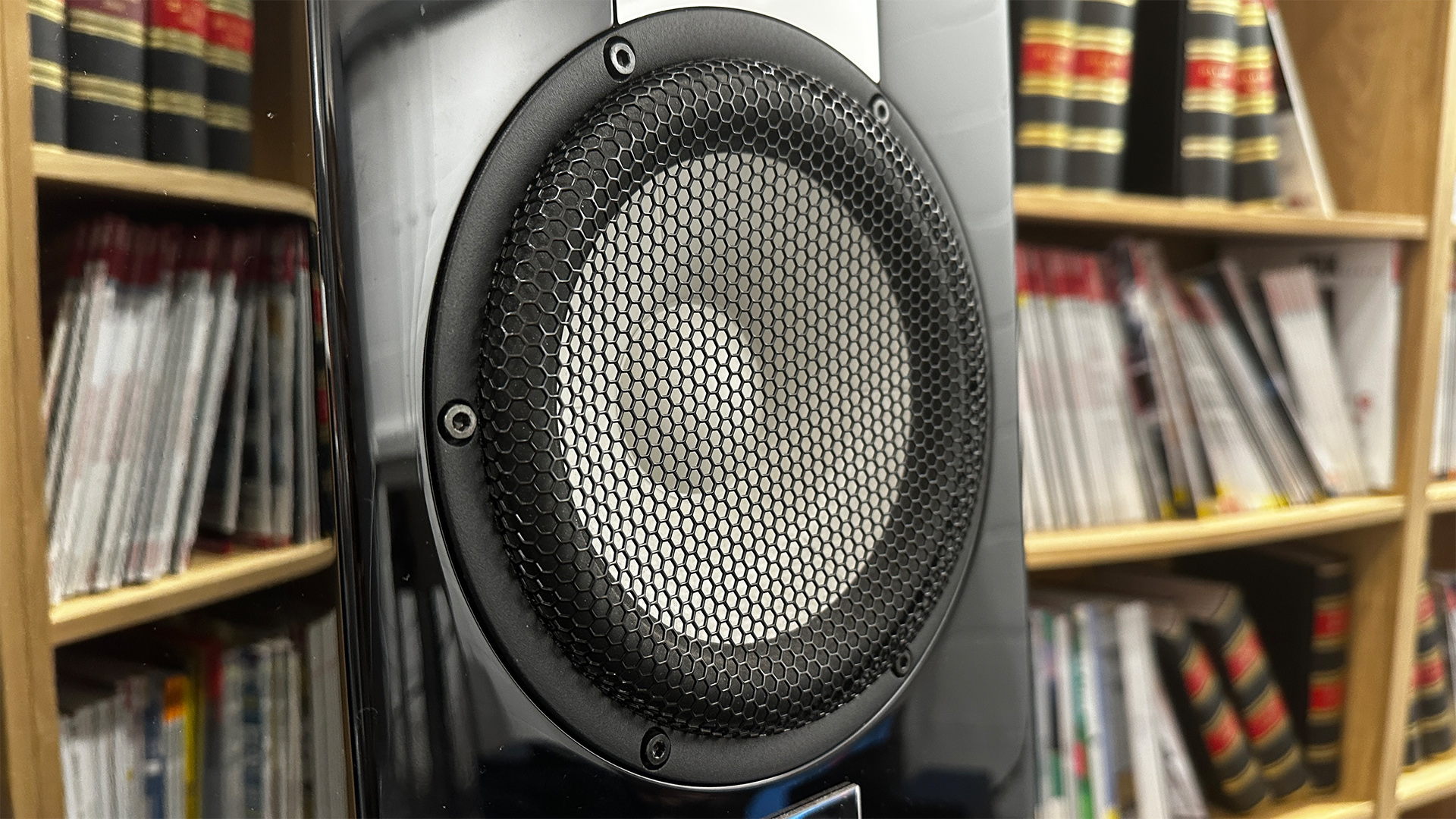
See the Diamond Edition in real life, and it gets off to a good start. Build quality is as immaculate as the price demands. The gloss black finish of our review samples is wonderfully deep and mirror-like.
Not all our team like the unusual styling of this product, or the fixed metal grilles over the drive units, but we have no complaints about fit and finish.
The Parker Duo’s front panel is 6cm narrower than the rear, which looks a bit odd at first. This unusual shape reduces the build up of internal standing waves, while the use of 35mm-thick M-Board (a proprietary laminated material) for the enclosure’s panels is claimed to produce a more rigid and inert structure than more conventional alternatives.
(Image credit: What Hi-Fi?)
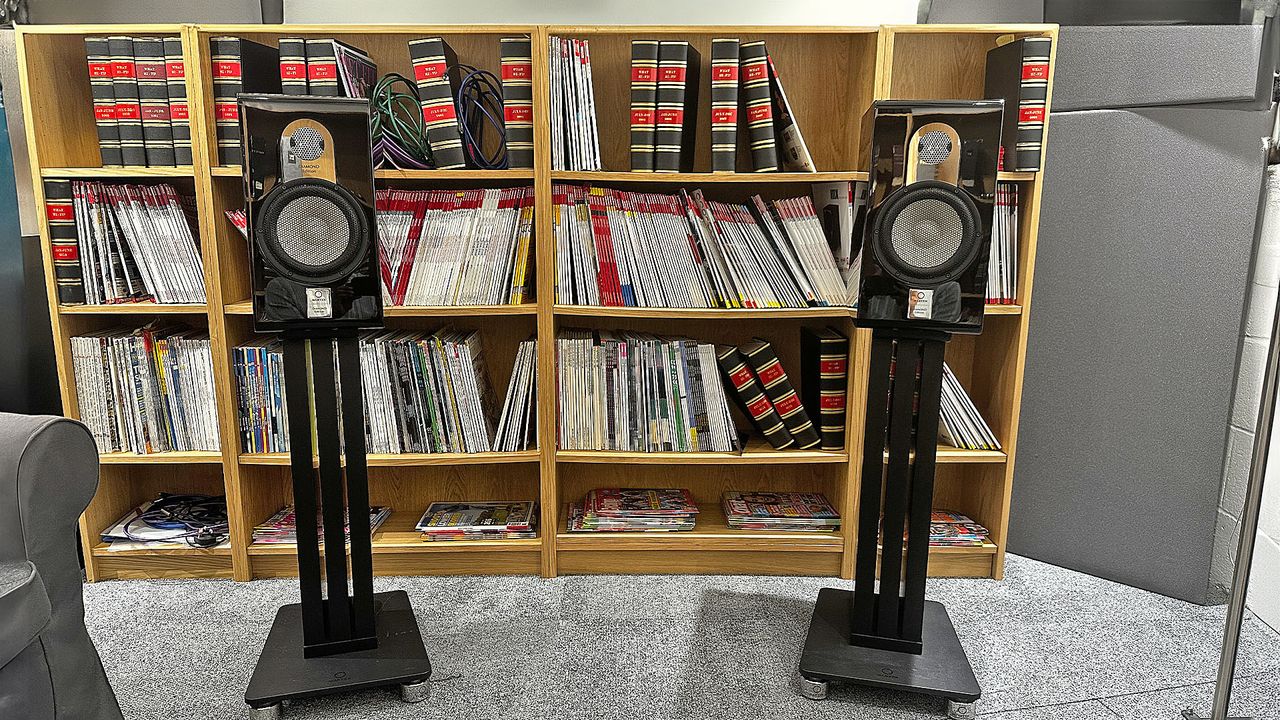
The performance of any standmounter is massively dependent on the quality of its support. Marten makes dedicated stands for the Duo, and they are impressively weighty and rigid. Their construction is based around three rigid pillars and a thick steel base, fitted with four isolator feet co-developed with IsoAcoustic. These stands cost a chunky £3295 / $5000 / AU$5750 per pair, but are good enough for us to consider them an essential part of the deal.
Any product at this level positively demands a top-class system. Our reference set-up consists of Naim’s ND555 / 555 PS DR music streamer and the Technics SL-1000R/Kiseki Purpleheart record player feeding a Burmester 088/911 MkIII pre/power amplifier combination.
The cables are a mix of premium offerings from Chord Company and Vertere Acoustics. For benchmarking purposes, we have the ATC SCM50 and the PMC MB2 SE speakers.
These Marten speakers perform best when given plenty of space to breathe. In our 3 x 7 x 5m test room, they sound most at home with the front panel around 90cm from the back wall and angled in slightly towards the listening position so that the tweeter axis crosses a little behind our heads.
Given such a placement, these speakers produce a lovely, consistent tonal balance combined with the kind of three-dimensional stereo imaging that almost feels physical.
Sound
(Image credit: What Hi-Fi?)
That huge price tag may lead many to expect sonic fireworks every time these speakers play music. That’s not how it works.
The Parker Duo Diamond Edition does exactly what every truly great speaker should, and that’s reproduce the source material with the minimum of alteration. So, if you have a poor compressed recording, or less than capable electronics in your system, these standmounts will merely reflect that, imperfections and all.
Unusually for such revealing and analytical performers, these Marten speakers won’t go out of their way to highlight those flaws. You can hear the shortcomings easily, of course, but they remain in proportion, and the good parts of the recording will still shine.
However, feed these speakers a diet of great recordings – classics such as Miles Davis' Kind Of Blue or Take Five by the Dave Brubeck Quartet, for example – and they will turn in a performance full of subtlety, dynamics and cohesion that’s almost eerily convincing.
That the Marten Parker Duo Diamond Edition are capable of a high level of resolution should not be a surprise. Such qualities should be a given at this level. However, what sets them apart from most rivals is the degree to which they step beyond the mechanics of hi-fi – you know, a cone moving backs and forward, crossover components and enclosure resonances – to put the music front and centre.
These speakers sound impressively natural regardless of whether we are talking about rendering instrumental textures in classic jazz recordings or the nuances of Billie Eilish and Khalid’s vocals on the wonderful song, Lovely.
(Image credit: What Hi-Fi?)
When we play Tchaikovsky’s Marché Slave Op.31, these Marten standmounts stay controlled even when pushed hard to high levels. Just as pleasingly, they refuse to harden up and compress to any significant degree under such circumstances.
There are certain boxes that need to be ticked for a speaker to succeed at this level. Tonality has to be spot on, and it is. These standmounts sound neutral while still displaying natural warmth and richness; this is a rare combination that few rivals manage.
Next, dynamic expression should be top class. That’s another tick here, whether we are talking about the wide-ranging sweeps of Tchaikovsky’s symphony or the finesse needed to get the most from the Billie Eilish/Khalid track, the Duo Diamond Edition manages it.
Then we come to rhythmic drive, a quality many hi-fi products struggle with. A quick spin of Michael Jackson’s Who Is It? reveals that these Marten speakers excel in this area too, communicating the song’s momentum and energy beautifully.
We haven’t even got to the icing on the cake yet. These relatively small speakers do bass, proper deep bass, way beyond that we would expect for this size of standmounter. As we listen to the Jackson track we are floored by the power and authority of the lows. The Parker Duo Diamond Edition hit hard and true, delivering the lows with enviable articulation and precision.
Compared to the cheaper but appreciably larger ATC SCM50 speakers, the Martens deliver richer, punchier bass with broadly comparable extension. The company claims low-frequency extension down to an impressive 36Hz ±2 dB. That sounds believable.
Verdict
(Image credit: What Hi-Fi?)
The real shame of a product like this is that very few people will actually be able to hear and enjoy it, given its price and restricted exposure.
However, if you are one of the lucky few with the budget and system to do a speaker like this justice, we recommend a serious audition; the Marten Parker Duo Diamond Edition is a true endgame speaker.
And, I have to say, I think it broadly looks excellent, delivering pretty much everything that Beam owners like me have been asking for.
But ‘pretty much everything’ and ‘everything’ aren’t the same thing, and we always want more.
So, here are the five features of the Beam Ultra about which I’m most excited, and the three elements that I find slightly disappointing.
Good: up-firing drivers
(Image credit: Sonos)
This is the big one: the thing Sonos Beam owners have been clamouring for since the launch of the original model back in 2018 – dedicated up-firing drivers.
In fairness, the Beam Gen 2 does an excellent job of creating a Dolby Atmos effect with its front-firing drivers and clever virtualisation tech, but the Beam Ultra should be significantly better in this regard. I find that very exciting indeed.
Good: more drivers in general
The Beam Ultra actually features nine drivers, which is four more than the existing Beam Gen 2.
As well as the two up-firers, the new soundbar features a forward-firing driver, two side-firing drivers, and four woofers, arranged into what Sonos says is a 7.1.2-channel configuration.
This should bring improvements to spaciousness and directness as well as Dolby Atmos delivery – assuming Sonos has nailed the tuning, that is.
Good: compact dimensions
(Image credit: Sonos)
It might feature four more drivers than the Beam Gen 2, but the Beam Ultra is still impressively compact, measuring 6.5 x 75 x 10.5cm.
In other words, it’s only 10cm wider than the diminutive Beam Gen 2, which means it will still fit neatly below or in front of most TVs – even smaller models – and it won't visually dominate a typical living room.
Good: upgradability
(Image credit: Sonos)
As with Sonos’s previous soundbars, the Beam Ultra can be upgraded through the addition of a subwoofer and/or wireless surrounds, and the new model’s launch is coinciding neatly with a new feature called ‘Portable Surround’.
This, as the name suggests, will allow you to use two portable speakers – the Play and Move 2 are compatible – as surrounds with one of Sonos’s soundbars.
Why does that matter? If you use a pair of non-portable speakers (Era 300s or Era 100s, for example) as surrounds, that's likely all they’ll ever be. Use portable speakers, though, and they can be picked up and used as music speakers anywhere in or out of the house. That’s much better value for money.
Good: new app
(Image credit: Sonos)
The launch of the Beam Ultra is also coinciding neatly with the launch of the new Sonos app, called Sonos 27.
Sonos is promising fancy features such as integration with any and all AI chatbots, so you can control your system via ChatGPT if you like, but, frankly, I’m just excited for the promised usability overhaul.
I still find the current Sonos app a real pig to operate, so I can’t wait to see how Sonos has (hopefully) improved things.
Disappointing: no HDMI passthrough
(Image credit: Sonos)
Look, I wasn’t expecting Sonos to add HDMI passthrough – I don’t think this is a feature that Sonos will ever support – but that doesn’t mean I’m not disappointed that it’s not been added.
I own a TV with just two HDMI 2.1 inputs, and one of those doubles as the eARC port. Once that’s taken up by a soundbar, I have just the one left. Seeing as I have both a PS5 and an Xbox Series X, that’s a bit of a pain in the bum, and it wouldn’t be if the soundbar just had a dedicated HDMI input and 4K/120Hz passthrough.
For Sonos, though, simplicity is key, so I think the single HDMI socket is here to stay.
Disappointing: no DTS:X
Again, this isn’t something I was expecting, and I don’t actually think a lack of DTS:X in the context of a mid-range soundbar is actually that big a deal, but it would still be better to have than not, especially as there are rivals that offer both Dolby Atmos and DTS:X.
Whether the Beam Ultra is good value will ultimately depend on how it sounds, but at £699 / $699 / AU$1099, it certainly looks expensive on paper.
There are rivals from the likes of JBL and Harman Kardon that offer up-firing drivers and similar driver configurations for around the same money as the Beam Gen 2. If the Beam Ultra had simply replaced the Beam Gen 2 at its £449 / $449 / AU$649 price, it would be exceptionally tempting.
At £699 / $699 / AU$1099, though, Sonos is asking us to pay a significant premium, and the new soundbar is going to have to deliver some seriously impressive performance to justify it.
In fairness, this is nothing new for Sonos, which typically prioritises performance over specs – let's see if it's got the formula right again when we get the Beam Ultra in for review.
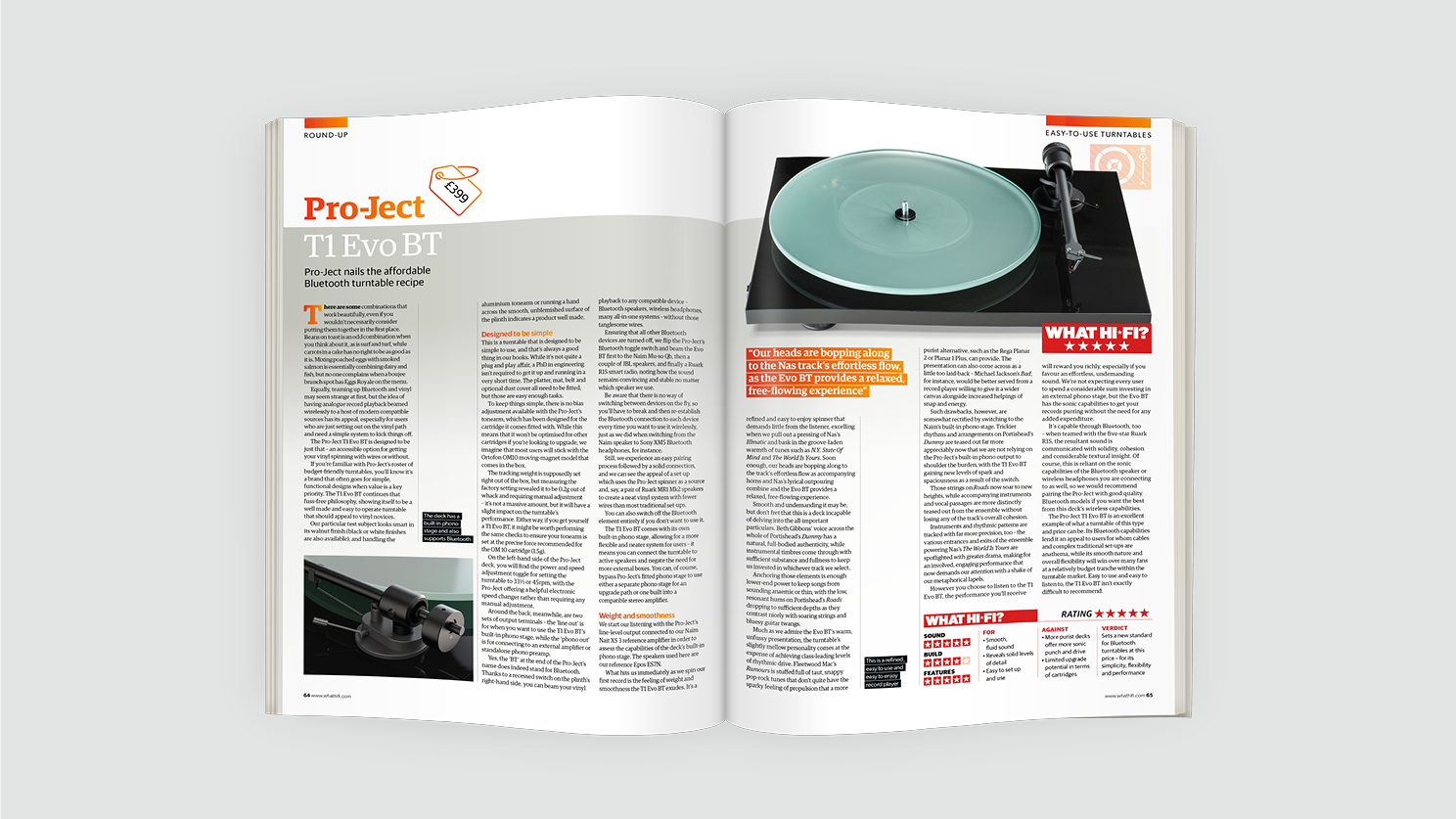
The remarkable resurrectionof vinyl over the past decade or so shows no sign of abating. Quite the contrary, in fact. Indeed, there are plenty of people, apparently, who are getting into record collecting even before they own a turntable!
That is a situation that we at What Hi-Fi? feel obliged to address. In this issue, then, we have some excellent suggestions for turntables that will make living with a record deck and enjoying your vinyl collection as easy and fuss-free as possible. Whether it’s fully automatic functioning, an incorporated phono stage or Bluetooth capabilities so you can link in with your wireless system, it’s all there for you.
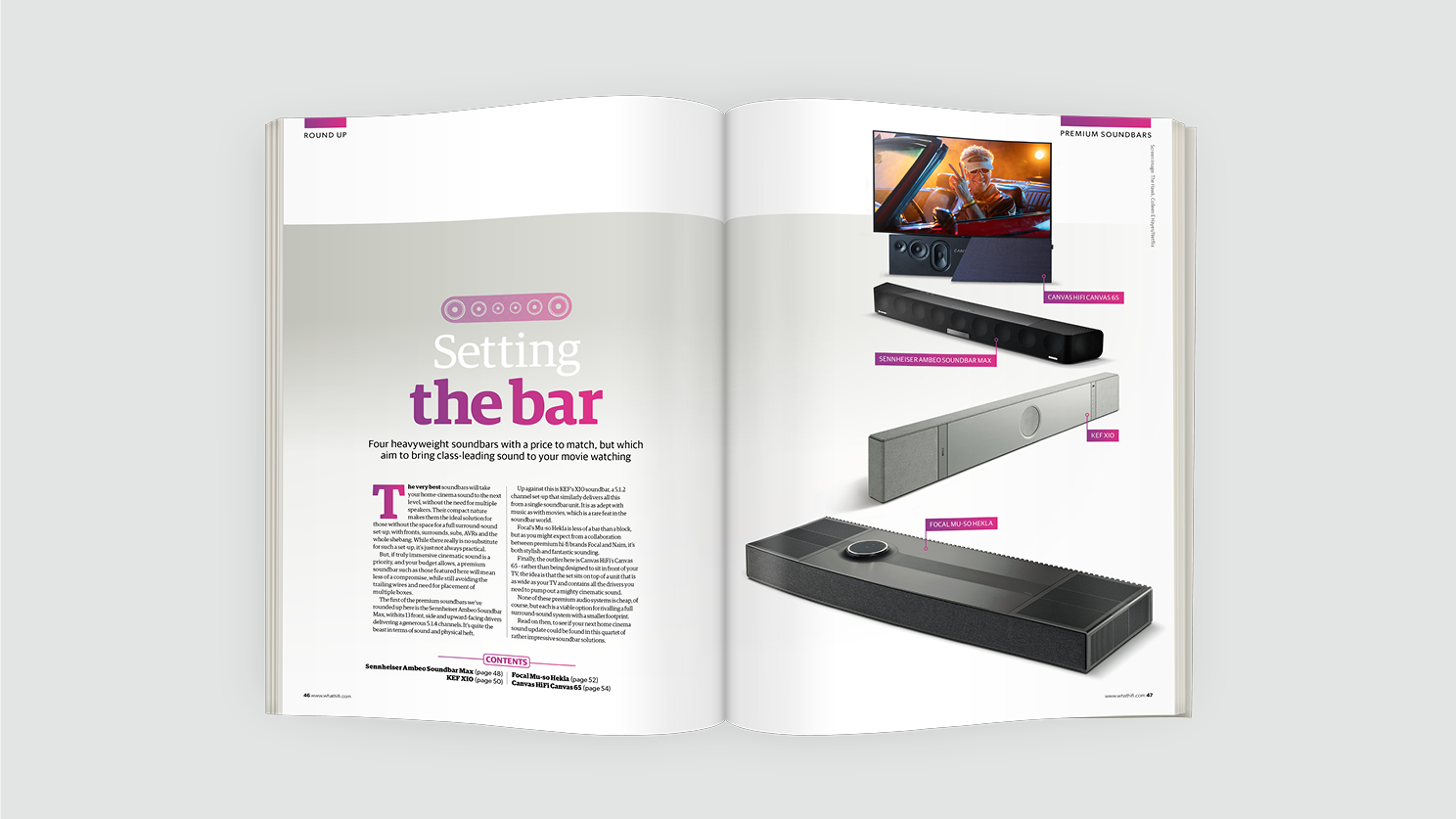
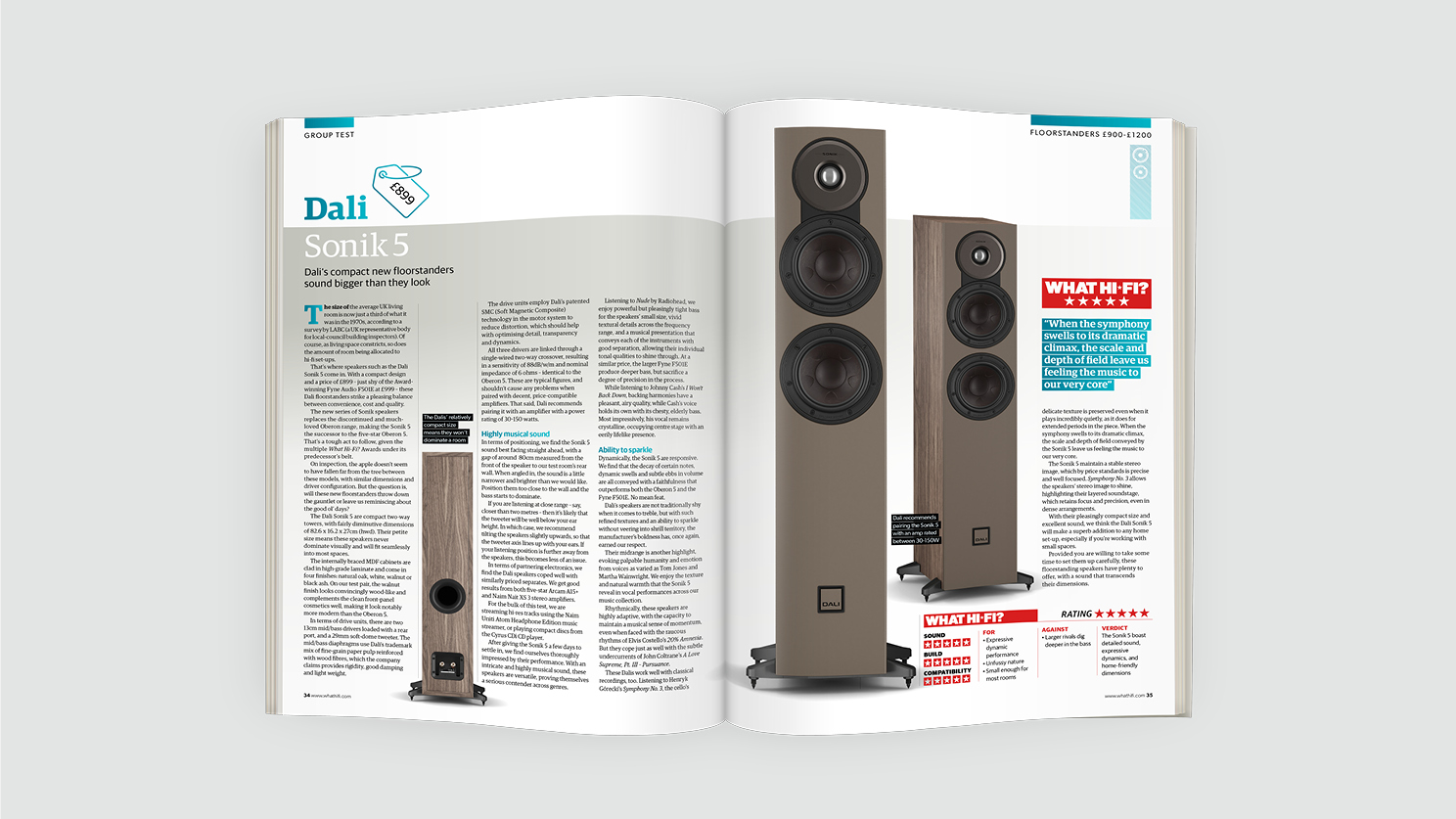
We also have a remarkable Group Test of floorstanding speakers from £900-£1200, where Dali takes on established favourites from Acoustic Energy, Fyne Audio and Monitor Audio. And we round-up premium standalone soundbars, showing that a single unit can get much of the way towards delivering a full surround-system’s sound.
Turntables that make vinyl replay a doddle
(Image credit: What Hi-Fi?)
Perhaps you’re just considering dipping your toes into vinyl waters for the first time, but don’t necessarily want the fuss of a purist approach, where manual speed control – physically changing the belt over between 45 and 33⅓rpm – is just the tip of the audiophile iceberg. Or, maybe you’re an old hand with vinyl, but are pining for the simple life.
What you may be looking for is the tactility and fantastic, warm sound of vinyl that you’ve heard about, but with a little more simplicity and convenience. And for that, any of the turntables we are recommending over the following pages will suit you very nicely.
The decks we round up this month are designed to be as fuss-free as possible. Automatic speed control is, thankfully, present on all these turntables. Some have auto start/stop functionality, some even have Bluetooth so you can beam your vinyl music wirelessly to your chosen set-up.
Make no mistake though, every record player here, regardless of convenience, feature set and ease of use, sounds great – as you should expect from some of the world’s foremost turntable manufacturers. There’s a brace each from Sony and Audio-Technica, and Dual, Pro-Ject and Technics also make our list of seven.
What each of these turntables aims to do is get you playing your vinyl quickly and easily – whether it is your first deck, you’re dusting off your record collection for the first time in years, or you’re somewhere in between.
Premium soundbars round-up
(Image credit: What Hi-Fi?)
The very best soundbars will take your home-cinema sound to the next level, without the need for multiple speakers.
Their compact nature makes them the ideal solution for those without the space for a full surround-sound set-up, with fronts, surrounds, subs, AVRs and the whole shebang. While there really is no substitute for such a set-up, it’s just not always practical.
But, if truly immersive cinematic sound is a priority, and your budget allows, a premium soundbar such as those featured here will mean less of a compromise, while still avoiding the trailing wires and need for placement of multiple boxes.
We have four premium soundbars for your consideration this month, from KEF, Sennheiser, Canvas Hi-Fi and Focal. None of these audio systems is cheap, of course, but each is a viable option for rivalling a full surround-sound system with a smaller footprint.
See if your next home cinema sound update could be found in this quartet of rather impressive soundbar solutions, only in this month's What Hi-Fi?
Budget stereo amplifier head-to-head
(Image credit: What Hi-Fi?)
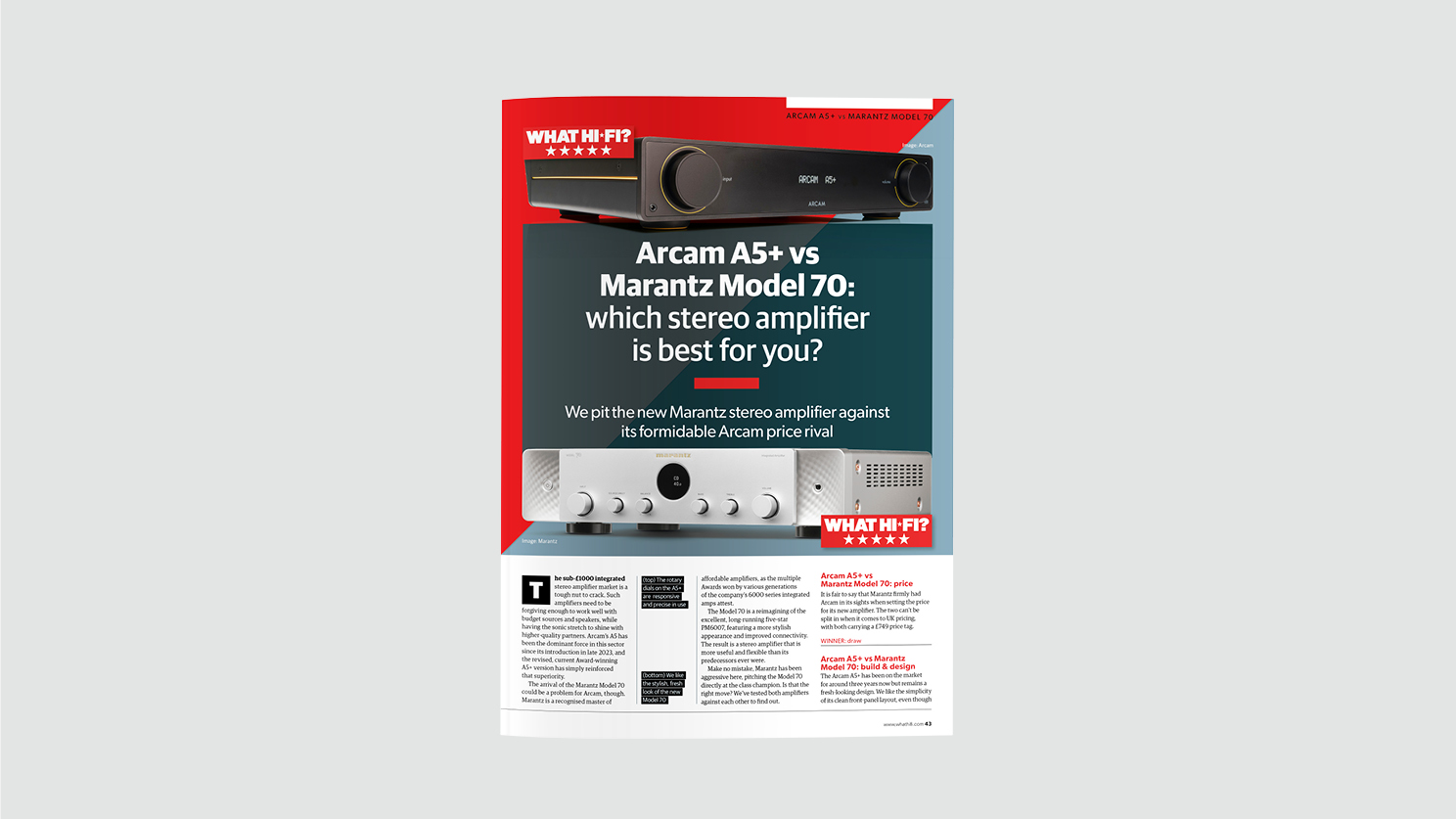
The sub-£1000 integrated stereo amplifier market is a tough nut to crack. Such amplifiers need to be forgiving enough to work well with budget sources and speakers, while having the sonic stretch to shine with higher-quality partners. Arcam’s A5 has been the dominant force in this sector since its introduction in late 2023, and the revised, current Award-winning A5+ version has simply reinforced that superiority.
The arrival of the Marantz Model 70 could be a problem for Arcam, though. Marantz is a recognised master of entry-level stereo amplification, and make no mistake, the company has been aggressive here, pitching the Model 70 directly at the class champion. We’ve tested both amplifiers against each other to find out.
Floorstanders group test
(Image credit: What Hi-Fi?)
When it comes to floorstanding speakers, those in the £1000 ballpark face a difficult challenge: maintaining a mid-range price tag while matching the performance of higher-end separates. They should shine in use alongside premium gear, while giving budget options their best shot at success.
The Fyne Audio F501E are our current Award-winners in this bracket, with a powerful sound that justifies their significant proportions. However, they have recently come up against aggressive competition from the Dali Sonik 5, which, for speakers of their relatively modest size, bring with them a host of competing talents.
The priciest of our quartet of floorstanders, the Acoustic Energy AE309 Mk2 are hotly pursued by the Monitor Audio Bronze 300 7G, which land dead centre of our price range at £1000.
Which of these pairs of towers is our top recommendation at this level? Find out in this month's mag.
First with reviews
(Image credit: What Hi-Fi?)
As always, our First Tests section is where you'll find What Hi-Fi?'s considered verdicts on the very latest hi-fi and AV gear.
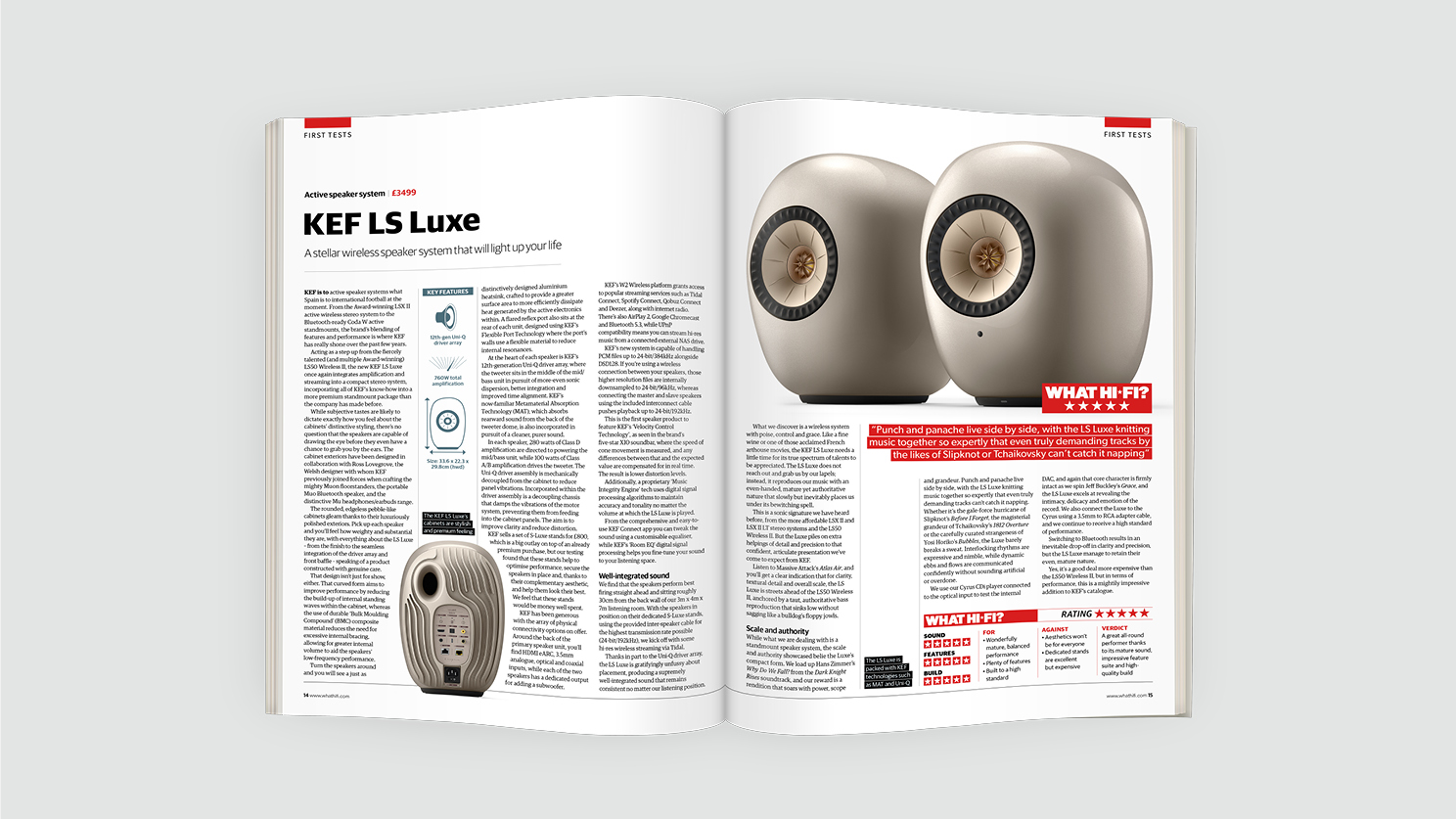
A new affordable stereo amplifier is always interesting, and this month past masters Marantz return with the Model 70. Will it impress as much as the outgoing Marantz PM6007 has?
The Model 70 isn't the only Marantz separate to have entered our test rooms this month. The CD 70 is, as you might guess, a CD player – with CD sales reportedly on the rise, this could be a timely move for Marantz in a market that hasn't exactly been awash with players in the last few years.
Elsewhere we have reviews of the KEF LS Luxe active speakers, Denon AVR-X2900H home cinema amplifier, Grado SR325 Classic headphones, Q Acoustics 3050c 5.1 speaker package, Hisense XR10 projector, Samsung S85H OLED TV and Acoustic Energy AE Active speakers.
Find all these reviews in October's What Hi-Fi? – out now!
High-end and mightily tempting
(Image credit: What Hi-Fi?)
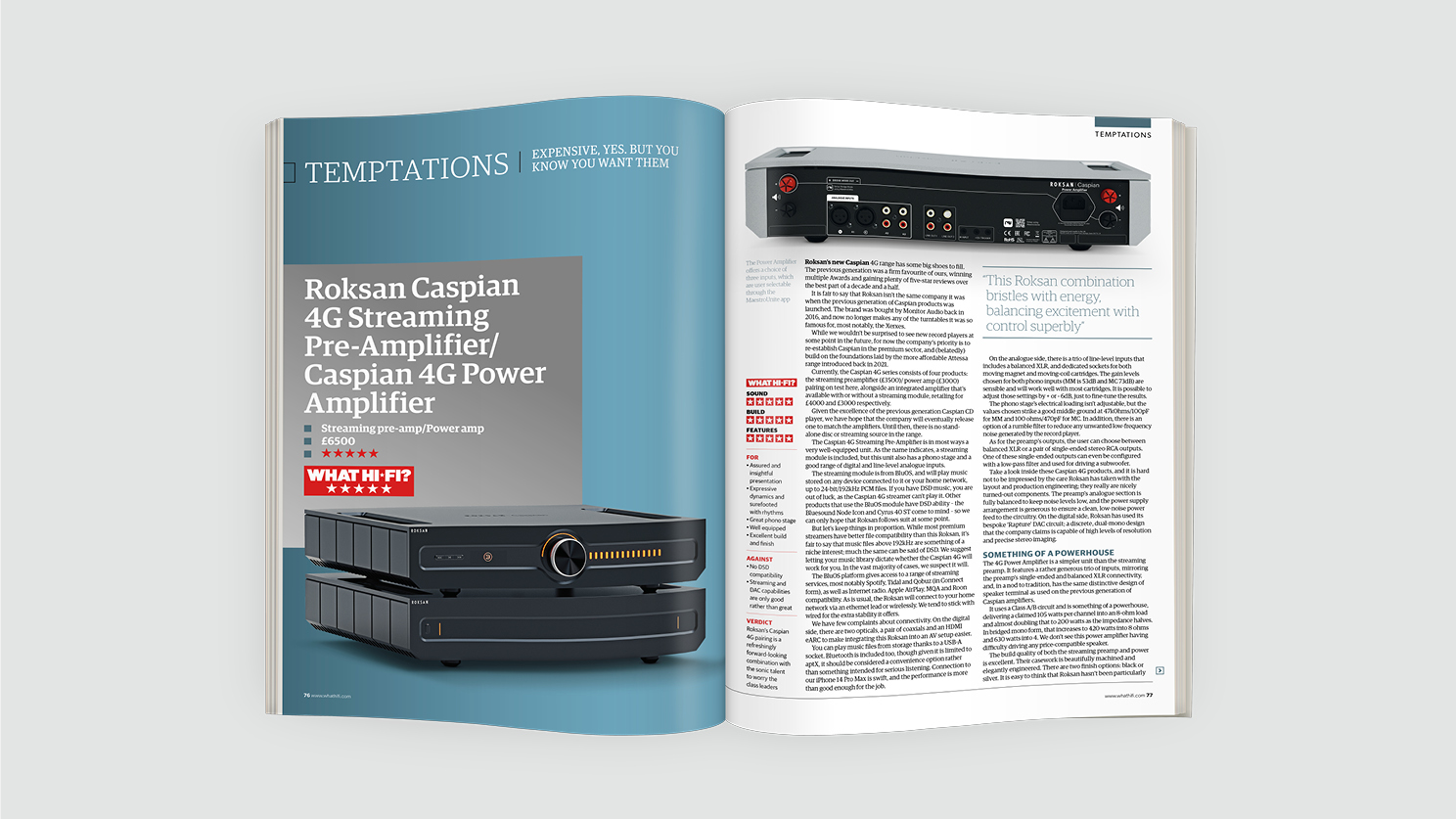
Our Temptations section of the magazine is where you'll find the highest of the high-end of hi-fi and AV products.
The Roksan Caspian 4G Streaming Pre-Amplifier and 4G Power Amplifier combination "bristles with energy, balancing excitement with control superbly". Our reviewers also note that the units "render an expansive soundstage". Tempted? Deep pockets? Find out more this month!
Marten has named its latest standmount speakers after jazz legend Charlie Parker, and indeed the Marten Parker Duo Diamond edition are musically rather special. "These speakers sound neutral while still displaying natural warmth and richness," we say in our review. Find out more about these classy speakers in this month's What Hi-Fi?.
(Image credit: What Hi-Fi?)
Finally, don't forget to check out our Buyer’s Guide, featuring a definitive and freshly updated list of all the best home entertainment kit you can buy – including winners of 2025's What Hi-Fi? Awards. If you’re looking to purchase anything from a pair of the best wireless headphones to a home cinema speaker system, this section will tell you where to spend your money wisely.
Whatever you do, don't miss the October 2026 issue of What Hi-Fi?. Grab a copytoday, or simply download it onto your tablet or smartphone. Enjoy!
Sonos has formally named its app and multi-room operating system. Sonos 27 is being introduced this year with two new products – Ace Ultra and Beam Ultra – and boasts new AI control features, and new app navigation.
According to the company's press release, it "represent[s] the next stage of Sonos’ evolution from a collection of connected audio products into an increasingly intelligent and adaptable audio operating system for the home".
Why now? We spoke to Sonos's vice president of software, Sid Patel, and senior director of product development, Brandon Holley, both of whom have been with the company for over a decade, to dig into the newly-christened Sonos 27 operating system.
"For years, people have seen us as a speaker company, but what we actually have been building is an audio operating system," says Holley.
"Why now? We really think we've not done enough justice to tell the story of what the software does with the overall system and the speakers, and what it brings, and so this [branding] gives us a place to talk about the software and hardware and how it all works together," says Holley.
"Underneath it's extremely complex, there's a lot going on... but from a customer's standpoint, we want them to understand that every interaction, every piece of the system, whether it's the hardware or a partnership with a specific music provider – that is all part of a system."
"We've spent 20 years learning how a home feels and functions, and finally, we're naming the thing that we've been building all along," says Holley.
Sonos 27 is the overarching operating system powering the Sonos ecosystem and its many products, with Sonos aiming to treat its "audio operating system" like an Apple/Android operating system that updates every year. The '27' in the name will update every year, changing to '28' next year, we're told, just like iOS 26 will update to iOS 27 this year.
Fabric – "the magic that has been Sonos for 20 years"
(Image credit: Sonos)
While naming the various things the Sonos ecosystem can do might seem like a marketing exercise, what is more concrete is the company's commitment to ensuring its ecosystem isn't a walled garden like other brands, offers various ways to control its products, and that these products work together more seamlessly.
Ensuring that the new Ace Ultra wireless headphones connect to every Sonos 27-compatible product seamlessly is a key component of this. "That is not a promise we fulfilled fully with Ace; we are fulfilling it with Ace Ultra," says Patel.
Sonos Fabric is the name given to the multi-room capability of the ecosystem, in the way that Sonos products can be linked together – or as Patel calls it, "the magic that has been Sonos for 20 years".
That includes the whole-house multi-room grouping of products, a stereo pairing between two speakers, and the new 'headphone linking' feature, which will let you transfer sound between a Sonos speaker or soundbar to Sonos Ace Ultra wireless headphones.
Another new feature under the 'Fabric' umbrella opens up the possibility of portable surrounds. The Sonos Play and Move 2 portable speakers (which feature Bluetooth and wi-fi) can now be used as rear surrounds alongside the Sonos Arc/Arc Ultra, Beam (Gen 2) and Beam Ultra soundbars. Sonos' Positioning Technology will use high-frequency sound to "sense a speaker's location and adapt its role" accordingly.
New AI-enabled ways to control your Sonos products
(Image credit: What Hi-Fi?)
It will come as no surprise that AI is a big part of the new operating system, and as an evolution of the brand's "open platform philosophy", Sonos will let users control its ecosystem using any AI assistant they prefer.
"AI is obviously all the rage in the industry, but the way we're approaching it is like how we've approached it from the beginning for everything," says Patel. "We're creating a platform where we plug into other AI ecosystems and AI ecosystems can plug into us, similar to how music partners can plug into us today."
Sonos 27voice is the brand's own assistant for "music and mood curation" that has been customised and is more AI-friendly, while the Sonos 27mcp (Model Context Protocol) infrastructure will let you connect any external AI assistant or agent to your Sonos system (e.g. ChatGPT, Claude, Gemini, Siri) so you can ask it to control music anywhere in your home.
"We know the home, we know audio, we know music," says Patel, "and so we've taken a layer and created intelligence there, so what we do is bring that intelligence to the home." The focus is on letting users control their music in a way that's quickest and feels most natural to them, whether that's using voice control, the app, the web app, the on-unit buttons or AI.
"From the time you bring your speaker home and your system home and you set it up, we want you to be listening to TV or music as fast as possible," says Patel of the brand's number one goal for the app.
A new feature called Sonos Custom Agents will also let users "create their own agents" through their system, allowing you to customise the model, persona and voice for your own personal AI assistant.
"We are in a new era where we're listening to our customers a lot more"
(Image credit: Sonos)
A big part of the creation of Sonos 27 and any updates going forward will be listening to customer feedback, especially on the app. It's a concentrated effort after the disastrous app redesign of 2024, which led to widespread customer dissatisfaction, the then-CEO stepping down, and Sonos rolling back many of the app features to re-gain trust amongst its customers.
"We still believe the Sonos app is the best way to experience your system along with all the other control services like voice and web and direct control," says Patel.
"We are in a new era where we're listening to our customers a lot more," Patel acknowledges, and declares many of the new app changes have been "community driven and very experimental", with the Sonos team engaging with customers on Reddit and social media channels to get instant feedback.
"We sort of opened the door to even our engineering team engaging with customers on Reddit, which is not something we did in the past. And it's actually worked out really well for us."
The Sonos 27app will gain fresh discovery and tab navigation, a new "virtual" volume dial, presets, lock screen integration and more. On top of that, the brand says it's still "innovating" and working closely with Apple and Google to further integrate Sonos features within a smartphone's native operating systems.
Will this be a turning point for Sonos, and will it be enough to claim back trust amongst its many long-term customers? There is a definite sense of confidence that the new features will work as promised, and we'll be getting our hands on Beam Ultra and Ace Ultra review samples imminently to try out all the new features and see how the updated app works – so stay tuned.
Sonos 27 will be available as a free update to all current-generation Sonos products (i.e. all products working with the 'S2' app/OS since 2020), with the portable surrounds support, new app navigation and Sonos 27mcp rolling out from 8th September.
Sonos has just taken the wraps off the Beam Ultra, a new Dolby Atmos soundbar that sits between the entry-level Beam Gen 2 and premium Arc Ultra.
One of the coolest things about the Beam Ultra is that, unlike the Beam Gen 2, it has dedicated up-firing speakers for a more involving Dolby Atmos delivery.
Dolby Atmos isn't the only 3D audio format in town, though. DTS:X is a serious alternative, and one that's particularly popular with home cinema enthusiasts, yet Sonos has resolutely refused to support it on any of its speakers.
Given the chance to speak with Brandon Holley, Sonos’s Senior Director of Product, ahead of the Beam Ultra’s launch, we asked about that.
“Beam Ultra doesn’t support DTS:X at this time”, he said.
But could it (and other Sonos speakers) do so one day?
“It’s definitely a question that we ask ourselves, and it’s one of the many features, codecs and partnerships that we’re constantly entertaining. The door isn’t closed to any of those particular things”.
I realise that all seems a bit "nothing to see here", but I actually took some encouragement from the way Holley said it, and I genuinely believe this is a discussion that Sonos is having regularly.
It’s always seemed slightly odd to me that Sonos – a brand that has had format and service agnosticism at its core from its inception – would support Dolby Atmos and not DTS:X.
Sure, DTS:X is comparatively niche, but so are a large number of the streaming services that the Sonos ecosystem supports.
I wouldn't be surprised if DTS:X eventually found its way onto Sonos speakers. The more pressing question, though, is whether the Sonos Beam Ultra is any good in its own right.
We intend to answer that question by putting it through our comparative review process just as soon as possible.
The Sonos Ace Ultra wireless headphones have landed, and it looks like good news throughout, with Sonos promising a "direct connection to the Sonos system."
Positioned above the three-star Ace – the brand's first headphones released in 2024 – the new step-up Ace Ultra have been designed from the ground up to deliver the improvements to sound, noise-cancelling and wider compatibility with the Sonos ecosystem that were missing from Sonos' debut over-ears.
At the heart of the Ace Ultra is the "Headphone Engine 2", a next-gen wi-fi hardware and software system that lets you link the headphones directly to your existing Sonos system. It's the feature that we (and Sonos customers) have wanted all along, allowing you to swap audio from any Sonos wireless speaker or soundbar to the Ace Ultra headphones at the press of a button (or via the app), and back again.
Listening to music on the Ace Ultra from your laptop or smartphone is still done via Bluetooth rather than wi-fi, but this is a marked improvement over the original Sonos Ace, where you could only 'swap' audio from select Sonos soundbars.
The Ace Ultra feature all-new Sonos-designed 40mm drivers, and the sound is tuned with input from the Sonos Soundboard, which features leading figures in music and film (including Grammy winners) to deliver a sound "that stays true to the artist's intent."
Active noise cancellation has been given a boost, with the Ace Ultra promising to be twice as effective in this regard. The Ace Ultra house 10 mics (up from eight on the original Ace), with an adaptive ANC system that continuously monitors your surroundings to deliver the best ANC experience.
An Adaptive EQ also tunes the ANC to adjust to any imperfections in the acoustic seal around the earcups, such as gaps in the fit for those wearing glasses.
An Aware mode, which lets outside sounds in, also returns, as does support for headtracking with Dolby Atmos content.
Battery is up to 35 hours (up from 30 hours from the original Ace) with ANC activated, and you can get three hours from a fast-charge of three minutes. The higher-quality aptX Lossless codec is supported, while native support for 16-bit/48kHz resolution is once again supported via a wired USB-C connection.
(Image credit: Sonos)
The general design of the Sonos Ace Ultra remains the same as before, with soft foam cushions to provide maximum comfort, and physical buttons that include a multi-function button/slider (called the 'control key') through which you can adjust volume, change noise modes and playback, and send music to and from your connected Sonos speakers via the 'headphone linking' feature.
There are three-band and eight-band EQ settings in the app to further customise the sound to your tastes, whereas TrueCinema technology tunes the headphones' sound according to your room's acoustics when connected to a compatible Sonos soundbar.
The Sonos Ace Ultra headphones will cost £399 / $449 and be available globally from 29th September, with pre-orders starting from today, 1st September. The headphones will be available in four finishes: new sand and agave colours, as well as the standard black and white options.
Interestingly, the established Sonos Ace will continue to be available. The Ace are currently priced at £299 / $299 / AU$449, which is a considerable drop from their launch price of £449 / $449 / AU$699. Those in the UK will also get a bonus saving, as the new Ace Ultra will launch for £50 less than the inaugural Ace did.
We have high hopes for the new Sonos Ace Ultra headphones, which seem to address many of the issues we had with the original Ace – such as incomplete features, buggy connections, "average" sound, and ANC quality that didn't compete with strong rivals.
Let's see if they give the current Sony, Bose and Sennheiser class leaders a run for their money.
Sonos has finally launched a new version of its Award-winning Sonos Beam (Gen 2) soundbar.
The new Beam Ultra was unveiled at a pre-launch press event today and sits in the same family as the more premium Arc Ultra, which came out in 2024.
The “mid-size soundbar” boasts a 7.1.2-channel configuration. This includes two up-firing drivers.
The up-firing drivers are a key upgrade over the older Beam Gen 2, which didn't feature them.
Despite the upgrade, there is still no DTS:X support. The omission isn't a huge surprise, as none of the company’s soundbars features it, but it is a bit of a shame for those wanting comprehensive surround sound options.
When asked whether Sonos would add DTS:X in the future, Senior Director of Product Development at Sonos, Brandon Holley told us: "The door isn't closed for us, but just in terms of delivering the value that we think our customers are specifically asking for, that's what Beam Ultra has today."
The Beam Ultra also features a redesigned centre channel and four levels of AI Speech Enhancement to help it deliver clearer dialogue.
There’s also a Night Sound setting if you don’t want to disturb the neighbours, which should compress the bar's dynamic range. Once again, the firm's Trueplay calibration is on hand to fine-tune the sound to your space.
You can also link the Beam Ultra with other Sonos products to create a multi-room listening experience, including the newly announced Sonos Ace Ultra over-ear headphones.
(Image credit: Sonos)
Holley added that the firm has worked to ensure the Beam Ultra delivers better audio with music, telling us: "We treat music as important as we do home theatre performance, and so we want it to sound great musically as a soundbar as well."
That's something we found to be true with Sonos' previous models, so we are hopeful it will be the same with the new addition.
The Beam Ultra will be available in two finishes (black and white) and you can mount the bar to your wall or simply place it in front of your TV. We don't have its full dimensions yet, but Holley told us that the Beam Ultra has been intentionally designed not to block the TV screen, even if it is sitting on the surface.
So, how much will the new soundbar set you back? In the UK, the Beam Ultra will launch at £699 (around $946 / AU$1320). That means it sits between the Sonos Arc Ultra and the Sonos Beam Gen 2, which launched at £999 / $999 / AU$1799 and £449 / $449 / AU$649, respectively. The base Beam Gen 2 will remain on sale, sitting below the Ultra in Sonos' range.
We haven't managed to get the Beam Ultra into our test room yet, but we should have a chance to get up close with it very soon at the IFA trade show in Berlin. Watch this space.
JBL has dominated the portable Bluetooth speaker market with its Go, Flip, Charge and Xtreme models, and now it is turning its attention to the wireless multi-room speaker category with the new JBL Cove range.
The Cove range is designed to bring "superior JBL sound to every room", touting a flexible and expandable whole-home audio ecosystem powered by JBL's in-house platform and managed via the JBL One app.
The new series consists of three models available at launch: the compact Cove M1, the battery-powered Cove P1, and the flagship, six-driver-toting Cove X1. Each speaker can be used in its own right, as a stereo pair, or as part of a multi-room setup.
The smaller Cove M1 houses a trio of tweeters alongside a single woofer, while the Cove P1 packs four tweeters and a single woofer. The flagship Cove X1, meanwhile, also houses a quad tweeter array, complemented by a pair of woofers.
Both the Cove X1 and Cove P1 support Dolby Atmos, with the battery-powered Cove P1 boasting 14 hours of playtime on a single charge and an IP56 certification for protection against dust and water.
(Image credit: JBL)
To help you get the most out of your multi-room system, JBL’s own 'Constant Sound Field' automatically tunes the speakers to their given environment, while 'AI Sound Boost' further aims to optimise performance based on where and how you listen.
You're not short on wireless connectivity, either. Alongside standard Bluetooth, wi-fi access grants support for AirPlay 2, Google Cast, Spotify Connect, Tidal Connect, and Qobuz Connect, and all members of the new Cove family are Roon Ready. Spotify Tap provides quick access to Spotify, while built-in Alexa Plus voice control is also available.
The Cove range will connect with JBL's Bar Series MK2 soundbars (which include the Bar 300MK2 and Bar 1000MK2), and you can use a pair of Cove speakers as rear surrounds for a home cinema setup.
According to Carsten Olesen, President of Consumer Audio at Harman: "JBL Cove marks an important step in our ambition to become a leading force in home audio, combining powerful JBL Legendary Sound with the simplicity, flexibility and outstanding value that will help even more people discover how simple it is to have great sound throughout the home.”
Each member of the JBL Cove range will be available in white or black finishes from October 2026. The JBL Cove M1 is priced at £200 / €230 / $230, the Cove P1 at £400 / €450 / $400, and the Cove X1 at £430 / €500 / $450.
Happy Monday and welcome to another retrospective on all the big news over the past seven days in the worlds of hi-fi, TV and home cinema, plus our pick of the review headlines from our test team.
We’ve had a bit of everything this week, from Apple’s big annual announcement to a talented tablet from Samsung.
Here’s everything you need to know…
Naim launched Uniti Star Lite
(Image credit: Naim Audio)
We’ve been huge fans of Naim’s Uniti Star streaming system since it launched way back in 2016. And Naim took the wraps off a new version last week, but with one major change.
The new Lite model doesn’t have the built-in CD player and ripper of the original. Unfortunately, this is due to supply issues, but Naim does claim to have upped the audio performance from the machine. Even with the lack of CD-spinner, we can’t wait to get it in our test rooms.
Yes, it’s that time of year again. Everyone in the world of tech has been waiting for that one email to go around announcing Apple’s intention to unleash its latest generation iPhone on the buying public.
But will it just be iPhones that we see this year? Rumour has it a new pair of AirPods could be on the way together with refreshed tablets and, if we’re lucky, maybe even a new Apple TV 4K. All will hopefully be revealed on the big date…
Both cinephiles and gamers were disappointed when Sony announced that its next-generation PlayStation console was going to ditch physical discs, so imagine our surprise (and glee) when Xbox announced a new initiative which looks like it could keep the disc format ticking over for a little while yet.
Our test team had a great time getting to grips with Samsung’s huge Galaxy Tab S11 Ultra tablet this week.
Okay, so we realise a 14.6in tablet isn’t going to be for everyone, but if you’re a movie fan who can’t live without their fix of the big screen on the move, we think the Samsung Galaxy Tab S11 Ultra has iPad Pro-rivalling credentials that need to be taken seriously.
Our experts were also excited to get Bose’s new Lifestyle Ultra Soundbar into our test rooms, but we weren’t exactly blown away by what this flagship Dolby Atmos ‘bar has to offer.
We felt it was a good-looking unit boasting premium build quality and an intuitive control app, but it was ultimately an unsatisfying and undynamic listen, and the Sonos Arc Ultra continues to be our recommendation at this premium level.
FiiO loves retro-looking hi-fi components, and this week, it announced a product which “takes inspiration from the 'golden era of 1950s tube amplifiers". At £769 / $769 / €665 the EA13 is a relatively affordable full-size vacuum tube amplifier, but with a solid feature set and design.
This week we got a glimpse of the wonderful blue lights of McIntosh’s VU meters, this time sat on the front of the company’s new CS7500 streaming preamplifier.
Dressed in McIntosh’s trademark black, green and blue colours, the CS7500 promises a wide assortment of connectivity options and all the streaming smarts you’d expect from a product costing over $12,000.
“Wist je dat magnesium een belangrijke rol speelt bij het beheersen van ADHD?” claimt een populaire TikTok-video. Volgens de maker kan het essentiële mineraal een groot verschil maken. Een laag magnesiumgehalte zou namelijk mogelijk ADHD-symptomen kunnen verergeren. Maar klopt dat wel?
De TikTok-video gebruikt een ingewikkelde biologische theorie om de bewering te onderbouwen. Het idee draait om dopamine, een belangrijk stofje in de hersenen dat zorgt voor focus, planning en impulscontrole. Om de hoeveelheid dopamine op peil te houden, gebruikt je brein een enzym genaamd COMT. Volgens de videomaker heeft dat enzym voldoende magnesium nodig om goed te kunnen werken. Als je te weinig magnesium in je lijf hebt, zou het COMT-enzym haperen, waardoor de dopamineregulatie verstoord raakt en ADHD-klachten verergeren.
Wat zegt de wetenschap?
Magnesium is een onmisbaar mineraal in ons lichaam. Het helpt bij het opbouwen van eiwitten en DNA, en levert energie aan je cellen. Krijg je er te weinig van binnen? Dan kun je last krijgen van vermoeidheid, concentratieproblemen, prikkelbaarheid en stemmingswisselingen. Klachten die opvallend veel lijken op de symptomen van ADHD.
Daarom onderzochten wetenschappers of mensen met ADHD ook daadwerkelijk minder magnesium hebben. En daar zijn aanwijzingen voor. Onderzoek laat zien dat kinderen met ADHD gemiddeld lagere magnesiumwaarden hebben dan kinderen zonder ADHD. Prof. dr. Cleo Crunelle, gespecialiseerd in ADHD en verbonden aan de Vrije Universiteit Brussel (VUB), bevestigt dat grote overzichtsstudies dit beeld bij kinderen ondersteunen.
“Dit wordt ondersteund door twee meta-analyses, waarin zowel lagere serum-/bloedmagnesiumwaarden als lagere haarmagnesiumwaarden werden gevonden bij kinderen met ADHD,” zegt dr. Crunelle.
Waarom is er toch twijfel?
Hoewel onderzoek een link laat zien, is het wetenschappelijke bewijs niet onomstotelijk. Sommige onderzoeken vinden namelijk helemaal geen verschil, of meten zelfs meer magnesium bij mensen met ADHD. “Dat komt doordat onderzoeken onderling sterk verschillen in wie er meedoet en hoe de metingen worden gedaan”, nuanceert dr. Crunelle.
Bovendien kan ADHD-medicatie bij sommige mensen de eetlust verminderen, waardoor iemand minder of minder gevarieerd gaat eten. In theorie zou dit kunnen bijdragen aan tekorten in bepaalde voedingsstoffen, waaronder magnesium.
Belangrijk om hierbij te vermelden is wel dat de bestaande studies over magnesiumtekort bij kinderen met ADHD geen rechtstreeks verband aantonen met het gebruik van ADHD-medicatie. Daarom kunnen we op basis van de huidige wetenschap niet stellen dat ADHD-medicatie ook een magnesiumtekort veroorzaakt.
Helpt een magnesiumsupplement?
Ook hier is de wetenschap heel terughoudend. Weliswaar tonen enkele kleine studies een lichte verbetering in gedrag en aandacht bij kinderen met een aangetoond magnesiumtekort, maar hard bewijs ontbreekt.
Maar zo legt dr. Crunelle uit, “het probleem is dat studies klein zijn en dat magnesium vaak gecombineerd wordt met andere stoffen, zoals vitamine B6 of vitamine D. Daardoor is het moeilijk om het specifieke effect van magnesium te bepalen.” Om echt te kunnen zeggen dat magnesium ADHD-symptomen vermindert, zijn er grote en streng gecontroleerde onderzoeken nodig en die zijn er op dit moment simpelweg niet.
Conclusie
Onderzoek laat weliswaar zien dat kinderen met ADHD gemiddeld lagere magnesiumwaarden hebben, maar dat betekent niet dat een magnesiumtekort de oorzaak is van ADHD of de klachten verergert. Evenmin is er momenteel voldoende bewijs om magnesiumsupplementen aan te raden als behandeling voor ADHD bij mensen zonder een duidelijk magnesiumtekort.
Season 1 of The Traitors Ireland was one of the more emotional and brutal iterations of the show, as Faithfuls Kelley Higgins, Oyin Adeyemi and Vanessa Ogbonna fought their way to the grand prize. It also made a star out of retired prison officer Paudie Moloney, more recently seen in Ireland’s version of Dancing with the Stars.
Now the iconic reality gameshow returns, with host Siobhán McSweeney welcoming a new class of Faithfuls and Traitors to Slane Castle, battling it out both physically and mentally in the hopes of bagging a potential €50,000 prize.
Season 2 promises to be just as explosive as the first outing, with RTÉ teasing: “With new twists, new gameplay and plenty of surprises in store, audiences can expect all the drama, intrigue, treachery and unforgettable moments that make The Traitors Ireland unmissable.”
The Traitors Ireland season 2 premieres on August 30 in Ireland, with international release dates yet to be confirmed.
From Ireland but abroad? Don't sweat – you can watch The Traitors Ireland online by usingthis VPN to access all episodes on RTÉ Player in a few moments. Here's how to do it....
Season 2 of Traitors Ireland will air on RTÉ One in its native country, starting Sunday, August 30. Episodes will also stream for FREE on RTÉ Player.
Remember: use a VPNto access the service when travelling outside of Ireland – otherwise you'll find yourself geo-blocked. Boo.
Watch The Traitors Ireland S2 from abroad with a VPN
If you're away from home you might find yourself geo-blocked from your usual account. A Virtual Private Network (VPN) can help you to get around this obstacle. It creates a private connection between your device and the internet, enabling you to appear to be in your home country. There are lots of VPN options, but we think NordVPN is currently the very best VPN for streaming.
Editors Choice
Try NordVPN risk-free for 30 days NordVPN offers a 30-day money-back guarantee with its VPN service. You can use it to unblock streams on your mobile, tablet, laptop, TV, games console and more. There's 24/7 customer support and three months free when you sign up. Give it a try.
PS.VPNs are a great tool for privacy too and well worth having. You can also access your music streaming service from abroad, as well as websites and shopping (if you want to compare prices).VIEW DEAL ON
How to use a VPN to watch TV shows abroad
Using a VPN to watch The Traitors Ireland is incredibly simple:
1. Install the VPN of your choice.NordVPN is the one we recommend.
2. Open up the VPN app and choose the location that you signed up for the service in (e.g. UK).
3. Head to RTÉ Player on your browser or device and enjoy watching The Traitors Ireland online from anywhere in the world. Simple!
Where to watch The Traitors Ireland S2 in the UK
While a version of RTÉ Player is available to viewers across the Irish sea, the UK iteration of the platform doesn't host Traitors Ireland.
But, UK fans can still watch season 1 for FREE via BBC iPlayer, although season 2 isn't likely to drop for a little while yet.
Can I watch The Traitors Ireland S2 in the US?
Peacockis the home of all things Traitors in the US, however Traitors Ireland is yet to arrive on the streamer. With season 1 still banished, we wouldn't expect season 2 to arrive any time soon.
Where to watch The Traitors Ireland S2 in Canada
Traitors Ireland streams on Cravein Canada. Season 1 arrived pretty soon after its Irish debut, so while we wouldn't expect new episodes immediately, we can't imagine there will be too long of a delay for season 2.
Where to watch The Traitors Ireland S2 in Australia
The good news for Aussies is that Traitors Ireland season 2 will stream for FREE on 10Play. The bad news is that with the first season only arriving recently, viewers could be in for a bit of a wait.
The Traitors Ireland Uncloaked will return on RTÉ Player and YouTube this season as host Kevin McGahern and guests dissect the events of each episode immediately after it airs.
Another month, another set of home cinema products to review. We have been treated to a variety of models, from 4K projectors to Dolby Atmos soundbars.
But all of that needs to be tested with the very best movies and TV shows. We've got quite the range in our monthly Now Showing column for you, including old-school horror and one major new release that we can't wait to get into the test room.
Without further ado, here are our current top picks for testing.
X the Unknown (1956)
Words by Robyn Quick
If you’re a horror fan, then the cult classic X the Unknown is certainly one to add to your list. Released way back in 1956, it uncovers the cause of a string of mysterious deaths on a military base in rural Scotland. The culprit? A sentient blob simply called 'X'.
Its oozing presence is surprisingly disturbing as it terrorises the nearby sleepy town. The blob’s powers extend to burning and melting skin, which makes for unsettling viewing via the movie's tangible practical effects.
Hammer has just released a 70th anniversary collector's edition of the film in 4K, and it's a brilliant restoration. The crisp and detailed picture looks like it could have been shot yesterday, even in black and white.
There’s no Dolby Atmos, but the 5.1 mix is still a good test of your sound system to hear how it handles the dramatic soundtrack filled with brassy stings.
I might be the last person in the country to do so, but I finally made my own personal pilgrimage to see Christopher Nolan’s The Odyssey. Honestly, Odysseus got home quicker than I managed to pop down to my local cinema to see 2026’s biggest release.
Well, second biggest, but I wasn’t in the mood for Spider-Man: Brand New Day.
What else is there to say about one of the most discussed films in recent memory? The first feature-length movie ever to be shot exclusively using IMAX cameras, Nolan’s epic has all of the sweeping scope and fantastical spectacle you’d hope for from an adaptation of what is arguably Western literature’s most definitive tale, all while keeping the narrative grounded in its very human roots.
Ok, you won’t get the full benefit of IMAX if you’re just watching at your local picture house, but there’s still so much to be said for immersing yourself in that half-mythical world with a decent-sized screen and a full-blooded surround sound system, if only to enjoy Ludwig Göransson’s enchanting, earthy and often eerie masterwork of a score.
Odysseus took a total of 20 years to get back from the Trojan War. The least you can do is drive 15 minutes to the cinema to watch The Odyssey.
Like seeing craggy Ithaca once again, it’s totally worth it.
Once a surprise breakout and now a critical darling and recipient of more than a few controversial Emmys in the comedy category, the stress-inducing culinary show The Bear struggled after its first two stellar seasons, with the third and fourth helpings suffering from meandering plotlines, distracting celebrity cameos and a lack of focus.
There’s clearly been a conscious decision to change things for this fifth and final serving, however. The first change is visual, with the show shifting to a widescreen look shot with anamorphic lenses. There’s a plot reason, however – gone are the tight, claustrophobic close-ups of Carmy’s chaotic reign, and in is a wider, more teamwork-oriented framing as the kitchen staff start to bond under Sydney’s more measured leadership.
Hans Zimmer is yet another welcome addition, making a rare crossover to the world of television with a jittery, peppery score that is perfect for the stressful goings-on of a high-end Chicago kitchen on a spectacularly busy night. And while there’s still no Atmos support, the clinking of cutlery and a season-long rainstorm give the surrounds a surprising amount of work this time around.
The third big change? The Bear’s final season all takes place over one particularly dramatic and stormy day. It may be better off binged as, in true The Bear fashion, we have a few aimless early episodes.
However, it all builds to one truly captivating, satisfying and occasionally nail-biting final service, as pretty much every character gets to wrap up their character arc and showcase five seasons of growth. Chef’s kiss.
Earlier this week, Naim launched its new premium Uniti Star Lite streaming amplifier, which retains all the extensive features, connections and design of the original Star – but loses the CD player and ripper.
This is a blow to CD fans, but it was unavoidable due to issues sourcing the original drive mechanism and an inability to find a suitable alternative.
Naim's solution therefore was to cease production of the original Star and introduce the Star Lite as a streaming-focused unit. All sensible, to be fair, especially at the lowered price of £3199 compared with the now-discontinued Star's £3499.
With all the specs, amplification and streaming features being pretty much identical, we had also assumed that the sound quality of the two units would remain the same as well. That would be no bad thing, as the original Uniti Star got an effusive five-star review from us when we tested it back in 2018.
However, Naim has now confirmed to us in a statement that the new Star Lite will actually have a "better audio performance" than the outgoing Star.
Developing the Star Lite gave Naim's engineers the opportunity to tweak elements of the hardware, circuitry and software under the hood, all of which should result in "a cleaner signal path, with improved transparency for a more refined listening experience."
Here is the full statement from Naim below:
"The Uniti Star Lite was developed as a replacement for the Uniti Star following the discontinuation of the CD mechanism. However, during development, we identified some performance benefits resulting from this simplified architecture.
"By removing the CD mechanism, we were able to reduce electrical noise within the product. Combined with software optimisation and a more focused hardware architecture, the result is a cleaner signal path, with improved transparency for a more refined listening experience.
"In short, Uniti Star Lite is not simply the original Uniti Star without a CD drive; the simplified architecture has enabled us to achieve a more optimised electronic with a better audio performance."
So that's more positive news than we initially thought, and credit to Naim for not resting on its laurels. While many will mourn the loss of the integrated CD player, it looks like those investing in the Star Lite will potentially benefit from better sound, too.
In fact, if Apple does as expected, the iPhone 17 Pro we have before us today will be replaced in just a couple of weeks.
So, why bother reviewing the iPhone 17 Pro at this late stage? There are two main reasons: it will likely be available to buy for a little while yet, and probably at a discount; and it gives us a good benchmark to judge the new model against.
As ever, we’re interested in the iPhone 17 Pro not for its rocket ship power or fancy camera array (though those are interesting), but for its picture and sound quality. We want to know if this is the best phone for taking movies and music with you on the move.
And it is – for the next couple of weeks, at least.
Price
(Image credit: What Hi-Fi?)
The iPhone 17 Pro launched with a starting price of £1099 / $1099 / AU$1999, but it is now possible to get discounts of around £100 in the UK if you shop around.
That price gets you the entry-level 256GB version (Apple is no longer offering a 128GB Pro model), but 512GB and 1TB versions are also available, at a premium of £200 / $200 / AU$400 and £400 / $400 / AU$800 respectively.
If the 17 Pro’s 6.3-inch display isn’t large enough for you, an upgrade to the 6.9-inch Max will incur an additional premium of £100 / $100 / AU$200.
Design
(Image credit: What Hi-Fi?)
The iPhone 17 Pro represents Apple's biggest design change to its Pro phones in several years, and it's one that took a little getting used to.
The most obvious change is the enormous new camera plateau, which now stretches almost the entire width of the phone. It looked rather shocking when we first saw it, but after spending time with the phone, we've come to think it gives the 17 Pro a more natural and balanced appearance than the asymmetrically placed square camera bump of its predecessor.
Apple iPhone 17 Pro tech specs
(Image credit: What Hi-Fi?)
Screen size 6.3 inches
Type OLED
Resolution 2622 x 1206 (460 ppi)
Operating system iOS 26
Finishes x 3
Battery life 31 hrs video
Dimensions (hwd) 150 x 72 x 8.8mm
Weight 204g
Capacity 256GB, 512GB, 1TB
The move from titanium to aluminium also sounds like a step backwards for a phone at this level, but in practice it brings some advantages. The edges are smoother and more rounded than those of the 16 Pro, making the 17 Pro feel more comfortable in the hand, while Apple's new anodised finishes give it a character that's been missing from some of the more sober recent Pro models.
Our Deep Blue review sample is particularly lovely, with a rich, almost pearlescent finish that changes subtly as it catches the light. We're also rather taken with the Cosmic Orange option, although its unapologetically bold appearance inevitably divides opinion.
In fact, while the iPhone 17 Pro's design doesn't necessarily come across as dramatically different in photographs, this is an absolutely beautiful phone in the flesh, and one that feels every bit as premium as its price suggests. It's the most appealing-looking and nicest-feeling iPhone we've used in several years.
The physical controls remain unchanged from the 16 Pro, with volume controls and the Action button on one side, and the power/Siri and Camera Control buttons on the other.
The bottom edge has also been subtly revised, with both speaker grilles now appearing to be the same size rather than one being noticeably smaller than the other on the previous model.
The 17 Pro retains the same IP68 water and dust resistance as its predecessor, too; we even put that to a fairly vigorous test at Bude's Monster Slip And Slide, where it continued recording video while getting thoroughly soaked without any adverse effects.
Apple's new Tech Woven case is a particularly nice companion to the phone. Its woven finish feels more tactile and premium than many conventional cases, while the understated design complements rather than obscures the 17 Pro's new appearance.
The result is a Pro iPhone that feels both familiar and substantially refreshed. The camera plateau may take some getting used to, but the smoother shape, tactile finishes and excellent in-hand feel have made us rather fond of Apple's latest design.
Features
(Image credit: What Hi-Fi?)
The iPhone 17 Pro's headline display specifications don’t look radically different to those of its predecessor. It's still a 6.3-inch Super Retina XDR OLED with a 2622 x 1206 resolution, 460ppi pixel density, ProMotion up to 120Hz and an Always-On display. The big changes are to what's happening on top of that excellent OLED panel.
Apple has introduced a new anti-reflective coating that it claims reduces reflections by 33 per cent, while outdoor peak brightness has increased from 2000 nits on the iPhone 16 Pro to a huge-sounding 3000 nits.
Apple says these two changes combine to deliver up to twice the outdoor contrast of the previous model. We'll examine what that means in practice in the Picture Quality section, but the ability to maintain a convincing picture when you're watching in bright sunlight is particularly relevant to a phone intended to carry your movies everywhere.
For AV consumption, the format support is excellent, too. The iPhone 17 Pro can play HDR content in the HLG, HDR10, HDR10+ and Dolby Vision formats, and Dolby Atmos is supported on the audio side.
What’s perhaps most interesting from our point of view is that all of the above also applies to the standard iPhone 17, which boasts the same OLED display with the same specs and the same anti-reflection tech. It will be fascinating to see if this is borne out in our picture testing.
The other major upgrade for the iPhone 17 Pro over the 16 Pro is Apple's A19 Pro chip and new thermal management system. The new chip retains a six-core CPU and 16-core Neural Engine, but the new six-core GPU now has a Neural Accelerator in each core, improving its ability to handle demanding graphics and AI-based tasks.
Just as important, though, is the new thermal management system. The 17 Pro's aluminium unibody is more than 20 times more thermally conductive than the titanium used previously, according to Apple, and it incorporates a vapour chamber that moves heat away from the A19 Pro and into the aluminium chassis. Apple claims this allows up to 40 per cent better sustained performance than the previous generation.
(Image credit: What Hi-Fi?)
For most content consumers, such as us, this level of power is essentially overkill – the 17 Pro operates with the sort of slickness you'd expect from a flagship phone and can handle graphically intensive games without breaking a sweat.
The more important benefit is the sheer amount of headroom it provides, and the ability to maintain high performance over longer periods without thermal throttling. In practical terms, that means higher frame rates during long gaming sessions and a better chance of the phone still feeling effortlessly quick several years from now. Of course, if you are going to use your phone for content creation as well as consumption, all of this extra power becomes considerably more useful.
Apple has also substantially upgraded the camera system. The 48MP Fusion Main camera remains, but the Ultra Wide and Telephoto cameras are now 48MP Fusion models, too.
The Fusion branding refers to Apple's image-processing architecture as much as the sensors themselves, with computational processing combining multiple sources of image data to produce a final shot.
The camera system is also more flexible when it comes to zoom. Alongside the 0.5x ultra-wide and 1x main views, you can now choose 2x, 4x or 8x optical zoom, giving you more options for getting close to a subject without resorting to the potentially softer digital zoom.
The new 4x Telephoto is particularly useful as a middle ground between the standard camera and the long-range 8x option, while its larger sensor helps it capture more light and detail.
If that’s all Dutch to you, the upshot for casual photographers is brilliantly detailed, dynamic and balanced shots at various levels of zoom. This is a supremely talented camera system that’s a doddle for amateurs to use and an absolute beast in the hands of a professional.
The front-facing camera is an even more obvious upgrade for everyday users. It moves from 12MP to 18MP and, more importantly, introduces a new square sensor that gives you much greater flexibility over framing. You can tap to expand the field of view, switch between portrait and landscape framing without rotating the phone, and automatically widen the shot when other people join a selfie.
Centre Stage can also keep you centred during video calls, while Dual Capture lets you record from the front and rear cameras simultaneously – useful for vloggers, but also for anyone who wants to capture their own reaction alongside whatever they're filming. There's also ultra-stabilised 4K HDR video for smoother handheld footage.
Battery life has improved, too. Apple rates the 17 Pro for up to 31 hours of video playback, compared with 27 hours for the 16 Pro. A sufficiently powerful charger can also take the phone to 50 per cent in just 20 minutes.
Bluetooth has been upgraded from version 5.3 to Bluetooth 6. That doesn't bring any meaningful benefit right now, but Bluetooth 6’s improved efficiency, reliability and potential for lower-latency connections could make it more useful as compatible headphones and other devices catch up.
Picture quality
(Image credit: What Hi-Fi?)
The iPhone 17 Pro doesn't reinvent Apple's approach to picture quality, and nor does it need to. The iPhone 16 Pro already produces one of the finest pictures we've seen from a phone, combining excellent detail and contrast with Apple's typically impressive commitment to colour accuracy and consistency.
The 17 Pro takes that formula and makes some subtle but worthwhile refinements.
Put the two phones side by side and the colour balance is remarkably similar. There is, however, a smidge more richness to the 17 Pro's presentation, which is particularly evident in skin tones.
Subtle variations have a little more depth and life, but there's no sense that Apple has achieved this by simply turning up the saturation. The overall balance remains remarkably natural, and that combination of richness and restraint is one of the things that is so appealing about the picture.
There's a similarly subtle improvement to black depth. The 17 Pro's blacks are just a little deeper and denser than those of the 16 Pro, and while the difference is small, it lends the whole image a little more solidity and lustre. It's not simply a case of dark areas having been made darker, either: shadow detail remains excellent.
The dark scenes of The Hobbit: An Unexpected Journey provide a good demonstration. As Bilbo, Fili and Kili track their missing ponies through the darkness, the 17 Pro delivers an excellent combination of insight and solidity, with fine details remaining visible while the deepest parts of the image look impressively dense.
The 16 Pro is also excellent here, but its slightly lighter blacks give the picture a little less depth, while the 17 Pro's richer colours and deeper contrast combine to create a more three-dimensional image.
The same characteristics repeat across everything we watch. The dimly lit opening of Conclave benefits from the 17 Pro's extra depth and richness without sacrificing any shadow detail. The brighter scenes of The Creator, meanwhile, absolutely pop, with the vivid greens of the terraced rice paddies contrasting beautifully with the blue of the police ships and the red of “the weapon's” jumpsuit.
In fact, we find ourselves repeatedly drawn towards the 17 Pro's picture when switching back and forth between the two phones. The differences aren't dramatic, but the newer model has a little more of that lusciousness that makes an image particularly enjoyable to watch.
(Image credit: What Hi-Fi?)
In normal indoor lighting, there's little to separate the two phones in terms of outright brightness. Both produce wonderfully dynamic pictures with plenty of pop, and neither is crying out for more light. Move into really bright ambient conditions, though, and the 17 Pro's new display technology makes a much more obvious difference.
The new anti-reflective coating significantly reduces glare bouncing back at you from the screen, while the display can automatically unlock its additional outdoor brightness in very bright conditions. The combination makes the picture noticeably easier to see and enjoy when the environment would otherwise be fighting against it.
It's worth stressing that this isn't a matte screen in the manner of Samsung's latest flagship OLED TVs. Those displays are exceptionally resistant to reflections, but their matte finishes can also sap some of the depth and richness from black areas. Apple's approach is closer to the treatment used by LG's G6: reflections are reduced significantly without turning the glossy OLED surface into something visibly matte, so you retain those deep, lush blacks while gaining a useful degree of protection from glare.
Motion, meanwhile, remains very good, as we'd expect from the 120Hz ProMotion OLED. There is, however, still some judder inherent in 24fps movie content, and the sheer responsiveness of an OLED display can make this more obvious than it might be on an LCD screen. It’s far from a major problem, and certainly not unique to iPhones, but it would be nice if in future phones Apple could offer an option for some very gentle motion processing to smooth this out without introducing the artificial, soap-opera-like quality of aggressive interpolation.
Finally, we have to mention the Dynamic Island. In the default letterboxed presentation, it's essentially a non-issue for movie watching because the picture doesn't extend far enough up the display for the Island to overlap it. Zoom the content to fill the entire screen, though, and it's obviously there.
But what's remarkable is how quickly you stop seeing it. Once you're engrossed in a film, your brain seems to erase it from your awareness. We'd still love a phone with a genuinely uninterrupted screen for movie watching, but in practice, the Dynamic Island proves far less distracting than you might expect.
Ultimately, the iPhone 17 Pro doesn't deliver a night-and-day improvement over the 16 Pro. Instead, it takes an already exceptional picture and gives it a little more richness, depth and lustre, while making it more usable in the brightest viewing conditions.
A comparison with the standard iPhone 17 is also revealing. Despite the two phones having the same headline display specifications, the 17 Pro has a little more pop and vibrancy.
In F1: The Movie, for example, the fluorescent tubes lighting the laundromat are a brighter, purer white, while Brad Pitt's race suit is a touch crisper and more detailed in texture. Skin tones are also very slightly more naturally saturated.
The differences are small, but they give the Pro a marginally more dynamic and three-dimensional presentation.
Sound quality
(Image credit: What Hi-Fi?)
As with the picture, the iPhone 17 Pro doesn't represent a radical change to Apple's already excellent approach to sound.
That said, the built-in speakers are a little fuller and richer than those of the 16 Pro, with more weight and a smoother, more rounded presentation. The difference is subtle, but the older model sounds just a touch thin and hard by comparison.
The standard iPhone 17's speakers are broadly similar, but the Pro has the edge here, too. The 17 sounds a touch more aggressive and less fluidly rounded, and it seems to lean more heavily on its bottom speakers, resulting in a slightly left-sided balance when watching in landscape. The 17 Pro sounds a little richer, smoother and more spatially consistent.
It's with Spatial Audio movies that the iPhone 17 Pro’s tiny speakers really impress. The opening sequence of F1: The Movie is reproduced with a surprisingly wide soundstage, with cars sweeping from deep on the right to far over on the left, while the commentary and fireworks have a reasonable sense of height.
Effects, music and dialogue are also given enough space to breathe that the busy soundtrack remains surprisingly clear. You're certainly not surrounded by sound in the way you would be with a proper home cinema system, but the scale and spatial precision are remarkable for a tiny device such as a phone.
Stereo music is less impressive through the speakers. While they produce a decent amount of bass for their size, depth remains paltry by absolute standards, and tracks sound much thinner than they should. It’s a more congested delivery, too, with Sleep Token's The Summoning, for example, losing much of its spaciousness and scale.
That's hardly surprising given the physical limitations, though, and the 17 Pro is still very capable by the admittedly rather low standards of smartphone speaker audio.
Connect a good pair of headphones, meanwhile, and we no longer need caveats. Using a pair of AirPods Max 2 via USB-C, the 17 Pro delivers superb clarity, rhythmic drive and tonal balance, with enough composure to make complex recordings genuinely engaging.
Tool's Invincible is reproduced with absolute confidence, the steady dynamic build of the percussion gathering momentum without losing its precision, while Maynard James Keenan's vocals remain focused without sacrificing their deliberately airy, ethereal quality.
The differences between the 17 Pro and 16 Pro are smaller through headphones than they are through the built-in speakers, but as we switch between the two with Rosalia's Divinize, the new model sounds just a little tighter, particularly in the fluttering bass notes of the chorus, which have terrific punch and control. Rosalia's vocals are a touch cleaner and smoother, too, especially when listening at high volumes.
The standard iPhone 17 gets unsurprisingly close through headphones, but the Pro still has a small advantage. Playing Architects' Animals, the 17 Pro sounds just a little fuller and smoother without sacrificing any of the track's punch or dynamics. It's an overall meatier, more mature delivery, though the difference is subtle.
Verdict
(Image credit: What Hi-Fi?)
The iPhone 17 Pro is an outstanding portable movie and music player, with a superb screen, excellent sound and small but meaningful improvements over its predecessor.
The picture is the real star. It retains the beautiful balance and authenticity we’ve come to expect from Apple’s phones, but gains a little extra richness, depth and lustre. At the same time, the improved anti-reflection performance makes it considerably more practical in bright conditions.
Sound is similarly refined, with a small but worthwhile improvement to the built-in speakers and outstanding performance through headphones.
The key thing is that none of these improvements is transformative. If you already own an iPhone 16 Pro, there isn't a compelling AV reason to upgrade, particularly if you mostly watch indoors and listen through headphones.
For someone buying a new phone, though, the equation is different. The standard iPhone 17 gets surprisingly close, but the Pro has a small but discernible advantage for both picture and sound, as well as its much more capable camera system and greater processing headroom.
Admittedly, those advantages are small enough that the standard iPhone 17 remains the most sensible performance-per-pound option if you only care about movie and music performance, but if you also feel like you might take advantage of the more advanced camera system and/or processing power, the extra money for the Pro model becomes easier to justify.
Ultimately, the iPhone 17 Pro is probably the best phone we've tested for taking movies and music on the move. The (presumably) impending iPhone 18 Pro might push things on even further, but that won't change the fact that the 17 Pro is an exceptional AV machine – and one that could become even more tempting with end-of-life discounts.
Naim has added a new premium streaming amplifier to its Uniti range, called the Uniti Star Lite, which has all the same streaming features, connections, hi-res specs and design as the original five-star Uniti Star we effusively reviewed in 2018.
The big difference? It no longer has an integrated CD player and ripper, hence the "Lite" version.
That isn't Naim being contrarian and deciding CDs are passé just as the silver disc is growing in popularity; this "renewed focus" is the result of a supply issue.
As reported by US hi-fi site ecoustics, there was speculation earlier this year on the Naim Audio Community forum about the original Uniti Star's potential demise, with Naim's Richard Dane (who manages the forum) confirming that Naim had "run into difficulty in sourcing the CD drives for the Star" and had therefore decided to "pause production" while it looked for a suitable alternative or decided whether a "more extensive re-design is required".
Dane confirmed in a later post in August that, since the mechanism "suddenly ceased production", Naim had been unable to find a suitable replacement, and thus would stop production of the Star entirely and preserve any remaining CD mechanism stock for repairs and servicing.
Dane further stated that there is a "logical solution to the problem", which we're seeing now in the form of the streaming-focused Uniti Star Lite.
The Star Lite sits between the compact Uniti Atom (currently £2299 / $3799) and the full-size, more powerful Uniti Nova (£4399 / $6899).
Even without the CD player, the Uniti Star Lite is a stacked product in terms of streaming and connections. It boasts the same 70W per channel into 8 ohms of Class A/B amplification as the original model. Naim says the Lite will be "preserving its audio performance", so we're expecting it will retain the excellent sound quality of the original Star. Update: Naim has confirmed to us it has made improvements to the sound quality, too.
Everything from AirPlay 2, Google Cast, and internet radio to Tidal/Qobuz/Spotify Connect is available, with UPnP compatibility that lets you access and play vast digital music libraries stored on connected NAS drives. Bluetooth is now updated to the aptX Adaptive codec.
(Image credit: Naim Audio)
Ethernet and dual band wi-fi is on board, while everything is controlled via the established Focal & Naim app, a comprehensive and elegant platform that also lets you connect up to six compatible Naim and Focal streaming products.
There is ample connectivity, from RCA and 5-pin DIN analogue inputs to optical, coaxial RCA and coaxial BNC digital inputs. There is also an HDMI ARC input, two USB-A ports, and a 3.5mm headphone port.
File format compatibility is also extensive, with hi-res files up to 32-bit/384kHz PCM and DSD128 supported (via USB), and 24-bit/192kHz files supported across most other inputs.
All of these features are identical to the original Star, as is the stately aluminium-clad design, which features a 5-inch display and the stunning illuminated volume/control dial on top.
The dimensions are identical, too, although the new Uniti Lite is 1kg lighter due to it no longer having an optical CD drive fitted.
The original Naim Uniti Star with CD player integrated.
Naim says the Uniti Star Lite is a "natural evolution" of the Star, and while it's a shame that the one feature that made the Star stand out is now missing, we must also applaud that Naim has stuck to its standards and hasn't simply fitted a disc drive of lower quality into a premium streaming product and called it a day.
The one upshot here is that the Uniti Star Lite has also shed a few hundred pounds in price: £3199 / €3999, compared with the original, now discontinued, Uniti Star, which cost £3499.
We're also told that the Star Lite will only be available in the UK and Europe markets, which won't be such good news for the rest of the world.
The Sonos Ace wireless headphones launched back in 2024.
And they were big news for a brand more used to wrestling with multiroom audio than headband and earpad materials.
However, during rigorous testing, we were left underwhelmed for several reasons, all of which added up to a lukewarm three-star rating. (Here's our original Sonos Ace review.)
But, instead of packing it in after its first attempt, if online reports (and an official FCC filing) are to be believed, it looks like Sonos will be giving wireless headphones another go. And I’m all here for it.
Irrespective of who you believe, the new headphones model is allegedly going to be called the Sonos Ace Ultra. What the word ‘Ultra’ alludes to is anyone’s guess, but you’d automatically think a more premium pair of wireless headphones with advancements in sound quality and onboard tech.
Having reviewed the current Sonos Ace, I can think of at least three things that I’m desperate for Sonos to get right so it can really rival best-in-class models from the likes of Sony and Bose.
Read on for more and let me know if you agree in the comments below!
Improved sound quality
(Image credit: Future)
My top wish is quite simple. I want better sound quality. There isn’t anything particularly offensive about the way the Ace sound, but there isn’t anything memorable about them either.
In our Sonos Ace review, we described it as “a simplistic and safe sound – not one we would call exciting or enthralling”. And, in all my twenty-plus years of testing headphones, I can confirm there’s nothing worse than a “safe” sound from a product that fails to pull you in for a closer listen.
At the time, we compared Ace to their main rivals such as the Sony WH-1000XM5 and Bose QuietComfort Ultra, which sounded much more rhythmic and entertaining. You see, ultimately, if a product doesn’t get my feet tapping, I’m tapping out.
It's worth noting that both Sony and Bose have moved on with new iterations of their flagship wireless headphones since then, and the benchmark for performance has also moved up a notch – will Sonos be able to keep up?
More robust software
(Image credit: What Hi-Fi?)
When we tested the Sonos Ace, they gave off a vibe that they weren’t quite ready for market. We came across a few bugs in the system, including distortion and crackling while switching from the company’s Arc soundbar to the headphones. We also suffered from a couple of lip-sync issues.
Sonos has released new software update since launch to improve functionality, but a product as big as Ace should really work straight off the bat.
I would hope that any new headphones come with more robust software in tow. I’d also want them to be ready to use with Sonos’ complete wireless speaker ecosystem.
At launch, the only product that worked with Ace was the Arc, until a later firmware update also added the Beam Gen 2, Beam Gen 1 and Ray to the list of compatible products
Being able to hand off the audio from one speaker (or soundbar) to the headphones for a more private listening experience is a unique trick which needs to be properly executed.
Wi-fi connectivity for hi-fi sound
(Image credit: What Hi-Fi?)
One of the big initial rumours about the Ace headphones was that they might be networked home headphones with Wi-Fi, allowing users to stream high-quality, lossless hi-res audio wirelessly.
What we got was CD-quality audio via Bluetooth thanks to the inclusion of aptX Lossless. However, this only works with compatible source devices (i.e. smartphones and laptops), and because Bluetooth doesn't have the required bandwidth, hi-res levels of sound quality are out of reach.
This feature wouldn't be without issues, though, as joining other networks while you're out and about could be quite tricky, but from a home audio perspective, it could really help a pair of headphones stand out in this ultra-crowded market.
Any other business?
(Image credit: Sonos)
Elsewhere, there are a few extra features I think could make a new Ace model even better.
Besides support for a more advanced Bluetooth protocol (the original Ace supports Bluetooth 4), I’d like any USB-C connection to support more than just 16-bit/48kHz sample rates, given that modern streaming services can offer much higher resolution files.
I also think ANC and call quality will need to be better. All of Sonos’ competitors have moved the game along since we originally tested them, so Sonos needs to take this seriously.
And finally, there's pricing. The Ace launched at £449 / $449 / AU$699 and struggled to live up to their premium price tag. If a new model is just around the corner, it's going to need to offer a lot more at this price point to be competitive.
Of course, everything is pure speculation at the moment, but the rumour mill continues to turn at pace, and we’ll continue to keep a keen eye on any developments as we roll into September!
I've recently been testing the iFi iDSD GR 2 DAC/headphone amplifier, and while it's a perfectly decent performer, it has left a question buzzing inside my mind like a wasp trapped in an upturned glass: why does a DAC need a Bluetooth input?
A seemingly innocuous question, perhaps, but one that won't leave my brain. Let's be clear that the iDSD GR 2 will set you back £529 / $529 / AU$849 at the time of writing, a product that's likely going to be driving all manner of respectable wired headphones.
If you're buying a DAC to improve the sound of your laptop-stored digital music files, then sound quality is likely to be top priority, so what's the appeal of throwing much of that out of the window on a less efficient means of audio transmission? Why have a Bluetooth option at all?
The curse of the unticked box
(Image credit: What Hi-Fi?)
Part of the answer stems, I imagine, from one very simple motivator: consumer expectation. As we've seen with the rise of wireless headphones and Bluetooth speakers, customers expect a well-stocked spec sheet, and as soon as certain boxes aren't ticked, alarm bells are set ringing.
It feels as though Bluetooth speakers now must have Auracast, while wireless headphones must deploy in-depth noise cancelling and some form of spatial audio. If they don't, a rival brand will, and that's where a potential buyer might instead head.
Omitting a given feature, even on a more premium or audiophile-centred DAC, might smack of an oversight on the part of the manufacturer, even if said omission was actually a strategic one designed to redirect resources elsewhere.
Try explaining that to an increasingly voracious customer base.
Let's not ignore the fact, either, that having a Bluetooth input is exceedingly convenient. As a means of wire-free transmission from your source (such as a Bluetooth-equipped laptop or smartphone), it's incredibly easy to access and generally very stable, and many users enjoy the freedom of having a source that isn't tethered to headphones or, in this case, their DAC. Like William Wallace fighting at the Battle of Stirling in Braveheart, it's all about freedom.
Bluetooth is also a universal language, and that extends beyond the purely technical. If you've got a friend who wants a quick connection to your fancy new DAC to hear your Tidal playlists in better quality, it remains the king of convenience. Everyone knows it, everyone uses it, and everyone understands how it works.
Plus, the quality is good, and getting better. The iDSD GR 2, for example, offers Bluetooth 5.4 with higher-quality codec support in the shape of aptX Lossless, aptX Adaptive and LDAC, which essentially means the chance of streaming files up to 24-bit/96kHz using Adaptive and 32-bit/96kHz via LDAC. Such files can be accepted via Bluetooth, but as we’ll see, this is still a compressed and lossy streaming method which comes with serious drawbacks.
It’s still worth pointing out, though, that the DAC is still the thing doing the audio decoding, not your phone or laptop, so you're still getting some of the benefit of your dedicated device when playing via Bluetooth. Note, of course, the word "some".
Bluetooth(less) audio
(Image credit: What Hi-Fi?)
No matter the strides that the likes of Qualcomm and Sony have made in improving Bluetooth as a means of audio transmission, there's no question that those trusty old wires still rule supreme when it comes to listening to hi-res files, as it guarantees lossless audio transmission.
As we wrote in our review, "the iDSD GR 2’s (Bluetooth) performance is perfectly capable, as evidenced by its sure-footed handling of a 16-bit/44.1kHz rendition of Goose’s Dripfield, but if you want to make the most out of your DAC – and indeed, the headphones you’ll be partnering it with – (it) should be seen as a nice bonus rather than a primary means of listening."
The problem is, when the DAC is wirelessly connected to your source, the Bluetooth part becomes the weak link in the audio transmission chain. No matter how good your wired cans are, how high the file resolution is, and how firmly you've got them jammed into the very real, very physical headphones socket, this lossly wireless connection to the source will become your limiting factor.
Plus, if you've spent all this money on a DAC, you're likely to be using a decent pair of wird headphones to partner with it, from the Røde NTH-100 (£149 / $149 / AU$249) to the open-backed Beyerdynamic DT 990 Pro X (£189 / $199 / AU$399), the Grado SR325x (£330 / $295 / AU$419) or, at a push, the Beyerdynamic T1 (3rd Generation) (£899 / $899).
Bluetooth has drawbacks which can rob the audio of its initial lustre, the main one being the problem of compression. LDAC, for instance, has a data rate of 990kbps, and while impressive compared with the 328kbps rate of standard SBC, it’s a lot lower than the 1411.2kbps provided by CDs.
Plus, if you've bought your not-inexpensive DAC to use primarily with wired headphones, not using a wire between source and said DAC seems somewhat redundant when the headphones provide a physical tether anyway. The supposed freedom provided by wire-free Bluetooth rather goes out the window, as you're still using a physical connection between your DAC and headphones anyway.
The question you have to ask is whether you'd miss Bluetooth if it weren't there. The Award-winning Chord Mojo 2 DAC doesn't have a Bluetooth input, but for sound quality, it's a cut above, and not once have we listened to the Mojo 2 and wished for wireless connectivity. That, in itself, tells you all you need to know.
It's admirable that iFi, or any other brand, would want its products to be as feature-laden as possible, but the idea of Bluetooth on a premium DAC designed to service the ‘sound-first’ market doesn’t make sense to me.
If you’re willing to spend what is still a considerable amount of cash on a DAC such as this, you’re going to want to get the best sound possible for the money. Bluetooth may be convenient, but the sonic sacrifices you’ll make feel unjustifiable given that the purpose of a DAC such as the iDSD GR 2 is, ultimately, to make your music and headphones-based listening sound as good as possible for the money spent.
A new entry-level addition to Samsung’s S26 range of premium smartphones has arrived – meet the S26 FE.
The new model sports a 6.7-inch AMOLED display with a resolution of 2340 x 1080 pixels and a 120Hz refresh rate. That’s slightly bigger than the 6.3in screen used in its more expensive sibling, the Samsung Galaxy S26.
In terms of peak brightness, the S26 FE can go up to 1900 nits, and when we had a chance to get up close with pre-production models during Samsung’s launch event, its display seemed colourful yet balanced while watching test footage under bright lighting.
This is most likely helped by the Samsung Vision Booster, a technology that improves screen visibility and colour reproduction.
We'll have to see the phone under natural outdoor lighting to see how it truly performs, but we are hoping its well-sized screen and solid specs could make it a promising contender for movie lovers on the go.
Its camera setup includes a 50MP primary camera, a 12MP ultrawide camera, and an 8MP telephoto camera with 3x optical zoom on the back of the phone. At the front, you will spot a 12MP selfie camera at the top.
The S26 FE also offers 45W charging, which the brand claims can get your phone to 70 per cent in half an hour. You can get up to 28 hours of video playback from a single charge, which is only two hours less than the S26.
The processor has been given a boost, offering Exynos 2500. That’s still not on par with the more premium Exynos 2600 found in the standard S26, but it is an upgrade from the previous FE iteration. On top of that, the new model also runs on Android 17 and offers seven generations of updates.
(Image credit: Future)
The phone weighs in at 193g and, based on our first impression, it seems impressively lightweight and well-built.
The S26 FE will set you back £699 for the 128GB model, £799 for 256GB of storage and £949 for the top 512GB handset. This is slightly higher than the previous S25 FE, which started at £649 for the cheapest model, but that could be down to the RAM crisis, which has hiked up smartphone prices across the board.
There are three colours to choose from: Pistachio, Graphite and Blueberry.
When we reviewed the top-of-the-range Samsung Galaxy S26 Ultra, we were dazzled by its feature-packed software experience and contrast-rich picture. If the S26 FE can offer a chunk of that five-star performance for a fraction of the price, then it could be a great contender for film fans on the move.
The only certain things in life are death, taxes, and an annual iPhone event in September.
Sure enough, Apple has just announced an event for 9th September. I wonder what that could be about?
Actually, I’m doing Apple a disservice there, because this event, which has the tagline ‘Surprise And Shine’, is expected to be a little different to previous years.
That’s because rumours suggest that it won’t feature the ‘standard’ iPhone 18, which most in-the-know types currently think is set for a launch in spring next year.
Instead, the 9th September event is tipped to focus on the iPhone 18 Pro, iPhone 18 Pro Max and [drumroll] Apple’s first foldable phone.
As AV nerds, we are of course very excited to see the foldable iPhone, which rumours suggest could be called the iPhone Ultra.
If it can combine the awesomely cinematic picture tuning of Apple’s existing iPhones with a near-tablet-sized screen and a movie-friendly aspect ratio, it could well be the ultimate phone for movies on the move.
Will any of those appear on 9th September? Personally, I’m not convinced.
To me, it feels like the wrong time to launch the AirPods with a camera, given the current controversy around camera-enabled glasses. I can’t see Apple wading into those murky waters at this stage.
The AirPods 5 look very much ready to go, but they also look like a fairly iterative update to the AirPods 4, which would likely leave them a bit forgotten if they were announced at the same event as the fancy new Pro and Ultra iPhones.
The rumoured new HomePod and HomePod Mini, on the other hand, feel like announcements that are too big to risk being overshadowed by the foldable phone.
My guess is that the new AirPods and HomePods will be announced at a dedicated event in October, where we might also finally see the new Apple TV 4K, which could have some clever new synergy with the HomePods.
As ever with Apple, though, this is really just rumour-fuelled guesswork. Thankfully, we don't have long to wait to find out what's actually coming, as 9th September isn't far away.
Apple will be streaming the event live at Apple.com. Kick-off time is 6pm in the UK, 10am in the US (PT), and 3am on 10th September in Australia.
Yamaha has expanded its streaming-capable hi-fi lineup with the unveiling of two new products: the WXA-70A streaming amplifier and the WXC-70A network music streamer.
Both fresh-faced additions aim to build on the legacy of the 10-year-old WXA- & WXC-50, with Yamaha promising a potent blend of compact streaming convenience and engineering which delivers "a level of musical satisfaction that approaches full-size hi-fi components".
The WXA-70A streaming amp boasts 70 watts of Class D amplification per channel into 8 ohms. At the heart of both new models is an ESS Sabre ES9039Q2M DAC working in tandem with Yamaha’s high-precision internal processing and stable output architecture, designed to offer "expressive bass" alongside a natural, energetic tone.
Both products employ high-precision internal digital signal processing and clock-rebuilding 'ASRC' technology, designed to help maintain "clarity, timing accuracy and spatial precision". Yamaha’s proprietary 'YPAO' room calibration tech, meanwhile, seeks to optimise playback depending on your given listening environment.
(Image credit: Yamaha)
The WXA-70A and WXC-70A are well-equipped with connections, offering optical, line-level and auxiliary inputs, as well as HDMI eARC for integration within a TV or home cinema set-up. For boosting your bass, a dedicated subwoofer output is provided on both, with the WXC-70A streamer also offering optical and coaxial outputs.
On the streaming side, both are powered by Yamaha's 'MusicCast' streaming platform and app, granting support for AirPlay 2, Google Cast, Spotify, Qobuz and Tidal Connect, as well as multi-room audio and Roon Ready certification.
The larger WXA-70A and more compact WXC-70A are housed in a rigid aluminium enclosure that promises to be a vibration-resistant structure, which further helps to give each model a "cleaner and more expressive sound".
The Yamaha WXA-70A streaming amp is priced at £1199 / $1300 / AU$1999, while the WXC-70A streamer will set you back £859 / $1000 / AU$1599 with both models set to be available from November.
High-performance preamplifiers that pack streaming smarts have become a bit of a burgeoning hi-fi category in recent years.
And McIntosh has a new offering which not only delivers both but also packages them using the company’s trademark design cues.
The CS7500 features a signature black glass front panel, illuminated logo and precision rotary knobs, plus an elevated chassis and custom-machined brushed end caps.
It’s also an amplifier of two halves, boasting a mirror-polished stainless steel lower chassis, partnered with a hairline-brushed black titanium stainless steel upper chassis.
And it wouldn’t be a McIntosh without a splash of colour from its iconic blue meters, which peer out of the front of the amplifier like a pair of demonic eyes.
The CS7500 offers a broad range of connections as you’d expect and includes six analogue inputs, including two balanced, three unbalanced, and a dedicated phono stage for connecting a turntable.
(Image credit: McIntosh)
You also have seven digital audio inputs, which all take advantage of the CS7500’s Quad Balanced, 8-channel, 32-bit digital-to-analogue converter (DAC). The USB Type-B socket on the rear of the preamp supports native DSD512 files and DXD up to 384kHz, while its coaxial and optical inputs support playback up to 24-bit/192kHz.
You can also extract audio from your TV thanks to its HDMI ARC socket.
On the output front, you have two pairs of balanced and unbalanced variable outputs, plus a fixed unbalanced output for connecting different power amp configurations.
The second set of balanced and unbalanced outputs can also be dedicated to a single subwoofer or pair of stereo subwoofers should your room require a bit more boom.
Streaming support extends to Qobuz Connect, Spotify Connect with Spotify Lossless, TIDAL Connect with TIDAL Max, AirPlay, Google Cast, and Roon. There’s also Apple AirPlay and Google Cast for playing music stored on local devices plus Bluetooth aptX HD and aptX Adaptive.
As you’d expect, the McIntosh CS7500 will have a suitably premium price tag of $12,500 / $17,750 CAD when it goes on sale on the 28th August through authorised McIntosh dealers.
Sony has announced the newest addition to its budget line of smartphones – enter the Sony Xperia 10 VIII.
It offers a handful of upgrades over its predecessor, the Xperia 10 VII, and follows on from the Award-winning Xperia 10 VI.
The new model boasts a claimed peak brightness that is double that of the previous smartphone to deliver “improved visibility even outdoors”, although Sony has not disclosed the exact figures.
The Japanese brand also claims that the stereo speaker system (made up of the earpiece and a bottom-firing speaker) features “revised tuning”, which will supposedly deliver “improved volume and sound quality”.
Sony says that volume is boosted by 15 per cent and these speakers can also output 30 per cent stronger bass than the previous model.
There are still a fair few similarities with its older sibling, though. Like the VII model, it runs on the Snapdragon 6 Gen 3 with 8GB of RAM, and is powered by a 5,000mAh battery that Sony claims can last for up to two days.
Resolution and size have also stayed the same, with a 6.1-inch screen with a 2340 x 1080 OLED display.
The camera set-up is familiar too, with the 10 VIII sporting a 50-megapixel main and 13-megapixel ultra-wide lens on the back, as well as an 8-megapixel selfie camera.
We are glad to see that the 3.5 mm aux jack has stuck around, and cements Sony as one of the best for audio features in the smartphone market.
You can choose from three colour finishes for the Xperia VIII: Frozen White, Frosted Grey and Misted Lilac.
The Xperia 10 VIII is launching at £549 in the UK, making it £150 more expensive than its predecessor.
That would feel more warranted if there were more hefty upgrades, but it’s a hard sell considering it has the same chipset and camera. That said, the ongoing RAM crisis is likely the cause, with smartphone prices rising across the board.
We're eager to find out if Sony has delivered another five-star budget portable AV machine, so stay tuned for our full review.
FiiO has unveiled the EA13, a full-size vacuum tube amplifier designed to bring the allure of classic valve amplification in a modern, feature-heavy design.
The FiiO EA13 houses six tubes and Class A push-pull circuitry, delivering 28 watts per channel at 8 ohms, with circuitry designed to "preserve both the smallest details and the scale of a performance".
Digging deeper into the amplification, the new model houses two Sylvania NOS PCF80 preamplifier tubes, selected for their "refined, transparent presentation" and an "open, natural soundstage". Accompanying the aforementioned pair are four JJ Electronmic EL34 power tubes to round out that six-tube configuration.
Key to the new amplifier's performance is a low-noise output transformer, built to suppress unwanted vibrations while improving electromagnetic shielding and stability. The result, says FiiO, is a tauter, fuller bass reproduction wedded to a refined treble and improved dynamic handling.
(Image credit: FiiO)
On the connections side, four RCA line-level inputs are available. Like most valve amplifier designs, there are 4 ohm and 8 ohm speaker outputs depending on the nominal impedance of your speaker. For personal listening, a 6.35mm single-ended headphone output is found at the front of the unit.
The EA13 has been designed to house classic valve engineering within a modern chassis. The amplifier has a CNC-machined aluminium front panel which has been sandblasted for a more tactile finish, while a solid metal body has been built to offer electromagnetic shielding.
To complete the vintage hi-fi look, the EA13 houses two mechanical VU meters front and centre, flanked by backlit volume and input selector knobs.
The FiiO EA13 amplifier is out now, priced at £769 / $769 / €665.
Eversolo has launched two multitasking network music streamers, the DMP-A8 Gen 2 and DMP-A8 Master Gen 2. These pack in network streaming, high-resolution DAC, analogue preamplifier and a host of connectivity, with near-identical features and a refreshed design across both products.
How do you tell them apart? Well, the Master Gen 2 model now has a custom top-loading CD player built-in, meaning you can play your physical CD collection along with your digital music library files and streamed playlists from just one multi-tasking box.
(Image credit: Eversolo)
The DMP-A8 Gen 2 and DMP-A8 Master Gen 2 otherwise share plenty of the same streaming and connectivity features. They have full network streaming abilities (wi-fi and wired), including DLNA compatibility so you can stream stored digital files from a connected NAS drive.
As before, both Eversolo models pair an AK4191EQ digital processor with an AK4499EX DAC for greater precision, with support for hi-res music files up to 32-bit/768kHz PCM and DSD512.
Updates include a more powerful and faster eight-core processing platform, 8GB of memory and 64GB of internal storage. As we found with the Eversolo DMP-A10, there is an awful lot that an Eversolo streamer and its interface can can do, so the increased processing power in the new streamers will no doubt be welcome, ensuring the interface remains responsive while handling hi-res files, large libraries and switching between various sources.
You can also install an optional internal SSD with up to 8TB of storage on both models, so you can save and access your digital music downloads locally.
(Image credit: Eversolo)
Both also function as preamplifiers, thanks to an analogue-domain volume control and a fully balanced analogue output stage. This means you can connect either product to a power amplifier or a pair of active speakers and use the Eversolo as control; or you can use either one purely as a network streamer when connected to an integrated amplifier.
Physical connections include AES/EBU, optical and coaxial digital, along with balanced XLR and RCA line-level analogue connections. There are also USB Type-B and HDMI ARC/eARC inputs, and a dedicated subwoofer output with adjustable crossover settings.
Along with the integrated CD player, the Master Gen 2 features a more sophisticated clocking system than the standard DMP-A8 Gen 2 and adds a 10MHz external clock input, allowing those with "more advanced digital systems the option of connecting the Eversolo to a compatible external clock and using a shared precision timing reference across their digital audio equipment."
(Image credit: Eversolo)
The aluminium chassis has been redesigned for both second generations, with a larger 8.6-inch touchscreen display that shows off playback information, album artwork, all sources and apps, as well as display options which include VU meters and spectrum analysers.
Both Eversolo models also feature Eversolo's 'evotune Pro' room correction system, and a 20-band parametric EQ that you can fine-tune to your heart's content.
The Eversolo DMP-A8 Gen 2 is available now and costs £1949 / $1980 / AU$3299, while the DMP-A8 Master Edition Gen 2 will cost you a little more at £2489 / $2590 / AU$4299.
Ever heard of gallium nitride (GaN)? It sounds like a material from a galaxy far, far away or a dietary supplement used by Wolverine, but it’s actually a type of semiconductor material and an alternative to conventional silicon.
Going for it is the fact that it allows for higher switching frequencies and it can handle power and heat more efficiently. It can also be packaged much smaller too.
The material is already used in some home hi-fi electronics, but the Burmester and Porsche application is claimed to be the first use of the tech in an in-car environment.
Working together with the University of Stuttgart, Porsche has adapted GaN tech for use in the Burmester 3D High-End Surround Sound System.
Here, it uses a chip based on the material to take care of the voltage conversion needed for the 400W subwoofer amplifier.
(Image credit: Porsche/Burmester)
Because less energy is required and less heat is generated, you don’t need as much cooling, which means you can use smaller heat sinks – Porsche claims it can make them 20 per cent lighter and also make passive components smaller, thus reducing the size and weight of your amplifier.
One of the biggest challenges for car audio engineers is always the system packaging and being able to make the most of the available space in the car, and this seems to be a convenient way of adding extra versatility without sacrificing performance.
Because less aluminium is used, less heat is generated during the manufacturing process, which has the knock-on effect of reducing CO₂ emissions during amplifier production, so it’s good news from an eco perspective, too.
There's no word on which cars will be the first to feature the tech, but Porsche has confirmed that gallium nitride for Burmester High-End Sound will enter series production and make its debut "in a future Porsche vehicle in 2027".
Bose has released the most premium addition to its home cinema roster – the Lifestyle Ultra Soundbar – and it is aiming to take on all-comers at this elevated price. The US brand claims that it can offer “a listening experience that shatters any perceived limits of a soundbar-only set-up”.
Those are some big expectations to meet, but can it outperform the Award-winning Sonos Arc Ultra? Let’s just say that our current front-runner has been left untroubled by its latest competitor.
Price
(Image credit: Bose)
The Bose Lifestyle Ultra Soundbar is priced at £1000 / $1099 / AU$1800, which places it firmly against the Sonos Arc Ultra (£999 / $999 / AU$1799).
The Sonos rival is not only a five-star product, but it’s also the current class-leader, having picked up a What Hi-Fi? Award in 2025 for its troubles. If you want the best Dolby Atmos soundbar we’ve tested at this level, the Sonos is the one to beat.
Another close rival is the Sony Theatre Bar 9, which started life more expensive than the Bose when it launched a couple of years ago, but has dropped from £1399 / $1400 / AU$1795 to around the £999 mark if you shop around.
There is the option to upgrade the Bose soundbar to a 7.1.4-channel system by adding a pair of wireless speakers (£300 / $299 / AU$545 each) and one subwoofer (£900 / $899 / AU$1295). We reviewed the former (the Bose Lifestyle Ultra Speaker) in July this year as a standalone wireless speaker, where it received a three-star rating.
Here, though, we are looking at the bar on its own.
Design
(Image credit: What Hi-Fi?)
The Bose bar has a premium-feeling design befitting its price thanks to a stylish glass top and textured-knit fabric (available in either a black or white smoke finish).
Built into the glass top is a dial to adjust volume, which allows you to control music playback and volume via a combination of tapping and sliding your finger around the inner edge clockwise (volume up) or anti-clockwise (volume down).
Bose Lifestyle Ultra Soundbar tech specs
(Image credit: What Hi-Fi?)
Connectivity HDMI eARC, Bluetooth 5.3, wi-fi
Format support Dolby Atmos
Streaming? Apple AirPlay 2, Spotify Connect
Dimensions (hwd) 7 x 109 x 12 cm
Weight 7kg
That all makes it stand out from the crowd, as we have seen our fair share of non-descript black plastic rectangles pass through the test room.
As you would hope from a premium soundbar, there are a variety of drive units packed into the body. The nine drive units include one full-range 6cm up-firing driver at either end of the bar, which fires sound up at 90 degrees to add height and immersion to movie soundtracks. Note that this means the bar isn’t suited to being under a shelf with a TV above, as this will block the sound.
Across the front of the bar are four full-range ‘racetrack’ drivers that measure around 75mm wide, and two of Bose’s 20cm PhaseGuide drivers, which use special processing to fill in any gaps in the soundfield. There’s also a 25mm centre tweeter for dialogue.
On the rear, you’ll find two of Bose’s QuietPorts, which work with the company’s CleanBass technology and internal digital signal processing (DSP). The brand claims this can deliver low frequencies in a deep, controlled way with minimal distortion.
The bar looks at home next to our 55-inch screen, although it would fit equally as well with a 65- or 75-inch model.
Features
(Image credit: What Hi-Fi?)
There’s no remote control in the box, so you will find yourself relying on the Bose app a fair bit. It offers an intuitive and simple overall experience, letting us set up the bar without much of a fuss.
From here, you can adjust the volume, input, and you can calibrate the soundbar to your space. This is done via the built-in microphones in the bar, and takes just a few minutes. During the process, the soundbar outputs a few test tones to adjust to the space. The soundbar’s presentation improves in scale and clarity once we go through the calibration process, so this is something well worth doing.
In terms of physical connectivity, you are limited to an Ethernet and a single, eARC-compatible HDMI socket. It’s a shame Bose hasn’t seen fit to include any additional HDMI inputs, as it limits the flexibility of your set-up, but this criticism can (and is) also aimed at the Sonos Arc Ultra.
Wi-fi is onboard, and streaming comes via Google Cast, Apple AirPlay 2 or Spotify Connect. The soundbar also supports Bluetooth 5.3. Tidal Connect and Qobuz Connect are not supported by the soundbar (or Lifestyle Ultra Speaker) yet, but we have been assured that these are in the pipeline.
There are no preset modes for movies or music, but you can manually adjust the centre, surround and height channels on the app.
Sound
(Image credit: What Hi-Fi?)
Let’s start with the positives. The Lifestyle Ultra Soundbar offers a nicely balanced sound that makes for easy listening.
When watching F1: The Movie, the bassy revving of engines as cars zoom around the race track does not stand out from the rest of the frequencies and blends seamlessly. There is a decent amount of weight and power in the Ultra’s bass performance, and it gives the soundtrack a firm foundation.
Dialogue is clean and relatively clear, as we can hear every word during the tense racing scene at the start of the film, even through the crackling headsets of the pit crew.
There is a fairly good sense of detail as we continue with the scene, as the beeping of the vehicle tracker and the scuffle of the pit crew are clear without being distracting. It’s certainly an improvement on the vast majority of TV speakers, and longer listening periods do not make for a fatiguing experience.
However, the Bose soundbar is not without its flaws. The synth-heavy soundtrack and revving engine should grow into an exciting crescendo. But the Bose bar’s timid handling of dynamics results in a flat performance that doesn’t create a sense of anticipation.
(Image credit: What Hi-Fi?)
Given that this is a Dolby Atmos soundbar, there is not a great sense of scale, either. Watching Blade Runner 2049 when Joi experiences rain for the first time, the width of the sound does not extend much further than the length of our 55-inch Samsung S90H TV screen. The limited sense of height doesn’t make for an immersive experience, either: the rain should be heard overhead, but instead the drops are locked to the screen.
In an attempt to fix this, we go into the app’s audio settings and turn the height and surround channels to their maximum levels. This helps to create a wider sense of space, but the increase in scale information isn’t as obvious as it should be.
Later, as the holographic adverts pop up on the street, the Bose fails to locate individual sounds with any great focus compared with a class-leading rival such as the Sonos Arc Ultra.
We switch to Tidal via Bluetooth to test the Bose’s musical chops. Compared with the Arc Ultra, there isn't a great deal of detail with Yiso Horikawa’s Bubbles. This track starts with a series of bouncing balls of all types, resulting in a cacophony of textures that make for a stern audio test. The Bose struggles here, lacking the insight and precision to differentiate the range of sounds.
Verdict
(Image credit: Bose)
The Bose Lifestyle Ultra Soundbar offers a premium-looking design that stands out from the crowd. Its audio performance may be undemanding to listen to, but at such a premium price, that is not enough to earn our recommendation. We also demand punch, dynamism and immersion, and in these regards the Bose is sadly lacking.
When a rival such as the Sonos Arc Ultra achieves so much more for the same price, it’s clear that the Lifestyle Ultra Soundbar is no more than an also-ran in this particular race.
Sport-centric audio brand Shokz has announced its latest pair of bone conduction headphones, the OpenRun Air 2.
Built for runners, sports-ready headphones use an open design whereby the drivers sit outside of the ear rather than burrowing into the ear canal, so you're always aware of your surroundings. Over-ear hooks and a wraparound stability band keep the headphones in place. Think of the Shokz OpenRun Pro 2, and you're in the right area.
The new OpenRun Air 2 deploy Shokz's 'PremiumPitch' technology, which is designed to offer greater extension to higher frequencies while delivering clearer mids and a deeper bass signature.
The drivers feature a metallic dual-coil design that again aims to deliver clear vocals and a defined low-frequency signature within a balanced, clear sonic experience.
(Image credit: Shokz)
The OpenRun Air 2 are IP67 rated, so sweat and rain shouldn't be a problem. Battery life clocks in at 10 hours on a single charge, with a five-minute boost delivering around two hours of playback in a pinch.
Further features include Bluetooth Multipoint for fast switching between devices, four preset equaliser modes, customisable physical buttons, and a 'Find My Headphone' feature whereby the Shokz will play a loud tone if you've misplaced them.
The Shokz OpenRun Air 2 are available in the US in Black or Ice Blue colourways, priced at $130, with buyers able to choose between Standard and Mini band sizes. We'll keep you updated on future availability in other territories.
If you try to book Christopher Nolan’s The Odyssey in glorious IMAX 70mm as a last-minute trip to the pictures, you'll most likely be disappointed. Take a look at the BFI IMAX's booking page for the film, and you will see that showings are fully booked until the end of September.
There are other ways to watch it in the cinema (including Dolby Vision or standard IMAX), but our TV and AV editor, Tom Parsons, rated his experience with IMAX 70mm highly, going so far as to report:
“Perhaps surprisingly, I’m not usually one to make the effort for IMAX, but with The Odyssey being the first movie to be shot entirely in 65mm, I felt a trip to the Science Museum’s IMAX screen was justified [...] I wasn’t wrong: while the movie itself sits in around 7/10 territory for me, as a cinematic experience, it was a clear 10/10.”
So if you want the best experience possible, IMAX 70mm is the way to go, and you are currently out of luck.
But as a silver lining, if you have been holding out to watch the film from the comfort of your own home, there is some good news. The Odyssey will be released on 4K Blu-ray and digital on the same day: the 17th of November.
That date is just for US viewers, so those of us in the UK and Australia will have to hang on a little longer to find out when we can watch the epic at home.
It’s rare for a film to be released on physical media at the same time as digital, and I’m pleased to see Nolan and his team take this approach. Increasingly, movies are pushed onto streaming platforms quickly after their cinema release or skip theatre showings entirely. Hopefully it's the start of a new trend.
The only minor downside is that Universal has not confirmed what aspect ratio it will be released in for either format. The only inkling we got came from Flatpanels HD, which reported that it will be available in 1.78.1 for the 4K Blu-ray. That’s a little shorter than the IMAX 70mm ratio, so you are not quite getting the full picture.
In terms of sound, Flatpanels also states that early reports hint that DTS-HD 5.1 surround sound is on the cards. That makes sense considering Nolan tends to avoid Dolby Atmos, with the 4K Blu-ray releases of Oppenheimer and Tenet both featuring DTS-HD 5.1.
You can sign up to be notified about pre-order of The Odyssey for the 4K Blu-ray, although the design is yet to be unveiled.
iFi knows its way around a digital-to-analogue converter. From the pocket-sized, pocket-change-costing Go Link through to its mid-range Zen DAC line, all the way up to the flagship iDSD Phantom, the British brand has established itself as a solid option for buyers seeking a capable DAC/headphone amp that performs well for the money.
iFi has billed its latest creation, the premium iDSD GR 2 DAC, as “a legend perfected”. Acting as the de facto successor to the company’s xDSD Gryphon from 2021, the new model promises wholesale changes from its predecessor, including redesigned balanced circuitry, a new Burr-Brown PCM1795 DAC chip, and a touchscreen display.
A lot of promise on paper; time to find out how the iFi iDSD GR 2 performs in practice.
Build & design
(Image credit: What Hi-Fi?)
iFi’s premium DAC/headphone amplifier feels like a quality item. Constructed using a ridged aluminium chassis adorned with an OLED touchscreen and topped with a metal control knob, the iDSD GR 2 does a fine job of making you feel as though you’re getting your money’s worth.
Bluetooth Bluetooth 5.4 (aptX Lossless, aptX Adaptive, aptX, LDAC)
Max file support 32-bit/768kHz PCM, DSD512
Battery-powered? Yes (and mains)
Dimensions (hwd) 141 x 75 x 19mm
Weight 268g
If out-and-out portability is your primary concern, iFi offers smaller, cheaper alternatives in its arsenal of DAC/ headphone amplifiers, including the iFi hip-dac 3 (£199 / $199 / AU$449) and Zen DAC 3 (£229 / $229 / AU$399), with the iDSD GR 2 designed to straddle that tricky hinterland between desktop use and on-the-go listening.
Viewed from above, it’s about the size of an iPhone, but the DAC’s metal chassis and chunky profile mean you might struggle to get it in your pocket comfortably. 268g isn’t exactly heavy, but when you consider that an iPhone 15 weighs about 170g, you’ll realise that it isn’t feather-light, either.
Battery life clocks in at around seven hours, and there are plenty of ways to connect your headphones and music sources to the premium DAC. It features balanced 4.4mm and single-ended 3.5mm inputs and outputs, as well as a USB-C input alongside a combination optical/coaxial input. You can also accept a signal from a Bluetooth (5.4) source, with codec support coming in aptX Lossless, aptX Adaptive and LDAC flavours.
The iDSD GR 2 features a narrow OLED colour touchscreen, from which you can access volume adjustment, input selection, choose your desired digital filter and see your music’s file rate.
A display is nice to have, and the touchscreen itself is responsive and precise in its operation. Some aspects of operation take a bit of practice, such as holding certain icons down and then swiping across in the same motion to switch the desired gain mode, but we imagine those are things we’d grow accustomed to with time.
(Image credit: What Hi-Fi?)
Away from the display, a few little usability quirks are worth flagging. The inputs and outputs at either end of the unit aren’t labelled particularly clearly, meaning that we sometimes had to bust out our phone’s flashlight to find our desired connection. Labelling each port with clearly contrasting white text would make legibility a little easier.
The volume control operation also seems counterintuitive – moving the dial forwards with the DAC lying flat turns the volume down a notch, while moving it backwards raises it up. That feels like the mirror image of what we’d expect, but again, we’d likely get used to it over time.
If you’re planning on taking the DAC out and about and want to keep it safe from knocks and scrapes, iFi offers a faux suede protective case, sold separately for around £50 / $50 / AU$79. The case comes with a cut-out so that you can still operate the touchscreen, though we do find that it can make tapping icons near the edge of the screen a bit trickier due to the cut-out being a little too small.
Internally, the iDSD GR 2 employs Class A amplification, in service of iFi’s pursuit of what it describes as a “natural analogue character”. The brand has also refined its new DAC’s circuitry – which is fully balanced from end to end – to reduce noise within the signal path.
The iDSD GR 2 delivers up to a claimed output of 1513m/W RMS – an increase of 50 per cent over the outgoing xDSD Gryphon – to grant more headroom to handle more demanding loads. That matches up with our testing, as from the premium Beyerdynamic T1 (£899 / $999 / AU$1599) to the high-end Sony MDR-Z1R (£1700 / $2100) headphones, we find that there isn’t much that the iFi can’t handle.
Features
(Image credit: iFi)
The iDSD GR 2 supports DSD512 files and PCM playback up to a sky-high resolution of 32-bit/768kHz, though the chances of any layperson having such ultra-high-resolution recordings are slim. Still, it’s nice to know that, whatever music file you feed the iDSD GR 2, you’ve got a near-cast-iron guarantee it can handle it.
Doing said handling is a new Burr-Brown PCM1795 DAC chip sitting at the heart of the circuitry, which is claimed to produce a "warm, analogue character" with "lower distortion and greater dynamic range". That DAC chip is supported by 'K2HD' technology, a harmonic restoration algorithm built to bring recordings closer to their original character by "reintroducing subtle detail" and restoring musical tone.
iFi’s usual parade of digital filters is on hand for tweaking your sound to your own tastes, with four options consisting of ‘Standard’, ‘Bit-Perfect’, ‘Minimum Phase’ and ‘GTO’. Each will impart a slightly different flavour on your tunes – ‘Standard’ makes music crisper and more sharply defined; ‘GTO’ widens the soundstage a little – but for most of our testing, we stick with the smooth, pleasingly fluid balance of ‘Minimum Phase’.
iFi’s complementary ‘XBass’ and ‘XSpace’ analogue processing features have a more perceptible effect. ‘Xbass’ is useful for adding a good deal more lower-end muscle, even if it sacrifices precision and subtlety in the process, while ‘XSpace’ widens out the soundstage for an airier, less ‘on-head’ experience.
Both are fun to play around with – and potentially useful if you’re seeking to make up for a pair of cans with, say, not much oomph in the bass – but we perform the bulk of our testing with them switched off, as this grants the resultant sound a more natural, balanced character.
Away from filters, iFi’s latest DAC offers a hybrid power mode, meaning that the unit will prioritise mains power when connected to an external supply. If extra power is required, the iDSD GR 2 will utilise its internal battery and then switch to the external supply when the demand drops.
While you’ll likely spend a good deal of your time controlling the DAC using its on-unit touch controls, Android users can connect to iFi’s Nexis app. From here, you can access digital filters, fine-tune your listening profile, select your desired input and reap the rewards of any handy over-the-air updates.
It’s not the most stylish control app you’ll ever find, and most of the functionality can be adjusted via the DAC itself, but the Nexis platform is clear and easily navigable. Just be aware that, to get the most out of the app, you’ll need your source device to be connected physically, rather than via Bluetooth. iPhone users can still use the app via Bluetooth, but it’s a far sparser, more limited affair.
Sound
(Image credit: What Hi-Fi?)
We use a range of premium and high-end wired headphones to test the iDSD GR 2’s capabilities, including not only the Sony MDR-Z1R, but also the budget-friendly Røde NTH-100 (£149 / $149 / AU$249) and premium Austrian Audio The Composer (£2249 / $2699 / AU$3999). We also make sure to test the full range of connections on offer, although we prefer using the punchier, crisper-sounding 4.4mm balanced output over its 3.5mm counterpart when possible.
With the iFi connected via USB-C to our laptop at one end and a pair of the high-end Sony MDR-Z1R connected to the 4.4mm balanced headphone output at the other, we reach for a 24-bit/96kHz rendition of Muse’s Panic Station. The iDSD GR 2 will give any music you play from a laptop a boost, no matter the quality of the files you use, but there’s no question you’ll really notice its full arsenal of capabilities with suitably high-resolution recordings.
Those abilities include impressive sonic clarity wedded to an ear for detail, all painted across a broad, big-picture soundscape. Panic Station is as crisp and funky as John Travolta’s iconic Saturday Night Fever suit, yet the iDSD GR 2 has the poise and restraint to prevent things from sounding sloppy or ill-ordered. Top-end notes are sharp but rarely bright or overdone, whereas low-end bass tones resonate deeply without sacrificing punch or precision.
A 24-bit/48kHz recording of Fleet Foxes’ Wading In Waist High Water further highlights the iFi’s uncluttered, detail-rich presentation. Tremulous vocals shine brightly as the DAC spotlights Robin Pecknold’s featherlight tenor, all while delicate guitar strums and hazy blasts of brass lull us into a relaxed repose.
We can’t stay basking in the glow of blissed-out indie beats forever, and so it’s time to put out the Bat-Signal and recruit the services of Hans Zimmer to see how the iDSD GR 2 can convey the drama and intensity of The Dark Knight Rises soundtrack (24-bit/192kHz).
iFi’s premium DAC has the poise and refinement to keep the many layers of the epic Rise just where they should be, even if we’re left yearning for a touch more dynamic drama as the music builds to its heroic denouement.
(Image credit: What Hi-Fi?)
This is where the Award-winning Chord Mojo 2 reminds us why it’s one of the best DACs we’ve tested at this kind of level. At £395 / $725 / AU$899, it’s a good deal cheaper than its iFi rival, yet the bite and drama it brings to these big orchestral numbers are beyond anything the iDSD GR 2 can muster.
To see how both DACs perform in a hi-fi separates set-up, we plug each into our reference system. From our network server, we play Michael Jackson’s Burn This Disco Out (in 16-bit/44.1kHz and 24-bit/176.4kHz)via 4.4mm balanced to XLR feeding into our reference Burmester 088 preamplifier, and the subsequent rendition sounds sparkier and more rhythmically capable via the Chord Mojo 2 than it does through the premium iFi.
The Mojo 2 is already a certified legend in its field, and as we switch back to a DSD recording of Aimee Mann’s Lost In Space, we find ourselves continuing to appreciate the GR 2’s strengths rather than bemoaning its relative shortcomings. Mann’s voice is packed full of personality, and the iFi’s loose, relaxed presentation plays into the tune’s hands to create a pleasingly easy-going rendition.
What about Bluetooth? The iDSD GR 2’s wire-free performance is perfectly capable, as evidenced by its sure-footed handling of a 16-bit/44.1kHz rendition of Goose’s Dripfield. But if you want to make the most out of your DAC – and indeed, the premium headphones you’ll be partnering it with – Bluetooth should be seen as a nice bonus rather than a primary means of listening.
Verdict
(Image credit: What Hi-Fi?)
The iDSD GR 2 is a fine addition to iFi’s considerable stable of DACs. It’s not as entertaining or dynamically expressive as the benchmark-setting Chord Mojo 2, but its clear, detailed sound and extensive feature set, not to mention sturdy build and strong arsenal of physical connections, make it a fine alternative.
FiiO has unveiled a new cassette player, but it's not the one the brand was originally planning to launch. Confused? Let us explain.
As the company explained in a post on X, plans were initially in place to launch the new CP15 cassette player, but this has now been delayed due to challenges with getting the new ultra-thin loading mechanism to work.
Instead, FiiO has switched things around and teased the CP11, another portable cassette player that will fill the gap left by the CP15. FiiO has a history in this category, cashing in on the retro revival with its CM13 cassette player, which we tried out a few years ago, and its portable DM13 CD player.
(Image credit: FiiO)
According to FiiO, the new CP11 will feature "an all-new ultra-thin mechanism" and a "higher-quality magnetic head," along with a brushless motor, an overhauled circuit design, and Bluetooth functionality for beaming your music wirelessly to compatible headphones or earbuds.
Photos revealed on X show at least three available colours – red, beige cream, and a light turquoise blue – though there could be more beyond the provided images.
As for its official release, FiiO has said "the end of 2026", but no specific price or date has been given just yet. When we get further information, we'll be sure to share it with you.
A new pair of Beats wireless headphones is on the way, according to a fresh leak.
The upcoming Beats 360 have been teased before in various formats. But the latest glimpse of the premium over-ears all but confirms the headphones are on the way.
This isn't the first time that the 360 have prematurely broken cover. Leaked product listings have already been discovered in the past few weeks, whereas multiple Reddit users found the headphones listed on major retailers, including Amazon, before they were subsequently removed.
The mooted cans have also shown up on US Federal Communications Commission documents, and were even given to various global football stars to wear during the World Cup.
Thanks to these continuing accidental (and not-so-accidental) reveals, we do know quite a bit about the upcoming wireless cans. No release date has been officially revealed yet, but now-redacted listings suggest the 360 are a more lifestyle-oriented pair of wireless headphones designed as much for workouts and leisure wear as for work and commuting.
The 360 could cost a little less than the Studio Pro from 2023. (Image credit: What Hi-Fi?)
MacRumours reveals further specifications from previously unearthed product listings, including personalised spatial audio, active noise cancelling, AI-powered voice calls, "all-day battery life" (no official figures have broken cover just yet) and easy integration with both Apple and Android devices.
What about price? This is still a decidedly premium pair of wireless headphones, with prices expected to hover around the $300 mark. That's a lot less than big-hitters such as the Sony WH-1000XM6 ($450) and AirPods Max 2 ($550), and a little more affordable than the Beats Studio Pro we reviewed at $350 way back in 2023.
Colour options include Pink, Black, Sky, and Cloud, with Volt (AKA yellow) and Navy potentially on the menu as well.
With so many recent leaks and so much information about the Beats 360 readily available online – not always released by accident – a proper launch seems imminent.
Happy Monday and welcome to the latest entry in our regular hi-fi and home cinema news digest, Rewind.
The heatwave may be over in our native Blighty, but that hasn’t stopped a wealth of hot new hardware from flooding our review rooms, including a particularly capable set of affordable standmounts from Dali.
Here are all the facts on the top stories from last week.
Dali is now officially one five-star review away from being on a hot streak. Following our five-star review of the firm’s Sonik 5 floorstanders, lightning struck again last week, with the smaller, more affordable Sonik 1 also earning top marks from our testers.
Designed to work in even the smallest spaces, while retaining Dali’s “iconic” sound, the Sonik 1 is one of the most affordable options you will find in the Danish brand’s current range. As we said in our review:
“With an expressive, well-balanced sound, these standmount speakers are an excellent pick for anyone seeking serious sonic performance in a compact package at this price.”
Monitor Audio updated its Silver range of speakers
(Image credit: Monitor Audio)
Monitor Audio last week unveiled its new Silver Series 8G range of speakers. Designed for stereo and surround sound arrangements, the range includes seven models.
If you want floorstanders, there are two options: the top-end Silver 500 8G and the step-down Silver 300 8G. Below them, you then get the Silver 100 8G and Silver 50 8G standmounters.
For home cinema systems, it then features the Silver Centre 8G central channel and Silver AMS 8G Dolby Atmos-enabled height speakers. Finally, the range also includes a wall-mountable model, the Silver On-Wall 8G.
Specifications and pricing differ among each model, but every 8G speaker features Monitor Audio’s proprietary Ceramic-Coated Aluminium / Magnesium (C-CAM) driver material, which the firm claims will let them “set a new benchmark for high-fidelity performance”.
We’ll hopefully be able to check this claim if and when we get the new speakers into our listening rooms.
The Technics SL-1200 is an iconic turntable, especially in DJ circles, thanks to its durable direct drive design. So much so that even if you’re not into vinyl, you would probably recognise at least one version of it. Which is why it’s no surprise the Japanese brand has decided to celebrate the iconic record spinner turning 55 by launching a nifty new SL-1200 55th Anniversary Edition model.
Designed to “pay tribute to a turntable lineage that has helped define DJ culture”, the unit comes with a golden design and a wealth of premium parts. The only downside is that you’ll have to act fast to get one, as Technics is only making 12,000 units globally. Pricing is yet to be revealed…
There are a lot of misconceptions about vinyl. One of the biggest we hear, especially from people new to the format, is that a vinyl record will automatically be better than what you get on streaming services.
Sadly, that’s not always the case. We've talked a lot about the importance of which specific pressing you get, especially with older albums. But recently we’ve seen a new wave of first-time pressings arrive that are, frankly, not good enough.
These include releases from Raye, Charli xcx, Olivia Rodrigo, The Weeknd and more that are full of glaring omissions, ranging from unfinished mixes being used instead of the final cut to entire songs missing.
These days, I very rarely get to go to football matches.
I'm an avid Spurs fan (yes, still), but between the costs involved and family life obligations, I make it to the glorious Tottenham Hotspur Stadium just once or twice a season at best.
I therefore do the vast majority of my football watching at home, and I'm lucky enough to do so with a system capable of taking advantage of the excellent picture and sound formats now available.
Pretty much every match that Sky broadcasts is available in 4K with HDR, and the crispness and vibrancy are generally lovely to behold. But while 4K and HDR undoubtedly make a match look better, they don't fundamentally change the feeling of watching one. No degree of sharpness or punch gets around the fact that you're still viewing the game through a screen.
The accompanying Dolby Atmos sound, though, is a different story.
With Dolby Atmos, I can turn the volume up and be transported to the stadium. I can hear the crowd all around me, audibly pick out individuals yelling abuse at the ref, and the theatrical yells of pain as yet another player takes a dive come through with a realistic sense of distance.
If I could turn off the commentary (something Sky doesn't currently offer) and find a candle with a stale beer and body odour scent, I could well forget I was in my living room.
The impact of Atmos is far more pronounced with football than with my other sporting passion, Formula 1.
Don't get me wrong, noise is a big part of the F1 experience, from the neeeeeee-OW of the cars racing down the straight to the fizzing whirr of the wheel guns. But F1 broadcasts aren't designed to put you in the stands in the way that football broadcasts are, so the addition of Atmos adds relatively little compared with the 5.1 and even stereo delivery.
For me, with F1, the joy of the UHD broadcast comes in the form of the extra definition and detail in the cars, the gorgeous vibrancy of the gleaming paintwork and the searing brightness of the sunlight sparkling off the surface of the yacht-packed Monaco marina. It's a real feast for the eyes and ears, but I never feel like I'm there.
With football, though, Atmos can make me feel like I'm in the crowd at the stadium, and that's a far bigger change to the viewing experience than simply making the picture sharper or brighter.
Now, if only Sky would let us turn off the commentary. Especially when Spurs are playing badly.
Not that that's going to happen so often this season, you understand...
A photo of the 65-inch Sony Bravia 8 II in a living room. On the screen is a promo image for Sky's Premier League coverage and in the corner of the photo is a red logo that says 'Adventures In AV'
A photo of the 65-inch Sony Bravia 8 II in a living room. On the screen is a promo image for Sky's Premier League coverage and in the corner of the photo is a red logo that says 'Adventures In AV'
Another week, another chance to flex your hi-fi and home cinema muscles with a quiz on a topic close to all our hearts.
This time it’s turntables, but we’ve gone down the crossword route – all you need to do is use our playful clues to help fill the squares on the board.
Think you’ve got the knowledge required to complete the challenge? Click play and take it for a spin, and the fastest time will sit proudly on top of our leaderboard!
Everyone on the What Hi-Fi? team knows that I am an absolute sucker for animation. Whether that’s the endearing adventures of Wallace And Gromit or the beautiful offerings from Studio Ghibli, there is an animated film for every mood.
A few of my favourites have made it into our AV room as test discs for the latest home cinema kit, including Spider-Man: Into The Spider-Verse and the motion capture extravaganza Kingdom Of The Planet Of The Apes.
And there’s one brilliant animated film that has just celebrated a special milestone, and I decided to revisit it to mark the occasion.
Kubo And The Two Strings is the fourth feature from Laika Studios, best known for its adaptation of Neil Gaiman’s Coraline, and it just turned 10 this year.
Apart from having a spunky teen as its titular character, the two films could not be more different. Set in Ancient Japan, Kubo is searching for his late father’s mystical suit of armour. With the help of his companions Monkey and Beetle and his magical musical powers, he must vanquish evil spirits hell-bent on foiling his plans.
Like all of Laika’s films, Kubo is created using stop-motion animation, where the filmmakers incrementally change the position of physical objects between frames.
This hard work certainly pays off, as every frame is packed with creativity and beauty. Its colourful aesthetic makes for a great test of brightness and vibrancy for your TV or projector.
It’s not afraid to go dark, either. When the evil twin spirits catch up with Kubo in a spooky forest, the atmospheric shadows of the trees and the swooping of their black capes challenge your system’s ability to portray dark detail. Without the right handling, the spine-tingling scene can be tinged with a black crush or disappointing greys.
The score is also an excellent test of your sound system. Dario Marianelli’s soundtrack incorporates instruments from Japan such as the stringed shamisen, which Kubo plays in the film, as well as more traditional Western instruments. Kubo shows off to the townspeople his talents for controlling the world around him with his shamisen, and the score calls for careful handling of dynamics to capture the energy of the scene.
After re-watching the film for the first time in a while, I will now be reaching for it more often when in the test room. It might not offer the same realism as live-action movies, but the stunning colours and expressive soundtrack still mean it holds its own among our test discs.
Laika’s much-anticipated new release, Wildwood, is coming to cinemas at the end of the year, and I will certainly be watching to see if it can reach the same glorious heights as Kubo.
The number remains significantly higher than the 51,867 workers from neighbouring countries who were employed in Belgium. brusselstimes.com/belgium/22…

 FreshRSS