The SR-71 spy plane, the most advanced member of the Blackbird family that included the A-12 and YF-12, was designed by a team of Lockheed personnel led by Clarence “Kelly” Johnson, then vice president of Lockheed’s Advanced Development Company Projects, commonly known as the “Skunk Works” and now a part of Lockheed Martin. The Blackbird completed its first flight on Dec. 22, 1964.
The SR-71 was designed to cruise at “Mach 3+,” just over three times the speed of sound or more than 2,200 miles per hour and at altitudes up to 85,000 feet.
Frags (from the Vietnam War-era term of “fragging,” or “frags” for short, to indicate a practical joke) were part of SR-71 Blackbird crew members (or Habus)’ traditions.
Oscar’s Balls—flown over 70,000 feet in a U-2
Former Blackbird pilot Richard H. Graham recalls a very special frag that took place at Kadena Air Base (AB), Okinawa, Japan, home of Sr-71 Det. 1.
‘Habus once fragged the 9th SRW/Det 2, our sister U-2 detachment located at Osan, Korea. Det 2 crews and personnel were known as the “Blackcats” and wore a U-2 patch depicting a black cat. They also had a Det 2 mascot, a black male cat called, Oscar. For Oscar to be the true Det mascot they flew him on a U-2 mission in one of the empty mission bays. After the flight he became crazed and was never the same again. They decided to have Oscar castrated to see if that would calm him down. At the Det’s request, the vet saved Oscar’s testicles, where they were proudly displayed in a glass jar in Operations for all to see. The inscription on the out-side of the jar read, “Oscar’s Balls—flown over 70,000 feet in a U-2.”’
Colonel Tom Alison describes what happened next.
‘The frag of Det 2 concerning “Oscar’s Balls” occurred in early December, 1978, and JT [JT Vida was Alison’s RSO] and I were the crew involved. It was the only time we ever had to divert/land away on a GIANT SCALE mission and occurred on a night sortie over the DMZ when we had a generator failure. We only had two land aways in over 120 operational sorties and six years (speaks highly of the jet). We diverted into Osan AB, Korea, at night, and the folks at Det 2 were extremely helpful in getting us settled.
Spying the jar with “Oscar’s Balls”
‘The recovery team arrived the next morning, and the fairly routine generator replacement was accomplished, and everything looked good for an early morning departure the next day, which was a Saturday. JT and I had decided that, if at all possible, a frag was in order and had talked about what would be appropriate. The Det 2 Commander at the time was Lt. Col. Doyle Krumery. He had a large beautiful desk in his office that he was very proud of. With the help of a couple of crew chiefs, we entered the Det offices later that night and very carefully moved the prized desk into a shower stall in the PSD area. Not a scratch… we were very proud of ourselves!
‘On the way out of the Det we spied the jar with “Oscar’s Balls” prominently displayed in the operations area. It was perfect. JT put the jar in a helmet bag and stowed it in the rear cockpit early the next morning. Since it was a Saturday and no Det 2 flying was scheduled, all the U-2 people slept in and no one had gotten to the Det to discover the jar with Oscar’s balls was missing. All the way through engine start, taxi, and takeoff we expected to hear a radio call to come back immediately until the missing items were found. As it turned out, the desk in the shower caused so much of an uproar that Oscar was overlooked. I think our maintenance people even got loaded on the tanker and headed back to Kadena before the “the real frag” was discovered.
“Oscar’s Balls—flown Mach 3+ in an SR-71”
‘On our way back to Kadena, which was a “hot” flight, we decided how we were going to put the finishing touches on our frag. When we arrived back at Det 1, we got together with Chuck Weithoff the SAS/autopilot technical representative, and a good friend. He fried two chicken hearts until they were just two little black, hard things, and then we took a needle and some dark thread and wove a short strand between the fried chicken hearts.
‘It was rather easy to get another jar that was the same as the one that held the precious cargo. After filling the jar with water (I don’t know what was in the jar with “Oscar’s Balls”—we never had the courage to actually open the jar) we added the chicken hearts. It was amazing how they looked exactly like the original except they were burned black! Since the U-2 guys were so proud that they had taken “Oscar” flying in the “Dragon Lady,” we put a label on the jar that read, “Oscar’s Balls—flown Mach 3+ in an SR-71.”
U-2 pilots vow they would get even
‘We then, appearing as contrite as we could, had the jar returned to Det 2 with our profound apologies because, we said, the jar had been stored in an aircraft bay that had gotten hot on the trip back to Kadena and “Oscar’s Balls” had been fried! JT and I returned to Beale before the reaction traveled back to Det 1; however, knowing Doyle Krumery’s explosive nature, it wasn’t hard to imagine the conversation between him and the Det 1 commander, Lt. Col. Bob Cunningham.’
Alison concludes;
‘Later, the real “Oscar’s Balls” were returned to Det 2. However, the U-2 pilots vowed they would get even. Sometime later, when one of them was at Kadena they took from the Det 1 office a jar containing a Habu snake. They thought they had purloined a Det 1 prize. We had to tell them, that we had numerous jars with Habus in them and they could keep it if they wanted!’
CLICK HERE to buy Richard H. Graham’s book SR-71 Revealed The Inside Story
This model is available in multiple sizes from AirModels – CLICK HERE TO GET YOURS.
Early in the morning of Aug. 2, 1990, aircraft of the Iraqi Air Force (IrAF) bombed Kuwaiti air bases, and then the Iraqi Republican Guards stormed into the country. Although encountering some problems, the Iraqi forces occupied Kuwait in a matter of a few days.
However, when President Saddam Hussein of Iraq unleashed his military upon Kuwait, little did he know what kind of reaction he would provoke from the Western superpowers, and what kind of devastation his country would suffer in return.
Alarmed by the Iraqi invasion of Kuwait, the USA and Saudi Arabia scrambled to react. Negotiations quickly revealed the obvious: despite all the investment of the proceeding decades, the desert kingdom was unable to protect itself. Therefore, the decision was taken to rush several carrier battle groups, dozens of combat aircraft, and entire units of the US Army and the US Marine Corps to the scene. As US allies from Europe and abroad followed in fashion, the biggest military build-up in the last two decades of the 20th Century came into being. Meanwhile, along the borders between Iraq, Kuwait and Saudi Arabia, each side observed the other closely, and anxiously, took counsel of its fears and prepared for what Saddam eventually declared ‘The Mother of All Battles’ (Umm al-Ma’arik).
The first to respond
Advertise
The Americans were the first to respond and on Aug.7 General Powell, Chairman of the JCS, ordered the ready brigade of the 82nd Airborne Division, Maritime Prepositioning Squadrons (MPS) from Guam and Diego Garcia, the CVBG with USS Dwight D Eisenhower (CVN-69) and the battleship USS Wisconsin (BB-64) — that carried BGM-109 Tomahawk land-attack missiles — 12 squadrons of combat aircraft, and three equipped with E-3 Sentry AWACS and tankers to the Arabian Peninsula and surrounding waters. The code-name of this operation, formally introduced on Aug. 8, 1990, became Desert Shield; this was initiated with the landing of Colonel Ron Rokosz’s 2nd Brigade of the 82nd ‘All-American’ Airborne Division at Dhahran AB.
For political and diplomatic reasons, CENTCOM would not have headquarters in its area of responsibility, but at MacDill Air Force Base (AFB) in Florida. This made it difficult for its commanders to establish relations with the local forces but this was neither immediately necessary nor possible: until early 1990 its primary focus was on thwarting ‘a Soviet invasion of Iran.’
As explained by E.R. Hooton & Tom Cooper in their book Desert Storm Volume 1: the Iraqi Invasion of Kuwait and Operation Desert Shield 1990-1991, in addition to receiving satellite imagery, CENTCOM also benefitted from a wide variety of platforms to probe behind the enemy lines. The first USAF aircraft used were SAC’s Boeing RC-135 Rivet Joint, which began Burning Wind SIGINT missions infantry on Aug. 9 and within two days were providing 24-hour coverage.
Joint Surveillance Target Acquisition System
On Aug. 29, SAC’s Lockheed U-2 very high altitude photo-reconnaissance aircraft and Lockheed TR-1 tactical reconnaissance with side-looking radar began operations as imagery was clearly the vital, and on Sep. 8 the first medium-altitude photographic reconnaissance missions were flown by McDonnell-Douglas RF-4Cs. By Dec. 2 Gen. Charles Horner’s (Commander of US and allied air operations for Operation Desert Shield (and later Desert Storm) reconnaissance arm had flown 469 tactical, 421 strategic and 2,800 ELINT sorties, while AWACS— which both supported the shield and monitored IrAF activity had flown 253 sorties.
This model is available from AirModels – CLICK HERE TO GET YOURS.
One reconnaissance system which was late to the table was the Joint Surveillance Target Acquisition System (J-STARS) — an airborne battlefield surveillance radar system with a range of 150 kilometres, installed into a modified Boeing 707, re-designated as the E-8A. Schwarzkopf requested its deployment as early as of Aug. 10 but in early September the Joint Chiefs rejected the request arguing, ‘Desert Shield is not suitable in time or place for introduction J-STARS’. Only at the last minute did the Pentagon change its mind: the two available aircraft arrived on Jan. 12, 1991, together with six ground stations and four support vehicles that provided 44 remote terminals.
F-117A flying close to Iraqi Airways Boeing 747
Conventional reconnaissance aircraft seem to have been not the only ones deployed by the US-led Coalition to monitor developments inside Iraq and Kuwait. Late during the evening of Dec. 16 1990, the crew of an Iraqi Airways Boeing 747 led by Captain Remzi (former fighter pilot with a long career of flying Sukhoi Su-7BMKs and Su-20s during the war with Iran) reported sighting an F-117A fighter close to the left wingtip of their aircraft – and that while underway over Najaf.
As far as is known, this was the first-ever encounter between an Iraqi pilot and the shadowy stealth fighter of the US Air Force. Although it remains unknown to this day what exactly the latter was doing only 200 kilometres southwest of Baghdad at that point in time, we can assume the F-117A served the purpose pf testing IrAF’s air defences. However, the F-117A sighted by Remzi startled the commanders of the IrAF, forcing them into the conclusion that they lacked the means to effectively combat the most advanced US combat aircraft.
Desert Storm Volume 1: the Iraqi Invasion of Kuwait and Operation Desert Shield 1990-1991 is published by Helion & Company and is available to order here.
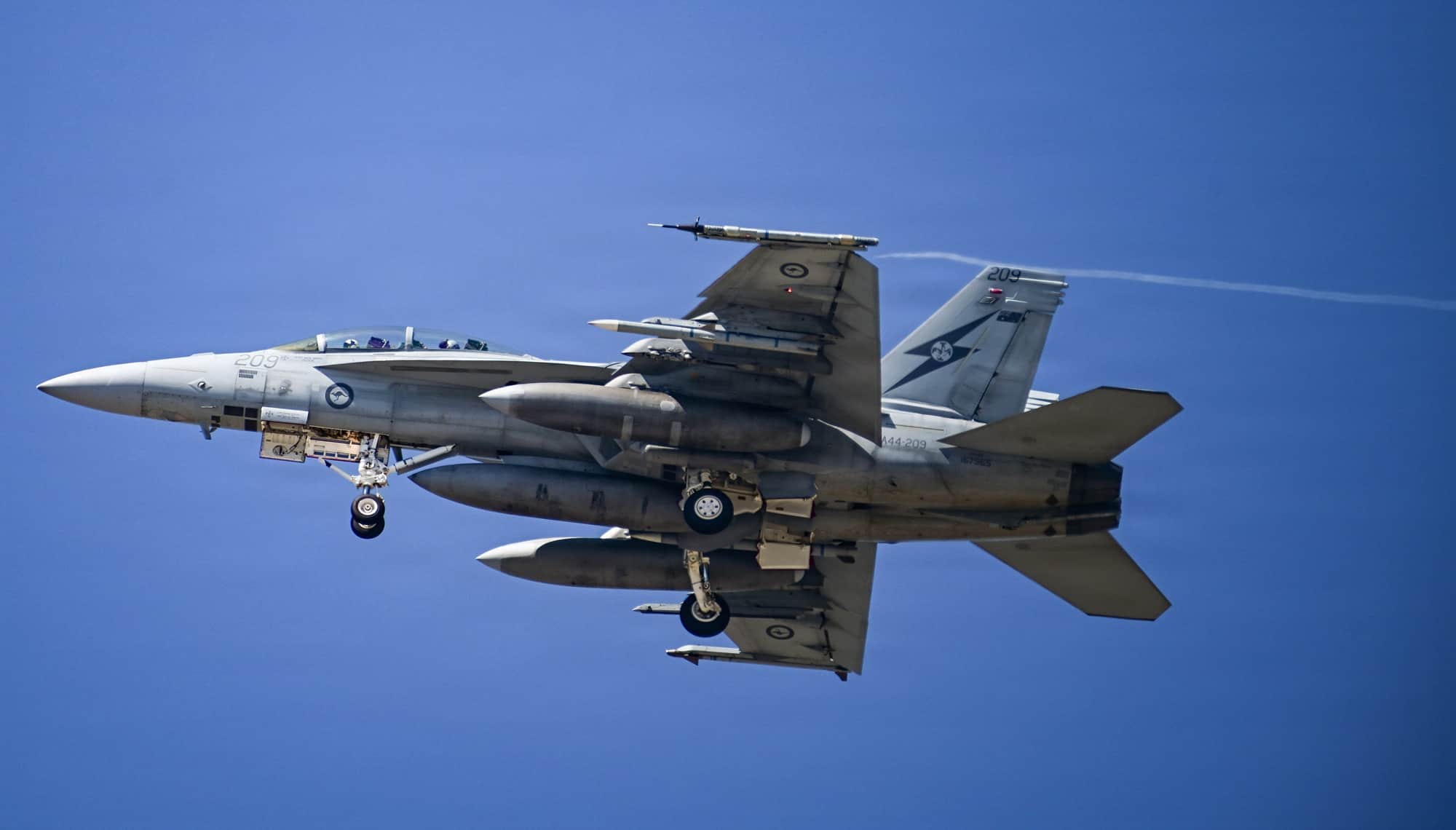
A RAAF Super Hornet was spotted with an inert AIM-260 missile during the Gray Flag 2026 test event, few weeks after Australia announced the procurement of the new weapon.
A Royal Australian Air Force F/A-18F Super Hornet was spotted carrying an inert AIM-260 Joint Advanced Tactical Missile (JATM) during the Gray Flag 2026 large-force test event at Naval Base Ventura County Point Mugu. The photo was captured on Sept. 11, 2026, although it was only released on Sept. 30.
The sighting comes few weeks after Australia announced that it would become the first country to operate the AIM-260 JATM outside the United States. In August 2026, the Australian government said it is investing almost $736 million to acquire the new missile via foreign military sales (FMS).
The AIM-260 will be first integrated onto Australia’s F/A-18F Super Hornet, followed by the F‑35A Lightning II and EA-18G Growler. The government said “The acquisition of the AIM-260 JATM will provide Air Force platforms with a credible deterrent against airborne targets, complementing existing air-to-air missile capabilities and other surface-based missile capabilities across the Australian Defence Force (ADF).”
AIM-260 on Australian Super Hornet
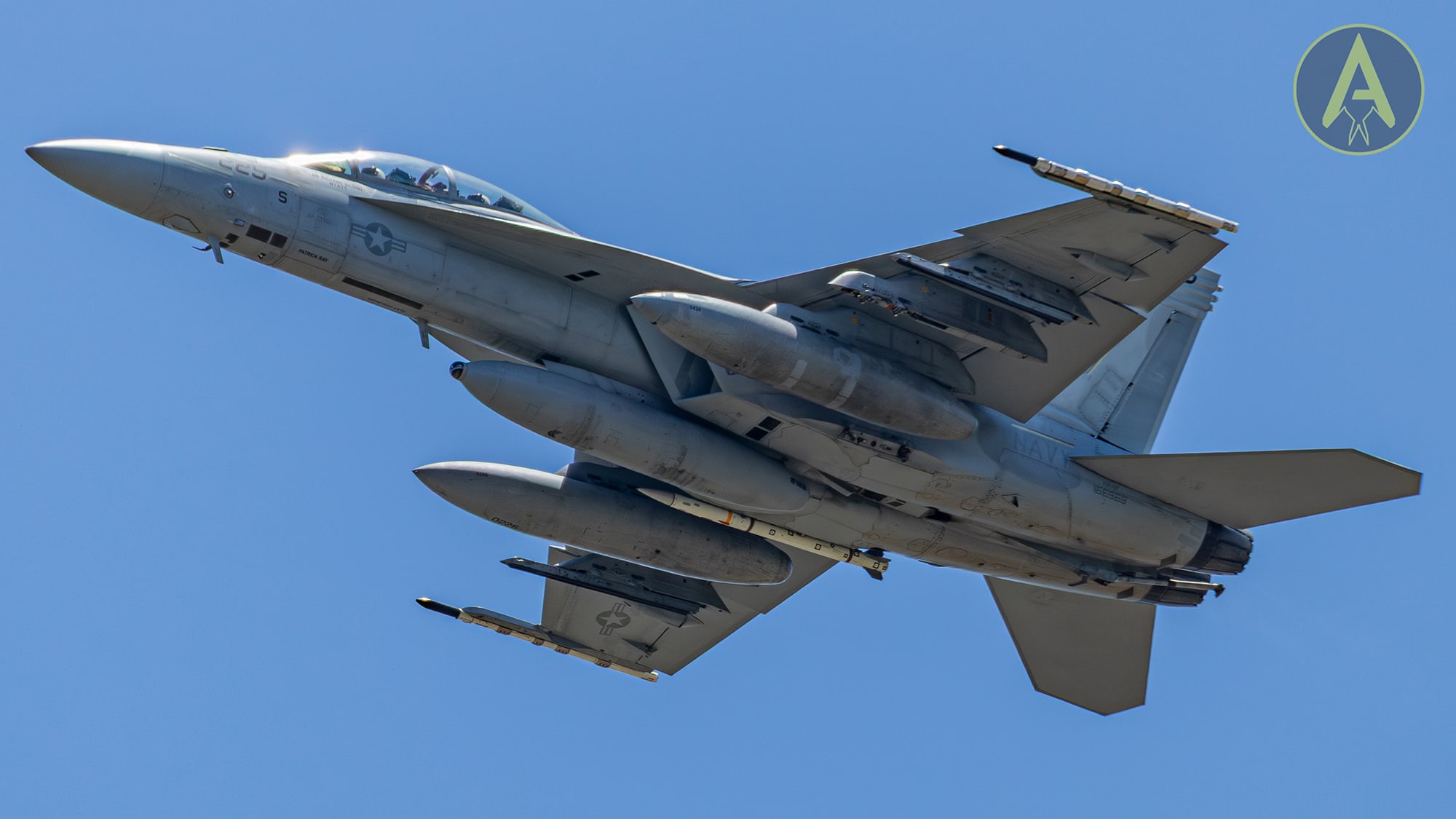
The photo captured at Naval Base Ventura County Point Mugu shows the F/A-18F Super Hornet, assigned to No. 1 Squadron, flying with a mixed loadout of inert air-to-air weapons. Similarly to the first sighting on a U.S. Navy Super Hornet, the AIM-260 can be seen installed on the weapon station 7, also known as “cheek station,” on the exterior of the air intake.
A Royal Australian Air Force F/A-18F Super Hornet assigned to No. 1 Squadron takes flight at Naval Base Ventura County Point Mugu during Gray Flag 2026, Sept. 11, 2026. | Source: U.S. Navy photo by Dana Rene White
The loadout also includes a CATM-9X (the inert training variant of the AIM-9X) on the right wingtip, as well as a CATM-120 (the inert training variant of the AIM-120 AMRAAM) on the weapon station 2, the left wing’s outermost pylon. The payload is completed by three external fuel tanks, a Tactical Combat Training System (TCTS) pod on the left wingtip and the AN/ASQ-228 ATFLIR targeting pod on the other cheek station.
Details about the test mission are not available, although there are no reports of live firing activity with the new weapon. The test mission might have involved the captive carry of the JATM in a representative operational scenario.
Gray Flag 2026
Gray Flag, held annually at Naval Base Ventura County Point Mugu, is the naval aviation test community’s premier large-force test event. This year’s edition, which ended on Sept. 25, was the largest to date, according to the Navy, with more than 750 sorties flown.
Gray Flag 2026 was hosted by the Naval Test Wing Pacific and Air Test and Evaluation Squadron (VX) 9, which led test execution with Naval Air Warfare Center Weapons Division. The latter manages the Gray Flag program and operates the Point Mugu Sea Range, a 36,000-square-mile instrumented range.
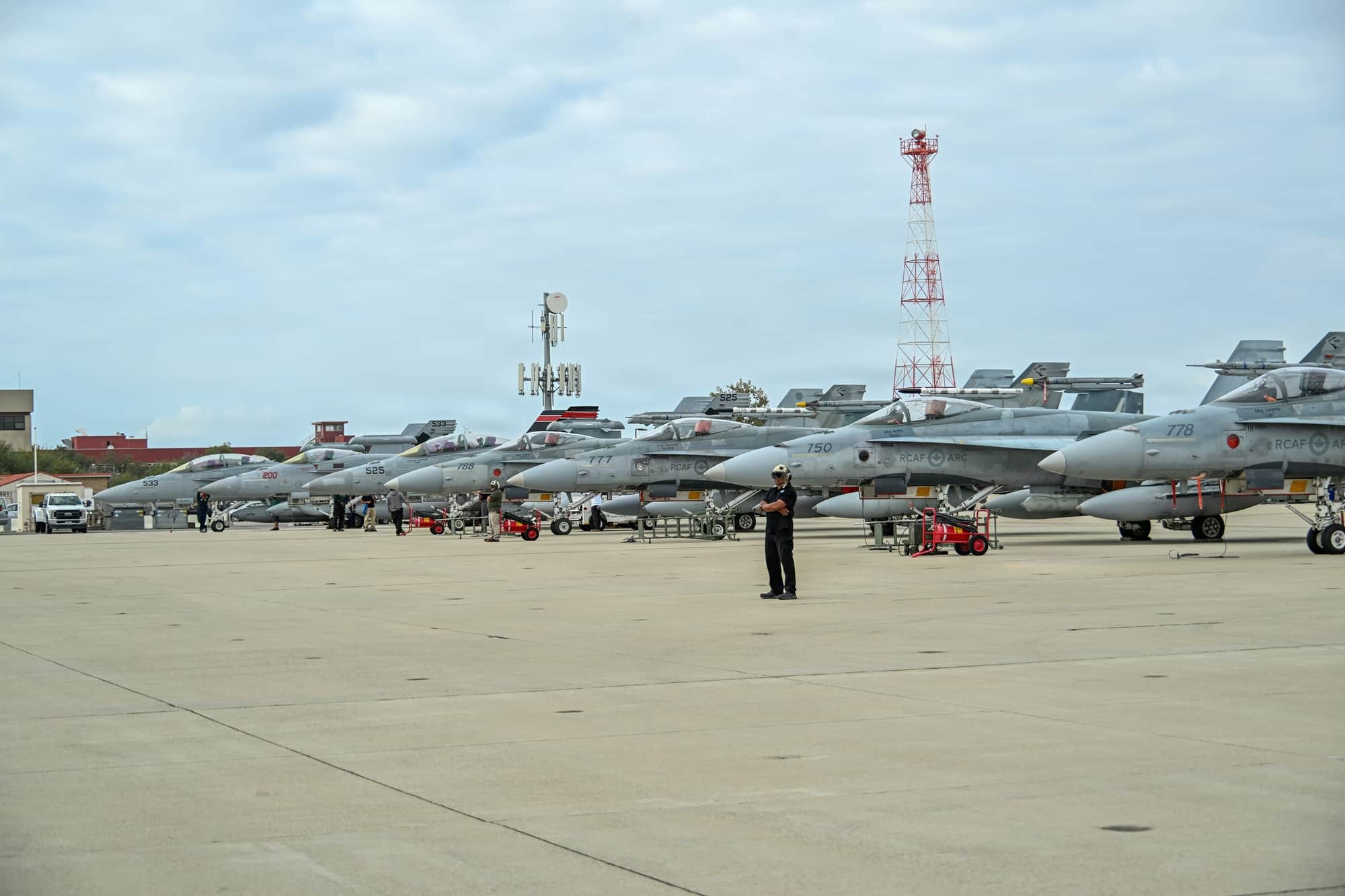
Royal Canadian Air Force CF-18 Hornets sit on the flight line at Naval Base Ventura County Point Mugu, Sept. 30, 2026. | Source: U.S. Navy photo by Katie Archibald
“Our range, combined with other test and training ranges around us, gives us the space and instrumentation to test new systems the way the joint force will use them,” said Rear Adm. Keith Hash, NAWCWD commander. “We want to find the problems here, fix them here and make sure what we send to the fleet works when the warfighter needs it.”
The service said the two-week event drew more than 3,000 participants from more than 150 organizations, and crews logged more than 2,000 flight hours covering hundreds of multi-domain test objectives for the fleet and joint force. U.S. Navy and Air Force test teams were joined by the Royal Australian Air Force, Royal Canadian Air Force and Royal Air Force.
“We leave much more informed with respect to future capabilities that enable Australia to shape our requirements for future projects and future platform upgrades that increase our lethality and survivability,” said RAAF Wing Commander Trent Baldry, commanding officer of No. 1 Squadron.
AIM-260 JATM
The existence of the AIM-260 Joint Advanced Tactical Missile was first revealed in 2019 by the Air Force, who is jointly developing the missile with the Navy. However, it was also revealed that the program had been ongoing for more than two years in 2019, meaning the program might have started in 2017 or earlier.
VX-31 F/A-18F carrying what appears to be an AIM-260 missile at Eglin AFB on May 13, 2026. | Source: Jonathan Tweedy
The AIM-260 is intended to serve as the primary long-range air-to-air weapon of both the U.S. Air Force and U.S. Navy in the coming years, becoming the successor to the AIM-120 Advanced Medium-Range Air-to-Air Missile (AMRAAM). The latter will continue to be developed, complementing the AIM-260.
The new missile will be compatible with the AMRAAM (Advanced Medium Range Air-to-Air Missile) dimensions, but with greater range, and is planned to be carried in the F-22 weapons bay and on the F/A-18 at first, with the F-35 to follow. The AIM-260 is also expected to be integrated on the U.S. Air Force’s upcoming unmanned Collaborative Combat Aircraft (CCA).
The missile is being developed and produced by Lockheed Martin. When the weapon was first unveiled, reports mentioned that AIM-260 production would overtake AIM-120 production by 2026, however, with the program’s details being highly classified and the recent boosts in the AMRAAM’s production, it is unclear if this goal still stands.
Initially, it was said the AIM-260 was also meant to counter the threat posed by the Chinese PL-15 and PL-17 missiles. The military in fact said the goal was to avoid foreign threats being able to outrange the AIM-120.
The project is an advanced state, with official saying in 2019 that flight tests would start in 2021 and Initial Operational Capability was expected in 2022, although the current timeline is unknown. Documents later showed that flight testing of the AIM-260 began as early as 2020.
A Flydubai Boeing 737 MAX 8 flying from Dubai to Tel Aviv diverted to Saudi Arabia after the two pilots reportedly became involved in a violent confrontation inside the cockpit.
A Flydubai Boeing 737 MAX 8 operating flight FZ1073 from Dubai International Airport to Ben Gurion Airport was diverted to Saudi Arabia on Sept. 30, 2026, after a serious incident developed inside the cockpit while the aircraft was enroute. The first hints about an ongoing incident arrived when the aircraft was noticed on flight tracking websites plummeting 14,000 ft in less than 30 seconds.
The aircraft later inverted the route and landed safely at Tabuk Airport, in northwestern Saudi Arabia, after transmitting a series of emergency signals. All passengers, approximately 174 – many of which from Israel, were reported safe and accounted for by Flydubai, while Saudi authorities said that both pilots sustained injuries and were taken to hospital.
Flydubai flight #FZ1073, a Boeing 737 MAX 8, registration number A6-FKF, flying from Dubai to Tel Aviv, diverted to Tabuk, Saudi Arabia, following an onboard security incident.
Timeline (UTC):
03:05 — Take off from Dubai
05:21 — Altitude fluctuations begin
05:22 — Aircraft drops… pic.twitter.com/xFS6138BIA
The incident initially triggered fears of a hijacking because the aircraft briefly transmitted the international transponder code 7500, which indicates unlawful interference. As a precaution, Israeli authorities scrambled fighter aircraft and held urgent security consultations while the airliner approached Israeli airspace.
Flydubai FZ1073, a Boeing 737 MAX 8, was diverted to Saudi Arabia after a serious cockpit incident during its approach to Tel Aviv on Wednesday.
The flight from Dubai to Ben Gurion Airport transmitted emergency squawk 7700 before switching to 7500, the international code for… pic.twitter.com/ufELugunfO
Following the landing, Israeli officials said that the aircraft had not been hijacked. Instead, the emergency appears to have resulted from a violent confrontation between the two pilots, which was stopped with the help of the cabin crew and passengers.
The flydubai flight that landed at Tabuk Airport in Saudi Arabia appears to have sustained damage to the rudder, likely due to the rapid plunge it took amid the incident. pic.twitter.com/A2paTx7TUf
Images which emerged following the landing show that the aircraft suffered substantial damage, with the rudder missing a large part. During the descent, the Boeing 737 reportedly exceeded its maximum operating speed.
A violent altercation and stabbing in the cockpit of a FlyDubai flight over Saudi Arabia this morning caused the 737-8 to plummet 18,400 feet in just under two minutes, exceeding its maximum operating speed by nearly 100 kts.
FZ1073 departed Dubai early in the morning, at 03:05 UTC, on a scheduled flight to Tel Aviv. According to publicly available flight-tracking data, the Boeing 737 was cruising at approximately 34,000 feet when it suddenly began a sharp descent at 05:22 UTC, according to data provided by Flightradar24 and AirNav Radar.
Between 05:22:07 and 05:22:36 flight #FZ1073 dropped from 30,875 feet to 16,750 feet (-14,125 feet in just 29 seconds) pic.twitter.com/hHfnX7cKWI
The aircraft reached approximately 15,000 feet in less than 30 seconds. This abrupt maneuver was followed by a sharp climb and another sharp descent, before the aircraft stabilized at approximately 15,000 feet and continued the flight toward Saudi Arabia.
The sequence was accompanied by a series of emergency transponder codes which were transmitted from 05:31 UTC, about ten minutes after the beginning of the first descent. The aircraft first transmitted 7700, the internationally recognized transponder code for a general emergency.
03:05 — Take off from Dubai International Airport
05:31 — Squawk changed to 7700
05:38 — Squawk changed to 7500
06:11 — Aircraft left Flightradar24 ground-based coverage
06:28 — Squawk 7700 received via satellite
06:58 — Last signal… pic.twitter.com/ChlUs4kRDU
Several minutes later, it briefly transmitted 7500, the standardized code which indicates possible unlawful interference, raising concerns that the aircraft could have been hijacked. The aircraft subsequently returned to 7700 before turning south and diverting toward Tabuk.
Meanwhile, Israeli fighter aircraft were scrambled as authorities attempted to determine what was happening aboard the aircraft. The incident also prompted urgent consultations involving Israeli officials, reportedly including Prime Minister Benjamin Netanyahu.
An Israeli official subsequently told Reuters that the emergency signals had been transmitted following a physical altercation between the two pilots.
What Happened in the Cockpit?
The precise sequence of events remains under investigation, but increasingly detailed accounts from Israeli officials and passengers point to a violent confrontation between the pilots. Reuters reported that two Israeli officials said the current Israeli assessment was that the incident may have been an attempted terror attack.
Following situation assessments and passenger testimonies, Israel is treating the incident as a full-fledged terrorist attack. It appears that the co-pilot repeatedly stabbed the captain. Once the attack began, several crew members and passengers managed to break through the… https://t.co/BXS4kIjGXk
“During the flight, as they were approaching Israel, one of the pilots stabbed the other pilot and, apparently, tried to crash the plane with its passengers on board,” said Netanyahu.
After speaking with passengers, the Prime Minister said a passenger and one of the crew members were able to break into the cockpit and overpower the pilot, while another crew member managed to stabilize the aircraft. The pilot who carried out the stabbing was arrested upon landing by Saudi authorities.
Israeli media have also circulated a photograph purportedly showing a passenger with a blood-soaked shirt. Reuters said it was unable to independently verify the photograph.
Meanwhile, Saudi authorities have confirmed that both the pilots were injured. The precise nature and severity of their injuries has not been fully disclosed, although authorities confirmed that both were transported to hospital for medical treatment.
Flydubai later sent two replacement planes to Tabuk, and all the passengers of flight FZ1073 have now departed Saudi Arabia.
One of the most well-known bombers of all time, the B-17 Flying Fortress became famous for the long daylight bombing raids over Europe in WWII. While it lacked the range and bomb load of its contemporary B-24 Liberator, the B-17 became the more famous of the two due to the many tales of B-17s bringing their crews back home despite heavy damage. With up to thirteen machine guns, the B-17 seemed to be genuine flying “fortress in the sky.”
Ask anyone who has seen one, heard one, or flown one “Is the B-17 the best bomber ever built?” They will likely give you more explanations than you care to hear about this magnificent aircraft. To most warbird enthusiasts, there is just nothing like a B-17 Flying Fortress. As explained by Brent William Perkins in his book Memphis Belle: Biography of a B-17 Flying Fortress, with the classic lines of the early military, the Fort typifies what a heavy aircraft ought to look like. A large sweeping tail and broad wings, along with the angled windshield and distinctive nosepiece make the B-17 stand out among other designs.
Just sitting still, a B-17 gives the appearance of a warrior, while at the same time showing the graceful curves of a Hollywood movie star. Bristling with heavy machine guns in every direction and sitting tail low as if it is ready to leap into the air where, with its broad and deep wings, it finds its home. Dubbed “The Flying Fortress” by Richard Williams, newspaper reporter for the Seattle Times, the bomber was conceived under the Boeing proposal known as the model 299. It was April 1934, and a flyable prototype had to be ready in less than one year.
Ensuring total victory
Boeing Model 299
With the certainty of war on the horizon, military strategists were looking towards airpower to ensure total victory. At the time, there was no bomber in the US arsenal that could meet the coming demands that aerial warfare would require. The US Army Air Corps (the USAF was not born until 1947) needed more range, precision weapons delivery, and combat survivability than the aircraft in the inventories could handle at that time. The call went out. Design a bomber that can fly for ten hours at 25,000 feet, can climb to 10,000 feet in five minutes, and can maintain 7,000 feet with the designed useful load and one engine out.
Boeing had done it. After spending only $275,000.00, the 299 rolled out of the factory on Jul. 17, 1935. The 299 could carry up to 4,800 pounds of weapons in the bomb bay just a little more than a the year after going on the drafting tables. Little did they know that they had designed an aircraft that would set the standards for high altitude bombing through the end of the century.
Only one month and three days after roll out and accumulating some 14 hours and 5 minutes of test time, the 299 took off from Seattle, WA, bound for Wright-Patterson near Dayton, OH. Nine hours and three minutes later it put the rubber on the runway in Ohio. Average ground speed was 233 mph. This flight stole the show from the up and coming Douglas B-18, which was really just a beefed up DC-2. It also overshadowed the much worked over Martin B-10.
B-24 Vs B-17
On Jan. 17, 1937, the Air Corps placed an order for thirteen YB-17s. Production for the plane would run a little more than eight years through August 1945, after some 12,731 Fortresses were built. It is believed that around 10,000 of these actually left the United States for assignments all over the world. Despite the Fort’s uncanny ability to survive major battle damage, roughly 4,500 B-17s were lost in combat flying mainly from the European Theatre of Operations and the unsinkable aircraft carrier known as the United Kingdom. From this island, the mighty Eighth Air Force launched the greatest air armada ever—where the sky roared for a thousand days and the Boeing B-17 Flying Fortress marked its place in history.
Huge selection of WWII aircraft diecast models to choose from – get yours here.
Is the B-17 the very best bomber ever built’? For years, the argument has continued between the B-17 and the Consolidated B-24 Liberator. Was the B-24 the better plane? This question has consumed far too many for far too many years. The Liberator carried more, was faster, and could fly higher than the B-17. Although they did fly next to each other in combat, their role was a little different. The Flying Fortress and the Liberator complimented each other and were never meant to be competitors. However, competition was inevitable, as they were both successful bombing platforms.
New bomber designs
The two bombers were simply the result of an exhaustive search by the War Department through aircraft builders for the new bomber designs that were so badly needed. Of the design submissions, the -17 and the -24 were the best. Their designs were simply the result of what was needed at the time. Consider the numbers. B-24 production ran up to 18,188 of the huge twin-tailed leviathans. However, by the end of the war, so many modifications had been made to the B-24 that it could no longer fly further or faster than the B-17.
Wartime Impact – The ability to penetrate hostile airspace, weather enemy threats, carry the correct bomb load, deliver the load successfully, and return home. Defensive Characteristics – From single barrel machine guns through electronic counter measures, stealth, and even speed. What bomber defends itself better than any other? Range – Could the bomber launch, ingress, loiter, deliver, and return? Available Bomb Load – What could carry the most and how many different types of weapons could it haul? Accuracy – The result of the bomb delivery system and the aircraft’s stability and control predictability. Survivability – Evading or withstanding enemy ground-fire and aerial attack. What bomber had the lowest loss to sortie ratio?
B-17: The best bomber ever built
B-17 and B-24 bombers
From the time that aerial bombing began through today, these aircraft stand out among the very best ever designed: the German Gotha bombers; the Heinkel 111; the B-17; B-24; Lancaster; Aichi D3A Val; the B-47 Stratojet; the B-52 Stratofortress; the FB-111; the B-58 Hustler; B-1 Lancer; B-2 Spirit and more.
Most agree, given the above criteria, that the Boeing B-17 Flying Fortress is the best bomber ever built. Apparently, the US military felt the same way. The baker one-seven was not fully retired from active service until the late 1960s!
The debate over which was the better plane began early in the War and continues even today. General James Doolittle wrote his studied comparisons, in which he partly stated that in an effort to improve the B-24’s defensive characteristics, performance was compromised at the expense of the added weight of the armor and armament. One very unusual example of the Army Air Corps attempt to improve on the Liberator was to graft the entire front of a B-17G onto a B-24J. The results were terribly unsuitable, and only three tests were flown by this plane. The hybrid bomber could only climb to 18,000 feet and lacked both longitudinal and directional stability.
One note from the study report stated that the installation increased the already excessive basic weight of the B-24J. But the Bombardier and Navigator reported that they favored the increased room in the forward compartment over the traditional B-24 arrangement.
Memphis Belle: Biography of a B-17 Flying Fortress is published by Schiffer Publishing and is available to order here.
Photo credit: Airwolfhound from Hertfordshire via Wikipedia, UK San Diego Air & Space Museum and Senior Airman Curt Beach/U.S. Air Force
The new award is a step towards the Air Force’s planned fleet of 267 F-15EXs, replacing the aging F-15C/D Eagle and also beginning the recapitalization of the F-15E Strike Eagle fleet.
As The Aviationist had reported, the larger acquisition will allow the service to begin the recapitalization of the aging F-15E Strike Eagle fleet, in addition to replacing the F-15C/D Eagle which the F-15EX was originally meant to supplant. The award of the new contract also comes on the same day Boeing was chosen by the Navy for its F/A-XX next-generation fighter jet, after being selected last year for the Air Force’s F-47 NGAD.
Air and Space Forces Magazine, considering the $2.38 billion contract value disclosed by Boeing, estimated an average cost per airframe of $108 million. This value does not include the GE Aerospace F110-GE-129 engines, which the Air Force will purchase separately.
Boeing, for its part, said that it is currently delivering Lot 3 aircraft, and will continue for the remainder of this year. The deliveries of the Lot 3 started earlier this month with the delivery of the EX-22. The company also added that it is working with the Department of War (DoW) and the U.S. Air Force to hike F-15EX production to two aircraft a month.
The DoW also awarded on Sept. 29 another F-15EX-related contract to the Wisconsin-based Astronautics Corp. of America for the fighter’s engine fuel hydraulic display depot activation. The $10 million sole-source acquisition contract covers the “knowledge, skills and operational resources to independently perform depot-level repair of F-15EX engine fuel hydraulics display.” Work will be performed at Oak Creek, Wisconsin, and is expected to be completed by October 2029.
F-15EX Lot 7 contract
Air & Space Forces Magazine also reported that the Sept. 29 contract came just before a deadline for using funds allocated through last year’s $2.8 billion ‘One Big Beautiful Act’ reconciliation package and the $115 million in the FY 2026 budget. The Trump administration’s 2025 reconciliation bill mandated a reduction of the allotted funds by 8.3% if they were not spent by Oct. 1, creating pressure to award the contract to Boeing before the fiscal year ended on Sept. 30.
The press release by the Air Force Life Cycle Management Center (AFLCMC) reflected the urgency in closing the deal with Boeing:
“Through focused, complex negotiations, the F-15 Program Office and Boeing reached an agreement that maintains the procurement of all 22 Lot 7 aircraft within available funding […] This award followed extensive collaboration among program management, contracting, pricing, engineering, financial management, logistics and other acquisition professionals. The team assessed the impacts of changing production conditions and inflation, aligned the aircraft procurement with available funding, and completed the action before the fiscal-year deadline.”
A U.S. Air Force F-15EX Eagle II designated for Kadena Air Base, Japan, flies en route to Portland Air National Guard Base, Oregon, after departing Boeing’s St. Louis facility, Aug. 28, 2026. | Source: U.S. Air Force photo by Senior Airman Melany Bermudez
Portfolio Acquisition Executive for the Fighters and Advanced Aircraft Directorate Brig. Gen. Timothy Helfrich described the Lot 7 contract as a disciplined approach that balanced available resources and industrial capacity. “The team remained focused on affordability, production continuity and delivering the aircraft needed to modernize the U.S. Air Force’s fighter fleet for the threats we face today and into the future,” Helfrich said in the release.
The release noted functional areas such as senior-level decisions, cost, schedule, and aircraft quantity that the team carefully accounted for before awarding the contract to Boeing.
“The Lot 7 award demonstrates what is possible when the acquisition enterprise moves with purpose, remains accountable to the taxpayer and stays focused on delivering capability to the warfighter,” said Col. Jonathan Varoli, System Program Manager of the directorate’s F-15 Program Office. “This effort brought together the right expertise, at the right time, to achieve an outcome that strengthens the F-15EX program and supports the future fighter force.”
Flying high for 5⃣!
Five years ago, the first #F15EX test jet flew. Since then, F-15EX has really taken off, completing hundreds of test flights and achieving several milestones — including Initial Operational Capability. Now, we’re delivering over 100 jets to the @USAirForce. pic.twitter.com/qwz6yEulL1
The F-15EX is the modern evolution of the twin-engine heavyweight multirole jet, featuring advanced avionics, large-area displays, digital backbone architecture and enhanced survivability capabilities. “It is intended to replace aging F-15C and F-15D aircraft while providing a platform for continued modernization as operational requirements evolve,” the Air Force said.
One of its defining features is the AN/ALQ-250 Eagle Passive Active Warning Survivability System (EPAWSS), an electronic warfare suite that provides integrated radar warning, threat detection and advanced jamming and countermeasure capabilities.
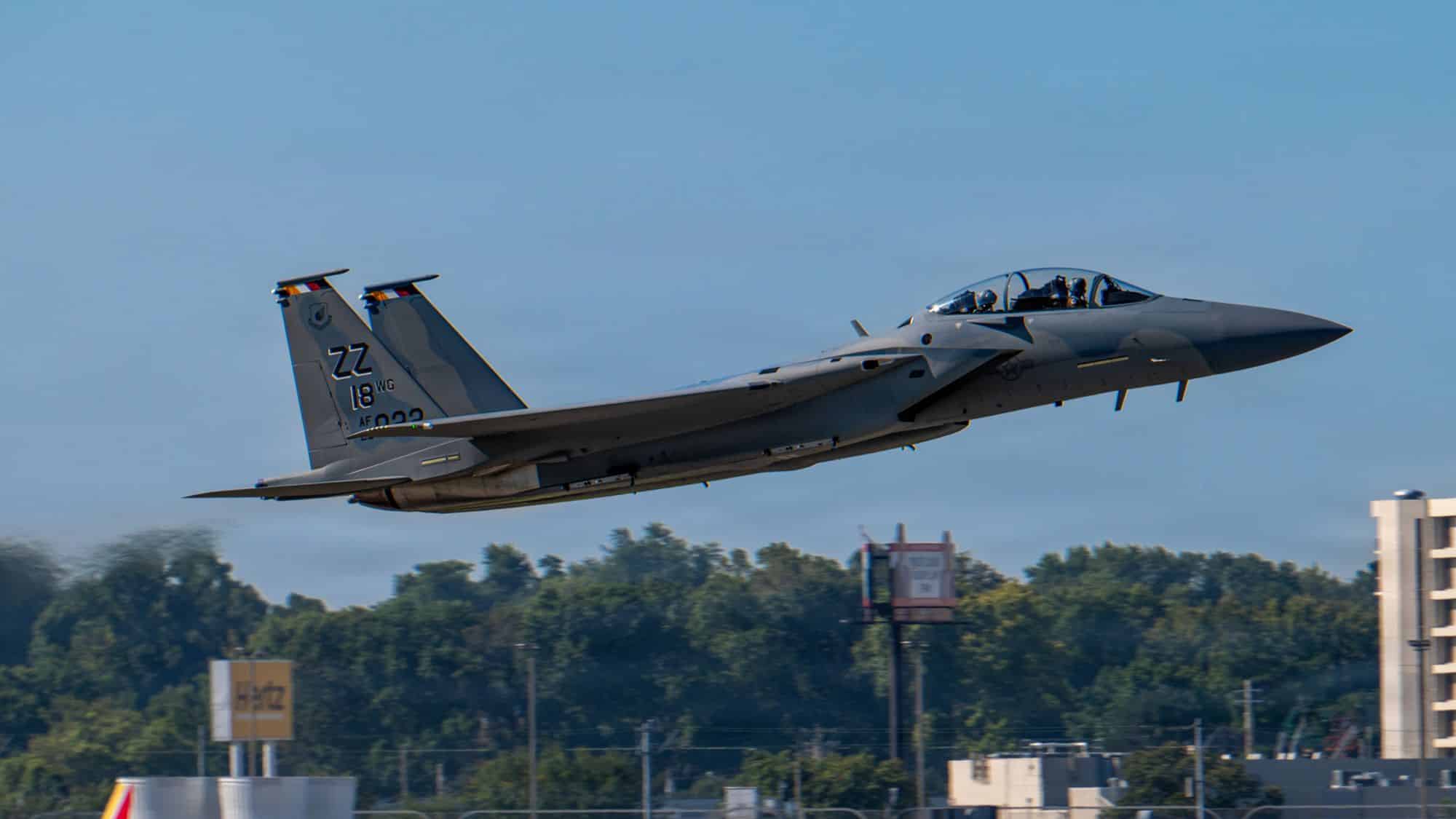
Thanks to its capabilities, the F-15EX is also being introduced in the Indo-Pacific, with Kadena Air Base in Japan, home to the Air Force’s 18th Wing, selected as its first permanent overseas operating location.
Jay Lacklen is a retired Air Force reserve pilot with 12,000 military flying hours. He grew up in Arlington, VA, and graduated from the University of North Carolina-Chapel in 1969. He entered service in 1970 and retired in 2004 as a Lt Col with 12,500 flying hours. Lacklen taught Air Force T-1 pilot training simulators at Columbus AFB, Mississippi from 2005-2014. He grew up in Arlington, VA and graduated from the University of North Carolina-Chapel Hill in 1969. In addition to pilot training aircraft, he flew 330 hours in the C-7 Caribou, 2000 hours in the B-52 bomber, and 9,500 hours in the C-5 Galaxy transport.
He flew in all major military actions from Vietnam to the Iraq War. Lacklen lives in northern Virginia and is married with four adult daughters and two granddaughters.
The Central Highlands could present challenges. The often austere fields lay between ridge lines or, in one case, sat on a planed-off hilltop that sloped away in all directions.
Huge selection of transport diecast models to choose from – get yours here.
I once watched my aircraft commander make three attempts to land on one. The steeply sloping terrain made judging the landing difficult. All normal visual cues told the brain you were still far above the field, and yet, suddenly there it was, immediately below you, leaving the plane too high to land. Finally, on the third frustrating try, the pilot, although still too high, decided to put it down anyway. I couldn’t believe he would try it, but I had no control over the situation except, perhaps, to scream.
The pilot dove the aircraft at the 1,500-foot runway, then yanked back hard on the yoke just above it. Unfortunately, the dive had increased our airspeed, so the plane floated, possibly catastrophically, down the short runway.
Metal runway
We touched down with about seven hundred feet remaining on the slippery PSP metal runway before the terrain dropped steeply into the jungle. The pilot slammed on the brakes and yanked the engines into reverse. The plane skidded and rotated slowly sideways as the reversed props threw up a huge dust cloud that enveloped us. Even though I couldn’t see the precipice through the dust, I knew it was approaching and we’d be lucky not to roll off the end and down the steep slope.
We stopped, blessedly, on level ground. The pilot took the throttles out of reverse, and the dust cloud slowly dissipated as we both sat gasping and speechless. Looking forward, I could not see level ground, only the jungle a hundred feet below. We had stopped with just enough runway overrun remaining to turn sharply to taxi back to the cargo ramp area. Another five feet and we’d have been bouncing down the slope into the jungle, and infamy.”
SM-6, Sea Venom, and Naval Strike Missile munitions were paired alongside a Mark 48 ADCAP torpedo to send the decommissioned Oliver Hazard Perry class frigate to the bottom of the Atlantic Ocean.
Concluding Exercise Atlantic Thunder 2026, the sink exercise (SINKEX) was conducted in the Northern Atlantic off the Outer Hebrides in Northern Scotland. The former USS Klakring, an Oliver Hazard Perry class frigate commissioned in 1983 and decommissioned in 2013, was specially prepared for the exercise with extensive cleaning and hazard removal.
The SINKEX was used to validate the capabilities of a number of new munitions which have entered service in recent years. Arleigh Burke class guided missile destroyer USS Paul Ignatius (DDG 117) fired an SM-6 missile in its secondary role as an anti-ship weapon, testing the performance of the missile towards the upper end of its range.
Decommissioned Oliver Hazard Perry-class frigate USS Klakring (FFG-42) being towed out of Philadelphia Naval Inactive Ship Maintenance Facility (NISMF) for SINKEX reportedly around Scotland – August 12, 2026 SRC: FB- Delaware River Shipping / John Curdy pic.twitter.com/y5JIvPBLVu
“Atlantic Thunder demonstrates the unmatched lethality and interoperability of the United States and United Kingdom,” said Captain Kelechi Ndukwe, Commander, U.S. Task Force 65. “This sinking exercise not only validated the power behind U.S.-UK offensive weapons but delivers a clear message to adversaries that the U.S. Navy and Royal Navy remain a ready allied force.”
New onboard SINKEX views — including some wild slo-mo
US-UK forces send the decommissioned guided-missile frigate USS Klakring to the bottom of the Atlantic
Blows delivered by USS Paul Ignatius, the newly commissioned USS Massachusetts, others
Royal Navy Type 23 frigate HMS Portland (F79) used the opportunity to conduct the service’s first ever ‘warshot’ launch of the Norwegian-built Naval Strike Missile (NSM) that has replaced the Harpoon in UK service. Petty Officer James Kenyon, an Above Water Warfare specialist on HMS Portland, said: “Being the first person to fire war-shot NSM and achieve a hit is a very proud moment, and one that will stay with me for the rest of my career. This was the culmination of over a year’s effort in planning and bringing the drills into service, and I am glad that I was able to contribute.”
Lieutenant Commander Louise Kirkaldy, Portland’s Principal Warfare Officer (PWO), said: “The successful firing of NSM marks a significant milestone for the Royal Navy, demonstrating our ability to deliver credible, modern maritime strike capability.”
HMS Portland launches a Naval Strike Missile during Exercise Atlantic Thunder off Scotland, striking the decommissioned USS Klakring in the Royal Navy’s first operational firing of NSM.
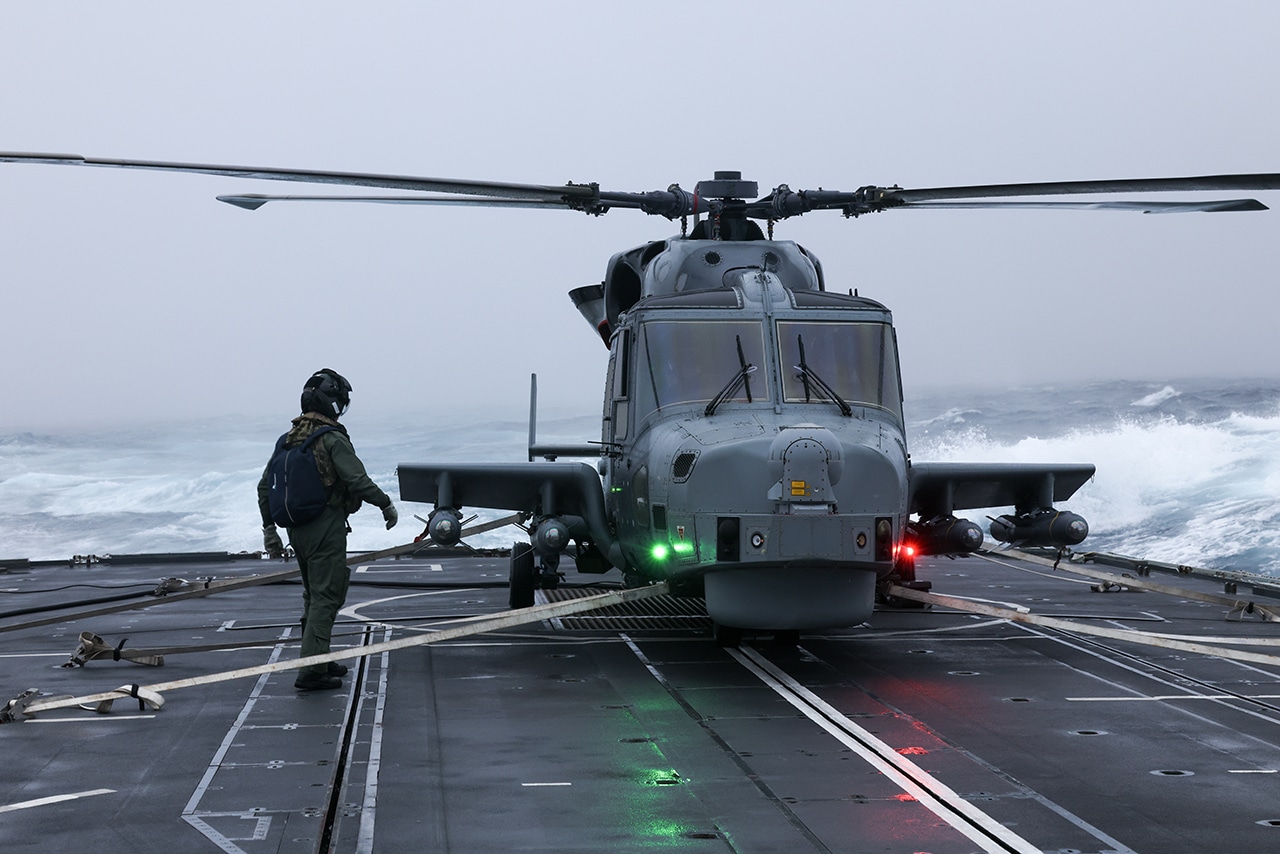
Portland’s contribution was added to by the ship’s embarked Wildcat helicopter, hailing from 815 Naval Air Squadron. In another first, the Wildcat fired a Sea Venom anti-ship missile at the Klakring in the first operational live firing of the weapon type against a realistic target.
A Wildcat helicopter can carry as many as four Sea Venom missiles per sortie, with each weapon packing a 120 kilogram warhead. Though much smaller than ship-killing weapons like NSM and Harpoon, the Sea Venom is designed to deliver enough destructive capability to destroy smaller naval vessels, or using multiple finely targeted missiles complete a successful mission kill against larger frigate or destroyer sized targets.
HMS Portland’s Wildcat Wildcat, prior to takeoff. | Source: LPhot Henry Parks/Crown Copyright 2026
Lieutenant Commander Rhydian Edwards, Test & Evaluation Commander, Maritime Aviation Strike Operational Advantage Group, said: “This was a landmark moment for the Wildcat Force. For the first time we demonstrated the live firing of an operational Sea Venom missile against a representative maritime target. More importantly, we proved our ability to execute the full maritime strike kill chain under realistic operational conditions.”
“This was about giving commanders confidence that Wildcat can find, fix and strike maritime targets using Sea Venom as part of a wider task group. The lessons learned from this activity will directly inform future tactics, training and operational capability development, ensuring Maritime Aviation Strike remains ready to fight and win when called upon.”
More air-launched munitions came in the form of guided bombs dropped by F-15E Strike Eagles based with the 48th Fighter Wing (FW) at RAF Lakenheath. P-8 Poseidon maritime patrol aircraft from the U.S. and UK also took part in the SINKEX, though no weapon launches have been attributed to them and their contribution may have simply been as surveillance platforms.
Finishing off the Klakring, the USS Massachusetts (SSN 798), commissioned into the U.S. Navy in March 2026, targeted the frigate with a Mark 48 Advanced Capability (ADCAP) torpedo.
USS Massachusetts (SSN 798) Virginia-class Block IV attack submarine leaving Faslane, Scotland – September 11, 2026 SRC: FB- Argyll Sea Glass pic.twitter.com/Ba4k7jzjyJ
Massachusetts, the 25th Virginia class submarine, was pushed into service without the traditional post-commissioning shakedown period in order to mitigate current shortfalls in U.S. attack submarine availability. The decision has been described as a ‘calculated risk’. The submarine was noted at the Royal Navy’s Faslane base earlier in September.
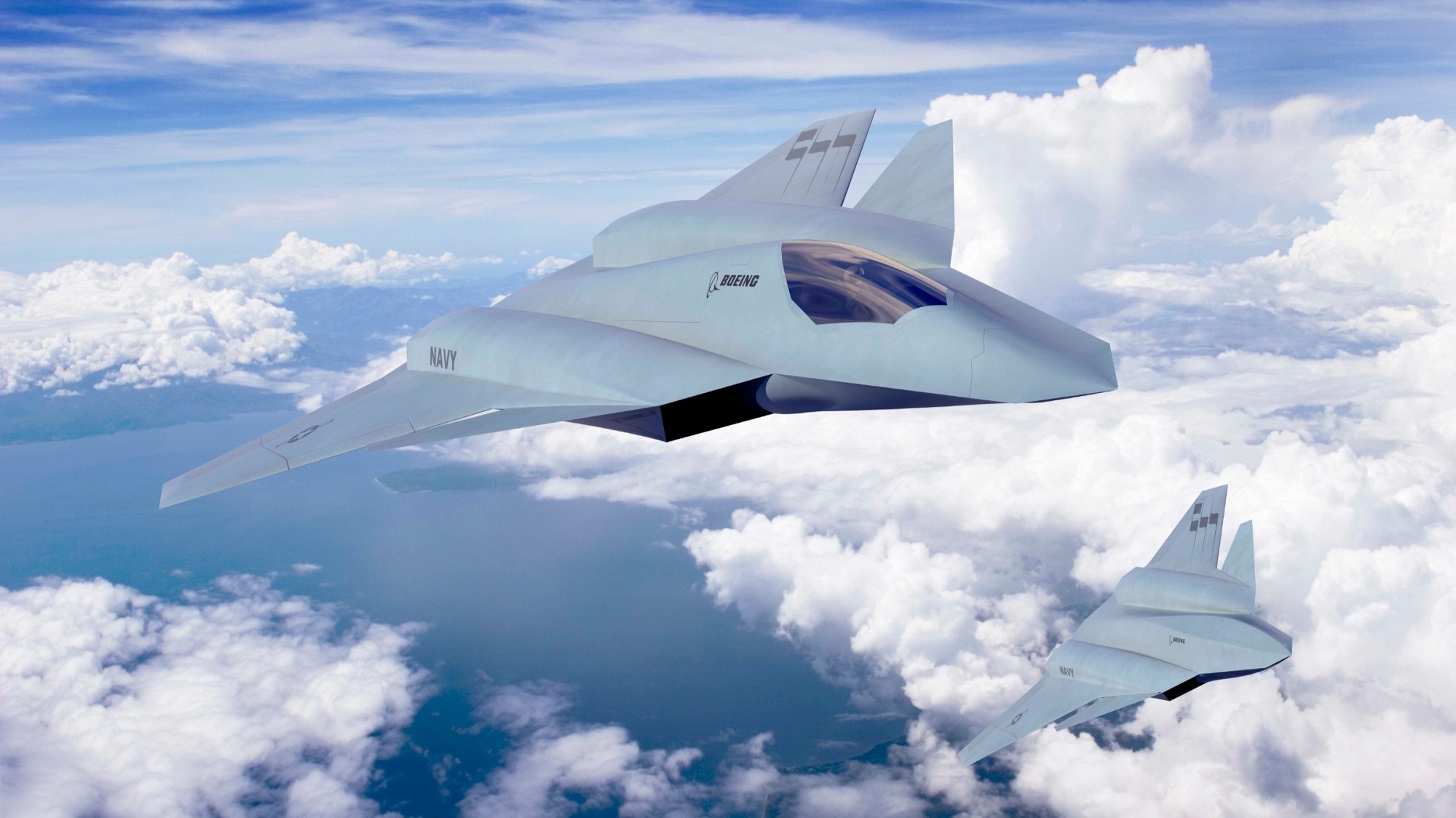
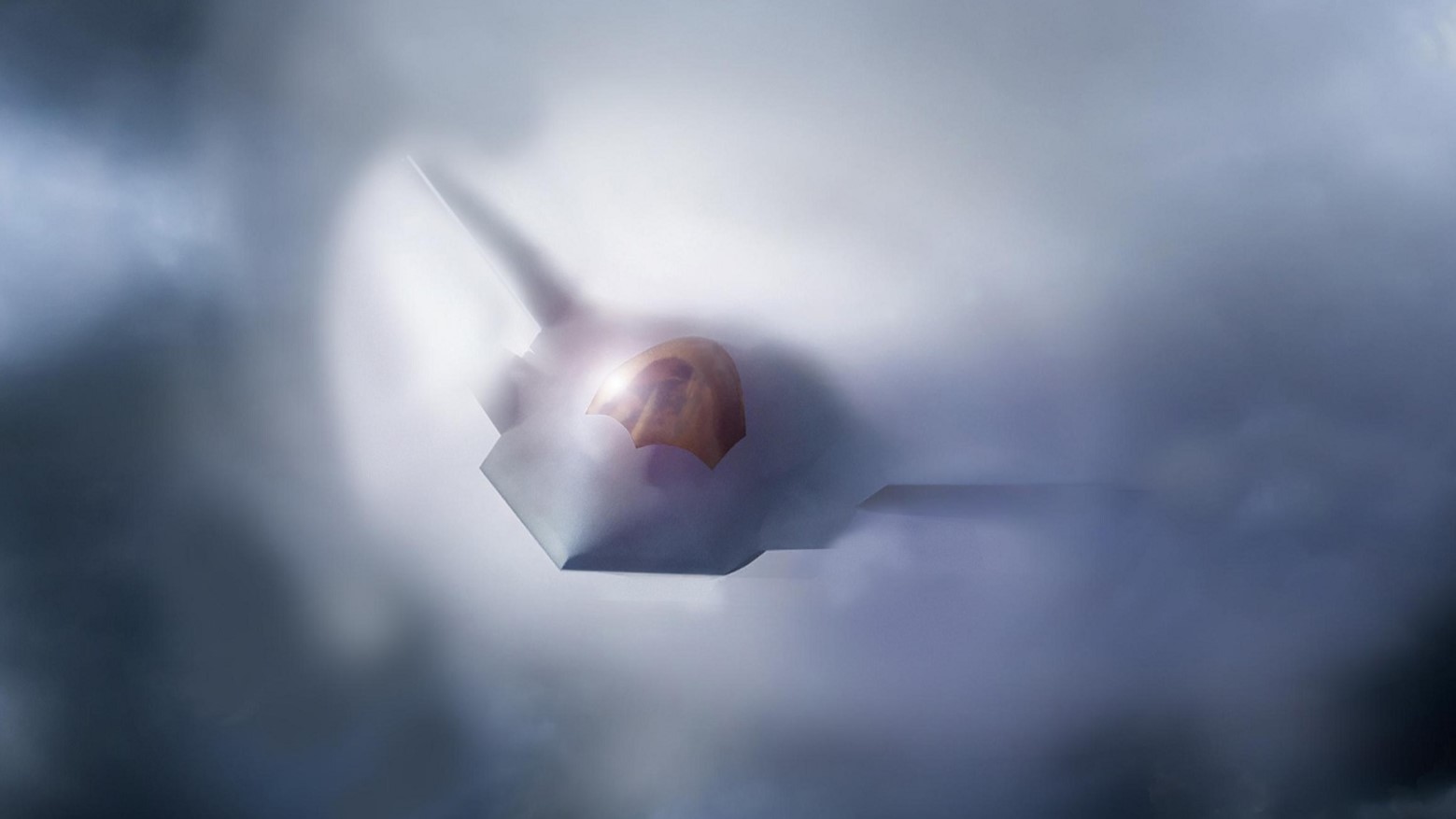
The US Navy announced Boeing has been awarded a multi-billion-dollar contract to produce its F/A-XX aircraft. The fighter will revolutionize advancements in open mission systems architecture, advanced mission systems and operational reach and capacity. F/A-XX is intended to replace the service’s fleet of F/A-18 Super Hornets.
“It’s an honor to be selected to produce the Navy’s first sixth-generation platform. Backed by decades of work, bolstered by game-changing innovations and solidified by the investments we’ve made in new facilities uniquely suited to build multiple products with next generation capabilities, our dedicated and talented team is ready to execute this critical program,” said Steve Parker, president and chief executive officer, Boeing Defense, Space & Security, in a company news release.
“Delivering two advanced fighters in parallel was always our plan, and we invested accordingly. We are ready and able to build multiple concurrent future combat aircraft franchise programs,” said Parker.
Construction continues on Boeing’s secure manufacturing facility, the largest in the U.S. Located in St. Louis, the facility will be part of the world’s most advanced, all-digital aerospace design and manufacturing system.
“Investment in facilities is just one part of the story; we’re also investing in technology and people so that we can deliver for our customers,” Parker added.
The technical and programmatic details of F/A-XX remain classified under US national security and export laws.
Northrop Grumman Vs Boeing
Noteworthy, only Northrop Grumman and Boeing were left to race one against the other in the US Navy Next Generation Air Dominance (NGAD) sixth-generation fighter jet program aimed at replacing F/A-18E/F and EA-18G aircraft by means of a new air superiority fighter.
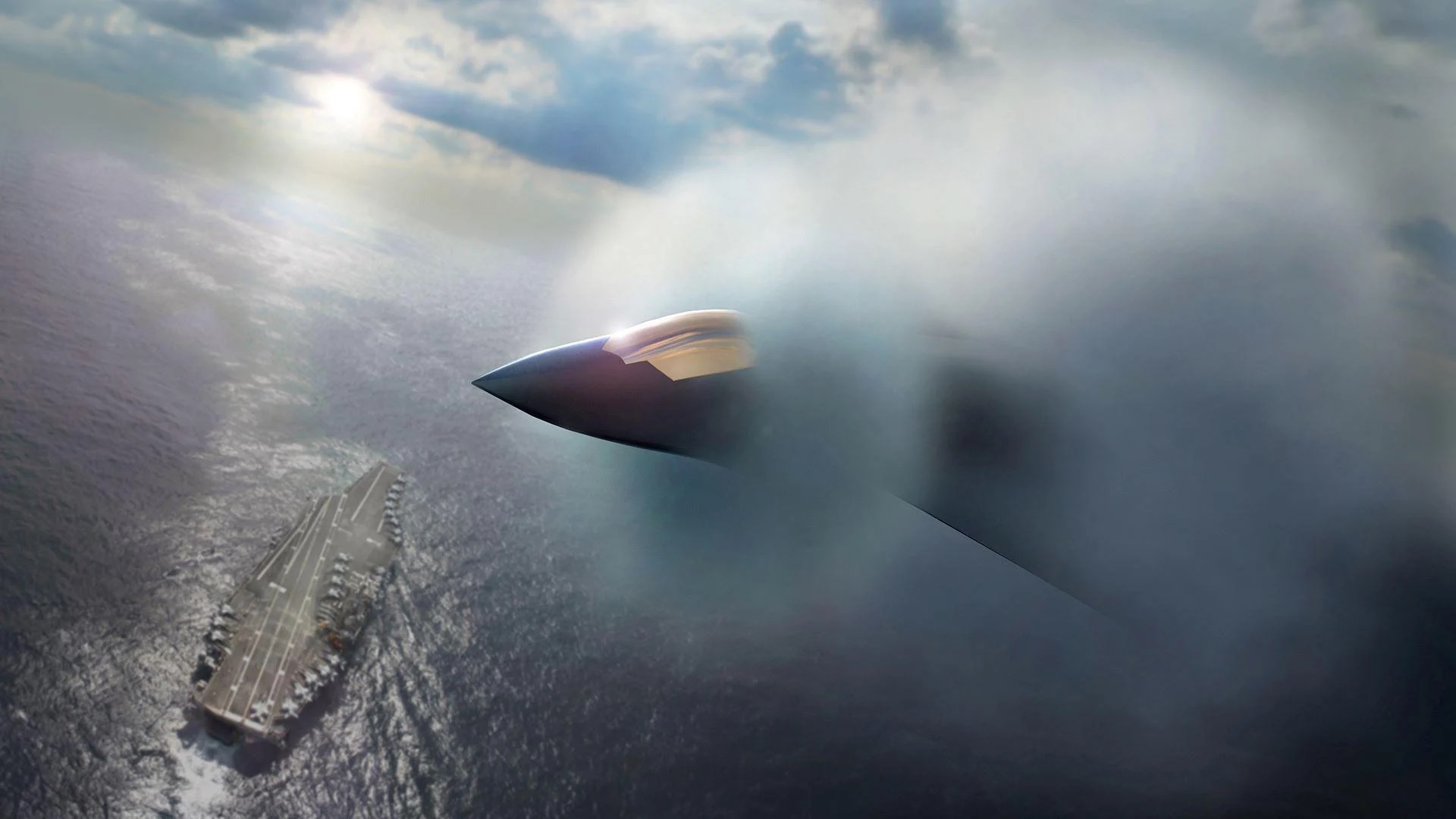
The Navy released this artist’s rendering of the Boeing F/A-XX, highlighting the Navy’s 6th-generation fighter intended to replace the service’s fleet of F/A-18 Super Hornets. Artist rendering: NAVAIR Public Release SPR-2026-0601.
As already reported in March 2025, the proposal submitted by Lockheed Martin to the service did not satisfy the US Navy’s criteria, a source with knowledge on the matter explained to Breaking Defense. What we know is that up to November 2024 proposals were evaluated by the service but as of today is not clear when Lockheed Martin was knocked out of the project. However, the company was no longer proceeding with any bid.
If Northrop Grumman had won the F/A-XX contract it would be the first fighter built by the company since the iconic F-14 Tomcat; instead since Boeing won the F/A-XX contract its facility in St. Louis will see a brighter future given that the company builds fighters in that facility.
Core attribute
According to a statement released in April 2025 by Rear Adm. Michael Donnelly, director of the Air Warfare division for the CNO, a “core attribute” of the F/A-XX is expected to be its range, up to “probably” 125 percent “of the range that we’re currently seeing today to give us better flexibility [and] operational reach.”
In a written testimony to Congress in May 2022, Navy officials said that the service NGAD program is meant to expand the range for carrier-based operations.
“The NGAD [family of systems] will replace the F/A-18E/F Block II aircraft as they begin to reach end of service life in the 2030s and leverage Manned-Unmanned Teaming (MUM-T) in order to provide increased lethality and survivability,” reads joint testimony from Department of Navy acquisition officials. “F/A-XX is the strike fighter component of the NGAD FoS that will be the ‘Quarterback’ of the MUM-T concept, directing multiple tactical platforms at the leading edge of the battlespace.”
Since the F-14 Tomcat interceptor left the inventory in 2006 the effective combat radius of the carrier air wing has contracted. Since the Pentagon’s strategy focused on the Indo-Pacific and the need to counter China in a potential conflict, the Navy has had to explore ways to extend the range of carrier operations due to the vastness of the region. The MQ-25A Stingray unmanned carrier tanker will nominally increase the combat radius.
This model is available from AirModels – CLICK HERE TO GET YOURS
Boeing has won the U.S. Navy’s F/A-XX competition for the sixth-generation carrier-based fighter, with a contract valued at more than $20B for the full-scale development phase.
After months of wait, the U.S. Navy has finally announced Boeing as the winner of the competition for the F/A-XX sixth-generation carrier-based fighter as part of the service’s Next Generation Air Dominance (NGAD) program. With the award, Boeing will now develop and build the NGAD crewed fighter jets of both the Navy and Air Force.
The highly anticipated award comes after an imminent announcement was reported multiple times since March 2025, with the program apparently stuck in a limbo. The last such report mentioned the Navy would announce its selection by the end of August 2026.
Earlier this year, Chief of Naval Operations (CNO) Adm. Daryl Caudle warned that the Navy must accelerate development of F/A-XX to ensure it can penetrate future air defense environments over the next decade. “Our ability to fly with impunity with our existing airframes is fleeting,” Caudle said. “If I don’t start building that immediately, you’re not going to get it for some time.”
The announcement
In the statement released on Sept. 29, 2026, the Department of War said Boeing was awarded a contract valued at more than $20B for the full-scale development phase of F/A-XX. The contract covers multiple test aircraft for ground, airworthiness, systems, and weapons integration testing.
“The F/A-XX is a critical pillar in our commitment to maintaining peace through strength. F/A-XX will dominate contested airspace, extend operational reach, and deliver a decisive combat advantage for the warfighter,” said Michael P. Duffey, Under Secretary of War for Acquisition and Sustainment. “The F/A-XX platform represents a crucial, non-negotiable investment in America’s national security and long-term air combat capabilities. We are joining forces with Boeing to field these capabilities rapidly, ensuring our warfighters possess the lethal and highly networked systems required to deter aggression, project undisputed power, and secure absolute air superiority.”
A rendering of Boeing’s proposed F/A-XX design. | Source: Boeing
The F/A-XX is expected to provide advanced carrier-based power projection, further extending the range of U.S. Navy aircraft carriers. The new fighter jet will augment and eventually replace legacy F/A-18E/F Super Hornets and EA-18G Growlers beginning in the 2030s, and operate alongside the F-35C and Collaborative Combat Aircraft (CCA).
“This achievement marks a new era for the U.S. Navy,” said acting Secretary of the Navy Hung Cao. “The Sixth-Generation fighter is a generational leap in air superiority and will provide the world’s best aviators with unparalleled capabilities to fight, win, and come home safe. We are excited to partner with Boeing, and for our warfighters to continue to dominate the skies and defeat our nation’s enemies.”
6th-gen edge.
Thank you, @USNavy, for continuing our partnership to design, build and deliver your F/A-XX aircraft. We’re honored to produce the 6th-generation fighter that will revolutionize advancements in naval aviation to maintain U.S. carrier air superiority.
The statement released by Boeing puts emphasis on the company’s work on the NGAD programs of both the Navy and Air Force.
“Delivering two advanced fighters in parallel was always our plan, and we invested accordingly. We are ready and able to build multiple concurrent future combat aircraft franchise programs,” said Steve Parker, president and chief executive officer, Boeing Defense, Space & Security.
History of the F/A-XX program
The F/A-XX is the strike fighter component within the U.S. Navy’s Next Generation Air Dominance (NGAD) Family of Systems (FoS). The requirement for this aircraft has been around since 2008, with a formal Request for Information in 2012, to replace the F/A-18E/F Super Hornet in the 2030s.
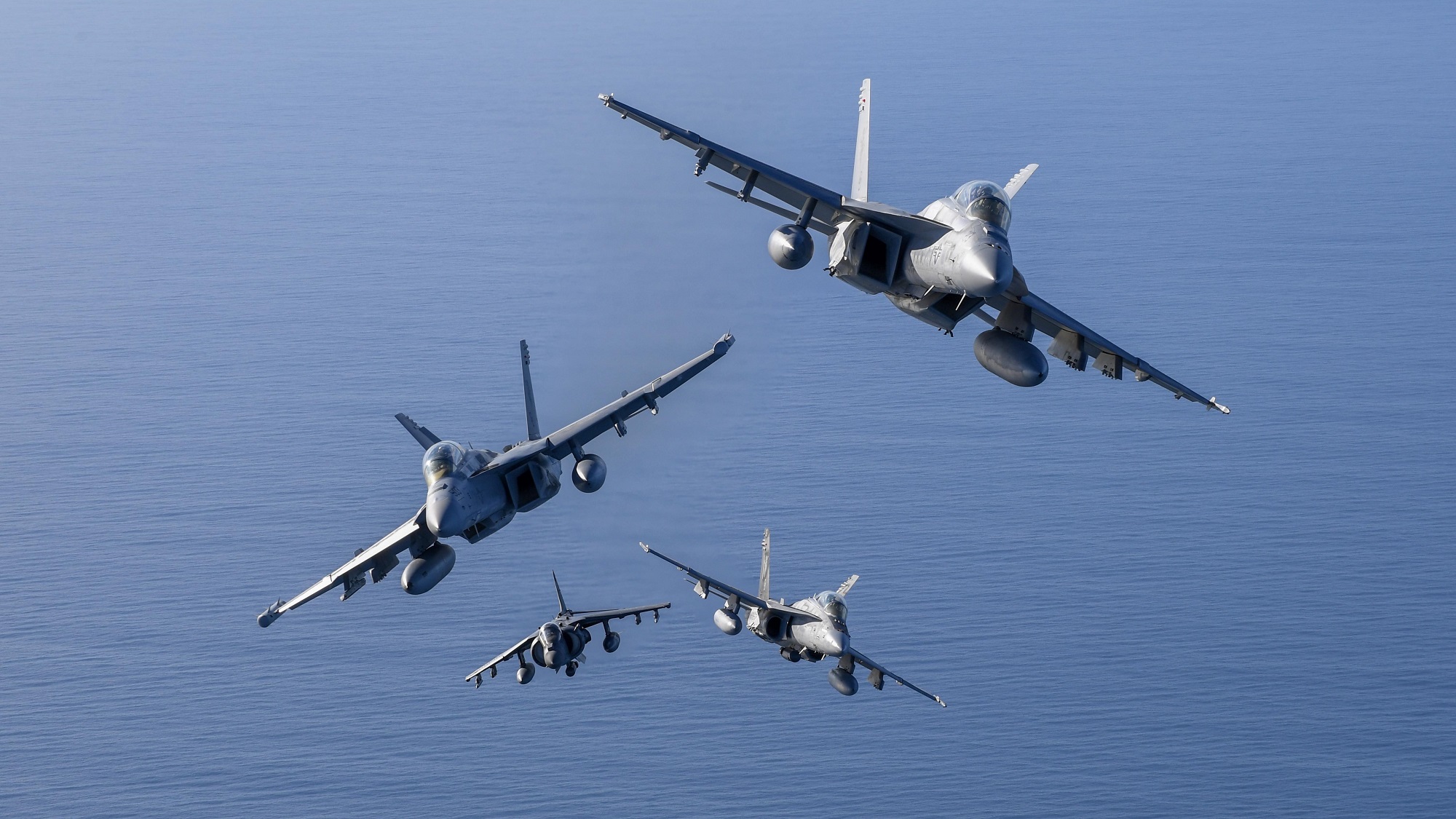
A formation of Air Test and Evaluation Squadron (VX) 31 “Dust Devils” aircraft, including an EA-18G Growler, AV-8B Harrier II+, an F/A-18F Super Hornet, and an F/A-18D Hornet, flies over Point Mugu’s Sea Range in Californati during a photo exercise. | Source: U.S. Navy
Later, the F/A-XX was included in the service’s NGAD program, which is a separate program from the identically named Air Force program. The Navy says that its “specific capabilities and technologies are under development, however analysis shows it must have longer range and greater speed, incorporate passive and active sensor technology, and possess the capability to employ the longer-range weapons programmed for the future”.
The NGAD FoS will include unmanned platforms with F/A-XX as the quarterback, exploiting the Manned/UnManned Teaming (MUM-T) concept to reduce risk to the manned aircraft, while simultaneously increasing capability, capacity, and survivability. The new MQ-25 Stingray will be the first unmanned asset to employ this capability, extending the strike range and enhancing maneuverability of the Carrier Air Wing.
Continued development of MUM-T will enable information sharing across a distributed force, increasing survivability, reducing risk to manned aircraft, and ensuring weapons capacity. The Navy is evaluating the appropriate mix of F/A-XX, manned and unmanned platforms to ensure the most lethal and affordable CVW possible, depending also on the maturity of autonomy and Machine Learning technologies.
The Navy envisions future unmanned air vehicles with survivable planforms, sensors, and robust autonomy able to find, fix, identify, track, engage, and assess land, sea, and air targets. These UAVs will be employed alongside manned aircraft and unmanned attritable assets to enable integrated kinetic and non-kinetic fires at tactically relevant ranges in multidomain operations.
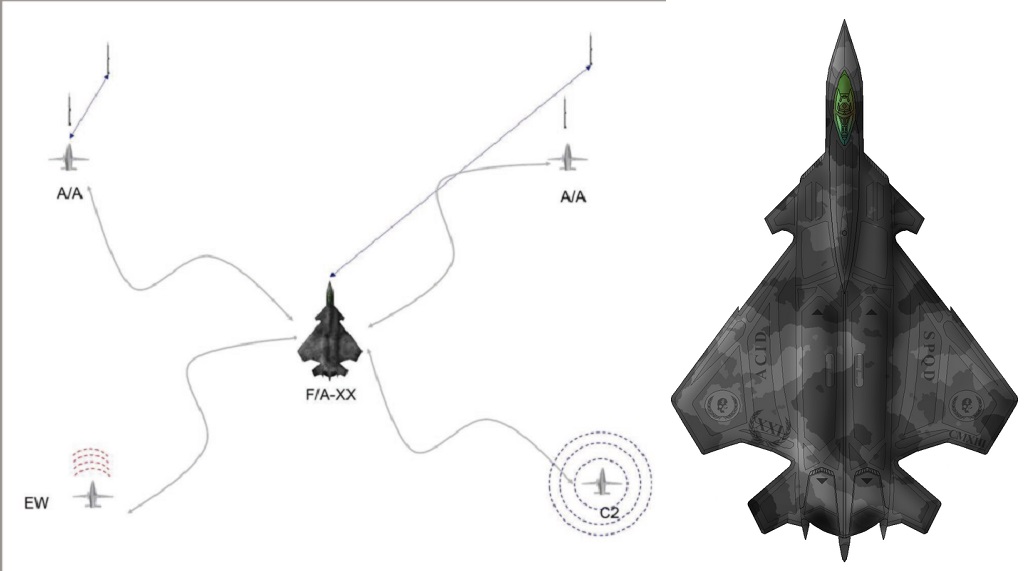
In a 2021 document, the Navy showed a fictional F/A-XX operating in a MUM-T environment with four drones, whose shape represents the MQ-25. Interestingly, the drones were shown employing Air-to-Air (AA), Electronic Warfare (EW) and Command and Control (C2) payloads, much like the Loyal Wingman drones currently being developed. This falls in line with the service envisioning Unmanned Air Systems (UAS) to fill refueling, communications relay, logistics, airborne electronic attack, strike, and ISR&T missions in the future air wing.
The F/A-XX placeholder design as shown by the U.S. Navy in its vision for 2030-2035, together with a better image of the original fictional design. (Images via U.S. Navy and Tapatalk) | Source: U.S. Navy
In 2024, in an interview released to Aviation Week, Rear Adm. Michael Donnelly, director of the air warfare division in the Office of the Chief of Naval Operations, said the Navy will develop its aircraft independently, a reverse of previous reports who said the Navy and Air Force would share the developments of their next generation aircraft programs.
The Navy’s decision to move forward independently might have shielded the F/A-XX from the results of the NGAD’s review and the subsequent decisions. The service is confident in the suitability and affordability of the F/A-XX and is committed to move forward with the program.
“We have to have an affordable platform to make it relevant to our force structure and force design, so we’ve got that in mind,” said Donnelly. “We think we’ve got an affordable solution that supports our force structure of the future.”
According to Donnelly, the F/A-XX program was on track for the Milestone B decision to move the Engineering and Manufacturing Development (EMD) phase by the end of fiscal year 2025.
“We feel really good through the concept development that we’ve got the right bracket for those requirements and the attributes we need to deliver the capability,” Donnelly says. “We’ll continue to look at that as we go through the next phases of the acquisition process and make smart decisions.”
An early artist’s render showing a hypothetical F/A-XX fighter-attack aircraft. | Source: Boeing
What F/A-XX Is Expected to Deliver
The Navy envisions F/A-XX as more than a simple replacement for the F/A-18E/F Super Hornet and the EA-18G Growler. The new aircraft is expected to combine stealth, extended range, electronic warfare, and command-and-control functions into a single next-generation platform.
Navy officials previously said F/A-XX is expected to have approximately 25% more range than the F-35C, as well as more advanced jamming capabilities than the Growler. Moreover, it is also designed from the outset to control multiple Collaborative Combat Aircraft (CCA), as noted by the CNO.
“The next-generation airframe, F/A-XX is so vital,” Caudle said. “It’s vital because of, one, the CCAs it will command and control. Its penetration – the Growlers won’t last forever, so it’ll be our electronic attack airplane as well. Its range will be coupled with the MQ-25 for clandestine refueling and organic refueling from the carrier.”
The aircraft is therefore central to the Navy’s future carrier air wing concept to maintain the service’s ability to project power in high-threat environments. In this mix of crewed and uncrewed platforms, the F/A-XX will be the quarterback, often said the Navy.
Navy’s and Air Force’s NGAD relation
According to Rear Adm. Donnelly, the new carrier-based fighter will be affordable, versatile and independent of Air Force-funded technologies such as an adaptive-cycle turbofan engine. While the service already said it would require a different airframe than the Air Force’s NGAD, other systems to be included were not mentioned.
The second rendering of the U.S. Air Force’s sixth generation fighter, the F-47. | Source: U.S. Air Force
Initially, the Navy appeared interested in the adaptive-cycle technology being developed for the Next-Generation Adaptive Propulsion (NGAP) program. In the past decade, however, propulsion plans for the two services have diverged, according to Donnelly.
“We’re looking at more of a derivative-type engine solution,” said Donnelly. “That’s just one example where we probably are different in many ways from the Air Force. In totality, they are two unique programs from an acquisition point of view and also going forward, so we’re relatively independent of each other at this point.”
Both programs appear to be under budgetary pressure, as both services are currently working on multiple large programs. In the Navy’s case, the 2025 budget for the new aircraft suffered a cut of 67%, with the $10.3 billion requested between 2025 and 2028 reduced to just $3.3 billion. The senate voted to restore $450 million to the budget but, even if approved, there would still a cut of 59% compared with last year’s budget.
Earlier this year, lawmakers agreed on the Fiscal Year 2026 Defense Appropriations Act to allocate $897 million specifically to F/A-XX, mandating the Pentagon to award a development contract aimed at accelerating initial operational capability. The wording used called out the Department of Defense for the slow pace of the program.
Another difference between the Navy’s and Air Force’s 6th gen fighter could be their roles. While the latter envisions its new aircraft mainly as an air superiority fighter, the Navy wants it to be multirole, optimized for air-to-surface strike but still capable of fleet defense.
“The central focus of its design is to be able to conduct long-range fires, sea control and those types of missions. Inherent in its design is its ability to participate in fleet defense,” Donnelly says. “We can’t afford to have a break-glass capability or a really unique single-mission or single-phase-of-operation focus.”
A final difference is the manned or unmanned debate. The Air Force left the door open for an optionally manned configuration, which was also the initial configuration proposed for the F/A-XX. However, the Navy has now opted for a fully manned platform.
“F/A-XX is intended to be a manned platform,” Donnelly says, noting that the “F/A-XX will really be our pivot point from a manned air wing to a hybrid future, with a manned-unmanned air wing.”
B-36 Peacemaker survived to five cancellation attempts
The B-36 was first conceived in 1941 as a transatlantic bomber to strike Europe from bases in the US. By 1943, the focus switched from the European Theater to the Pacific for use against the Japanese home islands. After more design changes and greater success of the B-29s, the prototype XB-36s first flight was delayed until Aug. 8, 1946; nearly six years after initial design contracts were signed.
When production ended in August 1954, more than 380 B-36s had been built for the US Air Force. In 1958-1959, the USAF replaced the B-36 with the B-52. Although never used in combat, the B-36 was a major deterrent to enemy aggression.
As explained by Meyers K. Jacobsen in his book Convair B-36: A Comprehensive History of America’s “Big Stick”, it is interesting to note that the B-36 program might have been canceled at least five times during the big bomber’s career. It is a testament to the plane itself that it did manage to survive during a difficult transitional period in Air Force history.
First possible cancellation:
The letter of intent, dated Jul. 23, 1943, from the Army Air Forces to Convair, was superseded a year later by a definitive contract for 100 B-36 airplanes. This $160 million contract included a $6 million fixed fee, and the cost of all spare parts and engineering data. However, the contract had no priority by that time, but delivery schedules remained the same, with the first B-36 off the production due in August 1945 and the last in October 1946.
With victory in sight, war contracts were being scrutinized for cancellation, or drastic cutback. Aircraft production was actually cut by 30% on May 25, 1945, a reduction of 17,000 planes. As far as the B-36 was concerned, there was no question that a long range bomber was needed. In 1945; the B-36 seemed the best answer, so, on Aug. 6, 1945, General Arnold approved the Air Staff recommendation to keep the B-36 production contract intact.
Second possible cancellation:
On Dec. 12, 1946, General Kenney, who had been promoted to four star general in March 1945, and had headed SAC since April 1946, suggested reducing the procurement contract for the 100 B-36s to just a few service-test aircraft. After studying available performance estimates on the B-36, the SAC commander believed it to be inferior to the forthcoming B-50, an advanced B-29 design. Among the shortcomings of the B-36 cited by General Kenney, were a useful range of only 6,500 miles, insufficient speed, and lack of protection for the bomber’s fuel load.
Neither the Air Staff or Lt. General Nathan F. Twining, AMC commanding general, agreed. General Twining said that the B-36 should not be judged solely from the XB-36, which had just started its flight testing. He added, all new airplanes encounter teething problems, including the B-17 and B-29. Moreover, the B-36 was the only suitable aircraft far enough along to serve as an interim long range atomic bomb carrier until the B-52 arrived. General Carl Spaatz, the AAF’s new commander, wholly agreed with General Twining. The B-36 contract was retained in full.
Third possible cancellation:
The new Air Force Aircraft and Weapons Board, formed by new Deputy Chief of the Air Staff General Hoyt S. Vandenberg, met on Aug. 19, 1947, and discussed the future role of strategic bombing, and the means of accomplishing such missions, if so needed. The senior officers were to recommend the weapons that best supported the long range plans for the Air Force’s development and gradual buildup to 70 groups.
The board members differed on how to solve these complex problems. Some considered the B-36 already obsolete and favored buying fast jet bombers—a gamble, since these would have insufficient range and would not be available for years. Others wanted to increase the B-36’s speed with the new proposed VDT engine, using the plane as an all-purpose bomber. Still others preferred the B-50, because it was faster than the present B-36 and could also obtain greater range and speed with the addition of VDT engines.
However, after prolonged discussion, a consensus emerged to retain the B-36 as a special purpose bomber, which would eventually be replaced by the B-52 (1953 at the earliest). The B-36 program avoided cancellation once again.
Fourth possible cancellation:
When it became obvious that a faster B-36 (designated B-36C, equipped with VDT engines) could not be obtained, the Air Force once more thought of cancelling the entire B-36 program. Yet, various factors had to be considered. Twenty-two of the basic and relatively slow B-36As were nearly completed by spring 1948. A great deal of money had already been spent on the controversial program. Therefore, the Air Force decided to postpone any decisions. It instructed Air Materiel Command to waive the modification of several shop-completed B-36As that had been awaiting adjustments, and to expedite their delivery. This would allow Convair to speed up the aircraft’s flight test program. Also, new yardsticks, the VR diagrams, were to be used to measure the B-36’s real performance against other bombers under similar conditions.
Huge selection of Lockheed Martin diecast models to choose from – get yours here.
Test results, though not spectacular, favored the B-36. It seemed that the B-36, so maligned, might turn out to be a better airplane than had been expected. If so, any hasty reduction of the production contract might wreck the program, just as it was beginning to pay off. The beginning of the Russian blockade of West Berlin on Jun. 18, 1948, spared the Air Force’s indecision. USAF officials, deeply concerned by the Soviets’ aggression, unanimously agreed to stay with the B-36. The proposed 34 VDT-equipped B-36Cs would revert to the B-36B configuration, assuring the Air Force of getting 95 of the 100 B-36s under contract since June 1943. The B-36 was saved from cancellation another time.
Curtailment of the defense budget
Curtailment of the defense budget in 1949 brought interservice disagreements to a boil. The Air Force and the Navy had long recognized that whichever service possessed the atomic mission would eventually receive a larger share of the budget. Thus, they had grown more and more wary of each other’s strategic programs. Meanwhile, the B-36, the Air Force’s atomic carrier, had been the target of much criticism, even though few people had even seen it, let alone flown in it.
In early 1949, the B-36’s future was highly questionable. An anonymous document began making the rounds in the press, congressional, and aircraft industry circles charging that corruption had entered into the B-36’s selection, and that the aircraft’s performance did not live up to Air Force claims. In August, a second unsigned paper accused the Air Force of having greatly exaggerated the importance of strategic air warfare. The charges of corruption and favoritism were investigated by the Armed Services Committee of the House of Representatives, and were quickly proven false. On Aug. 25, 1949, the investigation closed, after clearing the Air Force and Convair.
Fifth possible cancellation:
However, hearings on the B-36 resumed in October. Briefly stated, the committee had to decide, at least for the time being, whether the nation should rely on massive retaliation with intercontinental bombers in case of attack, or depend upon the Navy’s fleet and air arm, to defend the North American continent. Even though there were doubts about the B-36’s ability to evade enemy fighters, the Air Force emerged triumphantly from the October hearings.
This direct challenge to the B-36, done in a very public national debate, resulted in the bomber being vindicated. The B-36 program was retained and AF avoided cancellation for the fifth time.
Convair B-36: A Comprehensive History of America’s “Big Stick” is published by Schiffer Publishing and is available to order here.
Jay Lacklen is a retired Air Force reserve pilot with 12,000 military flying hours. He grew up in Arlington, VA, and graduated from the University of North Carolina-Chapel in 1969. He entered service in 1970 and retired in 2004 as a Lt Col with 12,500 flying hours. Lacklen taught Air Force T-1 pilot training simulators at Columbus AFB, Mississippi from 2005-2014. He grew up in Arlington, VA and graduated from the University of North Carolina-Chapel Hill in 1969. In addition to pilot training aircraft, he flew 330 hours in the C-7 Caribou, 2000 hours in the B-52 bomber, and 9,500 hours in the C-5 Galaxy transport.
He flew in all major military actions from Vietnam to the Iraq War. Lacklen lives in northern Virginia and is married with four adult daughters and two granddaughters.
At the end of May, the B-52 Arc Light mission ended as the final three-ship cell, with our crew in the lead, departed U-Tapao. For many years, SAC crew members had joked about “putting out the Arc Light for good,” and here we were about to do just that. I had only flown two actual Arc Light bombing missions in 1973, and the rest of the crew had flown none, but we got to put out the “Light” for the thousands of crewmen who had flown the tens of thousands of hours over the previous ten years. They had done the heavy lifting; we had done little for the time we were at U-Tapao, but we got to take it home for good.
We would fly in cell formation until we reached the coast of California, then “two” and “three” would leave the formation to land at March AFB, CA, and we would continue on as a single ship to Carswell AFB, TX, a sixteen-hour mission.
Indignity
We had an indignity to suffer before takeoff, however. The staff told us to report an hour early so we could string up a room full of rattan furniture in the bomb bay to deliver to the deputy commander for operations at Carswell. This did not sit well. We faced a tortuously long mission without any extra duties, and this was an absolutely unnecessary task. No doubt one of the commanders at U-Tapao garnered a significant kudo for shipping the colonel’s furniture for free, but we were the ones providing the service. We hoped to be required to cycle the bomb bay doors en route over the Pacific, one final rattan bomb run.
This model is available from AirModels – CLICK HERE TO GET YOURS.
(On a similar mission during Gulf War 1 in 1990, I had to personally deliver two live lobsters sent by General Colin Powell from Massachusetts to General Norman Schwarzkopf in Riyadh, Saudi Arabia. Getting them there alive was my assigned mission. I await my grandkids asking what I did during the war. Why, I babysat two lobsters!)
When the time came, the three B-52s sat behind the runway hold line awaiting permission for the final B-52 takeoff from U-Tapao. Then tower cleared us for takeoff. On interplane frequency, I said, “OK, guys, let’s take our Buffs and go home,” and with that we took off. As we climbed out the Gulf of Siam, U-Tapao fell silent for the first time in a decade and would largely remain that way.
Interesting things
At cruise over the Philippine Sea at 42,000 feet, two interesting things happened. First, a jet contrail passed over us. This was unusual because we were already at our max altitude over eight miles high, and the other contrail was so far above us I couldn’t see the aircraft. I decided it must be a U-2 or SR-71 spy plane because I didn’t expect to encounter any aircraft higher than we were, much less so far above us I would be unable to see it.
Next, a U.S. Navy ship broadcast on guard channel asking if any American military aircraft were in the area. We answered that we were, and he asked if we could go “cipher” mode, or the scrambled, secret mode on one of our radios. The ship said they had an unknown target apparently shadow them and asked if we could drop down and take a look. I said I’d have to get permission to do so because I couldn’t make my destination if I used the extra gas to chase a shadow.
Shortly thereafter, the ship said they had resolved the issue and we wouldn’t be needed. I thought, briefly, we might find an excuse to cycle the bomb bay doors to rain rattan on the mysterious shadow, but it was not to be. The Carswell colonel would get his damn furniture. As the final indignity, neither colonel met us at either end to thank us for our efforts.
Several former engineers who worked on the Mach 3+ Spy Plane were contacted by NASA as the agency is looking for their help with a possible return-to-flight project.
Former US Air Force (USAF) and NASA test engineer Mike Relja was reached out by David Ash, a former US Navy and Joby test pilot, to help with the effort. Now in his late 70s, Relja was surprised when NASA contacted him about the project he told Aviation Week.
“I told the guy, ‘You know, I’m too old to be doing this. I wish you well. I’d like to see you make it. It would be interesting. But I just don’t think you can get there from here,” Relja explained.
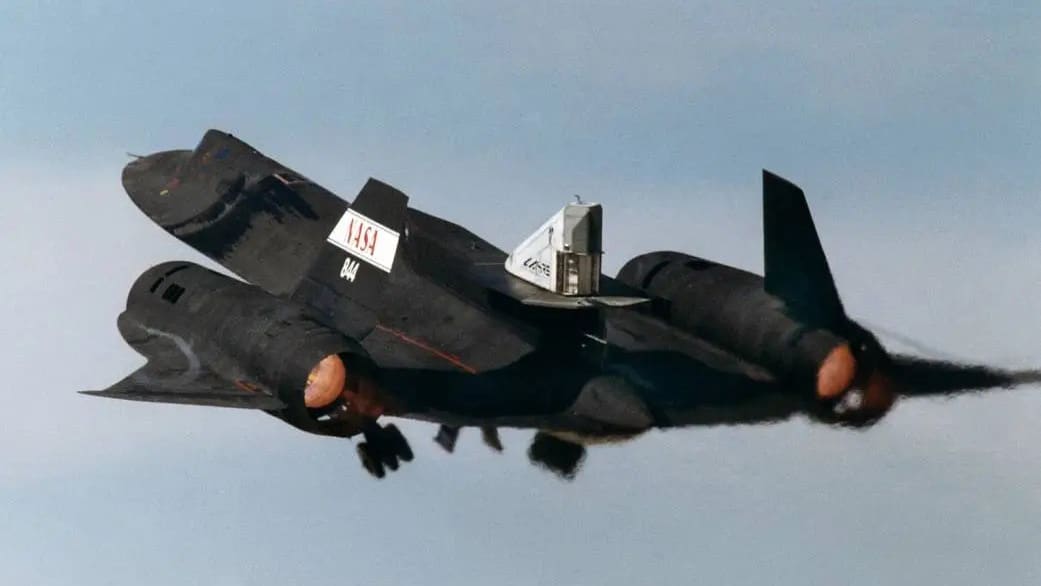
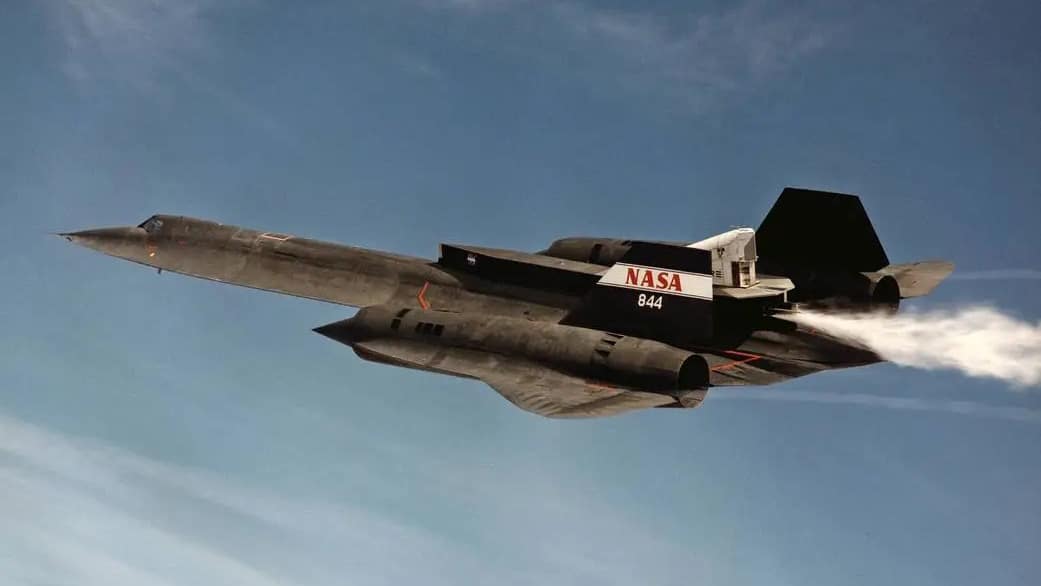
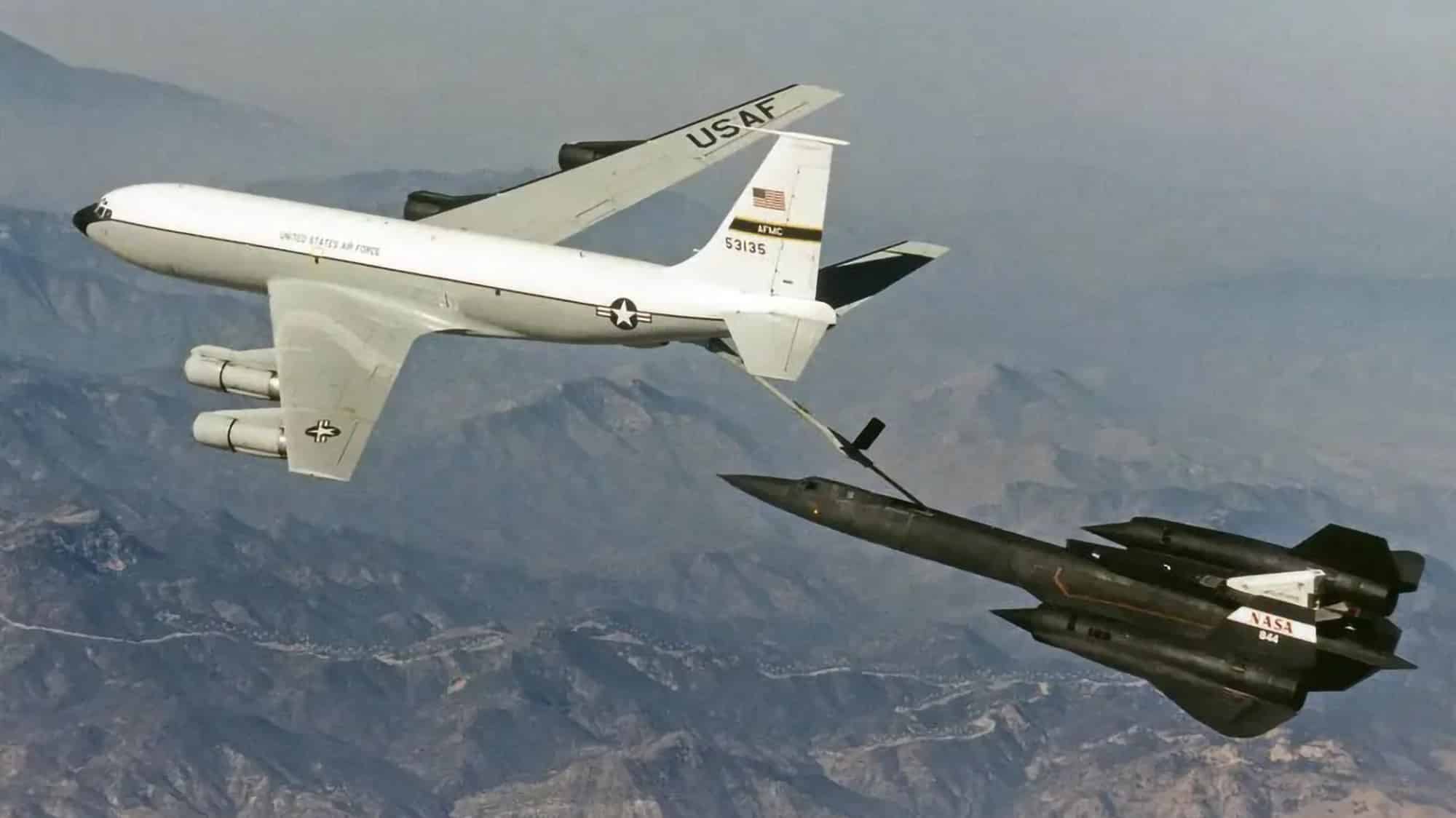
SR-71A Tail No. 844 is the Blackbird at the centre of the effort. Since her last flight, the HABU (as the SR-71 is dubbed by her aircrews) has been sitting on display at NASA’s Armstrong Flight Research Center at Edwards Air Force Base (AFB), California.
Aviation Week obtained commercial satellite images that showed that the spy plane was removed from its display pole sometime before April this year. The Blackbird was moved into the hangar that was once used for the Space Shuttle by NASA employees.
A NASA spokesperson told Aviation Week that the agency recognizes “the interest in the SR-71 and its remarkable history at NASA but have no additional information to share regarding the aircraft at this time.”
A new fleet of experimental X-planes
NASA Administrator Jared Isaacman spoke about NASA plans to build a new fleet of experimental X-planes at the All-In Summit in Los Angeles earlier in September where Isaacman showed an image of a new aircraft. As the image below shows, the new plane seemed to feature something in common with the Blackbird such as its tail design, engine areas and cockpit. Isaacman added that NASA would soon be flying as high and as fast as it had in the past, and then go beyond those limits.
Tail No. 844 has not flown for nearly 27 years and it would be difficult to operate since it could have water and sand inside it after spending so many years on display, Relja explained.
“I do know they’ve got people working on it. But again, without equipment, it’s beyond me what they’re doing,” he pointed out.
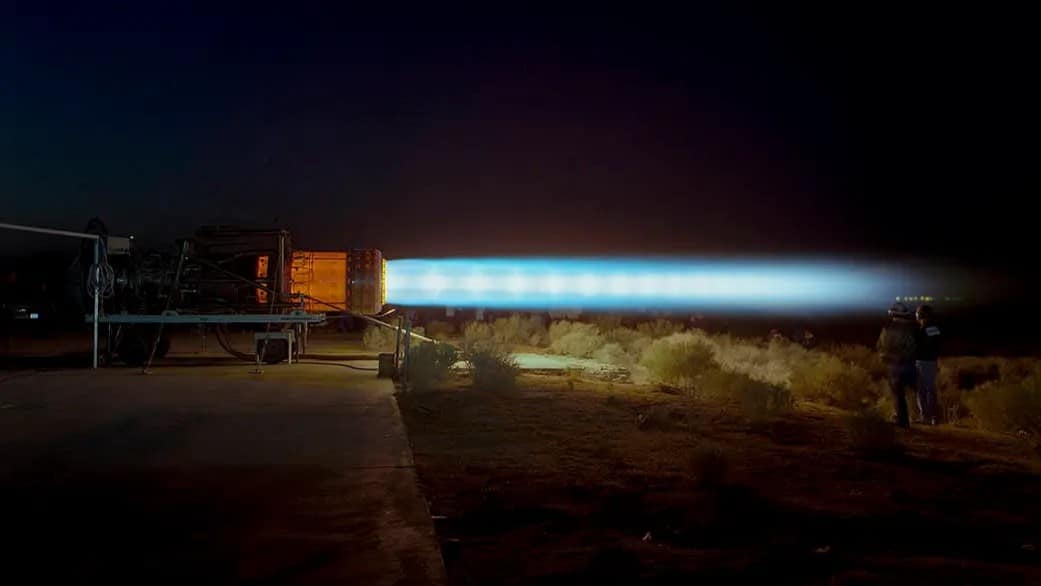
He also explained that even though the aircraft has two J58 engines and one spare engine under it, the J58 may not have been properly maintained or rotated for decades.
“When we were operational, if we had a spare engine, every 90 days we had to rotate the engine. Every 180 days, we had to run it to keep it as a ready spare. Now you’re talking about engines that have been sitting for 30-plus years,” Relja explained.
Problems
Moreover, in 2007 the USAF and NASA destroyed around $600 million worth of SR-71 spare parts so the supply of spare parts is another big problem. JP-7 fuel (a special type of fuel used only by the SR-71) would also be needed.
Besides these, the aircraft also needs triethylborane (TEB, a chemical used to start its engines) special engine oil and hydraulic fluids. Special carts were needed for several jobs Relja pointed out. “To get the engine out, you need a cart. You need equipment to pull the [engine] spikes, pull the [ejection] seat. All that stuff is gone.”
Nine SR-71s were flown to museums in the US and UK, hence their engines and other parts could be used for the project.
During the 1990s two SR-71 Blackbird aircraft were used by NASA as testbeds for high-speed and high-altitude aeronautical research at Dryden. The aircraft included an SR-71A and SR-71B (the trainer version), loaned to NASA by the US Air Force.
NASA SR-71s
During the 1990s two SR-71 Blackbird aircraft were used by NASA as testbeds for high-speed and high-altitude aeronautical research at Dryden. The aircraft included an SR-71A and SR-71B (the trainer version), loaned to NASA by the US Air Force.
The SR-71, the most advanced member of the Blackbird family that included the A-12 and YF-12, was designed by a team of Lockheed personnel led by Clarence “Kelly” Johnson, then vice president of Lockheed’s Advanced Development Company Projects, commonly known as the “Skunk Works” and now a part of Lockheed Martin Corp.
The Blackbird design originated in secrecy during the late 1950s with the A-12 reconnaissance aircraft that first flew in April 1962 and remained classified until 1976. President Lyndon Johnson publicly announced the existence of the YF-12A interceptor variant on Feb. 29, 1964, more than half a year after its maiden flight. The SR-71 completed its first flight on Dec. 22, 1964. More than a decade after their retirement the Blackbirds remain the world’s fastest and highest-flying production aircraft ever built.
The Blackbirds were designed to cruise at Mach 3.2, just over three times the speed of sound or more than 2,200 miles per hour and at altitudes up to 85,000 feet. The extreme operating environment in which they flew made the aircraft excellent platforms for conducting research and experiments in a variety of disciplines: aerodynamics, propulsion, structures, thermal protection materials, high-speed and high-temperature instrumentation, atmospheric studies, and sonic boom characterization.
SR-71 activities at Dryden were part of NASA’s overall high-speed aeronautical research program and involved other NASA research Centers, other government agencies, universities, and commercial firms.
Jay Lacklen is a retired Air Force reserve pilot with 12,000 military flying hours. He grew up in Arlington, VA, and graduated from the University of North Carolina-Chapel in 1969. He entered service in 1970 and retired in 2004 as a Lt Col with 12,500 flying hours. Lacklen taught Air Force T-1 pilot training simulators at Columbus AFB, Mississippi from 2005-2014. He grew up in Arlington, VA and graduated from the University of North Carolina-Chapel Hill in 1969. In addition to pilot training aircraft, he flew 330 hours in the C-7 Caribou, 2000 hours in the B-52 bomber, and 9,500 hours in the C-5 Galaxy transport.
He flew in all major military actions from Vietnam to the Iraq War. Lacklen lives in northern Virginia and is married with four adult daughters and two granddaughters.
In November 1992, my Westover C-5 crew got “picked off” from our scheduled mission to fly another mission. The original mission was a standard Navy run to Rota, Spain; Sigonella, Italy; Bahrain; and return by the same bases to Westover.
When we alerted at Sigonella for our next leg, the command post offered us another mission. It seemed a Travis AFB active duty crew was in delay at Sig and their flight engineer was going non-current for a check ride and could not complete the mission. They asked if we would assume that mission instead of continuing our own.
C-5 mission around the world
The new mission would take us around the world, eastbound, through Pakistan, Australia, Samoa, and Hawaii. Had this been a crew with standard reservists, who needed to be home on time for their “real” jobs, we could not have taken the new mission. But this crew consisted of reserve bums (no other job) and ARTS. If I’d had a standard reservist crew, when asked if they would volunteer, they would have said “Hell, no!” But the bum/ART crew said “Hell, yes!” So around the world we would go. This would be my final mission hurrah at Westover.
The first leg would be a max crew-day body wrecker: Sig to Bahrain; to Islamabad, Pakistan; to Diego Garcia in the middle of the Indian Ocean. We took off late in the afternoon from Sig, quick-turned Bahrain for fuel around midnight, and arrived overhead Islamabad just before sunrise.
I hoped for daylight because we would be within 20 miles or so of the Himalayan mountain chain and its 20,000-foot peaks. I didn’t want to fool around in the dark at an unfamiliar field with towering mountain peaks. Thankfully, the early predawn light allowed us to see the mountain outlines as we began our steep penetration to the field.
Our approach went routinely until we departed the final approach fix. I then saw as bizarre a sight as T have ever seen. In the dim predawn light, a heavy smoke fog rose from dozens of individual chimneys used to make bricks. These were apparently personal kilns for small family-run brick businesses, and even in the dim light I could see smoke rising that gave the area the look of an industrial ecological disaster, a dark sooty landscape that might have appeared similar to thermal vents on some alien planet inhospitable to humans.
Typical military outpost
In another surprise, about an hour later, the sun rose above the mountains and revealed an entirely different view. The Pakistani air base seemed Mediterranean in its climate. Warm air from the south provided short-sleeved shirt weather, and colorful flower gardens surrounded by verdant grass covered the base campus. We could have been back in Sigonella.
The base seemed a typical military outpost; cadets marched in formation and uniformed Pakistani Air Force personnel went about their tasks as we do in the States. After this second quick turn, we took off in bright sunlight headed south down the Indus River valley to the Indian Ocean enroute to Diego Garcia, about five and a half hours south.
Again I found the unexpected while flying down the Indus Valley. The river’s shores were barren, as was the entire valley. At least the Nile had a ten-mile, or so, wide strip of green along the river, but the Indus had once. It seemed to run through a barren desert, a landscape unchanged by its presence.
I had stayed awake the entire mission thus far, almost 20 hours, and I was winding down hard as we approached the Indian Ocean. My two fellow pilots, Keith Guillotte and Craig Peters, had taken sleep breaks previously, so I told them they had the leg to Diego and I hit the bunk to sleep like a dead man.
The lights of Darwin
The other pilots rousted me out of my slumber cave in the forward bunk room prior to descent late in the afternoon on a sunny tropical day. After landing and getting our rooms, we visited a beachcomber style bar and grill that provided a marvelous view of the ocean waves breaking on the reef about a mile away, as picturesque a tropical view as I’ve seen. Unfortunately, that is about all there is to see on Diego.
Late the next afternoon, we alerted for the second leg of our eastward journey, about 2,500 nautical miles and six hours to Darwin on the north shore of Australia. We flew this segment almost totally at night, and rarely have I felt more alone in the universe, with no signs of land or humans for hours on end over the East Indian Ocean.
My only connection with civilization, the HF radio, made communications, as mentioned previously, sound as if I were calling Oceanic Control from Mars from my spaceship.
Finally, the lights of Darwin appeared far in the distance surrounded by nothing, the outback to the south and the Indian Ocean to the north. I’d report to you on Darwin except I saw almost none of it except base operations at the air field. We refueled, filed our flight plan and ate in about three hours. Then we launched south across the Australian continent for the three-hour flight to the isolated radar tracking station of Woomera, 300 miles north of the south coast port city of Adelaide. On the way we would pass almost directly over Alice Spring in the interior.
Southern Cross
Midway in our climb to FL 330, the earth below us went black with no signs of human habitation. The view remained this way for most of our cross-continent trek across the outback.
After a while at cruise, I sat alone as Keith and Craig slept. Checklists were complete and there was no chatter on interphone. I experienced silence and darkness for long stretches of time, except for the stars. The stars! I remembered the Crosby, Stills & Nash song “Southern Cross” and my promise to finally see this constellation mostly invisible from the Northern Hemisphere.
I didn’t really know what I was looking for—something the size of Orion or the Big Dipper? There was something of a moon lighting the sky so only bright stars shone brightly enough to be seen as I scanned the cosmos. After a few moments I looked up and there it was, a large four-point cross in the southern sky, four bright stars rising above me. I stared in awe at this symbol from heaven that southern mariners had used for thousands of years to guide them. This seemed a near-religious moment, and I felt as if I were in a celestial cathedral with a soaring needed to complete the moment.
Woomera wave
We landed in morning sunshine in Woomera for a stay of several days. On landing rollout, however, we got a “Det Fail” light on our annunciator panel telling us one or more of our 24 wheel brakes was free-wheeling and not providing any braking action. Sometimes this malfunction can be cured by adjusting the wheel hubs, but sometimes it cannot and more extensive maintenance is required. Except there was no maintenance in Woomera and such a fix might require a week or more to fly in from Travis AFB in California. We adjusted the hubs and hoped that would be sufficient, something we would not know until takeoff roll.
I had anticipated Woomera providing an outback showcase of the Australian interior, a hiking opportunity and photo bonanza. As soon as I exited the plane, however, I met the scourge that would hound us over the entire crew rest, leave us cowering inside buildings in self-defense and longing for an opportunity to leave this hell hole.
When outdoors we constantly employed what the locals term the “Woomera wave,” or a flapping arm motion in front of your face in a futile attempt to hold the creatures at bay. As the only targets for miles in any direction, we became the hunted prey for these outback denizens as they invaded Woomera in huge swarms. Being indoors provided some relief, although the pests had penetrated even this space to a minor extent. Outside excursions around the small town that covered only a few dozen acres were limited to the local bank to cash checks (debit cards were still ten years or so in the future) and grocery store.
Launch for Sydney
My one unrequired foray to the modest zoo on edge of town left me longing for a hat with mosquito netting. l employed a constant Woomera wave while quickly reviewing the caged kangaroos, koalas, kookaburras, and parrots before fleeing back to the hotel.
After a few days in this purgatory we launched for Sydney. At 60 knots on takeoff roll, the “Det Fail” light again illuminated – and no one said a word. Technically this would demand an abort call and termination of the takeoff, but that would mean perhaps a week in Woomera waiting for a maintenance team from the States to fix the problem. No way, Jose, we were leaving this place!
On landing roll at Richmond AFB in Sydney a few hours later the “Det Fail” light again illuminated and immediately all three of us shouted “Det fail light!” We told the station manager he’d have to fly in a Maintenance Recovery Team from the States to fix this gear malfunction. He said he had a C-141 due in the next day and could do that. Drat! The next day? However, when I called in the next day, the manager apologized profusely that Travis had sent the wrong parts! “Oh, no!” I replied, smiling. “Call us when you have the parts,” I continued. “We’ll be roaming Sydney until you do!”
This good fortune could not be fully exploited, however, because much of the crew, to include all three of us pilots, were coming down with head colds. This had been precipitated by several grueling crew days that impaired our immune systems and would crimp our forays around Sydney to allow us extra sleep time to fight the malady.
Pago Pago
We spent three days in Sydney, mostly nursing our head colds. What a waste, to finally get to Sydney and then get sick for most of the stay.
Our next trip segment promised to be exotic in a South Pacific manner, five hours to Pago Pago in American Samoa and about another five hours to Hickam AFB, Hawaii. We took off in early morning sunshine and stayed in it all the way to Hickam.
Pago Pago proved as marvelous as I anticipated, a small speck of green on an endless blue ocean, about twenty miles long east to west and ten miles wide north to south. The runway seems built on the ocean, as waves break almost on the edges of the concrete.
Just to the north the highest island peak rose 2145 feet above the Pago Pago harbor. That is about as much of the island as we saw. We spent our three-hour turn time in a large open-air thatch roofed arena where Samoan dancers performed for us.
We had to be on our way, unfortunately. My cold had gotten worse as it threatened to close my right ear’s Eustachian tube and cause an ear block on descent. I kept my sinus spray at the ready as we took off and climbed out to the north toward Hawaii, five hours away.
C-5 mission around the world: grounded in Hawaii
I knew from flight surgeon briefings and from experience not to use the nose spray on the way up. The air pressure in my inner ear would soon be greater than cabin pressure and would blow congestion out of the ear tube. About thirty minutes prior to descent I would use the spray and hope it dampened Eustachian tube inflammation and prevented the ear block. This rarely worked, however, because the spray only briefly passed by the Eustachian tube entry into the throat and had limited effect. And, sure enough, my right hear blocked on descent into Hickam.
However, this would be a relatively mild block that cleared a few minutes after landing. It did ground me for three days, something my squadron mates back at Westover found suspicious. Yeah, sure, you get yourself grounded in Hawaii, what a fairy tale! The other two pilots were also grounded for the same style head cold, so they provided me with cover.
Huge selection of transport diecast models to choose from – get yours here.
NASA quietly removed the SR-71 #844 from static display at the Armstrong Flight Research Center, where it sat since the type’s last flight in 1999, just as NASA Administrator Jared Isaacman is promising a new generation of high-speed X-planes.
An SR-71 Blackbird has disappeared from NASA’s Armstrong Flight Research Center at Edwards Air Force Base, California. The aircraft, NASA tail number 844, had been sitting on display outside the Armstrong facility for years since the last flight on Oct. 9, 1999.
Aviation Week and The War Zone were the first to report about the disappearance. According to Aviation Week’s Defense Editor Steve Trimble, commercial satellite imagery indicates that the Blackbird was no longer at its usual location since at least May 17, 2026.
Aviation Week subsequently reported that the aircraft was moved into a hangar earlier this year for an inspection. Sources familiar with the matter indicated that NASA had been exploring whether the SR-71 could potentially return to flight, although the agency said they have no additional information to share regarding the aircraft when contacted by The War Zone.
However, the timing is particularly intriguing. In fact, only few days before, NASA Administrator Jared Isaacman presented an image of a mysterious high-speed aircraft during the All-In Summit in Los Angeles. The slide, titled “Rebuilding our X-plane portfolio,” showed an aircraft emerging from clouds whose silhouette immediately recalled the iconic Blackbird.
Asked whether the aircraft shown was an SR-71, Isaacman cryptically replied: “You sure that’s a Blackbird?” He did not clarify what the aircraft actually was. Instead, he said that NASA was “getting back in the business of flying high and fast again.”
An unidentified aircraft appeared on a slide titled “Rebuilding our X-plane portfolio” during NASA Administrator Jared Isaacman’s All-In Summit presentation. | Source: NASA
However, information reported by Aviation Week in its ‘Check Six’ podcast suggests that there may be more behind the movement of SR-71 #844 than a routine change in display location.
The SR-71 that disappeared
The SR-71 #844 is not any Blackbird, as it was the final SR-71 to be produced and the last one to fly. The aircraft started its career with the U.S. Air Force, which assigned it the serial number 64-17980.
In 1990, this SR-71 was loaned to NASA by the U.S. Air Force. Throughout the 1990s, it was one of the Blackbirds operated by NASA as a high-speed and high-altitude research platform.
NASA’s final SR-71 flight took place on Oct. 9, 1999. Following the end of its flying career, 844 remained at what was then Dryden Flight Research Center, now Armstrong, where it eventually became part of the facility’s outdoor display.
Aviation Week Defense Editor Steve Trimble reported that sources indicated that 844 had been moved into a hangar for an inspection. Obviously, that alone would not establish that NASA is preparing the Blackbird to fly again as static display aircraft can require inspection, maintenance and preservation work after years in the open.
The Linear Aerospike SR-71 Experiment (LASRE) pod is seen on the upper rear fuselage of an SR-71 aircraft during take-off of the first flight to experience an in-flight cold flow test. | Source: NASA/Tony Landis
However, there is a significant detail which might change the story. In fact, according to Trimble’s reporting, NASA also contacted former members of the SR-71 program to determine whether they would be interested to participate in a potential return-to-flight effort.
That information has not been confirmed by NASA. If the reporting is accurate, any such effort has evidently not been publicly acknowledged; Trimble noted that he could find no identifiable funding line associated with it in available budget documents.
If NASA really were considering returning an SR-71 to flight, #844 has several characteristics that would make it an obvious candidate. As mentioned earlier, it was the last SR-71 built and also the last one to fly, and the Mojave Desert – where the Armstrong Flight Research Center is located – offers an environment which is highly favorable for long-term preservation.
Additionally, #844 benefited from upgrades introduced late in the Blackbird’s operational career, including the Digital Automatic Flight and Inlet Control System (DAFICS), which integrated flight and inlet controls and made the violent inlet ‘unstarts’ that had characterized earlier SR-71 operations increasingly rare.
Going higher and faster
The timing of the aircraft’s disappearance becomes even more interesting when considered alongside Isaacman’s recent comments. As we recently reported here at The Aviationist, during his September 2026 All-In Summit presentation, the NASA administrator described the agency’s intention to rebuild its X-plane portfolio.
The NASA SR-71A during cold flow testing as part of the Linear Aerospike SR-71 Experiment (LASRE) program. | Source: NASA/Carla Thomas
The X-59 QueSST, currently NASA’s most visible experimental aircraft program, is focused on demonstrating quieter supersonic flight. Isaacman made clear that he sees the aircraft as only the beginning of a broader effort.
At EAA AirVenture in July, Isaacman had already spoken about the SR-71 in the context of NASA’s historical X-plane portfolio. When asked about plans for a new crewed hypersonic aircraft or an SR-71 successor, Isaacman said the area was of significant developmental interest.
At another AirVenture panel, Isaacman was asked which aircraft he would like to fly but had never flown. His immediate answer was the SR-71 Blackbird. This led the moderator to ask whether he had the authority to bring one back, with Isaacman replying: “That’s classified.”
Obviously, none of those comments constitutes confirmation that NASA is restoring the SR-71 to fly again. However, they provide an intriguing backdrop to what is otherwise an unexplained move.
Why would NASA want an SR-71 again?
What makes the SR-71 interesting enough to NASA for a potential return to flight is its flight envelope. In fact, the SR-71 was designed to cruise at around Mach 3.2 and at altitudes approaching 85,000 feet.
A NASA SR-71 refuels from a KC-135 tanker assigned to Edwards Air Force Base. | Source: NASA/Lori Losey
Its ability to operate at extreme speed and altitude made it an unusually useful research platform, and NASA used its Blackbirds for work involving aerodynamics, propulsion, structures, thermal protection materials, high-speed instrumentation, atmospheric research and sonic booms. None of the aircraft currently used by NASA can reproduce this combination of capabilities.
NASA operated SR-71s during the 1990s specifically because their performance opened research opportunities unavailable to conventional aircraft. Considering the ongoing research in the hypersonic flight regime, the Blackbird could potentially provide a unique bridge between conventional supersonic flight testing and the much more challenging regimes associated with hypersonic speeds.
The SR-71 could also conceivably serve as an airborne test or launch platform for experimental high-speed vehicles. There is historical precedent within the Blackbird family: the M-21, a modified A-12, was developed to air-launch the D-21 high-speed reconnaissance drone. Any comparable use of an SR-71 today, however, would require an entirely new integration effort.
However, NASA may not necessarily want an original SR-71 to become a conventional flying aircraft again. Instead, the agency could use the aircraft as a technological and aerodynamic reference for a new X-plane.
Isaacman’s comments suggest that NASA is interested in radical airframe and propulsion designs rather than simply incremental improvements to existing systems. A new aircraft could retain some of the fundamental aerodynamic principles that made the Blackbird successful while taking advantage of six decades of advances in materials, manufacturing, avionics, flight controls and propulsion.
A J58 turbojet used in the Lockheed SR-71s which NASA flew, during an engine run. | Source: NASA/Tony Landis
Bringing an SR-71 back would be an enormous undertaking
Returning an SR-71 to flight status is easier said than done. Because of its extreme operating environment and unique characteristics, the maintenance of the Blackbird required a substantial effort, with a dedicated support infrastructure that however disappeared after the fleet’s retirement.
The Pratt & Whitney J58 engines were designed around the aircraft’s unique operating requirements and used JP-7 fuel, a fuel with a high flash point and high thermal stability specifically produced for the SR-71. The last stocks of JP-7, which is no longer in regular production, were burned in 2002, although ten years later an unspecified quantity of JP-7 was produced again for the X-51 Waverider unmanned ramjet-powered hypersonic demonstrator.
Aviation Week also noted the economic challenge to return the SR-71 to flight. About two years after the final flight, the possibility of reactivating an SR-71 for intelligence missions was examined, with estimates reportedly reaching $40–45 million. Almost 27 after the final flight, the challenge would be considerably greater.
Could the SR-71 follow the F-117’s example?
While it remains unclear whether an SR-71 will ever return to flight, there is already a remarkable precedent for a supposedly retired aircraft continuing to play an important role years after leaving operational service: the F-117 Nighthawk.
The F-117 was officially retired in 2008, with the remaining aircraft transferred to the Tonopah Test Range in Nevada. Following retirement, the remaining aircraft were placed in Type 1000 recallable storage at Tonopah, preserving them in a condition that initially allowed for possible return to service. That requirement was eventually repealed in 2016, allowing the Air Force to begin divesting portions of the fleet.
Yet retirement did not mean the end of the Nighthawk’s flying career. Nearly two decades later, F-117s continue to fly regularly, supporting training as low-observable adversary aircraft and cruise-missile surrogates, while also being used for research, development, test and evaluation activities that may include support for next-generation programs. The Air Force has even taken steps to keep the type viable for years to come, including work associated with aerial refueling certification with the KC-46A.
In that respect, the F-117 offers an interesting parallel to what could potentially happen with the Blackbird.
Both aircraft emerged from extraordinarily advanced engineering programs and possess characteristics that remained relevant, or potentially useful, decades after they were designed. An SR-71 returning to the air would therefore not necessarily imply a return to its former reconnaissance mission. Like the F-117, it could instead serve as a unique test, research or development asset, exploiting capabilities that remain difficult to reproduce even decades after the aircraft was designed. A testament to another design that was remarkably far ahead of its time.
The test validated the MV-22B’s as an alternative platform to the P-3C Orion for the Navy’s Sonobuoy Quality Assurance Program, while laying the groundwork for expanded tactical employment of the Osprey.
Building upon an ongoing effort to repurpose the MV-22B Osprey for Anti-Submarine Warfare (ASW) by rapidly distributing sonobuoys over water, the U.S. Navy has conducted its first production lot acceptance test of new sonobuoys using the tilt-rotor aircraft. The Sonobuoy Quality Assurance Program (SQAP) test took place on Aug. 19, 2026, off the coast of San Clemente Island, California, and was announced by the Anti-Submarine Warfare Systems Program Office (PMA-264) on Sep. 22, 2026.
The demonstration marked a departure from the use of the Air Test and Evaluation Squadron 30’s (VX-30) P-3C Orions, with the Osprey being used both as a substitute SQAP platform and helping to reduce the testing backlog. The test validated “the tiltrotor aircraft as an alternative platform for the Navy’s SQAP, boosting operational readiness and laying the groundwork for expanded tactical employment across the fleet,” the PMA-264 said in the release.
Images from the Aug. 19 test, posted on the DVIDS network on Sept. 2, showed sonobuoys being loaded onto a MV-22B from the Marine Operational Test and Evaluation Squadron 1 (VMX-1) at the Marine Corps Air Station (MCAS) Miramar, California.
U.S. Marine Corps Cpl. Tristan Courtney, a crew chief with Marine Medium Tiltrotor Squadron (VMM) 265 (Rein.), 31st Marine Expeditionary Unit, deploys buoys during anti-submarine warfare training, in the Philippine Sea, Aug. 8, 2025. | Source: U.S. Marine Corps photo by Cpl. Alora Finigan
Consistent with the Osprey’s emerging ASW role
Both the caption and the release mentioned that the demonstration tested hand-launching sonobuoys by opening the Osprey’s rear ramp. The release also provided details about the mechanics of that manual method and how the crew adopted suitable piloting procedures and flight profiles.
It must be noted that sonobuoys have already been hand-launched from the MV-22B Osprey during tests that took place last year, as The Aviationist had reported. Ospreys from the Marine Medium Tiltrotor Squadron 162 (VMM-162) and VMM-265 had seen crews release A-size sonobuoys during the Atlantic Alliance 2025 exercise in July and a dedicated ASW test with crewed P-8A Poseidon and MH-60R Seahawks in August.
The significance of the August 2026 event, therefore, was not the first deployment of sonobuoys from an Osprey, but the first time the aircraft was used for the Navy’s SQAP lot acceptance testing. In its press release, PMA-264 said the first SQAP using the Osprey also supports the broader effort to utilize the tiltrotor’s speed for the ASW mission by generating performance data and laying down varied operational procedures.
Cpl. Donovan Nickelson, a crew chief with VMX-1, straps sonobuoys onto the MV-22B Osprey at MCAS Miramar, California, Aug. 19, 2026. | Source: U.S. Marine Corps photo by Cpl. Alexander Vaughn
“In addition to meeting test criteria, the mission also provided operational experience that will help VMX-1 refine tactics, techniques, and procedures for future tiltrotor anti-submarine warfare support,” said the press release. “PMA-264 and PMA-275 will analyze acoustic and deployment data from the flights to refine procedures for future quality assurance missions and joint fleet operations.”
First Sonobuoy Lot Acceptance test using the Osprey
PMA-264 said that the SQAP involves subjecting “random production samples to over-water testing to evaluate reliability and acoustic performance before delivering vendor inventory to operational squadrons.” PMA-264 Program Manager Capt. Greg Hinkle explained the goal is to ensure that “the sonobuoys delivered to the fleet perform exactly as expected.”
The U.S. Navy operates a range of sonobuoys, some of which are: the AN/SSQ-125 Multi-Static Active Coherent (MAC) sonobuoys; the AN/SSQ-36 Bathythermal sonobuoys; the passive AN/SSQ-53G Directional Frequency Analysis and Recording (DIFAR) sonobuoys; and the active AN/SSQ-62F Directional Command Activated Sonobuoy System (DICASS). Images show SSQ-53H written on the sonobuoys being loaded onto the Marine Osprey.
Historically, the SQAP has relied on VX-30’s P-3C Orions, which “performs quality assurance drops using automated launchers.” The August test “proved the MV-22B Osprey can serve as a dependable substitute if primary test platforms are unavailable, helping prevent testing backlogs and keeping delivery schedules on track.”
A U.S. Marine Corps MV-22B Osprey, assigned to Marine Medium Tiltrotor Squadron (VMM) 163 (Reinforced), 11th Marine Expeditionary Unit (MEU), performs routine flight operations in the South China Sea, June 12, 2026. | Source: U.S. Navy photo by Mass Communication Specialist 2nd Class Tyler Miles
Hinkle said utilizing the MV-22 for a role like conducting sonobuoy acceptance trials helps “reinforce our supply chain and ensures frontline aircrews have the mission-ready stores they need to detect and track undersea threats.”
The official information does not specify how many trials took place and how many Ospreys were employed, but the framing suggests a single event and Osprey may have been used. One image appears to show a batch of 15 sonobuoys prepared to be loaded on the MV-22B through the rear ramp.
Hand-launching sonobuoys
Unlike the P-3, which uses automated launch containers triggered from the cockpit, the MV-22B required aircrew to manually launch the buoys from the open rear cargo ramp. Crew chiefs removed container caps and inverted launch tubes to release the sonobuoys into the slipstream.
Because manual sonobuoy deployments are slower – creating longer gaps between drops compared to automated launchers – VMX-1 aircrew “adjusted by reducing flight speed, matching the precise target pattern and spacing needed for acoustic testing,” the release said.
The hand-launch process also requires tight coordination between the pilots and crew chiefs. “The pilot holds steady flight parameters while the co-pilot manages navigation, timing, and communications, queuing crew chiefs in the cargo bay to program and release the buoys on schedule,” the release explained.
For the first time @USMC#MV22B‘s deploy a screen of SSQ-53G sonobuoys. MAG-39 has been working with @USNavy HSM Weapons School Pacific to develop tactics emphasizing the speed, range, and expeditionary nature of MV-22’s to support the Navy in their anti-submarine warfare mission pic.twitter.com/Yfk9YMiD5n
V-22 pilot and VMX-1 advanced projects lead Lt. Col. Brandon Pope said the event served as “an invaluable opportunity for our pilots and crew chiefs to build proficiency” for the intricate synergy between the load crew and the pilots during cargo release from the rear ramp.
Pope added: “Hand-launching from an open ramp requires split-second coordination; the crew must be deliberate with timing, airspeed control, and internal communication. This test demonstrated how the V-22’s range, speed, and versatility can support broader maritime domain awareness and distributed fleet operations.”
After U.S. forces at RAF Fairford rapidly stepped up security precautions yesterday, police have now confirmed that arrests have been made and residents evacuated in the adjacent village of Whelford as explosive ordnance disposal teams investigate a number of vehicles.
Following widespread reports on Sep. 26, 2026 regarding security levels at RAF Fairford – with spotters reporting alerts audible over the base’s Giant Voice tannoy system, aircraft being dispersed across the airfield, crash gates being blocked and reinforced, and an apparent rise in security level to FPCON Delta – we now have an indication as to the kind of imminent threat the base might have been preparing for.
BREAKING: Major incident declared and number of properties evacuated in Gloucestershire after men arrested on suspicion of offences under the Explosives Act.https://t.co/bvcwRBh8HPpic.twitter.com/lpBj6ePvEw
Whelford, a small village just outside RAF Fairford’s security fencing, has seen a large police presence descend and vehicles are investigated by British Army explosive ordnance disposal (EOD) teams. As a precaution, many local residents have been evacuated from their homes to a temporary emergency shelter established at a nearby leisure centre.
Gloucestershire Police, in an official statement, said: “A number of properties are currently being evacuated in the Whelford area following the declaration of a major incident. It follows the arrest of several men on suspicion of offences under the explosives act.”
“A cordon is currently in place but we’d like to reassure people that we believe this incident is contained,” the force added.
As well as Fairford, other U.S. bases in the UK – including RAF Lakenheath and RAF Mildenhall – have stepped up their own security. Yesterday, unusually, an air ambulance was even denied a requested transit across Mildenhall’s military air traffic zone (MATZ).
HELIMED 85, an Air Ambulance operated by East Anglian Air Ambulance, was denied transit through the Mildenhall MATZ this evening.
While U.S. military force protection condition (FPCON) levels are not directly advertised to the public, clues to them being changed can be seen from outside the fence, and occasionally the boards advising arriving personnel of the current FPCON level can be seen at entry/exit gates.
It is still unconfirmed, though very likely, that Fairford went to FPCON Delta – the highest level possible – while other bases like Lakenheath went to FPCON Charlie.
Another user on Facebook posts:
‘Can confirm base has apparently declared FPCON Delta, meaning highest threat level, civilians are told to stay clear of the base perimeter’ https://t.co/OAACqHD7CD
FPCON Delta is reserved for when an attack is deemed imminent or has just occurred. Entry to the base becomes limited to strictly essential personnel only, with ID and vehicle checks strictly enforced, while on the base personnel are effectively locked down to their specific place of work. FPCON Delta can sometimes be accompanied by an order to shelter in place.
Covering the situation last night, you could tell people were on edge.
Spotters were spooked upon hearing about the FPCON Delta.
I called the UK MOD for comment, they declined to issue the comment.
But the USAF did provide a statement – in essence they didn’t deny the reports… https://t.co/C6xXLsF6Fm
Though the investigation has only just begun, eyes will almost certainly first turn towards Iran, who said any base used to support Operation Epic Fury is seen as a valid target, including those in Europe. Fairford is still home to a forward deployed contingent of B-1B Lancer strategic bombers which, along with B-52 Stratofortresses, flew daily missions from the Gloucestershire airfield during the height of the U.S.-Iran War.
Munitions, including cruise missiles, could be seen being loaded onto the aircraft before departure to the south or southwest. They would then return after almost a full day in the sky.
Iranian agents are widely known to operate quite extensively on foreign soil, and previous arrests have been made in the UK of Iranian-linked individuals under the National Security Act. Other arrests have been made of Iranian nationals under the Terrorism Act.
In many cases, agents are thought to have arrived in their assigned countries through legal means – under work or student visas – in order to attract as little attention as possible. Homegrown agents with national citizenship can also be recruited, allowing them to operate even further below ‘radar’.
Earlier this month, we reported on a security alert at RAF Fairford following the surprise landing of a civilian business jet, though in that case all details were relatively quickly resolved and the landing established as accidental.
Update: Sept. 27, 1230 UTC (1330 local time)
Live camera feeds from news helicopters have documented activity by military EOD robots inspecting three vans in Whelford. One of these vans is marked with what is apparently fake branding for a fuel delivery company, displaying a mobile phone number which is not publicly linked to any such company.
This appears to be an L3Harris T7 explosive ordnance disposal robot. The max lifting capacity is 250lbs near the chassis with it’s single arm, and 60lbs at full extension.
It seems unlikely that the robot would be able to manipulate full barrels from the back of the van onto the… https://t.co/LzesC0GRRM
An image is also circulating purporting to show the arrest of several men by armed police (regular police in the UK are not routinely armed) early in the morning in Whelford. They appear shirtless, likely having been made to undress as a precaution against suicide vests.
Gloucestershire Police were due to deliver a press briefing before 1300 local time, but at the time of writing this has been delayed with no details as to when it will now happen.
Update: Sept. 27, 1300 UTC (1400 local time)
Gloucestershire Police’s short press briefing began shortly before 1400 local time, in which they confirmed five arrests had been made following an emergency call placed at 0045 regarding three suspicious vehicles near RAF Fairford.
Around 85 households have been evacuated inside the 400 metre cordon.
“Work to establish the full nature of this incident is ongoing,” a police spokesperson said. “We are in constant communication with our partners both locally and nationally, in particular we are working closely with our partners in counter-terrorism policing.”
The BBC live shot shows the proximity of the vans (red circle) to the base.
The five men have now been rearrested by counter-terrorism police on suspicion of the preparation of an act of terrorism. This rearrest (a formal measure – they had not been released from custody) means the expanded allowances of the Terrorism Act may now be applied, and the men are able to be detained for a longer period without being charged.
Confirmed: Armed officers arrested five men in the Whelford area on suspicion of committing offences under the Explosives Act. They were further arrested on suspicion of preparation of a terrorist act, contrary to section 5 of the Terrorism Act.
Under the Terrorism Act, suspects can be detained for up to 14 days without formally being charged with an offence. Usually detention without charge is limited to 24 hours, with extensions up to 96 hours allowed with judicial approval.
Update: Sept. 27, 1400 UTC (1500 local time)
A NOTAM has now been issued restricting airspace within a 4 nautical mile radius around the incident site to approved traffic only. News helicopters are now unable to gain a view of the scene.
The NOTAM reads:
RESTRICTED AREA (TEMPORARY) INSTALLED (WHELFORD, GLOUCESTERSHIRE) WI 4NM RADIUS OF PSN 514120N 0014527W. APPLIES TO ALL ACFT INCLUDING ANY SMALL BALLOON, ANY KITE, ANY UAS AND ANY PARACHUTE INCLUDING A PARASCENDING PARACHUTE OR PARAMOTOR. PILOTS ARE FORBIDDEN TO FLY WITHIN THE DESIGNATED AREA WITHOUT THE PERMISSION EMERGENCY CONTROLLING AUTHORITY GLOUCESTERSHIRE POLICE DRONE TEAM, CTC TEL 07966 516802. ATC UNITS CLOSE TO THE AREA ARE REQUESTED TO ADVISE AIRCRAFT ON THEIR FREQUENCIES OF THE CONTENTS OF THIS NOTAM. RESTRICTION OF FLYING REGULATIONS MADE UNDER ARTICLE 239 OF THE AIR NAV ORDER 2016.
It applies up to an altitude of 9,500 feet, and has a notional end date of Oct. 5 – though it could be cancelled before this date.
Update: Sept. 27, 1530 UTC (1630 local time)
Both UK Prime Minister Andy Burnham and U.S. President Donald Trump have commented on the unfolding events. Burnham, who wrote his statement on social media, said: “I know today’s incident near RAF Fairford will be deeply concerning for local residents and for many people following developments across the country. My thanks go to Gloucestershire Police, Counter Terrorism Policing, our Armed Forces and all those working to keep the public safe.”
I know today’s incident near RAF Fairford will be deeply concerning for local residents and for many people following developments across the country.
My thanks go to Gloucestershire Police, Counter Terrorism Policing, our Armed Forces and all those working to keep the public…
“I am especially grateful to those residents who have been asked to leave their homes while precautionary checks are carried out. The safety and security of the public is our first priority, and I want people to know that we will always take every step necessary to protect our communities and keep our country safe. The investigation remains ongoing, and I would urge people not to speculate while the authorities establish the full facts,” he added.
This is the first major security incident faced by Burnham’s government after he succeeded Keir Starmer as Prime Minister in July.
BREAKING: Donald Trump responds to the suspected bomb plot at RAF Fairford
“Working with Britain, it was an amazing job. We had them under investigation. They were looking to do big damage to our fort, and working with the British worked out great and we got them” pic.twitter.com/PlChiTQlSx
President Trump, who spoke informally to reporters after stepping down from Air Force One (notably a VC-25A) in Chicago, said: “Working with Britain, it was an amazing job. We had them under investigation. They were looking to do big damage to our fort [sic], and working with the British worked out great and we got them.”
This article concerns a developing story, and may be updated if and when new information becomes available.

 Login