UK Prime Minister Andy Burnham cleared MBDA to release classified technical data to Ukraine on UK components used in the Storm Shadow in exchange for access to Avengers AI Labs.
The decision was announced ahead of the Prime Minister’s visit to Kyiv, his first foreign visit since taking office, on Aug. 24, 2026, and allows Ukraine and France to set up missile production in Ukraine to support the needs of the Ukrainian Air Force. So far, missiles that have been delivered to Ukraine have either been donated directly from the stocks of Italy, France or the UK, or delivered from MBDA’s recently reopened production lines.
This announcement will ensure that Ukraine will be able to make the weapons it needs, without the added burden of transportation from its allies. Whilst France had already announced its plan to set up production of SCALP-EG in Ukraine in July 2026, in coordination with the British and the Italian governments, Burnham’s announcement confirmed this plan, ensuring that the British owned half of MBDA Missile Systems can release its classified technical knowledge to the Ukrainians.
The UK and Ukraine have signed a landmark AI partnership to develop new defence technologies and strengthen national security.
The UK will be the first international partner to access Ukraine’s Avengers AI Labs, combining Ukrainian battlefield insight with British AI expertise. pic.twitter.com/xuSoyQMrbq
In exchange Britain has been given access to Ukraine’s Avengers AI Labs as a part of the two nations’ 100 Year Partnership. This AI platform provides real world data and insights collected by thousands of daylight cameras and infrared sensors across the battlefield in Ukraine to train AI models in targeting. This data has allowed Ukraine to enable its drones to function fully autonomously, ensuring that they can operate in electronic warfare environments.
The partnership will also see the UK and Ukraine collaborate in the technology sector, with the UK backing Ukrainian universities, researchers and technology companies who will help to advance the UK’s emerging AI sector, helping British innovators and researchers.
On the deal, Defence Secretary Wes Streeting stated:
“Ukraine is pushing the frontier of defence innovation as they bravely resist Putin’s illegal invasion. From supporting with military equipment and training to co-developing cutting-edge technology, the UK will stand shoulder-to-shoulder with Ukraine for as long as it takes.
By combining the UK’s world-leading scientists, engineers and tech companies with Ukraine’s unique battlefield experience and data, we will strengthen both of our nations’ defence and security.”
Burnham likely chose Ukraine for his first international visit as Prime Minister to send a message to Russia that Britain remains steadfast in supporting Ukraine in its struggle. Despite threats directed from Russian Press Secretary Dmitry Peskov of unspecified consequences that would impact the UK, the Prime Minister has demonstrated that there is little that Russia can actually do to prevent the technology transfer.
For the visit, Burnham travelled into Kyiv by train, where he was met by Ukraine’s foreign minister Andrii Sybiha. He was then photographed laying a flower at the grave of one of Ukraine’s unknown soldiers at Ukraine’s national military cemetery. Here over 300 unidentified Ukrainian soldiers are buried awaiting their hopeful identification through DNA testing.
Andy Burnham to Ukraine:
We are with you in this struggle all the way, heart and soul. As prime minister, I’m with you personally.
The Prime Minister then joined Ukrainian President Volodymyr Velenskyy outside the St Sophia Cathedral to mark the 35th anniversary of Ukrainian independence with a speech comparing Ukraine’s resistance against Russia to Britain’s fight against Nazi Germany. He addressed several Russian threats made towards Britain for its role in bolstering Ukraine’s defences stating, and vowed to bolster Ukraine’s air defences ahead of the next winter.
He stated:
“My nation kept the flame of European freedom alive in the 20th century, you hold that flame in the 21st.
Ukraine has been Europe’s protector, not a drain on our security but the front line in keeping Europe safe.
The Ukrainian people deserve not just our continued support but our gratitude and respect.”
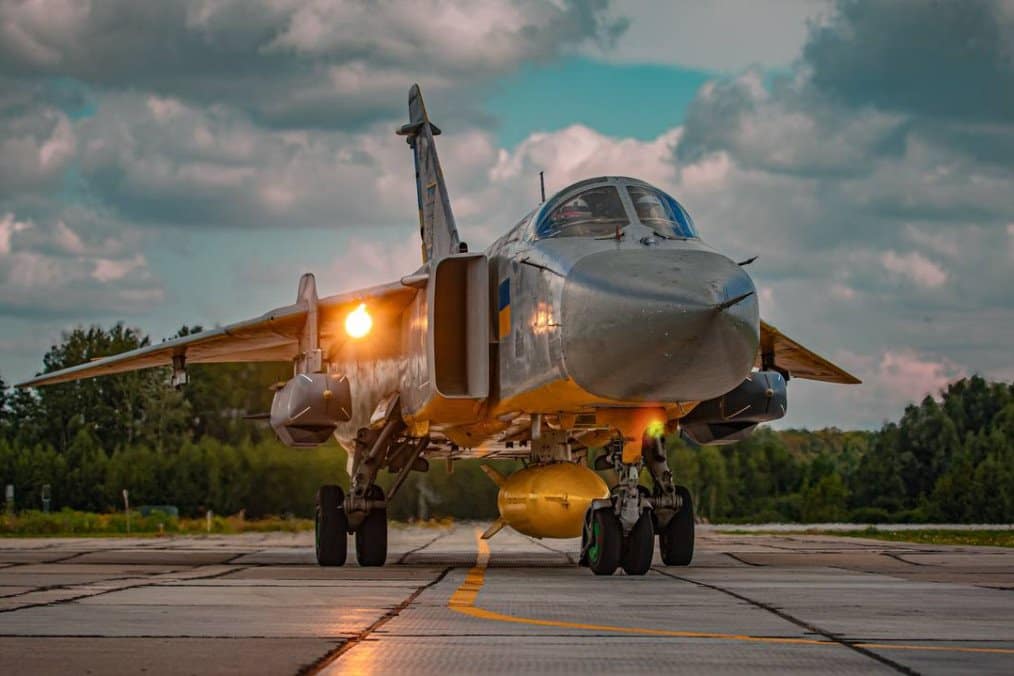
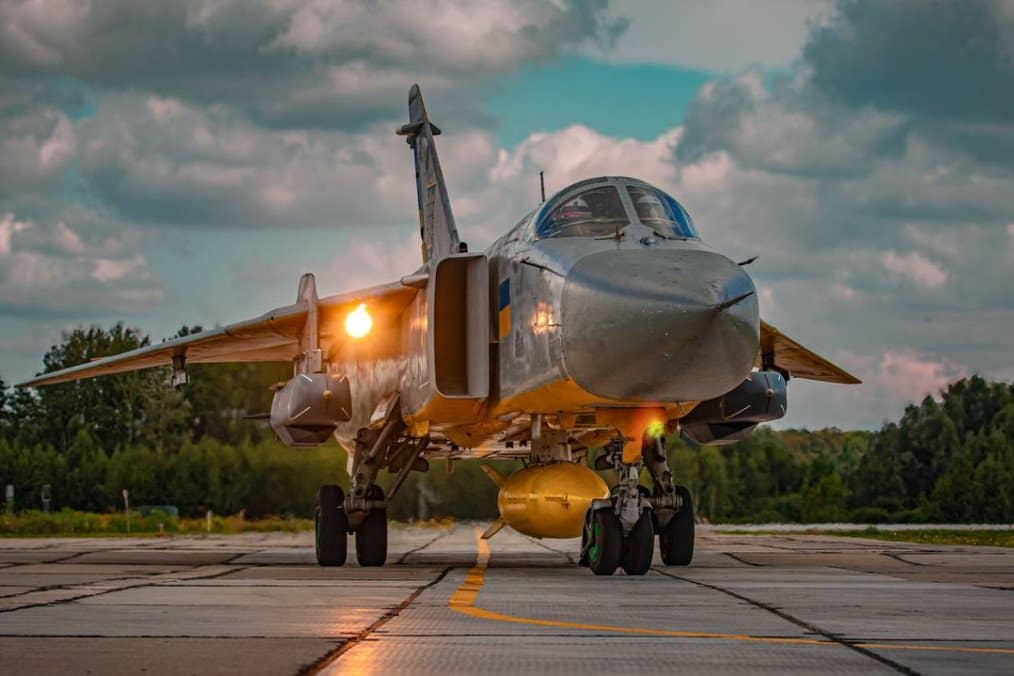
Ukrainian Air Force Su-24M Fencer with underwing Storm Shadow missiles viewed from head on. The aircraft was the primary Storm Shadow delivery system for Ukraine until the delivery of the Mirage 2000. These older aircraft were given a new lease on life with the air launched cruise missile role, allowing them to inflict extreme damage on Russia relative to their age. | Source: Vladyslav Demyanenko/Ukrainian Air Force
Donated Storm Shadow and SCALP-EG missiles can already be carried by modified Su-24 fighter bombers and French donated Mirage 2000-5 aircraft, and will be deployable from the 16 Dassault Rafale aircraft that France agreed to send Ukraine from 2028.
Storm Shadow and SCALP-EG missiles have been delivered to Ukraine since May 2023, with these weapons taking out numerous high value targets across Russia and Russian occupied Ukraine, including the Kilo-class submarine Rostov-on-Don which was hit whilst in dry dock in Sevastopol.
However, weapon usage by Ukraine has been limited to donations made from the existing stocks used by Italy, the UK and France as production of the missiles had ended several years prior. Unofficial assessments had put Rome’s, London’s and Paris’ weapon stocks in the higher hundreds/few thousands, however they are significantly depleted after supply to Ukraine.
As a result, the production line was restarted in the UK and France in July 2026 to help make up the difference in the weapons used and to also give Ukraine a more sustainable supply of missiles.
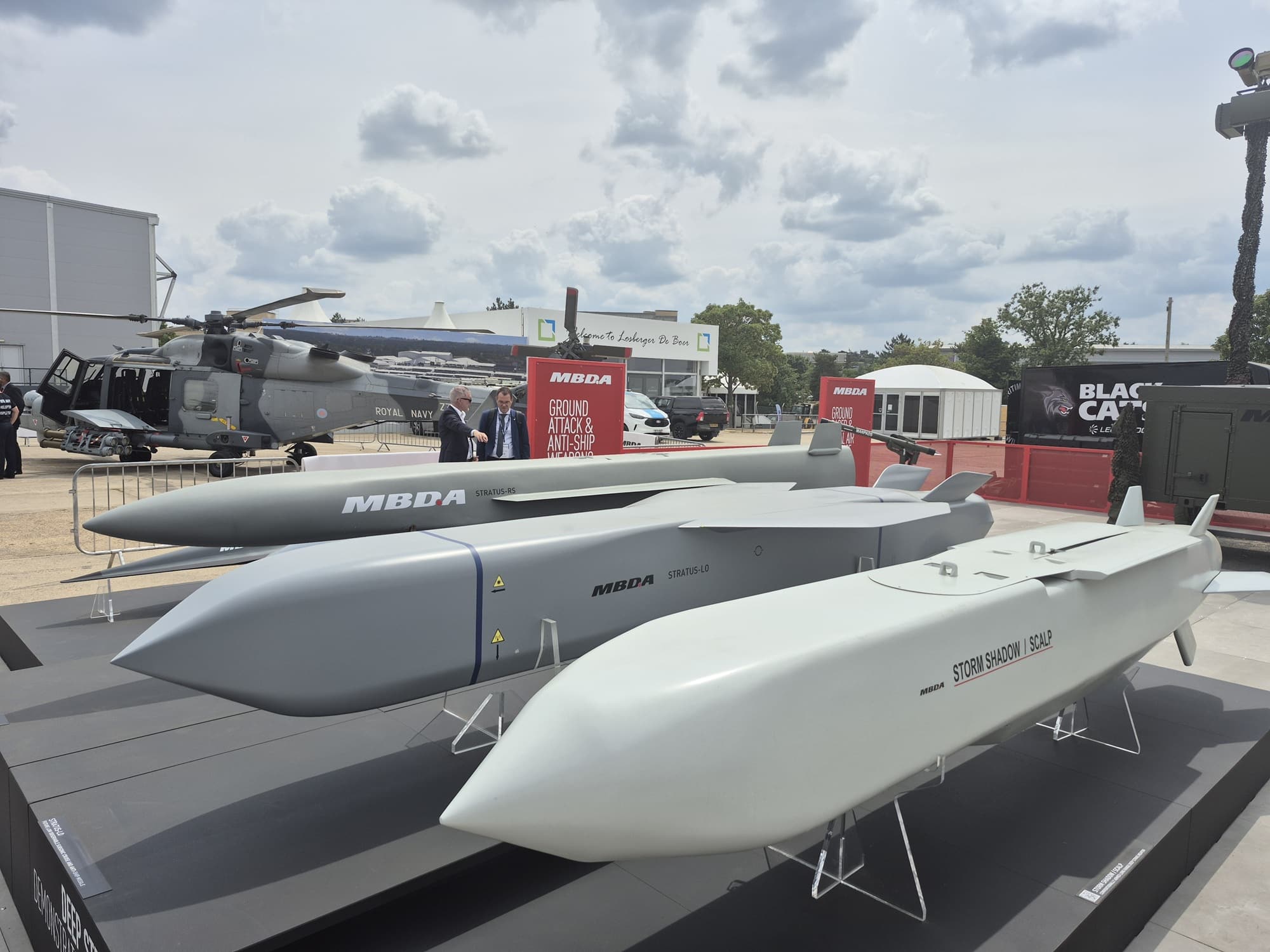
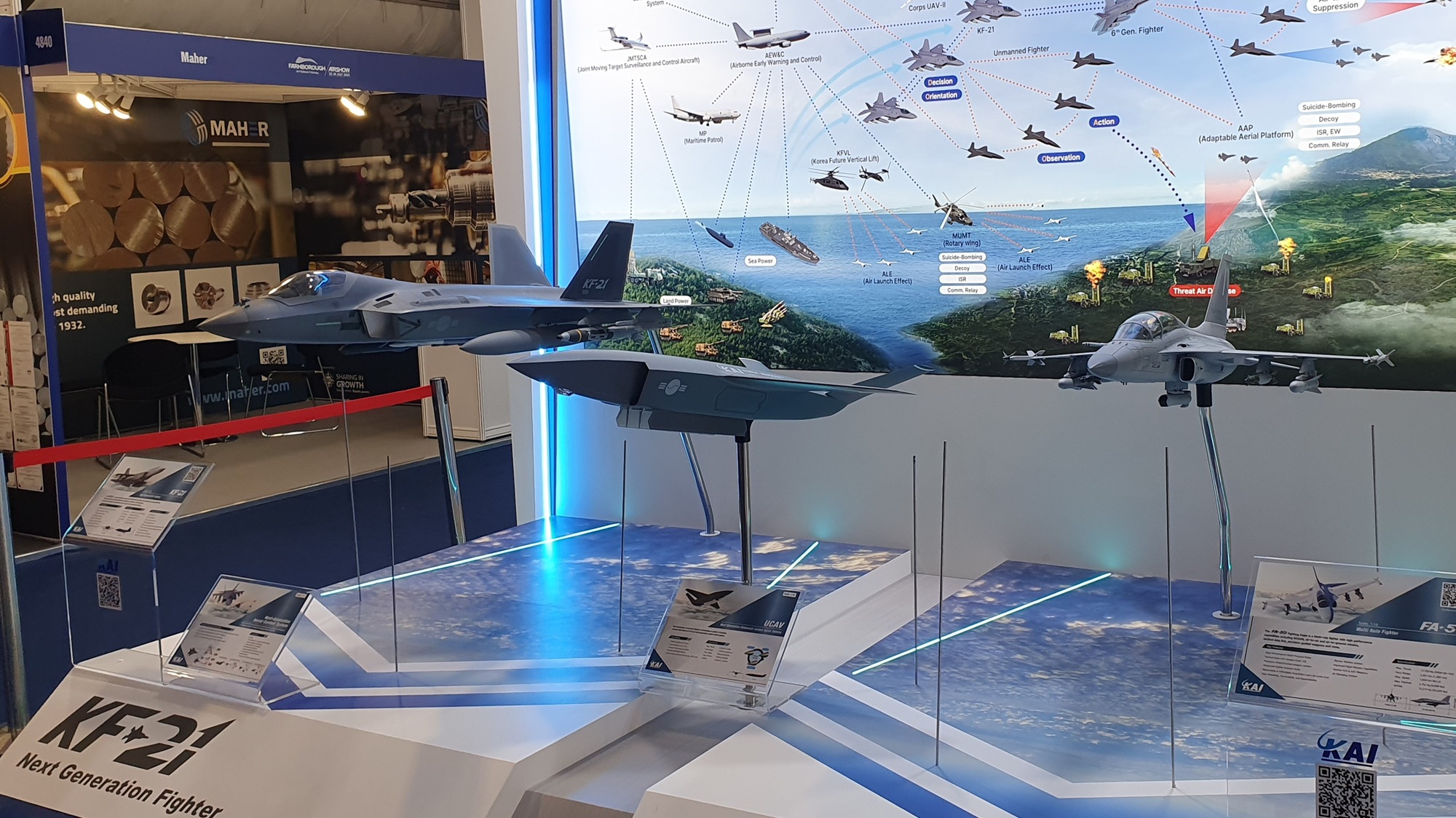
Mock ups of the Storm Shadow/SCALP missile at the Farnborough Air Show, next to its eventual replacements for both the RAF and the Armée de l’Air et de l’Espace, the Stratus Low Observable and the Stratus Rapid Strike missiles. | Source: James Gray
Now that Ukraine will be able to produce its own weapons, Italy, France and the UK will be able to preserve more of their stockpile whilst they await the introduction of the newer Stratus missiles, also developed by MBDA. Once these weapons enter service in large numbers it is likely that Ukraine will receive significant donations of the older weapons that these nations no longer have need for.
Storm Shadow and its Future
Storm Shadow, or SCALP-EG as it is called in France, is a long-range, stand-off, air-launched cruise missile (ALCM) that is deliverable by Tornado, Typhoon, Rafale, Mirage and Su-24 Fencer aircraft. It carries a two stage 400kg warhead called Bomb Royal Ordnance Augmented Charge (BROACH) which was developed by BAE Systems in the UK.
Its initial charge is used to penetrate the armoured target, with its second charge used to destroy it from the inside. As a result, the missile is designed to attack important hardened targets and infrastructure such as buried and protected command centres or bunkers.
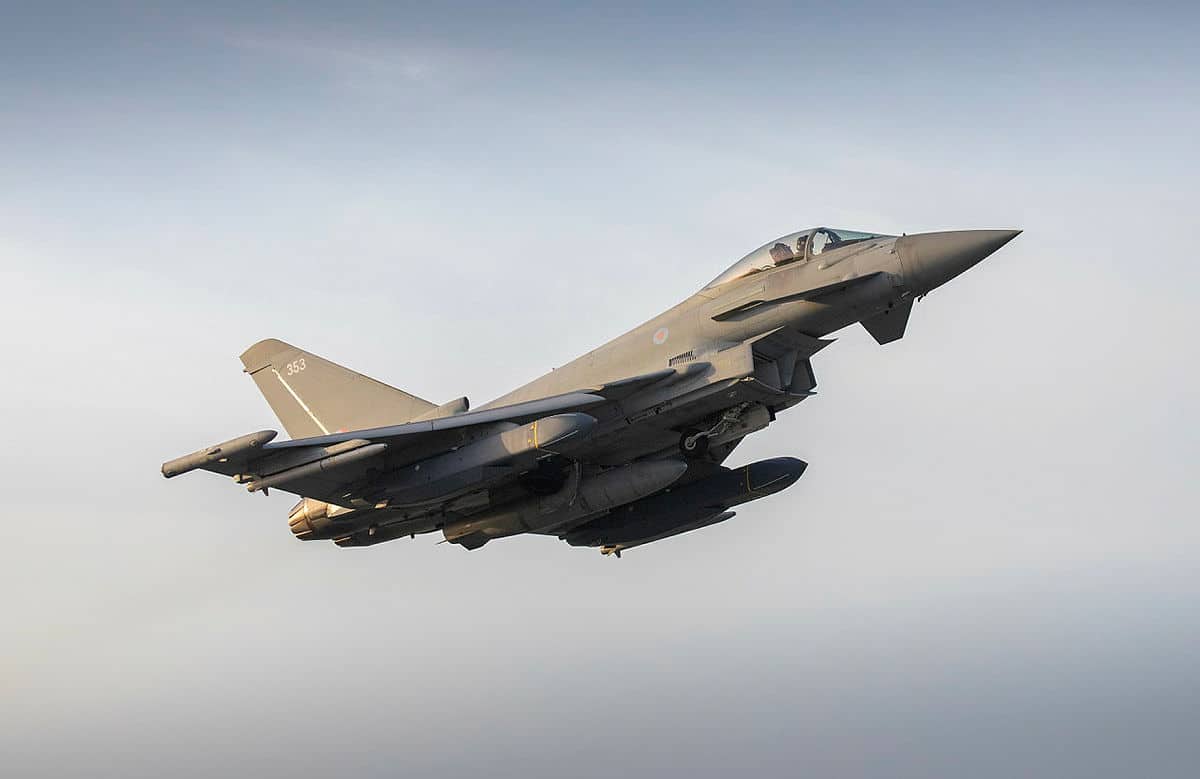
A RAF Typhoon aircraft departing from RAF Akrotiri for a sortie over the Middle East on Operation SHADER. The aircraft is armed with Storm Shadow Cruise missiles to conduct strikes against Daesh who were hiding in cave complexes south-west of the city of Erbil. | Source: Crown copyright 2021/Cpl Steve Buckley RAF
Mission and target data is loaded into the weapon’s main computer before the aircraft leaves on its mission, allowing it to be used in a fire and forget manner which was ideal for Ukraine’s needs. After release, the wings deploy and the weapon navigates its way to the target at low level using terrain profile matching and an integrated GPS.
On approaching the target, its onboard infrared seeker takes control, matching the target image with the stored data to ensure a precision strike and minimal collateral damage. British and French intelligence has been vital to the employment of these missiles in Ukraine, with a number of service personnel embedded in Ukraine to facilitate the data transfers and provide assistance.
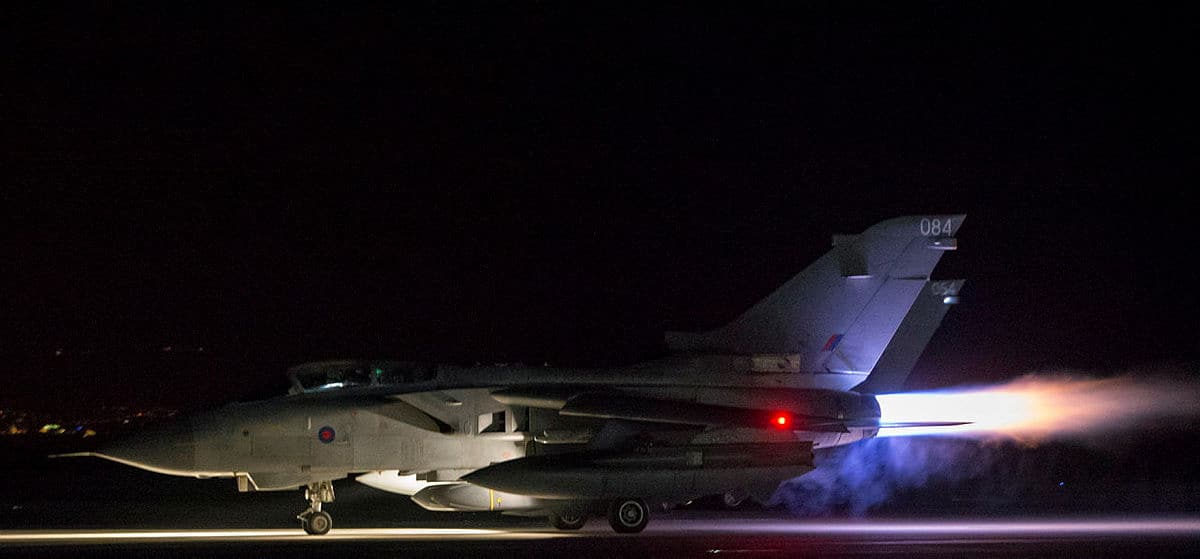
Four RAF Tornado’s from No 31 Squadron, the Goldstars, launched a Storm Shadow strike on Syrian installations involved in the use of chemical weapons, following the Douma chemical attack in April 2018. The success of the attack in neutralising Assad’s chemical weapon stockpile highlighted the potency of the Storm Shadow in its accuracy and stealth. | Source: Crown copyright 2018/Cpl L Matthews
Storm Shadow and SCALP-EG are virtually identical missiles, with minor differences in their software and aircraft interface components allowing them to be used by the different nations. As it is French aircraft that will form Ukraine’s future missile delivery systems, it is understandable that France is taking the lead on setting up production in Ukraine itself. However, British approval was still needed to allow MBDA to set up production due to the presence of British built components in the missile, especially the warhead.
The Storm Shadow missile is however a weapon born from the 1990s, with missile technology having steadily moved on in the years since. Whilst still potent, it is to be replaced by the Stratus LO and RS missiles, which will improve the striking abilities of the air forces employing them. These missiles, also products of MBDA, are to be tested in 2028 in both the air and sea launched variations, paving the way for a new generation of striking power.
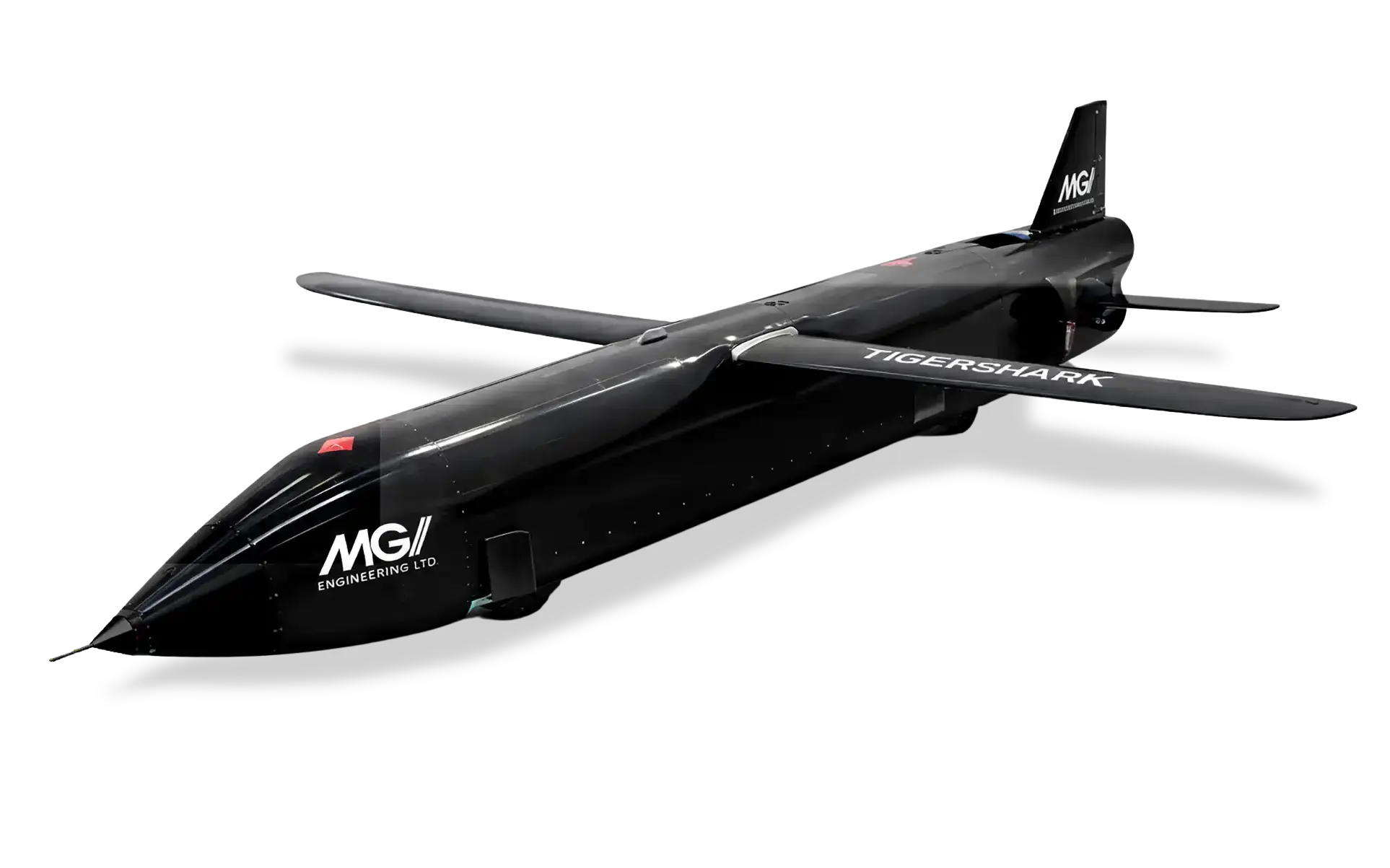
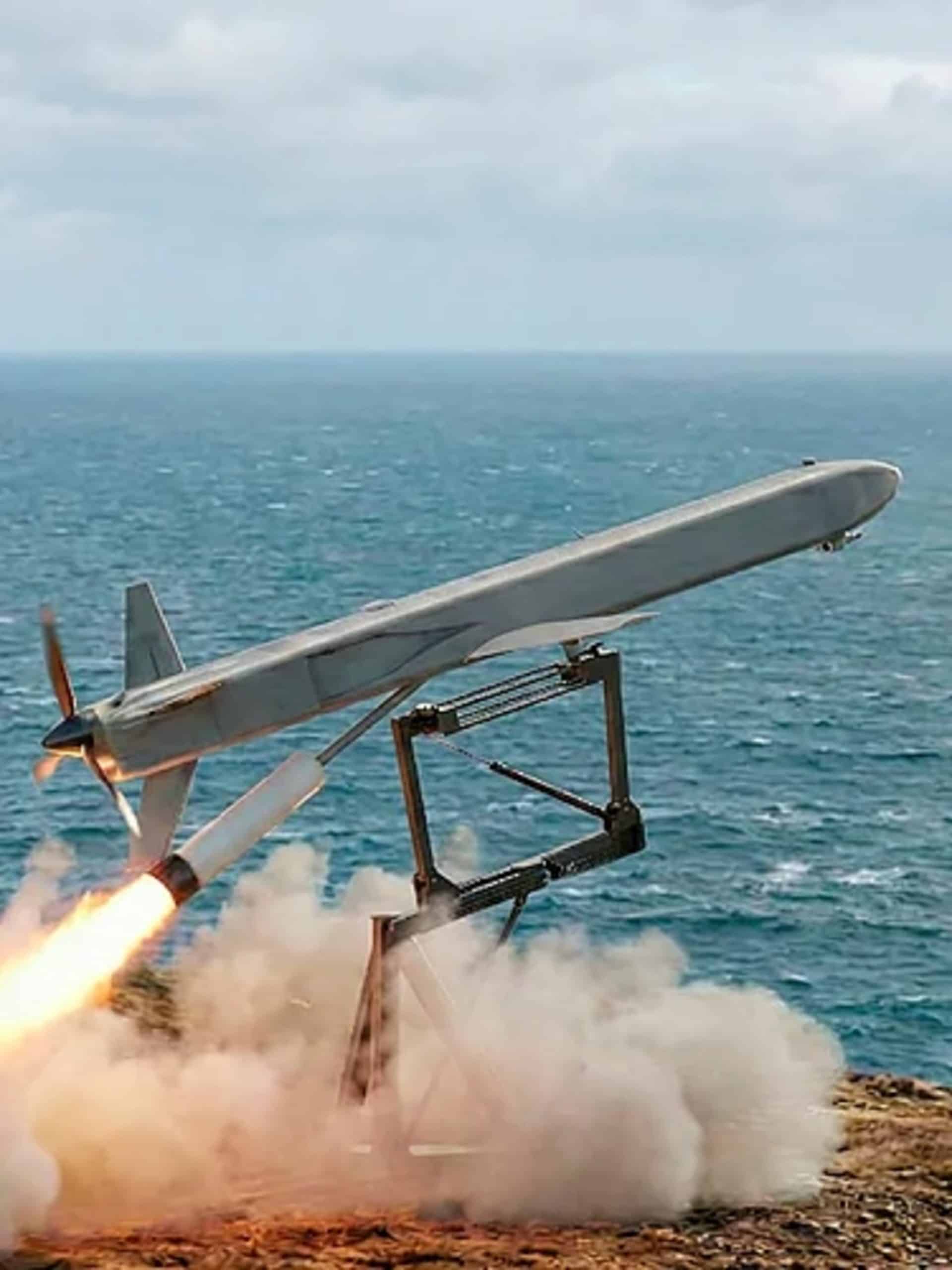
The Project Brakestop ‘fly off’ is underway. Its between: Rotron, MGI and MBDA.
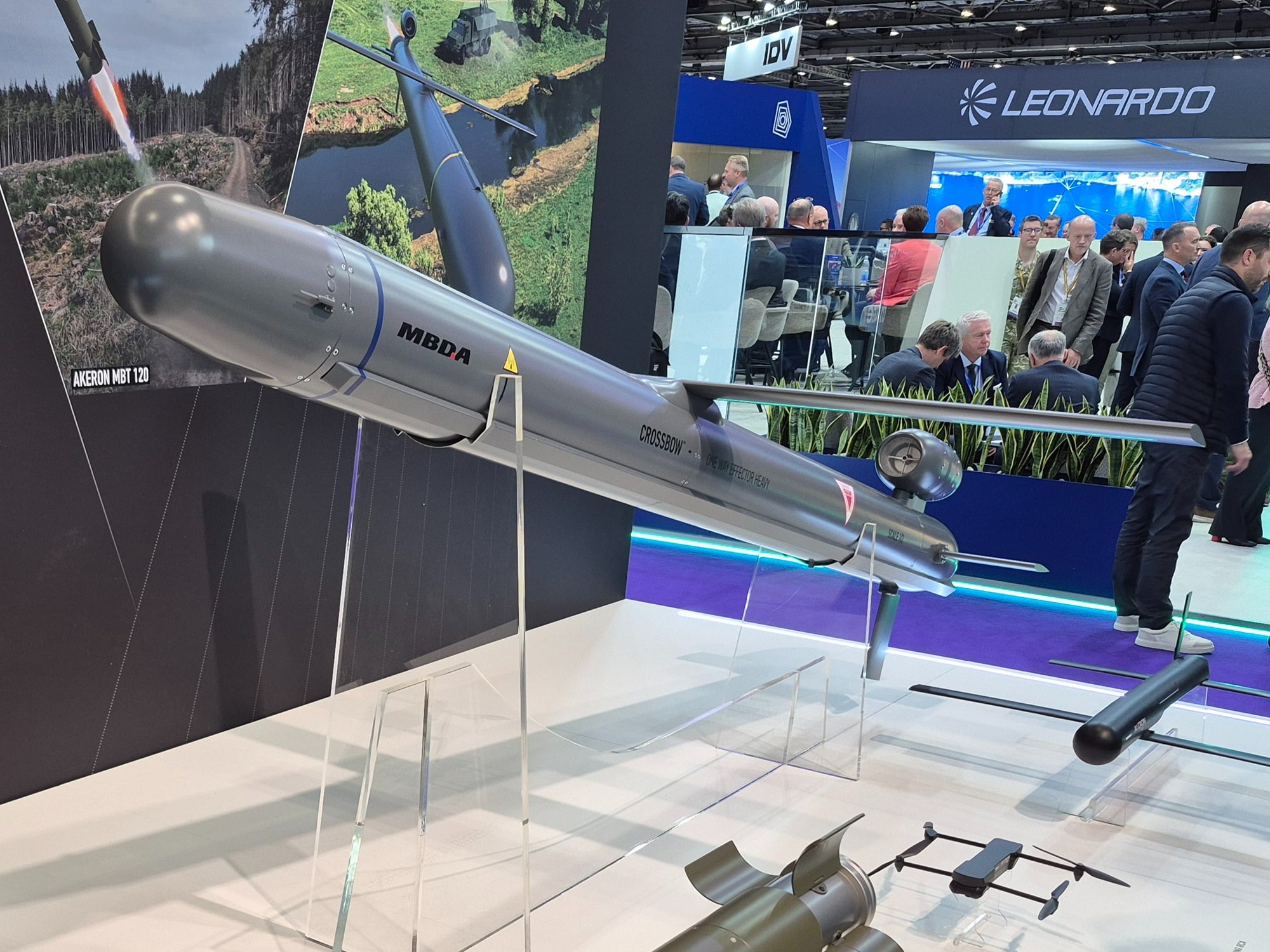
The first, an SME, offers SKYLANCE, the second, a Formula One company, offers TIGERSHARK and the third, an established missile maker offers CROSSBOW. pic.twitter.com/6xoCP7tzAA
As a result of this development, the Storm Shadow missile will be retired in RAF service at some point in the next few years, according to announcements made in this year’s Defence Investment Plan. It will be replaced by Stratus and several variants of cheaper One Way Effector munitions being developed under Project BRAKESTOP for the Ukrainian Armed Forces. These weapons will provide the UK a much needed high-low mix of long range missiles, one of the most significant lessons from the war in Ukraine.
The sun may be setting on the Storm Shadow for the UK, but for Ukraine this is only the beginning.
The Republic of Singapore has expressed its first interest in joining a 6th Generation fighter programme only a week after Canada joined GCAP as an observer.
As reported by Janes on Tuesday, Singapore has begun early discussions on possible involvement in GCAP, with reports suggesting that the talks are currently only “exploratory” and not indicative of any future orders or involvement in the programme.
Currently GCAP is manned by the United Kingdom, Italy and Japan, with Canada having only just joined the programme with observer status on July 21, 2026. Germany and Saudi Arabia are also interested in joining the programme in some form, in Germany’s case due to the almost total collapse of their 6th Generation FCAS programme with France.
Singapore reportedly spends years at a time evaluating the requirements of the Republic of Singapore Air Force (RSAF), their nation’s long-term strategic goals and the technological and industrial opportunities, before coming to any procurement decision. This was the case with their previous air combat orders, with Singapore joining the F-35 Joint Strike Fighter programme in 2003 as a Security Cooperative Participant (SCP), but not making any orders until the year 2020.
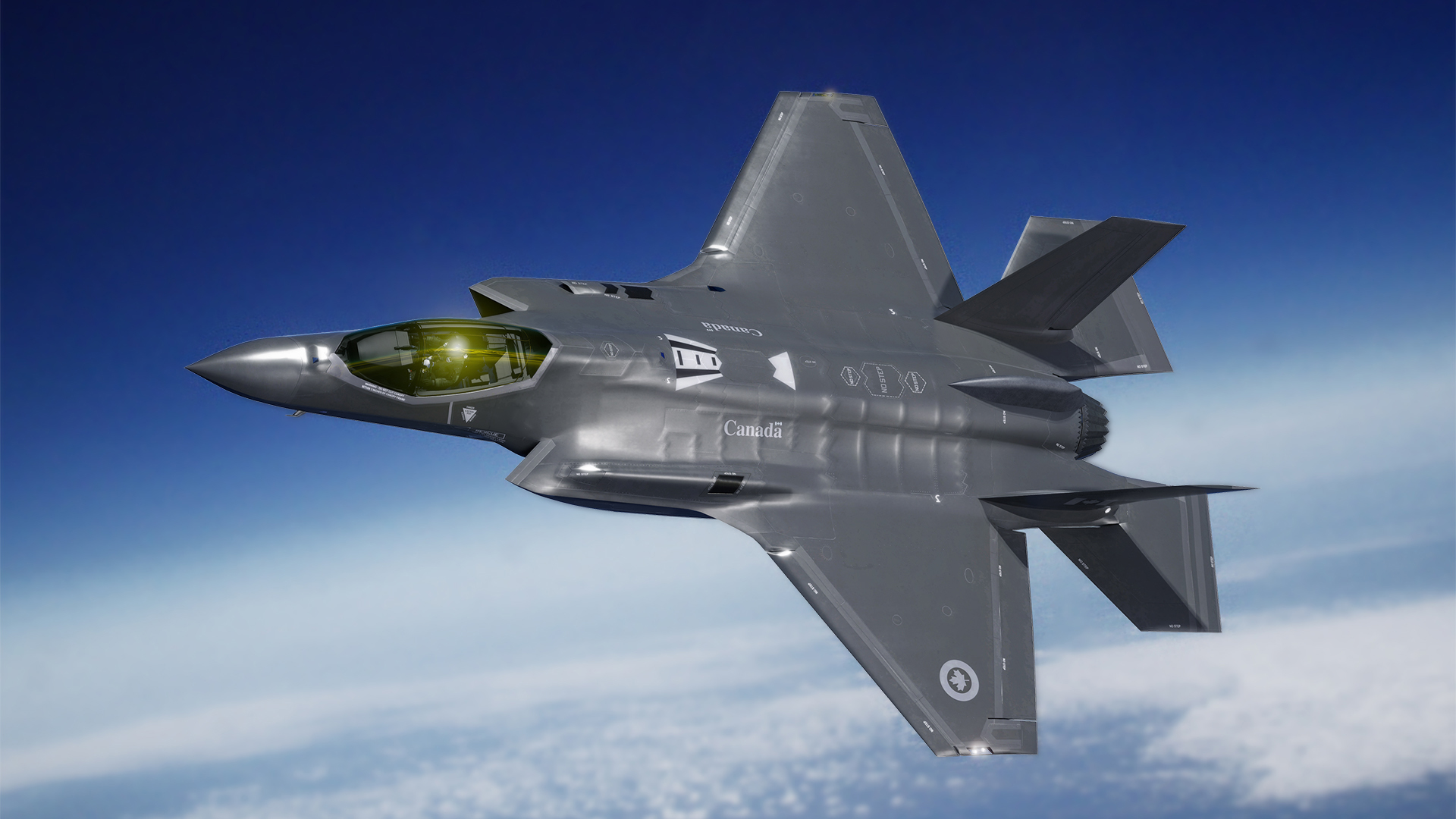
Singapore is currently awaiting delivery of 12 F-35Bs and eight F-35s that were ordered from 2020. The aim of this small batch is to test the F-35 for the requirements of the RSAF before following on with a larger order to properly replace the F-16 Fighting Falcon.
Republic of Singapore Air Force F-16D block 52 during Exercise PITCH BLACK, taking place across RAAF bases Darwin and Tindal in Australia’s Northern Territory. These aircraft make up the bulk of the RSAF’s striking potential, which will be replaced at some point by the F-35 Lightning II in both conventional and STOVL variants. | Source: Crown copyright 2022/AS1 Ryan Murray RAF
The RSAF fighter fleet currently consists of 40 F-15SG Strike Eagles ordered during the early 2000s as a part of Singapore’s Next Generation Fighter (NGF) programme, as well as a fleet of 49 F-16C/Ds of various blocks which were delivered from the 1998 until 2004. These aircraft represent some of the most potent fighters in the region, with only South Korea and China having more advanced aircraft entering service.
Singapore in early talks on possible involvement in GCAP programme
Singapore has begun early discussions on possible involvement in the Global Combat Air Programme (GCAP), Janes has been informed by a source close to the matter.
The report from Janes suggests that the RSAF and the Singapore Ministry of Defence are keeping one eye on future air force requirements as the top defence nations are switching to 5th and 6th generation air fleets. Whilst the RSAF may not need a 6th generation platform right now, it may do so in the future, and with GCAP currently the only 6th generation platform available for international involvement and export, it makes sense that Singapore is exploring this option.
The War Zone’s contributor Roy Choo stated that: “From this news, it appears they may have identified a future requirement for a sixth-generation fighter, although this is unlikely to transition into a program of record for at least another two decades,” Choo explained. “As with most operators, Singapore engages with industry to stay informed about available market offerings all the time.”
This would track with the F-35 programme’s current timetable, with Singapore only receiving their first aircraft in 2026, a decade after the USAF first gained their first fighter and over two decades after the Joint Strike Fighter programme officially kicked off. In all likelihood Singapore could join the programme as an observer at some point, but it would not receive any aircraft until the F-15SGs begin to retire in the 2040s or 2050s.
As it stands, Singapore’s F-16s are likely to start leaving service from the mid 2030s, so there is a long way off any need for a new generation of fighter aircraft for the RSAF.
GCAP Current Progress
GCAP appears to be progressing well at the moment, following the announcement in the Defence Investment Plan that the UK Government was committed to spending £8.6 billion on the programme over the next four years. GCAP was certainly a winner of the DIP with recent news coming out of last week’s Farnborough Air Show painting an even more optimistic view over the future of the programme.
On July 21, Canada joined GCAP as an observer, opening the door to future Canadian participation in the sixth-generation fighter effort in an announcement made on Wes Streeting’s first day as Defence Secretary. The announcement came as Streeting hosted his Japanese, Italian and Canadian counterparts, Shinjirō Koizumi, Guido Crosetto and David McGuinty, at Wellington Barracks in London.
Mock up of the Tempest fighter at the DSEI expo in London in late 2025. The airframe is estimated to be around a third larger than the Eurofighter Typhoon, the RAF’s current mainstay fighter aircraft. | Source: James Gray
As a result of the announcement, Canada will gain direct insight into GCAP, including capability development, industrial collaboration and long-term delivery plans, but it will not have a decision making role. This allows Canada access to the programme and opens the door to a future Canadian aircraft order as the nation distances itself from the United States in favour of European defence products. This will benefit GCAP providing another nation willing to fund part of the programme, reducing overall costs for the founding nations.
The very next day, the UK Ministry of Defence awarded BAE Systems a contract extension worth £708 million to progress the development of sovereign sixth-generation combat air technologies, underpinning the UK’s role in GCAP. Under the contract, BAE Systems will deliver and integrate UK technology, including software, digital networks, digital engineering and physical infrastructure.
Part of this funding was for capabilities outside of the Tempest fighter, and were possibly also for the Brontanax collaborative combat aircraft (CCA) that will one day fly alongside it. The £708 million is national rather than joint funding for specifically the UK-sovereign technologies that will go into the wider Future Combat Air System around the aircraft.
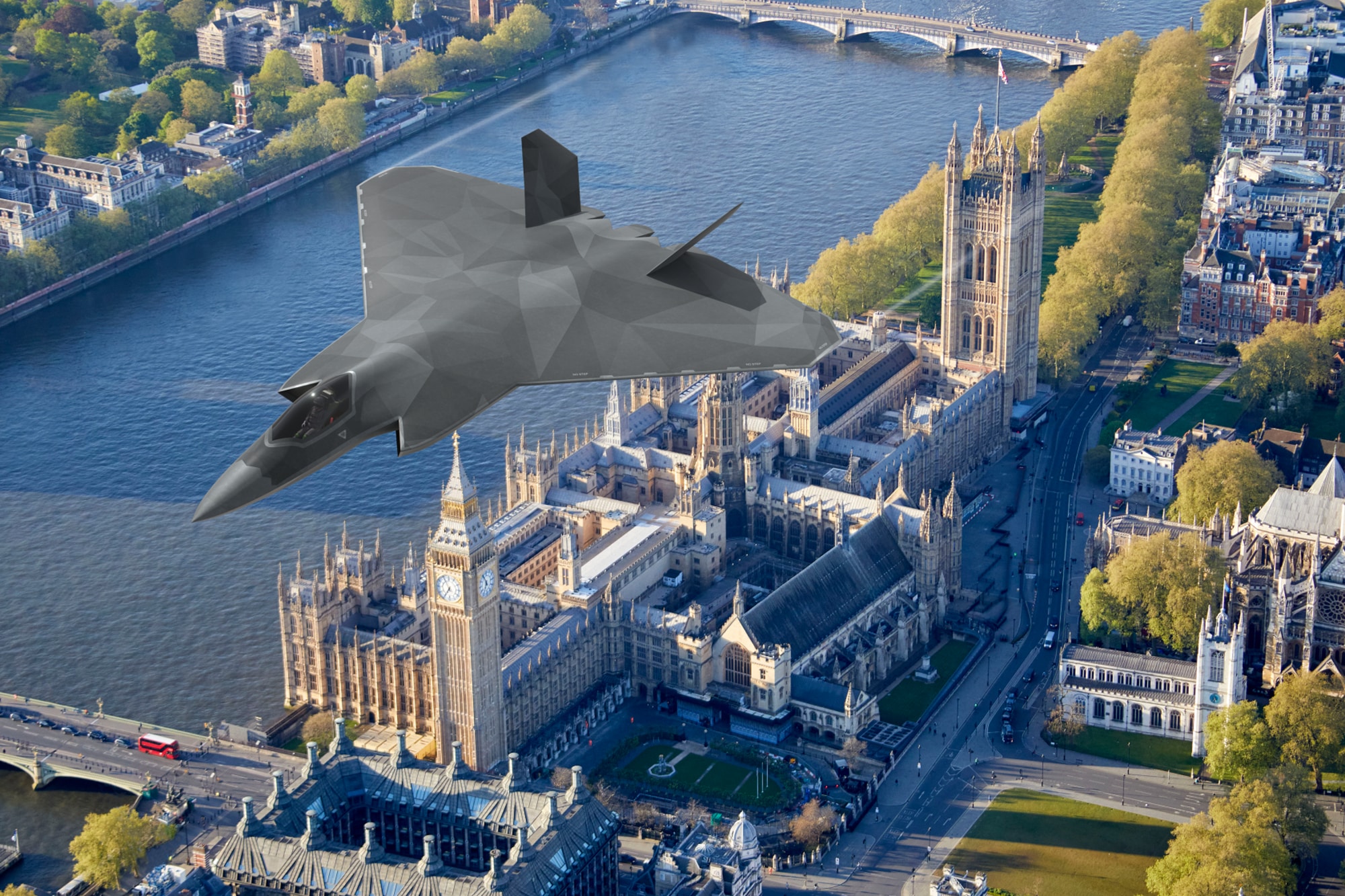
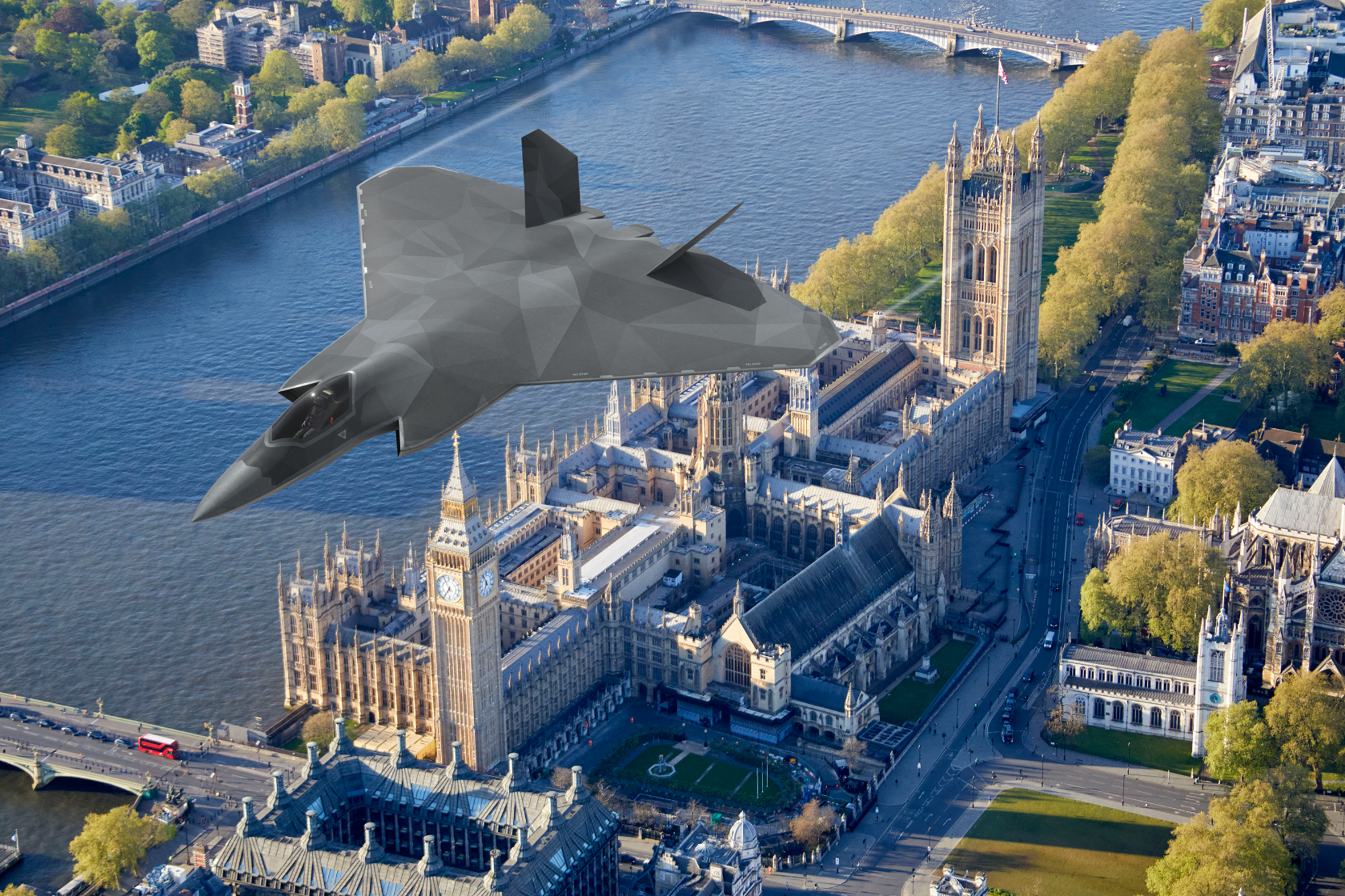
Tempest CGI Model flying over the Palace of Westminster, the home of the UK’s government. | Source: UK Ministry of Defence
That same day at Farnborough, the Team Tempest partner companies of BAE Systems, Leonardo UK, MBDA UK and Rolls-Royce held a briefing on the accelerating development of the prototype for Tempest and the wider programme.They revealed that around half of the main aircraft structure for the UK Combat Air Demonstrator is now in final assembly at BAE Systems’ site in Lancashire, marking progress on the first crewed combat aircraft to be built in Britain in four decades.
According to the partnership, more than 11,500 parts have been designed to date, accounting for around 90% of the aircraft’s overall weight. For the demonstrator, Rolls-Royce is providing two modified EJ200 engines used on the Eurofighter Typhoon, enabling the concept to take to the air whilst the next generation engines are being worked out.
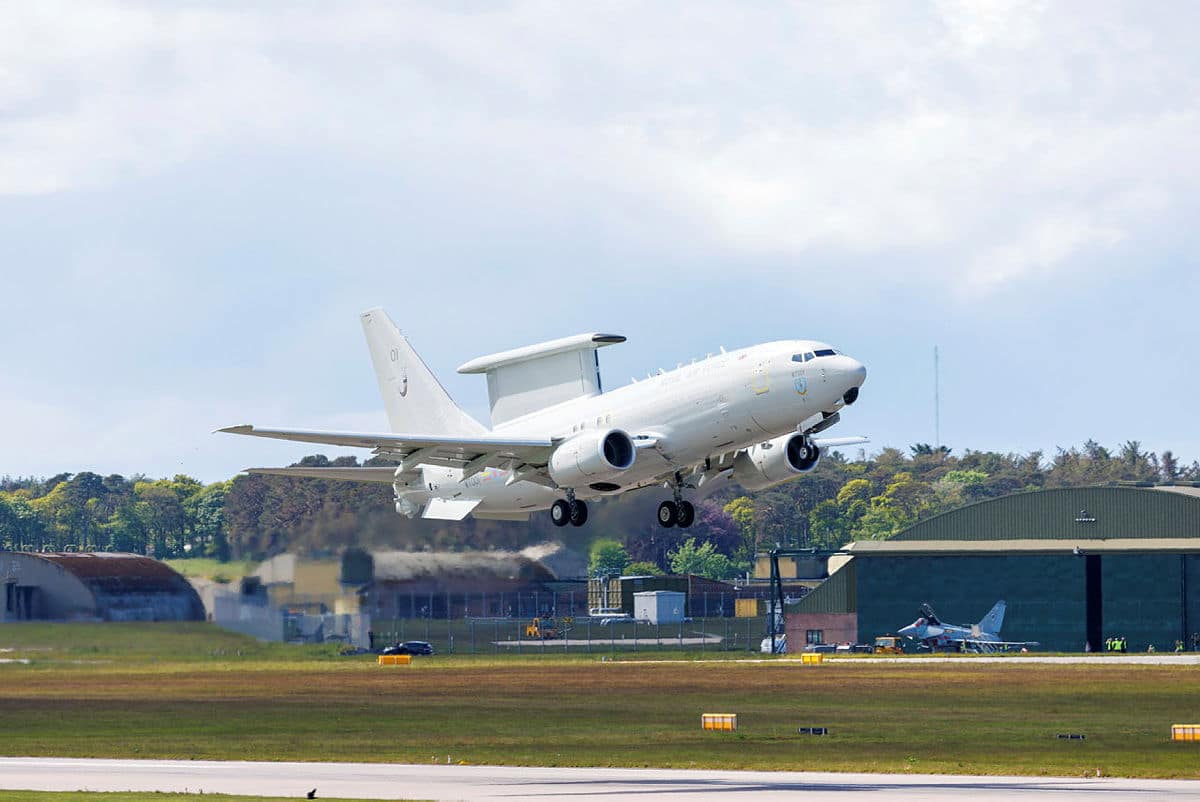
The Excalibur test aircraft is a modified Boeing 757, fitted with a radome on the nose to house the radar that will go into the Tempest fighter. This process allows the team to test the systems that will go into Tempest before the airframe is even built. A similar approach was taken with the RAF Typhoon, with a modified BAe 146-RJ100 used to test the ECRS MK2 radar. | Source: Leonardo
Alongside this news they revealed that the Excalibur Flight Test Aircraft, the UK’s flying laboratory for next-generation combat air technologies, has completed its modifications and entered the next stage of flight trials. The aircraft, developed by Leonardo and 2Excel, acts as an airborne testbed used to speed up trials of advanced integrated systems that will go into the Tempest fighter. Doing so helps to decrease the risks involved in development as it allows the companies to prove the systems in real-world conditions before they are placed in the fighter.
The GCAP demonstrator is extremely interesting. At first glance, it simply seems like a one-off prototype designed to validate the many technologies that GCAP itself will incorporate. Though smaller than GCAP, could form the basis of a second aircraft that could ultimately… pic.twitter.com/cgbcksXUFb
— Nicholas Drummond (@nicholadrummond) July 23, 2026
Rolls-Royce representative Phil Townley spoke of their next generation engine demonstrator, which will use lessons drawn from the ongoing Orpheus small engine concept. According to the company, Orpheus serves as a test of new working methods and agile engineering processes, which directly shape the technology that will go into the next generation engine they plan on using for Tempest. The consortium’s work is intended to culminate in ground testing of the demonstrator to gather data needed to de-risk the wider programme.
MBDA UK gave an update on how they are working on speeding up weapons integration onto the Tempest fighter. This is based on three key pillars, firstly by exploiting digital simulation and modelling to reduce the on-aircraft time in-chamber testing needed for integration.
Secondly, they are looking to use virtualisation; the use of commercial off-the-shelf parts and a simplified software base across the aircraft’s mission systems and its weapon systems to allow for smoother integration. Lastly, they are looking to use AI and machine learning techniques to analyse the results of testing, allowing for the creation of faster reports and assessments that normally slow down the process of testing the aircraft.
Canada and then Singapore! #GCAP is becoming one of the most important future air combat projects globally.
Surely @DefenceAust and @AusAirForce are taking a close look at their options post Super Hornet and Growler? A future air combat force of F-35A, MQ-28 Ghost Bat, and GCAP… https://t.co/EF8sQncAHT
Once the Tempest demonstrator is finished and flying, MBDA will use these techniques at the same time as traditional integration methods to prove the new operating concept can be faster and easier to use. This will culminate in a number of real-life supersonic release fires from the test aircraft, with lessons learned then being used on the production aircraft.
Richard Berthon, Director of Future Combat Air at the Ministry of Defence, was quoted in the press release as saying:
“These achievements demonstrate the pace and scale of progress being delivered through the Team Tempest enterprise. From advanced digital manufacturing and flight testing to next-generation propulsion technologies, we are maturing the critical capabilities needed to deliver a world-leading Future Combat Air System for the UK. The expertise, skills and technologies being developed today are not only reducing risk for GCAP, they are strengthening our sovereign combat air capability and ensuring the UK remains at the forefront of air power innovation for decades to come.”
Finally, in a separate agreement made at Farnborough, MBDA UK, MBDA Italy, Mitsubishi Electric and Mitsubishi Heavy Industries signed a collaboration agreement to support GCAP.
3D render of GCAP, focusing on the manned element the Tempest fighter. | Source: Edgewing
The agreement sets out a new operating model under which the partners will jointly support Edgewing’s delivery of the manned fighter. This agreement doesn’t lead to the joint development of the aircraft’s weaponry but instead aligns the partners’ sovereign approaches to those weapons and supports their digital integration for GCAP.
The weapons arrangement mirrors the structure adopted elsewhere on the programme, under which each nation contributes established industrial partners who align sovereign work rather than merging it directly. This approach preserves each country’s control over their own sensitive and sovereign technology whilst enabling the integration needed for the aircraft and its weapons to function as a single system.
All these developments are good news for the programme, which appeared to be in a rocky shape earlier in the year due to a lack of initial funding from the UK. For now the course looks positive, hopefully, it will stay that way.
As Farnborough International Airshow has come to a close, The Aviationist brings you some of the highlights, from the unveiling of BAE System’s Brontanax to the USAF F-35A that interrupted many media briefings throughout the week.
With the cancellation of the Royal International Air Tattoo (RIAT) due to the ongoing war between the United States and Iran, the Farnborough International Airshow took on more importance for aviation fans than it usually would have been. Taking place from July 20 to 24, 2026, the Farnborough International Airshow brought together thousands of attendees from around the world to celebrate the world of aviation, show off the newest aviation technologies and to trade their many aviation wares.
On the air display front, Farnborough is considerably smaller in its scale than RIAT, with a greater focus on showcasing new and novel technologies over air displays from active air forces. Also unlike RIAT, its air displays go on for the entire week, with a larger display taking place on the Friday and open to members of the public, with this year’s theme Pioneers of Tomorrow.
The Vertical Aerospace VA-1X displayed at Farnborough showcasing the vertical takeoff and landing capabilities of the aircraft intended to operate as an air taxi across London. The display showcased the aircraft’s transition from vertical flight to horizontal and back again, whilst also demonstrating just how quiet the aircraft is. | Source: Kai Greet
To this end, the public was greeted with displays from rather novel aircraft, including the Vertical Aerospace VA-1X, which aims to pioneer vertical take off and landing technology to be used for intra-city travel in the form of a flying taxi.
This aircraft is extremely quiet in comparison to other contemporary VTOL aircraft such as the F-35B Lightning II, making it perfectly suitable for city use, if it is able to pass the appropriate certifications. The flying prototype uses all electric propulsion whilst service aircraft are expected to use a hybrid-electric propulsion.
General Electric Aerospace’s Saab 340B testbed, nicknamed “Gertrude,” flew at Farnborough equipped with a hybrid-electric engine on the starboard side. Developed in collaboration with Boeing and Beta Technologies, this aircraft completed its first hybrid-electric flight above 30,000 feet on May 20. | Source: James Gray
The VA-1X was also joined by General Electric Aerospace’s Saab 340B flying testbed, nicknamed “Gertrude,” which is testing a megawatt-class hybrid-electric propulsion system in a modified engine nacelle, replacing the GE CT7 turboprop on the left side. The aim here is to help pioneer new efficient technologies to bring down the prices of air travel, and to decrease the reliance on expensive fossil fuels which have taken a hit due to the U.S.-Iranian war. The SAAB 340 aircraft was used by the Swedish Air Force as the basis of their Erieye airborne early warning radar, highlighting the extreme versatility of the base aircraft.
The engine that Gertrude uses is being developed through NASA Electrified Powertrain Flight Demonstration (EPFD) project in collaboration with General Electric, Boeing and Beta Technologies. Parts are also integrated from companies Avio Aero, Dowty propellers and BAE Systems, highlighting the international supply chain behind the project.
Always cool to watch widebodies in airshow displays… Here’s a short clip of the Airbus A350-1041 performing at #fia2026 today. pic.twitter.com/RY3C95OIAb
Civilian aircraft are often what separates Farnborough from RIAT and the Cosford Airshow in their displays, and this year was no exception. Whilst military aircraft are often seen using their manoeuvrability in flight for combat and training purposes, wide bodied civil aircraft have no such requirement.
As such, it is a rare treat to see aircraft such as the Airbus A350-1000 taking to the skies for an air display. The A350 was the largest aircraft to perform during the air show and it pushed the airframe to its limits as the aircraft flew repeatedly up and down the runway.
The Airbus A350-1000 on display at Farnborough comfortably accommodates from 375 to 400 passengers and was the largest aircraft to display during the week. Riyadh Air made an order for six aircraft whilst attending the trade show. | Source: James Gray
The A350 was joined by the smaller Bombardier Global 8000, which represented the future of business jets. This aircraft is the world’s fastest and longest-range purpose-built business jet, featuring a top speed of Mach 0.95, and an 8,000 nautical mile range.
The aircraft has been tested going supersonic at times, becoming the first business jet to do so. Whilst its civil applications in the business world are straightforward, its high speed and long range have an interesting possible future application to military special mission aircraft, which have often been rather slow and vulnerable to hostile surface-to-air missile fire.
Bombardier Global 8000 is the world’s fastest and longest-range purpose-built business jet, featuring a top speed of Mach 0.95, and an 8,000 nautical mile range. Currently, Germany is exploring options to militarise the aircraft as a standoff jammer in what is likely to be the first special-mission version of the aircraft. | Source: Kai Greet
The speed and range open up a world of possibilities for any military looking to adapt this aircraft. It was certainly lightning quick as it flew down the runway and was one of our highlights from the whole show.
N100BD (MSN 70234), demonstrator for the Bombardier Global 8000, during its display at #FIA2026. The demo was very impressive. It is certified to Mach 0.95 but during testing it reached Mach 1.2. Would not be surprised if some forces pick it up. pic.twitter.com/C9ZoU7IpUI
In stark comparison to these hybrid electric aircraft and the civilian aircraft, the air show saw the presence of the USAF F-35A Lightning II, which displayed throughout the week, showcasing the great power of its Pratt & Whitney F135 turbofan engine.
It remains an extremely dynamic aircraft that, despite its large shape, can still rip across the sky in extremely tight manoeuvres. Its powerful engine disrupted many media briefings that The Aviationist’s crew were attending that week, with the aircraft felt and heard even if not seen.
Joining the F-35A in the fighter demonstrations was the Eurofighter Typhoon (F-2000A in Italian service), flown by the Aeronautica Militare. Italy sent a number of aircraft to the air show for both the static display and the flying display, with the T-346A Master and the C-27J Spartan joining a second Typhoon on the static. The Typhoon too provided a fantastic flying display, sticking around all week to show off the distinctive tail art of their aircraft.
The art depicts the visage of Amedeo d’Aosta, the namesake of the Aeronautica Militare’s 4th Fighter Wing, to which this specific aircraft is assigned. Amedeo served in the Regia Aeronautica (the Italian Royal Air Force) during the Second Italo-Senussi War in Libya, taking place in the 1930s during Italy’s colonial period. He later went on to command Italian forces during the East African Campaign of the Second World War, where he was captured by the British before dying in a prison camp. The Typhoon was on loan to the Reparto Sperimentale Volo (Experimental Flight Unit) for the air displays at Farnborough.
One of two Aeronautica Militare Eurofighter Typhoons sent to Farnborough for both the static and air displays. The Typhoon performed a fantastic display, showcasing the raw power of the EJ200 engines as it shot down the flightline. The Italians never disappoint in their displays. | Source: Kai Greet
It is of note that, whilst at Farnborough, Leonardo made a sale of its M-346F Block 20 Light Fighters to Indonesia, who is now buying 12 aircraft to help replace their older Hawk light fighter with deliveries to start from 2030.
Also joining the air displays was the Royal Air Force, who greeted the crowd with a two ship flypast of Typhoon FGR4s from No. 29 Squadron based at RAF Coningsby. No. 29 Squadron is the RAF’s Typhoon Operational Conversion Unit which trains pilots onto the Typhoon platform. The squadron also houses the RAF Typhoon display team, with current pilot Flight Lieutenant Tom Nation taking part in the flypast.
Whilst the RAF Typhoon couldn’t stay, the Eurofighter consortium did set up a mock-up of the Typhoon on the ground, celebrating the aircraft achieving one million flying hours across all its variants and all the air forces that use it.
The Eurofighter Typhoon mock-up on display at Farnborough celebrated the aircraft reaching one million flying hours across the platform’s long lifespan. The display model showcased the many weapons that the aircraft can carry in combat including the newly integrated advanced precision kill weapon system (APKWS) used to shoot down drones at a lower cost. | Source: James Gray
With the RAF Red Arrows over in the United States to celebrate the American’s 250th year of independence from the UK, it was up to the United Arab Emirates aerobatic team, the Fursan Al Emarat, to make up for the absence. They brought with them a number of Hongdu L-15 advanced flying trainers, with this aircraft making its UK debut.
Whilst similar in design to the M-346 Master and the Yak-130, due to Yakovlev’s involvement in designing the aircraft, it sounds drastically different with the engines possessing a distinctive howl as they fly past.
The Fursan Al Emarat is the United Arab Emirates national aerobatics team and were seen displaying all week at Farnborough. They currently fly the Chinese built Hongdu L-15, which made its UK display debut at the air show. Their display helped to make the week as entertaining as it was. | Source: Kai Greet
The team displayed throughout the week to great fanfare, showing off their abilities to fly in formation, at high speed, during some difficult manoeuvres whilst also displaying the colours of the Emirati national flag behind them in their coloured smoke. This team was initially trained by pilots from the Frecce Tricolori (the Italian aerobatic team) in 2010, with both teams flying the same Aermacchi MB-339 aircraft.
Another clip of the Al Fursan display team performing with their Chinese L-15 jets over Farnborough just to give you an idea of the POV from the #fia2026 sign. pic.twitter.com/lcJa41gVFE
The RAF’s Joint Aviation Command Chinook helicopter took to the skies repeatedly this week, showcasing its unique ability to carry heavy underslung loads across a battlefield. This helicopter is always a fan favourite, being far faster and more manoeuvrable than its size would give it the impression.
The RAF will be losing 29 of its older Chinook HC6A helicopters due to their age, only to be replaced by 14 new Chinook Block IIs called the H-47 (ER), which have an extended range and the ability to refuel in the air, as well as the ability to carry 4,000 extra lb of cargo. This aircraft shows that only a Chinook can replace a Chinook in its current role.
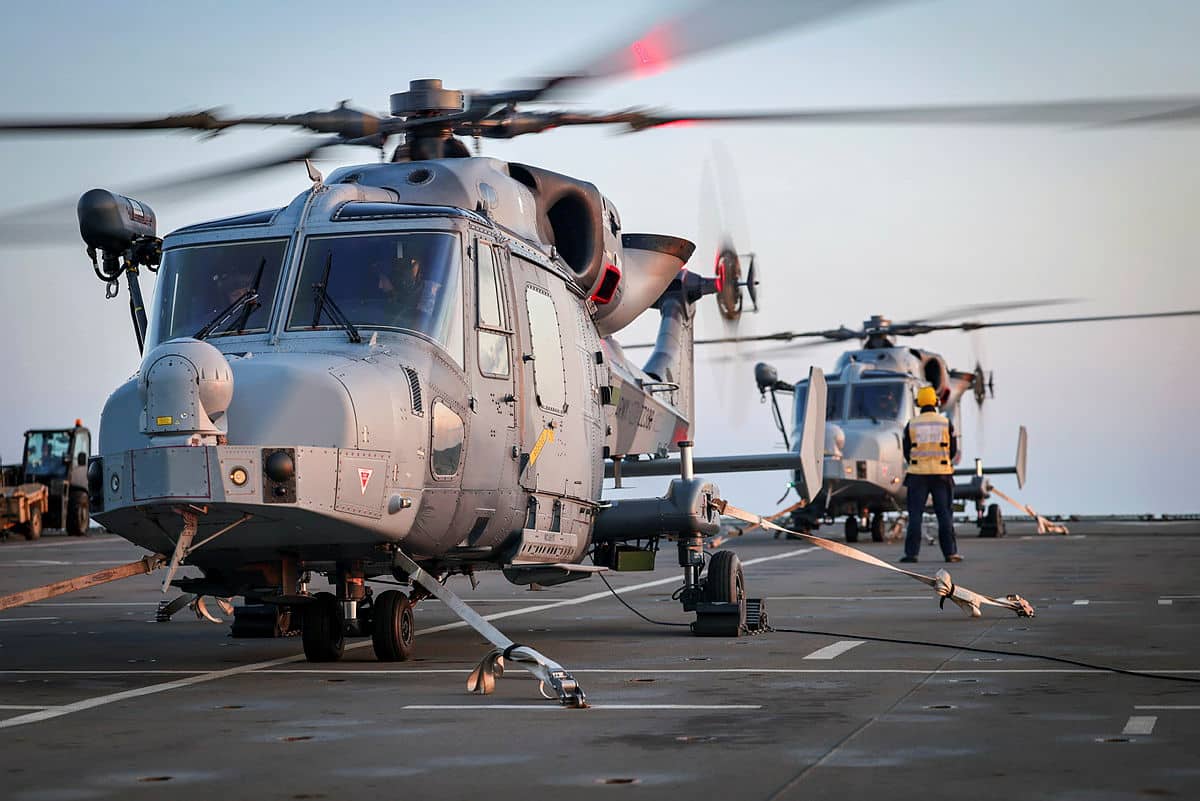
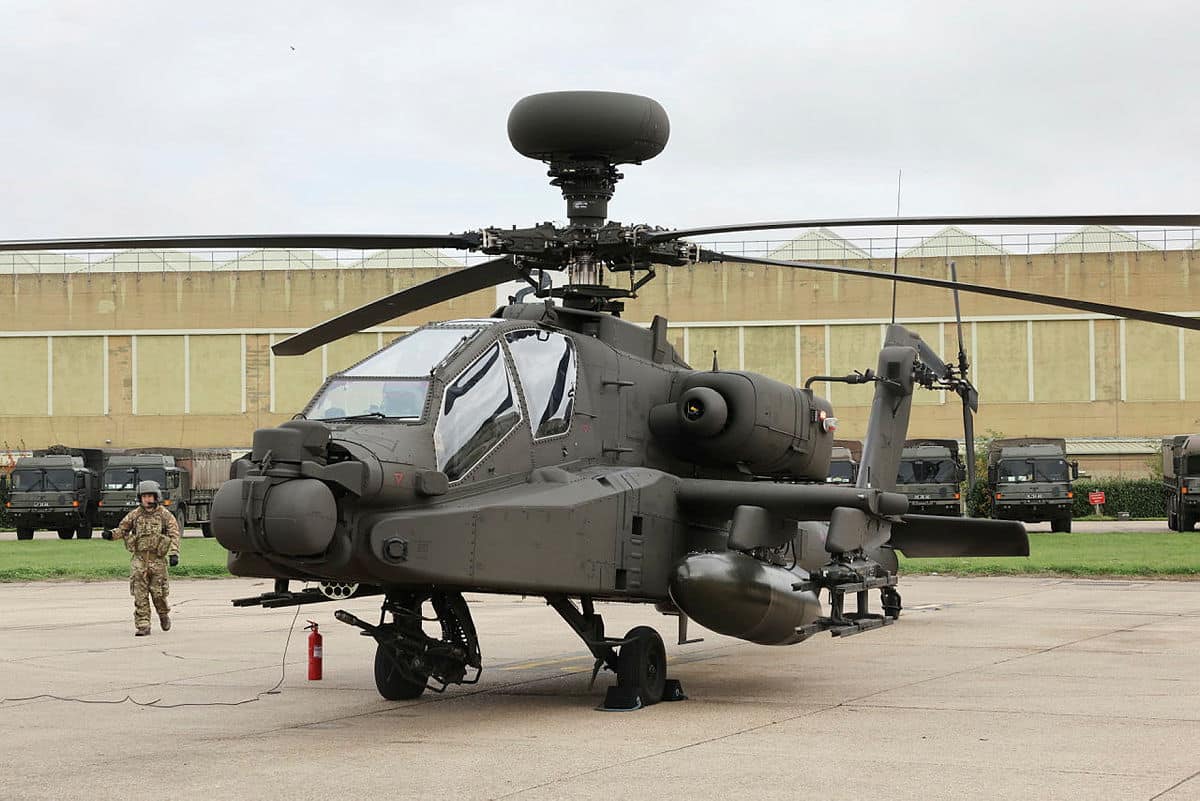
Two Apache AH-64E helicopters and a Wildcat AH1 from the British Army Air Corps displayed on the final day at Farnborough. The three aircraft performed dynamic manoeuvres showing how these aircraft work together during combat operations. The Wildcat AH1 will retire from next year, to be replaced by autonomous reconnaissance drones. | Source: James Gray
The Army Air Corps filled in for the public display, bringing along two AH-64E Apache attack helicopters and a Wildcat AH1 to display their roles during operations, with the Wildcat acting as a scout, used to direct the fire of the two attackers. The Wildcat will be supplanted in this role by an as of yet unselected helicopter UAS as a result of defence cuts in the Defence Investment Plan released a few weeks ago.
The Wildcat is a fantastic aircraft that has not been in Army Air Corps service for many years. It is hoped that surplus aircraft will be handed to the Navy, who have multiple uses for such aircraft across their fleet, with cross decking a common feature.
The Chinook was joined by the Apaches and the Wildcat at the end of its display with all four aircraft flying off together at the close of the show.
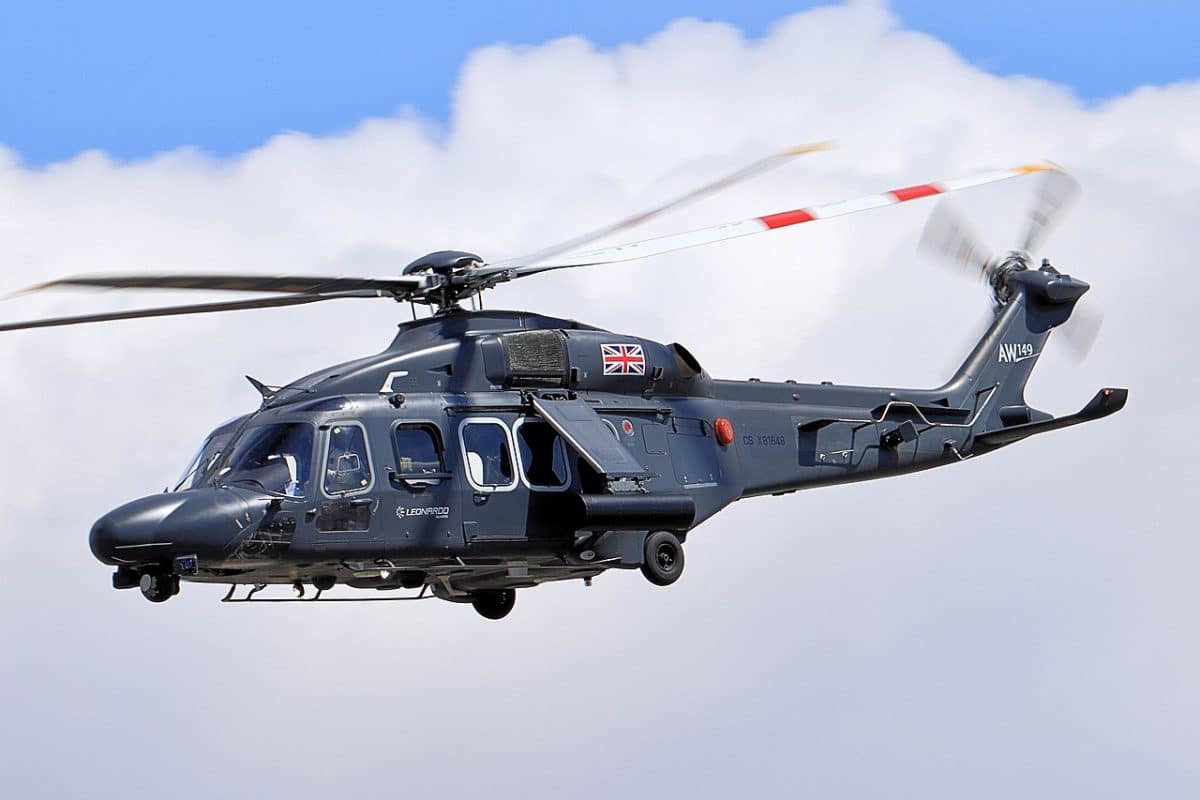
Leonardo’s AW-149 was selected by the UK for its New Medium Helicopter requirement, replacing the Puma which had served for decades. The AW-149 can seat 16 fully equipped troops providing a potent transport capability. | Source: James Gray
For the static display Farnborough had a small number of helicopters, showing off U.S. Army Blackhawk and Chinook helicopters as well as Leonardo’s latest offering, the AW-149. The AW-149 has been selected by the RAF to fulfil the new medium helicopter requirement that was lost following the retirement of the Puma helicopter last year.
Originally the requirement was to replace 23 Puma HC2, three Bell 412 Griffins based in Cyprus, the British Army’s three Bell 212 based in Brunei and six Airbus AS365 Dauphins used by British special forces in the UK. Instead the 23 AW-149s will replace the Puma, while six Airbus H145M helicopters, to be known as the Jupiter HC2, will work out of Cyprus and Brunei, and the Dauphins will be retained for the foreseeable future.
The presence of the AW-149 did not go without fanfare as it was used for the backdrop of Leonardo and Indonesia signing a letter of intent for the acquisition of AW-149 for Indonesia’s naval helicopter program. If a contract is born from this, the program would see AW149 helicopters delivered for both land-based and shore-based operations.
Parked near to the Leonardo chalet was one of very few leftover flying Sea King helicopters in the UK, owned and flown by HeliOperations for crew training on what was the German Navy’s Sea King fleet. Heli Operations used to operate five aircraft, but three were gifted to Ukraine for search and rescue as well as utility operations.
The German Navy has since followed this up with the transfer of six Sea Kings to Ukraine, with HeliOperations involved in the overhaul, modification and transfer of Sea Kings to the Ukrainian Navy.
The Sea King on display was notable for its carriage of several interceptor drones from a fuselage mounted rail, allowing the helicopter to hypothetically shoot down Shahed drones in Ukraine. The higher altitude of the Sea King over ground launched interceptors would increase the interceptors speed and range, giving them a greater chance of success. It is possible that Sea Kings are performing this role in Ukraine, but that is currently speculation.
Brontanax and the CCAs
Unmanned aircraft were however the clear stars of the trade show, with the public unveiling of the Brontanax CCA from BAE Systems and the Thunder unmanned multirole helicopter shown off by Anduril.
Up close and personal with Brontanax, UK’s first Collaborative Combat Aircraft, unveiled by BAE Systems at #fia2026. Its name is derived from Ancient Greek and means ‘Thunder King’. It is set to fly alongside a Typhoon by the end of 2027.
Full story: https://t.co/C5lRoeLKUfpic.twitter.com/w6FfY1HAKj
Both highlight the vision of unmanned systems operating in conjunction with aircraft, with the Brontanax CCA shown operating alongside 4th generation RAF Typhoon aircraft, whilst the Thunder was shown operating alongside AH-64E Apaches in an Animated short produced by Anduril.
Unveiled by newly appointed Defence Secretary Wes Streeting at Farnborough, the Brontanax collaborative combat aircraft (CCA) is what will be used to add mass to the RAF’s existing fighter fleet, helping to make the service the Europe’s first sixth generation air force. The prototype is currently in build at Warton to be test flown next year. | Source: James Gray
Brontanax was unveiled by the newly appointed UK Defence Secretary, Wes Streeting, and the Chief of the Air Staff, Air Chief Marshal Harv Smyth, with the aircraft said to be leading the way into making the RAF Europe’s first 6th generation air force. The CCA was revealed at the BAE Systems chalet on Wednesday with a large crowd of reporters and industry officials present for the “BAE Systems Combat Air Announcement.”
We at The Aviationist were equally as surprised when it was revealed that Brontanax was already in construction, with images of the prototype also shown to those present.
“The Royal Air Force will become Europe’s first sixth generation air force” – Wes Streeting, new UK Secretary of State for Defence pic.twitter.com/mP78N8wSte
The prototype is being prepared at BAE System’s site at Warton, with the engineering, manufacture, and full prototype integration of flight-ready wings, fins, and control surfaces already completed, with work done by GKN Aerospace. The prototype is hoping to have its first flight in 2027, with production models aiming to operate alongside the RAF Typhoon and eventually the manned fighter element of GCAP.
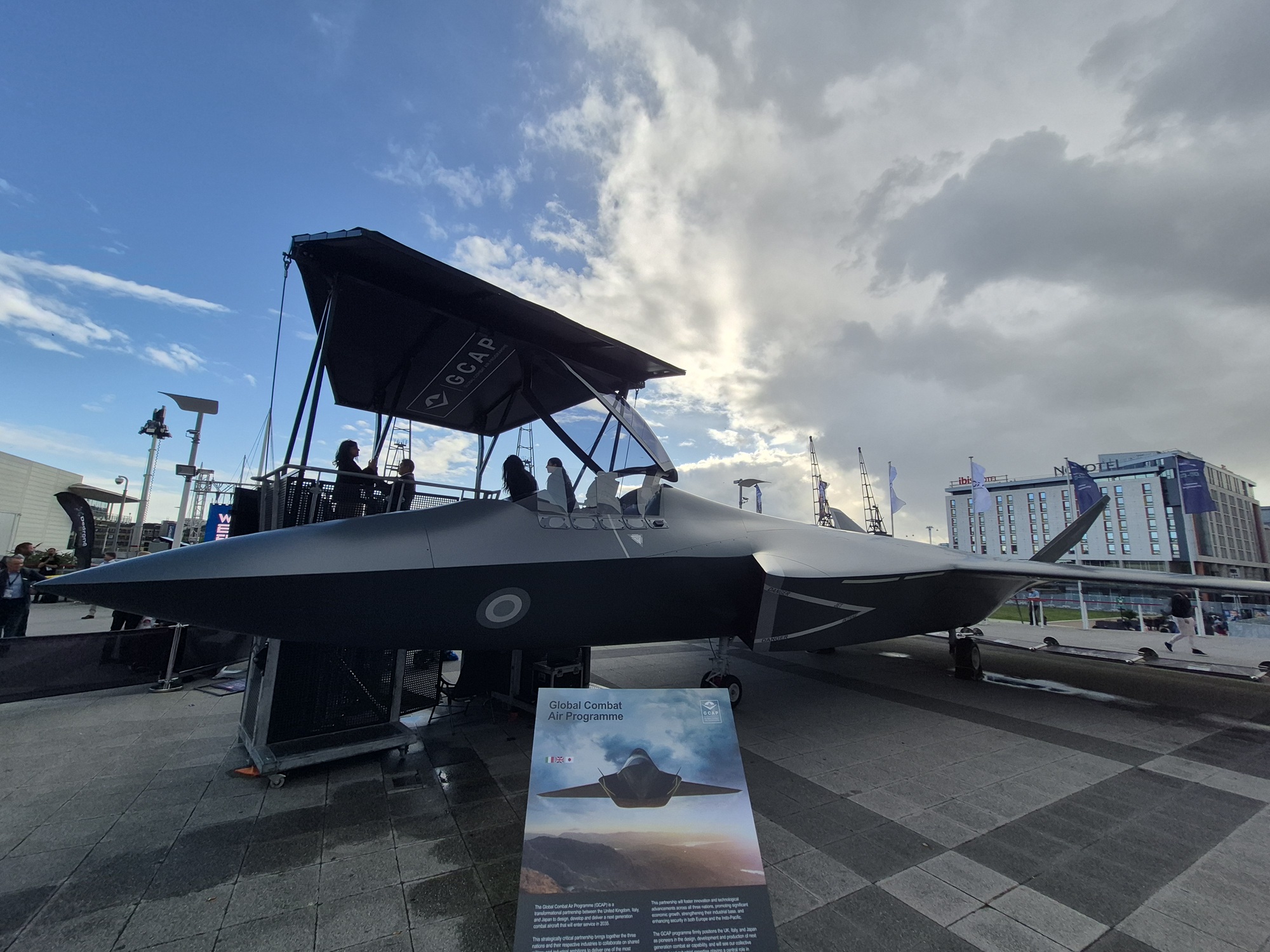
The Global Combat Air Program (GCAP) display mock up shows the vast size that the eventual fighter will have when it enters service. There is still much work to be done on the Tempest demonstrator, which will be smaller than the eventual GCAP fighter, with hopes that it will fly in 2028. | Source: James Gray
The development of GCAP too is moving surprisingly quickly, with the Excalibur flying testbed ready to receive its testing equipment, allowing it to conduct proper test and evaluation trials of the systems that will go into GCAP. The Tempest prototype, also being built at Warton, is expected to test fly in 2028 using EJ200 engines borrowed from a Eurofighter Typhoon.
Its developmental engine will come from the Rolls Royce Orpheus test bed which may itself be selected for use in the operational Brontanax CCA. The Brontanax testbed flying next year will use a U.S.-designed Williams International turbofan engine to ensure rapid delivery of the prototype.
This surprising development comes four years after the UK government cancelled the UK’s then highly publicised CCA development programme, Project Mosquito, which was being put together by Spirit AeroSystems in Belfast. Brontanax is far further along than Mosquito ever was and is an excellent sign of things to come for the UK’s aviation industry.
Up close and personal with @anduriltech Thunder and Fury at Farnborough International Airshow. #FIA2026
Anduril’s Thunder, on the other hand, represents something entirely new for helicopters, acting as a loyal wingman to a manned helicopter which can act as a linebacker for the unmanned element. Thunder is able to operate as an intelligence, surveillance, and reconnaissance (ISR) node as well as a fully fledged combat asset boasting air to surface missiles, tube-launched drones, counter-drone effectors, or up to 76 70 mm rockets.
It is designed to be transportable inside a standard shipping container, allowing fast deployments around the world by a variety of methods. Its tiltrotor design as well allows for high speed operations and the ability to scout ahead of the manned element.
Anduril’s newly unveiled multi-mission rotorcraft designed to fight alongside crewed aircraft, as part of an autonomous formation. It can carry a large number of missiles in an internal weapons bay, and appears to be partly inspired in its design by the Hunter Killer drone from the Terminator franchise. | Source: James Gray
The design of the Thunder appears distinctly like the hunter killer drones from the Terminator franchise. Whether this is by design or not is purely speculation, but it was certainly a surprise to see it in person.
Alongside these new aircraft, Boeing, GA-ASI and Airbus all displayed their premier CCA concepts alongside a CCA also produced by Anduril. Boeing’s MQ-28 Ghostbat was one of the far more mature designs of CCA on display, with its prototypes having seen multiple flights over in Australia since 2021.
The Boeing MQ-28 Ghostbat on display at Farnborough was used to highlight new partnerships between Boeing, Hensoldt, Eaton and Leonardo to advance the Ghostbat in the European market. This and other CCA mock ups were shown with MBDA weaponry, highlighting the company’s push to integrate its weapons on the new era of aircraft. | Source: James Gray
The aircraft is being developed primarily for the Royal Australian Air Force with it being the first military combat aircraft to be designed, engineered and built in Australia for more than 50 years. Boeing announced at Farnborough that the MQ-28 programme was seeking entry into the European market, and so the company has allied with Leonardo, Eton, and Hensoldt to enable this.
GA-ASI’s Gambit CCA and Airbus’ U760 Ravenstorm were both notable for being displayed alongside MBDA SPEAR 3 weapon system, highlighting the requirement for these CCAs to fulfil the SEAD/DEAD role in whatever air force buys them. On the other hand, Anduril’s FQ-44 “Fury” is designed more for the air dominance role and so SEAD weapons were not included in their display.
Antonov An-196 Liutyi is a Ukrainian one-way attack drone (OWA-UAV) developed by Ukroboronprom to strike deep into Russian territory. This variant is a two way system, carrying four small UAV-191 turbojet-powered loitering munitions. This makes the Liutyi analogous to the Baykar Bayraktar TB2 in its cost and use case. | Source: James Gray
The Trade Show
Small scale drones and UAS were aplenty within the exhibition halls, with these being a huge new focus for the world’s defence industry owing to their use in Ukraine by both sides. As a result of this, Ukraine had a large presence at Farnborough, showcasing its flagship Liuyti one way attack munition that has seen extensive use in hitting Russia’s most secure military and industrial sites.
Produced by Ukroboronprom, the variant at Farnborough was shown carrying four small UAV-191 turbojet-powered loitering munitions, making it more of a drone mothership. The lack of explosives in the nose allows for an extended range owing to a larger fuel tank, maximising the effectiveness of its carried weapons.
Here’s a quick look at the Liutyi long-range kamikaze UAV on display at #FIA2026.
Ukroboronprom unveiled a new configuration of the drone capable of carrying four UAV-191 turbojet-powered loitering munitions. pic.twitter.com/V8wkdpqZmf
Alongside this Ukrainian drone company, Skyfall also attended, displaying its variety of interceptor, bomber and FPV strike drones. Amongst these is the Vampire bomber drone that has gone on to earn the nickname Baba Yaga in Ukraine, thanks to its ability to strike in the quiet of the night.
Of special note however were the P1-SUN Jetkillers which are used to shoot down large numbers of Shahed kamikaze drones midflight. These interceptors are far cheaper than conventional missiles and have already been reported to have shot down countless Russian attack drones.
Ukrainian drone manufacturer SkyFall unveiled the P1-SUN Jetkiller at Farnborough, which is an upgraded interceptor designed to shoot down Russia’s jet-powered Shahed attack drones. Ukraine’s baseline P1-SUN interceptor has downed 5,000 drones during the ongoing war. | Source: James Gray
Anglo-Portuguese company Tekever showed off its AR3 and AR5 UAS which have both seen military service in Ukraine, with lessons learned overseas reflecting back on decisions in the UK. The AR3 now acts as the carriage of the StormShroud electronic warfare package used by the RAF, whilst the AR5 has been selected to replace the Watchkeeper drone in the artillery spotting role for the British Army.
Leonardo’s chalet highlighted its developments in unmanned flight, displaying its Proteus developmental helicopter which recently had its funding extended, hopefully enabling further test flights of the system. They also had on display their joint project with Turkish company Baykar, the Astore Levante, which utilises Leonardo software and internal systems, whilst utilising the Bayraktar TB3’s external body.
This relationship between the two companies has evolved and now sees Leonardo working with Baykar in the testing and evaluation of the Kizilelma CCA.
The Leonardo/Baykar Astore Levante medium altitude long endurance (MALE) unmanned aerial system (UAS). This aircraft is based on the Bayraktar TB3 but utilises a large number of Leonardo internal systems, from radars to electronic warfare systems. It is representative of the growing relationship between the two companies as they work on autonomous systems together. | Source: James Gray
Overall, the trade show saw 1,636 exhibitors attend, with an increase of an extra 213 exhibits from the 2024 edition of the event. Of these exhibitors, 63% were from outside the UK, highlighting the country’s role in the centre of global aviation trade.
According to ADS, the trade organisation representing the aerospace, defence, security and space industries in the UK, there were 353 firm aircraft orders, 904 firm engine orders and 10 firm helicopter orders. In total these sales amounted to £62.9 billion GBP in announced aircraft, engine and helicopter deals during its four trade days, contributing around £10 billion to the British economy. Alongside the exhibitors, the show welcomed 141,580 trade and public visitors, a show-on-show increase of 41%, and nearly double 2022’s attendance.
For The Aviationist’s crew, this week was more than just an air and trade show. It was a key opportunity for us to collaborate on a single project, together and in person for the very first time. With our team coming from across the globe, it meant a lot to be able to see each other in person and collaborate to work on many exciting stories.
Even if it was only a small part of our vital team that was able to meet, it was an opportunity for us to explore our shared interests in aviation. It was a fantastic week and we cannot wait for the next opportunity.
Ukraine will procure 16 Rafales and receive the license to manufacture SCALP and Aster-30 missiles, whilst two SAMP/T batteries will be immediately delivered.
Ukraine will receive four Rafale aircraft as soon as their pilots and mechanics finish training, which will begin this year, whilst two SAMP/T batteries will be immediately delivered to the nation. The announcement was made by French President Emmanuel Macron, following a meeting of the Coalition of the Willing in Paris on July 13, 2026, with clarification on the agreement published in a joint declaration.
He stated that “This involves a project to acquire 16 Rafale aircraft and their accompanying weapons systems. The first flights could take place as early as 2028–2029, and personnel training will begin in the coming months.” These aircraft come out of the 100 that France and Ukraine originally planned for acquisition in November 2025.
However, it is not yet known if these will be new-build aircraft, or if they will come out of existing French stocks. Dassault currently has an order backlog of 220 Rafales awaiting production, so there is a chance some of these 16 aircraft could be second hand.
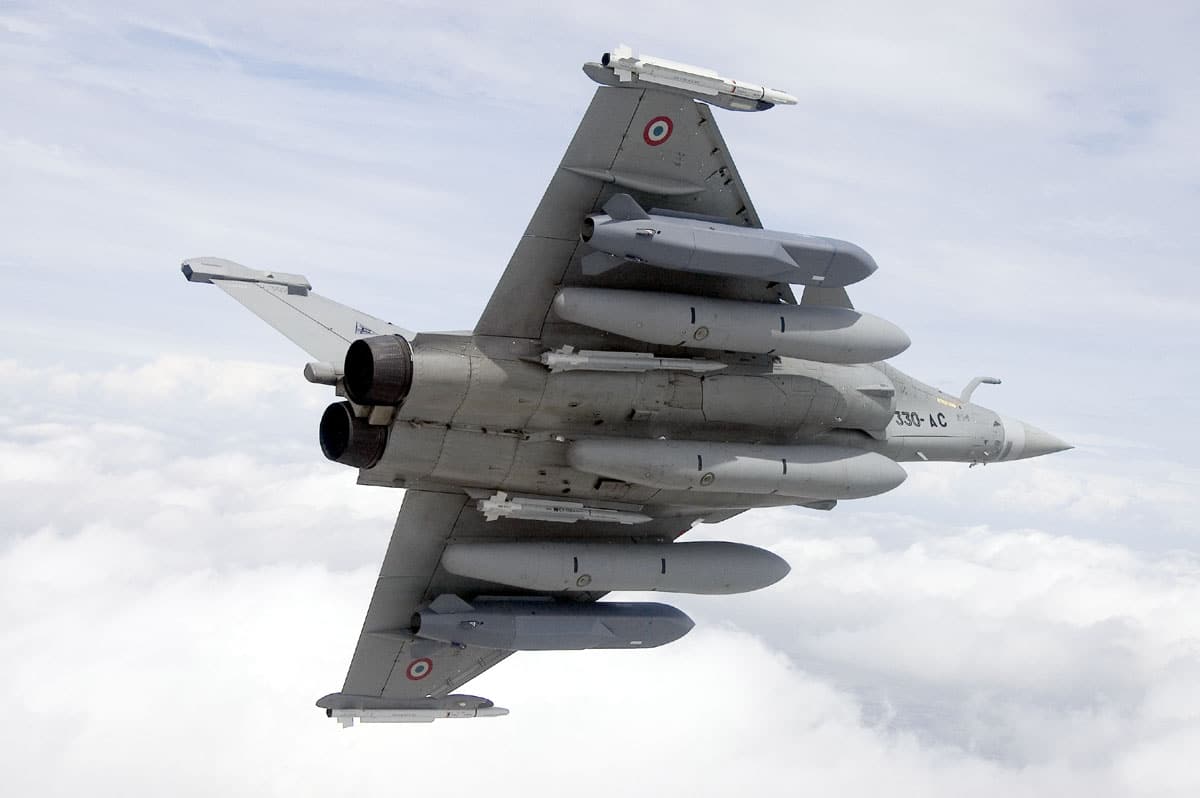
A Rafale fighter aircraft showing off the extent of its capabilities, carrying 2x MICA IR (wing tips), 2x MICA EM, 2x SCALP/Storm Shadow and 3x fuel tanks. | Source: Alexandre Paringaux/MBDA
These aircraft will be paid for using the 2026 and 2027 Ukraine Support Loan alongside other forms of financing, indicating that these are not direct transfers of older military equipment, which has been done so far free of charge to Ukraine. Each aircraft will be joined by a variety of air-to-ground and air-to-air armaments, including AASM bombs, MICA and METEOR missiles.
Ukraine will also receive a newly tested 68mm laser-guided anti-drone rocket for the Rafale, under the programme name Lutte anti-drone sur avion de combat (LADAC, meaning anti-drone capability for combat aircraft). They are fired from the 12-round Thales Telson JF12 rocket pods and operate in the same manner as the 70mm Advanced Precision Kill Weapon System (APKWS) used on both U.S. and British aircraft.
La roquette guidée laser sur #Rafale, c’est validé !
La DICOD confirme l’arrivée de la capacité LADAC (Lutte Anti-Drone sur Avion de Combat). En quelques mois, la DGA et le CEAM ont intégré la roquette de 68mm via la nacelle TALIOS.
Alongside the delivery of these weapon systems France has also authorized the licensed production of AASM bombs and SCALP missiles in Ukraine before the end of 2026, with the intention that production start as soon as possible.
On the Air and Ballistic Anti-Missile Defense front, Ukraine will acquire two batteries of SAMP/T on a short term loan, to enable the nation to make up for the current small number of available Patriot missiles. These systems will be replaced by four newly built SAMP/T NG batteries which will also be paid for by the Ukraine Support Loan.
Additionally, Ukraine will get five GM400 radars, one GF300 radar, and one Kronos radar, which will enhance the radar picture over the country. Each component of the SAMP/T NG will be supplied as it is constructed, with a GF300 radar to be deployed in the country by the end of 2026.
French President Macron announced that Ukraine has received a license to manufacture Aster-30 anti-aircraft missiles for SAMP/T, AASM Hammer guided aerial munitions, and SCALP cruise missiles. pic.twitter.com/FgqBNbD2fK
France and Italy have also authorized the licensed production of Aster 30 missiles in Ukraine, as they begin to accelerate the delivery of Aster 30 missiles they had already agreed to supply Ukraine with. The Aster 30 is capable of taking down ballistic missiles fired by Russia, which should help to alleviate the burden currently placed on the Patriot PAC-3 missile.
The supply of 4.5th generation aircraft will enhance Ukraine’s air combat arm, allowing the nation to fight back against the ongoing Russian invasion.
Ballistic Missile Defence and the Freyja Programme
The decision to allow Ukraine to licence produce its own missiles for both air defence and strike purposes follows a similar decision by U.S. President Trump to allow Ukraine to produce its own Patriot PAC-3 missiles, for the anti-ballistic missile role. Due to the ongoing war with Iran, there is now a premium placed on air defence missiles in the Gulf, with Patriot’s being re-prioritised for the defence of U.S. bases in the region.
The Gulf States of Qatar and Kuwait, amongst others, have also made emergency orders of Patriot missiles from the U.S., placing considerable strain on the American production line.
Ukrainian troops marched in a parade in Paris to mark France’s national holiday – Bastille Day.
For the first time in history, Ukrainian soldiers are participating in this parade. They marched along the route from the Arc de Triomphe, while two Ukrainian pilots flew French… pic.twitter.com/DI9mOMBGip
As a result, Ukraine has seen its steady supply of PAC-3 missiles reprioritized away from the country, leading to the Ukrainian Air Force stating that there was a “serious shortage” of interceptor missiles for ballistic missile defence in the country. On July 5, 2026, of 23 ballistic missiles fired by Russia at Kyiv, none were intercepted, causing significant damage to the capital, the deaths of 15 people and injuries to 56 others.
Subsequently, the lack of air defence missiles in Ukraine has taken centre stage at the NATO summit in Ankara, in which Trump made his promises to Ukraine to build its own PAC-3 missiles. This benefits both Ukraine and the U.S., with Ukraine receiving an assured supply of the missile, whilst America expands its international production capacity, in case there is a future need to surge production in a crisis.
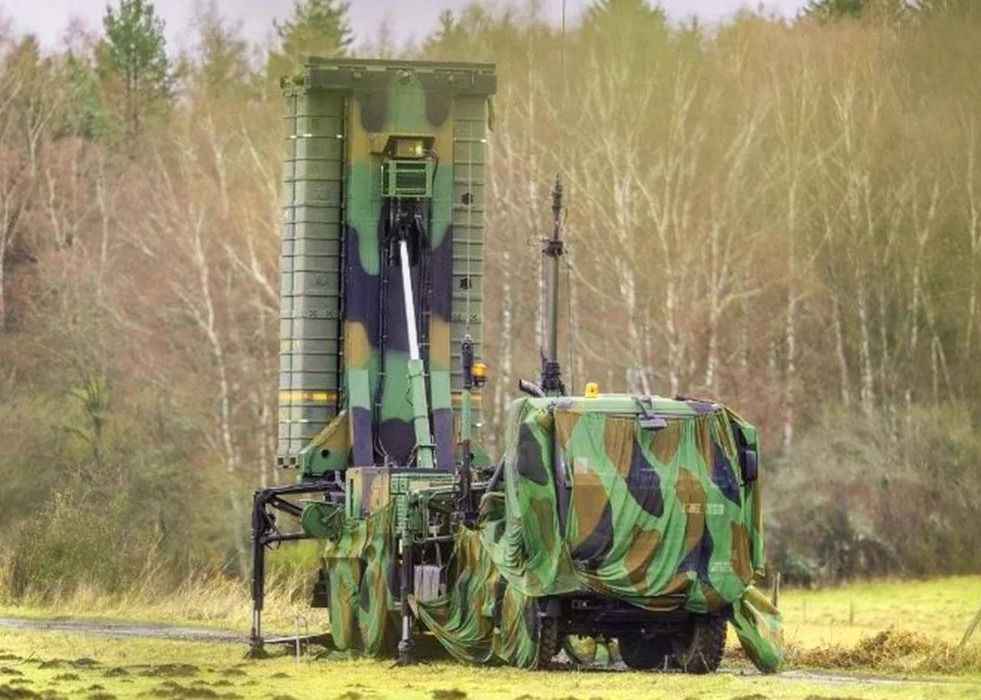
A SAMP/T NG (Surface-to-Air Missile Platform, New Generation) battery comprises four main components, including an engagement module for C2, a 360 degree multi-function radar that can be either the Thales Ground Fire 300 or the Leonardo Ground Mobile High Power, and up to six launchers that can carry eight missiles each, for a total of 48 Aster missiles ready to fire. | Source: Eurosam
Ukrainian President Volodymyr Zelensky had appealed for his allies to take “strong decisions” at this week’s Nato summit to provide Kyiv with air defences and it appears that in the long term they shall do so.
It was also announced in Paris at the meeting of the Coalition of the Willing that an Integrated Anti-Ballistic Missile Coalition was launched by Denmark, France, Germany, Italy, the Netherlands, Norway, Spain, Sweden, Ukraine and the UK. Here the nations will work collectively under Ukrainian leadership on the creation of a pan European missile defence system called ‘Freyja’, which will supplement the Patriot and SAMP/T missile systems already in place.
The concept will utilise a Ukrainian designed and built Fire Point’s FP-7.X interceptor, whilst the European partners will provide the radar, tracking and command-and-control systems. This will hopefully allow Ukraine to field a weapon system designed to hit a ballistic target at roughly 15 miles altitude within as little as twelve months.
FirePoint has presented a Ukrainian counterpart to the Patriot SAM missile – the FP-7.x. An anti-aircraft missile designed for the Ukrainian “Freya” missile defense system. The FP-7.x is capable of reaching speeds of 1,500-2,000 m/s and has a length of 7.25 meters. pic.twitter.com/lIo24ONkx1
The Coalition’s leaders were joined by representatives from several European defense companies who will work together to produce the system, including: Destinus, Diehl Defence, Eurosam, Fire Point, HENSOLDT, Kongsberg Defence & Aerospace, Leonardo, MBDA, Saab, Safran, Thales and Weibel Scientific.
“We believe that the protection of Europe requires a global solution of integrated missile defence architecture to deter and defeat future missile threats – developed through collective effort, technological openness, and trusted industrial cooperation,” officials wrote in the joint statement formalizing the new coalition.
The long awaited Defence Investment Plan has finally been published for public viewing and it seemingly generates more questions for UK Defence than it answers.
In one of his last acts as Prime Minister of the United Kingdom, Sir Keir Starmer has released the UK’s Defence Investment Plan (DIP), cementing the largest sustained funding increase for the UK’s Armed Forces since the Cold War. Questions however remain as to whether the document and the commitments within it go far enough, fast enough, to deter and, if needed, defeat the threats facing the UK today.
The DIP is based on findings that emerged from the UK’s Strategic Defence Review (2025) published just over a year ago, in which the threat of the Russian Federation was labelled “an immediate and pressing threat” to UK sovereignty and NATO security. The DIP was supposed to be published not long after the SDR.
However, questions quickly arose as to how the government would find the money to expand the Armed forces in the face of both the threat posed by Russia and later by growing instability in the Middle East. So too did question’s emerge around some of the defence programmes announced in the SDR, including the RAF’s re-adoption of the nuclear strike role and the continued disruption and ongoing problems surrounding the Army’s next generation reconnaissance vehicle Ajax, among others.
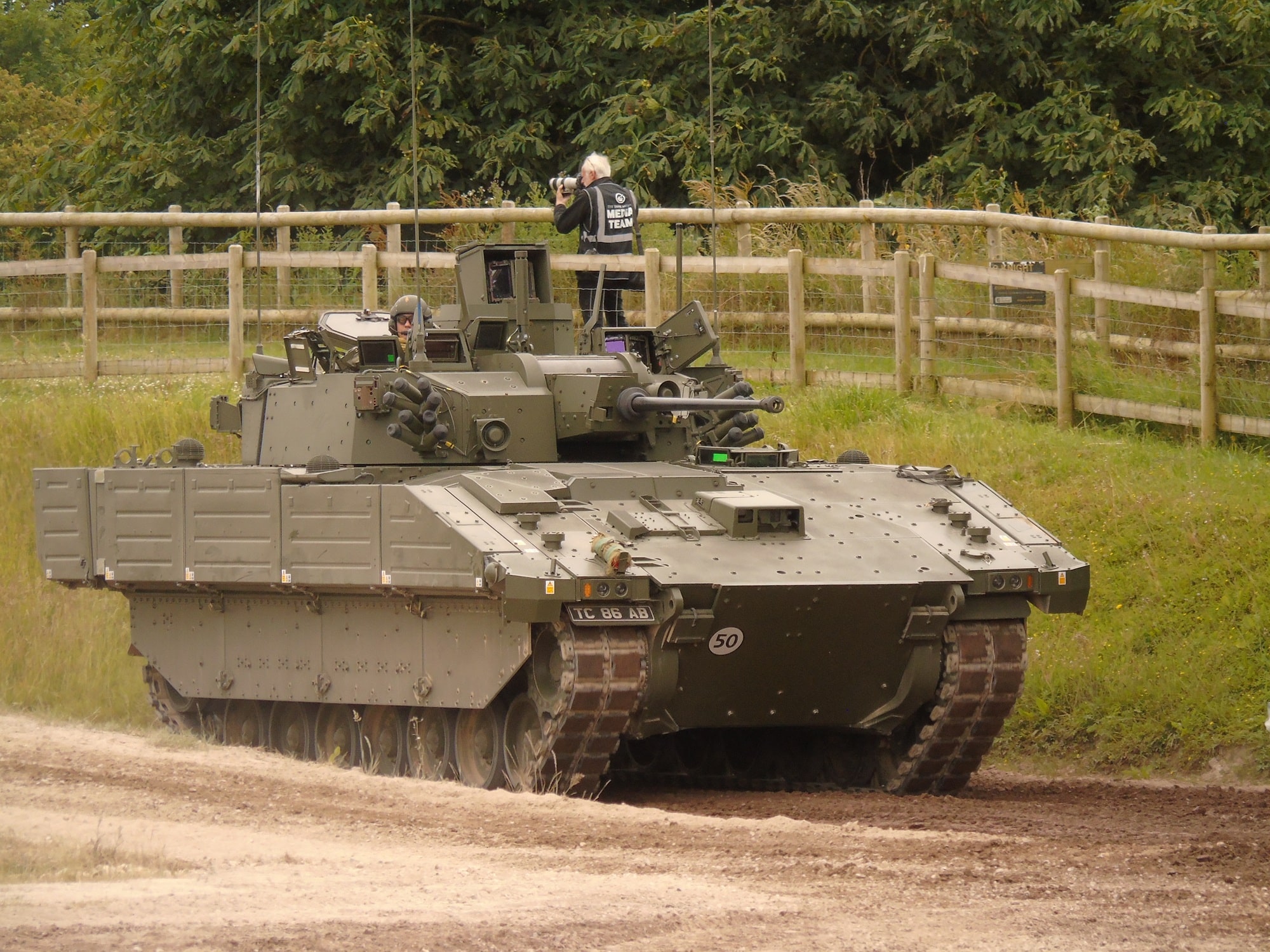
The Ajax armoured reconnaissance vehicle was intended to replace the Cold War era Scimitar light vehicle, but it has had a troubled entry into service, with service personnel hospitalised owing to vibrations in the vehicle. Trials of the Army’s troubled Ajax resumed in April 2026. | Source: James Gray
This led to a severe delay in the publication of the DIP as the government was forced to deal with the ongoing strife caused by the above issues. Further problems arose two weeks ago, when Defence Secretary John Healey, who had a hand in producing the DIP, suddenly resigned, believing that the Prime Minister was “unable” to find the money, with the treasury being “unwilling” to provide any extra.
It was then reported that of the £28bn requested by the Armed Forces only £13.5b was made available by the Treasury, forcing the Armed Forces to make cuts that were unsustainable, so as to afford increases in spending on other capabilities. This represented only 2.68% of GDP spent on core Defence by 2030, far below the set NATO target of 3%.
Even after Healey’s resignation and the increased spotlight on Defence spending, the Treasury has only promised £15bn in added spending, which is still below what the Armed Forces has requested, prompting sharp criticism from both outside and within the Labour Party.
Sir Keir Starmer in his speech announcing the DIP stated: “This plan delivers on last year’s Review, but in light of our rapidly changing world, the changing nature of conflict and the imminent and growing threats we face, it goes further still.”
The Defence Investment Plan sets out how we’ll invest in defence, at a time in which our Armed Forces matter more than ever.
In my message to Defence I set out our focus to move faster and more effectively to equip our people and deliver the capabilities our nation needs. pic.twitter.com/dswjCO2w5P
— Chief of the Defence Staff (@UKCDS_MOD) June 30, 2026
Whilst, in a message to British defence personnel, the UK’s military chief Sir Richard Knighton emphasised that “difficult choices” have been made as part of the government’s announcements. As a result, a number of cut capabilities and cut programmes are present in the DIP, with deep impacts felt by the military.
But the question remains, what does this mean for the UK’s Armed Forces?
Good News for UK Air Power
Whilst there is disappointment over many programmes within the DIP, this is still a noticeable increase in defence spending and an expansion of the UK’s Armed Forces, which had been since the Cold War on an ever turning downward spiral.
For starters, the DIP has secured £8 billion in investment for the Royal Air Force’s Global Combat Air Programme (GCAP), ensuring that the next generation manned fighter will see service. Concerns had been growing for some time in Japan and Italy about the UK’s willingness to pause funding or to delay the programme over treasury concerns, but this announcement ensures the programme can continue with a jet demonstrator aiming to take off in late 2027.
Tempest CGI model flying over the Palace of Westminster, the home of the UK’s government. GCAP represents the RAF’s desire to remain a tier one air force, and if successful the Tempest will make the RAF Europe’s first 6th generation air power. | Source: UK Ministry of Defence
Alongside this, £250 million is being spent on Project PANTHEON, the UK’s new investment in collaborative combat aircraft (CCA) for the Queen Elizabeth class aircraft carriers to enable the formation of a “Hybrid” carrier air wing. Money will be spent on developing a new CCA for the Royal Navy to operate alongside the F-35B, with money also spent on trials aboard the carriers and any upgrades necessary for the operation of these aircraft.
More importantly, however, money has been put aside for the operation of a drone based AEW&C system, allowing the much maligned CROWSNEST helicopter-borne AWACS to finally bow out, given its short and ineffective tenure as the UK’s primary airborne radar capability.
Saab’s LoyalEye radar set attached to an unmanned MQ-9B produced by GA-ASI. This combination offers critical airborne sensing, supporting extended persistence and operational reach over helicopter and aircraft based AEW&C aircraft although at the cost of radar power. This system would be perfect for the Royal Navy if equipped on a short take off variant of the MQ-9. | Source: Saab
It is looking highly likely that the Royal Navy will acquire a variant of Saab’s LoyalEye radar sensor to be paired with a short take off unmanned MQ-9B aircraft produced by GA-ASI. This would be the first time the Royal Navy has flown a fixed wing AEW&C aircraft off an aircraft carrier since the retirement of the Fairey Gannet in the 1960s.
The RAF is excited to announce the procurement of 12 new F-35A jets.
These fifth-gen aircraft can fly in @NATO nuclear crisis missions, strengthening our nuclear deterrence, & ensuring we are ready to fly, fight and win against threats.
On the nuclear front, the RAF is confirmed to be ordering 12 F-35As, allowing the UK to join NATO’s nuclear mission and re-equip itself with free fall nuclear weapons. More importantly, however, is the impact that will be felt in 207 Squadron, as these aircraft will help to relieve the training burden that currently falls on the F-35B.
The Bravo variant is more maintenance intensive and has a shorter range, so buying a number of Alphas will allow for longer training sorties per day. This generates a better value for money out of the whole platform, with F-35Bs focused more on the carrier strike mission than before.
Great News for the Royal Navy
£63 billion has been ring fenced for the Royal Navy’s nuclear enterprise, which ensures the recapitalisation of the entire force, at a size not seen since the Cold War. This money means the continued upkeep of the four Vanguard class nuclear ballistic missile submarines (SSBN), and continued funding for its replacement the Dreadnought class.
An important line in the DIP also announced that planning will be conducted for the Dreadnought’s eventual successor. Planning this far ahead aims to prevent problems similar to what are ongoing today in which delays to planning and funding the Dreadnought class led to the Vanguards serving far longer than intended.
As a result of their age, these boats are enduring extended maintenance periods and life extension programmes that force individual boats on six month long patrols, taxing the crew, the boat and the wider naval service.
1. Dreadnought
The Defence Nuclear Enterprise currently accounts for c.18% of the Defence budget with RUSI recently writing that could rise to 25% within the lifespan of this plan.
Dreadnought is a non-negotiable but it will be interesting to see just how much of the budget it… pic.twitter.com/OtDqZgaSwP
Money will also be spent on giving the UK’s Trident nuclear missiles a new warhead, enabling their continued use in the nuclear deterrent into the 2040s. The government has also doubled down on its plan to build “up to” 12 SSN-AUKUS submarines for the Royal Navy, doubling the current fleet from its current number of six Astute class attack submarines.
The phrase “up to” is a concern and indicative that a number could be cut for cost saving measures in the future, as happened with the Type 45 destroyer in which from the ten originally ordered, only six were built.
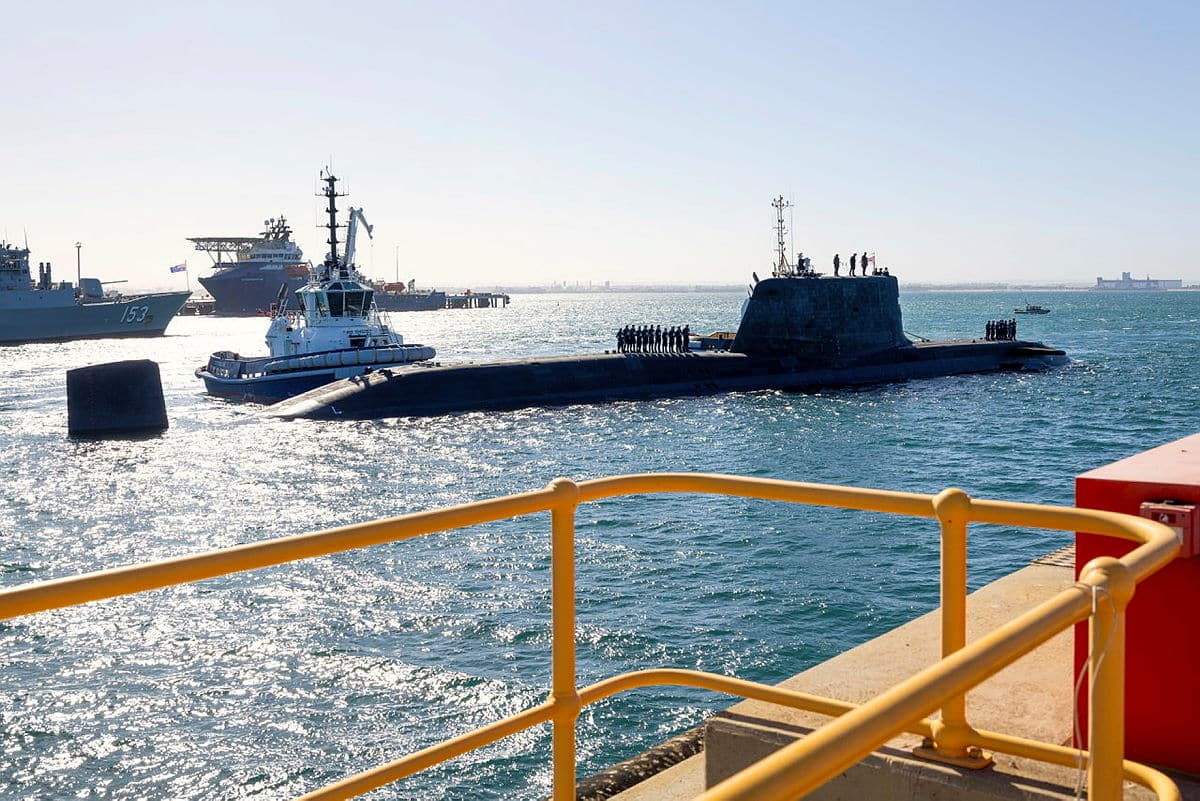
In February 2026, Astute class submarine HMS Anson transited to HMAS Stirling, Australia in a visit that formed a part of the AUKUS treaty. The boat’s presence in Australia was designed to aid the Royal Australian Navy gain experience in nuclear submarine maintenance. The RAN will also operate SSN-AUKUS, which will have an on board VLS system. | Source: Crown copyright 2026/POIS Matthew Lyall
The most significant announcement affecting the submarine force is the £26 billion being spent over the next decade in Project Royal Oak, which will upgrade the Royal Navy’s bases at Faslane, Portsmouth and Devonport. The Royal Navy has struggled with submarine maintenance as a result of only having a small number of drydocks with the Vanguards taking up most of the maintenance space as a result of their age.
This has forced all six of the Astute SSNs to be stuck alongside in Devonport as no dry docks are available for maintenance to be carried out. This investment for the funding of three new floating dry docks at HMNB Faslane will allow the submarines to be out doing their job rather than rotting alongside.
The Stockpile Expands
Beyond the Royal Navy, £11 billion is to be spent on increasing munitions stockpiles for the Armed Forces, allowing the UK to pursue its conventional deterrent of operating 7,000 missiles that can hit Russia if war came to pass. These weapons will feature a high low mix, with new investments into MBDA’s Stratus long range cruise missile, as well as low cost alternatives such as those found in Project BRAKESTOP.
The UK will also invest in its collaboration with Germany on the 2000 km Deep Precision Strike missile (DPS), unlike the Stratus they will be primarily ground launched, although the government will explore air and naval capabilities for the missile.
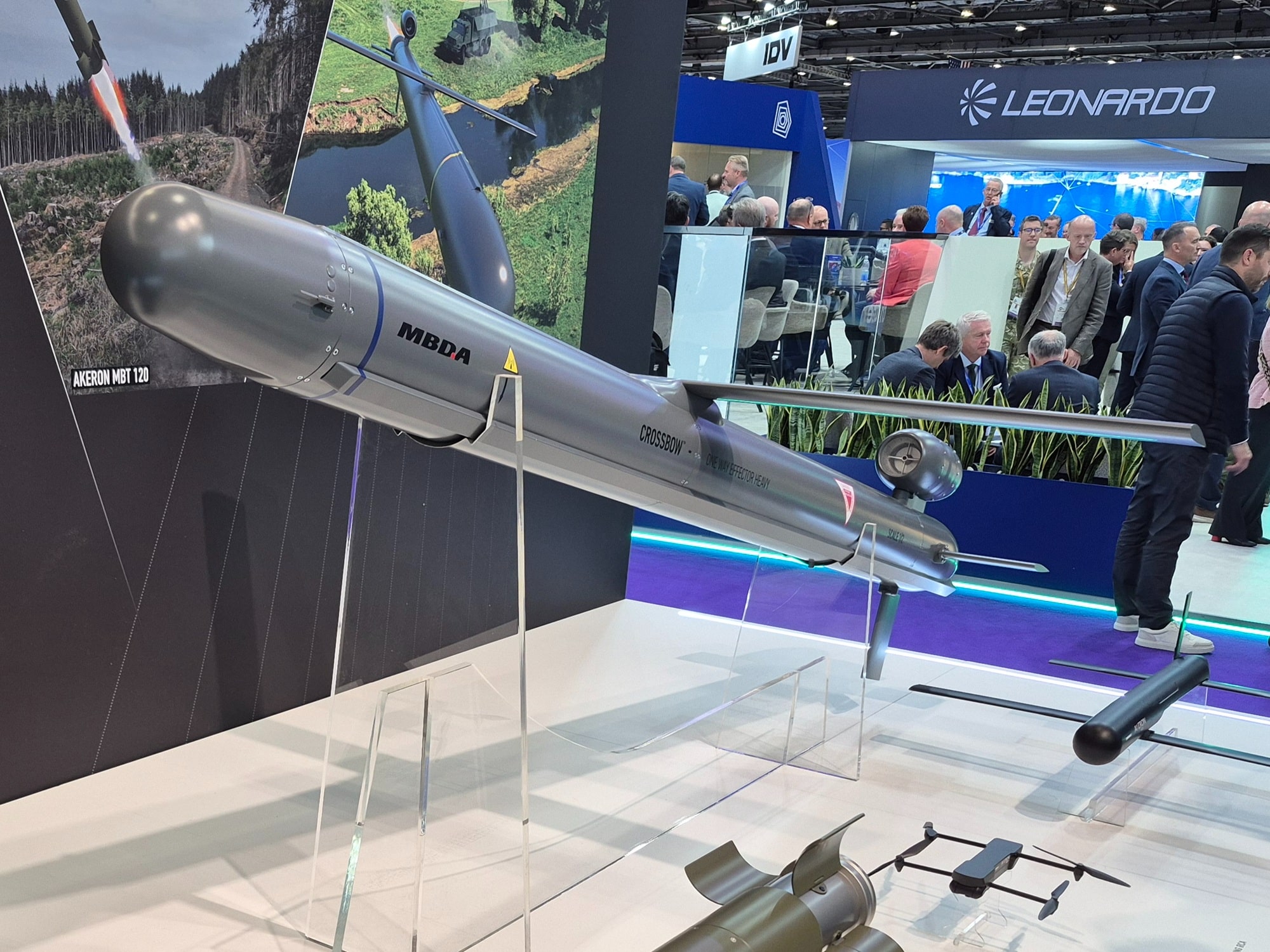
A mockup of the Crossbow one way effector at DSEI 2025 produced by MBDA. Weapons like this will help replace the Storm Shadow, providing a low cost alternative to the high end weapon system. | Source: James Gray
The UK will also join the United States and Australia in the Precision Strike Missile (PrSM) Programme. This missile is a next-generation, surface-to-surface ballistic missile developed by Lockheed Martin to replace the aging MGM-140 ATACMS.
It can be launched from existing HIMARS or M270 platforms of which the British Army operates a significant number, with more ordered as a result of their fantastic use in Ukraine. Their range of 499+ km will allow the UK to provide a powerful long range weapon for NATO in the case of a conflict with Russia.
The DIP seems to confirm that the UK will purchase Lockheed Martin’s PrSM tactical ballistic missile. This was hugely effective when used against Iranian military targets. Unfortunately, the USA exhausted its entire stock, which conveniently means we will have to wait before… pic.twitter.com/2FYj5KzNHr
— Nicholas Drummond (@nicholadrummond) July 1, 2026
The Royal Navy’s Type 31 Inspiration class frigates have also been selected to operate the Norwegian Naval Strike Missile (NSM), enhancing the firepower of these smaller general purpose frigates, which many had called under armed for their intended role. While Stratus will eventually become the ship-launched cruise missile of choice, the NSM will allow the Type 31s to operate with a significant firepower boost until Stratus is mature enough for operations.
Finally, the UK will invest £5 billion for the next four years to fund a drone transformation, using lessons from Ukraine to make the Armed Forces manned when necessary, and unmanned where able. It is hoped that in doing so the UK’s Armed Forces can expand its size and effectiveness whilst keeping personnel count the same, which has been a long term issue for the UK in general.
This will help to fund the use of surveillance, attack and uncrewed ground drones for the British Army as well as the new Hybrid Navy concept which will see unmanned warships take the place of conventional platforms.
Defence Cuts
As with any news on defence investment, it comes with hard choices that foresee the end of capabilities that the military has relied on for many years. The DIP is no different, with two aircraft leaving service much earlier than expected, joined by more Type-23 frigates as well as the fabled Storm Shadow missile.
Two Army Wildcat Helicopters on board HMS Albion highlighting the interservice cooperation that these helicopters enabled. The British Army currently operates 34 aircraft, with all to retire next year after only 15 years of operational service. | Source: Crown copyright 2023/ LPhot Bill Spurr
Firstly, and as discussed in their own separate articles, the Wildcat AH1 Battlefield Reconnaissance Helicopter and the Shadow R1 surveillance aircraft are to be retired earlier than expected. The government cites a difficult cost benefit analysis as to the primary reasoning for the retirements, with both systems not considered survivable in peer conflict due to the prevalence of advanced surface to air missile systems on the modern battlefield.
In Ukraine a large number of helicopters have been lost to ground fire, with the recon role now taken over almost entirely by drones. Separately, attack helicopters such as the Kamov Ka-52, whilst taking an extreme number of losses, have performed well in the anti-tank role, with these aircraft cited as having blunted Ukraine’s armour led counter attacks in Zaporizhzhia back in 2023.
Whilst the Apache gets a stay of execution in the British Army, sadly the Wildcat does not.
The Army’s 34 AH1 Wildcat helicopters are being axed (unclear if they will be held in storage, transferred to the RN or sold abroad). Helicopters have struggled to survive over the battlefields of Ukraine. Fortunately, the RN’s Wildcats survive the axe.
For the UK, this is a pivot away from the counter insurgency military that the British Army had become to fight the wars in Afghanistan and Iraq. With peer war on the horizon, it is understandable that systems of increasingly limited utility are being axed to save cash for more survivable capabilities.
For the Wildcat, it will be replaced by a fleet of 24 armed autonomous drones that will operate alongside the AH-64E Apache under Project NYX. Whilst the Shadow R1 will be replaced, likely in part, by the Protector RG1 already in service which contains very similar electro-optical equipment and subsystems.
Army Air Corps AH-64E during Exercise Pinion Titan. These attack helicopters will be paired with armed autonomous drones in the reconnaissance role, allowing the British Army to designate targets for missile fire from the Apache. | Source: Crown copyright 2025/Graeme Main
There are still questions about exactly how their replacements will work, as helicopters are useful in a variety of other roles, such as the movement of troops and supplies around the battlefield which the drones may not be able to fulfil. Additionally, the Shadow replacement will not have the dedicated analysts on board to assess intelligence as the aircraft is in flight due to its unmanned nature, so it will be interesting to see how the Armed Forces deal with any of these limitations. The Wildcat in operation with the Royal Navy will remain in service, although at some point in the future it will also be replaced by a drone.
It has also been confirmed that the Duke class Type 23 frigate will leave service two years sooner than the Navy had wanted, being axed by 2033 instead of 2035. These stalwarts of the fleet have served far longer than their original intended 18 year service life and the material state of the ships is now downright condemnable.
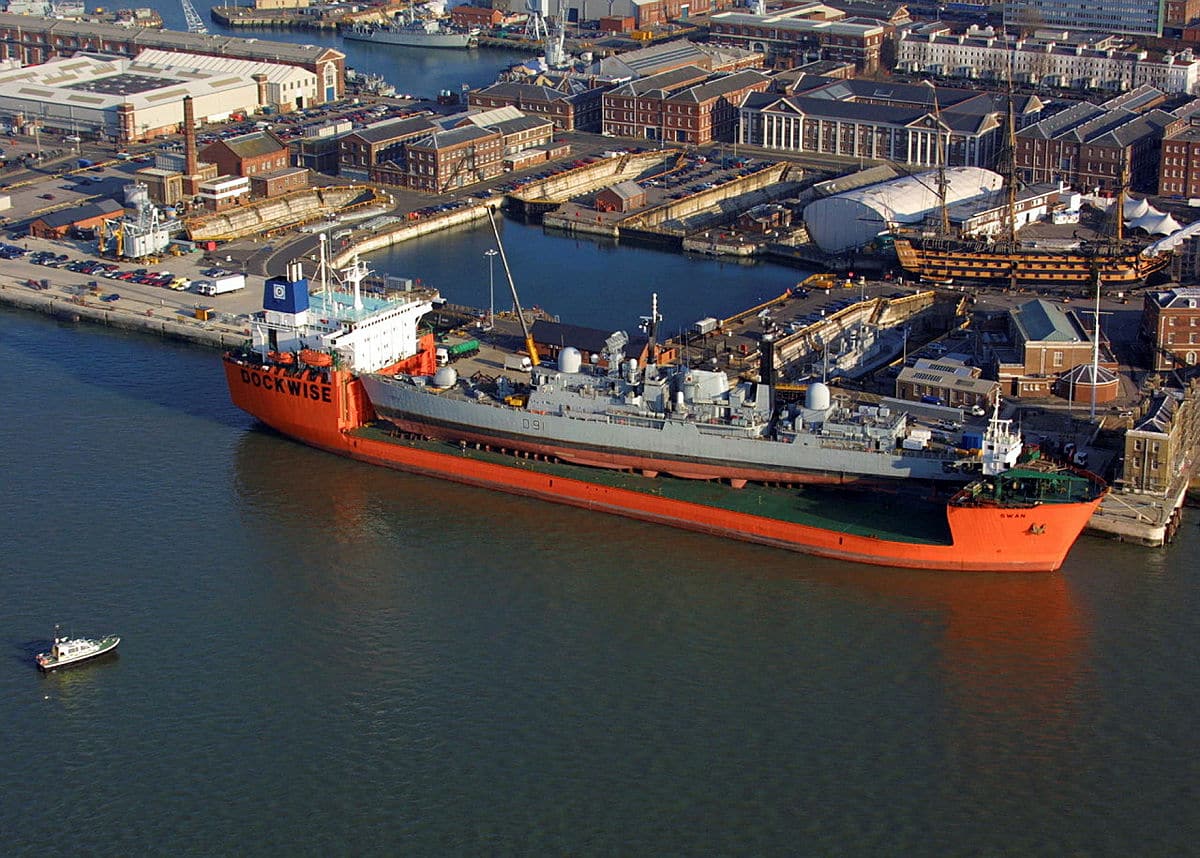
Markings on hull of Ex HMS Northumberland (in Fareham creek awaiting scrapping) indicating plate thickness and clear demonstration of why so many of the Type 23 frigates are becoming beyond economic repair
The fact that they have served as long as they have is nothing more than a miracle thanks to the teams of engineers and mechanics that have worked tirelessly to keep these ships operational. HMS Richmond, which came back from the carrier strike group last year, is to be retired this year and the others will follow suit as the Type 26 and Type 31 frigates join the fleet.
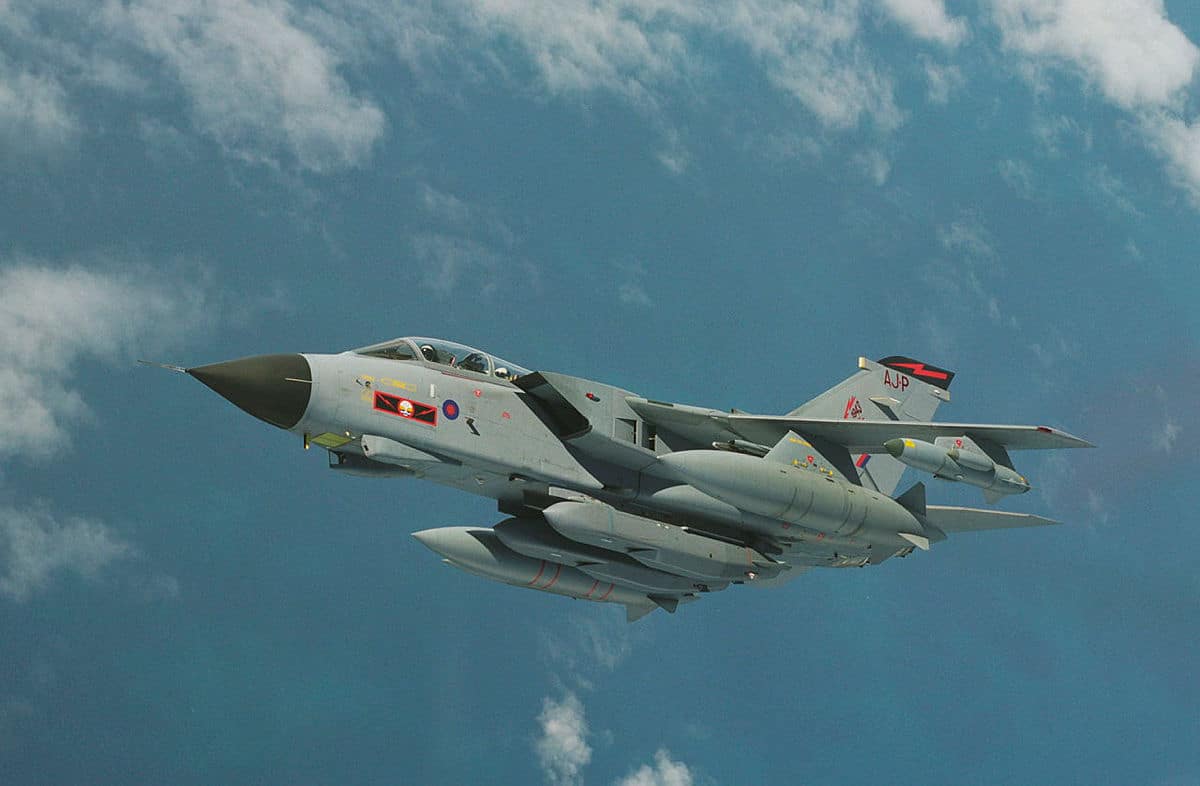
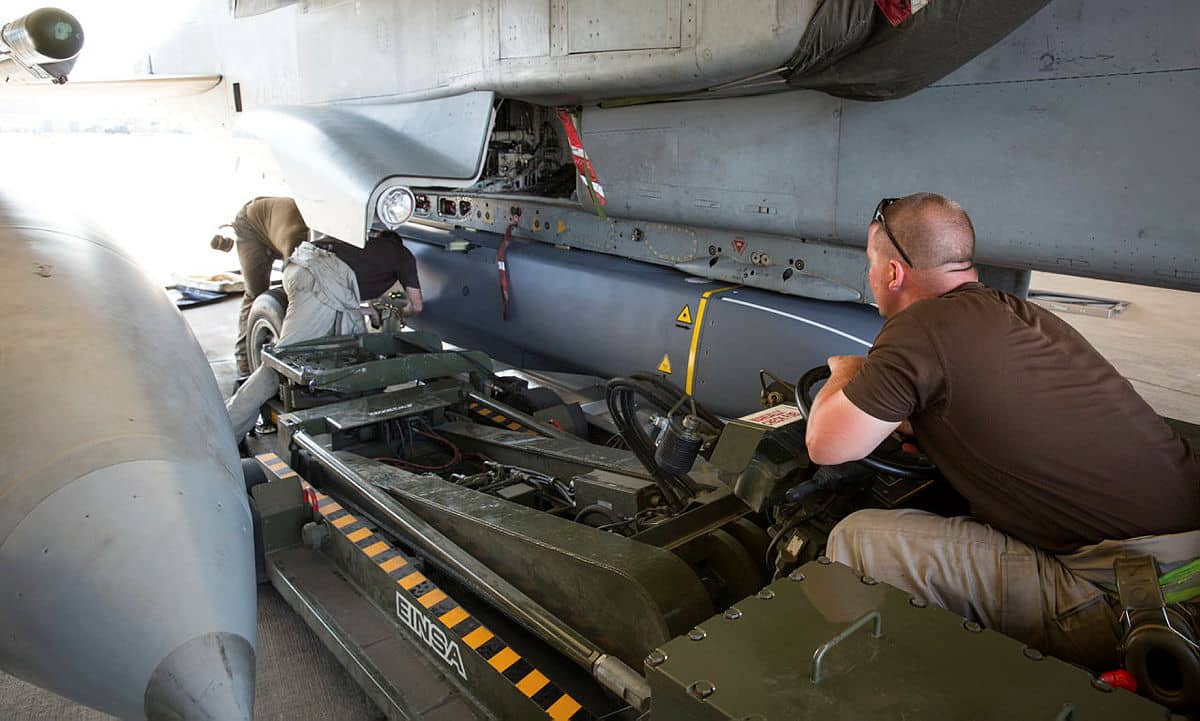
A Tornado GR4 aircraft with 617 Squadron is pictured fitted with the Storm Shadow cruise missile directly under the fuselage. 617 Squadron Tornados used Storm Shadow missiles in Iraq in 2003 before the weapon officially entered service the next year. | Source: Royal Air Force
The final loss of note is the Storm Shadow missile employed by the RAF from the Typhoon FGR4, even if these missiles have proved to be exceptional over their years of service. They have been deployed by RAF Tornado GR4 fighter bombers on operations from Iraq War in 2003, to Libya in 2011 and lastly in Syria in 2018, before they were replaced by the Typhoon.
They are to be replaced in service both by the Stratus future cruise/anti-ship missile as well as with missiles provided by Project BRAKESTOP, constituting a high-low mix for the UK’s Armed Forces, ensuring more bang for their buck.
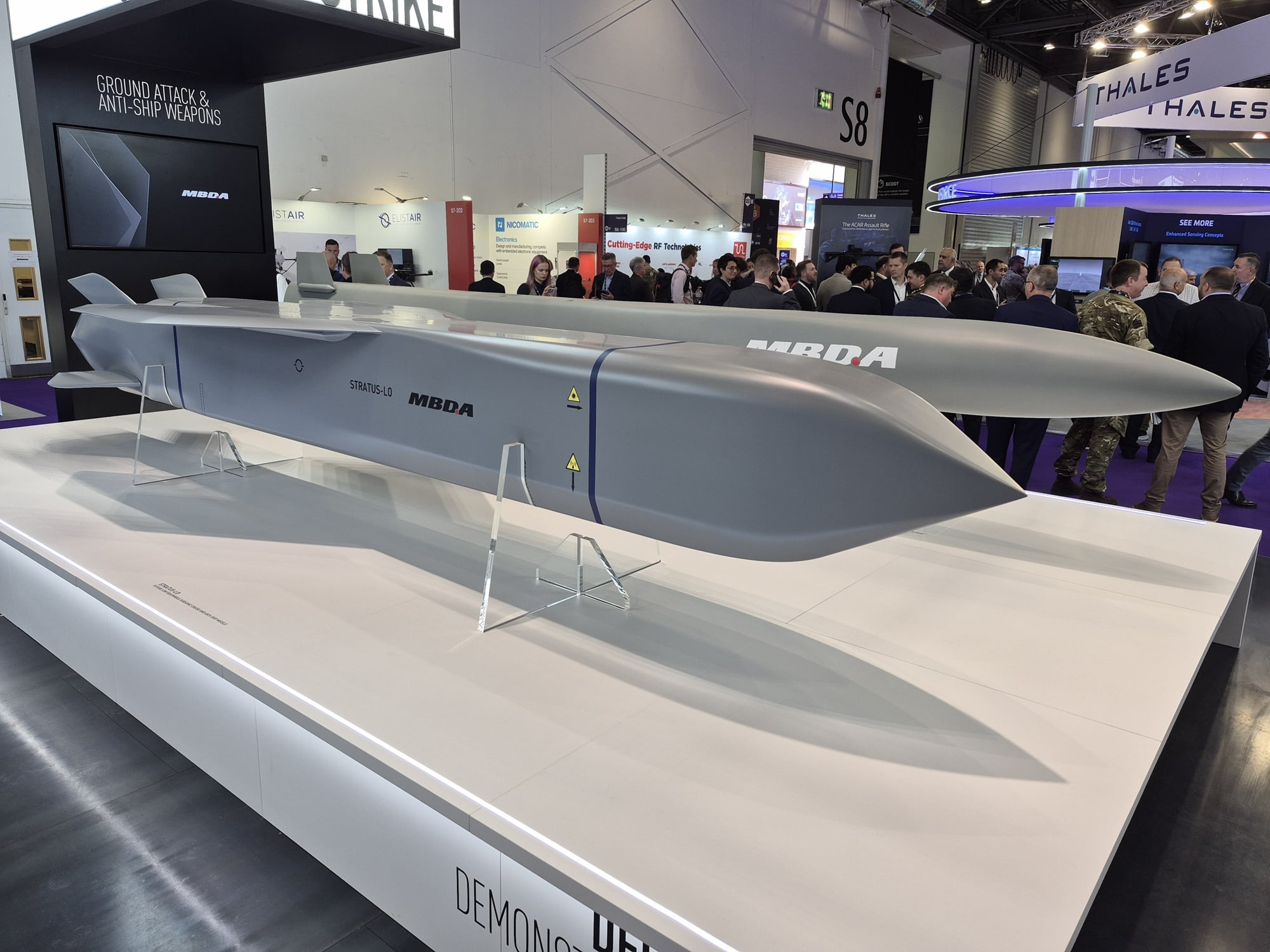
A mockup of the STRATUS missile seen at DSEI in 2025 it consists of two missiles, a low observable variant and and a high speed version for rapid strike purposes. Both missiles can either be operated alone, in cooperation with each other, or with other systems, and will be launched both from air and naval platforms. | Source: James Gray
In essence, the provision of Storm Shadow to Ukraine has shown how expensive missiles can be devastatingly effective if used correctly, but that their limited numbers can place a bottleneck on the country using them. Currently the vast majority of Storm Shadow missiles produced by MBDA are sent to Ukraine, with the company having restarted production on the missile so that they can maintain the supply.
However, the high costs have meant that number remains low, and this is something that the UK wants to avoid in the future. It is unknown when the last Storm Shadow will be employed from an RAF Typhoon but, with Stratus on the horizon, its time has sadly come.
Hybrid Navy and Amphibious Warfare
Alongside the above cuts, the Royal Navy has also seen the cancellation of the planned Type 32 Frigate and the Type 83 air warfare destroyer. Whilst these ships were still unfunded concepts, they represented an expansion of the Royal Navy to include another surface combatant in the Type 32, and the next generation of air warfare destroyer in the Type 83, a class of ship that has proved to be invaluable over the last three years.
American Arleigh-Burke class destroyers and the British Daring class Type 45 provided air defence to civilian shipping in the Red Sea, whilst they were under concerted attack by the Houthis. Many cruise and ballistic missiles fell to these systems, which the Royal Navy now seemingly wants to abandon entirely.
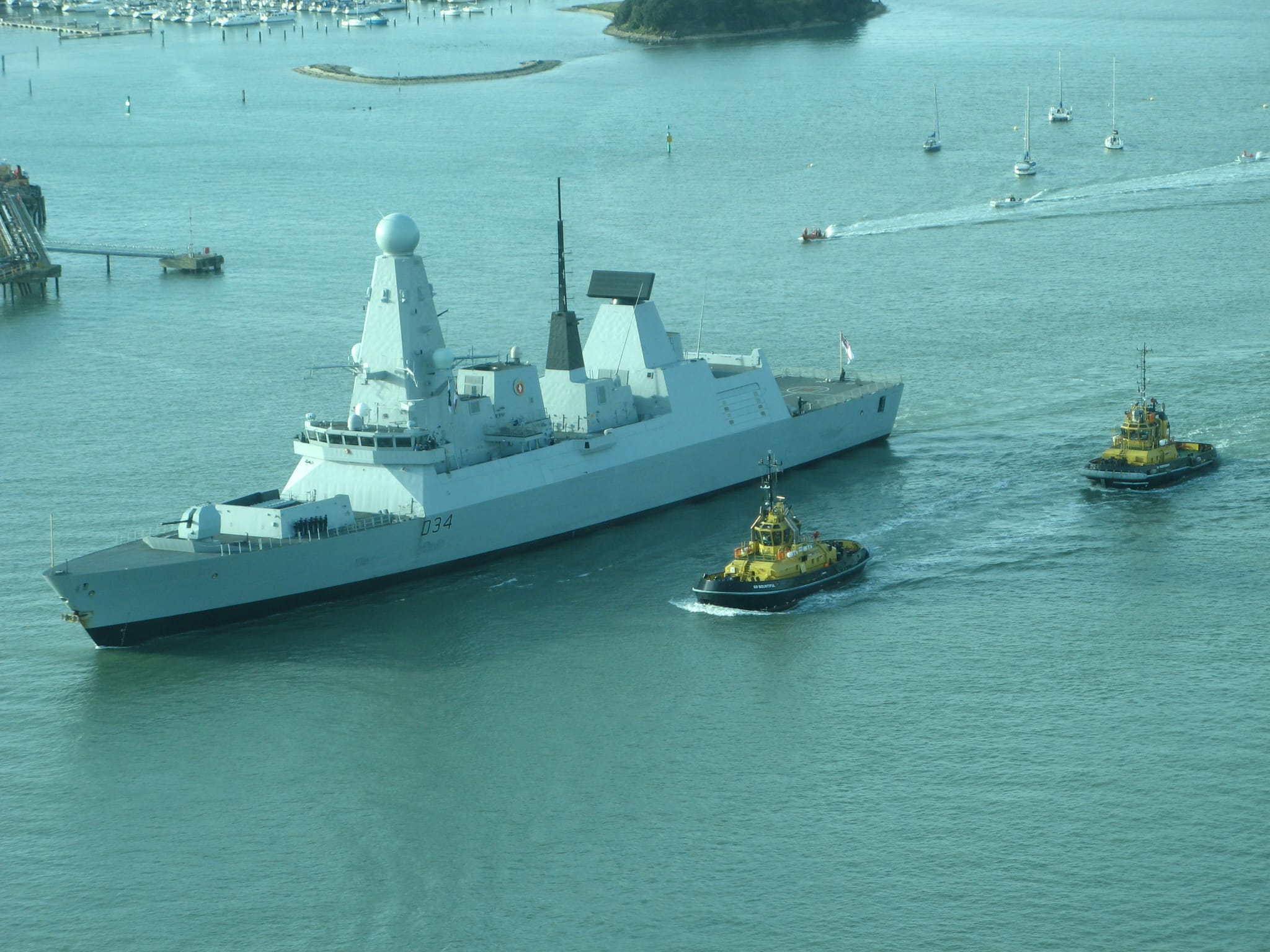
HMS Diamond (D34) is the third of the Royal Navy’s six Daring-class (Type 45) guided-missile destroyers. Commissioned in 2011, this 152-meter warship is heavily optimized for anti-air warfare and utilises the SAMPSON radar, which can track 2,000 targets over 250 miles away. | Source: Paul Gray
The Daring class will instead be retired early in 2035, with no life extension, despite most ships of the class having well preserved hulls as a result of their early engine trouble. Instead the Royal Navy will move to use unmanned systems in place of the manned Type 45.
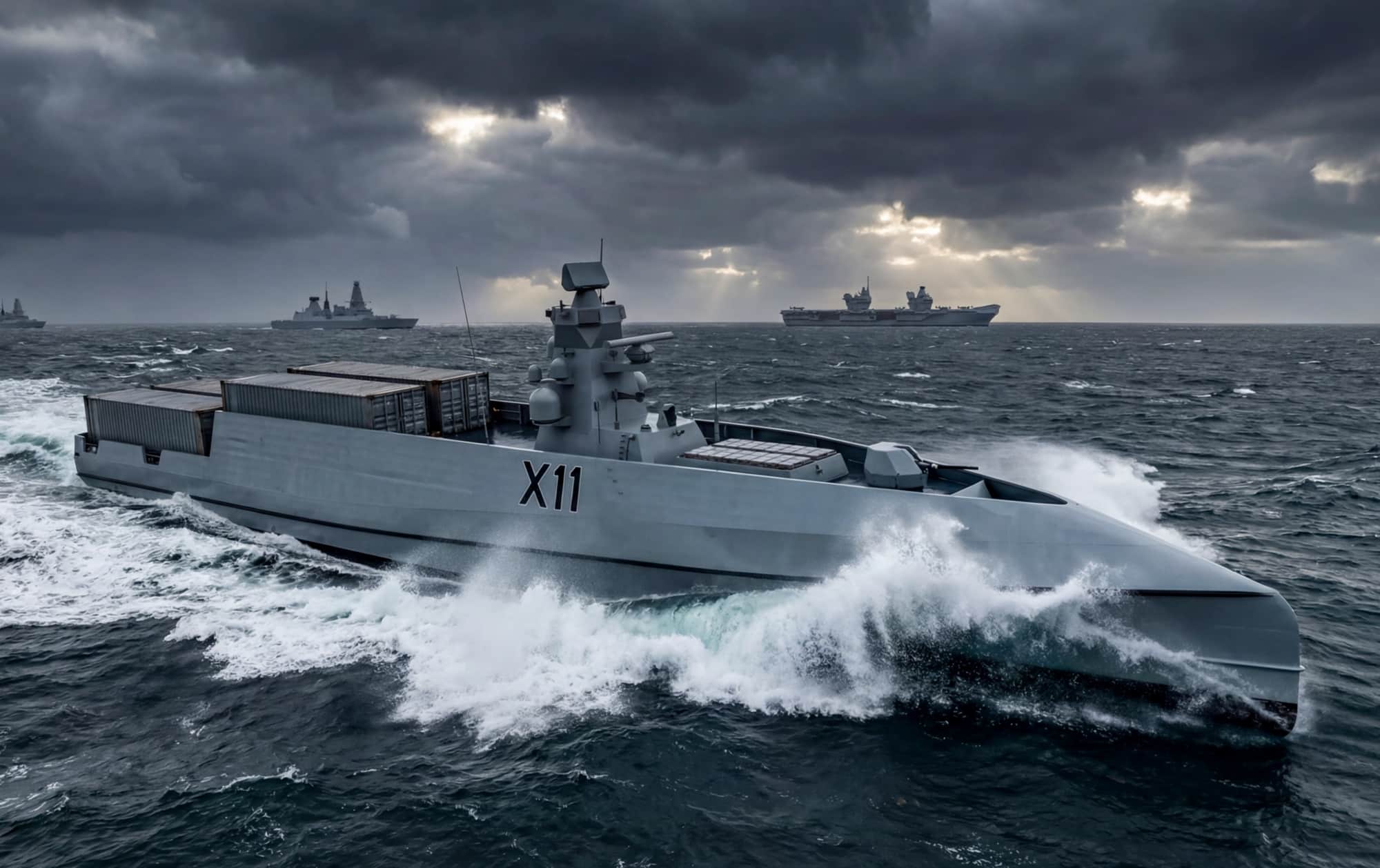
Dubbed the “Hybrid Navy”, £1.5bn has been assigned to produce a new class of six manned Common Combat Vessels (CCV) which will act as control ships, acting alongside a fleet of uncrewed systems. These are the Type 91 missile platform, the Type 92 uncrewed underwater sensor platform, the Type 93 extra-large uncrewed underwater vessel (XLUUV) and the Type 94 uncrewed radar platforms.
Each ship will have its own specific function, allowing creating a disaggregated network of systems that make the overall fleet more survivable. The idea being more ships, more targets, a more survivable fleet. As of right now however, the CCV is completely undefined in its scope and its armament, with some fearing that it will be entirely unarmed and unable to defend itself.
Navantia debuts a design for an autonomous vessel to support the UK’s ‘hybrid navy’ concept of the future. Almost nothing is known about what this fleet will look like with this but one concept on display at the Combined Naval Event in 2026. | Source: Navantia
Moreover, many naval officers have questions around the seakeeping of such vessels, their numbers, their cost and their survivability once they are hit. Traditionally, the crew will perform damage control duties, fighting fires and patching the hull below the waterline to save the ship after it has been hit. During the Falklands War at least three warships, HMS Plymouth, HMS Glasgow and HMS Argonaut, were saved by manual firefighting and damage control after they were hit by Argentine bombs.
If an unmanned missile barge is hit, the warship will be reliant on automatic fire suppression to save the entire vessel as there will be no crew. This could be a risk and leaves the unmanned vessel exposed to even just accidents.
In the year 2000 HMS Nottingham, a Type 42 destroyer, ran aground near Australia as a result of a large submerged rock that was missed on the ships charts. The ship had multiple compartments flood, but it was saved by the damage control efforts of the crew.
HMS Nottingham returned to the UK for £26 million worth of repairs after running aground off Australia in July 2002. She hitched a lift on the Dutch heavy lifting ship, MV Swan, and was carried stern first into Portsmouth Harbour with the 80 ft-long damage to her bow section, which nearly sank the £115 million warship, clearly visible. | Source: Crown copyright 2023/Geoff Parselle
The Hybrid Navy is a gamble partially forced by the lack of extra funding for the Royal Navy, cancelling a proven concept and going all in on a fleet design that no other nation is investing in anywhere near as heavily. This could be either extremely advantageous for the Royal Navy, and another HMS Dreadnought moment in which the Royal Navy redefines naval warfare, or it could end up a total disaster that costs more than the original concept.
Additionally, the UK’s amphibious force is also changing with the cancellation of the planned multi-role strike ship (MRSS), a planned warship that would seemingly combine the amphibious capabilities of older designs with a vertical launch system (VLS), allowing for their own self-protection and the protection of the wider fleet. In their place is a plan to rejoin the Dutch programme for a smaller Amphibious Transport Ship, which the UK had initially left in 2024 due to differing requirements. The MRSS needed a VLS to allow the ship to lessen the burden on the fleet’s low number of escorts with a further spreading out of air defence assets across the fleet.
The Defence Investment Plan drops the bespoke Multi-Role Strike Ship as too complex and commits the UK to a joint amphibious fleet with the Netherlands, built around the Dutch Amphibious Transport Ship.https://t.co/vkjyRFXLXW
Instead, the Hybrid Navy will have to pick up the slack, requiring a significant number of missile and radar barges containing expensive interceptors that will likely increase the costs of the whole system anyway. The cancellation of the MRSS in favour of the Dutch design is likely an issue of cost and scope, with the Royal Marines themselves changing their force design, owing to the difficult realities of contested sea landings in an age of strike drones and long range cruise missile attack.
What is Missing?
What many were expecting from the DIP is that it would make hard decisions on a large number of capabilities in the Armed Forces that are lacking or causing problems. For example, it was hoped amongst many that the DIP would come to a decisive decision on the Ajax programme, which continues to delay, with many fearing that the vibration issues on the vehicle mean that it will not enter service.
This is heavily anecdotal, but the Ajax reconnaissance vehicle was not even run around this year’s Tankfest event held at the Tank Museum in Bovington, whilst other vehicles such as the Challenger 3 made their public debut, to serious fanfare.
Challenger 3 makes its public debut at Tankfest 2026 featuring an all-new turret and an improved hull over its predecessor. The Challenger 3 swaps from a rifled 120 mm gun to a smoothbore gun, and uses an upgraded variant of the gun used by the Leopard 2. | Source: Jamie Gray
It seems that, despite the DIP’s publication, the Armed Forces are still waiting on decisions as to how the money that has been allocated will be spent. We had been hoping that the DIP would reveal which new jet trainer would be bought for the RAF to replace the Hawk T2 and the T1 for the Red Arrows.
£360m has been assigned, but no decision has yet been made on the programme. Rumours had been swirling that the RAF would also buy more Texan turboprop trainers, but this too has not been confirmed or denied.
The Red Arrows’ Hawk replacement now feels much closer after the recent MOD funding announcement.
These AI-generated concepts show a few possible futures: T-7A Red Hawk, M-346 Master or T-50 Golden Eagle.
There was also no new information on the F-35B orders for the Fleet Air Arm and the RAF, in which more are expected, but few are confirmed. The future of the programme and the order of 138 over the lifetime of the jet, is still completely unknown. There is also no mention of further E-7 Wedgetail orders nor A-400M Atlas which the RAF needs to uplift their AEW&C and air transport capabilities, which are currently limited by low numbers.
The T-7A Red Hawk is a Boeing-Saab cooperation that is the next jet trainer for the US Air Force, and as such it has been designed for future fighter and bomber pilot training requirements. The above two companies have partnered with BAE Systems in their bid to replace the RAF’s Hawk jet trainers. | Source: Saab
Shockingly, there is almost no information about the future of British ballistic missile defences. £790m has been supplied for new homeland Integrated Air and Missile Defence systems but the majority is taken up by enhancements to existing infrastructure and radars.
No money is currently being spent on a ground based missile defence system capable of protecting key sites and cities like Lossiemouth and London from ballistic missile attack. The drone strike on Cyprus should have highlighted how vulnerable the UK is to even low end threats, with the country at risk of being dragged into conflicts in which the deployment of ballistic missiles is extremely common.
Only one line in the entire document highlights this with “Long range ground-based air and missile defence systems to protect the UK – including against ballistic missile threats.” An unfunded decision pushed back to 2030, with the country instead reliant on the Royal Navy’s destroyers, which is completely impractical given ship numbers and other defence priorities.
The British Army Sky Sabre intermediate air defence system consists of The Agile Multi-Beam Surveillance Targeting radar (affectionately referred to as the Giraffe, pictured left), the Battle Management Command & Control Communications (not shown), and the Land Ceptor CAMM (Common Anti-Air Modular Missiles) missile delivery vehicle (right). | Source: Crown copyright 2026/Corporal Adam J Wakefield
The DIP does include a line stating that the British Army will double its active number of Sky Sabre batteries, with over £350 million allocated to the task. Sky Sabre is by all means an excellent SAM system, with all its aggregate parts able to operate up to 15 km apart on the battlefield.
However, it only has a range of 120 km due to its use of the Common Anti-Air Modular Missile (CAMM), which means it cannot target ballistic missiles. Whilst CAMM is an excellent medium range air defence missile, it is prioritised for force protection and so it cannot protect the UK from the high end missile threat which is terrorising Ukraine on a daily basis.
More must be done on this front to strengthen the nation’s air defences in the manner that France and Germany are doing.
Conclusion
The DIP is unfortunately a mixed bag for the UK’s Armed Forces. There is an awful lot of good news that should give some programmes and defence officials a fair amount of breathing room to continue their work. GCAP appears to be secure with the RAF and the Royal Navy’s nuclear enterprise coming out as the clear winners of the DIP. Yet, the Royal Navy’s surface fleet appears to be at risk with a shot in the dark program that has an equal chance of success or failure. The Army too comes a cropper with little mention in the DIP beyond investment in drones and the continuation of Ajax, which is ever in doubt.
Whilst the RAF may become “Europe’s first 6th Generation Air Force” more must be done to ensure other avenues of defence are properly funded so that capability that is desperately needed is not cut ever further. Even more so, it is what is not said in the DIP that is even more worrying, with requirements and decisions delayed until the next funding plan under the next Prime Minister. This is most obvious with £5bn of the extra allocation to defence coming from no apparent source, meaning that the next Prime Minister is likely to have to make even more difficult decisions to find the money.
The UK government has released its much-delayed Defence Investment Plan. More cash is coming over the ten years covered, but exactly how much is mired in debate, as is whether it will be enough.
This article is certainly not the definitive word on the DIP, and nor does it seek to be, with many more projects unable to be mentioned in such a space. Some of these will receive their own article as more of the DIP becomes realised over time. This article is instead a statement of concern that despite the bluster of this being the largest investment in the UK’s defence enterprise since the Cold War, it may not go far enough to deal with the threats that the UK actually faces. At such a time when the world is becoming more and more unstable it is vital that the UK keeps pace with the threat, so that the Armed Forces can protect the nation and its many allies around the world.
Only time will tell if the government is up to that particular task.
Named One Way Effectors (OWE), these weapons are ground-launched and capable of hitting targets more than 500km away while carrying a powerful 225kg warhead.
Over the last year, three British defence companies, MBDA UK, MGI Engineering, and Rotron Aerospace, have produced new OWE weapons for the Ukrainian military under a programme named ‘Project Brakestop’. Each system has now been successfully test launched leading the way to the next phase of the project in which £15 million contracts are being awarded for further development of the OWEs.
Each company will produce 15 improved weapons, alongside a number of launchers and support vehicles which will be tested extensively. Once this has been achieved the three weapons will eventually begin serial production and for delivery to the Ukrainian Armed Forces (AFU) by the end of the year.
The project was launched in late 2024 with the requirement for a weapon system that has a range of at least 500km (310 miles), a warhead weighing at least 225kg (around 500lbs), speed of more than 600km/h (373 mph), a target unit cost of around £400,000 ($526,600) excluding the warhead and the ability to produce at least 20 weapons a month within months of a production order.
Ukrainian Air Force Su-24M Fencer with underwing Storm Shadow missiles viewed from head on. MBDA also produces the Storm Shadow missile, and their Crossbow OWE Heavy is designed to complement the heavier and more powerful missile. | Source: Vladyslav Demyanenko/Ukrainian Air Force
Not reported in the British government’s official statement on the project, but reported by the Financial Times, is the intention for the weapons to also be free of US components and navigation data, allowing the UK to make independent sovereign decisions on their use by Ukraine. MBDA’s Storm Shadow missile, first gifted to Ukraine in 2024 were initially delayed in their employment due to their use of American components and guidance data. Due to the US’ more bellicose attitude to Ukraine in recent months, it is now more important than ever for Ukraine to have weapons that are politically reliable.
At the start of the competition, 27 bids were received from the UK’s defence industry, with initial pitches made to the Ministry of Defence (MOD) in February 2025. Six British companies were then awarded contracts worth around £5 million each to design and build prototype weapons for testing that would take place within seven months. However, by December of that same year only the three listed suppliers remained to test fire their new weapon systems.
Image of the test launch of the MBDA Crossbow OWE Heavy taken in either December 2025 or February 2026, Crossbow progressed from design to demonstration in just nine months in 2025. | Source: MBDA Missile Systems
This represents an extremely fast moving programme which has become a rarity amongst British defence projects, with the Ajax armoured vehicle programme seemingly indefinitely on pause after an eight year delay, whilst the RAF Wedgetail project continues on after a three year delay. The success of project Brakestop so far is a reminder that when pressured British industry can deliver high quality weapon systems at scale.
Each weapon system was then tested at the MOD Hebrides Range, a specialist trials site managed by QinetiQ which is used for large scale live fire exercises and military trials of a number of British weapons, including the DragonFire laser system.
MBDA announces successful #CROSSBOW firings, marking a key milestone in ground-launched #DeepStrike
Conducted in Dec 2025 & Feb 2026, it moved from design to demo in 9 months. Its modular design delivers range, lethality & survivability.
The Minister for the Armed Forces Louise Sandher-Jones MP stated:
“The UK stands shoulder-to-shoulder with Ukraine, and we will continue to provide the support it needs to defend itself against Russian aggression.
Project Brakestop shows what happens when we combine that commitment with the talent and ingenuity of British industry. In less than a year, UK companies have taken an ambitious concept from the drawing board to flight testing, delivering a new generation of capability at remarkable speed.
This is a clear demonstration that Britain has the industrial strength, innovation and determination to meet the challenges of modern warfare and support our allies.”
What is a One Way Effector (OWE)?
A OWE is intended to be a catch-all term for the types of low-cost kamikaze drones growing in popularity around the world. They sit in a category between cruise missiles and unmanned aerial vehicles (UAV) in their cost and firepower, whilst sharing similarities with both.
As a result, they can be hard to properly define as the category is by its nature extremely broad. For example, a Russian/Iranian OWE would be the Shahed 136 type drone that have been used to target Ukrainian cities to overwhelm local air defences with a low cost, but dangerous munition. Ukraine on the other hand has used converted civilian aircraft in a similar role, packing them with explosives, fitting them with rudimentary guidance kits and a remote control to fly them into Russian territory at a lower cost than a cruise or ballistic missile.
The low cost and high manufacturing speed of these types of systems means that both Ukraine and Russia have been able to launch massive daily air raids against the other, with the number of weapons employed reaching over 1,000 OWEs at a time. For the US or the UK to employ a similar number of cruise missiles, they would deplete entire decades worth of production in just a few days. These OWEs allow a nation to have a capability similar to the 1,000 bomber raids of the Second World War with just a fraction of the cost.
Drone shot! Well, not exactly… A UkAF MiG-29 intercepting a Russian Shahed-136 over the Odesa coast. Absolutely cracking view of an R-73 “Archer” launch! pic.twitter.com/Jp4BHgmR6e
Both Ukraine and Russia use attack drones that rely on human control from safe territory to fly the weapon to the target zone, before an AI system built into the platform takes control for terminal guidance against a target. This ensures that the weapon is able to avoid being downed by electronic warfare that would usually disable them by disconnecting the pilot to the weapon.
The area of OWEs is now extremely broad, with even small FPV drones attached to explosives being included despite their small size, range and payload.
The MGI Defence Tigershark OWE uses a rocket assisted take off (RATO) system for the initial launch, and is then powered by an on board jet engine for its mid-course flight. | Source: MGI Defence
MGI Defence describes an OWE as an autonomous or semi-autonomous aerial platform designed for a single-use mission. They are intended to be more flexible than a missile, less expensive than a reusable drone and faster to produce than conventional missile systems.
On the other hand, MBDA describes an OWE as a weapon designed to exhaust an opponent’s resources by exerting constant pressure on their air defence systems, so that those defences can be detected and neutralised, allowing for more expensive long range weapons to reach their targets farther inland. MGI Defence prioritises the weapons autonomous guidance systems and its cheap nature whilst MBDA uses the mission parameters and target type to describe what makes an OWE.
Rotron, now part of Ondas Inc. (@OndasHoldings) announced a successful demonstration and firing of its Skylance long-range one-way effector (OWE) platform.
“The new defence era is here for the UK. The successful demonstration of SkyLance validates our ability to deliver… pic.twitter.com/jafTIOZsS9
— Counter Unmanned Systems (@CUAS_NEWS) May 14, 2026
The concept behind an OWE is extremely broad and constantly evolving thanks to the ongoing war in Ukraine, which keeps the pace of development of these weapons extremely high.
MBDA – Crossbow Heavy
MBDA Missile Systems has a long pedigree of producing advanced missile based systems for the British and French militaries, from air-launched cruise missiles, such as Storm Shadow/SCALP-EG, to the ship-launched air defence missiles of the Aster 15 and 30 range. They are continuing to produce high cost missile systems with the Stratus next generation cruise missiles that will replace the Storm Shadow/SCALP-EG in British and French service.
Storm Shadow missile being mounted to an RAF Tornado under fuselage pylon at RAF Akrotiri. | Source: Corporal Tony Rogers @Crown Copyright 2016
The creation of a cheaper alternative in the OWE category is therefore an interesting change of direction reflecting the battlefield realities stemming from Ukraine.Their product, the Crossbow OWE Heavy, is designed to be a deep-fires capability which can operate in the complex electronic warfare (EW) environment of Ukraine, at a cost that enables significant combat mass in comparison to MBDA’s more sophisticated weapons.
In this regard Crossbow is a modular design utilising military and commercial off the shelf components that have so far enabled the rapid development of the system which can then be produced at a scale that far outstrips their annual production of Storm Shadow missiles. The Crossbow is ground launched from the back of a vehicle, delivering multi-role kinetic and non-kinetic payloads up to 300kg out to ranges in excess of 800km.
A mockup of the Crossbow one way effector at DSEI 2025. It was placed amongst a number of smaller one way effector variants and weapon systems designed based on experience and lessons from the Russo-Ukrainian War. | Source: James Gray
MGI Defence – Tigershark
The second chosen company, MGI Defence, is a part of MGI Engineering, which has a 25 year long history in producing parts for Formula 1 cars. ‘Project Brakestop’ is their first successful foray into defence though it is not their only drone product.
Their flagship OWE is called the Tigershark, which has a speed of 750 km/h, a 300 kg payload, and it is capable of striking targets at ranges exceeding 1,000 km. This weapon was developed in close strategic partnership with Auterion, a US firm that produces on board autonomous systems for one way attack munitions.
A full view of the MGI Defence Tigershark long range autonomous weapon system demonstrator. This weapon uses 3D printed components to reduce cost and save on weight. | Source: MGI Defence
Mike Gascoyne, CEO of MGI Engineering, commented:
“The successful launch of TigerShark is a defining moment for MGI. This platform exemplifies our approach to engineering excellence—rapid, agile, and mission-focused. Partnering with Auterion has allowed us to integrate world-class autonomous capabilities into a system designed from the ground up for flexibility and future growth. Together, we are delivering a solution that meets today’s needs while anticipating tomorrow’s challenges.”
Rotron Aerospace – SkyLance
The final company forming a part of ‘Project Brakestop’ is Rotron Aerospace, a British enterprise that produces a number of UAVs of multiple types from small quadrotors to its larger SkyLance OWE. Their area of expertise is the professional use of the Wankel type rotary engine which allows for a decent output of power from a relatively compact engine, making it ideal for light vehicles and UAVs.
This enabled Rotron to quickly pivot to producing helicopter type UAVs following the start of the war in Ukraine. Due to this, the SkyLance OWE is the only weapon of the three selected to not use a jet engine for its mid-course propulsion, instead using a wankel engine powered propeller.
Rotron Aerospace Skylance OWE similarly uses a RATO launch mechanism to allow for a quick boost to its mid-course flight without decreasing the system’s range. | Source: Rotron Aerospace
The weapon does still utilise a rocket assisted take off system, much in the same vein as the Tigershark and has a very similar effective range of 1,200km. However, its speed is much reduced thanks to its lack of a jet engine.
All three OWEs are very similar visually, with minor differences in payload capacity, effective range and their onboard guidance systems. Given the importance of these deep strike weapons to the Ukrainian military, it is likely that all three will be deployed to Ukraine in large numbers, instead of the government selecting just one weapon to mass produce. This allows for a diversity of weapon systems that the Russian military have to deal with, whilst maximising the effects on the British defence sector, giving all three companies a well needed funding boost.
At #DSEI2025, our expert Bill introduces our latest innovation: #Crossbow the ONE WAY EFFECTOR HEAVY.
A battle ready #missile designed to provide a lower cost, higher mass deep fires solution with #AI enhanced navigation.
These weapons are but a small part of the UK’s support for Ukraine under Operation Scorpius, which is the name given to the MOD’s overarching framework to coordinate military aid, equipment, and logistical support for Ukraine following Russia’s invasion. Within this framework is Taskforce Kindred, a team of MOD staff who manage the response to requests from the Ukrainians and work with Defence Equipment & Support to develop and procure the required equipment. Taskforce Kindred receives regular feedback from Ukrainian forces about the effectiveness of the equipment it is providing, which it considers for future procurement requests.
New footage confirms that an errant Russian surface to air missile was responsible for the tank roof toss at the Moscow Oil Refinery this morning. pic.twitter.com/H5kdsuO2pY
This is the mechanism through which British industry can understand the requirements for the AFU as well as the lessons learned from the conflict in regards to what weapon systems work, which is how the OWE has become so prominent in their defence portfolios.
If Ukraine wishes to continue upping its pace of strikes against Russia, to achieve continual results similar to those seen during a recent attack on Moscow, the OWEs these companies offer will be of extreme importance to the AFU.
The Canadian government has announced that it is entering into discussions with Saab for the supply of the GlobalEye AEW&C aircraft, beating out the American Boeing and L3Harris.
On May 27, 2026, Canadian Prime Minister Mark Carney announced at the CANSEC exposition, Canada’s largest defence and security trade show, that Canada would procure the GlobalEye AEW&C aircraft. For any readers who are James Bond fans, Carney did mistakenly call the aircraft “Saab’s Goldeneye,” though he quickly corrected himself before explaining the GlobalEye’s capabilities and their suitability to Canada’s needs, both industrial and military.
To this end, the partnership between Canada and Saab aims to continue the production of the Global 6500 aircraft for integration with Saab’s Erieye radar system, with “no less than one-third of the projected fleet of GlobalEyes” to be built in Canada. This means that “at least 40 aircraft” are to be built in Canada, for Canada and its allies over the next 15 years.
Saab is aiming for the GlobalEye to be the replacement for a number of AEW&C aircraft around the world, with many states operating older variants based on the Saab 340 turboprop aircraft. Currently no firm order has been signed, but this still marks a significant step forward in Canada’s desired acquisition of an AEW&C capability, with the Royal Canadian Air Force expressing an intention to operate six aircraft based on the operational requirements and expected serviceability rates of the aircraft.
The first Wedgetail AEW&C aircraft for the RAF arrived at RAF Lossiemouth onMay 21, 2026. This aircraft delivery has been delayed by three years due to part obsolescence and issues within Boeing requiring an extended fitting out timeline. It still has not officially entered into service and won’t be delivered until its test and evaluation is complete. | Source: Crown copyright 2026/AS1 Mia Wilkinson-Loines RAF
This announcement is significant as it beats out both American options, notably the E-7 Wedgetail built by Boeing, as well as the AERIS X produced by L3Harris, which is also based on the Global 6500 airframe. Despite the E-7 being an extremely powerful and successful AEW&C aircraft, with Australia’s being in high demand for supporting NATO and Ukraine, the aircraft has suffered from procurement woes in recent years.
On board systems obsolescence, in part due to an inactive production line prior to Britain’s order in 2019, alongside problems within Boeing have delayed the delivery of aircraft to the United Kingdom. As well as this, U.S. government plans to use space based AEW&C systems almost killed the American order of aircraft, with uncertainty around American support leading to NATO cancelling their order of Wedgetails.
A graphic of the proposed L3Harris Aeris X design featuring Canadian markings. L3Harris had been pushing hard for the Canadian procurement, but it was still only a conceptual aircraft. | Source: L3Harris
Whereas, L3Harris’ design looked a more likely option due to its use of a Canadian aircraft and American on board systems, allowing for a better integration with NORAD, as well as its proposed air-to-air refueling capability. However, the GlobalEye is a proven design that represents closer integration within Europe’s defence ecosystem, which Canada desires, following threats from the Trump administration over Canada’s sovereignty, in addition to the significant number of tariffs placed on Canada by the U.S.
Interestingly, press releases by the Canadian government highlight the aircraft as a boost to Canada’s contributions to the North American Aerospace Defence Command (NORAD), likely aimed at placating some of the Trump administration’s ire. Yet the deal still marks a significant step away from the U.S. in the defence sphere.
Great news for Canadian jobs. The majority of the Canadian-made Saab/Bombardier GlobalEyes will be for export & eligible for CCC/EDC financing. Making the GlobalEye even more attractive to smaller nations currently flying legacy Saab turboprop AEW aircraft. https://t.co/ng37pN6hN7pic.twitter.com/e8YHiLRS5a
On the proposed procurement, Prime Minister Carney stated that:
“The first job of the government is to keep Canadians safe. Our government is protecting Canadians and supporting our Allies with an approach that transforms defence procurement. With our new strategy, we are building our economy and creating careers in the skilled trades, science, and engineering. The GlobalEye procurement will help us secure our North and build our economy at once.”
GlobalEye would provide the Royal Canadian Air Force with advanced airborne surveillance capabilities allowing the nation to better detect, track, and respond to threats at long range, in the Arctic region of Canada’s North.
A pair of GlobalEye AEW&C aircraft in flight together. Saab has quickly become a popular option for AEW&C options for nations, offering a smaller aircraft than its competitor Boeing, but one that is more affordable for a medium sized nation. | Source: Saab
Micael Johansson, President and CEO of Saab, stated that:
“We welcome Canada’s decision to enter into discussions with Saab as the preferred supplier of the future Canadian AEW&C capability. GlobalEye offers proven capability for the Royal Canadian Air Force, sovereign ownership for Canada and comprehensive and skilled work for Canadian industry.”
Alongside this announcement, Saab has announced that it is expanding its relationship with Canadian defence company CAE, which produces flight simulators to airlines and the military. With the AEW&C aircraft talks, Saab and CAE will work together on producing training systems to allow the aircraft to enter into service smoothly.
To this end Matt Bromberg, President and Chief Executive Officer of CAE, stated that:
“CAE’s world-class defence expertise will be critical to enabling a high-performance AEW&C capability for Canada…Building on our longstanding collaboration and trust with Saab, this agreement reflects our shared commitment to delivering innovative, integrated solutions that strengthen operational performance and support Canada’s defence priorities.”
GlobalEye AEW&C
Saab’s GlobalEye is built on the Canadian-manufactured Bombardier Global 6500 aircraft, supporting domestic Canadian production, and it is fitted with Saab’s Erieye radar system that has exploded in popularity on the international market. Saab AEW&C products are in service across the world, with Poland, Thailand, Sweden, Ukraine, Pakistan, Saudi Arabia, Brazil, Greece, Mexico and the UAE currently operating them, with some nations having used them in combat. In addition, France has recently ordered two GlobalEye aircraft, with the platform also a strong contender for replacing the E-3A Sentry in use by NATO.
According to Saab the GlobalEye is the only AEW&C aircraft on the market that can provide “long-range air, sea and land surveillance in real time, from a single platform.” However, other AEW&C aircraft with multi-role radars can also perform ground and maritime surveillance functions, even if in a more limited capacity.
The GlobalEye is fitted with the Leonardo Seaspray 7500E maritime surveillance radar that utilises synthetic-aperture radar and ground-oriented moving target indication modes allowing for effective maritime tracking. Alongside this, the aircraft also carries an electro-optical/infrared sensor, allowing for visual tracking of hostels, making the GlobalEye an effective all round surveillance platform.
A GlobalEye AEW&C aircraft in flight with a Saab JAS-39 Gripen E showing its carriage of four MBDA Meteor missiles and two IRIS-T infra red missiles. Saab has also been pushing for Canada to buy a number of Gripen E/F aircraft, to supplement its F-35 force following Trump’s threats towards Canada, which prompted a re-assessment of Canada’s F-35 purchase. | Source: Saab
It does come with some disadvantages in comparison to the larger E-7 Wedgetail, for example, lacking the ability to perform air-to-air refueling (AAR), which is essential for AEW&C aircraft during long operations. AAR of AEW&C aircraft was essential for NATO’s air campaign over Libya, allowing E-3 Sentries to stay on station providing AWACS support for longer mission durations. The GlobalEye has a 12 hour endurance, whilst the Wedgetail has flown combat missions in excess of 17 hours, thanks to its AAR capability.
The Wedgetail also uses the Northrop Grumman MESA electronically scanned radar, providing full 360-degree coverage and a detection range exceeding 600 kilometers allowing the aircraft to detect aircraft and maritime craft with the same radar. GlobalEye lacks a full 360 degree view as the fore and rear 30 degree arcs are blind to the aircraft. This is a severe vulnerability that adversaries can exploit if the aircraft is not managed carefully, as approaching aircraft and missiles could stay in the aircraft’s blind spot to score a kill from long range.
Carney government in talks to buy GlobalEye spy planes from Swedish Saab to defend our Arctic, rejecting US bids. Speculation is growing that Canada will buy Saab Gripen jets over American F-35s.
The GlobalEye also has a lower number of mission consoles in comparison to the E-7, being equipped with between five and seven, in comparison to the ten on the Wedgetail. Command and control is the most important role of the AEW&C aircraft, with on board air battle managers responsible for deconfliction of aircraft in their area, assigning missions and providing early warning of oncoming threats. The smaller number of mission consoles for this role does limit the effectiveness of the GlobalEye in providing this capability, though it is just one of many trade offs that come with a cheaper and smaller platform.
Canada has decided to move forward with Saab GlobalEye as its new airborne capability for Airborne Early Warning and Control. I look forward to welcoming Canada into the GlobalEye family.
GlobalEye is a highly modern and capable system that now has earned the trust of a fourth…
A small number of AEW&C aircraft cannot be in two places at once, and the overall early warning capability can be hampered by maintenance troubles taking aircraft out of operation. A large number of GlobalEyes in comparison can make up for this, providing more coverage as a collective group, in comparison to the larger aircraft. As with all platforms used by every military in the world, capabilities are trade-offs, and Canada in seeking the GlobalEye is making the best decision based on its military and political needs.
An Abridged History of Canadian AEW&C
Canada has had involvement with AEW&C projects prior to this announcement, having been a key player in NATO’s use of the E-3A Sentry. NATO commanders had desired an AEW&C platform to monitor the Inner German border and provide early warning of Soviet aircraft approaching, so that NATO fighters could scramble and intercept them. There was also a requirement for an aircraft that could provide a limited maritime patrol capability, to secure Europe’s communications to the United States and Canada.
NATO AWACS callsign NATO029 (Boeing E-3A Sentry, reg LX-N90453) has been holding in continuous oval racetrack orbits over eastern Turkey near Konya airbase (KYA) for more than 8 hours now… steady at ~35,000 ft . Not a short CAP; this is extended loiter.
As a result, NATO went to Boeing for the E-3A Sentry, with the price of 18 airframes split between the U.S., West Germany, Italy, Belgium, Denmark, Norway, Turkey, Luxemburg, Portugal, Greece and of course Canada. These aircraft, based at Geilenkirchen in Germany, are manned by crews from all the participant nations. They formed NATO’s Airborne Early Warning and Control Force (NAEW&CF) and were eventually joined by seven E-3D aircraft from the UK, increasing the potency of the overall force.
Canadian E-3A operators would serve on the aircraft throughout the closing years of the Cold War and into the early 2000s, with Canadians providing an essential service during NATO’s Libya intervention, Operation Unified Protector (OUP). Canadian air battle managers on numerous occasions successfully vectored NATO aircraft to targets in Libya that were targeting civilians and rebel positions.
Image of a NATO E-3 AWACS at the Royal International Air Tattoo (RIAT) in 2019. The E-3 will be replaced by the E-7 from 2031. | Source: Crown Copyright 2021/Cpl Lee Matthews RAF
On one such occasion, the Canadian frigate HMCS Charlottetown detected evidence of Gaddafi’s forces attacking civilians near the city of Misrata. The warship then forwarded this information to the Canadian weapons controller on an E-3A AWACS aircraft, who ordered two Royal Air Force Tornados and four Canadian CF-188s to successfully prosecute the target.
On another occasion, on May 30, 2011, the Charlottetown once again identified a threat to Misrata, this time from a loyalist vehicle firing rockets into the city, and much like the previous engagement, relayed the information to a Canadian AWACS controller. Once again, the threat was engaged by CF-188s, which ended the rocket threat to the city. Overall, during the 221 days of OUP from March 2011 to October 2011, Canadians contributed 1,961 days in theatre in direct support of the campaign.
One of 14 remaining NATO E-3A AWACS at RIAT 2024. Canadian air crews are gradually returning to the fleet to provide NATO with early warning of air attacks once more. | Source: James Gray
However, that same year the Canadian government decided to withdraw itself from the NAEW&CF citing a lack of value for money. More specifically, Canadian officials were angered when they had requested the use of NATO AWACS to monitor the airspace of the 2010 Vancouver Olympics.
They felt snubbed that as a paying partner they could not use the aircraft when they felt it essential to protect Canadian lives during the international event. The fear of aircraft being used to disrupt the games was a genuine threat following the 9/11 attacks a few years prior. In comparison, the UK flew multiple air surveillance sorties during its hosting of the 2012 summer Olympics.
As a result, the Canadian government fully withdrew the nation from the program saving $60 million a year, with the last flight crew leaving Geilenkirchen in 2014. This was not the end of the story though, as four years later a new Canadian government reversed the decision to end Canada’s involvement in the program.
From 2018 onwards Canada began contributing again but at a reduced cost that gave them less influence over AWACS decision making. Canada is still building up its involvement in the NAEW&CF and it is against this backdrop that the decision was made in 2024 for Canada to seek its own aircraft, for its own needs outside of the NATO force. This will allow Canada to better defend its vast airspace from the threat posed by the Russian Federation, whilst giving Canada an all aspect detection aircraft, ideal for monitoring the high North.
The first of three RAF E-7 Wedgetail AEW&C aircraft has arrived at RAF Lossiemouth in Scotland for test and evaluation trials prior to entering squadron service.
The aircraft was flown to the airbase by a mixed crew of personnel from Boeing UK and the RAF, with the arriving jet then greeted by a member of the RAF Lossiemouth Pipe Band to celebrate the event. Group Captain Sarah Brewin, the Station Commander at RAF Lossiemouth, was present alongside representatives from Boeing UK, the Wedgetail Project Team as well as members from No 8 Squadron who will fly the aircraft in service.
Designed to provide long range air surveillance for the Royal Air Force and other allied powers, the Wedgetail AEW1 represents a quantum leap of design over its predecessor the E-3 Sentry. This aircraft, serial WT001, will now complete its test and evaluation trials, which will be split between MOD Boscombe Down and RAF Lossiemouth, to ensure that the aircraft is safe and viable for squadron service.
Once complete, No 8 Squadron will officially receive the aircraft for operations, however, with the other aircraft in the squadron still years away, it is unlikely the aircraft will be instantly deployable. Regardless, the Wedgetail will be a potent force multiplier for the RAF, especially when operated alongside the nine-strong fleet of Poseidon maritime patrol aircraft that will watch the seas whilst the Wedgetail watches the skies.
Both the P-8 Poseidon and the E-7 Wedgetail are based on the Boeing 737 NG airframe, with the main differences being that the P-8 has a longer fuselage and an opening bomb bay for the deployment of Torpedos and sonobuoys from the air. Both aircraft having the same base airframe will allow for a shared pool of spare parts for both aircraft enabling the more efficient maintenance of both fleets, once the other E-7s enter service.
On the aircraft’s arrival, Gp Capt Sarah Brewin stated:
“We are delighted to welcome the arrival of the first Wedgetail aircraft to RAF Lossiemouth to continue its Test and Evaluation phase. This marks a significant step in delivering the Royal Air Force’s next generation of airborne surveillance and control capabilities that will support the defence of the UK for the years to come. RAF Lossiemouth has been working hard to get ready to operate these aircraft, and we are looking forward very much to this next exciting chapter in the Station’s history when the aircraft enters RAF service.”
Close up of the front fuselage of the RAF Wedgetail ‘WT001’, with a pilot waving from the cockpit. The aircraft carries the emblem of the NATO AEW&C Force, which the RAF Wedgetails will operate within, allowing for taskings in support of the wider NATO structure, but with RAF overall authority. | Source: Crown Copyright 2026/RAF
In addition, Boeing E-7 Vice President and Program Manager Stu Voboril stated:
“The E-7 will provide the UK with the world’s most advanced, capable and reliable Airborne Early Warning and Control platform, while supporting British industry through UK jobs and supply chain opportunities. Working closely with the RAF and the MOD, we look forward to continuing test and evaluation as the aircraft moves closer to entry into service.”
Delivery Delays
The RAF’s plan to equip itself with the E-7 Wedgetail has gone through many trials and tribulations since it was first announced in 2019. The original plan was for a fleet of five aircraft to operate alongside E-7s operated by NATO and the United States, however this has since fallen through due to diverging priorities for both entities.
The first speedbump to the program emerged during the 2021 Defence Review, when the decision was made to cut the number of aircraft from five to three to save on the initial cost of £2.155bn. Two aircraft were dropped but the British government had already agreed to pay for all five airborne radars, meaning that two extra sets are available for spares and maintenance. The costs at this point for the three aircraft and five radar sets was £1.89bn, with the aircraft predicted to begin entering into squadron service in 2023.
It was also decided that the E-3 Sentry AWACS would be retired early in 2021, instead of its original out of service date of 2035. These aircraft had been flying since 1991, and age and wear had forced the reduction of the fleet size down to three by the time it was retired.
Airframe fatigue and a decision made in the 2000s not to upgrade the airframes contributed to the decision to retire the aircraft early, as it was seen as a better use of taxpayer money to buy new aircraft that could give out a greater output than the maintenance heavy E-3s.
Since their retirement and scrapping, the UK has had a substantial capability gap that has forced reliance on allied AWACS operated by France, NATO and the United States as well as the Royal Navy’s Crowsnest equipped Merlin HMA2 helicopters. However, neither solution has been ideal for the UK’s own sovereign defence due to each nation having their own AWACS commitments, and the Crowsnest system being short ranged and unreliable.
RAF Wedgetail on landing approach at RAF Lossiemouth. | Source: Crown Copyright 2026/RAF
Despite the E-7 being a seemingly off the shelf aircraft, in use with South Korea, Turkey and Australia, and with two aircraft being converted from second hand airframes, there has been considerable delay in putting these aircraft into service. This is due to obsolescence in many of the aircraft’s components which required new certifications for replacement parts. The E-7 Wedgetail program began in the 1990s with the aircraft produced for Australia, and since then technology has quickly moved on requiring substantial updates.
Internal difficulties at Boeing have also contributed to delays, preventing the aircraft from hitting its original in service date by three years, with the first airframe, WT001, only unveiled in its RAF livery in October 2024. With this aircraft now finally at RAF Lossiemouth, it is hoped that the troubled program will begin to turn a new leaf and provide the RAF with the airborne detection system that it desperately needs.
As it stands, the second airframe WT002 is currently being outfitted at the STS Aviation site in Birmingham with the airframe recently seen in January of this year. The final airframe WT003 is a new-build 737 which was only completed in 2022. It is unknown when this aircraft will start its conversion work as the focus is likely on WT002.
Proper cool sight at Birmingham Airport today…
The No.2 RAF E-7A Wedgetail (WT002) doing full engine run up tests right outside the STS hangar. This 14.7 year old ex-N449BJ 737-700BBJ (ex-Hongkong Jet/Longtail) arrived back in 2021 for conversion and is coming along nicely.… pic.twitter.com/gVeXMRhZmm
The plan to only buy three aircraft was never sufficient to cover the UK’s strategic early warning needs and so in the 2025 Strategic Defence Review it was revealed that the government would look at buying more. This would be done either when UK defence funding was high enough to allow for follow-on aircraft, or it would be done through an agreement with other NATO allies based on the joint needs of the alliance.
NATO E-3 AWACS at RIAT 2024. These aircraft were originally starting in 1982, with 14 aircraft currently left in service to be replaced by the E-7. | Source: James Gray
It is likely that instead NATO will choose a SAAB based option such as the Globaleye, as NATO members Sweden and France are currently in the process of equipping themselves with the platform, whilst other NATO operators already utilise the older Erieye AEW&C aircraft.
The US government came out against the acquisition of a manned AEW&C platform, instead favouring space based systems that would likely revolutionise airborne detection and command and control of the USAF. However, these capabilities are so far in their infancy that the US congress has begun to allocate funding to the E-7 regardless of what the US government originally planned. Given the loss of an E-3 Sentry after the Iran war this year, the decision to procure the E-7 is a wise one in the short to mid term.
However, the dilly-dally and delay generated by this back and forth on procurement, as well as the UK’s difficulties getting the aircraft into service, has put off NATO from ordering the platform. As it stands, all three AEW&C platforms are up in the air as to their longevity and functionability, with only time telling whether either entity will be able to deploy an effective fleet of aircraft.
Close up of the engine nacelle of Wedgetail WT001. Final delivery is still a ways off, but it is hoped that 2026 will finally be the year that No 8 Squadron will be able to operate the aircraft. | Source: Crown Copyright 2026/RAF
This entire saga of aircraft procurement across the UK, U.S. and NATO is emblematic of an alliance that is disorganised and frayed, with allies not consulted and kept up to date on individual plans and requirements. The clear and united path of joint aircraft procurement that underpinned the E-3 Sentry acquisition of the early 1990s has degraded here, with member states now unable to support each other in terms of spares and supply as they would otherwise have been able to.
With any luck NATO will be able to overcome these obstacles in due course and all three AEW&C fleets will be able to operate alongside each other for the betterment of the alliance and its security.
Aeralis Limited was working on a modular advanced jet trainer for the Royal Air Force, with hopes to equip the Red Arrows to replace the Hawk T1.
Following the US and Israeli war with Iran alongside delays to the Defence Investment Plan (DIP), Aeralis Limited has become another British defence company to slip into administration resulting from a lack of funding. First reported by George Allison from the UK Defence Journal, Aeralis Limited a UK based defence start up that had been aiming to produce an all British designed and manufactured advanced jet trainer has seemingly slipped into administration.
Two administrators, David Buchler and Joanne Milner of Buchler Phillips, were appointed on Friday to begin the dismantling of the company and the division of its assets, with 30 jobs lost at the company.
The BBC followed this up reporting that the company’s main investor Barzan Holdings, the strategic investment and procurement arm of Qatar’s Ministry of Defence, withdrew its funding amid the Iran war. Funds that had been allocated to help produce the jet trainer, were likely reallocated to procure more air defence options for the Qatar Emiri Air Force, as a result of the significant expenditure of surface to air missiles by Qatar during the conflict.
US made Patriot surface to air missile (SAM) system being launched during a test firing. Qatar had been under intense drone and ballistic missile attack during the two months of fighting, with hundreds of air defence munitions expended across its Patriot, NASAMS and Aster missile fleets, all at significant cost. | Source: U.S. Army
Alongside this, Aeralis had been hoping for a potential agreement with the French government to produce the aircraft for their advanced training needs and to requip the Patrouille de France, who currently operate the ageing Alpha Jet. However, alongside British funding, this too failed to materialise.
It is possible that the assets owned by Aeralis, for example the digital designs for their aircraft and its multiple variants, could be bought up by a third party company to continue the Aeralis programme in an alternative structure. However, this may be unlikely due to the saturation of the current advanced jet trainer market, with options available from Italy, Turkey, South Korea, the United States/Sweden and Czechia.
Cashflow pressures send UK modular trainer developer @Aeralis into administration. Serially-delayed release of Defence Investment Plan by @DefenceHQ also cited as a contributing factor. An ambitious idea, but not to be. https://t.co/d2dZbhtwQRpic.twitter.com/LgcmBxP89o
To this end, a Ministry of Defence (MoD) spokesperson said that “the fast jet trainer programme is ongoing and no final procurement decisions have been made. More broadly, this government is backing British jobs, British industry, and British innovators – since July 2024, we have signed 1,200 major contracts, with 93% of the spend going to UK-based companies.”
Despite this, the administrators directly blamed the “continued delays to the UK Defence Investment Plan” in delivering the necessary funding to keep the company alive, costing 4,000 potential new jobs in the UK and the generation of £600m in possible annual exports. The delays to the DIP have been causing considerable consternation amongst UK defence firms and the wider defence structure, with Aeralis becoming another of a few companies to have collapsed as a result.
Promotional imagery of the Aeralis jet trainer and its many variants. Whilst an impressive design the lack of a prototype at this stage made it unlikely the platform would be chosen over its active contemporary designs. | Source: Aeralis Limited
Robin Southwell, the current Chairman of Aeralis stated that “the Board has taken this decision after careful consideration of the Company’s position and the funding challenges it has faced over recent months. We will continue to support the Joint Administrators as they explore viable, sustainable options for the future of the business and engage with interested parties.”
Adding to this, Joanne Milner of Buchler Phillips stated that “Aeralis has developed a highly differentiated proposition within the aerospace and defence sector. We hope that the administration process will provide an opportunity to explore routes to preserve value and develop that value for stakeholders.”
What Could Have Been: Aeralis
Aeralis intended to produce a modular jet trainer aircraft that could be adapted to suit the needs of any possible customer, encompassing a modular design that could be configured to multiple different roles. Each aircraft would have the same common core module which housed the cockpit and all the avionics, but it could then be fitted with a variety of wing types and engine layouts based on the intended role.
If the customer wanted an advanced jet trainer with two engines and swept wings, the engine layout and the wings of the basic design could be swapped out. On the other hand, if the customer wanted an unmanned intelligence surveillance and reconnaissance (ISR) aircraft, the core module could have the cockpit removed, a drone control system installed, straight wings fitted and sensor modules added to underwing pylons.
This promotional image highlights four variants of the Aeralis trainer, that are all based around the same common core module. If it could have been realised this design may have seen a great amount of utility by the UK’s Armed Forces. | Source: Aeralis Limited
This modularity could have opened up Aeralis to a variety of possible exports beyond just the advanced trainers that the RAF was looking for. In total the platform intended to operate as a Basic Jet Trainer, Advanced Jet Trainer, Display, Aggressor, Surrogate/Companion, Light Attack, Uncrewed ISR and Uncrewed Tactical air-to-air refuelling tanker.
Despite the unprecedented design, the aircraft was intended to use mostly off the shelf components produced in the UK and abroad with Aeralis partnering with Honeywell for their F124 powerplant and Martin Baker for their ejector seats, among many others. If a prototype could be produced Aeralis was to represent defence collaboration at its best.
The 2021 Integrated Defence Review was the starting gun on the search for a new jet trainer/display aircraft, with all Hawk T1s bar those used by the Red Arrows be retired immediately. The Hawk T1s had been in use since the 1970s and were originally replaced by the Hawk T2 in the flying training role in 2016, although for a few years both were used concurrently.
The RAF Red Arrows Display team was allowed to keep their Hawk T1s as the T2 was not as suited to the display role, ensuring that some Hawk T1s remain in service until 2030.
RAF Hawk T1 in use by the Red Arrow Display Team on the ground at RIAT 2025. They have been operating the same aircraft since 1979 with the current out of service date being 2030. | Source: James Gray
Despite being lost by the RAF, the Hawk T1s carried on within the Royal Navy, operating as aggressor aircraft which allowed ships to train against live targets. The flight characteristics of the Hawk T1 was similar to that of a subsonic cruise missile and so they were able to provide key training to Royal Navy Warfare Officers and Weapons Engineers in how to deal with the cruise missile threat.
However, this was to end with the above defence review, with the Navy’s T1s leaving service in 2022 to be used as spare parts for the Red Arrows as well as for use as engineer training aids at RAF Cosford. The aggressor role was replaced in part by Banshee target drones and private defence company Draken Europe who now fly ex-military L-159 jets alongside larger Dassault Falcon 20s.
A 3-ship flight of Hawk T2 aircraft from 4 Squadron at RAF Valley in July 2024. These aircraft have been the primary advanced jet trainer of the RAF with 28 supposedly in service, however problems with the engines have lowered the number of available aircraft to critically low numbers. | Source: Crown copyright 2024/AS1 Alex Naughalty
This left a fleet of 28 Hawk T2 advanced jet trainers in service to provide the training necessary to get fast jet pilots in the seats of the Typhoon and the F-35B Lightning II. Unfortunately, the Rolls Royce Ardour Mk 951 engine used by the Hawk T2 was found to have significant defects in their Low Pressure Compressors, which meant that the original 4,000-hour planned design life of each engine was reduced to a clearance of just 1,700.
This had a crippling effect on the availability of aircraft as the entire fleet suddenly needed to have its engines replaced at significant cost in money and time.
As a result, only eight of the 28 Hawks were available each day between 2022 and 2023 placing an extremely tight bottleneck on the training of fast jet pilots and issue that is still being felt across the force. To mitigate the problem the RAF sent trainees to the International Flight Training School in Italy to train on Italian aircraft, whilst some aircrew were moved to RAF Leeming to train on new build Qatari Hawks which had significant flight hours available.
RAF Red Arrows displaying over RAF Fairford at RIAT 2025. These aircraft have displayed in 50 countries representing the best of British design and manufacturing. | Source: James Gray
Despite this and the eventual replacement of the Hawk T2s engines over time, the RAF was still dissatisfied with the Hawk and the quest for a replacement began.
RAF Chief of the Air Staff (CAS) Air Chief Marshall Sir Richard Knighton during the annual Chief of the Air Staff lecture organised by the Freeman Air and Space Institute based at King’s College London. | Source: James Gray
He stated: “We don’t get what we need from Hawk today – we get about half of what we should get out of it. Speaking quite frankly, I would like to replace the Hawk T2 as soon as we can, to deliver a more modern, more reliable, greater capacity.”
He wanted a new trainer to give him “capacity to train overseas pilots here, and that’s such an important… integral part of it”. Plans to replace the Hawk T2 were confirmed in the 2025 Strategic Defence Review, with Aeralis a contender as the only all British aircraft available to continue the legacy of the Hawk as a symbol of Britain’s engineering and design skills.
For the Red Arrows specifically, flying an all British aircraft was a part of their charm, with part of the reasoning behind the display team being to present the best of British for export abroad. This has proved successful selling hundreds of Hawks to foreign customers over the lifetime of the jet, but with the end of Aeralis this may no longer be an option.
DIP Delays, Planning Prevents…
Aeralis had been gaining some momentum in recent years, having received a funding boost from Qatar, allowing the company to partner with Prestwick International Airport and other companies for the manufacturing of the jet aircraft. Aeralis had planned for components to be built around the UK before being assembled at Prestwick, where it would take its first flight.
This could not be done without solid investment from the British government, with Aeralis seeking a £60 million investment to allow for the production of a prototype, with private equity making up the rest. However, money of this type appeared unlikely to appear for two main reasons. The first, as senior research fellow at RUSI Justin Bronk put it, Aeralis was “purely theoretical, and its only attraction is the promise of UK jobs at some point”.
Very sad news. While I always felt Aeralis had a bit of a rocky business plan, and lacked a home grown engine, the fact that there’s no British design to replace the Hawk stings. Bad news for British Aerospace, and for Glasgow Prestwick, where the jet was supposed to be built. https://t.co/Ol0auE73GCpic.twitter.com/brNKSSXx4c
“Its downsides include high programme and development risks, and long realistic timeframes until any serviceable aircraft might be delivered, compared to alternatives that already exist,” Bronk said. He further added: “A strong fast jet training pipeline is fundamental to all other UK combat air capabilities, so risk should not be taken with ensuring it is modernised rapidly and with high levels of assurance.”
Jet trainers such as the Turkish Hurjet, Italian M-346 Master, Czech L-39NG, American/Swedish T-7 Red Hawk and the South Korean T-50 Golden Eagle all represent off the shelf replacements for the Hawk that can be delivered rapidly from the late 2020s, giving the RAF capability when it needs it, and not when Aeralis can deliver it.
Two T-7 Redhawk prototypes in flight with each other. These aircraft are a joint Boeing/Saab product, with BAE Systems investing in them for possible UK production. This trainer will be adopted by the USAF and so it will have long term service support if it is chosen for the RAF. | Source: Boeing
The second issue at present, and one at the heart of UK defence is the delay to the DIP. The DIP is supposed to lay out how the British government will invest in defence for the next ten years, and was supposed to be published in 2025 to allow for hundreds of defence projects to start progressing.
Instead, it has been delayed a number of times preventing the military from re-arming and preventing industry from investing. This has affected programs right across defence, delaying GCAP to the annoyance of the Italian and Japanese governments, whilst also delaying the reconstitution of the British Army’s mobile artillery force, after their AS90s were delivered to Ukraine.
Earlier in the year, the delays to the DIP almost forced Leonardo to draw down its helicopter production line in the UK due to a lack of orders for the New Medium Helicopter program. Embarrassingly, the order for 23 Leonardo AW149s was only made this year, after the programme was originally announced in the same 2021 Defence review that canned the Hawk T1, five years ago.
Leonardo’s AW149 was chosen to replace the Aerospatiale Puma in the medium helicopter role. The Puma left service last year, creating a capability gap that won’t be filled until the early 2030s. | Source: Wikimedia Commons/Airwolfhound
British defence investment has been critically slow at a time when re-arming should be one of the highest priorities of the British government. Last month Lord Robertson, the former Labour defence secretary who wrote the Strategic Defence Review, accused Prime Minister Sir Keir Starmer’s government of showing “corrosive complacency” on defence, thus highlighting the urgency of the issue at hand.
Despite the collapse of Aeralis, good news appears to be in the air. In the last few days press releases have been made announcing that £1 Billion is being spent on buying the British Army 72 new RCH-155 self propelled artillery guns, in addition to approval for the procurement of the Small Diameter Bomb for the RAF and Royal Navy F-35s. Both orders were believed to have been locked behind the DIP, and so their announcement implies that it may be close to its full publication.
Alongside this, the Times has reported that Sir Keir is to announce an £18 billion boost for defence as soon as next week, allowing for possibly the full implementation of the Strategic Defence Review. Only time will tell if this will provide UK defence with the investment it needs in the face of growing conflict in the Middle East and Europe. But for once, and despite the collapse of Aeralis, the news is looking more positive.
The Israel Ministry of Defense has signed a contract worth more than $34 million with Cyclone, a wholly owned subsidiary of Elbit Systems, to develop and integrate an extended-range capability for the F-35I.
On May 14, 2026, Elbit Systems announced on social media that the Israeli Ministry of Defense had signed a contract to develop and integrate an extended-range capability for the F-35I “Adir” fighter aircraft. Valued at approximately $34 million, the program is part of Israel’s ongoing efforts to enhance the aircraft’s operational flexibility and readiness for long-range missions in the years ahead.
According to the Elbit Systems press release, this is being done to “extend the aircraft’s operational range, reduce reliance on aerial refueling, and enhance operational flexibility across long-range missions.”
It is reportedly a part of the Israeli Ministry of Defence’s “force buildup strategy, led by Defense Minister Israel Katz and Director General Maj. Gen. (Res.) Amir Baram, to strengthen Israel’s readiness for an intense security decade ahead and maintain the country’s aerial and strategic superiority in the region.”
Some media outlets and observers have speculated that the tanks could be conformal fuel tanks, partly because the new system will be based on an existing Cyclone design originally developed for the F-16, and because the Israeli Air Force’s F-16I Sufa is famously fitted with CFTs. However, at this stage, nothing in the official wording suggests that the F-35I tanks will necessarily be conformal. The language used so far refers only to an extended-range capability and external fuel tanks, leaving open the possibility of underwing drop tanks, conformal tanks, or another external-tank configuration.
The decision to procure external tanks is likely based on experience in conducting Israel’s war in Iran, in which F-35I ‘Adir’ strike fighters saw extensive use over Iranian military sites.
F-35I aircraft usually carry 18,000 pounds of fuel giving them an unrefueled combat radius of roughly 700 miles during combat operations which is about half of the distance between Haifa and Tehran. This means that Israeli F-35Is cannot routinely operate in the Iranian interior without significant tanker aircraft support during combat operations.
Israel MOD Signs Contract with Elbit Systems for Extended Range Capability for the F-35 “Adir” Fighter Jet
As a result, strikes conducted against Iran by the Israeli Defence Forces during the ‘12 Day War’ in 2025 and Operation ‘Roar of the Lion’ this year have required extensive and complicated refueling missions over the Middle East, which have constrained the actions of Israeli aircraft. This led the Times of Israel to report that the first six days of the war saw “550 aerial refuelings” conducted by the IDF, with further refuelings conducted by the U.S. Air Force.
Therefore, there is a clear requirement for the need to extend the range of the F-35I to allow them greater freedom of manoeuvre during any future conflicts against Iran, or indeed if the current war continues. Both Israel’s F-15I ‘Ra’am’ and F-16I ‘Sufa’ fleets already operate with CFTs and drop tanks giving them a significant boost to their operational range during combat. If the F-35I fleet is upgraded in a similar way it would grant them a greater ability to operate in Iran’s interior regions, carrying larger weapons further to target Iran’s nuclear enterprise and military.
A F-16I Sufa of the IAF, an extensively modified version of the F-16D, fully kitted out in strike configuration. (Image credit: Israeli Air Force) | Source: Israeli Air Force
The F-35I ‘Adir’ (Mighty One)
The IAF currently operates around 48 F-35I fighter jets out of an initial order of 50, with additional orders of 25 each, made in 2023 and May of this year. The F-35I has seen extensive use by the IAF since its induction into service, participating in the bombings of Hamas in the Gaza strip, Hezbollah in Lebanon, multiple Syrian and Iranian weapon systems and groups in Syria, and more recently the conflict in Iran. This action saw F-35Is shoot down an Iranian air force Yakovlev Yak-130 trainer near the Iranian capital on Mar. 4, 2026.
The Israeli Air Force’s two F-35I Adirs, one F-15I Ra’am with the USAF’s single B-52H Stratofortress over the Central Command’s Area of Responsibility in the joint training exercise on Mar. 6, 2025. | Source: Israeli Air Force
The F-35I is a stealth fighter, and so it carries its main armament inside internal weapon bays. Unlike most fourth generation aircraft the F-35 has, up until now, not been fitted with external fuel tanks, with its fuel instead stored in larger internal tanks. This gives the fighter on average more fuel than a clean winged fourth generation fighter, but not as much as a fighter with said external tanks.
Israel MOD Signs Contract with Elbit Systems for Extended Range Capability for the F-35 “Adir” Fighter Jet
This design choice had been made to ensure that the F-35 maintained a low radar cross section (RCS) in comparison to its fourth generation contemporaries as external fuel tanks and weapons carried on pylons disrupt the LO (Low Observable) geometry of the aircraft. These protrusions increase the surface area that can reflect radar waves back at a radar, instead of dissipating them or redirecting them, making the aircraft detectable. As a result, underwing hardpoints are typically avoided during combat operations so as to maintain the low observability of the fighter, allowing it to penetrate an opponent’s ground based air defences, destroying them and opening up the skies for non-stealthy aircraft to operate within their airspace safely.
A U.S. Air Force B-52 Stratofortress aircraft refuels from a KC-135 Stratotanker aircraft over the U.S. Central Command area of responsibility, during Operation Epic Fury, March 26, 2026. (U.S. Air Force photo) | Source: U.S. Air Force
Imagery such as the above showing B-52 strategic bombers carrying short range JDAM GPS guided bombs, shows how degraded the Iranian ground based air defence structure has become, at least in some areas, as a result of the IAF and the USAF’s bombing efforts. As a result, for Israel there is likely now less of a need for the F-35I’s Low Observability, and more of a requirement for it to carry more bombs per sortie, at longer distances and without the limited refueling assets that Israel operates.
The extra range afforded by external tanks is likely becoming a more reasonable trade off for the increased RCS and detectability of the F-35I.
Footage and reports confirm: Israeli Air Force jets (F-35I Adir and F-15I Ra’am) were seen flying over Isfahan, central Iran, this morning during a wave of heavy airstrikes on military targets (missile facilities and air defense sites). That’s some next-level “we can reach you”… pic.twitter.com/DHJPZtRpTE
However, the IDF may still wish for the external tanks to have some RCS reducing features to ensure that the RCS of the F-35I remains as low as possible. To this end the Lockheed Martin F-22 Raptor has recently been seen with stealthy drop tanks and so this is a possible route that Cyclone could be following, redesigning the tanks originally intended for the F-16I so that they have a lower RCS and therefore can be fitted to the Adir. However, as explained, specific details of the type of external tank and its design are so far unknown beyond what few details have been revealed publicly.
Notably, the F-35I ‘Adir’ is fitted with Israeli-only equipment and subsystems; Israeli sovereign electronic warfare systems and custom mission software that other F-35 operators do not have access to. It is unknown if these fuel tanks would be available for export to other F-35 customers, though this would come with a fair number of considerations for any potential buyer.
Either way, the IDF is clearly demonstrating that it sees its future opponents as operating far from Israel’s shores.
The UAE is procuring ten C-390 Millennium transport aircraft, with an option for ten more, making the UAE the largest export customer for the aircraft and the first in the Middle East.
The United Arab Emirates (UAE) has signed a deal with Embraer for ten C-390 Millennium transport aircraft, with an option to buy ten more, making the UAE the largest export customer for the aircraft. The deal was signed on May 4th 2026, at the Tawazun Council for Defense Enablement stand at the ‘Make It In The Emirates’ exposition in Abu Dhabi, in the presence of UAE Vice President Sheikh Mansour bin Zayed Al Nahyan.
Tawazun Council for Defense Enablement is a UAE government entity that sits outside of the Ministry of Defence, with the purpose of regulating the country’s defence industry. The ‘Make It In The Emirates’ exposition represents the UAE’s efforts to strengthen industrial resilience and reinforce its position as a regional and global hub for advanced manufacturing. By bringing together defence innovators, government ministers, youth and the media, it is hoped that the UAE can increase its own industrial self reliance.
H.E. Dr. Nasser Humaid Al Nuaimi, the Secretary General of the Tawazun Council and Mr. Bosco da Costa Jr., President & CEO of Embraer, signing the order for the initial ten C-390s at the ‘Make It In The Emirates’ exposition. | Source: Embraer
To this end, the contract for the C-390 was awarded to Embraer under the condition that it collaborate with the UAE’s own defence industry on the aircraft’s maintenance, repair and overhaul capabilities. A UAE company would be assigned to fulfil these capabilities and any after sales support that the aircraft would require throughout its service life. This recognises that whilst the UAE currently lacks the ability to produce its own heavy lift aircraft, it is still working to support its own defence industry.
شهدنا توقيع أكبر تعاقد دولي لطائرات C-390 ميلينيوم، مع شراء 10 طائرات وخيارات إضافية، في خطوة تعزز جاهزية قواتنا الجوية بقدرات تشغيلية متقدمة ومتعددة المهام. كما تمثل أول دخول للطائرة إلى الشرق الأوسط، بما يعكس ثقة عالمية بكفاءة منظومتنا الدفاعية، ويدعم توطين الصناعات العسكرية… pic.twitter.com/cMZ4PtiPr5
In a translated post on X, Sheikh Mansour stated: “We have witnessed the signing of the largest international contract for C-390 Millennium aircraft, involving the purchase of 10 aircraft with additional options, in a step that enhances the readiness of our air forces with advanced, multi-mission operational capabilities.”
He further added that: “This also marks the aircraft’s first entry into the Middle East, reflecting global confidence in the efficiency of our defense system, while supporting the localization of military industries and strengthening the state’s industrial integration.”
The UAE’s selection of the C-390 represents the largest single export order for the aircraft, with most customers adopting between three and four aircraft to meet their national requirements. If the option for extra 10 aircraft is exercised, that would make the UAE the largest operator of the C-390, with Brazil having so far only ordered 19 aircraft as the lead customer for the platform.
The UAE’s order also makes this the first export customer for the Millennium in the Middle East, with the majority of nations adopting the aircraft coming from Europe. Most of these had requirements to replace their elderly existing C-130 fleets.
BIG DEFENSE MOVE: UAE locks in Brazil’s C-390 airlifters
The United Arab Emirates has signed a major deal with Embraer for 10 C-390 Millennium aircraft, with options for 10 more, marking the jet’s first entry into the Middle East.
The aircraft had been subjected to an extensive evaluation process prior to selection, to ensure that the C-390 would be suitable to the UAE’s operational environment, with the UAE’s Air Force selecting the aircraft as the best suited to meet its critical mission requirements while optimizing operational efficiency and lifecycle costs. The aircraft was chosen for its ability to perform a wide range of missions, including cargo and troop transport, airdrop operations, humanitarian assistance, medical evacuation, operations from unpaved runways, and seamless interoperability with national assets as well as allied and partner forces.
Força Aérea Brasileira C-390 Millennium deploying flares during a flight. | Source: Embraer
The deal itself was signed by H.E. Dr. Nasser Humaid Al Nuaimi, the Secretary General of the Tawazun Council and Mr. Bosco da Costa Jr., President & CEO of Embraer, in the presence of Francisco Gomes Neto, President and CEO of Embraer.
Dr. Nasser said: “This contract represents a significant operational enhancement to the UAE’s military airlift capability, strengthening force readiness and operational efficiency, and enabling the Armed Forces to effectively execute a wide range of missions across diverse operational environments.”
He later added: “The selection of the C-390 Millennium follows a comprehensive technical and operational evaluation, ensuring high levels of performance and reliability, while supporting effective integration with existing systems and advancing the UAE’s multi-mission airlift capabilities over the long term.”
Bosco da Costa then explained: “This game-changing, mission-proven aircraft will provide the UAE Air Force and Air Defense with the versatility and performance needed to carry out a wide range of missions anytime, anywhere, for decades to come. Embraer is fully committed to delivering the C-390 capability and providing world-class support to UAE, with the objective of building a long-term, mutually beneficial partnership.”
C-390 Millennium
The Embraer C-390 Millennium is an indigenously developed twin jet engine cargo transport developed to replace the C-130 Hercules in Brazilian Air Force service. Currently, the Millennium is available in two variants, the C-390 transport aircraft and the KC-390 tanker-transport, which is capable of aerial refuelling other aircraft using two Cobham-produced wing aerial refueling pods (WARPs). This is intended to support the FAB’s Gripen E fighter jets that utilise the probe and drogue refueling system, increasing the range at which they can operate around the world.
Portuguese Air Force C-390 Millennium on static display at the Royal International Air Tattoo in 2024. Portugal currently ordered five aircraft to replace their elderly C-130s in 2019. | Source: James Gray
The internal fuel tanks for the KC-390 are roll-on/roll-off, allowing rapid reconfiguration based on mission needs at the time. The aircraft can take three palletized tanks, with each capable of carrying 4,000 kg of fuel, significantly increasing its fuel transfer capabilities. Importantly, the aircraft can also be refueled in flight, as it can be equipped with a removable refueling probe installed on the upper-forward fuselage.
Northrop Grumman also recently announced a collaboration with Embraer to further develop the KC-390 Millenium tanker-transport aircraft into having a refueling boom equipped alongside the two refueling pods. More can be read about this on The Aviationisthere.
Additionally, Embraer is actively studying the adaptation of the Millennium for Intelligence, Surveillance, and Reconnaissance (ISR) missions, with a specific focus on maritime patrol (MPA). This is intended to produce an aircraft that can replace Brazil’s currently ageing P-3 Orion MPA, which were bought second hand from the United States in the early 2000s.
The Millennium has similar airfield performance characteristics to those of the C-130, and it is marketed to be a more efficient replacement with a faster top speed, longer range and a heavier cargo capacity, for example allowing for the deployment of a Boxer armoured vehicle from its 169 m³ internal cargo bay. Even the name of the aircraft, the C-390, stands out as a clear branding decision to highlight the more modern design of the aircraft, being a C-130 times three.
Hungary’s first C-390 in flight. | Source: Hungarian Ministry of Defence
So far this has paid off, with the Millennium being chosen to replace the C-130 for many nations around the world including Sweden and the Netherlands. The aircraft has become an export success in NATO, with the above two nations joining the ranks of Portugal, Hungary, Czechia and Slovakia in operating the platform.
Lithuania had planned to order a number of Millennium aircraft, but these plans were postponed in January, with the planned budget being used to upgrade its existing C-27J transport aircraft instead. Outside of NATO, the Millennium has been selected by Brazil as the lead customer for the jet, whilst Austria, the Republic of Korea, Uzbekistan and now the UAE have since taken up the platform.
The first joint international contract has been awarded for the Global Combat Air Programme (GCAP), focusing on key design and engineering activities.
The GCAP International Government Organisation (GIGO), which represents the governments of the UK, Italy and Japan, awarded a £686 million (about 912M USD) contract to Edgewing, the trilateral company formed by BAE Systems, Leonardo and Japan Aircraft Industrial Enhancement Co. Ltd (JAIEC) to lead the development of GCAP. The money aims to sustain GCAP until the end of June, allowing for continued design and associated engineering work in the meantime.
The contract was intended to be awarded in late 2025, however it was set back owing to the delay in the publication of the UK’s Defence Investment Plan (DIP), which aims to lay out the next ten years of the UK’s defence budget and its various procurement projects. The short time frame for the current contract indicates that there are still issues here around UK funding for GCAP and the wider DIP, with the current cash investment not a long term solution.
After a wait that extended well beyond what had originally been expected, here comes an important announcement. https://t.co/xBY5hd4dRc
— Gabriele Molinelli (@Gabriel64869839) April 2, 2026
Two insider sources from within GCAP reportedly spoke to the Financial Times expressing that “Frankly speaking, it’s a terrible situation,” with a Japanese insider admitting Japan’s “growing frustration” with the UK over the investment delays. Issues publishing the UK’s DIP are seemingly starting to have consequences for allied nations, with any delays to GCAP threatening Japan’s wider defence picture vis-a-vis its modernisation in the face of a growing 5th generation fighter threat from China.
GCAP represents an important alternative to the American F-35 in dealing with this advanced threat, reducing reliance on the U.S. at a time when it is acting in an extremely bellicose manner toward its allies over the war with Iran. However, the awarding of this contract is still a breath of fresh air for the Italian and Japanese partners as well as those within UK defence circles who were themselves worried about the future of the programme.
To this end, today’s announcement by Edgewing on receipt of the contract focused on accelerating the development of GCAP, as the partner nations and Edgewing itself still aim to deliver the next-generation combat air system to their respective air forces by the year 2035. Edgewing emphasises this directly stating that the contract aims to “build momentum and accelerate pace of delivery” of the platform.
Mock up of the Tempest fighter at the DSEI expo in London in late 2025. The airframe is estimated to be around a third larger than the Eurofighter Typhoon, the RAF’s current mainstay fighter aircraft. | Source: James Gray
GCAP Agency Chief Executive Masami Oka stated:
“This contract is an important moment for GCAP, as activities previously conducted under three nations’ contracts will now be carried out as part of a fully-fledged international programme.”
Additionally, Marco Zoff, Chief Executive Officer at Edgewing said that:
“The pace at which Edgewing and the GCAP Agency have ramped up, and are now operating, has been made possible through our shared purpose and strength of collaboration. We are proud to carry this momentum forward.”
Edgewing
Set up on June 20, 2025, Edgewing is the name for the industrial joint venture responsible for the design and development of the 6th generation fighter that makes up part of the wider GCAP. BAE Systems, Leonardo and JAIEC each have a 33.3% shareholding of Edgewing, with the intention to divide the work and the costs evenly between the three nations.
It will take the lead on the platform’s engineering, airworthiness and certification across all phases of its development cycle. Edgewing’s main headquarters is based in Reading in the UK, with Britain having been the lead nation in the development of the program.
GCAP Partners Announce ‘Edgewing’ Joint Venture
Edgewing will be accountable for the design and development of the next generation combat aircraft and will remain the design authority for the life of the product.
The current Chair of Edgewing’s executive committee is Herman Claesen, the Managing Director of the Future Combat Air Systems (FCAS) business in BAE Systems. He was previously CEO Eurofighter GmbH, based in Munich, which gave him the right management expertise needed to lead at Edgewing, leveraging his experience keeping Britain, Germany, Spain and Italy working together on the Typhoon.
Tempest CGI Model flying over the Palace of Westminster, the home of the UK’s government. | Source: UK Ministry of Defence
Marco Zoff, the current Chief Executive Officer, has experience as a Supply Chain Officer at Leonardo, as well as experience as the Managing Director of Leonardo’s Aircraft Division. This gives him experience leading in projects in which the supply chains are truly global.
GCAP suffers from the tyranny of distance, with Japan on the far side of the world compared to the UK and Italy, making its supply chain relatively difficult to manage in the face of global shocks. Skilled hands are required across all levels to ensure that a demonstrator is available for its first flight in 2027, and that the aircraft can start entering service in 2035.
Canadian Involvement?
Officials have revealed that Canada is looking to join GCAP as an observer nation, allowing for the sharing of classified information on the aircraft and leading the way for potential sales. Canadian observer status was reportedly the main topic of a meeting on Mar. 6, 2026, between Japanese Defense Minister Shinjiro Koizumi and Canada’s Minister of National Defense, David McGuinty.
As an observer Canada would first have access to insider information on the aircraft and the wider program, allowing for deeper participation in manufacturing, development and procurement if Ottawa so wished.
JPN media Asahi reports that Japan, the UK & Italy are coordinating to include Canada as an observer country in the GCAP, allowing limited classified info sharing; Ottawa is not joining development for now but considering procurement:https://t.co/9UyZwUyUBx.…
According to the Asahi Shimbun, the three current partner nations plan to hold a defence ministers’ meeting in the UK as early as July to formally announce Canada’s participation. Tokyo and Ottawa had signed a defense equipment and technology transfer agreement in January, with wider GCAP involvement seemingly a useful next step for the nation which has been at loggerheads with the U.S. over defence.
U.S. President Donald Trump has placed heavy tariffs on Canada whilst also threatening the Commonwealth nation with potential annexation. Canada, who had been a long term defence partner of the U.S., has invested heavily in the F-35 program, but now this reliance on the American platform may appear foolhardy in the face of American threats.
A CGI render of the CF-35A, as the F-35 Lightning II will be designated in Canadian service. The first delivery is expected to take place later this year. | Source: Canadian Department of Defence
Canada’s involvement in GCAP, even in a limited capacity, could benefit the current partner nations, allowing for reduced overall airframe costs as the number of deliveries increase. For nations such as the UK, lower costs could be essential to seeing through the program to its full potential.
Germany, Sweden and Poland have also reportedly expressed interest, indicating a strong export potential for the aircraft if it is successful. Only time will tell if the programme is able to achieve its current goals.
India has also expressed an interest in joining GCAP as a development partner, owing to its current lack of a 5th generation fighter capability, and increasing tensions with Pakistan. However, it is unlikely to be able to join in this capacity owing to Japan’s insistence that no more partners are added to the development of the aircraft, in case it leads to delays in the platform entering service.
India’s current program the Advanced Medium Combat Aircraft (AMCA) looks unlikely to meet its current deadline, forcing the nation to possibly adopt a western platform as a customer and not a developer. This would not be good for India’s own aviation industry which it has been trying to build up with domestic defence programmes over the last few years.
France and Germany’s FCAS program is also of interest to India, however it has been beset with extreme delays due to infighting between the two defence primes Dassault and Airbus.
The first serial production KF-21 Boramae fighter jet has rolled out of the Korea Aerospace Industries (KAI) factory in a major milestone for the program.
The first of 40 serial production KF-21 Boramae fighter jets has rolled out of the Korea Aerospace Industries (KAI) factory, marking a major milestone for the South Korean aerospace industry as well as South Korea’s military independence. Unveiled on March 25th, 2026, the first production KF-21 Boramae left its factory in Sancheon and arrived at the ceremony stage under its own power, just a short distance away from the assembly hall.
Two aircrew were then seen exiting the aircraft before the crowd was addressed by President Lee Jae Myung, who discussed the aircraft and its importance to Korean national pride and defence sovereignty.
“Finally, South Korea has become a nation that possesses weapons to safeguard peace through its own technology and willpower—not only on land and sea but also in the skies – thereby demonstrating the might of self-reliant national defense.
The fighter jet standing proudly before you embodies the fervent aspiration for self-reliant national defense that our people have dreamed of for over half a century… As president, I sincerely celebrate this historic moment with 52 million citizens, filled with boundless pride.”
Mock ups of the main aerospace products produced by KAI, the KF-21 Boramae and the FA-50 Fighting Eagle, flanking a mock up of a UCAV concept for the ROKAF. | Source: James Gray
The President also pointed to the potential for the KF-21 to expand South Korea’s growing position as a defence exporter, with his desire that the aircraft’s success could push South Korea into becoming one of the world’s “top four defense powers.” KAI has already achieved export success with the FA-50 light fighter and T-50 advanced jet trainer being delivered across six nations.
President Lee Jae-myung attended the roll-out ceremony for the first mass-produced Korean fighter jet, KF-21, on 25th, for the ROKAF . Defense officials said on 25th, that the Philippines is among the countries that will buy the KF-21s. Expected to be signed before mid-year. pic.twitter.com/TxTeCtw7Om
The KF-21 will help to secure more of the aerospace market, with Indonesia likely to order 16 airframes following on from their role as a junior partner in the development of the aircraft. Other nations, such as the Philippines, are also expected to make orders for the KF-21, expanding South Korea’s international influence ever further.
President Lee Jae Myung speaks in front of the KF-21 at the launch ceremony of the fighter jet on March 25 at the Korea Aerospace Industries headquarters in Sacheon, South Gyeongsang. | Source: Yonhap
On this point, President Lee commented directly on the success of the K9 Howitzer and the Cheongung surface-to-air missile (SAM) in the export market. The latter has recently seen its combat debut in Emirati service, shooting down Iranian drones attacking the UAE.
All 40 Block I aircraft are set to be delivered by 2028, with a further 80 Block II aircraft, integrating air-to-ground capabilities, to be delivered to the ROKAF by 2032. It is not currently known how foreign orders would fit into the production schedule for KAI aircraft.
Eight KF-21s are already set to be delivered this year. This is alongside 19 FA-50s also due for completion that will be delivered to the ROKAF and various other partners.
The first serial production KF-21 unveiled to the public, beginning the roll out of 40 Block 1 fighter aircraft from the headquarters of Korea Aerospace Industries Ltd. in Sacheon, South Korea. | Source: Yonhap
Both aircraft types are produced in the Fixed-Wing Building owned by KAI which spans 21,000 m^2, the equivalent to three football fields in length. The production facility is co-located with Sacheon airport, which serves commercial domestic flights as well as the Sacheon Air Base used for advanced flying training by the ROKAF, flying the T-50 trainer.
KAI plans to massively expand its current production rate alongside requests for international orders. The company hopes to deliver 31 aircraft in 2027 and 47 aircraft overall in 2028.
The KF-21 Boramae completed 42 months of flight testing without incident since its first flight in July 2022, with around 1,600 sorties logged by the six test aircraft. By all means, the aircraft is ahead of schedule in its production, likely due to the high number of foreign components in the airframe, allowing for rapid research and development and lower overall costs.
The KF-21 Boramae (Fighting Hawk)
First proposed in 2001 by then President Kim Dae-jung, the KF-21 intends to replace both the F-4 Phantom II and the KF-5E Tiger II in ROKAF service, allowing for the modernisation of the force. The KF-21 incorporates some features of fifth generation aircraft, including their stealthy design, making them a significant upgrade over the aircraft they intend to replace.
The stealth design, whilst lacking many of the features seen on the F-35, will make the KF-21 low observable. In turn, this will allow the aircraft to be more survivable than the fourth generation aircraft which make up the bulk of the ROKAF’s fighter force.
A pair of ROKAF F-4 Phantom II and a pair of KF-5E Tiger II aircraft fly in formation together on a training sortie. Both aircraft types are due to be replaced by the KF-21 Boramae, with the F-4 having left service on June 4, 2024. (Image credit: ) | Source: Republic of Korea Air Force
Subsequently, the KF-21 is classified as a generation 4.5+ aircraft due to its lack of Radar Absorbent Material (RAM) coating, internal weapons bay (in favour of recessed missile attachment points) and supercruise capability (achieving supersonic speeds without using afterburners), as well as its lack of many of the sensors seen on the F-35 Lightning II and F-22 Raptor. However, the design of the aircraft allows for it to be spiral upgraded over time, with Blocks 2 and 3 models enabling closer comparisons with the fifth generation fighters.
Its current form, Block I primarily enables air-to-air missions, with the inclusion of the four recessed missile attachment points on the aircraft’s central fuselage allowing for the deployment of four MBDA Meteor missiles, which will be the Boramae’s primary weapon. It will also carry the IRIS-T infrared homing missile for within visual range encounters, as well as the Joint Direct Attack Munition (JDAM) for limited air-to-ground operations.
The Boramae does intend to also utilise the AIM-120 AMRAAM and AIM-9X Sidewinder, as well as various indigenous missile systems, however only the Meteor and the IRIS-T have been fully integrated so far. The large pool of missile types gives the aircraft more resilience in the face of a possible hot conflict, with the broad stockpile allowing for multiple re-armament options.
A prototype KF-21 Boramae releasing flares during a test flight on Nov. 5, 2025. The aircraft is carrying both extended range fuel tanks as well as German-made IRIS-T infrared missiles under each wing. | Source: Republic of Korea Air Force
There is space for a chin mounted hardpoint below the right engine’s air intake for an indigenous targeting pod (EO TGP), and a total of six wing hardpoints carrying the munitions previously mentioned. The KF-21 with the Meteor will be an extremely effective air dominance platform, being more stealthy than its compatriot fighters – the F-15 Slam Eagle and KF-16 – with a missile that can outrange anything the Korean People’s Army Air Force (KPAAF) could throw at it.
The aircraft will also carry the APY-016K Active Electronically Scanned Array (AESA) radar that was domestically produced alongside the EO TGP by Hanwha Systems.
Block II will see expanded air-to-ground capabilities allowing for the operation of more advanced ground attack munitions. These include the 500 lb GBU-12 Laser-Guided Bomb (LGB), 2,000 lb GBU-56 Laser Joint Direct Attack Munition (LJDAM) and Korean Air-Launched Cruise Missile (KALCM).
The KF-21 has a maximum payload capacity of approximately 17,000 lb (7,700 kg), allowing for a broad range of weapons and stores beyond those addressed here. Block II upgrades will be applied to Block I aircraft through software updates, allowing for a single fleet of aircraft with the same capabilities across the board.
The final sortie for the F-4 Phantom II saw four aircraft take to the skies, flanked by a pair of KF-21 prototypes, which will replace the F-4 in service from 2026. | Source: Republic of Korea Air Force
The Defense Acquisition Program Administration (DAPA), which controls the budget for acquisitions within the Korean Ministry of Defence (MoD), has moved the air-to-ground weapons tests to the first half of 2027, from the old target of 2028, showing how fast the program is advancing in such a short space of time.
The final Block III model aircraft will contain more advanced fifth generation features such as the currently absent RAM coating, weapons bay, sensor fusion and the ability to supercruise. To do this, South Korea is developing an indigenous engine that should put out 16,000 lb of dry thrust and 24,000 pounds of thrust with afterburners.
The new engines will be replacing the current dual General Electric F414s also used on the SAAB JAS-39C Gripen and the Boeing F/A-18E/F Super Hornet. The aircraft will also be able to control Collaborative Combat Aircraft (CCA), with the backseater position controlling these midflight.
South Korea commits $3.4 BILLION to develop an indigenous 106.75 kN fighter engine for the KF‑21 Block 3.
Targeted for 2040, this engine will end reliance on foreign powerplants and supercharge Korea’s aerospace independence.
The ROKAF will operate 120 KF-21s by 2032, complementing the current fleet of in service KF-16 Fighting Falcons, F-15K Slam Eagles and F-35A Lightning IIs. The KF-16 and F-15K will receive upgrades to modernise these platforms alongside to the same standard as their American counterparts, making the ROKAF one of the most powerful air combat fleets in Asia.
French President Emmanuel Macron announced the extension of France’s nuclear deterrent to eight European nations, alongside the expansion of France’s nuclear warhead stockpile.
In an event held at the ‘Ile Longue’ naval port near Brest, in front of the nuclear armed ballistic missile submarine (SSBN) Le Téméraire, French President Emmanuel Macron announced a significant update to France’s existing nuclear posture, cementing the role its fellow European nations will play in the future.
The United Kingdom, Germany, Poland, the Netherlands, Belgium, Greece, Sweden and Denmark have agreed to participate in a new “advanced deterrence” strategy using their conventional forces to enhance the protection of Europe and the overall striking power of France’s Force de Dissuasion (France’s Nuclear deterrence force).
In front of a nuclear submarine, Macron announces that France will expand its nuclear arsenal, and open to stationing nuclear arms across Europe.
Macron laid out that nuclear-capable Rafale B fighters would be spread out across Europe on temporary deployments as an “archipelago of forces” that would complicate the decision making of any nation wanting to use extreme force against France or its allies. Alongside these deployments, allies will also be invited to take part in French nuclear exercises, in a similar manner to NATO’s Conventional Support to Nuclear Operations programme.
Here, non-nuclear NATO allies fly conventional missions to support the successful deployment of nuclear weapons, providing fighter cover for strike aircraft, tanker support and electronic warfare support. This is a significant step forward for France’s nuclear policy, which has never been committed to Europe in this manner before.
Rafale B from Escadron de Chasse 2/4 ‘La Fayette’ carrying an inert ASMP-A missile in 2019. The mission was an 11-hour long demonstration of high-altitude flight, successive refuelling by French tankers and low-altitude penetration into highly defended areas before a test launch of the missile was conducted. (Image credit: Armée de l’air et de l’espace/Laure-Anne Maucorps)
As well as aircraft and base support, Macron suggested that allied nations would assist in establishing “auxiliary” capacities under the new nuclear doctrine, with space-based alarm systems, air defences and long-range missiles touted as the primary contributions.
Emmanuel Macron is set to announce France new nuclear detterance towards Europe
His plane was seen escorted by 4 Rafale fighter jet en route for the « Île Longue » nuclear submarine base in Brest.
Macron emphasised the JEWEL programme, which aims to provide Europeans with the sovereign capabilities to detect missiles in the same manner that the US is able to do with its assets in space as well as its bases at RAF Flyingdales, in the UK, and Pituffik Space Force Base, in Greenland. Alongside this, Macron mentioned the involvement of the next generation variant of the SAMP/T surface to air missile system which is also being adopted by Ukraine and Denmark. The last system of note was a reference to the European Long-Range Strike Approach (ELSA) programme aiming to develop a 2,000km cruise/ballistic missile for European wide adoption.
These systems add a European dynamic to France’s deterrent, reducing reliance on the United States and securing non-nuclear strategic options to manage escalation before nuclear use. This form of burden sharing, or “épaulement” (shouldering), also helps to offset the large costs of the French nuclear deterrent, allowing the rest of Europe to make up for any shortfalls in French non-nuclear capability.
A SAMP/T NG (Surface-to-Air Missile Platform, New Generation) battery comprises four main components, including an engagement module for C2, a 360 degree multi-function radar that can be either the Thales Ground Fire 300 or the Leonardo Ground Mobile High Power, and up to six launchers that can carry eight missiles each, for a total of 48 Aster missiles ready to fire. (Image credit: Eurosam)
Whilst Macron explains that the presence of nuclear capable aircraft in European bases is not an explicit nuclear guarantee, any potential attacker against that nation would have to take into consideration a potential French nuclear response.
As with current United States nuclear sharing doctrine and the British commitment of its nuclear deterrent to NATO, the overall decision to use a nuclear weapon remains solely with the head of state, in this case the French President. Notably, this remains unchanged from previous French nuclear doctrines fueling possible European desires for their own nuclear deterrent independent of France, the UK or USA.
“A strengthening of our arsenal is indispensable.”
On 2 March 2026, speaking at the Île Longue submarine base in Britanny, the President of the French Republic announced a strengthening of France’s nuclear arsenal.
— Ministère des Armées et des Anciens combattants (@Armees_Gouv) March 5, 2026
To enable the deployment of French aircraft across Europe, it was also announced that the nuclear warhead count of the French nation would increase from the current number of 290, with the future figure left vague so as to provide further uncertainty to any opponent’s decision making. This would likely see an increase in the future number of nuclear cruise missiles the French Republic would have access to, enabling the deployment of Rafales across the continent, whilst also maintaining a number within France itself.
It is important to note that France’s nuclear doctrine remains focused on deterring an attack through the promise of causing “unacceptable damage” to the opponent, with both the air launched warning shot and the submarine launched strategic weapons tailored to this goal. Macron made clear that the rise in warhead count is not being done to join an arms race, nor is it being made along the lines of introducing a ‘flexible response’ strategy, in which tactical weapons are reintroduced to French service. Instead, the increase is being done to ensure the deterrent remains viable against the rise in the number of threats from adversarial nations such as Russia, China and North Korea.
Marine Nationale SSBN Le Terrible at sea in 2017. These submarines are being committed to Europe’s defence for the very first time and will be replaced by the Invincible class from 2036. (Image credit: Marine Nationale)
Also included in his speech was the announcement that France’s next generation SSBN will be named the Invincible-class, with the first in service, L’Invincible, expected to set sail in 2036. Previously known as the SNLE-3G (Nuclear ballistic missile submarine – 3rd generation) programme, this new class of submarine will replace the four vessels of the Triomphant class SSBN: Le Triomphant, Le Téméraire, Le Vigilant and Le Terrible.
“The coming half-century will be an age of nuclear weapons. France, determined, free and confident will fully play its role,” said Macron.
Europe’s Desire for Independent Deterrence
In a previous speech made in 2020, Macron updated France’s nuclear policy by laying out its “European dimension”, whereby an extreme attack on Europe by an adversary could threaten France’s national sovereignty and thus could act as an impetus for the use of nuclear weapons. This week’s speech acts as a codification of this under the properly addressed strategy of “advanced deterrence,” allowing fellow European nations to feel more secure about their national security.
The last six years have seen heightened tensions amongst the nuclear powers, with China’s bellicose attitude to Taiwan, Russia’s invasion of Ukraine and its provision of nuclear weapons to Belarus, North Korea’s deployment of ground forces to Europe, renewed fighting between Pakistan and India as well as the current war ongoing in Iran over Tehran’s nuclear ambitions.
France has authorised US forces to use its bases in the Middle East as Washington and Israel continue their attacks against Iran. Paris says the temporary move will help “protect our partners in the Gulf.”
Alongside this, the United States’ current ‘National Security Strategy’ is similarly bellicose towards European autonomy and sovereignty, pushing for Europe to re-arm itself whilst also criticising them over their cultural make-up and their economic policies. Combined with President Trump’s attitude to Ukraine, NATO and European security as a whole, France’s expansion of its nuclear deterrent allows Europeans to feel a shred of reassurance.
Since President Trump’s return to power in 2025, non-nuclear states in Europe have been asking for nuclear support from Britain and France due to the sudden uncertainty presented over Trump’s support for their security. In particular, this fear saw Germany and Poland look to France specifically for guarantees due to their possession of air launched nuclear weapons that can be deployed all over Europe if the need arose.
Poland had been particularly interested in a form of nuclear sharing, initially with the U.S., due to its unique history with Russia which included several invasions and severe historical repression over the last 200 years. However, Poland was rebuked from joining NATO’s nuclear sharing program by the U.S. several times due to fears that placing nuclear weapons in a country so close to Russia would be escalatory.
France’s new doctrine tears up this fear, allowing for France to directly station said nuclear capable aircraft in Poland if the need arose, much to the delight of the current Polish government. However, this idea has been complicated by comments made by the Polish presidency, which cast doubt on the proposal still preferring for Poland to join U.S. nuclear sharing.
United States Air Force F-35A at the Royal International Air Tattoo 2025. These aircraft can be equipped with the B61-12 nuclear bomb, carrying two weapons inside the aircraft’s internal weapons bay, maintaining stealth and allowing the F-35 to penetrate far behind an opponent’s SAM network. This aircraft will become Europe’s primary delivery method for U.S. nuclear weapons. (Image credit: James Gray)
It is important to mention that France’s new doctrine is not explicit nuclear sharing, with only French aircraft allowed to operate the French nuclear deterrent, unlike the NATO nuclear sharing that allows non-nuclear NATO nations to carry American B61-12 free fall nuclear bombs. It is in this regard that France aims to compliment the existing nuclear defence structure that NATO operates, rather than to outright replace it.
This could prove disappointing for Germany, amongst other European nations, as Chancellor Friedrich Merz had floated the concept of French weapons being deployed by German aircraft as it does with U.S. weapons.
Luftwaffe Tornado IDS at the Royal International Air Tattoo in 2025. Germany maintains around 70 Tornado IDS, with a number configured to deploy the B61 freefall nuclear bomb and concentrated within Taktisches Luftwaffengeschwader 33 (TLG33). This wing will convert to the F-35A to maintain the nuclear strike mission. (Image credit: James Gray)
Before Macron’s speech, the most significant development in European nuclear deterrence occurred in July 2025, when Britain and France signed the ‘Northwood Declaration’ declaring that both nations would coordinate their nuclear deterrents together. In a joint statement “France and the United Kingdom agree[d] that there is no extreme threat to Europe that would not prompt a response by [both] nations.”
As a result, A UK-France Nuclear Steering Group was set up between the French Presidency and the British Cabinet Office to discuss nuclear policy, planning and joint operations. This culminated in the UK sending representatives to France’s recent ‘Poker’ nuclear exercises, which saw a dozen aircraft and air defence assets combine to simulate a nuclear strike. These exercises ended with a test launch of the ASMP-A nuclear cruise missile, which is currently being replaced by newer models.
A close up view of the Nuclear Warning Shot ASMP-A on board a Rafale B. (Image credit: Armée de l’Air et de l’Espace/R.Nicolas-Nelson)
Immediately following Macron’s speech on Monday, a statement was released by the French Presidency declaring the establishment of a Franco-German steering group for nuclear weapons, in the same framework as the Franco-British group. Germany has been chosen as the main continental power that France will work with in the field of nuclear deterrence and, as such, it will be the first nation to join France in nuclear exercises and in visits to key French strategic sites.
The steering group will also lead discussions on conventional weapons, missile defence and French nuclear capabilities which were discussed earlier in the article.
Europe’s Nuclear Deterrent
Europe currently has three different nuclear deterrent capabilities, based around the two European nuclear powers, France and the UK, as well as a nuclear sharing capacity provided by the U.S.
As already stated, France maintains its four SSBNs of the Triomphant class: Le Triomphant, Le Téméraire, Le Vigilant and Le Terrible. Each carries 16 M51 submarine launched ballistic missiles (SLBM), with each housing between six and ten warheads to allow for the destruction of multiple targets with a single missile. Each M51 has an estimated range between 5,000-6,200 miles, allowing it to hit Moscow from the North Atlantic.
Alongside these, France also operates 50 Rafale B fighter aircraft, each capable of carrying the ASMP-A or ASMPA-R 300 kiloton nuclear tipped cruise missile, with around 54 cruise missiles currently in service. It is these aircraft that will be deployable around Europe, possibly carrying live nuclear weapons if the need arose, although during training exercises an inert variant is likely to be carried.
These missiles act as a final warning before the use of a city-busting SLBM, and are intended to be used against a major military target to ward off any catastrophic attack on France and now its eight allies.
HMS Vigilant of the Royal Navy’s Vanguard class SSBN at sea. These submarines maintain the UK’s continuous at sea nuclear deterrent (CASD), with one submarine at sea at any one time 24/7 365 days a year. These submarines are committed to NATO’s defence and will be replaced by the newer Dreadnought class in the 2030s. (Image credit: Crown Copyright 2014/CPOA(Phot) Thomas McDonald)
The United Kingdom operates four SSBNs in the form of the Vanguard class submarine: HMS Vanguard, HMS Vengeance, HMS Valiant and HMS Victorious, each equipped with 16 vertical launch missile tubes, although regularly only eight Trident 2 D5 missiles are carried. Each missile contains a number of warheads and acts in a similar manner to France’s continuous at sea nuclear deterrent (CASD).
However, the UK has officially declared its nuclear deterrent to NATO, with an attack on NATO viewed as an attack on the UK itself, whereby it would consider using nuclear weapons under “extreme circumstances.” The Trident nuclear missile is of the strategic variety, in that it is intended to be used against counter value targets, cities or military bases of high importance.
USAF F-35A dropping an inert B-61 during a test deployment. (Image credit: Los Alamos National Laboratory)
The U.S. maintains nuclear sharing deals with Germany, Italy, Belgium, the Netherlands, Turkey and with the United Kingdom, which is set to join when it accepts delivery of 12 F-35A aircraft in the near future. Under this deal, NATO nations are able to carry the B61 nuclear weapon on behalf of the U.S. with a number of bombs pre-positioned around Europe for this very scenario.
Luftwaffe and Italian Tornado IDS aircraft, alongside Turkish, Dutch and Belgian F-16 Fighting Falcons, were the original deployment aircraft for the bomb. However, these are now being supplanted by the F-35A Lightning II, in the case of every nation except Turkey.
Europe is protected by a multi-layered nuclear deterrent provided by three key allies, but in a world in which the rules of the international world order are breaking down, more may be needed to preserve peace in Europe. To this end, Macron stated that “The field of rules has turned into a field of ruins… That is why we are right to harden our position and we made the decisions I have just announced.” We hope that the world can still manage to hold itself back from the brink of catastrophe.
A new factory was unveiled in the UK dedicated to the production of Unmanned Aerial Systems for the Ukrainian Armed Forces.
As the fourth anniversary of the Russian invasion of Ukraine took place, a new factory was unveiled in the UK dedicated to the production of Unmanned Aerial Systems (UAS) for the Ukrainian Armed Forces.
The 11,000-square meter factory is located in Mildenhall, Suffolk, close by to RAF Mildenhall, an overseas base used by the United States Air Force. It is also relatively nearby to a secondary facility in Elmsett, where a testing and training base will be established at the current airfield to prepare Ukrainian soldiers in the operation of the UAS, as a part of the UK-run Operation INTERFLEX.
Operated by Ukraine’s largest drone manufacturer ‘Ukrspecsystems’, the factory aims to produce up to 1,000 drones of several types to aid the Ukrainian military in their fight against the Russian Federation. The company was founded in 2014 to provide drones to the Ukrainian military following the Maidan Revolution and Russia’s subsequent invasion of Crimea. They have since expanded production beyond Ukraine, first to Poland under licence with ALS Systems, and now to the UK where its drones will be made directly by the company.
Four years ago Russia invaded Ukraine. Today @Ukrspecsystems in Suffolk is building the weapons to fight back.@LukePollard opened the new factory yesterday where up to 500 UK jobs will be created. A clear message is sent: the UK will stand with Ukraine for as long as it takes. pic.twitter.com/XVTALS1GeM
Ukrspecsystems is the first Ukrainian defence firm to invest in the UK for long term production of weaponry. They bring with them £200 million in investment for UK infrastructure, as well as a decade of experience designing and producing UAS that have been extensively battle tested.
This partnership gives Britain the ability to rapidly acquire its own advanced UAS, if the need arose, utilising Ukraine’s battlefield experience and technical knowledge. Meanwhile, Ukraine gains expanded production of essential warfighting material in a safe location that cannot be targeted by the Russian military.
The establishment of this facility stands as the first key pillar of the 100-year partnership signed by Ukrainian President Volodymyr Zelenskyy and British Prime Minister Sir Keir Starmer on Jan. 16, 2025, which set out how they would “Establish stronger and closer defence cooperation and industrial bases” for the mutual benefit of both nations.
MP Luke Pollard and Ukrainian Ambassador to the UK Valerii Zaluzhnyi write a message on a Shark UAS that will be delivered to the Ukrainian Armed Forces. (Image credit: Valerii Zaluzhnyi/Twitter)
The opening of the factory was attended by both Minister of State for Defence Readiness and Industry Luke Pollard MP and Ukrainian Ambassador to the UK General Valerii Zaluzhnyi, both pictured above writing a message on a Shark drone that is intended to be delivered to Ukraine.
The first Ukrainian defense plant is starting to operate in the UK – a production complex of the Ukrspecsystems company, whose drones have long proven their effectiveness in high-tech warfare.
Ukraine is fighting in conditions of constant missile strikes, destruction of… pic.twitter.com/tZXi08cGaK
Luke Pollard MP had this to say on the opening of the facility:
“Our resolve to support Ukraine is stronger than ever, and we are backing Ukraine’s defiant Armed Forces as they fight for peace.
Ukrspecsystems’ new factory is a vote of confidence in UK support and underlines the deepening cooperation between our nations’ defence industries. This investment will create up to 500 new jobs in the East of England, drive defence as an engine for growth, and help Ukraine defend itself against Putin’s aggression.”
Shark UAVs together near the main stage, these types of drones will be produced at the facility for the Ukrainian military. (Image credit: Valerii Zaluzhnyi/Twitter)
Additionally, General Zaluzhnyi stated that:
“This factory represents more than industrial cooperation – it is part of a new European security architecture built on shared responsibility and shared production. Ukraine brings battlefield experience and innovation, and together with the United Kingdom we are strengthening the capabilities needed to deter aggression.”
“In much the same way that the Spitfire is an icon for us, the Shark has become an icon for them”@reporternewton gets up close with the Shark drone – the Ukrainian company Ukrspecsystems has opened its first UK factory
Finally, Director of Ukrspecsystems UK Rory Chamberlain said:
“Four years on from Russia’s full-scale invasion of Ukraine, this factory delivers what matters: secure supply, secure resource, and sustained support for Ukraine… Delivered with UK and Ukrainian Government support and in partnership with British SMEs, this is ‘Made with Ukraine’ in action – embodying the UK-Ukraine 100-Year Partnership through real industrial capability, happening now in East Anglia.”
Made with Ukraine – The Shark
Being produced at the factory are several different types of reconnaissance UAS used by all branches of the Ukrainian military for various tasks, including target acquisition for strike drones, as well as wider surveillance and battle damage assessment duties. Their largest model, the PD-2 UAS is designed to carry either a cargo payload up to 11kg or various extra sensors, including Light Detection and Ranging (LiDAR) or a synthetic aperture radar (SAR). It can also be reconfigured to be vertical take off and landing (VTOL) capable, increasing the versatility of the airframe, although with limitations in range.
The PD-2 has an eight hour endurance, a 1,300 km max flight distance and a service ceiling of up to 4,700 m, which puts this drone in a tier lower than the popular Baykar Bayraktar TB2 produced by Turkey and popularised by Ukraine at the start of the invasion.
Ukrspecsystems factory in Mildenhall in the UK, with a PD-2 UAS parked in front. The site represents a major investment by Ukraine in the UK’s defence infrastructure, that will allow both nations to work collectively. (Image credit: Defence Procurement International) | Source: theaviationist
Smaller UAS produced here will include two variants of the Shark UAS, pictured here with the famous sharkmouth decal first seen on German aircraft during the First World War but popularised by 112 Squadron Royal Air Force ‘the Desert Sharks’ and later the Flying Tigers of the 1st American Volunteer Group (AVG) during the Second World War.
The Shark UAS comes in two variants, D and M, with the Shark-M featuring improved electronic warfare (EW) resistance allowing it to penetrate deeper into Russia’s frontline. These UAS require a catapult to launch, with all the operating equipment best stored within a 4×4 vehicle to ease their operation.
Shark-M UAS sitting on its catapult launcher. These systems have been in use in Ukraine for a number of years and will now be produced in Britain. (Image credit: Ukrspecsystems)
The Shark-D UAS has a four hour endurance and 80 km communication range with its operator, but this can be extended by signal hopping off other operational UAS. On the other hand the Shark-M has a seven hour endurance and a 180 km range as standard, as well as its EW enhancements, making it a superior, although more expensive alternative.
Both UAS can use a variety of different electro-optical and infrared cameras which are fitted on a gimbal near the nose of the system.
The Shark in action:
The larger footprint of the Shark and the PD-2 make them more sizable targets on the battlefield endangering their operators. However, the Mini-Shark UAS provides an even cheaper and safer substitute, being hand launched and requiring only two people to operate. All the necessary equipment can be carried in specialised backpacks enabling the smallest units to operate the UAS although at the cost of range and flight duration.
Ukrainian Mini-Shark drone topped with a beret of the Air Assault Forces. (Image credit: Ukrspecsystems)
The Mini-Shark has a three and a half hour endurance and a 45 km range, making it specialised for deployment near the frontline with Russia.
The first Ukrainian defense plant is starting to operate in the UK – a production complex of the Ukrspecsystems company, whose drones have long proven their effectiveness in high-tech warfare.
Ukraine is fighting in conditions of constant missile strikes, destruction of… pic.twitter.com/tZXi08cGaK
The below video, best viewed using YouTube’s supplied captions, shows a 21-year old female Ukrainian soldier, callsign Dot, from the 104th Territorial Defense Brigade the ‘SERAFIMS’, who is trained in the use of the Mini-Shark UAS. Even after four years of war Ukrainian civilians continue to volunteer to join the nation’s armed forces, with many being trained rapidly in the use of UAS, such as the Shark and Mini-Shark, due to the ease of their use, requiring only short training periods for their operation.
All of the Shark UAS are designed to be reusable, with the larger variants recovered by parachute after the mission has finished, while the Mini-Shark is capable of conducting a soft belly landing allowing recovery and reuse. Whilst cheap and attritable, Ukrainian soldiers prefer to bring their UAS back in one piece, with the above operator naming her Mini-Shark “Barbie.”
The Ukrspecsystems website features a dozen more testimonials from Ukrainian soldiers using UAS that the company has produced, all are worth viewing.
It is also noteworthy that Ukrspecsystems explains that these drones can be used for civilian purposes such as, “monitoring crop areas, observing changes in forests and water bodies… tracking livestock, wild animals, and fish shoals” as well as the monitoring of key national infrastructure including power lines, oil, and gas pipelines. This opens up new avenues of interest from civilian markets, meaning that the company can continue investment in the systems once the war with Russia comes to a close.
Made with Ukraine – The Octopus
Alongside this factory, the UK has also committed itself to the production of another type of UAS for the Ukrainian military, separate from the deal with Ukrspecsystems. The Octopus UAS is a counter drone platform designed to provide a low cost alternative to surface-to-air missiles in countering Geran and Shahed style kamikaze drones. They utilise a VTOL design, allowing for rapid deployment against oncoming waves of Gerans and nose mounted sensor to guide the UAS in its terminal phase against the target.
Octopus counter UAV drone in flight. (Image credit: Ministry of Defense of Ukraine)
Helicopters and fighter jets too play a role in the hunt for Gerans, Shaheds and cruise missiles, all a part of Ukraine’s layered air defences. Now the interceptor drone is playing its part, at a significantly reduced cost compared to the alternatives.
This image of the Octopus UAS represents the scalability of the project with multiple UAS appearing in the same image. (Image credit: Denys Shmyhal)
A licensing deal was signed in November 2025, allowing for British manufacturers to build the Ukrainian-designed UAS to strengthen Ukraine’s national air defences.
Luke Pollard MP confirmed that Project Octopus was the first joint industrial programme launched under Programme Lyra, a bilateral framework between the UK and Ukraine to jointly produce defence material. The Ukrspecsystems factory does not come under this programme as the production of drones here is done by the Ukrainian company directly, whilst Programme Lyra aims to use British manufacturers.
Pollard stated that:
“Under Project OCTOPUS, the UK and Ukraine will work together to rapidly optimise a Ukrainian designed air defence interceptor for mass production… with a target of being able to produce thousands of drones per month to support Ukraine’s defence needs.”
“Octopus” interceptor drone which will be co-produced in Britain
The first successful flight tests of the Octopus took place in January 2026, with four UAS tested and now available for delivery to Ukraine. According to RUSI, the Octopus design was first proposed in 2024 and was ready for production in 2025 in Ukraine, but this was delayed by internal bureaucratic problems. 2025 saw a significant uptick in the deployment of Geran and Shahed type drones against Ukraine, putting significant pressure on Ukraine’s existing air defences.
The production of these counter UAS systems in the UK should allow Ukraine to alleviate the pressure off its own manufacturers, whilst sustaining a long term partnership with the UK on defence industry.
PD-2 UAS on display at the opening of the factory. Whilst larger than the Shark variants it is still a relatively small UAS in comparison to the Bayraktar TB2 and the Protector RPAS. (Image credit: Valerii Zaluzhnyi/Twitter)
The opening of the Ukrspecsystems factory and the mass production of both reconnaissance and interceptor UAS is a significant step forward for the joint production of military equipment for the United Kingdom and Ukraine. Further deals on higher end military equipment is also a significant possibility with the UK looking to produce ballistic missiles for the Ukrainian military under the Nightfall project.
These are still early days for the partnership, which has evolved beyond donations of old military equipment to the production of new ones, together. The United Kingdom remains committed to aiding Ukraine in its fight for freedom, for as long as it takes.
Four RAF Typhoons from the joint UK-Qatar No. 12 Squadron have been deployed at the request of the Qatari government, citing increasing regional tensions. Four RAF Typhoons assigned to the joint UK-Qatar-manned No. 12 Squadron have been deployed to Qatar for “defensive purposes” at the express request of the Qatari government, citing increasing regional tensions […]
European NATO Allies dispatched troops to reinforce Greenland, following the increased rhetoric by U.S. President Trump towards annexation. In the face of United States President Donald J. Trump’s rhetoric towards the annexation of Greenland, forceful or otherwise, European NATO nations have dispatched troops to Greenland to reinforce Denmark’s position, whilst a bi-partisan group of members […]
U.S. Ambassador Tom Barrack voiced hope for progress on F-35 talks, but Turkish officials said there are no new developments regarding the S-400 air defence system. In a recent post on X, U.S. Ambassador to Türkiye Tom Barrack stated his hope that “talks will yield a breakthrough in the coming months” that meet the security […]
The Royal Navy’s autonomous helicopter project has approached a new milestone as the ‘Proteus’ technology demonstrator completed its ground testing phase ahead of future flight tests. Produced by Leonardo Helicopters at its factory in Yeovil, Proteus is the Royal Navy’s first full-sized remotely piloted helicopter, designed to test the concept of unmanned helicopters in Royal […]
The Dutch and Romanian governments signed the formal handover of the Netherland’s last F-16AM/BM Fighting Falcons to the Romanian Air Force for the symbolic price of €1. The 18 former Dutch F-16s had already been received in the country, flying for the European F-16 Training Center (EFTC) used to train both Romanian and Ukrainian pilots […]
The UK’s Metropolitan Police Service is deploying UAS to London in a new trial hoping to provide police officers with a new intelligence gathering capability. The United Kingdom’s Metropolitan Police Service (MPS) has unveiled their Drone as First Responder (DFR) program, which aims to deploy a UAS to arrive at the scene of an incident […]
The Royal Navy is becoming more lethal as September brings new developments in the deployment of two of its vital anti-ship missiles. The Sea Venom light anti-ship missile, carried by the Wildcat HMA2, and the ship-borne heavy anti-ship Naval Strike Missile (NSM) are hitting major milestones as the Royal Navy seeks to become more lethal […]
Today the IAF phased out the MiG-21 Bison after a 62-year-long career, spanning two thirds of the air force’s total lifespan. The MiG-21 is often thought of as synonymous with the Indian Air Force, being the largest user of the aircraft outside of the Soviet Union itself, with Hindustan Aeronautics Limited (HAL) domestically producing around […]
MBDA has revealed a new variant of the SPEAR weapon system that provides a low-cost addition to the Royal Air Force’s arsenal. First shown off last week at DSEI, the new SPEAR Glide weapon is based on the existing SPEAR-3 and SPEAR-EW airframes, but without the TJ-150 turbojet propulsion. Instead, it will rely on the […]
The British government announced its intention to join NATO’s Operation Eastern Sentry following continued incursions of Russian drones in NATO airspace. Royal Air Force Typhoons will deploy as a part of Operation Eastern Sentry to monitor and defend the skies of NATO’s eastern flank. These aircraft will operate directly from RAF Coningsby in the UK, […]
The Royal International Air Tattoo delighted crowds with an incredible number of modern aircraft, including for the first time the RAF E-7 Wedgetail AEW1. The latest in the series of Airborne Early Warning and Control (AEW&C) aircraft for the Royal Air Force, the E-7 Wedgetail AEW1 took to the skies over RIAT on Saturday for […]
Following the announcement that the Royal Air Force is regaining nuclear weapons, we explore the service’s history using nukes, explaining why they were originally abandoned in 1998. For 43 years, the RAF was at the forefront of the UK’s nuclear deterrent, with this mission making up a significant portion of the UK’s Cold War deterrent […]
The British government has announced it will purchase 12 new F-35A Lightning II fighter jets to contribute to NATO’s tactical nuclear forces. Prime Minister Sir Keir Starmer is to make the announcement at the NATO summit started on Jun. 24, 2025, that the UK intends to purchase the dual capable aircraft in a move the […]
The RAF is deploying further Typhoon FGR4 and Voyager aircraft to the Middle East as the war between Israel and Iran escalates. UK Prime Minister Sir Keir Starmer made the announcement that he was increasing the Royal Air Force’s deployed forces in the Middle East whilst on board a government aircraft heading towards Canada for […]
Comments made by Secretary of Defense Pete Hegseth during House and Senate Appropriations Committee hearings have cast severe doubts on the future of the U.S. Air Force’s E-7 Wedgetails. On Jun. 10, 2025, during the House Appropriations Committee hearing, Oklahoma Representative Tom Cole raised concern over the retirement of the E-3 Sentry Airborne Warning and […]
The UK’s Ministry of Defence is currently examining a variant of the MQ-9B SkyGuardian to replace the Merlin HM2 Airborne Surveillance and Control aircraft. In a written parliamentary question submitted on May 12, 2025, Conservative MP Ben Obese-Jecty, asked the UK’s Secretary of State for Defence about the assessment of the “feasibility of using the […]
UK and Germany announced their intention to jointly develop a “deep precision strike” missile with a range of 2,000 km (1,243 miles) as part of the Trinity House Agreement. The announcement came as German Federal Minister of Defence, Boris Pistorius, hosted the UK’s Defence Secretary John Healey MP on May 15, 2025, in Berlin, for […]
USMC F/A-18C/D Hornets from VMFA-323 will participate in a SINKEX alongside allied forces from the Philippines, Japan and Australia during Balikatan 2025. U.S. Marine Corps F/A-18C/D Hornets from Marine Fighter Attack Squadron 323 (VMFA-323) will participate in a sink exercise (SINKEX) alongside allied forces from the Philippines, Japan and Australia during Exercise Balikatan 2025. The […]
British Army soldiers successfully tracked, targeted and destroyed swarms of small drones in the latest test of a Directed Energy Weapon. The British Army has completed the UK’s largest counter drone swarm exercise, downing multiple swarms simultaneously using a truck mounted Radiofrequency Directed Energy Weapon (RF DEW). Located at Air Defence Range Manorbier in West […]
After 54 years of continuous service, the RAF’s Puma fleet is set to retire today, ending a remarkably active career. On Mar. 26 and 27, 2025, the RAF Puma HC2 carried out its final flights as a part of a farewell tour over the United Kingdom and Cyprus. The Puma had led a remarkable career […]
President Emmanuel Macron has announced the reopening of Luxeuil Air Base, which will host 40 newly built Rafale F5 fighter jets equipped with nuclear-tipped hypersonic missiles. Announced on the Mar. 18, 2025, France will invest 1.5 billion euros into Luxeuil Air Base to equip it with the French Air and Space Force’s newest variant of […]
The RNZAF has test fired the Penguin Mk2 Mod 7 anti-ship missile (AShM) for the first time since it was first adopted a decade ago. The Penguin was launched by a No. 6 Squadron RNZAF Seasprite Helicopter whilst it was on operations with HMNZS Te Kaha in the Arabian Gulf, on Feb. 18, 2025. HMNZS […]
Parts from former Royal Air Force Tornado GR4 aircraft have been ground down and converted into 3D printable material for use in the United Kingdom’s sixth generation Tempest manned fighter jet. The program aims to save money on purchasing costs from abroad and help to make the British aviation industry more self-reliant which is becoming […]

 FreshRSS