FreshRSS

🔒
❌ About FreshRSS
There are new articles available, click to refresh the page.
Before yesterdayPolitie - Militair

The Sun Sets on Compass Call: The EC-130H Flies for the Final Time

3 September 2026 at 13:56
EC-130H

The U.S. Air Force’s EC-130H has conducted its last ever flight, marking the end to an illustrious career spanning more than four decades.

On September 2, 2026, EC-130H reg. 73-1590 departed Davis-Monthan Air Force Base, Arizona, under the callsign VOLT01, for what was scheduled to be the final flight of the type. The aircraft took off at approximately 07.00 local time before returning to Davis-Monthan around six hours later, marking the formal end of the U.S. Air Force’s EC-130H operations.

73-1590 was initially delivered to the USAF as a generic C-130H, after which it underwent modification and conversion to be delivered as an EC-130H in 1992.

“VOLT01 right base, gear, full stop” And with that, the era of the EC-130H comes to an end after 43 years of service. pic.twitter.com/z2sy0MXmYU

— Steven Fortson (@zaphod58) September 3, 2026


Goodbye forever friend! Enjoy retirement!!! pic.twitter.com/SinA7ciQNi

— Jacob “after burner enthusiast” Burgardt (@JacobBurgardtWX) September 2, 2026

EA-37B 17-5567 working the pattern at DM as the final EC-130H flight was taking place. pic.twitter.com/mP4o0dAc4s

— Steven Fortson (@zaphod58) September 2, 2026

Our long time friend Steven Fortson, who posts on X/Twitter as Zaphod58, was on site during the landing, and reported the presence of an F-16D from the 152nd Fighter Squadron based at the nearby Morris ANGB (Air National Guard Base), as well as an EA-37B – the type replacing the Compass Call, the first of which was delivered to Davis-Monthan just under two years ago. It is implied that the three aircraft participated in a photo-mission to officially record the final flight of the EC-130H, with the backseater of the F-16 serving as the cameraman.

F-16D Block 42H 90-0785, part of the 152nd Fighter Squadron, 162nd Wing based at Morris ANG Base, Tucson International Airport. This was most likely the camera bird for the final EC-130H flight today. pic.twitter.com/grRG3TrBHd

— Steven Fortson (@zaphod58) September 2, 2026

The EC-130H and the EA-37B

As the designation implies, the EC-130H was developed from the Lockheed C-130H Hercules, and was extensively modified to undertake airborne electronic warfare missions. Its main role was to disrupt enemy C4 (Command, Control, Communications, Computers) networks and mount offensive counterinformation attacks. The large antenna arrays, fairings, and wing-mounted pods mounted on an otherwise familiar C-130H airframe easily give away its specialised mission set, which proved crucial in conflict zones such as Kosovo, Haiti, Panama, Libya, Iraq, Serbia and Afghanistan in operations like Iraqi Freedom, Enduring Freedom, and Inherent Resolve.
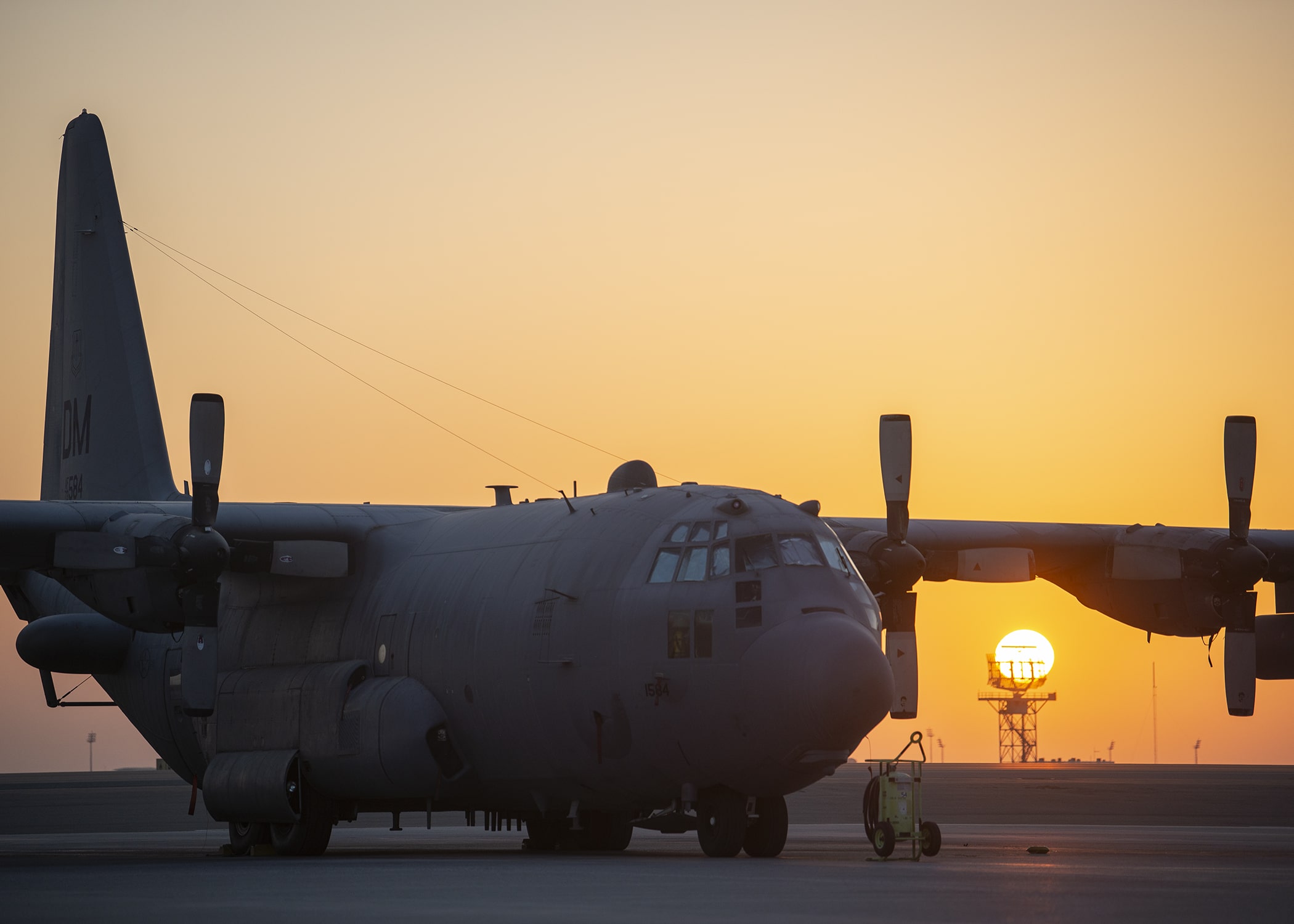
A U.S. Air Force EC-130H Compass Call assigned to the 41st Expeditionary Electronic Combat Squadron sits parked on the ramp at Al Dhafra Air Base, United Arab Emirates, Dec. 2, 2020. (Image Credit: U.S. Air Force photo by Senior Airman Bryan Guthrie) | Source: USAF

The EC-130H flew for the first time in 1981, and the first example was delivered to the USAF on Mar. 12, 1982. The type gained IOC (Initial Operational Capability) in 1983, and was continuously upgraded as advancements were made in the potential threats it could face. All EC-130Hs were operated by the 55th ECG (Electronic Combat Group), which although based in Davis-Monthan AFB, reported to the 55th Wing at Offutt Air Force Base, Nebraska.

It served as one of the core components of the US’s SEAD (Suppression of Enemy Air Defences) triad, alongside the Navy’s EA-18G (which replaced the now retired EA-6B) and the USAF’s Wild Weasels operating the F-16CM.
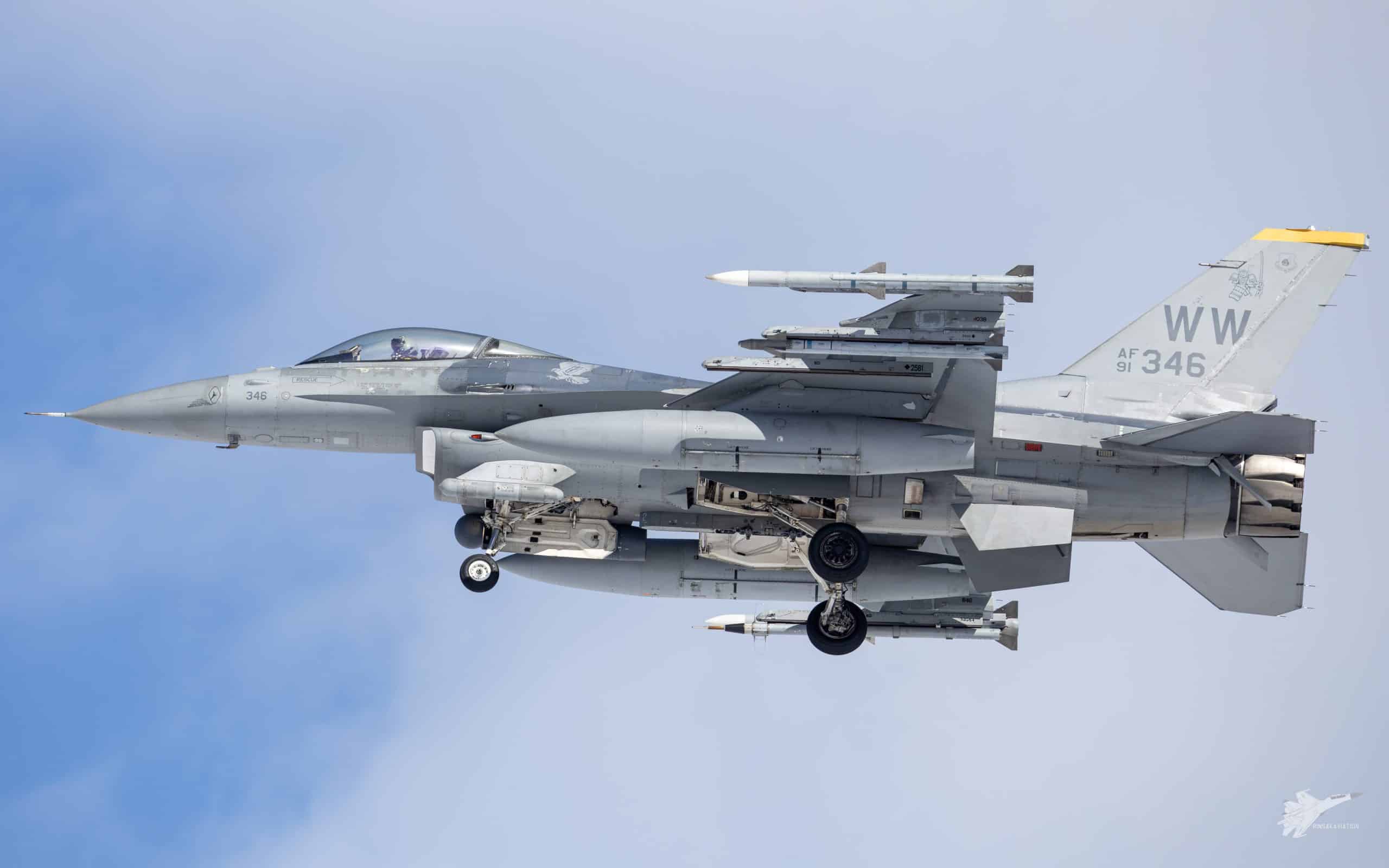
A USAF F-16CM Block 50, which specialises in S/DEAD (Suppression/Destruction of Enemy Air Defences). Note the HTS (HARM Targeting System) pod on the chin mount. (Image credit: Rin Sakurai) | Source: Rin Sakurai

By the mid-2010s, however, the aging airframes of the EC-130H became increasingly difficult to ignore. The airframes themselves were modified C-130Hs, already largely obsolete and replaced by the newer C-130J in US service; meanwhile, the electronic warfare environment had also dramatically changed since the type entered service. Considering this, the type was scheduled for retirement in 2014. The first EC-130H to be modified, 73-01587, flew for the last time on Jan. 15, 2020 after almost 29,000 hours of flight time.

By 2025, DoD (Department of Defence) budget documents noted that the EC-130H aircraft had reached the limits of their programmed depot maintenance lives and were being operated under waivers because of their planned retirement. The final aircraft’s extended waiver was due to expire on September 30, 2026, and keeping the aircraft flying beyond that point would also have required significant additional investment. According to the same document, extending the EC-130H’s service life by up to two years would cost approximately $14 million per aircraft.
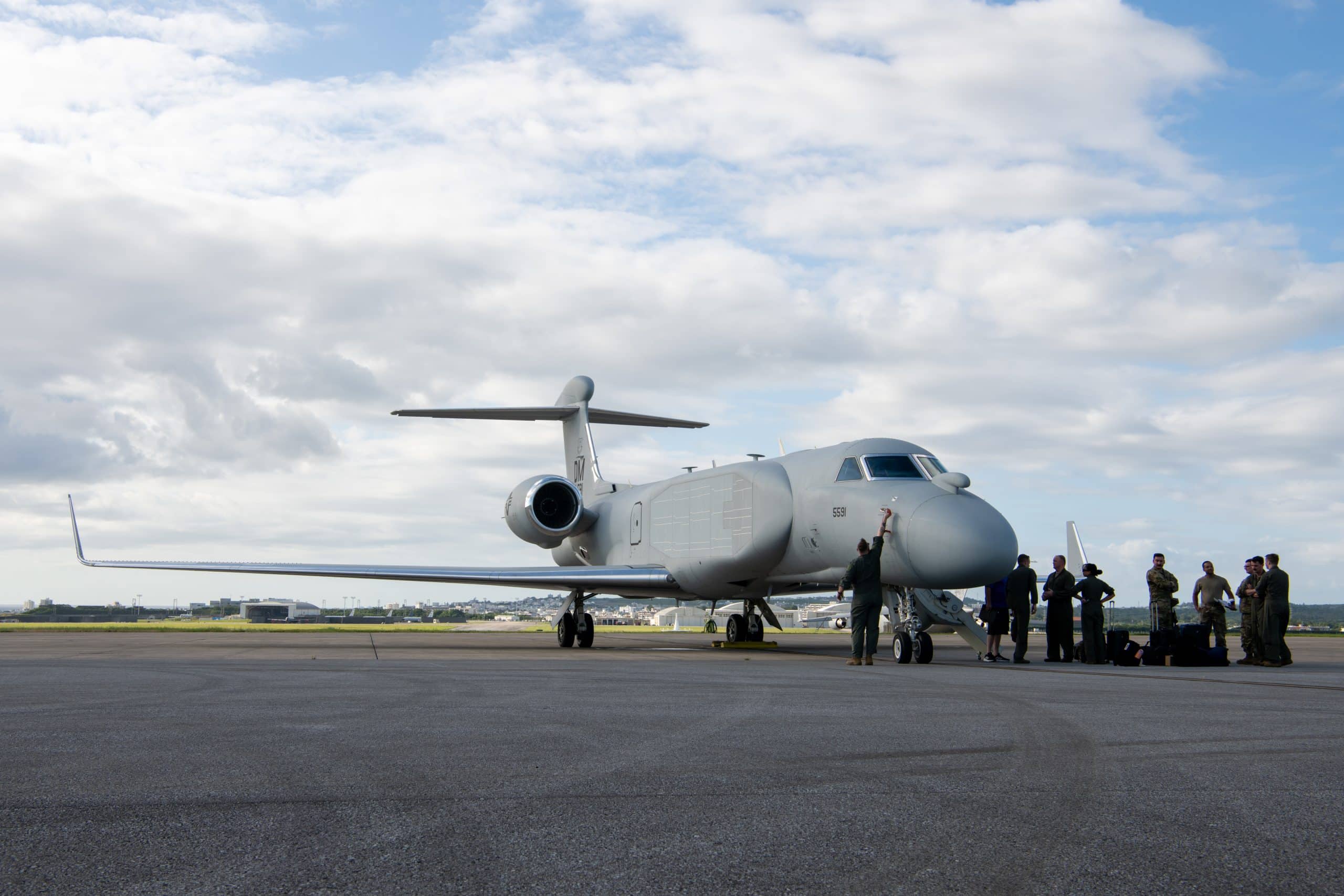
U.S. Air Force aircrew assigned to the 55th Electronic Combat Group, perform post flight checks on an EA-37B Compass Call at Kadena Air Base, Japan, Sept. 27, 2025. (U.S. Air Force photo by Senior Airman Melany Bermudez) | Source: USAF

The replacement aircraft for the EC-130H is the EA-37B Compass Call, also known by its nickname of Banshee, based on Gulfstream’s G550 business jet. The EA-37B is significantly faster and capable of operating at a much higher altitude than the EC-130H, while also offering a much larger range and capability upgrade than that of its predecessor at an almost 50% decrease in operational cost.

The transition has also already taken the new aircraft beyond CONUS (CONtinental United States) and into combat – it was one of the participating aircraft in Operation Epic Fury, the recent conflict between the US and Iran.

A big thank you to Steven Fortson/zaphod58 for providing his images for this article.
Japan’s Massive US-2 Amphibian Teams Up With USAF CV-22B During Rescue Flag 26-1

1 September 2026 at 20:31
US-2

Held on Aug 26, Rescue Flag 26-1 brought together forces from the USAF, USMC, JMSDF, and JASDF for a comprehensive simulated casualty exercise.

A USAF CV-22B Osprey joined a JMSDF (Japan Maritime Self-Defense Force) US-2 amphibious aircraft for the first time during the Rescue Flag series of exercises. The two aircraft, alongside several others operated by the USMC (United States Marine Corps) and JASDF (Japan Air Self-Defense Force), participated in the CSAR exercise at Marine Corps Air Station Iwakuni on Aug. 26, 2026.

Rescue Flag is a bilateral exercise between the US and Japan, and is typically held in the airspace around Iwakuni or Okinawa. As its name implies, the exercise focuses on CSAR (Combat Search and Rescue), and allows participants to “practice open-water recovery methods, communication protocols, and supply distribution techniques under simulated crisis conditions,” according to the USMC.

📍Marine Corps Air Station Iwakuni, Yamaguchi, Japan, Aug. 26, 2026.@USMC, @usairforce, @JASDF_PAO_ENG, @jmsdf_pao_eng held combined-joint training during Rescue Flag 26-1. pic.twitter.com/JDGNw4YsJq

— 1st MAW Marines (@1stMAW_Marines) September 1, 2026

Both the US-2 and the CV-22B that participated in RF 26-1 are Japan-based aircraft: the US-2 is assigned to Air Rescue Squadron 71, Fleet Air Wing 31 at Iwakuni, while the CV-22B is assigned to the 21st Special Operations Squadron under the 353rd Special Operations Wing based at Yokota Air Base, Tokyo. The USAF’s CV-22Bs all belong under AFSOC (Air Force Special Operations Command), which provides specialized airpower capabilities for special operations, personnel recovery, mobility, and other missions.

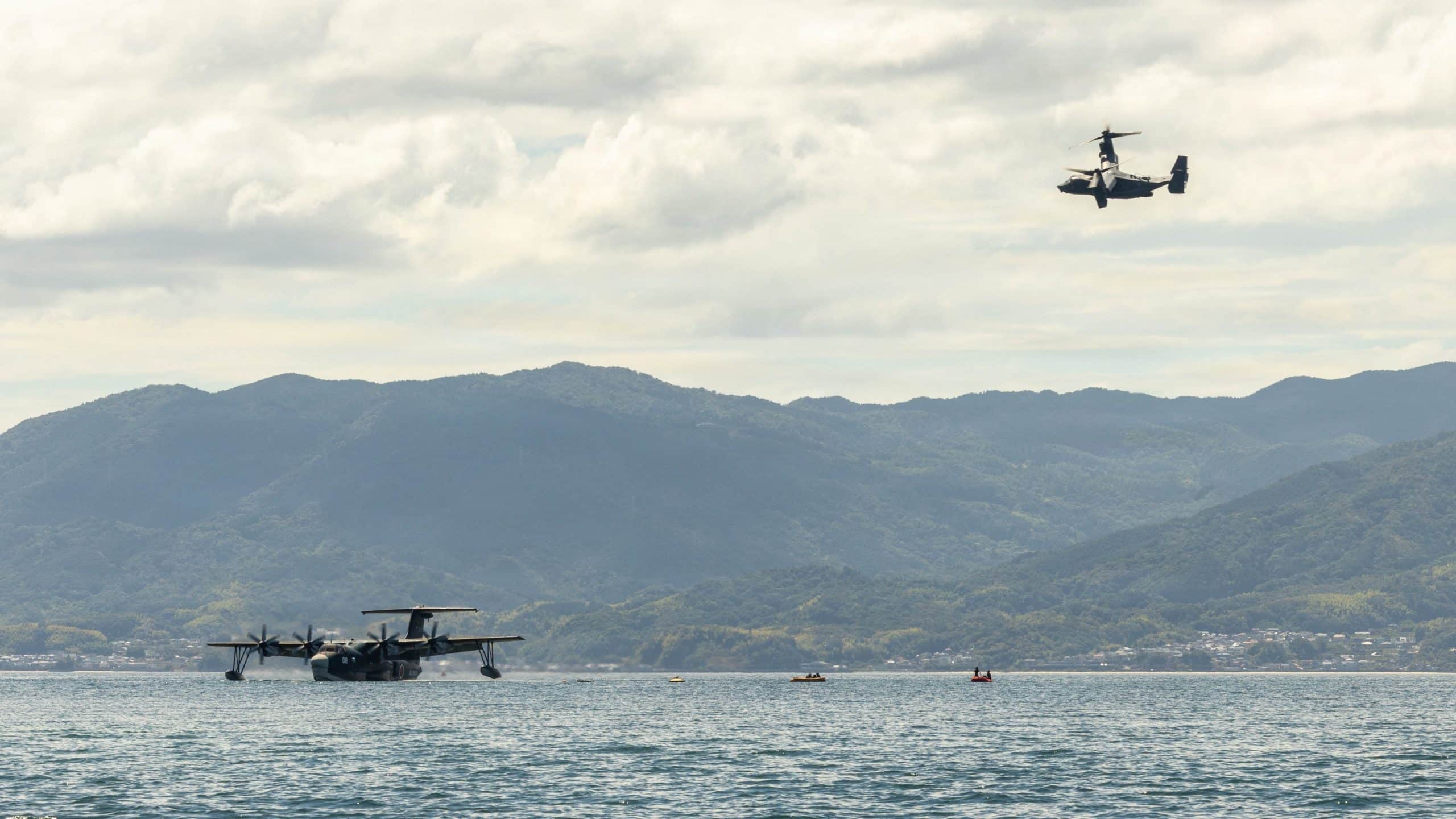
A JMSDF US-2 and USAF CV-22B pictured conducting a simulated casualty rescue exercise during Rescue-Flag 26-1 (Image Credit: U.S. Marine Corps photos by Lance Cpl. David Getz) | Source: USMC

Imagery published on DVIDS shows the aircraft participating in a simulated casualty-rescue scenario, in which US personnel from VMGR-152 were ‘rescued’ from the sea, recovered from rafts, and provided with first aid on board the US-2. The CV-22B, alongside a UH-60J(II) from the JASDF’s Air Rescue Wing Nyutabaru, is also shown hoisting simulated casualties during the exercise.

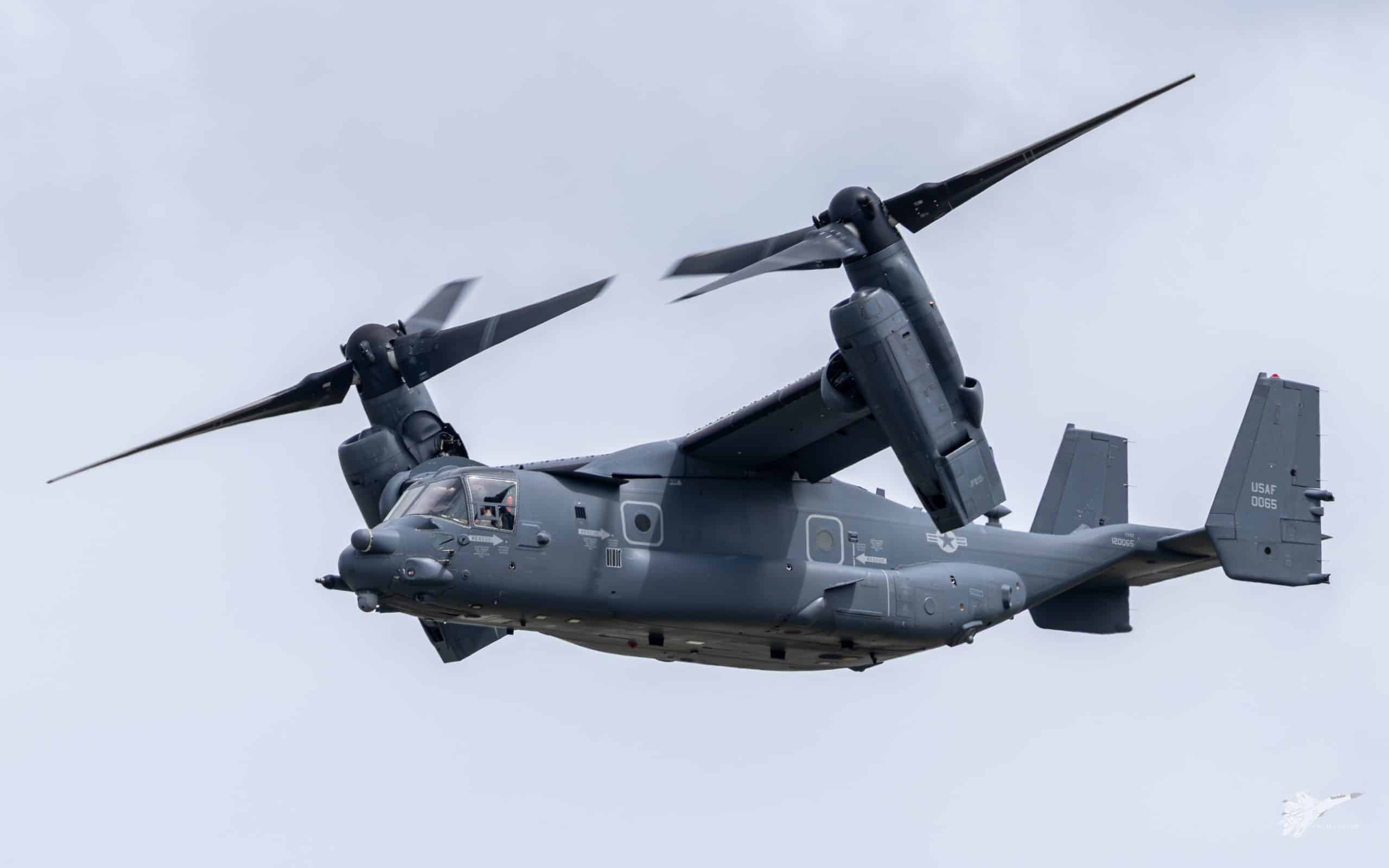
CV-22B 12-0065 – the airframe seen in the photos published by the USMC – at its home airfield of Yokota Air Base, Japan. (Image credit: Rin Sakurai) | Source: Rin Sakurai

Notably, USMC Col. William B. Millett III, the commanding officer of MAG-12 (Marine Aircraft Group 12), was onboard the US-2 during the exercise, providing a direct opportunity for a senior USMC aviation commander to observe the aircraft’s amphibious rescue capabilities firsthand.

While this marks the first time a USAF CV-22B has participated in the Rescue Flag series, it is not the first time the two aircraft types have operated together. Notably, they both participated in the 2023 edition of Cope Angel – another bilateral CSAR exercise between the two nations – which was held between February and March of that year.

Past iterations of Rescue Flag saw participation from other assets from the various services, including HH-60G/Ws, MC-130Js, F-35Bs, MV-22Bs, AH-1Zs, CH-53Es, and U-125As.

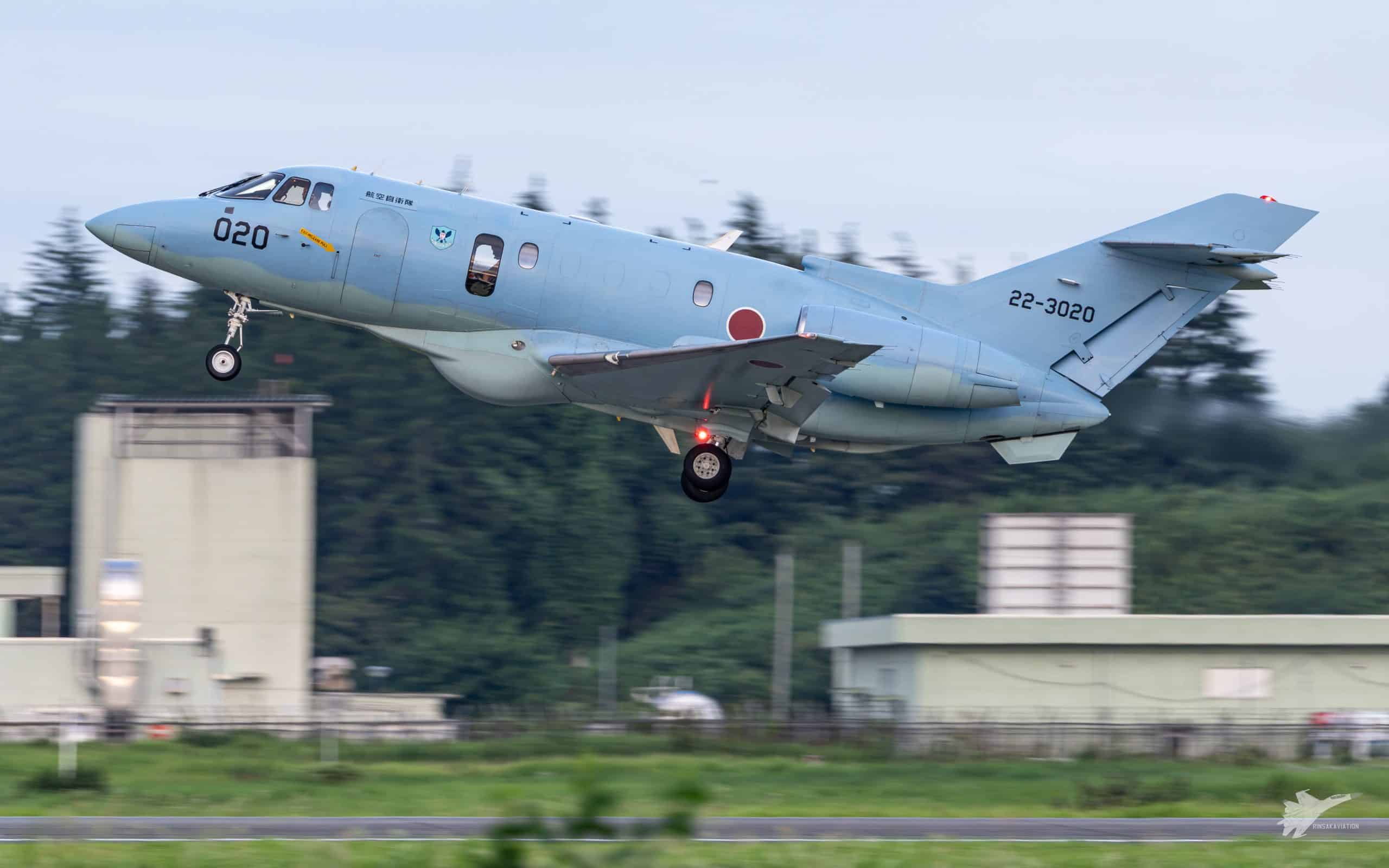
A JASDF U-125A search-and-rescue aircraft taking off. The prominent fairing on the aircraft’s lower fuselage accommodates additional mission equipment associated with its search-and-rescue role. (Image credit: Rin Sakurai) | Source: Rin Sakurai

The Amphibious Capabilities of the US and Japanese Forces

Japan already operates a dedicated amphibious aircraft in the form of the ShinMaywa US-2, giving the JMSDF a capability that is particularly well suited to the country’s vast maritime operating environment. The aircraft, which can operate from both conventional runways and the open water, is employed mainly in the CSAR role while serving a secondary purpose as a transport aircraft. The aircraft – initially designated the US-1A Kai (改, meaning ‘improved’ or ‘revised’), was a development of the US-1 – and its incredible low-speed handling – helped, in part, by its boundary-layer control system – allows it to conduct the sea-borne CSAR mission incredibly effectively.

Seaplanes also provide an additional layer of safety in an active combat environment: their lack of dependence on a land-based airfield means that it is able to operate somewhat effectively even if its home base is destroyed by enemy action, giving mission planners more flexibility. Indeed, U.S. Forces have also actively pursued innovative airborne capabilities like the MAC (MC-130J Amphibious Capability) – whose development was paused in 2024 due to budgetary constraints – in an effort to make ‘runway independence’ and operations from austere environments more feasible in the form of an amphibious aircraft.

The US interest in such ideas inevitably led them to closer contact with the JMSDF, who are one of the most experienced operators of amphibious aircraft, even on a global scale. In 2022, it was reported that the deputy commander of AFSOC visited JMSDF US-2 crews and observed the aircraft’s ability to operate from both land and water, and described the Japanese platform as an example from which the U.S. could learn while exploring its own amphibious options. Thus, the repeated use of the US-2 in bilateral training provides the U.S. with an opportunity to work alongside an established amphibious capability while developing its own concepts for operating beyond conventional runways.

Although there are currently no amphibious aircraft in service with any branch of the US armed forces, such a capability could prove to be highly valuable in future conflicts in the Pacific, particularly in a conflict against the PLA, where land-based airfields could come under significant attack in the opening stages of hostilities. China itself is also moving forward with its own amphibious capabilities through the development of the AG600, a four-engine amphibious aircraft that is largely similar in shape to the US-2, highlighting the continued interest in large amphibious aircraft in the region.

AG-600と似たアングルから撮ったUS-2の画像と比較してみた。 pic.twitter.com/w9D8y5AoDr

— ふにに (@hunini181202) February 10, 2022

U.S. Navy Reveals AIM-424 “Malice” Long-Range Air-to-Air Missile

23 August 2026 at 11:44
AIM-424

The U.S. Navy has publicly revealed a previously little-known next-generation air-to-air missile: the AIM-424 LRAAM (Long-Range Air-to-Air Missile), officially named “Malice.”

The new missile was announced at the Tailhook Symposium held in Reno, Nevada on Aug. 22, 2026, and was first reported by The Aviation Week. The weapon then appeared on the Navy’s official Fact Files website on the same day, providing the first official glimpse of the missile intended to give U.S. Navy and  U.S. Marine Corps (USMC) aviators an increase in their air-to-air engagement ranges.

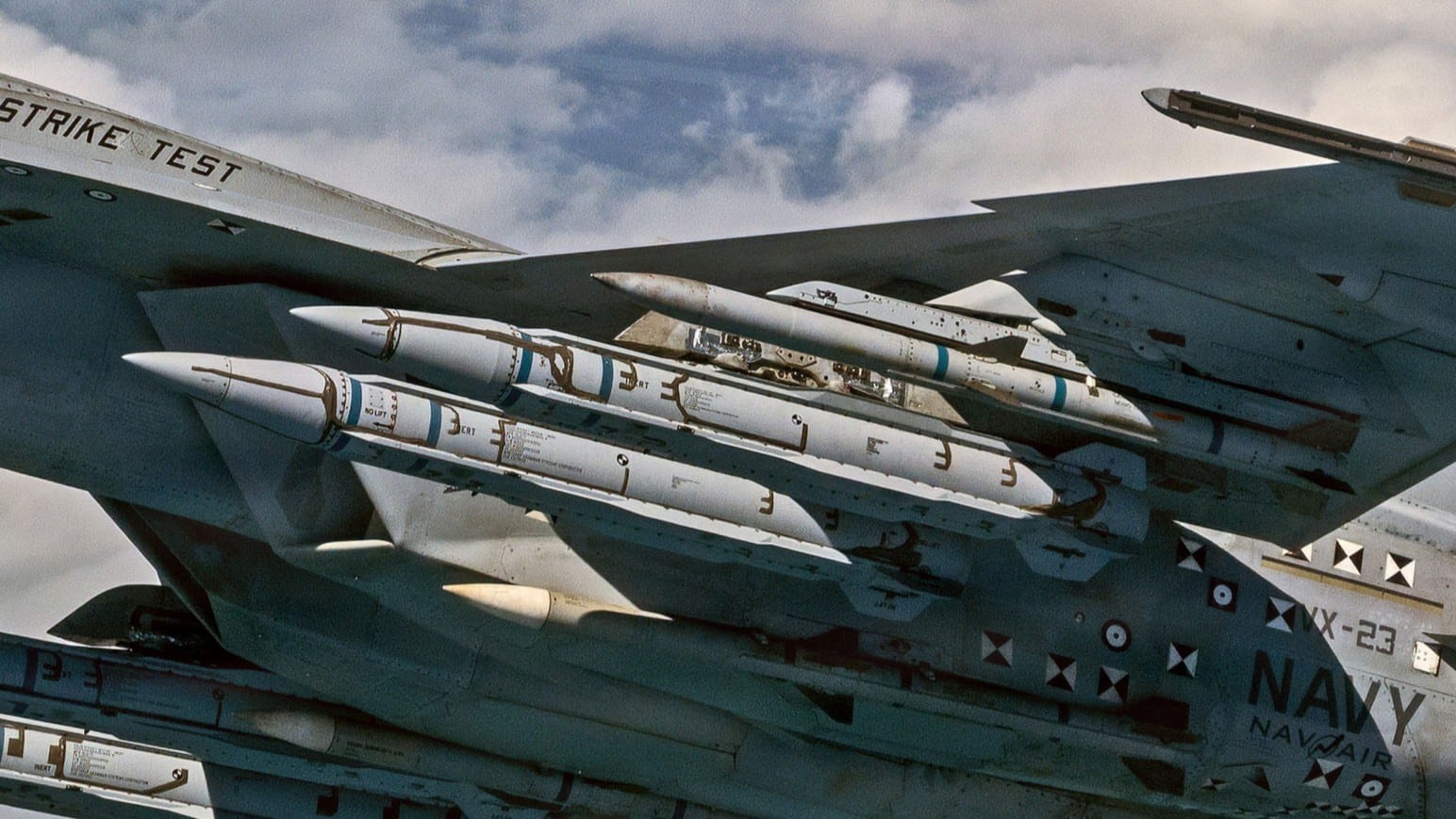
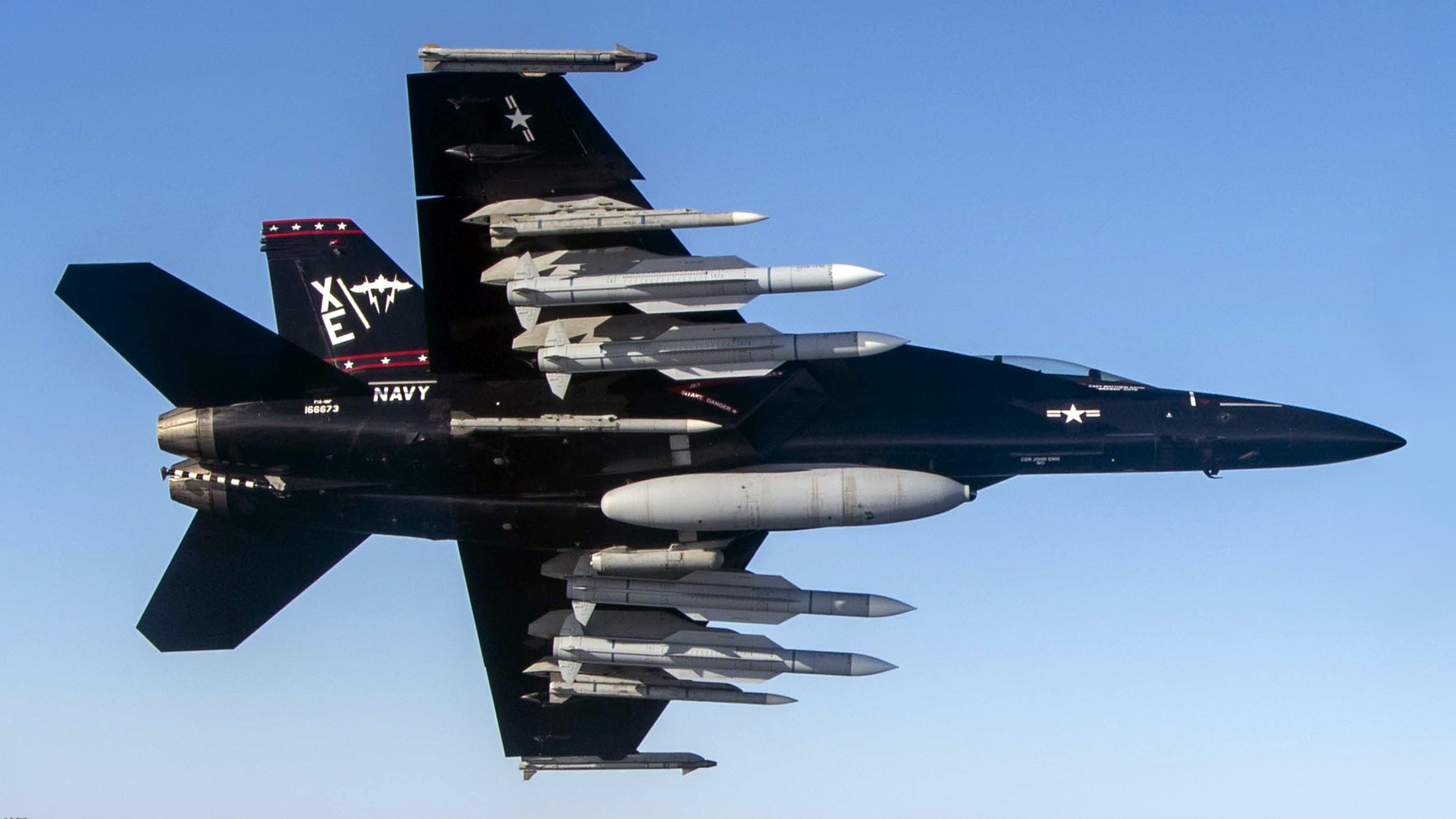
Photos of F/A-18Es and F-35Cs belonging to Air Test and Evaluation Squadron 23 (VX-23) carrying the new munition appeared on DVIDS (Digital Visual Information System) that same day. Of the two images, the one featuring a Strike Test F/A-18E in flight, which shows the jet carrying four CATM-424s (Captive Air Training Missile, identifiable by the blue lines on the missile’s fuselage) on Stations 3, 4, 8, and 9, and four CATM-120s on Stations 2, 5, 7 and 10, was taken in Apr. 2026.

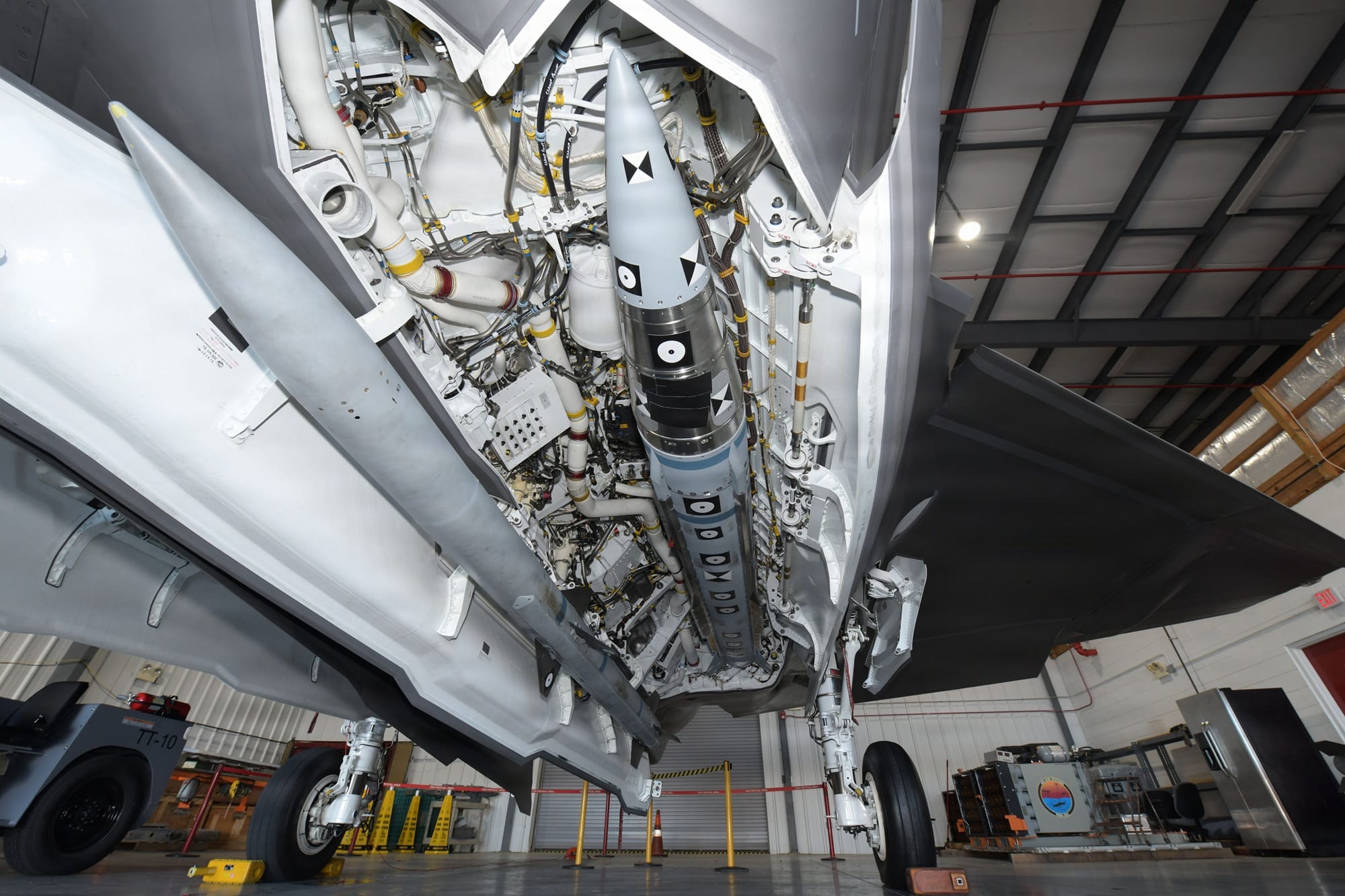
The other, which shows the missile in the weapons bay of the F-35C Lightning II along with an AMRAAM (Advanced Medium Range Air-to-Air Missile) mounted on the bay door, was taken earlier this month.

A close-up of the CATM-424s installed on the F/A-18E. | Source: U.S. Navy

The Navy’s Long-Range Air-to-Air Missiles

According to the Navy, the LRAAM is being developed “to strengthen fleet defense and maintain a decisive air domain overmatch against advanced threats”. The missile, which is developed by Raytheon, is expected to arm the Navy’s F/A-18E/F Super Hornets, F-35C Lightning II, and future F/A-XX once operational.

The AIM-424 is the latest in a string of new air-to-air missiles developed by the US Navy, including the AIM-174B Gunslinger, which was first seen operationally in Jul. 2024, and the AIM-260 JATM (Joint Advanced Tactical Missile), which was captured in flight for the first time in May. 2026.

AIM-174
A U.S. Navy F/A-18F assigned to Air Test and Evaluation Squadron (VX) 9, flies over the Point Mugu Sea Range in Southern California during Gray Flag 2024 on Sept. 24, 2024. | Source: U.S. Navy photo by Lt. Cmdr. Kory Hughs edited by The Aviationist

The Malice is slightly shorter than the Gunslinger, with the officially acknowledged length of 13.5 feet (or 4.11 meters) compared to the Gunslinger’s 16.5 feet (or 5.03 meters) according to the Navy’s Fact Files. The two missiles share a diameter of 13.5 inches (or 0.34 meters), but the AIM-174B’s wingspan is much larger at 42.7 inches (1.08 meters) to the AIM-424’s 26.2 inches (0.67 meters), due to the large ‘dorsal fins’ on the former.

The Gunslinger’s large wingspan puts forward a significant issue in terms of operational capability; it is confirmed to be capable of being carried and launched only by the F/A-18E/F, and is unable to be carried internally by the Navy’s stealthier F-35C. The Malice, on the other hand, is already confirmed to be able to fit within the jet’s internal weapons bays.

An AIM-424 Long Range Air-to-Air Missile (LRAAM) is mounted in the internal weapons bay of an F-35C with an AIM-120 Advanced Medium Range Air-to-Air Missile (AMRAAM) mounted on the weapon bay door. | Source: U.S. Navy

Nonetheless, both missiles have a significant acknowledged range; the Navy’s Fact Files lists the AIM-424’s range as “in excess of 250 nautical miles” or 463 km, and the AIM-174B is also expected to have an operational range of over 200 nautical miles. The Aviation Week reports that the new munition is a two-stage missile – and the missile seems to feature an inlet for a solid-fuel dual-mode ramjet – which implies the munition is capable of flying at very high speeds across a very large distance.

It is currently unclear whether the Malice will replace the Gunslinger entirely, or serve alongside it for the foreseeable future. The Navy has never confirmed whether the AIM-174 represented an interim capability until the deployment of a new, more advanced weapon.

It is also unclear whether the U.S. Air Force (USAF) will also induct the new missile into service, as it has done with several munitions developed by the Navy in the past – including the AIM-9 Sidewinder, AIM-7 Sparrow, AGM-84 Harpoon, and AGM-88 HARM. It is important to note that the USAF is also actively looking to design and field a VLRAAM (Very Long Range Air-to-Air Missile) for themselves.

The long-range nature of these missiles in part helps to counter the increasingly longer-range air-to-air missiles fielded by potential adversaries – including Russia’s R-37M, which has seen extensive use in the invasion of Ukraine, the PLA’s (People’s Liberation Army) PL-15, made infamous in the May 2025 skirmish between Pakistan and India, and the more secretive PL-16 and PL-17. However, the AIM-424 provides the U.S. Navy the ability to employ such a long-range missile from the internal weapons bays of a stealth fighter, something the PLA is yet to achieve – at least publicly.

Although the capabilities of the large missiles aren’t clear when it comes to engaging hostile fighters over long distances, they will certainly be effective in targeting high-value targets including the likes of AEW&C (Airborne Early Warning and Control), EW (Electronic Warfare), and ISR (Intelligence, Surveillance, and Reconnaissance) aircraft in the early phases of a potential conflict.

Japan Begins Captive-Carry Flight Tests Of Air-Launched Type 25 Anti-Ship Missile

30 July 2026 at 14:19

Photographs from Gifu Air Base show F-2B prototype 63-8101 carrying the new Air-Launched Type 25 anti-ship missile during the programme’s first publicly observed captive-carry flight tests.

Japan has taken another step towards fielding its series of next-generation indigenous stand-off weapons, with the first captive-carry flight tests of the air-launched variant of the Type 25 Surface-to-Ship Missile (SSM) completed on Jul. 30, 2026. The designation for the air-launched missile is yet to be announced, so it is referred to as the air-launched variant of the Type 25 SSM within this article. Possibilities include ASM-4.

12式地対艦ミサイル能力向上型?
何かステルスっぽくてカッコいい😁 pic.twitter.com/yU1pU65ote

— nc39 306 J50 Z naruP (@306Z33) July 30, 2026

The first flight trial for the weapon was conducted by the Mitsubishi F-2B prototype 68-8101, one of the four F-2 prototypes assigned to the Japan Air Self Defence Force’s (JASDF) Air Development and Test Wing (ADTW). 68-8101 was ‘chased’ by 63-8501, the first F-2A prototype, for the flight. The unique liveries on these F-2s help towards the split-second identification of the orientation of the aircraft, something that is critical for the flight test duties of the ADTW.

2026/7/30 岐阜基地
2nd
F-2B(101)
+12式地対艦誘導弾能力向上型(空発型)
随伴機
F-2A(501)
テスター初号機コンビ
ありがてぇ#岐阜基地 pic.twitter.com/Wo7ANoSZKS

— Naoki_O (@naoki_o_0557) July 30, 2026

Photographs taken on the afternoon of Jul. 30, 2026, show the aircraft carrying what appear to be two inert Type 25 missile test articles on the inboard wing pylons of stations 4 and 10, marking the first publicly observed captive-carry flights of the new munition. The aircraft was not carrying any other weapons or fuel tanks on any of the other stations.

カッチョイイ形してる!!😁 pic.twitter.com/ER200LxZlh

— nc39 306 J50 Z naruP (@306Z33) July 30, 2026

Captive-carry tests represent one of the earliest phases of an air-launched missile’s flight test campaign, and involve assessments of the aerodynamic characteristics and structural loads of the munition and the launch aircraft. Once it is verified that the missile can be safely carried throughout the F-2’s operational flight envelope, separation trials and live-firing trials are expected to commence.

7/30 岐阜基地 RJNG 2nd

岐阜基地「夏の夕べ」で飲んで帰るだけのつもりでしたが、ラッキーでした🍻 pic.twitter.com/0N5IfXBXXH

— ih168 (@ih1681) July 30, 2026

The test campaign of the new ASM is being conducted alongside that of the ASM-3 Kai, which has also been in development as a replacement for the ASM-2 currently fielded by the operational F-2s of the JASDF. Interestingly, the ASM-3 has always been carried on stations 3 and 11 on the test flights with the ADTW.

Since the F-2 has historically carried the ASM-2 on stations 2, 4, 10 and 11, this raises the possibility of a mixed-loadout with an F-2 carrying 2 ASM-3s on its mid-wing pylons and 2 more air-launched Type 25s on its inboard wing pylons.

2025.07.31
岐阜基地 RJNG

鬼対艦
F-2A 523
ASM-3

VS

対艦番長
F-2B 105
ASM-2×4
AAM-3×2

あなたはどっちがお好き? pic.twitter.com/KIZQO5ciIw

— ボボ・AKEBOVO (@AKEBOVO) July 31, 2025

Type 25 SSM and its variants

The air-launched variant of the Type 25 is one of the major components of Japan’s effort to expand its long-range strike capabilities. The standoff weapon’s lineage can be traced to the upgraded Type 12 SSM (12式地対艦誘導弾能力向上型, translated literally as Type 12 Surface-to-Ship Guided Munition Upgraded Capability Version) programme, which has since been redesignated to the Type 25 SSM (25式地対艦誘導弾, translated literally as Type 25 Surface-to-Ship Guided Munition).

The upgraded Type 12 SSM bears little to no resemblance to the original Type 12 SSM, which is largely based on the air-launched ASM-2 currently in service with the JASDF.

A closeup of the air-launched upgraded Type 25 SSM on the left wing of the F-2B prototype on takeoff. | Source: ボボ・AKEBOVO on X

The upgraded Type 12 SSM was from the onset a multi-platform munition, with launches from land-, sea-, and air-based systems being part of the design requirements. Although the air-launched variant took to the skies for the first time today, the Japan Ground Self-Defense Forces’ surface-launched Type 25 has already completed major tests and is currently entering operational service.

While the land- and sea-launched variants have a booster (which the air-launched variant lacks), the inherent nature of an airborne launch means that the air-launched variant is expected to give a significantly increased maritime strike reach compared to the other two.

Ground-based testing of the Type 25. | Source: Japan MoD

Although the Japanese Ministry of Defense has released relatively few details regarding the airborne variant, budget documents have confirmed that its development has been underway simultaneously with its ground- and ship-launched versions. Externally, the missile retains the family’s low-observable airframe and fins, while internally the GPS/INS navigation, terrain-referenced guidance and network-enabled targeting capabilities are expected to be found in common with its other variants.

Thanks to @AKEBOVO for allowing us to use the photos, you can find out more of their work on X.

End of an Era: JASDF Dismantles C-1 Prototype 002

28 July 2026 at 18:48
JASDF dismantled C-1 prototype

The JASDF dismantled the C-1 transport aircraft’s second prototype and last flying airframe, still adorned in a commemorative Phoenix livery, at Iruma Air Base.

The Japan Air Self-Defense Force (JASDF) dismantled the C-1 prototype 28-1002 at Iruma Air Base, bringing an end to one of the most historically significant aircraft in Japan’s post-war aerospace industry.

Dismantling of the last flying C-1 aircraft

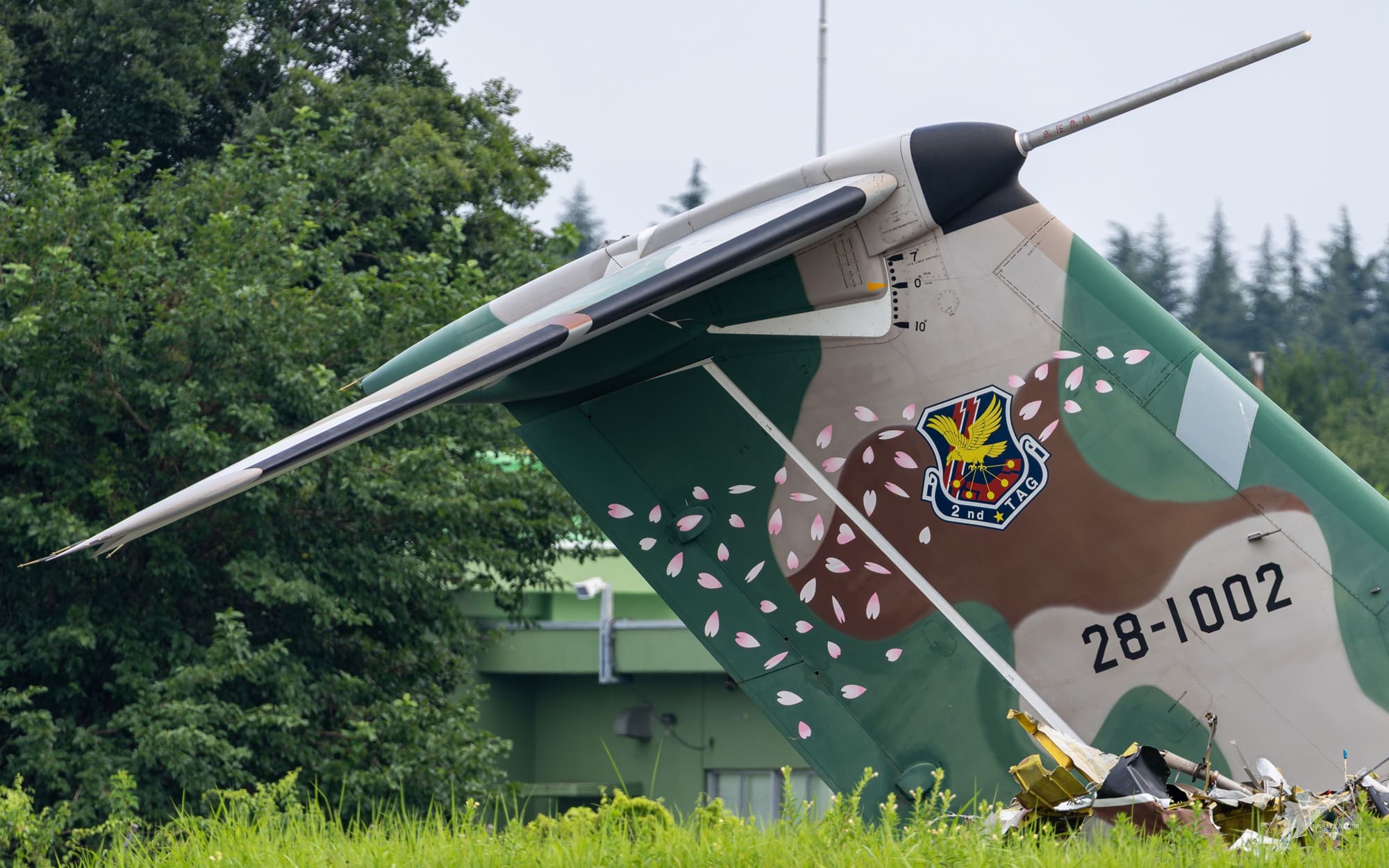
The aircraft, which wore a distinctive “Phoenix” livery during its final months of service, was seen being moved to the base’s dismantling area on the evening of Jul. 25, 2026, after over 16 months of storage within the base’s hangars. Demolition work began two days later, on the morning of Jul. 27.

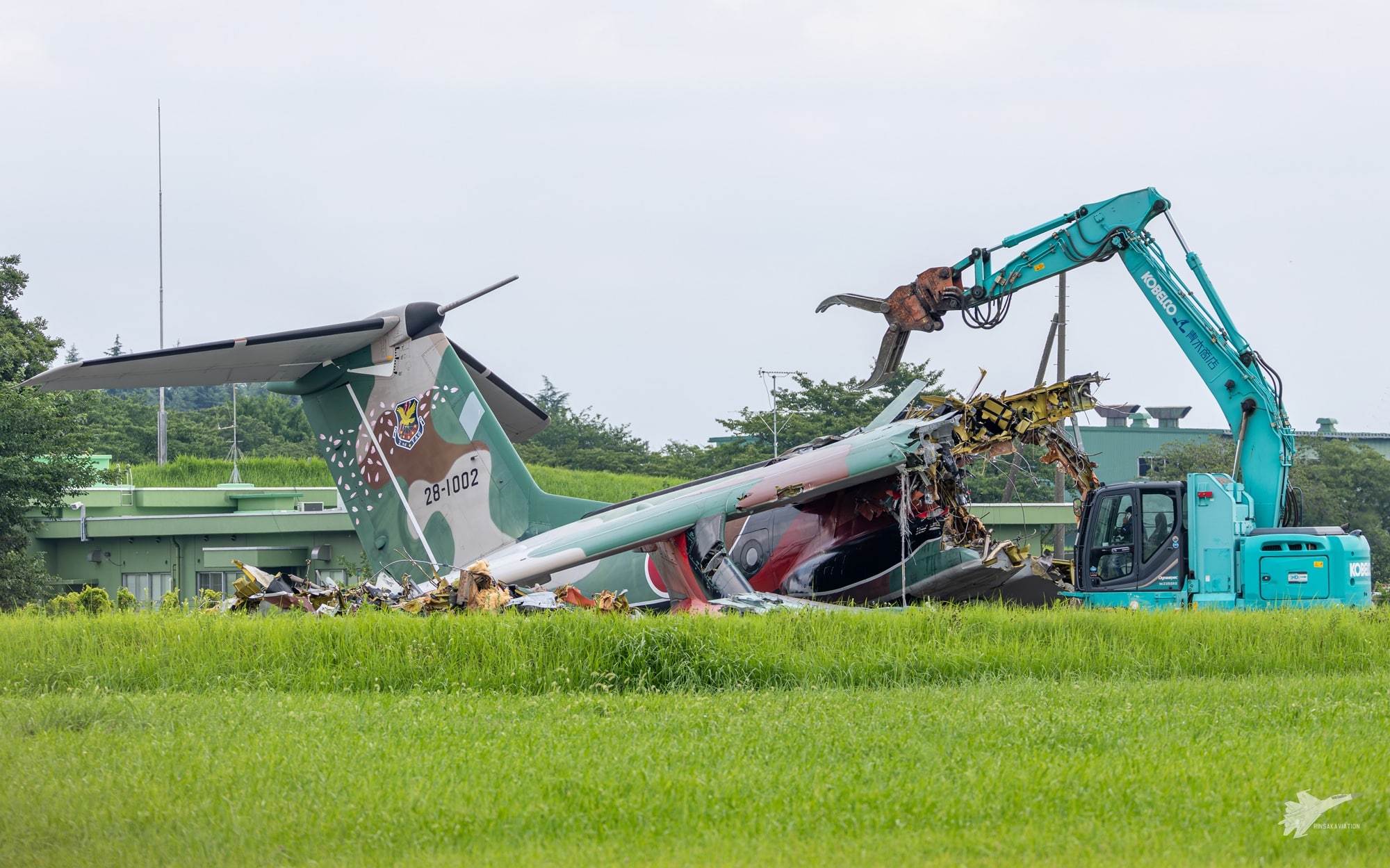
The aft-section of C-1 28-1002 around 13:25 on Jul. 27, 2026. Internal elements like fuel pipes and hydraulic cables are clearly visible, alongside yellow primer. | Source: Rin Sakurai

Around 10 A.M., a blue-green hydraulic excavator began to tear into the retired transport, beginning with its left wing before moving onto the cockpit. Interestingly, the dismantling process began without the prior removal of the airplane’s engines – something that is usually done before an aircraft’s demolition following its retirement from the JASDF.

The excavator progressively removed the forward fuselage of the aircraft, before moving onto the left wing and aft fuselage. By the end of the day, much of the aircraft had already been reduced to scrap, leaving just the tail to be scrapped on Jul. 28 – marking an end to the aircraft that had served the JASDF for more than 50 years.

The tail of C-1 28-1002 at the dismantling area of Iruma Air Base in the late afternoon of Jul. 27. The tail was destroyed the next day. | Source: Rin Sakurai

C-1 28-1002

Although it saw the same final fate as most of the other C-1s, 28-1002 was one of the most unique C-1 airframes to ever exist. The aircraft flew for the first time on Jan. 16, 1971, as the second Kawasaki XC-1 prototype 18-1002, before being formally delivered to the JASDF on Mar. 20 of the same year.

During its time at the JASDF’s Air Development and Test Wing (ADTW), the airframe was redesignated 28-1002 and worked alongside prototype 001 in certifying Japan’s first indigenously developed post-war transport aircraft. Although 002 spent most of her life with the ADTW at Gifu Air Base, she was transferred to the 402nd Tactical Airlift Squadron at Iruma at the beginning of Fiscal Year (FY) 2012, where she entered frontline transport service.

XC-1 002 👋 pic.twitter.com/aRvtL8ChPy

— nc39 306 J50 Z naruP (@306Z33) July 28, 2026

In January 2025, three months before the end of FY 2024 and the projected retirement of the C-1, the JASDF unveiled an elaborate Phoenix livery for 002 that made the aircraft the public face of the C-1’s farewell. On the afternoon of Mar. 14, 2025, 002 performed the final flight by an operational transport-configured C-1 – departing Iruma almost simultaneously with the final flight of the C-1 Flying Test Bed (FTB) 001 from Gifu Air Base.

The previous day had also seen the retirement of the only EC-1, bringing the operational careers of all C-1 variants to a close within the span of just two days. Interestingly, although the final two C-1s conducted their last flights on Mar. 14 – well within the Japanese FY 2024, which lasted from April 2024 to March 2025 – the Ministry of Defense’s 2025 Defense White Paper still recorded two C-1 aircraft in inventory for FY2025.

This is thought to reflect administrative procedures rather than continued operations, particularly as both 001 and 002 were stored in flyable condition in the hangars at their respective bases until the conclusion of FY 2025. Some reports indicate that this was done so that the C-1s could be returned to service if operational requirements could not immediately be met by their replacement, the Kawasaki C-2.

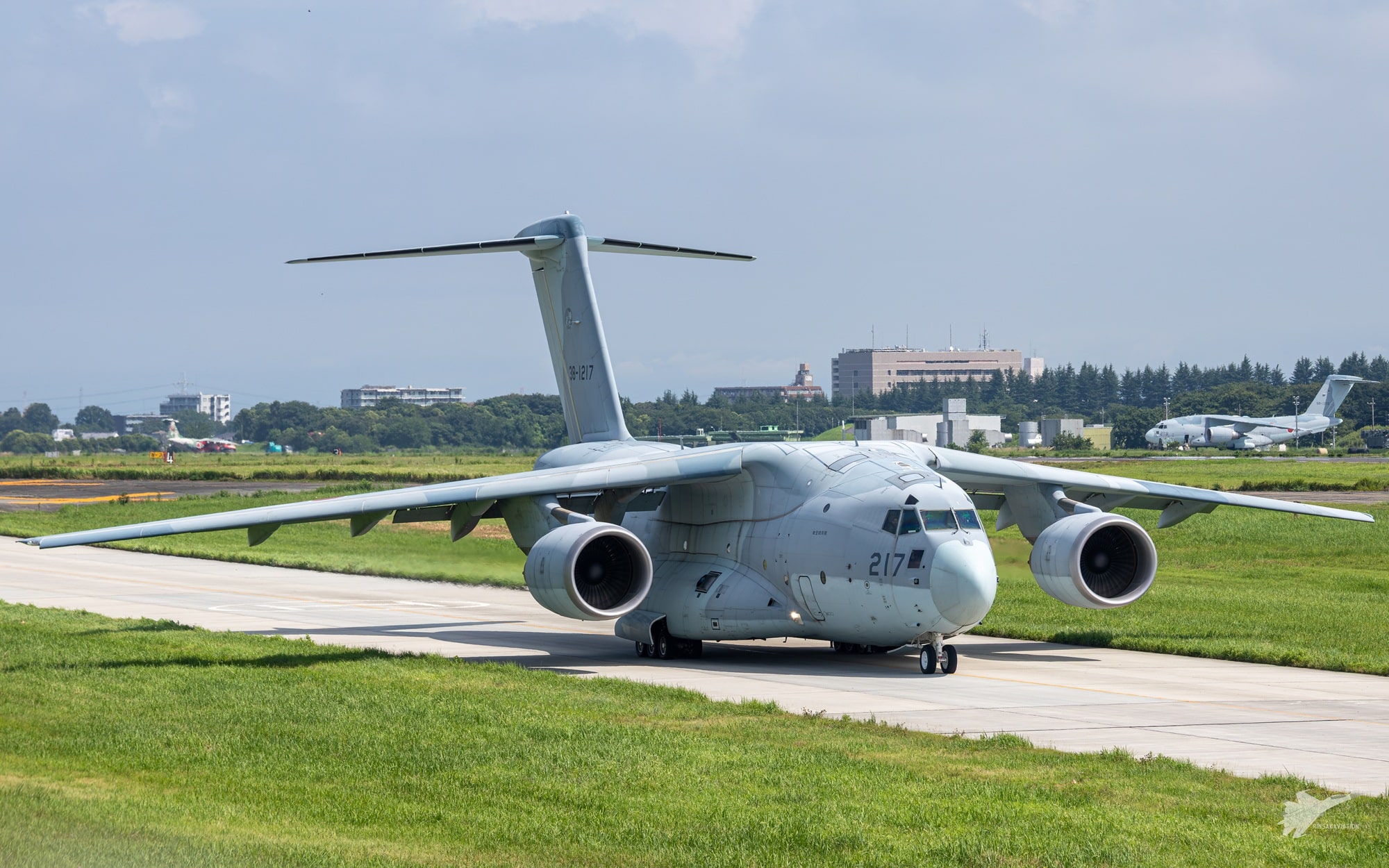
A C-2 at Iruma on the morning of Jul. 27 before the C-1’s dismantling process began. The C-1 28-1002 is visible in the background, alongside another C-2. | Source: Rin Sakurai

C-1s on Display

Due to budgetary constraints, both 28-1001 and 28-1002 – the two prototypes of the C-1 program – were ultimately scrapped rather than being preserved for museum display, despite hopes among many aviation enthusiasts that they would be retained. The EC-1, the other special variant of the C-1 besides the XC-1s, still remains at Iruma but is expected to be dismantled in the near future in a similar fashion to 28-1002.

私の悲願だった銀ちゃんの保存は叶わなかったけど、部品だけでも残せてよかった・・・ pic.twitter.com/50pqK2a5ka

— 林信宏 (@rinkun360408) July 21, 2026

Only a small number of C-1s have been preserved in complete form. Currently, the only aircraft officially displayed is 38-1003, which is exhibited in the outdoor display area at Miho Air Base, one of the type’s principal operating bases during its service career. While 28-1001, the C-1FTB and the program’s first prototype, was dismantled in March 2026, some parts were removed beforehand and its port-side paratrooper door is now displayed at the Gifu Kakamigahara Aerospace Museum, located adjacent to Gifu Air Base.

Another surviving aircraft, 08-1030, is currently positioned on the apron outside Hamamatsu Air Park. Although it has not yet been formally accessioned into the museum’s collection, it is parked immediately outside the museum’s main exhibition hall and is clearly visible to visitors through its large windows. It is widely expected to become part of the museum’s permanent display in the near future.

Kawasaki C-1 08-1030
航空自衛隊浜松広報館 エアパーク
2025/12/27 pic.twitter.com/vMGyd6cFQP

— HOKU (@Syuusui3432) December 28, 2025

Furthermore, the Gifu Kakamigahara Aerospace Museum also houses the Asuka Quiet Short Take Off and Landing (QSTOL) test airframe, which was based upon the C-1. Although not technically considered a C-1 or a modified version thereof – the aircraft had a separate developmental budget from the 31 C-1s – its family lineage can easily be identified.

The Asuka QSTOL aircraft displayed at the Gifu Kakamigahara Aerospace Museum. The C-1 lineage is certainly noticeable. | Source: Rin Sakurai

China’s New Medium Airlifter Has Flown for the First Time

16 December 2025 at 14:13
China Y-30 First FlightChina’s new turboprop-powered medium airlifter built by Xi’an Aircraft Corporation, dubbed Y-30, has flown for the first time. A long-rumored medium-class airlifter was seen flying for the first time at the XAC airfield (Xi’an Aircraft Corporation) in the city of Xi’an in Central China. Low-quality images that have started to circulate online show an aircraft […]

Chitose Set To Be Japan’s Next F-35A Base

12 December 2025 at 16:58
JASDF F-35 Squadron ChitoseThe Japanese Ministry of Defense announced plans for a squadron at Chitose Air Base to transition from the F-15J to the F-35A. The Japanese Ministry of Defense (MoD) has announced plans for a squadron at Chitose Air Base, in Hokkaido, to transition to the F-35A Lightning II 5th generation fighter. Three squadrons of the new […]

China Shows GJ-11 UCAV Flying with J-20 in First Public Clip

11 November 2025 at 16:18
An operational GJ-11 was shown for the first time flying with a J-20 and J-16D for the PLAAF’s 76th-anniversary. An operational GJ-11 was shown for the first time in the PLAAF’s (People’s Liberation Army Air Force) 76th-anniversary microfilm titled “Far-Reaching Dreams”, in which it was seen collaborating with a J-20 and J-16D. The GJ-11 UCAV […]

Russia Shows Off Su-57’s Internal Weapons Bays for the First Time

11 November 2025 at 14:33
Su-57 Internal Weapons BaysIn a recently released video, the United Aircraft Corporation showed off T-50-9 carrying weapons in its internal bays during rehearsals for Dubai Airshow. Russia’s UAC (United Aircraft Corporation) has released new images of the T-50-9 – the eighth prototype of the Su-57 stealth fighter – showing the aircraft in flight with its weapons bays open. […]

China Commissions the Fujian, Bringing CATOBAR Capability to PLAN Fleet

7 November 2025 at 14:01
China Commissions the FujianChina commissioned its third aircraft carrier, the Type 003 Fujian (CV-18), during a ceremony on Nov. 5, 2025, marking a major milestone in the PLAN’s carrier aviation development. China officially announced the commissioning of the Type 003 Fujian aircraft carrier on Nov. 7, 2025. The event, which took place on Nov. 5, was attended by […]

Japan Starts F-35B Training Flights

4 November 2025 at 13:51
As deliveries continue, the JASDF has now started training operations with the F-35B Lightning II at Nyutabaru Air Base. The JASDF (Japan Air-Self Defense Force) officially began its training operations with the F-35B Lightning II at Nyutabaru Air Base on Nov. 4, 2025, marking a significant milestone in Tokyo’s move towards a more modern Self-Defense […]

New Chinese Advanced Jet Trainer Flies for the First Time

30 October 2025 at 15:29
JL-XX First FlightChina’s next-generation trainer, built by HAIG, finally emerged and performed its maiden flight. After much anticipation, China’s next-generation trainer and light combat aircraft conducted its maiden flight on Oct. 28, 2025. The aircraft was photographed both on the ground and in the air, still wearing a yellow primer coating and carrying no visible serials. The […]

Second Prototype of China’s J-36 Uncovered with Notable Structural Changes

28 October 2025 at 13:05
Several images showing what appears to be the second prototype of the J-36 heavy fighter have started circulating online. Several images showing what appears to be the second prototype of the J-36 heavy fighter have started circulating online. The second airframe seems to retain the core configuration of its predecessor, such as the extensive control […]

New Stealth UCAS Set to Fly Alongside Rafale F5 Debuts at Paris Airshow

20 June 2025 at 21:02
UCAS Rafale F5

France is gearing up to deploy a stealthy UCAS (Uncrewed Combat Air System) alongside the Rafale F5 by around 2033, following its program announcement in October 2024. Stealthy UCAV for SEAD/DEAD missions alongside Rafale A large mockup of the new UCAS, expected to enter service early in the next decade, was present at this year’s […]

The post New Stealth UCAS Set to Fly Alongside Rafale F5 Debuts at Paris Airshow appeared first on The Aviationist.

New Photos of F-15Es Testing Laser-Guided APKWS Rockets at Eglin AFB

24 May 2025 at 16:17
F-15E testing rockets

At least two Strike Eagles have been employed in the tests, equipped with four or six LAU-131 pods which would allow to carry up to 42 rockets during drone-hunting missions. Some images recently surfaced online show U.S. Air Force (USAF) F-15E Strike Eagles based at Eglin Air Force Base, Florida, flying with a variety of […]

The post New Photos of F-15Es Testing Laser-Guided APKWS Rockets at Eglin AFB appeared first on The Aviationist.

End of an Era: Kadena Conducts Last Operational F-15 Eagle Flight

28 March 2025 at 23:53
Last F-15C flight Kadena

After 45 years of operations, the 18th Wing conducted its last F-15C Eagle sortie, which also represents the type’s last U.S. Air Force active-duty flight. Kadena’s final F-15C/D Eagle flight The U.S. Air Force’s (USAF) 18th Wing conducted the final operational flight of the F-15C Eagle on Jan. 24, 2025, after 45 years of flight […]

The post End of an Era: Kadena Conducts Last Operational F-15 Eagle Flight appeared first on The Aviationist.

The JMSDF Retires the U-36A After 37 Years of Service

12 March 2025 at 16:28
JMSDF Retires U-36A

The U-36A, one of the JMSDF’s most secretive assets, conducted its last flight at Iwakuni Air Base and retired quietly on Mar. 10, 2025, after 37 years of service. The U-36A, one of the JMSDF’s (Japan Maritime Self Defense Force) most secretive assets, conducted its last flight and retired quietly on Mar. 10, 2025. Its […]

The post The JMSDF Retires the U-36A After 37 Years of Service appeared first on The Aviationist.

Philippine Air Force FA-50 Crashes During Night Operations Against Insurgents

6 March 2025 at 18:20
PAF FA-50 crashed

The FA-50 went missing during night anti-insurgency operations with other aircraft in the south of the country, with special forces locating the wreckage and the deceased pilots two days later. A KAI (Korean Aerospace Industries) FA-50PH of the Philippine Air Force (PAF) went missing during anti-insurgency operations in the night between Mar. 3 and 4, […]

The post Philippine Air Force FA-50 Crashes During Night Operations Against Insurgents appeared first on The Aviationist.

Lockheed Martin No Longer Running for the U.S. Navy’s F/A-XX Program

5 March 2025 at 18:46

Lockheed Martin reportedly submitted its proposal for the U.S. Navy’s sixth generation F/A-XX fighter but didn’t satisfy the requirements, leaving Boeing and Northrop Grumman as the remaining competitors. According to Breaking Defense, Lockheed Martin is no longer running for the United States Navy’s (USN) own Next Generation Air Dominance (NGAD), also known as the F/A-XX […]

The post Lockheed Martin No Longer Running for the U.S. Navy’s F/A-XX Program appeared first on The Aviationist.

First CCAs Assigned Unmanned Fighter Designations by the U.S. Air Force

4 March 2025 at 16:25

The U.S. Air Force Chief of Staff announced that the first two Collaborative Combat Aircraft will be designated YFQ-42A and YFQ-44A, making them the first assets to ever fall under the Unmanned Fighter category. The YFQ-42A and YFQ-44A The U.S. Air Force’s (USAF) Chief of Staff, General David Allvin, announced the official designation of the […]

The post First CCAs Assigned Unmanned Fighter Designations by the U.S. Air Force appeared first on The Aviationist.

The Patrulla Águila Set to Replace C-101 Jet with PC-21 Turboprops

26 February 2025 at 18:55
Patrulla Aguila from C-101 to PC-21

Local media reports say the Patrulla Aguila is set to change its mount to the Pilatus PC-21 after 40 years and over 500 shows with the Spanish-made CASA C-101. This year, after 40 years and over 500 shows with the CASA (Construcciones Aeronáuticas SA) C-101 jet trainers, the Spanish Air Force’s Patrulla Aguila will start […]

The post The Patrulla Águila Set to Replace C-101 Jet with PC-21 Turboprops appeared first on The Aviationist.

Su-57 Felon Lands in Iran for the First Time

25 February 2025 at 20:32
Su-57 landed Iran

The Su-57 landed at Iran’s 9th Tactical Air Force Base in Bandar Abbas, on the south-eastern side of the country, while on its way back from AeroIndia 2025, and has reportedly been stuck on the ground after experiencing engine problems. The Su-57’s first visit to Iran Images and videos showing a T-50 (as the prototypes […]

The post Su-57 Felon Lands in Iran for the First Time appeared first on The Aviationist.

Israeli Fighters Conduct Flyover Over Funeral of Hezbollah’s Leader Hassan Nasrallah

24 February 2025 at 14:26
IAF Nasrallah flyover

In an extremely unconventional show of force, the Israeli Air Force conducted a fighter flyover over Hassan Nasrallah’s funeral. The dramatic show-of-force operation involved four Israeli Air Force fighter jets: two F-15I Ra’ams from 69 Squadron and two F-35I Adirs from 104 Squadron, which flew in finger four formation at low altitude over Hezbollah’s followers […]

The post Israeli Fighters Conduct Flyover Over Funeral of Hezbollah’s Leader Hassan Nasrallah appeared first on The Aviationist.

Swiss F/A-18s to be Moved to Emmen in First Step Towards Retirement

24 February 2025 at 00:20
Swiss F/A-18 to Emmen

The Swiss Air Force will move all F/A-18 squadrons to Emmen starting in 2027, while Meiringen and Payerne prepare for the eventual induction of the F-35A. Relocation of the Hornet Fleet On Feb. 18, 2025, the Swiss Government decided that they will be relocating all of their F/A-18C/D squadrons to Militärflugplatz Emmen, or Emmen Air […]

The post Swiss F/A-18s to be Moved to Emmen in First Step Towards Retirement appeared first on The Aviationist.

NAVAIR Releases ‘New’ Rendering of Secretive AIM-260 JATM

23 February 2025 at 12:10

The external shape of the AIM-260 seems to be the same we already saw in 2022 when the U.S. Air Force announced the F-22 upgrades. It remains to be seen whether it’s just a notional design or the external shape of the real weapon. The Naval Air Systems Command (NAVAIR) may have publicly unveiled the […]

The post NAVAIR Releases ‘New’ Rendering of Secretive AIM-260 JATM appeared first on The Aviationist.

California Air National Guard’s 129th Rescue Wing Begins Transition to the HH-60W

21 February 2025 at 19:08
129th RQW HH-60W Delivery

The 129th RQW, located at Moffett ANG Base, Mountain View, has now received the first two new HH-60W Jolly Green II helicopters to replace its current HH-60G Pave Hawks, with four more set to arrive by the end of 2026. The California Air National Guard’s 129th Rescue Wing (RQW) recently started its transition to the […]

The post California Air National Guard’s 129th Rescue Wing Begins Transition to the HH-60W appeared first on The Aviationist.

Multinational Exercise Spears of Victory 2025 in Saudi Arabia Concludes

19 February 2025 at 22:16
Exercise Spears of Victory 2025

One of the largest multinational exercises in the Middle East, Spears of Victory 2025 saw the involvement of 15 nations aiming to strengthen military partnerships, facilitate the exchange of expertise and enhance combat readiness. The Saudi Arabian annual multinational exercise, Spears of Victory, was held this year from Jan. 26 to Feb. 6 by the […]

The post Multinational Exercise Spears of Victory 2025 in Saudi Arabia Concludes appeared first on The Aviationist.

JSDF Orders 17 CH-47 Block IIs as Part of Helicopter Fleet Modernization

19 February 2025 at 14:34
Japan Chinook Block II

The Japan Self-Defense Forces have placed an order for 17 CH-47JA Block II Chinooks (Extended Range) transport helicopters, becoming the fourth nation to acquire the new Block II variant. On Feb. 13, 2025, Boeing announced that the JSDF (Japan Self-Defense Forces) ordered 17 units of CH-47 Block II Chinooks (Extended Range) to modernize their fleet, […]

The post JSDF Orders 17 CH-47 Block IIs as Part of Helicopter Fleet Modernization appeared first on The Aviationist.

❌